World

Nicaraguan plantation workers 'poisoned' by pesticides fight for justice

Hundreds of Nicaraguan plantation workers left sick or sterile after working with a noxious pesticide in the 1970s were dealt a blow this week when a French court ruled against their claims for compensation.

For nearly five decades, survivors have been fighting to be given compensation by the multinational firms Nicaraguan courts have held responsible for the malpractice.

In the municipality of Tonala — a paradise turned hell for plantation workers in northwestern Nicaragua — barrels that once contained the pesticide known as Nemagon or Fumazon still stand, rusting.

At one point, they were repurposed as water tanks.

“There were four plantations in Tonala, with up to 4,000 workers each,” 60-year-old farmer Luis Gomez reminisced of the area’s golden years from the late 1960s to the early 1980s.

“It was where they paid best, they had hostels for employees and bananas were shipped every three or four days.”

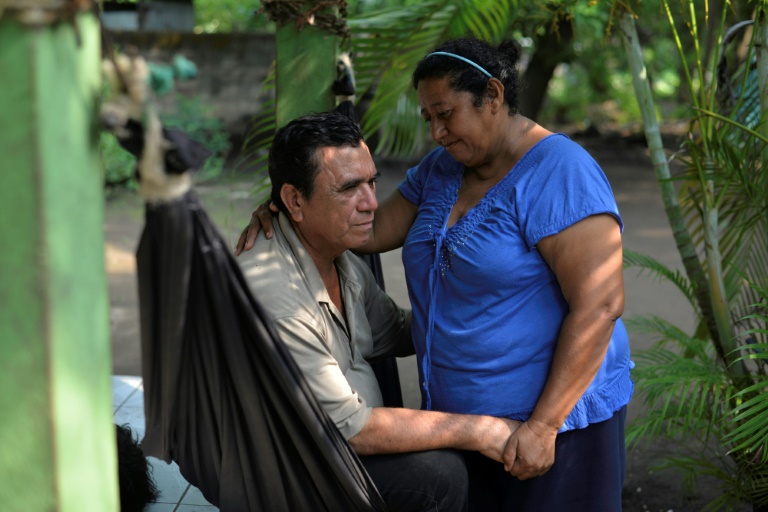
His wife, Idalia Paz, 55, shared in the nostalgia, remembering how “people came from all over.”

For his work there as a youngster, however, Gomez was diagnosed years later with infertility.

“That joy ended in the sadness of not having children,” said Paz, through tears.

– ‘Had we known’ –

Gomez and Paz are among 1,200 farm workers who had their claim against three multinational chemical giants rejected by a French court on Wednesday.

In 2006, a Nicaraguan court had ordered Shell, Dow Chemical and Occidental Chemical — which had marketed the pesticide in Central America — to pay $805 million in damages to workers.

The ruling was upheld on appeal in 2013.

But the money never came, and many of the victims have since died.

The US-based multinationals withdrew their assets from Nicaragua, according to the plaintiffs’ lawyers, and insisted Nicaraguan courts lacked jurisdiction.

In 2018, the plaintiffs took their case to France under a law there that allows enforcement of a foreign court order in France. Under such an arrangement, the courts there could have seized some of the three companies’ European assets, and used them to compensate the workers.

But French judges, too, found that Nicaraguan courts did not have jurisdiction in the case as the defendants had sought a trial on US soil under a Nicaraguan law that allows this.

DBCP, the active ingredient in Nemagon, was banned in the late 1970s in the United States after it was found to cause sterility in male workers, but continued to be used on plantations in other countries.

It has been the subject of numerous lawsuits in Latin America.  

Tonala, a rural community with only about 600 inhabitants in the early 1970s, suddenly boomed as its plantations expanded, in large part thanks to Nemagon.

“If we had known there was a danger we would have been more careful,” said Pedro Regalado, 74, who worked on a plantation called El Paraiso, which translates as “The Paradise”.

“But we did not know, and later we found out that this product was harmful.”

In addition to being infertile, Regalado also suffers from other health ailments.

“If I am alive it is because God is great,” he told AFP.

– Disappointed, again –

Hopeful farmers waited by the phone Wednesday for the French court’s verdict, discussing how the money would allow them better access to medical treatment.

But the downbeat tone of their lawyer Barnard Zavala on the line soon shattered any thoughts of victory.  

“They denied our claim because the judges had no jurisdiction over the companies,” Zavala explained to the group after being briefed from Paris. 

“We were disappointed,” said Paz. “We were expecting a ruling in favor of the sick.”

She expressed incredulity at the finding of non-jurisdiction.

“It was here where it was used, it was here that we were affected, in Nicaragua,” Paz insisted. 

The plaintiffs said they would appeal.  

– ‘It was a crime’ –

“When I was told that I was 100 percent infertile, that I was damaged and I was never going to have children, I felt a deep disappointment,” said Pedro Fletes, 57, another Nemagon victim.

His father took him to work on the banana plantations when he was just 10 years old.

“Sometimes we are rejected by society itself. I have been through very hard times when they tell me: ‘You didn’t amount to anything in this world, you didn’t procreate,'” he told AFP, wiping away tears with the back of his hand.

Fletes, who also battles other health conditions, lives with his third partner.

The others left him, he said, because he was unable to have children. 

“I think it was more than unjust, it was a crime,” what the multinationals did in Nicaragua, Fletes said.

No compensation, he added, can ever make up for the harm he had suffered.

“The damage is done. It is irreparable.”
Toshiba in early talks with 10 potential buyout 'partners'

Troubled conglomerate Toshiba said Friday it has been approached by 10 potential investors as it weighs going private, a move that would be highly unusual in corporate Japan.

The engineering giant was once a symbol of the country’s industrial prowess, producing everything from rice cookers to laptops and nuclear plants.

But more recently it has faced scandals, financial woes and resignations, while management and shareholders have clashed over buyout and spin-off proposals.

Despite the challenges, its earnings are growing, and on Friday Toshiba said annual net profit leapt 70 percent on-year, continuing a recovery from the painful lows of the 2010s.

Shareholders in March shunned a plan to split the company into two, stirring internal turmoil after a shock takeover offer from private equity fund CVC Capital Partners was dropped.

Toshiba said Friday it has been holding confidential, non-binding discussions with 10 “potential partners” who want to suggest “strategic alternatives” for its future.

That could include privatisation “to enhance the company’s corporate value”, the company said in a statement.

Potential investors must express interest this month, and Toshiba said it will announce the total number of interested parties before its next annual general meeting, which will be held by the end of June.

The situation is being closely watched in business circles for clues on what the future may hold for other huge, diversified conglomerates in Japan and elsewhere.

Any move by a foreign equity fund to take Toshiba private would likely face regulatory hurdles, because the company handles sensitive sectors such as nuclear power generation and defence equipment.

Annual net profit in the year to March jumped 70.8 percent to 194.7 billion yen ($1.5 billion) on “increased sales in all business segments, and increased operating income mainly from semiconductors and energy”, Toshiba said.

For the current financial year, the company expects operating profit to rise seven percent to 170 billion yen on projected sales of 3.3 trillion yen, down one percent. 

It did not issue an official net profit forecast.

Hideki Yasuda, senior analyst at Toyo Securities, told AFP that activist shareholders want to maximise short-term profits, so are pushing for Toshiba to take “steps to expand its earnings”.

However, a key problem is that “different activists are saying different things”, with some backing a buyout and others not, he told AFP ahead of the earnings announcement.

“Because they hold different visions, it’s difficult to devise a strategy with a common denominator.”

Sri Lanka's new PM struggles to form unity government

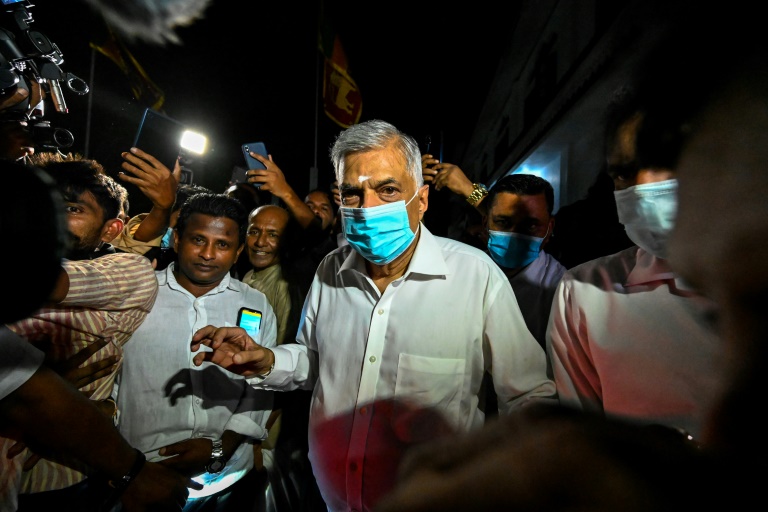
Sri Lanka’s new prime minister struggled Friday to forge a unity government and forestall an imminent economic collapse as opposition lawmakers refused to join his cabinet and demanded fresh elections.

Ranil Wickremesinghe was sworn in late Thursday to navigate his country through the worst downturn in its history as an independent nation, with months of shortages and blackouts inflaming public anger.

The 73-year-old insists he has enough support to govern and approached several legislators to join him, but three opposition parties have already said his premiership lacks legitimacy.

Senior opposition lawmaker Harsha de Silva publicly rejected an overture to take charge of the finance ministry and said he would instead push for the government’s resignation.

“People are not asking for political games and deals, they want a new system that will safeguard their future,” he said in a statement.

De Silva said he was joining “the people’s struggle” to topple President Gotabaya Rajapaksa and would not support any political settlement that left the leader in place.

Huge public demonstrations have for weeks condemned Rajapaksa over his administration’s mismanagement of the worsening economic crisis.

Hundreds remain outside his seafront office in the capital Colombo at a protest camp that has for the past month campaigned for him to step down.

De Silva is a member of the Samagi Jana Balawegaya (SJB), the largest single opposition grouping in parliament, which had appeared ready to split over the question of whether to support Wickremesinghe.

But the head of the possible splinter faction, Harin Fernando, said Friday he had returned to the fold.

“I will not support Wickremesinghe’s government,” Fernando told AFP.

Two smaller parties have also signalled they will not join any unity government. 

The Tamil National Alliance said Rajapaksa’s administration had “completely lost legitimacy” with the appointment of Wickremesinghe, a five-time former prime minister who most recently held office in 2019.

The leftist People’s Liberation Front (JVP) meanwhile said new national elections were the only way out of the current impasse.

“We can’t solve the economic crisis by having an illegitimate government,” JVP leader Anura Dissanayake told reporters in Colombo. “We demand fresh elections.”

However, the cash-strapped government is unlikely to be able to afford polls, or even print ballots, at a time when a national paper shortage forced schools to postpone exams.

Parliamentary elections are not due until August 2025.

– ‘Three meals a day’ –

Sri Lankans have suffered months of severe shortages of food, fuel and medicine — as well as long power cuts — after the country burnt through foreign currency reserves needed to pay for vital imports.

The central bank chief warned this week that the island nation’s economy was just days from “collapse beyond redemption” unless a new government was urgently appointed.

Wickremesinghe warned Thursday that the dire situation could get worse in the coming months and called for international assistance.

“We want to return the nation to a position where our people will once again have three meals a day,” he said.

Mahinda Rajapaksa, the president’s brother, resigned as prime minister on Monday after his supporters attacked anti-government demonstrators who had been protesting peacefully.

At least nine people were killed and more than 200 injured in ensuing clashes, with dozens of Rajapaksa loyalist homes set on fire by furious mobs.

Mahinda has since been banned by a court from leaving the country and has taken refuge at the Trincomalee naval base in Sri Lanka’s east.

Troops have largely restored order and a nationwide curfew has been in effect for most of the week. 

The Indian and Japanese envoys in Colombo were among the first to call on Wickremesinghe soon after he officially assumed duties on Friday.

The new premier is seen as a pro-West, free-market reformist, potentially making bailout negotiations with the International Monetary Fund and others smoother.

North Korea confirms first Covid-19 death in 'explosive' outbreak

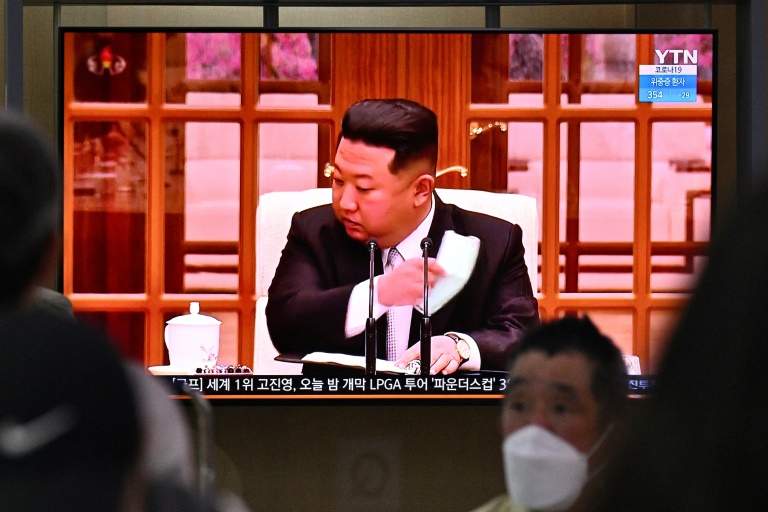
North Korea confirmed its first Covid-19 death on Friday, saying fever was spreading “explosively” nationwide and tens of thousands of people were being isolated after falling sick.

The insular country only reported its first Covid cases Thursday, saying it was moving into “maximum emergency epidemic prevention system” after sick patients in the capital Pyongyang tested positive for the Omicron variant.

North Korea has been under a rigid coronavirus blockade since the start of the pandemic in 2020, but with massive Omicron outbreaks in all neighbouring countries, experts said it was only a matter of time before Covid snuck in.

“A fever whose cause couldn’t be identified explosively spread nationwide from late April,” the official Korean Central News Agency said.

“Six persons died (one of them tested positive for the BA.2 sub-variant of Omicron,)” it added.

With its 25 million people unvaccinated against Covid, North Korea’s crumbling health infrastructure would struggle to deal with a major outbreak, experts say.

“On May 12 alone, some 18,000 persons with fever occurred nationwide and as of now up to 187,800 people are being isolated and treated,” KCNA said.

Leader Kim Jong Un — seen wearing a mask on state TV for the first time — oversaw an emergency meeting of the Politburo on Thursday and ordered nationwide lockdowns in a bid to halt the spread of the virus.

On Friday, KCNA said Kim visited the state emergency epidemic prevention headquarters and “learned about the nationwide spread of Covid-19”.

“It is the most important challenge and supreme tasks facing our Party to reverse the immediate public health crisis situation at an early date,” KCNA added.

– ‘Major chaos’ –

It is likely that the massive nationwide outbreak is linked to a huge military parade held in Pyongyang on April 25, said Cheong Seong-chang of the Sejong Institute.

North Korea was likely to see “major chaos” due to the rapid spread of Omicron, he said, given that the country is currently reporting nearly 20,000 cases in a single day.

“If the death toll from Omicron spikes, Pyongyang may have to ask for China’s support,” he added.

Beijing, Pyongyang’s sole major ally and benefactor, said Thursday that it was ready to assist North Korea with its Covid-19 outbreak. 

But China, the world’s only major economy to still maintain a zero-Covid policy, is itself battling multiple Omicron outbreaks — with some major cities, including financial hub Shanghai, under strict stay-at-home orders.

North Korea has previously turned down offers of Covid vaccines from China, as well as from the World Health Organization’s Covax scheme.

In South Korea, President Yoon Suk-yeol’s new administration offered to send vaccines to the North — but admitted it had not yet discussed this with Pyongyang.

Kim said Friday that the outbreak of fever “shows that there is a vulnerable point in the epidemic prevention system” and called for more lockdowns.

Kim “said that it is the top priority to block the virus spread by actively locking down areas and isolating and treating persons with fever in a responsible manner”, KCNA reported.

Analysts said China’s experience with Omicron indicated lockdowns might not be successful, but with no antiviral treatment or vaccines, North Korea has few other options.

– Nuclear distraction –

North Korea test-fired three short-range ballistic missiles, Seoul said Thursday — shortly after Pyongyang confirmed its first cases of Covid.

After high-profile talks collapsed in 2019, North Korea has doubled down on weapons testing, conducting a blitz of launches so far this year, including of intercontinental ballistic missiles.

Satellite imagery indicates North Korea is preparing to conduct a nuclear test, and the United States has warned this could come as soon as this month.

If Pyongyang needs aid — vaccines and medicine — it might need to delay the test, some analysts said, but others warned the Covid-19 outbreak could hasten things.

“A nuclear test would be a good way to distract the public from the pandemic,” Yang Moo-jin, a professor at the University of North Korean Studies, told AFP.

'Better dead than captured': Mother's pain as son killed in Azovstal

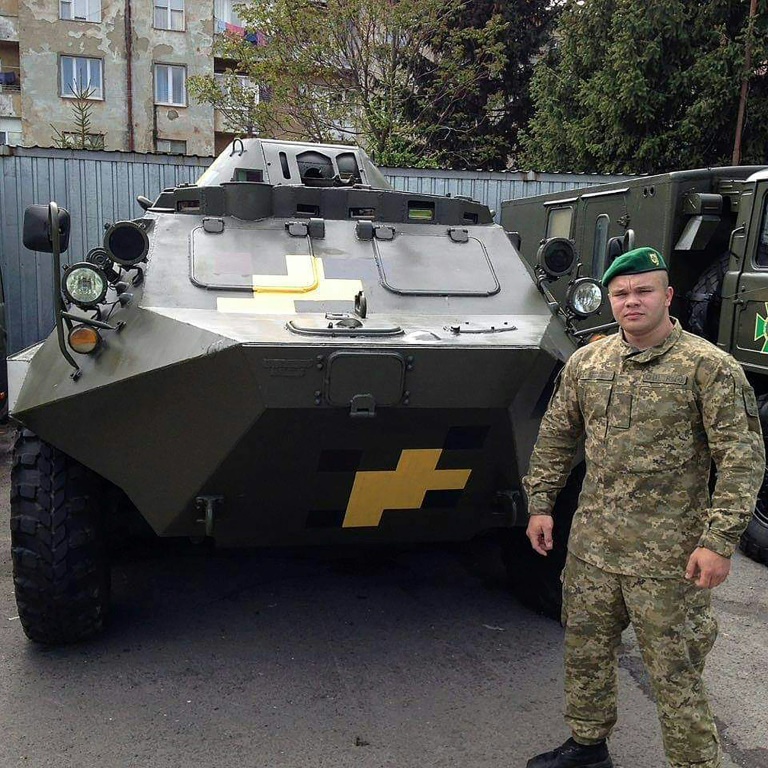
For two-and-a-half months, Iryna Yegorchenko prayed for the safe return of her son Artem, one of the soldiers defending the besieged Azovstal steelworks in the devastated Ukrainian port city of Mariupol.

Battered by relentless Russian bombardment, the fate of the sprawling steelworks and the more than 1,000 fighters holed up inside, has gripped the global headlines.

But on Wednesday, Yegorchenko got the message: her 22-year-old son was dead. 

Utterly devastated, she also felt some kind of relief — that at least he would not be captured by the Russians. Nor would he suffer starvation or the agony of injuries that would be untreatable in such in hellish conditions.

“Suddenly I felt relieved. It is easier to know that your son is dead than to know that he is in captivity, that he is injured or starving,” she told AFP in an interview by Viber from her home in Kyiv. 

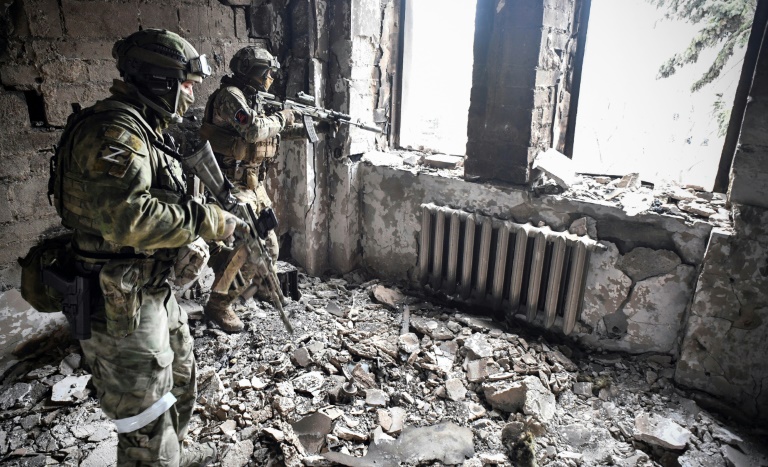
With all civilians now evacuated from the plant as part of a UN and Red Cross rescue mission, only fighters now remain inside the sprawling steelworks, sheltering in the labyrinth of Soviet-era bunkers and tunnels from the Russians who now control the city.

And many are wounded. 

Artem, a burly young man who was a keen boxer, went into the steelworks in early March, spending 74 days inside, and his only communication with the outside world was through Telegram and Instagram.

– ‘At least he didn’t suffer’ –

“They were not allowed to call. Sometimes he only put ‘+’ when I asked if he was alive,” said Yegorchenko, a 43-year-old psychologist, who also has a 20-year-old daughter and two adopted children, aged nine and six.

Artem always told her he was fine, but was more honest with his friends, she realised.

“He wrote that their days were numbered, that they wouldn’t get out of there,” she said, her voice heavy.

He told them that his fellow soldiers were dying every single day and that Russian tanks were already inside the plant. 

She last spoke to him on May 7, after which contact was cut, causing her to frantically reach out for any information about what had happened. 

Then on May 11, she received the message: her son had been crushed to death by a falling concrete slab as part of the steelworks collapsed. 

“At least he didn’t suffer. Everything happened fast,” she said. 

“He quickly went to be with God.”

For Yegorchenko, the worry now is for those soldiers left inside: the ones who are badly injured or who might end up in Russian captivity and die of torture. 

Following weeks of bloody battles, soldiers from the Azov regiment and those marines who are stuck inside have been issuing desperate pleas for help on social media.

– ‘Every minute costs a life’ – 

This week, marine commander Sergiy Volyna described conditions inside as “inhumane”, saying “every minute costs another life”.

He has appealed to the pope, world leaders and even reached out to Elon Musk, the world’s richest man, pleading for “immediate” help — his appeals echoed by desperate family members.

“My son is in hell in Azovstal,” Yevgen Sukharikov, father of one of the Azov fighters, told a news conference on Thursday, warning that leaving them to die would end in “a massacre”. 

“Either we take risks (to save them), or the whole world will watch how they are killed there.”

Deputy Prime Minister Iryna Vereshchuk said Thursday that Kyiv’s appeals to Moscow for their evacuation had been turned down. 

“They offer only surrender. As you know, our guys won’t agree to lay down their arms,” she said, indicating Kyiv would mount a special operation to save them, which would prioritise the evacuation of the seriously injured. 

Mariupol and Azovstal in particular have become a symbol of Ukraine’s unexpectedly fierce resistance since Russian troops invaded on February 24, and for Yegorchenko, the fact that her son died defending Ukraine is a source of huge pride. 

“As a mum, I’m very proud. He lived a good life, he protected his people,” she said. 

“He has earned his place in paradise”.

She has no idea when they will be able to retrieve his body from the steelworks where the brutal fighting rages on. But she also doesn’t want to see her son in a coffin. 

“It hurts me physically to think that he is no longer with us,” she breathed. 

“Of course, I would have very much liked to see what his future would have been like if this war hadn’t started, how my grandchildren would have looked.

“As a mother, I have nothing to be ashamed of.”

Contemporary art to the metaverse: Takashi Murakami's poppy trip

Takashi Murakami is known for blending pop art and Asian fine arts, but for his latest exhibition in New York, he is moving into the metaverse.

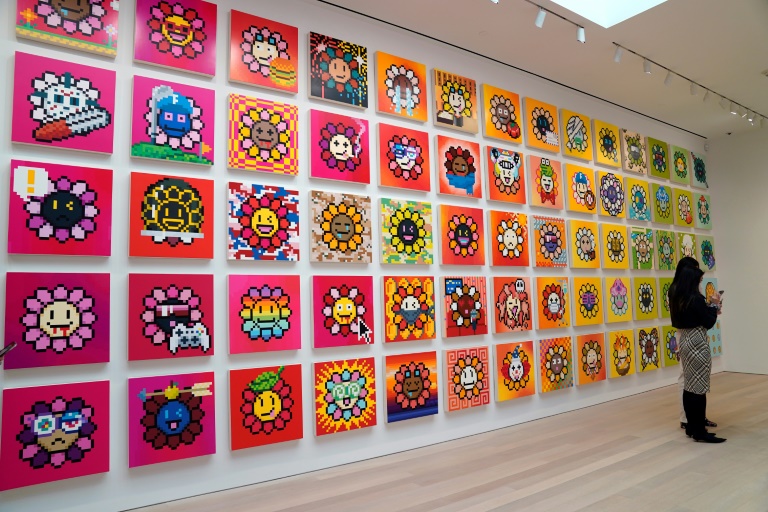
At the show “An Arrow Through History” that opened this week at Manhattan’s Gagosian Gallery, Murakami builds bridges from traditional fine arts to Japanese pop art to buzzy NFTs — the digital tokens that represent original artwork.

Murakami told AFP he is concerned that younger generations are screen-obsessed and “don’t understand the contemporary art history.”

“They can enjoy very few things, but with the plus of augmented reality, maybe the young people open their eyes more and then step into the contemporary art scene,” the 60-year-old Japanese artist said.

Of late, athletes, artists, celebrities and tech stars have been hawking NFTs, which use the same blockchain technology as cryptocurrencies.

“When I work on a creative production, I make no distinction between digital and analog,” Murakami said in a statement from Gagosian. 

“I’m always working in the context of contemporary art, and that context is all about whether I can be involved in events that manage to trigger a cognitive revolution.”

– ‘Into the metaverse’ –

In one piece, Murakami painted thick canvases and wooden structures the blue and white patterns of fish, inspired by Chinese porcelain vases dating back to the Yuan Dynasty (1279-1368).

Using Snapchat and an augmented reality filter, visitors can be immersed in the exhibition room via their phones, standing among digital images of fish that swim among the physically real works of art.

“Japanese culture originally came from the Eurasian continent, and my concept has been to go beyond from there into the metaverse, shooting through the history of art with a single arrow,” Murakami said in the statement.

The metaverse is an immersive virtual reality which is accessible with augmented or virtual reality glasses, and is a concept that has experienced a boost in recent years.

Stuck at home during the coronavirus pandemic, Murakami told AFP that “I was watching the reality in my house, so that was a very monumental moment.”

“For us it was getting super stressful every day, we could not go outside,” he said — but his kids could enjoy VR.

“That meant I had to change the mind, to fit in with the next generation of my kids,” he said. “This is my first answer — the show.”

Murakami is also set to open a special exhibition at The Broad contemporary art museum in Los Angeles, titled “Takashi Murakami: Stepping on the Tail of a Rainbow,” which will include immersive environments and run from May 21 until September 25.

Contemporary art to the metaverse: Takashi Murakami's poppy trip

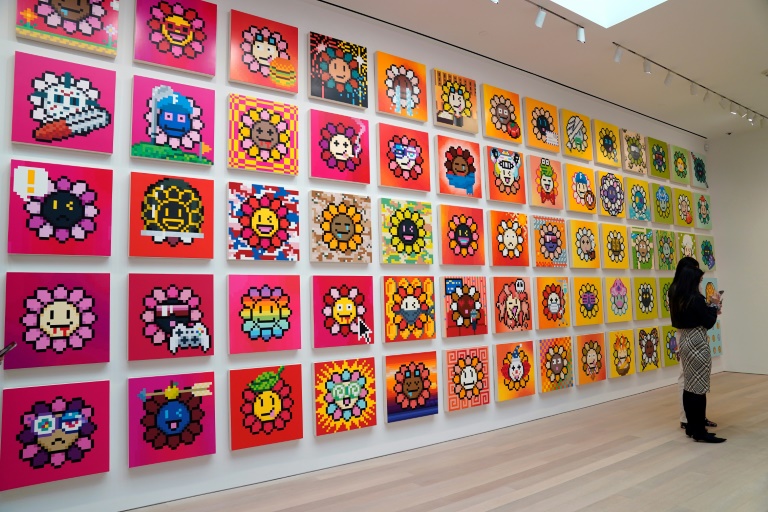
Takashi Murakami is known for blending pop art and Asian fine arts, but for his latest exhibition in New York, he is moving into the metaverse.

At the show “An Arrow Through History” that opened this week at Manhattan’s Gagosian Gallery, Murakami builds bridges from traditional fine arts to Japanese pop art to buzzy NFTs — the digital tokens that represent original artwork.

Murakami told AFP he is concerned that younger generations are screen-obsessed and “don’t understand the contemporary art history.”

“They can enjoy very few things, but with the plus of augmented reality, maybe the young people open their eyes more and then step into the contemporary art scene,” the 60-year-old Japanese artist said.

Of late, athletes, artists, celebrities and tech stars have been hawking NFTs, which use the same blockchain technology as cryptocurrencies.

“When I work on a creative production, I make no distinction between digital and analog,” Murakami said in a statement from Gagosian. 

“I’m always working in the context of contemporary art, and that context is all about whether I can be involved in events that manage to trigger a cognitive revolution.”

– ‘Into the metaverse’ –

In one piece, Murakami painted thick canvases and wooden structures the blue and white patterns of fish, inspired by Chinese porcelain vases dating back to the Yuan Dynasty (1279-1368).

Using Snapchat and an augmented reality filter, visitors can be immersed in the exhibition room via their phones, standing among digital images of fish that swim among the physically real works of art.

“Japanese culture originally came from the Eurasian continent, and my concept has been to go beyond from there into the metaverse, shooting through the history of art with a single arrow,” Murakami said in the statement.

The metaverse is an immersive virtual reality which is accessible with augmented or virtual reality glasses, and is a concept that has experienced a boost in recent years.

Stuck at home during the coronavirus pandemic, Murakami told AFP that “I was watching the reality in my house, so that was a very monumental moment.”

“For us it was getting super stressful every day, we could not go outside,” he said — but his kids could enjoy VR.

“That meant I had to change the mind, to fit in with the next generation of my kids,” he said. “This is my first answer — the show.”

Murakami is also set to open a special exhibition at The Broad contemporary art museum in Los Angeles, titled “Takashi Murakami: Stepping on the Tail of a Rainbow,” which will include immersive environments and run from May 21 until September 25.

Russia war crimes allegations mount as Ukraine refugees top six million

Russia faced mounting accusations of war crimes in Ukraine Friday including forcing thousands of people into interrogation camps, as the number of refugees reported to have fled the conflict surpassed six million.

The Russian invasion has also led to a seismic policy change by Finland, whose leaders said Thursday the previously neutral nation must apply to join NATO “without delay” — triggering a blunt warning of retaliation from the Kremlin.

Throughout the 11-week conflict, Russian forces have been accused of committing atrocities — including the killing of unarmed civilians, torture and rape.

CNN and the BBC on Thursday released what they said was security camera footage showing Russian soldiers with assault rifles shooting two Ukrainian civilians in the back.

The two men appeared unarmed — the footage showed the soldiers frisking them before allowing them to walk away at a business premises on the outskirts of the capital Kyiv.

One man died on the spot, the other shortly after, according to the outlets.

The killings took place on March 16 and are being investigated as a war crime, CNN said. AFP has not independently verified the footage.

Separately, investigators and witnesses interviewed by AFP Thursday accused Russian forces of shelling a residential home in an eastern Ukrainian village from a tank, killing three civilians.

The incident took place on March 27 in the village of Stepanki outside Kharkiv, the Ukrainian prosecutor general’s office said on Telegram.

Local resident Denys, 40, said he saw the barrel of the tank turn towards him.

“Someone said: let’s go hide inside the house,” Denys said.

“I entered last and as soon as I entered, the tank fired. Everything collapsed, I couldn’t see anything.”

The UN Human Rights Council voted 33-2 on Thursday to investigate alleged atrocities by Russian troops in Ukraine.

Ukrainian prosecutors say they have received reports of more than 10,000 alleged crimes.

– ‘Brutal interrogations’ –

The UN refugee agency said Thursday more than six million people had fled Ukraine, more than half of them going to neighbouring Poland.

Women and children make up 90 percent of the refugees, UNHCR said.

The United States on Thursday accused Russia of forcibly taking tens of thousands of Ukrainians to “filtration camps” in Russia or Russian-controlled territory where they are subjected to “brutal interrogations”.

“These actions amount to war crimes,” said Michael Carpenter, the US ambassador to the Organization for Security and Cooperation in Europe (OSCE).

“We must not allow this evil to stand.”

The remarks backed Kyiv’s allegation that 1.2 million people have been taken to Russia or Russian-controlled areas.

Fighting in Ukraine has been concentrated in the south and east since Russia abandoned attempts to seize the capital.

Ukraine’s presidency said shelling continued throughout Lugansk — part of the Donbas region where its forces are fiercely opposing Russian troops and Kremlin-backed separatists.

Ukrainian President Volodymyr Zelensky said Thursday that Russian forces had destroyed 570 healthcare facilities.

“What for? It’s nonsense. It’s barbarity,” he said.

In the northeastern region of Chernigiv, three people were killed and 12 others wounded early Thursday in a strike on a school in Novgorod-Siversky, the emergency services said. 

In the southern port city of Mariupol, troops at the Azovstal steelworks have been holding out against Russian bombardment for weeks, refusing demands to surrender.

Ukrainian Deputy Prime Minister Iryna Vereshchuk said “difficult talks” were under way on the evacuation of 38 seriously wounded soldiers.

Russia’s army said it struck Donetsk and Kharkiv on Thursday, killing more than 170 people and destroying Ukrainian drones and rockets.

– Finland’s NATO decision –

When launching the invasion of Ukraine, Russian President Vladimir Putin had cited in part what he called the threat from NATO, which has expanded eastwards since the end of the Cold War.

Rather than containing the bloc, however, the war appears to have had the opposite effect.

The leaders of Finland, a declared neutral state in East-West crises for decades, said Thursday their country should join the bloc.

“As a member of NATO, Finland would strengthen the entire defence alliance,” President Sauli Niinisto and Prime Minister Sanna Marin said in a joint statement.

The Russian foreign ministry warned Moscow would be “forced to take reciprocal steps, military-technical and other, to address the resulting threats”.

Finland shares a 1,300-kilometre (800-mile) border with Russia and its past is studded with conflict with its giant neighbour.

NATO has already declared it will warmly embrace Finland and Sweden, two countries with deep pockets and well-equipped militaries.

A special committee will announce Finland’s formal decision on Sunday. Sweden, another neutral state, is widely expected to follow.

– Russian gas –

The flow of gas from Russia to Europe meanwhile fell, spurring fears for Germany and other economies heavily dependent on that source of energy.

Russian energy giant Gazprom announced it would stop supplying gas via the Polish part of the Yamal-Europe pipeline following retaliatory sanctions that Moscow imposed Wednesday on Western companies.

Gazprom also said gas transiting to Europe via Ukraine had dropped by a third.

Ukraine and Poland are major supply routes for Russian gas to Europe and the two sides have kept flows going despite the conflict.

Europe must end its reliance on Russian gas and cut off Moscow’s “energy oxygen”, Ukrainian Foreign Minister Dmytro Kuleba said Thursday.

Kuleba has been invited to the meeting of G7 foreign ministers in Germany, which started Thursday with the Ukraine war set to be the main topic on the agenda.

burs-qan/leg

Asian stocks up as investors calm over potential Fed moves

Asian equities were mostly up Friday following a tumultuous trading period on Wall Street, which rebounded at the close after investors calmed down about US policies to counter surging inflation.

World markets have been volatile for much of 2022 owing to China’s Covid-19 lockdowns, Russia’s invasion of Ukraine and surging inflation weighing on consumer sentiment.

The Federal Reserve last week had announced its largest rate hike since 2000 and signalled that similar increases were likely in the coming months — a possibility that sent markets on a rollercoaster. 

“Macro-economic concerns have continued to weigh heavily on the equity markets this week, as stagflation and recession fears continue to dampen investor enthusiasm,” said Lewis Grant of Federated Hermes Limited.

He added that the fears have been echoed in forecasts by major companies, with a large number of firms citing supply chain concerns. 

Wall Street was mixed Thursday after another day of volatile trading, with the Dow falling for the sixth straight session but the Nasdaq mustering a small gain.

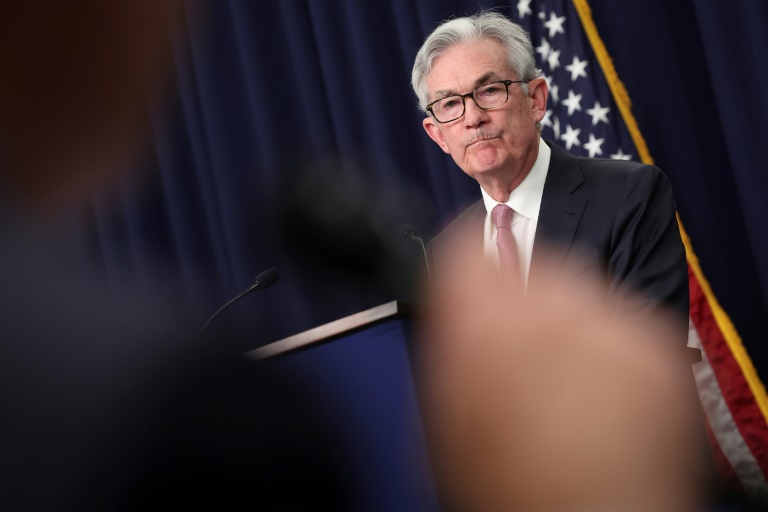
The small rebound on the tech-rich Nasdaq came after Fed Reserve chief Jerome Powell — confirmed Thursday by the Senate for a second term — expressed confidence that the economy is strong enough to withstand tighter monetary policies. 

According to Bloomberg, Powell reaffirmed that the Fed was likely to raise rates by a half point but isn’t “actively considering” a 75-basis point move.

In Asia, Hong Kong, Tokyo, Seoul, Singapore and Sydney opened higher on Friday, while Wellington traded in the negatives.

Dread has not only sent traditional markets seesawing, but the cryptocurrency realm also saw great volatility this week. 

Bitcoin tumbled to the lowest level since late 2020, following a dramatic collapse in some so-called stablecoin cryptocurrencies — TerraUSD and Tether.

The two stablecoins — which are supposed to be pegged to the dollar — proved to be anything but, as their values collapse. 

While the digital currency market stabilised by Friday, Stephen Innes of SPI Asset Management said “the 7-day moves in some of the ‘other crypto experiments’ on monster volume are insane and increasingly difficult to watch”.

Bitcoin slumped below $27,000 before recovering, and traded at over $30,000 by mid-Friday.

Oil remained up on Friday, with US benchmark crude WTI trading at more than $107 a barrel.

“As long as the war continues and macro pressures persist, it is likely that both energy names and value stocks will remain relative safe-havens for fully-invested, long-only equity investors,” said Grant of Federated Hermes Limited.

– Key figures at around 0230 GMT –

Hong Kong – Hang Seng Index: UP 1.7 percent at 19,705.86  

Shanghai – Composite: UP 0.3 percent at 3,064.32  

Tokyo – Nikkei 225: UP 2.7 percent at 25,421.84 (break)

Brent North Sea crude: UP 1.4 percent at $108.90 per barrel

West Texas Intermediate: UP 1.2 percent at $107.36 per barrel

Euro/dollar: UP at $1.0387 from $1.0382 at 2100 GMT Thursday

Pound/dollar: DOWN at $1.2212 from $1.2199

Euro/pound: DOWN at 85.06 pence from 85.08 pence

Dollar/yen: DOWN at 128.36 yen from 129.97 yen

New York – Dow: DOWN 0.3 percent at 31,730.30 (close)

London – FTSE 100: DOWN 1.6 percent at 7,233.34 (close)

China database reveals the thousands detained in Xinjiang

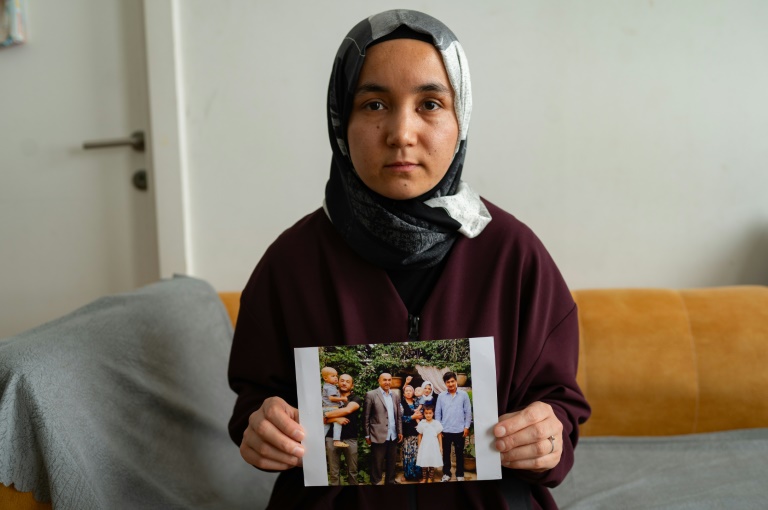
A leaked list of thousands of detained Uyghurs has helped Nursimangul Abdureshid shed some light on the whereabouts of her missing family members, who have disappeared in China’s sweeping crackdown on Xinjiang.

Researchers estimate over one million Uyghurs and other mostly Muslim minorities are being held in a secretive network of detention centres and prisons, ostensibly as part of an anti-terrorism campaign after a series of attacks.

Yet information on the crackdown in Xinjiang region — and those who have been ensnared by it — is closely guarded by China’s Communist authorities.

That has left relatives unable to contact detainees or seek answers from police, with just a fraction of court notices from Xinjiang publicly available.

Abdureshid, who now lives in Turkey, lost contact with her family five years ago.

It took until 2020 for the Chinese embassy in Ankara to confirm that her younger brother Memetili, as well as her parents, had been imprisoned for terrorism-related offences.

But a suspected police list leaked to Uyghur activists outside China has located Memetili in a prison outside the city of Aksu, some 600 kilometres (375 miles) from their home.

He was sentenced to 15 years and 11 months in jail, the documents show — a figure confirmed by Beijing’s embassy in Ankara.

“It is much better than not knowing anything about where he is. There is a small happiness,” Abdureshid, 33, told AFP from Istanbul, where she has lived since 2015.

“I check the weather there sometimes, to see if it is cold or warm.”

– ‘I can’t breathe’ –

The previously unreported database, which has been seen by AFP, lists over 10,000 imprisoned Uyghurs from southwestern Xinjiang’s Konasheher county — including over 100 from Abdureshid’s village.

Her parents’ location remains a mystery, as well as that of an older brother who is also believed to be detained.

Abdureshid recognised the names of seven other villagers on the list of detainees — all small business owners or farm workers who she says would not have links to terrorism.

“When I search this list I just feel like I can’t breathe,” she said.

The leaked list details each prisoner’s name, birthdate, ethnicity, ID number, charge, address, sentence length, and prison.

It has not been possible to independently verify the authenticity of the database.

But AFP has interviewed five Uyghurs living outside China who identified detained relatives and acquaintances on the list.

For some it was the first information they have been able to access about their relatives in years.

Hundreds were detained from each township and village, the database shows, often many from the same household.

“This is not clearly-targeted anti-terrorism,” said David Tobin, lecturer in East Asian Studies at the University of Sheffield in Britain.

“It’s going to every door and taking a number of people away. It really shows they’re arbitrarily targeting a community and dispersing it across a region.”

People were jailed for broad charges including “gathering a group to disrupt social order”, “promoting extremism” and “picking quarrels and provoking trouble”.

Government data shows the number of people sentenced by Xinjiang courts soared from around 21,000 in 2014 to over 133,000 in 2018. 

Many other Uyghurs, never charged with any crimes, were sent to what activists call “re-education camps” spread across Xinjiang.

At these camps, which Beijing calls “vocational training centres”, foreign governments and rights groups have found evidence of what they say are forced labour, political indoctrination, torture and forced sterilisation. 

The United States and lawmakers in a number of other Western countries have described Beijing’s treatment of the Uyghurs as genocide.

UN human rights chief Michelle Bachelet is due to make a long-awaited visit to China including Xinjiang this month. But activists warn access will likely fall well short for an independent probe of China’s alleged abuses.

– Someone from every house –

As Beijing’s “Strike Hard” ideological campaign against Islamic extremism ramped up in 2017, the proportion of prison sentences of over five years nearly tripled from the year before. 

Most were handed down in closed-door trials.

Norway-based Uyghur activist Abduweli Ayup told AFP he recognised the names of around 30 relatives and neighbours on the leaked list.

“In Oghusaq, my father’s home village, and Opal, my mother’s home village, you can see that every house has someone detained,” Ayup said, adding they were mostly tradespeople and illiterate farmers.

“My cousin was just a farmer. If you ask him what is ‘terrorism’, he couldn’t even read the word, even less understand it.”

A second suspected leaked police database seen by AFP identifies another 18,000 Uyghurs, mostly from Kashgar and Aksu prefectures, detained between 2008 and 2015.

Of these the vast majority were charged with vague terrorism-related offences. 

Several hundred were linked to the 2009 Urumqi riots in which nearly 200 people died. Over 900 individuals were accused of manufacturing explosives.

Nearly 300 cases mentioned watching or possessing “illegal” videos.

One Uyghur living in Europe who wishes to stay anonymous told AFP he recognised six friends on the second list, including one who was 16 at the time of detention.

“I was devastated to see so many people I knew,” he told AFP.

– ‘Harmonious and stable’ – 

Beijing vehemently denies it is persecuting Uyghurs and other Muslim minorities in Xinjiang.

Instead, it describes its treatment of the Uyghurs as a legitimate response to extremism, and says it has spent billions of dollars on economic renewal of the poor region.

“We have already refuted some organisations’ and individuals’ fabricated lies about Xinjiang,” the Chinese foreign ministry wrote in response to AFP questions on the leaked list.

“Xinjiang society is harmonious and stable … and all ethnic minorities fully enjoy various rights.”

Yet from her small, plant-filled apartment in Istanbul, Abdureshid tries to pull together the semblance of a normal life from the dislocation, fear and loss now attached to being Uyghur.

She only recently told her young daughter about her missing relatives and says the leaked list was a sharp reminder of the struggle of her people.

“My pain just doubled,” she said.

Close Bitnami banner
Bitnami