World

Rising student debt to worsen money woes of young Britons

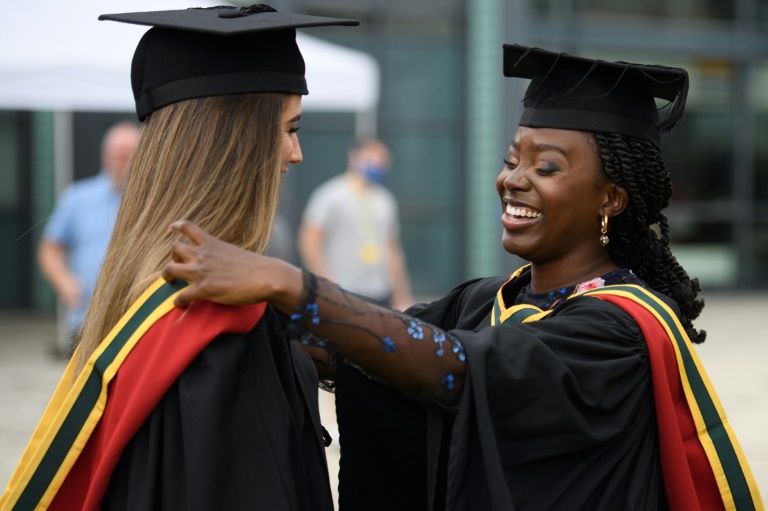
Rhiannon Muise graduated from Edge Hill University in northwest England last year with a mountain of student debt, which is growing even larger due to surging inflation.

The 21-year-old dance and drama graduate said it will take a “lifetime” for her to pay back the £45,000 ($55,000) she owes for tuition fees and living expenses, particularly if she stays within her chosen field where salaries can be low.

Muise’s plight echoes that of students across Britain, who are already struggling with a cost-of-living crisis.

Britons heading to university next year face major changes that critics argue will worsen the financial pain.

– Exhausting –

The pressure is “exhausting, especially for someone in their 20s who has just started thinking about their career”, Muise told AFP.

Her current job as Edge Hill student engagement officer pays below the threshold that activates repayments.

UK graduates shoulder more debt than any other developed country, according to House of Commons Library data.

About 1.5 million students borrow nearly £20 billion in loans every year in England alone.

And on average, graduates of 2020 have amassed £45,000 in debt.

Zeno, a 25-year-old student in London who gave only his first name, said he owes just short of £75,000 for his loans.

Unless he “wins the lottery”, he accepts he will probably be paying the money back from his salary for the next 30 years.

– Tuition fees –

University used to be free in the UK, with means-tested grants for the poorest students to cover living costs.

But after the sector was opened up in the 1990s, numbers surged and, despite protests from student bodies, tuition fees have been gradually introduced in the last decade to help universities meet costs.

With education a devolved matter for the governments in Scotland, Wales and Northern Ireland, different tuition fee arrangements are in place across the UK.

Accommodation and living costs are extra.

In England, undergraduate tuition fees are capped at £9,250 a year for UK and Irish students — up from £3,375 in 2011 when the government cut most ongoing direct public funding. 

The cap in Wales is £9,000 and £4,030 in Northern Ireland. 

Scottish students studying in Scotland pay £1,820 but those from the rest of the UK attending universities north of the border with England pay £9,250.

– Inflation worry –

The picture is further complicated by rocketing inflation because the student loan interest rate is linked to the retail price index (RPI).

Loan interest is calculated by adding up to 3.0 percentage points to the RPI rate.

Inflation however soared to 30-year highs this year, particularly on rocketing energy costs and fallout from the Ukraine conflict.

Graduates could therefore pay an interest rate of 12 percent from September — or more if prices rise even higher.

The UK government plays a large part in student financing, providing loans that only demand repayment when a graduate earns above a threshold of £27,295 per year.

What borrowers repay depends on how much they earn. Unlike private lenders, they have up to 30 years to repay. The debt is cancelled after this time.

“This system is more progressive than in the United States, with generous write-offs for lower-paid graduates,” said Nick Hillman, director of the Higher Education Policy Institute in Oxford. 

Current and recent students faced huge upheaval during courses due to coronavirus restrictions, with the pandemic also hitting job opportunities.

A combination of high debt repayments, high cost of living and wages that have failed to keep pace with inflation, add yet more stress.

– Conundrum –

Student finance poses a major conundrum for the public purse because the UK forecasts outstanding loans will top £560 billion by 2050.

From next year, Britain will lower the repayment threshold for new borrowers to £25,000 and lengthen the repayment time from 30 to 40 years.

This will however increase costs for low-earners, while benefiting richer graduates who can pay back more quickly.

The UK government forecasts however that half of new students will repay their loans in full under the new plan.

Student debt has long been a concern in the United States, where the Federal Reserve estimates that it amounts to a staggering $1.76 trillion.

US students on average have outstanding debt of close to $41,000, according to think-tank Education Data Initiative.

President Joe Biden this year extended a moratorium on student loan repayment and interest — and is holding talks over partial debt write-offs.
Rising student debt to worsen money woes of young Britons

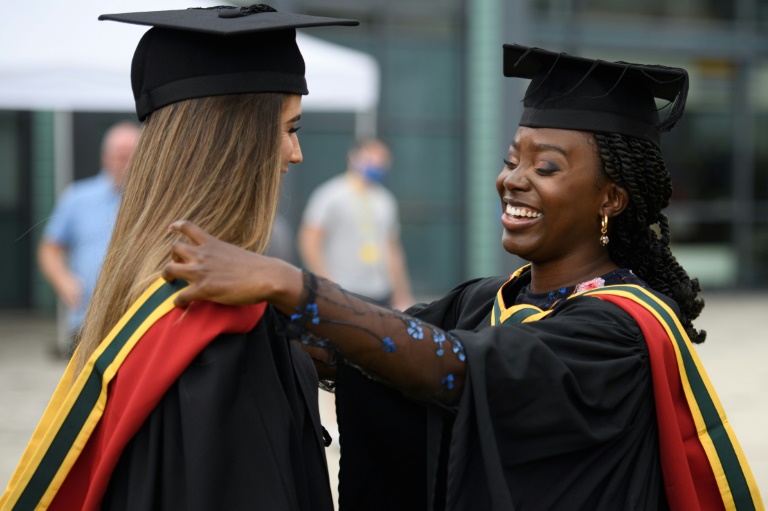
Rhiannon Muise graduated from Edge Hill University in northwest England last year with a mountain of student debt, which is growing even larger due to surging inflation.

The 21-year-old dance and drama graduate said it will take a “lifetime” for her to pay back the £45,000 ($55,000) she owes for tuition fees and living expenses, particularly if she stays within her chosen field where salaries can be low.

Muise’s plight echoes that of students across Britain, who are already struggling with a cost-of-living crisis.

Britons heading to university next year face major changes that critics argue will worsen the financial pain.

– Exhausting –

The pressure is “exhausting, especially for someone in their 20s who has just started thinking about their career”, Muise told AFP.

Her current job as Edge Hill student engagement officer pays below the threshold that activates repayments.

UK graduates shoulder more debt than any other developed country, according to House of Commons Library data.

About 1.5 million students borrow nearly £20 billion in loans every year in England alone.

And on average, graduates of 2020 have amassed £45,000 in debt.

Zeno, a 25-year-old student in London who gave only his first name, said he owes just short of £75,000 for his loans.

Unless he “wins the lottery”, he accepts he will probably be paying the money back from his salary for the next 30 years.

– Tuition fees –

University used to be free in the UK, with means-tested grants for the poorest students to cover living costs.

But after the sector was opened up in the 1990s, numbers surged and, despite protests from student bodies, tuition fees have been gradually introduced in the last decade to help universities meet costs.

With education a devolved matter for the governments in Scotland, Wales and Northern Ireland, different tuition fee arrangements are in place across the UK.

Accommodation and living costs are extra.

In England, undergraduate tuition fees are capped at £9,250 a year for UK and Irish students — up from £3,375 in 2011 when the government cut most ongoing direct public funding. 

The cap in Wales is £9,000 and £4,030 in Northern Ireland. 

Scottish students studying in Scotland pay £1,820 but those from the rest of the UK attending universities north of the border with England pay £9,250.

– Inflation worry –

The picture is further complicated by rocketing inflation because the student loan interest rate is linked to the retail price index (RPI).

Loan interest is calculated by adding up to 3.0 percentage points to the RPI rate.

Inflation however soared to 30-year highs this year, particularly on rocketing energy costs and fallout from the Ukraine conflict.

Graduates could therefore pay an interest rate of 12 percent from September — or more if prices rise even higher.

The UK government plays a large part in student financing, providing loans that only demand repayment when a graduate earns above a threshold of £27,295 per year.

What borrowers repay depends on how much they earn. Unlike private lenders, they have up to 30 years to repay. The debt is cancelled after this time.

“This system is more progressive than in the United States, with generous write-offs for lower-paid graduates,” said Nick Hillman, director of the Higher Education Policy Institute in Oxford. 

Current and recent students faced huge upheaval during courses due to coronavirus restrictions, with the pandemic also hitting job opportunities.

A combination of high debt repayments, high cost of living and wages that have failed to keep pace with inflation, add yet more stress.

– Conundrum –

Student finance poses a major conundrum for the public purse because the UK forecasts outstanding loans will top £560 billion by 2050.

From next year, Britain will lower the repayment threshold for new borrowers to £25,000 and lengthen the repayment time from 30 to 40 years.

This will however increase costs for low-earners, while benefiting richer graduates who can pay back more quickly.

The UK government forecasts however that half of new students will repay their loans in full under the new plan.

Student debt has long been a concern in the United States, where the Federal Reserve estimates that it amounts to a staggering $1.76 trillion.

US students on average have outstanding debt of close to $41,000, according to think-tank Education Data Initiative.

President Joe Biden this year extended a moratorium on student loan repayment and interest — and is holding talks over partial debt write-offs.
Biden welcomes Southeast Asian leaders with energy, maritime pledges

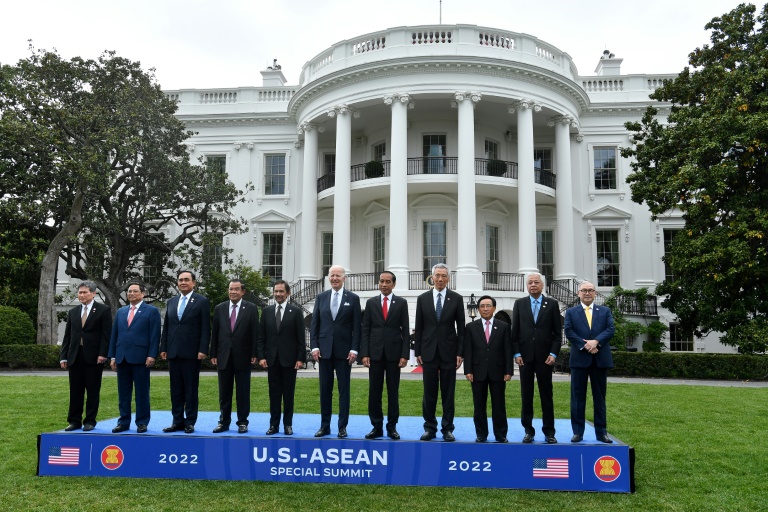
President Joe Biden on Thursday welcomed Southeast Asian leaders to Washington with promises to support clean energy and maritime security, hoping to showcase a US commitment as China makes wide inroads.

Top leaders from eight of the 10 members of the Association of Southeast Asian Nations (ASEAN) flew to Washington for the two-day summit, which opened with a closed-door White House dinner of thyme poached chicken and vanilla ice cream.

The Biden administration, which took office describing China as the top international challenger, is eager to prove it is still prioritizing Asia despite months of intense focus on repelling Russia’s invasion of Ukraine.

The White House announced some $150 million in new initiatives — a modest sum compared with a $40 billion package for Ukraine and with the billions pumped into the region by China, which has also flexed its muscle in the dispute-rife South China Sea.

But the United States said it was working with its private sector and it plans to unveil a broader package, the Indo-Pacific Economic Framework, when Biden travels next week to Tokyo and Seoul.

House Speaker Nancy Pelosi, welcoming ASEAN leaders to lunch earlier in the day, drew a link as she encouraged Southeast Asia to stand firm against Russia’s invasion.

“If left unchecked, we leave the door open to additional aggression, including maritime issues and other issues in the South China Sea,” she said.

– ‘Candor’ over rights –

Pelosi called the summit “another manifestation of America’s commitment to be a strong, reliable partner in Southeast Asia.”

In a contrast to China’s hands-off approach, Pelosi said she believed in “candor” and urged the Southeast Asian leaders to respect human rights, voicing particular concern about LGBTQ people.

“Let me be clear: when we hear about torture of LGBTQ people, that is unacceptable to the American people — and continues to be an obstacle to the full respect in our relationship,” she said.

Pelosi did not single out countries but Brunei and Indonesia’s Aceh province have both triggered uproars with laws that allow for physical punishment over consensual gay sex.

In the biggest chunk of the new funding, the White House said it was committing $60 million to new maritime initiatives that will include the deployment of a Coast Guard cutter and personnel to fight crime including illegal fishing. 

The White House said it was also devoting $40 million to invest in clean energy in the climate change-vulnerable region and was working with the private sector to raise up to $2 billion.

Another initiative — launched as Biden separately held a virtual summit on Covid — includes a project to test for emerging respiratory diseases through a new office in Hanoi of the US Centers for Disease Control.

“I hope this meeting can build a momentum for the return of the US presence in the region,” Indonesian President Joko Widodo told a sideline forum of the US-ASEAN Business Council.

– Meeting Myanmar opposition –

Southeast Asia has often been seen as a victim of its own success, with the United States focused elsewhere for lack of pressing problems in the region.

But in Myanmar, once hailed as a democratic success story, the United States has been ratcheting up pressure since the junta in February last year toppled Aung San Suu Kyi’s elected government.

The United States symbolically represented Myanmar with an empty chair at the summit.

The democratic leadership in exile was invited to Washington and met Deputy Secretary of State Wendy Sherman but did not represent Myanmar in talks.

The Philippines also did not send its leader and was represented by its foreign minister after holding elections on Monday.

Leaders who are participating include Cambodia’s veteran strongman Hun Sen, who is ASEAN’s current chair, and Thai Prime Minister Prayut Chan-O-Cha, the former army chief who led a 2014 coup.

Human Rights Watch said the United States needed to raise democracy in more countries than Myanmar.

“If the US doesn’t publicly raise human rights concerns during meetings, the message will be that human rights abuses are now tolerated in the name of forging alliances to counter China,” said John Sifton, the group’s Asia advocacy director.

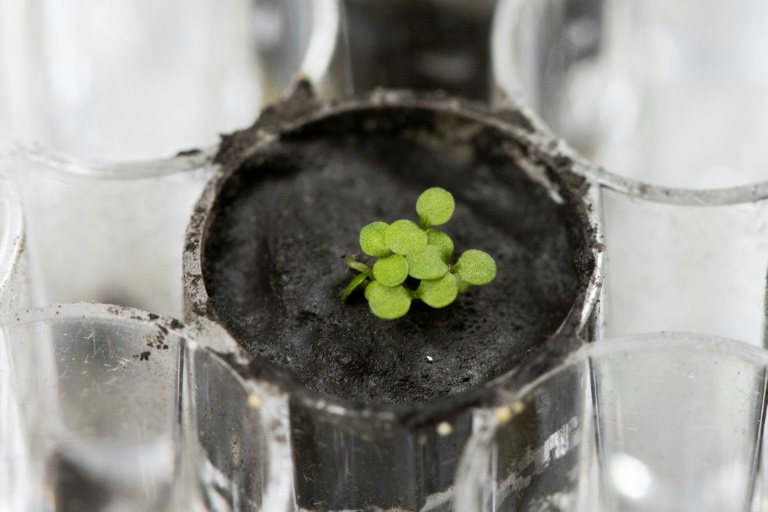
Scientists successfully grow plants in soil from the Moon

That’s one small pot of soil, one giant leap for man’s knowledge of space agriculture: scientists have for the first time grown plants in lunar soil brought back by astronauts in the Apollo program.

The ground-breaking experiment, detailed in the journal Communications Biology on Thursday, has given researchers hope that it may be possible to one day grow plants directly on the Moon.

That would save future space missions much hassle and expense, facilitating longer and farther trips.

However, according to the study’s University of Florida authors, much remains to be studied on the topic, and they intend to leave no stone unturned.

“This research is critical to NASA’s long-term human exploration goals,” said Bill Nelson, the head of the US space agency. “We’ll need to use resources found on the Moon and Mars to develop food sources for future astronauts living and operating in deep space.”

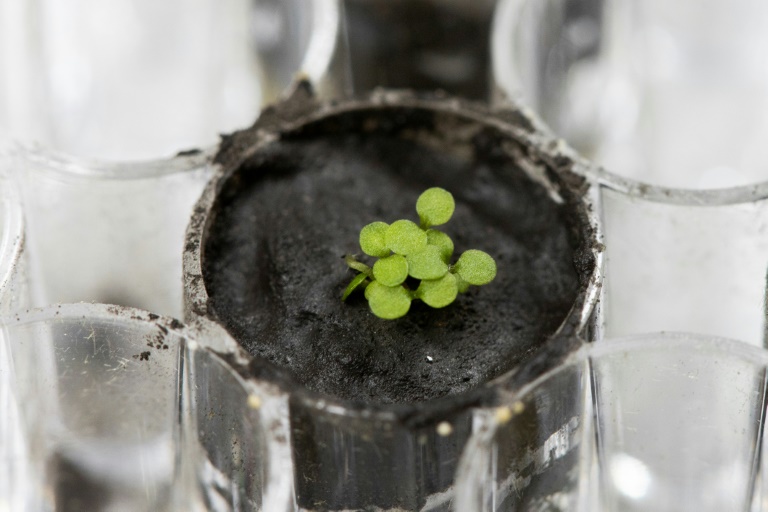
For their experiment, the researchers used just 12 grams (a few teaspoons) of lunar soil collected from various spots on the Moon during the Apollo 11, 12, and 17 missions.

In tiny thimble-sized pots, they placed about a gram of soil (called “regolith”) and added water, then the seeds. They also fed the plants a nutrient solution every day.

The researchers chose to plant arabidopsis thaliana, a relative of mustard greens, because it grows easily and, most importantly, has been studied extensively. Its genetic code and responses to hostile environments — even in space — are well known.

As a control group, seeds were also planted in soil from Earth as well as samples imitating lunar and Martian soil. 

The result: after two days, everything sprouted, including the lunar samples.

“Every plant — whether in a lunar sample or in a control — looked the same up until about day six,” Anna-Lisa Paul, lead author of the paper, said in a statement.

But after that, differences started to appear: the plants in the lunar samples grew more slowly and had stunted roots.

After 20 days, the scientists harvested all the plants, and ran studies on their DNA.

Their analysis showed that the lunar plants had reacted similarly to those grown in hostile environments, such as soil with too much salt, or heavy metals. 

In the future, scientists want to understand how this environment could be made more hospitable.

NASA is preparing to return to the Moon as part of the Artemis program, with a long-term goal of establishing a lasting human presence on its surface.

Scientists successfully grow plants in soil from the Moon

That’s one small pot of soil, one giant leap for man’s knowledge of space agriculture: scientists have for the first time grown plants in lunar soil brought back by astronauts in the Apollo program.

The ground-breaking experiment, detailed in the journal Communications Biology on Thursday, has given researchers hope that it may be possible to one day grow plants directly on the Moon.

That would save future space missions much hassle and expense, facilitating longer and farther trips.

However, according to the study’s University of Florida authors, much remains to be studied on the topic, and they intend to leave no stone unturned.

“This research is critical to NASA’s long-term human exploration goals,” said Bill Nelson, the head of the US space agency. “We’ll need to use resources found on the Moon and Mars to develop food sources for future astronauts living and operating in deep space.”

For their experiment, the researchers used just 12 grams (a few teaspoons) of lunar soil collected from various spots on the Moon during the Apollo 11, 12, and 17 missions.

In tiny thimble-sized pots, they placed about a gram of soil (called “regolith”) and added water, then the seeds. They also fed the plants a nutrient solution every day.

The researchers chose to plant arabidopsis thaliana, a relative of mustard greens, because it grows easily and, most importantly, has been studied extensively. Its genetic code and responses to hostile environments — even in space — are well known.

As a control group, seeds were also planted in soil from Earth as well as samples imitating lunar and Martian soil. 

The result: after two days, everything sprouted, including the lunar samples.

“Every plant — whether in a lunar sample or in a control — looked the same up until about day six,” Anna-Lisa Paul, lead author of the paper, said in a statement.

But after that, differences started to appear: the plants in the lunar samples grew more slowly and had stunted roots.

After 20 days, the scientists harvested all the plants, and ran studies on their DNA.

Their analysis showed that the lunar plants had reacted similarly to those grown in hostile environments, such as soil with too much salt, or heavy metals. 

In the future, scientists want to understand how this environment could be made more hospitable.

NASA is preparing to return to the Moon as part of the Artemis program, with a long-term goal of establishing a lasting human presence on its surface.

Without Hariri, Lebanon's Sunnis leaderless ahead of vote

Lebanon’s Sunni Muslim community is gearing up for Sunday’s parliamentary polls without strong leadership for the first time in decades after former premier Saad Hariri stepped down from political life.

In a country where government posts and parliamentary seats are distributed along sectarian lines, Lebanon’s Sunni community has long served as a major political force.

Months ahead of the May 15 vote, Hariri announced his retreat from political life, leaving his constituents without a preeminent Sunni figure while the country grapples with an unprecedented financial crisis.

His Future Movement party in March said it would boycott the election, a move that experts believe could empower political rivals, mainly the Iran-backed Shiite Hezbollah movement.

“Traditional Sunni leaders, including former premiers, are mobilising… to prevent Hezbollah from taking advantage” of the political void, said Karim Bitar, an international relations professor at the University of Saint Joseph in Lebanon.

The Future Movement, Lebanon’s biggest Sunni-led party, currently has 18 lawmakers in the 128-member parliament, which makes it one of the largest blocs.

Its decision to boycott polls has created internal rifts. One former deputy, Mustafa Alloush, relinquished his party membership so he can challenge Hezbollah in the elections.

“When we withdraw from the scene, we give our adversaries a chance,” he told AFP, advocating for a unified front to thwart Hezbollah’s growing dominance.

– Saudi rift –

Hariri was thrust into the political limelight following the 2005 assassination of his father Rafic, also an ex-prime minister.

In the wake of the tragedy, Hariri played a major role in mass demonstrations that ended a 30-year Syrian military presence in Lebanon.

He was at the helm of the pro-Western “March 14” bloc that won a parliamentary majority in 2009 but unravelled not long after.

During the last vote, in 2018, Hariri’s bloc lost nearly a third of its parliamentary seats.

Many attributed the three-time premier’s waning popularity to his conciliatory approach towards Hezbollah, which angered allies, including Saudi Arabia.

The kingdom has long pushed for a more aggressive policy towards the Iran-backed group which is Lebanon’s main political and military force.

“There is no doubt that to avoid a civil war I had to compromise,” Hariri said in January.

“This worry guided all my steps, made me lose my personal fortune, as well as some friends abroad and many allies.”

In November 2017, Hariri stepped down as prime minister while in Riyadh, prompting accusations that the kingdom was holding him against his will.

French President Emmanuel Macron had to intervene to secure Hariri’s return to Lebanon from where the Sunni leader then rescinded his resignation.

– Sunni divisions –

The Hariri family has been a mainstay of Lebanon’s political scene since the end of the 1975-1990 civil war and rarely absent from elections.

They are not the only prominent Sunni figures missing from this year’s campaign. Ex-prime ministers Fouad Siniora and Tammam Salam have also stayed out of the electoral race, amid calls for a boycott.

However, Dar al-Fatwa, the country’s top Sunni religious authority, warned of the dangers of abstention.

Current Prime Minister Najib Mikati, whose post is held by a Sunni under a longtime convention, encouraged his fellow Sunnis to cast ballots.

Bitar sees “the re-emergence of several Sunni poles” and said various actors “will seek to fill the void while waiting for a possible return of Saudi influence and Saad Hariri”. 

In Beirut’s Tariq el-Jdideh neighbourhood, a Future Movement stronghold, giant portraits of Hariri lined the sides of the road. 

Banners called on residents to boycott the election, but not everyone was convinced.

“We are going to vote because we do not accept that other parties take advantage of the situation,” a 60-year-old man who gave his name as Ahmad, said, referring to Hezbollah.

Another resident, Anwar Ali Beyrouti, said “the division of the Sunni camp serves the interests of Hezbollah”, adding that the Shiite party would be “the only one benefiting”.

Slain Al Jazeera journalist to be buried as Palestinians reject joint probe

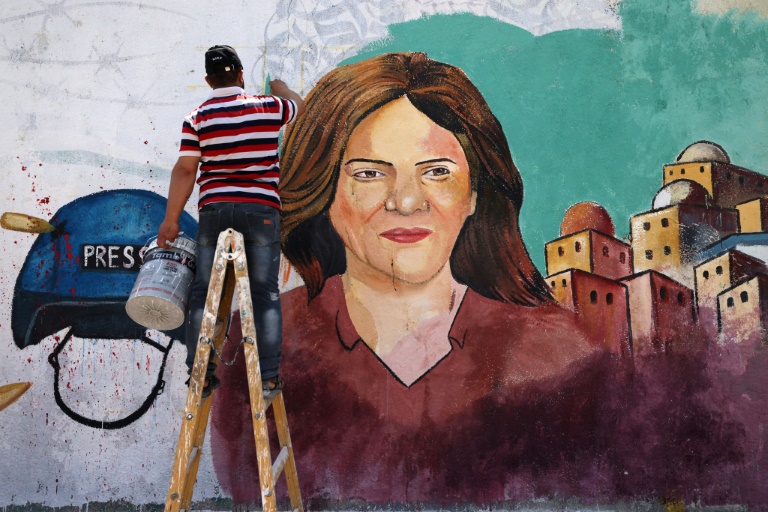
Veteran Al Jazeera journalist Shireen Abu Akleh will be buried alongside her parents in a cemetery near Jerusalem’s Old City on Friday, two days after she was shot dead in an Israeli army raid.

The Palestinian American’s body has been transferred from the occupied West Bank, and her funeral will be held at a Jerusalem church.

Israel and Palestine have traded blame over the killing of Abu Akleh, 51, a journalist with the Qatar-based network’s Arabic service, during clashes in the Jenin refugee camp.

The United States, European Union and United Nations have backed calls for a full investigation into what Al Jazeera labelled a deliberate killing “in cold blood”, but the Palestinian Authority (PA) has rejected holding a joint probe with Israel.

In a sign of Abu Akleh’s prominence, she was given what was described as a full state memorial at Palestinian president Mahmud Abbas’s Ramallah compound on Thursday, with officials, foreign diplomats and a long stream of mourners present.

“Her voice entered every home, and her loss is a wound in our hearts,” said mourner Hadil Hamdan.

Thousands lined the route as her coffin, draped in the Palestinian flag, was driven through the West Bank city, where a street is to be renamed in her honour.

Many held flowers, wreaths and pictures of the slain journalist, who has been widely hailed for her bravery and professionalism through her coverage of the conflict.

– ‘Sister of all Palestinians’ –

“This crime should not go unpunished,” Abbas said during the memorial, adding that the Palestinian Authority held Israel “completely responsible” for her death.

Immediately after the shooting, Israeli Prime Minister Naftali Bennett had said it was “likely” Abu Akleh was killed by stray Palestinian gunfire.

But a few hours later, Israeli Defence Minister Benny Gantz said that it could have been “the Palestinians who shot her” or fire from “our side”.

While reporting in Jenin, Abu Akleh was wearing a bulletproof vest emblazoned with the word “press”, as well as a helmet.

On a visit to Tehran, Qatar’s Emir Sheikh Tamim bin Hamad Al-Thani blamed “Israeli occupation forces” for the “heinous crime”.

Grief over Abu Akleh’s killing spilled beyond Palestine, with protests erupting in Turkey, Sudan and elsewhere.

She “was the sister of all Palestinians,” her brother Antoun Abu Akleh told AFP.

Draped in a Palestinian scarf, mourner Tariq Ahmed, 45, described the death as a “tragedy for all the nation”, comparing his grief to what he felt at the funeral of Palestinian leader Yasser Arafat.

“I have not felt this pain since Arafat died,” Ahmed said.

Ibrahim Abu Allan, 52, attended the memorial in his wheelchair, having travelled from the southern West Bank. 

“The road was difficult, but Shireen deserves a farewell,” he said.

– No joint probe –

A coffin for Abu Akleh, a Palestinian Christian born in Israeli-annexed east Jerusalem, began its journey to Jerusalem to the drumbeat of a marching band, as crowds chanted slogans demanding an end to Palestinian security cooperation with Israel.

Israel has publicly called for a joint probe and stressed the need for Palestinian authorities to hand over the fatal bullet for forensic examination.

But Abbas said the proposal had been rejected.

The European Union has urged an “independent” probe while the United States demanded the killing be “transparently investigated”, calls echoed by UN human rights chief Michelle Bachelet.

PA official Hussein Al-Sheikh, a close Abbas confidant, said the Palestinian “investigation would be completed independently”.

An initial autopsy and forensic examination were conducted in Nablus in the Israel-occupied West Bank hours after her death.

– New Jewish settlements –

In a move likely to further inflame West Bank tensions, Israel on Thursday advanced plans for 4,427 Jewish settler homes. 

About 475,000 settlers already live in the West Bank, alongside some 2.7 million Palestinians, in communities widely regarded as illegal under international law.

Settlement monitor Peace Now warned the announcement “deepens the occupation,” while right-wing Interior Minister Ayelet Shaked, a member of Bennett’s religious-nationalist Yamina party, hailed a “day of celebration for the settler movement.”

Tensions had already risen with a wave of attacks that have killed at least 18 people in Israel since March 22, including an Arab-Israeli police officer and two Ukrainians.

A total of 31 Palestinians and three Israeli Arabs have died during the same period, according to an AFP tally, among them perpetrators of attacks and those killed by Israeli security forces in West Bank operations.

Powell wins second term as Fed chief as inflation battle rages

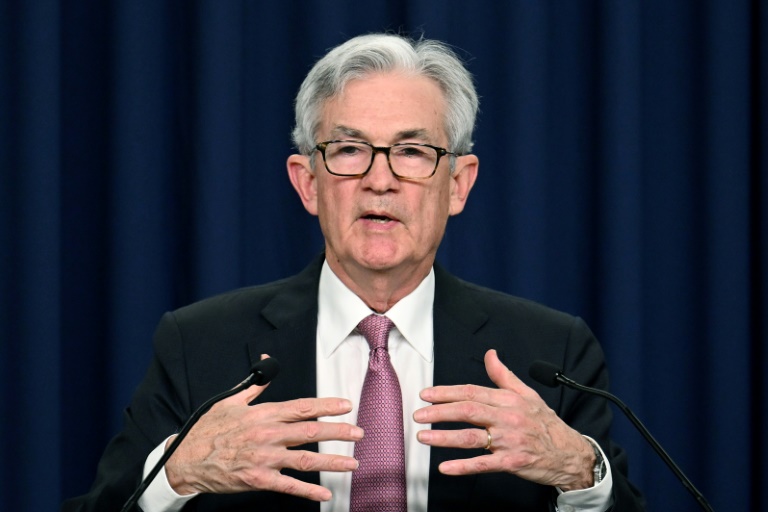
The US Senate on Thursday confirmed Jerome Powell to a second term as head of the Federal Reserve, as the central bank ramps up its fight to crush soaring inflation.

The vote came amid inflation that has hit a 40-year high, fueled by the conflict in Ukraine and sanctions imposed on Russia, as well as Covid-19 restrictions in China that have raised concerns the global supply snarls may worsen.

The Fed chair has said his primary focus is on getting inflation under control, but acknowledged the effort could be painful.

US President Joe Biden, whose popularity has taken a hit from the soaring inflation and record gasoline prices, has repeatedly said that tackling the issue is primarily a job for the Fed.

“I am pleased to see the Senate take a step forward on my agenda to get inflation under control by confirming my nominees to the Fed,” he said in a statement after the vote.

Powell, who first joined the Fed board in 2012, led the central bank as it slashed the benchmark interest rate to zero at the start of the pandemic in March 2020 and pumped money into the financial system to prevent a severe downturn in the world’s largest economy.

Now, he is overseeing efforts to cool price pressures affecting American families.

The Fed last week announced its largest rate hike since 2000 and signaled similar increases were likely in the coming months.

The challenge for Powell and the Fed is to turn down the heat on inflation without tipping the United States into recession.

While he has expressed confidence the economy is strong enough to withstand the tighter monetary policy, Powell said it will be challenging amid the unprecedented global shocks and “may actually depend on factors that we don’t control.”

In an interview with Marketplace on Thursday, he renewed his warning that “the process of getting inflation down to two percent will also include some pain.”

But “the most painful thing would be if we were to fail to deal with it and inflation were to get entrenched in the economy at high levels.”

– Delayed confirmation –

Powell, a Republican, enjoyed broad bipartisan support in the 80-19 vote — but also bipartisan opposition. Six Democrats voted against him, including progressive senators Bernie Sanders and Elizabeth Warren, who established the Consumer Financial Protection Bureau.

“Working families should not bear the cost of fighting inflation,” Warren tweeted after the vote. “As Fed Chair, Jerome Powell must focus on strengthening our economy without slamming the brakes on its growth or hurting families already struggling with higher prices.”

Powell had continued at the helm of the central bank even after his first four-year term officially expired February 4.

His confirmation was delayed by the battle to approve Lisa Cook to join the Fed board — the first Black woman to serve in the post — who was finally confirmed on Tuesday with only Democratic votes.

The Senate late Wednesday also confirmed Philip Jefferson to the board, marking the first time the institution has had more than one Black governor.

With the latest additions, the Fed board will be just one short of its full complement of seven governors. 

In his statement, Biden urged the Senate to confirm his final nominee, Michael Barr, as vice chair for supervision.

The US president’s first pick for the role of top Fed banking cop, Sarah Bloom Raskin, withdrew her name from consideration in March when it became clear she would not have sufficient support due to opposition from Republicans and from a key Democratic lawmaker over her stance on climate change issues in banking supervision.

Cook, a professor of economics and international relations at Michigan State University, and Jefferson, of Davidson College, each have researched inequality in the labor market. 

Powell has repeatedly stressed the importance of ensuring economic opportunities extend to disadvantaged groups — a notable change of focus in an economy where Black workers face far higher unemployment rates than other racial groups.

Jefferson is only the fourth Black man to serve as a Fed governor.

Twitter execs exit, hirings halt as Musk buy looms

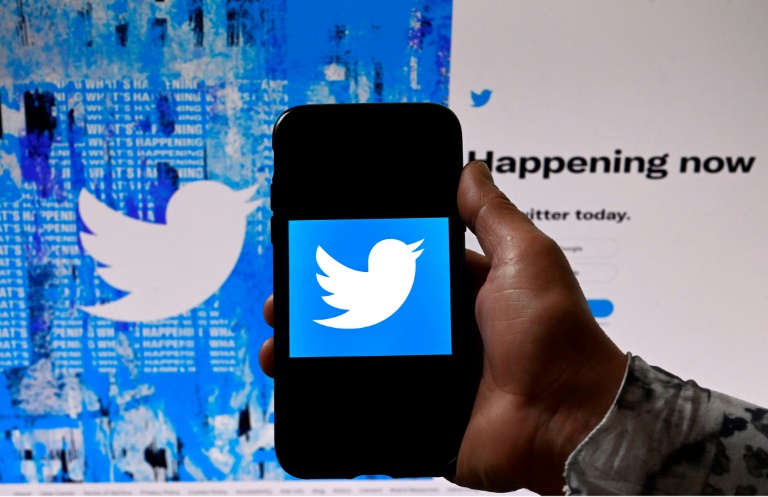
Twitter confirmed Thursday that two senior executives are heading for the exit and it has paused most hiring, as Elon Musk stands poised to become the global messaging platform’s new owner.

Kayvon Beykpour, a general manager who leads research, design and engineering at Twitter, is leaving along with head of products Bruce Falck, a Twitter spokesperson told AFP.

Beykpour however said he was ousted from the San Francisco-based tech company.

“The truth is that this isn’t how and when I imagined leaving Twitter, and this wasn’t my decision,” Beykpour, who is on paternity leave, said in a tweet.

Twitter chief Parag Agrawal “asked me to leave after letting me know that he wants to take the team in a different direction,” he added.

Twitter also confirmed that, effective this week, it is pausing all hiring except for business-critical roles.

Musk’s $44-billion deal to buy Twitter was announced last month but still needs the backing of shareholders and regulators.

The takeover is expected to close later in 2022, with Musk — who runs space exploration endeavor SpaceX and electric automaker Tesla — stepping in as its boss at least for a little while. 

Musk is on record saying he would lift the ban Twitter slapped on Donald Trump, contending that kicking the former US president off the platform “alienated a large part of the country.”

Musk’s endorsement of a Trump return triggered fears among activists that Musk would “open the floodgates of hate.”

Trump has stated publicly he would not come back to Twitter if permitted, sticking instead with his own social network, Truth Social, which has failed to gain traction.

Trump was booted from Twitter and other online platforms after supporters, fired up by his tweets and speech alleging election fraud, attacked the US Capitol on January 6, 2021 in a deadly bid to stop Joe Biden from being certified as winner of the presidential election two months earlier.

Musk reasoned that permanent bans at Twitter should be rare, and reserved for accounts that are spam, scams or run by software “bots.”

Activist groups have called on Twitter advertisers to boycott the service if it opens the gates to abusive and misinformative posts with Musk as its owner.

The fate of Twitter’s top attorney, deemed a moral champion of the platform, has been in doubt since Musk tweeted displeasure with content moderation she had carried out.

The lawyer, Vijaya Gadde, has led efforts to battle bullying and posts that could lead to real-world harm such as the US Capitol riot.

She was involved in the decision to ban Trump, and others including removing political advertising from the app.

Twitter execs exit, hirings halt as Musk buy looms

Twitter confirmed Thursday that two senior executives are heading for the exit and it has paused most hiring, as Elon Musk stands poised to become the global messaging platform’s new owner.

Kayvon Beykpour, a general manager who leads research, design and engineering at Twitter, is leaving along with head of products Bruce Falck, a Twitter spokesperson told AFP.

Beykpour however said he was ousted from the San Francisco-based tech company.

“The truth is that this isn’t how and when I imagined leaving Twitter, and this wasn’t my decision,” Beykpour, who is on paternity leave, said in a tweet.

Twitter chief Parag Agrawal “asked me to leave after letting me know that he wants to take the team in a different direction,” he added.

Twitter also confirmed that, effective this week, it is pausing all hiring except for business-critical roles.

Musk’s $44-billion deal to buy Twitter was announced last month but still needs the backing of shareholders and regulators.

The takeover is expected to close later in 2022, with Musk — who runs space exploration endeavor SpaceX and electric automaker Tesla — stepping in as its boss at least for a little while. 

Musk is on record saying he would lift the ban Twitter slapped on Donald Trump, contending that kicking the former US president off the platform “alienated a large part of the country.”

Musk’s endorsement of a Trump return triggered fears among activists that Musk would “open the floodgates of hate.”

Trump has stated publicly he would not come back to Twitter if permitted, sticking instead with his own social network, Truth Social, which has failed to gain traction.

Trump was booted from Twitter and other online platforms after supporters, fired up by his tweets and speech alleging election fraud, attacked the US Capitol on January 6, 2021 in a deadly bid to stop Joe Biden from being certified as winner of the presidential election two months earlier.

Musk reasoned that permanent bans at Twitter should be rare, and reserved for accounts that are spam, scams or run by software “bots.”

Activist groups have called on Twitter advertisers to boycott the service if it opens the gates to abusive and misinformative posts with Musk as its owner.

The fate of Twitter’s top attorney, deemed a moral champion of the platform, has been in doubt since Musk tweeted displeasure with content moderation she had carried out.

The lawyer, Vijaya Gadde, has led efforts to battle bullying and posts that could lead to real-world harm such as the US Capitol riot.

She was involved in the decision to ban Trump, and others including removing political advertising from the app.

Close Bitnami banner
Bitnami