World

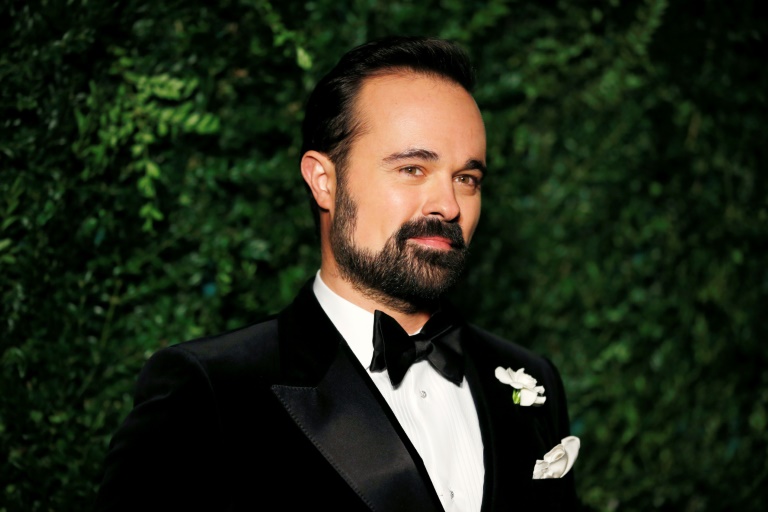
UK govt accused of 'cover-up' over Russian-born press baron

The UK government was accused Thursday of a “cover-up” after refusing to release security advice issued about the controversial 2020 appointment of a Russian-born newspaper baron to parliament.

Prime Minister Boris Johnson’s government cited “the need to protect national security” for withholding the advice it received about granting a peerage to Evgeny Lebedev.

Opposition parties have demanded more transparency over the role Johnson played in appointing his friend Lebedev — whose father was a KGB officer — to the House of Lords.

MPs earlier this year approved a motion seeking to force ministers to release sensitive documents related to the nomination to the upper house of parliament.

But in response the government released only a handful — including the blank form Lebedev needed to complete for the peerage — which shed virtually no light on the security considerations.

Minister Michael Ellis said the limited disclosure “reflects the need to protect national security” and to “maintain integrity” in the honours system. 

But the deputy leader of the main opposition Labour party decried the decision.

“This looks like a cover-up and smells like a cover-up because it is a cover-up,” Angela Rayner said.

Lebedev’s peerage has long proved controversial for Johnson, who since Russia’s invasion of Ukraine has vowed to turn the taps off the Russian money that has flooded into Britain in recent years.

The Sunday Times has reported he was warned by Britain’s foreign intelligence service MI6 against granting Lebedev the peerage before the November 2020 approval, but pressed ahead anyway.

– ‘Normal’ –

MI6 had flagged security concerns about the owner of London’s Evening Standard newspaper as long as a decade ago, and the then head of MI6 had refused to meet him, it reported.

Johnson’s friendship with the Russian-born businessman dates back to his eight years as mayor of London from 2008.

Lebedev, who has British citizenship and also owns the Independent newspaper, denied in March that he was a security risk or “some agent of Russia”.

Johnson has come under wider pressure to explain Russian donations to his ruling Conservatives, as London has stepped up sanctions against Russia.

On Thursday, he denied any impropriety after the New York Times reported that one of his party’s biggest donors is accused of secretly funnelling large sums to it from a Russian account.

The newspaper said Barclays Bank had raised suspicions about the source of a 2018 donation of $630,225 — at the time worth £450,000 — from Ehud Sheleg, a wealthy London art dealer who was the Conservative Party’s treasurer from 2018 to 2021.

It cited documents filed by the bank with UK authorities that alleged the money had originated in a Russian account of Sheleg’s father-in-law, Sergei Kopytov.

Kopytov was once a senior politician in the previously pro-Kremlin government of Ukraine who now owns businesses in Russian-occupied Crimea and Russia, the report added.

Sheleg denied to the paper that his father-in-law funded the donation.

Meanwhile Johnson insisted all donations “are registered in the normal way”. 

“To give donations to a political party in this country, you’ve got to be from the UK,” he added.
Biden administration cancels 3 offshore oil lease sales

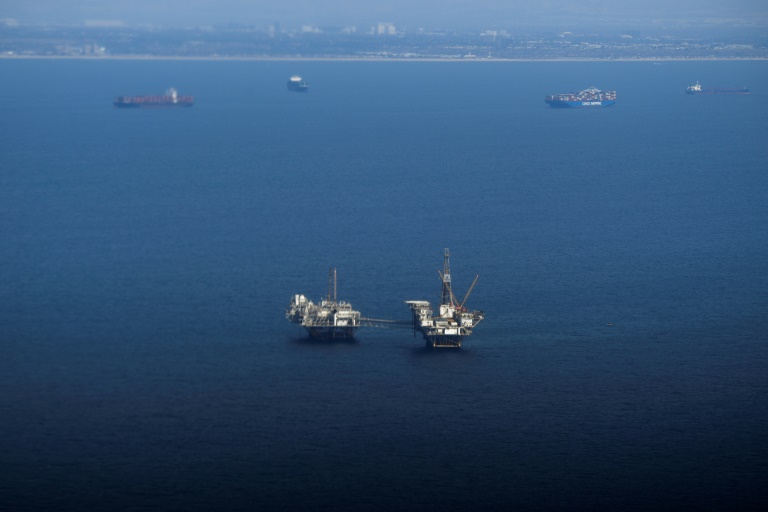
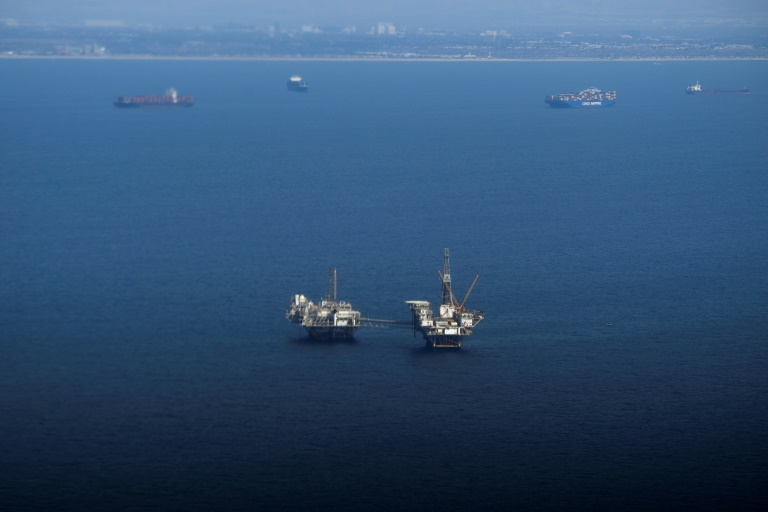
The Biden administration has scotched plans to hold three offshore oil and gas lease sales in Alaska and the Gulf of Mexico, a government spokeswoman said Thursday. 

Citing a lack of interest from the industry, the Interior Department won’t offer tracts at the proposed Cook Inlet in Alaska, an agency spokeswoman said.

The department also will not undertake a pair of lease sales in the Gulf of Mexico “as a result of delays due to factors including conflicting court rulings that impacted work on these proposed lease sales,” the spokeswoman said.

The action comes as polling shows US President Joe Biden struggling with low approval ratings amid consumer fury at high gasoline prices and inflation in other household staples.

Reaching first oil and gas production from a federal offshore lease typically takes at least one or two years of drilling and other work. That means the decision on the lease sales will not affect the near-term supply outlook driving commodity prices.

Still, Republican politicians and business lobby groups slammed the Biden administration’s energy policy, which has emphasized the need for more green energy to address climate change.

“President Biden’s administration is actively making high gas prices worse,” said Senator Bill Cassidy, Republican of Louisiana.

“When we need to unleash American energy production, the Biden administration kills opportunities at every turn. The administration’s actions over the past year and a half have been an all-out assault on American energy, Louisiana jobs, and families’ pocketbooks.”

The US Chamber of Commerce and the American Petroleum institute also blasted the decision, with the latter pointing to a problematic “pattern” in which the Biden administration “talks about the need for more supply and acts to restrict it.”

But the Alaska Wilderness League called the development “great news for Alaska,” touting it as a “huge win for the environment, our climate, and endangered Cook Inlet belugas.”

Biden administration cancels 3 offshore oil lease sales

The Biden administration has scotched plans to hold three offshore oil and gas lease sales in Alaska and the Gulf of Mexico, a government spokeswoman said Thursday. 

Citing a lack of interest from the industry, the Interior Department won’t offer tracts at the proposed Cook Inlet in Alaska, an agency spokeswoman said.

The department also will not undertake a pair of lease sales in the Gulf of Mexico “as a result of delays due to factors including conflicting court rulings that impacted work on these proposed lease sales,” the spokeswoman said.

The action comes as polling shows US President Joe Biden struggling with low approval ratings amid consumer fury at high gasoline prices and inflation in other household staples.

Reaching first oil and gas production from a federal offshore lease typically takes at least one or two years of drilling and other work. That means the decision on the lease sales will not affect the near-term supply outlook driving commodity prices.

Still, Republican politicians and business lobby groups slammed the Biden administration’s energy policy, which has emphasized the need for more green energy to address climate change.

“President Biden’s administration is actively making high gas prices worse,” said Senator Bill Cassidy, Republican of Louisiana.

“When we need to unleash American energy production, the Biden administration kills opportunities at every turn. The administration’s actions over the past year and a half have been an all-out assault on American energy, Louisiana jobs, and families’ pocketbooks.”

The US Chamber of Commerce and the American Petroleum institute also blasted the decision, with the latter pointing to a problematic “pattern” in which the Biden administration “talks about the need for more supply and acts to restrict it.”

But the Alaska Wilderness League called the development “great news for Alaska,” touting it as a “huge win for the environment, our climate, and endangered Cook Inlet belugas.”

Most wanted Rwanda genocide fugitive 'died in 2006'

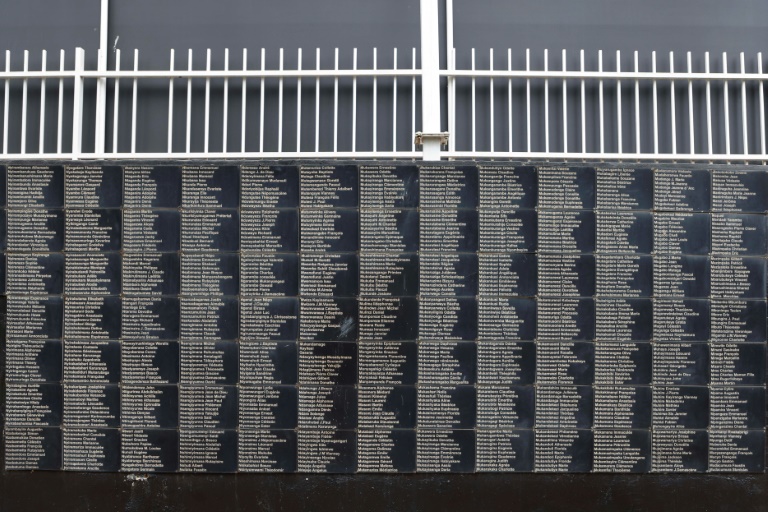
The last major fugitive wanted for his role in the 1994 Rwandan genocide, Protais Mpiranya, died in Zimbabwe in 2006, UN prosecutors probing the case said on Thursday.

Charged with genocide, war crimes and crimes against humanity, Mpiranya commanded Rwanda’s presidential guard, a feared outfit accused of targeted assassinations during the 100-day massacre of Tutsis and moderate Hutus.

Prosecutors had spent more than two decades hunting him following his indictment by the International Criminal Tribunal for Rwanda in 2000, but in fact he had died of tuberculosis nearly 16 years ago.

“Following a challenging and intensive investigation, the OTP (office of the prosecutor) has determined that Mpiranya died on October 5, 2006, in Harare, Zimbabwe,” the Mechanism for International Criminal Tribunals announced in The Hague.

It said Mpiranya was the “last of the major fugitives indicted by the International Criminal Tribunal for Rwanda (ICTR) and alleged to have been a senior leader of the 1994 Genocide against the Tutsi in Rwanda”.

He was the key remaining wanted figure following the arrest of Felicien Kabuga in France two years ago.

“There are now only five outstanding fugitives” wanted by the UN tribunal, based in The Hague and Arusha, it said.

The tribunal’s chief prosecutor Serge Brammertz hailed the news.

“Accounting for the last of the major… fugitives, Protais Mpiranya, is an important step forward in our continued efforts to achieve justice for the victims of the 1994 genocide against the Tutsi,” Brammertz said.

– ‘Deliberately concealed’ –

Mpiranya was allegedly among those who ordered the murder of then prime minister Agathe Uwilingiyimana, 10 Belgian soldiers protecting her, and several other leading politicians and their families on April 7, 1994, in the early hours of the genocide.

After an indictment was issued against him, Mpiranya fled to Zimbabwe in late 2002, where he lived until his death in 2006, the tribunal said.

“Mpiranya’s presence in Zimbabwe, and later the fact of his death, were deliberately concealed by the concerted efforts of his family and associates, including up to the present,” the MICT said, adding it would ask judges to close the case.

Mpiranya fled into the neighbouring Democratic Republic of Congo, then called Zaire, in mid-1994 after the genocide, prosecutors said.

He then moved to Cameroon and two years later returned to DRCongo.

After fighting as a high-ranking Hutu rebel commander alongside Zimbabwean forces during the Second Congo War, which broke out in 1998, Mpiranya slipped into Zimbabwe in 2002 when a peace accord was signed in South Africa.

“Fearing capture as one of the most prominent ICTR fugitives, Mpiranya fled to Zimbabwe… where officials facilitated his entry,” prosecutors said.

There he was joined by his wife and daughters, who later left for Britain.

– ‘Anxiety and fear’ –

“For four years, Mpiranya was able to avoid arrest and find some refuge in Zimbabwe, where he lived in a reasonably affluent area of Harare,” prosecutors said.

Over the years however, his status as an international fugitive “had a significant impact”. His movements were severely limited and he was increasingly forced to rely on a small network of his most trusted associates.

“The final years of his life were marked by anxiety and fear that his location would be discovered and that he would be tried for his crimes,” prosecutors said.

Mpiranya died on October 5, 2006, in Harare’s West End Hospital of pulmonary tuberculosis. He was using the alias of Ndume Sambao, they said.

Mpiranya was “subsequently buried in a cemetery outside of Harare” under his alias in a ceremony attended only by family and associates.

His family and associates had since “gone through great lengths to conceal his death and place of burial”, giving false statements to investigators and coaching others to lie if questioned, they said.

“These efforts — which continue to the present — obstructed investigations and prevented identification of Mpiranya’s remains until earlier this year,” they said.

An estimated 800,000 Tutsis and moderate Hutus perished in 100 days of slaughter in 1994 in which Hutu militiamen massacred Tutsis taking cover in churches and schools.

Low French rainfall adds new cloud to global food market

French farmer Robin Lachaux is worried about his wheat. In normal years, it flowers and bulks up in May thanks to regular spring rainfall, but this year hot and dry conditions risk stunting its progress.

“If we don’t water it today, we’ll lose 50 percent of our output,” the young farmer in an orange cap and sweatshirt from Sully-sur-Loire in central France told AFP.  

“We wouldn’t normally water at this time of the year but the dry periods are coming earlier and earlier,” he added as he positioned his pressure hoses and irrigation equipment.

France is Europe’s agricultural powerhouse, the biggest grain producer in the 27-country bloc and the world’s fourth or fifth biggest wheat exporter.

Its annual production influences global prices which are already at record levels because the war in Ukraine looks set to wipe out a chunk of the country’s production, leading to fears of a global hunger crisis.

On Monday, the French agricultural ministry warned about the impact of an unseasonably hot and dry stretch which “will have an impact on cereal production” in France following lower-than-average rainfall over the winter period.

As well as wheat, other crops sown in winter such as barley are in a key development stage in May, while corn and sunflower production over the summer could also be hit.

“There’s not a region that’s not affected,” the head of French farmers’ union FNSEA, Christiane Lambert, told AFP.

“Each day that passes, we’re seeing the ground cracking more… if it carries on like this, those that can irrigate will be okay, but the others will have dramatic decreases in production.”

The French national weather service said the country was in the grip of a hot spell that is “notable for its timing, its duration and its geographical spread”, with a 20-percent drop in rainfall between September 2021 and April 2022.

– Record highs – 

World food prices hit an all-time high in March following Russia’s invasion of Ukraine, which accounted for 20 percent of global wheat and maize exports over the past three years, according to the UN’s Food and Agriculture Organization.

Ukrainian ports are blockaded by Russian naval vessels and French data analysis firm Kayrrosa recently calculated that the area planted with wheat had been reduced by a third this year because of the conflict, according to satellite imagery.

Production could fall by as much as 50 percent this year, according to government and industry forecasts, with some farmers abandoning their fields to join the army.

The strains on global markets have led to warnings from NGOs and the United Nations that hunger or even famine could strike vulnerable import-dependent countries across Africa and the Middle East.

With top wheat-producing states in the United States such as Kansas and Oklahoma also suffering from drought-like conditions, poor French yields could be particularly significant in 2022.

“We already had markets that were very nervous. This is adding to tensions,” Nathan Cordier, a grain market analysts at agricultural consultancy Agritel, told AFP. “France is one of the major players in the wheat market and people are counting on it.

“The question is whether export volumes will be enough.”

– Hunger – 

Current wheat prices in Europe are at a record 400 euros a tonne ($420), up from an already high level of around 260 euros a tonne at the start of the year before Russia’s invasion of Ukraine.

The high prices are expected to stimulate more planting in the United States and the FAO has forecast that higher yields in Canada and Russia, as well as Pakistan and India could help compensate below-average harvests in western Europe.

Some of the recent price rises are down to short-term shortages caused by the sudden end to Ukrainian supplies, as well as some farmers holding back from selling their produce in anticipation of higher prices going forward.

“As prices are very high, with wheat at more than 400 euros a tonne for delivery in September, they’re waiting,” Edward de Saint-Denis, a commodities trader at Plantureux and Associates, a French brokerage.

But as traders and farmers scan the weather forecasts and devise their trading strategies, aid groups warn that lives are at risk in some of the most vulnerable places on earth such as war-wracked Yemen or countries in the arid Sahel region of northern Africa.

“According to our research, food price rises caused by Russia’s invasion of Ukraine mean that some local communities in developing countries are already spending more than triple what they were previously paying for food, causing families to skip meals and take their children out of school,” Teresa Anderson from ActionAid, a British charity, told AFP.

A prolonged drought in France could make that much worse.

“It would deepen hunger, poverty and debt for low-income families in Africa, Asia and Latin America, making an already desperate situation much worse,” she said.   

Global stocks down, euro slumps over growth and inflation worries

World equities mostly fell Thursday and the euro hit a five-year dollar low as investors worried about growth amid stubborn inflation and rising interest rates.

Frankfurt, London and Paris stock markets each sank following heavy falls in Asia.

Meanwhile, Wall Street was mostly lower in late morning trading, with the Dow down 0.3 percent.

Panic-stricken investors also sent virtual unit bitcoin tumbling to the lowest level since late 2020 after a dramatic collapse in some stablecoin cryptocurrencies.

Oil prices pushed higher as investors focused on supply issues.

– ‘Sticky inflation’ worries –

Data released Wednesday showed US inflation slowed to 8.3 percent in April after a four-decade peak of 8.5 percent in March, but that was less than what experts had forecast and prompted concerns inflation will remain high.

Wednesday’s stock trading is “pointing to a market that is becoming more concerned about slowing growth, and sticky inflation, aka rising stagflation and, or recession risk”, according to analyst Michael Hewson at CMC Markets. 

The dollar has gotten a boost, both as the greenback is seen as a haven in uncertain times and as the US Federal Reserve has taken the lead in raising interest rates in the face of surging inflation.

The dollar is currently at a two-decade high against a trade-weighted index of rival currencies, and on Thursday the euro slumped to a five-year dollar low at $1.0389.

“Given the combination of a relatively hawkish monetary policy stance and a dollar-positive global backdrop, we expect the dollar to grind higher against nearly all developed and emerging market currencies over the course of the Fed’s current tightening cycle,” said analysts at Capital Economics. 

Interest rates are being hiked worldwide to tackle decades-high inflation, which is fuelled mostly by rocketing energy costs. 

Both raising prices and borrowing costs threaten to halt growth in many countries, however.

London’s stock market was slammed Thursday also by news that the UK economy shrank in March on fallout from soaring inflation, increasing the prospect of a recession — or two quarters of contraction in a row.

The data sent the pound sliding to a May 2020 low at $1.2166.

World markets have been volatile for much of 2022 owing to China’s Covid-19 lockdowns, Russia’s invasion of Ukraine, and as surging inflation weighed on consumer sentiment. 

Cryptocurrency trading has also been dampening investor sentiment after two so-called stablecoins proved to be anything but. Supposedly pegged to the dollar, both TerraUSD and Tether saw the values collapse. 

“The worry is that there will be a spillover to other risk assets like stocks, which could be treated as a source of funds to meet margin calls or which could simply be subjected to an exacerbation of the negative sentiment that has had a vice grip on the market for most of the year,” said market analyst Patrick O’Hare at Briefing.com.

Bitcoin slumped below $27,000, before recovering to stand down around 6 percent at $29,091.39.

– Key figures at around 1630 GMT –

New York – Dow: DOWN 0.3 percent at 31,729.22 points

EURO STOXX 50: DOWN 0.9 percent at 3,613.43

London – FTSE 100: DOWN 1.6 percent at 7,233.34 (close)

Frankfurt – DAX: DOWN 0.6 percent at 13,739.64 (close)

Paris – CAC 40: DOWN 1.0 percent at 6,206.26 (close)

Hong Kong – Hang Seng Index: DOWN 2.2 percent at 19,380.34 (close)  

Shanghai – Composite: DOWN 0.1 percent at 3,054.99 (close) 

Tokyo – Nikkei 225: DOWN 1.8 percent at 25,748.72 (close)

Brent North Sea crude: UP 0.8 percent at $108.34 per barrel

West Texas Intermediate: UP 1.2 percent at $107.00 per barrel

Euro/dollar: DOWN at $1.0413 from $1.0513 at 2100 GMT Wednesday

Pound/dollar: DOWN at $1.2228 from $1.2251

Euro/pound: DOWN at 85.18 pence from 85.81 pence

Dollar/yen: DOWN at 128.23 yen from 129.97 yen

burs-lcm/rl/har

Canada gymnasts break silence on abuses and sport's 'toxic culture'

They excelled in the athletic spotlight, but their feats on the beam and bars masked a darker reality: Canadian gymnasts are taking legal action to denounce a “toxic” culture of physical, sexual and psychological abuse by the sport’s top brass.

Having tolerated the harm for decades, victims around the world have come forward in the wake of a US gymnastics scandal that broke in 2015 before spreading abroad, including to Britain where athletes launched a similar legal action last year.

As a child gymnast in Vancouver, Amelia Cline dreamed of Olympic glory. In her teens, the elite athlete devoted thirty hours a week to training.

“Unfortunately the early years of my gymnastics days, as positive as they were, they’ve been somewhat wiped out by those last three years that were so brutal,” the former gymnast, now 32, told AFP.

She and other athletes on Wednesday filed a lawsuit against Gymnastics Canada and several provincial federations for tolerating a climate of abuse and mistreatment for decades.

“The lawsuit is essentially designed to hopefully hold these institutions accountable for systemic psychological, emotional, physical and sexual violence,” she said.

At the end of March, a group of more than 70 present and former gymnasts published an open letter to Sports Canada denouncing a “toxic culture and abusive practices that persist within Canadian gymnastics.”

The number of signatories has since grown to more than 400, with the group calling for an independent investigation to shed light on the sport’s problems.

The “general public really doesn’t understand the magnitude of the abuses that are occurring at the gyms,” said Kim Shore, a former gymnast and spokeswoman for Gymnast For Change Canada, who says her daughter has also suffered mistreatment in the sport.

Micheline Calmy-Rey, president of the Gymnastics Ethics Foundation created in 2019 in response to the scandal said “it seems logical to us that an independent investigation be conducted.”

Gymnastics Canada has not yet responded to a request for comment about the lawsuit by AFP.

– ‘Grilled about my weight’ –

In a blog post, Cline says that at 14, she weighed 85 pounds (38.5 kg) and was “grilled about my weight on a weekly basis.”

Some 20 years after giving up gymnastics, she says she still suffers from the “long-term effects” of mistreatment that left her with chronic pain and made it hard for her to maintain healthy eating habits.

Like many of her peers, she laments a “culture of fear and silence” in gymnastics clubs across the country. “You don’t question what (the coaches) are doing. They’re the experts, and they’re the ones who are going to take you to the Olympics,” she explained.

“I was always afraid of my coaches,” another gymnast told AFP on condition of anonymity. “I loved gymnastics. I loved travelling. I loved being with the other girls, but I was so afraid of them.”

She described a powerful loneliness felt by child gymnasts, whose parents were often banned from practices. Very young athletes were even told never to speak about their training.

“Many times the kids are told what happens in the gym stays in the gym,” recalled Shore.

She says gymnastics has been corrupted by a “culture of control and dominance” over athletes.

“The provincial bodies are made up of individuals who are conflicted,” she said, explaining that “in some provinces, the chair of the board is also the head coach of a gymnastics club.”

Now that a claim has been filed and the problems have been exposed, Cline and her lawyers believe that the number of plaintiffs will increase “significantly.”

Cline just wishes her nightmare will never be experienced by other young gymnasts. 

“There’s really no other mechanism within Canada to actually hold institutions like this accountable except through the legal system,” she said.

French far-right newcomer Zemmour to seek parliamentary seat

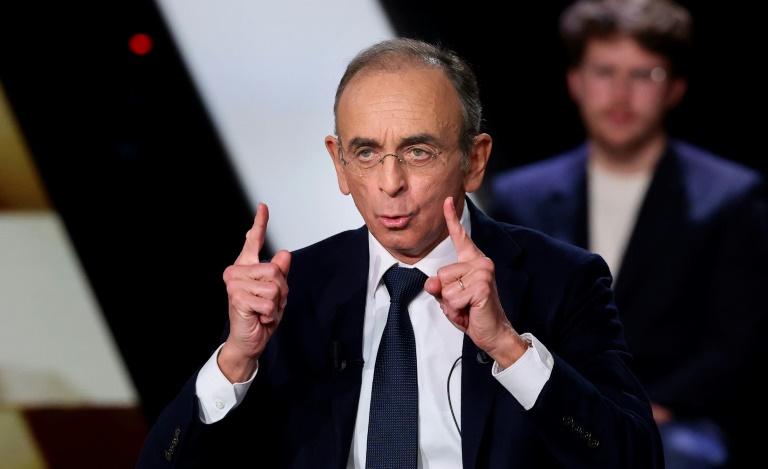
French far-right TV pundit-turned-politician Eric Zemmour said Thursday he would seek a seat in parliament standing in the glitzy constituency around Saint-Tropez, three weeks after failing with a presidential bid.

The Paris-born 63-year-old is seeking to establish his new party, Reconquest, as a national political force in parliamentary elections next month, but is expected to struggle.

“I will lead our beautiful and major fight along with our 550 candidates,” Zemmour wrote on Twitter, announcing his plans to stand in Saint-Tropez on the French Riviera where he recorded one of his highest scores nationally in the presidential election last month.

Long known as a commentator and writer with virulent anti-Islam views, Zemmour launched his political career late last year in a bid to unseat President Emmanuel Macron.

He was eliminated in the first round of April’s presidential polls with a score of seven percent and has since failed to agree a tie-up with veteran far-right leader Marine Le Pen and her deep-rooted National Rally party.

Some Zemmour aides had advised him to sit out the parliamentary elections for fear another defeat could permanently tarnish his career.

The constituency around Saint Tropez, long a magnet for the rich and famous, is seen as highly contested and is currently held by Macron’s Republic on the Move party, which has been re-named Renaissance.

Macron won re-election on April 24, defeating Le Pen by a score of 59 percent to 41.

Zemmour has several convictions for racist hate speech, but he was cleared of a possible crime of denying the Holocaust on Thursday.

An appeals court in Paris upheld a previous judgement in his favour about his view that France’s war-time leader Philippe Petain, who collaborated with the Nazi regime, had “saved” French Jews.

The claim is contested by most historians, who point to Petain’s well-documented anti-Semitism, but the court ruled it did not amount to denying the existence or gravity of the Holocaust.

Finland poised for NATO membership as Ukraine war crimps Russian gas

Finland on Thursday took a step towards fast-track membership of NATO, triggering a blunt warning from the Kremlin, as the war in Ukraine throttled supplies of Russian gas to Europe.

In Geneva, the UN Human Rights Council decided to probe alleged Russian atrocities in Ukraine, in a vote overwhelmingly approved by its members but snubbed by Russia.

Announcing a seismic change in policy since Russia invaded its neighbour in February, Finland’s leaders declared their nation must apply to join NATO “without delay.”

“NATO membership would strengthen Finland’s security,” President Sauli Niinisto and Prime Minister Sanna Marin said in a joint statement in Helsinki. 

“As a member of NATO, Finland would strengthen the entire defence alliance.”

But Kremlin spokesman Dmitry Peskov warned Russia would “definitely” see Finnish membership as a threat.

The Russian foreign ministry said Moscow would be “forced to take reciprocal steps, military-technical and other, to address the resulting threats to its national security.”

In launching the invasion of Ukraine, President Vladimir Putin cited in part what he called the threat from NATO, which expanded eastwards after the Cold War.

The foreign ministry accused NATO of seeking to create “another flank for the military threat to our country.”

“Helsinki should be aware of its responsibility and the consequences of such a move,” it said. 

Finland has been a declared neutral in East-West crises for decades, and as recently as January its leaders ruled out NATO membership of the alliance.

But the February 24 invasion shocked the Nordic nation.

It shares a 1,300-kilometre (800-mile) border with Russia and its past is studded with conflict with its giant neighbour.

NATO has already declared it will warmly embrace the two countries with deep pockets and well-equipped armies. 

Finland’s entry will be “smooth and swift,” NATO chief Jens Stoltenberg promised on Thursday.

Germany, France and the powerful US Senate Foreign Relations Committee also strongly voiced their support, and Britain has already pledged its assistance.

A special committee will announce Finland’s formal decision on a membership bid on Sunday. Sweden, another neutral state, is widely expected to follow its neighbour. 

– Russian gas –

Russia’s flow of gas to Europe fell meanwhile, spurring fears for Germany and other heavily-dependent economies.

Russian energy giant Gazprom announced it would stop supplying gas via the Polish part of the Yamal-Europe pipeline following retaliatory sanctions that Russia slapped on Western companies on Wednesday.

Gazprom also said gas transiting to Europe via Ukraine had dropped by a third — a fall it blamed on Ukraine’s pipeline operator, which the company denies, pointing the finger at Russia.

Ukraine and Poland are major supply routes for Russian gas to Europe and the two sides have kept flows going despite the conflict.

The European Union’s heavy reliance on Russian energy has made it reluctant to add oil and gas imports to sanctions that are inflicting a toll on Russia’s economy.

Germany accused Russia of using “energy as a weapon.”

“The situation is coming to a head,” Economy Minister Robert Habeck said.

The EU is struggling to overcome Hungarian resistance for plans to ban Russian oil.

Mykhailo Podolyak, a senior aide to Ukrainian President Volodymyr Zelensky, drew a parallel with the 1930s as he urged the bloc to impose an immediate embargo.

“If the leaders had acted decisively in 1938, Europe could have avoided WWII,” he wrote on Twitter. “History won’t forgive us if we make the same mistake again.”

– Shelling –

Fighting in Ukraine has been concentrated on the south and east since Russia abandoned attempts to seize Kyiv in the opening weeks of the war.

Ukraine’s presidency said shelling continued throughout Lugansk — part of the Donbas region where Ukrainian forces are fiercely opposing Russian armour and Kremlin-backed separatists.

Russian troops are trying to take complete control of Rubizhne, block a key highway between Lysychansk and Bakhmut and seize Severodonetsk, the office said.

In the northeastern region of Chernihiv three people were killed and 12 others wounded early Thursday in a strike on a school in Novgorod-Siversky, the emergency services said. 

In the southern port city of Mariupol, besieged troops in the vast Azovstal steelworks have been holding out against weeks-long bombardment, refusing demands to surrender.

Ukrainian Deputy Prime Minister Iryna Vereshchuk said “difficult talks” were underway over the evacuation of 38 seriously wounded troops.

– War crimes probe –

In Geneva, the UN Human Rights Council voted 33-2, with 12 abstentions, to investigate alleged atrocities BY Russian troops.

The resolution, brought by Ukraine, will focus on alleged crimes in the Kyiv, Chernihiv, Kharkiv and Sumy regions in late February and in March, “with a view to holding those responsible to account.”

“These have been 10 weeks of sheer horror to the people of my country,” Deputy Foreign Minister Emine Dzhaparova told the UN meeting from Kyiv.

“Only the world standing strong in solidarity with the Ukrainian people can defeat this pure evil.”

The International Criminal Court (ICC) in The Hague has already begun its own inquiry, sending investigators to the Kyiv suburb of Bucha.

The invasion has sparked an exodus of nearly six million civilians, many of whom describe torture, sexual violence and indiscriminate destruction.

Ukrainian prosecutors say they have received reports of more than 10,000 alleged crimes, with 622 suspects identified.

On Wednesday, the office said it would launch the first trial for war crimes.

Vadim Shishimarin, a 21-year-old Russian soldier, is accused of killing an unarmed 62-year-old civilian as he fled with four other soldiers in a stolen car.

– Dilemmas –

Across Ukraine, lives have been turned upside down, forcing millions to make anguished choices of how to respond.

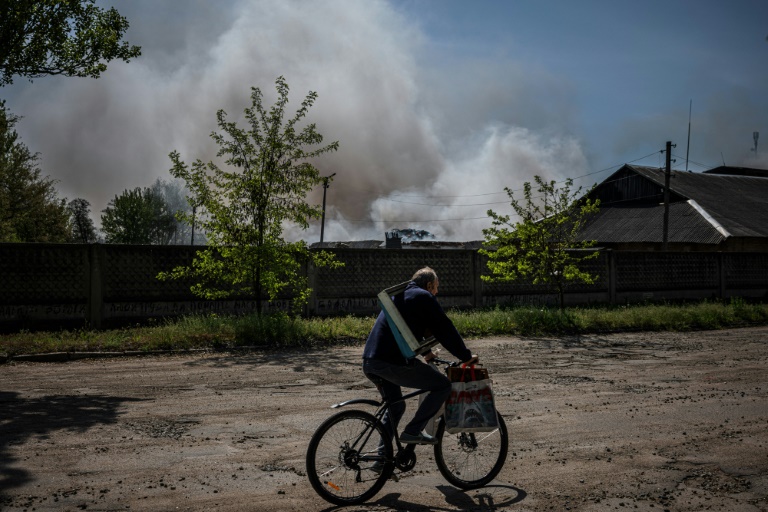
Zhanna Protsenko, a social worker in the frontline town of Orikhiv, spoke to AFP as she was about to head off on her bicycle to visit people who refused or were unable to evacuate.

“How can I leave them here?” the 56-year-old asked, standing near a hospital that was hit by a strike in the past week. 

“We work. We have no time to hide,” she said as contractors repaired rows of blown-out windows and an oil drum-sized hole blasted in the hospital’s brick facade.

bur/ri/gw

Getting used to war, Ukraine refugees flood back to Kyiv

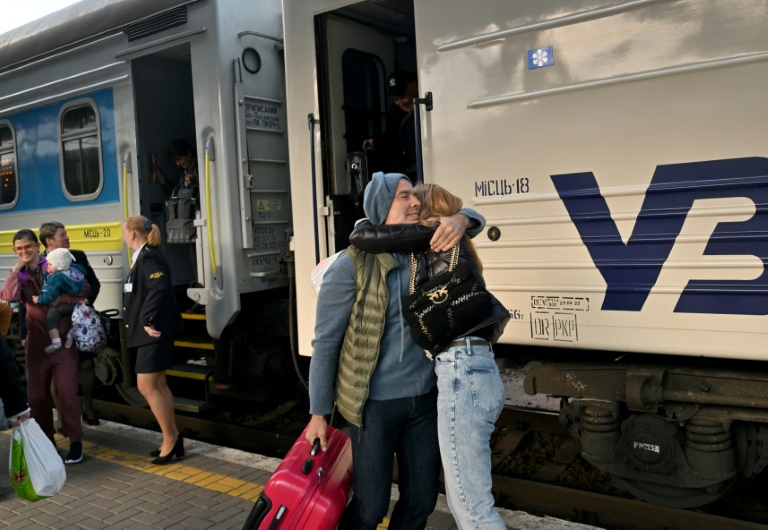
Teenager Maria Pshenychna embraces her father, Yuriy, as she descends from a train from Poland at a Kyiv station, returning home after fleeing the Russian invasion two months ago. 

The 16-year-old had tears running down her face, clutching a single suitcase.

She had fled Gostomel, one of the Kyiv suburbs that saw intense fighting at the start of Russia’s attack launched on February 24. 

“I’m so happy to be here,” she told AFP on the platform where she was reunited with her father.

“I am really thankful to the people abroad who helped us but I missed home because my mum is there with my dog.” 

Another returnee, a woman in her 30s who refused to be named, told AFP that she had cried when her train crossed into Ukraine. 

“You need to get used to living with war,” she said, returning to Ukraine after two months in Poland to rejoin her fiance. 

“In Europe, it is good but my life is in Ukraine,” she said.

She admitted that she had no idea what the immediate future would hold but believed that peace will only return to Ukraine “when (Russian President Vladimir) Putin dies”.

The pair were just some of thousands of women and children who fled the Ukrainian capital at the start of the Russian invasion who are now heading back, despite the uncertainties. 

While Ukraine has seen 5.9 million departures compared to 1.5 million returns, the number of those coming back — for the first time since the war began — exceeded those leaving this week. 

Official border figures released on May 10 showed 29,000 crossed the frontier to leave while 34,000 crossed to go back. 

– ‘Home is home’ –

So far, nearly two-thirds of the capital’s 3.5 million inhabitants have returned, Mayor Vitali Klitschko said on Tuesday, reviving a city that emptied in the first days of the Russian invasion.

Men under 60 were banned from leaving Ukraine, meaning the vast majority of refugees were women and children.

At the station in Kyiv, Roman — a 22-year-old civilian-turned-soldier who was not allowed to give his surname — was impatiently waiting for the train, holding a bouquet of flowers to give to his wife. 

“We’re a little bit scared but it’s better this way,” he said. 

Slightly further away, another man with flowers in hand is pacing incessantly. 

The train pulls in and cheers of joy erupt. 

Couples hug and kiss, children throw themselves into their fathers’ arms. 

The emotional reunions are often noisy, but sometimes more discreet, with tears. 

“We are getting used to the war, to the threat. The fear that we have now is different than it was two months ago,” explains 27-year-old Dana Pervalska, standing next to her. 

Others agree. 

“It’s calmer, with no air strikes or shelling. It’s much better now than in March,” says Natalia, who fled Kyiv for Lithuania with her six-year-old son Maxim and 14-month-old toddler. 

“Home is home. We are Ukrainian,” she shrugs, her toddler’s pushchair decorated with ribbons of blue and yellow, the colours of the Ukrainian flag. 

After two months with relatives in Lviv in western Ukraine, Olena Shalimova also decided to go back to Kyiv which she had left after an explosion close to her home. 

“Time has passed, we have accepted this terrible reality, we can coexist with it,” she said. 

– Almost back to normal –

And in Kyiv, life seems to have returned to some semblance of normality. 

Most checkpoints have disappeared, shops have reopened and supermarkets are well stocked. 

But the situation remains fragile with a nightly curfew between 10:00 pm and 5:00 am and parts of the economy at a standstill. 

“I was working in a travel agency and at a cinema so I lost all opportunities to earn money. My main task is to find a job,” says Shalimova. 

“Patriotism is not about staying at home, but about being where you will be most effective and able to help your country.” 

Despite the influx of returnees, many people can still be seen leaving at Kyiv’s train station, very aware that the conflict is far from over and fearful that the fighting may resume around the capital. 

Among them is Katerina Okhrymenko, 37, who has finally decided to leave for Germany with her 11-year-old son Lukas. 

But for her, leaving is a huge unknown — she doesn’t have any relatives there nor any resources. 

“If it wasn’t for my son, I would stay. I hope to be back soon,” she said. 

“I think our country will win.”

For her, the tears are tears of sadness. 

Close Bitnami banner
Bitnami