World

China defends Hong Kong cardinal's arrest as Western alarm grows

China on Thursday defended the arrest of a 90-year-old Catholic cardinal under Hong Kong’s national security law, a move that triggered international outrage and deepened concerns over Beijing’s crackdown on freedoms in the financial hub.

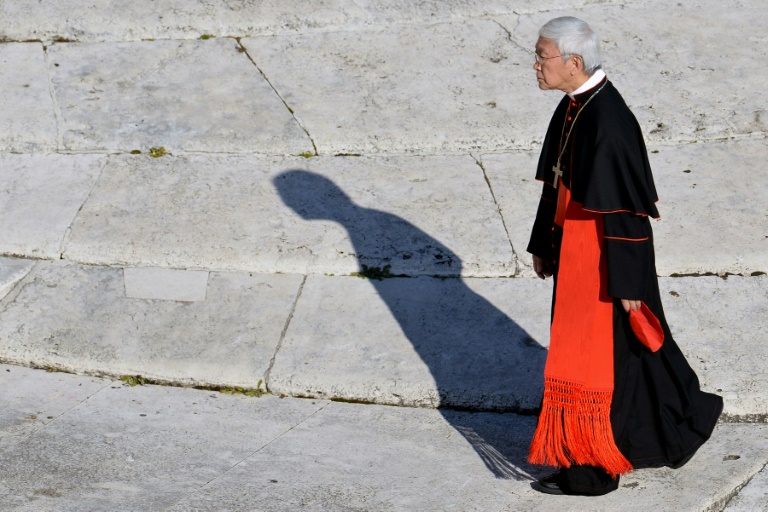
Retired cardinal Joseph Zen, one of the most senior Catholic clerics in Asia, was among a group of veteran democracy advocates arrested Wednesday for “colluding with foreign forces”.

Pop singer Denise Ho, veteran barrister Margaret Ng and prominent cultural studies scholar Hui Po-keung were also arrested, the latter as he attempted to fly to Europe to take up an academic post.

Cyd Ho, a democracy activist currently in jail over a previous protest conviction, was arrested on Thursday.

“The persons concerned are suspected of conspiracy to collude with foreign countries or foreign forces to endanger national security -– an act of severe nature,” Beijing’s foreign ministry office in Hong Kong said. 

Hong Kong’s government said the religious background of those arrested was “completely irrelevant” and that “no one can enjoy a privilege above the law”.

The five were detained for being trustees of a now-disbanded defence fund that helped pay legal and medical costs for those arrested during the huge and sometimes violent democracy protests three years ago.

China responded with a broad campaign to crush the movement and transform the city so that it more closely resembles the authoritarian mainland.

Zen and his colleagues, who were released on bail late Wednesday, join more than 180 Hong Kongers arrested to date under the security law imposed to stop the protests.

– ‘Deeply troubling’ –

Criticism came from Western nations who have accused China of eviscerating the freedoms it once promised Hong Kong.

The United States, which has sanctioned key Chinese officials over the crackdown, called on Beijing to “cease targeting Hong Kong’s advocates”.

British foreign office minister James Cleverly told parliament on Thursday the arrests were “unacceptable”.

Canadian foreign minister Melanie Joly called the arrests “deeply troubling”.

Cantonese singer and LGBTQ campaigner Denise Ho is also a Canadian national.

EU foreign policy chief Josep Borrell said he was following the arrests with “great concern”, while Human Rights Watch called it a “shocking new low for Hong Kong”.

The Vatican said it was concerned by Zen’s arrest and “following the development of the situation very closely”.

– ‘Damocles sword’ –

Zen fled Shanghai for Hong Kong after the communists took power in China in 1949, and rose to become bishop of the city.

A long-term advocate for Hong Kong’s democracy movement, he has accused the Vatican of “selling out” China’s underground Catholic church by reaching a compromise with Beijing over the appointment of bishops on the mainland.

Hong Kong’s Catholic hierarchy, including Zen’s successors, has become far less outspoken about Beijing in recent years.

The Hong Kong diocese said Thursday it was “extremely concerned about the condition and safety of Cardinal Joseph Zen”.

“We trust that in the future we will continue enjoying religious freedom in Hong Kong under the Basic Law,” it said in a statement, referencing the city’s mini-constitution that is meant to guarantee key freedoms.

Zen’s arrest sent shockwaves through the city’s Catholic community.

“The arrest of cardinal Zen is a blow for the entire church in Hong Kong, China and the world,” Hong Kong-based Italian missionary Franco Mella, 73, told AFP.

“It has become obvious that there is a Damocles sword above Zen and other church people.”

A church visitor on Thursday who gave her name as Laura said congregants feared mainland-style suppression of religion could be coming to Hong Kong.

“The space for religious freedom has apparently shrunk because even a Catholic cardinal is now under arrest,” she said.

Ta Kung Pao, a nationalist newspaper that answers to Beijing’s Liaison Office in Hong Kong, published an article Thursday accusing those arrested of “six crimes”.

They included funding lobbying trips and activist meetings with British lawmakers, providing financial aid to Hong Kong “rioters” who had fled to Canada and Taiwan, and accepting donations from overseas and the now-shuttered Apple Daily newspaper.

But most of the alleged actions cited by Ta Kung Pao took place before the enactment of the law, which is not supposed to be retroactive.

The fund disbanded last year after national security police demanded it hand over operational details including information about its donors and beneficiaries.
Ukrainian summits Everest 'for her people' as records tumble

Everest saw a clutch of records on Thursday including the most summits for a woman and the first all-Black team — and a Ukrainian climber reached the top of the world for her war-torn country.

Nepali climber Lhakpa Sherpa, 48, reached the snow-capped summit for the 10th time, breaking her own record set in 2018. 

“Lhakpa stood atop Everest at 6:15 am today. This has become her 10th ascent,” Mingma Gelu Sherpa of Seven Summit Adventure, the agency that handled her expedition, told AFP from the Everest base camp.

Record-holder Sherpa, who works at Whole Foods in Connecticut for the rest of the year, first scaled the highest mountain in the world in 2001. 

“My climbing is not for the record. Many in the young generation follow my footstep. They climb mountains following me. So, I want the young generation to keep going and not to give up,” Sherpa said in an interview with AFP before leaving for the climb. 

Thursday’s summits came five days after a group of 11 Nepali climbers fixed the rope to set the route for this climbing season.

Among them was the Full Circle Everest Expedition, the first all-Black team to summit the 8,849-metre (29,032-foot) mountain.

“The first all-Black expedition has made it to Everest. At least six from the team reached the summit along with their guides,” said Jiban Ghimire of Shangri-La Nepal Treks.   

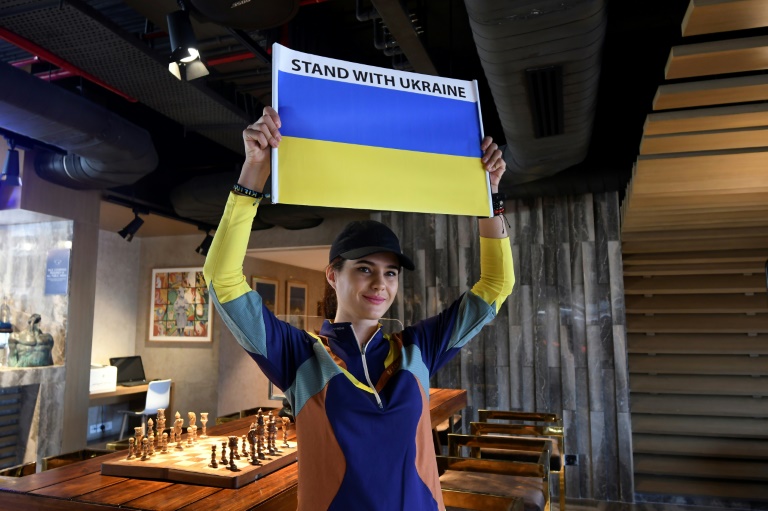
The wave of summits also saw the only Ukrainian climber this season, Antonina Samoilova reach the top with her country’s flag, her expedition company 14 Peaks Expedition confirmed.

“I climb Everest to support all the people of Ukraine, to support every warrior, every volunteer and all the people who were affected by this cruel war and to give strength to fight until we win,” the 33-year-old said in an interview before heading off to the Everest region.

Climber Lucy Westlake also became the youngest US female climber at 18 to summit Everest, Xtreme Climbers Treks and Expeditions posted on their Facebook page. 

Nepal has issued 317 permits to foreign mountaineers for this year’s Everest spring climbing season, which runs from mid-April to the end of May.

At least three climbers, a Russian and two Nepalis, have died on Everest since the season began. 

The country only reopened its peaks to mountaineers last year after the pandemic shut down the industry in 2020. 

But with coronavirus cases receding, expedition operators in Nepal are hopeful of a busier climbing season this year.

UK recession risk gathers pace as economy shrinks in March

Britain’s economy shrank in March on fallout from soaring inflation, increasing the prospect of the country falling into recession.

Official first-quarter data on Thursday showed that following solid output in January, the UK economy posted zero growth the following month and contracted by 0.1 percent in March.

It comes after the Bank of England (BoE) last week warned that Britain risks falling into recession with UK inflation expected to top 10 percent, a four-decade high, by the end of the year.

Consumer prices are surging worldwide on supply strains as economies reopen from pandemic lockdowns — and in the wake of the Ukraine war that is aggravating already high energy costs.

Britain’s economy grew 0.8 percent overall in the January-March period, the slowest quarterly growth for a year, the Office for National Statistics (ONS) said in a statement.

It compared with gross domestic product expansion of 1.3 percent in the fourth quarter of last year.

– ‘Russia disruption’ –

Responding to Thursday’s data, finance minister Rishi Sunak said Britain’s economic recovery from the pandemic was “being disrupted by (Russian President Vladimir) Putin’s barbaric invasion of Ukraine and other global challenges”.

Sunak, however, added in a statement that UK “growth in the first few months of the year was strong, faster than the US, Germany and Italy”.

The UK economy grew for a fourth quarter in a row, and is above pre-pandemic levels.

Prime Minister Boris Johnson said he expected British growth to “return very strongly in the next couple of years”.

In an interview with LBC radio, he also refused to rule out a windfall tax on energy companies as surging oil and gas prices hit households hard.

“We’ll have to look at it,” said Johnson despite repeating his displeasure at such a levy.

“I don’t like them… I don’t think they’re the right way forward,” he said, adding that a windfall tax on the likes of BP and Shell would deter them from investing in greener energy.

Johnson’s comments came one week after his Conservative party lost control of key councils in local elections — an outcome blamed in part on the cost-of-living crisis.

Darren Morgan, director of economic statistics at the ONS, said declining output in the services and production sectors resulted in overall growth contracting in March.

– ‘Recession risk’ –

“The risk of recession has just risen,” said Paul Dales, chief UK economist at Capital Economics.

He noted that the GDP figures “suggest the economy had less momentum than we thought even before the full hit from the cost-of-living crisis has been felt”.

Dales said “strong price pressures will probably mean the BoE will raise interest rates further”.

The central bank last week raised its main interest rate by a quarter point to one percent to tackle runaway UK inflation.

It was the fourth straight increase by the BoE, while its key rate now stands at the highest level since the global financial crisis in 2009. 

Raised rates have lifted borrowing costs for consumers and businesses, further impacting spending.

Taiwan's Foxconn says impact from Chinese lockdowns limited

Taiwanese tech giant Foxconn on Thursday said the impact on production from Covid lockdowns in China was “limited” and most of its facilities in the country were operating normally.

Foxconn, also known as Hon Hai, is the world’s largest contract electronics maker and assembles Apple’s iPhones as well as gadgets for many top international brands. 

It employs more than one million workers across its vast network of factories in China, where a number of cities are struggling to curb virus outbreaks. 

Chairman Young Liu said China’s pandemic controls posed challenges for the company but most plants were unaffected as they operated in a bubble with food and accommodation arranged for the workers on-site.

“At present all of our major factories are operating normally except a few. The overall impact is limited,” he said during an investors’ conference. 

“Most of our facilities are under the ‘bubble-style’ management and we’ve made a lot of preparations. We believe the impact on us would be limited if the restrictions were to continue in the future.” 

Foxconn also on Thursday announced better-than-expected first-quarter earnings, which Liu attributed in part to the company being able to “minimise the impact” of the pandemic on the supply chain.

For the January-March period, net profit grew five percent to Tw$29.45 billion ($985.5 million), while revenue rose four percent to more than Tw$1.4 trillion from a year earlier.

The firm in March halted operations in the Chinese tech hub of Shenzhen due to Covid restrictions before “fundamental operations” were resumed late that month.

In April, the company said its plant in central China’s Zhengzhou, dubbed “iPhone City”, continued to operate despite a lockdown of the area.

“The pandemic situation can change very quickly, plus there are other uncertainties involving geopolitics and inflation… We are closely monitoring these factors,” Liu said.

Palestinians honour slain journalist, reject joint probe

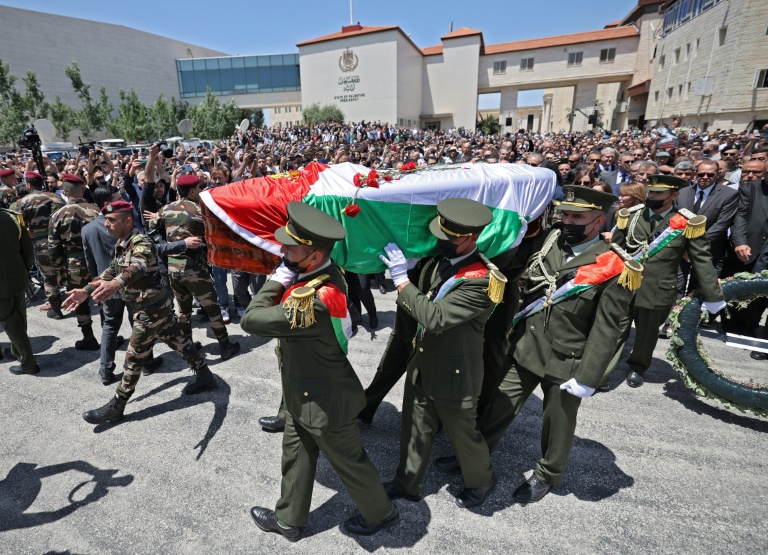
Thousands of Palestinians on Thursday honoured Al Jazeera journalist Shireen Abu Akleh at a memorial service in the occupied West Bank, a day after she was shot dead during an Israeli army raid. 

Israel and the Palestinians have traded blame over the killing of Palestinian-American Abu Akleh, 51, a veteran of the Qatar-based network’s Arabic service, during clashes in the Jenin refugee camp.

The United States, European Union and United Nations have backed calls for a full investigation into what Al Jazeera labelled a deliberate killing “in cold blood”, but the Palestinian Authority has rejected holding a joint probe with Israel.

In a sign of Abu Akleh’s stature among Palestinians, she received what was described as a full state memorial at the Ramallah compound of president Mahmud Abbas, attended by foreign diplomats and prominent Arab Israeli politicians. 

Thousands lined the streets as her coffin, draped in the Palestinian flag, was driven through the city. 

Many held flowers, wreaths and pictures of Abu Akleh, who has been widely hailed for her bravery and professionalism and was well known to Arabic audiences since she covered the second Palestinian Intifada, or uprising, from 2000 to 2005.

“This crime should not go unpunished,” said Abbas, stressing that the PA held Israel “completely responsible” for her death and had “refused and rejected” an Israeli proposal for a joint investigation into her death.  

Israeli Prime Minister Naftali Bennett had said Wednesday it was “likely” Abu Akleh was killed by stray Palestinian gunfire — but Defence Minister Benny Gantz later conceded that it could have been “the Palestinians who shot her” or fire from “our side”.

“We are not certain how she was killed,” Gantz told reporters. “We are investigating.”

– No joint probe –

Israel had publicly called for a joint probe and stressed the need for Palestinian authorities to hand over the bullet that struck Abu Akleh for forensic examination. 

The European Union has urged an “independent” probe while the United States demanded the killing be “transparently investigated”, calls echoed by UN human rights chief Michelle Bachelet.

But senior PA official Hussein Al-Sheikh, a close Abbas confidant, said the Palestinians would investigate alone and share their findings.  

“We affirmed that our investigation would be completed independently,” Al-Sheikh said on Twitter.

“We will inform her family, #USA, #Qatar and all official authorities and the public of the results of the investigation with high transparency. All of the indicators, the evidence and the witnesses confirm her assassination by #Israeli special units.” 

An initial autopsy and forensic examination were conducted in Nablus in the Israel-occupied West Bank hours after her death, but no final conclusions have been disclosed. 

– ‘Sister of all Palestinians’ –

Abu Akleh, a Christian born in Israeli-annexed east Jerusalem, is scheduled to be buried in the city on Friday. 

At the family’s Jerusalem home late Wednesday, her brother Antoun told AFP that Abu Akleh was “the sister of all Palestinians.” 

“What happened cannot be silenced.”

Her death came nearly a year after an Israeli air strike destroyed a Gaza building that housed the offices of Al Jazeera and news agency AP.

Tensions have again risen with a wave of attacks that have killed at least 18 people in Israel since March 22, including an Arab-Israeli police officer and two Ukrainians.

A total of 31 Palestinians and three Israeli Arabs have died during the same period, according to an AFP tally, among them perpetrators of attacks and those killed by Israeli security forces in West Bank operations.

Finland poised for NATO membership as Ukraine war crimps Russian gas

Finland on Thursday took a step towards fast-track membership of NATO, triggering a warning from the Kremlin, as the war in Ukraine throttled supplies of Russian gas to Europe.

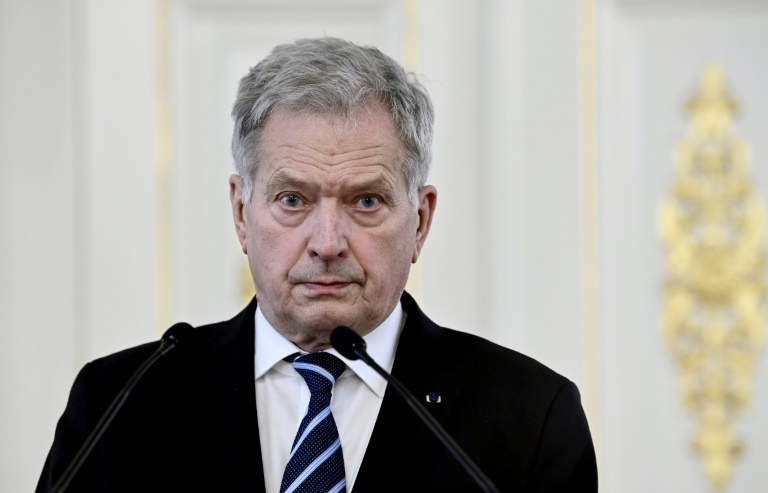
“Finland must apply for NATO membership without delay,” President Sauli Niinisto and Prime Minister Sanna Marin announced in a statement in Helsinki.

“NATO membership would strengthen Finland’s security,” they said. 

“As a member of NATO, Finland would strengthen the entire defence alliance.”

But Russia warned Finnish membership of NATO would “definitely” be seen as a threat.

“The expansion of NATO and the approach of the alliance to our borders does not make the world and our continent more stable and secure,” spokesman Dmitry Peskov said.

In launching the invasion of Ukraine, Russian President Vladimir Putin cited in part what he called the threat to Russia from NATO, which expanded eastwards after the Cold War.

Finland’s embrace of the alliance was ruled out as recently as January, for the country has been a declared neutral in East-West crises for decades.

But the February 24 invasion shocked the Nordic country.

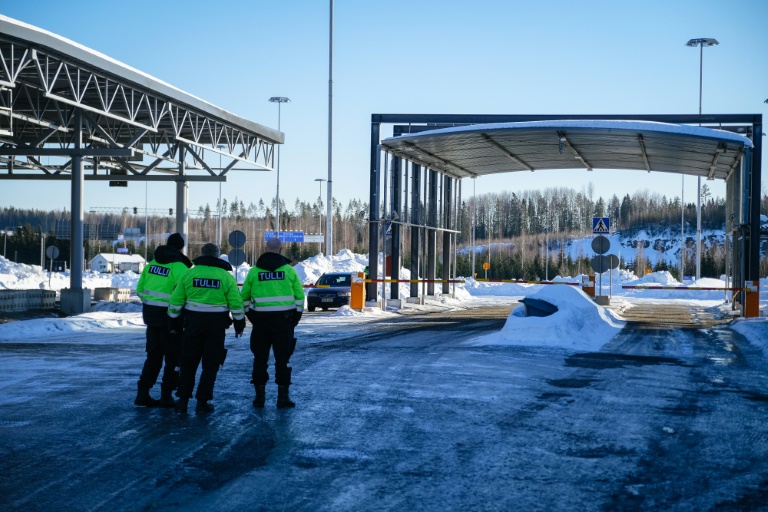
It shares a 1,300-kilometre (800-mile) border with Russia and its past is studded with conflict with its giant neighbour.

The Atlantic alliance has already declared it will warmly embrace two countries with rich pockets and advanced militaries. 

Finland’s entry will be “smooth and swift,” NATO chief Jens Stoltenberg promised on Thursday.

A special committee will announce Finland’s formal decision on a membership bid on Sunday. 

Sweden, another neutral state, is widely expected to follow its neighbour. 

– Russian gas –

Fears grew meanwhile of the broader economic impact from the crisis.

Russian energy giant Gazprom said that gas transiting to Ukraine to Europe dropped by a third after Kyiv suspended supplies through a key route.

Germany said Wednesday that it saw a 25 percent drop in supplies of Russian gas flowing through Ukraine.

Ukraine is a major supply route for Russian gas to Europe and the two sides have kept flows going despite the conflict.

The European Union’s heavy reliance on Russian gas has made it reluctant to add these imports to a list of economic sanctions that have started to take a toll on Moscow’s foreign exchange reserves.

European Commission President Ursula von der Leyen, in a rhetorical blast from Tokyo, said Russia “is today the most direct threat to the world order with the barbaric war against Ukraine”.

– Shelling in east –

Moscow has focused on eastern and southern Ukraine since it failed to take Kyiv in the first weeks of its campaign.

Ukraine’s presidency said shelling continued throughout the Lugansk region — part of the eastern Donbas where Ukrainian forces are mounting a fierce defence against Russian forces and Kremlin-backed separatists.

Russian troops are trying to take complete control of Rubizhne, block a key highway between Lysychansk and Bakhmut highway and seize Severodonetsk, the office said.

In the northeastern region of Chernigiv three people were killed and 12 others wounded on Thursday in a strike on the town of Novgorod-Siversky, an emergency services spokesman said. 

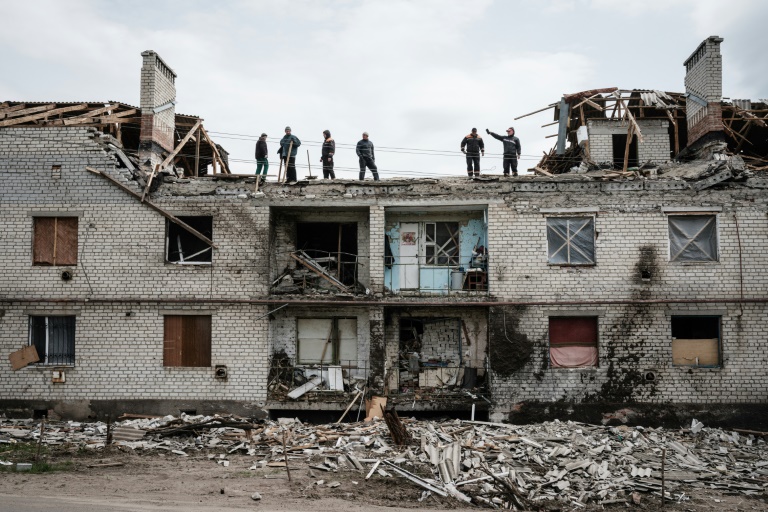
Across Ukraine, lives have been turned upside down, forcing millions to make anguished choices of how to respond.

Zhanna Protsenko, a social worker in the frontline town of Orikhiv, spoke to AFP as she was about to head off on her bicycle to visit people who refused — or were unable — to evacuate.

“How can I leave them here?” the 56-year-old asked, standing near a hospital that was hit by a strike in the past week. 

“We work. We have no time to hide,” she said as contractors repaired rows of the hospital’s blown-out windows and an oil drum-sized hole blasted in its brick facade. 

– War crimes trial –

The Russian invasion has sparked an exodus of nearly six million civilians, many of whom bear accounts of torture, sexual violence and indiscriminate destruction.

The Ukrainian prosecutor general on Wednesday said it would launch the first trial for war crimes.

Vadim Shishimarin, a 21-year-old Russian soldier, is accused of killing an unarmed 62-year-old civilian as he fled with four other soldiers in a stolen car.

He faces possible life imprisonment if found guilty.

The prosecutor’s office says it has said it has received reports of more than 10,000 alleged war crimes, with 622 suspects identified.

The UN Human Rights Council is due to hold a special session on Ukraine on Thursday.

– Appeal to Musk –

Ukrainian President Volodymyr Zelensky has framed his nation’s resistance to the Russian invasion as a “war against tyranny”, but the fierce fightback has carried a heavy cost.

In a rare release of battle casualty figures, Ukraine’s National Guard said Wednesday that 561 of its members have been killed and nearly 1,700 wounded since the invasion began.

Neither the defence ministry in Kyiv nor its counterpart in Moscow has provided official death counts, but in mid-April, Zelensky said between 2,500 and 3,000 Ukrainian soldiers had been killed.

A Ukrainian commander in the port city of Mariupol, where besieged troops are holding out at steelworks, appealed directly to Elon Musk for help.

Serhiy Volyna, commander of the 36th Separate Marine Brigade, said he created a Twitter account for the sole purpose of reaching out to Musk.

“People say you come from another planet to teach people to believe in the impossible,” Volyna tweeted at Musk.

“Our planets are next to each other, as I live where it is nearly impossible to survive. Help us get out of Azovstal to a mediating country. If not you, then who?”

As Finland and Sweden eye NATO, alliance sees mutual gains

With Moscow’s invasion of Ukraine pushing Finland and Sweden to join NATO, the trans-Atlantic alliance could soon welcome valuable partners for deterring any future Russian aggression.

The war has convinced many Finns and Swedes to rethink their longstanding aversion to NATO membership, with Finland’s president and prime minister Thursday pressing for an application “without delay” and Sweden contemplating a similar move. 

Since 1994, both countries have been part of the Partnership for Peace programme with NATO, and have contributed to NATO-led missions in the Balkans, Afghanistan and Iraq.

But outright membership would deepen the alliance’s pool of ready-to-send forces at a time when Russian President Vladimir Putin appears increasingly hostile to any expansion of Europe’s influence.

“If these two countries were to join, it would strengthen NATO’s deterrence — and if deterrence failed its collective defence — across the Arctic, Nordic, and Baltic regions,” said Leo Michel, a researcher at the Atlantic Council.

“They would also apply their regional expertise on Russia to NATO decision making,” Michel wrote in a recent research paper titled “Geography Matters.”

Finland has maintained a relatively large army since the end of the Cold War, with 12,000 soldiers, a fleet of 55 F-18 fighter jets — soon to be replaced by next-generation F-35s — and some 600 artillery pieces.

It also trains 20,000 conscripts a year, giving it a potential wartime footing of 280,000 combat-ready troops, along with a further 600,000 reservists.

Sweden, for its part, has an army of 50,000 soldiers and in 2017 ordered a partial reinstatement of the mandatory military service that was ended in 2010.

And since Russia’s 2014 annexation of Crimea from Ukraine, Sweden has steadily increased defence spending to 1.2 percent of its gross domestic product — though still below the 2 percent threshold sought by NATO.

– ‘Not a small burden’ –

That military might would be all the more critical if Finland joins, greatly extending a direct land border with Russia that until now exists with only Latvia, Lithuania, Estonia, Poland and Norway.

“It’s 1,400 kilometres of additional border to defend. That’s not a small burden for NATO,” said one European official, on condition of anonymity.

It would also be the biggest expansion of NATO since the Baltic states joined in 2004 — likely to be viewed by Putin as another incursion on Russia’s sphere of influence no matter how the war in Ukraine unfolds.

“The Russian invasion proves Putin’s willingness to eschew international norms and use military force in a war of aggression,” said Michael Shurkin, a US political scientist and former CIA analyst.

“Another war against one of Russia’s neighbours is not implausible. It’s a real possibility for which those neighbours and their allies must prepare,” he wrote on Twitter.

Finland in particular, which was invaded by the Soviet Union in 1939, appears anxious to benefit from a defence alliance in which collective defence — NATO’s famous Article 5 — is the bedrock.

“You caused this. Look in the mirror,” Finland’s President Sauli Niinisto said in a message to Russia after announcing his backing for NATO membership along with Prime Minister Sanna Marin. 

Like Sweden, “Finland would acquire nuclear deterrence with NATO, something it could not do on its own,” said Charly Salonius-Pasternak, a researcher at the Finnish Institute of International Relations.

Within NATO, the prospect of two new heavyweight members “is received quite favourably,” a senior European diplomat said, adding that “nobody is pushing them.”

The shift underscores “the convergence towards a synergy between NATO and Europe on defence,” also seen in Denmark’s decision to hold a June referendum on scrapping the defence “opt-out” that it secured as part of its EU membership.

The war in Ukraine “has significantly reinforced the attractiveness of NATO, because it’s the proof that those who aren’t part of it are vulnerable,” Jean-Baptiste Jeangene-Vimer, head of strategic research at France’s military academy (IRSEM), said just after Russia invaded on February 24.

“It’s going to make stronger, both individually and collectively, the very forces that Putin sought to weaken,” he said.

Finnish president, PM in favour of joining NATO 'without delay'

Finland’s president and prime minister said on Thursday they were in favour of joining NATO and a formal decision would be taken this weekend, after Russia’s war in Ukraine sparked a swift U-turn in opinion.

The Kremlin immediately responded to the announcement, saying Finnish membership in the Western military alliance was “definitely” a threat to Russia.

Neighbouring Sweden, which like Finland has been military non-aligned for decades, is also expected to announce its decision in the coming days, very likely at a meeting on Sunday of Prime Minister Magdalena Andersson’s Social Democratic Party.

The two countries are widely seen submitting their membership bids in unison. 

“Finland must apply for NATO membership without delay,” President Sauli Niinisto and Prime Minister Sanna Marin said in a joint statement.

“NATO membership would strengthen Finland’s security. As a member of NATO, Finland would strengthen the entire defence alliance,” the statement said.

A special committee will announce Helsinki’s formal decision on a membership bid on Sunday, it added.

Moscow has repeatedly warned Stockholm and Helsinki of consequences if they were to join the Western military alliance.

“Joining NATO would not be against anyone,” Niinisto, who has often served as a mediator between Russia and the West, told reporters on Wednesday.

His response to Russia would be: “You caused this. Look in the mirror,” he said. 

As recently as January, amid tensions between the West and Russia, Marin said a bid would be “very unlikely” during her current mandate, which ends in April 2023.

– Rattled by war –

But after its powerful eastern neighbour invaded Ukraine on February 24, Finland’s political and public opinion swung dramatically in favour of membership as a deterrent against Russian aggression.

A poll published on Monday by public broadcaster Yle showed that a record 76 percent of Finns now support joining the alliance, up from the steady 20-30 percent registered in recent years.

A country of 5.5 million people, Finland shares a 1,300-kilometre (800-mile) border with Russia.

In 1939, it was invaded by the Soviet Union.

Finns put up a fierce fight during the Winter War but were ultimately forced to cede a huge stretch of its eastern Karelia province in a peace treaty with Moscow.

Defence Minister Antti Kaikkonen said Thursday a NATO bid would “significantly raise the threshold for Finland to be the target of a military attack.”

“This is a defensive solution that threatens no one,” he wrote on his blog.

Kaikkonen said he hoped Sweden would come to the same conclusion and “we could apply for membership together.”

Swedish Foreign Minister Ann Linde told news agency TT that “Finland’s decision is naturally of great importance to Sweden” and said her government would announce its decision “soon”. 

European Council President Charles Michel wrote on Twitter that Finland joining NATO would “greatly contribute to European security. With Russia waging war in Ukraine it’s a powerful signal of deterrence.”

– Next steps –

There has been broad political support for NATO membership in Finland, amid a general view that Russia’s invasion has eroded the security situation in Europe.

A large majority of parties in Finland’s parliament back a bid, as well as parliament’s defence committee.

Finland and Sweden have long cooperated with NATO, and are expected to be able to join the alliance quickly.

NATO Secretary General Jens Stoltenberg said Thursday Finland’s entry would be “smooth and swift”.

The next step is for Finland’s President and Ministerial Committee on Foreign and Security Policy — a body made up of the president, prime minister and up to six other cabinet ministers — to meet on Sunday.

The committee will make the formal decision whether to submit a Finnish application.

The proposal will then be presented to parliament for a debate, which is expected to take place on Monday. 

After an official bid is submitted to the alliance, negotiations get underway. Lawmakers in all 30 NATO member states then need to ratify Finland’s application, a process that can take months.

Foreign Minister Haavisto said on Tuesday he believed Finland could be a full NATO member “at the earliest” on October 1.

“The NATO secretary general has said that this process will take between four and 12 months. My own impression is that it might be closer to four months than 12 months,” Haavisto said.

As candidate countries are not covered by NATO’s Article 5 mutual defence agreement, both Finland and Sweden have sought assurances from NATO members that they would be protected while awaiting full membership.

EU says Taliban 'not listening' to Afghans with girls' school ban

The Taliban shutdown of girls’ education shows the hardline Islamists’ are not listening to the Afghan people and poses a major hurdle to international recognition of the new regime, a top European Union official said Thursday.

In March, Taliban authorities ordered all secondary girls’ schools to shut, just hours after reopening them for the first time since seizing power in August last year.

The decision, which came from the country’s supreme leader and the movement’s chief Hibatullah Akhundzada, has triggered widespread outrage in the international community.

Western nations have made aid pledges to tackle Afghanistan’s spiralling humanitarian crisis conditional on the Taliban’s respect for human rights, particularly the rights of women to work and education.

But the EU’s special envoy to Afghanistan Tomas Niklasson told AFP the Taliban veto on girls’ schools “has put some doubts in our heads regarding how reliable their promises are, how reliable they may be as a partner”. 

“It seems to be a government that isn’t really listening to its people,” he said, adding that what women really wanted is the right to work, education, access to health facilities and “not instructions on how to dress”.

The Taliban had repeatedly assured that they would reopen secondary schools for girls, but on March 23 they ordered them shut after tens of thousands of teenage girls flocked to attend classes.

They have yet to offer any new timetable as to when the institutions will be opened again.

“If the schools open relatively soon across the country at all levels for boys and girls, this could be a positive, positive step forward,” Niklasson said as he wrapped up a five-day visit to Kabul.

He said removing the ban on girls’ education would be a “dramatic shift” which — if accompanied by guarantees for other civil liberties, minority protections and women’s rights — could help make the Taliban’s case for international recognition.

However, he warned the EU currently believes Afghanistan is in the grip of “a more backward going trend”.

The Taliban have rolled back several freedoms gained by women during the two decades of US-led military intervention.

They have effectively banned women from many government jobs and from travelling alone unless accompanied by an adult male relative.

Last week Akhundzada also issued a decree ordering women to cover up fully in public, including their faces.

He also commanded authorities to fire female government employees who do not follow the new dress code, and to suspend male workers if their wives and daughters fail to comply.

Some Afghan women initially pushed back against the creeping new curbs, holding small protests.

But the Taliban soon rounded up the ringleaders, holding them incommunicado while denying that they had been detained.

On Wednesday, Taliban fighters dispersed a small women’s protest against the burqa dress code and even obstructed journalists from covering it.

SoftBank reports record loss as tech shares tank

Japanese investment giant SoftBank Group on Thursday logged a record annual net loss after a bruising year that saw its assets hit by a US tech share rout and a regulatory crackdown in China.

SoftBank’s big stakes in global tech giants and volatile new ventures have made for unpredictable earnings, and the latest tumble comes with tech shares tanking as the United States hikes interest rates to tackle inflation.

The company reported losses of 1.71 trillion yen ($13.2 billion) in the year to March 2022 — a vertiginous plunge from its nearly five trillion yen net profit the previous year, when huge market rallies boosted results.

Reporting an eye-watering investment loss of 3.4 trillion yen, SoftBank said its tech-focused Vision Fund suffered falls “due to a decline in the share prices of most listed portfolio companies”.

In the past six months, the tech-rich US Nasdaq index has lost more than 28 percent of its value.

The Japanese group’s losses were deepened by the many shares it holds in Chinese ride-hailing giant Didi Chuxing and e-commerce group Alibaba, which have been hit by a crackdown by Beijing on the country’s private sector.

And the icing on the cake was the falling yen, which has recently hit 20-year lows as the gap widens between US tightening and Japan’s ultra-loose monetary policy.

– ‘Ups and downs’ –

In 2019-20, SoftBank Group reported a then-record net loss of 961.6 billion yen, as the emergence of Covid-19 compounded woes caused by its investment in troubled office-sharing start-up WeWork.

But its earnings rebounded in 2020-21 — when it reported Japan’s biggest-ever annual net profit — after people moved their lives online during the pandemic, sending tech stocks soaring.

In February, SoftBank said the $40 billion sale of its microchip powerhouse Arm to Nvidia had collapsed because of “significant regulatory challenges” over competition concerns, and it now plans to take the unit public.

Nvidia is one of the world’s largest and most valuable computing companies, while British company Arm’s tech dominates the global smartphone market.

SoftBank had announced the deal in 2020, when it was valued at $40 billion, although the sum would have been higher now thanks to a rise in Nvidia’s share price.

Amir Anvarzadeh of Asymmetric Advisors said “all hopes” were now on Arm going public, but warned that a very high price would eventually prove damaging.

“We suspect anything more than $30 billion for Arm will leave it overvalued and vulnerable to a likely sell-off soon after.”

The IPO faces headwinds, including the current market slump which makes a hefty valuation for Arm unlikely, and SoftBank CEO Masayoshi Son conceded the move could be delayed if conditions seemed unfavourable.

Hideki Yasuda, senior analyst at Toyo Securities, told AFP that while the tech sector SoftBank is focused on is not doing well now, it is worth taking the long view.

“It’s important for investors to think about what might happen in 20 years,” he said before the earnings announcement.

“They must accept ups and downs in the short run,” Yasuda said, noting that it took years for Alibaba to become a viable investment for SoftBank.

Son, who has been criticised for an investment strategy seen by some as overly optimistic, sounded an unusually cautious note in a presentation Thursday.

“When it comes to new investments, we are being more selective,” he said.

“As the world is in chaos, we want to make sure that we have plenty of cash… instead of making new investments randomly.”

Close Bitnami banner
Bitnami