World

North Korea reports first Covid cases, Kim orders national lockdown

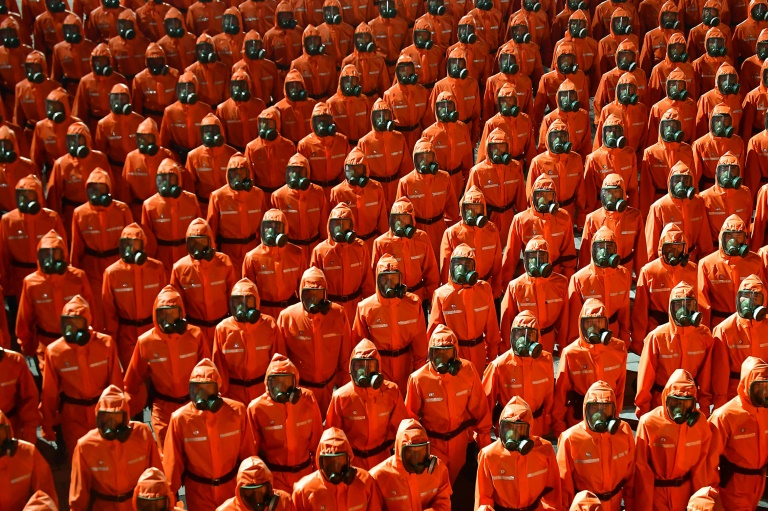
North Korea confirmed its first-ever Covid cases Thursday and declared a “serious emergency”, with leader Kim Jong Un appearing in a mask on television for the first time to order nationwide lockdowns.

The nuclear-armed country had never admitted to a case of Covid-19, and the government had imposed a rigid coronavirus blockade of its borders since the start of the pandemic in 2020.

But samples taken from patients sick with fever in Pyongyang “coincided with Omicron BA.2 variant”, the official Korean Central News Agency reported.

Top officials, including leader Kim Jong Un, held a crisis politburo meeting on Thursday to discuss the outbreak and announced they would implement the “maximum emergency epidemic prevention system”.

The official KCTV showed Kim at the meeting wearing a mask — the first time he has done so in public since the start of the pandemic. Other top officials present were also masked.

Kim “called on all the cities and counties of the whole country to thoroughly lock down their areas,” KCNA reported, although details of the restrictions were not immediately given.

Kim told the meeting that the goal was to “quickly cure the infections in order to eradicate the source of the virus spread,” according to KCNA.

Kim added that North Korea will “overcome the current sudden situation and win victory in the emergency epidemic prevention work”.

It was unclear from the KCNA report how many Covid infections had been detected.

North Korea’s crumbling health infrastructure would struggle to deal with a major outbreak, with its 25 million people not vaccinated, experts say.

“For Pyongyang to publicly admit Omicron cases, the public health situation must be serious,” Leif-Eric Easley, a professor at Ewha University in Seoul said.

“Pyongyang will likely double down on lockdowns, even though the failure of China’s zero-Covid strategy suggests that approach won’t work against the Omicron variant.”

– No vaccines –

North Korea has turned down offers of vaccinations from the World Health Organization, China, and Russia.

Accepting vaccines through the WHO’s Covax scheme “requires transparency over how vaccines are distributed,” Go Myong-hyun, researcher at the Asan Institute for Policy Studies told AFP.

“That’s why North Korea rejected it,” Go said.

North Korea is surrounded by countries that have battled — or are still fighting to control — significant Omicron-fuelled outbreaks.

South Korea, which has high rates of vaccination, has recently eased almost all Covid-19 restrictions, with cases sharply down after a spike in March.

Neighbouring China, the world’s only major economy to still maintain a zero-Covid policy, is battling multiple Omicron outbreaks.

Major Chinese cities, including the financial capital Shanghai, have been under strict lockdowns for weeks.

China said Thursday it was “ready to provide full support and assistance to North Korea in its fight against the epidemic,” foreign ministry spokesman Zhao Lijian said.

It appears North Korea will try to avoid China’s strict measures, which have seen millions of people locked into their apartments for several weeks, including in Beijing, said Cheong Seong-chang of the Sejong Institute.

But even less harsh measures would create a “severe food shortage and the same chaos China is now facing,” he said.

Seoul-based specialist site NK News reported that areas of Pyongyang had already been locked down for two days, with reports of panic buying.

– Nuke test? –

The public emergence of Covid in Pyongyang could also have repercussions on North Korea’s nuclear programme.

South Korea’s President Yoon Suk-yeol, who was sworn in Tuesday, has vowed to get tough with Pyongyang, after five years of failed diplomacy.

After high-profile talks collapsed in 2019, North Korea has doubled-down on weapons testing, conducting a blitz of launches so far this year, including intercontinental ballistic missiles.

Satellite imagery indicates North Korea is preparing to conduct a nuclear test, and the United States has warned this could come as soon as this month.

But the Covid-19 outbreak could potentially disrupt their military programme, analysts said.

“There is a possibility of delaying the nuclear test in order to focus on overcoming the coronavirus,” Yang Moo-jin, a professor at the University of North Korean Studies, told AFP. 

But he said if public fears over an outbreak were to spread, Kim might go ahead with a test “to divert this fear to another place”.
US marks 1 mn Covid deaths, early epicenter New York seeks to move on

The United States has crossed the threshold of one million deaths from Covid-19, the White House said on Thursday, as cities like New York try to turn the page on the pandemic despite threats of another surge.

“Today, we mark a tragic milestone: one million American lives lost to Covid-19,” President Joe Biden said in a statement that acknowledged the “unrelenting” pain of those who had lost loved ones during the pandemic.

He called on residents to “remain vigilant against this pandemic” and said it was “critical” for Congress to fund resources like testing, vaccines and treatments. 

For many, the toll of more than one million deaths was difficult to comprehend. 

“It’s unfathomable,” Diana Berrent, one of the first people in New York state to catch Covid-19, said of the toll that far exceeds epidemiologists’ worst predictions made at the outbreak of the crisis in spring 2020.

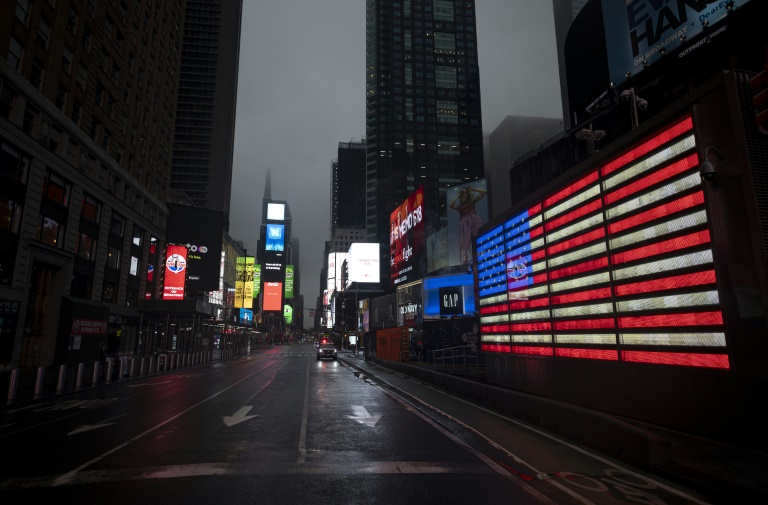
Then, New York City was the virus epicenter. Hospitals and morgues overflowed and the sound of ambulance sirens rang down empty streets as then-president Donald Trump responded chaotically in Washington.

Two years on, and life in the Big Apple is largely back to normal as residents attempt to put the collective trauma of the virus that has killed 40,000 New Yorkers behind them.

Broadway stage lights are once again illuminated, tourists are back riding horse carriages in Central Park, yellow taxis clog main avenues and bars in business districts hum with post-work chatter. 

“Without a doubt you feel the energy of the people that are on the streets. It’s been a long time coming,” Alfred Cerullo, president of a business improvement group in Midtown Manhattan, told AFP.

New York’s rebound has been aided by its high inoculation numbers — about 88 percent of adults are fully vaccinated, a rate that was boosted by mandates, including for indoor activities like dining.

Jeffrey Bank, owner of Carmine’s restaurant near Times Square, says sales at the Italian eatery are better than they were in 2019, as residents and tourists make up for lost time.

“People have been sitting at home for two years. They want to celebrate and they’re entitled to,” he told AFP.

– ‘Disconnect’ –

But the city has a long way to go. Many stores remain empty and only 38 percent of Manhattan workers are in the office on an average weekday, according to Kastle Systems, a security firm that tracks building occupancy.

The Big Apple’s tourism board also doesn’t expect visitor numbers to get back to the 67 million of 2019 people for a few years.

And business owners fear another wave of infections.

“Obviously we are worried,” Frank Tedesco, who is unsure how he could keep his jewelry business afloat if another shutdown occurred, told AFP.

In recent weeks, the United States has seen an uptick in the number of daily virus cases, largely due to the new Omicron subvariant.

The rise has coincided with the lifting of mask mandates.

“I think we are in a place where psychologically and socially and economically, people are largely done with the pandemic,” said Celine Gounder, an infectious disease expert at New York University.

“(But) the pandemic is not over. So you have a disconnect between what is happening epidemiologically and what’s happening in terms of how people are responding,” she told AFP.

Among the most at-risk are the unvaccinated, lower-income populations, uninsured people and communities of color, she says. 

America recorded its first Covid-19 death, on the West Coast, in early February 2020. By the next month, the virus was ravaging New York and the White House was predicting up to 240,000 deaths nationwide.

But those projections were way off.

– Mandates –

Trump was late to back social distancing, repeatedly undermined top scientist Anthony Fauci, peddled unproven medical treatments, and politicized mask-wearing — before eventually being hospitalized with the virus himself. 

In New York and other northeastern urban centers, hospitals become overwhelmed and morgues failed to keep up with the dead.

“There were nurses that said if they closed their eyes at night they could hear the patients struggling to breathe and they couldn’t get it out of their heads,” recalled Boston nurse Janice Maloof-Tomaso.

Ideological clashes over curfews and mask and vaccine mandates ensued as America racked up the world’s highest death toll.

But Trump did pump billions of dollars into vaccine research and by mid-December 2020, the first vaccines were available for health care workers.

Deaths kept soaring, however, amid a slow take-up of shots in conservative areas of the country, and in February 2021 the country counted 500,000 dead.

New president Biden and many Democratic governors enforced mandates but Republican-led states like Florida and Texas outright banned them, highlighting America’s patchwork of rules that made forming a unified response to the pandemic difficult.

“We went from ‘stay home and save lives’ to let it rip,” recalled 47-year-old Berrent, who, after her illness in 2020, founded the group Survivor Corps for people looking for information about long-haul Covid or a current infection.

“The question is no longer, ‘Have you had Covid?’ It’s, ‘How many times have you had Covid, and what symptoms do you still have?'”

Low French rainfall adds new cloud to global food market

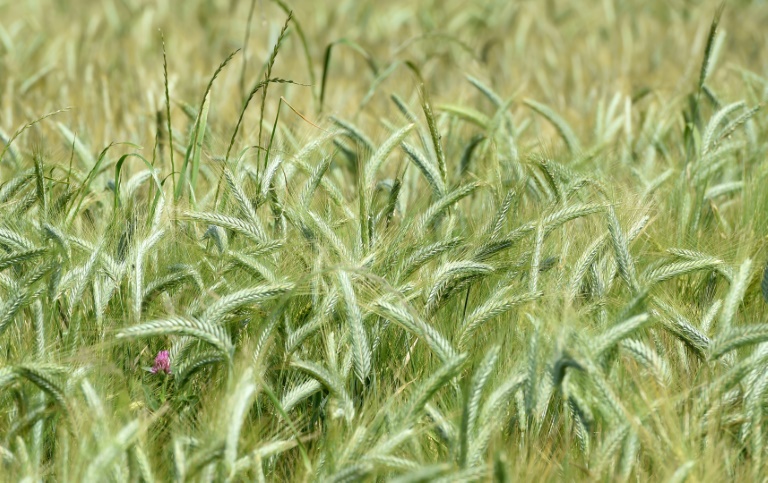
French farmer Robin Lachaux is worried about his wheat. In normal years, it flowers and bulks up in May thanks to regular spring rainfall, but this year hot and dry conditions risk stunting its progress.

“If we don’t water it today, we’ll lose 50 percent of our output,” the young farmer in an orange cap and sweatshirt from Sully-sur-Loire in central France told AFP.  

“We wouldn’t normally water at this time of the year but the dry periods are coming earlier and earlier,” he added as he positioned his pressure hoses and irrigation equipment.

France is Europe’s agricultural powerhouse, the biggest grain producer in the 27-country bloc and the world’s fourth or fifth biggest wheat exporter.

Its annual production influences global prices which are already at record levels because the war in Ukraine looks set to wipe out a chunk of the country’s production, leading to fears of a global hunger crisis.

On Monday, the French agricultural ministry warned about the impact of an unseasonably hot and dry stretch which “will have an impact on cereal production” in France following lower-than-average rainfall over the winter period.

As well as wheat, other crops sown in winter such as barley are in a key development stage in May, while corn and sunflower production over the summer could also be hit.

“There’s not a region that’s not affected,” the head of French farmers’ union FNSEA, Christiane Lambert, told AFP.

“Each day that passes, we’re seeing the ground cracking more… if it carries on like this, those that can irrigate will be okay, but the others will have dramatic decreases in production.”

The French national weather service said the country was in the grip of a hot spell that is “notable for its timing, its duration and its geographical spread”, with a 20-percent drop in rainfall between September 2021 and April 2022.

– Record highs – 

World food prices hit an all-time high in March following Russia’s invasion of Ukraine, which accounted for 20 percent of global wheat and maize exports over the past three years, according to the UN’s Food and Agriculture Organization.

Ukrainian ports are blockaded by Russian naval vessels and French data analysis firm Kayrrosa recently calculated that the area planted with wheat had been reduced by a third this year because of the conflict, according to satellite imagery.

Production could fall by as much as 50 percent this year, according to government and industry forecasts, with some farmers abandoning their fields to join the army.

The strains on global markets have led to warnings from NGOs and the United Nations that hunger or even famine could strike vulnerable import-dependent countries across Africa and the Middle East.

With top wheat-producing states in the United States such as Kansas and Oklahoma also suffering from drought-like conditions, poor French yields could be particularly significant in 2022.

“We already had markets that were very nervous. This is adding to tensions,” Nathan Cordier, a grain market analysts at agricultural consultancy Agritel, told AFP. “France is one of the major players in the wheat market and people are counting on it.

“The question is whether export volumes will be enough.”

– Hunger – 

Current wheat prices in Europe are at a record 400 euros a tonne ($420), up from an already high level of around 260 euros a tonne at the start of the year before Russia’s invasion of Ukraine.

The high prices are expected to stimulate more planting in the United States and the FAO has forecast that higher yields in Canada and Russia, as well as Pakistan and India could help compensate below-average harvests in western Europe.

Some of the recent price rises are down to short-term shortages caused by the sudden end to Ukrainian supplies, as well as some farmers holding back from selling their produce in anticipation of higher prices going forward.

“As prices are very high, with wheat at more than 400 euros a tonne for delivery in September, they’re waiting,” Edward de Saint-Denis, a commodities trader at Plantureux and Associates, a French brokerage.

But as traders and farmers scan the weather forecasts and devise their trading strategies, aid groups warn that lives are at risk in some of the most vulnerable places on earth such as war-wracked Yemen or countries in the arid Sahel region of northern Africa.

“According to our research, food price rises caused by Russia’s invasion of Ukraine mean that some local communities in developing countries are already spending more than triple what they were previously paying for food, causing families to skip meals and take their children out of school,” Teresa Anderson from ActionAid, a British charity, told AFP.

A prolonged drought in France could make that much worse.

“It would deepen hunger, poverty and debt for low-income families in Africa, Asia and Latin America, making an already desperate situation much worse,” she said.   

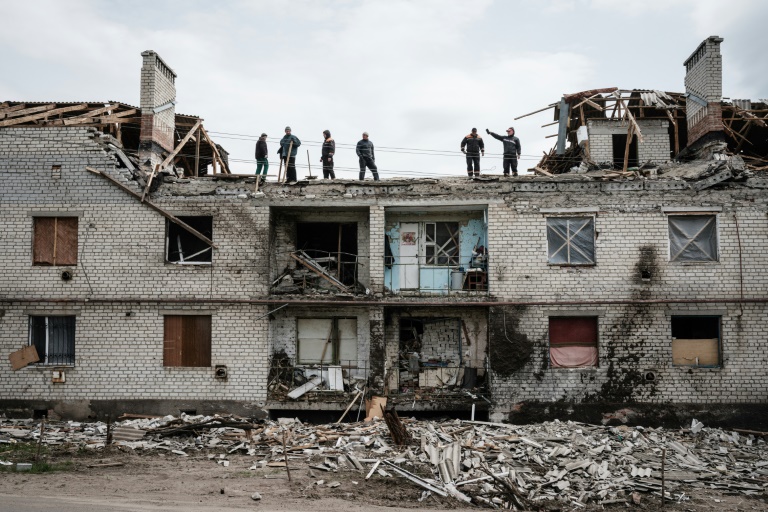
War in Ukraine: Latest developments

Here are the latest developments in the war in Ukraine:

– Ukraine to hold first war crimes trial –

Ukraine says it will put a 21-year-old Russian soldier, accused of gunning down an unarmed civilian while he was riding his bike, on trial for war crimes. This is the first such case to go to court since the war began. 

Vadim Shishimarin is accused of killing the 62-year-old man on February 28 near the central village of Chupakhiva, Prosecutor General Iryna Venediktova’s office said.

Shishimarin is in custody in Ukraine. He faces possible life imprisonment if convicted of war crimes and premeditated murder. No date has been given for the trial.

Russian troops are accused of widespread war crimes in Ukraine. 

– Finland seeks NATO membership –

Finland’s president and prime minister say they want their country to join NATO in the wake of Russia’s invasion of Ukraine.

“NATO membership would strengthen Finland’s security. As a member of NATO, Finland would strengthen the entire defence alliance,” President Sauli Niinisto and Prime Minister Sanna Marin said.

Finland has been non-aligned militarily for decades but has had a change of heart since neighbouring Russia invaded Ukraine. Sweden is also considering joining the Western military alliance.

Russia has warned of non-specified consequences if they do. 

“You caused this. Look in the mirror,” was Niinisto’s response. 

– Gas row escalates –

Russia says it has banned transactions with more than 30 EU, US and Singaporean energy companies in retaliation for Western penalties over Ukraine.

The list contains 31 companies, most of which belong to the Gazprom Germania group of subsidiaries of Russian energy giant Gazprom. It also includes Poland’s EuRoPol GAZ S.A., part-owner of the Yamal-Europe pipeline, which carries gas from Russia to Germany.

Meanwhile, Gazprom says Russia’s Europe-bound gas transiting Ukraine is down almost a third after Kyiv suspended supplies through a key route. Kyiv had accused Russia of interfering with a transit point.

– Ukraine accused of deadly cross-border attack –

The governor of the southwestern Russian region of Belgorod accuses Ukraine of shelling the border village of Solokhi, killing one person and injuring three others.

Over the past month, authorities in Russian frontier regions have repeatedly accused Ukrainian forces of launching cross-border attacks, including bombing a fuel depot.

– ‘Three killed’ in strike on north Ukraine –

Ukraine says three people were killed and 12 others wounded in a Russian strike in Ukraine’s northern Chernigiv region on Wednesday night. 

The attack comes nearly two months after Russian forces withdrew from the north to focus on the east and south.

It took place in the town of Novgorod-Siversky, according to the emergency services. Chernigiv governor Vyacheslav Chaus says “critical infrastructure”, including a school, were hit.

– Keep us a spot in EU: Ukraine –

Ukraine has asked Brussels to keep it a spot in the European Union, even if obtaining full membership takes time.

“It is not about the fastest possible membership for Ukraine in the EU. But what is very important for us is for this spot to be reserved for Ukraine,” Foreign Minister Dmytro Kuleba told German broadcaster ARD.

Ukraine asked Brussels in February to fast-track its EU membership bid.

Brussels has promised a response next month.

French President Emmanuel Macron this week warned it would take “decades” for Kyiv to join the bloc and suggested the creation of a broader European political community to help aspiring EU members like Ukraine.

burs-cb/gil

Crisis-hit Sri Lanka set for new PM, unity government

Sri Lanka’s president was set to name a new premier Thursday to replace his brother, who was banned from leaving the country after his supporters launched violent attacks on a protest against the country’s dire economic crisis. 

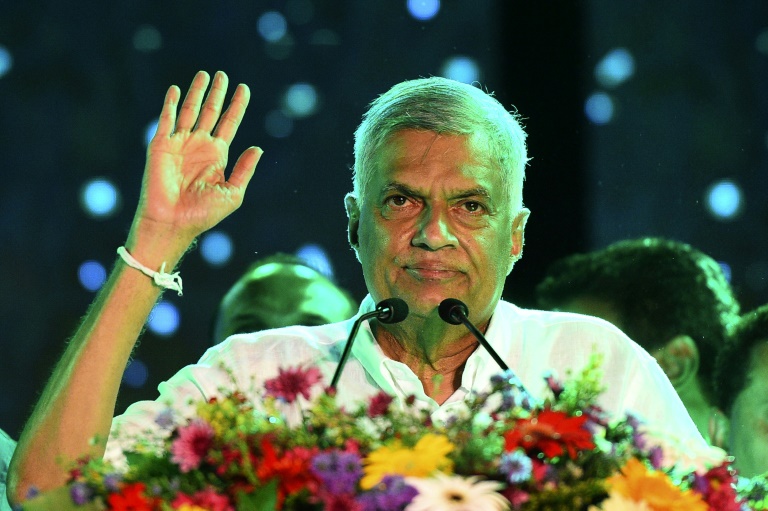
The mooted new premier, Ranil Wickremesinghe, has already served in the office five times — but it remains unclear if he will be able to get any legislation through parliament.

In a televised address to the nation on Wednesday night, President Gotabaya Rajapaksa stopped short of yielding to weeks of nationwide protests calling for him to resign over the country’s worst downturn since independence.

But in a bid to win over opposition lawmakers demanding he quit before agreeing to any new government, the 72-year-old pledged to give up most of his executive powers and set up a new cabinet this week.

“I will name a prime minister who will command a majority in parliament and the confidence of the people,” Rajapaksa said.

Mahinda Rajapaksa, the president’s brother, resigned as prime minister on Monday after his supporters attacked anti-government supporters who had been protesting peacefully for weeks.

This marked a turning point and unleashed several days of chaos and violence that killed at least nine people and injured more than 200, with dozens of Rajapaksa loyalist homes set on fire.

Mahinda has since fled the capital Colombo and taken refuge at the Trincomalee naval base on the country’s east coast.

A court banned him, his politician son Namal, and more than a dozen allies from leaving the country on Thursday after ordering an investigation into the violence.

Security forces patrolling in armoured personnel carriers with orders to shoot looters on sight have largely restored order.

A curfew was lifted Thursday morning — only to be reimposed after a six-hour break allowing Sri Lanka’s 22 million people to stock up on essentials.

– Opposition split –

Sri Lankans have suffered months of severe shortages of food, fuel and medicines and long power cuts after the government, short on foreign currency to pay its debts, halted many imports.

The South Asian island nation’s central bank chief warned Wednesday that the economy will “collapse beyond redemption” unless a new government was urgently appointed.

Wickremesinghe, 73, is seen as a pro-West free-market reformist, potentially making bailout negotiations with the International Monetary Fund and others smoother.

The main opposition SJB party was initially invited to lead a new government, but its leader Sajith Premadasa insisted that the president should first step down.

In recent days the party has split, with a dozen MPs from the SJB now pledging support to Wickremesinghe.

With many from Rajapaksa’s party having defected in recent months, no group in the 225-member assembly has an absolute majority, making parliamentary approval of the unity government’s legislation potentially tricky.

Rajapaksa was set to meet with party leaders on Thursday as more names have been suggested for the post of prime minister, an official close to the negotiations told AFP. 

But Wickremesinghe has already been working closely with Rajapaksa to shake up the finance ministry and the central bank to make sweeping fiscal and monetary policy changes, the source said.

– ‘We can’t wait’ –

The central bank almost doubled key interest rates and announced a default on Sri Lanka’s $51-billion external debt as part of the policy shift, officials said. 

Front-line opposition legislator Harin Fernando from the SJB said he decided to remain neutral because the party’s leader refused to form a government as long as Rajapaksa remained president. 

“We can’t be imposing conditions that cannot be fully met. First, we must address the economic crisis. We need at least $85 million a week to finance essential imports. We must collectively find a way to raise this money urgently,” Fernando said. 

He said he expected a unity government to be formed on either Thursday or Friday. “We can’t wait any longer,” he added.

Crisis-hit Sri Lanka set for new PM, unity government

Sri Lanka’s president was set to name a new premier Thursday to replace his brother, who was banned from leaving the country after his supporters launched violent attacks on a protest against the country’s dire economic crisis. 

The mooted new premier, Ranil Wickremesinghe, has already served in the office five times — but it remains unclear if he will be able to get any legislation through parliament.

In a televised address to the nation on Wednesday night, President Gotabaya Rajapaksa stopped short of yielding to weeks of nationwide protests calling for him to resign over the country’s worst downturn since independence.

But in a bid to win over opposition lawmakers demanding he quit before agreeing to any new government, the 72-year-old pledged to give up most of his executive powers and set up a new cabinet this week.

“I will name a prime minister who will command a majority in parliament and the confidence of the people,” Rajapaksa said.

Mahinda Rajapaksa, the president’s brother, resigned as prime minister on Monday after his supporters attacked anti-government supporters who had been protesting peacefully for weeks.

This marked a turning point and unleashed several days of chaos and violence that killed at least nine people and injured more than 200, with dozens of Rajapaksa loyalist homes set on fire.

Mahinda has since fled the capital Colombo and taken refuge at the Trincomalee naval base on the country’s east coast.

A court banned him, his politician son Namal, and more than a dozen allies from leaving the country on Thursday after ordering an investigation into the violence.

Security forces patrolling in armoured personnel carriers with orders to shoot looters on sight have largely restored order.

A curfew was lifted Thursday morning — only to be reimposed after a six-hour break allowing Sri Lanka’s 22 million people to stock up on essentials.

– Opposition split –

Sri Lankans have suffered months of severe shortages of food, fuel and medicines and long power cuts after the government, short on foreign currency to pay its debts, halted many imports.

The South Asian island nation’s central bank chief warned Wednesday that the economy will “collapse beyond redemption” unless a new government was urgently appointed.

Wickremesinghe, 73, is seen as a pro-West free-market reformist, potentially making bailout negotiations with the International Monetary Fund and others smoother.

The main opposition SJB party was initially invited to lead a new government, but its leader Sajith Premadasa insisted that the president should first step down.

In recent days the party has split, with a dozen MPs from the SJB now pledging support to Wickremesinghe.

With many from Rajapaksa’s party having defected in recent months, no group in the 225-member assembly has an absolute majority, making parliamentary approval of the unity government’s legislation potentially tricky.

Rajapaksa was set to meet with party leaders on Thursday as more names have been suggested for the post of prime minister, an official close to the negotiations told AFP. 

But Wickremesinghe has already been working closely with Rajapaksa to shake up the finance ministry and the central bank to make sweeping fiscal and monetary policy changes, the source said.

– ‘We can’t wait’ –

The central bank almost doubled key interest rates and announced a default on Sri Lanka’s $51-billion external debt as part of the policy shift, officials said. 

Front-line opposition legislator Harin Fernando from the SJB said he decided to remain neutral because the party’s leader refused to form a government as long as Rajapaksa remained president. 

“We can’t be imposing conditions that cannot be fully met. First, we must address the economic crisis. We need at least $85 million a week to finance essential imports. We must collectively find a way to raise this money urgently,” Fernando said. 

He said he expected a unity government to be formed on either Thursday or Friday. “We can’t wait any longer,” he added.

How Sri Lanka's economy went into a tailspin

Sri Lanka is suffering its worst economic crisis since its independence from Britain in 1948. 

Months of lengthy blackouts and acute shortages of food, fuel and medicines have infuriated the public, with huge protests demanding the government’s resignation turning violent this week.

AFP reviews the origins of the snowballing economic calamity in the South Asian island nation:

– White elephants – 

Sri Lanka has spent big on questionable infrastructure projects backed by Chinese loans that added to its already unsustainable debt.

In southern Hambantota district, a massive deep-sea port haemorrhaged money from the moment it began operations, losing $300 million in six years.

Nearby are other Chinese-backed extravagances: a huge conference centre, largely unused since it opened, and a $200 million airport that at one point was unable to earn enough money to pay its electricity bill. 

The projects were pushed by the powerful Rajapaksa family, which has dominated Sri Lanka’s politics for much of the past two decades.

– Unsustainable tax cuts –

President Mahinda Rajapaksa was voted out of office in 2015 partly due to a backlash against his government’s infrastructure drive, which was mired in graft claims.

His younger brother Gotabaya succeeded him four years later, promising economic relief and tough action on terrorism after the island’s deadly 2019 Easter Sunday attacks.

Days after taking office, Gotabaya appointed Mahinda prime minister and unveiled the biggest tax cuts in Sri Lanka’s history, worsening chronic budget deficits.

Ratings agencies soon downgraded the country out of concern that the public debt was spiralling out of control, making it harder for the government to secure new loans.

– Pandemic hit –

The tax cuts were spectacularly ill-timed: just a few months later, the coronavirus began spreading around the world.

International tourist arrivals dropped to zero and remittances from Sri Lankans working abroad dried up — two economic pillars the government relied upon to service its debt.

Without these sources of overseas cash, the Rajapaksa administration began using its stockpiles of foreign exchange to make loan repayments.

– Fertiliser ban – 

Sri Lanka was soon burning through its foreign reserves at an alarming rate, prompting authorities in 2021 to ban several imports including — critically — fertiliser and agricultural chemicals farmers need to grow their crops.

The government sold this policy as part of an effort for Sri Lanka to become the world’s first completely organic farming nation, but its effects were disastrous.

As much as a third of the country’s agricultural fields were left fallow by farmers and the resulting drop in yields hit the production of tea — a vital export earner.

The policy was eventually abandoned at the end of 2021 after protests from agricultural workers and skyrocketing food prices.

– Shortages and blackouts –

By late 2021, Sri Lanka’s reserves had shrunk to $2.7 billion, down from $7.5 billion when Rajapaksa took office two years earlier.

Traders began struggling to source foreign currency to buy imported goods.

Food staples such as rice, lentils, sugar and milk powder began disappearing from shelves, forcing supermarkets to ration them.

Then gas stations started running out of petrol and kerosene, and utilities could not purchase enough oil to meet the demand for electricity.

Long queues now form each day around the country by people waiting hours to buy scant supplies of fuel, while blackouts keep much of the capital Colombo in darkness each night.

– Debt and default –

President Rajapaksa appointed a new central bank chief in April, who soon announced that Sri Lanka would default on its $51 billion foreign debt to save money for essential imports. 

The move failed to shore up Sri Lanka’s deteriorating finances, and it only had around $50 million in useable foreign exchange at the start of May.

The country is now in negotiations for an International Monetary Fund bailout.

Mahinda Rajapaksa, the prime minister, resigned on Monday in an effort to placate the public after weeks of protests over government mismanagement.

But central bank chief Nandalal Weerasinghe said Wednesday that unless a new administration took charge soon, the country was facing an imminent economic collapse. 

“No one will be able to save Sri Lanka at that stage,” he said.

Asian, European stocks down as inflation fears churn markets

Asian and European equities slumped on Thursday following Wall Street’s lead, after a key US report renewed fears of inflation and a tightening of monetary policies.

Stocks have been volatile for much of 2022, fuelled by China’s Covid-19 lockdowns, Russia’s invasion of Ukraine, and surging inflation that has dampened consumer sentiment. 

Investors had been looking to the April US consumer price report in hopes that easing inflation would lower pressure on the Federal Reserve to hike interest rates, but the rise of 8.3 percent was higher than expected.

“Wall Street thought it was going to be done with inflation rearing its ugly head, but that does not appear to be the case,” said Edward Moya, senior market analyst at OANDA. 

“Inflation is still expected to decelerate over the next few months, but it won’t be sharp given the rising prices on gas, hotel, airfares, and possibly a wide range of goods that will be impacted by China’s Covid lockdowns.”

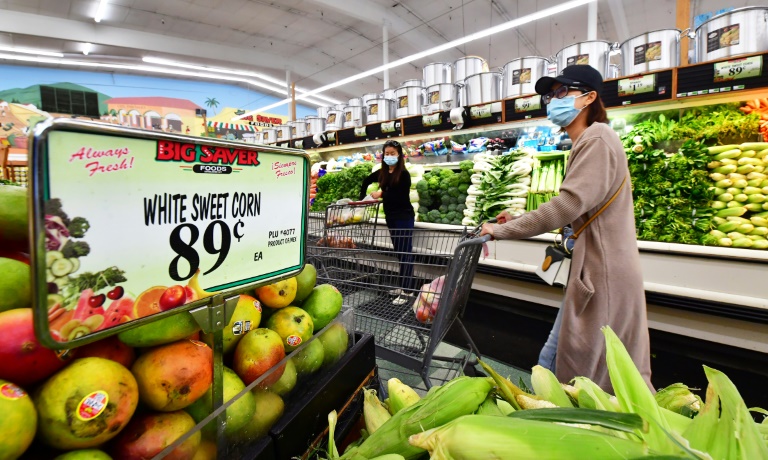
Americans have felt the pinch of rising food prices, including big increases in dairy and cereal products.

The index for meat, poultry, fish and eggs surged 14.3 percent — the biggest gain since May 1979.

US President Joe Biden called April’s overall slowdown “heartening” — March saw a peak of 8.5 percent — but acknowledged inflation was still a major challenge.

“Bringing it down is my top economic priority,” he said.

After the release of the report, US stocks see-sawed through the day and ended with losses.

All three major indices finished firmly in the red. The tech-rich Nasdaq slumped 3.2 percent, weighed by big losses for Apple and Meta.

The mood filtered through to Asia. Sydney, Tokyo, Seoul and Hong Kong closed lower, with the Hang Seng suffering the deepest cut — a 2.2 percent drop.

In Europe, London, Paris and Frankfurt traded in the negatives.

“We’re seeing the beginning of the capitulation and the great reset, if you want, in pricing,” Virginie Maisonneuve, global chief investment officer for equity at Allianz Global Investors UK, told Bloomberg.

– ‘Choppy’ crude prices –

Oil prices jumped around five percent before paring some of those gains as concerns persisted about Russian energy supplies.

Ukraine said Russia had halted gas supplies through a key transit hub in the east of the country, fuelling fears that Moscow’s invasion could worsen an energy crisis in Europe.

The “choppy” nature of crude prices is also due to uncertainty about “the timing of an EU ban on Russian oil imports”, said Michael Hewson at CMC Markets.

The lockdowns in China also affected sentiment.

Millions in the world’s second-largest economy have been under lockdown since April, including in its economic engine Shanghai. The restrictions have stopped up ports and snarled supply chains around the world. 

China’s zero-Covid policy “will continue crimping growth, but it won’t be immune from the Ukraine/Russia stagflationary wave either”, said Jeffrey Halley, senior market analyst at OANDA.

– Key figures at around 0830 GMT –

Hong Kong – Hang Seng Index: DOWN 2.2 percent at 19,380.34 (close)  

Shanghai – Composite: DOWN 0.1 percent at 3,054.99 (close) 

London – FTSE 100: DOWN 2.0 percent at 7,200.17

Tokyo – Nikkei 225: DOWN 1.8 percent at 25,748.72 (close)

West Texas Intermediate: DOWN 2.3 percent at $103.27 per barrel

Brent North Sea crude: DOWN 2.1 percent at $105.30 per barrel

Euro/dollar: DOWN at $1.0451 from $1.0515 at 2050 GMT Wednesday 

Pound/dollar: DOWN at $1.2196 from $1.2248

Euro/pound: DOWN at 85.68 pence from 85.84 pence

Dollar/yen: DOWN at 128.55 yen from 130.00 yen

New York – Dow: DOWN 1.0 percent at 31,834.11 (close)

— Bloomberg News contributed to this story —

The 1997 chess game that thrust AI into the spotlight

With his hand pushed firmly into his cheek and his eyes fixed on the table, Garry Kasparov shot a final dark glance at the chessboard before storming out of the room: the king of chess had just been beaten by a computer.

May 11, 1997 was a watershed for the relationship between man and machine, when the artificial intelligence (AI) supercomputer Deep Blue finally achieved what developers had been promising for decades. 

It was an “incredible” moment, AI expert Philippe Rolet told AFP, even if the enduring technological impact was not so huge. 

“Deep Blue’s victory made people realise that machines could be as strong as humans, even on their territory,” he said.

Developers at IBM, the US firm that made Deep Blue, were ecstatic with the victory but quickly refocused on the wider significance. 

“This is not about man versus machine. This is really about how we, humans, use technology to solve difficult problems,” said Deep Blue team chief Chung-Jen Tan after the match, listing possible benefits from financial analysis to weather forecasting. 

Even Chung would have struggled to comprehend how central AI has now become — finding applications in almost every field of human existence.

“AI has exploded over the last 10 years or so,” UCLA computer science professor Richard Korf told AFP. 

“We’re now doing things that used to be impossible.”

– ‘One man cracked’ –

After his defeat, Kasparov, who is still widely regarded as the greatest chess player of all time, was furious.

He hinted there had been unfair practices, denied he had really lost and concluded that nothing at all had been proved about the power of computers. 

He explained that the match could be seen as “one man, the best player in the world, (who) has cracked under pressure”.

The computer was beatable, he argued, because it had too many weak points. 

Nowadays, the best computers will always beat even the strongest human chess players. 

AI-powered machines have mastered every game going and now have much bigger worlds to conquer.

Korf cites notable advances in AI that have helped make self-driving cars a reality. 

Yann LeCun, head of AI research at Meta/Facebook, told AFP there had been “absolutely incredible progress” in recent years. 

LeCun, one of the founding fathers of modern AI, lists among the achievements of today’s computers an ability “to translate any language into any language in a set of 200 languages” or “to have a single neural network that understands 100 languages”. 

It is a far cry from 1997, when Facebook didn’t even exist. 

– Machines ‘not the danger’ –

Experts agree that the Kasparov match was important as a symbol but left little in the way of a technical legacy.

“There was nothing revolutionary in the design of Deep Blue,” said Korf, describing it as an evolution of methods that had been around since the 1950s.

“It was also a piece of dedicated hardware designed just to play chess.”

Facebook, Google and other tech firms have pushed AI in all sorts of other directions.

They have fuelled increasingly powerful AI machines with unimaginable amounts of data from their users, serving up remorselessly targeted content and advertising and forging trillion-dollar companies in the process. 

AI technology now helps to decide anything from the temperature of a room to the price of vehicle insurance. 

Devices from vacuum cleaners to doorbells come with arrays of sensors to furnish AI systems with data to better target consumers. 

While critics bemoan a loss of privacy, enthusiasts believe AI products just make everyone’s lives easier. 

Despite his painful history with machines, Kasparov is largely unfazed by AI’s increasingly dominant position. 

“There is simply no evidence that machines are threatening us,” he told AFP last year. 

“The real danger comes not from killer robots but from people — because people still have a monopoly on evil.”

UK oil capital tackles the energy transition… up to a point

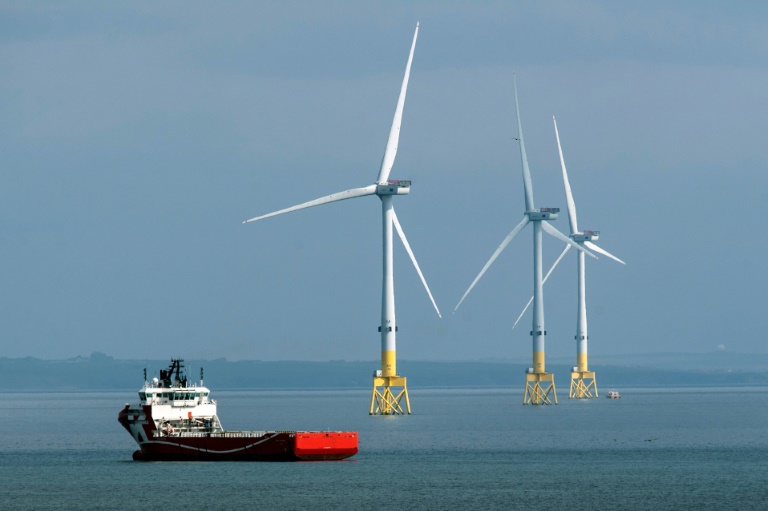
In Aberdeen, northeast Scotland, offshore wind turbines, the extension to the city’s port, and hydrogen buses are clear evidence of the move to green energy.

But old habits die hard in the Granite City, which was built on the back of profits of oil and gas piped from the often turbulent waters off its shores.

Mention the energy transition and the response is of a “renewables boom”, never a decline in the drilling for hydrocarbons.

That looks likely to be the case for as long as oil and gas remains in the ageing North Sea fields.

Just a few months ago, the UK, which wants to become carbon neutral by 2050, hosted the world at the UN climate change conference COP26 in Glasgow.

Prime Minister Boris Johnson promised to make the country the “Saudi Arabia” of wind power.

The price of energy has since taken off, especially after Russia’s invasion of Ukraine, sending bills soaring and leaving many householders struggling to make ends meet.

Disruptions in the delivery of Russian gas to places such as Poland and Bulgaria have also seen the security of energy supplies become a top priority.

Downing Street has published a new strategy which continues to advocate the development of renewable energies.

But it also calls for investment in North Sea oil and gas.

– Security –

Deirdre Michie, chief executive of lobby group Offshore Energies UK, said the move was welcome and a “positive reinforcement” of the role the sector plays in both energy security and the energy transition.

“Even before the energy strategy we absolutely believed that security of energy supply and the energy transition go hand in hand,” she told AFP.

John Underhill, a professor in geoscience and energy transition at the University of Aberdeen, is in no doubt there has been a revival of interest in oil and gas — even in fields considered “sub-commercial”.

The Cambo oil field, off Shetland in Scotland’s far north, now looks set to be developed, despite fierce opposition from environmentalists which caused Shell to pull out and work to be suspended.

Underhill said people have started to think about where the energy comes from, and about “the role oil and gas plays in the UK and the wider community.”

In Aberdeen, local officials are in lockstep with industry.

Jenny Laing, who stepped down as leader of Aberdeen City Council last week, said: “With the local authorities in the last 10 years we’ve invested heavily in renewable energy sources… 

“But we do that in tandem with making sure we’re supporting the oil and gas sector. We realise people will be relying on fossil fuel for a number of years to come.”

For Laing, and for Michie, geopolitical unpredictability means it’s better to rely on oil and gas brought up from beneath British waters than more polluting energy from Russia or elsewhere.

– Expediency –

For Aberdeen and the surrounding area, economic expediency trumps everything.

Most locals either work in the industry or know someone who does.

Britons have abiding memories of the devastating impact of Margaret Thatcher’s abrupt closure of coal mines and steel plants in the 1980s.

And while the price of crude has spiralled to more than $100 a barrel since Russia’s invasion, Aberdeen and its environs are still recovering from 2014 when prices went the other way, plunging below $50.

Investment in renewables is therefore encouraged but not at the expense of scaring away the oil giants, mainly because they have the capital necessary to finance the energy transition.

“In Aberdeen we’ve had a very buoyant economy due to the oil and gas sector,” said Laing. “We want to make sure that we protect jobs and our local economy.”

Many also want the energy transition to be an opportunity to create a more level playing field.

Scott Herrett, who works as a “just transition organiser” at Friends of the Earth Scotland, said: “We have vast wealth which gets generated offshore in the North Sea here in Aberdeen and the northeast of Scotland.

“But we still have mass inequality in the city.”

Scientists from the UN Intergovernmental Panel on Climate Change in April warned that humans have only three years to radically transform the world economy, weaning it off fossil fuels to avoid catastrophic warming of the planet.

Aberdeen is trying to diversify, focussing on health, tourism and life sciences — but it’s not ready yet to do so without the money oil brings.

Close Bitnami banner
Bitnami