World

Nissan reports first full-year net profit in three years

Nissan reported a positive full-year net profit for the first time in three years on Thursday, citing cost-saving efforts and a stronger US market, but issued cautious forecasts.

The Japanese auto giant was on a rollercoaster even before the disruption caused by the pandemic and, more recently, the conflict in Ukraine. 

It had battled slowing demand and the fallout from the arrest of its former chief Carlos Ghosn and is currently implementing a plan involving slashing models, cutting costs and restructuring operations.

It cited some of those efforts in reporting an annual net profit of 215.5 billion yen ($1.67 billion) — its first net profit since fiscal year 2018-19 — which surpassed its forecast of 205 billion yen.

But looking ahead, it warned of a market environment “more severe than in fiscal year 2021, due to semiconductor supply shortages, higher raw material prices and logistics costs, the crisis in Ukraine as well as the impact of lockdowns on parts supplies in China.”

It projects a net profit for the current fiscal year of 150 billion yen, following the conservative lead of other automakers facing headwinds caused by supply disruption.

“It is clear that our industry and therefore our performance was impacted by intensifying headwinds in the last fiscal year,” said chief operating officer Ashwani Gupta.

“These challenges, magnified in the fourth quarter with rising energy prices, continued supply chain shortages and ongoing Covid disruptions,” he said.

“While Nissan has put in place agile business continuity plans, these continuous changes in the market are creating unprecedented uncertainty.”

Its bottom line was helped by a recovery in demand and the effects of a weaker yen, which has hit 20-year lows against the dollar in recent months.

A weaker yen inflates the value of profits Nissan earns with overseas sales of its vehicles, and is a factor helping prop up earnings for many Japanese automakers as they battle supply chain disruption.

Nissan announced it would pay a dividend for the first time in three years, reflecting its positive results.

– Nissan’s difficulties –

Even before the global crisis, the firm was struggling with increasing sales costs and the saga surrounding its former chief Ghosn.

The one-time auto tycoon was detained in Japan in 2018, accused of financial misconduct charges that he denies, but jumped bail and fled to Lebanon the following year.

A Tokyo court in March handed a six-month suspended sentence to former Nissan executive Greg Kelly over allegations that he helped his boss attempt to conceal income.  

In April, French authorities issued an international arrest warrant for Ghosn, who has lived in Lebanon since his daring getaway from Japan in 2019, on allegations including corruption, misuse of company assets and money laundering. 

Like other automakers, Nissan has been working to bolster its electrification mix, with a goal of having more than 40 percent of its models be electric by 2026.

Gupta said the firm was also ramping up battery development, including developing solid state batteries in-house.
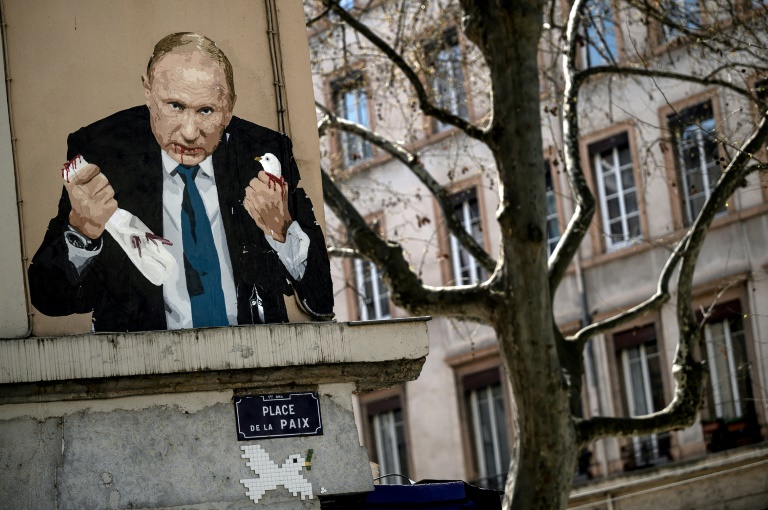
Russians fleeing Putin face lukewarm welcome in France

Artyom Kotenko’s world collapsed when Russia invaded Ukraine.

Born to a Ukrainian father and a Russian mother in the southeastern Ukrainian city of Zaporizhzhia, he lived in Russia for most of his life.

“I was crushed. I could not live or breathe,” the 50-year-old artist and graphic designer, who is a Russian national, told AFP in Paris.

A week after President Vladimir Putin sent troops to pro-Western Ukraine, Kotenko left behind his old life in Saint Petersburg and went to Helsinki. From there he made his way to Paris, which he says “healed his wounds”.

“I stopped feeling like I was suffocating, like I was dying every day. I was able to breathe again,” he said in the 13th district of Paris where pro-Ukrainian graffiti adorns the streets.

But much to Kotenko’s disappointment, Paris appeared indifferent to his plight. 

Kotenko, who worked at Saint Petersburg’s State Hermitage Museum, the Tovstonogov Bolshoi Drama Theater and the Higher School of Economics, realised he could not get a job in France.

He wanted to draw on his extensive teaching experience to work with the children of Ukrainian refugees but found out that those jobs were reserved for EU citizens.

“This is strange. This has to change because there are a lot of people like me and there is work for us,” he said.

– Political exiles –

French President Emmanuel Macron has led diplomatic outreach to the Kremlin over the war in Ukraine, and Ukrainian refugees are welcomed with open arms in France.

But Russians fleeing Putin’s regime realise they are left to their own fate in one of the wealthiest EU countries.

Since Moscow’s invasion of Ukraine, tens of thousands of Russians have fled the country in protest over Putin’s policies and out of fear for their children’s future. 

Observers point out that most of Russia’s new political exiles are liberal-leaning well-educated professionals in their prime. 

Some even draw parallels with the departure of intellectual elites from Soviet Russia in 1922 in a phenomenon that has come to be known as the “Philosophers’ Ships”. 

Some leading Western democracies have indicated their willingness to tap into the professional knowledge and experience fleeing Russians have to offer.

German Vice Chancellor Robert Habeck said in early May that Berlin might simplify visa procedures and help find jobs for Russians fleeing Putin’s regime.

“We want them to be aware that we could really use them,” he told reporters.

US officials are also considering ways to lure highly educated anti-Kremlin Russians.

The French interior ministry did not respond to a request for comment.

– ‘Support them’ –

Many political emigres say France should do the same.

“If people seek an opportunity to move here, you need to support them,” said Daniel Kashnitsky, a 41-year-old Muscovite, pointing to France’s notorious bureaucratic hurdles.

He, his wife and their four children — two of them adopted — applied for asylum in France in April and met with AFP in the 18th district of Paris. After a long day at the prefecture the children appeared exhausted.

“We have nowhere to live,” said Kashnitsky’s 38-year-old wife Natalya. “It’s stressful.”

The family arrived in Paris more than a month after the war in Ukraine broke out. A public health specialist who previously lived in Sweden, Lithuania and Israel, Kashnitsky said he did not want to leave his “beloved” Moscow.

The war changed everything. First, Kashnitsky staged an anti-war protest in central Moscow and spent a night in jail. He also gave interviews to Swedish media. Then he realised it was time to leave.

“It was important to me to take the kids out,” Kashnitsky told AFP, adding that his eldest son was turning 18 in May and could be drafted.

When they arrived in Paris, they had nowhere to go, and airport officials took them to a centre for Ukrainian refugees. 

Kashnitsky said they could not stay at the centre. They eventually found a budget hotel outside Paris for which they paid themselves. 

Two weeks after arriving in France the family received temporary housing in the southern town of Ales. The future is uncertain but Kashnitsky is optimistic. “I am hoping to be able to start working as soon as possible.”

– ‘Catastrophic situation’ – 

After the start of the Ukraine war French university lecturer Antoine Nicolle helped create an association to help Russians fleeing the regime. 

“We’ve created an association because we saw that nothing was being done for Russians,” he told AFP.

He said they wanted to set up a fund to raise money for the emigres but due to Western sanctions they could not open a bank account “because of the word ‘Russian'” in its name.

“This is messed up,” he said.

After more than a month in Paris Kotenko left for Seville where he legalised his relationship with his Spanish boyfriend and hopes to put down roots. 

Stressing that Ukrainians need to receive all the support they can get, Kotenko said anti-Kremlin Russians should not be forgotten, too.

“More and more people like me will appear here and they need to be given a chance to gain a foothold, work officially, to be issued humanitarian visas,” he said. 

“The situation is catastrophic and something needs to be done about it. Otherwise these Russians will simply settle here as illegal immigrants.”

Tourism recovering, but not back to pre-pandemic levels

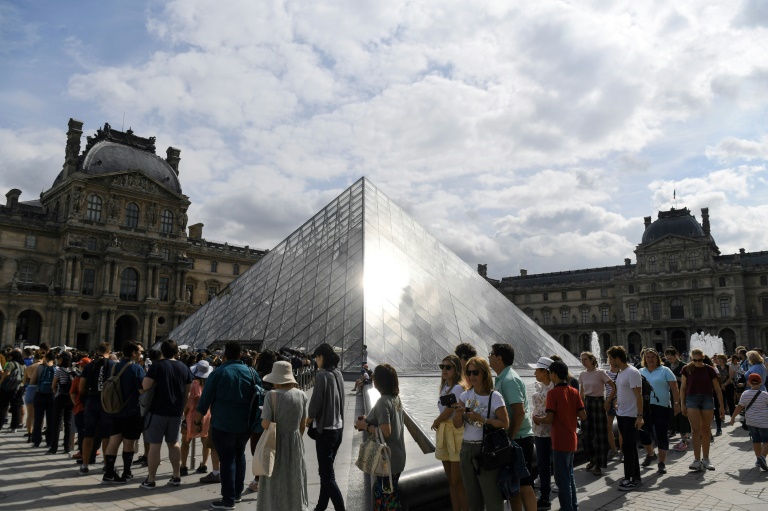
Global tourism is roaring back to life despite Covid travel headaches and the effects of the war in Ukraine, but it has yet to return to its pre-pandemic health.

International tourist arrivals worldwide have more than doubled, up 130 percent in January 2022 on the same period last year, according to the latest UN World Tourism Organization figures.

Travellers are regaining confidence, and Europe and the Americas are leading the resurgence.

Worldwide, there have been 18 million additional visitors, the UNWTO said, “equivalent to the total increase recorded over the whole of 2021”.

In 2019, global tourism revenues reached $1.48 trillion. That figure dropped by almost two thirds due to the pandemic the following year.

While January confirms the recovery trend that began in 2021, the UNWTO highlighted how the Omicron Covid variant recently put the brakes on the rise. International arrivals in January 2022 were still 67 percent lower than before the pandemic.

Most regions have seen travellers return and rebound from the low levels of early 2021, with Europe faring three times better and the Americas twice as well.

That’s still some way off pre-pandemic numbers, but Larry Cuculic, general manager of the Best Western hotel company, is optimistic.

“I travelled earlier this week and I can tell you that the airports, the international terminals in the US are very crowded and there is a demand or an interest in travelling to Europe, because for several years we couldn’t do that,” he told AFP.

“We miss going to Paris, Rome and Berlin.”

The Middle East is also experiencing a boom, with arrivals up 89 percent on 2021, and so is Africa, with numbers up 51 percent — but these two regions are still very far from their 2019 totals, according to the UNWTO.

Perhaps unsurprisingly, the number of travellers is falling in the Asia-Pacific region, where several destinations remain closed. In January, international tourist arrivals were down 93 percent from pre-pandemic levels.

Travel by Chinese tourists, the world’s biggest spenders before the pandemic, is also severely affected by China’s zero-Covid policy.

According to travel analyst ForwardKeys, the second quarter of 2022 still looks “more promising for international travel in the world than the first quarter”.

The Caribbean and South America are drawing tourists looking for sea and sunshine in the northern hemisphere summer. Costa Rica, the Dominican Republic, Aruba and Jamaica are among the 20 most popular destinations, even exceeding pre-pandemic levels.

In Europe, tourists are flocking to France, Spain, Portugal, Greece and Iceland, but not in the same numbers as before Covid.

– The French exception –

France is doing well enough, though. In February, international tourism revenues in the country “came close to those of 2019”, according to France’s tourism minister Jean-Baptiste Lemoyne.

At 2.7 billion euros ($2.8 billion), revenues were up 1.5 billion compared to last year and down eight percent compared to 2019,  he told reporters.

In 2019, before the pandemic, the tourism sector in France represented 7.4 percent of GDP and 9.5 percent of jobs.

According to Lemoyne, France is “very well positioned” as the “number one destination for travel in Europe for Americans, Belgians, Italians and Spaniards”.

The French, for their part, are “a European exception”, the minister said, pointing out that 60 percent plan to stay in their own country over the holidays.

“With a domestic base that will remain very strong and the return of international customers, this means that we are in for a summer season that can be very, very dynamic,” he said.

But Didier Arino, director of the Protourisme consultancy, warned there could be trouble ahead.

“It is not the market that is going to be problematic, it is the cost of production of tourist stays, competitiveness, the suitability between the prices of products and purchasing power,” he said.

“The players are all increasing their prices, and right now it is going well because people want to enjoy themselves. But we are reaching the limit of what is acceptable for many customers.”

China defends Hong Kong cardinal's arrest as Western alarm grows

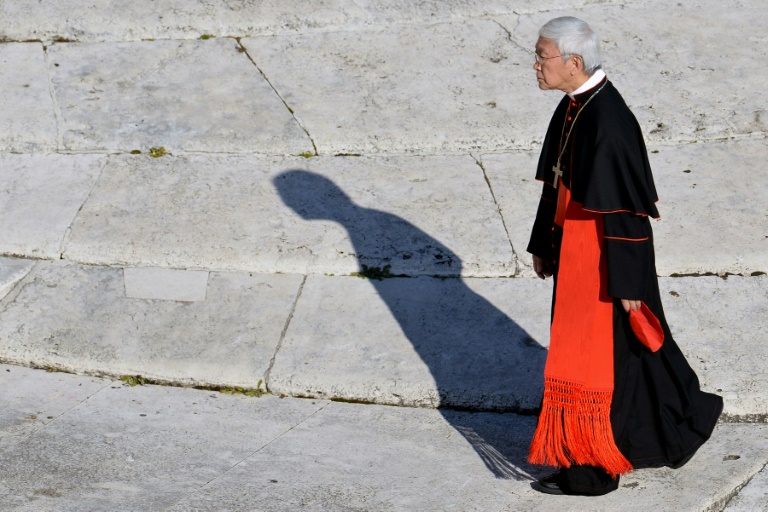
China on Thursday defended the arrest of a 90-year-old Catholic cardinal under Hong Kong’s national security law, a move that triggered international outrage and deepened concerns over Beijing’s crackdown on freedoms in the financial hub.

Retired cardinal Joseph Zen, one of the most senior Catholic clerics in Asia, was among a group of veteran democracy advocates arrested Wednesday for “colluding with foreign forces”.

Cantonese pop singer Denise Ho, veteran barrister Margaret Ng and prominent cultural studies scholar Hui Po-keung were also arrested, the latter as he attempted to fly to Europe to take up an academic post.

“The persons concerned are suspected of conspiracy to collude with foreign countries or foreign forces to endanger national security -– an act of severe nature,” said the Commissioner’s Office, which represents Beijing’s foreign ministry in Hong Kong.

The four were detained for their involvement in a now-disbanded defence fund that helped pay legal and medical costs for those arrested during the huge and sometimes violent wave of democracy protests three years ago.

China responded with a broad campaign to crush the movement and transform the once-outspoken city into something more closely resembling the authoritarian mainland.

Zen and his colleagues, who were released on bail late Wednesday, join more than 180 Hong Kongers arrested to date under the national security law Beijing imposed to stop the protests.

Those charged are typically denied bail and can face up to life in prison if convicted.

– ‘Deeply troubling’ –

Criticism came from Western nations who have accused China of eviscerating the freedoms it once promised Hong Kong could maintain.

The United States, which has previously sanctioned key Chinese officials over the ongoing crackdown, called on Beijing to “cease targeting Hong Kong’s advocates”.

Canadian foreign minister Melanie Joly called the arrests “deeply troubling”.

Ho, a popular Hong Kong singer and LGBTQ campaigner, is also a Canadian national.

EU foreign policy chief Josep Borrell said he was following the arrests with “great concern”, while Human Rights Watch called it a “shocking new low for Hong Kong”.

“Even by Hong Kong’s recent standards of worsening repression, these arrests represent a shocking escalation,” added Amnesty International.

The Vatican said it was concerned by Zen’s arrest and “following the development of the situation very closely”.

– ‘Damocles sword’ –

Cardinal Zen fled Shanghai for Hong Kong after the communists took power in China in 1949, and rose to become bishop of the city.

A long-term advocate for Hong Kong’s democracy movement, he has accused the Vatican of “selling out” China’s underground Catholic church by reaching a compromise with Beijing over the appointment of bishops on the mainland.

Hong Kong’s Catholic hierarchy, including Zen’s successors, has become far less outspoken about Beijing in recent years.

The Hong Kong diocese said Thursday it was “extremely concerned about the condition and safety of Cardinal Joseph Zen”.

“We trust that in the future we will continue enjoying religious freedom in Hong Kong under the Basic Law,” it said in a statement, referencing the city’s mini-constitution that supposedly guarantees key freedoms.

Zen’s arrest has sent shockwaves through the city’s Catholic community.

“The arrest of cardinal Zen is a blow for the entire church in Hong Kong, China and the world,” Hong Kong-based Italian missionary Franco Mella, 73, told AFP.

“It has become obvious that there is a Damocles sword above Zen and other church people.”

A church visitor on Thursday who gave her name as Laura said congregants feared mainland-style suppression of religion could be coming to Hong Kong.

“The space for religious freedom has apparently shrunk because even a Catholic cardinal is now under arrest,” she said.

Ta Kung Pao, a nationalist newspaper that answers to Beijing’s Liaison Office in Hong Kong, published an article Thursday accusing those arrested of “six crimes”.

They included funding lobbying trips and activist meetings with British lawmakers, providing financial aid to Hong Kong “rioters” who had fled to Canada and Taiwan, and accepting donations from overseas and the now-shuttered Apple Daily newspaper.

But most of the alleged actions cited by Ta Kung Pao took place before the enactment of the law, which is not supposed to be retroactive.

The fund disbanded last year after national security police demanded it hand over operational details including information about its donors and beneficiaries.

Palestinians honour slain journalist, reject joint probe

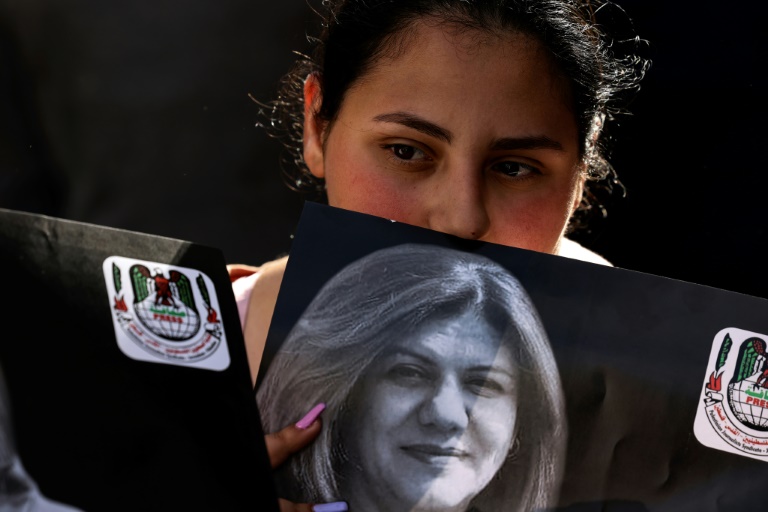
Palestinians planned a memorial service Thursday for journalist Shireen Abu Akleh who was killed while covering an Israeli raid in the West Bank, but have rejected US-led calls for a joint investigation into her death.

Palestinian-American Abu Akleh, 51, a veteran of Qatar-based Al Jazeera’s Arabic TV service, was shot in the head during clashes in the Jenin refugee camp, a major flashpoint in the Israeli-Palestinian conflict.

Israel’s Defence Minister Benny Gantz conceded late Wednesday that it could have been “the Palestinians who shot her” or fire from “our side” — appearing to walk back Prime Minister Naftali Bennett’s remarks that she was “likely” killed by stray Palestinian gunfire. 

“We are not certain how she was killed but we want to get to the bottom of this incident and to uncover the truth as much as we can,” Gantz told reporters. 

Al Jazeera, Palestinian officials and witnesses said Abu Akleh was killed by Israeli forces, and the network insisted she was targeted “deliberately” and “in cold blood”.

Israel has publicly called for a joint investigation into the killing and asked Palestinian authorities to hand over the bullet that struck Abu Akleh for forensic examination. 

An Israeli security source told AFP that Israel was prepared to examine the projectile in front of Palestinian and US officials, “out of transparency”.

– ‘High transparency’ –

The European Union has urged an “independent” probe while the United States demanded the killing be “transparently investigated”, calls echoed by UN human rights chief Michelle Bachelet.

An initial autopsy and forensic examination were conducted in Nablus in the Israel-occupied West Bank hours after her death, but no final conclusions have been disclosed. 

Senior Palestinian Authority official Hussein Al-Sheikh, a close confident of president Mahmud Abbas, has ruled out a joint probe. 

“Israel has requested a joint investigation and to be handed over the bullet that assassinated the journalist Shireen. We refused that, and we affirmed that our investigation would be completed independently,” Al-Sheikh said on Twitter.  

“We will inform her family, #USA, #Qatar and all official authorities and the public of the results of the investigation with high transparency. All of the indicators , the evidence and the witnesses confirm her assassination by #Israeli special units.” 

– ‘Sister of all Palestinians’ –

Abu Akleh rose to prominence for Arabic audiences after joining Al Jazeera in 1997 and through her coverage of the second Palestinian Intifada, or uprising, from 2000-2005.

“She was the sister of all Palestinians,” her brother Antoun told AFP at the family home in Israeli-annexed east Jerusalem. 

“What happened cannot be silence … She will not be forgotten.”

In a sign of her status among Palestinians, she was set to receive what the Palestinians labelled a full state memorial at the presidential compound in Ramallah on Thursday morning. 

Her death came nearly a year after an Israeli air strike destroyed a Gaza building that housed the offices of Al Jazeera and news agency AP.

Tensions have again risen in recent months as Israel has grappled with a wave of attacks which have killed at least 18 people since March 22, including an Arab-Israeli police officer and two Ukrainians.

A total of 31 Palestinians and three Israeli Arabs have died during the same period, according to an AFP tally, among them perpetrators of attacks and those killed by Israeli security forces in West Bank operations.

Finnish president, PM in favour of joining NATO 'without delay'

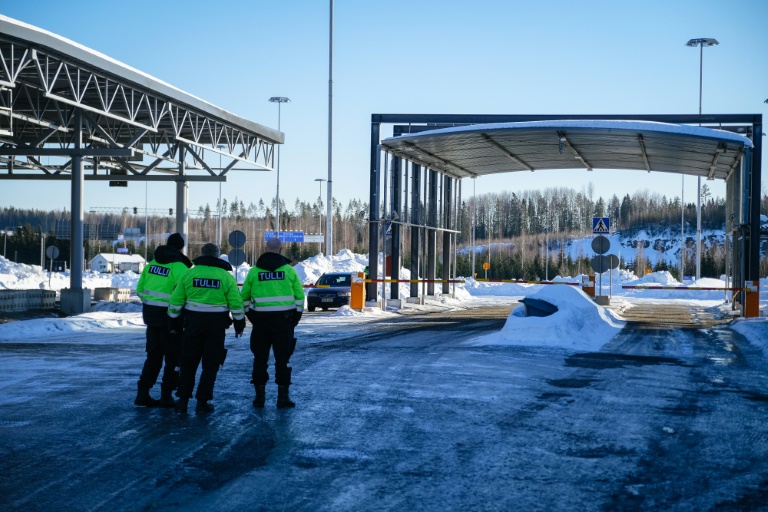
Finland’s president and prime minister said on Thursday they were in favour of joining NATO and a formal decision would be taken this weekend, after Russia’s war in Ukraine sparked a swift u-turn in opinion.

“Finland must apply for NATO membership without delay,” President Sauli Niinisto and Prime Minister Sanna Marin said in a joint statement.

Niinisto has often served as a mediator between Russia and the West.

“NATO membership would strengthen Finland’s security. As a member of NATO, Finland would strengthen the entire defence alliance,” the statement said.

A special committee will announce Finland’s formal decision on a membership bid on Sunday, the statement added.

The two leaders had been widely expected to come out in favour of joining the Western military alliance.

“Joining NATO would not be against anyone,” Niinisto told reporters on Wednesday, amid Russian warnings of consequences if Helsinki were to seek membership.

His response to Russia would be: “You caused this. Look in the mirror,” he said. 

As recently as January, amid tensions between the West and Russia, Marin said a bid would be “very unlikely” during her current mandate, which ends in April 2023.

But after its powerful eastern neighbour invaded Ukraine on February 24, Finland’s political and public opinion swung dramatically in favour of membership as a deterrent against Russian aggression.

A poll published on Monday by public broadcaster Yle showed that a record 76 percent of Finns now support joining the alliance, up from the steady 20-30 percent registered in recent years.

Finland shares a 1,300-kilometre (800-mile) border with Russia and has been militarily non-aligned for decades.

In 1939, it was invaded by the Soviet Union.

Finns put up a fierce fight during the Winter War but were ultimately forced to cede a huge stretch of its eastern Karelia province in a peace treaty with Moscow.

Iro Sarkka, a NATO expert from the University of Helsinki, told AFP before the announcement that Niinisto, who had refrained from revealing his stance on membership, had nonetheless dropped hints that he was leaning toward supporting a bid.

“The president no longer talks about the EU defence option or the role of Finland as the mediator between the East and the West,” she said.

– Next steps –

On Wednesday, the Finnish parliament’s defence committee also concluded that membership of NATO would be the “best option” for Finland’s security, as the Russian invasion had eroded the security situation in Europe.

A large majority in Finland’s parliament backs membership.

“It is 100-percent certain that Finland will apply and quite likely that it will be a member by the end of the year,” researcher Charly Salonius-Pasternak of the Finnish Institute of International Affairs told AFP before Thursday’s announcement.

Neighbouring Sweden is also contemplating joining the military alliance and the two countries are widely expected to present a joint bid.

For Finland, the next step is for the President and Ministerial Committee on Foreign and Security Policy — a body made up of the president, prime minister and up to six other cabinet ministers — to meet on Sunday.

The committee will make the formal decision for Finland to submit an application, with the proposal then presented to parliament.

After an official bid is submitted to the alliance, lawmakers in all 30 NATO member states would need to ratify its application, a process that can take months.

Foreign Minister Pekka Haavisto said on Tuesday he believed Finland could be a full NATO member “at the earliest” on October 1.

“The NATO secretary general has said that this process will take between four and 12 months. My own impression is that it might be closer to four months than 12 months,” Haavisto said.

Nissan reports first full-year net profit in three years

Nissan said Thursday its full-year net profit to March 2022 returned to the black for the first time in three fiscal years, citing cost-saving efforts and positive US market conditions.

The Japanese auto giant reported an annual net profit of 215.5 billion yen ($1.67 billion), beating the company’s forecast of 205 billion yen and representing the first net profit since fiscal year 2018-19.

But looking ahead, it warned of a market environment “more severe than in fiscal year 2021, due to semiconductor supply shortages, higher raw material prices and logistics costs, the crisis in Ukraine as well as the impact of lockdowns on parts supplies in China.”

It projects a net profit for the current fiscal year of 150 billion yen, following the conservative lead of other automakers facing headwinds caused by supply disruption.

“It is clear that our industry and therefore our performance was impacted by intensifying headwinds in the last fiscal year,” said chief operating officer Ashwani Gupta.

“These challenges, magnified in the fourth quarter with rising energy prices, continued supply chain shortages and ongoing Covid disruptions,” he said.

“While Nissan has put in place agile business continuity plans, these continuous changes in the market are creating unprecedented uncertainty.”

The Japanese auto giant has faced a series of trials in recent years, from weak demand to the fallout from the arrest of former boss Carlos Ghosn, now an international fugitive in Lebanon. 

But the crisis-hit company has clawed its way back, helped in part by a recovery in demand for cars, and the effects of a weaker yen, which has hit 20-year lows against the dollar in recent months.

With Russians gone, French Riviera woos other big spenders

Private chef Selim M’nasri used to cook for wealthy Russians on the French Riviera once a month, but he says it has been “radio silence” from them since Moscow’s invasion of Ukraine.

So the 34-year-old Nice cook is now working for top athletes and other rich clients.

The Covid pandemic and now Western sanctions on Moscow over the Ukraine war have kept rich Russians away from the French Riviera, one of their favourite foreign destinations.

But the region does not appear to have had trouble finding big spenders from other countries to make up for the loss of its Russian visitors.

The pandemic had already caused an 80 percent drop in the number of Russian tourists in the Provence-Alpes-Cote d’Azur region, according to the head of the local tourism committee, Francois de Canson.

After Paris, it is the second most popular French destination for Russian visitors. And it is a historic hotspot, too — Russian visitors have stayed here in “sumptuous villas since the 19th century,” de Canson added.

Russia may not account for the largest number of tourists, but in the past, they could be relied on to bring enormous wealth to the coast.

“It’s not a huge volume,” said Denis Zanon, general manager of the Nice metropolitan tourist office. 

“But there is a fringe of this market with a lot of money, who live on the coast and whose guests rent villas nearby, bringing work to the luxury hoteliers, yacht rental companies, and private caterers,” Zanon said.

French Riviera workers in these industries have noticed the change.

Lea Combelonge, who worked as a private chef during the pandemic, has lost her rich Russian customers, too. 

They could be complicated clients –- sometimes making last-minute orders for caviar — but they were also generous, she said.

It hasn’t been difficult to make up the lost business though, she added, because “there are rich people everywhere”.

M’nasri agreed.

“There’s plenty of work,” he said.

– Replacing Russian visitors –

The European Union has blacklisted hundreds of Russian oligarchs and politicians since Moscow’s annexation of Crimea in 2014, adding many more following the outbreak of war in Ukraine.

But many ordinary Russian families living in France have stayed on the coast, according to Thomas de Pariente, deputy director of tourism in Cannes.

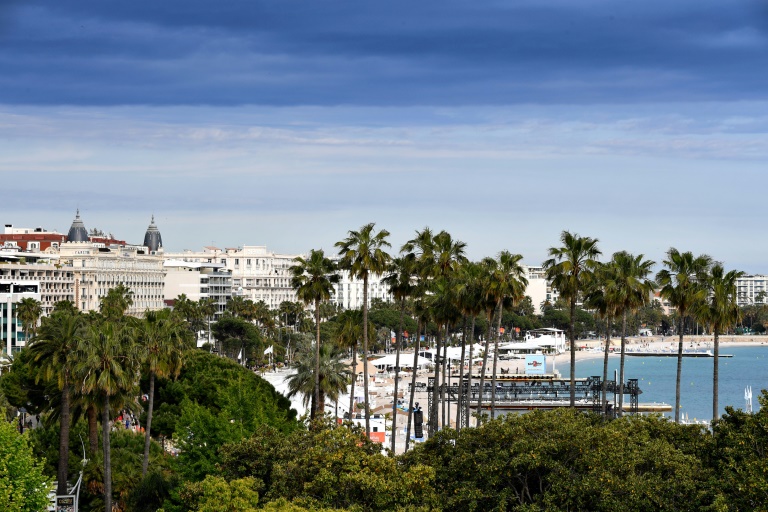
“You can still hear Russian spoken on the Croisette,” he said, referring to the city’s famous beachfront promenade.

But a new “high-contribution” clientele, from Qatar and the United States in particular, has helped tourism on the Riviera rebound since the reopening of borders, he said.

The tourism sector had been courting new customers, including Scandinavian and Canadian visitors, even before the pandemic began. 

Promotional campaigns have helped “limit the damage”, said president of the region Renaud Muselier.

“After the outbreak of the war in Ukraine (they) took up these communication campaigns and made considerable efforts towards the United States”, said de Canson.

There are now three daily direct flights between Nice and New York. A Nice-Montreal flight has also opened.

At the end of April 2022, bookings in the region were up 21 percent on the same period in 2019, according to the CRT.

In Cannes, high-end rental specialist Romain Benichou said “not a single villa is available” for July-August.

Meanwhile villas sold by Russians following the war in Ukraine have found buyers among the French, said Nicolas Dos Passos of the Albert Immobilier agency in Cannes.

Another sign that the rich are here: Yacht spaces at ports in Cannes and Marseille are full, according to Fabrice Viard, manager at Liberty Yachts company.

“It feels like the 2022 season will be a good one,” he said.

UK economic growth slows in first quarter

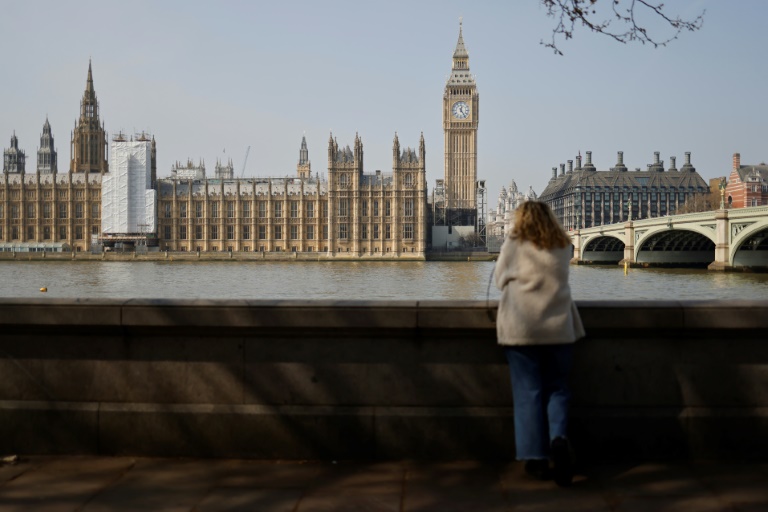
Britain’s economy grew at a slower pace in the first quarter compared with the final three months of last year as the country battled soaring inflation, official data showed Thursday.

The economy grew 0.8 percent in the January-March period compared with expansion of 1.3 percent in the fourth quarter of last year, the Office for National Statistics said in a statement.

After solid output in January, the UK economy posted zero growth the following month and contracted by 0.1 percent in March, ONS data showed.

It comes after the Bank of England (BoE) last week warned that Britain risks falling into recession with UK inflation expected to top 10 percent, a four-decade high, by the end of the year.

Consumer prices are surging worldwide on supply strains as economies reopen from pandemic lockdowns — and in the wake of the Ukraine war that is aggravating already high energy costs.

– ‘Russia disruption’ –

Responding to Thursday’s data, finance minister Rishi Sunak said Britain’s economic recovery from the pandemic was “being disrupted by (Russian President Vladimir) Putin’s barbaric invasion of Ukraine and other global challenges”.

Sunak, however, added in a statement that UK “growth in the first few months of the year was strong, faster than the US, Germany and Italy”.

While the UK economy grew for a fourth quarter in a row, and is above pre-pandemic levels, output in the first three months of 2022 was the lowest for a year.

“Our latest monthly estimates show GDP fell a little in March, with drops in both services and in production,” said Darren Morgan, director of economic statistics at the ONS.

“Construction, though, saw a strong month, thanks partly to repair work after the February storms.”

Growth over the entire first quarter was driven by expansion in a number of service sectors, including hospitality and transport, Morgan added.

However, the contraction in March and slower first-quarter output as a whole “suggest the economy had less momentum than we thought even before the full hit from the cost-of-living crisis has been felt”, noted Paul Dales, chief UK economist at Capital Economics.

“The risk of recession has just risen,” he said, adding that “strong price pressures will probably mean the BoE will raise interest rates further”.

The Bank of England last week raised its main interest rate by a quarter point to one percent to tackle runaway UK inflation.

It was the fourth straight increase by the BoE, while its key rate now stands at the highest level since the global financial crisis in 2009. 

That is hiking borrowing costs for consumers and businesses, further impacting spending.

Britain’s cost-of-living crisis was blamed in part for British Prime Minister Boris Johnson’s Conservative party losing control of key councils in recent local elections.

SoftBank reports record $13 bn full-year net loss

Japan’s SoftBank Group on Thursday logged a record annual net loss after a bruising period that saw its assets hit by a US tech-share rout and a regulatory crackdown in China.

The investment giant reported a net loss of 1.708 trillion yen ($13.17 billion) in the year to March 2022 — a vertiginous plunge from 4.99 trillion yen net profit the previous year, when huge market rallies boosted results.

SoftBank’s big stakes in global tech giants and volatile new ventures have made for unpredictable earnings, and the huge profit drop can be linked to tanking tech shares as the United States hikes interest rates to tackle inflation.

Reporting an eye-watering investment loss of 3.4 trillion yen, SoftBank said its tech-focused Vision Fund has suffered falls “due to a decline in the share prices of most listed portfolio companies”.

The losses have been deepened by the many shares they hold on Chinese ride-hailing giant Didi Chuxing and e-commerce group Alibaba, which have been hit by a crackdown by Beijing on the country’s private sector.

In 2019-20, SoftBank Group reported a then-record net loss of 961.6 billion yen, as the emergence of Covid-19 compounded woes caused by its investment in troubled office-sharing start-up WeWork.

But it rebounded in 2020-21 to report Japan’s biggest-ever annual net profit after people moved their lives online during the pandemic, sending tech stocks soaring.

In February, SoftBank said the $40 billion sale of chip powerhouse Arm to Nvidia had collapsed because of “significant regulatory challenges” over competition concerns, and it now plans to take the unit public.

– ‘Ups and downs’ –

Hideki Yasuda, senior analyst at Toyo Securities, said that while the tech sector SoftBank is focused on is not doing well right now, it’s worth taking the long view.

“It’s important for investors (like SoftBank) to think about what might happen in 20 years,” he told AFP before the earnings announcement.

“They must accept ups and downs in the short-run,” Yasuda said, noting that it took years for Chinese e-commerce giant Alibaba to become a viable investment for SoftBank.

CEO Masayoshi Son in November announced a share buyback worth one trillion yen, reportedly under pressure from shareholders frustrated by SoftBank’s sinking stock price.

Close Bitnami banner
Bitnami