World

Finnish political leaders to unveil NATO stance

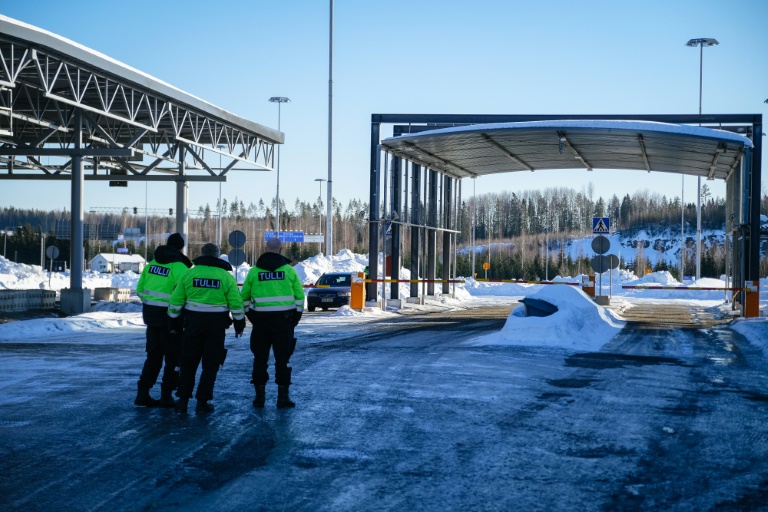
Finland’s president and prime minister will announce Thursday their highly awaited positions on whether to join NATO, the first step toward a formal decision after Russia’s war in Ukraine triggered a swift turnaround in opinion.

President Sauli Niinisto and Prime Minister Sanna Marin will publish a joint statement at 10:00 am (0700 GMT), the president’s office told AFP.

They are widely expected to come out in favour of joining.

“Joining NATO would not be against anyone,” Niinisto told reporters on Wednesday, amid Russian warnings of consequences if Helsinki were to seek membership in the Western military alliance.

His response to Russia would be: “You caused this, look in the mirror,” he said. 

“All signs point to Finland applying to join NATO,” Iro Sarkka, a NATO expert from the University of Helsinki, told AFP. 

As recently as January, amid tensions between the West and Russia, Marin said a bid would be “very unlikely” during her current mandate, which ends in April 2023.

But after its powerful eastern neighbour invaded Ukraine on February 24, Finland’s political and public opinion swung dramatically in favour of membership as a deterrent against Russian aggression.

A poll published on Monday by public broadcaster Yle showed that a record 76 percent of Finns now support joining the alliance, up from the steady 20-30 percent registered in recent years.

Finland shares a 1,300-kilometre (800-mile) border with Russia and has been militarily non-aligned for decades.

In 1939, it was invaded by the Soviet Union.

Finns put up a fierce fight during the bloody Winter War, but were ultimately forced to cede a huge stretch of its eastern Karelia province in a peace treaty with Moscow.

While Sarkka noted that both the prime minister and president have been “careful” so far in their statements regarding NATO, their actions suggest the Nordic country is heading for membership.

“The president no longer talks about the EU defence option or the role of Finland as the mediator between the East and the West,” she said.

– Next steps –

On Wednesday, the Finnish parliament’s defence committee concluded that membership in NATO would be the “best option” for Finland’s security, as the Russian invasion had eroded the security situation in Europe.

A large majority in Finland’s parliament backs membership.

“It is 100 percent certain that Finland will apply, and quite likely that it will be a member by the end of the year,” researcher Charly Salonius-Pasternak of the Finnish Institute of International Affairs told AFP.

Sarkka said she believed the political leadership has refrained from voicing their opinions thus far to allow room for open debate during the parliamentary process.

“If President Niinisto, who is perhaps the most influential opinion leader in the country, had voiced his stance earlier, that could have restricted discussion.”

Neighbouring Sweden is also contemplating joining the alliance, and the two countries are widely expected to present a joint bid.

If Finland’s leadership backs NATO membership, the next step would be to convene the President and Ministerial Committee on Foreign and Security Policy, a body made up of the president, prime minister and up to six other cabinet ministers.

The committee can make the formal decision for Finland to submit an application, with the proposal then presented to parliament.

According to Finnish daily Iltalehti, the committee is to meet Sunday to make the country’s final decision.

Contacted by AFP, the government refused to comment on the report, saying the committee’s meeting dates were confidential information.

Lawmakers in all 30 NATO member states would then need to ratify its application, a process that can take months.

Foreign Minister Pekka Haavisto said Tuesday he believed Finland could be a full NATO member “at the earliest” on October 1.

“The NATO secretary general has said that this process will take between four and 12 months. My own impression is that it might be closer to four months than 12 months,” Haavisto said.
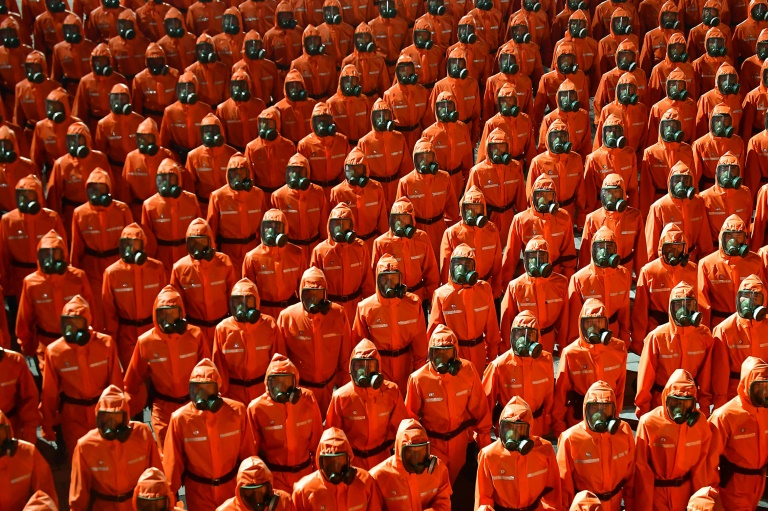
North Korea reports first Covid cases, Kim orders national lockdown

North Korea confirmed its first-ever Covid cases on Thursday and declared a “serious emergency”, with leader Kim Jong Un ordering lockdowns across the country.

The nuclear-armed country had never admitted to a case of Covid-19 and the government had imposed a rigid coronavirus blockade of its borders since the start of the pandemic in 2020.

But samples taken from patients sick with fever in Pyongyang “coincided with Omicron BA.2 variant”, the official Korean Central News Agency reported.

Top officials, including leader Kim Jong Un, held a crisis politburo meeting on Thursday to discuss the outbreak and announced they would implement the “maximum emergency epidemic prevention system”.

Kim “called on all the cities and counties of the whole country to thoroughly lock down their areas,” KCNA reported, although details of the restrictions were not immediately given. 

Kim told the meeting that the goal was to “quickly cure the infections in order to eradicate the source of the virus spread,” according to KCNA.

Kim added that North Korea will “overcome the current sudden situation and win victory in the emergency epidemic prevention work”.

It was unclear from the KCNA report how many Covid infections had been detected.

North Korea’s crumbling health infrastructure would struggle to deal with a major outbreak, with its 25 million people not believed to be vaccinated, experts say.

“For Pyongyang to publicly admit omicron cases, the public health situation must be serious,” Leif-Eric Easley, a professor at Ewha University in Seoul said.

“Pyongyang will likely double down on lockdowns, even though the failure of China’s zero-Covid strategy suggests that approach won’t work against the Omicron variant.”

– No vaccines –

North Korea has turned down offers of vaccinations from the World Health Organization, and China and Russia.

Accepting vaccines through the WHO’s Covax scheme “requires transparency over how vaccines are distributed,” Go Myong-hyun, researcher at the Asan Institute for Policy Studies told AFP.

“That’s why North Korea rejected it,” Go said.

North Korea is surrounded by countries that have battled — or are still fighting to control — significant outbreaks of Omicron.

South Korea, which has high rates of vaccination, has recently eased almost all Covid-19 restrictions, with cases sharply down after an Omicron-fuelled spike in March.

Neighbouring China, the world’s only major economy to still maintain a zero-Covid policy, is battling multiple Omicron outbreaks.

Major Chinese cities, including the financial capital Shanghai, have been under strict lockdowns for weeks.

It appears North Korea will try to avoid China’s extreme measures like “virtually imprisoning residents in apartments”, said Cheong Seong-chang of the Sejong Institute.

But even more limited lockdowns would create a “severe food shortage and the same chaos China is now facing,” he said.

Seoul-based specialist site NK News reported that areas of Pyongyang had already been locked down for two days, with reports of panic buying.

– Nuke test? –

The public emergence of Covid in Pyongyang could also have repercussions on North Korea’s nuclear programme. 

South Korea’s hawkish new President Yoon Suk-yeol, who was sworn in Tuesday, has vowed to get tough with Pyongyang, after five years of failed diplomacy.

After high-profile talks collapsed in 2019, North Korea has doubled-down on weapons testing, conducting a blitz of launches so far this year, including intercontinental ballistic missiles.

Satellite imagery indicates North Korea is preparing to conduct a nuclear test, and the United States has warned this could come as soon as this month.

But the Covid-19 outbreak could potentially disrupt their military program, analysts said.

“There is a possibility of delaying the nuclear test in order to focus on overcoming the coronavirus,” Yang Moo-jin, a professor at the University of North Korean Studies, told AFP. 

But he said if public fears over an outbreak were to spread, Kim might go ahead with a test “to divert this fear to another place”.

Asian stocks down as inflation fears churn markets

Asian equities slumped on Thursday following Wall Street’s lead, as markets churned after a key US report renewed fears of inflation and a tightening of monetary policies.

Stocks have been volatile for much of 2022, fuelled by China’s Covid-19 lockdowns, Russia’s invasion of Ukraine, and surging inflation that has dampened consumer sentiment. 

Investors had been looking to the US consumer price report in hopes that easing inflation would lower pressure on the Federal Reserve to hike interest rates, but the rise of 8.3 percent was higher than expected.

“The April inflation report came in hotter-than-expected and triggered a complete reset in Fed rate hike expectations,” said Edward Moya, senior market analyst at OANDA. 

“Wall Street thought it was going to be done with inflation rearing its ugly head, but that does not appear to be the case.”

Inflation is still expected to decelerate over the next few months, he said, “but it won’t be sharp given the rising prices on gas, hotel, airfares”, as well as the impact of China’s Covid lockdowns on supply chains and exports.

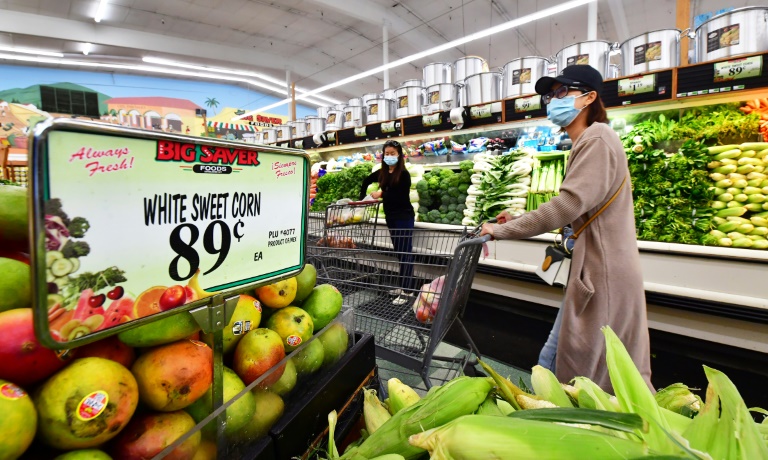
Americans have felt the pinch of rising food prices, including big increases in dairy and cereal products.

The index for meat, poultry, fish and eggs surged 14.3 percent — the biggest gain since May 1979.

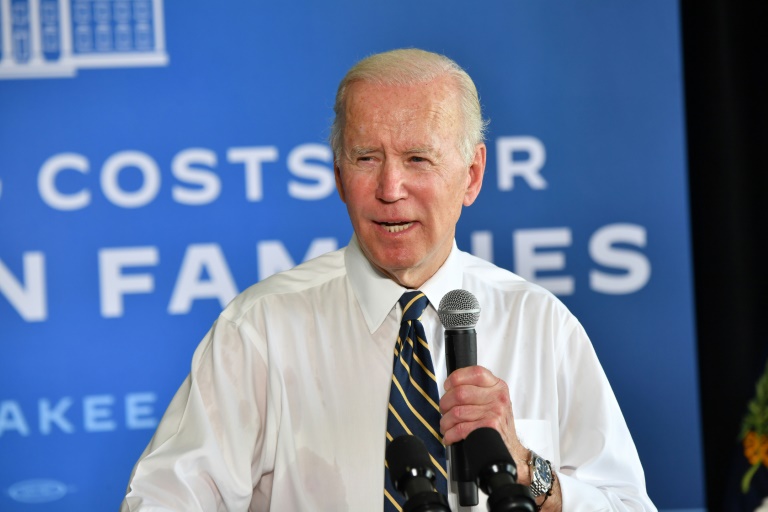
US President Joe Biden called April’s overall slow-down “heartening” — March saw a peak of 8.5 percent — but acknowledged inflation was still a major challenge, and said “bringing it down is my top economic priority.”

Post-report, US stocks gyrated — opening lower, rallying, retreating, and then with losses accelerating at close. 

All three major indices finished firmly in the red, with the tech-rich Nasdaq slumping 3.2 percent behind big drops by Apple and Facebook-parent Meta.

The tumble filtered to Asian markets — Seoul, Sydney, Tokyo, and Hong Kong opened Wednesday in the negatives. 

“We’re seeing the beginning of the capitulation and the great reset, if you want, in pricing,” Virginie Maisonneuve, global chief investment officer for equity at Allianz Global Investors UK, told Bloomberg.

Oil prices — which fell below $100 a barrel on the benchmark US crude contract WTI earlier this week — jumped around five percent amid ongoing worries over Russian energy supplies.

By Thursday morning, it traded around $104 a barrel.

Ukraine said Russia had halted gas supplies through a key transit hub in the east of the country, fuelling fears Moscow’s invasion could worsen an energy crisis in Europe.

The “choppy” nature of crude prices is also due to uncertainty about “the timing of an EU ban on Russian oil imports”, said Michael Hewson at CMC Markets.

– Key figures at around 0230 GMT –

Hong Kong – Hang Seng Index: DOWN 1.0 percent at 19,619.00  

Shanghai – Composite: DOWN 0.01 percent at 3,058.37 

Tokyo – Nikkei 225: DOWN 0.8 percent at 25,992.68 (break)

Brent North Sea crude: DOWN 1.1 percent at $106.30 per barrel

West Texas Intermediate: DOWN 1.1 percent at $104.50 per barrel

Euro/dollar: UP at $1.0516 from $1.0515 at 2050 GMT Wednesday 

Pound/dollar: DOWN at $1.2222 from $1.2248

Euro/pound: UP at 86.04 pence from 85.84 pence

Dollar/yen: DOWN at 129.70 yen from 130.00 yen

New York – Dow: DOWN 1.0 percent at 31,834.11 (close)

London – FTSE 100: UP 1.4 percent at 7,347.66 (close)

Besieged Ukrainian commander asks Elon Musk for help

A Ukrainian commander in Mariupol appealed directly to Elon Musk on Wednesday, asking the world’s richest man to intervene on behalf of those trapped by Russian forces in control of the southern city.

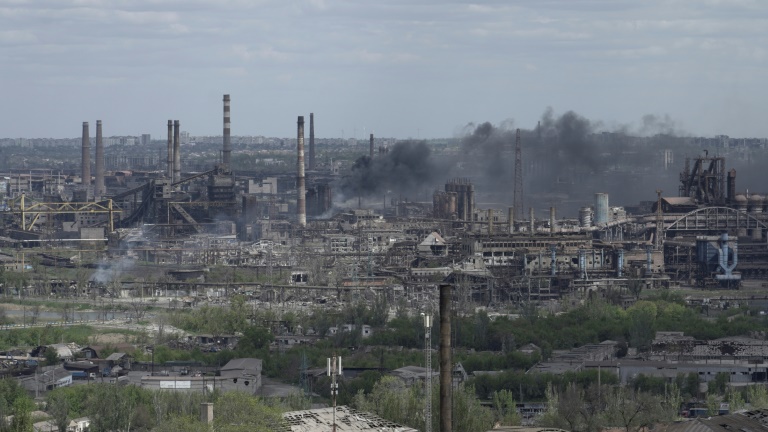
The three-month-old war has devastated the strategic port, where Ukrainians have sustained a pocket of resistance from within the Azovstal steelworks after weeks of bloody battle.

Serhiy Volyna, commander of the 36th Separate Marine Brigade, said he created a Twitter account for the sole purpose of reaching out to Musk.

“People say you come from another planet to teach people to believe in the impossible,” Volyna tweeted at Musk.

“Our planets are next to each other, as I live where it is nearly impossible to survive. Help us get out of Azovstal to a mediating country. If not you, then who?”

He called on “every person on the planet Earth” to help ensure Musk saw his appeal. 

Earlier this week, Kyiv said that more than 1,000 of its troops, many of them injured, remained in the sprawling Azovstal plant, sheltering in the labyrinth of Soviet-era bunkers and tunnels from the Russians who now control Mariupol.

Women, children and the elderly have been evacuated from the besieged site as part of a humanitarian mission coordinated by the United Nations and the Red Cross.

Twitter, which Musk is seeking to buy in a $44 billion deal, has seen an explosion of users due to the war in Ukraine, with people using the social media service to find news and support, according to the company.

Musk, who has more than 92 million followers, has previously used the platform to challenge Russian President Vladimir Putin to “single combat” over Ukraine.

Last month, the South African-born Tesla chief responded to a Ukrainian plea for internet service by activating his Starlink satellite broadband service and sending equipment to help bring connectivity to areas hit by Russian military attacks.

Saudi Aramco becomes world's most valuable company

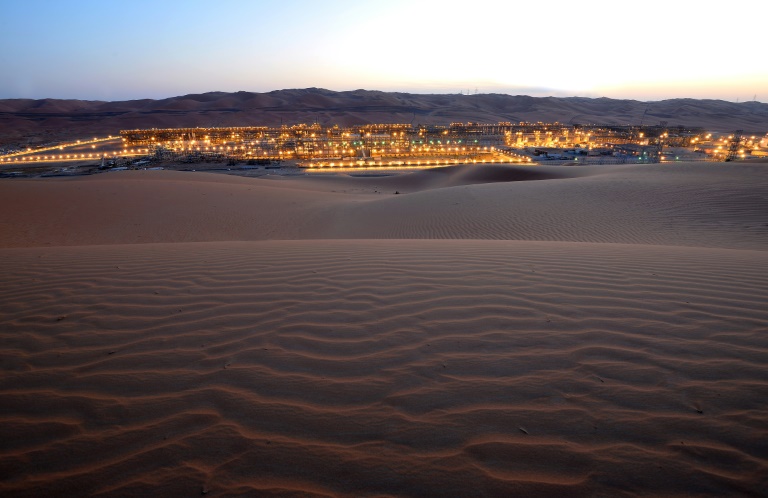
Saudi Aramco on Wednesday dethroned Apple as the world’s most valuable company as surging oil prices drove up shares and tech stocks slumped.

The Saudi Arabian national petroleum and natural gas company, billed as the largest oil producing company in the world, was valued at $2.42 trillion based on the price of its shares at close of market.

Apple, meanwhile, has seen its share price drop over the past month and was valued at $2.37 trillion when official trading ended on Wednesday.

The sinking share price came despite Apple reporting better-than-expected profits in the first three months of this year amid strong consumer demand.

But, Apple warned that the China Covid-19 lockdown and ongoing supply chain woes would dent June quarter results by $4 to $8 billion.

“Supply constraints caused by Covid-related disruptions and industry-wide silicon shortages are impacting our ability to meet customer demand for our products,” Chief Financial Officer Luca Maestri said on a conference call with analysts.

The results looked good following stumbles by some Big Tech peers as growth from the stay-at-home demand amid the pandemic slows and companies confront rising operating and labor costs.

Oil giant Saudi Aramco recently reported a 124 percent net profit surge for last year, hours after Yemeni rebels attacked its facilities causing a “temporary” drop in production.

As the world economy started to rebound from the Covid-19 pandemic, “Aramco’s net income increased by 124 percent to $110.0 billion in 2021, compared to $49.0 billion in 2020,” the company said.

The kingdom, one of the world’s top crude exporters, has been under pressure to raise output as Russia’s invasion of Ukraine and subsequent sanctions against Moscow have roiled global energy markets.

Aramco president and CEO Amin Nasser cautioned that the company’s outlook remained uncertain due in part to “geopolitical factors”. 

“We continue to make progress on increasing our crude oil production capacity, executing our gas expansion program and increasing our liquids to chemicals capacity,” Nasser said.

On the results, for 2021, he acknowledged that “economic conditions have improved considerably”.

A strong rebound last year saw demand for oil increase and prices recover from their 2020 lows.

Inflation could cause a drop in consumption, reducing demand for oil, while tech shares could continue to be dragged down by investor concerns over company costs, interest rate rises and supply chain woes.

US eyes trade deal-lite as Southeast Asian leaders gather

The United States is preparing a scaled-back version of a trade pact as Southeast Asian nations gather in Washington, where President Joe Biden is seeking to show solid commitment in the face of a rising China.

Leaders from the Association of Southeast Asian Nations will meet Biden for dinner Thursday at the start of a two-day summit, part of a renewed US focus on Asia after months of intense effort on Ukraine.

Before Russia’s invasion of Ukraine, the Biden administration had made clear that its top priority was competition with China due to its rapid technological advances and rising assertiveness both at home and abroad.

Kurt Campbell, the top White House official on Asia, said the United States would raise areas of cooperation with ASEAN leaders including fighting the Covid pandemic and disaster relief.

He also said he expected “substantial interest” by Southeast Asian nations in the Indo-Pacific Economic Framework, or IPEF, the latest acronym-branded US trade initiative, which was mentioned late last year by Secretary of State Antony Blinken in Indonesia.

“We’re quite confident that we’re going to be able to have a substantial launch with a very broad range of potential players,” Campbell said at the US Institute of Peace.

Koji Tomita, Japan’s ambassador to Washington, told a separate event that he expected IPEF to be unveiled formally a week later when Biden visits Tokyo and Seoul.

Former president Barack Obama had proposed the Trans-Pacific Partnership, billing it as a high-standards deal that would let the United States lead the emerging trade order in Asia.

His successor Donald Trump trashed the deal, calling free trade unfair to US workers. Biden, seeing the shifting US political mood, has made clear he is in no rush for trade deals — and China is now seeking to enter the Trans-Pacific Partnership’s successor.

– Not seeking ‘new Cold War’ –

Experts briefed on IPEF said it would formally commit the United States to work with partners on key economic priorities including ensuring smooth supply chains, fighting corruption and promoting green energy.

Unlike traditional trade deals, it would not guarantee market access to the United States, the world’s largest economy — the usual sweetener to persuade nations to make concessions.

Campbell said Biden knew that any initiative needed to be “fundamentally based on the needs and desires of the people of Southeast Asia.”

“He does not want to descend Southeast Asia or Asia into a new Cold War,” he said.

“I think we recognize quite clearly that any initiative that is simply designed for competition is likely to have difficulty gaining altitude in Asia.”

China for more than a decade has been ASEAN’s largest trading partner, despite widespread territorial rifts between Beijing and members of the bloc, especially Vietnam and the Philippines.

Evan Feigenbaum, a former senior State Department official, told a recent congressional hearing that the United States has historically enjoyed its privileged place in Asia due to both its security and economic leadership, only one of which remains.

“Even though America’s economic role is growing in absolute terms, it is receding in relative terms, which means that, to lead, we should be leaning harder on the other pillar of our economic leadership, which was to be a rule writer and standard setter,” said Feigenbaum, now at the Carnegie Endowment for International Peace.

Labor advocacy group Trade Justice has already voiced alarm at IPEF, saying many Southeast Asian nations did not have adequate treatment of workers.

Trade diplomacy has long been at the forefront of US interactions with Southeast Asia, often seen as a victim of its own success given its perceived stability.

But the Washington summit also comes after a year of intense US pressure on Myanmar, once hailed as a model of democratic transition, following its military coup.

US officials say they will seek to show support for democratic forces in Myanmar and may represent the country with an empty chair during the summit.

France opens torture case against Interpol's UAE president

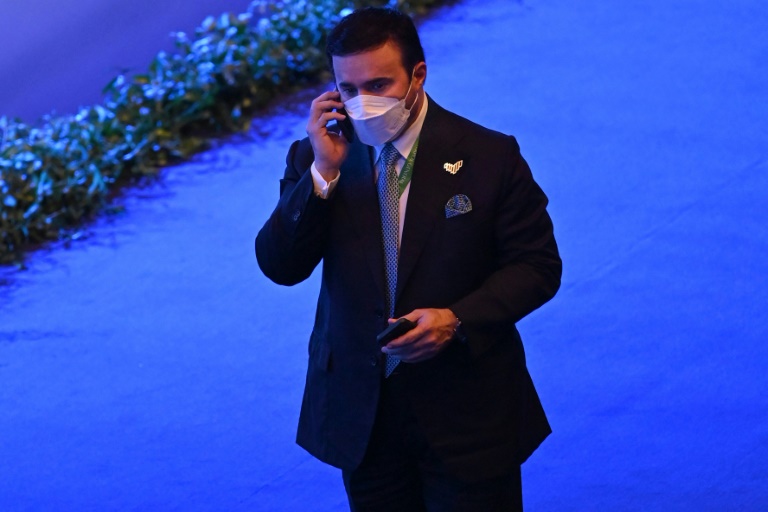
French authorities have opened a case against Interpol’s Emirati president over accusations of torture and arbitrary detention by two Britons who were detained in the UAE, a source close to the inquiry told AFP on Wednesday.

The case into suspected complicity in torture by Ahmed Nasser al-Raisi was confirmed by France’s anti-terror prosecutors office (PNAT), which has handed it to an investigating magistrate who will now decide whether to press charges.

The two Britons, Matthew Hedges and Ali Issa Ahmad, accuse Raisi of having ultimate responsibility — as a senior interior ministry security official — for the torture and arbitrary detention they say they suffered in the United Arab Emirates.

The source said the investigating magistrate must also decide if Raisi, who was elected Interpol president in November, enjoys diplomatic immunity from prosecution in France.

The Britons filed the complaint under France’s principle of universal jurisdiction, which allows it to prosecute serious crimes even if they are committed on foreign soil.

This means Raisi could be detained for questioning if he visits the country. Interpol’s headquarters are in the southeastern French city of Lyon which he is believed to have visited several times this year.

The case against Raisi, opened in late March, goes a step further than the torture inquiry launched against him by French prosecutors in November over the detention of UAE dissident Ahmed Mansoor.

At the time, the UAE’s foreign ministry rejected the complaints over Mansoor’s detention conditions as “without foundation”. 

“Any legal complaint that may be filed with allegations against al-Raisi is without merit and will be rejected,” the UAE foreign ministry added.

In the latest case, the inquiry is in the hands of an investigating magistrate, a step that precedes the pressing of any charges.

Contacted by AFP, the UAE embassy in Paris declined to comment.

Interpol’s general secretariat said it was “premature” to comment as it was an ongoing matter between the parties involved.

– ‘Psychological torture’ –

Both plaintiffs were in Paris on Wednesday to testify before the investigating magistrate.

Hedges, an academic specialising in the UAE, says he was detained and tortured in the country from May to November 2018 after being arrested on charges of espionage during a study trip.

He was forced to make false confessions that led to a sentence of life imprisonment before his release under international pressure led by the UK.

He told AFP on Wednesday that he spent seven months in solitary confinement, and forced to take medication. This, he said, was part of “a very specific strategy to inflict psychological torture”.

Interrogations lasted for up to 15 hours at a time, and there were threats of violence against him and his family, Hedges said, calling his ordeal “terrifying”.

He began to self-harm and tried to take his own life, “all a result of the medication”.

Hedges said that Raisi “had to have known” about his treatment.

Ahmad, meanwhile, said he was repeatedly beaten and even stabbed during a month in detention in January 2019, allegedly for enthusiastically supporting the UAE’s Gulf rival Qatar in a football clash against Iraq during that year’s AFC Asian Cup.

During his arrest, a policeman cut the Qatari flag out of his T-shirt with a pocketknife, injuring Ahmad in the process, he told AFP.

He was “interrogated day and night” during the detention. “It’s a very hard time I have been through, it’s horrendous,” he said.

Both men have also initiated legal action against Raisi in Norway, Sweden and Turkey.

Raisi’s four-year term at Interpol is largely ceremonial, with Secretary General Juergen Stock handling day-to-day management of the organisation.

His candidacy for the Interpol job prompted an outcry from activists, who pointed to the generous funding Interpol receives from the United Arab Emirates.

gd-sjw-js-jh/imm/har

Solomons PM dismisses concerns over China maritime deal

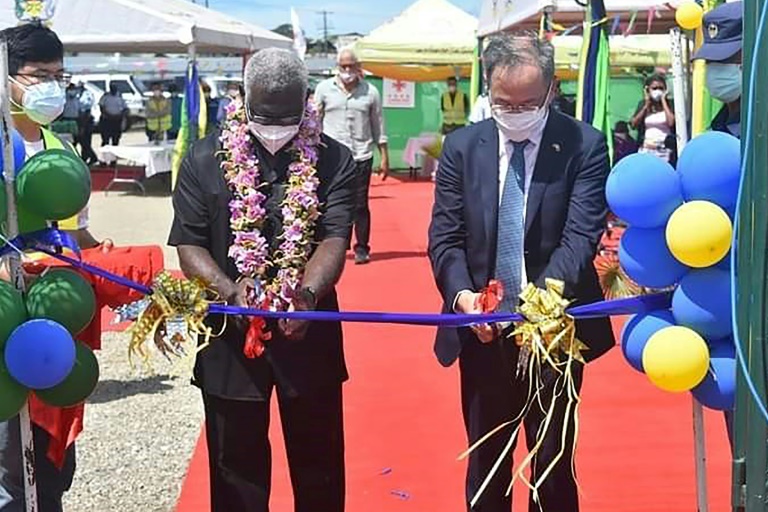
The Solomon Islands’ prime minister dismissed criticism of a new maritime investment deal with China on Wednesday, saying there was nothing “sinister” in the draft agreement.

The new agreement, a copy of which has been leaked to the media, comes after a controversial security pact was signed last month.

The pact sparked alarm in Australia and the United States, which feared it could lead to Beijing securing a military foothold in the South Pacific. Honiara has ruled out hosting a Chinese military base.

On Wednesday, Solomon Islands Prime Minister Manasseh Sogavare shrugged off criticism of the separate leaked memorandum of understanding on maritime investment, describing it as a “normal bilateral development initiative” that is yet to be formalised.

“There is nothing sinister nor trivial about the Blue Economy Memorandum of Understanding,” his office said in a statement.

A day earlier, Australian Prime Minister Scott Morrison had expressed concern regarding the memorandum, which covers undersea cables, port wharves, shipbuilding and other areas.

Morrison said he was “very concerned, as many other Pacific leaders are, about the interference and intrusion of the Chinese Government into these types of arrangements”.

The Solomons’ warming ties with China have been a key issue in Australia’s election campaign since a draft of the security agreement with China was first leaked on social media in March.

That draft allowed for Chinese naval deployments in the Solomon Islands, eliciting a warning from the United States that it would “respond accordingly” if China installed a military base in the Pacific archipelago. 

In April, Solomon Islands PM Sogavare said that his government would not allow a Chinese military base to be built in his country “under its watch”. 

The latest leaked maritime investment deal, dated just “2022”, covered investment in wharves, shipbuilding and ship repair, offshore gas and oil exploration and other “blue economy” industries.

Sogavare’s Wednesday statement said the memorandum of understanding was a broad document, which would be followed by a more detailed agreement.

Baby formula shortage sends US parents into panic

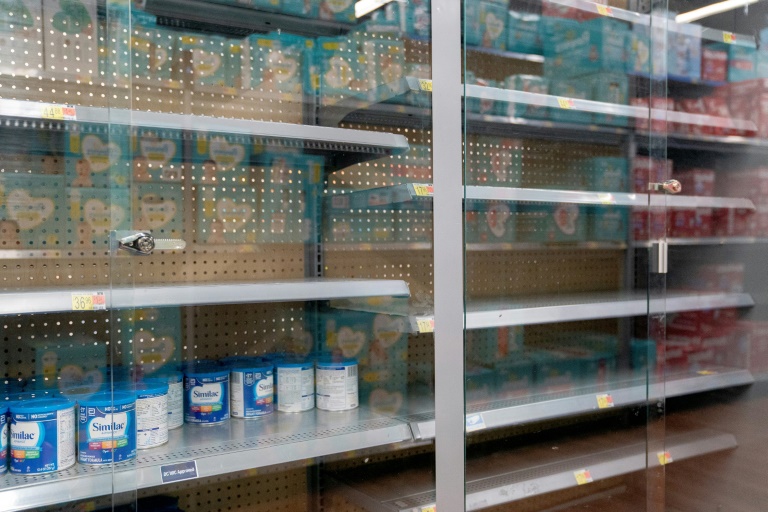
It’s a nightmare for parents. The United States is in the grip of a severe shortage of baby formula — with a mass product recall aggravating pandemic supply chain woes — sending families on sometimes desperate hunts for the vital supplies.

And it has been going on for months, according to Sara Khan, the mother of three children aged 10, seven and six months.

“I’ve known about this issue for almost seven months,” she told AFP. “This did not happen overnight.”

Khan described the struggle to find just a few bottles of formula, and the distress at being faced with empty shelves at pharmacy chains CVS and Walgreens or supermarket Target, whether in Washington or the surrounding area.

She has gotten by thanks to family and friends, who send her bottles of formula from Boston, New York and Baltimore when they find them.

“It’s horrible, terrifying,” she said, adding that she even ordered formula from Germany.

The situation took a major turn for the worse on February 17 when, after the death of two infants, manufacturer Abbott announced a “voluntary recall” for formula made at its factory in Michigan — including Similac, a brand used by millions of American families.

A subsequent investigation cleared the formula, but production has yet to resume, exacerbating already ongoing scarcity caused by supply chain problems and labor shortages.

According to the data collection agency Datasembly, 43 percent of the usual formula supply was out of stock, up 10 percent from the April average.

– Few alternatives –

San Diego, California resident Olivia Espinosa said: “There’s nothing on the shelves.”

Espinosa and her husband Steve Hohman have two young children. One of them, Maya, is only three weeks old and is lactose intolerant.

“We have to go just with a plant-based formula because we can’t try anything else,” said Hohman.

Normally, hospitals and pediatricians give parents formula samples to figure out which one works best for their child.

But few have any left to give.

Hohman said it was frustrating that his daughter cannot try other formulas that might be more nutritious for her.

Espinosa said the shortage has been “extremely frustrating and especially with a newborn, somebody who is requiring… very specific food right now.”

She explained she has difficulty breastfeeding and producing enough milk.

According to Khan, it is difficult even for babies who do not have special food needs.

– Surging costs –

People have suggested she try other brands, but “that’s not how it works,” Khan said. The formula has to taste good and not cause any problems such as constipation to the individual children.

And in addition to supply issues, parents are struggling to keep up with costs, as online sellers have doubled or even tripled their prices.

Robert Califf, head of the US Food and Drug Administration (FDA), highlighted the problem in a statement released Tuesday evening.

“We recognize that many consumers have been unable to access infant formula and critical medical foods they are accustomed to using,” he said. “We are doing everything in our power to ensure there is adequate product available where and when they need it.”

On Wednesday, Abbott said it “deeply” regrets the situation.

“Since the recall, we’ve been working to increase supply at our other FDA-registered facilities, including bringing in Similac from our site in Cootehill, Ireland, by air and producing more liquid Similac and Alimentum,” the group said in a statement.

And the shortage has been politicized, too.

“I called for action on (President Joe) Biden’s baby formula shortage months ago,” Republican congresswoman Elise Stefanik charged on Twitter.

Her extreme-right colleague Marjorie Taylor Greene accused the US Congress of wanting “to send nearly $40 billion to Ukraine while American mothers can’t find baby formula.”

But White House Spokeswoman Jen Psaki said Monday on CNN that the Biden administration is “working around the clock” to address the shortage.

Disney profit slips but streaming TV subscribers jump

Disney on Wednesday said its profit slipped in the recently ended quarter but its television streaming service and parks were booming.

The entertainment giant reported net income of $470 million, just over half of the $912 million profit it made in the same period a year earlier.

But park attendance that had fallen due to the pandemic rebounded and the Disney+ television streaming service gained 7.9 million subscribers to 137.7 million.

When adding in subscriptions to Disney’s streaming services Hulu and ESPN, the overall number tops 205 million.

“Our strong results in the second quarter, including fantastic performance at our domestic parks and continued growth of our streaming services once again proved that we are in a league of our own,” said Walt Disney Company chief executive Bob Chapek.

He told analysts Disney is open to raising its streaming service subscription price in the future, but has no specific plans. Disney+ is pursuing a version of the service that would be supported by advertising, Chapek said.

Disney+ gained more subscribers than analysts had expected, in stark contrast to a dive in subscriber numbers reported by rival Netflix in the first quarter of this year.

A drop of just 200,000 users — less than 0.1 percent of the total Netflix customer base — caused shares in the Silicon Valley firm to plunge and prompted a shareholder to file a lawsuit accusing the streaming television titan of not making it clear that subscriber numbers were in peril.

“Disney+ has been taking Netflix out at the knees,” tech analyst Rob Enderle of Enderle Group told AFP.

“Kids have always chased their content, and for parents it has been a no-brainer to get their service.”

About half of Disney+ subscribers are families with children, executives said on the earnings call.

Disney stopped licensing its coveted content to Netflix to make it exclusive to its own streaming service, and said it planned to stick with the tactic when it comes to rivals in the market.

– Parks and politics –

Disney said that as its streaming television service continues to grow strongly, its resorts and parks are generally operating without any of the significant Covid-19 related restrictions on capacity that were in place last year.

The pandemic does continue to vex film and television show production, Disney said, but it has been able to release films in theaters so far this year.

“Our slate for the remainder of this year is incredibly strong,” Chapek told analysts while discussing the company’s line-up of shows for streaming and theaters.

Chapek acknowledged challenges getting Disney films released in China, saying the situation there is “very complicated” from political and business standpoints.

He said he was encouraged by the fact that a freshly released “Dr. Strange” film based on a Marvel comics character took in more than $500 million in its first week, even without being shown in China.

Disney has run into political turbulence closer to home, with the Florida governor recently signing a law that eliminates a statute that has for decades allowed the entertainment giant to act as a local government in Orlando, where it has a theme park.

The move was the latest episode in a dispute between the state’s Republican administration and Disney, after the company criticized the passage in March of a law banning school lessons on sexual orientation.

“From a financial standpoint, Disney will come out ahead with the plug pulled,” analyst Enderle said.

“It’s almost like Florida gave them a monetary favor; Disney was covering all the costs of the municipality they are in.”

The Reedy Creek Improvement District was an area created by Florida’s congress in 1967 to facilitate the construction of Disney World in Orlando.

Under that agreement, Disney runs the district as if the entertainment juggernaut were a local government, including collecting taxes and guaranteeing essential public services such as garbage collection and water treatment.

Under Florida law, if the special district is dissolved, its assets and debts would be transferred to local governments that surround the area.

“Removing district could transfer $2 Billion debt from Disney to taxpayers,” state Democratic senator Linda Stewart warned after the bill was signed.

Close Bitnami banner
Bitnami