World

Finland joining NATO 'would not be against anyone': president

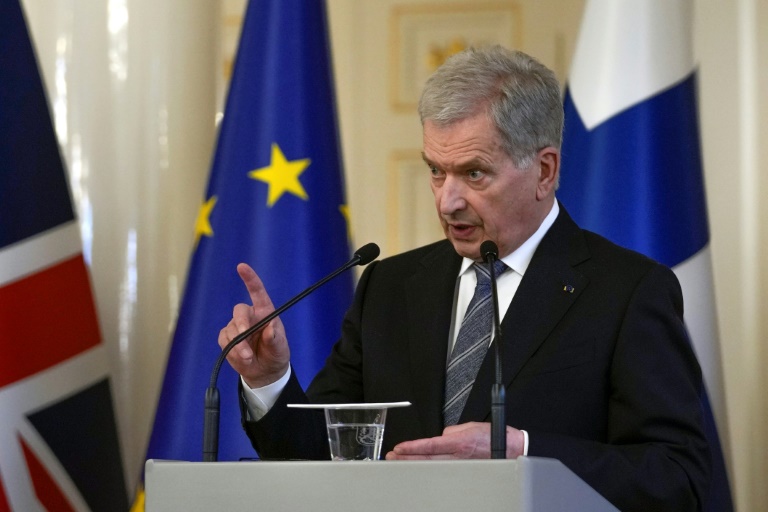
Finnish President Sauli Niinisto said on Wednesday that it “would not be against anyone”, if the Nordic country joined NATO, despite Russia warning against the membership.

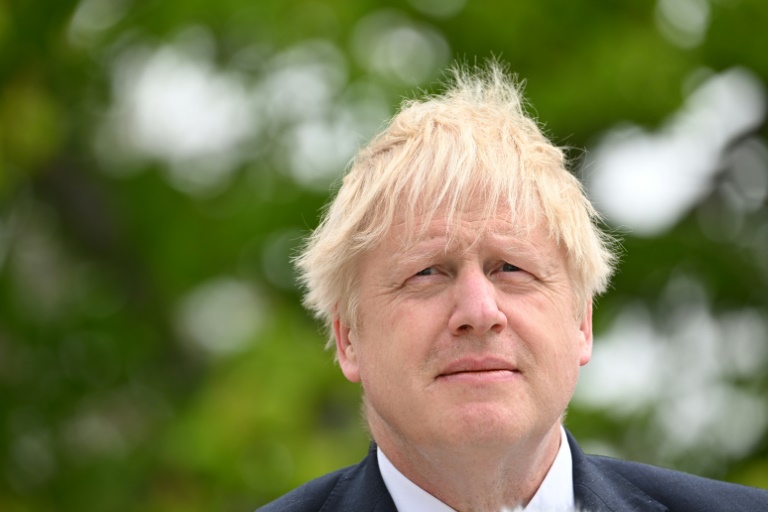
“Joining NATO would not be against anyone. It is not a zero-sum game”, the president said at the signing of a political declaration of mutual assistance with the UK prime minister Boris Johnson.

If Finland was to join NATO, Niinisto said that his response to Russia would be “you caused this, look in the mirror.”

Similar to the one signed with Sweden earlier on Wednesday, the declaration assures that should Finland “suffer a disaster or an attack”, the United Kingdom will assist in a variety of ways “which may include military means”.

“Finland is already an enhanced partner in NATO. There is no doubt in anybody’s mind that Finland is part of the West”, Niinisto said.

He noted that the situation had changed, as previously Moscow had considered that militarily non-aligned Finland and Sweden were “stabilising” the Baltic region.

“But then, in the end of last year, they stated that Finland and Sweden can’t join NATO. They demanded that NATO doesn’t take new members. Russia actually expressed that you don’t have your own will”, Niinisto said.

This was a “huge change” the president added.

Russia’s February 24th invasion of Ukraine has led to a dramatic turnaround in Finnish political and public opinion in favour of joining the alliance, as a deterrent against aggression from Moscow.

Finland’s president and prime minister will announce Thursday their highly-awaited positions on whether to join NATO, the first step toward a formal decision after a swift turnaround in opinion since Russia’s war in Ukraine.

Brazil seeks to fight police violence with body cams

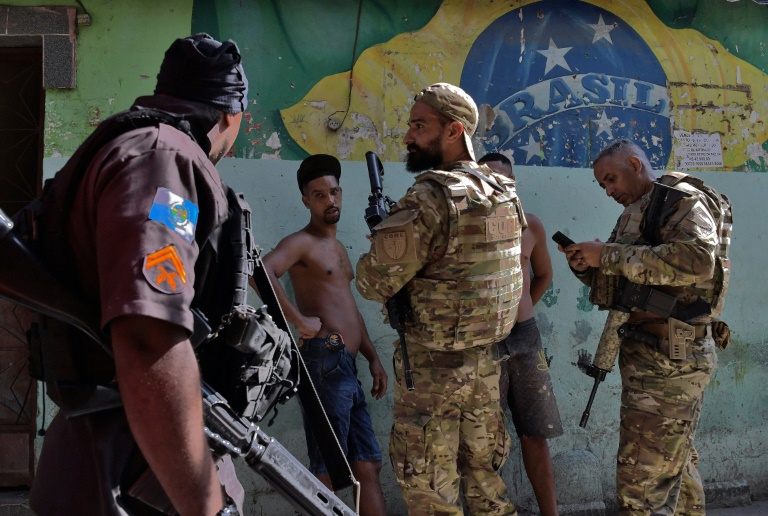
Seeking to curb chronic police violence, Rio de Janeiro plans to start using officer body cams, a measure that has shown promising results elsewhere in Brazil but that experts say won’t be a panacea.

Brazil has one of the worst police violence problems in the world: last year, more than 6,100 civilians died in police operations and 183 officers were killed, according to figures from watchdog group The Violence Monitor.

In a country where shootouts involving law enforcement and heavily armed drug gangs are regular occurrences in the favelas, or slums, police also face frequent accusations of abuses and indiscriminate violence.

But officers are rarely held to account over the use of force, according to Cesar Munoz, senior researcher for Brazil at Human Rights Watch.

“Whenever the police are involved in a shootout and someone dies, the standard line is, ‘We were on patrol, they attacked us, we responded and the attackers died,'” he told AFP.

“Body cams could be a useful way to both document the police’s actions and protect them from unfounded accusations.”

Typically around eight by six centimeters (three by two-and-a-half inches), the digital cameras are attached to the front of officers’ uniforms.

They have delivered encouraging results in states where they are already in use in Brazil, such as Sao Paulo in the southeast and Santa Catarina in the south.

According to official figures, violent incidents fell by 87 percent among units using body cams in Sao Paulo, which implemented the measure last year, along with other changes, such as the use of non-lethal weapons.

In Santa Catarina, academic research found the cameras have been responsible for reducing the use of force by police by more than 60 percent since 2019.

The cameras are also credited with helping police provide more accurate accounts of incidents such as domestic violence.

– ‘Piecing together a puzzle’ –

Rio plans to start rolling out around 8,000 of the cameras on patrols in areas ranging from upscale beach neighborhood Copacabana to the favelas of Mare and Jacarezinho, state police said.

Jacarezinho was the scene of the bloodiest police shootout in the city’s history in May last year when a massive anti-drug trafficking operation ended with 27 alleged suspects and one policeman dead.

Body cams “would have helped determine what happened” in numerous deaths that day, prosecutor Andre Cardoso, the lead investigator on the case, told news site G1.

As things stand, most of the killings remain unresolved. Just four police and two alleged drug traffickers face charges.

“When you search for evidence, you’re trying to piece together a puzzle, reconstruct the situation. With video footage, you don’t need anything else,” Cardoso said, calling the cameras “indispensable.”

Body cams could also help hold police to account over other accusations they face in Jacarezinho, such as invading people’s homes and stealing from them — as one resident documented with a hidden camera.

But “cameras aren’t a panacea,” warned Munoz.

“They have to be part of a broader policy” that includes more training, psychological support for officers and truly independent investigations, he said.

– Unanswered questions –

Body cams are already widely used in the Americas, including in Canada, many parts of the United States, Mexico and Chile.

Their success in Brazil will depend on how they are used, said Melina Risso, research director at the Igarape Institute, a public security think tank.

“Will the camera automatically film 24 hours a day, or does it have to be turned on? Who supervises the recording? How long are the images stored? What is the chain of custody? How will officers’ privacy and that of others be protected?” she said.

In Sao Paulo, a low-quality recording with no sound is taken throughout officers’ shifts; they are instructed to activate a second, higher-quality recording whenever they respond to an incident.

Rio state police told AFP their cameras would record automatically, with the images archived for around 90 days.

They said protocols on the cameras would be adjusted as necessary over time.

'No time to hide' for Ukraine social worker in town near front line

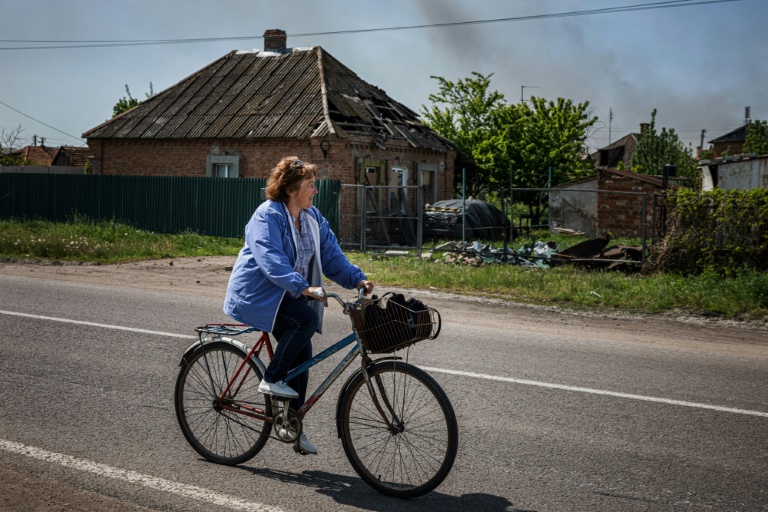
Shelling thundered from several directions and black smoke drifted upward in the distance as Zhanna Protsenko pedalled off for a house call in a war-hit Ukrainian town. 

She’s a social worker who has chosen to stay on the job even as the strikes have come ever closer, in large part because she is tasked with looking after people who won’t or simply can’t evacuate. 

That means she is staying too, for now, and is visiting them in their homes. 

“How can I leave them here?” the 56-year-old asked, standing near a hospital that was hit by a strike in the past week. 

“We work. We have no time to hide,” she said as contractors repaired rows of the hospital’s blown-out windows and an oil drum-sized hole blasted in its brick facade. 

She works in the southeastern town of Orikhiv which is still in government hands but dangerously close to the line between Ukrainian and Russian forces. 

At least three people have been killed by explosive strikes in the past 10 days, authorities said.  

The fighting in the area is mostly done by artillery, missiles or other deadly projectiles fired from potentially kilometres away, and which kill indiscriminately. 

Homes hit by enemy fire stand next door to undamaged houses in a town surrounded by farmland, while a fire ignited by shelling has been burning for days in several long brick buildings that stored tonnes of harvested sunflower seeds. 

– ‘I won’t survive without help’ –

With the blaze’s smoke in the sky above her, Protsenko pedalled a beaten-up blue bicycle to a small house with a neat row of tulips in the black dirt of the garden. 

The woman who lives there, 65-year-old Nyna Provontsova, moved slowly on a set of wooden crutches and sank to a seat on a wooden bench outside. 

“I will not survive without someone’s help, I need to be taken care of every day,” Provontsova said, reeling off a list of medical problems.

“Sometimes I call her when I need something, to wash my legs — I can’t do it myself. I can’t lean forward, my hip joints were replaced.” 

The social worker jotted down a list of items Provontsova asked her to buy, and will also go to pick up her pension.

Though the woman has two daughters, they’re both in Kyiv and struggling to find work and take care of themselves as the war disrupts every aspect of life. 

The war is never far away, and feels like it’s getting closer.

– ‘This is why I stay’ –

The house across road, no more than 15 metres (50 feet) away, was hit by a strike and looks like it’s now abandoned.

“It’s one shell after another. When it hit the neighbours, I was almost knocked out of bed by the impact,” said Provontsova.

If the woman evacuates, which she may be forced to do, she’ll have to leave behind the special mobility aids in her bathroom and on her bed that help her.

“I don’t want to go anywhere,” she said.

As she spoke, the social worker was listening, her hands clasped in front of her. 

“You asked why we don’t leave?” Protsenko said. 

“This is why.”

EU-wide mask rules for flights, airports eased from Monday

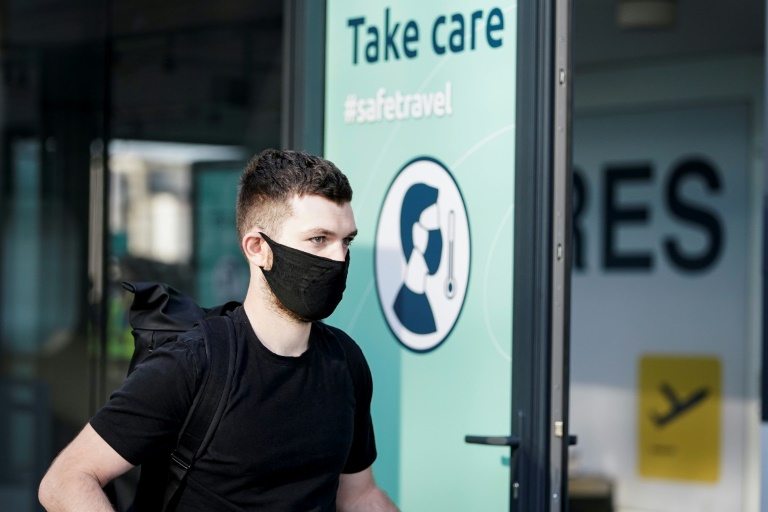
EU-wide guidance on requiring masks for air travel will be lifted from next week, the bloc’s aviation safety agency said on Wednesday, as the pandemic eases in Europe.

The European Union Aviation Safety Agency (EASA) said that under the new guidelines developed with the European Centre for Disease Prevention and Control (ECDC), masks were no longer considered essential for all flights and airports.   

Nevertheless national regulators and airlines will still have scope to demand face and nose covering by passengers and staff, it noted.

“From next week, face masks will no longer need to be mandatory in air travel in all cases, broadly aligning with the changing requirements of national authorities across Europe for public transport,” said EASA executive director Patrick Ky in a statement. 

“For passengers and air crews, this is a big step forward in the normalisation of air travel.”

Despite the new guidance, Germany as the EU’s most populous country and top economy said it had no plans to lift the mask mandate for flights.

“The mask requirement on airplanes continues to be in place for all domestic routes as well as on flights that take off or land in Germany,” health ministry spokesman Hanno Kautz said in an emailed statement. 

– ‘No globally consistent approach’ –

EASA said after Monday, “rules for masks in particular will continue to vary by airline beyond that date”.

It stated that “flights to or from a destination where mask-wearing is still required on public transport should continue to encourage mask wearing”.

Vulnerable passengers with compromised health “should continue to wear a face mask regardless of the rules”, it added.

The EASA said passengers were also encouraged to observe social distancing at the airport but that operators should adopt a “pragmatic approach”, meaning avoiding measures that would “lead to a bottleneck in another location in the passenger journey”. 

The Geneva-based International Air Transport Association (IATA) welcomed the new guidance for the EU but acknowledged the picture was more complex in an international context.

“Although the European protocol comes into effect next week, there is no globally consistent approach to mask-wearing on board aircraft,” said Willie Walsh, IATA’s director general, in a statement. 

“Airlines must comply with the regulations applicable to the routes they are operating. The aircraft crew will know what rules apply and it is critical that passengers follow their instructions.” 

He added that the IATA asked all passengers to “be respectful of other people’s decision to voluntarily wear masks even if it not a requirement”.

The European aviation sector has predicted a return to near pre-pandemic traffic levels this summer despite soaring fuel prices, the war in Ukraine and inflation.

Brazil April inflation hits 26-year high

Brazil’s inflation rate hit a 26-year high for the month of April, the government said Wednesday, as spiraling prices continued to defy the central bank’s push to rein them in.

The national statistics institute, IBGE, said inflation in the 12 months through April rose to 12.13 percent, the highest since 2003 and well above the central bank’s target of 3.5 percent.

The rate for April came in at 1.06 percent, the highest for the month since 1996, IBGE said.

That was worse than the forecast of one percent by analysts polled by business daily Valor.

Food prices were the main inflation driver in April, rising more than two percent.

Fuel prices remained an underlying factor, up more than 33 percent in the past year.

“The strength of price pressures is likely to keep policymakers at the central bank concerned,” William Jackson, chief emerging markets economist at consulting firm Capital Economics, said in a note.

Brazil’s central bank has been on one of the most aggressive monetary tightening cycles in the world, rapidly hiking the key interest rate from two percent in March 2021 to 12.75 percent currently.

But inflation has so far remained stubbornly high, hurting Brazilians’ wallets — and President Jair Bolsonaro’s popularity as he gears up to seek reelection in October, trailing leftist ex-president Luiz Inacio Lula da Silva (2003-2010) in the polls.

UK's Johnson downplays EU trade war fears over N.Ireland protocol

Prime Minister Boris Johnson on Wednesday downplayed the prospect of triggering a UK trade war with the EU by threatening to pull post-Brexit arrangements in Northern Ireland, despite European warnings that he risks breaching international law.

Johnson said London and Brussels must “fix” the so-called Northern Ireland Protocol which governs trade to and from the British province, but that both sides should keep a sense of proportion.

“We’re talking about really, in the scheme of things, a very, very small part of the whole European economy,” he told reporters during an unrelated visit to Sweden and Finland.

“Let me put it this way: I don’t think there’s any need for drama. This is something that just needs to be fixed.”

Johnson’s government has warned it is ready to take unilateral action “to stabilise the situation in Northern Ireland if solutions cannot be found” to key sticking points with the protocol.

Ministers have argued that it does not command cross-community support and that London needs to protect the 1998 Good Friday Agreement, which ended three decades of sectarian violence over British rule in Northern Ireland.

But the European Union has repeatedly ruled out renegotiating the terms of the deal.

The standoff comes as political tensions rise in Belfast after historic elections last week saw pro-Irish nationalists Sinn Fein become the biggest party for the first time and now bidding to lead a power-sharing executive.

However, the latest UK threats to overhaul the arrangements unilaterally have caused consternation in Brussels, Ireland’s foreign minister Simon Coveney said as he met Northern Irish leaders.

– ‘Compromise’ –

Coveney said this week’s statements had “gone down really badly across the European Union” and rejected British claims that Brussels was being inflexible over its implementation.

“The (European) Commission has been showing a willingness to compromise,” he told reporters.

“What they are hearing and seeing from London is a rejection of that approach, towards a breach of international law.”

The protocol was signed separately from the Brexit trade deal between London and Brussels because Northern Ireland has the country’s only land border with the EU.

It keeps the province largely in the European single market and customs union but mandates checks on goods coming from Great Britain — England, Scotland and Wales.

The checks are designed to prevent a return to a hard border between Northern Ireland and EU member Ireland, which was a flashpoint in the years of violence.

But the pro-UK Democratic Unionist Party (DUP) say by creating a de facto border in the Irish Sea, Northern Ireland risks being cut adrift from the rest of the UK.

The party is refusing to join a new power-sharing government in Belfast until the protocol is scrapped or overhauled.

Sinn Fein’s Michelle O’Neill, who is set to be Northern Ireland’s first nationalist first minister after elections last week, said after meeting Coveney: “The protocol is here to stay.

“There are ways to smooth its implementation, and we are certainly up for that, but the rhetoric from the British government in the last number of days is serving only to pander to the DUP,” she said.

iPod RIP: How Apple's music player transformed an industry

At the height of its powers the pocket-sized music player known as the iPod shifted tens of millions of units each year, helping Apple to conquer the globe and transforming the music industry.

But that was the mid-2000s –- a lifetime ago in the tech industry. After years of declining sales, the US tech giant announced on Tuesday it was stopping production after 21 years.

“Clearly this was one of the products that Apple launched that completely changed our lives,” Francisco Jeronimo of analysis firm IDC told AFP.

Social media was awash with emotional tributes under the banner “iPod RIP”.

“Noooo, iPod touch, you were too pure for this world!” tweeted entrepreneur Anil Dash.

“Goodnight, sweet prince. You won’t be forgotten,” tweeted Apple enthusiast Federico Viticci.

The device began life in 2001 with the promise of “putting 1,000 songs in your pocket”.

At $400 it was hardly cheap.

But its 5GB of storage outstripped the competition, its mechanical wheel was instantly iconic and it allowed a constant stream of music uncoupled from conventional albums.

In the following years, prices came down, storage space grew, colours and models proliferated and sales exploded.

– ‘We folded’ –

“It didn’t just change the way we all listen to music, it changed the entire music industry,” Apple founder Steve Jobs said of the iPod in 2007.

Few would disagree.

Digital music was still in its infancy and closely associated with piracy.

File-sharing platform Napster had horrified the industry by dispensing with any idea of paying the record companies or musicians.

Against this background, Apple managed to persuade record company bosses to sanction the sale of individual tracks for 99 cents.

“We folded because we had no leverage,” Albhy Galuten, an executive at Universal Music Group at the time, told the New York Times on Tuesday.

For years, bands from AC/DC to the Beatles and Metallica refused to allow Apple to sell their music.

But the industry has since found a way to stay hugely profitable and even embrace technology like streaming.

It was the first legal model for digital music, industry expert Marc Bourreau told AFP.

After the initial shock to the system, he said the industry has learnt to embrace — and monetise — technology.

“People are now spending money in ways they weren’t before,” said Bourreau, highlighting money from streaming. 

“By this logic, the music industry is doing just fine.”

– Musical glasses –

But the writing was on the wall for the iPod as early as 2007 when Jobs launched the iPhone.

With theatrical flair, he told an expectant audience the new product was an “iPod, a phone and an internet communicator”.

He was lighting a fire under his own product even though at the time it accounted for roughly 40 percent of Apple’s revenue, according to analysis by Statista.

Five years later, the iPod’s revenue share had plunged below 10 percent and it was being outsold by the iPhone.

People no longer needed both products in their lives, and Apple no longer needed both in its portfolio.

“I don’t see why people would buy music players in the future,” said Jeronimo.

“Music players are now a feature of other devices – in cars, smart speakers, watches, even in smart glasses.”

The iPod and all its imitators seem likely to follow the Sony Walkman into a long twilight of nostalgic fandom and eBay listings of products from a bygone era.

Cardinal, pop star bailed in latest Hong Kong security arrests

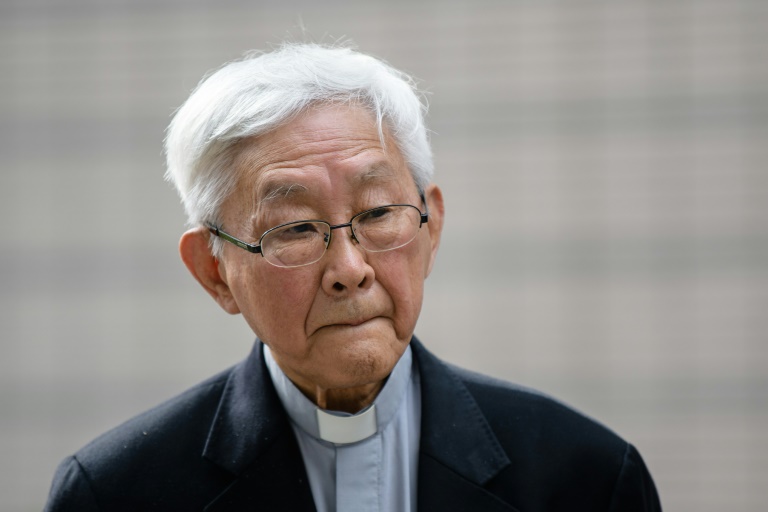
A Catholic cardinal critical of Beijing was released on bail by Hong Kong authorities, local media reported late Wednesday, as his arrest under the city’s national security law prompted US demands that he be freed. 

Retired cardinal Joseph Zen, 90, was seen in media footage waving to reporters as he left a police station in the city hours after his arrest, but he did not give a statement.

He was released shortly before the White House issued a statement demanding he be freed “immediately”, and as the Vatican voiced “concern” at his arrest and said it was following the situation “very closely”. 

Cantonese pop singer Denise Ho, who was also among a group of veteran democracy advocates arrested under the law, was similarly released on bail, local media said.

Those arrested were all trustees of a now-disbanded fund that helped finance demonstrators detained during massive democracy protests that swept Hong Kong three years ago.

Police said in a statement on Wednesday that two men and two women, aged between 45 and 90, had been detained for conspiring to collude with foreign forces to endanger national security.

They will all be granted bail but their travel documents will be confiscated, police added.

Zen is a former bishop of Hong Kong and one of the most senior Catholic clerics in the Chinese business hub. 

He has been critical of the Vatican’s decision to reach a compromise with China over the appointment of bishops on the mainland and an advocate of Hong Kong’s democracy movement. 

Ho is a popular local vocalist and an outspoken advocate for LGBTQ rights.

The other people arrested were veteran barrister Margaret Ng and prominent cultural studies scholar Hui Po-keung.

Police said those arrested were trustees of the “612 Humanitarian Relief Fund”, which helped arrested protesters pay their legal and medical bills.

Those arrested were suspected of endangering national security because they allegedly asked foreign nations or overseas organisations to impose sanctions on Hong Kong, police said.

On Tuesday, scholar Hui became the first among the group to be arrested as he tried to leave via the airport to take up an academic post in Europe.

– ‘Collusion’ –

The offence of “foreign collusion” was introduced in a sweeping national security law that Beijing imposed on Hong Kong in response to the democracy protests.

The security law has crushed dissent in the once outspoken business hub and can carry up to life in jail.

One of the group’s trustee, democracy activist Cyd Ho, has already been jailed for unauthorised assembly in a separate case.

The fund disbanded last year after the city’s national security police demanded it hand over operational details including information about its donors and beneficiaries.

In its Wednesday statement, police said it was also seeking to charge the trustees and an additional person for failing to properly register the group in accordance with law.

Shortly before the fund closed in October, Hong Kong’s Lingnan University said its contract with Hui had ended but declined to state a reason on privacy grounds.

Academics who played prominent roles in Hong Kong’s now decimated democracy movement have often found themselves dropped by universities and are struggling to find work.

A social commentator and prolific author, Hui taught for more than two decades at Lingnan University and was credited by former student leader Nathan Law with inspiring his political career.

Russia urged to annex Ukraine's Kherson as battles rage

Pro-Kremlin authorities in Ukraine’s Kherson said Wednesday they will ask Russia to annex the region as Moscow seeks to shore up its gains in the increasingly drawn-out and bloody war.

Gas supplies to energy-starved Europe were also disrupted by a halt in Russian supplies flowing through Ukraine as the international shockwaves of the February 24 invasion continued.

The developments came as Ukraine said it was pushing Russian troops away from the country’s second city Kharkiv in the northeast but facing stiff resistance from the invading forces.

Russia has focused on eastern and southern Ukraine since it failed to take Kyiv in the first weeks after the February 24 invasion, and US intelligence has warned Putin is ready for a long war.

Kherson, the first major Ukrainian city to fall after the Russian invasion of its pro-Western neighbour, is north of Crimea, which itself was annexed by Moscow in 2014 after an internationally-condemned vote.

Kirill Stremousov, deputy head of Kherson’s Moscow-installed civilian and military administration, said there would be a “request to make Kherson region a full subject of the Russian Federation.”

Stremousov suggested the authorities would appeal directly to Putin without putting the move to a vote. 

But the Kremlin replied that it was up to the residents of Kherson to “determine their own fate”.

Ukrainian presidential aide Mykhaylo Podolyak said Kyiv’s forces would liberate Kherson and “the invaders may ask to join even Mars or Jupiter.”

Russia appears set on creating a land bridge to Crimea from its own territory, with US intelligence suggesting it then wants to go all the way across the southern coast to Moldova.

– ‘They come in waves’ –

On the battlefield, Ukraine’s forces were boosted by what Kyiv says is the recapture of four villages around Kharkiv.

President Volodymyr Zelensky said in his nightly address Tuesday that he had “good news” from Kharkiv and praised the “superhuman strength” of Ukrainian defenders.

Ukraine’s general staff of the armed forces said Wednesday that “occupiers continue to focus their efforts on preventing the further advance of our troops” from Kharkiv towards the Russian border.

But Ukraine is engaged in what appears to be an increasingly desperate effort to hold the Russian-speaking Donbas region in the east.

“They come in waves,” volunteer fighter Mykola said of the Russians’ repeated attempts to push south past a strategic river near a rural settlement called Bilogorivka.

Nearby, Ukrainian medics rushed a bleeding soldier from the eastern front, an AFP correspondent saw. A doctor reassured the wincing fighter that the tourniquet being squeezed above his knee did not mean he was about to lose a part of his leg.

US Director of National Intelligence Avril Haines on Tuesday said Putin was “preparing for prolonged conflict” and “still intends to achieve goals beyond the Donbas.”

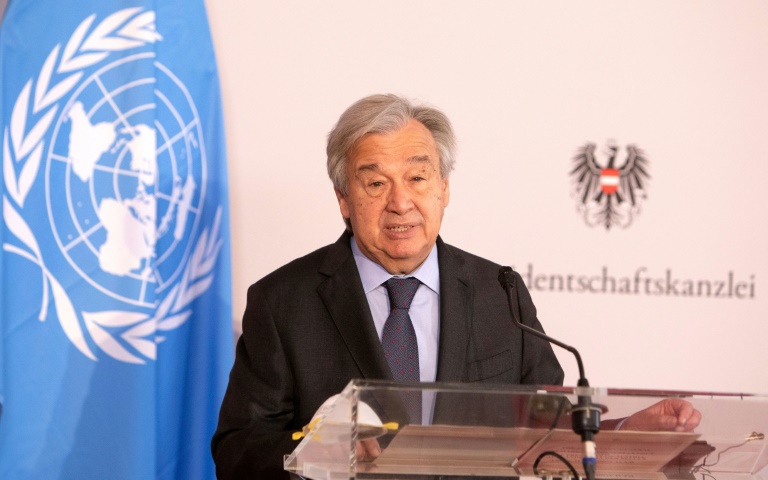
UN chief Antonio Guterres, who recently met Putin, said on Wednesday it was important to maintain contacts with Russia even if there was currently “no chance” of a ceasefire right now.

The war in Ukraine has fuelled Europe’s growing energy crisis, with Kyiv pressing for an embargo on oil and gas imports from Russia.

Ukraine on Wednesday said Russia had halted gas supplies through a key transit hub in the east of the country, a day after the Ukrainian state energy company Naftogaz said it was no longer responsible for gas coming through Russian-occupied territory. 

Germany said inflows of Russian gas had as a result fallen by a quarter compared to a day before.

Germany is highly dependent on Russia for its gas supplies and has rejected an immediate full embargo on Russian gas, although it backs a halt on Russian oil that the EU is seeking.

– ‘Ukrainian culture exists’ –

Russia’s invasion has also prompted Sweden and Finland to consider joining NATO, with both countries set to decide this week.

British Prime Minister Boris Johnson and his Swedish counterpart Magdalena Andersson on Wednesday announced a mutual defence agreement in case of an attack.

Ukraine has been pushing Western countries for more military and economic support, despite Russian warnings to the West.

Czech president Milos Zeman, a close Putin ally before the war, on Wednesday approved a request to allow 103 citizens to fight in Ukraine alongside the army. 

As President Joe Biden warned that Ukraine would within days likely run out of funds to keep fighting, the US House of Representatives voted late Tuesday to send a $40 billion aid package to the country.

“With this aid package, America sends a resounding message to the world of our unwavering determination to stand with the courageous people of Ukraine until victory is won,” House Speaker Nancy Pelosi said.

The United States views it as increasingly likely that Putin will mobilise his entire country, including ordering martial law.

Sanctions on Russia are biting, with its foreign currency reserves declining and new car sales sinking over 78 percent in April.

As Russia cracks down internally, a member of the band Pussy Riot, Maria Alyokhina, said she had left Russia by disguising herself as a food delivery courier to escape police. 

Music has become a rallying point too for Ukrainians, ahead of this Saturday’s final of the Eurovision song contest, the world’s biggest live music event.

Ukraine’s rap folk band Kalush Orchestra is the favourite to win the camp celebration after and they progressed through Tuesday night’s semi-final. Ukraine won in 2016 and Kyiv hosted Eurovision in 2017. 

Russia has been banned from this year’s competition.

“We are here to show that Ukrainian music and Ukrainian culture exists,” frontman rapper Oleh Psiuk said. 

burs-dk/gw

Coups undermining Sahel anti-jihadist force: UN chief

Military coups in Mali and Burkina Faso — two members of the G5-Sahel anti-jihadist force — are undermining the mission’s operational capacity, UN Secretary-General Antonio Guterres said in a Wednesday report.

“I am deeply concerned by the rapidly deteriorating security situation in the Sahel, as well as by the potentially debilitating effect the uncertain political situation in Mali, Burkina Faso and beyond will have on efforts to further operationalize the G5-Sahel Joint Force,” Guterres’ report to the UN Security Council said.

Mali was hit by coups in August 2020 and May 2021, while another took place in Burkina Faso in January 2022. In addition to those countries, the 5,000 strong Sahel force is composed of personnel from Mauritania, Chad and Niger.

“The highly volatile political and security situation in the Sahel impacted the operationalization of the Joint Force… Among other issues uncertainty over the transition timelines in Mali and the 23 January coup d’etat in Burkina Faso significantly slowed down the Joint Force’s operational tempo,” said the UN chief’s report, obtained by AFP.

Guterres also highlighted reports of human rights abuses by both security forces and militants.

“I am also seriously disturbed by the deteriorating human rights situation, amid reports of gruesome violations committed against civilians, both by terrorist armed groups but also reportedly by armed and security forces in the region,” he said.

Command and control problems are posing challenges for the G5-Sahel force.

In Mali, there are issues determining whether security forces are operating under the Joint Force or national command, “particularly when investigating alleged human rights violations,” Guterres said.

And the Sahel force’s leadership reported “conflicting chains of command as a major impediment to the Force’s full operationalization.”

The force is also fighting against militants who are able to infiltrate and move within the civilian population, Guterres said.

“The infiltration and increased mobility of terrorist armed elements within local communities continues to present a major challenge for the G5 Joint Force, both in terms of identifying suitable informants and protecting civilians during operations.”

Close Bitnami banner
Bitnami