World

Paris plans green makeover of Champs-Elysees for Olympics

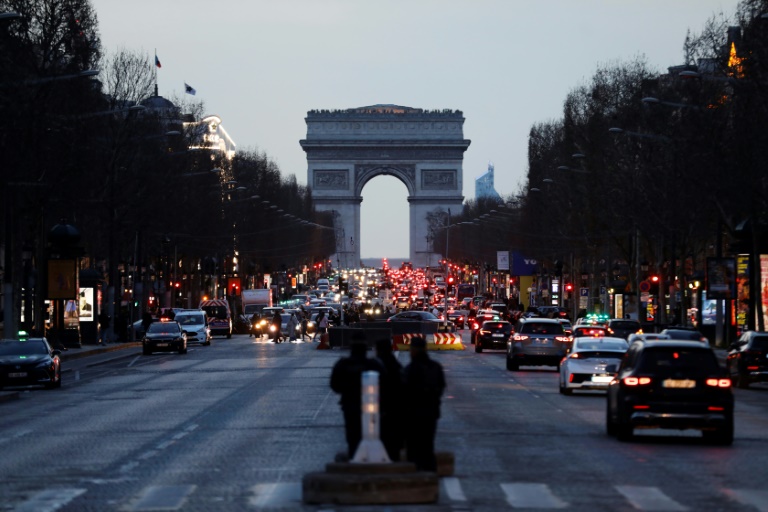
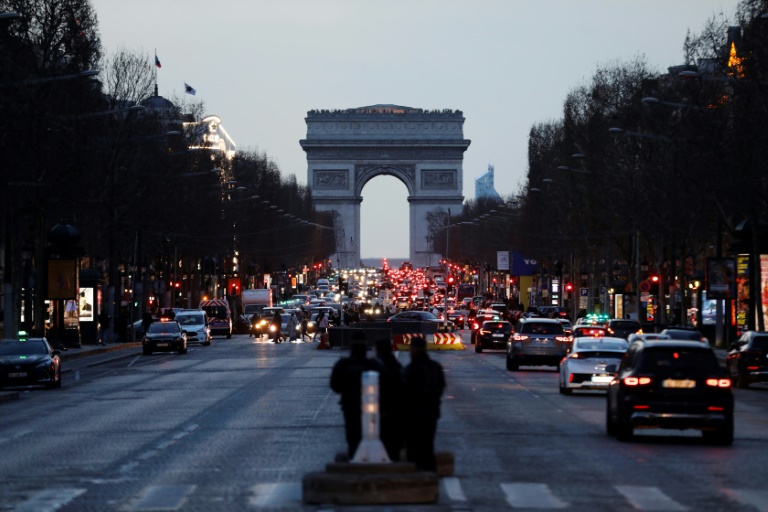
Paris will give the famed Champs-Elysees a makeover ahead of the 2024 Olympic Games by planting trees and increasing pedestrian areas, the French capital’s officials said on Wednesday.  

The French often call it “the most beautiful avenue in the world” but activists complain that traffic and luxury retail have turned it into a noisy and elitist area shunned by ordinary Parisians.

“We need to re-enchant the capital’s most famous avenue, which has lost a lot of its splendour in the past 30 years,” the mayor of the capital’s 8th district Jeanne d’Hauteserre told reporters. 

“It’s a reduction of the space for cars, to be clear, because that’s how we need to envision the city of the future,” socialist Paris mayor Anne Hidalgo said. 

The plan is in keeping with other efforts by the city leader to squeeze cars out of Paris and make the city more green, a push that has divided residents with critics saying her policies go too far too fast.  

But supporters have lauded the former presidential candidate’s efforts to reduce pollution and increase green areas in the densely populated city that can become unbearable when increasingly frequent summer heatwaves hit.

Around the Arc de Triomphe, which perches atop the Champs-Elysees, the plan is to widen the pedestrian ring surrounding the monument. 

And at the bottom of the two kilometre-(1.2 mile) long avenue next to the Place de la Concorde, the “Re-enchant the Champs-Elysees” plan will revamp the gardens.

“We will create a hectare and a half of green spaces and plant over a hundred trees,” deputy mayor Emmanuel Gregoire said. 

Paris will spend 26 million euros ($27.5 million) in the lead up to the Olympics on the works set to begin within weeks. 

The terraces near the top of the avenue favoured by tourists will also be reworked by Belgian designer Ramy Fischler, who will strive to “preserve the identity and personality” of the area, he said.

The Champs-Elysees was first laid out in 1670 but was given a revamp by Baron Haussmann, the architect behind the transformation of Paris under Napoleon III in the mid-19th century.

Over the centuries, the avenue has been the stage for the high and low moments in French history, hosting celebrations and commemorations as well as protests, notably the violent Yellow Vest movement.

It is also used as the route for the Bastille Day military parade, which celebrates the French republic and its armed forces on July 14, as well as the finishing point for the annual Tour de France cycle race. 
Paris plans green makeover of Champs-Elysees for Olympics

Paris will give the famed Champs-Elysees a makeover ahead of the 2024 Olympic Games by planting trees and increasing pedestrian areas, the French capital’s officials said on Wednesday.  

The French often call it “the most beautiful avenue in the world” but activists complain that traffic and luxury retail have turned it into a noisy and elitist area shunned by ordinary Parisians.

“We need to re-enchant the capital’s most famous avenue, which has lost a lot of its splendour in the past 30 years,” the mayor of the capital’s 8th district Jeanne d’Hauteserre told reporters. 

“It’s a reduction of the space for cars, to be clear, because that’s how we need to envision the city of the future,” socialist Paris mayor Anne Hidalgo said. 

The plan is in keeping with other efforts by the city leader to squeeze cars out of Paris and make the city more green, a push that has divided residents with critics saying her policies go too far too fast.  

But supporters have lauded the former presidential candidate’s efforts to reduce pollution and increase green areas in the densely populated city that can become unbearable when increasingly frequent summer heatwaves hit.

Around the Arc de Triomphe, which perches atop the Champs-Elysees, the plan is to widen the pedestrian ring surrounding the monument. 

And at the bottom of the two kilometre-(1.2 mile) long avenue next to the Place de la Concorde, the “Re-enchant the Champs-Elysees” plan will revamp the gardens.

“We will create a hectare and a half of green spaces and plant over a hundred trees,” deputy mayor Emmanuel Gregoire said. 

Paris will spend 26 million euros ($27.5 million) in the lead up to the Olympics on the works set to begin within weeks. 

The terraces near the top of the avenue favoured by tourists will also be reworked by Belgian designer Ramy Fischler, who will strive to “preserve the identity and personality” of the area, he said.

The Champs-Elysees was first laid out in 1670 but was given a revamp by Baron Haussmann, the architect behind the transformation of Paris under Napoleon III in the mid-19th century.

Over the centuries, the avenue has been the stage for the high and low moments in French history, hosting celebrations and commemorations as well as protests, notably the violent Yellow Vest movement.

It is also used as the route for the Bastille Day military parade, which celebrates the French republic and its armed forces on July 14, as well as the finishing point for the annual Tour de France cycle race. 
France opens torture case against Interpol's UAE president

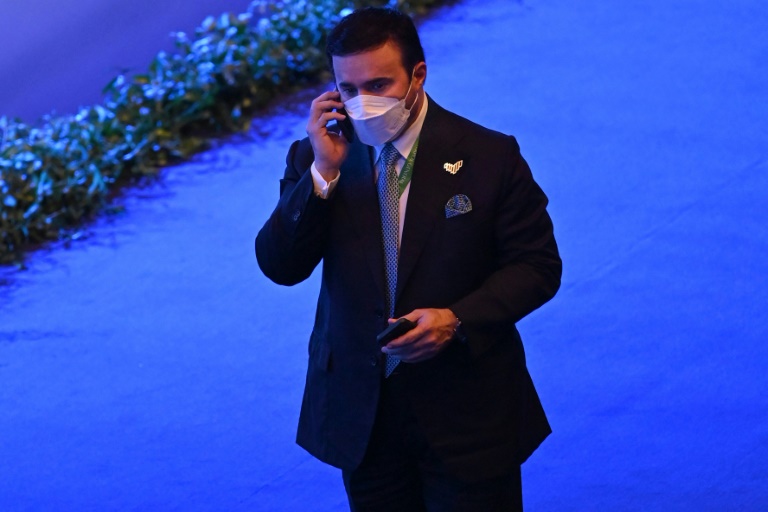
French authorities have opened a case against Interpol’s Emirati president over accusations of torture and arbitrary detention by two Britons who were detained in the UAE, a source close to the inquiry told AFP on Wednesday.

The case into suspected complicity in torture by Ahmed Nasser al-Raisi was confirmed by France’s anti-terror prosecutors office (PNAT), which has handed it to an investigating magistrate who will now decide whether to press charges.

The two Britons, Matthew Hedges and Ali Issa Ahmad, accuse Raisi of having ultimate responsibility — as a senior interior ministry security official — for the torture and arbitrary detention they say they suffered in the United Arab Emirates.

The source said the investigating magistrate must also decide if Raisi, who was elected Interpol president in November, enjoys diplomatic immunity from prosecution in France.

The Britons filed the complaint under France’s principle of universal jurisdiction, which allows it to prosecute serious crimes even if they are committed on foreign soil.

This means Raisi could be detained for questioning if he visits the country. Interpol’s headquarters are in the southeastern French city of Lyon which he is believed to have visited several times this year.

The case against Raisi, opened in late March, goes a step further than the torture inquiry launched against him by French prosecutors in November, over the detention of UAE dissident Ahmed Mansoor.

At the time, the UAE’s foreign ministry rejected the complaints over Mansoor’s detention conditions as “without foundation”. 

“Any legal complaint that may be filed with allegations against al-Raisi is without merit and will be rejected,” the UAE foreign ministry added.

In the latest case, the inquiry is in the hands of an investigating magistrate, a step that precedes the pressing of any charges.

Contacted by AFP, the UAE embassy in Paris declined to comment.

– ‘Psychological torture’ –

Both plaintiffs were in Paris on Wednesday to testify before the investigating magistrate.

Hedges, an academic specialising in the UAE, says he was detained and tortured in the country from May to November 2018 after being arrested on charges of espionage during a study trip.

He was forced to make false confessions that led to a sentence of life imprisonment before his release under international pressure led by the UK.

He told AFP on Wednesday that he spent seven months in solitary confinement, and forced to take medication. This, he said, was part of “a very specific strategy to inflict psychological torture”.

Interrogations lasted for up to 15 hours at a time, and there were threats of violence against him and his family, Hedges said, calling his ordeal “terrifying”.

He began to self-harm and tried to take his own life, “all a result of the medication”.

Hedges said that Raisi “had to have known” about his treatment.

Ahmad, meanwhile, said he was repeatedly beaten and even stabbed during a month in detention in January 2019, allegedly for enthusiastically supporting the UAE’s Gulf rival Qatar in a football clash against Iraq during that year’s AFC Asian Cup.

During his arrest, a policeman cut the Qatari flag out of his T-shirt with a pocket knife, injuring Ahmad in the process, he told AFP.

He was “interrogated day and night” during the detention. “It’s a very hard time I have been through, it’s horrendous,” he said.

Both men have also initiated legal action against Raisi in Norway, Sweden and Turkey.

Raisi’s four-year term at Interpol is largely ceremonial, with Secretary General Juergen Stock handling day-to-day management of the organisation.

His candidacy for the Interpol job prompted an outcry from activists, who pointed to the generous funding Interpol receives from the United Arab Emirates.

gd-sjw-js-jh/imm

Biggest white diamond ever auctioned fetches $18.8 million

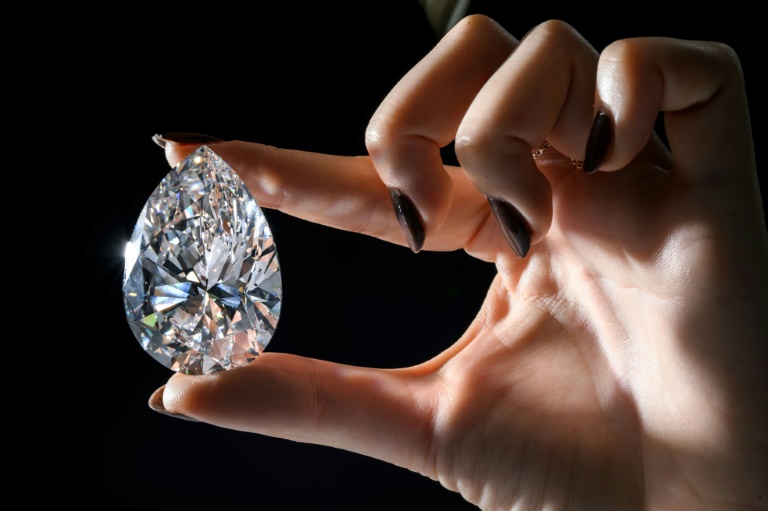
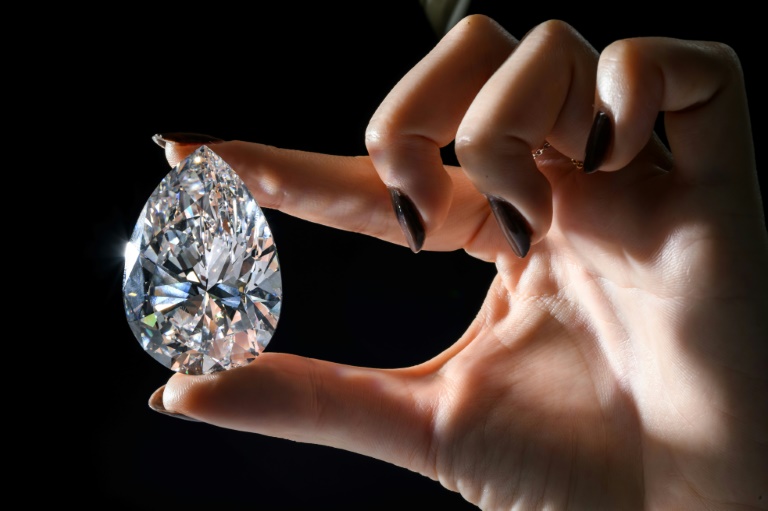
The Rock, the biggest white diamond ever auctioned, sold for a hammer price of 18.6 million Swiss francs ($18.8 million) on Wednesday, far short of the record for such a jewel.

The 228.31-carat stone, larger than a golf ball, was sold in Geneva by Christie’s auction house.

There had been high hopes that The Rock would smash the world record for a white diamond, which stands at at $33.7 million, fetched in the Swiss city in 2017 for a 163.41-carat gem.

But the bidding, which started at 14 million francs, came to a halt after two minutes at 18.6 million, though the price will increase once taxes and the buyer’s premium are added on.

The pre-sale estimate had been 19-30 million Swiss francs.

The Rock, a perfectly symmetrical pear-shaped diamond, was in the hands of an unnamed owner from North America. It was bought by a telephone bidder following the action at the Hotel des Bergues.

Max Fawcett, head of the jewels department at Christie’s auction house in Geneva, said there were only a handful of diamonds of similar size and quality to The Rock.

The large diamond was extracted from a mine in South Africa in the early 2000s and has been shown in Dubai, Taipei and New York ahead of the sale in Geneva.

– Red Cross gem –

On sale later in the Magnificent Jewel auction is an historic intense yellow diamond associated for more than a century with the Red Cross.

The Red Cross Diamond is a cushion-shaped, 205.07-carat canary yellow jewel, which has a price estimate of seven to 10 million Swiss francs ($7.09 to $10.13 million).

A large chunk of the proceeds will be donated to the International Committee of the Red Cross, which is headquartered in Geneva.

The original rough stone was found in 1901 in a De Beers company mine in South Africa and is said to have weighed around 375 carats.

As well as ranking among the largest diamonds in the world, a striking feature is its pavilion, which naturally bears the shape of a Maltese cross.

The stone was first put up for sale on April 10, 1918 at Christie’s in London. It was offered by the Diamond Syndicate in aid of the British Red Cross Society and the Order of St John.

The Red Cross Diamond fetched £10,000 — approximately £600,000 ($740,000) in today’s money. It was bought by the London jewellers S.J. Phillips.

It was sold again by Christie’s in Geneva in 1973, fetching 1.8 million Swiss francs, and is now being offered by the auction house for a third time.

Also being sold is a tiara that belonged to Princess Irma of Furstenberg (1867-1948), a member of one of the most pre-eminent aristocratic families in the Habsburg Empire.

It is estimated to go for 400,000 to 600,000 Swiss francs.

apo/rjm/vog/raz

Biggest white diamond ever auctioned fetches $18.8 million

The Rock, the biggest white diamond ever auctioned, sold for a hammer price of 18.6 million Swiss francs ($18.8 million) on Wednesday, far short of the record for such a jewel.

The 228.31-carat stone, larger than a golf ball, was sold in Geneva by Christie’s auction house.

There had been high hopes that The Rock would smash the world record for a white diamond, which stands at at $33.7 million, fetched in the Swiss city in 2017 for a 163.41-carat gem.

But the bidding, which started at 14 million francs, came to a halt after two minutes at 18.6 million, though the price will increase once taxes and the buyer’s premium are added on.

The pre-sale estimate had been 19-30 million Swiss francs.

The Rock, a perfectly symmetrical pear-shaped diamond, was in the hands of an unnamed owner from North America. It was bought by a telephone bidder following the action at the Hotel des Bergues.

Max Fawcett, head of the jewels department at Christie’s auction house in Geneva, said there were only a handful of diamonds of similar size and quality to The Rock.

The large diamond was extracted from a mine in South Africa in the early 2000s and has been shown in Dubai, Taipei and New York ahead of the sale in Geneva.

– Red Cross gem –

On sale later in the Magnificent Jewel auction is an historic intense yellow diamond associated for more than a century with the Red Cross.

The Red Cross Diamond is a cushion-shaped, 205.07-carat canary yellow jewel, which has a price estimate of seven to 10 million Swiss francs ($7.09 to $10.13 million).

A large chunk of the proceeds will be donated to the International Committee of the Red Cross, which is headquartered in Geneva.

The original rough stone was found in 1901 in a De Beers company mine in South Africa and is said to have weighed around 375 carats.

As well as ranking among the largest diamonds in the world, a striking feature is its pavilion, which naturally bears the shape of a Maltese cross.

The stone was first put up for sale on April 10, 1918 at Christie’s in London. It was offered by the Diamond Syndicate in aid of the British Red Cross Society and the Order of St John.

The Red Cross Diamond fetched £10,000 — approximately £600,000 ($740,000) in today’s money. It was bought by the London jewellers S.J. Phillips.

It was sold again by Christie’s in Geneva in 1973, fetching 1.8 million Swiss francs, and is now being offered by the auction house for a third time.

Also being sold is a tiara that belonged to Princess Irma of Furstenberg (1867-1948), a member of one of the most pre-eminent aristocratic families in the Habsburg Empire.

It is estimated to go for 400,000 to 600,000 Swiss francs.

apo/rjm/vog/raz

Ireland warns UK against threats to Brexit protocol

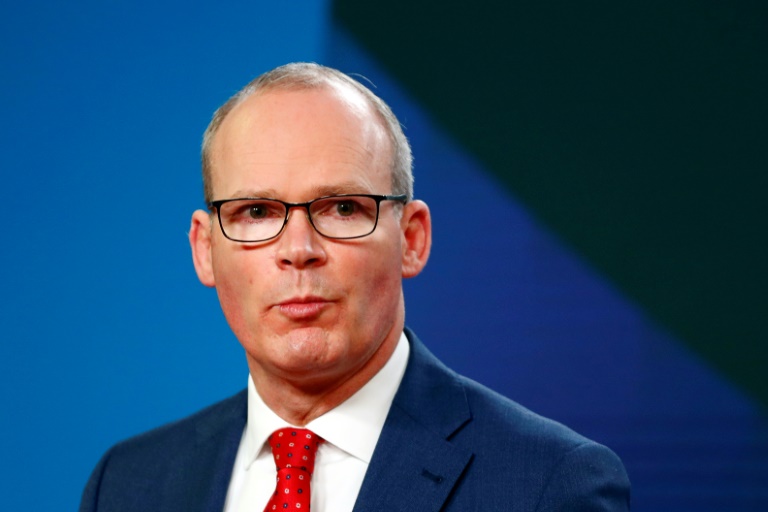
Ireland’s foreign minister on Wednesday said the UK risked a breach of international law if it scraps the trade rules it signed with the EU for Northern Ireland.

Simon Coveney said the UK’s latest threats to pull the Northern Ireland Protocol had caused consternation in Brussels, as he met leaders in the British province.

UK Foreign Secretary Liz Truss said late on Thursday that the government “will not shy away from taking action to stabilise the situation in Northern Ireland if solutions cannot be found” to key sticking points.

Prime Minister Boris Johnson also said his government needed to protect the 1998 Good Friday Agreement, which ended three decades of sectarian violence over British rule in Northern Ireland.

“That is crucial for the stability of our country of the UK, of Northern Ireland,” he said, adding that new arrangements needed to “command across community support”.

“Plainly the Northern Ireland Protocol fails to do that and we need to sort it out.”

Coveney said Truss’ comments had “gone down really badly across the European Union” and rejected London’s claims that Brussels was being inflexible over its implementation.

“The (European) Commission has been showing a willingness to compromise,” he told reporters.

“What they are hearing and seeing from London is a rejection of that approach, towards a breach of international law.”

The protocol was signed separately from the Brexit trade deal between London and Brussels because Northern Ireland has the country’s only land border with the EU.

It keeps the province largely in the European single market and customs union but mandates checks on goods coming to the province from Great Britain — England, Scotland and Wales.

The checks are designed to prevent a return to a hard border between Northern Ireland and EU member Ireland, which was a flashpoint in the years of violence.

But the pro-UK Democratic Unionists Party say by creating a de facto border in the Irish Sea, Northern Ireland risks being cut adrift from the rest of the UK.

It is refusing to join a new power-sharing government in Belfast until the protocol is scrapped or overhauled.

Sinn Fein’s Michelle O’Neill, who is set to be Northern Ireland’s first nationalist first minister after elections last week, said after meeting Coveney: “The protocol is here to stay.

“There are ways to smooth its implementation, and we are certainly up for that, but the rhetoric from the British government in the last number of days is serving only to pander to the DUP,” she said.

Remittances to Ukraine to jump over 20 percent: World Bank

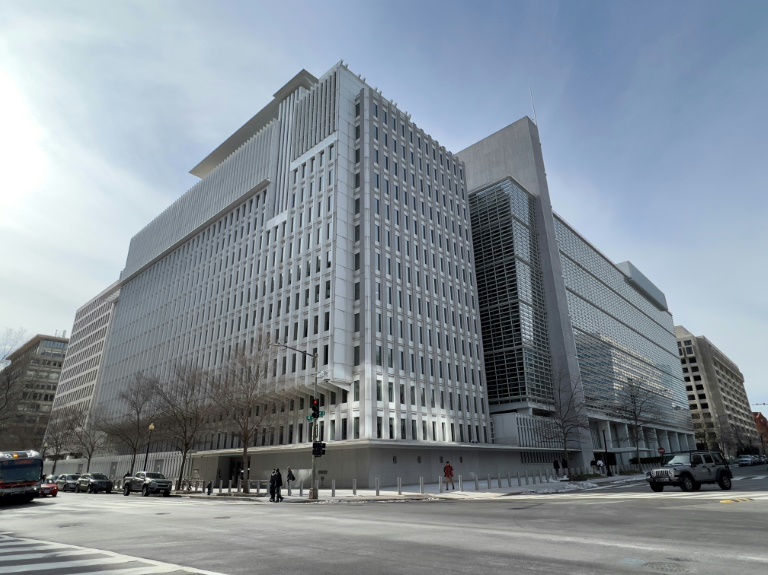
Payments from workers living abroad to low- and middle-income countries are expected to rise 4.2 percent this year, with Ukraine as the main beneficiary of the increase, the World Bank said Wednesday.

In total, migrant workers are expected to send $630 billion back to their home countries, the bank said in a report.

Remittances to Ukraine, currently fighting off the Russian invasion, are expected to jump more than 20 percent in 2022, according to the report.

However, flows to many Central Asian countries, that rely primarily on funds from Russia, are likely to fall dramatically, the report said.

“The Ukraine crisis has shifted global policy attention away from other developing regions,” Dilip Ratha, the lead economist for the report, said in a statement. 

But he noted there was increased awareness of the need to support “destination communities that are experiencing a large influx of migrants.”

He recommended creating a financial system to support such countries and regions.

Remittances are often the main resource for families in low-income countries. In some countries, payments from workers abroad amount to a quarter or even one-third of GDP.

The World Bank again highlighted the excessive costs of sending funds.

“Globally, the average cost of sending $200 was six percent in the fourth quarter of 2021,” the report said, citing World Bank data.

The international development lender noted it is cheaper to send money to South Asia, while the highest costs were for transfers to sub-Saharan Africa.

Sending money to Ukraine cost 7.1 percent from the Czech Republic, 6.5 percent from Germany, 5.9 percent from Poland and 5.2 percent from the United States.

IMF chief Kristalina Georgieva on Tuesday called for the modernization of the cross-border payment system, particularly by using digital platforms and highlighted the high costs of remittances.

“The average cost of a transfer is 6.3 percent. Which means that some $45 billion per year are diverted into the hands of intermediaries” instead of going directly to the recipients, who include “millions of lower-income households,” Georgieva said.

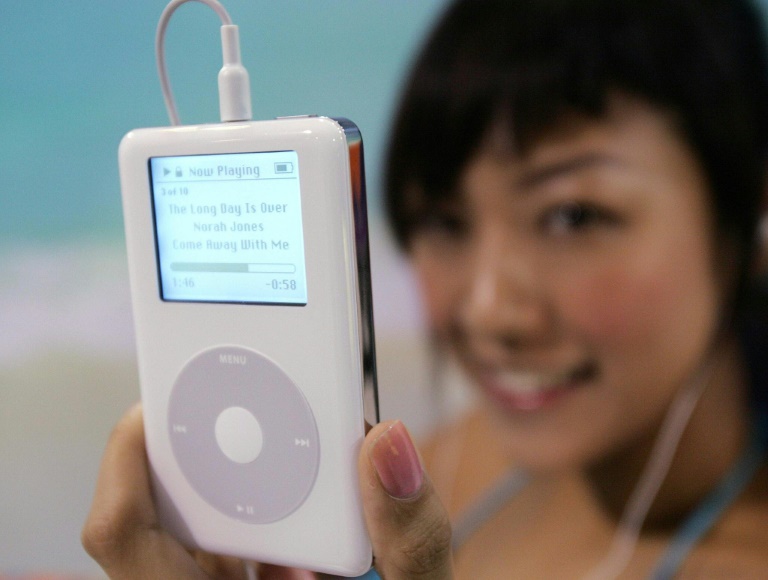
iPod RIP: How Apple's music player transformed an industry

At the height of its powers the pocket-sized music player known as the iPod shifted tens of millions of units each year, helping Apple to conquer the globe and transforming the music industry.

But that was the mid-2000s –- a lifetime ago in the tech industry. After years of declining sales, the US tech giant announced on Tuesday it was stopping production after 21 years.

“Clearly this was one of the products that Apple launched that completely changed our lives,” Francisco Jeronimo of analysis firm IDC told AFP.

Social media was awash with emotional tributes under the banner “iPod RIP”.

“Noooo, iPod touch, you were too pure for this world!” tweeted entrepreneur Anil Dash.

“Goodnight, sweet prince. You won’t be forgotten,” tweeted Apple enthusiast Federico Viticci.

The device began life in 2001 with the promise of “putting 1,000 songs in your pocket”.

At $400 it was hardly cheap.

But its 5GB of storage outstripped the competition, its mechanical wheel was instantly iconic and it allowed a constant stream of music uncoupled from conventional albums.

In the following years, prices came down, storage space grew, colours and models proliferated and sales exploded.

– ‘We folded’ –

“It didn’t just change the way we all listen to music, it changed the entire music industry,” Apple founder Steve Jobs said of the iPod in 2007.

Few would disagree.

Digital music was still in its infancy and closely associated with piracy.

File-sharing platform Napster had horrified the industry by dispensing with any idea of paying the record companies or musicians.

Against this background, Apple managed to persuade record company bosses to sanction the sale of individual tracks for 99 cents.

“We folded because we had no leverage,” Albhy Galuten, an executive at Universal Music Group at the time, told the New York Times on Tuesday.

For years, bands from AC/DC to the Beatles and Metallica refused to allow Apple to sell their music.

But the industry has since found a way to stay hugely profitable and even embrace technology like streaming.

It was the first legal model for digital music, industry expert Marc Bourreau told AFP.

After the initial shock to the system, he said the industry has learnt to embrace — and monetise — technology.

“People are now spending money in ways they weren’t before,” said Bourreau, highlighting money from streaming. 

“By this logic, the music industry is doing just fine.”

– Musical glasses –

But the writing was on the wall for the iPod as early as 2007 when Jobs launched the iPhone.

With theatrical flair, he told an expectant audience the new product was an “iPod, a phone and an internet communicator”.

He was lighting a fire under his own product even though at the time it accounted for roughly 40 percent of Apple’s revenue, according to analysis by Statista.

Five years later, the iPod’s revenue share had plunged below 10 percent and it was being outsold by the iPhone.

People no longer needed both products in their lives, and Apple no longer needed both in its portfolio.

“I don’t see why people would buy music players in the future,” said Jeronimo.

“Music players are now a feature of other devices – in cars, smart speakers, watches, even in smart glasses.”

The iPod and all its imitators seem likely to follow the Sony Walkman into a long twilight of nostalgic fandom and eBay listings of products from a bygone era.

US inflation slowed in April but prices for many goods rising

US inflation slowed in April, according to new data Wednesday, but Americans continue to see their wallets empty faster when they buy groceries and pay the rent.

President Joe Biden has gone on the offensive, blaming the price spike on Russian leader Vladimir Putin’s invasion of Ukraine, and announcing a series of steps he hopes will ease the pain.

The conflict and the sanctions imposed on Russia have driven up prices around the world for fuel, grain and fertilizer, raising costs for farmers who in turn are forced to raise prices.

Biden, whose popularity has taken a hit amid the highest inflation in four decades, has labeled the recent surge “Putin’s price hike.”

He will visit a farm in Illinois on Wednesday to lay out the White House strategy to help food producers, including boosting domestic fertilizer production amid a nationwide shortage.

The latest inflation data offered some good news, as the consumer price index (CPI) slowed slightly last month, jumping 8.3 percent compared to April 2021, after peaking in March at 8.5 percent, according to the Labor Department.

“While it is heartening to see that annual inflation moderated in April, the fact remains that inflation is unacceptably high,” Biden said in a statement. 

“Inflation is a challenge for families across the country and bringing it down is my top economic priority.”

The dip was helped by easing energy costs, as gasoline fell 6.1 percent in April compared to March after the 18.3 percent surge in the previous month.

But gasoline prices at the pump hit a new record on Tuesday, so the news from April may be of little comfort to drivers.

And prices continued to rise last month for a range of goods, including housing, groceries, airline fares and new vehicles, and annual inflation remains at its highest rate since early 1982.

– Groceries more expensive –

CPI rose just 0.3 percent compared to March, after the 1.2 percent surge in the prior month, but excluding volatile food and energy goods, the “core” index last month increased at double the March rate, the report said.

A large driver was food at home, which jumped 10.8 percent over the last 12 months — the largest annual increase since November 1980, according to the report.

The index for meat, poultry, fish and eggs surged 14.3 percent in the biggest gain since May 1979.

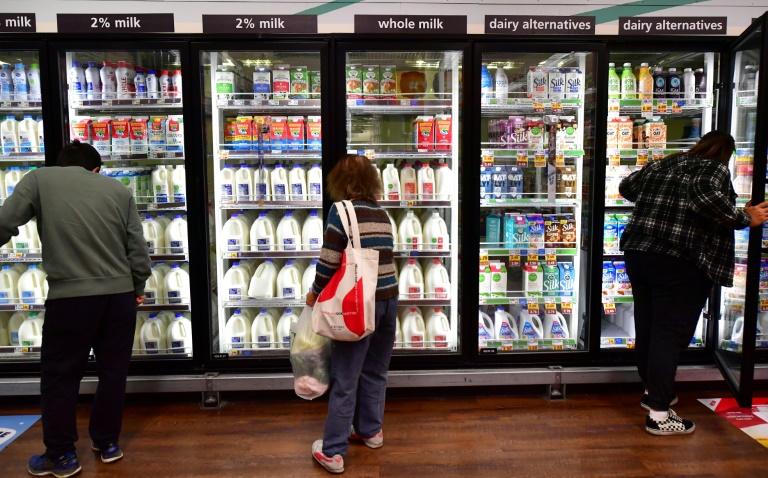
Americans saw big increases in the month for dairy and cereal products, even as fruit and vegetable costs fell last month.

Even with the decline in gasoline, energy costs have surged 30.3 percent over the past 12 months, with gasoline up 43.6 percent compared to a year ago.

Economists expect inflation to continue to slow gradually, but see no sign the Federal Reserve will ease up on what it said will be rapid interest rate increases to try to tamp down the price pressures and cool demand.

The Fed last week announced its largest rate hike since 2000, and signaled similar increases were likely in coming months.

Despite the “modest reprieve” in the data suggesting inflation peaked in March, “the renewed rise in gasoline prices towards a record $4.50 nationally and increase in diesel prices signals that there is still upward risk to the inflation outlook,” Kathy Bostjancic of Oxford Economics said in an analysis.

“Further, the Covid-related China lockdowns and the continued Russia-Ukraine war places further stress on already strained supply chains.”

Australia's election foes get personal

Australian Prime Minister Scott Morrison derided his Labor Party opponent Wednesday as an unreliable “loose unit” on the economy as he fought to catch up in the opinion polls 10 days from May 21 federal elections.

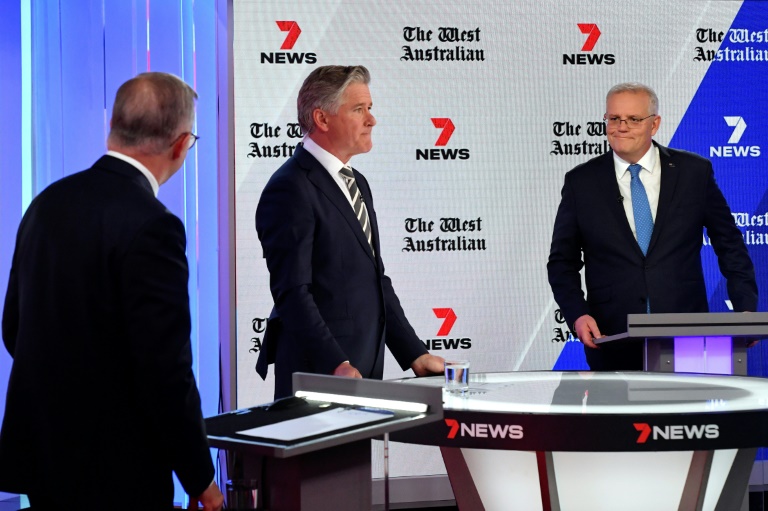
In their third televised election debate, characterised as the “final showdown” before 17 million Australians cast their compulsory votes, Morrison and Labor’s Anthony Albanese got personal.

“He’s a loose unit when it comes to the economy. He makes things up as he goes along,” said Morrison, using a slang term for someone who is unreliable because of the Labor leader’s campaign stumbles.

At the outset of the campaign last month, Albanese forgot both the unemployment rate and the main lending rate. More recently, he apparently had difficulty explaining his party’s disability policy.

Albanese hit back, accusing Morrison of shirking responsibility for the slow rollout of vaccines and rapid antigen tests in the Covid-19 pandemic, as well as for his management of the 2019-2020 “Black Summer” bushfires and this year’s deadly east coast floods.

When Morrison faces challenges, he “blames someone else consistently”, he said.

Albanese accused Morrison’s conservative Liberal-National Party coalition of allowing climate change policy to drift.

The prime minister has vowed to mine and export coal for as long as there are buyers, touted a “gas-fired recovery” from the pandemic, and resisted global calls to cut carbon emissions faster by 2030.

“Climate change is real and it is here now. We see it with the bushfires and floods,” Albanese told the Channel Seven-hosted debate.

“Australia can be a renewable energy superpower for the world if we seize this opportunity.”

– ‘In the mood to change’ –

The pair also sparred on a string of other policy disagreements: Morrison’s failure to fulfil a three-year-old campaign promise to create a federal anti-corruption commission; Albanese’s support for minimum wages to match inflation; and Labor’s backing for more government funding for childcare.

Despite the public wrangles, including in two previous election debates, the opinion polls have not budged much since Morrison called the election a month ago.

A weekend Newspoll gave Labor a 54-46 percent lead over Morrison’s ruling coalition on a two-party basis.

But few pundits are counting Morrison out.

Three years ago, he defied a string of negative opinion polls to win what he termed a “miracle” election.

Opinion polls in any case are a snapshot, not a prediction, cautioned Mark Kenny, professor at the Australian National University in Canberra.

But “if I put my money on it, I think I’ll probably go with what passes for empirical data that we do have at the moment, which suggests that Australians are in the mood to change the government: they’ve had enough of Morrison”, he told AFP.

On the campaign stump, Morrison freely concedes: “You may not like me.” 

But he asks voters to judge him by the job he has done, notably for Australia’s resurgent post-pandemic economy and 4.0-percent unemployment rate.

Even on the economy, however, he has difficulties.

Inflation is running hot at a 20-year high as prices soar at gas stations, in shops, and for housing.

Adding to the pain for borrowers, the central bank raised interest rates this month for the first time in 20 years.

Close Bitnami banner
Bitnami