World

'Rich also cry': Russia's sanctioned oligarchs lose luxuries

From superyachts and mansions to private jets and works of art, mega-rich Russians are being deprived of their expensive playthings, under swingeing sanctions that implicate them in Vladimir Putin’s war in Ukraine.

The seizing and freezing of assets is proving the toughest trial yet for the Kremlin-favoured “oligarchs”, many of whom got rich on the back of the collapse of the Soviet Union.

In Britain, more than 100 oligarchs and their families have been slapped with restrictions. The United States has sanctioned 140 and the European Union more than 30.

UK Transport Secretary Grant Shapps has said the move was designed to hit them where it hurts — denying them “access to their luxury toys”.

The British capital has for years been dubbed “Londongrad” after becoming a haven for Russians to keep their money, educate their children and pursue litigation.

“The welcome mat is now being taken away from Russian oligarchs,” The Economist wrote.

Even the high-profile Roman Abramovich has been targeted, forcing him to put Chelsea Football Club, which he bought in 2003, up for sale.

But acting against so many in a highly globalised major economy is “totally uncharted territory”, said researcher Alex Nice, from the Institute for Government think-tank.

Whenever the war ends, a deep rift between the West and Russia will remain, even if the assets are just frozen, rather than expropriated, he added. 

“There doesn’t seem to be any prospect that these sanctions will be lifted any time soon,” said Nice.

In Moscow, the independent Russian political analyst Konstantin Kalachev said Putin’s “special operation” in Ukraine could last “for years” — and even be widened to fulfil his dream of recreating the Russian empire.

If the decision is down to Ukraine, “they will never lift them (sanctions)”, he told AFP.

– Avalanche –

There’s no question that the sanctions have hit home.

Forbes magazine last month removed 34 Russians from its annual billionaire list citing the “avalanche of sanctions”.

“The war is an absolute disaster for them,” said Elisabeth Schimpfoessl, a lecturer in sociology at Aston University in Birmingham, central England, and author of a book called “Rich Russians”.

Petr Aven, known for his extensive collection of Russian art, told The Financial Times newspaper he was unsure if he was “allowed to have a cleaner or a driver” and faced expulsion from the UK.

His long-term business partner, Mikhail Fridman, told Bloomberg news agency he was “in shock” and also struggling to pay a cleaner.

Many oligarchs have multiple citizenships and are not rushing back to Russia.

The West has been a “base that they can go to at any moment when they fear prosecution in Russia”, said Schimpfoessl.

“Oligarchs never bothered developing Russia’s rule of law.”

– Soap opera –

The scale of assets targeted is staggering.

The UK government estimates that Abramovich alone is worth over £9 billion ($11 billion, 10.5 billion euros).

It has also targeted two of his associates worth up to £10 billion.

Abramovich is rumoured to own half a dozen luxury superyachts, two of which docked in Turkey in March, thereby avoiding sanctions.

EU members have reported freezing nearly $30 billion in Russian assets, including almost $7 billion in yachts, helicopters, property and works of art.

Washington has said it has sanctioned or blocked boats and aircraft worth over $1 billion.

US President Joe Biden has proposed permanent sanctions, saying oligarchs should not be allowed to enjoy luxuries while Ukrainian children die.

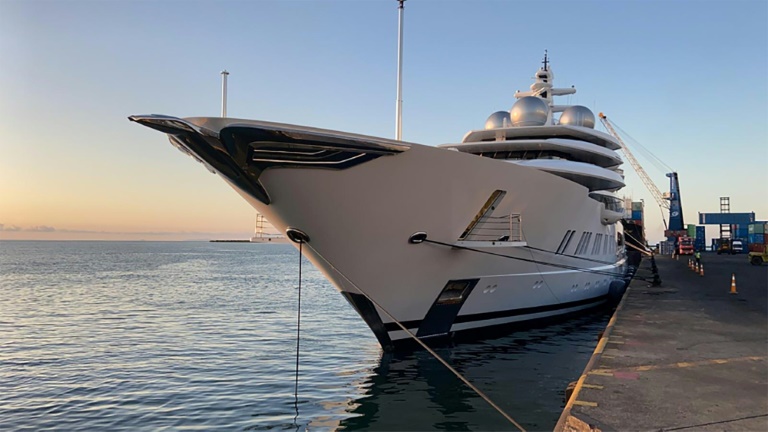
In Fiji last week, police seized a 348-foot (106-metre) yacht called “Amadea” worth some $300 million and linked to Suleiman Kerimov, a reticent billionaire senator, on Washington’s request.

Images of impounded yachts and shuttered mansions of Putin cronies prompt Schadenfreude in Russia, too.

“Ordinary Russians like to see ‘the rich also cry’,” said Kalachev, citing a Mexican soap opera Russians watched in the early 1990s.

What is not clear is whether sanctions affect Moscow’s decisions.

They cannot influence Putin, because he meets such business figures “only to tell them things — it’s not a dialogue”, argued Kalachev.

“The record of using economic coercion to try to force change in foreign policy is not a good one,” said Nice.

But sanctions “are undoubtedly going to weaken Russia’s capacity to fight”, he added.

– Opposition –

Abramovich has been involved in talks aimed at ending the war, with consent of both sides. Other oligarchs have criticised the conflict.

On Instagram the UK-sanctioned entrepreneur and banker Oleg Tinkov slammed “this crazy war” and Russia’s “shitty army”.

Fridman urged an end to the bloodshed and Oleg Deripaska, sanctioned by the UK, the EU and the US, said continuing fighting was “madness”.

But experts questioned the likelihood of them allying against Putin.

“It’s hard to see that happening,” said Nice. 

“It would not be in their interests ever to speak out against Putin prematurely,” said Schimpfoessl.
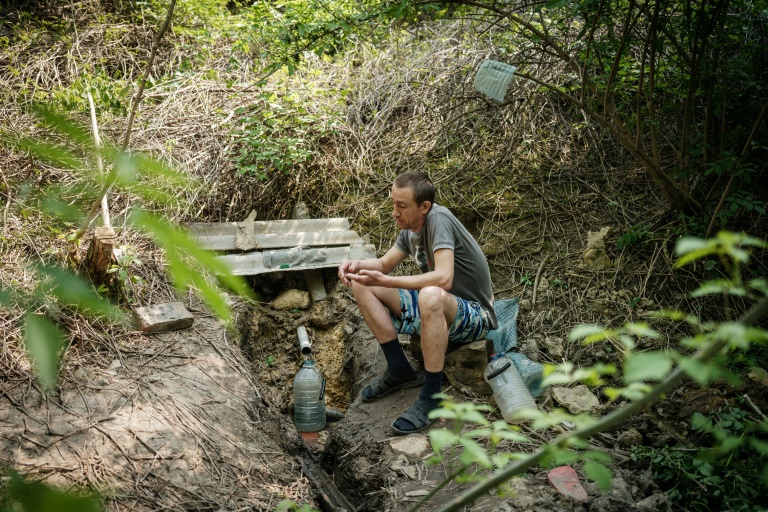
Trickling stream offers lifeline to survivors of Ukraine war zone

The water trickling from a pipe sticking out of a mound of dirt in Ukraine’s besieged city of Lysychansk offered the last lifeline to the emaciated bricklayer’s family of nine.

Artyom Cherukha crouched and listened to the shells whistling between shifting Russian and Ukrainian positions around him while slowly filling his plastic bottles from the natural spring.

A man-sized tail end of an Uragan missile hung between some branches of a tree a few steps above his leafy ravine.

But the 41-year-old seemed oblivious to the fact that the weapon could unleash death and destruction overhead.

He waited for the drips of water with his elbows planted on his knees and stared without moving.

“I feel total apathy. I am morally starved — not to mention physically,” he said in a voice devoid of emotion.

“We sit here counting the bombs.”

– ‘It can hit anywhere’ –

A crescent of industrial cities across Ukraine’s eastern front — populated by an untold number of residents hiding in cellars and basements — are steadily losing access to water and food.

Lysychansk was an important coal mining centre with centuries-old churches and 100,000 workers before Russia invaded its pro-Western neighbour on February 24.

The city’s ghostly streets now stand in ruins while its surrounding roads are being shelled with a ferocity that has forced all humanitarian supply missions to stop.

The highways leading out of Lysychansk and its sister city Severodonetsk are witnessing an organised retreat by some of Ukraine’s most hardened units and their biggest guns.

The few vehicles speeding in at breakneck speed to try and avoid the rockets and mortar fire appear to be primarily linked to rescue operations for Ukraine’s wounded troops.

Some of the residents trapped inside who come out to catch a glimpse of the sun and fill their bottles from the stream have the glazed look of shock.

“There is no water in the city. We come here because that is all there is,” welder Andriy Tytyunkov said in a halting voice.

“But when the bombing is really bad, you have to stay inside,” the 39-year-old said. “If it gets really heavy, it can hit anywhere.”

– ‘Repairs not possible’ –

Generations of Lysychansk residents in the northern part of the city facing Severodonetsk have been coming to their hidden spring in critical times.

Locals said this happened in World War II and then again when Russian-backed insurgents overran parts of Ukraine’s east in 2014.

The city’s civil-military administration attributed the current water stoppage to unspecified damage that could not be repaired until the fighting stopped.

“There will be no water in the city until the end of the war. Repairs are not possible,” the administration announced on its social media feeds late last month.

The spring offers salvation — of a sort.

Its water must first penetrate chemicals-filled earth from one of the most polluted corners of eastern Europe.

Another ravine next to the spring is filled with a bubbly waste streaming out of one of the city’s numerous industrial plants.

“It needs to be boiled,” former sailor Volodymyr Ivanov said while holding up his bottle against the sun.

“It looks fairly clean but no one has ever tested it. Who knows what is inside.”

– ‘Almost no food’ –

Yet even the simple task of boiling water becomes a life-threatening dilemma in times of war.

Cherukha boils his on a countertop because the city still has gas. A cut would force him to start building fires in his yard.

“But people are too scared to do that. Someone will see you there and might decide to shoot. You just never know how people’s minds work these days,” he said.

Then there is the lack of food.

Cherukha said the last humanitarian supplies reached the city at the start of last week.

“We have almost completely run out. I am dead serious,” he said with a nod of the head.

“My kids are little and run around smiling and laughing. Laughing is good. But they do not understand,” Cherukha said.

He expects his supplies to last him another two or three days.

“Even if we try our best to sketch it out and feed the children once a day, we would only have enough for three days. How do you tell your children there is nothing to eat?”

Bitcoin falls below $30,000, lowest since July 2021

Bitcoin slumped below $30,000 for the first time since July 2021 on Tuesday as cryptocurrencies track sinking markets with investors spooked by aggressive US monetary tightening and surging inflation.

The world’s largest cryptocurrency by market value fell as low as $29,764 in Tuesday trade, before recovering above $30,000, extending a recent collapse in price as investors desert assets viewed as risky.

Bitcoin’s value has more than halved since a November surge that sent the token to a record of nearly $69,000.

While crypto enthusiasts view bitcoin as a hedge against inflation, an influx of more traditional investors tend to view it as a riskier asset.

They have been offloading bitcoin and other digital tokens along with other volatile assets like tech stocks as the US Federal Reserve moves to hike interest rates to tackle decades-high inflation.

“Bitcoin is breaking below some key technical levels as the never-ending selloff on Wall Street continues,” said Edward Moya, senior market analyst at OANDA, a foreign exchange platform.

“The institutional investor is paying close attention to bitcoin as many who got in last year are now losing money on their investment,” he added.

While the token’s “long-term fundamentals have not changed in months”, concerns about growth and a possible recession are creating “a very difficult environment for cryptos”, Moya said.

“No one is looking to buy the crypto dip just yet and that leaves bitcoin vulnerable here.”

– Tech gloom –

Other cryptocurrencies are not faring better: the total market is valued at just over $1.5 trillion, compared with $3 trillion at its peak, according to data from the CoinGecko website, which tracks over 13,000 crypto assets.

The sector’s woes are linked to investors’ heightened caution.

Worried about the war in Ukraine, Covid lockdowns in China, and tighter monetary policy in the US, they are abandoning the stock markets — especially shares in technology companies, whose performance was boosted by the easy money policies of central banks during the pandemic and bets on long-term growth.

The slump in crypto follows dives on US equities and other markets, with the tech-heavy Nasdaq sinking by more than four percent on Monday.

Nasdaq’s correlation with Bitcoin has reached “historic highs”, according to the Kaiko analytics firm.

But it is difficult to say which way bitcoin will move next, given the proven volatility of crypto assets.

In 2021, bitcoin temporarily fell below $30,000 twice, in June and July, before surging again to hit its all-time high a few months later, in November.

And despite a less impressive 2022 in terms of prices, some players in the sector are seeking to comply with increasingly demanding authorities.

One of the largest trading platforms, Binance, was granted approval to operate in France from the Financial Markets Authority (AMF) in early May.

Meanwhile in the US, the Securities and Exchange Commission (SEC) has announced it is strengthening its team responsible for regulating cryptocurrencies.

– El Salvador confident –

In a sign of the growing importance of cryptocurrencies, two countries, El Salvador and the Central African Republic, have even taken the gamble of adopting bitcoin as their official currency — despite strong criticism from international financial institutions.

While the Central African Republic’s project is still in its infancy, Salvadoran President Nayib Bukele proudly announced on Twitter on Monday that “El Salvador just bought the dip” by adding 500 bitcoins to its fund, using the vocabulary of stockbrokers who see falling prices as opportunities to invest.

On Tuesday, bitcoin rose 2.3 percent to $31,695 at around 0925 GMT.

But since its creation in 2009, the cryptocurrency has existed in a context of ultra-low rates.

The US Federal Reserve has instead signalled in recent months that its recent rate hikes would be renewed to stem inflation.

City Index analyst Fawad Razaqzada warned: “Granted, we will see bounces here and there, but for as long as yields on government bonds are on the rise and the dollar is in an uptrend, the risks remain skewed to the downside.” 

Indonesia police use water cannon against Papua protesters

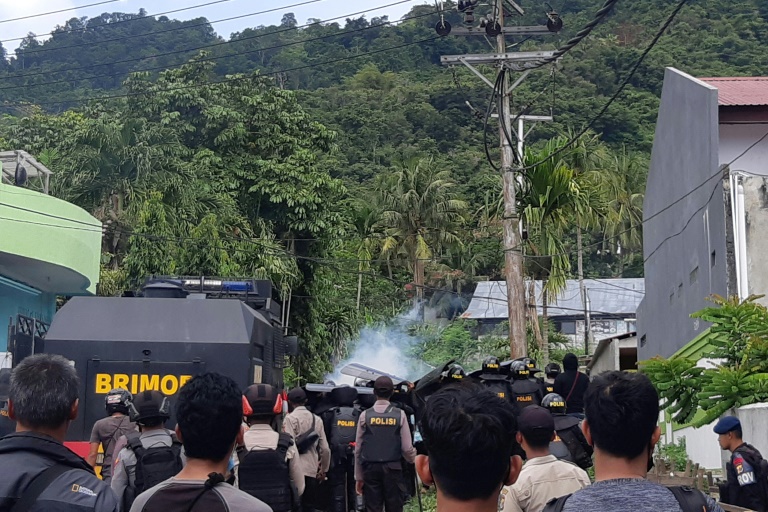
Indonesian police used water cannon against protesters in the province of Papua on Tuesday, after thousands came out to oppose plans to for a major redistricting in the restive region.

Jakarta announced last year it was considering making six new provinces in the region, home to a decades-old rebel insurgency.

It said the shake-up would accelerate development and make it easier to govern, but many Papuans fumed that they were not consulted, and the move would tighten the capital’s control over the mineral-rich region.

In March, two people were killed and several others injured when a protest against the plan turned violent in Papua’s Yahukimo district.

On Tuesday, thousands gathered in several locations near the provincial capital Jayapura to reject the plan, with similar protests in other parts of the country.

Authorities used water cannon to disperse the protesters in Waena, on the outskirts of Jayapura, national police spokesman Gatot Repli Handoko told AFP.

“The students were blocking the road which was disturbing the public and the officers opened the blockade. At that time we did use water cannon to disperse the mass,” he said. 

Images showed anti-riot police deployed with heavy equipment, and gunshots were heard. 

More than 1,000 police officers were sent to the protests in Papua.

At least one person — identified only as JW — was arrested, for allegedly spreading provocation and fake news ahead of the protest.

Local media reported that it was Papuan activist Jefry Wenda.

“He was arrested for spreading fake and provocative news which he spread through social media prior to the demonstration,” Handoko said.

Papua’s ongoing insurgency aims to gain independence from Indonesia, which took control of the former Dutch colony in the 1960s.

In 2019, at least 20 died in neighbouring West Papua province during a clash between security forces and protesters following days of violent unrest to protest against racism towards Papuan students in the country’s second-biggest city, Surabaya.

60 Zimbabweans killed by elephants this year

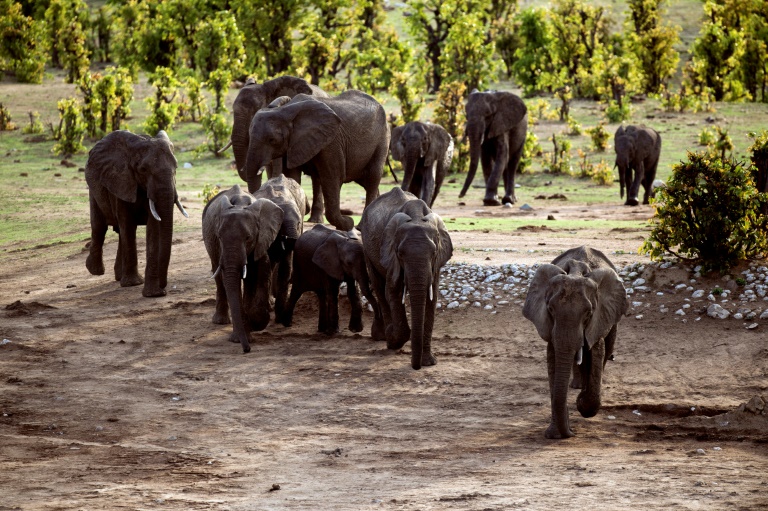
Sixty Zimbabweans have been killed by elephants so far this year, as a conservation success story has led to increased conflict with humans, the government spokesman said Tuesday.

With 100,000 elephants, Zimbabwe has the world’s second-largest population after Botswana, and about one-quarter of the elephants in all of Africa.

Unlike in much of the world, where poachers have killed off the animals for their tusks, Zimbabwe’s elephant population is growing at about five percent a year.

“In some areas, elephants are moving in numerous herds and have devoured everything in the fields and are now moving into homesteads, forcing community members to retaliate, in the process injuring some of the elephants,” government spokesman Nick Mangwana said on Twitter.

“The injured ones have become aggressive and uncontrollable,” Mangwana said.

“The issue of human and wildlife conflict has become quite emotive. This year alone 60 Zimbabweans have lost their lives to elephants and 50 injured,” he said.

Mangwana said elephants killed 72 people in 2021.

Elephants have been roaming outside of Zimbabwe’s sprawling game reserves.

But demographic growth as well as poverty are also forcing rural dwellers in Zimbabwe to move into areas that bring them into conflict with elephants.

Zimbabwe has a population of around 15 million which is growing at around 1.5 percent per year.

Tinashe Farawo, of the Zimbabwe Parks and Wildlife Management Authority, told AFP warned of “disaster” unless elephant numbers were reduced.

“The threat is likely to increase as we move towards the dry season when the herds will be moving in search of water and food,” he said.

Farawo said rangers have been deployed to put down the most dangerous elephants.

Conservationists say that Zimbabwe can support about 45,000 elephants, which require vast grounds for grazing.

Trade in elephants is banned internationally, but the government has begun considering contraceptives or hunting licenses to manage the herd.

60 Zimbabweans killed by elephants this year

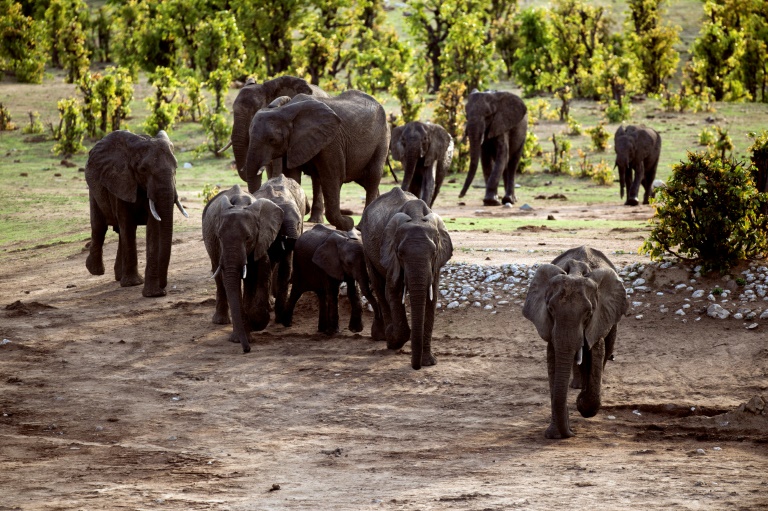
Sixty Zimbabweans have been killed by elephants so far this year, as a conservation success story has led to increased conflict with humans, the government spokesman said Tuesday.

With 100,000 elephants, Zimbabwe has the world’s second-largest population after Botswana, and about one-quarter of the elephants in all of Africa.

Unlike in much of the world, where poachers have killed off the animals for their tusks, Zimbabwe’s elephant population is growing at about five percent a year.

“In some areas, elephants are moving in numerous herds and have devoured everything in the fields and are now moving into homesteads, forcing community members to retaliate, in the process injuring some of the elephants,” government spokesman Nick Mangwana said on Twitter.

“The injured ones have become aggressive and uncontrollable,” Mangwana said.

“The issue of human and wildlife conflict has become quite emotive. This year alone 60 Zimbabweans have lost their lives to elephants and 50 injured,” he said.

Mangwana said elephants killed 72 people in 2021.

Elephants have been roaming outside of Zimbabwe’s sprawling game reserves.

But demographic growth as well as poverty are also forcing rural dwellers in Zimbabwe to move into areas that bring them into conflict with elephants.

Zimbabwe has a population of around 15 million which is growing at around 1.5 percent per year.

Tinashe Farawo, of the Zimbabwe Parks and Wildlife Management Authority, told AFP warned of “disaster” unless elephant numbers were reduced.

“The threat is likely to increase as we move towards the dry season when the herds will be moving in search of water and food,” he said.

Farawo said rangers have been deployed to put down the most dangerous elephants.

Conservationists say that Zimbabwe can support about 45,000 elephants, which require vast grounds for grazing.

Trade in elephants is banned internationally, but the government has begun considering contraceptives or hunting licenses to manage the herd.

Stocks diverge, oil extends losses

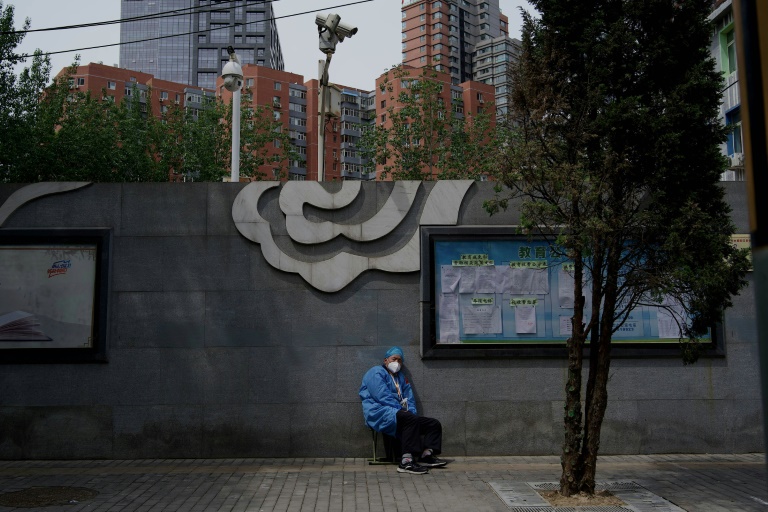
European stock markets rebounded Tuesday, Asian equities mostly sank and oil prices tumbled as traders reacted to fears over rising US interest rates fuelled by surging inflation and assessed the impact of China’s prolonged Covid lockdowns.

World stock markets have been on a tempestuous ride this year, with Wall Street suffering another hit on Monday as the tech-rich Nasdaq slumped more than four percent, while the S&P 500 ended below 4,000 points for the first time since March 2021.

That followed hefty declines Monday in Europe, although key indices in Frankfurt, London and Paris had recovered some of those losses by the half-way stage Tuesday.

“After yet another miserable session in the US yesterday, Europe and pockets of Asia managed to… push ahead,” noted Russ Mould, investment director at AJ Bell.

Investors were worried “about inflation, rising interest rates, a slowdown in the world economy, war in Ukraine, new Covid flare-ups in China, weakness in consumer spending and concerns that business investment might take a back seat”, he added.

– Bitcoin woes –

Bitcoin on Tuesday slumped briefly under $30,000, reaching a 10-month low.

The volatile cryptocurrency has lost more than half its value since a November surge saw it reach a record-high of nearly $69,000.

While crypto enthusiasts view bitcoin as a hedge against inflation, an influx of more traditional investors tend to view it as a riskier asset.

They have been offloading bitcoin and other digital tokens along with other volatile assets like tech stocks as the US Federal Reserve moves to hike interest rates to tackle decades-high inflation.

Data on Tuesday showed inflation in Greece jumping by 10.2 percent in April, its highest level since 1995, while it reached its highest rate since 1984 in Denmark at 6.7 percent.

Inflation began to rise after countries emerged from Covid pandemic restrictions last year, but it worsened following Russia’s invasion of Ukraine, which pushed energy and food prices even higher.

The Ukrainian economy is set to contract by almost one third this year in the wake of Russia’s invasion, the European development bank said.

Ukraine output is set to contract 30 percent compared with an EBRD forecast of minus 20 percent given in March shortly after Moscow’s military offensive.

Elsewhere Tuesday, oil prices fell further but the losses were less severe than the drops of more than six percent Monday on weaker demand concerns.

– Key figures at around 1045 GMT –

London – FTSE 100: UP 0.7 percent at 7,264.86 points

Frankfurt – DAX: UP 1.5 percent at 13,574.20

Paris – CAC 40: UP 1.0 percent at 6,147.03

EURO STOXX 50: UP 1.3 percent at 3,573.61

Hong Kong – Hang Seng Index: DOWN 1.8 percent at 19,633.69 (close)  

Shanghai – Composite: UP 1.1 percent at 3,035.84 (close)

Tokyo – Nikkei 225: DOWN 0.6 percent at 26,167.10 (close)

New York – Dow: DOWN 2.0 percent at 32,245.70 (close)

Brent North Sea crude: DOWN 1.8 percent at $104.03 per barrel

West Texas Intermediate: DOWN 1.8 percent at $101.28 per barrel

Euro/dollar: DOWN at $1.0549 from $1.0563 on Monday 

Pound/dollar: UP at $1.2355 from $1.2331

Euro/pound: DOWN at 85.36 pence from 85.64 pence

Dollar/yen: DOWN at 130.08 yen from 130.26 yen

Son of late Philippine dictator wins presidency in landslide

The son of late Philippine dictator Ferdinand Marcos cemented a landslide presidential election victory Tuesday, after Filipinos bet a familiar but tainted dynasty could ease rampant poverty — while dismissing warnings the clan’s return will deepen corruption and weaken democracy.

With an initial count almost complete, Ferdinand “Bongbong” Marcos Jr had secured over 56 percent of the vote and more than double the tally of his nearest rival, liberal Leni Robredo.

His now unassailable lead of 16 million-plus votes spells another astonishing reversal in the fortunes of the Marcos family, who have gone from the presidential palace to pariahs and back again in the space of a few decades.

The Marcos victory is a hammer blow to millions of Filipinos who hoped to reverse course after six years of increasingly authoritarian rule by President Rodrigo Duterte.

Far from repudiating Duterte’s excesses, voters elected his daughter Sara as vice president by a landslide in a parallel vote.

In 1986, Marcos Sr and kleptocratic first lady Imelda Marcos were chased into exile by the “People Power” revolution.

Marcos Jr steadfastly refused to denounce his family’s brutal and corrupt excesses in a campaign marked by a systemic whitewashing of history.

With memories of the regime fading with time and muddied by countless misleading Facebook posts, voters turned to Marcos to rekindle past glories.

“He will lift our country from the poverty we’re experiencing now,” said supporter and retired police officer Anthony Sola, who described himself as elated with the result.

The 50-year-old dismissed allegations that the Marcoses stole as much as $10 billion during their last period in power: “I don’t believe they stole money, because if they did, they should have been imprisoned already.”

Despite an Oxford education and jet-set lifestyle, Marcos was able to tap into both anti-elite anger and economic malaise.

Some 43 percent of Filipinos consider themselves poor, and 39 percent more feel they are on the borderline, according to a March poll by the Social Weather Survey.

Delivering a late-night address from his campaign headquarters in Manila on Monday, a beaming Marcos thanked volunteers for months of “sacrifices and work” but stopped short of claiming victory.

A fully certified tally is not expected before May 28.

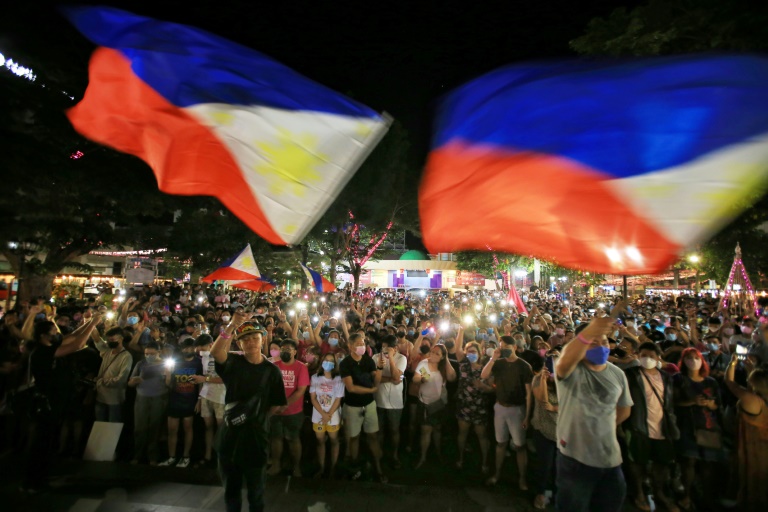
On the streets, hundreds of ecstatic supporters set off fireworks late into the night, waved the national flag and clambered onto parked cars to chant in victory.

Marcos’ spokesman Vic Rodriguez told government television he believed “it is clear” that “we have now a president-elect in the person of Ferdinand Bongbong Marcos Jr”.

– ‘More death, more hunger’ –

Rights activists, Catholic leaders and political commentators all warned against returning the Marcos clan to power.

“This election could have been our biggest chance for radical change,” said Mae Paner, a 58-year-old political satirist who was part of the People Power movement.

“There will be more death, there will be more debt, there will be more hunger. The Marcoses will steal.”

Bonifacio Ilagan, who endured two years of imprisonment and torture during Marcos Sr’s imposition of martial law, said the election exposed a deep malaise in Philippine society.

It had, he said, laid bare, “how deeply the trickery of historical fraudsters has seeped into the consciousness of Filipinos”.

Robredo, a lawyer and the current vice president, admitted “clear disappointment” about the result but vowed to continue the fight against poor governance.

The 57-year-old had promised to clean up the dirty style of politics that has long plagued the feudal and corrupt democracy.

In the final weeks before the election, her campaign morphed into a catch-all pro-democracy movement that drew almost one million people to a single protest in Manila.

Fearing a backlash from 15 million disgruntled voters — with many alleging irregularities in Monday’s poll — police urged restraint. 

“I am appealing to you to remain calm. Let us respect the result of the vote,” said acting Philippine police chief Lieutenant-General Vicente Danao.

The country’s Commission on Elections indicated that despite long queues and problems with some voting machines, the initial tabulation of votes had gone well. 

Police and protesters briefly clashed near the commission’s Manila office on Tuesday, but unrest was limited and crowds were small.

– Failure to connect –

For the liberal opposition, analyst Mark Thompson said there should be a period of soul searching and a broadening of its message beyond “good governance”.

“They need to make clear that they’re going to improve the lives of the average Filipino,” said Thompson, director of the Southeast Asia Research Centre at the City University of Hong Kong.

For Marcos, the coming weeks and months will bring high expectations from poor supporters already disillusioned with a string of post-dictatorship governments, which many believe failed to materially improve their lives.

“He is yet to set out a coherent, detailed, plan for getting the Philippines’ economy back on track after the devastation of the pandemic,” said Eurasia Group analyst Peter Mumford.

Marcos will have to try to meet those expectations while keeping the support of several of the country’s powerful political dynasties, who will expect patronage in return for delivering blocs of votes. 

“One of the key watchpoints under his administration will be whether corruption and cronyism — already notable risks in the Philippines — worsen,” said Mumford.

Hundreds defy Sri Lanka curfew after deadly unrest

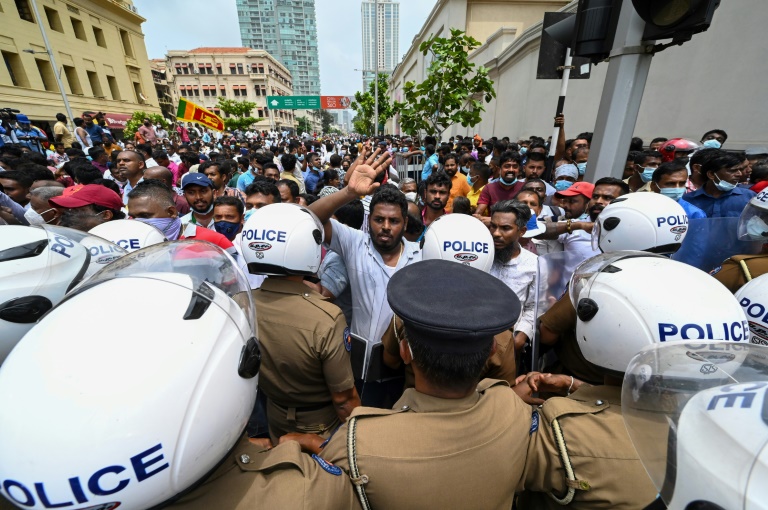
Fresh protests erupted in Sri Lanka’s capital on Tuesday, defying a government curfew after five people died in the worst violence in weeks of demonstrations over a dire economic crisis.

Demonstrators showed no sign they would back down, even after scores were injured when government supporters were bussed into Colombo on Monday, and attacked protesters with sticks and clubs.

As outrage over the incident soared, prime minister Mahinda Rajapaksa resigned — but even that has failed to calm public anger, with his brother Gotabaya still president with widespread powers and command over the security forces.

Thousands of angry protesters stormed Mahinda’s official residence overnight, and the former premier had to be rescued in a pre-dawn military operation on Tuesday, firing tear gas and warning shots.

“At least 10 petrol bombs were thrown into the compound,” a top security official told AFP.

Speaking to AFP, protester Chamal Polwattage said: “More people are coming to the demonstration site after the emergency and curfews. 

“People are angry about the attacks launched against us yesterday. Despite the curfew since yesterday afternoon, we have a lot of volunteers bringing food and water for us,” the 25-year-old said.

“We will not go until the president goes,” he added.

– Grip on power –

The Rajapaksa clan’s hold on power has been shaken by months of blackouts and shortages in Sri Lanka, the worst economic crisis since it became independent in 1948.

But Monday’s attacks on the protests represented a turning point after weeks of peaceful demonstrations.

“We were hit, the media were hit, women and children were hit,” one witness told AFP, asking not to be named.

On Monday, police fired tear gas and water cannon to disperse crowds and declared an immediate curfew in Colombo, a measure later widened to include the entire South Asian nation of 22 million people.

Authorities said the curfew will be lifted Wednesday morning, with government and private offices, as well as shops and schools, ordered to remain shut on Tuesday.

Police and the local human rights commission said they have started separate investigations into Monday’s violence.

“Arrest those responsible for instigating violence irrespective of their political standing,” police chief Chandana Wickramaratne said in an order.

The United Nations condemned the escalating violence, with human rights chief Michelle Bachelet calling on the authorities to prevent further unrest.

“I am deeply troubled by the escalation of violence in Sri Lanka after supporters of the prime minister attacked peaceful protesters in Colombo yesterday May 9 and the subsequent mob violence against members of the ruling party,” Bachelet said in a statement on Tuesday.

– Shot dead –

Despite the curfew, there were flare-ups of violence in Colombo and around the country, against both protesters and government supporters. 

Angry crowds set alight the homes of at least 41 pro-Rajapaksa politicians, along with some vehicles, while buses and trucks used by the government loyalists were also targeted.

Several Rajapaksa homes were torched in different parts of the country, while a family museum in their ancestral village was trashed including life-size wax figures of their parents.

Outside Colombo, ruling party lawmaker Amarakeerthi Athukorala shot two people — killing a 27-year-old man — after being surrounded by a crowd of anti-government protestors, police said.

“He then took his own life with his revolver,” a police official told AFP by phone.

Athukorala’s bodyguard was also found dead at the scene, police said.

Another ruling party politician who was not named opened fire on protesters, killing two and wounding five in the south, police added.

Doctors at the main Colombo National Hospital intervened to rescue wounded government supporters, with soldiers breaking open locked gates to ferry in the wounded.

“They may be murderers, but for us they are patients who must be treated first,” a doctor shouted at a mob blocking the entrance to the emergency unit.

– Unity government? –

In another sign of rapidly deteriorating security, vigilante groups blocked on Tuesday the main road to Colombo’s airport and stopped all traffic to check for any Rajapaksa loyalists trying to leave the island, witnesses said.

Despite the attack on his residence, Mahinda Rajapaksa’s son Namal told AFP that his father would not flee, describing the surge of national anger against his family as a “bad patch”.

The 76-year-old said he was resigning to pave the way for a unity government.

But it was unclear if the opposition would join any administration with Gotabaya still president.

Under Sri Lanka’s political system, even with a new unity government, the president will have the power to appoint and fire ministers as well as judges, and enjoy immunity from prosecution.

Opposition parties said Tuesday they called off unity talks with the government after the outbreak of violence.

But political sources said attempts were underway to arrange an online meeting between the president and all political parties. 

The main opposition SJB said they were still considering their options.

“Unless President Rajapaksa steps down, no one — whether the masses in the streets or key political stakeholders — will be appeased,” analyst Michael Kugelman from the Wilson Center told AFP.

The protests came after the coronavirus pandemic hammered the island’s vital income from tourism and remittances, which starved the country of foreign currency needed to pay off its debt.

This forced the government to ban many imports, leading to severe shortages, inflation and lengthy power blackouts.

In April, Sri Lanka announced it was defaulting on its $51 billion foreign debt. It is in talks with the International Monetary Fund for a bailout.

Decisive week for Finland, Sweden as NATO decisions loom

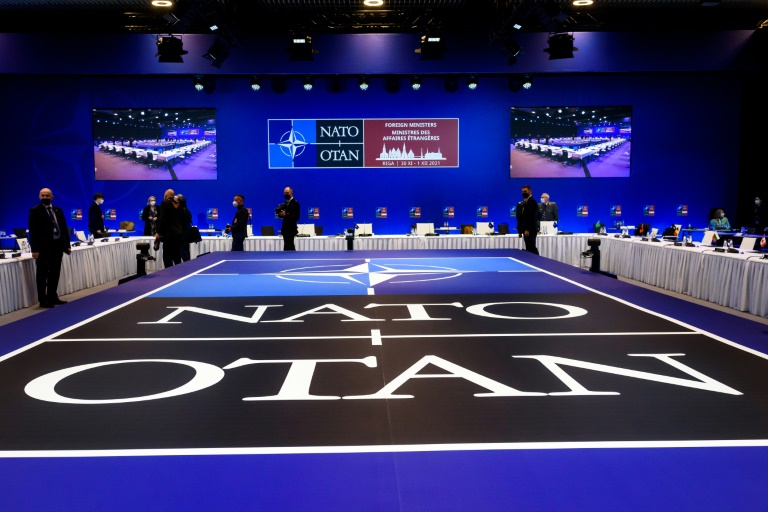
Finland and Sweden are expected to announce this week whether to apply to join NATO following Russia’s Ukraine invasion, in what would be a stunning reversal of decades-long non-alignment policies. 

The Nordic nations have been rattled by Moscow’s war against its pro-Western neighbour, which has bolstered domestic support for joining the military alliance — and the security that membership would provide. 

“It is 100 percent certain that Finland will apply, and quite likely that it will be a member by the end of the year”, researcher Charly Salonius-Pasternak of the Finnish Institute of International Affairs told AFP, with a majority in parliament backing membership.

Russia’s February 24 invasion of Ukraine has also led to a swift turnaround in Finnish and Swedish public opinion in favour of NATO membership, which until recently had little backing.

A poll published Monday by Finnish public broadcaster Yle showed that a record 76 percent of Finns now support joining the alliance, up from the steady 20 to 30 percent registered in recent years.

Public opinion has also surged in Sweden, albeit to lower levels, with around half of Swedes now in favour.

After weeks of intense political meetings at home and abroad, all signs now point to the two countries announcing a joint bid before the end of the week.

Sweden’s ruling Social Democratic Party said Monday it would announce its position on the NATO issue on May 15. A favourable stance would provide a clear parliamentary majority for an application.

Elisabeth Braw, an expert on Nordic countries’ defence at the American Enterprise Institute, told AFP that even though Stockholm appears more hesitant than Helsinki, she believes the two countries “will do the application at the same time”.

Traditionally accustomed to lengthy consensus-building debates on major issues, Sweden has been caught off-guard by Finland’s swift turnaround.

“The Social Democrats in Sweden have always said: ‘We’ll think about this when Finland joins’… because they thought Finland would never join”, Braw said.

– ‘Perfect timing’ –

Any NATO enlargement is bound to spark anger from Moscow, which has historically pushed back at any eastward expansion of the alliance and has strongly condemned any notions of Ukraine joining.  

But Moscow’s mounting warnings about the “political and military” consequences appear only to have strengthened Finland’s and Sweden’s resolve.

If Finland and Sweden do opt to join NATO, it will be in direct response to Moscow’s military aggression in Ukraine. 

And the alliance would move in right next door. Finnish membership would double NATO’s land border with Russia to around 2,600 kilometres (1,615 miles).

And if they do join, the timing could be advantageous for Sweden and Finland.   

“From a risk perspective, the timing is perfect”, Braw said. “Russia is so busy elsewhere, it would be very hard for Russia to respond militarily.”

In Finland, President Sauli Niinisto is expected to announce his “personal” opinion on the NATO question on Thursday, while Prime Minister Sanna Marin’s Social Democratic Party is due to announce its decision by Saturday at the latest.

According to Finnish daily Iltalehti, a committee made up of the president, prime minister and four other cabinet ministers is to meet Sunday to make the country’s final decision.

Asked by AFP, the Finnish government refused to comment on the report, saying the committee’s meeting dates were confidential information.

– Exercises –

On Sweden’s strategically-located Baltic Sea island of Gotland, Home Guard troops were last week called in for a special month-long training exercise, coinciding with annual military exercises taking place across Finland and Sweden next week.

With a professional army of 12,000, another 21,000 conscripts per year and a wartime force of 280,000 troops — in addition to powerful artillery and around 60 fighter jets — Finland’s military might is impressive for a country of just 5.5 million people.

And while the post-Cold War period was marked by deep cuts in defence spending, Sweden also has a modern army that already meets NATO standards, as well as a cutting-edge arms industry.

During the Cold War, Finland remained neutral in exchange for guarantees from Moscow that it would not invade. Sweden meanwhile has long maintained a policy of neutrality during conflicts, dating back to the Napoleonic wars.

And while the two countries have until now chosen to remain outside NATO, they have gradually inched closer to the alliance over the years, taking part in its Partnership for Peace Program and NATO-led peacekeeping missions.

“It is a huge shift in public opinion and in the political decision. But militarily it wouldn’t be, simply because they are already closely linked to NATO,” Shaw said.

“They will marry NATO after having cohabited with NATO”.

Close Bitnami banner
Bitnami