World

Queen to miss UK parliament opening for first time since 1963

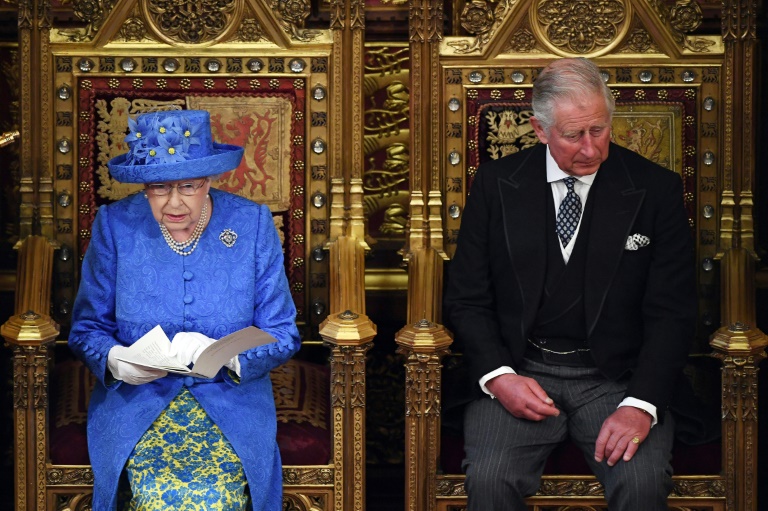
Head of state Queen Elizabeth II will miss Tuesday’s ceremonial opening of the UK parliament for the first time in nearly 60 years, handing the duty to her heir Prince Charles in a clear sign of the looming transition of power.

The 96-year-old monarch usually presides over the pomp-filled event and reads out her government’s legislative programme from a gilded throne in the House of Lords.

But Buckingham Palace said late Monday she would skip the annual showpiece on medical advice, making the decision “reluctantly” as she continues to experience “episodic mobility problems”. 

It is the latest in a string of cancelled public appearances caused by health problems and old age indicating her record-breaking 70-year reign is drawing to a close.

Charles will be accompanied at the high-profile state engagement by his eldest son, Prince William, who is second-in-line to the throne.

The queen has rarely been seen in public since spending an unscheduled night in hospital last October, and has complained of difficulties standing and walking. She also contracted Covid-19 in February.

She has missed only two state openings — in 1959 and 1963, when she was pregnant with Prince Andrew and then Prince Edward.

Her decision heightened fears that she may not be able to play a full part in public celebrations next month celebrating her Platinum Jubilee.

– ‘Historic moment’ –

In changes to the Westminster ceremony, Charles, who is 73, will not wear the queen’s imperial state crown even though he and Prince William will bring it by car, The Times reported.

Symbolically, the throne in the upper chamber of parliament where the queen usually sits to deliver her speech will remain empty.

Royal expert Robert Hardman wrote in the Daily Mail that the queen “remains very much in charge” but called the handover a “historic moment”.

The Times wrote that for Charles — the longest-serving heir to the throne in British history — this is “the nearest he has come to performing the duties he will one day undertake as king”.

It will be William’s first time attending the state opening, in another clear sign of the family preparing for a future beyond Elizabeth and Charles.

The queen announced last week she will not attend this summer’s royal garden parties, and has only appeared once in public since October — at the March 29 memorial service for her late husband Prince Philip, who died last year aged 99.

– ‘Back on track’ –

The queen’s absence has overshadowed the unveiling of the new parliamentary session in which Prime Minister Boris Johnson will try to reinvigorate his faltering government by unveiling its plans for the coming year.

Reeling from a series of scandals and dire results for his ruling Conservatives in local elections last week, he is promising 38 bills to get his agenda “back on track”, Downing Street said.

They will focus on boosting economic growth and paving the way for more “high-wage, high-skill jobs”, as well as tackling the spiralling cost of living.

The upcoming parliamentary session — the current government’s third — is one of Johnson’s last opportunities to deliver on his key policy promises before the next general election due by May 2024.

Johnson won an 80-seat majority in December 2019, vowing to reap rewards from Brexit and tackle decades of growing regional inequality.

Despite securing Britain’s withdrawal from the EU with a comprehensive trade deal, the coronavirus pandemic upended delivery of his domestic agenda.

His government was soon consumed by the pandemic and then sidetracked in recent months by various controversies, including the so-called “Partygate” scandal.

That saw Johnson become the first UK prime minister found to have broken the law while in office, after police ruled he and staff had breached Covid-19 lockdown rules.

He is now hoping his legislative programme can help draw a line under his recent woes, not least the loss of nearly 500 councillors across England, Wales and Scotland last week.

But he faces a daunting challenge as the growing cost-of-living crisis begins to bite, with bleak economic forecasts.
'Rich also cry': Russia's sanctioned oligarchs lose luxuries

From superyachts and mansions to private jets and works of art, mega-rich Russians are being deprived of their expensive playthings, under swingeing sanctions that implicate them in Vladimir Putin’s war in Ukraine.

The seizing and freezing of assets is proving the toughest trial yet for the Kremlin-favoured “oligarchs”, many of whom got rich on the back of the collapse of the Soviet Union.

In Britain, more than 100 oligarchs and their families have been slapped with restrictions. The United States has sanctioned 140 and the European Union more than 30.

UK Transport Secretary Grant Shapps has said the move was designed to hit them where it hurts — denying them “access to their luxury toys”.

The British capital has for years been dubbed “Londongrad” after becoming a haven for Russians to keep their money, educate their children and pursue litigation.

“The welcome mat is now being taken away from Russian oligarchs,” The Economist wrote.

Even the high-profile Roman Abramovich has been targeted, forcing him to put Chelsea Football Club, which he bought in 2003, up for sale.

But acting against so many in a highly globalised major economy is “totally uncharted territory”, said researcher Alex Nice, from the Institute for Government think-tank.

Whenever the war ends, a deep rift between the West and Russia will remain, even if the assets are just frozen, rather than expropriated, he added. 

“There doesn’t seem to be any prospect that these sanctions will be lifted any time soon,” said Nice.

In Moscow, the independent Russian political analyst Konstantin Kalachev said Putin’s “special operation” in Ukraine could last “for years” — and even be widened to fulfil his dream of recreating the Russian empire.

If the decision is down to Ukraine, “they will never lift them (sanctions)”, he told AFP.

– Avalanche –

There’s no question that the sanctions have hit home.

Forbes magazine last month removed 34 Russians from its annual billionaire list citing the “avalanche of sanctions”.

“The war is an absolute disaster for them,” said Elisabeth Schimpfoessl, a lecturer in sociology at Aston University in Birmingham, central England, and author of a book called “Rich Russians”.

Petr Aven, known for his extensive collection of Russian art, told The Financial Times newspaper he was unsure if he was “allowed to have a cleaner or a driver” and faced expulsion from the UK.

His long-term business partner, Mikhail Fridman, told Bloomberg news agency he was “in shock” and also struggling to pay a cleaner.

Many oligarchs have multiple citizenships and are not rushing back to Russia.

The West has been a “base that they can go to at any moment when they fear prosecution in Russia”, said Schimpfoessl.

“Oligarchs never bothered developing Russia’s rule of law.”

– Soap opera –

The scale of assets targeted is staggering.

The UK government estimates that Abramovich alone is worth over £9 billion ($11 billion, 10.5 billion euros).

It has also targeted two of his associates worth up to £10 billion.

Abramovich is rumoured to own half a dozen luxury superyachts, two of which docked in Turkey in March, thereby avoiding sanctions.

EU members have reported freezing nearly $30 billion in Russian assets, including almost $7 billion in yachts, helicopters, property and works of art.

Washington has said it has sanctioned or blocked boats and aircraft worth over $1 billion.

US President Joe Biden has proposed permanent sanctions, saying oligarchs should not be allowed to enjoy luxuries while Ukrainian children die.

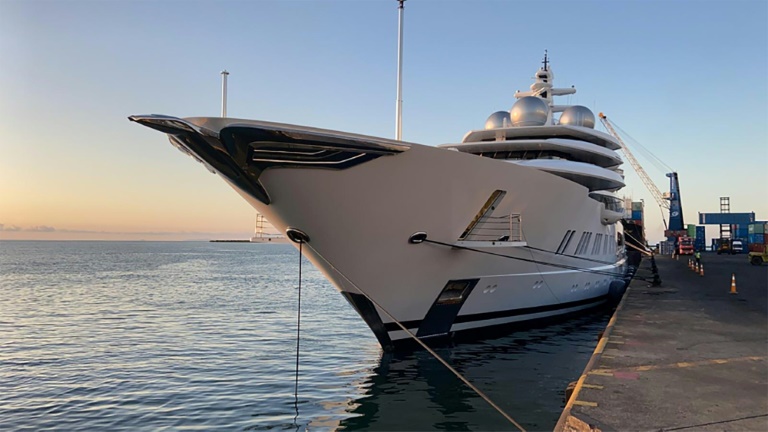
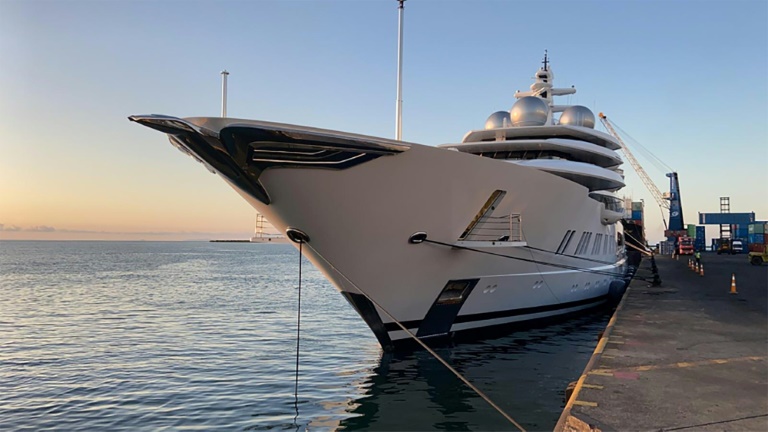
In Fiji last week, police seized a 348-foot (106-metre) yacht called “Amadea” worth some $300 million and linked to Suleiman Kerimov, a reticent billionaire senator, on Washington’s request.

Images of impounded yachts and shuttered mansions of Putin cronies prompt Schadenfreude in Russia, too.

“Ordinary Russians like to see ‘the rich also cry’,” said Kalachev, citing a Mexican soap opera Russians watched in the early 1990s.

What is not clear is whether sanctions affect Moscow’s decisions.

They cannot influence Putin, because he meets such business figures “only to tell them things — it’s not a dialogue”, argued Kalachev.

“The record of using economic coercion to try to force change in foreign policy is not a good one,” said Nice.

But sanctions “are undoubtedly going to weaken Russia’s capacity to fight”, he added.

– Opposition –

Abramovich has been involved in talks aimed at ending the war, with consent of both sides. Other oligarchs have criticised the conflict.

On Instagram the UK-sanctioned entrepreneur and banker Oleg Tinkov slammed “this crazy war” and Russia’s “shitty army”.

Fridman urged an end to the bloodshed and Oleg Deripaska, sanctioned by the UK, the EU and the US, said continuing fighting was “madness”.

But experts questioned the likelihood of them allying against Putin.

“It’s hard to see that happening,” said Nice. 

“It would not be in their interests ever to speak out against Putin prematurely,” said Schimpfoessl.

'Rich also cry': Russia's sanctioned oligarchs lose luxuries

From superyachts and mansions to private jets and works of art, mega-rich Russians are being deprived of their expensive playthings, under swingeing sanctions that implicate them in Vladimir Putin’s war in Ukraine.

The seizing and freezing of assets is proving the toughest trial yet for the Kremlin-favoured “oligarchs”, many of whom got rich on the back of the collapse of the Soviet Union.

In Britain, more than 100 oligarchs and their families have been slapped with restrictions. The United States has sanctioned 140 and the European Union more than 30.

UK Transport Secretary Grant Shapps has said the move was designed to hit them where it hurts — denying them “access to their luxury toys”.

The British capital has for years been dubbed “Londongrad” after becoming a haven for Russians to keep their money, educate their children and pursue litigation.

“The welcome mat is now being taken away from Russian oligarchs,” The Economist wrote.

Even the high-profile Roman Abramovich has been targeted, forcing him to put Chelsea Football Club, which he bought in 2003, up for sale.

But acting against so many in a highly globalised major economy is “totally uncharted territory”, said researcher Alex Nice, from the Institute for Government think-tank.

Whenever the war ends, a deep rift between the West and Russia will remain, even if the assets are just frozen, rather than expropriated, he added. 

“There doesn’t seem to be any prospect that these sanctions will be lifted any time soon,” said Nice.

In Moscow, the independent Russian political analyst Konstantin Kalachev said Putin’s “special operation” in Ukraine could last “for years” — and even be widened to fulfil his dream of recreating the Russian empire.

If the decision is down to Ukraine, “they will never lift them (sanctions)”, he told AFP.

– Avalanche –

There’s no question that the sanctions have hit home.

Forbes magazine last month removed 34 Russians from its annual billionaire list citing the “avalanche of sanctions”.

“The war is an absolute disaster for them,” said Elisabeth Schimpfoessl, a lecturer in sociology at Aston University in Birmingham, central England, and author of a book called “Rich Russians”.

Petr Aven, known for his extensive collection of Russian art, told The Financial Times newspaper he was unsure if he was “allowed to have a cleaner or a driver” and faced expulsion from the UK.

His long-term business partner, Mikhail Fridman, told Bloomberg news agency he was “in shock” and also struggling to pay a cleaner.

Many oligarchs have multiple citizenships and are not rushing back to Russia.

The West has been a “base that they can go to at any moment when they fear prosecution in Russia”, said Schimpfoessl.

“Oligarchs never bothered developing Russia’s rule of law.”

– Soap opera –

The scale of assets targeted is staggering.

The UK government estimates that Abramovich alone is worth over £9 billion ($11 billion, 10.5 billion euros).

It has also targeted two of his associates worth up to £10 billion.

Abramovich is rumoured to own half a dozen luxury superyachts, two of which docked in Turkey in March, thereby avoiding sanctions.

EU members have reported freezing nearly $30 billion in Russian assets, including almost $7 billion in yachts, helicopters, property and works of art.

Washington has said it has sanctioned or blocked boats and aircraft worth over $1 billion.

US President Joe Biden has proposed permanent sanctions, saying oligarchs should not be allowed to enjoy luxuries while Ukrainian children die.

In Fiji last week, police seized a 348-foot (106-metre) yacht called “Amadea” worth some $300 million and linked to Suleiman Kerimov, a reticent billionaire senator, on Washington’s request.

Images of impounded yachts and shuttered mansions of Putin cronies prompt Schadenfreude in Russia, too.

“Ordinary Russians like to see ‘the rich also cry’,” said Kalachev, citing a Mexican soap opera Russians watched in the early 1990s.

What is not clear is whether sanctions affect Moscow’s decisions.

They cannot influence Putin, because he meets such business figures “only to tell them things — it’s not a dialogue”, argued Kalachev.

“The record of using economic coercion to try to force change in foreign policy is not a good one,” said Nice.

But sanctions “are undoubtedly going to weaken Russia’s capacity to fight”, he added.

– Opposition –

Abramovich has been involved in talks aimed at ending the war, with consent of both sides. Other oligarchs have criticised the conflict.

On Instagram the UK-sanctioned entrepreneur and banker Oleg Tinkov slammed “this crazy war” and Russia’s “shitty army”.

Fridman urged an end to the bloodshed and Oleg Deripaska, sanctioned by the UK, the EU and the US, said continuing fighting was “madness”.

But experts questioned the likelihood of them allying against Putin.

“It’s hard to see that happening,” said Nice. 

“It would not be in their interests ever to speak out against Putin prematurely,” said Schimpfoessl.

EBRD bank sees worse Ukraine economic downturn in 2022

The Ukrainian economy is set to contract by almost one third this year in the wake of Russia’s invasion, the European development bank said Tuesday.

Ukraine output is set to contract 30 percent compared with an EBRD forecast of minus 20 percent given in March shortly after Moscow’s military offensive.

“The 30 percent decline forecast is due to the fact that the war has been taking place on the territory that is responsible for 60 percent of (Ukraine) GDP,” the bank’s chief economist Beata Javorcik explained to AFP in an interview.

The European Bank for Reconstruction and Development added that Ukraine’s economy would rebound 25 percent in 2023, up from its March forecast of 23 percent.

A Russian blockade has severely hurt Ukraine’s key agricultural sector as the country is a major exporter of wheat and sunflower oil, raising concerns that it could spark hunger in other parts of the world. 

“I don’t think there are food shortages — that is very important to stress,” Javorcik said.

“Typically when you observe famine they are not due to shortages of food but… to distribution.”

She pointed out that wheat could be sourced also from major producer the United States.

The war has put a brake also on Ukraine’s deliveries of cables imported by European carmakers.

– Russia contraction –

The EBRD added that the economy of sanctions-hit Russia would contract 10 percent this year and post zero growth next year — in unchanged estimates from March.

Tuesday’s forecasts were announced as the bank opened its annual conference in the Moroccan city Marrakesh.

Founded in 1991 to help former Soviet bloc countries switch to free-market economies, the EBRD has since extended its reach, including to countries in the Middle East and North Africa.

The London-based bank on Tuesday also forecast lower-than-expected growth in its regions of operations combined.

“The revision since March is driven mostly by a larger-than-previously-expected contraction in Ukraine as the war drags on,” it said.

Output in the EBRD regions was set for growth of 1.1 percent this year, down on expansion of 1.7 percent seen shortly after the February invasion.

“Projections are subject to major downside risks should hostilities escalate or should exports of gas or other commodities from Russia become more restricted,” the bank cautioned.

It noted that “in addition to the impact of high food, energy and metals prices, some economies in the EBRD regions are further affected through trade, tourism and migration-remittance links to Russia”.

Russian ally Belarus, which has been hit also by Western sanctions, would see its economy contract four percent this year, the EBRD said.

In March, it had forecast a three-percent contraction for Belarus, which borders Ukraine and Russia.

Following the invasion, the EBRD in April suspended access to financing and expertise for Russia and Belarus.

The organisation, which has repeatedly condemned Russia’s invasion of Ukraine, also announced that it was closing its Moscow and Minsk offices.

The EBRD — which invests alongside the private sector — has not undertaken any new investment projects in Russia since 2014, when Moscow invaded and then annexed Crimea.

– Refugee impact –

The lender in March unveiled a two-billion-euro “resilience” package to help citizens, companies and countries affected by the war in Ukraine, including those hosting refugees.

While host countries are pressured by additional costs to their public services, in the long term migrants who settle permanently “increase trade and investment” between their country of origin and new residence, according to Javorcik. 

“People who leave their countries, it’s not the very poor” as they need money to travel, she pointed out.

“They tend to me more entrepreneurial-educated” and offer an “influx of skills that increases the labour force”. 

South Korea's Yoon calls on North to trade nukes for aid

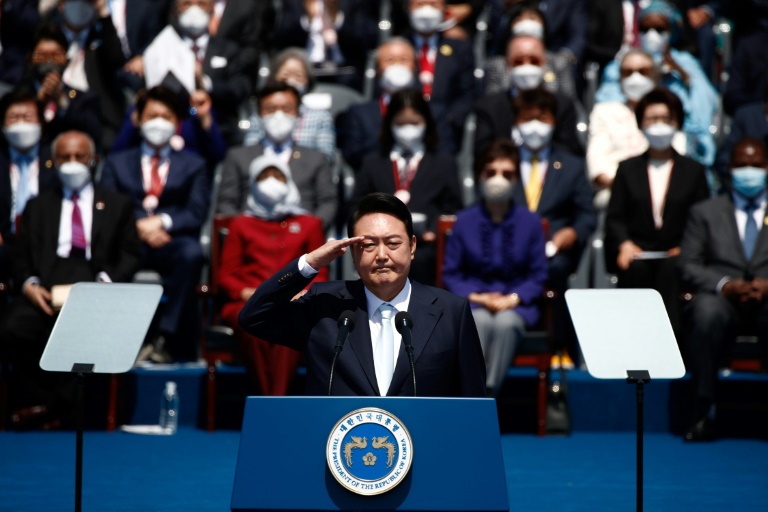
South Korea’s new leader Yoon Suk-yeol on Tuesday called on the North to give up its nuclear weapons in exchange for massive economic aid, describing Pyongyang’s missiles as a threat to regional and global security.

Yoon, 61, who started work in an underground bunker with a briefing on North Korea, takes office at a time of high tensions on the peninsula, with Pyongyang conducting a record 15 weapons tests since January, including two launches last week.

The former prosecutor, who won the election by a razor-thin margin in March, said in his inaugural speech that he would consider sending transformative levels of economic aid to the North — but only if Pyongyang first gives up its nuclear weapons.

“If North Korea genuinely embarks on a process to complete denuclearisation, we are prepared to work with the international community to present an audacious plan that will vastly strengthen North Korea’s economy and improve the quality of life for its people,” he said.

Yoon’s predecessor Moon Jae-in pursued a policy of engagement with Pyongyang, brokering summits between North Korean leader Kim Jong Un and then US president Donald Trump. But talks collapsed in 2019 and diplomacy has stalled since.

“While North Korea’s nuclear weapon programmes are a threat not only to our security and that of Northeast Asia, the door to dialogue will remain open so that we can peacefully resolve this threat,” Yoon added.

But the offer of “audacious” aid is a dud, analysts say: North Korea, which invests a vast chunk of its GDP into its weapons programmes, has long made it clear it will not make that trade.

“Since 2009, North Korea has stated it will not give up its nukes for economic incentives,” Park Won-gon, a professor at Ewha University, told AFP.

“Yoon’s comment will only trigger Pyongyang, who will see it as an attack.”

Kim does not want massive economic growth because achieving this would require opening up North Korea’s information ecosystem, said Chad O’Carroll of Seoul-based specialist site NK News.

“Ideological pollution would rapidly steep in, a key risk for Pyongyang’s ruler… Yoon’s denuclearisation plans won’t go anywhere… because the ‘carrot’ is actually poisonous,” he wrote on Twitter.

– Unpopular move –

During his inauguration speech, Yoon said South Korea was facing “multiple crises”, citing the Covid-19 pandemic, global supply chain issues, economic woes and new armed conflicts.

“Such complex, multi-faceted crises are casting a long and dark shadow over us,” Yoon said, adding that he was confident the country would emerge from its current difficulties.

But Yoon is not likely to have an easy ride, taking office with some of the lowest approval ratings of any democratically elected South Korean president at 41 percent, according to a Gallup poll.

The biggest reason for Yoon’s unpopularity, the survey found, was his decision to move the presidential office from the decades-old Blue House to the former defence ministry in downtown Seoul.

The hasty, expensive move soured public sentiment, with critics claiming it was unnecessary and a security risk.

Yoon said the Blue House, on a site used by the Japanese colonial administration from 1910 to 1945, was a “symbol of imperial power”, claiming the relocation would ensure a more democratic presidency.

The Blue House grounds will be opened to the public as a park.

The inauguration was held outside Seoul’s National Assembly, featuring marching army bands, soldiers in ceremonial dress, and a 21-gun salute.

Around 40,000 people attended with local reports saying it was the country’s most expensive such event by far, at 3.3 billion won ($2.6 million).

US President Joe Biden — who is set to visit Seoul later this month — sent a high-profile delegation headed by Douglas Emhoff, husband of US Vice President Kamala Harris.

Japan and China also sent high-level representatives, with Yoon saying he wanted to mend sometimes fractious relations with regional powers.

“At a time when the rules-based international order is under threat, the strategic collaboration between Japan and South Korea… is needed more than ever,” Japan’s Foreign Minister Yoshimasa Hayashi said after attending the inauguration. 

Trickling stream offers lifeline to survivors of Ukraine war zone

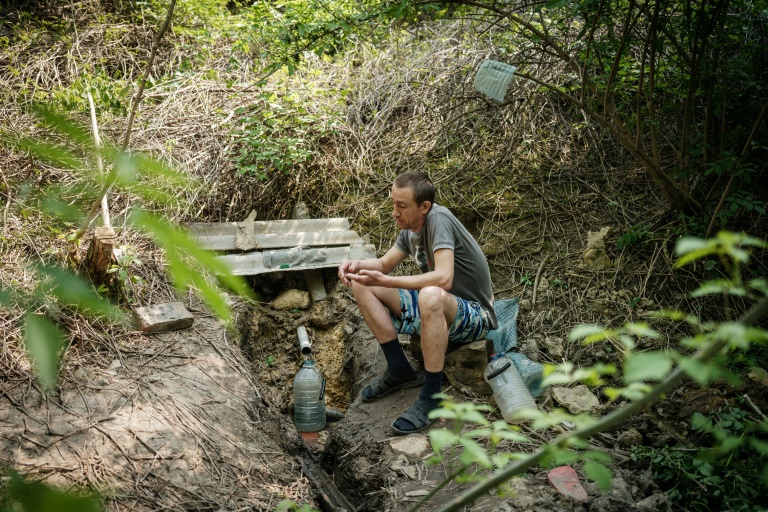
The water trickling from a pipe sticking out of a mound of dirt in Ukraine’s besieged city of Lysychansk offered the last lifeline to the emaciated bricklayer’s family of nine.

Artyom Cherukha crouched and listened to the shells whistling between shifting Russian and Ukrainian positions around him while slowly filling his plastic bottles from the natural spring.

A man-sized tail end of an Uragan missile hung between some branches of a tree a few steps above his leafy ravine.

But the 41-year-old seemed oblivious to the fact that the weapon could unleash  death and destruction overhead.

He waited for the drips of water with his elbows planted on his knees and stared without moving.

“I feel total apathy. I am morally starved — not to mention physically,” he said in a voice devoid of emotion.

“We sit here counting the bombs.”

– ‘It can hit anywhere’ –

A crescent of industrial cities across Ukraine’s eastern front — populated by an untold number of residents hiding in cellars and basements — are steadily losing access to water and food.

Lysychansk was an important coal mining centre with centuries-old churches and 100,000 workers before Russia invaded its pro-Western neighbour on February 24.

The city’s ghostly streets now stand in ruins while its surrounding roads are being shelled with a ferocity that has forced all humanitarian supply missions to stop.

The highways leading out of Lysychansk and its sister city Severodonetsk are witnessing an organised retreat by some of Ukraine’s most hardened units and their biggest guns.

The few vehicles speeding in at breakneck speed to try and avoid the rockets and mortar fire appear to be primarily linked to rescue operations for Ukraine’s wounded troops.

Some of the residents trapped inside who come out to catch a glimpse of the sun and fill their bottles from the stream have the glazed look of shock.

“There is no water in the city. We come here because that is all there is,” welder Andriy Tytyunkov said in a halting voice.

“But when the bombing is really bad, you have to stay inside,” the 39-year-old said. “If it gets really heavy, it can hit anywhere.”

–  ‘Repairs not possible’  –

Generations of Lysychansk residents in the northern part of the city facing Severodonetsk have been coming to their hidden spring in critical times.

Locals said this happened in World War II and then again when Russian-backed insurgents overran parts of Ukraine’s east in 2014.

The city’s civil-miliary administration attributed the current water stoppage to unspecified damage that could not be repaired until the fighting stopped.

“There will be no water in the city until the end of the war. Repairs are not possible,” the administration announced on its social media feeds late last month.

The spring offers salvation — of a sort.

Its water must first penetrate chemicals-filled earth from one of the most polluted corners of eastern Europe.

Another ravine next to the spring is filled with a bubbly waste streaming out of one of the city’s numerous industrial plants.

“It needs to be boiled,” former sailer Volodymyr Ivanov said while holding up his bottle against the sun.

“It looks fairly clean but no one has ever tested it. Who knows what is inside.”

– ‘Almost no food’ –

Yet even the simple task of boiling water becomes a life-threatening dilemma in times of war.

Cherukha boils his on a counter top because the city still has gas. A cut would force him to start building fires in his yard.

“But people are too scared to do that. Someone will see you there and might decide to shoot. You just never know how people’s minds work these days,” he said.

Then there is the lack of food.

Cherukha said the last humanitarian supplies reached the city at the start of last week.

“We have almost completely run out. I am dead serious,” he said with a nod of the head.

“My kids are little and run around smiling and laughing. Laughing is good. But they do not understand,” Cherukha said.

He expects his supplies to last him another two or three days.

“Even if we try our best to stetch it out and feed the children once a day, we would only have enough for three days. How do you tell your children there is nothing to eat?”

Freed Taiwan activist recounts 'fascist circus' of Chinese court

A Taiwanese democracy activist, jailed in China for five years, on Tuesday described the court proceedings as a “fascist circus” and said he was told he might be released if he admitted to being a spy. 

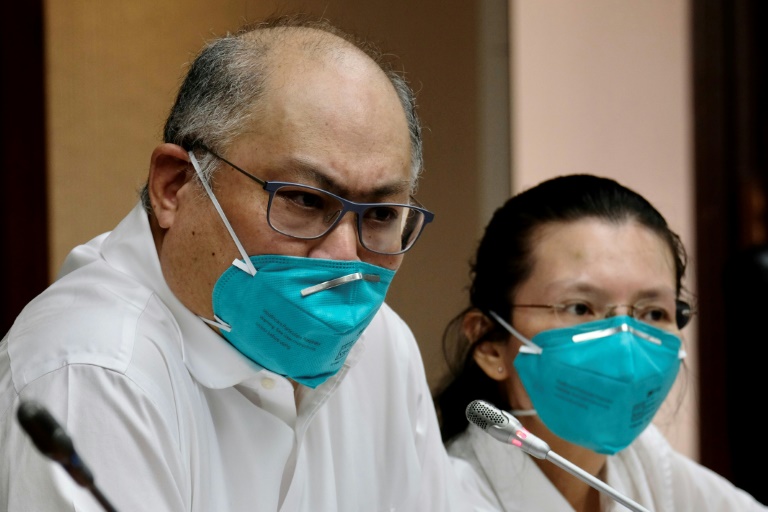
Lee Ming-che spoke publicly for the first time since returning to Taipei last month, following a national security conviction that further strained already tense relations between Taipei and Beijing. 

The 47-year-old was jailed in central China in 2017 for “subverting state power” and said he faced long days of forced labour while in prison.

He was arrested during a trip to the mainland and held incommunicado for months before his fate was revealed.

Lee said Chinese national security officials demanded he confess to being an agent hired by the Taiwanese government, hinting that doing so would lead to a swifter release because the two sides had previously “swapped spies”. 

“But I firmly refused to admit to the spying charge they wanted me to admit and instead I admitted to the ridiculous subversion charge,” he told reporters.

“Subversion is a personal act while spying implicates the whole Taiwanese government and I cannot betray my country,” he added.

China’s opaque courts answer to the Communist Party and have a near-100 percent criminal conviction rate. National security cases are shrouded in even more secrecy than regular prosecutions.

Lee pleaded guilty during his trial, stating that he had written and distributed articles online that criticised China’s ruling Communist Party and promoted democracy. 

“We all know that the law in China is not used to protect people’s rights, it’s a tool to make the people unconditionally obey the state’s rule,” he said. 

“The so-called open trial is actually a fascist circus.”

– ‘Slavery sweatshop’ –

Lee said he bought books and supplies and donated money to some Chinese political prisoners and their families, as well as visiting them on the mainland. 

“My actions are very normal in Taiwan or any democratic society… I didn’t expect China would view my humanitarian acts as grossly as subverting state power,” he said.

He was sent to Chishan Prison in Hunan province where Lee said he initially had to work 11 to 12 hours daily all year round, except for a four-day lunar new year break. 

Food often smelt “rotten” when it cooled and he was initially without hot water during Hunan’s bitter winters.

“Chishan is like a big factory… It’s a total slavery sweatshop,” Lee said, adding the prison produces gloves, shoes, bags and backpacks.

China’s prisons have long deployed forced labour programmes for inmates, something that has received increased international scrutiny following the construction of a vast detention system in western Xinjiang province. 

Lee was accompanied Tuesday by his wife Lee Ching-yu who campaigned hard for her husband’s release. 

Lee said he believed that campaign kept public focus on his case and helped improve his treatment.

Asked if he had anything to say to the Chinese government, Lee replied with a pro-independence slogan in Taiwan: “Taiwan, China, one country on each side”.

China claims self-ruled democratic Taiwan as its own and vows to seize it one day, by force if necessary.

Beijing has ramped up pressure on Taiwan since President Tsai Ing-wen came to power on the island in 2016, as she views Taiwan as an “already independent” sovereign nation and not part of Chinese territory. 

Asian stocks fall on Wall Street rout, oil prices tumble

Asian equities mostly sank Tuesday and oil prices tumbled following a rout on Wall Street as anxieties were fanned over rising US interest rates, surging inflation and the impact of China’s prolonged Covid lockdowns.

Stock markets have been on a tempestuous ride this year, with Wall Street suffering another hit on Monday as the tech-rich Nasdaq slumped more than four percent, while the S&P 500 ended below 4,000 points for the first time since March 2021. 

Steep declines in China’s April exports — due to Beijing’s staunch adherence to a zero-Covid policy that has placed millions under lockdown — and volatility in crude partly due to Russia’s war in Ukraine have also hastened selling.

“This rather precipitous drop in equity markets has been building for several months,” said Clifford Bennett, chief economist at ACY Securities.

“The fundamentals of war, inflation, rate hikes and supply-chain disruption are all individually significant headwinds. When combined, equity markets have no way through.”

US stock markets took a dive late last week after the Federal Reserve raised interest rates by a half-percentage point and flagged more aggressive hikes ahead to tackle decades-high inflation.

Stoking global inflationary pressures are lockdowns in dozens of locations across China — from the manufacturing hubs of Shenzhen and Shanghai to the breadbasket province of Jilin — wreaking havoc on supply chains over recent months.

By Tuesday afternoon, the equities plunge in Asia had eased, and European stocks in Frankfurt, Paris and London rebounded as dip buyers sent markets rallying after the wreckage from Monday’s rout. 

“For now, investors need to be prepared for continued volatility,” Americas chief investment officer at UBS Global Wealth Management Solita Marcelli wrote in a note, according to Bloomberg.

Tokyo on Tuesday closed down 0.6 percent and Hong Kong slumped 1.84 percent as traders fretted over US monetary tightening. Drops seen in Seoul, Wellington, Singapore and Jakarta also eased on the close of day. 

“Risk markets remain on shaky ground,” said Stephen Innes of SPI Asset Management. 

– Bitcoin woes –

Bitcoin also slumped to as low as $29,764. The digital currency has lost more than half its value since a November surge saw it hit a record of nearly $69,000.

Such a drastic drop in its value has not been seen since July 2021. By the afternoon, it saw a rebound as markets calmed.

Analysts say traditional investors tend to view bitcoin as a riskier asset and have been offloading it along with other digital tokens in response to growing fears of market volatility.

Crude — once considered a relative safe haven — also took a beating Monday when it plunged more than five percent, with the European benchmark Brent North Sea crude dropping to $106.77 per barrel, while the main US contract WTI was at $103.87.

By Tuesday, the drop-off had eased — though crude was still lower, with Brent trading at around $105.72 and WTI at $102.97.

“There is nowhere to hide right now. If you are looking for green on the screen, it is very minimal, especially in the tech sector,” Victoria Greene, chief investment officer at G Squared Private Wealth, told Bloomberg.

– Key figures at around 0830 GMT –

Hong Kong – Hang Seng Index: DOWN 1.8 percent at 19,633.69 (close)  

Shanghai – Composite: UP 1.1 percent at 3,035.84 (close)

London – FTSE 100: UP 0.9 percent at 7,278.64

Tokyo – Nikkei 225: DOWN 0.6 percent at 26,167.10 (close)

Brent North Sea crude: UP 0.6 percent at $103.86 per barrel

West Texas Intermediate: UP 0.7 percent at $103.86 per barrel

Euro/dollar: UP at $1.0565 from $1.0563 on Monday 

Pound/dollar: UP at $1.2336 from $1.2331

Euro/pound: FLAT at 85.64 pence from 85.64 pence

Dollar/yen: DOWN at 130.10 yen from 130.26 yen

New York – Dow: DOWN 2.0 percent at 32,245.70 (close)

Sony logs record full-year sales but keeps forecast cautious

Sony on Tuesday reported its best-ever sales in the financial year to March thanks to strong results in movies, electronics and music, but offered a cautious forecast as supply chain disruption continues.

A lockdown-fuelled gaming boom has slowed, and the Japanese giant saw net profit dip 14 percent from the previous year’s record high.

But that was offset in part by strong showings from other entertainment sectors, with “Spider-Man: No Way Home” overtaking “Avatar” as North America’s third-highest-grossing film ever.

Demand for sensors used in smartphone cameras has also continued to soar, and Sony Music scored a winner with Adele’s latest album “30”.

The conglomerate reported full-year sales for 2021-22 of 9.9 trillion yen ($76 billion) and net profit of 882 billion yen.

In 2020-21, Sony logged a record net profit of more than a trillion yen, partly thanks to tax gains and the explosion of gaming during Covid-19 lockdowns.

The 10 percent increase in sales from 8.99 trillion yen in 2020-21 “was mainly due to significant increases in sales in the pictures, electronics products and solutions and music segments”, Sony said.

Sony has benefited from a recent slide in the yen against the dollar, with the Japanese currency hitting 20-year lows against the greenback this year.

“Sony has sizable international sales, which expand when the yen depreciates,” Hideki Yasuda, senior analyst at Toyo Securities, told AFP before the earnings release.

It also saw favourable business environments for sectors including music and movies balance out weaker performances elsewhere.

“Sony is really turning into a content company now, from its previous status as an electronics manufacturer,” said Yasuda.

For the year to March 2023, Sony offered cautious forecasts, with net profit projected to slip six percent to 830 billion yen, though sales are expected to rise 15 percent to 11.4 trillion yen.

– PlayStation 5 woes –

The company also announced a share buyback of up to 200 billion yen ($1.5 billion) as tech stocks take a beating.

“In the current fiscal year, the demand environment is expected to be more severe than in recent years due to the situation in Ukraine and Russia and the slowdown in the global economy caused by rapid inflation,” warned Sony chief financial officer Hiroki Totoki.

Sony has faced challenges rolling out its PlayStation 5 console, which remains difficult to get hold of 18 months after its launch — in part due to supply chain disruption including the global chip shortage.

“Inventory levels are at a very low level,” acknowledged Totoki, saying demand is higher than the production projection of 18 million units for the current financial year.

Serkan Toto, an analyst at Kantan Games in Tokyo, said he does not “see any kind of problem for Sony in the gaming world or in the gaming market, except for the supply chain issues”.

“It’s impossible to get a PlayStation 5. It’s ridiculous,” he added.

Sony sold 11.5 million PS5s last year, and Totoki said the firm was adapting to weather ongoing supply chain issues, including Covid lockdowns in China. 

“We have changed our source of procurements and design. We are getting used to these kinds of changes,” he said.

But he said the firm expects it to take three months for the lockdown situation in Shanghai to normalise and it remains “difficult to predict” how virus measures will evolve in China.

Sony is locked in a battle for gaming supremacy with US rival Microsoft, which is seeking regulatory approval for its landmark $69 billion deal to buy “Call of Duty” and “Candy Crush” maker Activision Blizzard.

The merger will make Microsoft the third-largest gaming company by revenue, behind Tencent and Sony — marking a major shift in the booming industry.

Sony has sought to keep up through its own acquisitions, including Montreal-based game company Haven Entertainment Studios and a $3.6 billion deal for Bungie, creator of hits such as “Halo” and “Destiny”.

Nintendo annual net profit solid but outlook cautious

Nintendo on Tuesday reported a solid net profit for the financial year to March on the strong performance of its blockbuster Switch console, but issued a cautious forecast.

Uncertainties linked to the global chip shortage and potential production and transport delays caused by Covid-19 lockdowns could hit future profits, the Japanese gaming giant warned.

The company, which has benefited from a string of popular titles including “Pokemon Legends: Arceus”, posted a 2021-22 net profit of 477.7 billion yen ($3.7 billion), down just 0.6 percent on-year.

But it expects net profit for the current financial year of 340 billion yen, a yearly drop of around 29 percent.

Nintendo’s profits were sent soaring by a boom in demand for video games during the pandemic and the runaway popularity of the Switch, which was launched in March 2017.

It also released the Switch Lite in 2019 and the Switch OLED, with upgraded graphics and memory, in October 2021.

Growth in sales of these consoles “demonstrated a good balance between each of the three individual models”, Nintendo said.

“As a result of stable performance among the overall hardware lineup, final sales totaled 23.06 million units” in the last financial year, it added.

Nintendo said software sales also grew 1.8 percent on-year to 235 million units, “making it the highest annual software sales figure ever posted for a Nintendo platform to date”.

Highlights included “Mario Party Superstars” and its three Pokemon titles. The most popular was “Pokemon Legends: Arceus”, which sold 12.6 million units in the last financial year, it said.

– Supply chain woes –

Hideki Yasuda, senior analyst at Toyo Securities, told AFP Nintendo is “doing very well”, calling the weaker yen and the strong performance of Arceus a “double benefit”.

But he warned that the company may find itself “unable to make hardware and unable to move products” as cargo ships wait in waters off Shanghai, which is under lockdown as China tries to stamp out Covid-19.

Nintendo said that “if Covid-19 interferes with production or transportation in the future, this might impact the supply of products”, warning that production may also be affected by the chip shortage.

Serkan Toto, an analyst at Kantan Games in Tokyo, said the Switch has been key to Nintendo’s success.

“For the first time in over 30 years, Nintendo is only focusing on one system,” instead of dividing its resources between different businesses such as TV consoles and handheld gaming devices, he said.

Close Bitnami banner
Bitnami