World

South Korea's Yoon calls on North to give up nukes

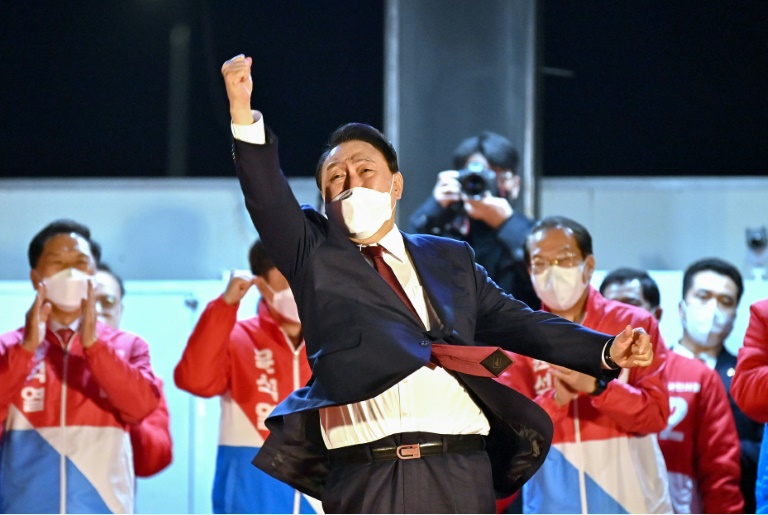
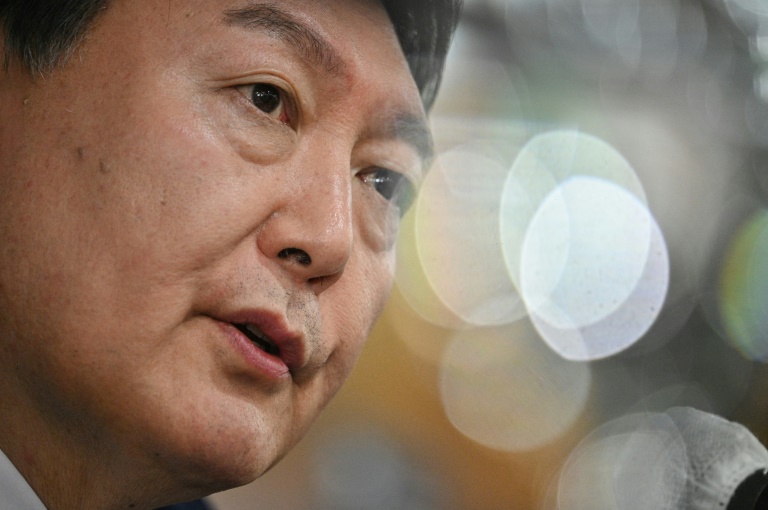
South Korea’s new President Yoon Suk-yeol called for the “complete denuclearisation” of the North at his swearing-in on Tuesday, describing Pyongyang’s weapons as a threat to regional and global security.

Yoon, 61, who started work in an underground bunker with a security briefing on North Korea, took office at a time of high tensions on the peninsula, with Pyongyang conducting a record 15 weapons tests since January, including two launches last week.

In his inaugural speech, he said he would consider sending significant economic aid to the North, but only if Pyongyang first gives up its nuclear programme — a demand that is anathema to Kim Jong Un and will likely stymie any chances of dialogue, according to analysts.

“If North Korea genuinely embarks on a process to complete denuclearisation, we (will) present an audacious plan that will vastly strengthen North Korea’s economy and improve the quality of life for its people,” Yoon said.

Kim’s missiles and nukes were a threat to South Korean, regional and global security, he said, adding: “The door to dialogue will remain open so that we can peacefully resolve this threat.”

Yoon’s conservative administration looks set to usher in a more muscular foreign policy for the world’s 10th-largest economy, after the dovish approach pursued by his predecessor Moon Jae-in during his five years in office.

Under Moon, Seoul pursued a policy of engagement with Pyongyang, brokering summits between Kim and then-US president Donald Trump. But talks collapsed in 2019 and diplomacy has stalled since.

Yoon is not likely to have an easy ride, taking office with some of the lowest approval ratings — around 41 percent, according to a recent Gallup poll — of any democratically elected South Korean president.

He has relocated the presidential office from the decades-old Blue House, which soured public sentiment as many view the costly move as unnecessary.

Yoon said the Blue House, located at a site used by the Japanese colonial administration from 1910 to 1945, was a “symbol of imperial power”, claiming the relocation would ensure a more democratic presidency.

The Blue House grounds will be opened to the public as a park, and during the inauguration ceremony, footage of people walking up to the once-fortified compound was broadcast live.

– ‘Never succumbed’ –

The formal inauguration ceremony was staged outside Seoul’s National Assembly, featuring marching army bands, soldiers in ceremony dress, and a 21-gun salute.

During his inauguration speech, Yoon said that South Korea was facing “multiple crises,” citing the pandemic, global supply chain issues and economic woes, and “complex” armed conflicts and wars.

“Such complex, multi-faceted crises are casting a long and dark shadow over us,” he said, adding that he was confident the country would emerge from its current difficulties.

“Koreans never succumbed; we became stronger and wiser,” he said.

Around 40,000 people attended the massive inauguration ceremony, which local reports said was the country’s the most expensive such event by far, at 3.3 billion won ($2.6 million).

Moon and impeached former president Park Geun-hye — recently pardoned and released from jail by Moon — both attended the ceremony.

US President Joe Biden designated Douglas Emhoff, husband of US Vice President Kamala Harris, to lead an eight-member delegation.

Japan and China also sent high-level representatives, with Yoon saying he wants to mend sometimes fractious relations with regional powers.
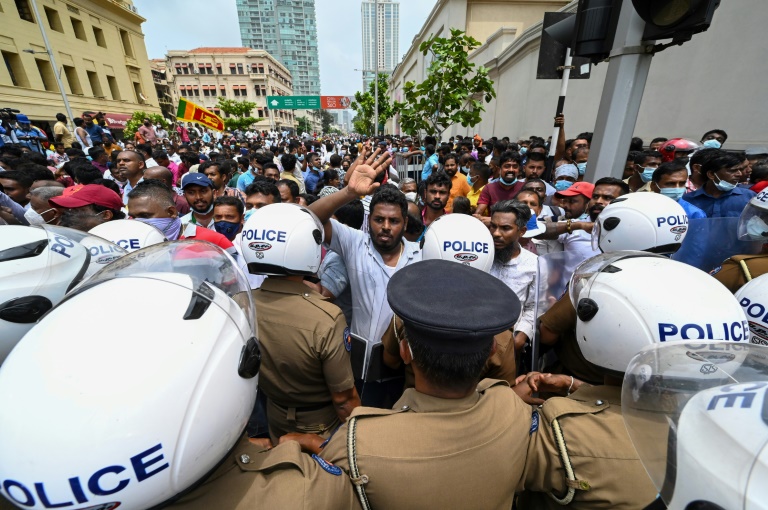

Curfew in Sri Lanka after day of deadly unrest

Sri Lanka deployed thousands of troops and police Tuesday to enforce a curfew after five people were killed in the worst violence in weeks of protests over an unprecedented economic crisis.

Nearly 200 were also wounded Monday as prime minister Mahinda Rajapaksa resigned, but that did little to calm public anger.

He had to be rescued in a pre-dawn operation by the military Tuesday after thousands of anti-government protesters stormed his official residence in Colombo overnight, with police firing tear gas and warning shots to keep back the crowd.

“After a pre-dawn operation, the former PM and his family were evacuated to safety by the army,” a top security official told AFP. “At least 10 petrol bombs were thrown into the compound.”

The Rajapaksa clan’s hold on power has been shaken by months of blackouts and shortages in Sri Lanka, the worst economic crisis since it became independent in 1948.

President Gotabaya Rajapaksa remains in office, however,  with widespread powers and command over the security forces.

After weeks of overwhelmingly peaceful anti-government demonstrations, violence broke out Monday when Mahinda Rajapaksa’s supporters — bussed into the capital from the countryside — attacked protestors with sticks and clubs.

“We were hit, the media were hit, women and children were hit,” one witness told AFP, asking not to be named.

Police fired tear gas and water cannons to disperse crowds and declared an immediate curfew in Colombo, a measure later widened to include the entire South Asian nation of 22 million people.

Authorities said the curfew will be lifted Wednesday morning, with government and private offices, as well as shops and schools, ordered to remain shut on Tuesday.

US Ambassador Julie Chung tweeted that Washington condemned “the violence against peaceful protestors” and called on the Sri Lankan “government to conduct a full investigation, including the arrest & prosecution of anyone who incited violence”.

– Shot dead –

Despite the curfew, anti-government protesters defied police to retaliate against government supporters for the attacks late into Monday night. 

Outside Colombo, ruling party lawmaker Amarakeerthi Athukorala shot two people — killing a 27-year-old man — after being surrounded by a mob of anti-government protestors, police said.

“He then took his own life with his revolver,” a police official told AFP by telephone. 

Athukorala’s bodyguard was also found dead at the scene, police said.

Another ruling party politician who was not named opened fire on protesters, killing two and wounding five in the deep south of the island, police added. 

Angry crowds set alight the homes of more than a dozen pro-Rajapaksa politicians, along with some vehicles, while buses and trucks used by the government loyalists in and around Colombo were also targeted.

Several Rajapaksa homes were torched in different parts of the country, while a family museum in their ancestral village was trashed.

Doctors at the main Colombo National Hospital intervened to rescue wounded government supporters, with soldiers breaking open locked gates to ferry in the wounded.

“They may be murderers, but for us they are patients who must be treated first,” a doctor shouted at a mob blocking the entrance to the emergency unit.

– Unity government –

Mahinda Rajapaksa, 76, said he was resigning to pave the way for a unity government.

But it was unclear if the opposition would join any unity administration, having before refused to govern with any members of the Rajapaksa family.

Under Sri Lanka’s political system, even with a new unity government, the president will have the power to appoint and fire ministers as well as judges, and enjoy immunity from prosecution.

“Unless President Rajapaksa steps down, no one — whether the masses in the streets or key political stakeholders — will be appeased,” analyst Michael Kugelman from the Wilson Center told AFP.

The protests came after the coronavirus pandemic hammered the island’s vital income from tourism and remittances, which starved the country of foreign currency needed to pay off its debt.

This forced the government to ban many imports, leading to severe shortages, inflation and lengthy power blackouts.

In April, Sri Lanka announced it was defaulting on its $51 billion foreign debt.

It is unclear what President Rajapaksa’s next move will be in the face of the protests, according to Akhil Bery of the Asia Society Policy Institute.

Aside from following his brother in resigning, he could appoint a caretaker government — before then quitting — deploy the military and police to suppress the protests, or try to wait for them to “die down naturally”, Bery told AFP.  

But whatever happens, the next government will have to take “unpopular decisions” to repair the devastated economy, he said.

Any bailout from the International Monetary Fund — currently under negotiation — would mean “higher taxes and less government spending, which is a politically toxic combination,” he added.

Ecuador prison riot leaves 44 dead, 108 on the run

At least 44 inmates died on Monday in Ecuador’s latest grisly prison riot, the public prosecutor said, as another 100 prisoners managed to escape.

Authorities said a fight broke out between the rival Los Lobos and R7 gangs inside the Bellavista prison in Santo Domingo de los Colorados, in the center of Ecuador some 80 kilometers (50 miles) from Quito.

During the riot, dozens of inmates tried to escape.

Police chief Fausto Salinas told reporters that 108 were missing after another 112 escaped prisoners were recaptured.

The South American country’s prison authority SNAI said it has activated security protocols to contain the “disturbances to order.”

Six gang leaders were transferred from Bellavista to two maximum security prisons, the interior ministry said.

Interior Minister Patricio Carrillo had initially claimed authorities were in control of the situation and that all escaped prisoners had been recaptured.

Inmates with facial injuries were taken by truck and ambulance to medical facilities while family members of those incarcerated gathered at the prison looking for information, AFP reporters at the scene said.

– ‘Mutilated bodies’ –

Prior to this one, around 350 inmates had been killed in five separate prison riots since February 2021.

Just last month, at least 20 inmates died inside the El Turi prison in Cuenca, southern Ecuador.

President Guillermo Lasso insists the problem inside the facilities mirrors that outside, where drug gangs are vying for control of trafficking routes.

Those rivalries among inmates sometimes explode into violence, with some prisoners hacked to death or beheaded with machetes.

“The majority of victims, if not almost 100 percent, were killed with knives and not guns,” said Carrillo.

“Their mutilated bodies were left where they were.”

The prisoners were killed in their cells and common rooms, after which inmates then used guns to try to escape the facility.

Authorities have said they will carry out a search for weapons and transfer gang leaders to a different prison in Guayas province.

“This is the unfortunate result of gang violence,” Lasso, who is on a state visit to Israel, wrote on Twitter.

He also expressed “condolences to relatives” of the victims.

Even with greater investment in the prison system, the creation of a commission to pacify facilities and new policies such as the holding of the most dangerous prisoners at a single penitentiary, have not reduced the bloody violence.

Overcrowding is another problem, with 35,000 detainees in 65 prisons that only have a capacity for 30,000 inmates.

The 1,200-capacity Bellavista prison houses 1,700 inmates.

Ecuador has also seen a rise in street crime and drug trafficking which the government has tried to tackle by declaring a state of emergency in the three worst affected provinces: Guayas, Manabi and Esmeraldas.

The country seized a record 210 tons of drugs in 2021 and has already seized another 82 tons this year.

Ecuador, which borders the world’s two largest producers of cocaine, Colombia and Peru, is often used as a jumping off point to export the white powder to the United States and Europe.

Asian stocks fall on Wall Street rout, oil prices tumble

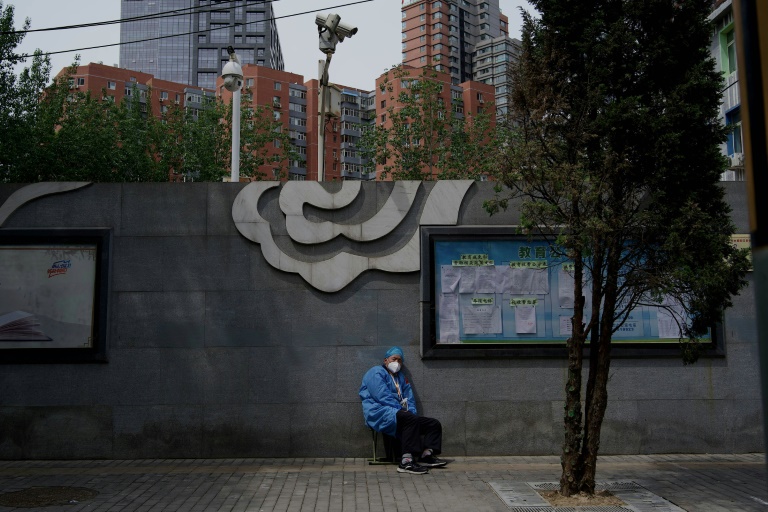
Asian equities mostly sank Tuesday and oil prices tumbled following a rout on Wall Street as anxieties were fanned over rising US interest rates, surging inflation and the impact of China’s prolonged Covid lockdowns.

The global stock markets have been on a tempestuous ride this year, with Wall Street suffering another rout on Monday as tech-rich Nasdaq slumped more than four percent while the S&P 500 ended below 4,000 points for the first time since March 2021. 

Steep declines in China’s April exports — due to Beijing’s staunch adherence to a zero-Covid policy that has shunted millions indoors — and volatility in crude partly due to Russia’s war in Ukraine have also hastened the bloodletting. 

“We don’t normally pay too much attention to short-term market movements, but there’s some concern brewing in markets that we might be on the cusp of a significant event,” said Peter Esho, co-founder at Wealthi, an investment property platform.

“Ultimately, our view is that each and every time the US Federal Reserve seeks to raise rates, the economy and growth will break and send us back to square one.”

US stock markets dived late last week after the Federal Reserve raised interest rates by a half-percentage point and flagged more aggressive hikes ahead to tackle decades-high inflation. 

Further stoking global inflationary pressures were lockdowns across dozens of Chinese cities — from the manufacturing hubs of Shenzhen and Shanghai to the breadbasket of Jilin — which has wreaked havoc on supply chains over recent months.

The equities plunge persisted Monday on Wall Street, while Frankfurt, London and Paris all fell more than two percent. 

Tokyo on Tuesday opened down 0.7 percent, with Japanese traders fretting over US monetary tightening. Seoul, Wellington, Singapore, and even Jakarta — the lone bright spot over the past couple days — also slumped. 

“The market is becoming increasingly non-investable,” said Stephen Innes of SPI Asset Management. 

“We could be nearing the capitulatory ‘sell-everything mode’ as it is virtually impossible to construct a bullish argument for the broader market.”

– Bitcoin woes –

In the realm of digital currency, bitcoin also slumped as low as $29,764 — more than half its value since a November surge saw the token hit a record of nearly $69,000.

Such a drastic drop in value has not been seen since July 2021. 

Analysts say traditional investors tend to view it as a riskier asset and have been offloading bitcoin and other digital tokens in response to the growing fears of market volatility. 

Crude — once considered a somewhat safe haven — also took a beating Monday when it plunged more than five percent, with the European benchmark Brent North Sea crude dropping to $106.77 per barrel, while the main US contract WTI was $103.87. 

By Tuesday, the drop-off appeared to ease up — though it was still lower, with Brent trading at around $104.70 and WTI at $101.91.

“There is nowhere to hide right now. If you are looking for green on the screen, it is very minimal, especially in the tech sector,” Victoria Greene, chief investment officer at G Squared Private Wealth, told Bloomberg.

– Key figures at around 0230 GMT –

Hong Kong – Hang Seng Index: DOWN 2.3 percent at 19,541.24  

Shanghai – Composite: UP 0.4 percent at 3,016.26

Tokyo – Nikkei 225: DOWN 0.9 percent at 26,074.53 (break)

Brent North Sea crude: DOWN 1.2 percent at $104.58 per barrel

West Texas Intermediate: DOWN 1.26 percent at $101.79 per barrel

Euro/dollar: UP at $1.0574 from $1.0563 on Monday 

Pound/dollar: UP at $1.2367 from $1.2331

Euro/pound: DOWN at 85.50 pence from 85.64 pence

Dollar/yen: UP at 130.36 yen from 130.26 yen

New York – Dow: DOWN 2.0 percent at 32,245.70 (close)

London – FTSE 100: DOWN 2.3 percent at 7,216.58 (close)

Bitcoin falls below $30,000, lowest since July 2021

Bitcoin slumped below $30,000 for the first time since July 2021 on Tuesday as cryptocurrencies track sinking markets with investors spooked by aggressive US monetary tightening and surging inflation.

The world’s largest cryptocurrency by market value fell as low as $29,764 in Tuesday trade, before recovering above $30,000, extending a recent collapse in price as investors desert assets viewed as risky.

Bitcoin’s value has more than halved since a November surge that saw the token hit a record of nearly $69,000.

While crypto enthusiasts view bitcoin as a hedge against inflation, an influx of more traditional investors tend to view it as a riskier asset.

They have been offloading bitcoin and other digital tokens along with other volatile assets like tech stocks as the US Federal Reserve moves to hike interest rates to tackle decades-high inflation.

“Bitcoin is breaking below some key technical levels as the never-ending selloff on Wall Street continues,” said Edward Moya, senior market analyst for the Americas at Oanda.

“The institutional investor is paying close attention to bitcoin as many who got in last year are now losing money on their investment,” he added.

While the token’s “long-term fundamentals have not changed in months”, concerns about growth and a possible recession are creating “a very difficult environment for cryptos”, Moya said.

“No one is looking to buy the crypto dip just yet and that leaves bitcoin vulnerable here.”

The slump in crypto follows dives on US equities and other markets, with the tech-rich Nasdaq closing down 4.3 percent on Monday, the S&P 500 declining 3.2 percent and the Dow ending off 2.0 percent.

Egypt's ancient 'zar' ritual puts exorcism on stage

A stage, lights, a mesmerised audience: it looks like an Egyptian folkloric concert but Umm Sameh is singing to heal the sick by driving out the demons that possess them.

The music and dance ritual known as “zar”, with centuries-old roots in Ethiopia and Sudan, is traditionally performed to ward off or exorcise jinn or evil spirits.

“We’re not quacks or witches,” said Umm Sameh, aged in her 70s, with kohl-lined eyes, large hoops swaying in her ears and gold bracelets tinkling on her arms.

“The singing is spiritual and brings out negative energies,” said the lead singer of the Mazaher ensemble, adding that they also perform prayers from Islam’s mystic Sufi practices.

Traditionally, the zar ritual would last several days and include animal sacrifices. But no blood is spilled at Cairo’s Makan Cultural Centre, where the group performs to the delight of foreign and local guests.

The audience is bewitched by Umm Sameh’s voice and nod their heads to the drumbeat. 

In a patriarchal society where women face frequent discrimination, zar ceremonies are among the few cultural practices in which they take centre stage.

Umm Sameh said she learned the ritual from age 11 from her mother and grandmother. 

Six decades later, she recites the same lyrics to the same tunes — all from memory, she adds proudly, because she has “inherited them and grown up with them”.

– ‘Old healing ritual’ –

“Zar is a very old healing ritual, a bit like medical treatment,” said Ahmed al-Maghraby, founder of Mazaher, which he says is Egypt’s last group to perform zar in public.

He set up the Makan performance space 22 years ago “to preserve this cultural heritage and archive local music from all over Egypt”.

It was a tough feat, he said, because zar has historically been derided by devout Muslims as a pagan practice, and rejected by modernising state authorities as a backward rural tradition.

“Middle Eastern and Egyptian society regards everything local with disgust,” lamented Maghraby. 

He said it was foreign tourists who first brought Egyptians to the shows, who he remembered used to say “No! There’s jinn and blood!'”

“For them, the zar was always something sinful.”

Ensemble member Abou Samra said “people have a very negative idea of zar because of the movies,” in Egypt, long regarded as the Hollywood of the Arab world.

In one of them, 1987 horror movie “Al Taweeza” (The Curse), superstars Youssra and Tahia Carioca contorted themselves, drenched in fake blood, and emitting shrill cries.

But zar is “an art like all other arts,” said Abou Samra, who plays the tanboura, a six-string lyre. “We have to let go of these stereotypes.”

– New generation –

Times are indeed changing. The ensemble, whose musicians and dancers were all over 60, have brought in a new member.

Azza Mazaher, who grew up watching her mother Umm Hassan do percussion, now also drums and energises the show as she dances across the stage.

Azza said the group now performs in both the old and new ways.

“If someone feels sick and the doctors can’t find a treatment, we can hold a ceremony,” she told AFP.

“But here, we’re performing a light piece of folklore, so people can discover it, understand it and enjoy it.”

Mazaher has taken part in several European festivals, and more Egyptians are flocking to their Cairo performances, appreciative of the home-grown artform.

Mariam Essawi, an audience member in her 20s, said: “They look like us, they represent us. Zar is part of our history and our cultural heritage. It’s very strange that we don’t know it.”

Anti-feminist security hawk: South Korea's new president Yoon

South Korea’s incoming president Yoon Suk-yeol is a political novice who shot to public attention as a prosecutor for his uncompromising investigations into some of the country’s most high-profile corruption scandals.

He looks set to take the world’s 10th-largest economy in a different foreign policy direction — vowing to abandon years of delicate diplomacy and get tough on North Korea.

After winning a close election by the narrowest margin ever, he has already backed off his most controversial pledges on the campaign trail — including abolishing the Ministry of Gender Equality.

But his lack of legislative experience could prove costly as he faces a Democratic Party-controlled National Assembly that will likely scrutinise his policies. 

Born in Seoul in 1960, Yoon studied law and went on to play a key role in convicting former president Park Geun-hye for abuse of power.

As the country’s top prosecutor in 2019, he also indicted a top aide of outgoing President Moon Jae-in over fraud and bribery in a case that tarnished the administration’s upstanding image.

This brought Yoon to the attention of the conservative opposition People Power party, which began courting him. He eventually won the party’s primary and became its presidential candidate.

Yoon became the conservatives’ “icon” because he was “seen as the best person to beat the Democratic Party candidate, despite his lack of political leadership experience,” Gi-Wook Shin, a sociology professor at Stanford, told AFP.

“That does not bode well for Korean democracy as we may expect further polarisation,” he added.

– Adversarial politics –

South Korean politics is famously adversarial, analysts say, where presidents serve just a single term of five years.

Every living former leader has been jailed for corruption after leaving office.

Despite his role in Park’s ousting, Yoon fired up support among disgruntled conservative voters by offering a chance at “revenge” against Moon — going so far as to threaten to investigate Moon for unspecified “irregularities”.

Even Yoon’s wife claimed his critics would be prosecuted if her husband won because that is “the nature of power”, according to taped comments released after a court battle.

This suggests “he and his spouse are more than willing to engage in retaliatory legal investigations into political opponents”, Keung Yoon Bae, a Korean studies professor at Georgia Institute of Technology, told AFP.

The outgoing administration’s last order of business was to pass a reform bill stripping prosecutors of some of their power, in a move widely seen as a bid by officials to avoid being targeted after leaving office.

Local media have reported that Yoon is particularly inspired by British wartime prime minister Winston Churchill.

Despite his limited experience in politics, Yoon still managed to “consolidate support of a huge chunk of the country’s elite”, Vladimir Tikhonov, professor of Korean studies at the University of Oslo, told AFP.

– Pre-emptive strike? –

On nuclear-armed North Korea, Yoon has threatened a pre-emptive strike if needed, a claim analysts say is wildly unrealistic.

Just last month, North Korean leader Kim Jong Un said he would take measures to develop “the nuclear forces of our state at the fastest possible speed”, in what analysts said was a response to Yoon’s hawkish stance.

Yoon also once said he wants to buy an additional THAAD US missile system to counter the North, despite risks that it could prompt new economic retaliation from China, South Korea’s biggest trade partner.

His “lack of political skill will spill over to the foreign policy realm”, Minseon Ku, a political science scholar at the Ohio State University, told AFP.

So far, Yoon’s camp “looked as though they were simply copying and pasting foreign policy phrases from the US Republican presidents’ speeches,” she added.

He also made a string of gaffes on the campaign trail, from praising one of the country’s former dictators to belittling manual labour and Africans.

“The next presidency is coming at a time of transition for the world,” especially following the Russian invasion of Ukraine, Karl Friedhoff of the Chicago Council on Global Affairs told AFP.

“That will mean making tough challenges about trade-offs that South Korea hasn’t had to make in the past. Is Yoon up to that task?”

Jailbreak drama ends with arrest, death of prison guard

A bizarre drama that riveted America ended in tragedy Monday as a female prison guard arrested with a fugitive ex-con she allegedly helped to escape died after shooting herself as police moved in to nab them in the climax of a 10-day manhunt.

Vicky White and Casey White, who were not related, were arrested in Evansville, Indiana after crashing their car into a ditch as police acting on a tip were in hot pursuit, officials said.

Vicky White, 56 and described as romantically involved with the fugitive prisoner, shot herself, said Vanderburgh County sheriff Dave Wedding. The county coroner’s office later confirmed her death.

White the prisoner, 38, sustained minor injuries in the arrest.

“We got a dangerous man off the street today. He is never going to see the light of day again,” said Rick Singleton, the sheriff of Lauderdale County in Alabama, home to the scene of the original jailbreak. 

White has had numerous run-ins with the law, and has been sentenced to 75 years imprisonment for kidnapping, burglary and attempted murder, among other crimes.

No shots were fired by law enforcement officers, and no police or bystanders were hurt.

The arrest was made thanks to a tip after the couple were spotted at a hotel, Singleton said. “It ended the way we knew it would.”

Chris Swecker, a former FBI assistant director, told CNN this was a case of someone “looking for love in the wrong places.”

“You have this guard falling in love with a prisoner who probably groomed her over a period of time,” said Swecker, “to collude with her on this escape.”

Vicky White, an Alabama prison guard with a spotless record, was suspected of helping long-time criminal Casey White escape custody April 29 on her last day of work before retirement.

Investigators also learned that White had sold her home in the weeks before the escape, and had withdrawn about $90,000 in cash from several banks in the area, Singleton said last week.

– Not even a ‘speeding ticket’ –

Their report also noted the couple’s stark difference in size, with Casey White standing a full foot (0.3 meters) taller.

The case captivated America, triggering media coverage of every twist in the manhunt.

Singleton said last week that Vicky White had used an alias to purchase a sport utility vehicle used as the getaway car, and was likely to try to do that again.

The US Marshals Service, a federal agency specialized in fugitive manhunts, also said White might have darkened her hair.

The agency released composite images of what she would look like, as well as photos of Casey White’s tattoos — including one associated with a white supremacist prison gang.

On her last day at work, Vicky White fabricated a court-ordered psychological evaluation for Casey White.

She said she needed to drive him to the appointment. But the two never returned, and authorities realized they had disappeared that afternoon.

Vicky White’s mother Pat Davis said she was in disbelief over that escape.

“I thought at first it was a mistake,” she told a local TV channel. “She’s never done anything, I bet she’s never even had a speeding ticket.”

Former FBI deputy director Andrew McCabe told CNN a jailbreak like this in our times is a tough mission.

“It’s getting harder very year to pull these things off successfully, with the ubiquitous nature of video surveillance, and the ability of the media and quite frankly social media to get that sort of intelligence out to the public in a realtime manner,” he said.

Match Group takes Google app store war to court in US

Tinder parent Match Group on Monday filed a lawsuit in a federal court in San Francisco accusing Google of abusing monopoly power at its Play Store that sells digital content for Android-powered phones.

The litigation comes as part of an ongoing battle by Match, Epic Games and others to force Google-parent Alphabet and iPhone maker Apple to loosen their grips on their respective app stores.

Match’s filing came after Google modified Play Store rules to require its family of apps to use the internet giant’s payment system, which collects fees of up to 30 percent on transactions, court paperwork explained.

Google has made it clear that it will remove Match apps from the Play store if they don’t comply with the rule, Match said in the filing, saying such punishment would be a “death knell.”

“This is a case about the strategic manipulation of markets, broken promises, and abuse of power,” Match said in the suit.

Google did not respond to a request for comment, but has previously defended its Play Store fees as in line with industry norms and reasonable for running a secure, global platform for digital content.

While the App Store is the only gateway for content to get onto Apple mobile devices, users of Android-powered smartphones or tablets can download apps at their own risk from online venues other than Google’s Play Store.

Match’s lawsuit contended that despite having options, users get content for Android devices from the Play Store more than 90 percent of the time.

Match called on the court to order Google to let it sidestep the Play Store billing system while keeping its apps on the virtual shelves.

Match is also asking for unspecified monetary damages and legal fees.

Match apps include OkCupid, PlentyofFish, and Tinder.

Match, Epic Games and other companies have banded together in the Coalition for App Fairness to lobby for just marpetplaces.

Apple has clashed in court with Fortnite creator Epic Games, which has sought to break Apple’s grip on the App Store, accusing the iPhone maker of operating a monopoly in its shop for digital goods or services.

A federal judge in November ordered Apple to loosen control of its App Store payment options, but said Epic had failed to prove that antitrust violations had taken place.

Apple head Tim Cook in April attacked moves to regulate his company’s App Store in a rare speech in Washington, arguing that new rules could threaten iPhone users’ privacy.

“We are deeply concerned about regulations that would undermine privacy and security in service of some other aim,” Cook told an International Association of Privacy Professionals gathering.

Syrian mothers mourn two brides-to-be lost off Lebanon

With tears pouring down her cheeks, Syrian mother Shawafa Khodr mourns her daughter, missing since the crowded migrant boat she boarded hoping to join her fiance in Germany sank in the Mediterranean.

Khodr refuses to believe her daughter is dead, hoping against the mounting evidence that the young woman did not drown in the waters off Lebanon, but has somehow survived.

“I will wait for her every night and pray to God for her safety,” 60-year-old Khodr said. “Maybe she is just lost on the beach somewhere”.

The distraught mother even kicked her son out of the house, after he said that she should come to terms with the fact that her daughter may never return.

Khodr’s daughter, Jenda Saeed, 27, and her friend Inas Abdel Salam, 23, were engaged to two brothers in Germany.

Last month, the pair left their home in war-ravaged northeast Syria on the start of the long journey to join them.

They headed for neighbouring Lebanon, from where they set out on April 23 on a boat jam-packed with 84 passengers hoping for a better life in Europe.

They never made it: the boat capsized when it was being chased by Lebanon’s navy.

– Perilous sea crossing –

Of the 84 passengers, 45 were rescued but 39 are still missing, according to the United Nations.

Saeed and her friend Salam are, along with six other Syrians, among those unaccounted for.

Khodr stares at a photograph of her daughter wearing a red and white sweatshirt, a braid cascading down her shoulders.

“She carried my scarf in her bag, so that I can protect her,” she said. 

On the eve of her daughter’s trip, Khodr held a party to celebrate her daughter’s upcoming wedding.

“I was happy then,” she said, watching a video on her phone of Saaed dancing during the party. 

“But now not a day passes by without tears,” she added, wiping her wet eyes.

Thousands risk the perilous sea crossing to Europe each year: last month, the United Nations refugee agency said more than 3,000 people died, double the toll from 2020.

But Khodr said she did not know Saeed planned to travel on the dangerous migrant boat route.

“If I had known she would travel this way, I would have stopped her,” she said. “Even for her weight in gold, I would not have gambled with her life.”

– ‘Wedding in heaven’ –

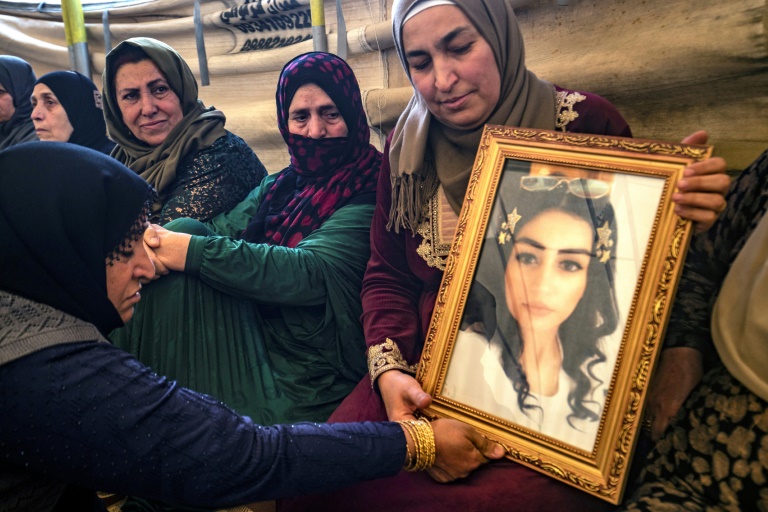
But unlike Khodr, Hiam Saadoun, 42, mother of Inas Abdel Salam, said she has accepted her daughter has drowned.

While her body was never retrieved, Saadoun held a funeral for her inside a tent in the northeast town of Qamishli.

Her only hope today is that rescuers eventually find the corpse. 

“I wish I could have seen her in her wedding dress,” the mother said, a picture of her daughter in her hand.

“I used to imagine her at home, surrounded by children and family… but today I hope that her wedding will be in heaven.”

Saadoun said her daughter had long wanted to flee Syria, where civil war since 2011 has killed nearly half a million people and forced half of the country’s pre-war population from their homes. 

“She was looking for a better life in Europe,” she said. 

“She would sometimes tell me: ‘I have a feeling that if I go, I will never come back.'”

Close Bitnami banner
Bitnami