World

UN says 'imminent' Yemen oil spill would cost $20 bn to clean up

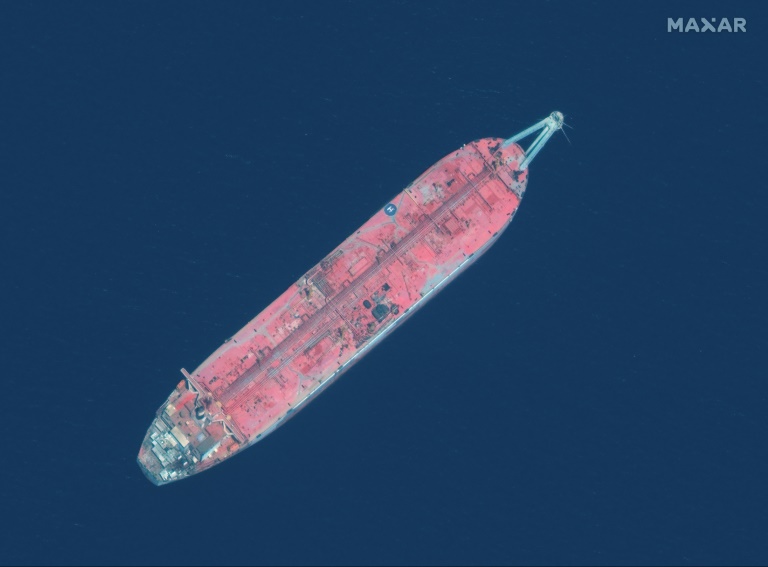
The United Nations warned Monday that it would cost $20 billion to clean up an oil spill in the event of the “imminent” break-up of an oil tanker abandoned off Yemen.

“Our recent visit to (the FSO Safer) with technical experts indicates that the vessel is imminently going to break up,” the UN humanitarian coordinator for Yemen, David Gressly, said ahead of a conference, hosted by the UN and The Netherlands, to raise funds for an emergency operation to prevent an oil spill.

The 45-year-old FSO Safer, long used as a floating oil storage platform with 1.1 million barrels of crude on board, has been moored off the rebel-held Yemeni port of Hodeida since 2015, without being serviced.

“The impact of a spill will be catastrophic,” Gressly continued at a briefing in Amman. “The effect on the environment would be tremendous… our estimate is that $20 billion would be spent just to clean the oil spill.”

The UN official had earlier announced on Twitter that the Netherlands would host on Wednesday a pledging conference for the international body’s plan to avert the crisis.

Last month, the UN said it was seeking nearly $80 million for its operation. It warned of “a humanitarian and ecological catastrophe centred on a country already decimated by more than seven years of war”.

It said that the emergency part of a two-stage operation would see the toxic cargo pumped from the storage platform to a temporary replacement vessel at a cost of $79.6 million.

Gressly estimated that a total of $144 million would be needed for the full operation, reiterating that $80 million was needed “to secure the oil safely in the initial phase”.

Hundreds of thousands of people have been killed directly or indirectly in Yemen’s seven-year war, while millions have been displaced in what the UN calls the world’s biggest humanitarian crisis.

UN says 'imminent' Yemen oil spill would cost $20 bn to clean up

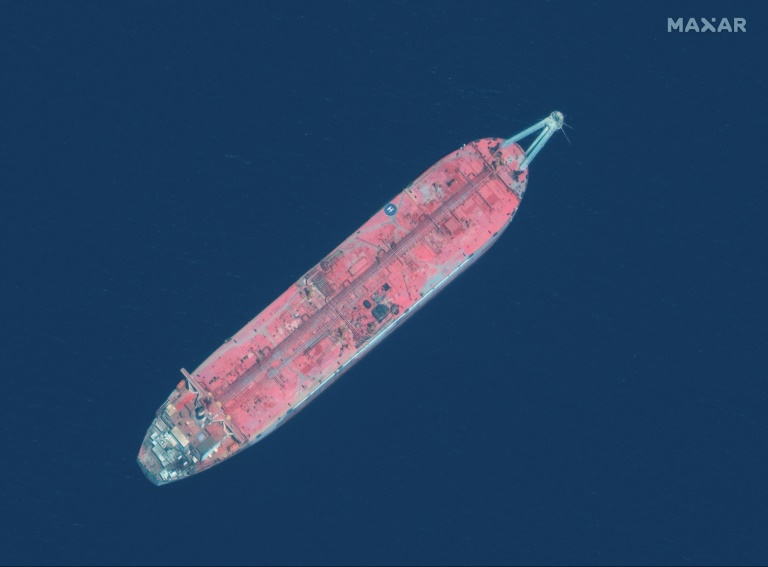
The United Nations warned Monday that it would cost $20 billion to clean up an oil spill in the event of the “imminent” break-up of an oil tanker abandoned off Yemen.

“Our recent visit to (the FSO Safer) with technical experts indicates that the vessel is imminently going to break up,” the UN humanitarian coordinator for Yemen, David Gressly, said ahead of a conference, hosted by the UN and The Netherlands, to raise funds for an emergency operation to prevent an oil spill.

The 45-year-old FSO Safer, long used as a floating oil storage platform with 1.1 million barrels of crude on board, has been moored off the rebel-held Yemeni port of Hodeida since 2015, without being serviced.

“The impact of a spill will be catastrophic,” Gressly continued at a briefing in Amman. “The effect on the environment would be tremendous… our estimate is that $20 billion would be spent just to clean the oil spill.”

The UN official had earlier announced on Twitter that the Netherlands would host on Wednesday a pledging conference for the international body’s plan to avert the crisis.

Last month, the UN said it was seeking nearly $80 million for its operation. It warned of “a humanitarian and ecological catastrophe centred on a country already decimated by more than seven years of war”.

It said that the emergency part of a two-stage operation would see the toxic cargo pumped from the storage platform to a temporary replacement vessel at a cost of $79.6 million.

Gressly estimated that a total of $144 million would be needed for the full operation, reiterating that $80 million was needed “to secure the oil safely in the initial phase”.

Hundreds of thousands of people have been killed directly or indirectly in Yemen’s seven-year war, while millions have been displaced in what the UN calls the world’s biggest humanitarian crisis.

Philip Morris in talks to buy Swedish Match

Tobacco giant Philip Morris International is in talks to acquire Swedish Match, the companies said Monday, in a deal that would boost its smokeless offerings. 

While they confirmed the negotiations, first reported by The Wall Street Journal, both companies said there was no guarantee of a transaction. The Journal described the negotiations as “advanced talks” and said the deal could be valued at $15 billion or more.

Philip Morris, which sells cigarette brands such as Marlboro and Chesterfield in 180 markets outside the United States and has invested billions of dollars since 2008 in vapor products, oral nicotine and other “reduced-risk” products, said the talks were “in progress,” according to a statement.

“It is uncertain whether an offer will be made,” Philip Morris said. “PMI intends to make no further comment regarding the discussions unless and until it is appropriate to do so.”

Stockholm-based Swedish Match derives more than 65 percent of its revenue from smoke-free products, including chewing tobacco and nicotine pouches. 

The company’s noted “recent speculation and confirms that discussions with Philip Morris International regarding a possible public takeover offer for Swedish Match are ongoing,” the statement said 

“There can be no certainty than an offer will be made, nor as to the terms of any such potential offer.”

Shares of Swedish Match dipped 0.6 percent in Stockholm, while Philip Morris international gained 2.5 percent in afternoon trading.

War in Ukraine: Latest developments

Here are the latest developments in the war in Ukraine:

– War defends ‘Russian Motherland’: Putin –

Russian President Vladimir Putin delivers his highly anticipated Victory Day speech at a giant military parade in Moscow. He says he had no choice but to send troops into Ukraine to defend the Russian “Motherland” from an “absolutely unacceptable threat”.

Speculation that he could use the 77th anniversary of the Soviet victory over Nazi Germany in World War II to expand the conflict comes to naught.

The Russian leader insists instead on the need to avoid “the horror of a global war”.

– Separatists parade in Mariupol –

A giant black and orange ribbon is carried through the devastated port city of Mariupol by pro-Russian separatists to mark Victory Day.

In late April, after besieging the strategic city for several weeks, Moscow said it had taken control of the city, except for the huge Azovstal steel plant where the remaining Ukrainian forces are holed up.

The Kremlin said last week there were no Victory Day celebrations planned in the battered city.

– ‘We will win,’ says Zelensky –

Ukraine’s President Volodymyr Zelensky says he will not allow the Soviet Union’s victory over the Nazis to be “appropriated” by Putin.

“We are proud of our ancestors who together with other nations in the anti-Hitler coalition defeated Nazism. And we will not allow anyone to annex this victory. We will not allow it to be appropriated,” he says.

He compares the Russian invasion to the Nazi occupation of parts of present-day Ukraine, vowing, “We won then. We will win now.”

– Battles rage in east –

As Russia tries to take the Russian-speaking Donbas region in the east, the governor of Lugansk region, Sergiy Gaiday, says there are “very serious battles” around Bilogorivka and Rubizhne. 

Donbas encompasses Lugansk and the neighbouring region of Donetsk.

– EU chief to meet Orban in oil row –

EU chief Ursula von der Leyen heads to Hungary to meet Prime Minister Viktor Orban, who is holding up Brussels’ plans for an embargo on Russian oil.

Landlocked Hungary relies on Russian oil from a single pipeline and Orban has warned he cannot approve the European Commission’s proposed sixth package of EU sanctions against Moscow

As Von der Leyen sets off, Orban’s international spokesman Zoltan Kovacs, citing Hungarian Foreign Minister Peter Szijjarto, compares the sanctions package to an “atomic bomb” for Hungary’s economy.

– Ukraine ‘decades’ away from EU membership: Macron –

Von der Leyen says the EU will give its opinion on Ukraine’s membership bid next month but French President Emmanuel Macron appears to rule out the prospect of the country joining the club in the near future.

Macron, whose country currently holds the rotating EU presidency, says joining the bloc would take “decades” and suggests instead that Ukraine and other EU hopefuls like Moldova and Georgia be integrated into a new, yet-to-be-created “European political community”.

German Chancellor Olaf Scholz says it is a “very interesting suggestion”.

– UN rights body to meet on Ukraine –

The UN Human Rights Council announces it will convene a special session on Thursday to address alleged worsening Russian violations in its war in Ukraine.

More than 50 countries back Kyiv’s request for an extraordinary meeting of the UN’s top rights body to examine “the deteriorating human rights situation in Ukraine stemming from the Russian aggression”.

– Invasion will fail: EU’s Michel –

European Council President Charles Michel says Russia will fail to “execute” Ukraine’s “freedom” on a surprise trip to Odessa during which he is forced to take cover when missiles again strike the Black Sea city.

burs-cb-jmy/raz

Ecuador prison riot leaves at least 43 dead

At least 43 inmates died on Monday in Ecuador’s latest grisly prison riot, the public prosecutor said.

Authorities said a fight broke out between the rival Los Lobos and R7 gangs inside the Bellavista prison in Santo Domingo de los Colorados, in the center of Ecuador some 80 kilometers (50 miles) from Quito.

“For now there are 43 inmates dead,” said the public prosecutor’s office on Twitter, adding that the situation was “developing.”

The South American country’s prison authority SNAI said it has activated “security protocols” to contain the “disturbances to order.”

Interior minister Patricio Carrillo initially told reporters that two inmates had been killed before later increasing that figure to 41 in a press conference. The public prosecutor’s office then tweeted the latest death toll.

Carrillo had also claimed authorities were in control.

During the riot, at least 112 people tried to escape but were detained by security forces inside the prison grounds, said Carrillo.

Inmates with facial injuries were taken by truck and ambulance to medical facilities while family members of those incarcerated gathered at the prison looking for information, AFP reporters at the scene said.

Authorities have said they will carry out a search for weapons and transfer gang leaders to a different prison.

Prior to this one, around 350 inmates had been killed in five separate prison riots since February 2021.

Just last month, at least 20 inmates died inside the El Turi prison in Cuenca, southern Ecuador.

Ecuadoran President Guillermo Lasso insists the problem inside the facilities mirrors that outside, where drug gangs are vying for control of trafficking routes.

Those rivalries among inmates sometimes explode into violence, with some prisoners hacked to death or beheaded with machetes.

Even with greater investment in the prison system, the creation of a commission to pacify facilities and new policies such as the holding of the most dangerous prisoners at a single penitentiary, have not reduced the bloody violence.

Ecuador has also seen a rise in street crime and drug trafficking which the government has tried to tackle by declaring a state of emergency in the three worst affected provinces: Guayas, Manabi and Esmeraldas.

The country seized a record 210 tons of drugs in 2021 and has already seized another 82 tons this year.

France puts ex-top Rwanda official on trial for genocide

A former senior Rwandan official went on trial in Paris on Monday accused of complicity in the African nation’s genocide, the most high-ranking figure yet to face justice in France over the 1994 massacres.

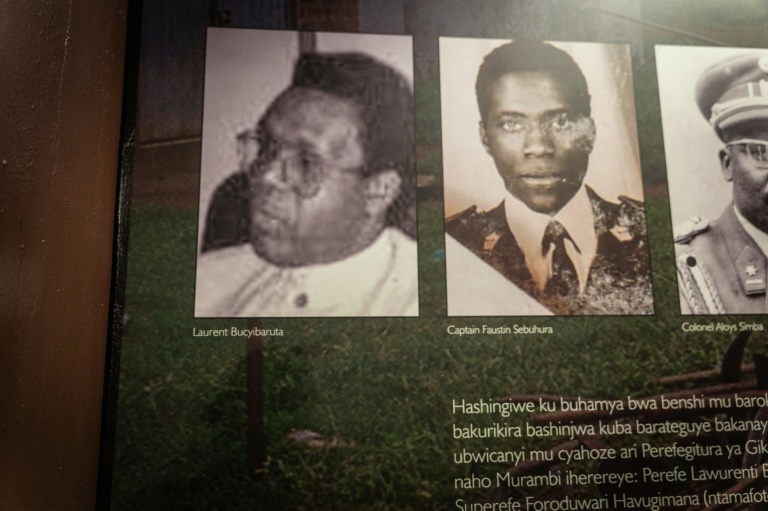
The case of Laurent Bucyibaruta is the fourth from the Rwandan genocide to come to court in France, which had long been under pressure from activists to act against suspected perpetrators who had taken refuge on French soil. 

An estimated 800,000 Tutsis and moderate Hutus perished in 100 days of slaughter in 1994 in which Hutu militiamen massacred Tutsis taking cover in churches and schools.

Standing trial on charges of genocide, complicity in genocide and complicity in crimes against humanity, Bucyibaruta faces a life sentence if convicted. He is the highest-ranking Rwandan official to be tried in France.

At the heart of the case are several “security” meetings, either ordered by Bucyibaruta or in which he participated. The accusation says they were slaughter-planning sessions.

The 78-year-old, who suffers from health problems, entered the courtroom in a wheelchair, a walking stick in his hand. 

Bucyibaruta, in a hoarse voice, asked if he could remain seated, as offered by the court’s president. 

The defendant suffers from “severe heart disease and diabetes”, said one of his lawyers, Jean-Marie Biju-Duval.

“He can appear in court, he can express himself, but is he in a condition to defend himself?” asked Biju-Duval.

– Tens of thousands killed –

In particular the former prefect of the southern province of Gikongoro is accused of persuading thousands of people to take refuge in the Murambi Technical School, by promising them food, water and protection. 

But days later, in the early hours of April 21, tens of thousands of Tutsis were executed in one of the genocide’s grimmest episodes.

The court will also discuss Bucyibaruta’s responsibility in the massacre of around 90 Tutsi pupils at the Marie Merci school in Kibeho on May 7, 1994 and in the execution of Tutsi prisoners — including three priests — in Gikongoro prison.

Bucyibaruta denies the charges and refutes any involvement in the killings. 

Defence lawyers asked for the case to be thrown out, due to “unreasonable” delays as the proceedings began 22 years ago. 

The court rejected this request.

The trial is expected to last two months and feature over 100 witnesses including survivors from Rwanda, who have flown over or will appear via videoconference. 

Bucyibaruta, who has been in France since 1997 and is under judicial supervision, has myriad health problems which should limit the hearings to seven hours a day. 

Four people in three cases have already been convicted in French courts over the genocide: a former hotel driver handed a 14-year sentence, an army officer jailed for 25 years and two mayors given life sentences.

Moscow marks Victory Day in shadow of Ukraine conflict

Hundreds of thousands of Muscovites marched Monday to remember the victims of World War II, with many believing that Russia is once again fighting Nazism, but this time in Ukraine.

Every year on May 9, Russians celebrate Victory Day, one of the country’s most important holidays marking the anniversary of the Soviet victory over Nazi Germany in 1945.

After a military parade on Red Square, memorial marches called the “Immortal Regiment” are held in cities across Russia, with participants carrying photos of family members who fought in what Russians call the Great Patriotic War.

This year’s march was led by President Vladimir Putin — who held a photo of his father — over two months since the Russian leader deployed troops to Ukraine for what he calls a campaign to “de-Nazify” Russia’s pro-Western neighbour.

Joining the march was Taisiya Chepurina, carrying a sepia picture of her husband, a soldier who fought in the Battle of Stalingrad in 1944. 

For the 81-year-old widow, Russia’s military action in Ukraine is justified if Ukrainian Nazis “shoot at our soldiers”.

“Putin conducts politics so well, well done to him. He makes sure that our boys don’t die, that there is as little blood as possible. I bow down to him,” she said. 

As the procession marched on, military “Hurrahs” and chants of “Russia” were regularly shouted out by the participants of all ages. 

Small orchestras played Soviet war tunes, while food stalls distributed soup to warm a crowd braving the wind and rain.

– ‘History repeats itself’ –

“Nobody could have imagined that 77 years later, fascist forces, Nazi forces would come back to life, killing civilians, butchering Russians into pieces,” another participant, Anastasia Rybina, told AFP. 

“History repeats itself,” the 37-year-old economist added.

Her words were echoed by Oksana Buranova, a real estate agent dressed in head-to-toe military uniform for the occasion, marching together with her teenage daughter.

“Our grandfathers died for this, and today fascism is reborn,” she said. 

She added that in Western countries, which have backed Ukraine, “many people are misinformed”. 

In the city festooned with Soviet-era symbols ahead of the celebration, the participants marched enthusiastically. 

In the crowd, there were some signs and flags with the new military symbol — the letter “Z” that is being used to show support for Russia’s campaign in Ukraine.

At the same time, the founders of the “Immortal Regiment,” which was an independent initiative back in 2012 but was later taken over by Russian authorities, distanced themselves from this year’s event.

Some participants said they came to Moscow especially to take part in the march, like Alexei Karpinsky, who travelled from neighbouring Belarus, an ex-Soviet country and an ally of Russia. 

“It was my dream since childhood to come with my family,” said the 34-year-old in a black leather jacket, adding that “there is still work to be done to stifle the ideas of Nazism”. 

Another participant, Andrei Tikhomirov, 49, said he decided to join for the first time because “there is a need to support Russia and our president”. 

“I never voted for him, but now it’s such a time, I think all Russians should be here,” the businessman said, adding that today “Nazism has approached” Russian borders. 

For others, the march was still only about World War II.

Accompanied by her French husband Frank Lank, Muscovite Tatyana said she came to honour her grandfather Alexander. “So many years have passed and we have not forgotten him”. 

“We don’t want to think” about what’s happening in Ukraine she said, adding that conflict “never brings anything good to people, when civilians, women and children are dying”. 

Webb telescope's first full color, scientific images coming in July

Get ready for a summer blockbuster.

The James Webb Space Telescope will produce “spectacular color images” of the cosmos in mid-July — its first observations dedicated to its mission of scientific discovery, an astronomer overseeing the project said Monday.

The successor to Hubble has spent the last five months aligning its instruments in preparation for the big reveal, with scientists deliberately remaining coy about where the cameras will be pointed.

“We’d really like it to be a surprise,” Klaus Pontoppidan, a scientist at the Space Telescope Science Institute in Baltimore told reporters, adding that the secrecy was partly due to the first targets not yet being finalized.

NASA and its partners the European Space Agency (ESA) and Canadian Space Agency (CSA) formed a committee to create a ranked list of objects, which they now intend to work through. 

Webb’s team has already released a series of star field images taken for calibration purposes, but the new photographs will be of astrophysics targets, key to deepening humankind’s understanding of the universe, said Pontoppidan.

These images will actually be shot in infrared, and then colorized for public consumption.

Visible and ultraviolet light emitted by the very first luminous objects has been stretched by the universe’s expansion, and arrives today in the form of infrared, which Webb is equipped to detect with unprecedented clarity — giving it an unprecedented view of the first stars and galaxies that formed 13.5 billion years ago.

Webb, which is expected to cost NASA nearly $10 billion, is among the most expensive scientific platforms ever built, comparable to the Large Hadron Collider at CERN, and its predecessor telescope, Hubble.

Its mission also includes the study of distant planets, known as exoplanets, to determine their origin, evolution and habitability.

Dictator's son Marcos holds runaway lead in Philippine presidential poll

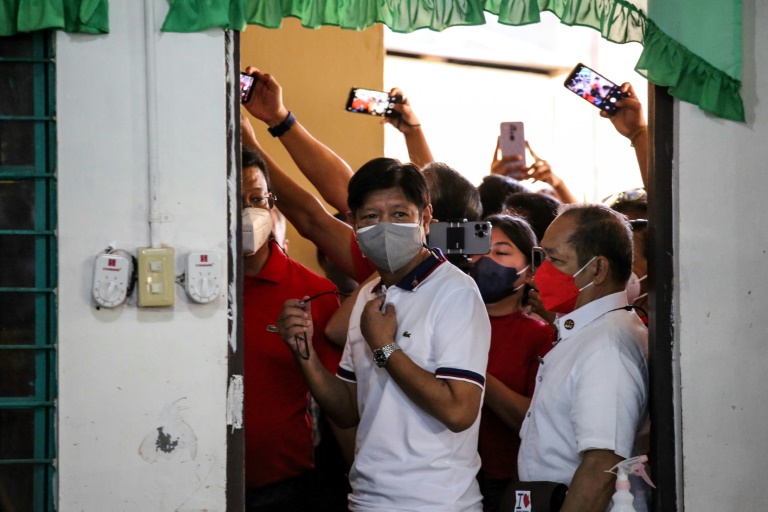
The son of late Philippines dictator Ferdinand Marcos on Tuesday headed for a historic landslide victory in the country’s presidential election, after Filipinos brushed aside warnings about weakening their already fragile democracy.

Nearly 40 years after his namesake father was deposed by a popular revolt and his family chased into exile, Ferdinand Marcos Jr had garnered more than double the number of votes of his nearest rival, according to an unofficial tally of results.

With more than 84 percent of precincts reporting, Marcos had received over 27 million votes to liberal candidate Leni Robredo’s 12.9 million.

If sustained, the tally — published by local media from Commission on Elections figures — would make Marcos the first Philippine president since his father’s ouster to be elected with an absolute majority.

It would also signal an astonishing turnaround for the fortunes of the Marcos clan, who have come from being pariahs to in reach of the presidential palace in a generation.

Marcos’ campaign was marked by a relentless online whitewashing of his father’s brutal and corrupt regime, as well as an embrace of current authoritarian president Rodrigo Duterte, who retains widespread popular support.

Before polling day, rights activists, Catholic leaders and political analysts had warned Marcos Jr could rule with an even heavier fist if he wins by a large margin.

Delivering a late-night address from his campaign headquarters in Manila, a tired but beaming Marcos thanked volunteers for months of “sacrifices and work”.

But he stopped short of claiming victory, warning that “the count is not yet done”. 

“Let’s wait until it’s very clear, until the count reaches a hundred percent then we can celebrate.”

Cleve Arguelles, a political science lecturer at Manila’s De La Salle University said it was already clear that “this will be a historic election” for the Philippines.

The results are a crushing blow for supporters of Robredo, the incumbent vice president whose campaign morphed into a movement to defend democracy and brought almost a million people onto the streets in one recent rally.

Analyst Mark Thompson said there now needed to be soul searching among an opposition that needs to broaden its message beyond “good governance”.

“They need to make clear that they’re going to improve the lives of the average Filipino,” said Thompson, who is director of the Southeast Asia Research Centre at the City University of Hong Kong.

Marcos was able to tap into widespread anger at a string of post-dictatorship governments, which many Filipinos believe had failed to materially improve their lives.

Crucially, he also secured the support of several of the country’s powerful political dynasties, who through networks of patronage can be called on to deliver blocs of votes.

Those alliances were set for a further victory with his running mate Sara Duterte garnering an even bigger lead over rivals in her vice presidential race.

In the Philippines, the winner only has to get more votes than anyone else.

– Dynastic burden –

Election day began before dawn, as mask-clad voters formed long queues to cast their ballots in 70,000 polling stations across the archipelago.

Polls officially closed 13 hours later at 7:00 pm (1100 GMT).

At Mariano Marcos Memorial Elementary School in the northern city of Batac, the ancestral home of the Marcoses, voters waved hand fans to cool their faces in the tropical heat.

Bomb sniffer dogs swept the polling station before Marcos Jr, 64, arrived with his younger sister Irene and eldest son Sandro.

They were followed by the family’s flamboyant 92-year-old matriarch Imelda, who was lowered from a white van while wearing a long, red top with matching trousers and slip-on flats.

Sandro, 28, who is running for elected office for the first time in a congressional district in Ilocos Norte province, admitted the family’s history was “a burden”.

But he added: “It’s one that we also try to sustain and protect and better as we serve.”

Casting her ballot for Robredo at a school in the central province of Camarines Sur, Corazon Bagay said the former congresswoman deserved to win.

“She has no whiff of corruption allegations,” said the 52-year-old homemaker.

“She’s not a thief. Leni is honest.”

Robredo, a 57-year-old lawyer and economist, had promised to clean up the dirty style of politics that has long plagued the feudal and corrupt democracy, where a handful of surnames hold sway.

Marcos Jr and Duterte — both offspring of authoritarian leaders — have insisted they are best qualified to “unify” the country.

Hundreds of thousands of red-clad supporters turned out at Marcos Jr and Duterte’s raucous rally in Manila on Saturday, as they made a last push for votes.

Josephine Llorca said successive governments since the 1986 revolution that ousted the family had failed to improve the lives of the poor.

“We tried it and they were even worse than the Marcoses’ time,” she said.

– ‘Another crossroads’ – 

Other candidates seeking the presidency included boxing legend Manny Pacquiao and former street scavenger turned actor Francisco Domagoso.

Personality rather than policy typically influences many people’s choice of candidate, though vote-buying and intimidation are also perennial problems.

More than 60,000 security personnel have been deployed to protect polling stations and election workers. 

Police reported at least two deadly shootings at polling stations on the restive southern island of Mindanao that had left four people dead and three wounded.

That followed a grenade attack on Sunday that injured nine people. 

Misinformation on social media, meanwhile, sought to confuse voters.

The Commission on Elections branded as “fake and spurious” documents circulating online showing it had disqualified a senatorial hopeful and five political parties.

Whatever the result, Marcos Jr opponents have already vowed to pursue efforts to have him disqualified over a previous tax conviction and to extract billions of dollars in estate taxes from his family.

“It’s another crossroads for us,” said Judy Taguiwalo, 72, an anti-Marcos activist who was arrested twice and tortured during the elder Marcos’ regime.

“We need to continue to stand up and struggle.”

Companies envision taxis flying above jammed traffic

As urban traffic gets more miserable, entrepreneurs are looking to a future in which commuters hop into “air taxis” that whisk them over clogged roads.

Companies such as Archer, Joby and Wisk are working on electric-powered aircraft that take off and land vertically like helicopters then propel forward like planes.

“‘The Jetsons’ is definitely a reference that people make a lot when trying to contextualize what we are doing,” Archer Vice President Louise Bristow told AFP, referring to a 1960s animated comedy about a family living in a high-tech future.

“The easiest way to think about it is a flying car, but that’s not what we’re doing.”

What Archer envisions is an age of aerial ride-sharing, an “Uber or Lyft of the skies,” Bristow said.

Neighborhood parking garage rooftops or shopping mall lots could serve as departure or arrival pads for electric vertical take-off and landing (eVTOL) aircraft.

Commuters would make it the rest of the way however they wish, even synching trips with car rideshare services such as Uber which owns a stake in Santa Cruz, California-based Joby.

Joby executives said on a recent earnings call that its first production model aircraft should be in the skies later this year.

That comes despite a Joby prototype crashing early this year while being tested at speeds and altitudes far greater than it would have to handle as part of an air taxi fleet.

Joby has declined to discuss details of the remotely piloted aircraft’s crash, which occurred in an uninhabited area, saying it is waiting for US aviation regulators to finish an investigation.

“We were at the end of the flight test expansion campaign at test points well above what we expect to see in normal operations,” Joby executive chairman Paul Sciarra told analysts.

“I’m really excited about where we are right now; we have demonstrated the full performance of our aircraft.”

Its eVTOL aircraft have a maximum range of 150 miles (241 kilometers), a top speed of 200 miles per hour and a “low noise profile” to avoid an annoying din, the company said.

Joby has announced partnerships with SK Telecom and the TMAP mobility platform in South Korea to provide emissions-free aerial ridesharing.

“By cooperating with Joby, TMAP will become a platform operator that can offer a seamless transportation service between the ground and the sky,” TMAP chief executive Lee Jong Ho said in a release.

Joby has also announced a partnership with Japanese airline ANA to launch air taxi service in Japan.

And Toyota has additionally joined the alliance, with an aim to explore adding ground transportation to such a service there, Joby said.

– Rethinking required –

Hurdles on the path include establishing infrastructure and adapting attitudes to make air taxis a part of everyday life.

“For mass adoption, people need to have a mindset change,” Bristow said.

“Getting people to want to travel in a different way will take some rethinking.”

The need for the change, though, is clear, she reasoned.

Roads are congested with traffic that wastes time, frays nerves and spews pollution.

“There is nowhere else for traffic to go,” Bristow said.

“You have to go up.”

Miami and Los Angeles are already exploring the potential of aerial ridesharing, and Archer is hoping to have a small air taxi service operating in at least one of those cities by the end of 2024.

“It’s a monumental task that we’re taking on,” Bristow said.

“It’s going to take a while before the infrastructure supports the mass expansion of what we’re trying to do.”

Archer last month announced that it teamed with United Airlines to create an eVTOL advisory committee.

The US airline has pre-ordered 200 Archer aircraft with an eye toward using them for “last-mile” transportation from airports, Bristow told AFP.

“Imagine flying from London to Newark, New Jersey, then getting in an Archer and being deposited somewhere in Manhattan,” Bristow said.

– More time for life –

Silicon Valley startup Xwing specializes in making standard aircraft capable of flying safely without pilots, with an aim of turning commuting by air into a cheaper and more efficient way to travel.

“We’re strong believers here that the industry is going through a pretty dramatic transformation,” Xwing chief and founder Marc Piette told AFP.

“In a few years you’ll start seeing taxi networks of electric aircrafts regionally or on long hauls and it’s going to be quite a different landscape.”

Thousands of regional airports used mostly for recreation could become part of aerial commute networks, air mobility consultant Scott Drennan told AFP.

To Drennan, the primary reason for taking to the skies is to “give people back their time.”

Close Bitnami banner
Bitnami