World

Putin says Russia defending 'Motherland' as Ukraine war rages

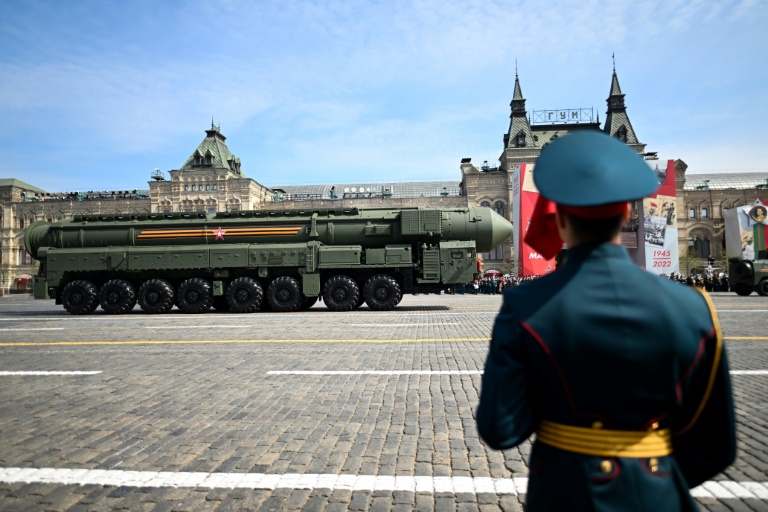
President Vladimir Putin on Monday insisted Russia was defending the “Motherland” by its war in Ukraine, as Moscow staged a show of force at a military parade marking the 1945 victory over Nazi Germany.

Ukrainian leader Volodymyr Zelensky sought, however, to undercut his Russian rival’s display of might, saying Kyiv would not allow Moscow to appropriate the Soviet Union’s triumph in World War II.

Putin blamed the West and Ukraine for today’s conflict, telling thousands of troops in Moscow’s Red Square that Russia faced an “absolutely unacceptable threat” and warning against the “horror of a global war”.

But as huge intercontinental ballistic missiles rumbled through the square, Putin made no major announcements, despite reports in the West that he could unveil an escalation of the Ukraine invasion.

The war, now well into its third month, is currently focused on eastern Ukraine. Russia is seeking to secure the region, having tried and failed to take the capital Kyiv and the north.

An AFP team saw columns of trucks filled with soldiers and heavy equipment move down the main road leading away from the city of Severodonetsk, suggesting Ukraine was giving up the defence of its last stronghold in the eastern Lugansk region.

Russian forces were heavily shelling the roads, while the Ukrainians were firing back to help cover the apparent pullout.

Officials said 60 civilians were killed in a Russian air strike on a school in the eastern village of Bilogorivka on Sunday — one of the highest single death tolls since the February 24 invasion.

Lugansk region governor Sergiy Gaiday said on Monday there were “very serious battles” around Bilogorivka and Rubizhne, as Russia tries to take the Russian-speaking Donbas. 

Donbas encompasses Lugansk and the neighbouring region of Donetsk.

– ‘Free our land’ –

The war is mired in history between the two ex-Soviet nations — Putin has said the so-called “special military operation” in Ukraine is in part to “de-Nazify” the country.

As troops poured into Moscow for the Victory Day celebrations, in Kyiv the commemoration day was largely shunned as life slowly returned to normal weeks after fierce fighting raged in its suburbs.

The capital’s Maidan square was largely empty. Small patrols of police and Ukrainian armed forces kept watch with air sirens temporarily disrupting the quiet morning, as people waited for any sign from Putin of an upcoming escalation. 

“Whatever he says, we need to do what we need to win and free our land. And that’s it,” said retired diplomat Mykola, 75. 

“It’s scarier today, so it’s important to be attentive and to respond to the sirens and other threats,” said 24-year-old media worker Diana.

Zelensky earlier invoked the ghosts of the Second World War to chide Russia, saying Ukraine was “proud” of its role in ousting Nazi Germany’s forces.

“And we will not allow anyone to annex this victory. We will not allow it to be appropriated,” he said in a video speech.

He listed several cities currently under Russian control from which he said Ukrainians had ousted Nazi German forces during World War II, adding: “We won then. We will win now.”

One city he named was the devastated southern port of Mariupol, where depleted Ukrainian forces are defending their final bastion at the Azovstal steelworks.

Scores of civilians have been evacuated in recent days. An AFP reporter in the city of Zaporizhzhia said on Sunday that eight buses carrying 174 civilians — including 40 evacuated from the plant — had arrived in that Ukrainian-controlled city.

Full control of Mariupol would allow Moscow to create a land bridge between the Crimean Peninsula, which it annexed in 2014, and eastern regions of Ukraine run by pro-Russian separatists.

– ‘Historical lands’ –

Putin used the annual Victory Day parade to rally support for a war that has dragged on for longer than Russia expected, and at far greater cost.

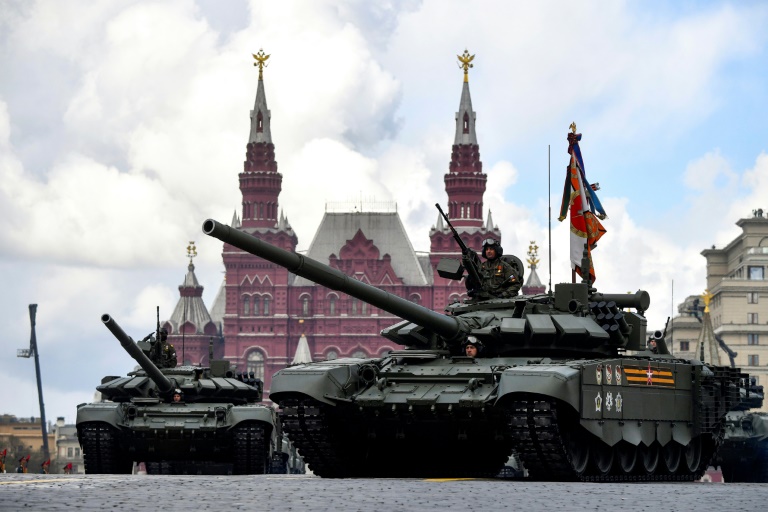
The celebration in Red Square featured some 11,000 troops and more than 130 military vehicles, including giant missiles, although a planned military flypast was cancelled.

Addressing Russian forces in Ukraine, he said: “You are fighting for the Motherland, for its future, so that no one forgets the lessons of the Second World War.”

Putin said Kyiv and its western allies had been preparing “an invasion of our historical lands”, including in Donbas region and in Crimea.

“An absolutely unacceptable threat to us was being created, directly on our borders,” Putin said, pointing to NATO weapons deliveries to Ukraine and the deployment of foreign advisors.

The West has rallied behind Zelensky and hailed him as a hero. G7 leaders met him via video conference on Sunday to discuss the conflict.

US First Lady Jill Biden made an unannounced visit to western Ukraine on Sunday, meeting her Ukrainian counterpart Olena Zelenska at a school sheltering displaced civilians.

Canadian Prime Minister Justin Trudeau meanwhile said Putin was responsible for “heinous war crimes” as he visited the devastated Kyiv suburb of Irpin.

The West’s show of unity has, however, come up against its reliance on Russian energy exports.

Diplomats from the European Union will meet again this week to hammer out the details of their latest sanctions package against Moscow, after a proposed embargo on Russian oil exposed rifts in the bloc.

– Battle for the east –

On the ground, the key battles are being fought in Ukraine’s east.

In Severodonetsk, the easternmost city still held by Ukraine, a Ukrainian soldier with the nom de guerre Koval said that Russians had now entered its northern side.

“We are defending the southern half of the city,” the soldier told AFP.

The toughest toll has been on Ukraine’s civilians, who still try to go about their lives despite the carnage around them.

“They get frightened when there is shelling. It has to be silent when you fish,” said angler Artur Cherepovskiy as he dangled a line from a bridge in Slovyansk, lamenting how the ferocity of the war has harmed his catch of carp. 

burs-dk/gil
Dozens injured as Sri Lanka government supporters run riot

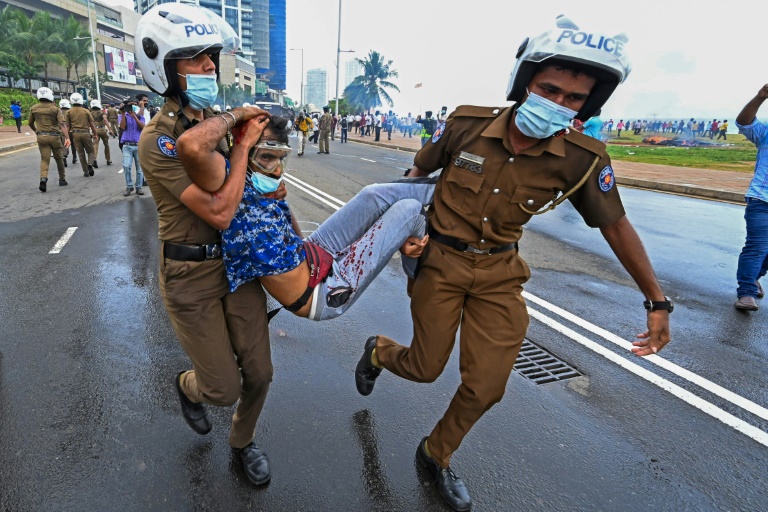
Sri Lankan authorities imposed a nationwide curfew and deployed the army on Monday after dozens of people were hospitalised when government supporters armed with sticks and clubs attacked protestors, AFP reporters said.

The US ambassador to Sri Lanka condemned “the violence against peaceful protestors today, and call on the government to conduct a full investigation, including the arrest & prosecution of anyone who incited violence.”

Sri Lankans have suffered months of blackouts and dire shortages of food, fuel and medicines in the island’s worst economic crisis since independence, sparking weeks of overwhelmingly peaceful anti-government demonstrations.

But on Monday the biggest clashes since the start of the crisis erupted in Colombo when supporters of the family of President Gotabaya Rajapaksa and brother Mahinda, the prime minister, went on the rampage, AFP reporters at the scene said.

Police fired tear gas and water cannon and declared an immediate curfew in Colombo which was later widened to include the entire South Asian island nation of 22 million people.

At least 78 injured people were hospitalised, Colombo National Hospital spokesman Pushpa Soysa told AFP.

Officials said that the army riot squad was called in to reinforce police. Soldiers have been deployed throughout the crisis to protect deliveries of fuel and other essentials but until now not to prevent clashes.

Scores of Rajapaksa loyalists attacked unarmed protesters camping outside the president’s office at the sea-front Galle Face promenade in downtown Colombo since April 9, AFP reporters said.

The violence began after several thousand supporters of Prime Minister Mahinda Rajapaksa, brought in buses from rural areas, poured out of his nearby official residence.

Rajapaksa had addressed some 3,000 supporters at his house and pledged he would “protect the interests of the nation.”

The supporters then initially pulled down tents of protesters in front of the prime minister’s Temple Trees residence and torched anti-government banners and placards.

They then marched to the nearby Galle Face sea-front promenade and began destroying other tents set up by the “Gota go home” campaign that demands the president step down.

“Strongly condemn the violent acts taking place by those inciting & participating, irrespective of political allegiances. Violence won’t solve the current problems,” President Rajapaksa tweeted.

Opposition MP Sajith Premadasa tried to move into the area after the clashes, but he came under attack from a mob and his security staff bundled him into a car and drove off. 

“The President should accept the responsibility for this violence instigated by the Prime Minister!,” opposition MP Eran Wickramaratne tweeted. “You cannot chase us from standing with our people.”

US ambassador Julie Chung tweeted: “Our sympathies are with those injured today and we urge calm and restraint across the island.”

– ‘Restraint’ –

The violence was the worst since police shot dead one protestor and wounded 24 others blockading a railway line and a highway between Colombo with the central city of Kandy on April 19.

Police had said the crowd had been about to set alight a tanker carrying diesel in the town of Rambukkana, 100 kilometres (60 miles) east of the capital.

Prime Minister Mahinda Rajapaksa on Monday urged “our general public to exercise restraint & remember that violence only begets violence.

“The economic crisis we’re in needs an economic solution which this administration is committed to resolving,” he tweeted.

On Friday, the government imposed a state of emergency granting the military sweeping powers to arrest and detain people after trade unions brought the country to a virtual standstill.

The defence ministry said in a statement on Sunday that anti-government demonstrators were behaving in a “provocative and threatening manner” and disrupting essential services.

President Rajapaksa has not been seen in public since tens of thousands attempted to storm his private residence in Colombo on March 31. 

The country’s largest opposition party has already said it will not join any government helmed by a member of the Rajapaksa clan.

Sri Lanka’s crisis began after the coronavirus pandemic hammered vital income from tourism and remittances, leaving it short of foreign currency needed to pay off its debt and forcing the government to ban the imports of many goods. 

This in turn has led to severe shortages, runaway inflation and lengthy power blackouts.

In April, the country announced it was defaulting on its $51 billion foreign debt.

Global stocks deepen losses on rising rates, China lockdowns

World stock markets mostly sank Monday on stubborn fears over the impact of rising US interest rates, surging inflation and China’s Covid lockdowns.

Frankfurt, London and Paris each shed more than one percent nearing the half-way stage after Tokyo closed down 2.5 percent.

Shanghai edged higher and Hong Kong was shut for a holiday.

Oil prices lost two percent on demand worries and the haven dollar rose, while bitcoin plunged to a 2022 low below $34,000 as investors shunned the volatile cryptocurrency.

Stock markets had dived last week after the Federal Reserve ramped up interest rates by a half-percentage point and flagged more hikes to tackle decades-high inflation.

– Anxiety spreads –

“Anxiety is stemming from the Fed’s next moves, with uncertainty creeping in about the scale and speed of interest rate hikes,” said Hargreaves Lansdown analyst Sophie Lund-Yates.

“All this comes at the same time as China grapples with ongoing lockdowns and the prevailing economic storm these entail.”

Millions of people in Beijing stayed home on Monday as China’s capital tries to fend off a Covid-19 outbreak with creeping restrictions on movement.

Beijing residents fear they may soon find themselves in the grip of the same draconian measures that have trapped most of Shanghai’s 25 million people at home for weeks.

Lockdowns across dozens of Chinese cities — from the manufacturing hubs of Shenzhen and Shanghai to the breadbasket of Jilin — have wreaked havoc on supply chains over recent months and further stoked global inflationary pressures.

Investors were given more bad news on Monday as China’s April exports slumped to their lowest level in almost two years, due to the nation’s strict zero-Covid policy.

Exports plunged to 3.9 percent on-year, while imports were stagnant for April.

Global markets have also taken a beating this year from Russia’s invasion of Ukraine.

President Vladimir Putin on Monday defended Russia’s offensive in Ukraine and blamed Kyiv and the West, as he looked to use grand Victory Day celebrations to mobilise patriotic support for the campaign.

However, investors were relieved that Putin made no major announcements, despite reports he could use the anniversary to announce an escalation of the conflict or a general mobilisation.

“Putin has not declared a war on Ukraine to enable full mobilisation which is obviously a relief,” noted Markets.com analyst Neil Wilson.

– Key figures at around 1015 GMT –

London – FTSE 100: DOWN 1.3 percent at 7,291.71 points

Frankfurt – DAX: DOWN 1.1 percent at 13,531.25

Paris – CAC 40: DOWN 1.4 percent at 6,167.96

EURO STOXX 50: DOWN 1.6 percent at 3,572.92

Shanghai – Composite: UP 0.09 percent at 3,004.14 (close)

Tokyo – Nikkei 225: DOWN 2.5 percent at 26,319.34 (close)

Hong Kong – Hang Seng Index: Closed for a holiday  

New York – Dow: DOWN 0.3 percent at 32,899.37 (close)

Brent North Sea crude: DOWN 2.1 percent at $110.02 per barrel

West Texas Intermediate: DOWN 2.3 percent at $107.30 per barrel

Euro/dollar: DOWN at $1.0538 from $1.0551 on Friday

Pound/dollar: DOWN at $1.2319 from $1.2348

Euro/pound: UP at 85.57 pence from 85.45 pence

Dollar/yen: UP at 131.16 yen from 130.56 yen

burs-rfj/bcp/lth

UK urges N. Ireland parties to form a new government

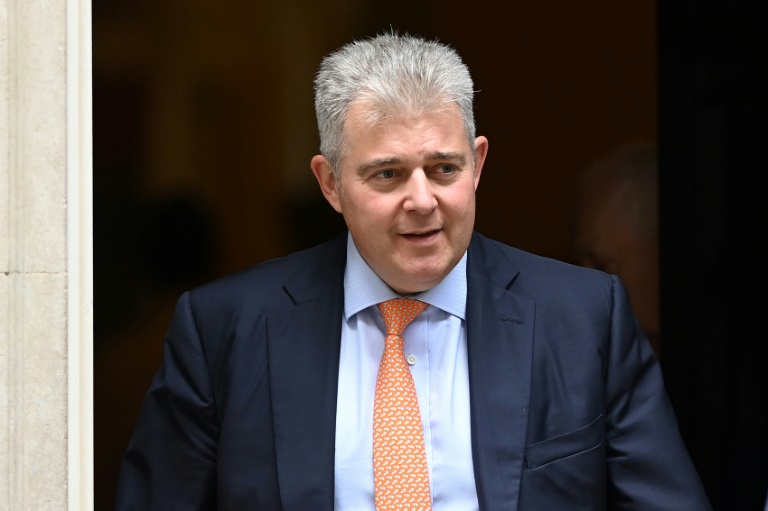
UK Northern Ireland Secretary Brandon Lewis on Monday called on all parties in the province to form a new power-sharing government in Belfast, after historic elections and despite unresolved Brexit disputes.

All five main political parties were due to meet Lewis for talks at the devolved legislature in Belfast, on their first day back in the job since Sinn Fein won Thursday’s vote.

The nationalists, formerly the political wing of the IRA, ended a century of dominance by pro-UK unionists to become the biggest party in Northern Ireland.

The win allows Sinn Fein to nominate the symbolic position of first minister but the DUP, which came second, said post-Brexit trading arrangements need to be addressed first before it joins a new executive.

Lewis urged “a stable and accountable devolved government” in Northern Ireland and said all parties should “fulfil their responsibilities and form an executive as soon as possible”.

“We have to address the outstanding issues relating to the Northern Ireland Protocol and we want to do that by agreement with the EU, but as we have always made clear, we will not shy away from taking further steps if necessary,” he added.

The Democratic Unionist Party collapsed the last assembly in February by withdrawing its first minister because of its opposition to the Northern Ireland Protocol.

The arrangement, signed as part the UK’s exit from the European Union, provides sweeping checks on goods heading to Northern Ireland from the British mainland and keeps the province largely under European trading rules.

The DUP fears that by creating an effective border in the Irish Sea, Northern Ireland is being cast adrift from the rest of the UK and makes a united Ireland — Sinn Fein’s aim — more likely.

Sinn Fein leader Michelle O’Neill, who is set to become first minister, tweeted that “the voters have spoken”.

“No party can hold back progress. It’s now time to get to work,” she added as she arrived at the Stormont Assembly buildings. 

Separate trading arrangements for Northern Ireland were agreed because the province has the UK’s only land border with the EU. 

Keeping the border open with neighbouring Ireland, an EU member, was mandated in the 1998 Good Friday Agreement that ended three decades of violence over British rule.

In Dublin, Irish prime minister Micheal Martin also urged the DUP to join the new executive and backed Brussels in its ongoing talks with London about the application of the protocol.

“I think the European Union has been flexible, has demonstrated flexibility, but every time up to now that the European Union has demonstrated flexibility, it hasn’t been reciprocated,” Martin told broadcaster RTE.

“I think the moment is now for both the EU and the UK… The British government wants to bring this to a conclusion.”

Putin defends Ukraine offensive as Russia marks Victory Day

President Vladimir Putin on Monday defended Russia’s offensive in Ukraine and blamed Kyiv and the West, as he looked to use grand Victory Day celebrations to mobilise patriotic support for the campaign.

Speaking at the start of the annual military parade in Red Square marking the Soviet defeat of Nazi Germany, Putin said Russian troops in Ukraine were defending their homeland and portrayed the conflict as a continuation of World War II.

Addressing Russian forces on the front in Ukraine, he said: “You are fighting for the Motherland, for its future, so that no one forgets the lessons of the Second World War.”

Putin has repeatedly tried to connect the fighting in Ukraine to what Russians call the Great Patriotic War by describing authorities in Kyiv as neo-Nazis.

He made no major announcements during the speech, despite reports he could use the anniversary to announce an escalation of the conflict or a general mobilisation in Russia.

Instead Putin put forward a defiant defence of what Russia calls its “special military operation”, saying Kyiv and its Western allies had been preparing “an invasion of our historical lands” including in the Russian-speaking Donbas region and in Crimea, annexed by Moscow in 2014.

– ‘Absolutely unacceptable threat’ –  

“An absolutely unacceptable threat to us was being created, directly on our borders,” Putin said, pointing to NATO weapons deliveries to Ukraine and the deployment of foreign advisors.

Russia had no choice, Putin said, but to undertake a pre-emptive response, calling it “the only right decision” for a “sovereign, strong and independent country”.

He insisted that Russia was not looking to expand the conflict, saying it was important “to do everything so that the horror of a global war does not happen again.”

Putin said some of the troops taking part in Monday’s parade had come directly from the front in Ukraine.

He made no mention of how the conflict is dragging on after more than two months, but acknowledged the “irreparable loss” for the families of dead soldiers and promised state support.

Some 11,000 troops gathered to march on Red Square for Monday’s 77th anniversary, along with more than 130 military vehicles. A planned flypast by Russian military aircraft was cancelled due to bad weather.

As he arrived Putin shook hands with veterans on the viewing stands, their chests weighted down with medals.

Defence Minister Sergei Shoigu and Russian Ground Forces Commander-in-chief Oleg Salyukov opened the parade, driving across Red Square standing in open-topped cars as soldiers in formation shouted “Hurrah! Hurrah! Hurrah!”.

– ‘Immortal Regiment’ marches –

Celebrations began Monday in Russia’s Far East, with thousands gathering in the Pacific Coast city of Vladivostok to watch military vehicles roll through the streets and to join the so-called “Immortal Regiment” march.

The marches, which have become increasingly popular in recent years, see people carrying photos of veterans or family members who died World War II. 

This year, participants were also encouraged to bring photos of those who died fighting in Ukraine.

Officials in Moscow say up to a million people are expected to take part in the capital this year.

Troops from Russia’s National Guard in blue camouflage were deployed across central Moscow for Monday’s events, wearing patches on their arms emblazoned with the “Z” symbol used to show support for the campaign in Ukraine.

The symbol has become ubiquitous and on Monday was seen plastered on the sides of vehicles taking part in parades and on flags waved by marchers.

'There's no why': Shanghai rages at endless Covid lockdown

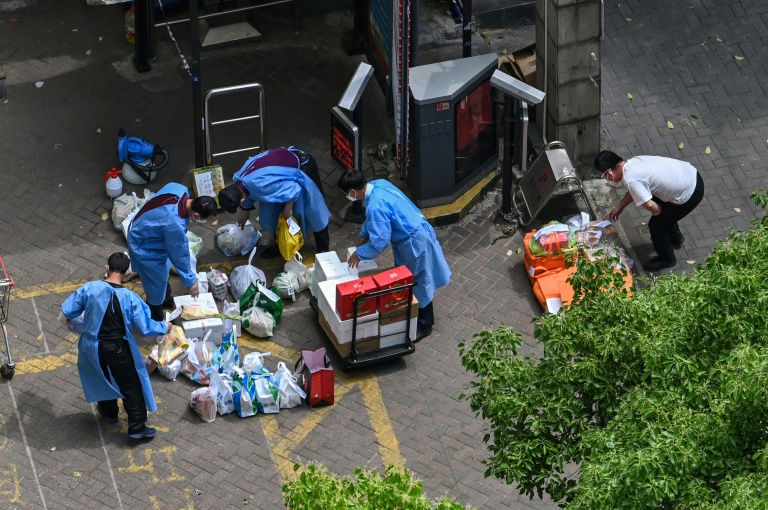
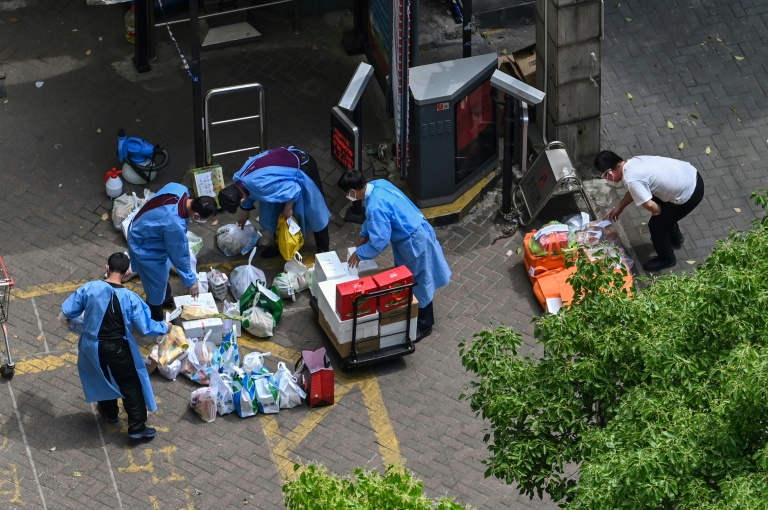
Scuffles with officials, workers storming factory gates and households raging at being dragged into quarantine — Shanghai’s long fight against Covid-19 is unravelling into chaos and desperation.

China insists on sticking to its zero-Covid strategy, and that has left most of Shanghai’s 25 million residents locked down for several weeks.

The city is the epicentre of China’s worst Covid outbreak to date, with more than half a million infections and over 500 deaths, according to official figures.

Yet despite cases dwindling into the low thousands in recent days, authorities are still conjuring new control measures.

Those include relocating entire residential compounds to quarantine — even including people with negative virus tests — and denying some food deliveries in a bid to stop the spread of the virus.

Residents who were initially told they would be at home for a just few days are now entering their sixth or seventh week of lockdown and anger is boiling over across the city.

Images emerged over the weekend of a street fight between locals and officials clad in white hazmat suits in Shanghai’s Minhang district.

District officials later said “troublemakers” clashed with health management staff on Saturday night, inciting neighbours to rush out of their barricaded building as other residents threw objects onto the street from their windows.

Videos circulating on social media and verified by AFP showed people in Minhang’s Zhuanqiao neighbourhood pushing police as chants against “violent law enforcement” echoed around.

Workers at Apple supplier Quanta’s Shanghai factory fought with guards and broke through barricades last week over fears that Covid rules on the campus could get stricter, according to Bloomberg.

The flashpoints add to a catalogue of protests since the early-April start of lockdown, in a country where unrest is normally swiftly squashed and rarely seen by the wider public.

– ‘Stop asking why’ –

Shanghai officials claim the city is winning its Covid fight, declaring in past weeks that millions have been released from the strictest levels of lockdown.

But the view from the ground is different. Large neighbourhoods given a brief semblance of freedom have quietly been put back into lockdown, Shanghai residents told AFP.

Many who were placed in low-risk areas have been told that they cannot leave their apartments except to get Covid tests.

Compounds are ordering “silent periods” or curfews of as long as seven days during which people are forbidden to even order deliveries of personal items, according to official notices seen by AFP.

Meanwhile residents of multiple buildings have told AFP they have been warned of forcible movement to quarantine facilities if their neighbours test positive.

“All of us will be taken to a quarantine centre and we’ll have to hand over our keys so they can come in and spray everything with disinfectant,” a British citizen living in Shanghai’s Xuhui district said, declining to be named for fear of retaliation.

Videos showing arguments with officials are now common on Chinese social media, with new confrontations being shared at a speed outpacing the censors’ race to scrub them out.

One video that went viral over the weekend showed hazmat-suited officials arguing with a family in a mix of Mandarin and Shanghainese dialect.

“You can’t do whatever you want, unless you go to America. This is China,” one official says in the video after informing the family that they must be quarantined as they are same-floor contacts of a Covid case.

“Stop asking why. There’s no why. This is according to national regulations.”

Indian rupee falls to new low on Fed action, inflation fears

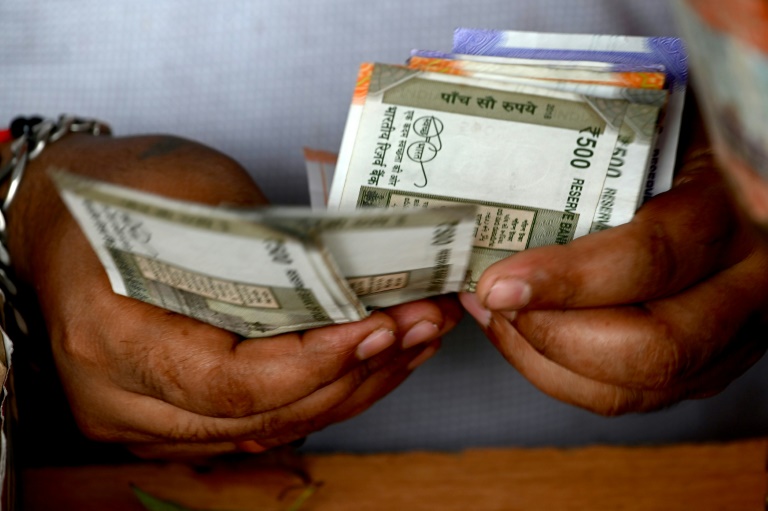
The Indian rupee plunged to an all-time low against the greenback on Monday, as US monetary policy tightening roiled sentiment and foreign investors continued to dump domestic stocks.

Rising oil prices and a strengthening US dollar have weighed heavy on the rupee with a surprise rate hike by the Reserve Bank of India (RBI) last week doing little to stem capital outflows.

The rupee fell past its previous record low of 76.98 against the US dollar in March to 77.56 on Monday.

The fall came as Indian stocks on the benchmark Sensex and Nifty50 indices extended losses for a fourth day, falling more than one percent each on Monday before recovering ground later in the day.

Banks, metals and oil and gas stocks declined the most, with market heavyweight, the conglomerate Reliance, losing more than 3.0 percent following its quarterly results reported late on Friday.

Foreign investors have withdrawn a net 1.34 trillion rupees ($17.3 billion) from Indian equities so far this year, stock exchange data showed.

The war in Ukraine and resurgence of Covid-19 restrictions in China have exacerbated outflows from emerging markets like India as foreign funds turn risk-averse.

Inflation worries on the back of rising commodity prices have also soured sentiment in Asia’s third-largest economy, which imports more than 80 percent of its oil needs.

Consumer price inflation in India hit a 17-month high of 6.95 percent year-on-year in March, and economists expect data to be released later this week to show that number rising beyond seven percent in April.

The US Federal Reserve last week hiked the key lending rates by half a percentage point, but also held off on signalling more aggressive measures.

“After an unscheduled rate hike by the Reserve Bank of India, if India’s inflation moves higher than 7.0 percent… the pressure will be on for the RBI to act again,” forex firm OANDA’s Jeffrey Halley said in a note.

“That may give some strength to the rupee but is unlikely to be bullish for local equities.”

India’s forex reserves declined for an eighth consecutive week, slipping below $600 billion in the week ending April 29 as the central bank sold foreign currency in an effort to stabilise the rupee.

Britain, Cyprus hail 'new era' on military land

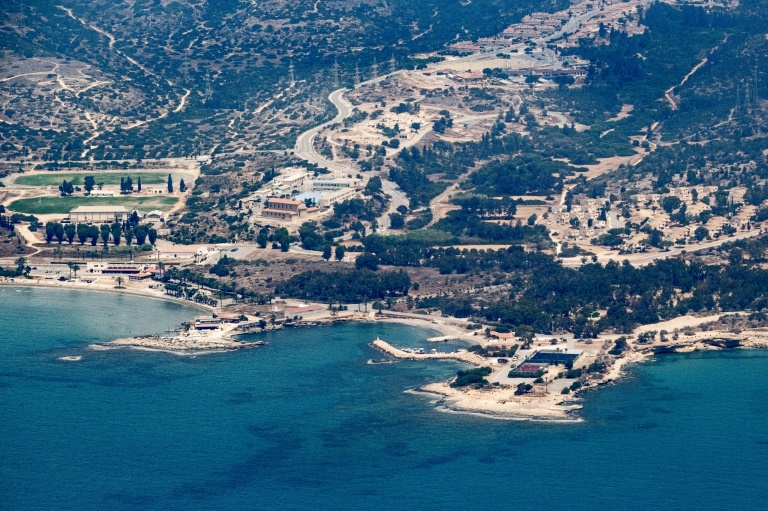
Thousands of Cypriots living on British military land will have the right to develop their properties under a deal to take effect next week, ending decades of unequal treatment, officials said Monday.

Under the 1960 treaty granting Cyprus independence from Britain, the United Kingdom retained control of two Sovereign Base Areas covering three percent of the island’s land area.

These include not only the bases themselves but Cypriot communities home to around 12,000 people — more than the number of British military personnel and their families.

Non-military development on base land has until now been generally restricted.

Cypriot property owners on base land were subject to “62 years of distortions and imbalances” which the deal to be implemented from May 16 will remove, Cyprus’s President Nicos Anastasiades said at a ceremony.

Residential, commercial and other developments will be possible under the arrangement.

“It is a truly historic agreement”, Anastasiades told the ceremony attended by base officials.

British High Commissioner Stephen Lillie told the gathering that “a new era of non-military development” begins next week.

“From that day, landowners in the bases will be able to submit planning applications and develop their land much like they can anywhere else in Cyprus,” he said, describing it as a “levelling up.”

In a statement, British Forces Cyprus said that, for the first time, third-country nationals in addition to Cypriots will be able to own property, live, and run a business in the base areas — subject to environmental, security and zoning considerations.

Anastasiades reached an agreement in 2014 with then-British Prime Minister David Cameron paving the way for the changes being implemented from next week.

In an interview with AFP, Anastasiades said the agreement did not mean an alteration to the 1960 treaty and did not require discussions with Greece and Turkey, the other 1960 signatories.

He said it is simply changing the status of the residents in the base areas, “giving a chance for development which is a great thing. We are talking about a huge extent of land.”

The base areas cover 254 square kilometres (98 square miles).

Cyprus, an eastern Mediterranean island, has been divided since 1974 when Turkey invaded following a Greek-sponsored coup. The Republic of Cyprus, whose overwhelming majority are Greek Cypriots, has effective control over the southern two-thirds of the island.

Indonesia maintains steady growth in first quarter thanks to exports

Indonesia’s economy maintained steady growth in the first quarter of 2022 despite global tensions, official data showed on Monday, as the nation reaped the benefits of soaring commodities prices and an easing of Covid restrictions.

Indonesia was badly affected by the coronavirus pandemic, with its exports and tourism-reliant economy taking a massive hit in 2020 as GDP shrunk by 2.07 percent — its first recession since the 1997 Asian financial crisis. 

But Southeast Asia’s largest economy has picked up in recent months, and the Central Statistics Agency (BPS) on Monday reported an on-year expansion of 5.01 percent in January-March. 

“The high economic growth for the first quarter of 2022 is caused by the recovery of public activities,” head of the bureau Margo Yuwono said during a press conference. 

“Public mobility in the first quarter of 2022 has been really good.”

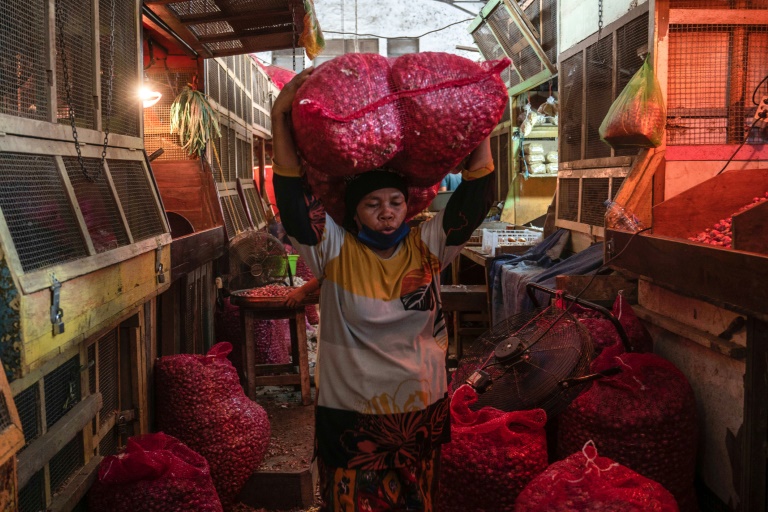
Exports showed an especially impressive growth of 16.22 percent in the first quarter of 2022 as prices for Indonesia’s palm oil, nickel and tin soared on the global market. 

Moody’s Analytics said Indonesia’s first-quarter showing exceeded their forecast. 

“The result indicates that Southeast Asia’s largest economy is on track to achieve the government’s full-year growth target of 4.5 percent to 5.3 percent,” it said in a note released Monday.

Indonesia in March had dropped quarantine requirements for all travellers with a negative PCR test. 

It has also seen a tripling of foreign tourist arrivals between January to March this year, compared to the same period in 2021. 

The country’s economy expanded 3.69 percent in 2021 as coronavirus cases started to decline and export prices for key commodities like palm oil, coal and nickel rose significantly. 

But while Indonesia — the world’s top palm oil producer accounting for 35 percent of global trade — has reaped the benefits of the high prices in recent months, in April it suspended exports in the face of domestic shortages. 

Western multinationals congratulate Hong Kong's new leader

Western multinationals and local tycoons published newspaper adverts on Monday congratulating John Lee on becoming Hong Kong’s next leader, following a rubber-stamp selection process condemned by critics as anti-democratic.

Lee, 64, a former security chief who oversaw the crackdown on Hong Kong’s democracy movement, was anointed the business hub’s new leader on Sunday in a near-unanimous vote by a small committee of Beijing loyalists.

He was the sole candidate in the race to succeed outgoing leader Carrie Lam at a time when Hong Kong is being remoulded in China’s authoritarian image. 

Ta Kung Pao and Wen Wei Po, two newspapers that answer to the office which sets Beijing’s Hong Kong policy, were filled with adverts on Monday from leading companies and business figures praising Lee’s selection.

The majority were from Chinese and Hong Kong businesses as well as community organisations. 

The “Big Four” accountancy firms — KPMG, Deloitte, EY and PwC — were among western multinationals placing adverts, as were city carrier Cathay Pacific and conglomerates Swire and Jardine Matheson.

Messages were also carried by Hong Kong’s family tycoon-dominated property giants, including Sun Hung Kai and Henderson Land Development. 

Western businesses have found themselves in an increasingly precarious position in Hong Kong, especially as geopolitical tensions have risen with China.

Many have embraced progressive political causes in western markets, such as the anti-racism Black Lives Matter movement, same-sex equality and ridding supply chains of labour abuses. 

But they usually steer clear of any criticism of China’s policies towards hotspots like Hong Kong, Xinjiang, Tibet and Taiwan.

Some companies such as HSBC, Standard Chartered, Swire and Jardine Matheson publicly backed Beijing’s national security law, which was imposed on Hong Kong after 2019’s democracy protests to curb dissent.

– Can Hong Kong reopen? –

The elevation of Lee, who is under US sanctions, places a security official in Hong Kong’s top job for the first time after a tumultuous few years for a city battered by political unrest and economically debilitating pandemic controls.

Despite the city’s mini-constitution promising universal suffrage, Hong Kong has never been a democracy, the source of years of protests since the 1997 handover to China.

After the 2019 rallies, Beijing responded with a crackdown and a new “patriots only” political vetting system that eradicated the city’s once outspoken political opposition.

Lee faced no rivals and won 99 percent of the votes cast by the 1,461-strong committee that picks the city’s leader — roughly 0.02 percent of the city’s population. 

Beijing hailed the process as “a real demonstration of democratic spirit”.

European Union foreign policy chief Josep Borrell countered that the selection process was a “violation of democratic principles and political pluralism”. 

Lee, a former police officer, has vowed to strengthen Hong Kong’s national security and integrate the city further with the mainland. 

He wants to reboot the city’s economy and slowly reopen its pandemic sealed borders at a time when rivals have moved to living with the coronavirus. 

But it is unclear how he can do that given China has doubled down on its strict zero-Covid strategy.

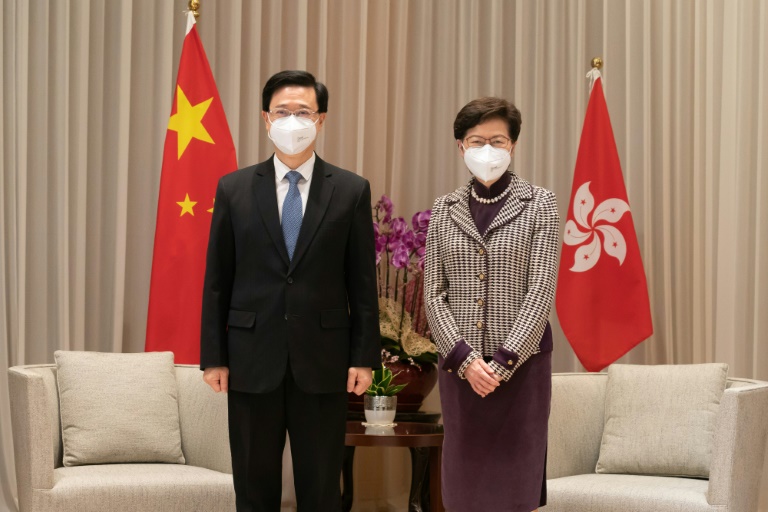
On Monday morning, Lam met her successor Lee and both gave short speeches stressing that they would prepare for an orderly transition between their administrations. 

Lee, who takes over on July 1, was Lam’s security chief and then her deputy.

He was asked by reporters whether Hong Kongers could criticise his administration or risk being arrested for “speech crimes” like dozens of democracy activists in recent years. 

Lee took umbrage to that description. 

“I think you are very wrong to describe that people are now charged simply because of their expressed opinions,” he said. 

“People are brought to court because of the suspicion against them and their actions contravening the law,” he added. “It is their action.”

Lee said his first port of call would be China’s top agencies in Hong Kong — the Liaison Office, the national security committee, the foreign ministry’s office and the People’s Liberation Army garrison.

Close Bitnami banner
Bitnami