World

Yazidis displaced anew by north Iraq violence

Iraqi policeman Jundi Khodr Kalo was among thousands of Yazidis again forced to flee their homes this month, after fierce clashes between the army and local fighters in their Sinjar heartland.

“Last time we were displaced because we were afraid of the Islamic State” jihadist group, said Kalo, 37, from the non-Arab, Kurdish-speaking minority.

The Yazidis are a monotheistic, esoteric community who were massacred by IS when the extremists swept across Iraq in 2014.

Two days of fighting broke out on May 1 in northern Iraq’s Sinjar region between the army and Yazidi fighters affiliated with Turkey’s banned Kurdistan Workers’ Party (PKK).

A local official said the violence forced more than 1,700 families, or over 10,200 people, to flee.

Some 960 families have settled in a displacement camp in the neighbouring Iraqi Kurdistan region, while others have sought shelter with relatives, according to the United Nations.

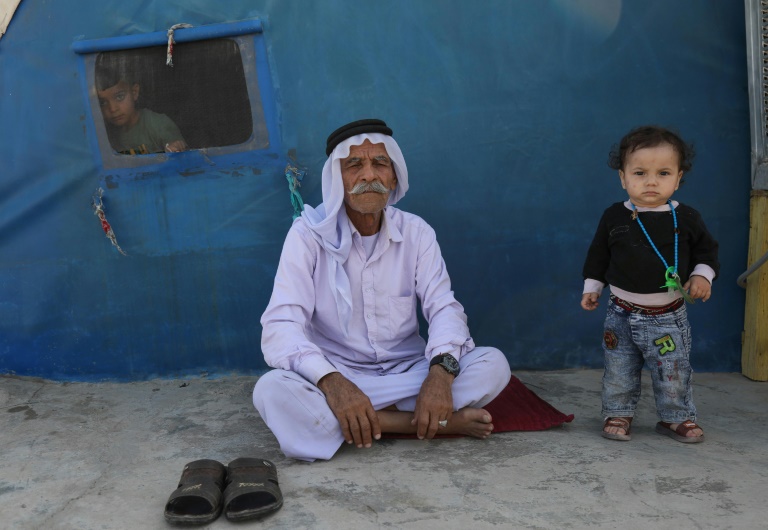
Kalo, his wife and their five children took refuge in the crowded Chamisku camp, home to more than 22,000 people, near the city of Zakho.

– ‘Not an ideal solution’ –

Like many Yazidis, the Kalo family suffered long years of displacement after IS overran swathes of their country.

“We lived in a camp for six years,” he said, only returned to their home village two years ago.

Going back “was not easy… but we managed to get by”.

“But lately, the situation got worse,” he told AFP.

Sinjar is the site of sporadic skirmishes between Iraqi security forces and the Sinjar Resistance Units — local fighters allied with the PKK separatists.

“Every day we would hear the sound of shooting and explosions. We were afraid for our families,” Kalo said.

But life in Chamisku, like in other camps, is tough, too.

Residents take shelter in tarpaulin tents, where foam mattresses line the ground.

AFP journalists saw dozens of people queueing for handouts of rice, tea, sugar, flour and milk.

“The situation in these camps is crowded,” said Firas al-Khateeb, a spokesman for the United Nations’ refugee agency (UNHCR).

He cited “a risk of limited access to basic services due to a reduction of humanitarian funding”.

Living in displacement camps “for long periods of time is not an ideal situation”, he added.

“But any return (home) must be voluntary, maintain human dignity”, and be to a “peaceful environment”, Khateeb said.

– ‘Need security, stability’ –

Iraqi authorities say calm has returned to Sinjar following the fighting, which killed an Iraqi soldier.

Each side has blamed the other for starting the clashes in the region, the scene of simmering tensions and multiple actors. 

The army is seeking to apply an agreement between Baghdad and Iraq’s autonomous Kurdistan region for the withdrawal of Yazidi and PKK combatants.

The deal is seen as crucial for the Kurdistan Democratic Party, which has been looking to restore its former influence in Sinjar.

It is also key to facilitating the return of Yazidis displaced years ago by IS.

But the Yazidi fighters, who are affiliated with the Hashed al-Shaabi — a pro-Iran former paramilitary organisation — accuse the army of trying to take control of their stronghold.

Iraqi security forces said military reinforcements were dispatched to Sinjar to “impose state authority”.

“We will not allow the presence of armed groups,” the forces said in a statement Thursday.

The Sinjar region has also been a target of Turkish air strikes on rear bases of the PKK, which Ankara considers a terrorist organisation.

In such a complex and dangerous atmosphere, Yazidi civilians say they feel like collateral damage.

“We need security and stability, otherwise we will not go back to Sinjar,” said labourer Zaeem Hassan Hamad.

The 65-year-old took refuge in Chamisku with more than a dozen family members, including his grandchildren.

IS forced him to flee once before, and he said he did not want to keep repeating that traumatic experience.

“We cannot go home and be displaced again,” he said.

“If the Hashed, the PKK and the army remain in the region, the people will be afraid,” he added.

“No one will ever go back.”
Three security guards shot dead at Philippine polling station

Three security guards were killed Monday when gunmen opened fire at a polling station in a restive region of the southern Philippines, police said, as millions of Filipinos voted in national elections. 

Elections are a traditionally volatile time in a country with lax gun laws and a violent political culture, but police said this season had been comparatively peaceful. 

The deadly shooting happened shortly after voting got under way in Buluan municipality on Mindanao island, a haven for multiple armed groups ranging from communist insurgents to Islamist militants.

Former mayor Ibrahim Mangudadatu told AFP that people inside the school being used as a polling station ran for cover when the shooting started. 

A fourth guard was wounded in the attack, said Maguindanao provincial police spokesman Major Roldan Kuntong. 

It came after five grenades exploded outside a polling station in Datu Unsay municipality late Sunday that left nine people wounded.

Minutes after that attack, a grenade exploded in the neighbouring municipality of Shariff Aguak, but there were no casualties. Both of those towns are also in Maguindanao province.

Police said the grenade victims had walked from their remote mountain villages to cast their votes at the municipal hall in Datu Unsay when polling stations opened across the country on Monday morning.

“It is their custom to come down early from their villages, which are located eight to 12 hours away on foot,” said Kuntong. 

In 2009, Maguindanao was the scene of the country’s deadliest single incident of political violence on record.

Fifty-eight people were massacred as gunmen allegedly working for a local warlord attacked a group of people to stop a rival from filing his election candidacy.

Dozens of the victims were journalists covering the contest.

A spokesman for the Commission on Elections said they were trying to verify if the shooting and grenade attacks were election-related.

Vice presidential frontrunner Sara Duterte, the former mayor of Mindanao’s Davao City, told reporters she hoped voters would not end up “disenfranchised” as a result of the violence.

The son of former dictator Ferdinand Marcos is the favourite to win the presidential vote, which would return the clan to the pinnacle of political power.

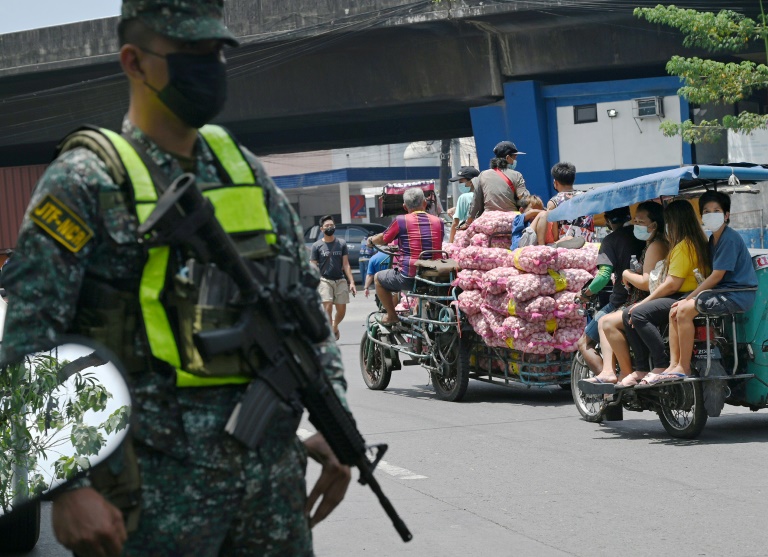
Thousands of personnel from the police, armed forces and coast guard have fanned out across the archipelago to help secure polling stations and ballots, escort election officials and guard checkpoints. 

As of Sunday, there had been 16 “validated election-related incidents” since January 9, including four shootings, said national police spokesman Brigadier-General Roderick Alba.

That compares with 133 incidents during the 2016 presidential elections.

Asian stocks tumble on global anxieties over inflation

Asian stocks fell Monday as investors remained anxious over inflation and the ongoing impact of China’s Covid lockdown policies, despite an initial Wall Street bounce thanks to a solid US jobs report.

Global markets have taken a beating over a series of crises including surging inflation, rising interest rates, China’s economic slowdown and the war in Ukraine.

Wall Street on Friday saw a brief lift in equities after the US Labor Department reported that the world’s largest economy added a better-than-expected 428,000 jobs in April, with the unemployment rate remaining at a low 3.6 percent.

But it still finished lower, with the S&P 500 dropping 0.6 percent, while the other two US indices also dipped at the close of Friday — with the Nasdaq suffering the most at 1.5 percent.

The losses globally capped a volatile week, though markets were briefly lifted due to temporary relief after the Federal Reserve hiked borrowing costs 50 basis points — the most since 2000.

Any short-term outlook is bound to be “messy”, said Diana Mousina, a senior economist at AMP Investments. 

“There may be more downside as markets worry about a significant economic slowdown or ‘hard landing’ and aggressive interest-rate hikes,” she wrote in a note according to Bloomberg.

The United States’ fierce monetary tightening — combined with the news of more restrictions in China — has continued to send traders running for the hills.

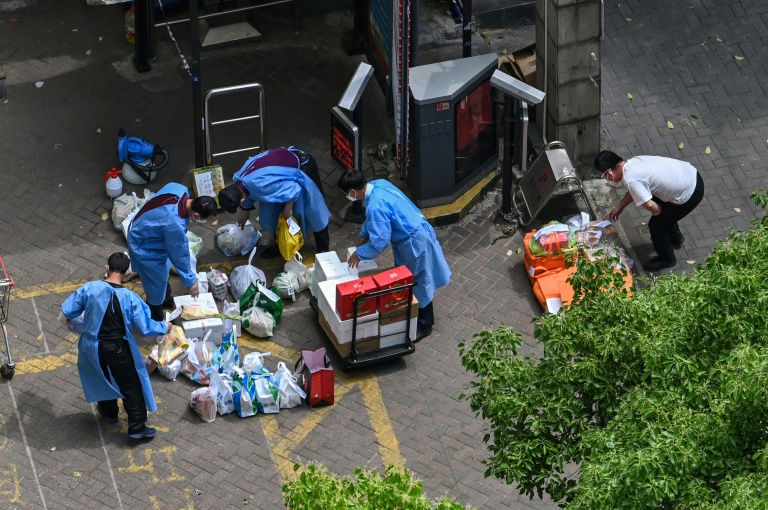
Lockdowns across dozens of Chinese cities — from the manufacturing hubs of Shenzhen and Shanghai to the breadbasket of Jilin — have wreaked havoc on supply chains over recent months, crushing small businesses and trapping consumers at home.

Equities fell in Australia, Singapore, Seoul and Tokyo on Monday, while China’s two mainland indices — Shanghai and Shenzhen — were also lower. Hong Kong’s stock exchange was closed for a public holiday.

“Given the unsettled backdrop of the Ukraine War and China’s economic woes, it is challenging for the Fed to aggressively raise interest rates without dropping the US economy into a sinkhole,” said Stephen Innes of SPI Asset Management.

“Questioning the ability of central banks to lean against inflation effectively remains a significant source of angst… The longer this goes on, it will drive even higher investor anxiety levels and pressure stocks lower.”

Crude prices rebounded Friday after key producers led by Saudi Arabia and Russia refused to lift output more than their planned marginal increase as they weighed tight supply concerns caused by Moscow’s invasion of Ukraine.

But by Monday, it had lowered slightly — likely due to “broader market anxieties suggesting recessionary concerns”, Innes said. 

– Key figures at around 0230 GMT –

Tokyo – Nikkei 225: DOWN 2.2 percent at 26,410.30 (break)

Hong Kong – Hang Seng Index: Closed for a holiday 

Shanghai – Composite: DOWN 0.6 percent at 2,999.67

Brent North Sea crude: DOWN 0.4 percent at $111.92 per barrel

West Texas Intermediate: DOWN 0.5 percent at $109.18 per barrel

Euro/dollar: DOWN at $1.0512 from $1.0556 on Friday 

Pound/dollar: DOWN at $1.2295 from $1.2339 

Euro/pound: DOWN at 85.51 pence from 85.52 pence 

Dollar/yen: UP at 130.88 yen from 130.56 yen 

New York – Dow: DOWN 0.3 percent at 32,899.37 (close) 

London – FTSE 100: DOWN 1.5 percent at 7,387.94 (close) 

Jetliner aborts landing in Mexico to avoid another plane

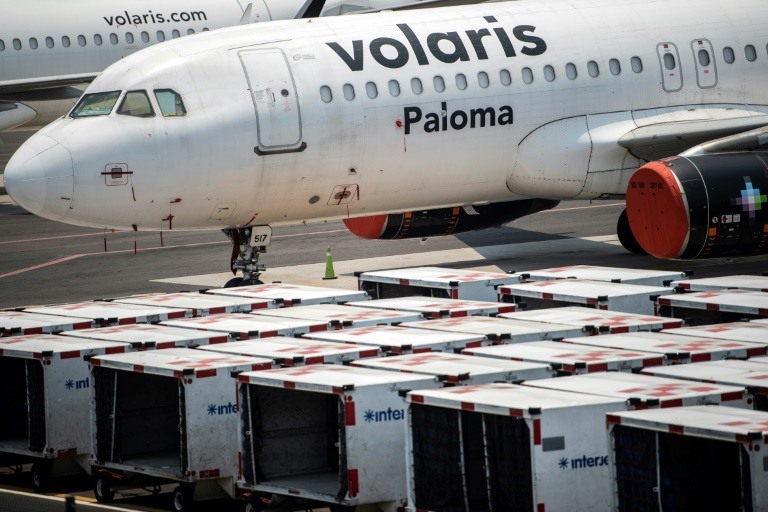
A jetliner attempting to land in Mexico City aborted its approach at the last second to avoid hitting a plane taxiing on the runway, an airline official said Sunday.

Video circulating on social media showed the near-miss involving two Airbus jets belonging to low-cost Mexican carrier Volaris Saturday night at Benito Juarez Airport, the busiest in Latin America.

The airline did not disclose the flight numbers, exact model of aircraft or how many passengers were aboard.

“Thanks to the training of our pilots … no passenger or crew member was at risk during the incident reported the night of May 7,” Volaris CEO Enrique Beltranea wrote on Twitter.

Mexican news organizations said Victor Hernandez Sandoval, a senior communications ministry official who redesigned air traffic patterns over the sprawling city so it could operate two airports, had tendered his resignation.

The video shows one plane about to land when it suddenly pulls up to avoid hitting the jetliner taxiing on the ground.

Because of saturation at the current facility, the previous government began construction of a second airport in Texcoco, a suburb of the city.

But President Andres Manuel Lopez Obrador scrapped that plan after taking office in favor of turning an existing military base into an airport. It is now operating on a limited basis, with a few flights on mainly domestic routes.

Aviation experts have questioned the idea of operating two airports in a city surrounded by mountains and located 2,200 meters above sea level.

The International Federation of Airline Pilots’ Associations last week said crews would face problems if the city’s air space pattern were changed to handle two full-sized airports.

Among other things, planes would spend a long time in holding patterns and land with little fuel, the federation said.

In May of 2021, the United States downgraded its air safety rating for Mexico City, citing what it called inadequate oversight.

Russia readies Victory Day parade as fight for east Ukraine rages

Russia will celebrate its 1945 victory over Nazi Germany Monday with a show of military might as its army battles Kyiv’s forces in the east of Ukraine, where 60 people were killed in an air strike on a school sheltering civilians.

President Vladimir Putin is set to flaunt Russia’s power in celebration of Victory Day, in an event that has taken on great prominence as he seeks to justify a war that has gone on far longer — and at far higher cost — than expected.

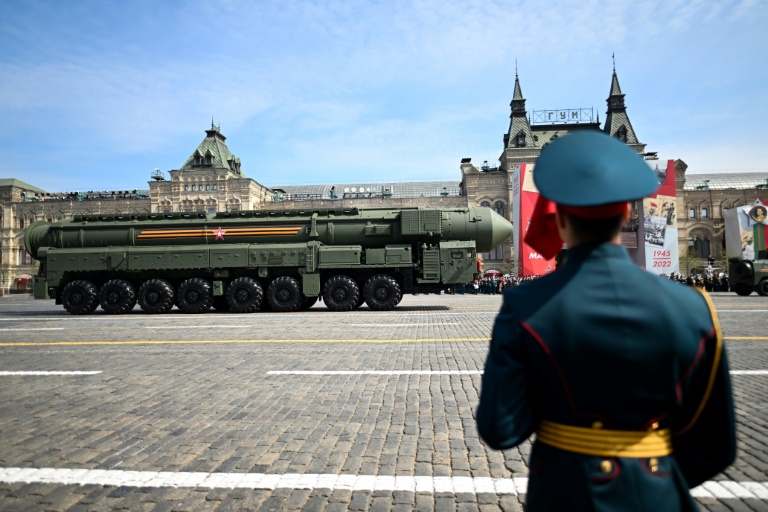
But as huge missiles are towed through Moscow’s Red Square and a planned flyover will feature fighter jets showing support for the war, Ukraine will be desperately battling to stop a hoped-for military breakthrough.

And civilians continue to bear the brunt of the bloodshed, with President Volodymyr Zelensky confirming that 60 were killed in a Russian air strike on a school in the eastern village of Bilogorivka — one of the highest one-day tolls since Moscow’s forces invaded on February 24.

Lugansk region governor Sergiy Gaiday said rescuers were searching for survivors in the debris left by the Russian attack on the school there, though the outlook was bleak.

“Bombs fell on the school,” he said on Telegram, “and unfortunately it was completely destroyed.”

– ‘Surrender is not an option’ – 

To the south, in the devastated port city of Mariupol, depleted Ukrainian forces are defending their final bastion at the Azovstal steelworks, from which scores of civilians have been evacuated in recent days.

An AFP reporter in the city of Zaporizhzhia said Sunday that eight buses carrying 174 civilians — including 40 evacuated from the plant — had arrived in that Ukrainian-controlled city.

“The latest information that I have from both Ukraine and Russia is that there are no more civilians there (Azovstal), but we are not in a position to verify. We weren’t inside the plant,” Osnat Lubrani, the UN’s humanitarian coordinator in Ukraine, told AFP.

More than 600 civilians have now been safely evacuated from the steelworks and other areas of Mariupol, the UN said.

“We hoped everyday for an evacuation,” said Vladymyr Babeush, 41, an Azovstal evacuee who worked at the plant and was among those who arrived in Zaporizhzhia.

“And now we are done waiting. We’re so thankful to everyone involved.”

The evacuations leave a small force of defiant defenders holed up in Azovstal’s sprawling network of tunnels and bunkers.

“We, all of the military personnel in the garrison of Mariupol, we have witnessed the war crimes performed by Russia, by the Russian army. We are witnesses,” said Ilya Samoilenko, an intelligence officer with the far-right Azov regiment defending the site.

“Surrender is not an option because Russia is not interested in our lives.”

Full control of Mariupol would allow Moscow to create a land bridge between the Crimean peninsula, which it annexed in 2014, and eastern regions run by pro-Russian separatists.

Some have speculated that Putin is seeking to achieve that goal in time for Victory Day.

“The enemy is trying to finish off the defenders of Azovstal, they are trying to do it before May 9 to give Vladimir Putin a gift,” Oleksiy Arestovych, an aide to Ukraine’s president, said.

The Russian leader has sought to legitimise his invasion of Ukraine by comparing it with the previous struggle against Nazism and the national pride it brought.

“Today, our soldiers, as their ancestors, are fighting side by side to liberate their native land from the Nazi filth with the confidence that, as in 1945, victory will be ours,” Putin said.

Ukraine’s Zelensky also marked the end of the war by comparing his country’s battle for national survival to the region’s resistance against its former Nazi occupiers.

“Decades after World War II, darkness has returned to Ukraine, and it has become black and white again,” he said, in a monochrome social media video shot before a bombed-out apartment block.

“Evil has returned, in a different uniform, under different slogans, but for the same purpose,” he warned.

– ‘Shame on Russia’ –

Zelensky also met G7 leaders via video conference Sunday to discuss the crisis.

The group in a statement said Putin’s “unprovoked war of aggression” had brought “shame on Russia and the historic sacrifices of its people”.

The White House said the G7 was “committed to phasing out or banning the import of Russian oil”.

But EU diplomats will meet again this week to hammer out the details of their latest sanctions package against Moscow, after a proposed embargo on Russian oil exposed rifts in the bloc.

The White House also said the United States would impose sanctions on three major Russian television stations and deny all Russian companies access to American firms’ consulting and accounting services.

Canadian Prime Minister Justin Trudeau said Putin was responsible for “heinous war crimes” as he visited Irpin, a suburb on the northwest edge of Kyiv that was the scene of heavy fighting in the early weeks of the conflict.

Local mayor Oleksandr Markushyn posted pictures on social media and said Trudeau “came to Irpin to see with his own eyes all the horror that the Russian occupiers had done to our city”.

– Battle for the east –

On the ground, the key battles are being fought in Ukraine’s east.

In Severodonetsk, a dozen jumpy and exhausted soldiers cowering under a bridge from incoming shellfire formed Kyiv’s last line of defence against Russia’s assault on this easternmost city still held by Ukraine. 

The city’s fall would grant the Kremlin de facto control of Lugansk — the smaller of the two republics comprising the Donbas war zone.

A clear pattern has emerged on Ukraine’s eastern front.

Ukrainian units are counterattacking and making gains to the east of the northern city of Kharkiv. 

The Russians, in turn, are chewing up territory roughly 100 miles (160 kilometres) to the southeast of the Ukrainian push.

The soldiers in Severodonetsk looked too tired to put on a brave face.

“I would rather not guess how long we can hold on. All I can say is that we are here now,” said their unit commander.

“The best way to describe the situation? Critically stable,” he said with a sardonic laugh.

burs-oho/mtp

Protest by other means: Lebanon activists run in election

As a law student in late 2019, Verena El Amil joined mass street protests against Lebanon’s political elite. Now she wants to fight them at the ballot box.

At age 25, she is one of a growing number of independent candidates running in a May 15 parliamentary vote in the crisis-torn country.

“We are going to fight,” the young lawyer, dressed in a black leather jacket and combat boots, said at a coffee shop outside Beirut.

“The slogans we screamed during the protests are the ones we want to carry into campaigns and into parliament.”

The vote will be the first major electoral test since a youth-led protest movement from October 2019 vented its rage at Lebanon’s graft-tainted political class.

The revolutionary fervour has been sapped since by cascading crises, from a financial collapse and the pandemic to the 2020 Beirut port blast that killed more than 200 people.

While most of her fellow graduates have fled abroad, Amil honed her political skills in student activism and spent all her savings on the campaign.

“Running for parliamentary elections for me is a continuation,” said Amil, one of the youngest candidates to stand.

“After the 2019 protests, we all grappled with defeat and the reality of a massive emigration wave.

“But in spite of this, we still need to try, and I am running for the elections to show that we are still trying.”

– ‘Election as protest’ –

The number of independent candidates running against established parties has more than doubled since the last vote in 2018.

Beirut-based think tank the Policy Initiative said opposition and independent candidates make up 284 of the 718 hopefuls — up from 124 four years ago.

They are running in 48 different electoral lists across Lebanon, including in peripheral regions where traditional leaders have seldom faced a challenge.

Also in the race this time is Lucien Bourjeily, an activist, writer and director who emerged as one of the key figures of the 2019 protest movement.

Running for a seat for the second time, Bourjeily said he sensed more engagement from the public this time around.

But the opposition is mainly gunning for accountability, not a major win, he said, urging voters to document any signs of electoral fraud.

“The way we documented people getting beaten and losing their eyes and getting killed on the street, we should document how votes will be stolen,” he said.

“People should treat election day as a protest.”

– ‘Haphazard, disorganised’ –

Even in a clean election, opposition candidates would face an uphill challenge, lacking the funds and campaign machines of the traditional parties.

Lebanon’s electoral law is designed to benefit established players, and the opposition is far from united.

“You have competing opposition lists in most districts, and this is unacceptable,” said Carmen Geha, a professor of public administration at the American University of Beirut.

“We needed hope, and hope would have come from a national campaign.”

Voter turnout may be low, in part because high fuel prices deter travel to ancestral towns and villages where constituents are required to cast their vote.

An Oxfam report last month said only 54 percent of over 4,600 people surveyed said they intended to vote, a trend it blamed largely on widespread “disappointment and hopelessness”.

Most of those planning to abstain cited a lack of promising candidates, while nearly half of those who plan to vote said they would choose an independent candidate, the British-based charity said.

Veteran activist Maher Abou Chakra, who ran briefly for the election before pulling out, criticised the opposition for lacking a coherent strategy to rock the establishment.

“Lebanon’s political regime is hundreds of years old… and it is deeply entrenched,” he said.

“You can’t challenge it in a haphazard and disorganised way.”

Marcos Jr eyes landslide as Philippines votes for new president

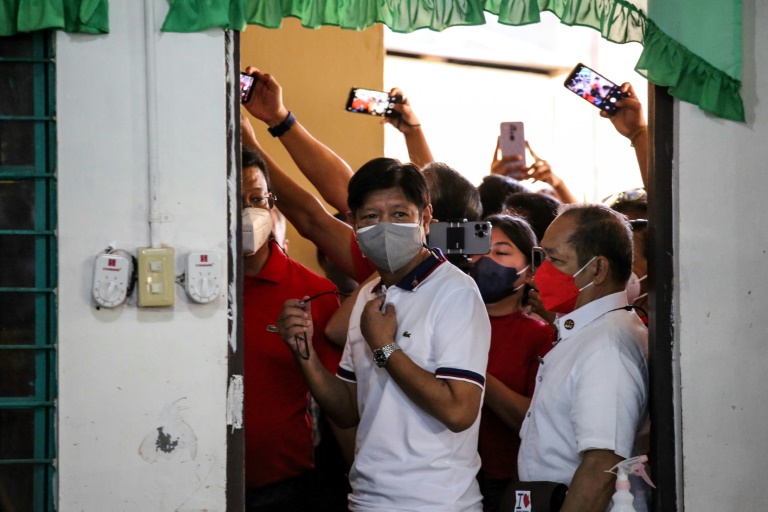
Millions of Filipinos thronged primary schools and other polling stations Monday to elect a new president, with the son of former dictator Ferdinand Marcos the favourite to win the high-stakes election.

Nearly 40 years after the patriarch was deposed by a popular revolt and the family chased into exile, Ferdinand Marcos Junior looks set to complete their remarkable comeback from pariahs to the peak of political power. 

Ten candidates are vying to succeed President Rodrigo Duterte in elections seen by many as a make-or-break moment for the Philippines’ fragile democracy.

But only Marcos Jr and his rival Leni Robredo, the incumbent vice president, have a credible chance of winning. 

People wearing masks began forming long queues before dawn to cast their votes when polling stations opened across the archipelago.

At Mariano Marcos Memorial Elementary School in the northern city of Batac, the ancestral home of the Marcoses, voters waved hand fans to cool their faces in the tropical heat.  

Bomb sniffer dogs swept the polling station before Marcos Jr arrived with his younger sister Irene and eldest son Sandro. 

They were followed by the family’s flamboyant 92-year-old matriarch Imelda, who was lowered from a white van while wearing a long red top with matching trousers and slip-on flats. 

Sandro, 28, who is running for elected office for the first time in a congressional district in Ilocos Norte province, admitted the family’s history was “a burden”. 

But he added: “It’s one that we also try to sustain and protect and better as we serve.”

Casting her ballot for Robredo at a school in Magarao municipality, in the central province of Camarines Sur, Corazon Bagay said the former congresswoman “deserves” to win.

“She has no whiff of corruption allegations,” said the 52-year-old homemaker. “She’s not a thief. Leni is honest.”

Supporters chanting “Leni, Leni” greeted Robredo as she arrived at the same school to vote. 

Turnout is expected to be high among the more than 65 million Filipinos eligible to vote.

“The long lines are magnificent. Filipinos wanted to be heard and heard loudly,” said George Garcia of the Commission on Elections.

At the end of a bitter campaign, polls showed Marcos Jr heading towards a landslide. He had a double-digit lead over Robredo in the latest surveys and she will need a low turnout of Marcos Jr voters or a late surge of support for her to score an upset.

In the Philippines, the winner only has to get more votes than anyone else.

Since Robredo announced her bid for the top job in October, volunteer groups have mushroomed across the country seeking to convince voters to back what they see as a battle for the country’s soul. 

But relentless whitewashing of the elder Marcos’s brutal and corrupt regime, support of rival elite families and public disenchantment with post-Marcos governments have fuelled the scion’s popularity.

After six years of Duterte’s authoritarian rule, rights activists, Catholic church leaders and political analysts fear Marcos Jr will be emboldened to lead with an even heavier fist if he wins by a large margin.

“We think it will worsen the human rights crisis in the country,” said Cristina Palabay, secretary-general of human rights alliance Karapatan. 

While Marcos Jr had a 75 percent chance of winning, the outcome was not guaranteed, according to Eurasia Group analyst Peter Mumford, who said potential complacency among his supporters could work in Robredo’s favour.

– Authoritarian rule – 

Robredo, a 57-year-old lawyer and economist, has promised to clean up the dirty style of politics that has long plagued the feudal and corrupt democracy where a handful of surnames hold sway over the country.

Marcos Jr and running mate Sara Duterte — both offspring of authoritarian leaders — have insisted they are best qualified to “unify” the country, though what that means is unclear. 

Hundreds of thousands of red-clad supporters turned out at Marcos Jr and Duterte’s raucous rally in Manila on Saturday, as they made a last push for votes.

Josephine Llorca said it was worth betting on another Marcos, because successive governments since the 1986 revolution that ousted the family had failed to improve the lives of the poor.

“We tried it and they were even worse than the Marcoses’ time,” she said.

Surveys indicate Marcos Jr, 64, will win more than half the votes, which would make him the first presidential candidate to secure an absolute majority since his father was overthrown.

Political analyst Richard Heydarian warned such a big win could enable Marcos Jr to make constitutional changes to entrench his power and weaken democratic checks and balances.

“(Rodrigo) Duterte never had the discipline and wherewithal to push his authoritarian agenda to its logical extreme,” Heydarian said.

“That historic opportunity could fall on the lap of the Marcoses.”

– ‘Another crossroads’ – 

Other candidates seeking the presidency include boxing legend Manny Pacquiao and former street scavenger turned actor Francisco Domagoso. 

Personality rather than policy typically influences many people’s choice of candidate, though vote-buying and intimidation are also perennial problems in Philippine elections. 

More than 60,000 security personnel have been deployed to protect polling stations and election workers. 

Hours before voting got under way, a grenade attack outside a polling station in a restive region of the southern island of Mindanao left nine people wounded, police said. 

Allegations of dirty tactics marred the final week of the campaign, as Marcos Jr warned of electoral fraud while Robredo accused him of being a “liar”. 

In a rousing speech to hundreds of thousands of supporters on Saturday, Robredo declared: “Victory awaits us.”

Whatever the result, though, Marcos Jr opponents have already vowed to pursue efforts to have him disqualified over a previous tax conviction and extract billions of dollars in estate taxes from his family.

“It’s another crossroads for us,” said Judy Taguiwalo, 72, an anti-Marcos activist who was arrested twice and tortured during the elder Marcos’s regime.

“We need to continue to stand up and struggle.”

Canadian offices going to the dogs as work-from-home ending

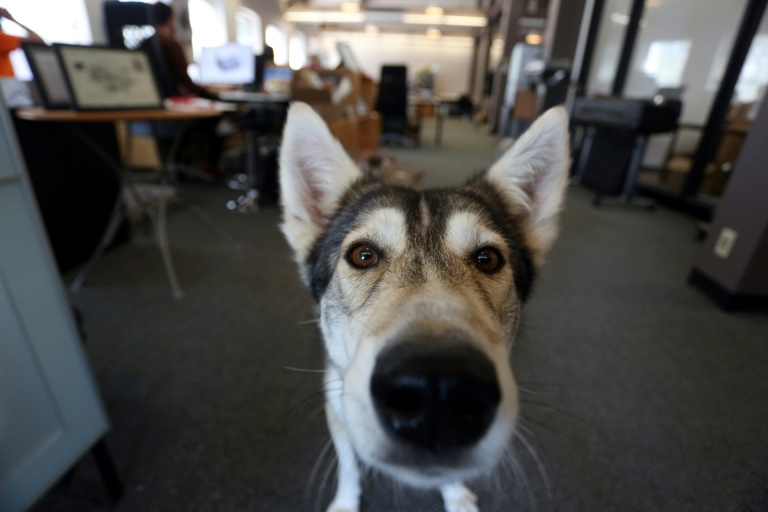
Daisy moseys over to greet visitors, her tail wagging. She’s listed as chief morale officer on Tungsten Collaborative’s website, and is among the many pets joining their owners returning to Canadian offices after working from home through the pandemic.

The 12-year-old Lab sniffs for treats. Before long, a Basset Hound named Delilah waddles over, offering up her belly for a rub, along with other four-legged colleagues Eevee the Greyhound and German Shepherd puppy Hudson, who lets out a bark.

Daisy’s proficiencies include “stress management” and “client engagement,” according to her biography, which notes that many of the industrial design studio’s “greatest innovations can be traced back to a long walk” with her.

“We encourage people if they have pets to bring them (to work),” Tungsten president Bill Dicke, 47, said in an interview with AFP.

“You develop this relationship being at home with your pet on a day-to-day basis and all of a sudden you go back to work, so now they have to be crated for the day or roam the house alone, it’s not fair to them,” he opined.

“The tolerance for pets (at work) during the pandemic has increased,” he added.

These dogs sleep under desks or in the boardroom throughout the day, chase balls down a hallway or chew squeaky toys. There’s a row of water bowls in the office kitchen, if they get thirsty.

The Ottawa company is listed by the Humane Society as dog-friendly, and it’s actually helped drum up business, Dicke said, as well as increased staff productivity.

Workers are forced to take regular breaks for dog walks instead of “eating lunch at their desk,” for example, and are not fretting about their pet being left alone at home, he explained.

According to a recent Leger survey for PetSafe, 51 percent of Canadians support bringing dogs to the office.

Younger workers were the most supportive, with 18 percent of those aged 18 to 24 years saying they would change jobs if their employer refused to allow them to bring their pet to work.

With an estimated 200,000 Canadians adopting a dog or cat since the start of the pandemic in 2020, bringing the nationwide total to 3.25 million, it could force employers now pressing staff to return to the office to consider this option.

– ‘Going to w-o-r-k’ –

Johan Van Hulle, 29, joined Tungsten last year. Its dog policy, he said, “was a key part of the decision” to take the job, after working from home with Eevee.

“Allowing dogs is a good indicator” of a company’s culture, he said, and the kind of “not too corporate” workplace that appeals to him.

Across town at construction joint venture Chandos Bird, people designing a nuclear research laboratory are visibly smitten by 10-year-old Samson.

His owner Trevor Watt didn’t want to leave the Yorkshire Terrier alone after moving into a new house and starting work in a new office in January.

It was supposed to be a temporary arrangement until Samson got used to his new surroundings, but he endeared himself with colleagues and staff in neighboring offices, who take turns walking him.

“He loves going to work,” Watt said. “When I say I’m going to w-o-r-k, he’s ready to jump in the car.”

Watt likes it, too. “I don’t have to worry about him.” 

“Dogs in new environments get very anxious, when left alone,” he explained. “I think a lot of new owners know that now that they’ve had their puppies through Covid.”

If Samson needs to go out, he just puts a paw on Watt’s leg. He has toys and a bed at the office, and wanders from desk to desk.

Petting him is a great way to “decompress after a tough meeting,” commented Watt’s boss Byron Williams.

Dogs in the workplace, however, can also create challenges, he said, such as “if somebody is scared of dogs” or allergic to dander.

One of Watt’s coworkers is terrified of dogs. It was agreed with her that Samson would be leashed the days she comes to the office.

At other offices, workers surveyed by AFP lamented carpet stains, disruptive barking and pet hair or drool on clothes — not a great look for impressing clients.

Downtown, many stores and cafes have water bowls for dogs, and several shopkeepers such as Emma Inns of the Adorit fashion boutique bring their dogs to work.

“If they’re home alone, they get into trouble,” she said of Rosie, Oscar and Camilla.

As store mascots, however, they’re great for business.

“Everyone knows their names,” Inns said. “Some people come just to see them, but then buy something.”

Fiji pauses US seizure of Russia-linked superyacht Amadea

A Fiji court has suspended the execution of a US warrant to seize a $300 million superyacht Washington claims is owned by sanctioned Russian oligarch Suleiman Kerimov, prosecutors said.

The 348-foot (106-metre) Amadea has been targeted because Kerimov is among a group of oligarchs close to Moscow who have been santioned by the United States over Russia’s invasion of Ukraine.

The yacht remains in Fiji police custody and is blocked from leaving the Pacific nation’s waters despite the warrant suspension, prosecutors said.

The luxurious Amadea — which has a helipad, pool, jacuzzi and “winter garden” on its sun deck, according to tracking website superyachtfan.com — has been berthed in Lautoka, Fiji in the South Pacific since mid-April.

Last week, Fijian law enforcement, backed by US agents, took control of the superyacht under the warrant, which was lodged with the island state’s High Court.

The US Justice Department requested the vessel, which it has estimated to be valued at $300 million, be seized for violating sanctions and for alleged ties to corruption.

But the company officially registered as the Amadea’s owner, Millemarin Investment, on Friday obtained a temporary stay on the US warrant’s execution from the Court of Appeal, Fiji prosecutors said.

The Court of Appeal “granted an interim stay on the execution of the warrant”, a spokeswoman for Fiji’s office of the director of public prosecutions told AFP Monday.

The case is scheduled to return to court on Thursday and the US warrant remains officially registered with the Fiji courts, she said.

“The yacht has been further restrained from leaving the Fiji waters until further notice,” she added.

“It is in Fiji police custody at this point.”

The United States says Kerimov, who has made a fortune as part-owner of major Russian energy and financial companies, including Gazprom and Sberbank, is also an official of the Russian government.

In a publicly released copy of the warrant, the section listing various reasons to believe Kerimov is the yacht’s true, beneficial owner was partly blacked out. 

The warrant said ownership was transferred to Millemarin Investment in August 2021.

G7 countries pledge to stop Russia oil imports

The G7 club of wealthy nations committed Sunday to phasing out its dependency on Russian oil and issued a scathing statement accusing President Vladimir Putin of bringing “shame” on Russia with his invasion of Ukraine.

The statement from the Group of Seven — France, Canada, Germany, Italy, Japan, Britain and the United States — did not specify exactly what commitments each country will make to move away from Russian energy.

But it was an important development in the ongoing campaign to pressure Putin by crippling Russia’s economy, and underscores the unity of the international community against Moscow’s actions.

“We commit to phase out our dependency on Russian energy, including by phasing out or banning the import of Russian oil. We will ensure that we do so in a timely and orderly fashion, and in ways that provide time for the world to secure alternative supplies,” the joint statement said.

“This will hit hard at the main artery of Putin’s economy and deny him the revenue he needs to fund his war,” the White House said. 

The announcement came as the G7 held its third meeting of the year on Sunday via video conference, with Ukrainian President Volodymyr Zelensky participating. 

The West has so far displayed close coordination in its announcements of sanctions against Russia, but has not moved at the same pace when it comes to Russian oil and gas.

The United States, which was not a major consumer of Russian hydrocarbons, has already banned their import.

But Europe is far more reliant on Russian oil. The European Union has already said it is aiming to cut its reliance on Russian gas by two-thirds this year, though Germany has opposed calls for a full boycott, with member states continuing intense negotiations Sunday. 

The G7 also slammed Putin personally for his actions in Ukraine.

The Russian president’s “unprovoked war of aggression” against its Eastern European neighbor has brought “shame on Russia and the historic sacrifices of its people,” the group said in its statement.

“Russia has violated the international rules-based order, particularly the UN Charter, conceived after the Second World War to spare successive generations from the scourge of war,” the statement continued.

– Fresh US sanctions –

The date of Sunday’s G7 meeting is highly symbolic: Europeans commemorate the end of World War II in Europe on May 8. 

Sunday’s meeting also comes on the eve of the May 9 military parade in Russia, which marks the Soviet Union’s victory over Nazi Germany. 

Washington also announced a new round of sanctions against Russia in a White House statement on Sunday, focusing on two major areas: the media, and access by Russian companies and wealthy individuals to world-leading US accounting and consulting services.

The US will sanction Joint Stock Company Channel One Russia, Television Station Russia-1, and Joint Stock Company NTV Broadcasting Company. Any US company will be prohibited from financing them through advertising or selling them equipment.

“US companies should not be in the business of funding Russian propaganda,” said a senior White House official who requested anonymity, stressing that these media were directly or indirectly controlled by the Kremlin.

Another line of attack by Washington: banning the provision of “accounting, trust and corporate formation, and management consulting services to any person in the Russian Federation,” according to the White House.

Those services are used to run multinational companies, but also potentially to circumvent sanctions or hide ill-gotten wealth, the White House official said. 

The official stressed that while the Europeans had the closest industrial links with Russia, the United States and the United Kingdom dominated the world of accounting and consulting, notably through the “Big Four” — the four global audit and consulting giants Deloitte, EY, KPMG and PwC.

Washington has also announced new bans on the export of American products to Russia, covering a range of capital goods from bulldozers to ventilation systems and boilers. 

The United States announced on Sunday that it would impose visa restrictions on 2,600 Russian and Belarusian officials, as well as sanctions against officials of Sberbank and Gazprombank.

Close Bitnami banner
Bitnami