World

Australia PM says will 'ensure' no China base on Solomon Islands

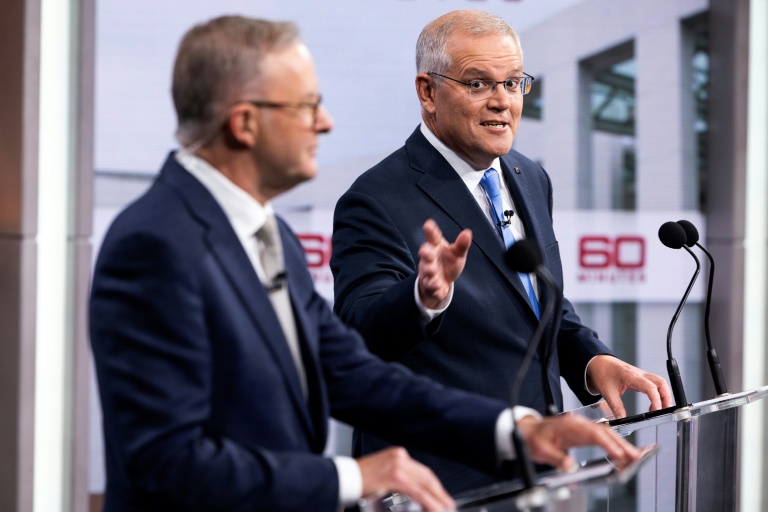
Australia will work with its allies to ensure China does not set up a military base in the Solomon Islands, Prime Minister Scott Morrison vowed Sunday during a heated pre-election debate.

China’s growing clout in the Pacific has become a hot political issue in Australia ahead of May 21 elections, following Beijing’s announcement last month that it had signed a security pact with the Solomons.

The China-Solomons deal has not been publicly released but a leaked draft alarmed countries in the region, particularly sections that would allow Chinese naval deployments to the Solomons — less than 2,000 kilometres (1,200 miles) from Australia.

Morrison, whose conservative government is trailing the opposition in latest opinion polls, has been criticised for failing to prevent China from signing the deal in a region where Australia has traditionally had great influence.

Opposition Labor Party leader Anthony Albanese described it in the televised debate as a “massive foreign policy failure”.

The prime minister has warned that establishing a Chinese military base in the Solomons would be crossing a “red line”.

Pressed during the debate on what that red line means, Morrison said: “Australia would work with partners to ensure that that type of an outcome would be prevented.”

Morrison added, however, that it would be “unwise” to speculate about specific measures that Australia might take to prevent a military base being established on the Solomons.

“The Solomon Islands government themselves have made it very clear to us that that is not an outcome that they are seeking or supporting either. I believe it is not in their national interest to have such a presence,” he said.

– ‘Lack of transparency’ –

Australia’s foreign minister Marise Payne held talks with her Solomons counterpart in Brisbane on Friday night during which she repeated Australia’s “deep concern” over the agreement and the “lack of transparency” over its content.

But she said the Solomons’ foreign minister, Jeremiah Manele, reassured her that Australia remained the Pacific state’s “partner of choice”.

The Solomons’ prime minister, Manasseh Sogavare, has reacted angrily to criticism of the China deal, which has been led by Australia and the United States.

Sogavare said he deplored a lack of trust by “concerned parties”, insisting that the deal with China was “nothing to be concerned about”.

The island state’s leader told parliament Tuesday that there had been “warning of military intervention” if other nations’ interests were undermined in the Solomon Islands.

“In other words, Mr Speaker, we are threatened with invasion. And that is serious,” the prime minister said.

“We are being treated as kindergarten students walking around with Colt 45s in our hands, and therefore we need to be supervised,” he added.

“We are insulted.”

Morrison has denied any invasion threat from Australia, insisting his government treats its Pacific allies as equals while urging a “calm and composed” approach to the issue.

The Solomon Islands government severed ties with Taiwan in September 2019 in favour of diplomatic relations with China, a switch that unlocked investment but stoked inter-island rivalries.

Last November, protests against Sogavare’s rule flared into riots in the capital Honiara, during which much of the city’s Chinatown was torched. Australia led an international peacekeeping mission to help restore calm.
Ukraine battles to hold eastern bastions as Russia prepares Victory Day parade

Ukrainian forces  braced Sunday to defend their final bastion in the devastated port city of Mariupol, desperate to deny Russia a symbolic win on the eve of Moscow’s Victory Day celebrations.

Shelling and missile strikes have intensified in the build up to the World War II anniversary, and rescuers are searching for 60 Ukrainian civilians feared killed in the bombing of a village school.

President Volodymyr Zelensky marked the anniversary on the end of the World War by comparing Ukraine’s battle for national survival to the region’s war of resistance against its former Nazi occupiers.

“Decades after World War II, darkness has returned to Ukraine, and it has become black and white again,” Zelensky said, in a monochrome social media video shot against the backdrop of a bombed out apartment block.

“Evil has returned, in a different uniform, under different slogans, but for the same purpose,” he warned, trying to turn Russia leader President Vladimir Putin’s “anti-Nazi” rhetoric back on itself.

Russia, meanwhile, was gearing up for a Victory Day parade designed to associate the invasion of its neighbour with the national pride felt over the Soviet Union’s defeat of Germany. 

“Today, our soldiers, as their ancestors, are fighting side by side to liberate their native land from the Nazi filth with the confidence that, as in 1945, victory will be ours,” Putin said.

Zelensky was also to meet G7 leaders via video conference to discuss the crisis, and European diplomats will meet again next week to hammer out the details of their latest sanctions package against Moscow.

On the ground, the key battles were being fought in Ukraine’s east.

– Tunnel network –

Civilians have now been evacuated from Mariupol’s Azovstal steelworks, leaving a small force of defenders holed up in its sprawling network of underground tunnels and bunkers.

The complex — the final pocket of Ukrainian resistance in the port city — has taken on a symbolic value.

“We, all of the military personnel in the garnison of Mariupol, we have witnessed the war crimes performed by Russia, by the Russian army. We are witnesses,” said Ilya Samoilenko, an intelligence officer with the far right Azov regiment, which is defending the steel works.

“Surrender is not an option because Russia is not interested in our lives,” he said.

Taking full control of Mariupol would also allow Moscow to create a land bridge between the Crimean peninsula, which it annexed in 2014, and regions run by pro-Russian separatists in the east.

In one of those regions, Lugansk, Ukrainian forces are now mounting a last ditch defence of the city of Severodonetsk, formerly an industrial city of 100,000 people, now Russia’s next target.

In the same region, governor Sergiy Gaiday said 60 civilians were feared dead after a school in the village of Bilogorivka was hit in an air strike.

“The bombs fell on the school and unfortunately it was completely destroyed. There were a total of 90 people, 27 were saved,” he said on Telegram. 

“Sixty people who were in the school are very probably dead.”

Rescuers could not work overnight because of a threat of new strikes, but resumed their work on Sunday.

– ‘Filtration camps’ –

Rescuers were also looking for survivors in the neighbouring village of Shepilivka after a strike hit a house where 11 people were sheltering in the basement, Gaiday said.

Civilians who escape Mariupol describe passing through Russian “filtration” sites where several evacuees told AFP they were questioned, strip-searched, fingerprinted, and had their phones and documents checked.

“They asked us if we wanted to go to Russia… or stay and rebuild the city of Mariupol,” said Azovstal evacuee Natalia, who spoke on condition that her full name not be published.

“But how can I rebuild it? How can I return there if the city of Mariupol doesn’t exist anymore?”

Russia’s campaign has run into tough resistance — and galvanised Kyiv’s Western allies to impose potentially crippling sanctions on the Russian economy and Putin’s inner circle.

International efforts to pressure the Russian leader continue, with G7 leaders, including US President Joe Biden, to talk with Zelensky on Sunday to discuss Western support for Kyiv.

German Chancellor Olaf Scholz will host the video call and Zelensky will “take part and report on the current situation,” spokeswoman Christiane Hoffmann said.

Further sanctions or at least a tightening of the huge array of economic punishments already inflicted on Russia are expected to be discussed.

burs-dc/bp

Is Ukraine conducting a sabotage campaign inside Russia?

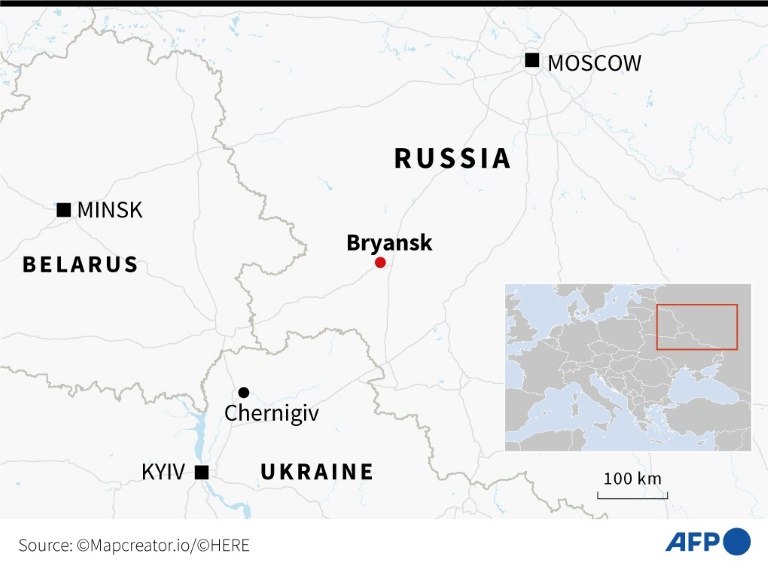
A deadly fire at an aerospace research institute in Tver, northwest of Moscow. Another blaze at a munitions factory in Perm, more than 1,100 kilometers (680 miles) to the east. And fires in two separate oil depots in Bryansk, near Belarus.

Coincidences, or a sign that Ukrainians or their supporters are mounting a campaign of sabotage inside Russia to punish Moscow for invading their country?

Since the blaze at the Central Research Institute of the Aerospace Defense Forces in Tver on April 21, which killed at least 17 people, social media has leapt on every report of a fire somewhere in Russia — especially at a sensitive location — as a sign that the country is under covert attack.

No one is claiming responsibility, but analysts say at least some of the incidents, particularly those in Bryansk, point to a possible effort by Kyiv to bring the war to their invaders.

In a post on Telegram, Mykhaylo Podolyak, a senior advisor to Ukrainian President Volodymyr Zelensky, called the fires “divine intervention.”

“Large fuel depots periodically burn… for different reasons,” he wrote. “Karma is a cruel thing.”

– ‘We don’t deny’  –

In a massive country such as Russia, a fire at a remote factory or building would normally not be particularly eyebrow-raising.

But since Russian forces invaded Ukraine on February 24, more than a dozen blazes noted by people who document the war have drawn huge attention on social media, amid fears there is a concerted campaign of arsonous terror by the Ukrainians.

Even fires late last month in Russia’s far east — at an airbase north of Vladivostok and at a coal plant on Sakhalin — raised suspicions.

And on Wednesday, a massive conflagration struck a chemicals plant in Dzerzhinsk, east of Moscow.

“Russian saboteurs against Putin continue their heroic work,” said Igor Sushko, a Ukrainian racecar driver who regularly posts photos and videos on Twitter of alleged acts of sabotage inside Russia — but offers no proof they were deliberate.

Another Zelensky advisor, Oleksiy Arestovych, was equally opaque to The New York Times, noting that Israel never admits its covert attacks and assassinations.

“We don’t confirm, and we don’t deny,” he said.


– Part of the strategy? –

War analysts believe the infernos in Bryansk, which hit facilities sending oil to Europe, were deliberate and tied to the war.

The anonymous analysts behind “Ukraine Weapons Tracker,” a Twitter account that posts detailed accounts with supporting videos of attacks by both sides, said they received “reliable” information that the Bryansk fires were the result of attacks by Ukrainian Bayraktar drones.

“If accurate, then this story again shows the ability of Ukrainian forces to conduct strikes in Russian territory using long-range assets,” they wrote.

“I think it was probably a Ukrainian attack, but we cannot be certain,” Rob Lee, another war analyst, told The Guardian.

Added to that have been a number of apparent shellings by helicopters and drones and evident acts of sabotage against infrastructure in Kursk and Belgorod Oblast on the Ukrainian border, close to the fighting.

The governors of Belgorod and Kursk have both blamed the fires and destruction of infrastructure such as railway bridges on saboteurs and attackers from Ukraine. 

An April 1 attack on a Belgorod fuel depot, Governor Vyacheslav Gladkov said on his Telegram channel, was the result of “an air strike from two helicopters of the armed forces of Ukraine, which entered the territory of Russia at a low altitude.”

“Nothing that would confirm Ukrainian sabotage, except for the fact that many of the fires seemed to hit strategic/military targets,” said Phillips O’Brien, professor of strategic studies at the University of St Andrews, Scotland.

Such attacks “certainly seem to be a part of their strategy,” he said. 

Pentagon officials have said that Russian forces inside Ukraine are hobbled by weak supply chains, and attacks on their infrastructure would further affect their war effort.

But US officials would not comment on whether, deeper inside Russia, there is an active campaign of sabotage hitting targets not-so-directly related to the invasion.

Crowds jeer Sri Lankan PM on rare outing

Boos and heckles greeted Sri Lankan Prime Minister Mahinda Rajapaksa Sunday on his first public outing since nationwide protests erupted demanding his ruling family resign over the worsening economic crisis.

Months of blackouts and acute shortages of food, fuel and medicines have caused widespread suffering across the South Asian island in its worst economic downturn since independence in 1948.

On Sunday, the premier visited one of the holiest Buddhist temples — housing a reputedly 2,300-year-old tree — in Anuradhapura.

But dozens of people carried hand-written placards and chanted slogans demanding that “thieves” be banned from the sacred city, 200 kilometres (125 miles) north of Colombo.

“We will worship you if you stand down (as Prime Minister) and leave,” one man shouted.

Heavily armed Special Task Force (STF) commandos were deployed while police moved to clear the road for Rajapaksa’s convoy of six vehicles. 

Officials said the premier returned to the capital by helicopter.

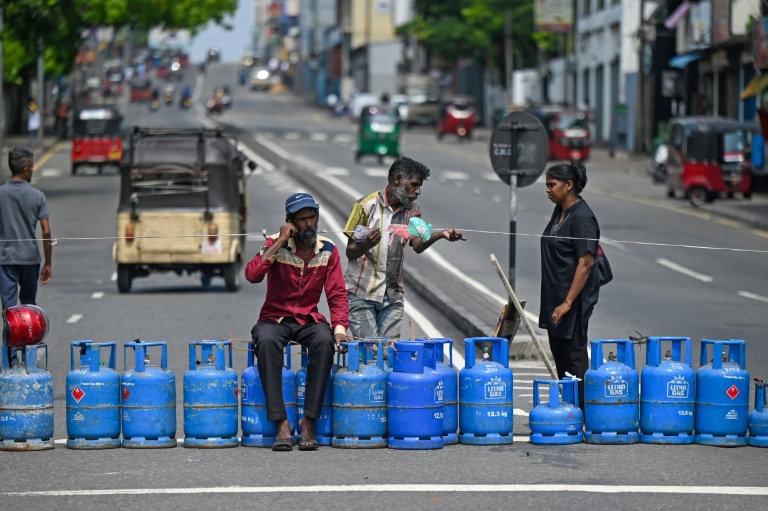
Several major roads in the country are blocked by people protesting the lack of cooking gas, petrol and diesel.

– Looting –

In the capital, a truck transporting cooking gas was looted Sunday by crowds who had been waiting in line overnight for supplies.

Outnumbered police watched helplessly as men climbed onto the truck and got away with 84 cylinders of gas, officials said.

The government imposed a state of emergency granting the military sweeping powers to arrest and detain people on Friday, after trade unions brought the country to a virtual standstill in a bid to pressure President Gotabaya Rajapaksa to step down.

The defence ministry said in a statement on Sunday that anti-government demonstrators were behaving in a “provocative and threatening manner” and disrupting essential services.

Unions said they would stage daily protests from Monday to pressure the government to revoke the emergency.

Union leader Ravi Kumudesh said they will mobilise both state and private sector workers to storm the national parliament when it opens its next session on May 17.

“We also want the government to lift the emergency because it is not a solution,” Kumudesh said in a statement. “What we want is for the president and his family to go.”

President Rajapaksa, who is the brother of the prime minister Mahinda, has not been seen in public since tens of thousands attempted to storm his private residence in Colombo on March 31. 

Since April 9, thousands have been camping in front of his office in Colombo.

– Divine intervention –

Mahinda Rajapaksa’s visit to Anuradhapura is part of a flurry of religious activity by the ruling family as it clings to power in the Buddhist-majority nation.

Local media reported that the president’s personal shaman, Gnana Akka, had charmed bottled water and delivered it to the protest site in the hope the movement would fizzle out.

Another report said the premier’s wife Shiranthi had visited a Hindu temple seeking divine help for her family’s bid to remain in power.

Official sources say the president may ask his brother Mahinda to stand down in an effort to clear the way for a unity government to navigate Sri Lanka through the crisis. 

But the country’s largest opposition party has already said it will not join any government helmed by a member of the Rajapaksa clan.

Sri Lanka was hit by an economic crisis after the coronavirus pandemic hammered income from tourism and remittances.

In April, the country announced it was defaulting on its $51 billion foreign debt.

Afghan women defiant but feel 'imprisoned' by order to cover faces

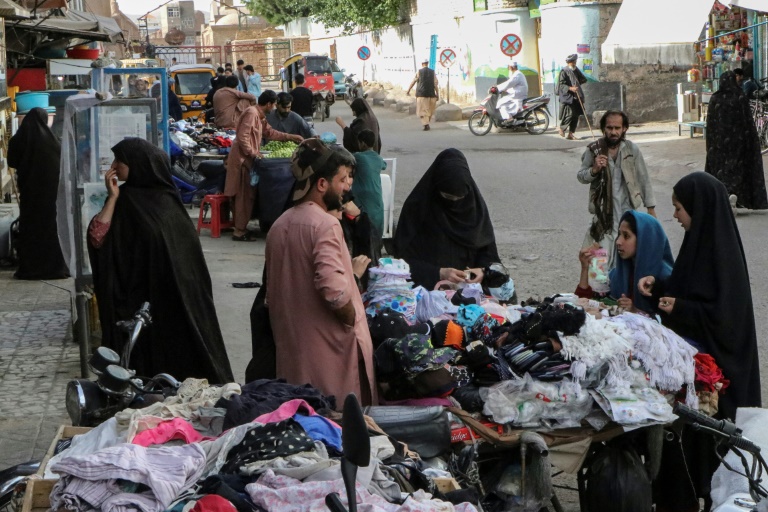
Women in Afghanistan expressed defiance on Sunday after the Taliban issued a directive ordering them to cover fully in public, including their faces, or stay indoors, saying the change would effectively leave them “imprisoned”.

Afghanistan’s supreme leader and Taliban chief Hibatullah Akhundzada approved the order on Saturday in a move that threatens to push freedoms back toward the harsh rule imposed by the Islamists when they previously held power between 1996-2001.

It also goes against promises about a softer rule made to the international community after the Taliban took power in August last year.  

“I am being imprisoned. I can’t live in freedom and all my social life is being controlled by the Taliban,” activist Tahmina Taham, a former government employee who lost her job after the Taliban stormed back to power last year, told AFP.

“Forget about being a woman, I have been stripped of my liberties even as a human being.” 

Akhundzada’s decree also specified that women working in government jobs who did not follow the order “should be fired” and that employees whose wives and daughters do not comply will also be suspended from their jobs.

The United Nations mission in Afghanistan condemned the decree and said it might further “strain engagement” between the Islamists and the international community, which has tied the resumption of aid to Afghanistan’s economy and the recognition of the Taliban government to their ability to respect women’s rights.

There were no immediate signs of Akhundzada’s order being followed in Kabul on Sunday, with many women seen on the streets without covering their faces.

In the western city of Herat, considered liberal by Afghan standards, resident Fatima Rezaie said many women were now defiant and won’t accept changes imposed by force.

“Women are not the same as 20 years ago,” Rezaie told AFP. 

“(Today) they are firm and steadfast and ready to stand up to defend their rights.”

But in the southern city of Kandahar, the de facto power centre of the Taliban where the reclusive Akhundzada is believed to reside, women were seen wearing the burqa.

– ‘Weak point’ –

In the 20 years between the Taliban’s two stints in power, girls were allowed to go to school and women were able to seek employment in all sectors, though considerable social barriers still impeded freedoms. 

But since their return, the Taliban have imposed severe restrictions on women’s rights banning them from many government jobs, secondary education and also from travelling alone outside their cities.

Taham said the new “order will have a very negative impact on the personal and working life of women,” adding her sister had to quit studying after her university refused her admission in a mixed-sex class.

Many are incensed at the retraction of hard-fought freedoms. 

“Where (in Islam) is it said that women’s hands and faces should be covered?” said Azita Habibi, a midwife at a hospital in Herat.

But Akhundzada’s decree has also left many women worried for the safety of their male guardians.

“Even I have decided to wear a full covering hijab because I don’t want the men in my family to be punished or dishonoured,” said Laila Sahar, a former NGO worker who gave a fictitious name to protect her identity.

“A weak point of a woman is her family, her children, her partner. The Taliban have smartly used this weakness to force her in wearing a hijab,” prominent activist Hoda Khamosh told AFP.

“But no woman will accept to stay at home or stop working.”

U2's Bono puts on 'freedom' show in Kyiv metro

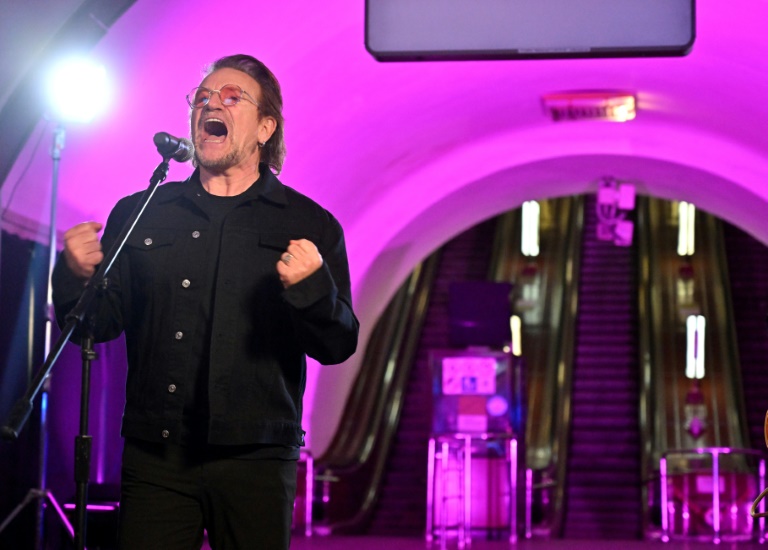
Irish rock star Bono praised Ukraine’s fight for “freedom” during a performance in a metro station in downtown Kyiv Sunday, where the U2 frontman also issued his own prayer “for peace”.

From the platform of a Kyiv metro station, the 61-year-old rock icon belted out U2 classics “Sunday Bloody Sunday”, “Desire” and “With or without you”. 

“The people in Ukraine are not just fighting for your own freedom, you are fighting for all of us who love freedom,” said Bono during a break. 

The singer also referenced the past conflicts in the band’s native Ireland and the troubles it had with a more powerful neighbour. 

“We pray that you will enjoy some of that peace soon,” said Bono. 

The surprise appearance by Bono — a long time humanitarian who frequently lends his voice to a variety of causes including the fight against poverty and AIDS — came as air raid sirens echoed in the Ukrainian capital and fighting raged in the country’s east.

At one point, Bono invited a Ukrainian soldier to sing along who called on the world’s support for the embattled country as they covered “Stand by me”.

Bono performed alongside U2’s guitarist ‘The Edge’ to a small crowd of fans including fatigue-clad members of Ukraine’s armed forces. 

“It’s some good emotions, that’s all,” said a member of the Ukrainian territorial forces in the audience. 

“It’s a strange feeling, like being a child going to first grade,” said 36-year-old university lecturer, Olesia Bezsmertna, ahead of the show.

Ex-security chief John Lee anointed Hong Kong's next leader

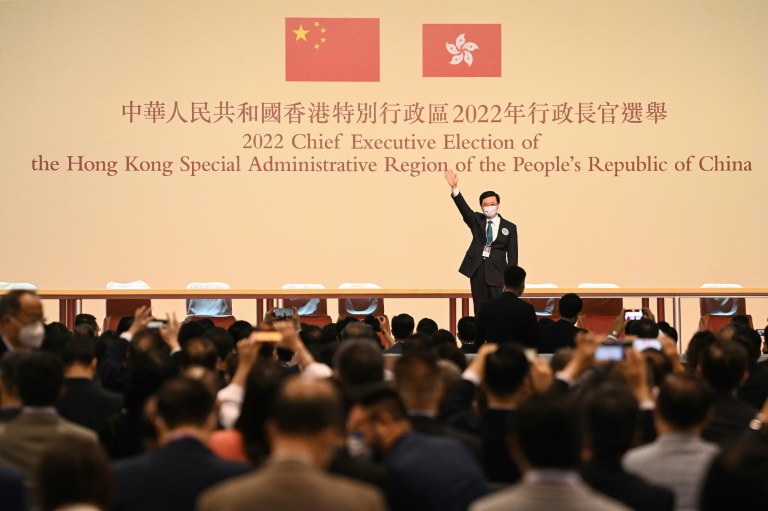
A former security chief who oversaw the crackdown on Hong Kong’s democracy movement was anointed the business hub’s new leader on Sunday by a small committee of Beijing loyalists.

John Lee, 64, was the only candidate in the Beijing-backed race to succeed outgoing leader Carrie Lam.

The elevation of Lee, who is under US sanctions, places a security official in the top job for the first time after a tumultuous few years for a city battered by political unrest and debilitating pandemic controls. 

Despite the city’s mini-constitution promising universal suffrage, Hong Kong has never been a democracy, the source of years of public frustration and protests since the 1997 handover to China. 

Its leader is instead chosen by an “election committee” currently comprised of 1,461 people — roughly 0.02 percent of the city’s population.

After a brief secret ballot on Sunday, 99 percent of those who cast ballots (1,416 members) voted for Lee while only eight voted against, according to officials.

– Political pluralism –

Beijing hailed the near-unanimous result, saying it showed “Hong Kong society has a high level of recognition and approval” for Lee. 

“This is a real demonstration of democratic spirit,” the Hong Kong and Macao Affairs Office said. 

European Union’s foreign policy chief Josep Borrell countered that the selection process was a “violation of democratic principles and political pluralism”. 

Borrell described Sunday’s result as “yet another step in the dismantling of the ‘one country, two systems’ principle” where Beijing promised Hong Kong could maintain key freedoms and autonomy. 

Under President Xi Jinping, China is remoulding Hong Kong in its own authoritarian image after huge and sometimes violent democracy protests three years ago.

Beijing deployed a sweeping national security law to stamp out dissent and rolled out a new “patriots only” political vetting system to guarantee anyone standing for office is considered suitably loyal.

Protests have been largely outlawed, with authorities enforcing an anti-coronavirus ban on public gatherings of more than four people as well as the security law.

The League of Social Democrats — one of the only remaining pro-democracy groups — held a three-person protest before polls opened Sunday, chanting “Power to the people, universal suffrage now”.

“We know this action will have no effect, but we don’t want Hong Kong to be completely silent,” protester Vanessa Chan said as dozens of police officers looked on.

– A troubled city –

While the democracy movement has been crushed, much of the population still resents Beijing’s rule and chafes at the city’s entrenched inequality. 

Hong Kong also faces economic difficulties thanks to two years of strict pandemic curbs that have damaged its business hub reputation and left residents cut off as rivals re-open.

Lee was asked by reporters on Sunday whether he lacked a genuine mandate.

“I do understand there will be time that is needed for me to convince the people,” he replied. 

“But I can do that by action.”

He said he planned to build a Hong Kong that is “full of hope, opportunities and harmony” now that authorities had “restored order from chaos”.

So far, his campaign has been light on concrete policy details — in particular how he plans to reopen Hong Kong to both international and mainland travel at a time when China is doubling down on its strict zero-Covid strategy.

– ‘Empty gesture’ –

Hong Kong’s chief executives find themselves caught between the democratic aspirations of the city’s residents and the authoritarian demands of Beijing’s leaders. 

Outgoing leader Carrie Lam is on track to leave office with record-low approval ratings. 

According to a survey in March by the Public Opinion Research Institute, about 24 percent of the public has confidence in Lee, compared with 12 percent for Lam.

Waiting in a line outside a restaurant on Sunday, 25-year-old resident Alex Tam said he and his friends were paying little attention to proceedings. 

“It’s just an empty gesture,” he told AFP. 

“If he didn’t listen to the protesters, I don’t see how he would listen to young people now, especially those who criticise the government.” 

Retired businessman Yeung Wing-shun was more positive, saying he hoped Lee would guide Hong Kong with a “firm hand”, adding that he believed the new leader could bring different sectors together.

Lee will take office on July 1, the 25th anniversary of Hong Kong’s handover to China from Britain and the halfway point of “One Country, Two Systems”.

Beijing and Lee say that formula is still intact. 

Critics, including many Western powers, say it has been shredded.

Northern Ireland in limbo after Sinn Fein triumphs

Northern Ireland’s feuding leaders came under pressure Sunday to unite in a new government after the Irish nationalist party Sinn Fein secured an unprecedented election win.

Once the political wing of the paramilitary IRA, Sinn Fein won enough seats in the devolved legislature to nominate its Northern Ireland leader Michelle O’Neill as first minister.

The result from Thursday’s election for the Stormont assembly marked a potentially seismic shift, a century after Northern Ireland was carved out as a Protestant fiefdom under British rule.

O’Neill said the result “ushers in a new era” for the divided territory, and Sinn Fein said it wanted a referendum on reuniting Ireland within five years.

But only the UK government can grant a referendum, and Northern Ireland Secretary Brandon Lewis noted that a majority of voters overall still backed the constitutional status quo. 

Ahead of convening party leaders for talks in Belfast on Monday, Lewis recognised nevertheless that Sinn Fein’s triumph was a “significant moment for Northern Ireland”. 

“I think it is an important moment to show that everybody can work together, regardless of who is first and deputy first minister,” he told BBC television.

“That’s what democracy is about,” Lewis added, urging the leaders to “work with each other to find a way to come back into Stormont (and) form the executive”.

The Irish and US governments also urged Northern Ireland’s leaders to form a new power-sharing executive, under the terms of a 1998 peace deal that ended three decades of bloodshed.

– Johnson under pressure too –

With all 90 Stormont seats filled from Thursday’s proportional voting, Sinn Fein won 27 seats, ahead of the Democratic Unionist Party (DUP) on 25 and the cross-community Alliance party on 17.

“The people have spoken, and our job is now to turn up. I expect others to turn up also,” O’Neill told reporters.

But DUP leader Jeffrey Donaldson demanded Prime Minister Boris Johnson first “deliver on his word” and scrap post-Brexit trading rules with the EU, which unionists fear are casting Northern Ireland adrift from the UK.

Lewis said the government still preferred to negotiate a solution with Brussels — but reserved the right to act unilaterally to protect intra-UK trade and Northern Ireland’s constitutional status.

“It’s very disappointing that what we’re hearing is the EU is already saying it won’t show any flexibility,” the minister said.

While Sinn Fein will get to nominate a first minister, Northern Ireland’s government can only form under the 1998 deal if the DUP agrees to take part and serve in the role of deputy first minister.

The parties will have 24 weeks to resolve their differences or face a new election.

“You could easily see everyone taking the full six months for negotiation,” commented Katy Hayward, professor of political sociology at Queen’s University Belfast.

She noted the DUP wants the protocol removed, Sinn Fein has longstanding demands to protect the Irish language and the Alliance wants an overhaul at Stormont to recognise the rise of the middle ground — none of which can be easily achieved.

“But given the urgency of crises in the cost of living and healthcare, we do need an executive formed and then can think of bigger adjustments to the (1998) Good Friday Agreement when we’re in a better place,” Hayward told AFP.

Crowds jeer Sri Lankan PM on rare outing

Boos and heckles greeted Prime Minister Mahinda Rajapaksa on Sunday on his first public outing since nationwide protests erupted demanding his ruling family resign over the worsening economic crisis

Months of blackouts and acute shortages of food, fuel and medicines have caused widespread suffering across the South Asian island in its worst economic downturn since independence in 1948.

On Sunday, the premier visited one of the holiest Buddhist temples — housing a reputedly 2,300-year-old tree — in Anuradhapura.

But dozens of people carried hand-written placards and chanted slogans demanding that “thieves” be banned from the sacred city, 200 kilometres (125 miles) north of Colombo.

“We will worship you if you stand down (as Prime Minister) and leave,” one man shouted.

Heavily armed Special Task Force (STF) commandos were deployed while police moved to clear the road for Rajapaksa’s convoy of six vehicles. 

Officials said the premier would return to the capital by helicopter.

Several major roads in the country are blocked by people protesting the lack of cooking gas, petrol and diesel.

– Looting –

In the capital, a truck transporting cooking gas was looted Sunday by crowds who had been waiting in line overnight for supplies.

Outnumbered police watched helplessly as men climbed onto the truck and got away with 84 cylinders of gas, officials said.

The government imposed a state of emergency granting the military sweeping powers to arrest and detain people on Friday, after trade unions brought the country to a virtual standstill in a bid to pressure President Gotabaya Rajapaksa to step down.

The defence ministry said in a statement Sunday that anti-government demonstrators were behaving in a “provocative and threatening manner” and disrupting essential services.

Unions said they would stage daily protests from Monday to pressure the government to revoke the emergency.

President Rajapaksa, who is the brother of the prime minister Mahinda, has not been seen in public since tens of thousands attempted to storm his private residence in Colombo on March 31. 

Since April 9, thousands have been camping in front of his office in Colombo.

– Divine intervention –

Mahinda Rajapaksa’s visit to Anuradhapura is part of a flurry of religious activity by the ruling family as it clings to power in the Buddhist-majority nation.

Local media reported that the president’s personal shaman, Gnana Akka, had charmed bottled water and delivered it to the protest site in the hope the movement would fizzle out.

Another report said the premier’s wife Shiranthi, a Catholic, had visited a Hindu temple seeking divine help for her family’s bid to remain in power.

Official sources say the president may ask his brother Mahinda to stand down in an effort to clear the way for a unity government to navigate Sri Lanka through the crisis. 

But the country’s largest opposition party has already said it will not join any government helmed by a member of the Rajapaksa clan.

Sri Lanka was hit by an economic crisis after the coronavirus pandemic hammered income from tourism and remittances.

In April, the country announced it was defaulting on its $51 billion foreign debt.

Finance Minister Ali Sabry warned last week that the country will have to endure unprecedented economic hardship for at least two more years.

'Critically stable': Ukraine's last stand for easternmost hub

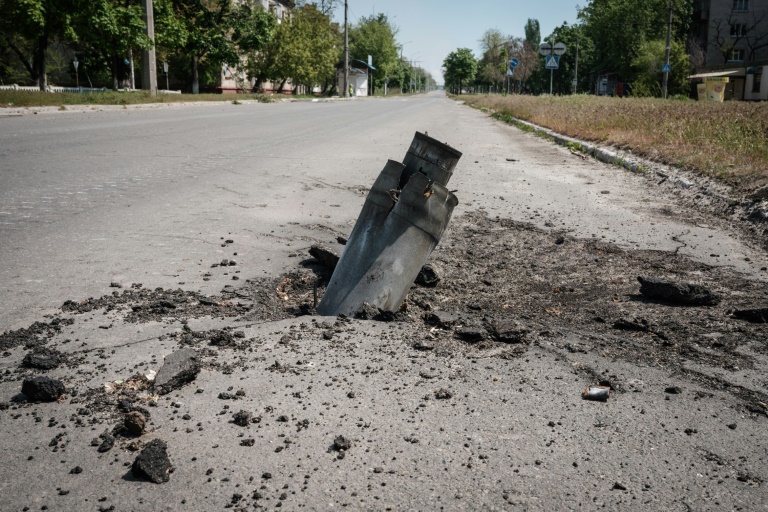
The dozen jumpy and exhausted soldiers cowering under a bridge from incoming shellfire formed Ukraine’s last line of defence against Russia’s assault on this easternmost city still held by Kyiv.

Behind them lay the smouldering remains of what was once a 100,000-strong industrial hub filled with Soviet-era apartment towers and a major chemicals plant.

But their eyes were trained on a field on the opposite side of the bridge from which the Russians had spent the night firing missiles at the last defenders of Severodonetsk.

If the city falls on Sunday, it would mean the Kremlin has gained de facto control of Lugansk — the smaller of the two republics comprising the Donbas war zone — in time for Russia’s annual Victory Day celebrations on Monday.

The heavily-armed combat soldiers manning the underpass on the northern edge of the city were anxiously shouting commands into their walkie-talkies next to a burnt-out van.

A few anti-tank missiles lay next to a kettle they kept over an open fire to fill their thermoses with tea.

The eerily empty road leading toward the Russians was strewn with the twisted remains of munitions and power lines ripped off their posts by incessant blasts.

The soldiers looked too tired to put on a brave face.

“I would rather not guess how long we can hold on. All I can say is that we are here now,” said their unit commander under condition that his name not be used on security grounds.

“The best way to describe the situation? Critically stable,” he said with a sardonic laugh.

– Communication blackout –

A clear pattern has emerged on Ukraine’s eastern front in the third month of Russia’s assault on its pro-Western neighbour.

Ukrainian units are counterattacking and making gains to the east of the northern city of Kharkiv.

But the Russians are chewing up territory roughly 100 miles (160 kilometres) to the southeast of the Ukrainian push.

The two forces are converging for an even bigger battle that could determine if the Russians can capture Ukraine’s eastern administration centre in Kramatorsk.

The frontlines are shifting across open fields and valleys dotted with industrial towns and rural settlements that have lost almost all links to the outside world.

Severodonetsk has been transformed into a moonscape of roads filled with craters and buildings charred by mortar and missile attacks.

Some locals braved the fighting to try and knit together the ripped power lines by climbing their wooden poles. 

“We have had no power or water for two weeks,” said welder Gennady Lastovets while waiting for a car that promised to evacuate his 81-year-old father.

“But I honestly have no idea how the war is going,” the 55-year-old said. “There are rumours, but we have no internet, no phone service.”

– Losing hope –

All Galina Abdurashikova knew was that she was still alive after crawling out barefoot from under a missile strike on her apartment and then spending the next five days alone in an abandoned car.

But 65-year-old was slowly losing hope.

“I have nothing to eat or drink. I had a bottle of water, but not anymore and my mouth is dry,” she whispered.

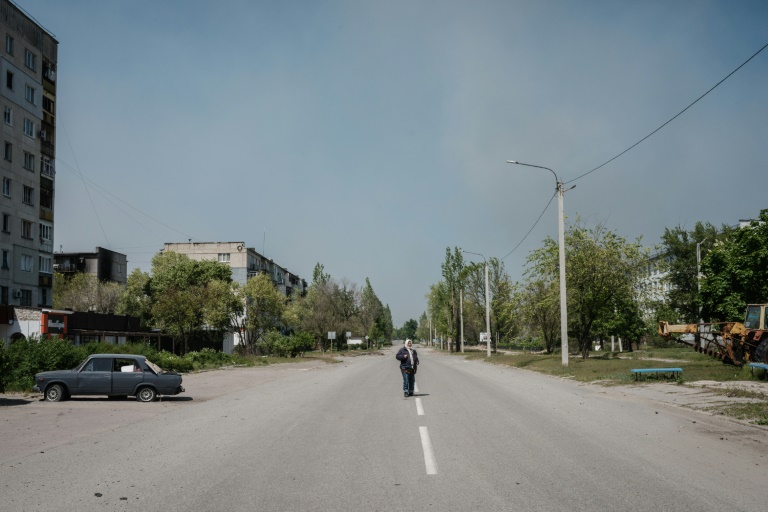
Her beat-up Lada was the lone vehicle left on a major street running through an industrial zone in which no one — neither soldiers nor civilians — seemed willing to step outside. 

“Now I am not afraid of anything anymore,” she said of the bangs that erupted every few seconds from various part of the city as she spoke.

“At first I was afraid that those things would would kill me, but now I am not afraid. If it hits me, it hits me.”

– ‘They fled’ –

The city is now run by a civil-military administration that operates out of a building that once housed more than half a dozen US and European relief agencies.

But the foreign aid workers were forced to comply with evacuation orders issued by their respective governments before the war broke out on February 24.

The remaining volunteers — including a few from Europe — feel abandoned and betrayed. Much of their work now depends on support from Ukrainian soldiers who help sort and distributed the food.

“They fled and they never looked back,” British humanitarian aid volunteer Philip Ivlev-York fumed while showing off the looted office of one of the European relief agencies.

City administration chief Oleksandr Stryup was busy in the building’s basement leafing through papers to determine where to send the remaining supplies.

A salvo of missile-defence fire from a fortified position in front of the building shattered his concentration and forced him to look up from his desk.

“The situation is getting tenser because the attacks are becoming more frequent,” Stryup conceded.

“They are trying to take the city. And we are defending it.”

Close Bitnami banner
Bitnami