World

Thousands of security forces on alert ahead of Philippine polls

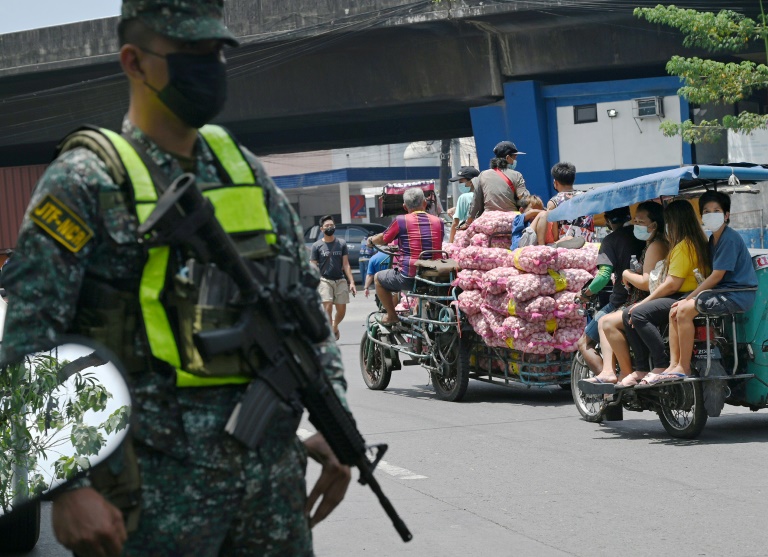
More than 60,000 security forces in the Philippines were on alert Sunday to safeguard ballots and polling stations on the eve of the presidential election, after police reported four people killed in an outbreak of violence.

Elections are a traditionally volatile time in a country with lax gun laws and a violent political culture, but the national police said this season has been comparatively peaceful. 

In one of the worst incidents, four people were killed Saturday in a gun battle between armed supporters of mayoral rivals in Magsingal town in the northern province of Ilocos Sur, said police spokesman Brigadier-General Roderick Alba. Another four were wounded.

Police in the northern province of Nueva Ecija also arrested two dozen people and seized weapons, including five M-16 rifles, a 12-gauge shotgun and 15 handguns, following a shoot-out between bodyguards of two candidates running for mayor of General Tinio.

Five people were wounded in the incident, which also left the same number of sports utility vehicles riddled with bullets, Alba said.

More than 18,000 posts, from president to town councillor, are up for grabs in the elections.

The son of former dictator Ferdinand Marcos looks set to win the presidential vote by a landslide, returning the clan to the pinnacle of political power.

Rights groups, Catholic church leaders and opponents see the elections as a make-or-break moment for the country’s democracy, amid fears Marcos Junior could rule with a heavy fist.

Personnel from the police, armed forces and coast guard have fanned out across the archipelago to help secure polling stations and ballots, escort election officials and guard checkpoints. 

The security deployment involves around 48,000 soldiers and 16,000 police, officials said.

“Based on our planning… we are confident that we’ll have a secure and orderly election,” said armed forces spokesman Colonel Ramon Zagala. 

There have been 16 “validated election-related incidents” since January 9, including four shootings and a “slight illegal detention”, Alba said.

That compares with 133 incidents during the 2016 presidential elections and 60 in the 2019 mid-term polls.

Police spokeswoman Colonel Jean Fajardo attributed the sharp drop to a heightened security presence, as well as military and police operations targeting “loose firearms” and private armed groups.

The election commission largely prohibits the carrying of weapons during the election period that lasts until June 8.

– ‘Stay awake’ –

Experts say the explosion of social media, which has made it easier to report incidents, and the growing domination of political dynasties, which smother electoral competition, have helped tamp down election violence.

In the country’s deadliest single incident of political violence on record, 58 people were massacred in 2009 as gunmen allegedly belonging to a local warlord in the southern Philippines attacked a group of people to stop a rival filing his election candidacy.

Thirty-two of the victims were journalists covering the contest, making the attack also the deadliest on record against media professionals.

The introduction of electronic voting in 2010 has made it harder for widespread vote-rigging that has historically plagued Philippine elections. 

But Marcos Jr, who still insists he was cheated of victory in the 2016 vice presidential race, has warned of electoral fraud in these polls and urged his supporters to be alert.

“We will win as long as you stay awake on Monday so there won’t be another tragedy,” Marcos Jr told hundreds of thousands of fans at his final campaign rally on Saturday. 

“Many undesirable things happen if we stop paying attention.”
Crowds jeer Sri Lankan PM on rare outing

Sri Lankan Prime Minister Mahinda Rajapaksa was booed and heckled Sunday on his first public outing since protests erupted across the country demanding his ruling family resign over the worsening economic crisis.

Months of blackouts and acute shortages of food, fuel and medicines have caused widespread suffering across the South Asian island, which is enduring its worst-ever economic downturn.

Sunday saw the premier, brother of President Gotabaya Rajapaksa, visited one of the holiest Buddhist temples — housing a reputedly 23-century-old tree — in Anuradhapura.

But dozens of men and women carried hand-written placards and chanted slogans demanding that “thieves” be banned from the sacred city, which lies 200 kilometres (125 miles) north of Colombo.

“We will worship you if you stand down (as Prime Minister) and leave,” one man shouted.

Heavily armed Special Task Force (STF) commandos were deployed while police moved to clear the road for Rajapaksa’s convoy of six vehicles. Officials said the premier would return to the capital by helicopter.

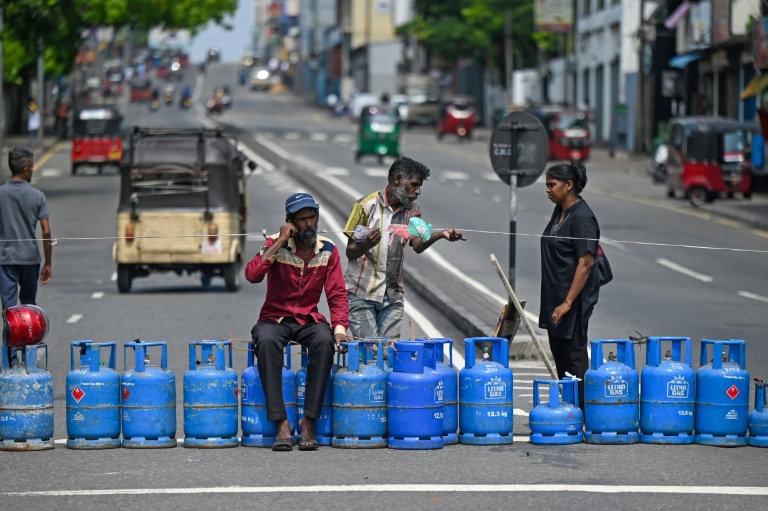
Several major roads in the country are blocked by people protesting the lack of cooking gas, petrol and diesel. 

The defence ministry in a statement said demonstrators were behaving in a “provocative and threatening manner” and disrupting essential services.

The government imposed a state of emergency granting the military sweeping powers to arrest and detain people on Friday, after trade unions brought the country to a virtual standstill in a bid to pressure President Gotabaya Rajapaksa to step down.

The president, 72, has not been seen in public since tens of thousands attempted to storm his private residence in Colombo on March 31. 

Since April 9, thousands have been camping in front of his office in Colombo.

– Divine intervention –

Mahinda Rajapaksa’s visit to Anuradhapura is part of a flurry of religious activity by the ruling family as it clings onto power in the Buddhist-majority nation.

Local media reported that the president’s personal shaman, Gnana Akka, had charmed bottled water and delivered it to the protest site in the hope the movement would fizzle out.

Another report said the premier’s wife Shiranthi, a Catholic, had visited a Hindu temple seeking divine help for her family’s bid to remain in power.

Sources say the president may ask his brother Mahinda to stand down in an effort to clear the way for a unity government to navigate Sri Lanka through the crisis. 

But the country’s largest opposition party has already said it will not join any government helmed by a member of the Rajapaksa clan.

Sri Lanka was hit by an economic crisis after the coronavirus pandemic hammered income from tourism and remittances.

In April, the country announced it was defaulting on its $51 billion foreign debt.

Finance Minister Ali Sabry warned last week that the country will have to endure unprecedented economic hardship for at least two more years.

Ex-security chief John Lee anointed Hong Kong's next leader

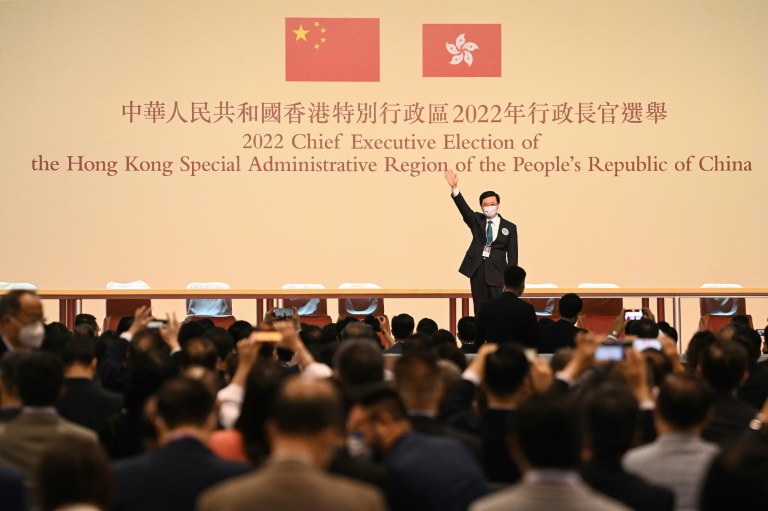
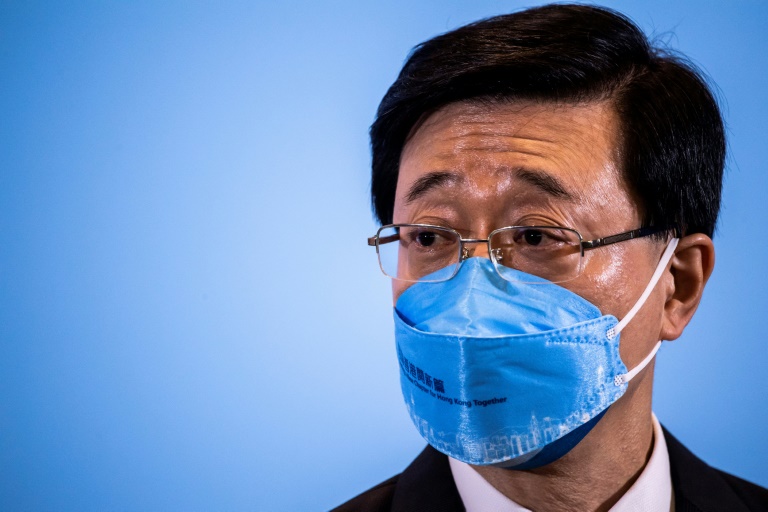
A former security chief who oversaw the crackdown on Hong Kong’s democracy movement was anointed the business hub’s new leader on Sunday by a small committee of Beijing loyalists.

John Lee, 64, was the only candidate in the Beijing-backed race to succeed outgoing leader Carrie Lam.

The elevation of Lee, subject of US sanctions, places a security official in the top job for the first time after a tumultuous few years for a city battered by political unrest and debilitating pandemic controls. 

Despite the city’s mini-constitution promising universal suffrage, Hong Kong has never been a democracy, the source of years of public frustration and protests since the 1997 handover to China. 

Its leader is instead chosen by an “election committee” currently comprised of 1,461 people — roughly 0.02 percent of the city’s population.

After a brief secret ballot on Sunday, 99 percent (1,416 members) voted for Lee while eight voted against, according to officials.

Beijing hailed the near-unanimous result, saying it showed “Hong Kong society has a high level of recognition and approval” for Lee. 

“This is a real demonstration of democratic spirit,” the Hong Kong and Macao Affairs Office said. 

– Heavy police presence –

Under President Xi Jinping, China is remoulding Hong Kong in its own authoritarian image after huge and sometimes violent democracy protests three years ago.

Beijing deployed a sweeping national security law to stamp out dissent and rolled out a new “patriots only” political vetting system to guarantee anyone standing for office is considered suitably loyal.

Protests have been largely outlawed, with authorities using an anti-coronavirus ban on public gatherings of more than four people as well as the security law.

The League of Social Democrats — one of the only remaining pro-democracy groups — held a three-person protest before polls opened Sunday, chanting “Power to the people, universal suffrage now”.

“We know this action will have no effect, but we don’t want Hong Kong to be completely silent,” protester Vanessa Chan said as dozens of police officers looked on.

– A troubled city –

While the democracy movement has been crushed, much of the population still resents Beijing’s rule and chafes at the city’s entrenched inequality. 

Hong Kong also faces economic difficulties thanks to two years of strict pandemic curbs that have damaged its business hub reputation and left residents cut off as rivals re-open.

Lee was asked by reporters on Sunday whether he lacked a genuine mandate.

“I do understand there will be time that is needed for me to convince the people,” he replied. 

“But I can do that by action.”

He said he planned to build a Hong Kong that is “full of hope, opportunities and harmony” now that authorities had “restored order from chaos”.

So far his campaign has been light on concrete policy details — in particular how he plans to reopen Hong Kong to both international and mainland travel at a time when China is doubling down on its strict zero-Covid strategy.

– ‘Empty gesture’ –

Hong Kong’s chief executives find themselves caught between the democratic aspirations of the city’s residents and the authoritarian demands of Beijing’s leaders. 

Outgoing leader Carrie Lam is on track to leave office with record-low approval ratings. 

According to a survey in March by the Public Opinion Research Institute, about 24 percent of the public has confidence in Lee, compared with 12 percent for Lam.

Waiting in a line outside a restaurant on Sunday, 25-year-old resident Alex Tam said he and his friends were paying little attention to proceedings. 

“It’s just an empty gesture,” he told AFP. 

“If he didn’t listen to the protesters, I don’t see how he would listen to young people now, especially those who criticise the government.” 

Retired businessman Yeung Wing-shun was more positive, saying he hoped Lee would guide Hong Kong with a “firm hand”, adding that he believed the new leader could bring different sectors together.

Lee will take office on July 1, the 25th anniversary of Hong Kong’s handover to China from Britain.

China agreed that Hong Kong could maintain certain freedoms and autonomy for 50 years after retaking control from Britain under a “One Country, Two Systems” formula.

Beijing and Lee say that formula is still intact. 

Critics, including many Western powers, say it has been shredded.

Xi warms up China's economy, but virus narrows options

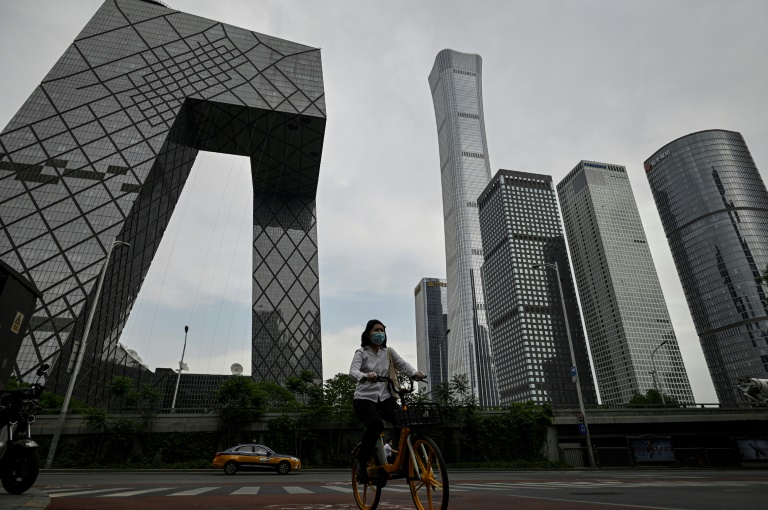
President Xi Jinping has offered state backing for tech, infrastructure and jobs to revive China’s economy, but analysts warn growth will continue to wilt until Beijing drops its rigid virus controls.

Two and a half years since the coronavirus first emerged in Wuhan, China is the last major economy still closed off to the world, despite its relatively low death toll.

Lockdowns across dozens of cities — from the manufacturing hubs of Shenzhen and Shanghai to the breadbasket of Jilin — have wreaked havoc on supply chains over recent months, crushing small businesses and trapping consumers at home.

That has imperilled Beijing’s full-year growth target of about 5.5 percent, with forecasters anticipating that around one percentage point may be shaved off that figure.

“We remain deeply concerned about growth,” Nomura analysts said this week. “We believe the Omicron variant and zero-Covid strategy represent the dominant challenges to growth stability.” 

Yet China’s Communist leadership insisted Thursday that the country will stick “unswervingly” to zero-Covid, with a meeting chaired by Xi declaring that “persistence is victory”.

To curtail the growing economic damage, Beijing has offered words of respite to the tech sector from rolling regulatory crackdowns and promised to pump prime the economy with an “all-out” infrastructure campaign.

But observers say rallies may be temporary as long as the state’s reflex remains to hammer down the virus caseload at all costs.

“(The measures are) all very welcome… but how many more bridges and how many more sports stadiums are going to help us in creating an environment of predictable growth?” European Chamber president Joerg Wuttke told reporters on Thursday.

While many cities have bounced back after short, targeted lockdowns, other areas such as agricultural base Jilin province have been slow to recover from waves of restrictions. 

“That precedent (Jilin) could mean a longer-lasting impact from Shanghai’s highly disruptive lockdown,” said Ernan Cui of Gavekal Dragonomics in a report Friday.

– Devil in the detail –

Analysts are waiting for details of the delivery behind sweeping promises of support from Beijing’s policymakers.

China’s tech firms have been under the state’s microscope on concerns over data misuse and monopoly.

But shares of major tech firms soared as the government called for “healthy development” of the sector and shifted its language on completing its “rectification”.

It is unclear if that signals an end to a punishing round of regulatory scrutiny.  

Markets also cheered on as the government announced support for real estate and an infrastructure push to buoy economic and social development.

But China “does not have much room for further infrastructure building, (or) government borrowing on the local level,” said Dan Wang, chief economist at Hang Seng Bank China.

“In reality, there’s not much room to grow.”

While it harks back to Beijing’s four trillion yuan ($600 billion at today’s rates) stimulus package after the 2008 financial crisis — which included massive infrastructure investment — Zhaopeng Xing of ANZ Research said “we doubt the authorities will carry it forward at the cost of rising debts”.

– Fading confidence –

China’s State Council has also said it would give cash handouts to jobless migrant workers and urged stronger support for small firms harried by lockdowns and shrivelling consumer demand.

But re-inflating the economy is a big task made more complicated by each new level of virus control, experts say.

“Those easing measures, even on a large scale, may not achieve their intended impact due to lockdowns and logistics disruptions,” Nomura added in its note.

A path of regular mass testing — which China appears to be embarking on — may also come with a hefty bill.

It would cost between 0.9 percent and 2.3 percent of GDP for a regular testing mandate to expand across China, according to Nomura.

With the economy flagging, an effective bounce could be given by lowering the interest rate, while authorities could also turn up the spending to drive the infrastructure push.

But optimism is fading five months into a year already defined by the battle with the pandemic, with business activity collapsing and consumers afraid of what is to come.

“People had high hopes for this year,” Wang said.

Ukraine war puts EU 'at crossroads' on anniversary

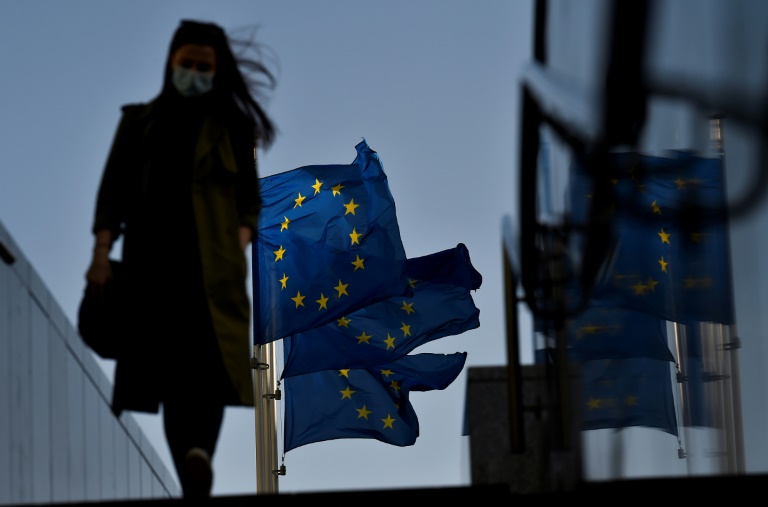
As the EU poises to mark its anniversary on Monday, it is morphing into a more muscular global actor, a transformation accelerated by Russia’s invasion of Ukraine.

“(The) war in Ukraine is fundamentally challenging our European peace architecture,” European Commission chief Ursula von der Leyen declared on Friday.

That can be seen in the EU’s evolution.

What began seven decades ago as a trade bloc binding formerly warring nations together, is today a political heavyweight funnelling weapons to Kyiv and imposing unprecedented sanctions on Russia. 

The EU is also challenging an assertive China, and it learned bitter lessons from Brexit and four years of Donald Trump in the United States.

But analysts say it still has a long way to go to become the strategically autonomous goliath championed by French President Emmanuel Macron, who currently holds the EU presidency.

“Fundamentally, for Europe to morph into a geopolitical actor, this requires more than some policy fix or institutional fixes,” said Luuk van Middelaar, a Dutch political theorist who served in the cabinet of former European Council president Herman Van Rumpuy.

The EU indeed “crossed a Rubicon” by deciding to finance 1.5 billion euros ($1.6 billion) of arms deliveries to Ukraine, he said, a “striking” turnaround from its pacifist history.

Yet it has a poorly defined common strategy towards its near neighbours, whether they be Russia or the “grey zone of countries” aspiring to join, including Ukraine, he said.

– ‘Pragmatic federalism’ –

Newly re-elected Macron is expected to pursue his agenda more vigorously, backed by some other leaders this week and a bloc-wide citizens’ consultation for ground-up changes to the EU’s underpinning treaties.

The EU needs “pragmatic federalism” which would see member states lose their ability to veto decisions agreed by a super majority, Italian Prime Minister Mario Draghi argued to MEPs on Tuesday.

If there is any treaty revision, it should be embraced “with courage and confidence”, he said.

Current EU institutions and processes were “inadequate” to address the fall-out from the Ukraine war, he added.

Fabian Zuleeg, head of the European Policy Centre, told AFP: “We are at a crossroads, that for me is unquestionable.”

When Russia invaded Ukraine on February 24, “everything changed,” he said.

“Many taboos have fallen and countries are doing things which they never thought they would do,” said Zuleeg.

Not only was EU foreign and security policy affected, but also its agriculture, migration, industrial policies and other areas, he added.

“We can decide to use this as a moment when the European Union gets equipped with the kind of decision making processes, the kind of competences, the kind of laws it needs. 

“Or we try to go down the route of individual countries doing things by themselves, which in my opinion is going to fail.”

Treaty change was one option, he said. Another was for EU countries to band together and exclude dissenting member states from their decisions.

Zuleeg said certain decisions would still need to be taken together, and where that was not possible, groups could work in smaller intergovernmental formats.

– Ditching vetoes? –

The European Parliament has endorsed a rewrite of the treaties, brandishing over 300 recommended changes formulated by the Conference on the Future of Europe citizen consultation, drawn up into 49 proposals.

One idea is qualified majority voting advanced by Macron and Draghi to streamline decision-making. 

Another is more powers for the European Commission over areas jealously guarded by national governments, such as defence.

EU officials said the list of proposals — to be formally handed to Macron on Monday — would be assessed, but it was too early to say whether any of those retained would require a treaty overhaul.

One EU diplomat said: “More than 90 percent of the proposals can be implemented below the threshold of treaty changes.”

Other EU countries said to back treaty change are Spain, Belgium, the Netherlands and Luxembourg.

Analysts cautioned, though, that those against — small EU states that would rue losing their veto — would likely initially keep quiet.

If a majority of EU member states decided treaty change was needed, there could be a vote in the European Council that would lead to negotiations. 

“We should be able to get the simple majority in council for that,” another EU diplomat said.

Any resulting text would require all 27 EU countries’ ratification or approval.

Attempts have been made before to reform the EU, not always successfully.

In 1992, Danish voters rejected the Maastricht Treaty, the modern EU’s founding text, only to approve it a year later after their government negotiated opt-outs in sensitive policy areas.

In 2005, voters in France and the Netherlands rejected a treaty that would have brought in a formal EU constitution.

Is Ukraine conducting a sabotage campaign inside Russia?

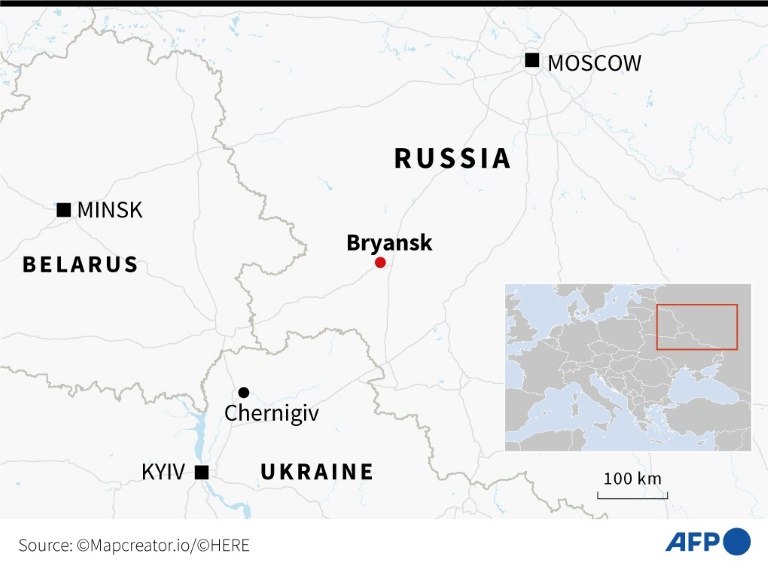
A deadly fire at an aerospace research institute in Tver, northwest of Moscow. Another blaze at a munitions factory in Perm, more than 1,100 kilometers (680 miles) to the east. And fires in two separate oil depots in Bryansk, near Belarus.

Coincidences, or a sign that Ukrainians or their supporters are mounting a campaign of sabotage inside Russia to punish Moscow for invading their country?

Since the blaze at the Central Research Institute of the Aerospace Defense Forces in Tver on April 21, which killed at least 17 people, social media has leapt on every report of a fire somewhere in Russia — especially at a sensitive location — as a sign that the country is under covert attack.

No one is claiming responsibility, but analysts say at least some of the incidents, particularly those in Bryansk, point to a possible effort by Kyiv to bring the war to their invaders.

In a post on Telegram, Mykhaylo Podolyak, a senior advisor to Ukrainian President Volodymyr Zelensky, called the fires “divine intervention.”

“Large fuel depots periodically burn… for different reasons,” he wrote. “Karma is a cruel thing.”

– ‘We don’t deny’  –

In a massive country such as Russia, a fire at a remote factory or building would normally not be particularly eyebrow-raising.

But since Russian forces invaded Ukraine on February 24, more than a dozen blazes noted by people who document the war have drawn huge attention on social media, amid fears there is a concerted campaign of arsonous terror by the Ukrainians.

Even fires late last month in Russia’s far east — at an airbase north of Vladivostok and at a coal plant on Sakhalin — raised suspicions.

And on Wednesday, a massive conflagration struck a chemicals plant in Dzerzhinsk, east of Moscow.

“Russian saboteurs against Putin continue their heroic work,” said Igor Sushko, a Ukrainian racecar driver who regularly posts photos and videos on Twitter of alleged acts of sabotage inside Russia — but offers no proof they were deliberate.

Another Zelensky advisor, Oleksei Arestovych, was equally opaque to The New York Times, noting that Israel never admits its covert attacks and assassinations.

“We don’t confirm, and we don’t deny,” he said.


– Part of the strategy? –

War analysts believe the infernos in Bryansk, which hit facilities sending oil to Europe, were deliberate and tied to the war.

The anonymous analysts behind “Ukraine Weapons Tracker,” a Twitter account that posts detailed accounts with supporting videos of attacks by both sides, said they received “reliable” information that the Bryansk fires were the result of attacks by Ukrainian Bayraktar drones.

“If accurate, then this story again shows the ability of Ukrainian forces to conduct strikes in Russian territory using long-range assets,” they wrote.

“I think it was probably a Ukrainian attack, but we cannot be certain,” Rob Lee, another war analyst, told The Guardian.

Added to that have been a number of apparent shellings by helicopters and drones and evident acts of sabotage against infrastructure in Kursk and Belgorod Oblast on the Ukrainian border, close to the fighting.

The governors of Belgorod and Kursk have both blamed the fires and destruction of infrastructure such as railway bridges on saboteurs and attackers from Ukraine. 

An April 1 attack on a Belgorod fuel depot, Governor Vyacheslav Gladkov said on his Telegram channel, was the result of “an air strike from two helicopters of the armed forces of Ukraine, which entered the territory of Russia at a low altitude.”

“Nothing that would confirm Ukrainian sabotage, except for the fact that many of the fires seemed to hit strategic/military targets,” said Phillips O’Brien, professor of strategic studies at the University of St Andrews, Scotland.

Such attacks “certainly seem to be a part of their strategy,” he said. 

Pentagon officials have said that Russian forces inside Ukraine are hobbled by weak supply chains, and attacks on their infrastructure would further affect their war effort.

But US officials would not comment on whether, deeper inside Russia, there is an active campaign of sabotage hitting targets not-so-directly related to the invasion.

Ukraine's Mariupol defenders face final showdown with Russian invaders

Ukraine’s last soldiers in the port city of Mariupol face a brutal final showdown Sunday with besieging Russian forces, who are hoping to deliver a critical win ahead of the country’s victory day.

President Volodymyr Zelensky is also set to hold talks with G7 leaders via video conference to discuss the situation in his country, which fears a renewed intensity to Moscow’s offensive after the evacuation of civilians from Mariupol’s Azovstal steelworks.

The complex — the final pocket of Ukrainian resistance in the devastated port city — has taken on a symbolic value in the war, with the last soldiers holed up in its sprawling network of underground tunnels and bunkers.

Taking full control of Mariupol would allow Moscow to create a land bridge between the Crimean peninsula, which it annexed in 2014, and regions run by pro-Russian separatists in the east.

“The enemy is trying to finish off the defenders of Azovstal, they are trying to do it before May 9 to give (Russian President) Vladimir Putin a gift,” Oleksiy Arestovych, an aide to Ukraine’s president, said.

Ukraine’s far-right Azov battalion, leading the defence at the steelworks, said one of its fighters had been killed and six wounded when Russian forces opened fire during an earlier attempt to evacuate people by car.

Zelensky said hundreds of people had been removed from the plant Saturday and that preparations for another stage of evacuation comprising the wounded and medics were under way.

Civilians who have escaped have described passing through Russian “filtration” sites where several evacuees told AFP they were questioned, strip-searched, fingerprinted, and had their phones  and documents checked.

“They asked us if we wanted to go to Russia or to stay in (eastern Ukraine’s self-proclaimed Donetsk People’s Republic) or stay and rebuild the city of Mariupol,” said Azovstal evacuee Natalia, who spoke on condition that her full name not be published.

“But how can I rebuild it? How can I return there if the city of Mariupol doesn’t exist anymore?”

Earlier, Kyiv’s defence ministry said Russian forces had resumed their assault on the site, despite talk of a truce to allow trapped civilians to flee.

– Doubling down –

Russia’s forces may be seeking to hand Putin a win ahead of Monday’s Victory Day, when the country celebrates its 1945 defeat of Nazi Germany.

With the date fast approaching, Ukrainian officials fear more intense missile and artillery bombardments and renewed assaults as Moscow scrambles for symbolic victories.

At home, Russia will mark the holiday in grand style, with eight Mig-29 fighter jets set to fly over Moscow’s Red Square forming the letter “Z” — the mark of Russia’s military assault in Ukraine.

Seventy-seven aircraft are set to conduct a fly-past, including the rarely seen Il-80 Doomsday plane — built to withstand a nuclear attack.

But despite apocalyptic nuclear threats issued by Russian state media, the CIA said Saturday it saw no indication Moscow was preparing to use tactical atomic weapons in the Ukraine conflict.

“We don’t see, as an intelligence community, practical evidence at this point of Russian planning for the deployment or even potential use of tactical nuclear weapons,” CIA director Bill Burns said at a conference.

Burns also warned that Putin believed he could not afford defeat in Ukraine and that he might be “doubling down” on the offensive.

Russia’s campaign has run into tough resistance — and galvanised Kyiv’s Western allies to comprehensively sanction the Russian economy and Putin’s inner circle.

–  Western help –

And international efforts to pressure the Russian leader continue, with G7 leaders, including US President Joe Biden and Ukraine’s Zelensky, set to discuss Western support for Kyiv via videoconference on Sunday.

German Chancellor Olaf Scholz will host the call and Zelensky will “take part and report on the current situation,” government spokeswoman Christiane Hoffmann said.

Further sanctions or at least a tightening of the huge array of economic punishments already inflicted on Russia are expected to be discussed.

Ambassadors from EU member states will also meet in Brussels on Sunday to discuss their sixth round of economic sanctions against Moscow, which this time should include a phased ban on imports of Russian oil.

Far from the diplomatic wrangling, fighting continues across war-torn Ukraine.

The Ukrainian rescue service said a missile had hit a technical college in Kostiantynivka, in the eastern region of Donetsk, killing at least two people. 

Donetsk regional governor Pavlo Kyrylenko reported “massive bombardments” along the frontline.

Four civilians had been killed in Donetsk, two in Bakhmut and two in Kostiantynivka, with another nine people wounded, he added.

Zelensky on Saturday said a Russian missile has struck a museum in the Kharkiv region, announcing that the “Russian army destroyed or damaged nearly 200 cultural heritage sites already.”

In Lugansk, Ukrainian officials said Friday that Russian forces had almost encircled Severodonetsk — the easternmost city still held by Kyiv — and were trying to storm it.

Kherson in the south remains the only significant city Russia has managed to capture since the war began. 

– ‘A heavy toll’ –

Ukrainian forces have in response launched a counter-offensive. 

Kyiv’s defence ministry said it had destroyed another Russian vessel — a Serna-class landing craft — in the Black Sea.

“The traditional parade of the Russian Black Sea fleet on May 9 this year will be held near Snake Island — at the bottom of the sea,” the ministry added. Russia did not immediately confirm the incident.

According to the defence ministry, Russian troops were forced to demolish three road bridges near Tsyrkuny and Ruski Tyshky outside Kharkiv in a bid to slow the Ukrainian advance.

And as the war drags towards its third month, British intelligence said Ukrainian forces equipped with high-end materiel by Western allies have been able to destroy some of Russia’s most advanced weaponry. 

“The conflict in Ukraine is taking a heavy toll on some of Russia’s most capable units and most advanced capabilities,” UK Defence Intelligence said.

“It will take considerable time and expense for Russia to reconstitute its armed forces following this conflict,” it said, adding that sanctions on advanced components would make it harder for Russia to re-arm.

burs-oho/mtp

'Golden age': Marcos myths on Philippine social media

Ferdinand Marcos Junior appears on the cusp of victory in next week’s presidential polls, with his seemingly unassailable lead fuelled by a decades-long misinformation campaign to revamp the family brand.

The clan’s comeback from pariahs in exile to the peak of political power has been built on a relentless barrage of fake and misleading posts on social media. 

Pro-Marcos pages have sought to rewrite the family’s history, spreading fallacies about everything from the patriarch’s dictatorship to court rulings about the billions of dollars stolen from state coffers. 

AFP’s Fact Check team has debunked many of the myths swirling around the Marcoses.

Here are five of the most shared: 

– Assassination attempt –

An alleged attempt to kill Marcos Jr ignited social media at the beginning of February, days before the presidential election campaign season kicked off. 

A video posted on a Facebook account named Anti bias, which has repeatedly attacked Marcos Jr’s main rival Leni Robredo and her opposition party, showed a news report about a bullet hole in a window of Marcos Jr’s office.

It was viewed more than three million times. 

But AFP fact-checkers found the video was more than six years old.

It had been taken from a news report published by GMA News on its social media accounts in August 2015 when Marcos Jr was a senator.

– Ignored by the media –

On the presidential campaign trail, Marcos Jr has shunned most media interviews and largely ignored journalist questions at rallies. 

Yet multiple posts swarming social media claim he is the one being ignored.

A video posted on YouTube on March 16 asserted that Marcos Jr’s rally in the northern province of Nueva Ecija was “not covered by the media”.

The clip was viewed more than 23,000 times after it was posted by a YouTube channel called Showbiz Fanaticz, which has a history of peddling election-related misinformation.

But the reality was very different. 

Local broadcaster ABS-CBN and other news outlets including News5 and OnePH published video reports of the rally. 

Another video posted on the Facebook page Para sa Pagbabago showed Marcos Jr speaking in 2014 about rebuilding efforts following Super Typhoon Haiyan.

It was shared 12,000 times and viewed 555,000 times, with many users commenting that the interview was not broadcast by the media.

But AFP fact-checkers found various news outlets had aired portions of the interview while other organisations produced reports based on his remarks.

– Golden age –

Pro-Marcos pages have long sought to portray Ferdinand Marcos’s dictatorship as a “golden age” of peace and prosperity, rather than a violent and corrupt regime that left the country impoverished.

One claim that the Philippines was the second-richest country after Japan during the Marcos regime was posted in March 2020 on the Facebook page DU30 MEDIA Network, which pretends to be a legitimate media outlet. 

It was shared about 300 times. 

AFP fact-checkers consulted experts who said the economic data from the Marcos years told a very different story.

Philippine gross domestic product actually went from being fifth in Asia at the start of the dictator’s rule to sixth by 1985, as the country languished in a deep recession.

Another post on the Facebook page Bangon Bansang Maharlika in October 2020 claimed the elder Marcos and Filipino nationalist Jose Rizal set up the World Bank and the International Monetary Fund.

It was shared nearly a hundred times. 

Both institutions were created in 1944, five decades after Rizal’s death and 20 years before Marcos was elected president of the Philippines. 

– No plunder –

The Philippines’ highest court said in 2003 that the legitimate income of Marcos and his flamboyant wife Imelda during their 20 years in power was $304,372.43. 

Yet more than $658 million was found in their Swiss bank accounts, which the court ordered to be handed back to the government. 

It was a fraction of the $10 billion estimated to have been plundered from state coffer during the regime.

But a Facebook account named Ghee Vin Walker posted a claim in 2018 that no court had ever ruled the Marcoses had stolen money from the treasury. 

It was shared nearly 9,000 times. 

Many Filipinos have been deceived into believing Marcos made his wealth when he was a lawyer, before becoming president.

One such claim posted on the Facebook page Gabs TV in September 2020 asserted Marcos received a massive gold payment from a client in 1949. 

– Abuses downplayed –

A misleading video posted on Facebook during the 2022 election campaign sought to downplay human rights abuses committed during the Marcos years.

Amnesty International estimates Marcos’s security forces either killed, tortured, sexually abused, mutilated or arbitrarily detained about 70,000 opponents.

But the video shows the elder Marcos alleging the rights group did not visit the Philippines and had relied on “hearsay” in its reports about the abuses during his dictatorship.

It was shared more than 3,000 times and viewed 184,000 times. 

Multiple historical accounts indicate Amnesty International visited the Philippines at least twice during the Marcos presidency.

Ex-security chief anointed Hong Kong's next leader

A former security chief who oversaw the crackdown on Hong Kong’s democracy movement was anointed the business hub’s new leader on Sunday by a small committee of Beijing loyalists.

John Lee, 64, was the only candidate in a Beijing-backed one-horse race to succeed outgoing leader Carrie Lam.

His elevation places a security official in the top job for the first time after a tumultuous few years for a city battered by political unrest and debilitating pandemic controls. 

Despite the city’s mini-constitution promising universal suffrage, Hong Kong has never been a democracy, the source of years of public frustration and protests since the 1997 handover to China. 

Its leader is instead chosen by an “election committee” currently comprised of 1,461 people — roughly 0.02 percent of the city’s population.

After a brief secret ballot on Sunday, 1,416 members voted for Lee while eight voted against according to officials. The rest did not cast ballots.  

“I declare that the only candidate Mr John Lee Ka-chiu is returned in the above mentioned election, congratulations,” returning officer Justice Keith Yeung Kar-hung, announced.

– Heavy police presence –

Protests have been largely outlawed in Hong Kong, with authorities using an anti-coronavirus ban on public gatherings of more than four people as well as a new national security law.

Police ringed the exhibition centre with security, and 6,000 to 7,000 officers had been placed on standby, according to local media. 

The League of Social Democrats — one of the only remaining pro-democracy groups — held a three-person protest before polls opened, chanting “Power to the people, universal suffrage now”.

“This is what John Lee’s new chapter looks like, a shrinking of our civil liberties,” said protester Vanessa Chan as dozens of police officers looked on.

“We know this action will have no effect, but we don’t want Hong Kong to be completely silent,” she added.

Under President Xi Jinping, China is remoulding Hong Kong in its own authoritarian image after huge and sometimes violent democracy protests three years ago.

Beijing deployed a sweeping security law to stamp out dissent and rolled out a new “patriots only” political system for Hong Kong to guarantee anyone standing for office is considered suitably loyal.

– A troubled city –

While the democracy movement has been crushed, much of the population still resents Beijing’s rule and chafes at the city’s entrenched inequality. 

Hong Kong also faces economic difficulties thanks to two years of strict pandemic curbs that have damaged its business hub reputation and left residents cut off as rivals re-open. 

Under the slogan “Starting a new chapter for Hong Kong together”, Lee has vowed to bring in “result-oriented” governance, forge unity and reboot the city’s economy. 

A 44-page manifesto he released last week stuck to broad goals and offered few concrete policies or targets.

Lee has said he will unveil more details when he makes his first policy address.

Hong Kong’s chief executives find themselves caught between the democratic aspirations of the city’s residents and the authoritarian demands of Beijing’s leaders. 

Outgoing leader Carrie Lam is on track to leave office with record-low approval ratings. 

According to a survey in March by the Public Opinion Research Institute, about 24 percent of the public has confidence in Lee, compared with 12 percent for Lam.

Waiting in a line outside a restaurant on Sunday, 25-year-old resident Alex Tam said he and his friends were paying little attention to proceedings. 

“It’s just an empty gesture,” he told AFP. “If he didn’t listen to the protesters, I don’t see how he would listen to young people now, especially those who criticise the government.” 

Retired businessman Yeung wing-shun was more positive saying he hoped Lee will guide Hong Kong with a “firm hand”, adding that he believed the new leader could bring different sectors together.

Lee will take office on July 1, the 25th anniversary of Hong Kong’s handover to China from Britain.

China agreed that Hong Kong could maintain certain freedoms and autonomy for 50 years after retaking control from Britain under a “One Country, Two Systems” formula.

Beijing and Lee say that formula is still intact. 

Critics, including many Western powers, say it has been shredded.

Lee is one of 11 senior Hong Kong and Beijing officials sanctioned by the United States because of the political crackdown.

Is Ukraine conducting a sabotage campaign inside Russia?

A deadly fire at an aerospace research institute in Tver, northwest of Moscow. Another blaze at a munitions factory in Perm, more than 1,100 kilometers (680 miles) to the east. And fires in two separate oil depots in Bryansk, near Belarus.

Coincidences, or a sign that Ukrainians or their supporters are mounting a campaign of sabotage inside Russia to punish Moscow for invading their country?

Since the blaze at the Central Research Institute of the Aerospace Defense Forces in Tver on April 21, which killed at least 17 people, social media has leapt on every report of a fire somewhere in Russia — especially at a sensitive location — as a sign that the country is under covert attack.

No one is claiming responsibility, but analysts say at least some of the incidents, particularly those in Bryansk, point to a possible effort by Kyiv to bring the war to their invaders.

In a post on Telegram, Mykhaylo Podolyak

Mykhaylo Podolyak, a senior advisor to Ukrainian President Volodymyr Zelensky, called the fires “divine intervention.”

“Large fuel depots periodically burn… for different reasons,” he wrote. “Karma is a cruel thing.”

– ‘We don’t deny’  –

In a massive country such as Russia, a fire at a remote factory or building would normally not be particularly eyebrow-raising.

But since Russian forces invaded Ukraine on February 24, more than a dozen blazes noted by people who document the war have drawn huge attention on social media, amid fears there is a concerted campaign of arsonous terror by the Ukrainians.

Even fires late last month in Russia’s far east — at an airbase north of Vladivostok and at a coal plant on Sakhalin — raised suspicions.

And on Wednesday, a massive conflagration struck a chemicals plant in Dzerzhinsk, east of Moscow.

“Russian saboteurs against Putin continue their heroic work,” said Igor Sushko, a Ukrainian racecar driver who regularly posts photos and videos on Twitter of alleged acts of sabotage inside Russia — but offers no proof they were deliberate.

Another Zelensky advisor, Oleksei Arestovych, was equally opaque to The New York Times, noting that Israel never admits its covert attacks and assassinations.

“We don’t confirm, and we don’t deny,” he said.


– Part of the strategy? –

War analysts believe the infernos in Bryansk, which hit facilities sending oil to Europe, were deliberate and tied to the war.

The anonymous analysts behind “Ukraine Weapons Tracker,” a Twitter account that posts detailed accounts with supporting videos of attacks by both sides, said they received “reliable” information that the Bryansk fires were the result of attacks by Ukrainian Bayraktar drones.

“If accurate, then this story again shows the ability of Ukrainian forces to conduct strikes in Russian territory using long-range assets,” they wrote.

“I think it was probably a Ukrainian attack, but we cannot be certain,” Rob Lee, another war analyst, told The Guardian.

Added to that have been a number of apparent shellings by helicopters and drones and evident acts of sabotage against infrastructure in Kursk and Belgorod Oblast on the Ukrainian border, close to the fighting.

The governors of Belgorod and Kursk have both blamed the fires and destruction of infrastructure such as railway bridges on saboteurs and attackers from Ukraine. 

An April 1 attack on a Belgorod fuel depot, Governor Vyacheslav Gladkov said on his Telegram channel, was the result of “an air strike from two helicopters of the armed forces of Ukraine, which entered the territory of Russia at a low altitude.”

“Nothing that would confirm Ukrainian sabotage, except for the fact that many of the fires seemed to hit strategic/military targets,” said Phillips O’Brien, professor of strategic studies at the University of St Andrews, Scotland.

Such attacks “certainly seem to be a part of their strategy,” he said. 

Pentagon officials have said that Russian forces inside Ukraine are hobbled by weak supply chains, and attacks on their infrastructure would further affect their war effort.

But US officials would not comment on whether, deeper inside Russia, there is an active campaign of sabotage hitting targets not-so-directly related to the invasion.

Close Bitnami banner
Bitnami