World

UK's first LGBTQ+ museum opens in London

Queer Britain, the UK’s first LGBTQ+ museum, opened its doors in London this week, promising to bring the history and culture of the community to a wider audience.

Housed in a 19th-century building in a redeveloped area behind King’s Cross railway station, the museum has been four years in the making and is entirely financed by private donations.

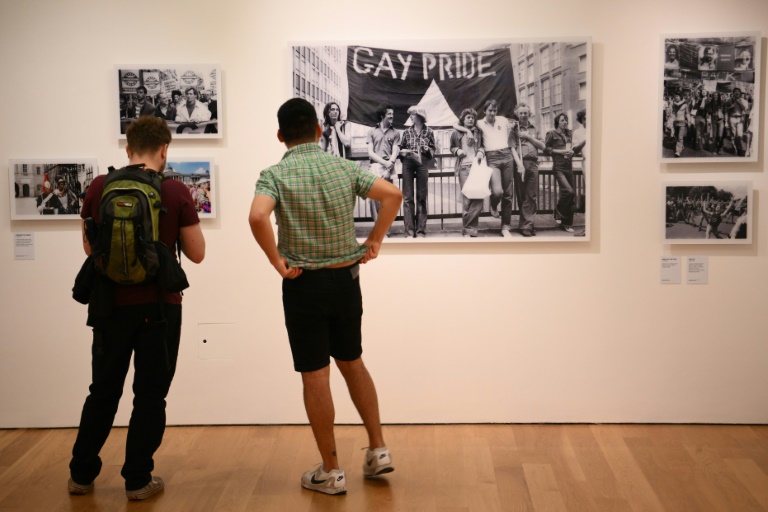
A major exhibition is slated for the coming months combining photos, artworks and costumes. Visitors can already discover the history of the community in the UK, from cross-dressing Victorians to more recent Pride marches.

Pioneers honoured include racing driver Roberta Cowell, thought to be the first British trans woman known to have had reassignment surgery, and Justin Fashanu, the first professional footballer to publicly acknowledge he was gay.

Fashanu — who in 1981 became the country’s most expensive black player when he made a £1 million move from Norwich City to Nottingham Forest — killed himself in 1998, eight years after coming out.

One of the museum’s managers, Stephanie Stevens, said Queer Britain was “a permanent place for us to be able to celebrate who we are, the amazing contributions we’ve made to history, and then to educate the nation so that they know about those contributions as well”.

“We want to reach everyone,” regardless of gender, sexuality or identity, Stevens told AFP.

“It’s important to have this museum and this space because as queer people we are so often expected to be grateful for the crumbs off the table.”

The museum in the trendy Granary Square development, where barges once unloaded their goods from the Regent’s Canal, is free, with the aim of widening the message.

Stevens described it as for “all of those people who feel like their voices haven’t been heard” and “the people that never heard those voices”.

– Visibility –

Elisha Pearce, 21, travelled from Birmingham in central England to visit the museum, just a day after it opened on Thursday.  

She discovered photographs of cross-dressing World War I soldiers.

“I wouldn’t have thought that kind of photo existed from the time so it’s definitely important that we can understand how our history has developed and how we got to the point where we are now,” she added.

Another section of the exhibition is dedicated to the communities LGBTQ+ people created for themselves.

“It’s something that we’ve needed for many years in this country,” said Richard Halstead, another visitor, from London.

“I hope this is a really positive start to something which will grow and develop and become a permanent part of the cultural heritage of this country.”

Halstead, 59, said he hoped it would give greater visibility to the community.

– Education –

The photographs in the exhibition are a reminder of the long road travelled, including of the acceptance of gay members of parliament.

In 1977, Maureen Colquhoun, the UK’s first openly lesbian MP, was deselected by her constituency party because of her sexuality and feminist views.

The Labour party’s ruling National Executive Committee overruled the decision the following year, agreeing with her that she had been unfairly dismissed because of her sexual orientation.

Her treatment contrasts with that of a popular former leader of the Scottish Conservatives, Ruth Davidson, decades later, whose abilities as a politician attracted far more interest and comment than her sexuality.

In March, another Tory lawmaker, Jamie Wallis, received messages of support from colleagues including Prime Minister Boris Johnson, after becoming the first MP to openly declare they were transgender.

The road to decriminalising homosexuality in the UK began with the Sexual Offences Act in 1967 but it would take several more decades for further reform.

Same-sex marriage was made legal in England, Scotland and Wales in 2014 but only in 2020 in Northern Ireland, due to opposition from religious conservatives.

Hurdles still remain: last month, the government promised to outlaw so-called “gay conversion therapy” but not for trans men and women.

“In the current climate that we’re in, it’s really important to remember that there are things going on around the world that aren’t up to scratch and that definitely needs to be worked on,” said Stevens.

But a free museum can help “in educating people around that”, Stevens added.
Victims voice disbelief, anger as Philippine dictator's son nears power

On the eve of elections that look set to return the son of late Philippine dictator Ferdinand Marcos to the presidential palace, the regime’s victims are hurt and dismayed — but determined to renew their struggle.

“In other countries, dictators were lined up against the wall. That never happened to them,” said 70-year-old Bonifacio Ilagan.

A former political prisoner, Ilagan was captured during a raid on a dissident safehouse in 1974.

As chairman of the communist youth organisation Kabataang Makabayan, he was a significant catch.

He was held for two years in the elder Marcos’s jails and tortured repeatedly to give up fellow opponents of the regime.

Ilagan remembers the long nightmare clearly. 

He recalls the beatings, his screams as hot irons seared the soles of his feet, and when captors tried to force a stick into his penis to force him to talk.

Through tears, he remembers when “they inserted bullets between the fingers of both hands and squeezed my hand so tightly that I was screaming.”

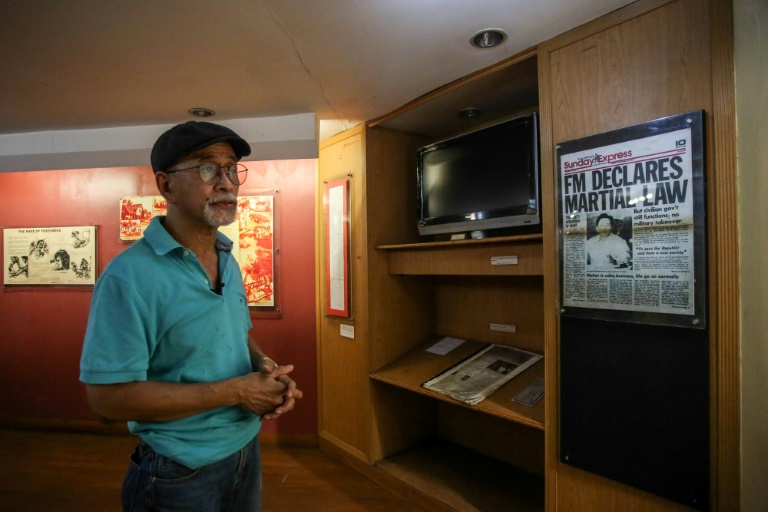
“I felt that my bones would crack,” the playwright and filmmaker told AFP at a memorial museum in the capital Manila.

He remembers too the aching loss brought by his sister Rizalina’s abduction and her presumed extrajudicial execution by Marcos’s agents. Her remains have never been found.

But for a large number of Ilagan’s 110 million fellow citizens, memories of Marcos’s power-crazed era of brutality have faded or blurred.

Ferdinand Marcos ruled the Philippines for two decades, becoming increasingly dictatorial and kleptocratic as his rule came under threat. 

Amnesty International estimates his security forces either killed, tortured, sexually abused, mutilated or arbitrarily detained about 70,000 opponents.

Marcos and his wife Imelda would eventually become international bywords for dictatorial excess. 

While cracking down on dissent and dishing out contracts to cronies, they looted an estimated $10 billion from the state, created an island reserve for African wildlife and — infamously — amassed a collection of 3,000 shoes.

In Manila, people still recall audacious palace parties that raged into the early morning, and when Imelda decided to requisition a plane and fly guests to Hong Kong for an impromptu shopping trip.

The party finally ended in 1986 when they were ousted in a “People Power” revolution and sent into exile.

But three decades after Marcos died disgraced in Hawaii, his image and political dynasty are being resurrected.

On Monday, his only son, Ferdinand Marcos Junior, popularly known as “Bongbong”, is expected to win the presidential election in a landslide.

– ‘What has become of us?’ –

For Ilagan, the Marcos renaissance is as painful as it is unfathomable.

“What has become of us?” he asked, his eyes looking around for answers among relics of the dictatorship in the now Covid-shuttered museum.

“Our culture, our psyche has been perverted, to the point where many of us do not see reality, even when faced with fact.”

“The son of the dictator becoming president, 50 years after Marcos senior declared martial law, it is really unthinkable,” he said.

“The (polling) figures say he’s going to be president, but I cannot for the life of me grasp how real that could be.”

But in some ways, he and other victims admit, the Marcos revival is explainable.

After the regime was ousted, trials for tax fraud and corruption dragged on for decades. No one in the family was jailed.  

There were no Argentine-style junta trials for rights abuses or even a South African-style Truth and Reconciliation Commission.

Efforts to recover plundered state assets are incomplete, leaving the family a vast war chest to restore their networks of patronage.

Today, Imelda is on bail for a 2018 conviction over embezzled funds and lives freely in Manila, her husband’s remains have been moved to the national heroes’ cemetery, and several family members hold political office.

“They were welcomed back as if nothing has happened,” said Judy Taguiwalo, another anti-Marcos activist who was twice arrested and tortured.

Taguiwalo believes impunity following the revolution and the failures of successive post-Marcos governments to improve Filipinos’ lives provided fertile ground for a rewriting of history.

“There’s a lot of reflection going on right now,” she said. “It is not enough to change the person in the presidential palace. The important thing is to have substantive changes for the majority of the people.”

The current election campaign has seen innumerable misleading Facebook posts that convinced millions — many too young to remember the regime directly — that the Marcoses presided over a “golden age” of peace and economic growth.

“The time when his father was president was a very successful era,” first-time voter Alma Lisa Ecat, 20, told AFP. 

“The Philippines was on top, not like today,” she said, adding that well-documented instances of extrajudicial killings, torture and disappearances were, at minimum, exaggerated. 

“I think those stories are made up by some people who don’t like the Marcos family” she claimed. 

– Sins of the father –

Ferdinand Marcos Jr’s unwillingness to admit to his family’s controversial history has left many fearing he may repeat it.

“Marcos junior has not publicly acknowledged the crimes of his father and his family’s role as direct beneficiaries of such crime,” said Cristina Palabay, secretary-general of the human rights group Karapatan.

His campaign spread “countless historical lies” about what happened in the Philippines between 1965 and 1986, she alleged.

For Bonifacio Ilagan, the swirl of misinformation and the Marcos resurgence mean a reluctant return to the activism that already consumed the best years of his life.

“I think there’s no other path for me. I’ve spent the best years of my life in this movement for a meaningful transformation of our society.”

“There’s no way I could go back, if only for the memory of my sister, in memory of my friends who have sacrificed their lives.”

Rebuild or resist? Hamas's dilemma year after Gaza war

A year after its devastating war with Israel, the Palestinian Islamist movement Hamas is faced with a dilemma: to keep up the armed struggle or to lay low and reconstruct the Gaza Strip?

On May 10, 2021, weeks of clashes between Israeli forces and Palestinians in the Al-Aqsa mosque compound in Israeli-annexed east Jerusalem culminated in all-out conflict.

A barrage of rockets was fired from the Gaza Strip, with some projectiles hitting Israeli cities, the rest intercepted. That same evening, the Israeli air force pounded Gaza.

What followed was 11 days of war that levelled parts of Gaza, killing 260 Palestinians, including many fighters and children. Fourteen died in Israel, including a soldier and two minors.

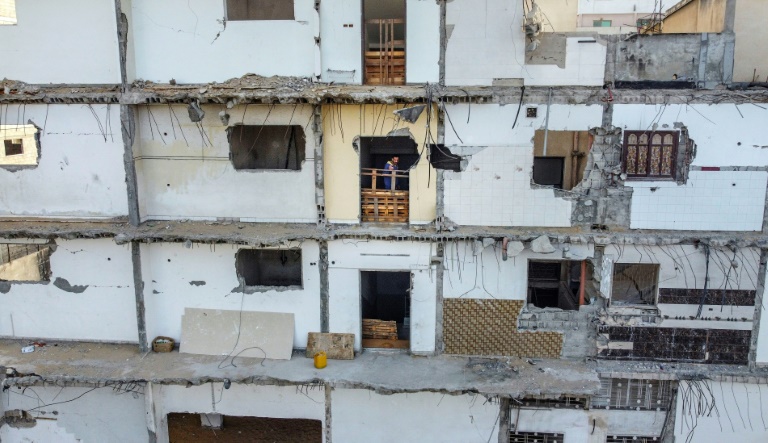
More than 1,000 housing units and buildings in Gaza were damaged or completely destroyed by the Israeli bombardment.

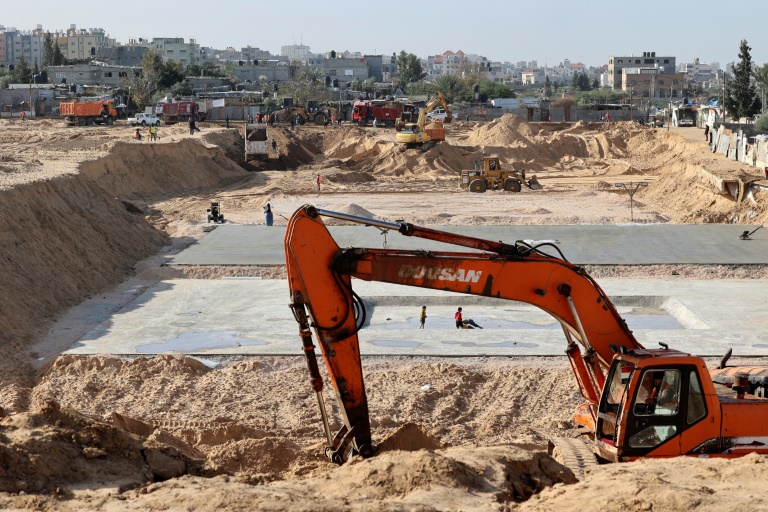
But a year later, the reconstruction effort has barely taken off.

Gaza City’s destroyed towers have not been rebuilt, and many roads are still in dire need of repair.

“By the middle of this year we should have completed the reconstruction of 500 houses,” Naji Sarhan, undersecretary of Gaza’s public works ministry, told AFP.

“Our priority is to rebuild the apartments of low-income families”, said Sarhan, whose ministry is under Hamas control.

He said reconstruction aid was provided by Egypt and Qatar, the two Arab countries which mediated the truce between Hamas and Israel.

– Hamas ‘divided’ –

With no political solution on offer, Israel has been working to reduce tensions by easing economic restrictions on Gaza, where unemployment is running at around 50 percent.

The number of permits for Gazans to work in Israel was increased to 12,000 in early April, with Israel promising 20,000 or more if the situation remains calm.

This offer poses a dilemma for Hamas, which in recent weeks has applauded six deadly anti-Israeli attacks and threatened a “big battle” if Israel continues its “aggression” against Palestinian worshippers in Al-Aqsa.

Hamas also invited the leader of the Revolutionary Guards of Israel’s arch-enemy Iran, Hossein Salami, to speak by videoconference at a stadium in Gaza City. 

“Hamas is divided. The leadership in Gaza is trying to avoid further escalation and is encouraged by the decision of the current Israeli government to give more to Gaza as long as Gaza remains quiet,” said Middle East expert Ofer Zalzberg from the Herbert C. Kelman Institute. 

“But there are also Hamas leaders outside Gaza, like Saleh al-Arouri, who think more in terms of ideology and believe that the strategy should not focus on Gaza,” he said.

For Palestinian economist Omar Shaban, the reconstruction and development of Gaza cannot depend alone on donations from foreign countries or work permits granted by Israel.

“We need a real political process… which will raise the question of the recognition of the entity that administers Gaza”, he said, referring to Hamas, which is branded a “terrorist” organisation by the United States, EU and Israel.

“Without that, there will be no change,” Shaban told AFP. 

Three fathers relive nightmare on Gaza's Wehda Street

On a fateful night in May 2021, three Palestinian fathers living on Gaza City’s Wehda Street shared a common tragedy in an Israeli air strike.

Flashbacks haunt surviving family members to this day.

“I was there under the rubble, I could hear my daughter Dana’s voice screaming: ‘Daddy! Daddy!’. I shouted back but she didn’t answer anymore,” sighs Riad Eshkountana in front of the wasteland where the family apartment, part of a three-storey block, used to stand.

On May 16, the building collapsed in Israeli attacks targeting the Gaza “metro”, a network of tunnels built by the Islamist movement Hamas which rules the impoverished coastal territory of 2.3 million residents.

Eshkountana was in the living room when his building was hit.

“I rushed to the boys’ room. I saw my wife trying to pick them up, but the ceiling suddenly collapsed on top of them and the floor gave way under my feet,” he said.

“Under the rubble, I heard my two-and-a-half-year-old son Zayn crying out until his voice died out. When I was pulled out of the rubble, I was told Dana and Zayn were now martyrs, like my wife Abeer,” said Eshkountana, 43, choking back sobs.

– ‘Life changed forever’ –

He lost four of his five children as well as his wife that night.

“At that moment, my life changed forever… If 100 years passed, I would still remember them,” said the father who emerged alive from the rubble along with seven-year-old daughter Suzy.

Initially, they moved into an apartment near Wehda Street, before settling in another one not far off, together with his mother, Suzy and a new wife.

“Almost every day I go back to the destroyed house, I remember my life with the children, moments with the family,” said Eshkountana, who also lost his possessions in the rubble, including family photos.

– ‘Impossible to forget’ –

After last year’s 11-day war between Hamas and Israel that left 260 dead in the Gaza Strip and 14 in the Jewish state, Gaza’s few psychotherapists converged on Wehda Street to help survivors of the grieving Eshkountana, Abu al-Ouf and Kolak families.

“I thought we were safe on Wehda Street,” a busy area with its clothing stores, cafes and a bakery, says Shukri al-Kolak, 50, who lost 22 family members, including his wife, three of his children and his parents.

The Kolaks’ apartment, located in a building just 50 metres (yards) from the Eshkountanas’ home, also collapsed in a crater left by the air strike that left a total of some 40 dead.

The father survived along with daughter Zaynab and son Osama.

“I remember the dead every moment. I try to forget, but it’s impossible,” says Kolak, a tall man with curly hair, who says he has not bought any Israeli products since the war and will never remarry.

“I would be wrong for any woman. No woman could live with my suffering,” he said.

– ‘Nightmares during the day’ –

Alaa Abu al-Ouf, 49, says he stopped psychological counselling for his surviving children “because it reminded them too much of what happened”.

He lost 14 family members in the strikes on Wehda Street, including his wife Diana, who died of her injuries, and daughters Shaima and Rawan.

After the war, Abu al-Ouf moved to an apartment 200 metres from his former address where he now lives with his second wife, their baby daughter, and his two older children.

Every day, he returns to a mini-mart near the old home, wondering if one day his apartment and life will ever be rebuilt.

“I don’t have nightmares at night, I have them during the day, every time I pass here, where my house used to be. Everything here reminds me of the family I lost.”

C.Africa's leap into bitcoin leaves its people bemused

In the Central African Republic (CAR), nine out of 10 people do not have internet, and only one in seven has electricity — that is, when there are no power cuts.

Yet the CAR has just followed El Salvador in adopting bitcoin as legal tender, a currency that requires access to the net to be bought, sold or used.

Foreign experts and CAR citizens themselves are struggling to understand why the world’s second least developed economy has announced this leap into monetary hyperspace.

Among people queueing at one of the rare automatic teller machines (ATMs) in the capital Bangui, the word “bitcoin” stirred befuddlement.

“What is it?” asked Sylvain, a man in his 30s, waiting for his turn at the cash machine, which was operating thanks to a generator.

“I don’t know what cryptocurrencies are — I don’t even have internet,” said Joelle, a vegetable hawker nearby.

On April 28, President Faustin Archange Touadera announced that lawmakers had unanimously approved a bill that legalised the use of bitcoin alongside the CFA franc.

All transactions using the cryptocurrency, including payment of taxes, are being authorised.

Government spokesman Serge Ghislain Djorie told AFP: “We are going to launch an awareness campaign and shortly introduce fibre optic cable — a low internet connection is enough to buy cryptocurrency.”

But even among CAR’s business community, which in theory is best placed to use bitcoin and other cryptocurrencies regulated by the new law, scepticism runs deep.

“I’m not interested in having bitcoin here — we have no infrastructure and no knowledge for getting involved in this adventure and there’s no cybercrime unit to ensure security,” said an entrepreneur, who spoke on the condition of anonymity.

“There are other priorities, like security, energy, access to water, the internet, building roads…”

– Sickly economy –

Technical hurdles are just one of the questions raised by the bitcoin move.

Foreign analysts have been pondering why this deeply troubled economy should adopt a novel and volatile currency rather than a time-honoured stable unit such as the US dollar.

Just this week, Economy Minister Herve Ndoba said a shortfall in government income was so severe that without foreign help, spending cuts of up to 60 percent loomed for some ministries.

“CAR has many problems. Adding another currency like bitcoin as legal tender will unlikely meaningfully address those,” said Ousmene Jacques Mandeng, a visiting fellow at the London School of Economics (LSE).

Bitcoin’s “excess volatility… translates to fluctuations in household savings, consumption and wealth,” warned Ganesh Viswanath-Nastraj, an assistant professor of finance at Warwick Business School in England.

Locked in a nine-year-old civil conflict, the CAR is heavily dependent on mineral extraction, much of which is informal, for its economy.

In a report in December 2020, a US watchdog called The Sentry said the CAR had become “a breeding ground for transnational criminal networks.”

“Money laundering and the trafficking of natural resources, drugs, weapons, and diplomatic passports are rampant,” it said.

The CFA franc that until now was the CAR’s sole legal tender is a regional currency backed by France and pegged to the euro.

Other members of the currency are Cameroon, Chad, the Republic of Congo, Gabon and Equatorial Guinea.

Didier Loukakou, regulatory chief at the Central African Financial Market Surveillance Commission, said the six had been discussing plans to regulate crypto-currencies.

But, he said, “we were not warned by Bangui about its decision.”

– Russian factor? –

Some experts see a possible explanation for Touadera’s announcement in his entwinement with Russia, perceived as desperate for currency after Western countries imposed sanctions over its invasion of Ukraine.

In 2020, Russia sent paramilitaries to shore up Touadera as armed groups advanced on the capital.

France and rights campaigners describe these operatives as mercenaries from the Wagner group, which reputedly receives mineral wealth in exchange for their services.

“The context, given systemic corruption and a Russian partner facing international sanctions, does encourage suspicion,” said Thierry Vircoulon, a specialist on Central Africa at the French Institute of International Relations (IFRI) think tank. 

“Russia’s search for ways to get around international sanctions is an invitation to be cautious.”

But some voices, including the head of the International Monetary Fund, Kristalina Georgieva, have voiced doubts that digital currencies can be an effective tool for bypassing sanctions.

Blooming shame: Pandemic, Ukraine war hurts Thai orchid industry

Thailand’s orchid growers, already weary after two years of being battered by the pandemic, are bracing for fresh blows to their livelihood as the war in Ukraine and changing weather patterns further cloud their futures.

Once considered a popular pastime among the elite in Thailand, orchid growing has developed into a multi-million dollar industry, and the kingdom is the world’s biggest producer and exporter of cut orchids.

But the pandemic has seen one in five farms shut recently, according to the Thai Orchid Exporter Association.

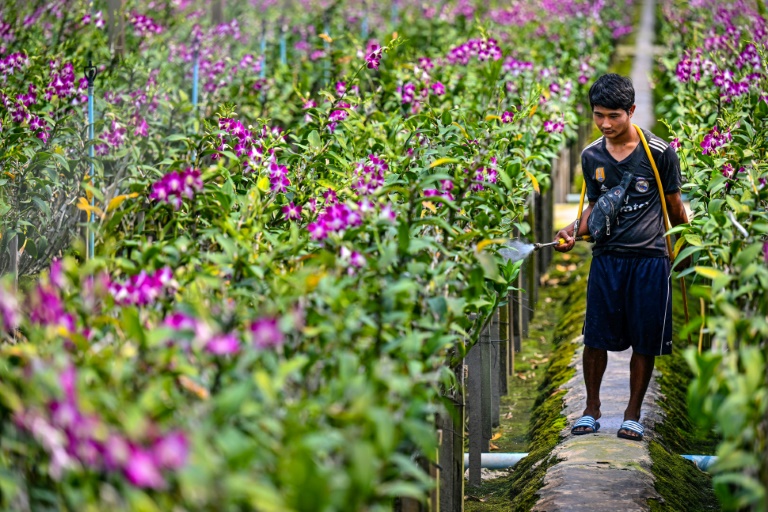
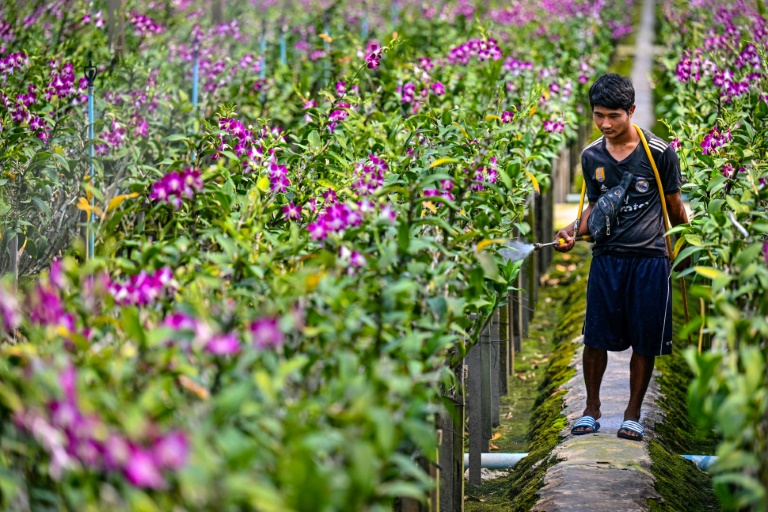
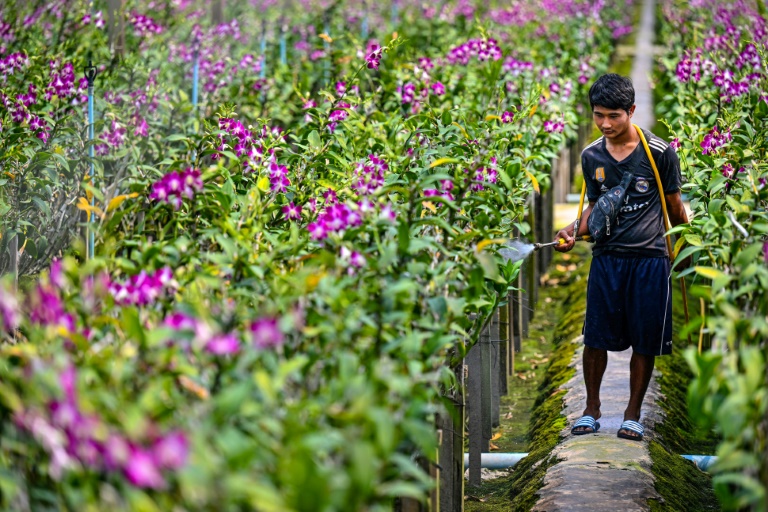
“No one has the heart to buy flowers, and transportation is very complicated,” said Somchai Lerdrungwitayachai as he stares in despair at the sea of purple at his orchid farm west of Bangkok.

He grows Dendrobium Sonia orchids — a hybrid variety with delicate white and purple petals. Popular in Japan, China and the United States, they are used for anything from religious ceremonies to college graduations.

At his 20-hectare property, workers treat the cut flowers with a special solution before trimming the stems and fitting them with a small vial, containing vitamins and nutrients, to preserve their fresh appearance for up to two weeks.

But times are tough: Somchai has been dipping into his savings for two years to keep paying his 50-odd employees.

Covid-19 and Russia’s invasion of Ukraine have sent the price of fertilisers and pesticides up by 30 percent, he said.

Adding to his woes are dramatically falling sales: pre-pandemic China bought 270 million orchid stems annually from Thailand — a figure that dropped to 170 million last year.

Once accounting for 80 percent of Somchai’s export income, China has been hit with coronavirus lockdowns in a number of cities, including its biggest: Shanghai.

Transporting orchids to the key market by road used to take up to three days, but the same journey can now take between eight and 10 days.

In the flower business, time is money, and wilted orchids are frequently discarded before they can ever reach a Shanghai customer’s home to be admired.

– ‘Time is running out’ –

While Somchai delivers his produce directly overseas, the majority of orchid growers in Thailand use large exporters based in Bangkok.

Air-freight costs have tripled or quadrupled in recent months, depending on the destination, said Wuthichai Pipatmanomai, vice-president of the Thai Orchid Exporter Association and co-owner of Sun International Flower, a major exporter.

Before the pandemic, the company was delivering 3.6 million orchids a month to China, Japan, Vietnam and the United States.

Now, only 1.2 million flowers leave the warehouse, and he has had to let go of half of his staff.

“We have asked the authorities for financial support, but we have not received anything,” Wuthichai said. “Time is running out.”

Increasing his selling price by 20 percent has resulted in several importers — particularly those in Europe — dropping him to concentrate on more local flowers.

The only hope is that sales to Japan remain stable and those to the United States increase with the start of the wedding season, he said.

However, in the long term, changing weather patterns are also troubling for growers.

“We are increasingly experiencing the effects of climate change,” Wutachai said, pointing to a recent surprise cold snap at the start of April in which the temperature dropped sharply from 36 Celsius (97 Fahrenheit) to 21C in just 24 hours, affecting orchid production.

“We are worried that these situations will occur more and more frequently.”

– Wilting fortunes –

Thailand’s coronavirus restrictions have also hit domestic sales — a lack of tourists meant restaurants and hotels scaled back orders, and bans on gatherings affected Thai Buddhist ceremonies.

And despite the kingdom’s international reopening, local demand remains lukewarm.

While Bangkok’s biggest flower market appears busy — wholesalers can be seen scurrying through colourful aisles laden with large woven baskets containing flowers — vendors tell a different story.

Than Tha Win, waiting patiently at her orchid stall for customers, said her income is down 70 percent.

“Everyone is still afraid to come to the market because of Covid-19,” the 21-year-old said.

Meanwhile, 45-year-old vendor Waew said she now has about 600 unsold orchids left over daily and tries to stem her losses by plucking off the petals and selling them as a separate product.

“Stop working with orchids? Impossible, I don’t know how to do anything else,” she said.

Blooming shame: Pandemic, Ukraine war hurts Thai orchid industry

Thailand’s orchid growers, already weary after two years of being battered by the pandemic, are bracing for fresh blows to their livelihood as the war in Ukraine and changing weather patterns further cloud their futures.

Once considered a popular pastime among the elite in Thailand, orchid growing has developed into a multi-million dollar industry, and the kingdom is the world’s biggest producer and exporter of cut orchids.

But the pandemic has seen one in five farms shut recently, according to the Thai Orchid Exporter Association.

“No one has the heart to buy flowers, and transportation is very complicated,” said Somchai Lerdrungwitayachai as he stares in despair at the sea of purple at his orchid farm west of Bangkok.

He grows Dendrobium Sonia orchids — a hybrid variety with delicate white and purple petals. Popular in Japan, China and the United States, they are used for anything from religious ceremonies to college graduations.

At his 20-hectare property, workers treat the cut flowers with a special solution before trimming the stems and fitting them with a small vial, containing vitamins and nutrients, to preserve their fresh appearance for up to two weeks.

But times are tough: Somchai has been dipping into his savings for two years to keep paying his 50-odd employees.

Covid-19 and Russia’s invasion of Ukraine have sent the price of fertilisers and pesticides up by 30 percent, he said.

Adding to his woes are dramatically falling sales: pre-pandemic China bought 270 million orchid stems annually from Thailand — a figure that dropped to 170 million last year.

Once accounting for 80 percent of Somchai’s export income, China has been hit with coronavirus lockdowns in a number of cities, including its biggest: Shanghai.

Transporting orchids to the key market by road used to take up to three days, but the same journey can now take between eight and 10 days.

In the flower business, time is money, and wilted orchids are frequently discarded before they can ever reach a Shanghai customer’s home to be admired.

– ‘Time is running out’ –

While Somchai delivers his produce directly overseas, the majority of orchid growers in Thailand use large exporters based in Bangkok.

Air-freight costs have tripled or quadrupled in recent months, depending on the destination, said Wuthichai Pipatmanomai, vice-president of the Thai Orchid Exporter Association and co-owner of Sun International Flower, a major exporter.

Before the pandemic, the company was delivering 3.6 million orchids a month to China, Japan, Vietnam and the United States.

Now, only 1.2 million flowers leave the warehouse, and he has had to let go of half of his staff.

“We have asked the authorities for financial support, but we have not received anything,” Wuthichai said. “Time is running out.”

Increasing his selling price by 20 percent has resulted in several importers — particularly those in Europe — dropping him to concentrate on more local flowers.

The only hope is that sales to Japan remain stable and those to the United States increase with the start of the wedding season, he said.

However, in the long term, changing weather patterns are also troubling for growers.

“We are increasingly experiencing the effects of climate change,” Wutachai said, pointing to a recent surprise cold snap at the start of April in which the temperature dropped sharply from 36 Celsius (97 Fahrenheit) to 21C in just 24 hours, affecting orchid production.

“We are worried that these situations will occur more and more frequently.”

– Wilting fortunes –

Thailand’s coronavirus restrictions have also hit domestic sales — a lack of tourists meant restaurants and hotels scaled back orders, and bans on gatherings affected Thai Buddhist ceremonies.

And despite the kingdom’s international reopening, local demand remains lukewarm.

While Bangkok’s biggest flower market appears busy — wholesalers can be seen scurrying through colourful aisles laden with large woven baskets containing flowers — vendors tell a different story.

Than Tha Win, waiting patiently at her orchid stall for customers, said her income is down 70 percent.

“Everyone is still afraid to come to the market because of Covid-19,” the 21-year-old said.

Meanwhile, 45-year-old vendor Waew said she now has about 600 unsold orchids left over daily and tries to stem her losses by plucking off the petals and selling them as a separate product.

“Stop working with orchids? Impossible, I don’t know how to do anything else,” she said.

Blooming shame: Pandemic, Ukraine war hurts Thai orchid industry

Thailand’s orchid growers, already weary after two years of being battered by the pandemic, are bracing for fresh blows to their livelihood as the war in Ukraine and changing weather patterns further cloud their futures.

Once considered a popular pastime among the elite in Thailand, orchid growing has developed into a multi-million dollar industry, and the kingdom is the world’s biggest producer and exporter of cut orchids.

But the pandemic has seen one in five farms shut recently, according to the Thai Orchid Exporter Association.

“No one has the heart to buy flowers, and transportation is very complicated,” said Somchai Lerdrungwitayachai as he stares in despair at the sea of purple at his orchid farm west of Bangkok.

He grows Dendrobium Sonia orchids — a hybrid variety with delicate white and purple petals. Popular in Japan, China and the United States, they are used for anything from religious ceremonies to college graduations.

At his 20-hectare property, workers treat the cut flowers with a special solution before trimming the stems and fitting them with a small vial, containing vitamins and nutrients, to preserve their fresh appearance for up to two weeks.

But times are tough: Somchai has been dipping into his savings for two years to keep paying his 50-odd employees.

Covid-19 and Russia’s invasion of Ukraine have sent the price of fertilisers and pesticides up by 30 percent, he said.

Adding to his woes are dramatically falling sales: pre-pandemic China bought 270 million orchid stems annually from Thailand — a figure that dropped to 170 million last year.

Once accounting for 80 percent of Somchai’s export income, China has been hit with coronavirus lockdowns in a number of cities, including its biggest: Shanghai.

Transporting orchids to the key market by road used to take up to three days, but the same journey can now take between eight and 10 days.

In the flower business, time is money, and wilted orchids are frequently discarded before they can ever reach a Shanghai customer’s home to be admired.

– ‘Time is running out’ –

While Somchai delivers his produce directly overseas, the majority of orchid growers in Thailand use large exporters based in Bangkok.

Air-freight costs have tripled or quadrupled in recent months, depending on the destination, said Wuthichai Pipatmanomai, vice-president of the Thai Orchid Exporter Association and co-owner of Sun International Flower, a major exporter.

Before the pandemic, the company was delivering 3.6 million orchids a month to China, Japan, Vietnam and the United States.

Now, only 1.2 million flowers leave the warehouse, and he has had to let go of half of his staff.

“We have asked the authorities for financial support, but we have not received anything,” Wuthichai said. “Time is running out.”

Increasing his selling price by 20 percent has resulted in several importers — particularly those in Europe — dropping him to concentrate on more local flowers.

The only hope is that sales to Japan remain stable and those to the United States increase with the start of the wedding season, he said.

However, in the long term, changing weather patterns are also troubling for growers.

“We are increasingly experiencing the effects of climate change,” Wutachai said, pointing to a recent surprise cold snap at the start of April in which the temperature dropped sharply from 36 Celsius (97 Fahrenheit) to 21C in just 24 hours, affecting orchid production.

“We are worried that these situations will occur more and more frequently.”

– Wilting fortunes –

Thailand’s coronavirus restrictions have also hit domestic sales — a lack of tourists meant restaurants and hotels scaled back orders, and bans on gatherings affected Thai Buddhist ceremonies.

And despite the kingdom’s international reopening, local demand remains lukewarm.

While Bangkok’s biggest flower market appears busy — wholesalers can be seen scurrying through colourful aisles laden with large woven baskets containing flowers — vendors tell a different story.

Than Tha Win, waiting patiently at her orchid stall for customers, said her income is down 70 percent.

“Everyone is still afraid to come to the market because of Covid-19,” the 21-year-old said.

Meanwhile, 45-year-old vendor Waew said she now has about 600 unsold orchids left over daily and tries to stem her losses by plucking off the petals and selling them as a separate product.

“Stop working with orchids? Impossible, I don’t know how to do anything else,” she said.

How Portugal became Europe's accidental 'bitcoin heaven'

As governments slowly shackle the crypto industry with regulations and obligations, Portugal is increasingly isolated in Europe — a place with few rules that investors describe as a crypto paradise.

“You don’t need to do anything else because you already have a perfect system, with zero percent tax on bitcoin,” said Didi Taihuttu, a prominent crypto enthusiast who shifted his family to Portugal from the Netherlands. 

“For bitcoiners, it’s heaven,” he added.

Financial authorities across the globe are grappling with fundamental questions about cryptocurrencies.

Firstly, are they currencies or assets? If they are assets, how do you categorise and tax them? 

Right now, Portugal is one of the last countries in Europe to regard them as currencies from a tax point of view, meaning profits from trading are not taxed.

The finance ministry told AFP it was reviewing the situation and wanted a common European framework, but pressure is building for quick action. 

Mariana Mortagua, a far-left MP, called recently for urgent regulation and summed up the situation bluntly: “Portugal has become a tax haven.”

Even those in the crypto industry accept that things will have to change.

“It’s hard to justify other financial assets being taxed at around 28 percent but not cryptocurrencies,” said Pedro Borges of Criptoloja, the first crypto exchange registered in Portugal.

– ‘Legal vacuum’ –

Portugal has long sought foreign cash by giving tax breaks and special visas to foreign investors and so-called digital nomads — those who work online without the need for a fixed business location.

And the tax regime is not the only appeal — beaches, climate and cuisine all figure, particularly for people from northern Europe.

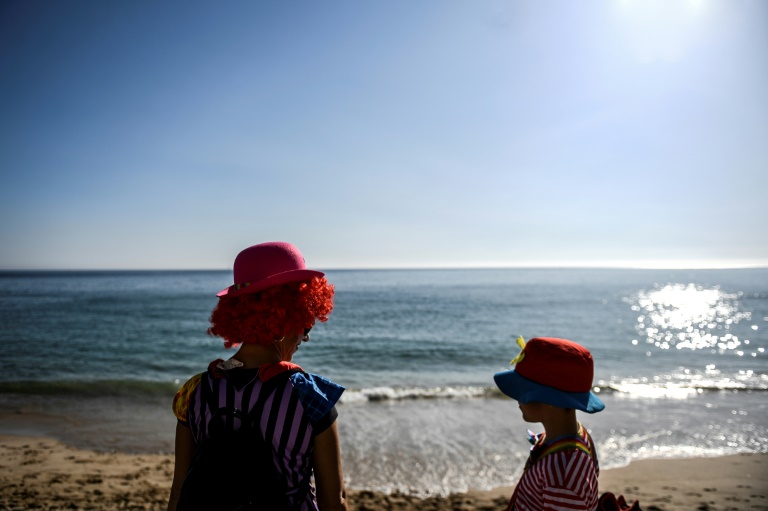
“Portugal has the sun, amazing food and amazing people,” said Taihuttu, who has set up in the Algarve in the country’s heavily touristed south. 

“Portugal can become one of the best countries in Europe for living, for investing.”

But while the lifestyle is likely to remain unchanged, the same cannot be said of the tax regime.

One London-based tax lawyer, who asked to remain anonymous, said he would not advise his clients to put their money into Portugal despite its “very lenient” tax system.

“It’s not a long-term strategy of the government to attract companies in the sector, rather it is a legal vacuum,” he said.

“I bet that in 10 years, the City (of London) will be more lenient than Portugal.”

Britain is one of many countries attempting to market itself as a “crypto hub”.

– Bubble warning –

If internal pressures don’t force the Portuguese government’s hand, then intervention could come from outside.

Fabio Panetta of the European Central Bank sounded the alarm on crypto late last month when he said the ecosystem showed “strikingly similar dynamics” to the sub-prime mortgage bubble that helped tank the world economy in 2007.

Crypto-assets now have a far higher market capitalisation than the $1.3 trillion of bad loans that sparked the global financial crisis.

“We must not repeat the same mistakes by waiting for the bubble to burst,” he said, arguing for strong regulation.

He accused “crypto evangelists” of promising “heaven on Earth” while hawking a glorified Ponzi scheme — because crypto-assets are generally not backed by any streams of revenue, they rely on money from new investors to keep prices high.

If new investors dry up, the asset price tanks.

Those already in the market need to attract new money, which explains high-profile advertising at the Super Bowl, celebrity endorsements and armies of boosters on social media.

Taihuttu’s Instagram account plays like a scrolling advertisement for a luxury lifestyle of beaches, skiing, travel and adventure — all apparently funded by crypto.

Like other crypto entrepreneurs he has dazzling plans — after pushing his “crypto family” he is now proposing a “crypto village” somewhere in Portugal, selling plots of land with proof of ownership stored on blockchains.

To him, at least, the country should welcome these ideas with open arms.

“Portugal needs more jobs and economic growth,” he said. “So why stop the evolution of technology and money?”

Between searing drought and Ukraine war, Iraq watchful over wheat

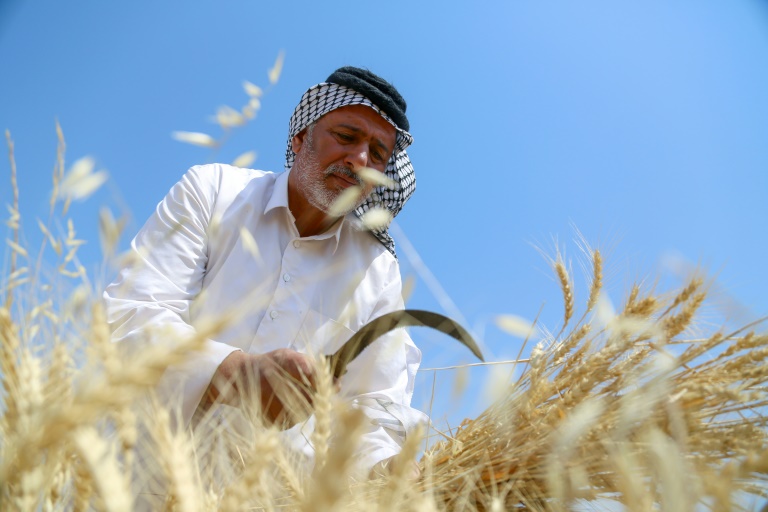
Iraqi farmer Kamel Hamed looks at the golden ears of wheat waving in the wind, unable to hide his anguish over the baking heat that is decimating his harvest.

“The drought is unbelievable,” said the 53-year-old in a white dishdasha robe and keffiyeh head covering at his farm in Jaliha village of central Diwaniya province.

“Even the well water can’t be used, it’s salt water.”

Searing heat and a lack of rain were already threatening his harvest. Then came Russia’s invasion of Ukraine in February, driving up the cost of fuel, seeds and fertiliser.

Like all farmers in Iraq, Hamed must follow the instructions of the state authorities who are the main grain buyers.

They determine the areas to be planted and the level of irrigation, depending on rain and water reserves. This year, due to water shortages, Iraq has reduced the area under cultivation by half.

As a result, Hamed has planted just one quarter of his 100 donums (10 hectares), where the combine harvester was now throwing grain into a truck bed.

“This year we didn’t even get 500 kilograms (1,100 pounds) of wheat from one donum” — less than half the usual harvest — he said.

The war in Ukraine has “pushed up the price of motor oil and of high-yield seeds”, he added — yet “another financial burden for farmers”.

“I don’t know how to support my family. No salary, no job, where can I go?”

– ‘Abandon the land’ – 

After decades of war and insurgency, Iraq faces another huge challenge: severe water scarcity driven by climate change.

It is highly sensitive issue for Iraq and its 41 million people, who feel the impacts on a daily basis, from depleted rivers to rapid desertification and more intense sandstorms.

Iraq’s big rivers, the Tigris and Euphrates, and their tributaries originate in Turkey and Syria as well as Iran, which dam them upstream, reducing the flow as they enter Iraq.

Irrigated by the Euphrates, Diwaniya province, where Jaliha is located, normally receives 180 cubic metres of water per second.

This year the volume has been at least halved to “80 to 90 cubic metres”, said Hani Shaer, who heads a farmers’ collective responsible for distributing the water.

The result can be seen in the stagnant water in the main irrigation canal, which serves the 200,000 donums of surrounding land, with some gullies now completely dry.

Shaer denounced a lack of support from authorities, charging that the agriculture ministry provided just five kilos of fertiliser this season, down from 40 kilos in previous years.

“The farmer will leave, abandon the land and head to the city to look for any kind of work,” he said.

– Collapsed harvest –

Agriculture ministry spokesman Hamid al-Nayef said the state was helping by raising the purchase price in order to pay producers around $500 per tonne of wheat.

In 2019 and 2020, wheat harvests had reached five million tonnes, enough to guarantee “self-sufficiency” for Iraq, he told AFP.

This season, Iraq may only grow 2.5-3 million tonnes of wheat, “not enough for a whole year for the Iraqis,” Nayef acknowledged.

“We will have to import,” he said.

Iraq will be confronted with the vagaries of the world market and prices driven up by the conflict in Ukraine, even though Baghdad imports its cereals mainly from Canada, Australia and the United States.

“With the interplay of supply and demand, prices are rising even in the United States and other countries,” Nayef said.

Back in Jaliha, another farmer, Ahmed al-Jelhawi, was questioning his life choices. He said he used to harvest 500 tonnes of wheat, but this year expects just 50-75 tonnes.

“I gave up my studies to devote myself to agriculture,” he lamented. “But this year, agriculture is zero.”

“Between the low production and the rising prices, we probably won’t be able to plant next year.”

Close Bitnami banner
Bitnami