World

Colombian cartel stages 'armed strike' over leader's extradition

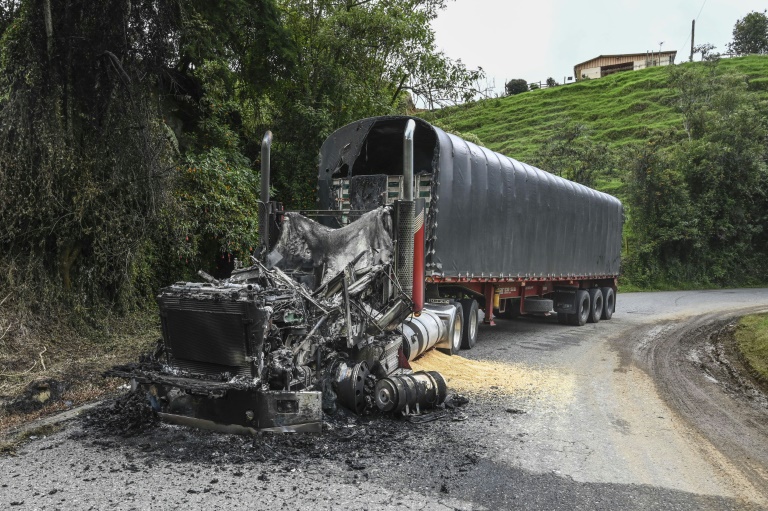
A Colombian drug cartel has set fire to dozens of vehicles, retaliating over the extradition of the group’s leader to the United States on trafficking charges, authorities said Friday.

Dairo Antonio Usuga, known as “Otoniel,” led Colombia’s largest narco-trafficking cartel, known as the Gulf Clan.

The 50-year-old was the most wanted person in Colombia until his arrest last October, and now faces life in prison if found guilty.

Members of the Gulf Clan launched a four-day “armed strike” on Thursday, causing unrest in areas where it is influential, including the northern departments of Antioquia, Cordoba, Sucre and Bolivar. 

Over the past two days “more than a hundred vehicles (…) were hit”, said Interior Minister Daniel Palacios.

Officials have offered a $7,300 reward for information on those responsible.

On a tour of Antioquia, journalists witnessed six armed men stopping a vehicle and forcing out its occupants before setting it alight.

The United States accuses Usuga and the Gulf Clan of trafficking at least 73 tons of cocaine into the US between 2003 and 2012.

Usuga, who is due back in court on June 2, has pled not guilty to charges of criminal enterprise and international cocaine manufacturing and distribution.

Hoping to root out the Gulf Clan, the Colombian government has created “a specialized research unit”.

According to the Centre for Development and Peace Studies (Indepaz), the cartel still has about 1,700 members. 

What next for Chelsea after Boehly group win battle to succeed Abramovich

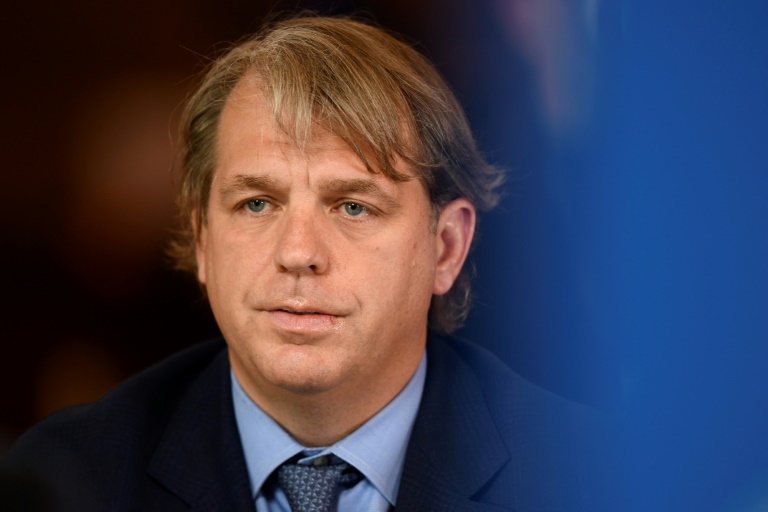
Chelsea have some clarity after an uncertain few months with the consortium led by LA Dodgers co-owner Todd Boehly set to buy the Premier League giants.

The Boehly group, which includes fellow Dodgers co-owner Mark Walter, Swiss billionaire Hansjoerg Wyss and US investment firm Clearlake Capital have committed to a deal worth £4.25 billion ($5.2 billion), a record for a sports club.

A sum of £1.75 billion is earmarked for future investment in the club with the other £2.5 billion frozen due to the sanctions imposed on current owner Roman Abramovich.

The Russian oligarch has insisted his intention is for all of the proceeds to be donated to victims of the war in Ukraine.

The sale brings to an end Abramovich’s 19-year reign during which the Blues have enjoyed unparallelled success.

Chelsea won five Premier League titles and two Champions League among 19 major trophies.

But the Abramovich era was brought down by Russia’s invasion of Ukraine as he was sanctioned by the UK government for his links to Russian president Vladimir Putin.

AFP Sport looks at the job that lies ahead for the future Chelsea owners.

Stadium redevelopment

The bulk of the future financial commitment to the club is expected to go on redeveloping Stamford Bridge into a stadium worthy of one of Europe’s elite clubs.

Abramovich shelved plans for a £1 billion redevelopment in 2018 during another dispute with the UK government over his visa.

Stamford Bridge’s 42,000 capacity lags well behind Premier League rivals Manchester United, Manchester City, Liverpool, Arsenal and Tottenham.

Spurs’ £1 billion home, completed in 2019, has become a sporting hub in the English capital, hosting major boxing, rugby and NFL events, as well as concerts and conferences.

Boehly’s track record of both sporting success and stadium redevelopment at the Dodgers gave his bid credibility to go with the major funding behind it.

Investment in the stadium was reportedly a key part of the consortium’s pitch to American bank Raine, who oversaw the sales process.

A larger ground will also be part of the long-term strategy to drive revenue and recoup their huge outlay to buy the European champions.

Stabilise the squad

Chelsea have been operating under a special licence for the past two months since sanctions were levied on Abramovich.

Due to the restrictions applied, the Blues were not allowed to offer new contracts or sign new players.

Defenders Antonio Rudiger and Andreas Christensen are set to leave on free transfers at the end of the season and will need to be replaced.

Abramovich’s lavish spending means he leaves behind a very competitive squad.

Just a year ago, Chelsea beat Manchester City to win the Champions League and are on course to finish in the Premier League top four.

With clarity over their future, the club can now work towards assembling a squad to challenge City and Liverpool for the title next season.

“When the situation is clear you can take actions, make judgements,” said Chelsea manager Thomas Tuchel on Friday.

Get fan support

Much to the dismay of politicians, Abramovich’s name was still chanted by Chelsea fans following the sanctions thanks to the success he had bankrolled over the past two decades.

Winning will be the quickest way into the hearts of the Chelsea faithful for the new ownership, but there are other pitfalls to be avoided.

There are fears that to see a return on their investment, the deeply unpopular European Super League could be revived for the guaranteed income it sought to provide.

Fans have also taken issue with American ownership of other Premier League clubs.

Protests have been a common occurence outside Old Trafford this season with Manchester United supporters furious at the dividends taken out of the club by the Glazer family during a decade of decline.

Fenway Sports Group have enjoyed much greater success reviving the fortunes of Liverpool, but have also been pressured into climbdowns on ticket prices and signing up to the Super League by fan fury.

What next for Chelsea after Boehly group win battle to succeed Abramovich

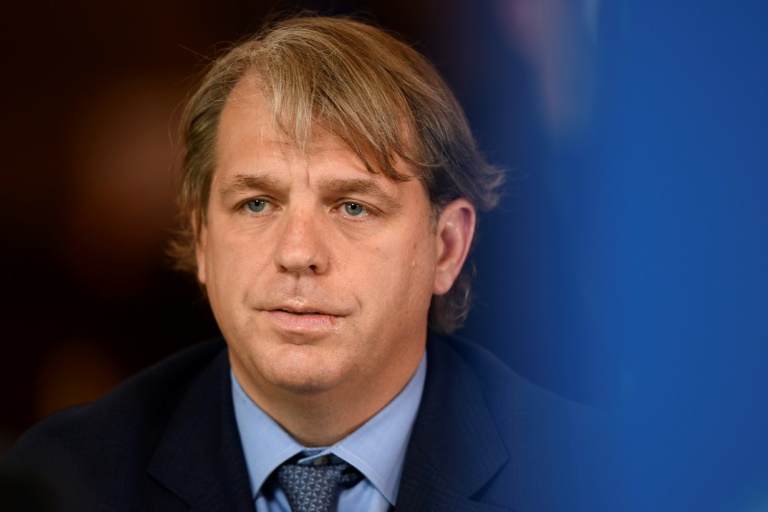
Chelsea have some clarity after an uncertain few months with the consortium led by LA Dodgers co-owner Todd Boehly set to buy the Premier League giants.

The Boehly group, which includes fellow Dodgers co-owner Mark Walter, Swiss billionaire Hansjoerg Wyss and US investment firm Clearlake Capital have committed to a deal worth £4.25 billion ($5.2 billion), a record for a sports club.

A sum of £1.75 billion is earmarked for future investment in the club with the other £2.5 billion frozen due to the sanctions imposed on current owner Roman Abramovich.

The Russian oligarch has insisted his intention is for all of the proceeds to be donated to victims of the war in Ukraine.

The sale brings to an end Abramovich’s 19-year reign during which the Blues have enjoyed unparallelled success.

Chelsea won five Premier League titles and two Champions League among 19 major trophies.

But the Abramovich era was brought down by Russia’s invasion of Ukraine as he was sanctioned by the UK government for his links to Russian president Vladimir Putin.

AFP Sport looks at the job that lies ahead for the future Chelsea owners.

Stadium redevelopment

The bulk of the future financial commitment to the club is expected to go on redeveloping Stamford Bridge into a stadium worthy of one of Europe’s elite clubs.

Abramovich shelved plans for a £1 billion redevelopment in 2018 during another dispute with the UK government over his visa.

Stamford Bridge’s 42,000 capacity lags well behind Premier League rivals Manchester United, Manchester City, Liverpool, Arsenal and Tottenham.

Spurs’ £1 billion home, completed in 2019, has become a sporting hub in the English capital, hosting major boxing, rugby and NFL events, as well as concerts and conferences.

Boehly’s track record of both sporting success and stadium redevelopment at the Dodgers gave his bid credibility to go with the major funding behind it.

Investment in the stadium was reportedly a key part of the consortium’s pitch to American bank Raine, who oversaw the sales process.

A larger ground will also be part of the long-term strategy to drive revenue and recoup their huge outlay to buy the European champions.

Stabilise the squad

Chelsea have been operating under a special licence for the past two months since sanctions were levied on Abramovich.

Due to the restrictions applied, the Blues were not allowed to offer new contracts or sign new players.

Defenders Antonio Rudiger and Andreas Christensen are set to leave on free transfers at the end of the season and will need to be replaced.

Abramovich’s lavish spending means he leaves behind a very competitive squad.

Just a year ago, Chelsea beat Manchester City to win the Champions League and are on course to finish in the Premier League top four.

With clarity over their future, the club can now work towards assembling a squad to challenge City and Liverpool for the title next season.

“When the situation is clear you can take actions, make judgements,” said Chelsea manager Thomas Tuchel on Friday.

Get fan support

Much to the dismay of politicians, Abramovich’s name was still chanted by Chelsea fans following the sanctions thanks to the success he had bankrolled over the past two decades.

Winning will be the quickest way into the hearts of the Chelsea faithful for the new ownership, but there are other pitfalls to be avoided.

There are fears that to see a return on their investment, the deeply unpopular European Super League could be revived for the guaranteed income it sought to provide.

Fans have also taken issue with American ownership of other Premier League clubs.

Protests have been a common occurence outside Old Trafford this season with Manchester United supporters furious at the dividends taken out of the club by the Glazer family during a decade of decline.

Fenway Sports Group have enjoyed much greater success reviving the fortunes of Liverpool, but have also been pressured into climbdowns on ticket prices and signing up to the Super League by fan fury.

Pensioners swarm cash vans under fire at Ukraine front

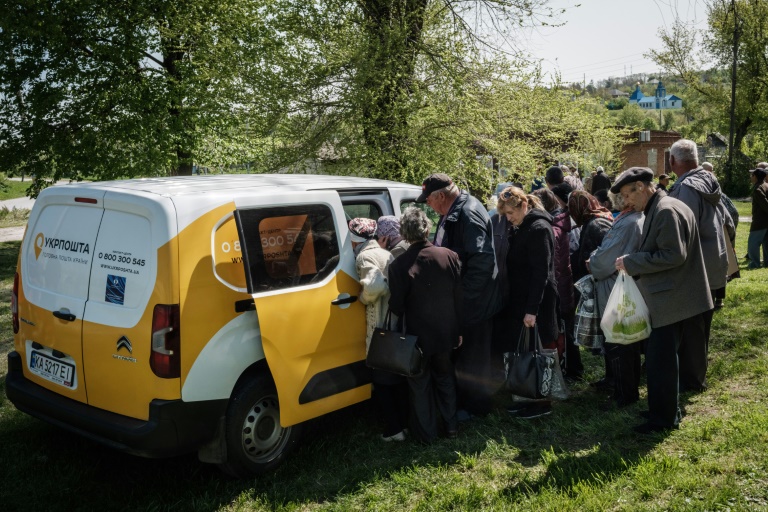
Postwoman Iryna Fedyanina’s laughter drowns out the mortar fire ringing out as she hands out pensions to the frightened masses near a river splitting Ukrainian and Russian forces.

A sullen driver takes her Ukrainian post office van past barricaded checkpoints and positions so dangerously exposed to Russian fire that soldiers try to blend into the surrounding forests.

He then leaves her parked on a patch of grass for hours on end while she counts out the cash owed to every pensioner and writes down their names in a complicated ledger.

Fedyanina giggles at her utter helplessness in the face of the overwhelming danger posed by the thuds and blasts echoing across the verdant hills.

“I tell myself in the morning that everything will be alright and hope that God will protect me,” the smiling 50-year-old says from inside her van.

“I pray and then I drive out to the front. What else can you do? We cannot leave our people without money. If we do not pay them, who will?”

– Ears covered –

The answer worrying Ukrainians is that the Russians would be delighted to hand out the pensions should they manage to push south past the Siverskiy Donets River and seize settlements such as Mayaky.

Fedyanina’s unspoken duty thus involves winning over the Russian-speaking elderly who comprise the vast majority of people still clinging on to their homes in the war zone — and whose attachment to Kyiv’s pro-Western leaders is wavering.

She must do this with everyone’s nerves fraying and instant death a random but real possibility at any moment.

Rocket and missile fire has already killed dozens of civilians gathered in crowds in cities such as nearby Kramatorsk and the more distant Kharkiv.

Both sides have accused the other of shelling civilians fleeing in evacuation buses.

The few dozen people crowded around Fedyanina’s van sighed and grumbled among themselves at particularly threatening blasts of incoming and outgoing fire.

Some simply covered their ears and patiently waited.

“Of course I am afraid. We have had so many cases like this, when a shell flies right into a crowd of waiting people,” said pensioner Larisa Zybareva.

“Every time they come here to hand out pensions, they start shelling again,” the 63-year-old former farmhand said.

“Last month, we did not even think they would come, there was so much fighting. But in the end, they still came.”

– Frontline river dip  –

Not everyone is as sensitive to the danger.

Ukrainian soldiers occasionally stop off at Mayaky’s two tiny shops and Sunday market to stock up on cigarettes and candy.

An intelligence officer who agreed to be identified as Misha was basking in the sun with an assault rifle on his lap and telling tales of his troops’ rising morale and the futility of the Russian offensive.

“Now that the West has started to help, we have had no problems with supplies or weapons. We have everything,” said Misha.

“The only only real problem is with uniforms and cigarettes. We wear uniforms from all over the place in one unit.”

Misha then stretched his back and pulled off his shirt before running down to the ravine and diving head first into the frontline river at the heart of the latest wave of battles.

“Since the war started, this is my first dip,” he shouted after coming up for air. “It feels good to get the summer season started.”

His trousers and assault rifle rested unattended on a picnic table while he splashed around.

– Relative safety –

But rumours were filtering in from further out east that the Russians had made their first serious break across the river Misha was splashing in near Mayaky.

The ultimate target of the battalion tactical groups Russia has fanned out across the northeastern front appears to be Ukraine’s main administrative centre in Kramatorsk — the home base of Fedyanina’s postal unit.

The bespectacled Russian and Ukrainian speaker may be one of the first civilians to know how close the Kremlin’s forces are really getting to her symbolically and strategically important city.

“I visit one village after another. And by the end, I end up visiting each one of them once a month to pay the pensions, ” she said of her frontline travels.

“We go where it is safe — or at least, relatively safe. We cannot enter places with active fighting.”

Russia steps up Ukraine assaults ahead of Victory Day parades

Ukraine hoped to evacuate more civilians from a besieged Mariupol steel plant on Saturday as Russian forces unleased new bombardments across the country ahead of Victory Day festivities in Moscow.

The Azovstal steel mill is the last pocket of Ukrainian resistance in the devastated port city and its fate has taken on a symbolic value in the broader battle unleashed by Russia’s invasion.

Ukraine’s defence minister said Russian forces had resumed their assault on the site, despite earlier talk of a truce to allow trapped civilians to flee the complex.

Vice Prime Minister Iryna Vereshchuk said rescuers would try to evacuate more civilians on Saturday. 

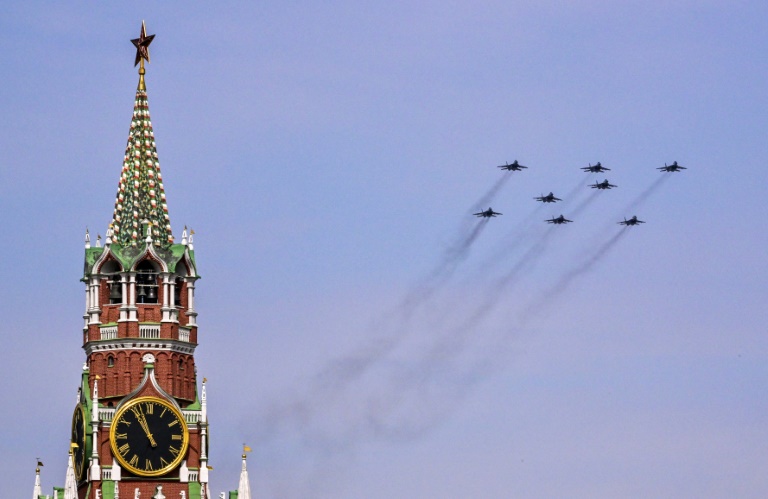
On Monday, Moscow and President Vladimir Putin  will celebrate the World War II Soviet victory over Nazi Germany with a traditional Victory Day parade.

Russia’s campaign in Ukraine has run into tough resistance — and provoked Kyiv’s western allies into slapping massive economic sanctions on the Russian economy and Putin’s inner circle.

But with Victory Day fast approaching, Ukrainian officials fear more intense missile and artillery bombardments and renewed assaults as Moscow scrambles for symbolic wins.

The Ukrainian rescue service said a missile hit a technical college in Kostiantynivka, in the eastern region of Donetsk, causing a fire and at least two deaths. 

Donetsk regional governor Pavlo Kyrylenko said there had been “massive bombardments” along the frontline. Strikes were also reported in the north of Ukraine near the city of Kharkiv and in the southern city of Mikoleyev, a key Russian target.

Ukrainian forces have launched a counter-offensive of their own.

According to the defence ministry, Russian forces were forced to demolish three road bridges near Tsyrkuny and Ruski Tyshky outside Kharkiv, to slow the Ukrainian advance.

According to British intelligence, Ukrainian forces equipped with high-end weaponry by the western allies, have been able to destroy at least one of Russia’s most advanced tanks, the T-90M.

– Bridges down –

“The conflict in Ukraine is taking a heavy toll on some of Russia’s most capable units and most advanced capabilities,” UK Defence Intelligence said.

“It will take considerable time and expense for Russia to reconstitute its armed forces following this conflict,” it said, warning sanctions on advanced components would make it harder for Russia to re-arm.

The west, meanwhile, is stepping up arms deliveries to Ukraine’s defenders.

US President Joe Biden on Friday announced another package of military assistance worth $150 million, including counter-artillery radars used for detecting the source of enemy fire.

This brings the total value of US weaponry sent to Ukraine since the Russian invasion began to $3.8 billion.

Biden had urged Congress to approve a further $33 billion package, including $20 billion in military aid, “to strengthen Ukraine on the battlefield and at the negotiating table.”

The G7 leaders, including Biden, and Ukraine’s President Volodymyr Zelensky are to meet in videoconference on Sunday to discuss Western support for Kyiv.

– Azovstal evacuation –

On Friday, Zelensky said “diplomatic options” were also under way to rescue Ukrainian soldiers from the Mariupol steelworks, as civilian evacuations continued. 

The Russian defence ministry said 50 people were evacuated from the site, including 11 children.

It added they were handed over to the UN and Red Cross, which are assisting in the operation, and that the “humanitarian operation” would continue on Saturday. 

About 200 civilians, including children, are thought to be trapped in the tunnels and bunkers beneath Azovstal, along with Ukrainian soldiers making their last stand.

Russia announced a day-time ceasefire at the plant for three days starting Thursday but the Ukrainian army said Russian “assault operations” had continued by ground and air.

Ukraine’s Azov battalion, leading the defence at Azovstal, said one Ukrainian fighter had been killed and six wounded when Russian forces opened fire during an attempt to evacuate people by car.

– Russia to remain ‘forever’ –

Since failing to take Kyiv early on in the war, Russia has refocused its offensive on the south and east of Ukraine.

Taking full control of Mariupol would allow Moscow to create a land bridge between the Crimean peninsula, which it annexed in 2014, and separatist, pro-Russian regions in the east.

In those regions, separatists said they had removed Ukrainian and English language traffic signs for Mariupol and replaced them with Russian ones.

Locals want to see proof that “Russia has come back here forever,” said Denis Pushilin, head of the breakaway region of Donetsk.

In neighbouring Lugansk, Ukrainian officials said on Friday that Russian forces had almost encircled Severodonetsk — the easternmost city still held by Kyiv — and are trying to storm it.

Kherson in the south remains the only significant city Russia has managed to capture since the war began.

A senior official from the Russian parliament visiting the city on Friday also emphasised that Russia would remain in southern Ukraine “forever”.

“There should be no doubt about this. There will be no return to the past,” Andrey Turchak said.

– Putin’s mega-yacht? –

As European countries have sought to clamp down on Russian assets overseas, Italian authorities impounded a mega yacht as speculation swirled it might even belong to the Russian president.

“Scheherazade” is worth an estimated $700 million. Financial police have been able to “establish significant economic and business links” between the owner and “eminent people in the Russian government”.

Researchers at the anti-corruption foundation of Russian dissident Alexei Navalny have linked the yacht to Putin.

burs-dc/bp

Belgium denies Ecuador's extradition request for ex-president: lawyers

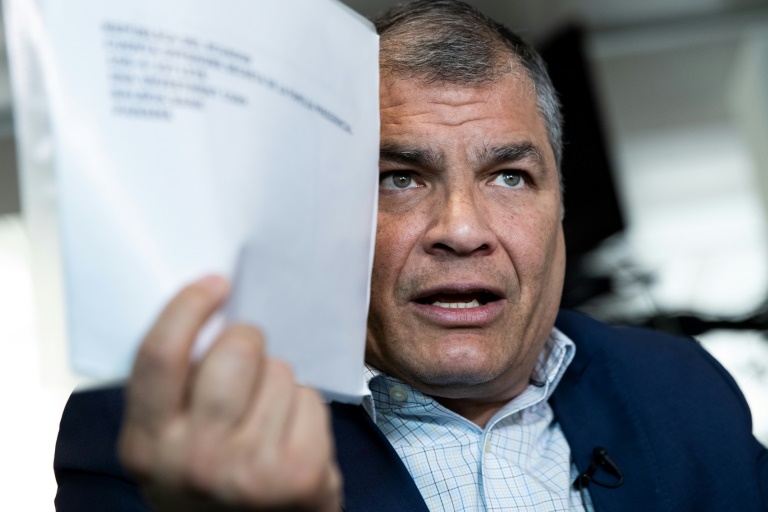
Belgium has refused to extradite Ecuador’s former president Rafael Correa, his lawyers announced Friday, after Brussels recently granted him asylum.

The former socialist leader was sentenced in absentia to eight years in prison in his home country, over pay-to-play politics that involved accepting funds for his 2013 election campaign in exchange for state contracts worth about $7 million.

After leaving office in 2017, Correa moved to Belgium — the home country of his wife — where he has lived ever since.

Belgium’s asylum decision became public on April 22, the same week the president of Ecuador’s National Court of Justice signed its extradition request.

“The Belgian Justice Ministry now confirms… that it will not follow up Ecuador’s extradition request,” read a statement from law firm Jus Cogens.

“Belgium will also refuse to cooperate with the Ecuadorian justice system in the framework of political processes,” it added.

Correa, who has insisted on his innocence, told AFP that Belgium’s asylum decision proved there was a political agenda behind his “persecution.”

“There is no justice in Ecuador, everything is corrupt,” the 59-year-old said in April. 

According to Ecuador’s judiciary, Correa and several former government officials and businesspeople took part in the graft scheme, with the ex-president implicated over a $6,000 payment to his private account, which he claims was a loan.

Correa is also the subject of an arrest warrant over the 2012 kidnapping of a Colombian opposition politician.

Ecuadorian Foreign Minister Juan Carlos Holguin told reporters there was no political persecution in his country.

“Every citizen who goes through the Ecuadorian justice system has had the right to due process,” he said. 

According to the independent World Justice Project, Ecuador ranked 92 out of 139 countries on last year’s Rule of Law Index.

Taliban order Afghan women to wear all-covering burqa

The Taliban on Saturday imposed one of the harshest restrictions on Afghanistan’s women since seizing power, ordering them to wear the all-covering burqa in public.

The militants took back control of the country in August last year, promising a softer rule than their last stint in power between 1996 and 2001, which was dominated by human rights abuses.

But they have already imposed a slew of restrictions on women — banning them from many government jobs, secondary education, and from travelling alone outside their cities or Afghanistan.

On Saturday, Afghanistan’s supreme leader and Taliban chief Hibatullah Akhundzada announced a strict dress code for women when they are in public.

“They should wear a chadori (head-to-toe burqa) as it is traditional and respectful,” said a decree in his name released by Taliban authorities at a ceremony in Kabul.

“Those women who are not too old or young must cover their face, except the eyes, as per sharia directives, in order to avoid provocation when meeting men who are not mahram (adult close male relatives),” it said.

The order was expected to spark a flurry of condemnation abroad. Many in the international community want humanitarian aid for Afghanistan and recognition of the Taliban government to be linked to the restoration of women’s rights.

Akhundzada’s decree also said that if women had no important work outside it was “better they stay at home”.

During their first regime, the Taliban had made the burqa compulsory for women.

Since their return to power, their feared Ministry for Promotion of Virtue and Prevention of Vice has issued several “guidelines” on what women should wear but Saturday’s edict was the first such national order.

The hardline Islamists triggered an international outrage in March when they ordered secondary schools for girls to shut, just hours after reopening for the first time since they seized power.

Officials have never justified the ban, apart from saying the education of girls must be according to “Islamic principles”.

That ban was also issued by Akhundzada, according to several Taliban officials.

Women have also been ordered to visit parks in the capital on separate days from men.

Some Afghan women initially pushed back strongly, holding small demonstrations and protests where they demanded the right to education and work. 

But the Taliban cracked down on these unsanctioned rallies and rounded up several of the ringleaders, holding them incommunicado while denying they had been detained. 

In the 20 years between the Taliban’s two reigns, girls were allowed to go to school and women were able to seek employment in all sectors, though the country remained socially conservative. 

In a deeply conservative and patriarchal Afghanistan, many women already wear the burqa in rural areas.

North Korea fires submarine-launched missile after US nuclear warning

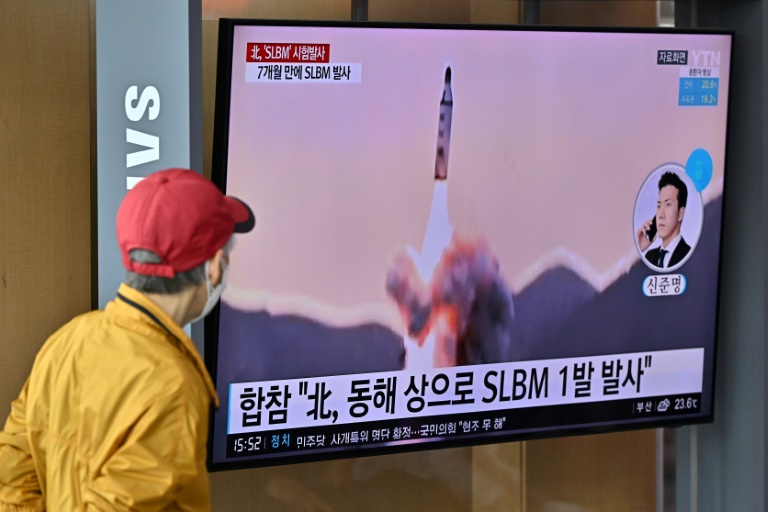
North Korea fired a submarine-launched ballistic missile Saturday, Seoul said, its second missile launch in three days, after the United States warned Pyongyang could be preparing for a nuclear test.

Pyongyang has dramatically ramped up its sanctions-busting missile launches this year, conducting 15 weapons tests since January including firing an intercontinental ballistic missile at full range for the first time since 2017.

The latest launch comes just days before South Korea swears in a new, hawkish President Yoon Suk-yeol, who has vowed to get tough on Pyongyang and bolster the US security alliance.

Satellite imagery indicates North Korea may also be preparing to resume nuclear testing, with the US State Department on Friday warning a test could come “as early as this month”.

“Our military detected around 14:07 (0507 GMT) a short-range ballistic missile presumed to be an SLBM fired from waters off Sinpo, South Hamgyong,” Seoul’s Joint Chiefs of Staff (JCS) said in a statement.

Sinpo is a major naval shipyard in North Korea and satellite photos have in the past shown submarines at the facility.

The missile flew 600 kilometres (372 miles) at a maximum altitude of 60 kilometres, the JCS added, a distance that indicates it was a short-range ballistic missile.

It landed outside Japan’s exclusive economic zone, Tokyo’s Defence Minister Nobuo Kishi said.

He added that the “extremely high frequency” of tests by North Korea this year was “absolutely unacceptable”.

Pyongyang’s “remarkable development of nuclear and missile-related technology” is a regional and global security risk, he said, adding that Japan also believed “North Korea will be ready to carry out a nuclear test as early as this month”.

– Seeking ‘upper hand’ –

Last month, while overseeing a huge military parade, North Korean leader Kim Jong Un vowed to develop his nuclear forces “at the fastest possible speed” and warned of possible “pre-emptive” strikes.

Pyongyang is “preparing its Punggye-ri test site and could be ready to test there as early as this month”, the US State Department said Friday.

The test could coincide with US President Joe Biden’s visit to Japan and South Korea later this month, or with the May 10 inauguration of Yoon, the State Department added.

“The North is showing its words on nuclear strength are not without substance,” said Yang Moo-jin, a professor at the University of North Korean Studies.

“Recent launches show strategic intent to claim the upper hand with the new Seoul government,” especially before Biden’s visit, he said.

North Korea carried out six nuclear tests before embarking on a bout of high-profile diplomacy with the United States in 2018 and 2019, with former president Donald Trump meeting four times with Kim before talks collapsed. Diplomacy has since languished.

Repeated negotiations aimed at convincing Kim to give up his nuclear weapons have come to nothing.

“Instead of accepting invitations to dialogue, the Kim regime appears to be preparing a tactical nuclear warhead test,” said Leif-Eric Easley, a professor at Ewha University in Seoul.

“A seventh nuclear test would be the first since September 2017 and raise tensions on the Korean peninsula, increasing dangers of miscalculation and miscommunication between the Kim regime and the incoming Yoon administration,” Easley added.

– ‘Subservient’ –

South Korea’s conventional military capacity outstrips that of the North, and Yoon has called for more US military assets to be deployed in the South, a topic likely to be on the agenda when Biden visits Seoul.

South Korea last year tested its own SLBM, putting it among a small group of nations that have such technology.

North Korea’s “submarine technology probably remains short of being able to stay at sea for extended periods while avoiding detection”, Easley said.

“But the ability to launch ballistic missiles from a submarine would further complicate missions to neutralise and defend against North Korea’s nuclear forces,” he added.

On Wednesday, North Korea test-fired what Seoul and Tokyo said was a ballistic missile, although Pyongyang’s state media — which typically report on weapons tests — did not comment on the event.

For five years under President Moon Jae-in, Seoul has pursued a policy of engagement with Pyongyang. But for incoming leader Yoon, this “subservient” approach has been a manifest failure.

Analysts have said the string of missile launches indicates North Korea’s Kim may be warning Seoul he is not open to dialogue with South Korea’s new government on Yoon’s terms.

Northern Ireland resumes count for historic election

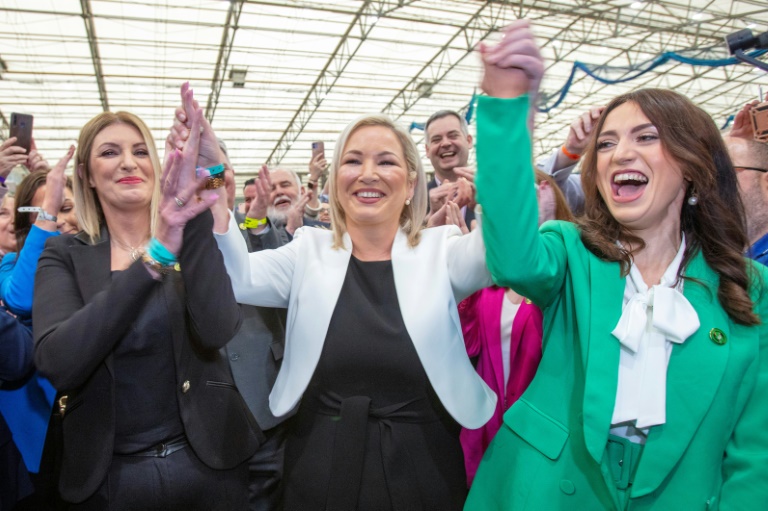
Northern Ireland on Saturday resumed counting ballots from an election that has put the nationalist Sinn Fein party on course for a historic victory.

As the count restarted from Thursday’s complex proportional voting, the former political wing of the IRA paramilitary group had secured 18 seats for the 90-seat legislature.

The party, which wants a referendum on reunifying Ireland a century after Northern Ireland was created as a Protestant statelet, is targeting 28 seats to claim the role of first minister for leader Michelle O’Neill.

After winning her own seat Friday, O’Neill called it “the election of a generation” and “time for real change”.

But Sinn Fein has been downplaying prospects for an imminent referendum on ending UK sovereignty over Northern Ireland, saying it could see one being held in the next five years.

The pro-UK Democratic Unionist Party (DUP) occupied the role of first minister in the outgoing Stormont assembly, before it collapsed the executive in protest at post-Brexit trading rules between the UK and EU.

DUP leader Jeffrey Donaldson said the government in London should rip up the so-called Northern Ireland Protocol, which unionists argue threatens their place in the wider UK.

“The government need to act decisively on the protocol and until they do, I won’t be nominating ministers to the executive,” he told the BBC late Friday, after the DUP’s vote share slid.

Without DUP endorsement of a new executive, Northern Ireland’s government cannot function, and the parties would have 24 weeks to resolve their differences or face a new election.

The other big winner was the cross-community Alliance party, which said its strong showing in third place underlined the need for Northern Ireland to move past old divisions. 

“We are serious about making Stormont work. We are not interested in playing games,” Alliance leader Naomi Long said, stressing voters cared most about a cost-of-living crisis affecting the UK.

War in Ukraine: Latest developments

Here are the latest developments in the war in Ukraine:

– US announces new weapons package  –

US President Joe Biden announces a new $150 million weapons package to Ukraine, including artillery munitions and radar, while urging Congress to pass a $33 billion aid package including $20 billion in military aid.

The new batch brings the total value of US weaponry sent by the Biden administration to Ukraine — including heavy artillery, shoulder-held Stinger anti-aircraft missiles and drones — to $3.8 billion since Russia invaded on February 24, says Secretary of State Antony Blinken.

– Dozens of civilians evacuated from Azovstal plant –

Fifty more civilians have been evacuated from the besieged Azovstal steel plant in the city of Mariupol, says Ukrainian Deputy Prime Minister Iryna Vereshchuk, even as the factory continues to be hit by ground and air attacks.

The operation, which Vereshchuk says will continue Saturday, was to coincide with a day-time ceasefire announced by Russia starting Thursday, but Ukraine’s army accused Moscow of continuing its assault on the plant.

Before the UN-led evacuation, about 200 civilians, including children, were estimated to still be trapped in the Soviet-era tunnels and bunkers beneath the factory, along with a group of Ukrainian soldiers making a last stand.

Ukrainian President Volodymyr Zelensky says Mariupol has been “destroyed completely”.

What is left is “this little turf, this little structure, the Azovstal steel mill, or what remains of it”, he said during a video call to the Chatham House think-tank in London.

– UN Security Council adopts first declaration on war – 

Marking its first declaration on Ukraine since Russia’s February 24 invasion of its neighbour, the UN Security Council unanimously adopts a text backing Secretary-General Antonio Guterres’ efforts to find a “peaceful solution” to the war.

The declaration stops short of supporting a mediation effort by Guterres, as was laid out in an earlier version of the text.

“The Security Council expresses deep concern regarding the maintenance of peace and security of Ukraine,” the text adopted Friday said.

The 15-member council includes Russia, which at the end of February vetoed a resolution condemning the invasion and asking Moscow to pull out its forces. 

– Italy impounds yacht tied to Putin –

Italian authorities impound a $700 million mega yacht as speculation swirls it could belong to Russian President Vladimir Putin.

“Scheherazade”, which has been berthed for several months at a shipyard on Italy’s western coast, has been the subject of an ownership probe  by the financial police.

The 140-metre yacht was impounded as it appeared to be preparing to set sail.

Italy’s investigation has helped establish “significant economic and business links” between the official owner and “eminent people in the Russian government”, as well as Russians on the West’s sanctions list, the economy ministry says.

– Eastern city surrounded –  

Russian forces have almost encircled Severodonetsk, the easternmost city still held by Ukraine, a local official says.

Oleksandr Striuk, the head of the Severodonetsk military administration, says on Ukrainian television that Kyiv’s army is so far “repelling these attacks” but the Russians were pressing on.

He says around 15,000 people remain in Severodonetsk, which had a population of  100,000 before the war.

– Pentagon denials –

The Pentagon denies media reports it helped Ukrainian forces sink the Russian warship Moskva in the Black Sea on April 13.

“We did not provide Ukraine with specific targeting information for the Moskva,” spokesman John Kirby says in a statement.

The US Defense Department had also denied providing intelligence on the locations of Russian generals on the battlefield.

burs-ams/bp

Close Bitnami banner
Bitnami