World

Marcos Jr on verge of historic win as Philippine presidential campaign ends

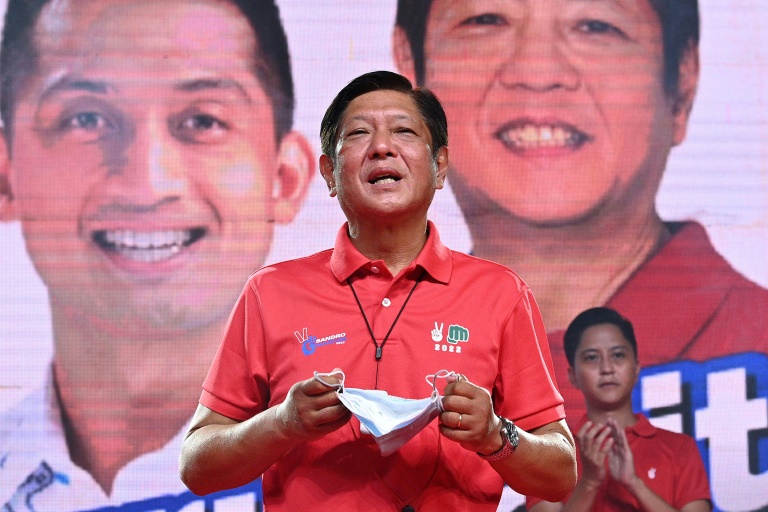
The son of late Philippine dictator Ferdinand Marcos was set to address hundreds of thousands of supporters Saturday on the final day of presidential election campaigning, as polls showed him heading towards a landslide win.

Victory in Monday’s election would cap a decades-long effort to rehabilitate the Marcos legacy after the patriarch was deposed and the disgraced clan chased into US exile.

But the prospect of Ferdinand Marcos Jr moving back into the presidential palace has alarmed rights activists, church leaders and political analysts who fear he could rule “without constraint”.

The Marcoses’ remarkable return from pariahs to the peak of political power has been fuelled by public anger over corruption and poverty that persisted under governments that followed the dictatorship.

Thousands of red-clad Marcos supporters braved the ferocious sun and high winds on Saturday to amass on a dusty wasteland overlooked by a gleaming luxury casino resort — a stark reminder of the country’s vast income gap.

Wielding national flags or umbrellas for shade, they gathered before a stage featuring an enormous screen of the smiling candidate as Filipino reggae, hip hop and pop played at deafening levels.

Mary Ann Oladive, a 37-year-old call centre worker, said she hoped Marcos Jr would bring unity to the country.

“We hope for greater opportunity and jobs. We trust him, we hope that after the election they will give us a better future in the Philippines,” she said.

– ‘Without constraint’ –

Ten candidates are vying to succeed President Rodrigo Duterte in the landmark elections seen by many as a make-or-break moment for Philippine democracy.

Polls indicate Marcos Jr will win more than half the votes, which would make him the first presidential candidate to secure an absolute majority since his father was ousted in 1986.

Analysts warn such an outcome would lead to weaker democratic checks and balances, more corruption and a fresh attempt to overhaul the 1987 constitution — which could include scrapping the one-term limit for presidents.

Previous administrations, including Duterte’s, have tried to amend the constitution but they lacked sufficient support in Congress to push through changes. 

The latest poll by Pulse Asia Research showed Marcos Jr on 56 percent — 33 percentage points ahead of his nearest rival Leni Robredo, who narrowly beat him in the 2016 vice-presidential race.

Such a winning margin would give Marcos Jr the power to “govern the way Duterte wanted to”, one long-time observer of Philippine politics told AFP.

“That is without constraint,” he said.

Robredo’s recent poll bump has raised hopes among progressive supporters that their volunteer-driven campaign could yet deliver an upset.

There was a carnival atmosphere in the capital’s financial district on Saturday as thousands of Robredo fans wearing her pink campaign colour and waving flags and balloons packed out avenues, dancing to pop music blaring over loudspeakers.

“I think this election is very important… our next six years of life will depend on it,” first-time voter Charmaigne Ang, 18, told AFP.

“Surveys are not a basis of who will win.”

But pollster Ana Maria Tabunda of Pulse Asia Research gave Robredo little hope. 

“Our error margin is only plus or minus two percentage points — given the large gap, it’s not going to be affecting the results,” Tabunda told AFP.

– Bitter campaign –

Allegations of dirty tricks marred the last week of a bitter presidential campaign, as Marcos Jr warned of vote-rigging while Robredo accused him of being a “liar”. 

Still smarting from his 2016 loss, Marcos Jr has run a tightly-controlled campaign, skipping televised debates with rivals and largely shunning media interviews to avoid own goals before election day.

A massive and well-funded social media misinformation campaign targeting a mostly young electorate with no memory of his father’s violent and corrupt rule has also sought to rewrite the family’s history.

Marcos Jr’s popularity has been further enhanced by a formidable alliance with vice-presidential front runner and first daughter Sara Duterte, and the backing of several rival political dynasties.

– ‘Another six years of hell’ –

Days ahead of the election, rights defenders and many Catholic priests made a final push to stop Marcos Jr returning to the Malacanang Palace, where he grew up.

“It will be another six years of hell,” warned political satirist and activist Mae Paner, 58, who was part of a popular uprising that ended the elder Marcos’s regime and has been campaigning for Robredo.

Hundreds of Catholic priests publicly endorsed Robredo and her running mate Francis Pangilinan, telling their flocks the election was a “battle for the soul” of the nation.

But after enduring six years of attacks from the elder Duterte, Robredo has seen her popularity hammered by a relentless and vicious online smear campaign.

Heydarian said Robredo’s late decision to enter the race had cost valuable time, while “unnecessary infighting” among rival candidates had benefited Marcos Jr.

“They are handing this on a silver platter to the princeling of Philippine politics, Bongbong Marcos,” he said, using Marcos Jr’s nickname.
Government pressure forces Venezuelan media to self-censor

Football fans have become familiar with final calls being made by “VAR” — video assistant referees — but at one of Venezuela’s biggest radio groups, it also controls what news gets aired.

Instead of referees locked away in video-replay bunkers, Union Radio’s “VAR” is a simple WhatsApp group in which top brass discuss potential subjects, stories and interviews for each station under the company’s media umbrella, sources tell AFP.

Union Radio boasts dozens of stations on AM and FM and was traditionally known for its strong criticism of the populist socialist government of Nicolas Maduro and before him Hugo Chavez.

But under pressure from authorities increasingly intolerant of criticism, Union Radio has been forced to police its own content.

This form of self-censorship has been branded “VAR” by its proponents, a joke referencing the video assistant referees who often overturn major football decisions.

“A structured censorship mechanism has been put in place,” said Leon Hernandez, a university professor and coordinator at the Inter American Press Society (SIP), which ranks Venezuela as the South American country with the least press freedoms.

According to Hernandez, under Venezuela’s restricted media ecosystem, which Reporters Without Borders has called a “communication hegemony,” major media outlets like Union Radio are forced to take protective measures like creating an internal “VAR”.

– Veto of ‘dangerous’ opinions –

“Nothing can go on air without VAR approving it,” a producer at Union Radio told AFP under condition of anonymity.

It has forced radio journalists to look for creative ways to deal with sensitive subjects.

While it is possible to analyze the consequences of Venezuela’s economic crisis, such as the collapse of public services, political themes are far more touchy — particularly when it comes to Maduro’s legitimacy.

The president’s controversial 2018 re-election was rejected by Venezuela’s opposition, led by former parliamentary speaker Juan Guaido, and almost 60 countries, including the United States, as well as the European Union.

“The term usurper or any other similar expression used to describe the current government or President Maduro incites rejection of the legitimately constituted authorities,” says a note pinned to a wall in radio studios that must be read to guests invited to take part in a program.

When it comes to subjects concerning Guaido, none of them are ever authorized by the “VAR”.

Some staff even claim that certain political and economic analysts, actors and singers had been vetoed by the radio group to avoid potentially “dangerous” comments.

“In effect there is a process of evaluating guidelines, themes and guests,” a Union Radio executive told AFP under condition of anonymity, highlighting the challenges posed by a 2004 media law.

“It forces you to be the one that self-regulates to avoid any potential punishment under a law with a broad spectrum of sanctions” ranging from fines to the revocation of transmission licenses.

The regulatory body regularly sends out “reminders” to media as a type of warning not to repeat certain content, another anonymous industry insider said.

More than 80 percent of television and radio stations are in the process of renewing their licenses, which has made them more cautious of upsetting authorities, said the source.

– ‘We’re paying the price’ –

Their fears are not misplaced: many outlets critical of the ruling socialist party have been forced out in the 22 years of government under Chavez (1999-2013) and Maduro.

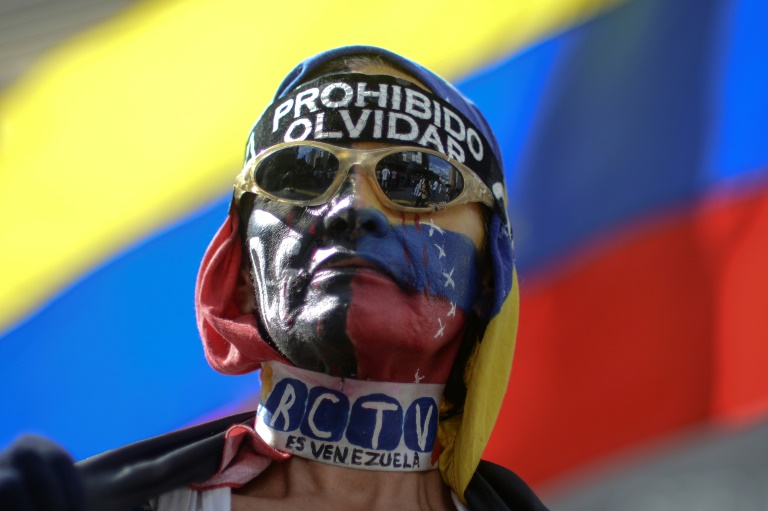
In 2007, the television station RCTV was closed after its license was not renewed.

Six years later, business people close to the ruling United Socialist Party bought Globovision, a formerly staunchly opposition-aligned television station, as well as the editorial group that owned Venezuela’s most popular newspaper, Ultimas Noticias.

A year after that, the traditionally conservative, century-old El Universal newspaper was likewise bought.

In all these cases, the editorial slant changed dramatically.

“There were episodes of self-censorship and, obviously, this caused discontent,” said a television journalist, again under condition of anonymity.

Following a defamation case, the ruling party-controlled judiciary seized the premises of the El Nacional daily newspaper and handed them to Diosdado Cabello, a senior figure in the United Socialist Party.

The government has since opened a university in the former newspaper offices.

Prior to that, El Nacional, which now exists only online, had already been forced to reduce its circulation due to a lack of paper, the import of which is controlled by the state.

“We paid the price for not shutting up … We will not give in,” El Nacional director Miguel Henrique Otero told AFP.

“They tried to buy us,” he added. “They offered us an astronomical amount and we rejected it.”

Many opposition voices are confined to the internet where access is unreliable due to frequent power cuts and government firewalls that require a foreign VPN to be accessed.

The government, for its part, boasts its own massive media apparatus, but still claims to be fighting a “brutal media war” aimed at toppling Maduro.

Indonesia seizes tanker over palm oil export ban violation

The Indonesian Navy has seized a tanker that was carrying palm oil out of the country in violation of an export ban, a spokesman said Saturday.

Indonesia, the world’s largest producer of palm oil, prohibited its export last week to rein in skyrocketing domestic prices and shortages.

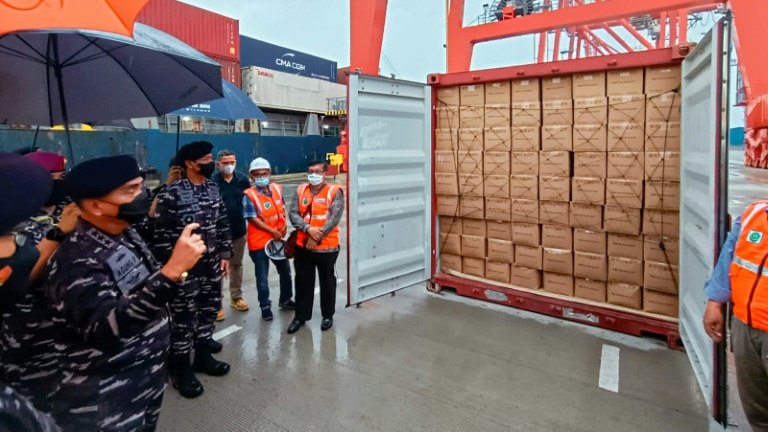
An Indonesian warship intercepted the Singapore-flagged MV Mathu Bhum on Wednesday as it headed for Malaysia, Navy spokesman Agung Prasetiawan said in a press release.

“The ship was carrying… 34 containers containing refined, bleached, deodorized (RBD) palm olein. This is the type of material that is temporarily prohibited for exports,” he added.

Indonesia produces about 60 percent of the world’s palm oil, which is used in a range of products such as cosmetics and chocolate spreads. A third of its output is consumed domestically.

Vegetable oils are among the staple food items that have seen prices hit record highs in recent weeks following Russia’s invasion of agricultural powerhouse Ukraine, according to the United Nations Food and Agriculture Organisation.

Producers in Indonesia have been reluctant to sell at home recently because exporting is more profitable currently because of high international prices.

But authorities in the archipelago stepped in to try and control prices, fearing public anger as consumers in several cities were forced to queue for hours at distribution centres to buy cooking oil at subsidised rates.

The Indonesian export ban sent prices of palm, soybean, European rapeseed and canola oils to historic highs.

It plans to resume exports when the local bulk price of cooking oil falls to 14,000 rupiah (97 cents), having soared in recent weeks to 26,000 rupiah.

The price had dropped to 17,200 rupiah by Friday.

Soy boon for Argentina as Ukraine war boosts prices

Russia’s war on Ukraine has sent grain prices skyrocketing — a worry for consumers worldwide but potentially a boon for producers like Argentina, which hopes an influx of soybean “agridollars” will boost its faltering economy.

South America’s third-largest economy is the biggest exporter of soybean meal and oil in the world, and only the United States and Brazil export more soybean grains.

Soy represents nearly a third of Argentina’s exports and in 2021 contributed $9 billion to the state coffers.

This year, the sector is expecting record sales of $23.7 billion — about $700 million more than in 2021 — despite a 10 percent smaller harvest due to severe drought.

“The prospects for the producer are good… There is optimism,” said Martin Semino, who sells farming equipment and presides over the Rural Society of Lobos, a fertile agricultural zone southwest of Buenos Aires.

The harvest season is at its height, and workers are laboring from dawn to dusk to clear the fields before the autumn rains arrive.

“Soy is the dollar, the currency of the countryside,” Semino told AFP.

In the past, the grain has been a savior for inflation-troubled Argentina.

A soybean boom in the 2000s is widely considered to have helped the country recover from its worst economic crisis in 2001. 

In the last 40 years, the planted surface area of soy has multiplied 14 times.

– ‘Seize the moment’ – 

Argentina is also a major producer of sunflower oil and wheat — other grains affected by the ongoing war.

After a record sunflower harvest of 3.4 million tonnes in 2021-2022, the area under cultivation is set to increase by 17 percent this season to two million hectares (4.9 million acres).

The country also had a record wheat harvest this season.

Estimates are that in 2022, Argentina’s agroindustrial exports will bring in a record $41 billion — about $3 billion more than in 2021.

“With prices close to historic records, Argentina, which always needs dollars, must seize the moment,” Tomas Rodriguez Zurro, an analyst at the Rosario Stock Exchange, told AFP.

The rise in prices “is temporary, it will end when the war is over,” he cautioned.

But some point out that Argentina could have reaped an even larger benefit if it weren’t for rising input costs.

Argentina imports about 60 percent of the fertilizers needed to grow food — around 15 percent of it from Russia — but supplies are now short and prices climbing, meaning lower yields.

Higher fuel prices are also taking a toll, set against the backdrop of soaring consumer inflation of around 60 percent projected this year for Argentina.

The chambers of the Oilseed Industry (Ciara) and Grain Exporters (CEC) have warned that rising input costs — as well as shortages of fuel and fertilizer — have “neutralized, or worse, the relative benefits” derived from the commodity price rise.

Added Semino: “Input costs have exploded with the war.”

– Angry farmers –

In April, farmers staged a protest in Buenos Aires to express their ire at government plans to impose a windfall tax on products boosted by the war in Ukraine.

The tax, imposed only on those earning more than a billion pesos ($8.5 million) in net profit for the 2021-22 season, would be used to cushion inflationary shocks for the poor.

Argentina has a 37 percent poverty rate.

The government has also introduced quotas on wheat and maize, the latter of which Argentina is the world’s second-largest exporter of.

It has announced a so-called “wheat stabilization fund” seeking to ensure that the price of the staple grain — and hence bread — remains shielded from steep fluctuations.

Soy boon for Argentina as Ukraine war boosts prices

Russia’s war on Ukraine has sent grain prices skyrocketing — a worry for consumers worldwide but potentially a boon for producers like Argentina, which hopes an influx of soybean “agridollars” will boost its faltering economy.

South America’s third-largest economy is the biggest exporter of soybean meal and oil in the world, and only the United States and Brazil export more soybean grains.

Soy represents nearly a third of Argentina’s exports and in 2021 contributed $9 billion to the state coffers.

This year, the sector is expecting record sales of $23.7 billion — about $700 million more than in 2021 — despite a 10 percent smaller harvest due to severe drought.

“The prospects for the producer are good… There is optimism,” said Martin Semino, who sells farming equipment and presides over the Rural Society of Lobos, a fertile agricultural zone southwest of Buenos Aires.

The harvest season is at its height, and workers are laboring from dawn to dusk to clear the fields before the autumn rains arrive.

“Soy is the dollar, the currency of the countryside,” Semino told AFP.

In the past, the grain has been a savior for inflation-troubled Argentina.

A soybean boom in the 2000s is widely considered to have helped the country recover from its worst economic crisis in 2001. 

In the last 40 years, the planted surface area of soy has multiplied 14 times.

– ‘Seize the moment’ – 

Argentina is also a major producer of sunflower oil and wheat — other grains affected by the ongoing war.

After a record sunflower harvest of 3.4 million tonnes in 2021-2022, the area under cultivation is set to increase by 17 percent this season to two million hectares (4.9 million acres).

The country also had a record wheat harvest this season.

Estimates are that in 2022, Argentina’s agroindustrial exports will bring in a record $41 billion — about $3 billion more than in 2021.

“With prices close to historic records, Argentina, which always needs dollars, must seize the moment,” Tomas Rodriguez Zurro, an analyst at the Rosario Stock Exchange, told AFP.

The rise in prices “is temporary, it will end when the war is over,” he cautioned.

But some point out that Argentina could have reaped an even larger benefit if it weren’t for rising input costs.

Argentina imports about 60 percent of the fertilizers needed to grow food — around 15 percent of it from Russia — but supplies are now short and prices climbing, meaning lower yields.

Higher fuel prices are also taking a toll, set against the backdrop of soaring consumer inflation of around 60 percent projected this year for Argentina.

The chambers of the Oilseed Industry (Ciara) and Grain Exporters (CEC) have warned that rising input costs — as well as shortages of fuel and fertilizer — have “neutralized, or worse, the relative benefits” derived from the commodity price rise.

Added Semino: “Input costs have exploded with the war.”

– Angry farmers –

In April, farmers staged a protest in Buenos Aires to express their ire at government plans to impose a windfall tax on products boosted by the war in Ukraine.

The tax, imposed only on those earning more than a billion pesos ($8.5 million) in net profit for the 2021-22 season, would be used to cushion inflationary shocks for the poor.

Argentina has a 37 percent poverty rate.

The government has also introduced quotas on wheat and maize, the latter of which Argentina is the world’s second-largest exporter of.

It has announced a so-called “wheat stabilization fund” seeking to ensure that the price of the staple grain — and hence bread — remains shielded from steep fluctuations.

Standoff at strategic Ukraine river eyed by Russian troops

 On the municipal beach at Nikopol in southern Ukraine, barbed wire, sand bags and other defences have replaced children playing on the sand.

Bang opposite, the Russians control the other bank of the Dnipro, the river that divides Ukraine between east and west.

Planted in the sand is a slightly rusty sign asking people to pay attention — a polite warning requesting not to disturb a neighbour relaxing on a towel, to keep a ball under control.

It is a reminder of carefree days before February 24 when Russia invaded Ukraine.

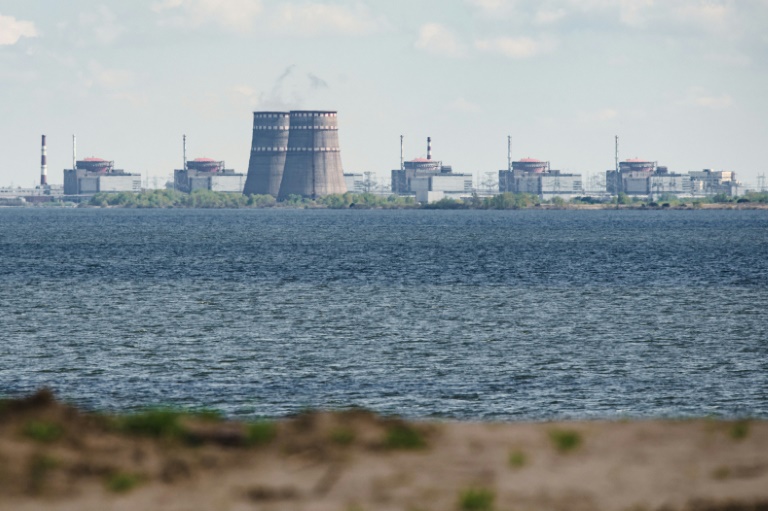
Then at the beginning of March, Russian troops captured Energodar, the largest nuclear power plant in Europe, located just opposite Nikopol. 

Clashes at the plant raised the spectre of a catastrophe similar to that of Chernobyl in 1986.

But apart from a burned out administrative building, the six reactors seemed intact when Russian troops took journalists on a tour.

For Nikopol’s residents, the broad expanse of the Dnipro has become a natural border with the Russians.

“It’s forbidden to enter the water. It’s too dangerous,” a soldier told AFP.

On the beach, everything appears ready to take on enemy soldiers if they decide to cross the river, with barbed wire and sand bags stacked high.

– Repeated setbacks –

At a nearby sports club, the owner Alexander Zagrydny, has set up a telescope that allows members  to survey the other bank.

“We no longer see Russian armoured vehicles. We’re a bit relieved,” he said.

But he’s frustrated that he can no longer sail.

“I cannot imagine my life without the Dnipro. I have been navigating it since I was a child,” sighed the athletic 50-something whose wife left Nikopol with other residents to avoid the risk of war.

Control of the Dnipro was seen as a major Kremlin objective in the first days of the war. 

Some 2,300-kilometres long, the river, which rises in Russia before meandering past Belarus, travels more than 1,000 kilometres (600 miles) through Ukraine to the Black Sea.

“Once you control the points of passage along the Dnipro, that gives you real freedom of action between the east and west of Ukraine,” said a Western military expert at the end of February when the Russian army seemed poised to conquer Kyiv.

But Russian troops met with repeated setbacks on the northern front and withdrew to concentrate on Donbas, the eastern territory where Russian-backed separatists have been at war with Kyiv since 2014, and on the south.

– ‘Defensive boundary’ –

“While before there was perhaps talk about how Russia would move up to the Dnipro trying to lock that down and proceed westward, now it looks more like a defensive boundary that can help Russia fortify what it already has,” said Andrew Lohsen, an analyst for the the Center for Strategic and International Studies in Washington. 

To take the Dnipro river cities of Zaporizhzhia and Dnipro, whose pre-war populations numbered 800,000 people and one million respectively, “would be very difficult combat considering how poorly they failed in other attempts to take cities,” he said.

Unless of course, the Russians destroy these cities like the southern port of Mariupol, Lohsen said, pointing out that Zaporizhzhia has one of the six hydroelectric dams on the river, whose destruction would trigger catastrophic consequences as the Energodar nuclear power plant lies dozens of kilometres downstream.

Anatoliy Kovalyov, the rector of the Odessa National University of Economy, said the Dnipro is a lifeline for Ukraine and accounts for 10 percent of total electrical output.

Thirty bridges link the east, rich in mining resources, with western Ukraine, where they are processed and transformed.

“Ukraine’s entire economy depends on transport” between the two banks, Kovalyov said. 

“The most important task” for the Ukrainian forces now is to “protect the bridges”, which will guarantee the preservation of a “solid and united state.”

Death toll climbs to 22 in Havana hotel blast, gas leak suspected

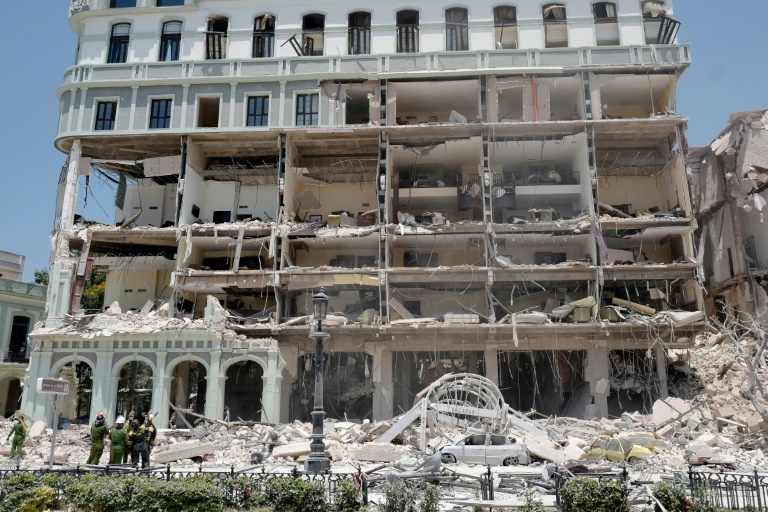
A powerful explosion due to a suspected gas leak ripped through a luxury hotel in central Havana, killing at least 22 people Friday, according to official tallies.

Rescuers pulled four bodies out of the rubble in the early evening as they combed through what remained of the prestigious Saratoga Hotel looking for survivors.

At least one woman with whom rescuers made contact was alive in the debris, officials said, adding they believed more survivors were still trapped and that a canine squad was searching them out.

Cuba’s president attributed the massive blast to a gas leak. 

“It was neither a bomb nor an attack, it was an unfortunate accident,” said Miguel Diaz-Canel, who arrived at the scene an hour after the blast, accompanied by the prime minister and National Assembly president.

“Compatriots and friends around the world. #Havana is in shock today,” he tweeted.

The latest death toll of 22, which includes at least one child, was announced on television news after a day in which ambulances and paramedics raced through the center of Cuba’s historic capital.

Both the health ministry and the Cuban presidency said dozens had been injured but cited different numbers, ranging from 50 to 65 people.

The first four floors of the establishment, which were closed to guests while being renovated, were gutted in the late-morning blast that sent a cloud of dust and smoke billowing into the air.

The explosion also tore off large parts of the facade, blew out windows and destroyed cars parked outside the five-star hotel, which has in the past hosted celebrities such as Madonna, Beyonce, Mick Jagger and Rihanna.

The dome of a nearby Baptist church also collapsed.

Inside the hotel at the time were employees preparing for its post-refurbishment reopening, scheduled for next Tuesday.

Miguel Hernan Estevez, director of the hospital Hermanos Almejeiras, said a two-year-old boy had undergone surgery for a fractured skull.

“So far we have no information that any foreigner was either injured or killed, but… this is preliminary information,” added Tourism Minister Juan Carlos Garcia Granda.

– Not a bomb –

Roberto Calzadilla of state company Gaviota, which owns the hotel, said the explosion happened while a gas tank was being refilled.

Ambulances and fire trucks rushed to the scene Friday and police cordoned off the area, dispersing people who swarmed to the hotel near Havana’s emblematic National Capitol Building that housed Congress prior to the Cuban revolution.

It is also next to a school, but no pupils were injured, according to the presidency.

Rogelio Garcia, a bicycle taxi driver who was passing the hotel at the time of the blast recounted that “we felt a huge explosion and (saw) a cloud of dust… many people ran out.”

“There was a terrible explosion and everything collapsed,” said a woman, her face covered in dust, who declined to give her name.

According to the website of the Saratoga Hotel, it is an upmarket establishment with 96 rooms, two bars, two restaurants, a spa and gym.

It was built in 1880 to house shops and converted into a hotel in 1933.

“The United States sends heartfelt condolences to all of those affected by the tragic explosion this morning,” said US State Department spokesman Ned Price on Twitter.

Mexico’s Foreign Minister Marcelo Ebrard, meanwhile, said President Andres Manuel Lopez Obrador would not cancel a trip to Cuba planned for Sunday.

“Our sympathy goes out to the victims and those affected, as well as to the people of our dear sister nation,” Ebrard tweeted. 

Condolences also poured in from Bolivia, EU foreign policy chief Josep Borrell and Nicolas Maduro, the president of close Cuban ally Venezuela, who said “the Cuban people have the solidarity and support of all the peoples of the world” and especially Venezuelans.

Marcos Jr on verge of historic win as Philippine presidential campaign ends

The son of late Philippine dictator Ferdinand Marcos was set to address hundreds of thousands of supporters Saturday on the final day of presidential election campaigning, as polls showed him heading towards a landslide win.

Victory in Monday’s election would cap a decades-long effort to rehabilitate the Marcos legacy after the patriarch was deposed and the disgraced clan chased into US exile.

But the prospect of Ferdinand Marcos Jr moving back into the presidential palace has alarmed rights activists, church leaders and political analysts who fear he could rule “without constraint”.

Ten candidates are vying to succeed President Rodrigo Duterte in the landmark elections seen by many as a make-or-break moment for Philippine democracy.

The Marcoses’ remarkable return from pariahs to the peak of political power has been fuelled by public anger over corruption and poverty that persisted under governments that followed the dictatorship.

Polls indicate Marcos Jr will win more than half the votes, which would make him the first presidential candidate to secure an absolute majority since his father was ousted in 1986.

Analysts warn such an outcome would lead to weaker democratic checks and balances, more corruption and a fresh attempt to overhaul the 1987 constitution — which could include scrapping the one-term limit for presidents.

“If he wins really big that could give him the kind of confidence and momentum to more radically alter the Philippines political system,” analyst Richard Heydarian told AFP.

Previous administrations, including Duterte’s, have tried to amend the constitution.

They lacked sufficient support in Congress to push through changes. 

But the latest poll by Pulse Asia Research showed Marcos Jr on 56 percent — 33 percentage points ahead of his nearest rival Leni Robredo, who narrowly beat him in the 2016 vice-presidential race.

Such a winning margin would give Marcos Jr the power to “govern the way Duterte wanted to”, one long-time observer of Philippine politics told AFP.

“That is without constraint,” he said.

Robredo, 57, has warned supporters that the “future of the country” is at stake.

Her recent poll bump has raised hopes among progressive supporters that their volunteer-driven campaign could yet deliver an upset.

But pollster Ana Maria Tabunda of Pulse Asia Research said there was little chance of that.

“Our error margin is only plus or minus two percentage points — given the large gap, it’s not going to be affecting the results,” Tabunda told AFP.

– Bitter campaign –

Allegations of dirty tricks marred the last week of a bitter presidential campaign, as Marcos Jr warned of vote-rigging while Robredo accused him of being a “liar”.

Hundreds of thousands of supporters were expected to turn out Saturday in Manila for the final rallies of the two rivals ahead of the election. 

Monday’s winner only needs to get more votes than anyone else.

Hours before Robredo’s outdoor event was due to start, thousands of fans wearing her pink campaign colour gathered under the blazing sun in the heart of the capital’s financial district. 

“I think this election is very important… our next six years of life will depend on it,” first-time voter Charmaigne Ang, 18, told AFP.

Still smarting from his 2016 loss, Marcos Jr has run a tightly-controlled campaign, skipping televised debates with rivals and largely shunning media interviews to avoid own goals before election day.

He has instead posted folksy videos on YouTube that seek to present him and his wealthy family as regular Filipinos, and taken softball questions from celebrity interviewers.

A massive and well-funded social media misinformation campaign targeting a mostly young electorate with no memory of his father’s violent and corrupt rule has also sought to rewrite the family’s history.

Marcos Jr’s popularity has been further enhanced by a formidable alliance with vice-presidential front runner and first daughter Sara Duterte, and the backing of several rival political dynasties.

– ‘Another six years of hell’ –

Days ahead of the election, rights defenders and many Catholic priests made a final push to stop Marcos Jr returning to the Malacanang Palace, where he grew up.

“It will be another six years of hell,” warned political satirist and activist Mae Paner, 58, who was part of a popular uprising that ended the elder Marcos’s regime and has been campaigning for Robredo.

Hundreds of Catholic priests publicly endorsed Robredo and her running mate Francis Pangilinan, telling their flocks the election was a “battle for the soul” of the nation.

But Robredo faces an “uphill battle”, said Cleve Arguelles, an assistant lecturer in political science at De La Salle University in Manila.

After enduring six years of attacks from the elder Duterte, Robredo has seen her popularity hammered by a relentless and vicious online smear campaign.

Heydarian said Robredo’s late decision to enter the race had cost valuable time, while “unnecessary infighting” among rival candidates had benefited Marcos Jr.

“They are handing this on a silver platter to the princeling of Philippine politics, Bongbong Marcos,” he said, using Marcos Jr’s nickname.

US sending Ukraine more weapons, dozens evacuated from steelworks

US President Joe Biden announced another package of military assistance for Ukraine, as dozens of civilians were evacuated from Mariupol’s besieged steelworks, the last pocket of resistance against Russian troops in the port city.

Worth $150 million, the latest security assistance would include artillery munitions and radars, Biden said, as the country braces for fresh bombardment by Moscow’s forces ahead of May 9, the day Russia celebrates the Soviet victory over the Nazis in World War II.

A senior US official said the aid included counter-artillery radars used for detecting the source of enemy fire as well as electronic jamming equipment.

Friday’s new batch brings the total value of US weaponry sent to Ukraine since the Russian invasion began to $3.8 billion.

The president urged Congress to further approve a huge $33 billion package, including $20 billion in military aid, “to strengthen Ukraine on the battlefield and at the negotiating table.”

The Pentagon meanwhile denied reports it helped Ukrainian forces sink the Russian warship Moskva in the Black Sea last month.

Pentagon spokesman John Kirby said the US had “no prior knowledge” of the plan to strike the ship, which sank leaving a still-unclear number of Russian sailors dead or missing.

While providing Ukraine with military aid, the United States has sought to limit knowledge of the full extent of its assistance to avoid provoking Russia into a broader conflict beyond Ukraine.

Biden, other G7 leaders, and Ukraine’s President Volodymyr Zelensky are to meet virtually on Sunday to discuss Western support for Kyiv.

– Azovstal evacuation –

On Friday Zelensky said “diplomatic options” were also under way to rescue Ukrainian soldiers from the Mariupol steelworks, as civilian evacuations continued. 

The Russian defence ministry said 50 people were evacuated from the site, including 11 children.

It added they were handed over to the UN and Red Cross, which are assisting in the operation, and that the “humanitarian operation” would continue on Saturday. 

About 200 civilians, including children, are estimated to still be trapped in the Soviet-era tunnels and bunkers beneath the sprawling Azovstal factory, along with a group of Ukrainian soldiers making their last stand.

Russia announced a daytime ceasefire at the plant for three days starting Thursday but the Ukrainian army said Russian “assault operations” had continued by ground and by air.

Ukraine’s Azov battalion, leading the defence at Azovstal, said one Ukrainian fighter had been killed and six wounded when Russian forces opened fire during an attempt to evacuate people by car.

Azov battalion leader Andriy Biletsky wrote on Telegram that the situation at the plant was critical.

“The shelling does not stop. Every minute of waiting is costing the lives of civilians, soldiers, and the wounded.”

– May 9 fears –

Ten weeks into a war that has killed thousands, destroyed cities and uprooted more than 13 million people, defeating the resistance at Azovstal and taking full control of strategically located Mariupol would be a major win for Moscow.

It would also be a symbolic success ahead of May 9, when Russia marks the anniversary of its 1945 defeat of Nazi Germany.

Ukrainian officials believe Moscow is planning a May 9 military parade in Mariupol, though the Kremlin has denied any such plans. 

Officials have also said they expect the anniversary will coincide with an escalation of the war throughout the country.

“In the coming days, there is a high probability of rocket fire in all regions of Ukraine,” mayor of Kyiv Vitali Klitschko said in a statement on social media. 

“Be careful and follow the rules of security in wartime.”

The eastern city of Odessa will also impose a longer curfew on May 8-9, its mayor said, as will Poltava in the country’s centre. 

White House Press Secretary Jen Psaki noted that the G7 meeting will come a day before “Victory Day” and the leaders will demonstrate “unity in our collective response”. 

“While (Russian President Vladimir Putin) expected to be marching through the streets of Kyiv, that’s obviously not what’s going to happen,” Psaki said.

– Russia to remain ‘forever’ –

Since failing to take Kyiv early on in the war, Russia has refocused its offensive on the south and east of Ukraine.

Taking full control of Mariupol would allow Moscow to create a land bridge between the Crimean peninsula, which it annexed in 2014, and separatist, pro-Russian regions in the east.

In those regions, separatists said they had removed Ukrainian and English language traffic signs for Mariupol and replaced them with Russian ones.

Locals want to see proof that “Russia has come back here forever,” said Denis Pushilin, head of the breakaway region of Donetsk.

In neighbouring Lugansk, Ukrainian officials said on Friday that Russian forces had almost encircled Severodonetsk — the easternmost city still held by Kyiv — and are trying to storm it.

Kherson in the south remains the only significant city Russia has managed to capture since the war began.

A senior official from the Russian parliament visiting the city on Friday also emphasised that Russia would remain in southern Ukraine “forever.”

“There should be no doubt about this. There will be no return to the past,” Andrey Turchak said.

– ‘Peaceful solution’ –

On Friday, the UN Security Council unanimously adopted its first declaration on Ukraine since Russia invaded on February 24.

It backed Secretary General Antonio Guterres’s efforts to find a “peaceful solution” to the war but stopped short of supporting a mediation effort led by him.

Russia then vetoed a resolution condemning the invasion and asking Moscow to move its army back to Russian soil.

Ukraine’s Western allies have supported Kyiv with financial and military assistance, and have slapped unprecedented sanctions on Russia.

As European countries have sought to clamp down on Russian assets overseas, Italian authorities impounded a mega yacht as speculation swirled it might even belong to the Russian president.

“Scheherazade”, worth an estimated $700 million, has been the subject of a probe into its ownership by Italy’s financial police, which has helped “establish significant economic and business links” between the ship’s owner and “eminent people in the Russian government”.

Researchers at the anti-corruption foundation of Russian dissident Alexei Navalny have linked the yacht to Putin.

But the European Commission’s proposal that all 27 EU members gradually ban Russian oil imports — a move that would have been its toughest yet — was dealt a blow on Friday when Hungary said it crossed a red line and should be sent back.

burs-lc-cl/oho/reb

Chelsea says Todd Boehly-led group to buy club in $5.2 bn deal

Chelsea FC said a group led by Los Angeles Dodgers co-owner Todd Boehly would acquire the London club after agreeing terms in a deal worth £4.25 billion ($5.2 billion).

“The sale is expected to complete in late May subject to all necessary regulatory approvals,” the football club said in a statement late Friday.

“More details will be provided at that time,” it added.

Chelsea’s Russian owner Roman Abramovich put the Premier League club on the market in March, just days before he was sanctioned by the British government following the invasion of Ukraine.

After a lengthy bidding process involving several groups, Boehly and his fellow investors were picked by Raine Group, the New York bank overseeing the Blues’ sale.

Boehly’s group of investors includes fellow Dodgers co-owner Mark Walter, Swiss billionaire Hansjoerg Wyss and US investment firm Clearlake Capital.

“Chelsea Football Club can confirm that terms have been agreed for a new ownership group, led by Todd Boehly, Clearlake Capital, Mark Walter and Hansjoerg Wyss, to acquire the Club,” the Chelsea statement said.

“Of the total investment being made, £2.5bn will be applied to purchase the shares in the Club and such proceeds will be deposited into a frozen UK bank account with the intention to donate 100 percent to charitable causes as confirmed by Roman Abramovich,” it said.

“UK government approval will be required for the proceeds to be transferred from the frozen UK bank account.”

In addition, the new owners would commit £1.75 billion in further investment for the benefit of the club, Chelsea said.

– Proceeds to victims of Ukraine war –

Chelsea were forced to operate under a special licence from the government after Abramovich was sanctioned by Britain and the European Union for his links to Russian President Vladimir Putin.

Abramovich cannot profit from Chelsea’s sale, but had already vowed to write off the club’s £1.5 billion debt and that all proceeds from the sale would go to victims of the war in Ukraine.

There had been fears over the future of the club if a sale was not finalised before the licence runs out on May 31.

Under the terms of the licence, Chelsea were unable to offer new contracts to existing players or sign players from other clubs.

The sale of the European champions brings the curtain down on 19 years of nearly unbroken success under the 55-year-old Abramovich, who has overseen five Premier League titles and two Champions League triumphs.

After initially embarking on a long winning run following Abramovich’s decision to sell the club, Chelsea have struggled to find their best form recently.

They suffered a painful Champions League quarter-final defeat at Real Madrid after nearly pulling off an epic comeback from a 3-1 first leg deficit.

Chelsea’s place in the Premier League’s top four is also far from guaranteed.

Close Bitnami banner
Bitnami