World

Chelsea says Todd Boehly-led group to buy club in $5.2 bn deal

Chelsea FC said a group led by Los Angeles Dodgers co-owner Todd Boehly would acquire the London club after agreeing terms in a deal worth £4.25 billion ($5.2 billion).

“The sale is expected to complete in late May subject to all necessary regulatory approvals,” the football club said in a statement late Friday.

“More details will be provided at that time,” it added.

Chelsea’s Russian owner Roman Abramovich put the Premier League club on the market in March, just days before he was sanctioned by the British government following the invasion of Ukraine.

After a lengthy bidding process involving several groups, Boehly and his fellow investors were picked by Raine Group, the New York bank overseeing the Blues’ sale.

Boehly’s group of investors includes fellow Dodgers co-owner Mark Walter, Swiss billionaire Hansjoerg Wyss and US investment firm Clearlake Capital.

“Chelsea Football Club can confirm that terms have been agreed for a new ownership group, led by Todd Boehly, Clearlake Capital, Mark Walter and Hansjoerg Wyss, to acquire the Club,” the Chelsea statement said.

“Of the total investment being made, £2.5bn will be applied to purchase the shares in the Club and such proceeds will be deposited into a frozen UK bank account with the intention to donate 100 percent to charitable causes as confirmed by Roman Abramovich,” it said.

“UK government approval will be required for the proceeds to be transferred from the frozen UK bank account.”

In addition, the new owners would commit £1.75 billion in further investment for the benefit of the club, Chelsea said.

– Proceeds to victims of Ukraine war –

Chelsea were forced to operate under a special licence from the government after Abramovich was sanctioned by Britain and the European Union for his links to Russian President Vladimir Putin.

Abramovich cannot profit from Chelsea’s sale, but had already vowed to write off the club’s £1.5 billion debt and that all proceeds from the sale would go to victims of the war in Ukraine.

There had been fears over the future of the club if a sale was not finalised before the licence runs out on May 31.

Under the terms of the licence, Chelsea were unable to offer new contracts to existing players or sign players from other clubs.

The sale of the European champions brings the curtain down on 19 years of nearly unbroken success under the 55-year-old Abramovich, who has overseen five Premier League titles and two Champions League triumphs.

After initially embarking on a long winning run following Abramovich’s decision to sell the club, Chelsea have struggled to find their best form recently.

They suffered a painful Champions League quarter-final defeat at Real Madrid after nearly pulling off an epic comeback from a 3-1 first leg deficit.

Chelsea’s place in the Premier League’s top four is also far from guaranteed.
Marcos Jr on verge of historic win as Philippine presidential campaign ends

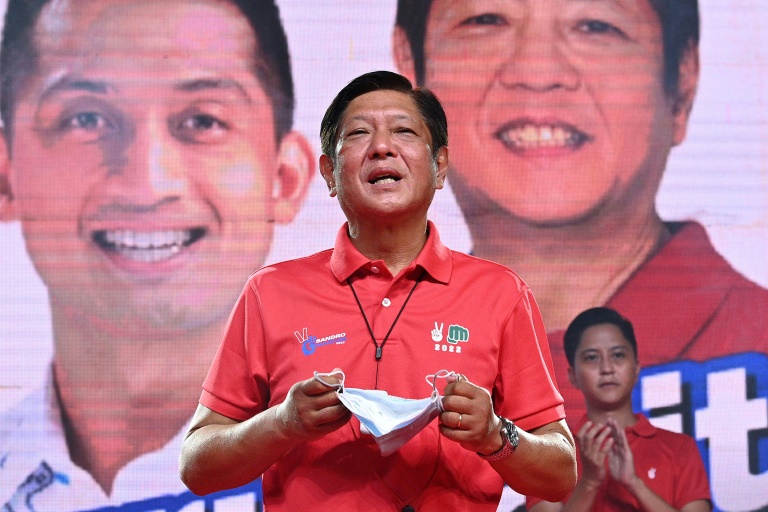
The son of late Philippine dictator Ferdinand Marcos was set to address hundreds of thousands of supporters Saturday on the final day of presidential election campaigning, as polls show him heading towards a landslide win.

Victory in Monday’s election would cap a decades-long effort to rehabilitate the Marcos legacy after the patriarch was deposed and the disgraced clan chased into US exile.

But the prospect of Ferdinand Marcos Jr moving back into the presidential palace has alarmed rights activists, church leaders and political analysts who fear he could rule “without constraint”.

Ten candidates are vying to succeed President Rodrigo Duterte in the landmark elections seen by many as a make-or-break moment for Philippine democracy.

The Marcoses’ remarkable return from pariahs to the peak of political power has been fuelled by public anger over corruption and poverty that persisted under governments that followed the dictatorship.

Polls indicate Marcos Jr will win more than half the votes, which would make him the first presidential candidate in the post-Marcos era to secure an absolute majority.

Analysts warn such an outcome would lead to weaker democratic checks and balances, more corruption and a fresh attempt to overhaul the 1987 constitution — which could include scrapping the one-term limit for presidents.

“If he wins really big that could give him the kind of confidence and momentum to more radically alter the Philippines political system,” analyst Richard Heydarian told AFP.

Previous administrations, including Duterte’s, have tried to amend the constitution drafted after the elder Marcos was ousted in 1986.

They lacked sufficient support in Congress to push through changes. 

But the latest poll by Pulse Asia Research showed Marcos Jr on 56 percent — 33 percentage points ahead of his nearest rival Leni Robredo, who narrowly beat him in the 2016 vice-presidential race.

Such a winning margin would give Marcos Jr the power to “govern the way Duterte wanted to”, one long-time observer of Philippine politics told AFP. 

“That is without constraint,” he said.

Robredo, 57, has warned supporters that the “future of the country” is at stake.

Her recent poll bump has raised hopes among progressive supporters that their volunteer-driven campaign could yet deliver an upset.

But pollster Ana Maria Tabunda of Pulse Asia Research said there was little chance of that.

“Our error margin is only plus or minus two percentage points — given the large gap it’s not going to be affecting the results,” Tabunda told AFP.

– ‘Another six years of hell’ – 

Hundreds of thousands of supporters were expected to turn out Saturday in Manila for the final rallies of Marcos Jr and Robredo ahead of the election. Monday’s winner only needs to get more votes than anyone else.

Still smarting from his 2016 loss, Marcos Jr has run a tightly controlled campaign, skipping televised debates with rivals and largely shunning media interviews to avoid own goals before election day.

He has instead posted folksy videos on YouTube that seek to present him and his wealthy family as regular Filipinos, and taken softball questions from celebrity interviewers.

A massive and well-funded social media misinformation campaign targeting a mostly young electorate with no memory of his father’s violent and corrupt rule has also sought to rewrite the family’s history.

Marcos Jr’s popularity has been further enhanced by a formidable alliance with vice-presidential front runner and first daughter Sara Duterte, and the backing of several rival political dynasties.

Days ahead of the election, rights defenders and many Catholic priests made a final push to stop Marcos Jr returning to the Malacanang Palace, where he grew up.

“It will be another six years of hell,” warned political satirist and activist Mae Paner, 58, who was part of a popular uprising that ended the elder Marcos’s regime and has been campaigning for Robredo.

Hundreds of Catholic priests publicly endorsed Robredo and her running mate Francis Pangilinan, telling their flocks the election was a “battle for the soul” of the nation.

But Robredo faces an “uphill battle”, said Cleve Arguelles, an assistant lecturer in political science at De La Salle University in Manila.

After enduring six years of attacks from the elder Duterte, Robredo has seen her popularity hammered by a relentless and vicious online smear campaign.

Heydarian said Robredo’s late decision to enter the race had cost valuable time, while “unnecessary infighting” among rival candidates had benefited Marcos Jr.

“They are handing this on a silver platter to the princeling of Philippine politics, Bongbong Marcos,” he said, using Marcos Jr’s nickname.

France's Macron to be inaugurated for new term

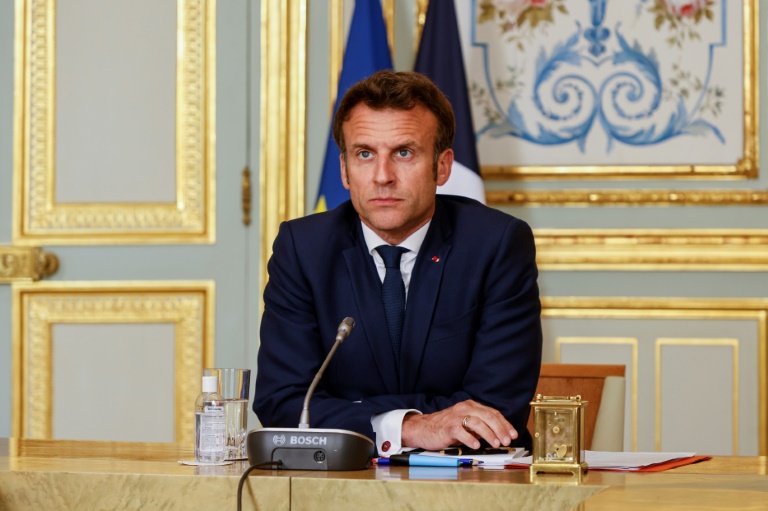
President Emmanuel Macron is on Saturday to be inaugurated for a new term after his election victory over the far right made him the first French head of state for 20 years to win a second mandate.

The event, starting at 0900 GMT at the Elysee Palace, kicks off a series of key steps as Macron begins a new five-year term filled with international and domestic challenges.

Macron faces a daunting agenda of implementing the reforms he vowed when he came to power as France’s youngest-ever president in 2017, as well as dealing with the Russian assault against Ukraine.

The head of the Constitutional Council, Laurent Fabius, will read a statement confirming Macron’s victory in the second round of presidential polls on April 24 with a score of 58.55 percent against far-right rival Marine Le Pen.

Macron will then deliver a keynote speech which according to an Elysee official “will not be a general political speech but is part of the history of the country and will look at the future”.

In a tradition dating back to the Middle Ages, 21 cannon shots will then be fired from the Invalides military memorial complex to celebrate the inauguration.

With no drive down the Avenue des Champs-Elysees or long red carpet, the ceremony will resemble the re-inaugurations of Francois Mitterrand in 1988 and Jacques Chirac in 2002, the last French president to win a second term.

– PM quandary –

Despite the ceremony, Macron’s second term will only start officially when the first one expires at midnight on May 13.

It comes at a time of political flux in the wake of Macron’s election victory, as France gears up for legislative polls that swiftly follow in June.

Macron is expected to name a new premier in place of incumbent Jean Castex to lead a revamped government into the elections, but not until his second term officially kicks off.

He has mooted naming a female politician with a focus on social responsibility — although reports have indicated that overtures to leftist figures, such as former official Veronique Bedague and Socialist parliamentary group chief Valerie Rabault, have been rebuffed.

“If there was a obvious solution for the Matignon (the residence of the prime minister) it would have been announced long ago,” a source close to Macron, who asked not to be named, told AFP.

Meanwhile, the Socialist Party along with the Greens and Communists, is forming an unprecedented alliance for the parliamentary elections with the hard left France Unbowed (LFI) party of Jean-Luc Melenchon.

He was by far the best performing left-wing candidate in the first round of presidential elections and is spearheading efforts to form a broad bloc and mount a convincing challenge to Macron.

Pro-Macron factions have regrouped under the banner of Ensemble (Together) while his own Republic on the Move party, which has struggled to create a grass-roots base, is renaming itself Renaissance.

Huge challenges await the 44-year old president.

He is set to keep playing a leading role in efforts to stop Russia’s war against Ukraine, while he carries an immense burden of expectation as a leader on the European stage with Germany still finding its footing in the post-Angela Merkel era.

On the domestic front, he must deal with the crisis over the rising cost of living and also brace for possible protests when he finally tackles his cherished pension reform, raising France’s retirement age.

vl-leb-jri-sjw/jv

'Like family': Japan's virtual YouTubers make millions from fans

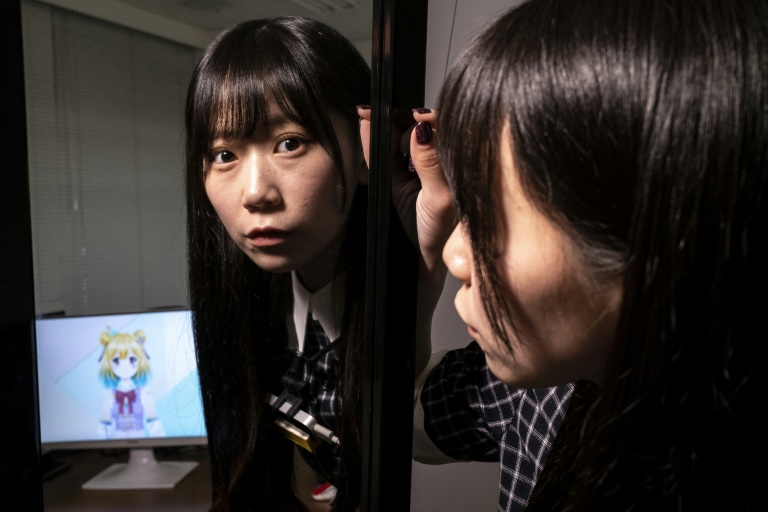
Mayu Iizuka sheds her soft-spoken personality and starts cackling, screaming and waving wildly in a makeshift studio in Tokyo as her avatar appears on a livestream before hundreds of fans.

Virtual YouTubers like Iizuka, who voices and animates a character called Yume Kotobuki, have transformed a niche Japanese subculture into a thriving industry where top accounts can rake in more than a million dollars a year.

The videos are designed to make fans feel they are interacting directly with their favourite animated idols — with viewers sometimes paying hundreds of dollars to have a single comment highlighted on a livestream.

“When I’m playing video games on my channel and succeed at something, my fans congratulate me” and pay tips “as a way to show their support and appreciation”, Iizuka told AFP.

The 26-year-old uses a laptop, webcam and a motion sensor worn around her neck to appear on screen as Yume, whose facial expressions are controlled by a producer.

With her squeaky voice, short skirt and huge purple eyes, Iizuka’s avatar follows a popular model for “VTuber” characters, which often resemble the hyper-feminine heroines of Japanese anime.

Since emerging about five years ago, the VTuber world has grown quickly, with about 16,000 active streamers globally, according to data firm User Local, and growing fanbases on other platforms like TikTok and gaming site Twitch.

Regional governments in Japan have used them for promotion, and “The Batman” stars Robert Pattinson and Zoe Kravitz even gave a recent interview to a top Japanese VTuber.

– Super Chat –

VTubers generate money in ways similar to traditional livestreamers, including through YouTube’s “Super Chat” system, where the more a fan shells out, the more attention is drawn to their comments.

In fact, the world’s nine top-earning YouTube accounts for “Super Chat” last year were all VTubers.

All nine are affiliated with one Tokyo-based talent agency, and each earned between $700,000 and $1.7 million from the cash gifts, according to data analysis site Playboard.

Most fans spend only a few hundred yen ($1) per comment, but the most dedicated sometimes splurge 50,000 yen ($400) to post impassioned missives to their virtual idols.

Kazuma Murakami, a 30-year-old car parts inspector, has been known to spend 10,000 yen to get his comments highlighted in red and seen by his favourite VTuber.

“I really want her to notice I’m here again, visiting her channel,” Murakami told AFP.

Another VTuber fan, who asked to be identified only by his first name, Kazumi, has adorned his tiny one-room apartment near Tokyo with posters, framed pictures and keyrings featuring his favourite character, Mio Ookami.

The 30-year-old computer engineer spends time after work and on weekends immersing himself in Mio’s videos and crafting digital illustrations of the black-haired “wolf girl”.

“I dedicate five, or maybe 10 hours to thinking just about her,” he said.

“She is like family to me.”

That devotion, and the willingness of fans to pay big money, is linked to the way other fan subcultures function in Japan, said Noriyuki Nagamatsu, a digital business specialist at advertising firm D.A. Consortium.

“Super Chat is essentially an extension of a longstanding culture where idol and anime fans try to support their ‘oshi’, or favourite, by splurging on their merchandise,” he told AFP.

“It’s also a way of winning attention from their beloved and feeling superior to fellow fans.”

– Human ‘soul’ –

VTubers usually keep the person behind the character — often referred to as their “soul” — out of the picture, and like many fans, Kazumi says his love is directed towards Mio the avatar, not whoever plays her.

But the line between virtual and real can become blurred.

A Japanese court recently ruled in favour of a VTuber actor who argued that online slander against her character amounted to an attack on her.

Virtual YouTubers can “transcend gender, age or physique… but what’s important is that there’s a real person there who is speaking and reads the comments in real life,” said Kazuhito Ozawa, the plaintiff’s lawyer.

For Iizuka, a professional voice actress, making the rare decision to reveal her identity after four years of making videos as Yume was nerve-wracking.

“Part of me was afraid that fans of Yume, who has these big, shiny eyes and a perfect belly, might be disappointed to find out what the ‘real’ person inside looks like,” she said.

But “so far the response from fans has been very kind”.

And the more outspoken, vivacious personality of Yume’s virtual self is even gradually rubbing off on Iizuka, she said.

“I used to baulk at speaking publicly, but Yume is such an experienced livestreamer that my identity as her has been helping me speak more confidently.”

'Like family': Japan's virtual YouTubers make millions from fans

Mayu Iizuka sheds her soft-spoken personality and starts cackling, screaming and waving wildly in a makeshift studio in Tokyo as her avatar appears on a livestream before hundreds of fans.

Virtual YouTubers like Iizuka, who voices and animates a character called Yume Kotobuki, have transformed a niche Japanese subculture into a thriving industry where top accounts can rake in more than a million dollars a year.

The videos are designed to make fans feel they are interacting directly with their favourite animated idols — with viewers sometimes paying hundreds of dollars to have a single comment highlighted on a livestream.

“When I’m playing video games on my channel and succeed at something, my fans congratulate me” and pay tips “as a way to show their support and appreciation”, Iizuka told AFP.

The 26-year-old uses a laptop, webcam and a motion sensor worn around her neck to appear on screen as Yume, whose facial expressions are controlled by a producer.

With her squeaky voice, short skirt and huge purple eyes, Iizuka’s avatar follows a popular model for “VTuber” characters, which often resemble the hyper-feminine heroines of Japanese anime.

Since emerging about five years ago, the VTuber world has grown quickly, with about 16,000 active streamers globally, according to data firm User Local, and growing fanbases on other platforms like TikTok and gaming site Twitch.

Regional governments in Japan have used them for promotion, and “The Batman” stars Robert Pattinson and Zoe Kravitz even gave a recent interview to a top Japanese VTuber.

– Super Chat –

VTubers generate money in ways similar to traditional livestreamers, including through YouTube’s “Super Chat” system, where the more a fan shells out, the more attention is drawn to their comments.

In fact, the world’s nine top-earning YouTube accounts for “Super Chat” last year were all VTubers.

All nine are affiliated with one Tokyo-based talent agency, and each earned between $700,000 and $1.7 million from the cash gifts, according to data analysis site Playboard.

Most fans spend only a few hundred yen ($1) per comment, but the most dedicated sometimes splurge 50,000 yen ($400) to post impassioned missives to their virtual idols.

Kazuma Murakami, a 30-year-old car parts inspector, has been known to spend 10,000 yen to get his comments highlighted in red and seen by his favourite VTuber.

“I really want her to notice I’m here again, visiting her channel,” Murakami told AFP.

Another VTuber fan, who asked to be identified only by his first name, Kazumi, has adorned his tiny one-room apartment near Tokyo with posters, framed pictures and keyrings featuring his favourite character, Mio Ookami.

The 30-year-old computer engineer spends time after work and on weekends immersing himself in Mio’s videos and crafting digital illustrations of the black-haired “wolf girl”.

“I dedicate five, or maybe 10 hours to thinking just about her,” he said.

“She is like family to me.”

That devotion, and the willingness of fans to pay big money, is linked to the way other fan subcultures function in Japan, said Noriyuki Nagamatsu, a digital business specialist at advertising firm D.A. Consortium.

“Super Chat is essentially an extension of a longstanding culture where idol and anime fans try to support their ‘oshi’, or favourite, by splurging on their merchandise,” he told AFP.

“It’s also a way of winning attention from their beloved and feeling superior to fellow fans.”

– Human ‘soul’ –

VTubers usually keep the person behind the character — often referred to as their “soul” — out of the picture, and like many fans, Kazumi says his love is directed towards Mio the avatar, not whoever plays her.

But the line between virtual and real can become blurred.

A Japanese court recently ruled in favour of a VTuber actor who argued that online slander against her character amounted to an attack on her.

Virtual YouTubers can “transcend gender, age or physique… but what’s important is that there’s a real person there who is speaking and reads the comments in real life,” said Kazuhito Ozawa, the plaintiff’s lawyer.

For Iizuka, a professional voice actress, making the rare decision to reveal her identity after four years of making videos as Yume was nerve-wracking.

“Part of me was afraid that fans of Yume, who has these big, shiny eyes and a perfect belly, might be disappointed to find out what the ‘real’ person inside looks like,” she said.

But “so far the response from fans has been very kind”.

And the more outspoken, vivacious personality of Yume’s virtual self is even gradually rubbing off on Iizuka, she said.

“I used to baulk at speaking publicly, but Yume is such an experienced livestreamer that my identity as her has been helping me speak more confidently.”

Death toll climbs to 22 in Havana hotel blast, gas leak suspected

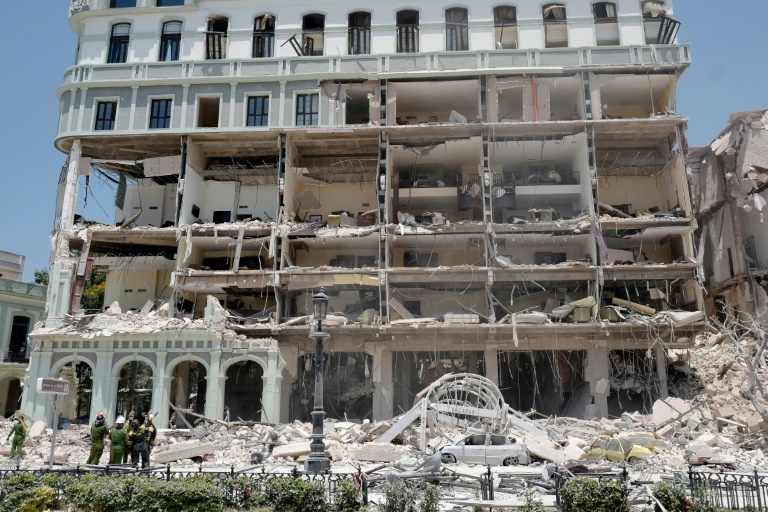
The death toll from a powerful explosion at a five-star hotel in central Havana climbed to 22 Friday with more than 50 people injured after a suspected gas leak, according to official tallies.

Rescuers pulled four newly discovered bodies out of the rubble in the early evening as they combed through what remained of the prestigious Saratoga Hotel looking for survivors.

At least one woman with whom rescuers made contact was alive in the debris, officials said, adding that they believed yet more living were still trapped and that a canine squad was searching them out.

The latest death toll of 22, which includes at least one child, was announced on television news after a day in which ambulances ferried the injured to hospital and paramedics treated those with less severe ailments on the spot.

Both the Health Ministry and the Cuban presidency said that dozens had been injured in the blast but cited different numbers in the range of approximately 50 to 65 people. 

The first four floors of the establishment, which was empty of guests while being renovated, were gutted in the late-morning blast that sent a cloud of dust and smoke billowing into the air.

The explosion tore off large parts of the facade, blew out windows and destroyed cars parked outside the hotel, which is known for having hosted celebrities such as Madonna, Beyonce, Mick Jagger and Rihanna.

The dome of a nearby Baptist church also collapsed.

Inside the hotel at the time were employees preparing for its post-refurbishment reopening, scheduled for next Tuesday.

President Miguel Diaz-Canel visited the site of the explosion and victims in hospital.

Miguel Hernan Estevez, director of the hospital Hermanos Almejeiras, said a two-year-old boy had undergone surgery for a fractured skull.

“So far we have no information that any foreigner was either injured or killed, but… this is preliminary information,” added Tourism Minister Juan Carlos Garcia Granda.

– Not a bomb –

Roberto Calzadilla of state company Gaviota, which owns the hotel, said the explosion happened while a gas tank was being refilled.

“It was neither a bomb nor an attack, it was an unfortunate accident,” said Diaz-Canel, who arrived at the scene an hour after the blast accompanied by the prime minister and National Assembly president.

Cuba was hit by a wave of anti-communist bombing attacks on hotels in 1997, in which an Italian tourist was killed and six people were injured.

Ambulances and fire trucks rushed to the scene Friday and police cordoned off the area, dispersing people who swarmed to the hotel near Havana’s emblematic National Capitol Building that housed Congress prior to the Cuban revolution.

It is also next to a school, but no pupils were injured, according to the presidency.

Rogelio Garcia, a bicycle taxi driver who was passing by the hotel at the time of the blast recounted that “we felt a huge explosion and (saw) a cloud of dust… many people ran out.”

“There was a terrible explosion and everything collapsed,” said a woman, her face covered in dust, who declined to give her name.

According to the website of the Saratoga Hotel, it is an upmarket establishment with 96 rooms, two bars, two restaurants, a spa and gym.

It was built in 1880 to house shops and converted into a hotel in 1933.

“The United States sends heartfelt condolences to all of those affected by the tragic explosion this morning,” said US State Department spokesman Ned Price on Twitter.

Mexico’s Foreign Minister Marcelo Ebrard, meanwhile, said President Andres Manuel Lopez Obrador would not cancel a trip to Cuba planned for Sunday.

Condolences additionally poured in from Bolivia, EU foreign policy chief Josep Borrell and Nicolas Maduro, the president of close Cuban ally Venezuela, who said that “the Cuban people have the solidarity and support of all the peoples of the world” and especially Venezuelans.

Brazil, Guyana agree to widen energy cooperation

Brazil and Guyana on Friday agreed to broaden energy cooperation during a visit by President Jair Bolsonaro to Georgetown, in which the South American neighbors also signed infrastructure and legal deals.

Former British and Dutch colony Guyana has emerged as one of the main low cost oil production countries and is preparing to auction offshore oil blocks at the end of the year.

“In terms of oil and gas, we have a Brazilian giant called Petrobras for whom cooperation with Guyana is becoming an ever greater reality. That’s what we hope for,” said Bolsonaro.

US giant ExxonMobil announced in April the discovery of three new oil deposits in Guyana, raising estimates of the country’s oil reserves to the equivalent of 11 billion barrels.

Those discoveries fueled Guyana’s existing border dispute with Venezuela, which wants to explore territorial waters claimed by both countries.

Guyana President Irfaan Ali evoked the idea of creating an energy corridor through his country, Brazil and Surinam.

“In the area of energy, we have discussed working together on a natural gas strategy and how that can be integrated in the development of Brazil and how we can coordinate and cooperate in this area,” said Ali.

As part of the agreements, Brazil will provide Guyana with IT teams and programs to help in information gathering for defense and security, as well as the construction of a deep water port, road and rail links, hydroelectric energy development, fiber optic connectivity and agricultural projects.

They also signed legal cooperation agreements in civil and criminal matters.

Brazil, Guyana agree to widen energy cooperation

Brazil and Guyana on Friday agreed to broaden energy cooperation during a visit by President Jair Bolsonaro to Georgetown, in which the South American neighbors also signed infrastructure and legal deals.

Former British and Dutch colony Guyana has emerged as one of the main low cost oil production countries and is preparing to auction offshore oil blocks at the end of the year.

“In terms of oil and gas, we have a Brazilian giant called Petrobras for whom cooperation with Guyana is becoming an ever greater reality. That’s what we hope for,” said Bolsonaro.

US giant ExxonMobil announced in April the discovery of three new oil deposits in Guyana, raising estimates of the country’s oil reserves to the equivalent of 11 billion barrels.

Those discoveries fueled Guyana’s existing border dispute with Venezuela, which wants to explore territorial waters claimed by both countries.

Guyana President Irfaan Ali evoked the idea of creating an energy corridor through his country, Brazil and Surinam.

“In the area of energy, we have discussed working together on a natural gas strategy and how that can be integrated in the development of Brazil and how we can coordinate and cooperate in this area,” said Ali.

As part of the agreements, Brazil will provide Guyana with IT teams and programs to help in information gathering for defense and security, as well as the construction of a deep water port, road and rail links, hydroelectric energy development, fiber optic connectivity and agricultural projects.

They also signed legal cooperation agreements in civil and criminal matters.

Mystery mega yacht impounded by Italian authorities

The Italian authorities on Friday impounded a mega yacht at the centre of a mystery over its ownership as speculation swirled it might even belong to the Russian president.

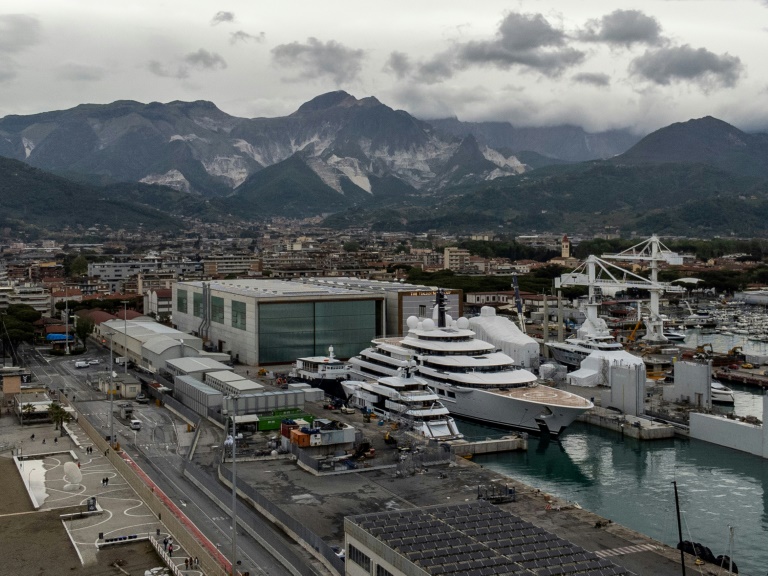
“Scheherazade”, worth an estimated $700 million, has been the subject of a probe into its ownership by Italy’s financial police.

The Italian probe has helped “establish significant economic and business links between the person who officially possesses the Scheherazade and eminent people in the Russian government,” as well as Russian figures sanctioned by the West following Russia’s invasion of Ukraine, the Italian ministry of economy and finance said in a statement.

Following the probe, “the minister of Economy and Finance, Daniele Franco, has signed a decree impounding” the yacht, the statement added.

It had been berthed for several months for maintenance work at a shipyard at the Marina di Carrara, within the western seaside town of Massa.

But the yacht was back on the water and seemed about to set sail on Friday, an AFP photographer said before the Italian government statement was issued.

But the mystery remains unresolved: who does “Scheherazade” belong to? A Russian oligarch? Vladimir Putin?

Built by Germany’s Luerssen in 2020, the 140-metre yacht features two helipads, a swimming pool and a movie theatre, according to the SuperYachtFan website, which researches yachts and their owners.

Italian police had said they were doing their best to identify the owner.

“It’s not always easy to attribute ownership” of a yacht, a source close to the Italian probe told AFP in late March.

The same source said earlier Friday there was “nothing new” in the investigation.

Researchers at the anti-corruption foundation of Russian dissident Alexei Navalny link the yacht to Putin.

They cited a crew list in their possession that included several members of Russia’s federal protective service, charged with Putin’s security.

But the Italian Sea Group said in a statement the yacht was “not attributable to the property of Russian President Vladimir Putin”.

The shipyard’s owner said its assessment was based on “the documentation in its possession and following the findings of the checks carried out by the relevant authorities”.

Crisis-hit Sri Lanka declares emergency after crippling strike

Sri Lanka’s president  Friday declared a state of emergency for the second time in five weeks, giving security forces sweeping powers amid a nationwide strike by angry demonstrators who blame him for an unprecedented economic crisis.

A spokesman for President Gotabaya Rajapaksa said he invoked the tough laws to “ensure public order” after shops closed and public transport was halted Friday, bringing the South Asian island nation of 22 million people to a standstill after weeks of unrest. 

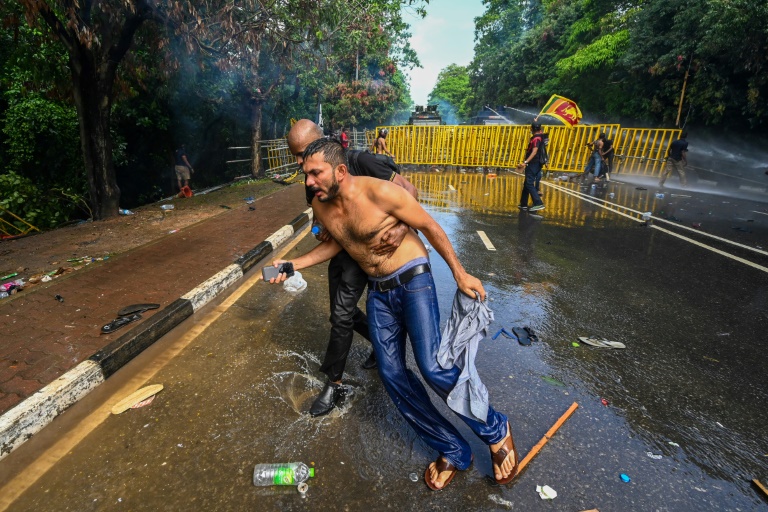
Earlier Friday, police used tear gas and water cannon to disperse students attempting to storm the national parliament demanding Rajapaksa resign.

The emergency gives sweeping powers to security forces to arrest and detain suspects for long periods without judicial supervision.

It also allows the deployment of troops to maintain law and order in addition to police.

The spokesman said the laws will go into effect from midnight Friday.

Beleaguered Rajapaksa had declared an earlier state of emergency on April 1, a day after thousands of protesters attempted to storm his private home in the capital. That emergency was allowed to lapse on April 14.

But protests have escalated since then, fuelling Sri Lanka’s worst crisis since independence in 1948. 

The new emergency declaration came as thousands of demonstrators remained outside Rajapaksa’s sea-front office, where they have been protesting since April 9, and smaller groups also tried to storm homes of other key government politicians.

– Storming parliament –

The students’ attempt to storm the tightly-guarded legislature on Friday was their second in as many days.

They and other demonstrators blame Rajapaksa and his ruling family for mismanaging the economy. Months of blackouts and acute shortages of food, fuel and pharmaceuticals have caused widespread suffering across the island.

Millions of workers stayed off work on Friday in the strike, organised by the country’s trade union movement. Train and state-owned bus services were disrupted.

Industrial workers demonstrated outside their factories and black flags were hung across the country in an expression of anger against the government.

“We can pinpoint the policy blunders of the president that led to this very sorry state of our economy,” said trade union leader Ravi Kumudesh. “He must go.”

Private buses, which account for two-thirds of the country’s fleet, were also off the road, Private Bus Operators Association chairman Gemunu Wijeratne said.

“We are not providing services today, but if groups of people want to join the anti-government protests within a radius of 20 kilometres, we will give our buses free of charge,” Wijeratne told reporters in Colombo.

Rajapaksa has insisted he will not step down despite the escalating demonstrations, including the protest outside his office which has forced him to work from home.

Official sources said the president could pressure his elder brother, Prime Minister Mahinda Rajapaksa, to step down and allow the formation of a unity government to guide the country out of the economic crisis.

The main opposition SJB party has insisted that it will not take up any role in a national administration unless the president also steps down accepting responsibility for mismanagement and corruption.

Sri Lanka’s economic crisis took hold after the coronavirus pandemic hammered income from tourism and remittances.

Unable to pay for fuel imports, utilities have imposed daily blackouts to ration electricity, while long lines of people snake around service stations for petrol and kerosene.

Hospitals are short of vital medicines and the government has appealed to citizens abroad for donations.

Last month Sri Lanka announced it was defaulting on its $51 billion foreign debt, and finance minister Ali Sabry warned this week that the country will have to endure its unprecedented economic hardships for at least two more years.

Close Bitnami banner
Bitnami