World

Global stocks mostly fall despite solid US jobs data

Global stocks mostly tumbled Friday to conclude a volatile week as investors fretted over inflation and worries about slowing growth despite a solid US jobs report.

The US economy added a better-than-expected 428,000 jobs in April, with the unemployment rate remaining at a low 3.6 percent, the Labor Department reported.

The data pointed to continued strong employment growth and contained hints that some inflationary pressures may be easing, with workers’ wages rising less than in March.

But investors remain anxious that rising prices and higher interest rates will hit consumers, slowing the economy’s expansion in the second half of 2022.

“There is a real concern about slowing growth and the possibility that the economy could tip into recession,” said Briefing.com analyst Patrick O’Hare.

Wall Street stocks flirted with positive territory at times, but finished lower, with the S&P 500 dropping 0.6 percent. 

All three US indices ended with weekly losses, with the Nasdaq suffering the most at 1.5 percent.

Earlier, European indices also slumped, with London losing 1.5 percent, Frankfurt 1.6 percent and Paris 1.7 percent.

“A sinking feeling has taken over financial markets at the end of a volatile week,” said Hargreaves Lansdown analyst Susannah Streeter.

“Investors are digesting the unpalatable implications of inflation and fretting that there will be a need for a bigger dose of the bitter medicine being administered to try and bring it under control.”

Asian equities tumbled after steep Wall Street losses Thursday, as traders contemplated a period of fierce monetary tightening by the US Federal Reserve. 

Meanwhile, the pound hit a two-year low at $1.2276, one day after the Bank of England warned that UK inflation would top 10 percent and the economy would contract later this year.

The euro jumped to 85.92 pence, which was last seen late in 2021. 

Crude prices rebounded after key producers led by Saudi Arabia and Russia refused to lift output more than their planned marginal increase as they weighed tight supply concerns caused by Moscow’s invasion of Ukraine.

Oil prices have also gotten support from a proposed European Union ban on Russian crude in the wake of the Ukraine invasion.

“If EU efforts to ban Russian crude and products are able to continue moving forward, it would mark the most significant measure directly targeting Russian energy exports amid a wave of sanctions,” said a note from Robbie Fraser of Schneider Electric.

“Replacing Russian crude volumes is a significant logistical challenge.”

– Key figures at around 2050 GMT –

New York – Dow: DOWN 0.3 percent at 32,899.37 (close)

New York – S&P 500: DOWN 0.6 percent at 4,123.34 (close)

New York – Nasdaq: DOWN 1.4 percent at 12,144.66 (close)

London – FTSE 100: DOWN 1.5 percent at 7,387.94 (close) 

Frankfurt – DAX: DOWN 1.6 percent at 13,674.29 (close)

Paris – CAC 40: DOWN 1.7 percent at 6,258.36 (close)

EURO STOXX 50: DOWN 1.8 percent at 3,629.17 (close)

Hong Kong – Hang Seng Index: DOWN 3.8 percent at 20,001.96 (close)

Shanghai – Composite: DOWN 2.2 percent at 3,001.56 (close)

Tokyo – Nikkei 225: UP 0.7 percent at 27,003.56 (close)

Brent North Sea crude: UP 1.3 percent at $112.39 per barrel

West Texas Intermediate: UP 1.4 percent at $109.77 per barrel

Euro/dollar: UP at $1.0556 from $1.0542 on Thursday

Pound/dollar: DOWN at $1.2339 from $1.2362

Euro/pound: UP at 85.52 pence from 85.28 pence

Dollar/yen: UP at 130.56 yen from 130.20 yen

burs-jmb/cs

Israel hunts Palestinians after three killed in axe attack

Israel conducted a large-scale manhunt on Friday for a pair of Palestinians suspected of killing three Israelis in an axe attack as the Jewish state marked its founding.

The deadly attack on Thursday night in Elad, a central city mainly populated by ultra-Orthodox Jews, was the sixth in which Israelis have been targeted since March 22.

Witnesses said two assailants leapt from a car swinging axes at passers-by, leaving three dead and four wounded, before fleeing in the same vehicle.

The attack followed a tense period in which the Muslim fasting month of Ramadan, the Jewish festival of Passover and the Christian holiday of Easter overlapped.

Tensions have boiled over into violent clashes between Israelis and Palestinians at the Al-Aqsa mosque compound, a highly contested site in Jerusalem’s Israeli-annexed Old City.

Palestinians have been angered by an uptick in Jewish visits to the Al-Aqsa compound, where by longstanding convention Jews may visit but are not allowed to pray.

Israel has said the status quo would remain unchanged at the site known to Jews as the Temple Mount.

The United States and Palestinian president Mahmud Abbas condemned the attack. Abbas warned it could lead to spiralling violence.

But the Gaza Strip’s Islamist rulers Hamas and Islamic Jihad, another Palestinian armed group, praised the latest violence, calling it a consequence of unrest at Al-Aqsa. Neither claimed responsibility.

“This operation demonstrates our people’s anger at the occupation’s attacks on holy sites,” Hamas spokesman Hazem Qassem said of the Elad attack.

“The storming of the Al-Aqsa mosque cannot go unpunished.”

– ‘Pay the price’ –

Israeli security forces have mounted a massive search operation for the attackers, identified by the police as Assad Yussef al-Rifai, 19, and Subhi Imad Abu Shukair, 20.

As helicopters and drones patrolled overhead in search of the perpetrators, young ultra-Orthodox Jewish men in crisp white shirts were seen linking arms and chanting near the scene of the murders.

Women gathered on balconies overlooking the site, as masked forensic officers packed the bodies of the dead into bags and police stopped and searched cars.

A 31-year-old IT worker who gave his name as Yehuda told AFP he was afraid that “the killers have not yet been caught”.

“We suffer hatred and get murdered with an axe,” he said at the funeral of Oren Ben Yiftach, a 35-year-old from Lod who was among the three killed.

Police asked the public to provide information on the suspects after publishing their pictures and names. They were described as residents of the village of Rummanah near Jenin in the occupied West Bank.

The Israeli prime minister’s office identified the three dead as Yonatan Habakuk, 44, and Boaz Gol, 49, both from Elad, as well as Ben Yiftach.

A police statement late Friday said “intensive searches” were ongoing “in cooperation with special operational forces”, including army units. 

“We will get our hands on the terrorists… and ensure they pay the price,” Prime Minister Naftali Bennett said.

The majority of Elad’s 50,000 residents are members of Israel’s ultra-Orthodox Jewish community, known as haredim.

Israel’s Defence Minister Benny Gantz announced a closure of the West Bank — in place for the anniversary — would remain in force through Sunday.

The Palestinian Red Crescent said 38 Palestinians were wounded Friday in clashes with Israeli forces near Nablus in the West Bank, including two teenagers who were shot with rubber-coated bullets. 

– Spate of attacks –

A string of anti-Israeli attacks since March 22 have killed 18 people, including an Arab-Israeli police officer and two Ukrainians.

Two of the deadly attacks were carried out in the Tel Aviv area by Palestinians.

A total of 27 Palestinians and three Israeli Arabs have died during the same period, among them perpetrators of attacks and those killed by Israeli security forces in West Bank operations.

Israeli Foreign Minister Yair Lapid said “the joy of independence day had been interrupted in an instant”.

For Palestinians, the anniversary of Israel’s 1948 declaration of independence marks the Nakba, or “catastrophe”, when more than 700,000 fled or were expelled during the war surrounding Israel’s creation.

Last week, Hamas threatened Israel with rocket fire and attacks on synagogues if its security forces carry out further raids on the Al-Aqsa mosque compound.

“Whoever has a rifle must have it ready, and whoever does not have a rifle must prepare their knife or their axe,” said Yahya Sinwar, Hamas chief in the Israeli-blockaded Gaza Strip.

Thursday’s violence at Al-Aqsa followed a tense April, in which nearly 300 people were hurt in clashes between police and Palestinians at the site.

Neighbouring Jordan on Friday condemned “all forms of violence against civilians”, warning that “everyone will pay the price for the current escalation”.

Mystery mega yacht appears ready to set sail from Italy

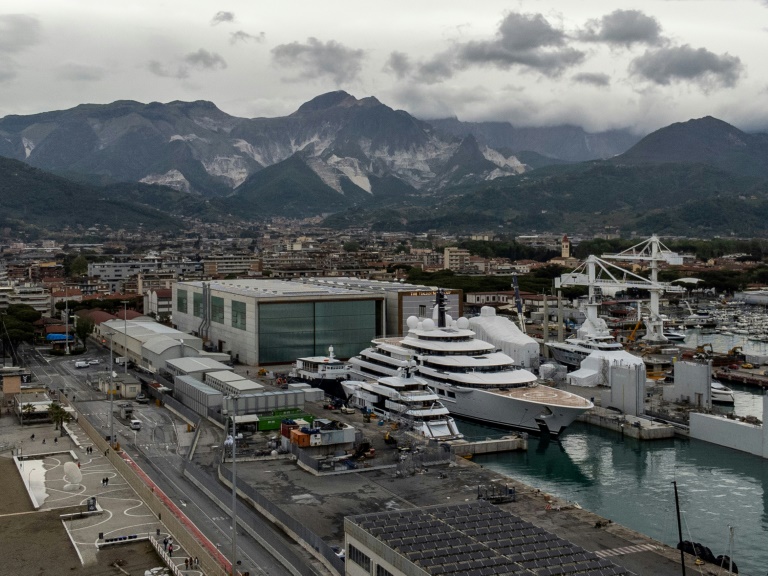
A mega yacht at the centre of a mystery over its ownership appeared ready to set sail from Italy Friday, an AFP photographer saw, as speculation swirls it might belong to the Russian president.

“Scheherazade”, worth an estimated $700 million, is the subject of a probe into its ownership by Italy’s financial police.

It had been berthed for several months for maintenance work at a shipyard at the Marina di Carrara, within the western seaside town of Massa.

Now, the yacht is back on water but the mystery remains unresolved: who does “Scheherazade” belong to? A Russian oligarch? Vladimir Putin?

Built by Germany’s Luerssen in 2020, the 140-metre yacht features two helipads, a swimming pool and a movie theatre, according to the SuperYachtFan website, which researches yachts and their owners.

Italian police insist they are doing their best to identify the owner.

“It’s not always easy to attribute ownership” of a yacht, a source close to the Italian probe told AFP in late March.

The same source said Friday there was “nothing new” in the investigation.

Researchers at the anti-corruption foundation of Russian dissident Alexei Navalny link the yacht to Putin.

They cited a crew list in their possession that included several members of Russia’s federal protective service, charged with Putin’s security.

But the Italian Sea Group said in a statement the yacht was “not attributable to the property of Russian President Vladimir Putin”.

The shipyard’s owner said its assessment was based on “the documentation in its possession and following the findings of the checks carried out by the relevant authorities”.

US probes five child deaths, 109 cases linked to mystery liver disease

The US Centers for Disease Control and Prevention is investigating 109 childhood cases of a mysterious form of hepatitis, including five reported deaths, the agency said Friday.

It is part of an unexplained global phenomenon involving hundreds of cases, with Indonesia this week also reporting three deaths.

Britain on Friday announced its case count had increased to 163, the majority aged under five, with no deaths.

“Investigators both here… and around the globe are working hard to determine the cause,” said Jay Butler, deputy director for infectious diseases for the CDC.

Health authorities think the cases might be linked to a wave of type of virus called adenovirus, but are trying to confirm the theory. 

Ninety percent of the US cases have involved hospitalization, with 14 percent requiring liver transplants. The median age of the cases is two-years-old, and the majority fully recovered.

The CDC issued a health alert in late April notifying doctors and public health authorities to be on the lookout for similar cases, and began examining records extending back to October 1, 2021.

A study released last week focusing on nine cases in Alabama ruled out other common exposures, including hepatitis viruses A, B, and C, which are normally the cause of the disease.

The CDC does not think the cases are linked to Covid vaccination because the “vast majority” of cases are too young to be eligible, said Butler. 

Jaundice and vomiting are the most common symptoms experienced by the children affected.

– Search for answers –

More than half the cases tested positive for adenovirus 41 — a virus that is normally associated with gastroenteritis, but not hepatitis in otherwise healthy children.

“Because of the link to adenovirus, I would call that top of the list of viruses of interest,” said Butler.

“But we don’t know if it is adenovirus itself that is causing the cases, or is there an immune reaction to this particular strain of adenovirus.”

Environmental factors are also being examined.

The UK Health Security Agency (UKHSA) issued a technical report Friday that found that 70 percent of households where data was available had dogs, and said “the significance of this finding is being explored.”

Other working hypotheses include co-infection with another pathogen such as Covid, or whether a prior case of Covid had made children more susceptible.

Adenovirus cases might also be rebounding after Covid lockdowns stopped the spread for a few years, or lack of exposure to pathogens during lockdowns might have made children’s immune systems more susceptible.

The adenovirus might have also evolved into a newer, more dangerous strain.

Adenoviruses are commonly spread by close personal contact, respiratory droplets and surfaces. There are more than 50 types of adenoviruses, which most commonly cause the cold, but also several other diseases.

CDC recommends preventive action such as hand-washing, avoiding people who are sick, covering coughs and sneezes, and avoiding touching the eyes, nose or mouth.

Meera Chand, director of clinical and emerging infections at UKHSA, said in a statement: “It’s important that parents know the likelihood of their child developing hepatitis is extremely low. 

“However, we continue to remind everyone to be alert to the signs of hepatitis –- particularly jaundice, look for a yellow tinge in the whites of the eyes –- and contact your doctor if you are concerned.”

Johnson loses 'crown jewels' in UK vote overshadowed by scandal

UK Prime Minister Boris Johnson was on Friday left reflecting on a string of losses at local elections in England, in a mid-term test of his popularity after a string of scandals.

Johnson conceded Thursday’s vote had produced a “mixed” set of results for his ruling Conservatives, including the loss of three London councils long considered the Tory “crown jewels”.

The main opposition Labour party defeated the Conservatives in Barnet, northwest London, at Margaret Thatcher’s “favourite” council Wandsworth in the south, and in Westminster for the first time since 1964.

With 144 of the 146 English councils declared, the Conservatives had lost 341 councillors countrywide, with Labour up 54, and the smaller Liberal Democrats gaining 191, the BBC reported.

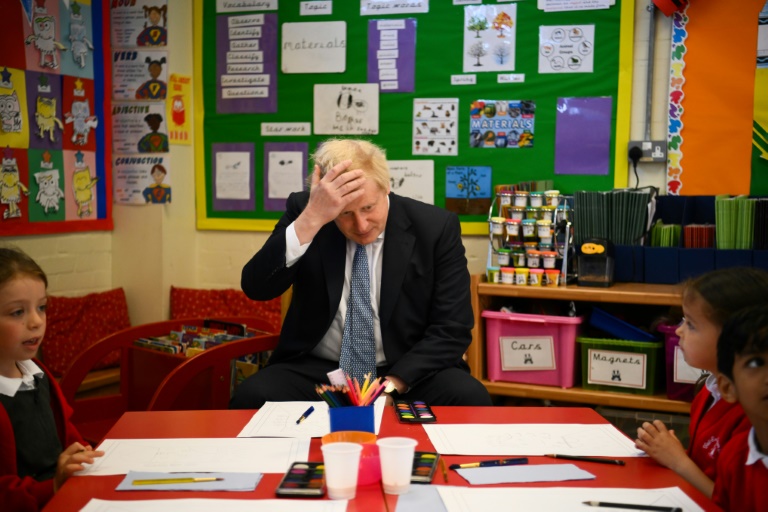
“We had a tough night in some parts of the country,” Johnson conceded as he visited a school in his constituency on the outskirts of the capital.

But he vowed to stay on and tackle the “economic aftershocks” of Covid, and a spiralling cost of living crisis that has squeezed household incomes and exercised voters.

And he denied the Tories had suffered a heavy defeat, despite months of anger at revelations of coronavirus lockdown-breaking parties at Downing Street that saw repeated calls for him to quit.

Johnson was fined by police for attending one such gathering, making him the first UK prime minister to have been found to have broken the law while in office.

Labour leader Keir Starmer, visiting Barnet, hailed what he called “a big turning point” as his party looks towards the next general election, which is due by 2024.

– Historic vote –

Council elections were held in much of England, all of Scotland and Wales, and for the Northern Ireland Assembly in Belfast, where the pro-Irish nationalists Sinn Fein are poised for a historic first ever win.

By 1845 GMT, Sinn Fein — the former political wing of the IRA paramilitary group, which wants a referendum on British sovereignty — had secured 16 seats at the 90-seat legislature. 

The party’s vice-president, Michelle O’Neill, has set a target of 28 to claim the symbolic role of first minister.

The Electoral Office for Northern Ireland said there will be no overall result on Friday evening and counting would resume on Saturday morning.

In Scotland, the Scottish National Party consolidated their grip at a local level, winning 22 more seats on the nation’s 32 councils, while Labour became the second-biggest party, adding 20.

The Scottish Conservatives lost 63 councillors.

In Wales, Labour added 71 seats with most of the 22 councils declared.

Analysis by polling expert John Curtice calculated that if every region of the country had taken part in the vote, Labour would have gained 35 percent of the vote — five percent more than the Tories.

Curtice told the BBC it was Labour’s best lead in local elections for a decade, and showed the Tories were “now electorally weaker than at any point” since Johnson won his 80-seat general election majority in 2019.

– Police probe –

The Conservatives are hoping to extend their 12 years in power nationally for another term at the next general election but whether their Brexit champion Johnson will lead them remains to be seen.

He was already facing a potential vote of confidence earlier this year as “Partygate” claims mounted, until the Ukraine conflict — and his hawkish response — took the sting out of the mutiny.

He has apologised for being fined but still faces the prospect of more penalties to come as London police investigate more events.

Meanwhile police in Durham, northeast England, on Friday said they had launched a formal probe into Starmer.

The lawyer and former chief public prosecutor is accused of breaking Covid rules with a beer and curry gathering with party activists in 2021.

He said he was “confident no rules were broken”, although the probe puts him in a delicate position as in January he called for Johnson to quit for being under criminal investigation.

On Saturday, all eyes will be on Northern Ireland, with a Sinn Fein victory presenting potentially huge constitutional implications for the four-nation United Kingdom.

But there are doubts about whether the largest pro-UK unionist party, the DUP, will agree to work with them, raising the prospect of paralysis and lengthy negotiations.

DUP leader Jeffrey Donaldson said the UK government in London should rip up post-Brexit trading arrangements in the province, which unionists argue threatens its place in the wider UK.

“The government need to act decisively on the protocol and until they do, I won’t be nominating ministers to the executive,” he told the BBC.

Eight dead in Havana hotel blast, gas leak suspected

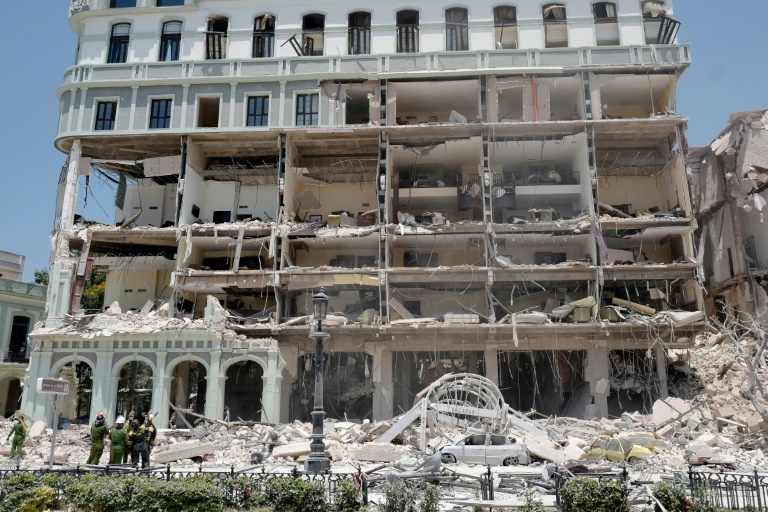
Eight people were killed and about 30 hurt in a powerful explosion, likely caused by a gas leak, that ripped through a five-star hotel in central Havana on Friday, the Cuban government said.

Rescuers combed through the rubble looking for survivers after the late-morning explosion sent a cloud of dust and smoke billowing from the prestigious Saratoga Hotel.

The first four floors of the establishment, which was empty of guests while being renovated, were gutted.

“Search and rescue work continues in the hotel, where it is possible that other people are trapped,” Havana Communist Party official Luis Antonio Torres Iribar said, adding 13 people were reported missing.

The blast tore off large parts of the facade, blew out windows, and destroyed cars parked outside the hotel, which is known for having hosted celebrities such as Madonna, Beyonce, Mick Jagger and Rihanna.

“So far, eight people have died and about 30 are hospitalized,” the Cuban presidency tweeted.

Eleven were “in an extremely serious condition,” said Miguel Garcia, director of the Calixto Garcia hospital treating the wounded.

Inside the hotel at the time were employees preparing for its post-refurbishment reopening, scheduled for next Tuesday.

Local official Alexis Costa Silva, quoted by state media Cubadebate, said a cylinder of liquid gas was being replaced Friday.

A cook had smelled gas and found a crack in a pipe shortly before the blast happened.

“It was neither a bomb nor an attack, it was an unfortunate accident,” said President Miguel Diaz-Canel, who arrived at the scene shortly after the explosion accompanied by the prime minister and National Assembly president, and then visited the wounded in hospital.

Cuba was hit by a wave of anti-communist bombing attacks on hotels in 1997, in which an Italian tourist was killed and six people injured.

– ‘Everything collapsed’ –

Ambulances and fire trucks rushed to the scene and police cordoned off the area, dispersing people who swarmed to the hotel near Havana’s emblematic National Capitol Building that housed Congress prior to the Cuban revolution.

It is also next to a school, but no pupils were injured, according to the presidency.

“We felt a huge explosion and (saw) a cloud of dust… many people ran out,” Rogelio Garcia, a bicycle taxi driver who was passing outside the hotel, said.

“There was a terrible explosion and everything collapsed,” said a woman, her face covered in dust, who declined to give her name.

According to the website of the Saratoga Hotel, it is an upmarket establishment with 96 rooms, two bars, two restaurants, a spa and gym.

It was built in 1880 to house shops and converted into a hotel in 1933.

Mexico’s Foreign Minister Marcelo Ebrard, meanwhile, said President Andres Manuel Lopez Obrador would not cancel a trip to Cuba planned for Sunday.

“Our solidarity to the victims and affected, as well as to the people of that dear brotherly people,” the minister tweeted.

Solid job growth continues in recovering US economy

From bars to factories to warehouses, American businesses hired staff with vigor in April as the US economy recovers from the damage done by Covid-19 while grappling with inflation that has hit the highest rate in decades.

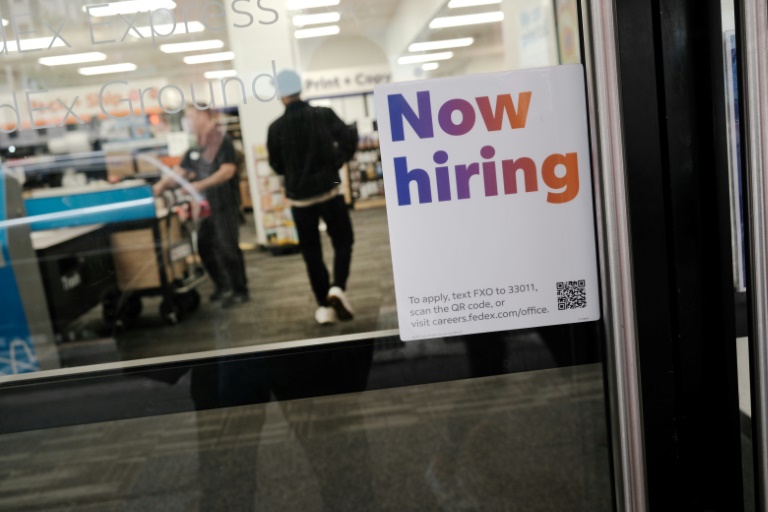
Employers in the world’s largest economy added 428,000 jobs last month, the Labor Department said Friday, keeping the unemployment rate at 3.6 percent, just above where it was before the spread of Covid-19 caused mass layoffs two years ago.

The data pointed to continued strong job growth and contained hints that some inflationary pressures may be easing — welcome news for an economy where consumer prices have climbed at a rate not seen since the 1980s.

President Joe Biden described the data as a sign that his policies had revived the economy from the grievous damage wrought by the pandemic.

“Our plans and policies have produced the strongest job creation economy in modern times,” Biden said in a statement.

The report was released two days after the Federal Reserve hiked its key lending rate by a half-percentage point to crush the wave of price increases, and signaled it plans further hikes in the months to come.

Workers’ wages are a component of accelerating inflation, and the jobs report showed average hourly earnings rising only 0.3 percent compared to March, a slower pace that in recent months and potential signal the price pressures are abating.

However, economist Joel Naroff warned wages were still trending upwards and the generally rosy picture of the labor market the data painted may convince the Fed aggressive rate hikes are needed to lower inflation.

“Sometimes good news is not necessarily good news and this report, though it shows that the economy is still moving forward solidly, may be a problem for investors,” he said.

– Hiring across industries –

After spiking to 14.7 percent in April 2020 following business closures across the country as the pandemic began, unemployment has declined steadily and is now just a hair above its 3.5 percent rate before Covid-19 arrived.

The number of unemployed people was at 5.9 million last month, the Labor Department said, also not far from where it was in February 2020, while a range of businesses took on new hires.

These included the leisure and hospitality sector, which encompasses the bars and restaurants that bore the brunt of the pandemic restrictions.

That industry added 78,000 jobs last month, while manufacturers hired 55,000, transportation and warehousing took on 52,000, and employment at professional and business services firms rose 41,000.

But the labor force participation rate, which indicates the share of the population employed or searching for work, declined 0.2 percentage points from March, bringing it to 62.2 percent, where it was at the start of the year.

Supply of workers has been an ongoing problem for employers: Other data released recently shows there are nearly two job openings for every unemployed person in the labor force.

“Looking ahead, we expect more workers to come off the sidelines in search of work and labor demand to cool as businesses feel the pinch from high inflation and tighter financial conditions,” Kathy Bostjancic of Oxford Economics said.

– Potent inflation –

The data indicated some improvement in racial disparities in the labor market, with the Hispanic unemployment rate falling slightly to 4.1 percent. 

Joblessness among African-American workers declined to 5.9 percent as more women were hired, though unemployment rose for Black men.

Asian unemployment ticked up to 3.1 percent, while it was flat for white workers at 3.2 percent.

Despite the slowing in monthly wage growth, Sophia Koropeckyj of Moody’s Analytics noted the 5.5 percent annual salary increase in April was not keeping pace with inflation, which has seen consumer prices climb at an 8.5 percent annual rate.

“The one month of softer wage growth is really not sufficient to allay concern about wage pressures. Hence, the Fed’s success in slowing the economy and tempering wage and price pressures is of paramount importance,” she wrote in an analysis.

US warns of imminent N. Korea nuclear test

The United States said Friday it believes North Korea may be preparing a nuclear test as soon as this month, its first since 2017, and renewed an offer of dialogue on ratcheting tensions.

The State Department went public with its assessment amid mounting US frustration with North Korea, which has conducted 14 weapons tests since January.

“The United States assesses that the DPRK is preparing its Punggye-ri test site and could be ready to test there as early as this month,” State Department deputy spokeswoman Jalina Porter said, referring to North Korea by its official name, the Democratic People’s Republic of Korea.

“This assessment is consistent with the DPRK’s own recent public statements,” she told reporters.

“We have shared this information with allies and partners and will continue closely coordinating with them as well.”

US President Joe Biden later this month travels to Japan and South Korea, where concerns about Pyongyang are expected to be high on the agenda.

A North Korean test could coincide with Biden’s visit or with the May 10 inauguration in South Korea of President-elect Yoon Suk-yeol, who has vowed to take a harder line on Pyongyang.

North Korea carried out six nuclear tests before embarking on unusually high-profile diplomacy with the United States, with former president Donald Trump meeting three times with leader Kim Jong Un.

Despite Trump’s declarations that the two “fell in love,” their meetings produced no permanent agreement on dismantling North Korea’s nuclear program.

Pyongyang has shown little interest in resuming negotiations since Trump’s departure.

– Dialogue and pressure –

The Biden administration says it is ready to start talks with North Korea without preconditions, but would pursue working-level negotiations and not the pageantry of another summit.

“The United States remains committed to seeking diplomacy with the DPRK and calls on the DPRK to engage in dialogue,” Secretary of State Antony Blinken said earlier Friday.

“At the same time, we will continue to address the DPRK’s unlawful cyber activities, as well as violations of UN Security Council resolutions.”

The Biden administration has sought to step up pressure on North Korea.

The Treasury Department on Friday announced sanctions on the virtual currency mixer Blender.io, saying the service was used by a North Korean hacker group to support weapons programs.

It marked the first US sanctions on a virtual currency “mixer,” which is used to conceal participants in transactions involving Bitcoin and other cryptocurrencies.

Officials said the Lazarus Group, a North Korean-backed hacker group, stole $620 million from the online video game Axie Infinity.

The United States has also proposed toughening costs on North Korea through the Security Council.

A draft Security Council resolution presented last month by the United States and seen by AFP would tighten sanctions, including by reducing from four million to two million barrels the amount of crude oil North Korea would be allowed to import each year for civilian purposes. 

But the resolution stands little chance of approval as diplomats say there is no support from China or Russia, which hold veto power. 

The two powers both have relations with Pyongyang and test ties with Washington, but have occasionally backed action out of exasperation with North Korea.

North Korea’s recent tests have included its first of an intercontinental ballistic missile at full-range since 2017.

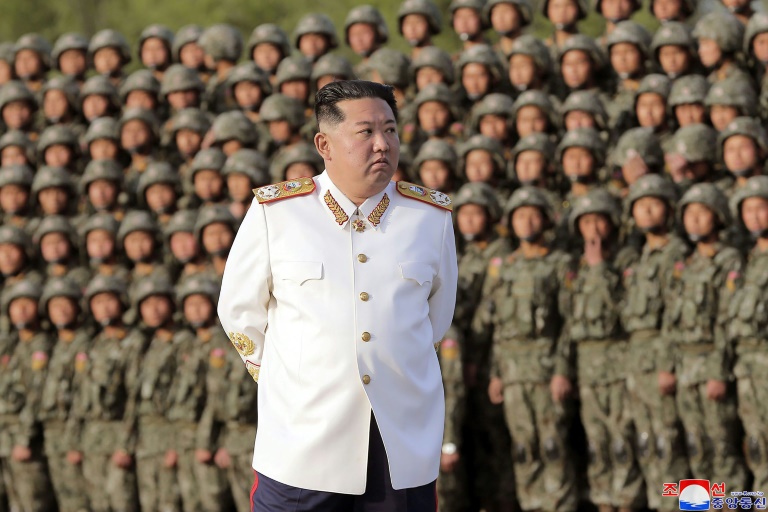
Last week, while overseeing a huge military parade, North Korean leader Kim vowed to develop his nuclear forces “at the fastest possible speed” and warned of possible “pre-emptive” strikes.

Yogurt maker Lactalis betting on US appetite

French dairy giant Lactalis is betting big on North America, adapting to local preferences to attract consumers while it manages country-specific issues, such as the extreme volatility of US milk prices.

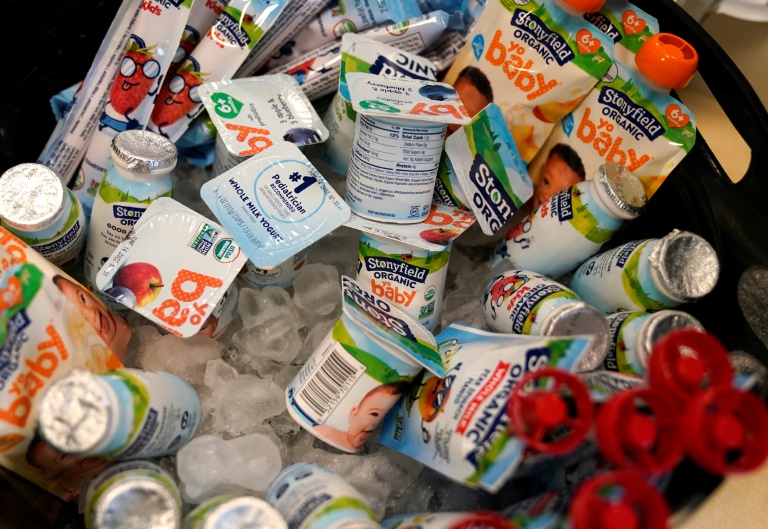
On the new production line at Stonyfield Farm in Londonderry, New Hampshire, a Lactalis subsidiary since 2017, 800,000 yogurts are pumped out every week.

The organic brand is seeing strong demand for its products aimed at babies and children, so Stonyfield plans to build a second production line for them this year.

To nibble at US market share in the yogurt sector, where Lactalis is behind Danone, Chobani and Yoplait, the company has also adopted targeted strategies.

Unlike Europeans, who often eat yogurt at the end of a meal, Americans “have yogurt for breakfast or as a snack,” said Esteve Torrens, Stonyfield’s CEO.

“So the yogurts must be more nutritious, and in larger portions,” he adds, noting that individual cups in the US market generally weigh 170 grams, compared to just 125 grams in France.

The company also is monitoring changes in taste, like the thick, high-protein and low-sugar Icelandic yogurts from the Siggi’s brand, acquired by Lactalis in 2018.

“When I came to the United States as a student, a lot of foods were full of sugar,” founder Siggi Hilmarsson recalls, noting that the best-selling yogurt at the time contained proportionally more sugar than a soda.

He introduced Icelandic skyr to the American market in 2006, but sales really took off in 2012 and 2013 when “sugar replaced fat as public enemy number one in healthy eating,” he said.

– Driver shortage –

He decided to sell his business four years ago to Lactalis in order to promote his yogurt in other countries. The brand is now available in France, Australia, Canada and South Korea.

With Siggi’s and Stonyfield, as well the natural, specialty and organic cheeses acquired from Kraft in 2021, and the labne and other dairy products from Karoun integrated into its portfolio in 2017, the United States will become Lactalis’ largest market this year after France. 

It is just ahead of Canada where the group, with an annual turnover of 22 billion euros, has grown in recent years, especially after buying Ultima Foods.

The firm relies on its experience in the sector and its global reach to relaunch products whose financial performance no longer satisfied their former owners, and to expand some promising brands.

Most of the new machines installed at the Stonyfield production site come from Europe “because we have historical relations with our suppliers and they know what we need,” production manager Mathieu Le Duey told reporters during a tour of the plant.

A private company founded in Laval, France in 1933 and still controlled by the Besnier family, Lactalis first entered the North American market when it opened an import-export office in the early 1980s to introduce French products.

The group has expanded through various acquisitions and now has 30 sites and 7,400 employees in Canada and the United States.

More recently it has had to grapple with issues particular to the American market, including labor shortages and volatile dairy prices, which are based on trading on the Chicago exchange.

“For two years, it’s been hellish. We can’t find carriers because they have trouble finding drivers,” said Gilles Meziere, the group’s North America chief executive.

“We have very high turnover rates in our factories,” sometimes forcing the temporary suspension of production lines, he adds. 

At the Stonyfield factory, the group “had to bring in executives for a day because we couldn’t put the products in the boxes.”

Dozens of civilians evacuated from besieged Ukraine plant

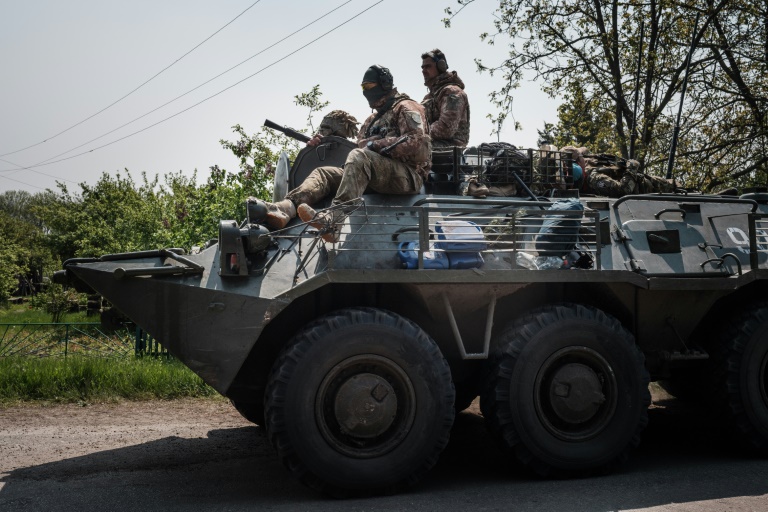
Fifty civilians were evacuated Friday from Mariupol’s besieged steelworks, the last pocket of Ukrainian resistance against Russian forces in the city, Kyiv said, but reports of renewed firing cast doubt on a promised truce.

About 200 civilians, including children, had been estimated to still be trapped in the Soviet-era tunnels and bunkers beneath the sprawling Azovstal factory, along with a group of Ukrainian soldiers making their last stand.

Ukrainian Deputy Prime Minister Iryna Vereshchuk, who announced Friday’s evacuation of the 50, said the operation would continue Saturday morning.

Russia had earlier announced a daytime ceasefire at the plant for three days, starting Thursday.

But the Ukrainian army says Russian “assault operations” have continued by ground and by air.

Ukraine’s Azov battalion, leading the defence at Azovstal, accused Russian forces of firing during an attempt to evacuate people by car.

The strike killed one Ukrainian fighter and wounded six others, it said.

Ten weeks into a war that has killed thousands, destroyed cities and uprooted more than 13 million people, defeating the resistance at Azovstal and taking full control of strategically located Mariupol would be a major win for Moscow.

– May 9 fears –

It would also be a symbolic success as May 9 approaches, the day Russia celebrates the Soviet victory over the Nazis in World War II.

Ukrainian officials believe Moscow is planning a May 9 military parade in Mariupol, possibly with Ukrainian prisoners on display. 

The Kremlin Friday however denied plans for Victory Day celebrations in Mariupol, flattened by relentless Russian bombardment.

Ukrainian President Volodymyr told a London think tank on a video call that Mariupol “will never fall” to the Russians because there is “nothing there to fall apart,” adding there is no structure left.

Olga Babich recounted to AFP daily bombardments after she evacuated from her village in southeastern Ukraine and reached the safety of government-held Zaporizhzhia, where Mariupol residents have also been taken.

A tearful Babich reached into her battered car’s backseat to retrieve kittens from a basket covered with a tea towel.

“I couldn’t leave them. They are so small and they are living beings, they want to live and they are so tiny,” she added.

Moscow-backed separatists in southeastern Ukraine meanwhile said they had removed Ukrainian and English language traffic signs for Mariupol, replacing them with Russian ones.

Locals want to see proof that “Russia has come back here forever,” said Denis Pushilin, head of Ukraine’s breakaway region of Donetsk.

– ‘Hell’ –

The United Nations had said Thursday a convoy was en route to help civilians escape the “bleak hell” of Azovstal, where food and water are running out and medical care is minimal.

The convoy was expected to arrive sometime Friday, in the third joint evacuation operation with the Red Cross in Mariupol.

Almost 500 civilians were already evacuated from Mariupol and Azovstal in the previous UN-organised rescue missions in recent days, said the head of Ukraine’s presidential office, Andriy Yermak.

He said renewed rescue efforts continued and that he would “give the results of this later”.

During last weekend’s rescues from Mariupol, civilians left in white buses, some taking three days to complete a 230-kilometre (140-mile) journey to Ukraine-controlled Zaporizhzhia, passing through multiple Russian checkpoints.

Azov battalion leader Andriy Biletsky wrote on Telegram Friday that the situation at the plant was critical.

“The shelling does not stop. Every minute of waiting is costing the lives of civilians, soldiers, and the wounded.”

Speaking to the Israeli prime minister Thursday, Russian President Vladimir Putin said his army was “ready” to provide safe passage to civilians at Azovstal. But he said the last Ukrainian defenders had to surrender.

– Staying ‘forever’ –

Since failing to take Kyiv early on in the war, which began with Moscow’s invasion on February 24, Russia has refocused its offensive on the south and east of Ukraine.

Taking full control of Mariupol would allow Moscow to create a land bridge between separatist, pro-Russian regions in the east and the Crimean peninsula, which it annexed in 2014.

Elsewhere, a Ukrainian official said Russian forces had almost encircled Severodonetsk, the easternmost city still held by Kyiv, and are trying to storm it.

Kherson in the south remains the only significant city Russia has managed to capture since the war began. 

A senior official from the Russian parliament visiting Kherson Friday said Russia would remain in southern Ukraine “forever”.

“There should be no doubt about this. There will be no return to the past,” Andrey Turchak said.

– Pentagon denial –

The United States is among Ukraine’s biggest backers, supplying military equipment and munitions worth billions of dollars as well as intelligence and training.

But the White House has sought to limit knowledge of the full extent of its assistance to avoid provoking Russia into a broader conflict beyond Ukraine.

The Pentagon on Friday denied reports that it helped Ukrainian forces sink the Russian warship Moskva in the Black Sea last month in a stunning setback for Moscow’s invasion.

Pentagon spokesman John Kirby said the US had “no prior knowledge” of the plan to strike the ship, which sank April 13, leaving a still-unclear number of Russian sailors dead or missing.

– Oil embargo row –

Ukraine’s government has estimated at least $600 billion will be needed to rebuild the country after the war.

Ukraine’s Western allies have supported Kyiv with financial and military assistance, and have slapped unprecedented sanctions on Russia.

In what would its toughest move yet, the European Commission has proposed that all 27 EU members gradually ban Russian oil imports but Hungary rejects the ban.

On the diplomatic front, Berlin announced that leaders of the G7 group of industrialised nations would hold video talks with Ukraine’s Zelensky on Sunday.

– Farmers on front line –

Known as Europe’s breadbasket, Ukraine’s wheat production is likely to be down by at least a third from last year due to Russia’s invasion, according to data analysis firm Kayrros, using satellite imagery.

Some farmers are risking their lives to keep up with the spring planting season, finding themselves ploughing around unexploded ordnance.

The UN Security Council on Friday unanimously adopted its first declaration on Ukraine since Russia invaded on February 24, though it remained on the sidelines.

It backed Secretary General Antonio Guterres’s efforts to find a “peaceful solution” to the war but stopped short of supporting a mediation effort led by him.

Russia then vetoed a resolution condemning the invasion and asking Moscow to move its army back to Russian soil.

burs-lc/GW

Close Bitnami banner
Bitnami