World

Giant New Mexico fire rages as drought-hit US West braces for summer

Firefighters struggled Friday to contain a giant blaze that has been burning for more than a month in New Mexico, raising fears for the summer ahead in the drought-hit western United States.

The so-called “Hermits Peak Fire” has torn through 168,000 acres at the southern end of the Rocky Mountains, destroying around 170 properties and forcing the evacuation of nearly 16,000 homes.

But the blaze remains just 20 percent contained.

“This is a historic fire weather event… this is a critical stage of the fire,” New Mexico governor Michelle Lujan Grisham said in a briefing Friday.

“We have high temperatures and extreme wind. This is the worst possible set of conditions for any fire,” she warned. 

The fire began on April 6 when a “prescribed” burn, intended to remove excess vegetation in a controlled area, escaped control due to strong winds and dry conditions.

The blaze comes at the start of the American West’s long fire season but is already the second-largest in New Mexico’s history, having burned an area more than the state’s average for an entire year.

The National Weather Service in Albuquerque warned that windy and dry conditions are expected through the weekend and “will make our bad situation worse.”

US President Joe Biden this week declared a major disaster in New Mexico, unlocking federal resources including financial aid for affected individuals.

Like much of the American West, New Mexico is in the grip of a years-long drought that has left the area parched and vulnerable to wildfire.

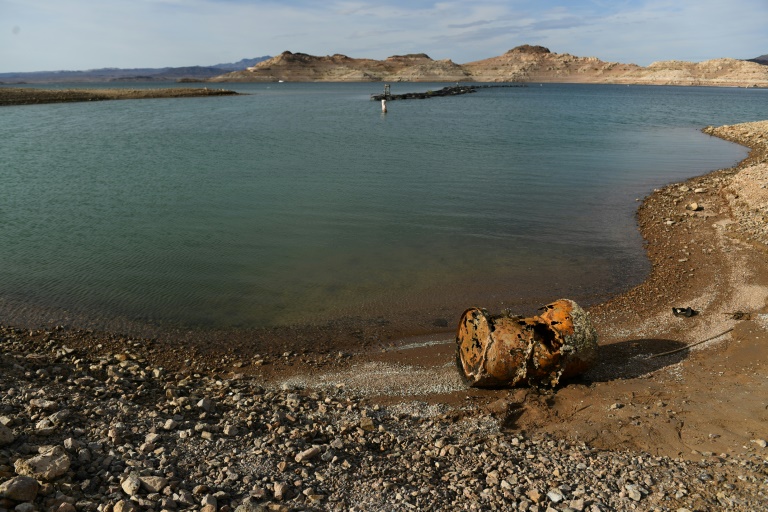
Reservoirs have plummeted to dangerously low levels, with Lake Mead — the country’s largest reservoir, close to Las Vegas — at 31 percent.

The water has dropped to such a historic extent that a corroded barrel containing a four-decade-old body was found in the lake earlier this week.

Lake Mead is fed by the Colorado River, which has seen its flow drop by 20 percent over the past century, driven by atmospheric warming, according to a US Geological Survey report in 2020.

Although fires are a natural part of the climate cycle and help to clear dead brush, their scale and intensity are increasing.

Scientists say a warming climate, chiefly caused by human activities such as the unchecked burning of fossil fuels, is altering weather patterns.

This prolongs droughts in some areas and provokes unseasonably large storms in other places.

Facebook accused of blocking Australian health sites

A whistleblower group is accusing Facebook of deliberately blocking websites for Australian hospitals and emergency services as part of a negotiating tactic last year.

The social network owned by Silicon Valley tech giant Meta was lobbying to weaken a proposed law requiring it to pay news providers in Australia when it blocked all such content from its platform in February 2021.

But the algorithm also blocked other websites in what the company maintained was an accident, telling AFP on Friday that “any suggestion to the contrary is categorically and obviously false.”

“We intended to exempt Australian government pages from restrictions in an effort to minimize the impact of this misguided and harmful legislation,” a Meta spokesperson said.

“When we were unable to do so as intended due to a technical error, we apologized and worked to correct it.”

However, US-based organization Whistleblower Aid alleged it was actually a Meta ploy in filings with the US Department of Justice and the Australian Competition and Consumer Commission, first reported in the Wall Street Journal on Thursday.

The organization said in a statement that Facebook’s five-day blackout of news content providers had deliberately “overblocked” local governments, health services and other sites that were providing support for vulnerable people.

The intention was to force the government to weaken the proposed law, the group said.

“This wasn’t just an example of a corporate actor behaving recklessly,” said Whistleblower Aid chief Libby Liu. 

“Facebook intentionally put lives at risk to protect its bottom line.”

Shortly after the blackout, Australia passed a law forcing Facebook to negotiate with news content providers, but politicians watered down some of the most onerous proposals.

Crisis-hit Sri Lanka declares emergency after crippling strike

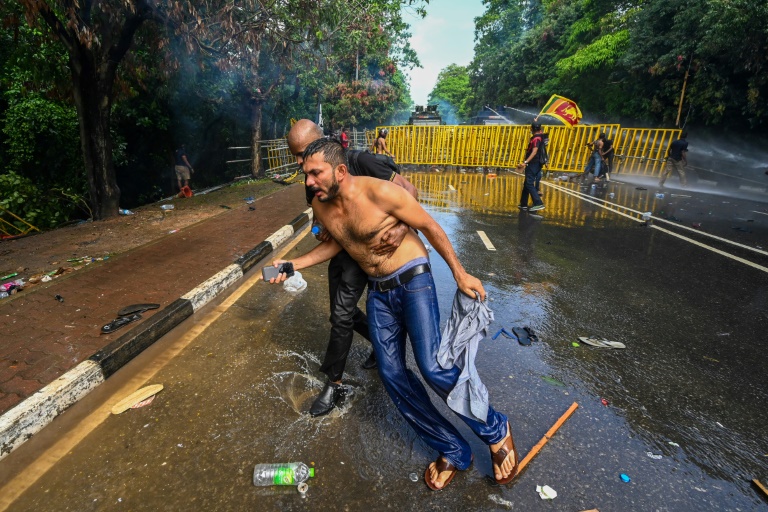
Sri Lanka’s president  Friday declared a state of emergency for the second time in five weeks, giving security forces sweeping powers amid a nationwide strike by angry demonstrators who blame him for an unprecedented economic crisis.

A spokesman for President Gotabaya Rajapaksa said he invoked the tough laws to “ensure public order” after shops closed and public transport was halted Friday, bringing the South Asian island nation of 22 million people to a standstill after weeks of unrest. 

Earlier Friday, police used tear gas and water cannon to disperse students attempting to storm the national parliament demanding Rajapaksa resign.

The emergency gives sweeping powers to security forces to arrest and detain suspects for long periods without judicial supervision.

It also allows the deployment of troops to maintain law and order in addition to police.

The spokesman said the laws will go into effect from midnight Friday.

Beleaguered Rajapaksa had declared an earlier state of emergency on April 1, a day after thousands of protesters attempted to storm his private home in the capital. That emergency was allowed to lapse on April 14.

But protests have escalated since then, fuelling Sri Lanka’s worst crisis since independence in 1948. 

The new emergency declaration came as thousands of demonstrators remained outside Rajapaksa’s sea-front office, where they have been protesting since April 9, and smaller groups also tried to storm homes of other key government politicians.

– Storming parliament –

The students’ attempt to storm the tightly-guarded legislature on Friday was their second in as many days.

They and other demonstrators blame Rajapaksa and his ruling family for mismanaging the economy. Months of blackouts and acute shortages of food, fuel and pharmaceuticals have caused widespread suffering across the island.

Millions of workers stayed off work on Friday in the strike, organised by the country’s trade union movement. Train and state-owned bus services were disrupted.

Industrial workers demonstrated outside their factories and black flags were hung across the country in an expression of anger against the government.

“We can pinpoint the policy blunders of the president that led to this very sorry state of our economy,” said trade union leader Ravi Kumudesh. “He must go.”

Private buses, which account for two-thirds of the country’s fleet, were also off the road, Private Bus Operators Association chairman Gemunu Wijeratne said.

“We are not providing services today, but if groups of people want to join the anti-government protests within a radius of 20 kilometres, we will give our buses free of charge,” Wijeratne told reporters in Colombo.

Rajapaksa has insisted he will not step down despite the escalating demonstrations, including the protest outside his office which has forced him to work from home.

Official sources said the president could pressure his elder brother, Prime Minister Mahinda Rajapaksa, to step down and allow the formation of a unity government to guide the country out of the economic crisis.

The main opposition SJB party has insisted that it will not take up any role in a national administration unless the president also steps down accepting responsibility for mismanagement and corruption.

Sri Lanka’s economic crisis took hold after the coronavirus pandemic hammered income from tourism and remittances.

Unable to pay for fuel imports, utilities have imposed daily blackouts to ration electricity, while long lines of people snake around service stations for petrol and kerosene.

Hospitals are short of vital medicines and the government has appealed to citizens abroad for donations.

Last month Sri Lanka announced it was defaulting on its $51 billion foreign debt, and finance minister Ali Sabry warned this week that the country will have to endure its unprecedented economic hardships for at least two more years.

Brazil deforestation shatters April record

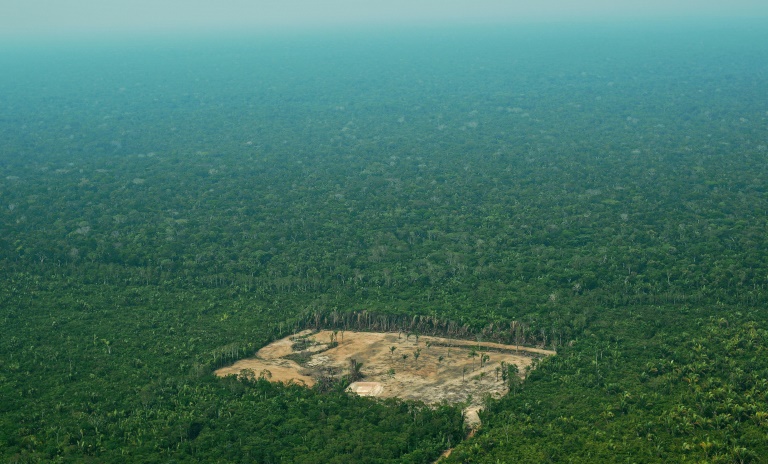
Deforestation in the Brazilian Amazon last month shattered the record for April, destroying more than 1,000 square kilometers of the world’s biggest rainforest, nearly double the previous high, according to official figures published Friday.

The record — the third in four months — is the latest damning statistic on the accelerating loss of the Amazon under President Jair Bolsonaro.

Satellite images show a total area of destroyed forest cover of 1,012.5 square kilometers (391 square miles) from April 1 to 29, with the last day of the month yet to be analyzed, according to the Deter monitoring system run by the national space agency, INPE.

The area, equivalent to some 140,000 football fields, is by far the biggest for April since record-keeping began in 2015.

Deforestation is usually slower in April, the rainy season in the Amazon. The previous record for the month was 580 square kilometers, set last year — also under Bolsonaro.

“This figure is extremely high for this period of the year,” Mariana Napolitano, science director at the World Wildlife Fund’s Brazil office, said in a statement.

“It’s an alert of the immense pressure the forest is under.”

Experts warn Brazil may have its fourth straight year of decade-high deforestation this year, after also setting monthly records in January and February.

Since Bolsonaro took office in 2019, average annual deforestation in the Brazilian Amazon has risen more than 75 percent from the previous decade, to an area roughly the size of Qatar.

“The Bolsonaro administration is abetting deforestation and environmental crime, and what we harvest are these terrible, scary, revolting numbers,” Marcio Astrini, head of the Climate Observatory, a coalition of environmental groups, told AFP.

The far-right president, an ally of the powerful agribusiness industry blamed for driving the destruction, has faced international condemnation over the damage to the Amazon.

Last week, actor and environmentalist Leonardo DiCaprio urged young Brazilians to vote in  October elections in which Bolsonaro is up for re-election.

“Brazil is home to the Amazon and other ecosystems critical to climate change,” he tweeted.

“What happens there matters to us all and youth voting is key in driving change.”

“Thanks for your support, Leo!” Bolsonaro tweeted back sarcastically.

Massive blast rips through Havana hotel

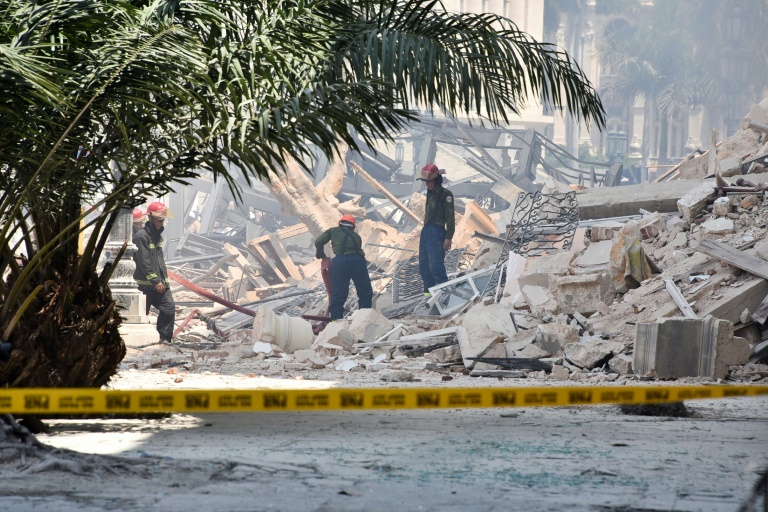
Rescuers searched for victims Friday after a powerful explosion ripped through a hotel under refurbishment in central Havana, with no casualties immediately reported.

Shortly after 11:00 am, a cloud of dust and smoke billowed from the Saratoga Hotel after the blast that ripped off parts of the facade. The cause of the blast was not known.

AFP reporters witnessed rescuers at the scene going through the debris.

At least two ambulances and five fire trucks rushed to the hotel, and police cordoned off the area, dispersing people who swarmed to the site after hearing the blast.

According to the website of the Saratoga Hotel, it is a five star establishment with 96 rooms, two bars, two restaurants, a spa and gym.

Solid job growth continues in recovering US economy

From bars to factories to warehouses, American businesses hired staff with vigor in April as the US economy recovers from the damage done by Covid-19 while grappling with inflation that has hit the highest rate in decades.

Employers in the world’s largest economy added 428,000 jobs last month, the Labor Department said Friday, keeping the unemployment rate at 3.6 percent, just above where it was before the spread of Covid-19 caused mass layoffs two years ago.

The data pointed to continued strong job growth and contained hints that some inflationary pressures may be easing — welcome news for an economy where consumer prices have climbed at a rate not seen since the 1980s.

President Joe Biden described the data as a sign that his policies had revived the economy from the grievous damage wrought by the pandemic.

“Our plans and policies have produced the strongest job creation economy in modern times,” Biden said in a statement.

The report was released two days after the Federal Reserve hiked its key lending rate by a half-percentage point to crush the wave of price increases, and signaled it plans further hikes in the months to come.

Workers’ wages are a component of accelerating inflation, and the jobs report showed average hourly earnings rising only 0.3 percent compared to March, a slower pace that in recent months and potential signal the price pressures are abating.

However, economist Joe Naroff warned wages were still trending upwards and the generally rosy picture of the labor market the data painted may convince the Fed aggressive rate hikes are needed to lower inflation.

“Sometimes good news is not necessarily good news and this report, thought it shows that economy is still moving forward solidly, may be a problem for investors,” he said.

– Hiring across industries –

After spiking to 14.7 percent in April 2020 following business closures across the country as the pandemic began, unemployment has declined steadily and is now just a hair above its 3.5 percent rate before Covid-19 arrived.

The number of unemployed people was at 5.9 million last month, the Labor Department said, also not far from where it was in February 2020, while a range of businesses took on new hires.

These included the leisure and hospitality sector, which encompasses the bars and restaurants that bore the brunt of the pandemic restrictions.

The sector added 78,000 jobs last month, while manufacturers hired 55,000, transportation and warehousing took on 52,000, and employment at professional and business services firms rose 41,000.

But the labor force participation rate indicating the share of the population employed or searching for work declined slightly from March to 62.2 percent, bringing it back to its level at the start of the year.

Supply of workers has been an ongoing problem for employers: Other data released recently shows there are nearly two job openings for every unemployed person in the labor force.

“Looking ahead, we expect more workers to come off the sidelines in search of work and labor demand to cool as businesses feel the pinch from high inflation and tighter financial conditions,” Kathy Bostjancic of Oxford Economics said.

– Potent inflation –

The data indicated some improvement in racial disparities in the labor market, with the Hispanic unemployment rate falling slightly to 4.1 percent. 

Joblessness among African-American workers declined to 5.9 percent as more women were hired, though unemployment rose for Black men.

Asian unemployment ticked up to 3.1 percent, while it was flat for white workers at 3.2 percent.

Despite the slowing in monthly wage growth, Sophia Koropeckyj of Moody’s Analytics noted the 5.5 percent annual salary increase in April was not keeping pace with inflation, which has seen consumer prices climb at an 8.5 percent annual rate.

“The one month of softer wage growth is really not sufficient to allay concern about wage pressures. Hence, the Fed’s success in slowing the economy and tempering wage and price pressures is of paramount importance,” she wrote in an analysis.

'The Rock' diamond dazzles in Geneva

The biggest white diamond ever to be sold at auction, dubbed “The Rock”, will go under the hammer in Geneva on Wednesday and could fetch up to $30 million — or more.

The 228.31-carat stone is up for grabs alongside a historic intense yellow diamond associated for more than a century with the Red Cross, which will receive some of the profits from its sale.

The Rock is “a truly exceptional pear-shaped diamond”, said Max Fawcett, head of the jewels department at Christie’s auction house in Geneva.

It is “the largest white diamond ever to be offered at auction”, he told AFP at a preview on Friday.

The Rock is currently in the hands of an unnamed owner from North America.

It could even break records when it goes under the hammer.

“It’s perfectly symmetrical and is estimated at $20 to $30 million — and I expect there be fireworks on Wednesday,” Fawcett said.

The equivalent in euros is 19 to 28 million. 

The expert said that there were only a handful of diamonds of similar size and quality to The Rock. The Christie’s record for a similar white diamond is $33.7 million, fetched in Geneva in 2017 for a 163.41-carat gem.

Larger than a golf ball, The Rock was extracted from a mine in South Africa in the early 2000s. It has been shown in Dubai, Taipei and New York ahead of the sale in Geneva.

– Red Cross gem –

Bidders will also be vying for The Red Cross Diamond, a cushion-shaped, 205.07-carat canary yellow jewel, which has a price estimate of seven to 10 million Swiss francs ($7.09 to $10.13 million).

“I expect that it will achieve much more on the day of sale,” said Fawcett.

A large chunk of the proceeds will be donated to the International Committee of the Red Cross, which is headquartered in Geneva.

The original rough stone was found in 1901 in a De Beers company mine in South Africa and is said to have weighed around 375 carats.

As well as ranking among the largest diamonds in the world, a striking feature is its pavilion, which naturally bears the shape of a Maltese cross.

The stone was first put up for sale on April 10, 1918 at Christie’s in London. It was offered by the Diamond Syndicate in aid of the British Red Cross Society and the Order of St John.

The Red Cross Diamond fetched £10,000 — approximately £600,000 ($740,000) in today’s money. It was bought by the London jewellers S.J. Phillips.

It was sold again by Christie’s in Geneva in 1973, fetching 1.8 million Swiss francs, and is now being offered by the auction house for a third time.

“For nearly half a century, our family has had the privilege of safeguarding The Red Cross Diamond,” the gem’s anonymous private owner said in a statement.

– Russia restrictions –

Several other diamonds will be auctioned on Wednesday, plus a tiara that belonged to princess Irma of Furstenberg (1867-1948), a member of one of the most pre-eminent aristocratic families in the Habsburg Empire.

It is estimated to go for 400,000 to 600,000 Swiss francs.

“The diamond market at the moment is very, very strong,” said Fawcett.

He said rising demand, supply constraints due to “geopolitical issues” and inflationary pressure on commodities, including precious stones, was pushing the market to highs not seen since its 2013-2014 peak.

The Russian invasion in Ukraine has had a major impact.

More than 40 percent of the world’s diamonds are mined in Russia, including the famous Alrosa mine, but international markets no longer have access to Russian gems, said Fawcett.

The supply constraint has created major price hikes and with the sanctions imposed on Moscow following the February 24 invasion, “prices will only continue to increase”, he said.

New batch of Swiss Guards take up their halberds

Halberds in hand, their armour polished and multicoloured pantaloons perfectly pressed, 36 new recruits to the Swiss Guards were sworn in on Friday with a vow to protect the pope.

Pope Francis had earlier received the latest members of the world’s smallest army — they total 135 — before the guards pledged their “respect, loyalty and obedience” to the pontiff in a ceremony in the Paul VI hall at the Vatican.

The pope, 85, said they were consecrating several years “to a task that is both fascinating and full of responsibility in the heart of the universal church”.

He noted those who had “shed their own blood” in the task of protecting the pontiff, on a day marking the death of 147 Swiss Guards while defending pope Clement VII during the “Sack of Rome” in 1527.

When they sign up, the guards must be practising Roman Catholics, Swiss citizens, aged between 19 and 30, measure at least 1.47 metres tall and be single — although they can marry later. 

They commit to safeguarding the pope for at least 26 months.

They and their families live in the Vatican in barracks designated a UNESCO world heritage site.

Plans are afoot to renovate the barracks, for which funds are being raised by a patronage committee in Switzerland, although work is not expected to begin until at least 2025.

When they leave service, the guards must return their distinctive red, yellow and blue striped outfits unless they have served for more than five years.

“After death, the uniforms must be returned, or be placed with the deceased in his coffin,” Swiss Guards tailor Ety Cicioni told AFP.

India, Pakistan must brace for even worse heatwaves

The devastating heatwave that gripped India and Pakistan over the last two months is unprecedented, but worse — perhaps far worse — is on the horizon as climate change continues apace, top climate scientists told AFP. 

Even without additional global warming South Asia is, statistically speaking, ripe for a “big one” in the same way that California is said to be overdue for a major earthquake, according to research published this week. 

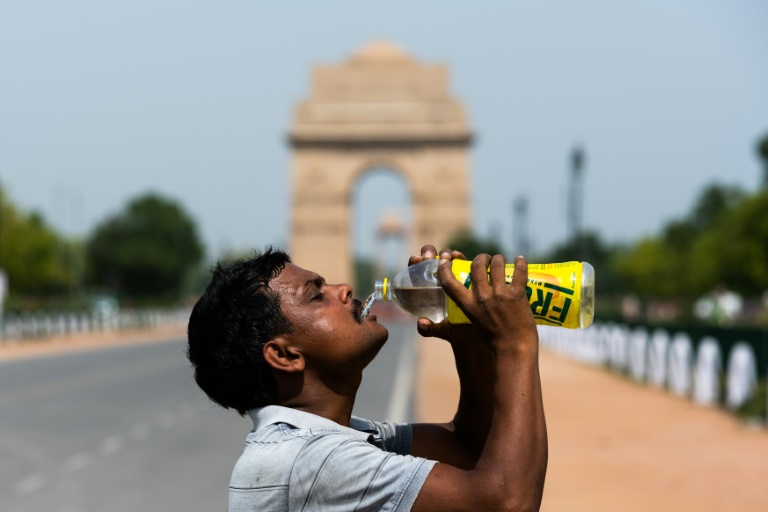
Extreme heat across much of India and neighbouring Pakistan in March and April exposed more than a billion people to scorching temperatures well above 40 Celsius (104 Fahrenheit). The hottest part of the year is yet to come.

“This heatwave is likely to kill thousands,” tweeted Robert Rohde, lead scientist at Berkeley Earth, a climate science research non-profit.

The number of excess deaths, especially among the elderly poor, will only become apparent in hindsight.

Heatwave mortality in India has increased by more than 60 percent since 1980, according to the country’s Ministry of Earth Sciences. 

But “cascading impacts” on agricultural output, water, energy supplies and other sectors are already apparent, World Meteorological Organization chief Petteri Taalas said this week.  

Air quality has deteriorated, and large swathes of land are at risk of extreme fire danger.

Power blackouts last week as electricity demand hit record levels served as a warning of what might happen if temperatures were to climb even higher.  

For climate scientists, none of this came as a surprise.

“What I find unexpected is most people being shocked, given how long we have been warned about such disasters coming,” Camilo Mora, a professor at the University of Hawaii, told AFP.

“This region of the world, and most other tropical areas, are among the most vulnerable to heatwaves.”

– The new normal –

In a benchmark 2017 study, Mora calculated that nearly half the global population will be exposed to “deadly heat” 20 days or more each year by 2100, even if global warming is capped under two degrees Celsius, the cornerstone target of the Paris Agreement.

To what extent is climate change to blame for the scorched Earth temperatures just now easing up in India and Pakistan?

Scientists at Imperial College London’s Grantham Institute led by Friederike Otto, a pioneer in the field of attribution science, are crunching the numbers.

“How much more likely and intense this particular heatwave has become is something we’re still working on,” she told AFP. 

“But there is no doubt that climate change is a huge game changer when it comes to extreme heat,” she added. “What we see right now will be normal, if not cool, in a 2C to 3C world.”

Earth’s surface, on average, is 1.1C above preindustrial levels. National carbon cutting pledges under the Paris Agreement, if fulfilled, would still see the world warm 2.8 degrees. 

In India and Pakistan, “more intense heat waves of longer durations and occurring at a higher frequency are projected,” the Intergovernmental Panel on Climate Change (IPCC) said in a recent landmark report.

“Before human activities increased global temperatures, we would have seen the heat that hit India around once in 50 years,” said Marian Zachariah, a researcher at Imperial College London.

“But now we can expect such high temperatures about once ever four years.”

Continued global warming, in other words, guarantees greater heat extremes in the coming decades.

– Wet-bulb temperature –

But things may get worse even sooner, according to a new study in Science Advances.

A team led by Vikki Thompson of Bristol University ranked the world’s most severe heatwaves since 1960. Their benchmark, however, was not maximum temperatures, but how hot it got compared to what would be expected for the region.

Surprisingly, South Asia was nowhere near the top of the list.

“When defined in terms of deviation from the local norm, heatwaves in India and Pakistan to date have not been all that extreme,” Thompson explained in a commentary.

By that measure, the worst scorcher on record over the last six decades was in Southeast Asia in 1998.

“An equivalent outlier heatwave in India today would mean temperatures over 50C across large swathes of the country,” Thompson said.

“Statistically, a record-breaking heatwave is likely to occur in India at some point.”        

What makes extreme heat deadly is high temperatures combined with humidity, a steam-bath mix with its own yardstick: wet-bulb temperature (WB). 

When the body overheats, the heart ups the tempo and sends blood to the skin where sweating cools it down. But above a threshold of heat-plus-humidity this natural cooling system shuts down. 

“Think of it as a sunburn but inside your body,” said Mora.

A wet-bulb temperature of 35C WB will kill a healthy young adult within six hours. Last week, the central Indian city of Nagpur briefly registered 32.2 WB.

“The rise in heatwaves, floods, cyclones and droughts that we have seen in this region so far are in response to just one degree Celsius,” Roxy Mathew Koll, a climate scientist at Indian Institute of Tropical Meteorology, told AFP.

“It is difficult for me to even imagine the impacts when the increase in global temperatures are doubled.”

European stocks fall, pound takes fresh tumble

European and Asian stocks slumped Friday over fears about the impact of interest rate hikes that seek to tackle sky-high inflation.

Wall Street stabilised following sharp losses the previous day, however.

Meanwhile, the pound hit a two-year low at $1.2276, one day after the Bank of England (BoE) warned that UK inflation would top 10 percent and the economy contract later this year.

The euro jumped to 85.92 pence, which was last seen late in 2021. 

Oil prices rebounded after key producers led by Saudi Arabia and Russia refused to lift output more than their planned marginal increase as they weighed tight supply concerns caused by Moscow’s invasion of Ukraine.

– ‘Sinking feeling’ –

“A sinking feeling has taken over financial markets at the end of a volatile week,” said Hargreaves Lansdown analyst Susannah Streeter.

“Investors are digesting the unpalatable implications of inflation and fretting that there will be a need for a bigger dose of the bitter medicine being administered to try and bring it under control.”

Asian equities tumbled after steep Wall Street losses Thursday, as traders contemplated a period of fierce monetary tightening by the US Federal Reserve. 

The Fed on Wednesday lifted borrowing costs 50 basis points — the most since 2000 — and signalled more increases as inflation sits at the highest levels in decades.

Rate tightening increases borrowing costs for consumers and businesses, harming economic recovery from the pandemic.

On Thursday, US stocks plunged. The Nasdaq shares index — which is dominated by tech firms particularly sensitive to higher interest rates —  tumbled five percent, while the broader Dow and S&P 500 each slumped by more than three percent.

– ‘Porcelain doll’ –

That selloff filtered through to Asia, where Hong Kong tanked 3.8 percent Friday as tech firms took a hit.

“Concern about inflation is the culprit and the wild swings we’ve seen this week are a reminder that sentiment is about as fragile as a porcelain doll,” noted AJ Bell investment director Russ Mould.

“The other fear is that the cure for inflation, higher rates, could be as bad as the disease if they choke off growth and even lead to recession.”

European indices also slumped, with London losing 1.5 percent, Frankfurt 1.6 percent and Paris 1.7 percent.

After starting trade lower, Wall Street’s main stock indices were treading water in late morning trading.

A strong US jobs report showed the world’s top economy remains resilient, and wage growth — a key inflation worry for the Fed, was moderate.

However, the report also indicated people left the labour force last month, which will make it more difficult for the Fed to ease the tight jobs market.

“Given the record number of job openings, that is a signpost that will continue to leave the market concerned about persistent wage-based inflation pressures as employers offer wage-based incentives to attract workers,” said market analyst Patrick J. O’Hare at Briefing.com.

“The overall picture continues to support the Fed’s plan for further tightening of policy,” said Chris Beauchamp, chief market analyst at online trading platform IG.

– Key figures at around 1530 GMT –

New York – Dow: DOWN less than 0.1 percent at 32,967.66 points

EURO STOXX 50: DOWN 1.8 percent at 3,629.17

London – FTSE 100: DOWN 1.5 percent at 7,387.94 (close) 

Frankfurt – DAX: DOWN 1.6 percent at 13,674.29 (close)

Paris – CAC 40: DOWN 1.7 percent at 6,258.36 (close)

Hong Kong – Hang Seng Index: DOWN 3.8 percent at 20,001.96 (close)

Shanghai – Composite: DOWN 2.2 percent at 3,001.56 (close)

Tokyo – Nikkei 225: UP 0.7 percent at 27,003.56 (close)

Brent North Sea crude: UP 2.2 percent at $113.38 per barrel

West Texas Intermediate: UP 2.4 percent at $110.88 per barrel

Euro/dollar: UP at $1.0590 from $1.0542 on Thursday

Pound/dollar: UP at $1.2366 from $1.2362

Euro/pound: UP at 85.64 pence from 85.28 pence

Dollar/yen: UP at 130.25 yen from 130.20 yen

burs-rl/lc

Close Bitnami banner
Bitnami