World

Johnson loses 'crown jewels' in UK vote overshadowed by scandal

Prime Minister Boris Johnson’s Conservative party lost control of key councils in London, according to partial results from local and regional UK elections on Friday, with a potentially historic change looming in Northern Ireland.

The main UK opposition Labour party of Keir Starmer won in Tory “crown jewels” in the capital, including Margaret Thatcher’s “favourite” council Wandsworth, and Westminster for the first time since it was created in 1964.

Around two-thirds of votes for councils in England have been counted. Full results for Scotland, Wales and Northern Ireland are due on Friday evening and over the weekend.

The contest for the devolved assembly in Belfast could see a pro-Irish nationalist party win for the first time, with huge constitutional implications for the four-nation UK.

Predicted victors Sinn Fein — the former political wing of paramilitary group the IRA — are committed to a vote on reunification with the Irish republic to the south, a century after the island was partitioned.

The English results so far are not a landslide for Labour, which is seeking to capitalise on a cost-of-living crisis and Johnson’s own performance, including his unprecedented police fine for attending a lockdown-breaking party at Downing Street.

Johnson called the results “mixed” and said he took responsibility.

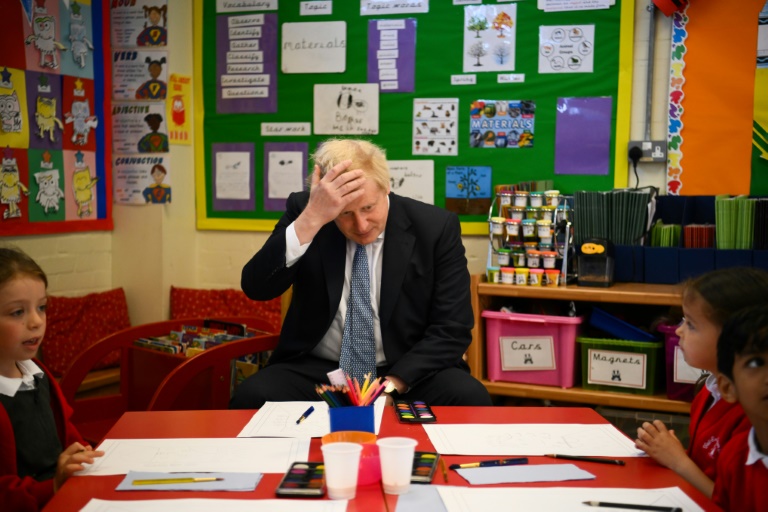
“We had a tough night in some parts of the country but on the other hand in other parts of the country you are still seeing Conservatives going forward,” Johnson told reporters in his constituency on the outskirts of London. 

But Starmer, visiting Barnet in northwest London, where Labour seized control of the council from the Tories, hailed what he called “a big turning point”.

“When it comes to London, you can hardly believe those names come off our lips. Wandsworth! They’ve been saying for years ‘You’ll never take Wandsworth from us.’ We’ve just done it! Westminster! It’s an astonishing result,” he told supporters.

– ‘Catastrophic’ –

The Conservatives are hoping to extend their 12 years in power for another term at the next general election, which is due by 2024.

Johnson, 57, won the last general election in 2019 by a landslide on a promise to take the UK out of the European Union, and reverse rampant regional inequality.

Despite making good on his Brexit pledge, the coronavirus pandemic largely stalled his domestic plans. 

But his position has been put in jeopardy because of anger at lockdown-breaking parties at his Downing Street office and the steeply rising cost of living.

Poor results could reignite questions about his leadership, putting his position in jeopardy.

Police on Friday said they were launching a formal probe into claims that Starmer had also breached Covid rules with a campaign gathering in 2021, slightly taking the heat off the Conservatives.

Labour is bidding to leapfrog the Conservatives into second place in Scotland, behind the pro-independence Scottish National Party (SNP), and remain the largest party in Wales, where 16- and 17-year-olds are eligible to vote for the first time. 

– Sinn Fein rise –

Numerous polls have predicted that Sinn Fein will be the biggest party in the contest for the 90 seats at the Northern Ireland Assembly, ahead of the pro-UK Democratic Unionists (DUP) and cross-community Alliance.

Sinn Fein leader Michelle O’Neill and her DUP and Alliance counterparts Jeffrey Donaldson and Naomi Long were all returned to their seats, with counting expected to stretch into late Friday or even resume on Saturday.

Early indications were that turnout was about 54 percent — down from nearly 65 percent in 2017.

Sinn Fein has dialled down its calls for Irish unity during campaigning, saying it is “not fixated” on a date for a sovereignty poll, instead focusing on the rising cost of living and other local issues.

O’Neill told reporters the election was “about the future”, promising a collaborative approach.

But she played down a threatened DUP boycott if she becomes first minister that would collapse the assembly and trigger potentially lengthy talks to revive power-sharing.

“I will turn up on day one,” she vowed.

The DUP withdrew its first minister Paul Givan in February in protest at post-Brexit trade arrangements that the party says threatens Northern Ireland’s wide place in the UK.

Donaldson, who wants London to rip up the so-called Northern Ireland Protocol, said it was still “too tight” to say who will take the symbolic first minister’s post.

But he again called for “decisive action”. “This has dragged on for far too long,” he added.
Civilians await renewed rescue bid at besieged Ukraine plant

A UN convoy was to resume evacuations Friday of civilians still holed up inside a besieged Mariupol steelworks, the last pocket of Ukrainian resistance against Russian forces in the port city, but reports of renewed firing cast doubt on a promised truce.

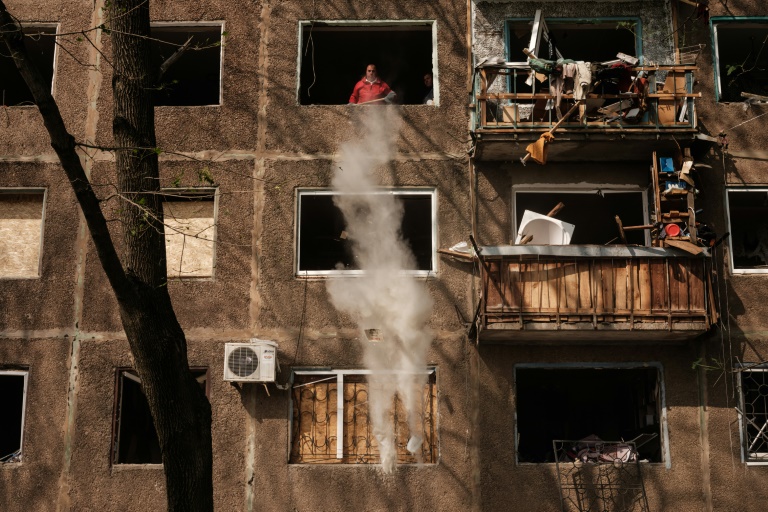
About 200 civilians, including children, are estimated to still be trapped in the Soviet-era tunnels and bunkers beneath the sprawling Azovstal factory, along with a group of Ukrainian soldiers making their last stand.

Russia had earlier announced a daytime ceasefire at the plant for three days, starting Thursday.

But the Ukrainian army says Russian “assault operations” have continued by ground and by air.

Ukraine’s Azov battalion, leading the defence at Azovstal, accused Russian forces of firing during an attempt to evacuate people by car.

“During the ceasefire at the Azovstal plant, a car was hit by Russians who used an anti-tank guided weapon,” the battalion said on Telegram, saying the vehicle was “moving towards civilians to evacuate them” at the time. 

The strike killed one Ukrainian fighter and wounded six others, it said.

Ten weeks into a war that has killed thousands, destroyed cities and uprooted more than 13 million people, defeating the resistance at Azovstal and taking full control of strategically located Mariupol would be a major win for Moscow.

– May 9 fears –

It would also be a symbolic success as May 9 approaches, the day Russia celebrates the Soviet victory over the Nazis in World War II.

Ukrainian officials believe Moscow is planning a May 9 military parade in Mariupol, possibly with Ukrainian prisoners on display. 

The Kremlin Friday however denied plans for Victory Day celebrations in Mariupol, flattened by relentless Russian bombardment.

Moscow-backed separatists in southeastern Ukraine meanwhile said they had taken down traffic signs spelling out the name of Mariupol in Ukrainian and English, and replaced them with Russian ones.

Locals want to see proof that “Russia has come back here forever,” said Denis Pushilin, head of Ukraine’s breakaway region of Donetsk.

– ‘Hell’ –

The United Nations had said Thursday a convoy was en route to help civilians escape the “bleak hell” of Azovstal, where food and water are running out and medical care is minimal.

The convoy was expected to arrive sometime Friday, in what would be the third joint evacuation operation with the Red Cross in Mariupol.

Almost 500 civilians were already evacuated from Mariupol and Azovstal in the previous UN-organised rescue missions in recent days, said the head of Ukraine’s presidential office, Andriy Yermak.

He said renewed rescue efforts continued and that he would “give the results of this later”.

During last weekend’s rescues from Mariupol, civilians left in white buses, some taking three days to complete a 230-kilometre (140-mile) journey to Ukraine-controlled Zaporizhzhia, passing through multiple Russian checkpoints.

Azov battalion leader Andriy Biletsky wrote on Telegram Friday that the situation at the plant was critical.

“The shelling does not stop. Every minute of waiting is costing the lives of civilians, soldiers, and the wounded.”

Speaking to the Israeli prime minister Thursday, Russian President Vladimir Putin said his army was “ready” to provide safe passage to civilians at Azovstal. But he said the last Ukrainian defenders had to surrender.

– Staying ‘forever’ –

Since failing to take Kyiv early on in the war, which began with Moscow’s invasion on February 24, Russia has refocused its offensive on the south and east of Ukraine.

Taking full control of Mariupol would allow Moscow to create a land bridge between separatist, pro-Russian regions in the east and the Crimean peninsula, which it annexed in 2014.

Elsewhere, a Ukrainian official said Russian forces had almost encircled Severodonetsk, the easternmost city still held by Kyiv, and are trying to storm it.

Kherson in the south remains the only significant city Russia has managed to capture since the war began. 

A senior official from the Russian parliament visiting Kherson Friday said Russia would remain in southern Ukraine “forever”.

“There should be no doubt about this. There will be no return to the past,” Andrey Turchak said.

– Pentagon denial –

The United States is among Ukraine’s biggest backers, supplying military equipment and munitions worth billions of dollars as well as intelligence and training.

But the White House has sought to limit knowledge of the full extent of its assistance to avoid provoking Russia into a broader conflict beyond Ukraine.

The Pentagon on Friday denied reports that it helped Ukrainian forces sink the Russian warship Moskva in the Black Sea last month in a stunning setback for Moscow’s invasion.

Pentagon spokesman John Kirby said the US had “no prior knowledge” of the plan to strike the ship, which sank April 13, leaving a still-unclear number of Russian sailors dead or missing.

– Oil embargo row –

Ukraine’s government has estimated at least $600 billion will be needed to rebuild the country after the war.

Ukraine’s Western allies have supported Kyiv with financial and military assistance, and have slapped unprecedented sanctions on Russia.

In what would its toughest move yet, the European Commission has proposed that all 27 EU members gradually ban Russian oil imports.

But Hungarian Prime Minister Viktor Orban, whose country is hugely reliant on Russian oil, said the ban would cross a “red line” for Budapest.

On the diplomatic front, Berlin announced that leaders of the G7 group of industrialised nations would hold video talks with Ukrainian President Volodymyr Zelensky Sunday.

– Farmers on front line –

The war is expected to have a deep impact on food crops in Ukraine, a country known as Europe’s breadbasket.

Ukraine’s wheat production is likely to be down by at least a third from last year due to Russia’s invasion, according to data analysis firm Kayrros, using satellite imagery.

Some farmers are risking their lives to keep up with the spring planting season, finding themselves ploughing around unexploded ordnance.

“Every day since the start of the war we have been finding and destroying unexploded ammunition,” Dmytro Polishchuk, one of the deminers, told AFP before heading into a field in the southwestern village of Grygorivka to destroy an unexploded rocket.

burs-mfp/raz

'Unique in the world': France's Dijon opens gastronomy complex

Devotees of French food and wine can flock to a new temple following the opening Friday of a gastronomy and wine complex in the capital of France’s central Burgundy region, Dijon. 

“It’s astounding. It’s a marriage of gastronomy, wine, culture and education,” said former French president Francois Hollande during whose tenure the project was launched.

“It’s not unique in France. It’s unique in the world,” he added at the inauguration. 

The city famed for its mustard and rolling vineyards hopes to lure one million visitors a year to the site resembling a village with expositions, a culinary school, shops, restaurants and even a cinema.

“I have no doubt that one million is a completely attainable objective,” Socialist Dijon mayor Francois Rebsamen told AFP, adding that Dijon boasted 3.5 million annual visitors before the Covid-19 pandemic hit. 

The project began after UNESCO added the “French gastronomic meal” to its intangible cultural heritage list in 2010. 

The inclusion on the prestigious list sparked the launch of sites in Paris, Lyon, Tours and Dijon designed to showcase different aspects of the country’s rich food and wine culture. 

Meals are a big deal in France, where 2,000 books on wine or cooking are published every year.

The French will typically sit down together to tuck in unlike Americans “who often eat standing next to the kitchen counter” and alone, says Tours University sociologist Jean-Pierre Corbeau. 

The gastronomic meal is “this ritual good food that brings together the French to celebrate the good life together”, said European Institute for the History and Cultures of Food founder Francois Chevrier in his book on the Dijon complex.

-‘Experimental kitchen’-

The massive Dijon site spreads across 6.5 hectares and combines modern structures with buildings with glazed tiles from the mediaeval times. 

“We wanted to enhance the existing heritage while adding contemporary architectural touches to it,” architect Anthony Bechu said.

The overall project cost 250 million euros ($265,000) with the private sector financing 90 percent.

Visitors can meander through four sections on the history of French meals, baking, Burgundy’s vineyards and the art of cooking.

Once an appetite is worked up, tourists can eat to their heart’s content in two restaurants run by triple-starred chef Eric Pras.

And they can wash the meal down with wine from a cellar that offers “one of the widest selections in the world, with 250 wines by the glass among more than 3,000 references,” according to its director Anthony Valla.

The site also includes a butcher’s shop and a bakery, an “experimental kitchen” offering demonstrations and workshops, and a branch of the world-renowned Ferrandi culinary school. 

Such a huge project has raised some eyebrows, especially after the Lyon site closed down only nine months after its inauguration. 

“We learned our lesson from the failure of Lyon, which offered something a little down-market and very expensive,” Dijon mayor Rebsamen said.

The Dijon site includes “a whole cultural and heritage section that is free”, he added. 

The French-style meal is in danger because “people think cooking is a waste of time”, according to Paris-Sorbonne professor Jean-Robert Pitte. 

Pitte is one of the architects of the campaign that led to the UNESCO inscription, designed to restore “the taste for cooking”.

He believes “eating well is not superfluous, but necessary for health, sociability, the economy and culture”. 

Israel hunts Palestinians after three killed in axe attack

Israel conducted a large-scale manhunt on Friday for a pair of Palestinians suspected of killing three Israelis in an axe attack that came as the Jewish state marked its founding.

The attack on Thursday night in Elad, a central city mainly populated by ultra-Orthodox Jews, was the sixth in which Israelis have been targeted since March 22.

Witnesses said two assailants leapt from a car swinging axes at passers-by, leaving three dead and four wounded, before fleeing in the same vehicle.

The attack followed a tense period in which the Muslim fasting month of Ramadan, the Jewish festival of Passover and the Christian holiday of Easter overlapped.

The tensions have boiled over into violent clashes between Israelis and Palestinians at the Al-Aqsa mosque compound, a highly contested site in Jerusalem’s Israeli-annexed Old City.

Palestinians have been angered by an uptick in Jewish visits to the Al-Aqsa compound, where by long-standing convention Jews may visit but are not allowed to pray.

Israel has said the status quo would remain unchanged at the site known to Jews as the Temple Mount.

The United States and Palestinian president Mahmud Abbas condemned the attack. Abbas warned it could lead to spiralling violence.

But the Gaza Strip’s Islamist rulers Hamas and Islamic Jihad, another Palestinian armed group, praised the latest violence, calling it a consequence of unrest at Al-Aqsa. Neither claimed responsibility.

“This operation demonstrates our people’s anger at the occupation’s attacks on holy sites,” Hamas spokesman Hazem Qassem said of the Elad attack.

“The storming of the Al-Aqsa mosque cannot go unpunished.”

– ‘Pay the price’ –

Israeli security forces have mounted a massive search operation for the attackers, identified by the police as Assad Yussef al-Rifai, 19, and Subhi Imad Abu Shukair, 20.

As helicopters and drones roared overhead in search of the perpetrators, young ultra-Orthodox Jewish men in crisp white shirts were seen linking arms and chanting near the scene of the murders.

Women gathered on balconies overlooking the site, as masked forensic officers packed the bodies of the dead into bags and police stopped and searched cars.

A 31-year-old IT worker who gave his name as Yehuda told AFP he was afraid that “the killers have not yet been caught”.

“We suffer hatred and get murdered with an axe,” he said at the funeral of Oren Ben Yiftach, a 35-year-old from Lod who was among the three killed.

Police asked the public to provide information on the suspects after publishing their pictures and names. They were described as residents of the village of Rummanah near Jenin in the occupied West Bank.

The Israeli prime minister’s office identified the three dead as Yonatan Habakuk, 44, and Boaz Gol, 49, both from Elad, as well as Ben Yiftah.

“We will get our hands on the terrorists… and ensure they pay the price,” Prime Minister Naftali Bennett said.

The majority of Elad’s 50,000 residents are members of Israel’s ultra-Orthodox Jewish community, known as haredim.

Israel’s Defence Minister Benny Gantz announced a closure of the West Bank — in place for the anniversary — would remain in force through Sunday.

The Palestinian Red Crescent said 38 Palestinians were wounded Friday in clashes with Israeli forces near Nablus in the West Bank, including two teenagers who were shot with rubber-coated bullets. 

– Spate of attacks –

Prior to Thursday’s incident, a string of attacks since March 22 had killed 15 people, including an Arab-Israeli police officer and two Ukrainians, in separate attacks inside Israel.

Two of the deadly attacks were carried out in the Tel Aviv area by Palestinians.

A total of 27 Palestinians and three Israeli Arabs have died during the same period, among them perpetrators of attacks and those killed by Israeli security forces in West Bank operations.

Israeli Foreign Minister Yair Lapid said “the joy of independence day had been interrupted in an instant”.

For Palestinians, the anniversary of Israel’s 1948 declaration of independence marks the Nakba, or “catastrophe”, when more than 700,000 fled or were expelled during the war surrounding Israel’s creation.

Last week, Hamas threatened Israel with rocket fire and attacks on synagogues if its security forces carry out further raids on the Al-Aqsa mosque compound.

“Whoever has a rifle must have it ready, and whoever does not have a rifle must prepare their knife or their axe,” said Yahya Sinwar, Hamas chief in the Israeli-blockaded Palestinian enclave.

The latest violence on Thursday at Al-Aqsa followed a tense April, in which nearly 300 people were injured in clashes between police and Palestinians at the site.

Tech vs telecoms: EU ignites debate on 'net neutrality'

Tech and streaming giants suck up vast amounts of bandwidth, so the EU this week revived a long-standing idea to make them pay the telecom firms who maintain the infrastructure.

But the idea, which sounds simple, has sparked wails of disapproval not just from the tech giants who would be forced to pay, but also from digital rights activists worried that it would create a two-speed internet.

EU competition commissioner Margrethe Vestager kicked off the controversy at a media briefing on Monday when she promised renewed focus on the idea of “fair contribution to telecommunication networks”.

“We see that there are players who generate a lot of traffic that then enables their business but who have not been contributing actually to enable that traffic,” she said.

Vestager did not name any companies but European telecoms lobby group ETNO published a study on the same day naming the firms they see as the major culprits — Facebook, Apple, Amazon, Microsoft, Google and Netflix.

ETNO cited a claim that these six accounted for more than 55 percent of online traffic globally last year.

Vestager’s colleague, interior markets commissioner Thierry Breton, quoted a similar figure in a tweet on Wednesday, writing that restoring fairness was now “one of the main projects in our digital space”.

Media reports suggested legislation would be on the table by the end of the year.

The EU has already passed two massive laws giving regulators more bite when it comes to policing content and anti-competitive practices.

Those efforts were largely welcomed by rights activists.

But the fight over internet infrastructure has sparked fears that the EU could end up jeopardising “net neutrality”, whereby telecoms firms are barred from selling faster internet speeds to particular companies.

The issue has spawned a long-running toxic debate in the United States.

– ‘Double-dip’ accusation –

Telecom companies have made repeated requests for tech firms to pay up, including a joint appeal last year from the four largest European operators — Deutsche Telekom, Vodafone, Orange and Telefonica. 

With the launch of its report on Monday, ETNO pointed out that telecoms firms have invested more than 500 billion euros over the past 10 years to develop national networks.

The association envisaged that a 20-billion-euro annual contribution would create hundreds of thousands of jobs, boost economic output across the bloc and help reduce energy consumption.

The tech industry was quick to respond, calling ETNO’s conclusions “fundamentally flawed”.

“Operators are already being paid by their customers,” said Christian Borggreen of the CCIA lobby group for tech firms, accusing telecoms firms of wanting to “double-dip”.

“This would be equivalent to energy companies trying to collect fees from appliance makers for the energy use of washing machines while consumers are already being charged for the actual amount of energy used to do their laundry,” he said.

– Privileged access’ –

While both sides claim to support the principle of an open internet, activists and experts have raised concerns that the EU could open the way to firms buying faster internet from providers.

The EU’s top court confirmed in a 2020 ruling against internet provider Telenor that such pricing policies were illegal.

But Thomas Lohninger of EDRi, a rights lobby group, wrote that Vestager “wants to destroy Net Neutrality in the EU” and said it would be a “huge mistake”.

Stephane Bortzmeyer, a network engineer and commentator, told AFP the result of enabling telecoms firms to discriminate would certainly be a two-speed internet.

“There will be ordinary people who don’t pay, whose services will be slow, and others who can afford it will have privileged access,” he said.

The issue of net neutrality has been at the heart of a bitter years-long row in the United States where activists and tech firms have fought against telecom firms’ efforts to weaken rules against such pricing policies.

Vestager may just have imported a similar row to Europe.

Stocks selloff deepens, pound takes fresh tumble

A global stocks selloff over fears about the impact of interest rate hikes that seek to tackle sky-high inflation deepened on Friday.

The pound hit a two-year low at $1.2276, one day after the Bank of England (BoE) lifted UK borrowing costs to a 13-year peak and highlighted recession risks.

The euro jumped to 85.79 pence, which was last seen late in 2021. 

Oil prices rebounded after key producers led by Saudi Arabia and Russia refused to lift output more than their planned marginal increase as they weighed tight supply concerns caused by Moscow’s invasion of Ukraine.

– ‘Sinking feeling’ –

“A sinking feeling has taken over financial markets at the end of a volatile week,” said Hargreaves Lansdown analyst Susannah Streeter.

“Investors are digesting the unpalatable implications of inflation and fretting that there will be a need for a bigger dose of the bitter medicine being administered to try and bring it under control.”

Asian equities tumbled after steep Wall Street losses Thursday, as traders contemplated a period of fierce monetary tightening by the US Federal Reserve. 

The Fed on Wednesday lifted borrowing costs 50 basis points — the most since 2000 — and signalled more increases as inflation sits at the highest levels in decades.

Rate tightening increases borrowing costs for consumers and businesses, harming economic recovery from the pandemic.

– ‘Porcelain doll’ –

In the United States, the Nasdaq shares index — which is dominated by tech firms particularly sensitive to higher interest rates — plunged five percent Thursday, while the broader Dow and S&P 500 each slumped by more than three percent.

That selloff filtered through to Asia, where Hong Kong tanked 3.8 percent Friday as tech firms took a hit.

“Concern about inflation is the culprit and the wild swings we’ve seen this week are a reminder that sentiment is about as fragile as a porcelain doll,” noted AJ Bell investment director Russ Mould.

“The other fear is that the cure for inflation, higher rates, could be as bad as the disease if they choke off growth and even lead to recession.”

Wall Street’s main stock indices fell further at the start of trading on Friday, with a strong US jobs report that indicated people left the labour force last month, which will make it more difficult for the Fed ease the tight jobs market.

“Given the record number of job openings, that is a signpost that will continue to leave the market concerned about persistent wage-based inflation pressures as employers offer wage-based incentives to attract workers,” said market analyst Patrick J. O’Hare at Briefing.com.

Markets have also been battered this year by economic fallout from the raging Ukraine conflict.

Adding to the angst is weakness in China’s economy caused by strict lockdowns and other containment measures as officials struggle to bring a virus flare-up under control by sticking to a zero-Covid policy.

In foreign exchange, the pound remains plagued by the BoE’s forecast that UK inflation would top 10 percent and the economy contract later this year.

– Key figures at around 1330 GMT –

London – FTSE 100: DOWN 1.2 percent at 7,411.56 points

Frankfurt – DAX: DOWN 1.4 percent at 13,714.32

Paris – CAC 40: DOWN 1.6 percent at 6,267.45

EURO STOXX 50: DOWN 1.6 percent at 3,637.06

New York – Dow: DOWN 0.6 percent at 32,786.77

Hong Kong – Hang Seng Index: DOWN 3.8 percent at 20,001.96 (close)

Shanghai – Composite: DOWN 2.2 percent at 3,001.56 (close)

Tokyo – Nikkei 225: UP 0.7 percent at 27,003.56 (close)

Brent North Sea crude: UP 1.3 percent at $112.37 per barrel

West Texas Intermediate: UP 1.1 percent at $109.48 per barrel

Euro/dollar: UP at $1.0582 from $1.0542 on Thursday

Pound/dollar: DOWN at $1.2336 from $1.2362

Euro/pound: UP at 85.75 pence from 85.28 pence

Dollar/yen: UP at 130.54 yen from 130.20 yen

burs-rl/jv

Bulgaria industry on tenterhooks after Russia gas cut

The halt of Russian gas supplies to Bulgaria last week has left companies big and small scrambling as they fear cuts to deliveries and rising prices.

“We are already on the brink. We’ll have to raise our prices further,” said Valery Krastev, who owns a bread factory in the northern town of Montana.

“How will people pay for this bread?” he worried.

The government has insisted Bulgaria has “alternative choices” to Russian gas and won’t reduce supplies to consumers, calling Moscow’s move to halt deliveries “blackmail”.

While natural gas supplies had escaped punishing European sanctions on Russia over its invasion of Ukraine, Moscow sought to sow division among European nations by exploiting their dependence on its gas.

Russia demanded that Gazprom customers have to pay in rubles rather than US dollars or euros, which would be a violation of Western sanctions.

The Russian energy giant cut deliveries to Bulgaria and Poland on April 27.

Since then, Bulgaria’s neighbours have stepped in, shoring up deliveries to the country, which has received more than 90 percent of its gas from Russia for decades.

– Diversification –

But the lack of a long-term solution to secure the Balkan EU member’s annual needs of about 3.0 billion cubic metres of gas is keeping large industrial consumers as well as smaller businesses on tenterhooks.

Many people living in Sofia still remember January 2009 when a Russia-Ukraine gas spat cut deliveries to Europe for days on end, leaving their homes without heating in the dead of winter and prompting rationing for industry.

So far supplies to Sofia’s municipal utility Toplofikacia are uninterrupted, according to its head Alexander Alexandrov.

The utility gets close to 40 percent of all gas in the country to supply 1.5 million people, or a fourth of Bulgaria’s population, with heat and hot water. 

“We cannot keep operating for more than 24 hours in the event of a complete cut in gas supply,” Alexandrov told AFP in an interview, adding that switching back to using fuel oil if gas were cut would have a “grave environmental impact”.

“I am optimistic that there are enough options to secure gas by this autumn to guarantee a normal heating season.”

Bulgaria already pays 10 percent more for its gas now, Energy Minister Alexander Nikolov confirmed after securing deliveries for May through an intermediary gas trading company.

“I can’t believe that someone is trying to convince us that… this is good for us. No it is not,” said Konstantin Stamenov, head of the BFIEC federation of industrial energy consumers and a senior executive at a steel manufacturer, on public radio BNR.

To keep prices contained and secure energy supplies, the government has vowed to diversify suppliers.

It plans to wrap up construction of another major pipeline linking its gas network with that of Greece by the end of June.

This will allow the state gas operator Bulgargaz to negotiate an increase of supplies on an existing contract with Azerbaijan to an annual 1.0 bcm and receive more gas from liquefied natural gas (LNG) terminals in Greece. 

Prime Minister Kiril Petkov also said that the government is in talks to buy LNG from the United States and Egypt.

Analysts say prices may even fall if the country manages to secure long-term contracts for LNG deliveries.

“We have here a huge opportunity to achieve stable diversification of gas deliveries,” energy expert Martin Vladimirov from the Sofia-based think tank Centre for the Study of Democracy told AFP.

However, Open Society economist Georgy Angelov warned: “But that won’t happen in a day.”

– Business as usual – 

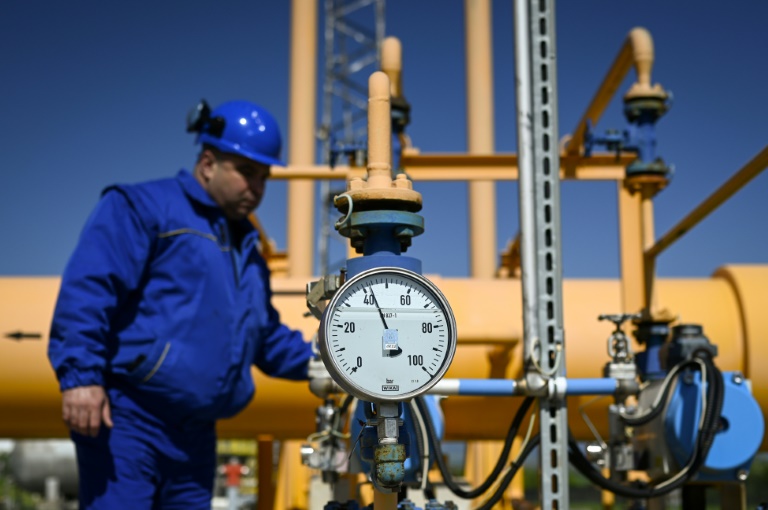
For now, it’s business as usual at a Bulgartransgaz compressor station near Ihtiman, where Russian natural gas is still flowing through the bright yellow pipes.

But Bulgargaz is no longer allowed to use any of this gas — most of it being destined for Greece and North Macedonia.

For its own supply, Bulgaria is currently relying on swap operations with its neighbours, who supply it with Russian gas or LNG through reverse flow pipelines from Greece and Romania. 

Expert Vladimirov cautioned, however, against a suspected scheme by Russia to abandon its direct contract with Bulgargaz and instead make the country buy gas at higher prices through intermediaries such as Hungarian gas trader MET, known to be close to Gazprom, which already helped secure the deliveries for May.

“This, in the end, might lead to higher dependency on Russia under worse contractual conditions,” he warned.

Ukraine wheat harvest set to drop by third: satellite imagery

Ukraine’s wheat production is likely to be down by at least a third from last year due to the Russian invasion, a data analysis firm that uses satellite imagery said Friday.

Ukraine is a major producer and exporter of wheat, but the invasion has disrupted planting, which is still underway, both due a lack of fuel for equipment and farmers having to deal bombardments and unexploded ordnance.

French firm Kayrros said near-infrared and infrared imagery allows for determination of crop coverage and can accurately predict wheat production.

“Production this year is expected to be at least 35 percent lower than last year,” analysis of the latest data showed, Kayrros said. 

It forecast that at this stage Ukraine will be capable of producing 21 million tonnes of wheat this year, a drop of 12 million tonnes from 2021, and a 23 percent drop from the average harvest over the past five years. 

“Given that the fighting is ongoing and that a large part of the country’s wheat production comes from areas of eastern Ukraine where the conflict is most intense, the real production figures are likely to be lower than the current crop cover might suggest,” the firm added. 

Kayrros analysed images taken by the US space agency NASA between April 14 and 22, less than two months after the start of the conflict. 

Even if Ukrainian farmers manage to grow and harvest their wheat they face difficulties getting it to market given that Russia has destroyed transportation infrastructure and blockaded the port of Odessa from which most grain was exported. 

Before the war Ukraine accounted for about 12 percent of the world’s wheat exports, and the conflict has sent the prices of food commodities soaring. 

Ukraine wheat harvest set to drop by third: satellite imagery

Ukraine’s wheat production is likely to be down by at least a third from last year due to the Russian invasion, a data analysis firm that uses satellite imagery said Friday.

Ukraine is a major producer and exporter of wheat, but the invasion has disrupted planting, which is still underway, both due a lack of fuel for equipment and farmers having to deal bombardments and unexploded ordnance.

French firm Kayrros said near-infrared and infrared imagery allows for determination of crop coverage and can accurately predict wheat production.

“Production this year is expected to be at least 35 percent lower than last year,” analysis of the latest data showed, Kayrros said. 

It forecast that at this stage Ukraine will be capable of producing 21 million tonnes of wheat this year, a drop of 12 million tonnes from 2021, and a 23 percent drop from the average harvest over the past five years. 

“Given that the fighting is ongoing and that a large part of the country’s wheat production comes from areas of eastern Ukraine where the conflict is most intense, the real production figures are likely to be lower than the current crop cover might suggest,” the firm added. 

Kayrros analysed images taken by the US space agency NASA between April 14 and 22, less than two months after the start of the conflict. 

Even if Ukrainian farmers manage to grow and harvest their wheat they face difficulties getting it to market given that Russia has destroyed transportation infrastructure and blockaded the port of Odessa from which most grain was exported. 

Before the war Ukraine accounted for about 12 percent of the world’s wheat exports, and the conflict has sent the prices of food commodities soaring. 

China troubles mar Adidas's first-quarter result

German sportswear giant Adidas reported a drop in its profits in the first quarter on Friday, as widespread coronavirus lockdowns hurt business in key market China.

The group’s net profit from its continuing operations fell to 310 million euros ($326 million), from 502 million euros in the same quarter last year. 

The fall came off the back of a three-percent drop in sales, felt particularly strongly in Asia, the group said in a statement. 

First-quarter revenues in China fell by 35 percent and 16 percent in the rest of the Asia-Pacific region, as a series of coronavirus-related lockdowns limited demand for the company’s products.

Drastic health restrictions added to a “challenging market environment” for Adidas in China, the group said.

Adidas has been facing a consumer boycott in China over its refusal to use cotton from Xinjiang in response to accusations of forced Uyghur labour.

The German sports outfitter “will return to growth” in the Asia-Pacific market region, Adidas CEO Kasper Rorsted said in the statement.

The group’s difficulties in China were however due “to continue”, he added.

Adidas expected revenues in the key market to decline by a figure in “lower double-digit territory”, chief financial officer Harm Ohlmeyer said at a press conference.

– ‘Supply constraints’ –

The struggles in Asia contrasted with Adidas’s stronger revenue growth elsewhere, with sales in North America up 12.8 percent. 

“Supply constraints as a result of last year’s lockdowns in Vietnam”, where the group has production facilities, suppressed as much as 400 million euros in revenues in the first quarter, Adidas said.

Markets in Europe, the Middle East and Africa were “most impacted by the supply shortages”, the group said, limiting sales growth in the region to 9.1 percent.

The kit-maker also had to fight a “significant increase” in costs for the transport and sourcing of its materials, which put pressure on its profit margins.

Adidas maintained its guidance for 2022, but said the “severe impact” of coronavirus lockdowns in China would keep revenue growth towards the lower end of its 11-to-13-percent range. 

The same went for the group’s net income for the year, now expected to sit closer to 1.8 billion euros than 1.9 billion euros.

Shares in Adidas were down by over six percent at 1:30 p.m. (1130 GMT) trading on the Frankfurt Stock Exchange.

Close Bitnami banner
Bitnami