World

India to reopen abandoned coal mines as heatwave hits supply

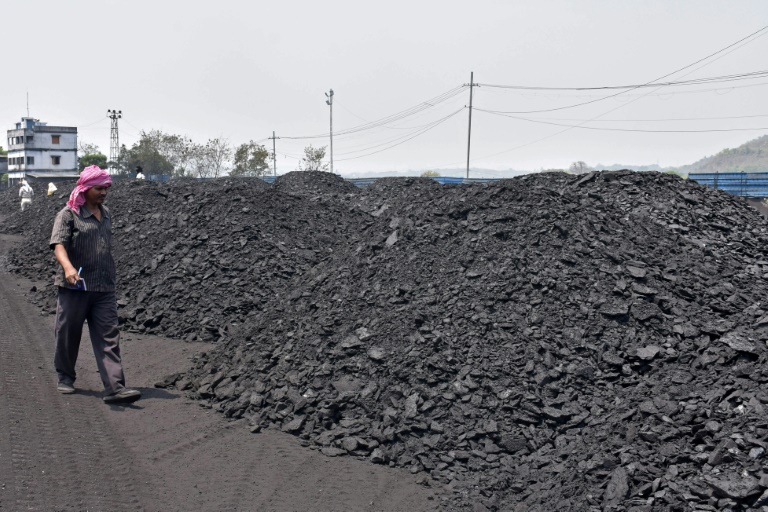
India plans to lease abandoned coal pits to private mining companies, a government official said Friday, in an effort to ramp up production as power outages exacerbate a sweltering heatwave.

Coal supplies more than two-thirds of India’s energy needs and the country has baulked at the cost of transitioning to renewables — even as unseasonably hot weather illustrates the threat from climate change caused by burning fossil fuels. 

Soaring temperatures have prompted higher energy demand in recent weeks and left India facing a 25 million tonne shortfall at a time when coal spot prices have skyrocketed since the start of the year. 

“We’ve always believed that coal is a much-maligned sector,” coal ministry official Anil Kumar Jain said at an industry event.

“Earlier we were hailed as bad boys because we were promoting fossil fuel and now we are in the news (because) we are not supplying enough of it.”

The government plans to lease more than 100 dormant state-owned coal mines to private miners on a revenue-sharing basis.

Officials said they will “cut out the red tape” to encourage bids from mining giants Vedanta, Adani and others.

India needs a billion tonnes of coal to meet domestic demand each year. 

Most of its needs are met by domestic producers, with a record 777 million tonnes of coal mined in the year to the end of March.

The government says it plans to increase domestic coal production to 1.2 billion tonnes in the next two years to support the country’s post-pandemic economic recovery.

“We are very happy that the economy is on the rebound and power is being demanded. The malls are full, restaurants are full,” Jain said.

Despite a commitment to increase its renewable energy capacity to 175 gigawatts by 2022 and 500 gigawatts by 2030, India’s coal minister Pralhad Joshi said coal needs are set to double by 2040.

“There has never been as much demand for electricity as there is today. There has never been as much heat from the sun as there is today,” Joshi said.

The scheme announced Friday is the government’s latest step towards liberalising India’s mining industry and inviting private companies to profit from the world’s fifth-largest coal reserves.

“This is going to lead the country in the way the mineral-rich countries like Brazil, Canada, Australia, South Africa have been creating wealth and generating employment,” Vedanta mining chief V. Shrikant said.

India to reopen abandoned coal mines as heatwave hits supply

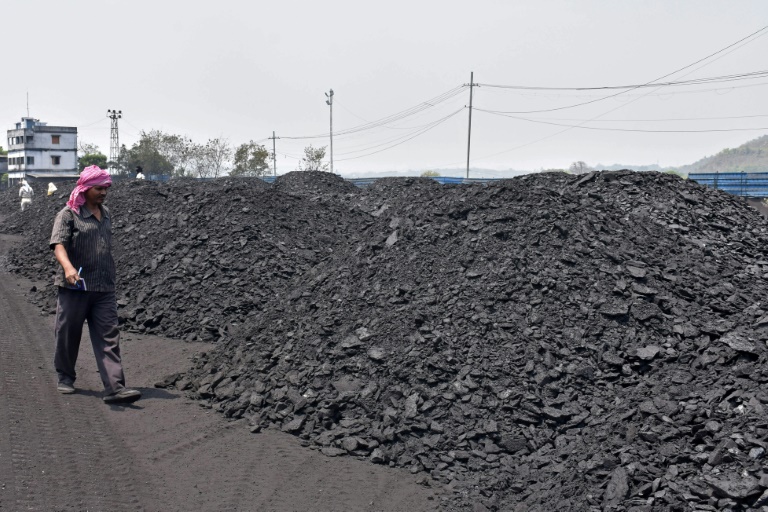
India plans to lease abandoned coal pits to private mining companies, a government official said Friday, in an effort to ramp up production as power outages exacerbate a sweltering heatwave.

Coal supplies more than two-thirds of India’s energy needs and the country has baulked at the cost of transitioning to renewables — even as unseasonably hot weather illustrates the threat from climate change caused by burning fossil fuels. 

Soaring temperatures have prompted higher energy demand in recent weeks and left India facing a 25 million tonne shortfall at a time when coal spot prices have skyrocketed since the start of the year. 

“We’ve always believed that coal is a much-maligned sector,” coal ministry official Anil Kumar Jain said at an industry event.

“Earlier we were hailed as bad boys because we were promoting fossil fuel and now we are in the news (because) we are not supplying enough of it.”

The government plans to lease more than 100 dormant state-owned coal mines to private miners on a revenue-sharing basis.

Officials said they will “cut out the red tape” to encourage bids from mining giants Vedanta, Adani and others.

India needs a billion tonnes of coal to meet domestic demand each year. 

Most of its needs are met by domestic producers, with a record 777 million tonnes of coal mined in the year to the end of March.

The government says it plans to increase domestic coal production to 1.2 billion tonnes in the next two years to support the country’s post-pandemic economic recovery.

“We are very happy that the economy is on the rebound and power is being demanded. The malls are full, restaurants are full,” Jain said.

Despite a commitment to increase its renewable energy capacity to 175 gigawatts by 2022 and 500 gigawatts by 2030, India’s coal minister Pralhad Joshi said coal needs are set to double by 2040.

“There has never been as much demand for electricity as there is today. There has never been as much heat from the sun as there is today,” Joshi said.

The scheme announced Friday is the government’s latest step towards liberalising India’s mining industry and inviting private companies to profit from the world’s fifth-largest coal reserves.

“This is going to lead the country in the way the mineral-rich countries like Brazil, Canada, Australia, South Africa have been creating wealth and generating employment,” Vedanta mining chief V. Shrikant said.

Russia, West in long-term rivalry: top French general

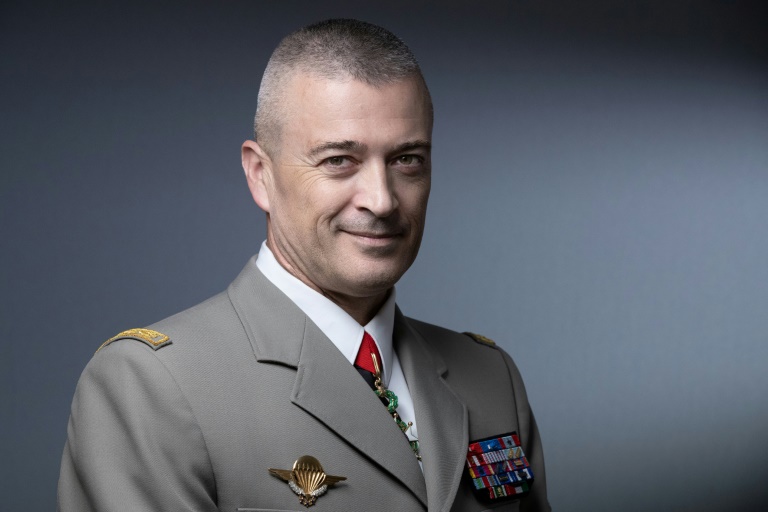
Russia’s invasion of Ukraine did not go according to initial Kremlin plans, but the West must brace for a long-term rivalry with Moscow that risks going beyond the current conflict, France’s top general has said.

General Thierry Burkhard, the overall chief of staff for the French armed forces, told AFP in an interview that Europe needed to re-arm and strengthen its own unity for what will be a period of “long competition” with Russia.

President “Vladimir Putin has said it himself: We are not just talking about Ukraine but the Baltic States, Poland, Hungary,” Burkhard said in the joint interview with the New York Times in Estonia, where French troops are deployed as part of NATO forces.

“We must be well aware that the Russians have a long-term strategy,” he added, pointing to the emphasis Moscow has placed on developing specialised capacities, including hypersonic weapons.

“They are engaged an informational struggle and they have put the West under a form of energy dependency. Our lack of freedom of action comes from being in this spider’s web put in place by Russia.”

But he emphasised that Russia’s assault against Ukraine, had “not gone as planned” and that the initial aim had been to topple Ukraine’s President Volodymyr Zelensky, who remains in power.

“This will impose a pause on the Russian long-term strategy,” he said.

“Europe must take advantage of this to reorganise and also build its long-term strategy, planning for the day after the Ukrainian war. We must re-arm, strengthen cohesion and put ourselves in a position to be competitors with the Russians,” he said.

Burkhard also emphasised that as a nuclear-armed permanent UN Security Council member Russia is “not going to disappear” and that while seeking to weaken the country the West may also need to rebuild a “security architecture” with Moscow.

– ‘Army of lies’ –

He described phase one of the war as a “failure” for Russia marked by scenes that were “stunning” for military observers, such a column of 60 tanks at a standstill.

Phase two of the war, Burkhard argued, was marked by Russia regrouping and the conflict is now in a third phase with Russia seeking to seize control of Ukraine’s Donbas region.

Unlike in the first phase, Russia’s military deployment is “coherent” with 80-90 percent of their forces in the Donbas compared with 20 percent in the first phase, he said.

Burkhard said that Russia’s shortcomings in the first phase of the war had shown the importance of high morale, a domain where the Ukrainians has clearly won.

“They have an army that is defending its country and a country that is supporting its army. This is something that is built, it is not something that is made the day the war starts,” he said.

“The Russian army is the army of lies. People lied saying that the Ukrainian army would not fight, that the Russian forces were ready for war, that the leaders knew how to command.”

Ukraine had also won the information war while Russia had also fallen short in high-intensify warfare for which its troops were not trained despite their superiority in numbers.

The conflict has “shown the importance of training, which is costly and difficult,” he said.

Bali to deport Russian couple for nude photos on sacred tree

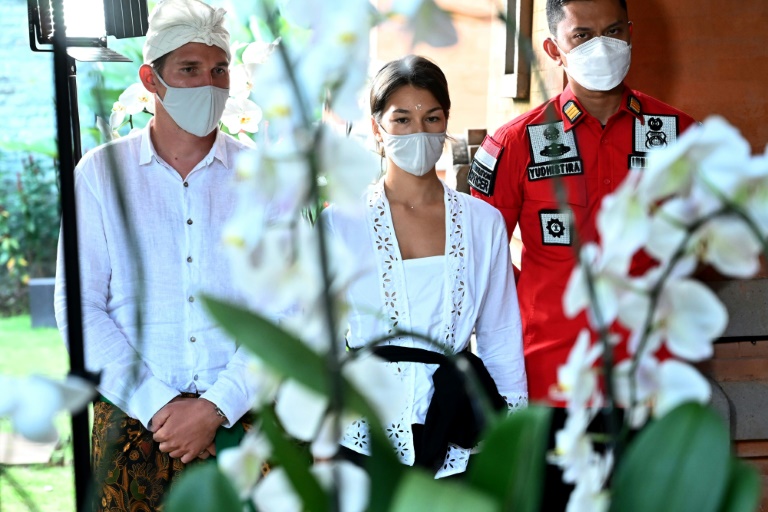
A Russian influencer and her husband will be deported from Bali after staging a nude photo shoot on a sacred tree in violation of local culture, officials on the Indonesian holiday island said Friday.

Alina Fazleeva, who has thousands of followers on Instagram, posed naked on a 700-year-old banyan tree at a temple in Tabanan district.

The picture, which was taken by her husband Andrey Fazleev, was uploaded to Instagram and went viral, irking Balinese communities.

Mountains, trees and other natural features are considered holy in Balinese Hindu culture, as they are thought to be the homes of the gods.

“Both of them are proven to have carried out activities that endanger public order and do not respect the local norms,” Bali immigration chief Jamaruli Manihuruk told reporters Friday.

“So, they will be sanctioned with deportation.”

The husband and wife will be banned from Indonesia for at least six months, and also had to participate in a cleansing ceremony at the sacred area in accordance with local belief, he added.

Fazleeva apologised on her Instagram account in English and Bahasa Indonesia, acknowledging that she “made a big mistake”.

“There are a lot of sacred places in Bali and not all of them have information signs about it, as in my case,” she said.

“And, it is very important to treat these places and traditions with respect”.

Bali’s Governor Wayan Koster said his administration would no longer tolerate disrespectful tourists.

Almost 200 people were deported from the holiday island last year, some of them for violating Covid-19 protocols.

Last month, a Canadian actor and self-proclaimed wellness guru was also facing deportation from Bali after a video went viral of him naked at holy Mount Batur while doing the Haka, New Zealand’s Maori ceremonial dance.

Conservatives lose key councils in UK vote

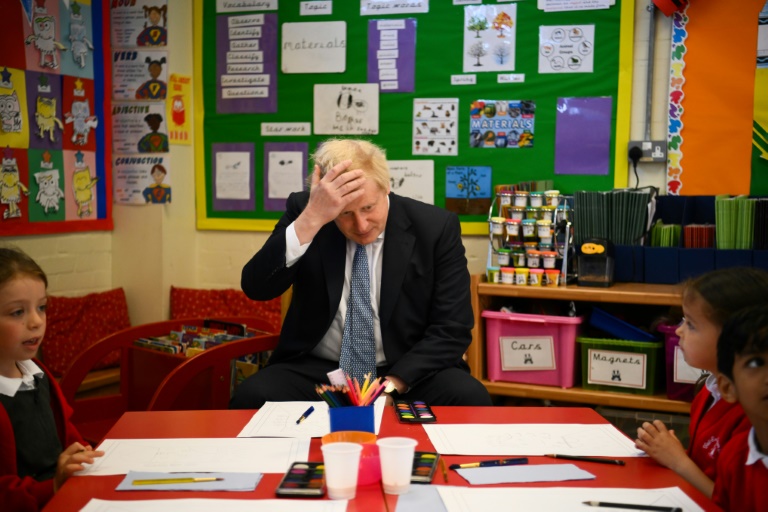
Prime Minister Boris Johnson’s Conservative party lost control of key councils in London, according to partial results from local and regional UK elections on Friday, with a potentially historic change looming in Northern Ireland.

The main UK opposition Labour party of Keir Starmer won in long-term Conservative strongholds in the capital, including Margaret Thatcher’s “favourite” council Wandsworth, and Westminster for the first time since it was created in 1964.

Just over half of votes for councils in England have been counted. Results from the remainder, as well as Scotland, Wales and Northern Ireland are expected throughout the day.

The contest for the devolved assembly in Belfast could see a pro-Irish nationalist party win for the first time, with huge constitutional implications for the four-nation UK.

Predicted victors Sinn Fein — the former political wing of paramilitary group the IRA — are committed to a vote on reunification with the Irish republic to the south, a century after the island was partitioned.

The English results so far are not a landslide for Labour, which is seeking to capitalise on a cost-of-living crisis and Johnson’s own performance, including his unprecedented police fine for attending a lockdown-breaking party at Downing Street.

Johnson called the results so far “mixed” and said he took responsibility.

“We had a tough night in some parts of the country but on the other hand in other parts of the country you are still seeing Conservatives going forward,” Johnson told reporters in his constituency on the outskirts of London. 

But Starmer, visiting Barnet in northwest London, where Labour seized control of the council from the Tories, hailed what he called “a big turning point”.

“When it comes to London, you can hardly believe those names come off our lips. Wandsworth! They’ve been saying for years ‘You’ll never take Wandsworth from us.’ We’ve just done it! Westminster! It’s an astonishing result,” he told supporters.

– ‘Catastrophic’ –

The former chief of staff of Conservative ex-premier Theresa May said the results in London were “catastrophic”.

“Wandsworth and Westminster were flagship councils,” Gavin Barwell tweeted. 

“Losing them should be a wake-up call for the Conservative Party.”

The Conservatives are hoping to extend their 12 years in power for another term at the next general election, which is due by 2024.

Johnson, 57, won a landslide 2019 general election victory by vowing to take the UK out of the European Union, and reverse rampant regional inequality.

Despite making good on his Brexit pledge, the coronavirus pandemic largely stalled his domestic plans. 

But his position has been put in jeopardy because of anger at lockdown-breaking parties at his Downing Street office and the steeply rising cost of living.

Poor results could reignite questions about his leadership, putting his position in jeopardy.

Labour is bidding to leapfrog the Conservatives into second place in Scotland, behind the pro-independence Scottish National Party (SNP), and remain the largest party in Wales, where 16- and 17-year-olds are eligible to vote for the first time. 

SNP leader Nicola Sturgeon hailed a “seismic” result after her party took the only Tory seat in Glasgow.

– Sinn Fein rise –

The contest for the 90 seats in Northern Ireland’s power-sharing assembly is set to capture attention, after numerous polls put Sinn Fein ahead. 

The pro-UK Democratic Unionist Party (DUP) and cross-community Alliance Party were tied for second.

First results were expected in the mid-afternoon but the full count was likely to go late into the night, or resume on Saturday if it proves particularly tight for the more hard-fought seats, an election official said.

Early indications were that turnout was about 54 percent — down from nearly 65 percent in 2017.

Sinn Fein has dialled down its calls for Irish unity during campaigning, saying it is “not fixated” on a date for a sovereignty poll, instead focusing on the rising cost of living and other local issues.

Party vice president Michelle O’Neill has insisted voters are “looking towards the future” with pragmatism rather than the dogmatism that has long been the hallmark of Northern Irish politics.

O’Neill’s DUP rivals have sought to keep the spotlight on possible Irish reunification in the hope of bolstering their flagging fortunes.

In February, its first minister withdrew from the power-sharing government in protest at post-Brexit trade arrangements, prompting its collapse. 

DUP leader Jeffrey Donaldson has said that his party would not form a new executive unless London rips up the trading terms, known as the Northern Ireland Protocol.

Israel hunts Palestinians after three killed in axe attack

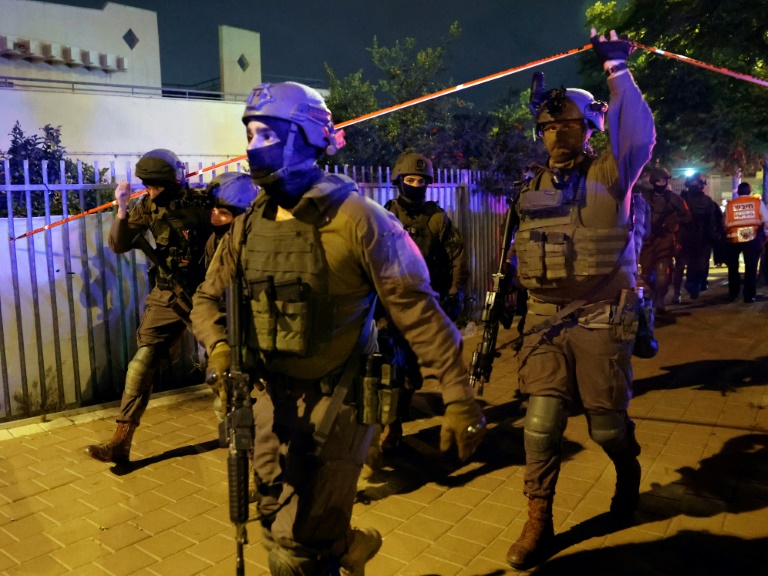
Israel conducted a large-scale manhunt on Friday for two Palestinians suspected of killing three Israelis in an axe attack that came as the Jewish state marked its founding.

The attack on Thursday night in Elad, a central city mainly populated by ultra-Orthodox Jews, was the sixth in which Israelis have been targeted since March 22.

Witnesses said two assailants leapt from a car swinging axes at passers-by, leaving three dead and four wounded, before fleeing in the same vehicle.

The attack followed a tense period in which the Muslim fasting month of Ramadan, the Jewish festival of Passover and the Christian holiday of Easter overlapped.

The tensions have boiled over into violent clashes between Israelis and Palestinians at the Al-Aqsa mosque compound, a highly contested site in Jerusalem’s Israeli-annexed Old City.

Palestinians have been angered by an uptick in Jewish visits to the Al-Aqsa compound, where by long-standing convention Jews may visit but are not allowed to pray.

Israel has said the status quo would remain unchanged at the site known to Jews as the Temple Mount.

The Elad attack was condemned by the United States and Palestinian president Mahmud Abbas, who warned it could lead to spiralling violence.

But the Gaza Strip’s Islamist rulers Hamas and Islamic Jihad, another Palestinian armed group, praised the attack, calling it a consequence of unrest at Al-Aqsa. Neither claimed responsibility.

“This operation demonstrates our people’s anger at the occupation’s attacks on holy sites,” Hamas spokesman Hazem Qassem said of the Elad attack.

“The storming of the Al-Aqsa mosque cannot go unpunished.”

– ‘Pay the price’ –

Israeli security forces have mounted a massive search operation for the attackers, identified by the police as Assad Yussef al-Rifai, 19, and Subhi Imad Abu Shukair, 20.

As helicopters and drones roared overhead in search of the perpetrators, young ultra-Orthodox Jewish men in crisp white shirts were seen linking arms and chanting near the scene of the attack.

Women gathered on balconies overlooking the site, as masked forensic officers packed the bodies of the dead into bags and police stopped and searched cars.

Yehuda, a 31-year-old IT worker, told AFP he was afraid that “the killers have not yet been caught”.

“We suffer hatred and get murdered with an axe,” he said, as he attened the funeral of Oren Ben Yiftach, a 35-year-old from Lod who was killed in the attack.

Police asked the public to provide information on the suspects after publishing their pictures and names. They were described as residents of the village of Rummanah near Jenin in the occupied West Bank.

Israel’s Defence Minister Benny Gantz announced measures to stop them escaping.

The Israeli prime minister’s office identified the three dead as Yonatan Habakuk, 44, and Boaz Gol, 49, both from Elad, as well as Ben Yiftah.

“We will get our hands on the terrorists… and ensure they pay the price,” Prime Minister Naftali Bennett said.

The majority of Elad’s 50,000 residents are members of Israel’s ultra-Orthodox Jewish community, known as haredim.

Gantz announced a closure of the West Bank — in place for the anniversary — would remain in force through Sunday.

– Spate of attacks –

Prior to Thursday’s incident, a string of attacks since March 22 had killed 15 people, including an Arab-Israeli police officer and two Ukrainians, in separate attacks inside Israel.

Two of the deadly attacks were carried out in the Tel Aviv area by Palestinians.

A total of 27 Palestinians and three Israeli Arabs have died during the same period, among them perpetrators of attacks and those killed by Israeli security forces in West Bank operations.

Israeli Foreign Minister Yair Lapid said “the joy of independence day had been interrupted in an instant”.

For Palestinians, the anniversary of Israel’s 1948 declaration of independence marks the Nakba, or “catastrophe”, when more than 700,000 fled or were expelled during the war surrounding Israel’s creation.

Last week, Hamas threatened Israel with rocket fire and attacks on synagogues if its security forces carry out further raids on the Al-Aqsa mosque compound.

“Whoever has a rifle must have it ready, and whoever does not have a rifle must prepare their knife or their axe,” said Yahya Sinwar, Hamas chief in the Israeli-blockaded Palestinian enclave.

The latest violence on Thursday at Al-Aqsa came following a tense April, in which nearly 300 people were injured in clashes between police and Palestinians at the site.

gl-ag/ach/dv

Spain offers 'children of Chernobyl' refuge from Ukraine war

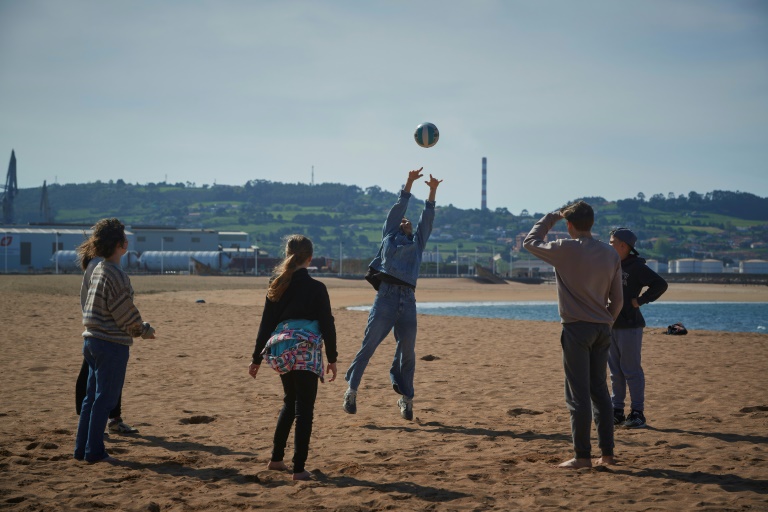
When Igor Pavlosky decided to flee Ukraine with his youngest children after bombs began falling, his destination was clear — Spain.

Like thousands of other Ukrainian youths, several of his daughters had spent yearly holidays with host families in Spain since the 1986 Chernobyl nuclear disaster.

Now these host families are helping to provide a safe haven from the war in Ukraine for these so-called “children of Chernobyl” and their parents.

Pavlosky, 46, says he only reluctantly took up the offer of help and left Kyiv at the end of February because he “had to protect” his children.

He piled into his car with his four youngest and drove across Europe to  Gijon, northern Spain, where his daughters had spent holidays every summer.

“It was very trying, I will remember it my entire life,” he says of the days-long road trip.

One of the daughters, Anastasia, was already in Gijon, having moved there three years ago. So was his wife Olena and another daughter who were visiting Anastasia when Russia invaded Ukraine on February 24.

Pavlosky left behind his oldest son Xenia, 26, who was banned from leaving Ukraine, as well as two other daughters — Ana and Stanislava — who decided to stay with their boyfriends.

– ‘Strong relationship’ –

His daughter Massa, 17, says she dreams of a Ukraine where she can “walk in the streets without bombs raining down, without being afraid of dying.”

Her older sister Dasha, 19, says Russian soldiers “came and took over our homes, the places where we played with our friends”.

It has been easier for her and her siblings to adapt than her parents because they already spoke Spanish, she adds.

“We came on holidays here, we already imagined ourselves living here. Mom and dad don’t want to live here,” she says.

Massa notes that before the war started she could talk and play with her dad, “But now he doesn’t say what he feels anymore.”

After the explosion at the Chernobyl power plant, dozens of charities in Spain began staging yearly respite holidays for Ukrainian youths to give them a break from the lingering effects of the world’s worst nuclear accident.

“There is a very strong relationship with the Ukrainians,” says Jorge Gonzalez, the head of the Expoaccion charity which runs a homestay programme for Ukrainian children and who hosted Stanislava at his home for years.

He says he loves Stanislava as much as if she was his daughter and urged the Pavloskys to come to Gijon as soon as the war broke out.

– ‘Welcome here’ –

Expoaccion has provided clothes and food the Pavlosky family, who are living in a flat that has been temporarily lent to them.

Igor has found a job as a construction worker and the children are all in school.

Olena’s face brightens and Igor gives a rare smile when they realise their son Xenia is calling from back home.

The entire family gathers behind the small screen to catch a glimpse of him. They blow kisses at each other and flash V for “victory” signs.

“Sometimes you wake up and you want to believe this was all a nightmare,” says Olena.

Some 134,000 Ukrainians have moved to Spain since Russia’s invasion, according to Spanish government figures, part of an exodus of nearly six million people.

In the southern port of Algeciras, Victoria Bielova, 18, is showing her nine-month-old daughter how to clap. They fled to the city from Ukraine a few weeks ago.

Bielova had been coming to Spain every year since she was six and she said she received messages from every host family in the country as soon as bombs began raining down on Ukraine.

“They said ‘you are welcome here, come’,” she says.

– ‘Wait until war ends’ –

She hesitated at first but set off on March 15 with her daughter, leaving behind her husband.

After travelling by bus for three days she settled in with the couple who hosted her during her last homestay in Spain, Francisco Perez and Cecilia Valencia.

They set up a guest room for her and her daughter with nappies, a crib and toys and invited her to stay “as long as the war lasts”, says Bielova.

Her sister is staying with a former holiday host family in Algeciras as well while her cousins are in Seville.

Bielova calls her husband Andry two or three times a day. She says she tries “not to think too much” about the war because her daughter “understands everything”.

She says she plans to return to Kyiv later this month if it is calm there, following in the footsteps of her sister-in-law and her nephew who have already returned to Ukraine from Spain.

But Perez, who takes Victoria and her daughter to the park every day, would like them to stay.

“I tell her to wait a little longer until the war end,” he says.

War in Ukraine: Latest developments

Here are the latest developments in the war in Ukraine:

– New  Mariupol  mission –

A new UN-led rescue mission is under way to evacuate the last civilians still trapped inside a besieged steel plant in Mariupol that has become the devastated city’s final holdout against Russian forces, Ukraine says.

About 200 civilians, including children, are estimated to remain in hiding in the Soviet-era tunnels and bunkers beneath the sprawling Azovstal factory, along with hundreds of Ukrainian soldiers.

President Volodymyr Zelensky’s office earlier said almost 500 civilians had been evacuated.

– ‘Steel plant assault continuing’ –

Ukraine says that Russia is pressing on with “assault operations” on the Azovstal plant. 

“The blockade of (Ukrainian) defence forces in the Azovstal area continues,” said a Kyiv army spokesman in a video.

The Russian military had announced a three-day ceasefire starting Thursday at Azovstal.

President Vladimir Putin says the Russian army is “still ready” to give safe passage to civilians trapped there.

“As for the militants remaining at Azovstal, the Kyiv authorities must give them an order to lay down their arms,” the Kremlin quotes Putin as saying.

– Mariupol road signs taken down –

Moscow-backed separatists in southeastern Ukraine say they have taken down traffic signs spelling out the name of Mariupol in Ukrainian and English and replaced them with Russian ones.

Locals wanted to see proof that “Russia has come back here forever,” wrote Denis Pushilin, head of Ukraine’s breakaway region of Donetsk.

Russian forces have for weeks sought to wrest full control of Mariupol, which has been destroyed in the onslaught. 

– Oil embargo a ‘red line’: Hungary –

Hungarian Prime Minister Viktor Orban says European Commission head Ursula von der Leyen has crossed “a red line” with a proposed EU Russian oil ban.

Von der Leyen has said the bloc would “phase out Russian supply of crude oil within six months, and refined products by the end of the year”. Hungary and Slovakia — both highly dependent on Moscow’s oil exports — would have until the end of 2023.

“I avoid the word ‘veto’,” Orban, who has cultivated close ties with Putin, says on state radio, adding the proposal “has been returned to sender, to Madame President, to work on further”.

– Pentagon denial –

The US Defense Department denies providing intelligence on the locations of Russian generals on the battlefield so that Ukrainian forces could kill them.

“We do not provide intelligence on the location of senior military leaders on the battlefield or participate in the targeting decisions of the Ukrainian military,” Pentagon spokesman John Kirby says, responding to an explosive New York Times report on US support for Ukraine’s military.

Separately, US media reports Washington had shared intelligence that helped Ukraine sink the Russian warship Moskva last month.

But a US official, speaking on condition of anonymity, tells AFP that the United States does not “provide specific targeting information on ships”.

– Germany to send howitzers –

Germany will send seven self-propelled howitzers to Ukraine, the defence ministry says.

Chancellor Olaf Scholz’s government has been under fire for dragging its feet on arming Ukraine compared to other Western allies. 

– G7-Zelensky video conference –

Leaders of the world’s top industrialised nations will hold video talks with Zelensky on Sunday, a spokeswoman for the German government as acting G7 chair says.

– ‘Hostilities’ continue in east –  

Ukraine’s defence ministry says fighting continues across the country’s east.

In the Donetsk and Tavriya areas, “the enemy continues conducting active hostilities”, it says. Shelling also continues in the town of Lyman in the Donetsk region.

Moscow is seeking to establish “full control” of the regions of Lugansk and Donetsk, and to maintain a land corridor to occupied Crimea.

burs-jmy/ach 

UN to resume rescue efforts at besieged Ukraine steel plant

Ukraine said a fresh UN-led rescue mission was under way Friday to evacuate the last civilians still trapped inside a besieged steel plant in Mariupol that has become the southern city’s final holdout against Russian forces.

About 200 civilians, including children, are estimated to remain in hiding in the Soviet-era tunnels and bunkers beneath the sprawling Azovstal factory, along with hundreds of Ukrainian soldiers.

“The operation is starting. We are praying for its success,” Deputy Prime Minister Iryna Vereshchuk told AFP by phone.

Russian President Vladimir Putin on Thursday said his army was “ready” to provide safe passage to the civilians, as part of a Moscow-announced, three-day truce at the plant. 

But Ukraine’s army denied there had been a pause in fighting at Azovstal, saying Russia was continuing attacks by ground and by air.

“There are resumed assault operations to take control of the plant,” said a Kyiv army spokesman in a video.

The United Nations has said a convoy was en route to help civilians escape the “bleak hell” of Azovstal, where food and water are running out and medical care is minimal.

The convoy is due to arrive later on Friday, in what would be the third joint evacuation operation with the Red Cross in Mariupol, a strategic port city reduced to rubble by relentless Russian bombardment.

Ten weeks into a war that has killed thousands, destroyed cities and uprooted more than 13 million people, Russia has focused its efforts on Ukraine’s east and south.

Capturing Azovstal and taking full control of the now-flattened Mariupol would be a major strategic victory for Moscow.

– May 9 fears –

It would also be a symbolic success as May 9 approaches, the day Russia traditionally marks its victory over the Nazis in World War II with lavish military parades.

Ukrainian officials believe Moscow is planning a May 9 victory parade in Mariupol, possibly with Ukrainian prisoners on display. Russia has not confirmed any such plans.

Moscow-backed separatists in southeastern Ukraine on Friday said they had taken down traffic signs spelling out the name of Mariupol in Ukrainian and English and replaced them with Russian ones.

Locals want to see proof that “Russia has come back here forever,” said Denis Pushilin, head of Ukraine’s breakaway region of Donetsk.

– ‘This hell’ –

Almost 500 civilians were already evacuated from Mariupol in the previous UN-organised rescue missions in recent days, the head of Ukraine’s presidential office, Andriy Yermak, said on Telegram.

He said renewed rescue efforts were continuing and that he would “give the results of this later”.

Kyiv will “do everything to save all its civilians and military”, he added.

In an address late Thursday, Ukrainian President Volodymyr Zelensky said the Russian shelling on Azovstal hadn’t stopped.

“Just imagine this hell! And there are children there! More than two months of constant bombing and constant death,” Zelensky said.

Speaking to the Israeli prime minister Thursday, Putin said the last Ukrainian defenders at Azovstal had to surrender.

“As for the militants remaining at Azovstal, the Kyiv authorities must give them an order to lay down their arms,” Putin said.

– Pentagon denial –

Since launching its invasion on February 24, Russia has suffered a string of battlefield setbacks and Kherson in the south remains the only significant city it has captured.

The Kremlin conceded Thursday that Kyiv’s Western partners had prevented a quick end to Moscow’s campaign by sharing intelligence and weapons with Ukraine, but that this was “incapable of hindering the achievement” of Russia’s military operation.

The United States is among Ukraine’s biggest backers, supplying military equipment and munitions worth billions of dollars as well as intelligence and training.

But the White House has sought to limit knowledge of the full extent of its assistance to avoid provoking Russia into a broader conflict beyond Ukraine.

Washington on Thursday denied an explosive report in The New York Times that it helped Ukraine target Russian generals.

Separately, US media reported Thursday that Washington had shared intelligence that helped Ukraine sink the Russian warship Moskva last month.

However a US official, who spoke on condition of anonymity, told AFP that the United States does not “provide specific targeting information on ships.” 

– Oil embargo row –

Ukraine’s government has estimated at least $600 billion will be needed to rebuild the country after the war.

Zelensky, who has tirelessly campaigned for help from allies, on Thursday launched a global crowdfunding platform called United24 to help Ukraine win the war and rebuild its infrastructure.

More than six billion euros ($6.3 billion) were collected at a donors’ conference in Warsaw, Polish Prime Minister Mateusz Morawiecki said Thursday.

In addition to financial and military assistance, Ukraine’s allies have also punished Russia for the invasion with unprecedented sanctions.

In what would its toughest move yet, the European Commission has proposed that all 27 EU members gradually ban Russian oil imports.

Hungarian Prime Minister Viktor Orban, whose country is hugely reliant on Russian oil, opposes the ban and on Friday accused European Commission head Ursula von der Leyen of “attacking” EU unity.

The embargo would amount to “a nuclear bomb dropped on the Hungarian economy”, Orban said, adding that the proposed exemption for Hungary until end-2023 is not long enough.

– Farmers on front line –

Fighting continued across eastern Ukraine, Kyiv said.

In the Donetsk and Tavriya areas, “the enemy continues conducting active hostilities”, the Ukrainian ministry of defence said. 

Shelling also continued in the town of Lyman in the Donetsk region, it added.

In the southwest, farmers racing to keep up with the spring planting season have found themselves ploughing around unexploded ordnance — one more piece of worrying news for next year’s harvest in Europe’s breadbasket.

“Every day since the start of the war we have been finding and destroying unexploded ammunition,” Dmytro Polishchuk, one of the deminers, told AFP before heading into a field in the southwestern village of Grygorivka to destroy an unexploded rocket.

burs-mfp/ach 

Anti-Kremlin reporter faces fine for 'discrediting army'

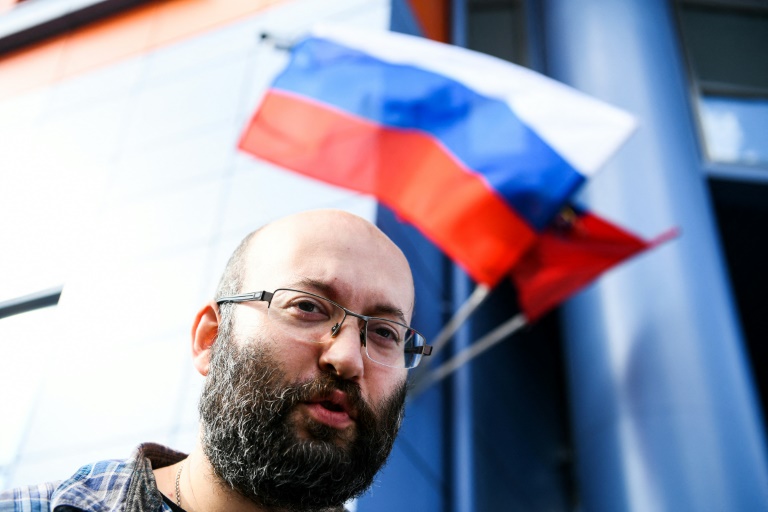
An anti-Kremlin Russian journalist and municipal deputy said Friday he faced a fine of up to 100,000 rubles for discrediting the army amid Moscow’s military campaign in Ukraine.

Ilya Azar said authorities had opened an administrative case against him “for discrediting the use of Russia’s armed forces in order to protect the interests of the Russian Federation and its citizens, to maintain international peace”.

The 37-year-old journalist with Novaya Gazeta, Russia’s top independent newspaper, and a local deputy said, citing prosecutors, that the case had been opened over a post on Facebook but he had no other details.

Azar said he faced a fine of up to 100,000 rubles ($1,455).

“I was already beginning to worry that they had forgotten about me or that I was not speaking clearly enough against the war!” he said ironically.

After President Vladimir Putin sent troops to pro-Western Ukraine, Azar left Russia. He is currently located in an EU country, he told AFP, without elaborating.

Moscow has stepped up efforts to stamp out the last pockets of dissent after the start of Moscow’s military campaign in Ukraine.

Authorities have imposed prison terms of up to 15 years for spreading information about the Russian military deemed false by the government. 

Independent media outlets including Novaya Gazeta have been shut down or suspended operations, and tens of thousands of Russians have left the country in protest over the Kremlin’s policies.

Close Bitnami banner
Bitnami