World

Covid pandemic killed 13 to 17 million in 2020-21: WHO

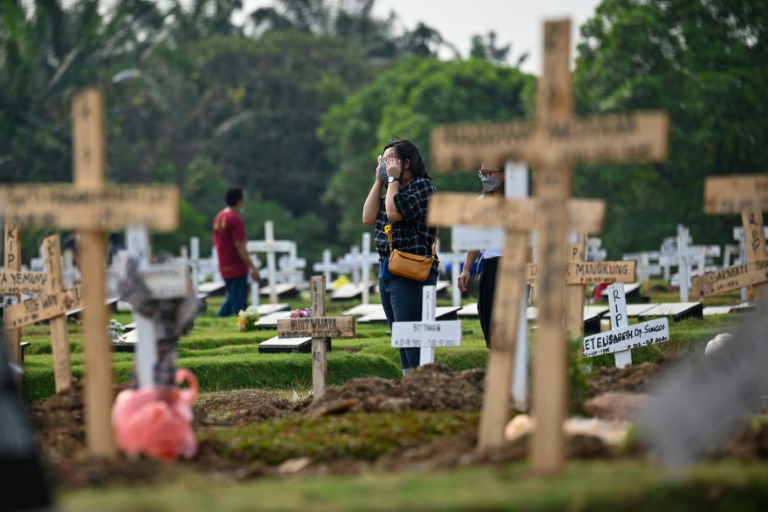
The Covid-19 pandemic killed 13.3 to 16.6 million people in 2020 and 2021, the WHO estimated Thursday — up to triple the number of deaths officially attributed to the disease.

The World Health Organization’s long-awaited estimate of the total number of deaths caused by the pandemic — including lives lost to its knock-on effects — finally puts a number on the broader impact of the crisis.

The figures give a more realistic picture of the worst pandemic in a century, which has, according to Thursday’s estimates, killed around one in 500 people worldwide and continues to claim thousands of lives each week.

“The full death toll associated directly or indirectly with the Covid-19 pandemic between January 1, 2020 and December 31, 2021 was approximately 14.9 million (range 13.3 million to 16.6 million),” the UN health agency said.

The figures are extremely sensitive due to how they reflect on the handling of the crisis by authorities around the world, with some countries, notably India, already contesting the far higher numbers.

India’s reported Covid-19 deaths for 2020-21 are 481,000, but the WHO’s estimated total figure is 3.3 million to 6.5 million.

“We need to honour the lives tragically cut short, lives we lost — and we must hold ourselves and our policymakers accountable,” Samira Asma, the WHO’s data chief, told a press conference.

– Deaths due to impact –

The figures, termed as excess mortality, are calculated as the difference between the number of deaths that occurred and the number that would have been expected in the absence of the pandemic, based on data from earlier years.

Excess mortality includes deaths directly due to Covid-19 disease, and indirectly due to the pandemic’s impact on health systems and society.

It also factors in deaths averted during the pandemic, such as a lower risk of work-related fatalities or road accidents.

The WHO declared Covid an international public health emergency on January 30, 2020, after cases of the new coronavirus spread beyond China.

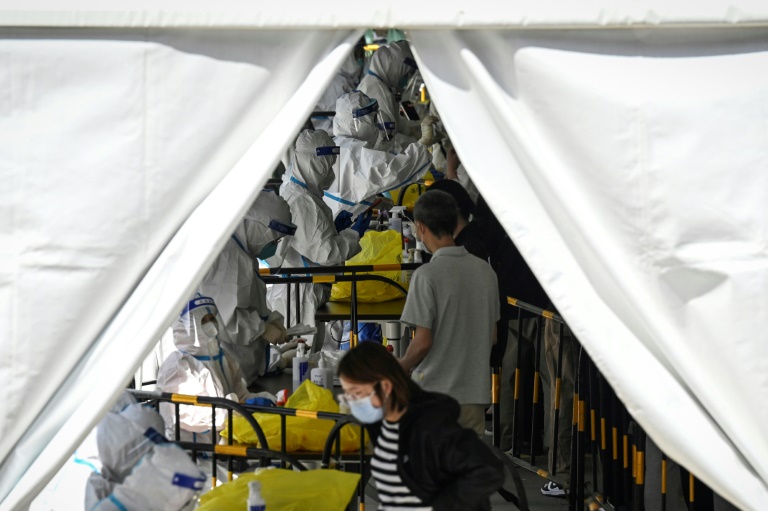
Countries worldwide reported 5.42 million Covid-19 deaths to the WHO in 2020 and 2021 — a figure that today stands at 6.24 million, including deaths in 2022.

The Geneva-based organisation has long said the true number of deaths would be far higher than just the recorded fatalities put down to Covid infections.

Deaths linked indirectly to the pandemic are attributable to other conditions for which people were unable to access treatment because health systems were overburdened by the crisis.

That could include delays to surgical operations, or chemotherapy for cancer patients.

– Understanding the crisis –

The WHO said that most of the excess deaths — 84 percent — were concentrated in south and southeast Asia, Europe and the Americas. 

Indeed, 10 countries alone accounted for 68 percent of all excess deaths: Brazil, Egypt, India, Indonesia, Mexico, Peru, Russia, South Africa, Turkey and the United States.

High-income countries accounted for 15 percent of the excess deaths; upper-middle-income nations 28 percent; lower-middle-income states 53 percent; and low-income countries four percent.

The global death toll was higher for men than for women — 57 percent male and 43 percent female.

And 82 percent of the excess deaths were estimated to be people aged over 60.

“These sobering data not only point to the impact of the pandemic but also to the need for all countries to invest in more resilient health systems,” WHO chief Tedros Adhanom Ghebreyesus said.

Asma said measuring excess mortality was vital to understanding the pandemic, with the numbers informing policymakers so they can take action to reduce death rates and prevent future crises.

Many countries do not have the capacity for reliable mortality surveillance and therefore do not generate the data needed to work out excess mortality rates.

The WHO believes that generally, six in 10 deaths worldwide are not formally recorded.

The WHO said the 14.9-million figure was produced by leading world experts who developed a methodology to generate estimates where data is lacking.
Musk secures $7.1 bn to finance Twitter deal

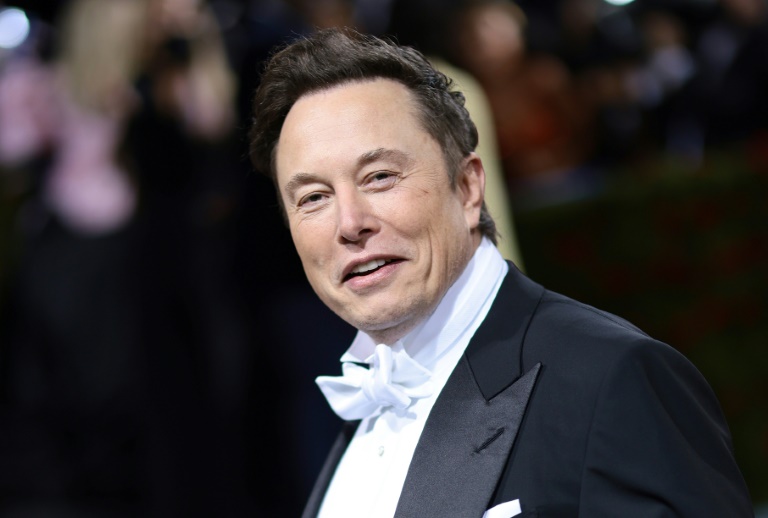
Elon Musk has raised $7.1 billion for his Twitter acquisition from investors that include Oracle founder Larry Ellison and Saudi Prince Alwaleed bin Talal, according to a securities filing Thursday.

Musk, chief executive of Tesla and SpaceX, listed 18 investors who agreed to cash investments including Ellison ($1 billion), Sequoia Capital ($800 million) and Vy Capital ($700 million). 

The Saudi prince, the head of the Kingdom Holding Company conglomerate, agreed to contribute about 35 million Twitter shares worth $1.9 billion so as to retain a stake in the company post-acquisition, the filing said.

Alwaleed had previously balked at Musk’s $54.20 per share offer as too low, but praised Musk on Twitter on Thursday, saying “I look forward to roll our ~$1.9bn in the ‘new’ @Twitter and join you on this exciting journey.”

The investments will reduce a $12.5 billion margin loan organized through Morgan Stanley and other banks to $6.25 billion, the filing said.

The new financing means less of Musk’s Tesla shares will be used as collateral under the margin loan. 

Musk “may receive additional financing commitments to fund additional portions of the total Merger Consideration,” the filing said, adding that the Tesla chief is in talks with former Twitter Chief Executive Jack Dorsey and others who may contribute shares to maintain an equity stake.

The Twitter takeover is expected to close later in 2022. 

CNBC reported that upon completion of the deal, Musk is expected to serve as temporary CEO of Twitter for a few months, the network said, citing unnamed sources.

Death toll rises to 26 in Chinese building collapse

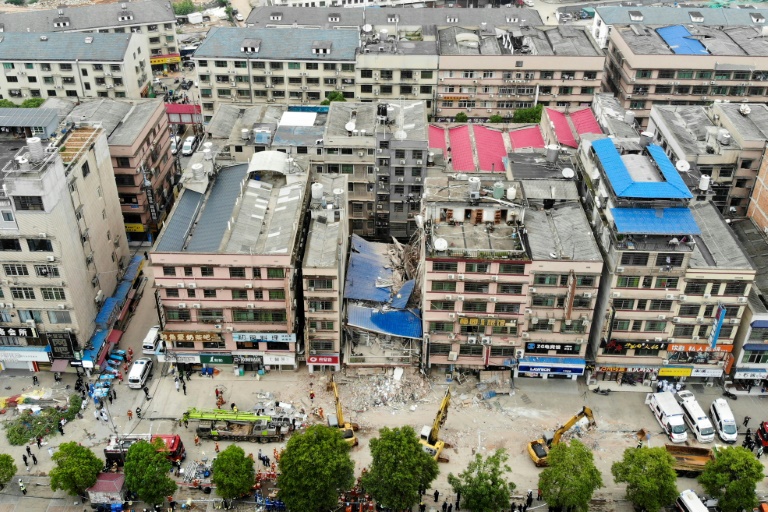
Chinese authorities raised the number of people confirmed dead in a building collapse to 26 on Thursday, nearly a week after the block containing apartments, a hotel and a cinema caved in and emergency workers launched a massive rescue operation to pull out survivors.

The commercial building in central Changsha city collapsed on Friday, with officials saying that “currently 10 trapped people have been rescued and 26 people were discovered dead,” state broadcaster CCTV said.

The tenth person pulled alive from the rubble just after midnight on Thursday had been buried in debris for nearly six days.

She was conscious during her rescue and even advised rescuers on how to bring her out safely, official news agency Xinhua reported.

The flattened structure, which has left a gaping hole in a dense Changsha streetscape, created a mess of debris and crumbled concrete beams.

The confirmed number of dead from the collapse had previously been five. More people are still believed to be missing in the debris.

Another woman who survived around 88 hours in the debris told state media that she was studying on her bed at the time of the collapse and managed to stay alive by holding on to a small amount of water and using her quilt to keep warm.

Rescuers have been able to find live victims with the help of sniffer dogs, life detectors and drones, as well as shouting and knocking survivors, according to Xinhua.

– Eleven detained –

Eleven people — including the building’s owner and a team of safety inspectors — have been detained in connection with the collapse, including two people suspected of engaging in “illegal alteration” of the building, according to Changsha authorities.

Officials have alleged that surveyors falsified a safety audit of the building. 

On Thursday, Xinhua said the building was a “self-built residential structure”.

President Xi Jinping earlier called for a search “at all cost” and ordered a thorough investigation into the cause of the collapse, state media reported.

A top Communist Party official was also dispatched to the scene — an indication of the severity of the disaster.

Building collapses are not uncommon in China due to weak safety and construction standards, as well as corruption among officials tasked with enforcement.

In January, an explosion triggered by a suspected gas leak brought down a building in the city of Chongqing, killing at least 16 people.

Twenty-five people also lost their lives in June 2021 when a gas blast hit a residential compound in the city of Shiyan.

The same month, 18 people were killed and more injured when a fire broke out at a martial arts school, with state media reporting that all the victims were boarding school pupils.

Thousands sick as latest severe sandstorm sweeps across Iraq

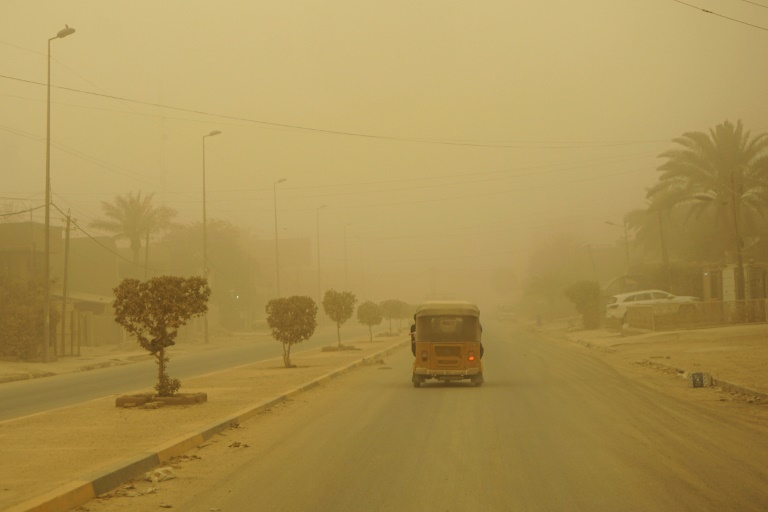
One person died in Iraq and more than 5,000 were treated in hospitals Thursday for respiratory ailments due to a sandstorm, the seventh in a month, the health ministry said.

Duststorms have increased dramatically in frequency in Iraq in recent years, driven by soil degradation and intense droughts made worse by climate change, with rising average temperatures and sharply lower rainfall.

Residents of six of Iraq’s 18 provinces, including Baghdad and the vast western region of Al-Anbar, awoke once again to a thick cloud of dust blanketing the sky.

As the storm swept across Iraq, it shrouded the capital Baghdad and the holy city of Najaf in ghostly orange clouds of choking dust.

“One death has been recorded in Baghdad” and hospitals “have received no less than 5,000 cases so far,” health ministry spokesman Seif al-Badr said in a statement.

Those hit hardest are people suffering from “chronic respiratory diseases such as asthma”, and the elderly who suffer in particular from heart ailments, he said.

Badr added that the majority had since been discharged and most cases were of “medium or low intensity”.

Dust and sandstorms have always occurred in the Middle East but grown more frequent and intense in recent years, a trend that has been associated with overuse of river water, more dams, overgrazing and deforestation.

The fine dust particles can cause health problems such as asthma and cardiovascular ailments, and also spread bacteria and viruses as well as pesticides and other toxins.

Authorities in Al-Anbar and Kirkuk provinces, north of the capital, urged people “not to leave their homes”, said the official INA news agency.

The storms are expected to grow more intense with worsening climate change because higher temperatures and more irregular rainfalls dry out land faster and accelerate desertification.

Sandstorms also cause economic damage by reducing visibility, sometimes to near zero, shuttering airports and highways and causing damage to buildings, vegetation and solar panels.

– ‘272 days of dust’ –

Hospitals in Al-Anbar province had received more than 700 patients with breathing difficulties, said Anas Qais, a health official cited by INA.

The central province of Salaheddin reported more than 300 cases, while Diwaniya and the province of Najaf, south of Baghdad, each recorded about 100 cases, the news agency added. 

Oil-rich Iraq, despite its mighty Tigris and Euphrates rivers, is classified as one of the world’s five countries most vulnerable to climate change and desertification. 

Scientists say climate change amplifies droughts and that their intensity and frequency in turn threaten food security. Experts have said these factors threaten to bring social and economic disaster in the war-scarred country.

In November, the World Bank warned Iraq — a country of 41 million people — could suffer a 20-percent drop in water resources by 2050 due to climate change.

The United Nations says about one-third of Iraq’s population now lives in poverty.

The effects of low rainfall have been exacerbated as the levels of the Tigris and Euphrates drop because of upstream dams in neighbouring Iran and Turkey.

In early April, a government official warned Iraq could face “272 days of dust” a year in coming decades.

The environment ministry said the weather phenomenon could be addressed by “increasing vegetation cover and creating forests that act as windbreaks”.

Lufthansa warns of price rises as tourist demand takes off

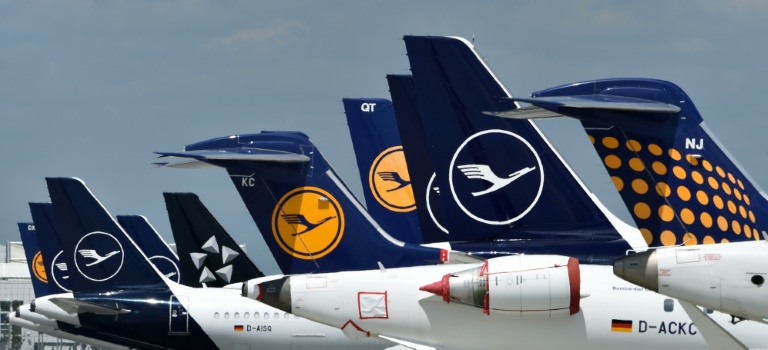
German national carrier Lufthansa said Thursday that ticket prices could rise as the cost of energy soars following the Russian invasion of Ukraine. 

Increases in the prices for jet fuel were “too high to be offset by additional cost reductions”, group chief financial officer Remco Steenbergen told a press conference.

Higher energy costs meant “ticket prices will have to rise”, Steenbergen said.

The carrier had already “pushed through a couple of price hikes” that have been “accepted” by business and leisure travellers alike, he added. 

Lufthansa CEO Carsten Spohr said the airline was projecting a record summer for tourist activity, with the latest data showing passenger numbers bouncing back from the coronavirus pandemic. 

Spohr said the number of passengers on Lufthansa flights had “more than quadrupled” in the first quarter to 13 million, from three million in 2021, when travel restrictions in many markets were more severe.

“New bookings are increasing from week to week,” he told a press conference. 

“We are expecting strong growth in the summer and probably more holiday-makers than ever before,” Spohr said.

For business travel, the group is expecting traffic to reach “around 70 percent” of its pre-coronavirus level by the end of the year, it said in a statement.

In all, Lufthansa expects to offer “around 75 percent” of its pre-crisis capacity over the year.

The figure would be higher in the summer for popular tourist destinations, reaching 95 percent on short-haul routes in Europe and 85 on transatlantic services, the group said.

– ‘On track’ –

Lufthansa also said Thursday it had seen a considerable improvement in its financial results for the first quarter, supported by the recovery in passenger numbers.

The group recorded a net loss of 584 million euros ($620 million) over the first three months of 2022, down from one billion euros in the same quarter last year.

Lufthansa’s cargo division had a “record result” in the first quarter, the carrier said, as demand for freight remained high amid turmoil in global supply chains. 

The segment recorded an operating result — a key measure of underlying profitability — of 495 million euros, up from 315 million euros in the first quarter of 2021.

Europe’s largest airline group — which includes Eurowings, Austrian, Swiss and Brussels Airlines — struggled at the outbreak of the pandemic and was saved from bankruptcy by a government bailout.

But business has picked up and Lufthansa said last November it had repaid the nine-billion-euro loan it had received from the government. 

The group was now “on track” to make a positive operating profit in the second quarter and over the year, CFO Steenbergen said.

The “extremely volatile” price of fuel however kept the group from committing to improve its official financial outlook for the year, he said. 

Strains were also being felt by “airports, air traffic control and caterers who are confronting a personnel shortage” leading to disruption to services, CEO Spohr said.

Some of the issues would not be resolved “before the summer”, he added.

Refugee who paints with a toothbrush nominated for Australian art prize

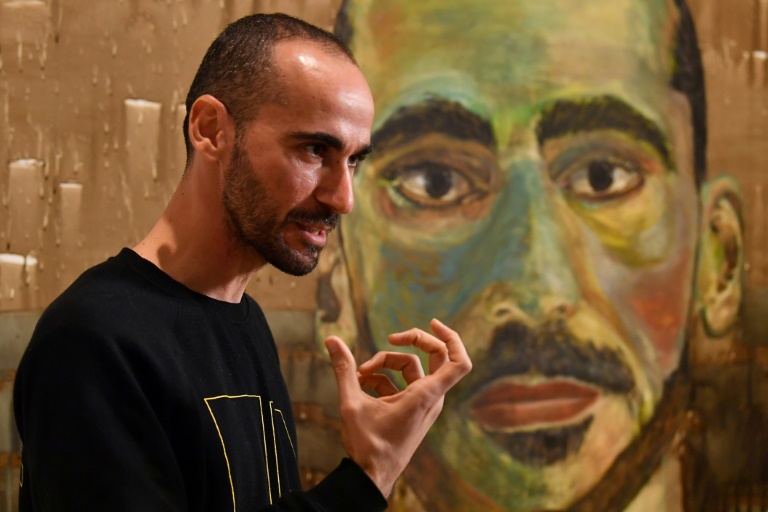
A refugee held for eight years in Australia’s hardline immigration system earned a finalist spot in the nation’s top art prize on Thursday — for a self-portrait he painted with a toothbrush.

For artist Mostafa Azimitabar, a Kurd who fled persecution in Iran, the honour came just over a year after he was released from one of Australia’s notorious immigration hotels.

He told AFP a finalist berth for the Archibald — a portrait prize worth AUD$100,000 ($72,192), which has been awarded to some of Australia’s most esteemed artists — was “one of the best moments of my life”. 

Azimitabar’s self-portrait was painted using a toothbrush, a technique he began experimenting with in 2014, soon after being put into one of Australia’s offshore immigration detention camps on Manus Island, Papua New Guinea.

“I asked one of the officers on Manus: ‘Can I have some paint?’… I would like to do some artwork because I don’t want to give up’,” he recalled.

After the officer said he might eat the paint to inflict self-harm, a frustrated Azimitabar returned to the room he shared with dozens of men.

On a table, he spotted a cup of coffee and a toothbrush.

“I don’t know what happened… that moment was so special for me. I grabbed the toothbrush and I put it in the coffee and I just dragged it (on some paper),” he said, describing this as his “moment of victory”.

– KNS088 –

Azimitabar’s self-portrait is entitled “KNS088”, the government identification number he was given during his eight years in detention.

He said painting was a reminder that he was a person, not a number.

“Art and painting helped me to be strong, to continue. Because when I paint, I don’t feel any trauma,” he said.

The UNHCR has repeatedly called on Australia to close its offshore camps, saying they “undermined the rights of those seeking safety and protection and significantly harmed their physical and mental health”.

But when he was moved to Australia’s mainland for medical care and placed in a detention hotel, Azimitabar found it difficult to make art.

Australia’s detention hotels, which made global headlines earlier this year when tennis star Novak Djokovic was held in one during his visa stoush, were “worse than Manus”, he said.

Then, on January 21, 2021, with little warning or explanation, he was released.

– Life after detention –

Azimitabar was given a six-month bridging visa, which allowed him to work, but not study, access welfare or claim support for accommodation.

Since his release into the community, he has tried to build a life in Australia, working at a charity called ReLove.

“We provide free furniture to people (fleeing) domestic violence, or people who have been through a lot of trauma,” he said.

He has also painted, a lot, but found traditional tools didn’t inspire him as much as the toothbrush.

“This toothbrush is a very good friend of mine,” he said.

Azimitabar wanted his self-portrait to capture the “suffering, sadness and strength” of life as a refugee.

He hoped that being named as an Archibald finalist will allow more Australians to understand that refugees are capable of anything.

“I believe that people look at me as a survivor,” he said.

The winner of this year’s Archibald Prize will be announced on May 13.

OPEC+ eye modest supply boost as demand dented by China Covid rules

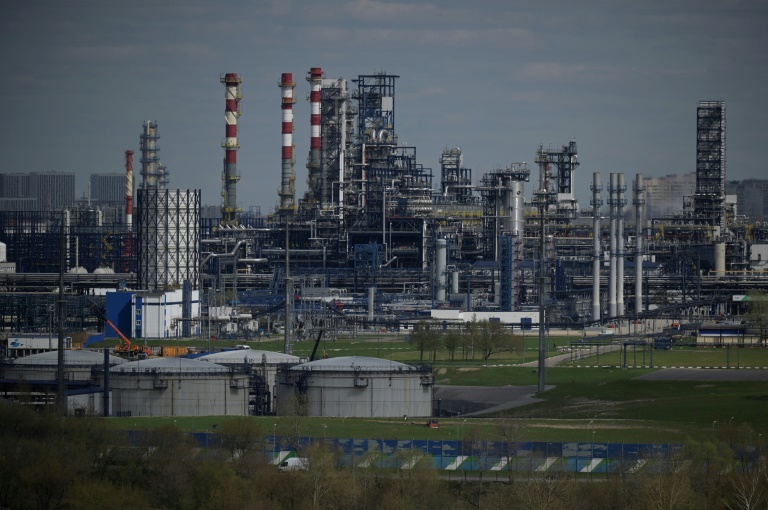
OPEC+ members meeting on Thursday are expected to agree a marginal increase in oil production, bolstered by risks to demand amid coronavirus restrictions in China. 

Russia’s invasion of Ukraine has also added to supply concerns, which have increased with Europe’s announced moves on a potential Russian oil embargo.

Prices soared on Wednesday, with Brent North Sea crude closing above $110 a barrel, its highest level in two-and-a-half weeks. 

At around 0945 GMT on Thursday, Brent stood at $110.47 a barrel and American WTI at $107.83 a barrel.

Analysts said the new surge would not shake the 13 members of the Organization of Petroleum Exporting Countries (OPEC), led by Riyadh, and their 10 partners led by Moscow. 

“It is likely that OPEC will stick with its plan despite ongoing instability relating to the Russia-Ukraine conflict,” XTB analyst Walid Kudmani told AFP, citing “prospects of falling demand due to widespread lockdowns seen in China as a result of rising Covid cases”. 

As in previous months, the cartel is likely to open the taps at 432,000 barrels per day for June, a strategy begun in the spring of 2021 when the economy began recovering after the drastic cuts imposed amid the shock of the pandemic. 

The talks will begin with technical discussions at the ministerial committee meeting at 1100 GMT in Vienna, the headquarters of the cartel. 

– China, grounds for ‘caution’ –

Largely spared for two years, China in recent weeks has been battling its worst coronavirus outbreak since the spring of 2020 which has strained its zero-Covid strategy. 

Beijing on Wednesday closed dozens of metro stations and residents fear their city will be locked down, as is already the case in Shanghai, the country’s largest city with 25 million people. 

“The slowing activity in China is certainly a factor that will justify their decision to stay put, faced with the mounting international pressure to increase production to address the worsening global energy crisis,” Ipek Ozkardeskaya, an analyst at Swissquote bank, told AFP.

This is “a reason to remain cautious,” said Fawad Razaqzada, analyst at City Index and Forex.com.

As for the new economic sanctions planned against Russia, they are not expected to move the needle for the moment. 

In its sixth package of sanctions, the European Commission is seeking a ban on all Russian oil, crude and refined, transported by sea and pipeline by the end of 2022, European Commission President Ursula von der Leyen told the European Parliament.

– ‘Huge impact’ –

That prospect threatens supply in an already tense European market.

While unanimity among the 27 EU member states is required for the sanctions to go forward, Hungary, which is highly dependent on Russian deliveries, rejected the project in its current form.

“If it (the EU) manages to convince its members to ratify the plan… then this will have a huge impact on Russian oil exports,” Razaqzada said.

But once again the OPEC+ alliance, anxious to remain united and avoid upsetting Moscow, will “certainly not save the day,” Ozkardeskaya said.

“The cartel made clear that the Ukraine war — that impacts the Russian exports — is not cause for concern,” she said.

Stephen Innes, an analyst at SPI Asset Management, said OPEC+’s wait-and-see approach was “increasingly untenable” and “contrary to its mission statement”.

“(It’s) why they have fallen under constant criticism for being slow and technically unprepared to react to recent developments in global markets,” he said.

But does OPEC+ really hold the key to price stabilisation? Between a lack of investment in oil infrastructure in some member countries and operational problems, the cartel regularly fails to meet its production quotas.

China's Covid rules batter business confidence: EU Chamber

China’s strict zero-Covid policy has led to a plunge in confidence among European companies operating in the country as supply chains are tangled, revenue projections fall and staff leave, according to a business group survey released on Thursday.

Beijing remains wedded to its strategy of stamping out coronavirus clusters with lockdowns and mass testing, even as the fast-spreading Omicron variant makes this increasingly difficult.

But the European Union Chamber of Commerce said in a report that the strict containment measures in dozens of Chinese cities, including the financial capital Shanghai, had caused “disruption on an epic scale”.

“While the war (in Ukraine) has had an impact on European businesses operating in China, Covid-19 presents a far more immediate challenge and has caused a considerable drop in business confidence,” the Chamber added.

Its survey of more than 370 members was conducted in late April.

Nearly a quarter of respondents are now considering moving current or planned investments in China to other markets — more than doubling from two months ago.

Almost 60 percent decreased their revenue projections for this year, while around a third saw a drop in staffing, results showed.

Most companies also reported a negative hit on supply chains, with struggles accessing raw materials and components, or delivering finished products.

“The Chinese market has lost a considerable amount of allure for many respondents,” the Chamber said, adding that Covid measures have made it less attractive for investment.

“The predictability of the Chinese market is gone,” EU Chamber President Joerg Wuttke told reporters on Thursday, adding that the current “whack-a-mole” method of stamping out flare-ups is unnerving.

“The fact that it took down Shanghai has sent shockwaves through headquarters… Where is that going to end?” Wuttke said.

The Chamber said a vast majority of firms surveyed agreed with proposals to focus more on vaccinating China’s entire population, allowing mild positive cases to quarantine at home, and allowing mRNA vaccines to be used.

For now, Wuttke said China’s zero-Covid policy is unlikely to change, as it has been a strong political signal of Beijing’s triumph. 

But he cautioned that “China runs the risk of becoming a victim of its past success.”

Businesses are also being bogged down by the war in Ukraine, the survey showed, with the disruption of logistics to and from Europe.

Rail freight is no longer an option and aircraft need to circumvent Russian and Ukrainian airspace — increasing distance and costs.

And “the susceptibility of operations to future shocks must be weighed, in particular the prospect of a deterioration in EU-China relations”, the Chamber said.

Taiwan scraps deal to buy US anti-submarine helicopters

Taiwan has opted out of purchasing anti-submarine helicopters from the United States because they are too expensive, its defence minister said Thursday.

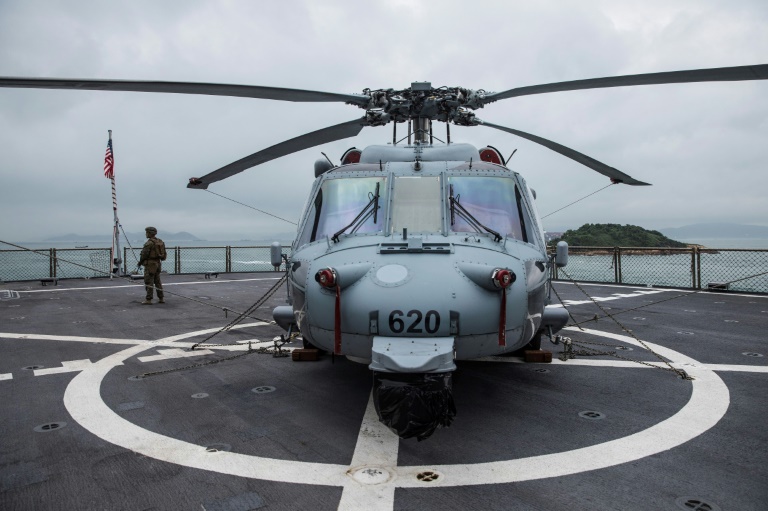
The island was planning to buy up to 12 Seahawk choppers but the deal has been scrapped as Taipei prioritises lower cost, more mobile weaponry to counter any threat from China.

Local media reported earlier this year that the sale could fall through after Washington concluded the helicopters were not the best bet for Taiwan’s “asymmetric warfare” needs.

Taiwan has shifted to a “porcupine” strategy that seeks to equip the island to repel an attack from a far larger Chinese military.

On Thursday defence minister Chiu Kuo-cheng confirmed the chopper deal was dead.

“We feel the price is too high and it’s above what we can afford,” he told lawmakers.

Taiwan’s 23 million people live under the constant threat of invasion from China, which views the democratic island as its territory.

Russia’s invasion of Ukraine has heightened fears that Beijing might one day follow through on threats to annex its smaller neighbour.

Taiwan’s defence ministry earlier this week revealed that key deliveries of other weapons from the United States had hit roadblocks.

The Russia-Ukraine war has led to a shortage of Stinger anti-aircraft missiles, while production line issues were delaying a delivery of M109A6 Paladin self-propelled howitzers.

Chiu indicated Taiwan is now looking for suitable replacements. 

“We have other alternatives and we definitely will have responsive measures. We will not throw our hands up because (these weapons) are not available. The military will do our job of preparing for combat,” Chiu told lawmakers. 

Stingers are highly portable shoulder-launched missiles that have been invaluable to Ukrainian forces fighting off Russian air power.

M109A6 Paladins are massive artillery guns on a tank chassis that can be easily moved, making them harder to spot and take out.

Western countries have been sending Ukraine thousands of the surface-to-air missiles and shoulder-mounted launchers, which are effective against helicopters and low-flying planes. Washington has promised 1,400. 

Raytheon Technologies, which makes Stingers, said last month it would not be able to accelerate production of the missiles before 2023 due to a lack of parts. 

The United States agreed to sell Taiwan 250 Stinger missiles as part of a 2019 deal worth more than $2.2 billion that sparked a protest by China. 

Washington has remained a key ally and leading arms supplier to Taipei despite switching diplomatic ties to Beijing in 1979.

Philippine priests back Marcos rival in high stakes election campaign

Hundreds of Philippine priests on Thursday endorsed the main rival to former dictator Ferdinand Marcos’s son, just days ahead of a presidential election they called a “battle for the soul” of the nation.

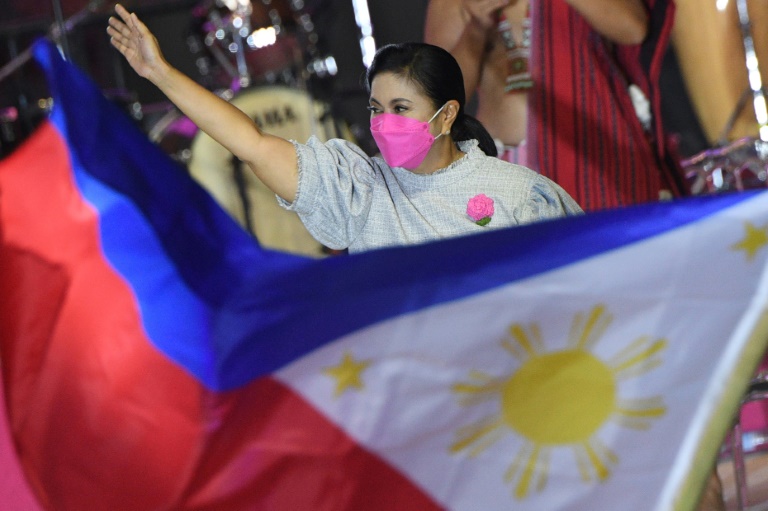
About 200 members of the clergy from the deeply Catholic country joined the mounting number of priests publicly backing Leni Robredo, who polls clock at a distant second behind Ferdinand Marcos Junior in the lead up to Monday’s vote.

The election is seen as one of the most consequential in Philippine history — a potentially make-or-break moment for the young democracy.

The group of clergy called it a “battle for the soul” of the nation — a choice between the rule of law and the “diminution of our liberties.”

Marcos Jr has a seemingly unassailable double-digit lead, winning widespread support by forging alliances with several of the country’s rival political dynasties. 

But his juggernaut campaign has been propelled by social media misinformation seeking to rewrite history about his father’s brutal rule. 

As many as 50,000 people were detained during martial law that ran from 1972-1981 as the elder Marcos and his wife Imelda became by-words for authoritarian kleptocracy. 

Imelda, now 92, is seen as a driving force behind the family’s public rehabilitation and the rebranding of that era as the Philippines’ “golden age”. 

After six years of President Rodrigo Duterte’s authoritarian rule, critics doubt Marcos Jr’s commitment to democracy. And they fear his rule could further degrade human rights and worsen corruption.

Marcos Jr has previously expressed support for the “healthy exercise of democracy”.

The country’s highly influential Catholic church has so far not taken an official position in the upcoming election. 

Top bishop Pablo David has urged voters to back “candidates who will sustain and strengthen our democracy, uphold the rule of law, and respect the dignity and rights of human beings”.

But he has stopped short of naming names or endorsing one candidate over the other.

With a Marcos victory increasingly likely, individual members of the clergy are speaking out.

On Wednesday, a separate group of 1,400 Catholic clerics — including more than a dozen bishops — signed a statement backing Robredo’s campaign. 

Describing the election as “critical”, the group said the contrast in morality between the leading candidates meant they could “no longer stay neutral or apolitical”. 

Without calling out Marcos Jr by name, they railed against “fake, deceptive and manipulative claims that aim to revise the history of our country”. 

– ‘Years of darkness’ –

Father Flavie Villanueva — a priest who has received death threats and been charged with sedition for his criticism of Duterte’s bloody drug war — said the church had an obligation to speak out. 

“We cannot remain ignorant about what is happening around us,” he told AFP. “We have a moral obligation to act as the conscience of the people.” 

He warned that the election of “thieves and murderers” would cast “years of darkness over the Philippines”. 

Around 80 percent of Filipinos are Catholic, and the faith permeates daily life. 

Religious television programmes are ubiquitous and divorce remains illegal. 

The church played a crucial role in the 1986 “People Power” revolution which brought down the Marcos regime. 

The church’s Radio Veritas urged Filipinos to take to the streets to protest. 

But it is unlikely to make an institution-wide endorsement. 

Villanueva said the situation in the Philippines was so serious that Pope Francis should weigh in. “I pray that he would”, he said. 

Many Filipinos believe Pope Francis already has, with a slew of misleading social media posts falsely claiming he backed Marcos Jr.  

Close Bitnami banner
Bitnami