World

Stocks rally as Fed eases fears of bigger rate hike

Stock markets rallied Thursday after the Federal Reserve played down chances of an even bigger US interest rate hike in the near future.

Oil prices steadied, one day after big gains as the European Commission proposed a gradual ban on Russian crude over Moscow’s invasion of Ukraine.

The Federal Reserve on Wednesday announced an expected half-point lift in borrowing costs — the biggest since 2000 — as part of its battle to rein in inflation.

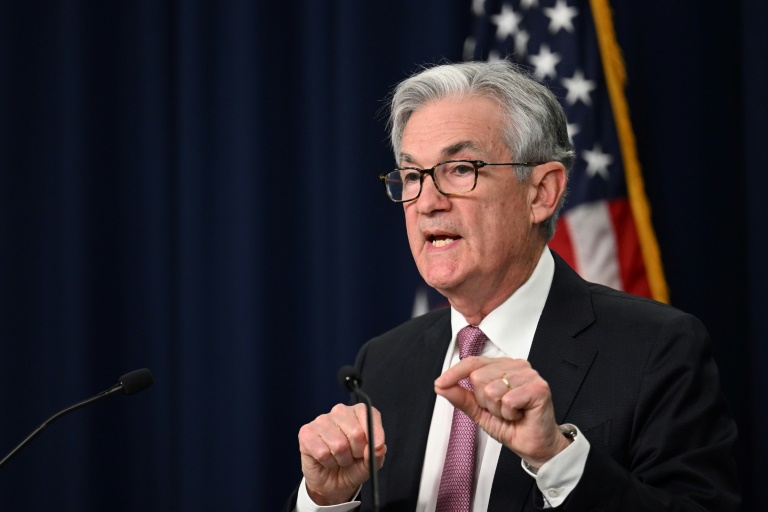
However, traders were given some much-needed cheer when Fed boss Jerome Powell said a 75 basis-point rise, which had been flagged by many observers, was not being considered.

“Relief has rippled through the financial markets as the Federal Reserve seems committed to keep to the path it had mapped out to try and tame roaring inflation,” noted Susannah Streeter, senior investment and markets analyst at Hargreaves Lansdown.

The Fed has also indicated that it will start rolling back its massive stimulus programme by offloading bonds from its balance sheet “on a more gradual incline than some feared”, Streeter added.

On Wall Street Wednesday following the Fed update, all three main indices closed up by about three percent thanks to a surge in tech firms, which are most susceptible to higher rates.

Strong gains in New York filtered through to Asia and Europe on Thursday.

At 1100 GMT, the Bank of England is expected to announce a fourth straight hike to its main interest rate as UK inflation sits at the highest level in 30 years.

News that Turkish inflation soared to 70 percent in April highlighted the battle central bankers face in controlling prices.

– OPEC+ decision –

Inflation has been dragged higher globally in large part owing to surging energy prices.

OPEC+ members meeting on Thursday are expected to agree a marginal increase in oil production as tight supply concerns caused by the Ukraine war are offset by lower demand risks triggered by China’s renewed Covid lockdowns.

OPEC+ includes members of the OPEC oil producers cartel, notably Saudi Arabia, as well as key energy producer Russia.

Traders on Thursday digested also earnings updates from some of the world’s biggest companies.

Shares in Airbus soared more than seven percent in Paris after the European aircraft maker said late Wednesday that its net profit more than tripled in the first quarter to 1.2 billion euros ($1.3 billion), despite the impact of sanctions against Russia.

The results confirm the company’s recovery after the Covid-19 pandemic slammed the air travel industry in 2020.

– Key figures at around 0945 GMT –

London – FTSE 100: UP 0.8 percent at 7,551.92 points

Frankfurt – DAX: UP 1.3 percent at 14,156.82

Paris – CAC 40: UP 1.5 percent at 6,493.45

EURO STOXX 50: UP 1.2 percent at 3,771.35

Hong Kong – Hang Seng Index: DOWN 0.4 percent at 20,793.40 (close)

Shanghai – Composite: UP 0.7 percent at 3,067.76 (close)

New York – Dow: UP 2.8 percent at 34,061.06 (close)

Tokyo – Nikkei 225: Closed for a holiday

Brent North Sea crude: UP 0.2 percent at $110.34 per barrel

West Texas Intermediate: DOWN 0.1 percent at $107.72 per barrel

Euro/dollar: DOWN at $1.0598 from $1.0625 on Wednesday

Pound/dollar: DOWN at $1.2567 from $1.2632

Euro/pound: UP at 84.33 pence from 84.06 pence

Dollar/yen: UP at 129.63 yen from 129.05 yen

UK voters head to polls with historic N.Ireland result predicted

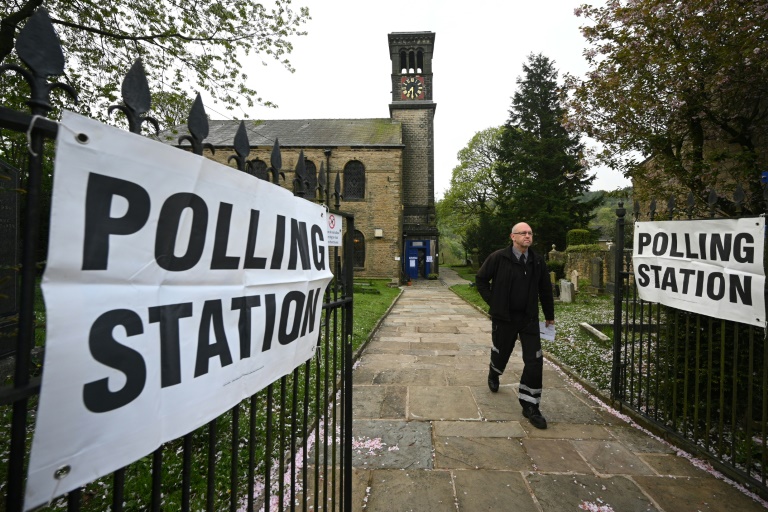
Local and regional elections were being held across the UK on Thursday that could prove historic in Northern Ireland and heap further pressure on embattled Prime Minister Boris Johnson.

The contest for the devolved assembly in Belfast could see a pro-Irish nationalist party win for the first time in the troubled history of the British province.

The results, expected from Friday, could have huge constitutional implications for the four-nation UK’s future, with predicted victors Sinn Fein committed to a vote on reunification with Ireland.

Voters are electing councils in Scotland, Wales and much of England, with Johnson facing a potentially pivotal mid-term popularity test.

Poor results could reignite simmering discontent within his ruling Conservatives about his leadership, after a string of recent scandals.

– Jeopardy –

The prime minister voted in central London with his dog Dilyn, while the main UK opposition Labour leader Keir Starmer cast his ballot in the north of the capital with his wife, Victoria.

Johnson, 57, won a landslide 2019 general election victory by vowing to take the UK out of the European Union, and reverse rampant regional inequality.

Despite making good on his Brexit pledge, the pandemic largely stalled his domestic plans. 

But his position has been put in jeopardy because of anger at lockdown-breaking parties at his Downing Street office and the steeply rising cost of living.

Heavy losses could revive calls among Tory MPs to trigger an internal contest to oust Johnson as party leader and from power.

The polls, which opened at 0600 GMT and close at 2100 GMT, should also point to whether Labour poses a serious threat, as it tries to make inroads across England despite defending the many gains it made at the last local elections in 2018.

Labour is bidding to leapfrog the Conservatives into second place in Scotland, behind the pro-independence Scottish National Party (SNP), and remain the largest party in Wales, where 16 and 17-year-olds are eligible to vote for the first time. 

– ‘Sea change’ –

The contest for Northern Ireland’s power-sharing assembly is set to capture attention, after numerous polls put Sinn Fein ahead.

A University of Liverpool poll reported Tuesday it remained on target to win comfortably with over a quarter of the vote. 

The pro-UK Democratic Unionist Party (DUP) and cross-community Alliance Party were tied for second.

Deirdre Heenan, professor of social policy at Ulster University, said there was a feeling the election “really is momentous”. 

“It will be a sea change if a nationalist becomes first minister,” she told AFP.

Sinn Fein — the IRA’s former political wing — has dialled down its calls for Irish unity during campaigning, saying it is “not fixated” on a date for a sovereignty poll, instead focusing on the rising cost of living and other local issues.

Party vice president Michelle O’Neill has insisted voters are “looking towards the future” with pragmatism rather than the dogmatism that has long been the hallmark of Northern Irish politics.

“They’re very much looking towards those of us that can work together versus those that don’t want to work together,” she said.

– Power-sharing? –

But her DUP rivals have sought to keep the spotlight on possible Irish reunification in the hope of bolstering their flagging fortunes.

In February, its first minister withdrew from the power-sharing government in protest at post-Brexit trade arrangements, prompting its collapse. 

At a final election debate between the five biggest parties, DUP leader Jeffrey Donaldson reiterated the party would not form a new executive unless London rips up the trading terms, known as the Northern Ireland Protocol.

Although many unionist voters share DUP dislike for it, the party is also getting blamed.

On Belfast’s staunchly unionist Shankill Road, gift shop owner Alaine Allen, 58, complained the protocol is “killing small businesses”.

“Hopefully they’ll get in again, but no one’s actually working for the people,” Allen said.

– Deliver –

In England, the Conservatives are predicted to lose hundreds of councillors and even control of long-time strongholds in London to Labour.

Johnson has tried to sideline the so-called “partygate” scandal that last month saw him become the first British prime minister to be fined for breaking the law while in office.

In Scotland, SNP leader Nicola Sturgeon is hoping a strong performance in contests for all 32 local authorities can lay the groundwork for another independence referendum.

Johnson has repeatedly rejected the push for a second poll, after Scots in 2014 voted by 55 percent to 45 percent not to break away.

Turkey inflation spirals to nearly 70 percent in April

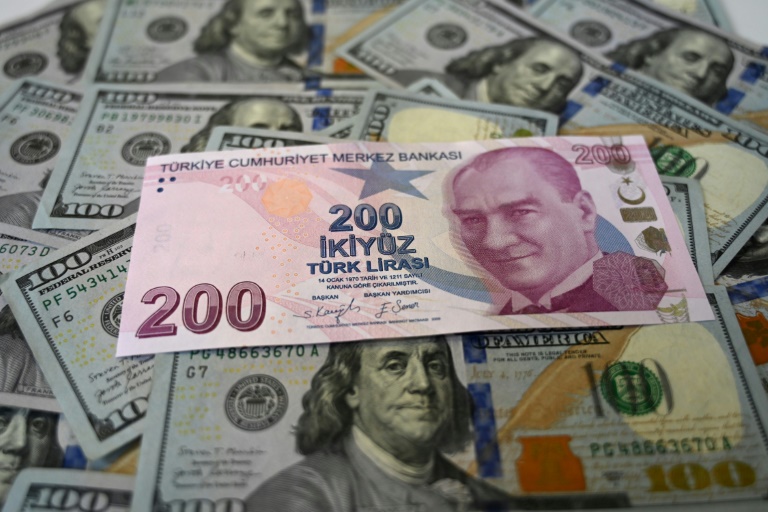
Turkey’s official inflation rate spiralled to nearly 70 percent in April, data showed on Thursday, posing a huge challenge to President Recep Tayyip Erdogan, whose unconventional economic policies are often blamed for the economic turmoil. 

The consumer price index rose by 69.97 percent year-on-year in April compared with 61.14 percent in March, the national statistics agency said.

Erdogan insists that sharp cuts in interest rates are needed to bring down soaring consumer prices, flying in the face of economic orthodoxy. 

The collapse of the lira has pushed up the cost of energy imports and foreign investors are now turning away from the once-promising emerging market. 

Russia’s invasion of Ukraine and the coronavirus pandemic have exacerbated the energy price spikes and production bottlenecks.

Turkey’s annual inflation rate — the highest since Erdogan’s ruling AKP party stormed to power in 2002, is largely linked to his unconventional economic thinking, analysts say. 

Erdogan has put pressure on the nominally independent central bank to start slashing interest rates. 

In April, the bank kept its benchmark interest rate steady for the fourth consecutive month, bowing to the pressure despite high inflation. 

The biggest price increases in April were for the transport sector, standing at 105.9 percent, while the prices of food and non-alcoholic drinks jumped 89.1 percent.

– ‘Spectacular failure’ –

“True it’s about food and energy price increases but also the spectacular failure of monetary policy in Turkey,” Timothy Ash, emerging markets strategist at BlueBay Asset Management, said in a note to clients. 

“Low interest rates cause inflation. Period. Fact. The reality,” he said, accusing Erdogan of “trying to re-write economics to say the opposite which is the economics equivalent of calling the earth flat.”

Treasury and Finance Minister Nureddin Nebati on Monday brushed aside concerns, saying that the current inflationary trend was fleeting and would “not spread over the long term and be permanent”. 

“We will increase the welfare and purchasing power of our citizens over the past level,” he said.

Turkey has cut taxes on some goods and offered subsidies for some electricity bills for vulnerable households but even this has failed to stem inflation.

The Turkish currency has lost 44 percent of its value against the dollar last year and more than 11 percent since the start of January. 

Erdogan’s government has responded by using state banks to buy up liras in a bid to cut the currency’s losses. 

There is also speculation that the central bank sells dollars to stem the lira’s slide. 

The former deputy general manager of Turkey’s state bank Ziraat shared information he received from banking circles, Turkish media reported. 

“The central bank sells $2.5-3 billion a week through public banks,” he was quoted as saying this week. 

Jason Tuvey, emerging markets economist at the London-based Capital Economics, predicted that inflation would hover around the current high rates for much of this year.

He said there were “no signs that policymakers are about to shift tack and hike interest rates as they remain wedded to the ‘new economic model’.” 

Erdogan, who faces a crucial presidential vote next year, has also shifted policy to mend broken alliances with cash-rich Gulf states to draw financial support. 

Last week, he visited Saudi Arabia in a bid to reset relations since the 2018 killing of Riyadh critic journalist Jamal Khashoggi in the kingdom’s consulate in Istanbul. 

Erdogan said his government agreed with Saudi Arabia to “reactivate a big economic potential”. 

Shell profit up as high oil prices offset Russia hit

British energy giant Shell on Thursday logged soaring first-quarter net profit as surging oil prices offset a sizeable charge linked to its Russia exit.

Profit after tax leapt 26 percent to $7.1 billion (6.7 billion euros) from a year earlier, Shell said in a statement.

While the group took a $3.9-billion charge on its exit from Russia after Moscow invaded Ukraine, it saw lower costs elsewhere.

Underlying earnings spiked almost three-fold to a quarterly record of $9.1 billion, sparking fresh calls in Britain for a windfall tax on energy majors.

UK consumers are enduring a cost-of-living crisis caused by the highest rate of inflation in decades, also as economies reopen from pandemic lockdowns.

Prime Minister Boris Johnson, who faces a key mid-term test in local elections Thursday, has dismissed calls for a windfall levy on oil giants, arguing it would slow their efforts to invest in cleaner energy.

Yet environmental campaigners and opposition politicians are calling for a one-off tax to ease household budgets and curb reliance on fossil fuels.

– Windfall tax –

“A windfall tax on these unexpected record profits of unimaginable sums would be the fastest and fairest way to ease pressure on households feeling the pinch and reduce our dependence on oil and gas, which is the root cause of the cost of living crisis,” said Greenpeace UK’s Philip Evans.

Shell added Thursday that revenues rallied 51 percent to $84.2 billion in the first three months of the year.

Oil prices have surged in recent months on concerns over tight supplies following the invasion of Ukraine by major oil and gas producer Russia.

“The war in Ukraine is first and foremost a human tragedy, but it has also caused significant disruption to global energy markets and has shown that secure, reliable and affordable energy simply cannot be taken for granted,” noted chief executive Ben van Beurden.

“The impacts of this uncertainty and the higher cost that comes with it are being felt far and wide.”

The London-listed group last month flagged it would take a hit of between $4 billion and $5 billion in the first quarter as a result of impairment from assets and additional charges relating to its Russian activities.

Shell announced in late February that it would sell its stakes in all joint ventures with Russian state energy giant Gazprom after the Kremlin launched its assault on Ukraine.

– Share buyback –

The company then decided in March to withdraw from Russian gas and oil in line with UK government policy.

Britain, which is far less dependent than the rest of Europe on Russian energy, plans to phase out oil imports by the end of 2022 and eventually stop importing its gas. 

Shell’s British rival BP on Tuesday booked its biggest-ever quarterly loss, at $20.4 billion, after a mammoth $25.5 billion charge on its Russian withdrawal.

However, BP also logged record-high underlying profits for the first quarter on high oil prices.

Shell has meanwhile begun the second tranche of its $8.5-billion share buyback unveiled in February.

The group’s share price rallied 3.1 percent to £22.95 in morning deals on London’s rising stock market.

“The recovery in energy prices from the depths of the pandemic had already allowed Shell to reduce net debt and begin a renewed focus on shareholder returns,” said Interactive Investor analyst Richard Hunter

World oil prices rocketed close to $140 per barrel in early March, although they have since fallen back to around $100.

Both BP and Shell had suffered vast losses in 2020 as the coronavirus pandemic slashed energy demand and prices.

War in Ukraine: Latest developments

Here are the latest developments in the war in Ukraine:

– Ceasefire at Azovstal –

A three-day Russian-announced daytime ceasefire was due to start at the besieged Azovstal steel works in the devastated port city of Mariupol, to allow the evacuation of civilians.

Ukraine’s army says Russia is “trying to destroy” its remaining soldiers holed up in the steel plant, with Kyiv’s last defenders in the city saying Moscow forces have broken into the giant factory.

“The situation is extremely difficult but despite this we continue to execute the order to hold the defence,” Denys Prokopenko, a commander of the Azov battalion, leading the defence of Mariupol says in a video on Telegram.

– Zelensky appeal –

After more than 300 civilians are evacuated from Mariupol on Wednesday, Ukrainian President Volodymyr Zelensky asks United Nations Secretary General Antonio Guterres to help save the lives of the remaining wounded Ukrainians trapped in Azovstal.

“The lives of the people who remain there are in danger. Everyone is important to us,” he says. 

– EU states opposing embargo ‘complicit’: Kyiv –

Ukraine says EU countries blocking an embargo on imports of Russian oil would be complicit in crimes committed by Russian troops on Ukrainian territory by funding Moscow’s military.

“If there is any country in Europe who will continue to oppose the embargo on Russian oil, there will be good reason to say, this country is complicit in the crimes committed by Russia in the territory of Ukraine,” Ukraine Foreign Minister Dmytro Kuleba says in a briefing on social media.

Hungary has warned that it could not support a proposed EU ban on Russian oil in its current form as it would “completely destroy” its energy supply security.

– Nuclear-capable missile practice –

Russia says its forces have practised simulated nuclear-capable missile strikes during war games in Kaliningrad, an exclave on the Baltic Sea located between EU members Poland and Lithuania. 

Moscow practised simulated “electronic launches” of nuclear-capable Iskander mobile ballistic missile systems, the defence ministry says in a statement.

– Biden ‘open’ to more sanctions –

US President Joe Biden says he is “open” to imposing more sanctions on Russia and will discuss measures with allies from the G7 in the next few days.

“We’re always open to additional sanctions,” Biden says shortly after the European Union announced its plans for banning Russian oil imports and other new measures. 

– Mariupol military parade planned: Kyiv –

Ukraine accuses Russia of planning to hold a military parade in the destroyed city of Mariupol on May 9 to celebrate victory over the Nazis in World War II.

But Russian Defence Minister Sergei Shoigu makes no mention of a celebratory march in the city in a briefing on the army’s plan for May 9.

– Targeting generals? –

Intelligence provided by the US has helped Ukrainian military target “many” of the approximately dozen Russian generals who have been killed in the war so far, the New York Times reports.

However the US National Security Council denies the report, saying US intelligence was aimed at helping “Ukrainians defend their country… we do not provide intelligence with the intent to kill Russian generals.” 

– Eastern assault continues –

Russian forces continue to pound sites in the east of the country, Ukraine’s general staff says, as Moscow seeks to establish “full control” of the regions of Lugansk and Donetsk, and to maintain a land corridor to occupied Crimea.

burs/jmy/yad

Iraq sandstorm sends more than 1,000 to hospital

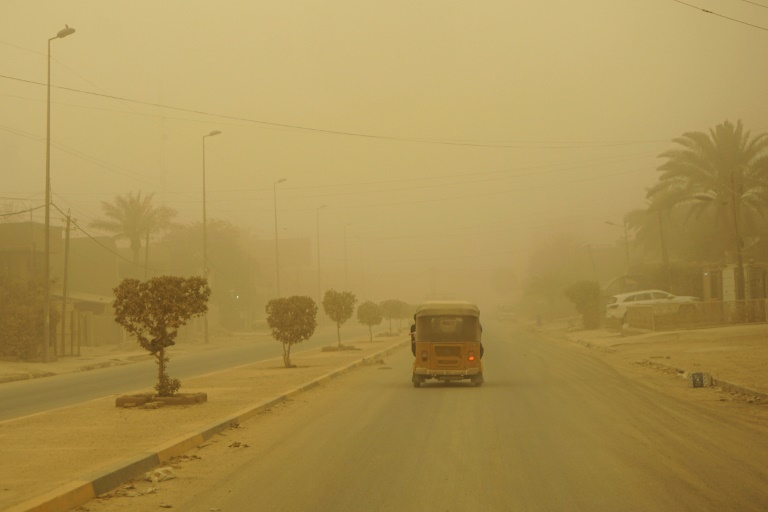
More than 1,000 Iraqis were rushed to hospital with respiratory ailments on Thursday due to a sandstorm, the seventh to hit the country in the past month, state media said.

Residents of six of Iraq’s 18 provinces, including Baghdad and the vast western region of Al-Anbar, awoke once again to a thick cloud of dust blanketing the sky.

Authorities in Al-Anbar and Kirkuk provinces, north of the capital, urged people to stay indoors, said the official INA news agency.

Hospitals in Al-Anbar province had received more than 700 patients with breathing difficulties, said Anas Qais, a health official cited by INA.

The central province of Salaheddin reported more than 300 cases, while the central province of Diwaniya and the province of Najaf, south of Baghdad, each recorded about 100 cases, the news agency added. 

Iraq is particularly vulnerable to climate change, having already witnessed record low rainfall and high temperatures in the past few years.

Experts have said these factors threaten to bring social and economic disaster in the war-scarred country.

In November, the World Bank warned Iraq could suffer a 20-percent drop in water resources by 2050 due to climate change.

In early April, a government official warned Iraq could face “272 days of dust” a year in coming decades.

The environment ministry said the weather phenomenon could be addressed by “increasing vegetation cover and creating forests that act as windbreaks”.

Russian ceasefire to begin at besieged Mariupol steel plant

A Russian-announced ceasefire was due to begin Thursday at the besieged steel plant in the devastated Ukrainian city of Mariupol, to allow civilians to flee even as its defenders vowed to fight to the end.

The three-day halt in Russia’s attack on the Azovstal steelworks was announced as EU member states debated a proposed ban on Russian oil, the bloc’s toughest move yet over Moscow’s invasion of its neighbour.

The EU also pledged to “significantly increase” support for Ukrainian neighbour Moldova, where a series of attacks in a Russia-backed separatist region has sparked fears a war that has killed thousands could spread more than two months after it began.

European Commission chief Ursula von der Leyen on Wednesday said the bloc would “phase out Russian supply of crude oil within six months and refined products by the end of the year”, a move that would still not touch its huge gas exports.

But within hours, Hungary — whose populist leader Viktor Orban is one of Russian President Vladimir Putin’s few EU partners — said it could not support the plan “in this form”, as it would “completely destroy” the security of its energy supply.

Ukrainian Foreign Minister Dmytro Kuleba hit back that EU countries blocking an oil embargo would be “complicit” in Russia’s crimes in Ukraine.

Ukraine’s allies have sent money and, increasingly, heavy weapons to Kyiv to help it defend itself in a war US President Joe Biden has framed as a historic battle for democracy.

Biden said Wednesday he was “open” to imposing more sanctions on Russia and would be discussing measures with allies from the Group of Seven democracies in the coming days.

Intelligence provided by the US has helped Ukrainian military target “many” of the approximately dozen Russian generals who have been killed in the war so far, the New York Times reported on Wednesday.

The US National Security Council slammed the assertion that the United States was helping Ukraine kill Russian generals as “irresponsible,” with a spokesperson saying US intelligence was aimed at helping “Ukrainians defend their country… we do not provide intelligence with the intent to kill Russian generals.” 

Despite severe blows to its economy and the thwarting of its early war goals, Russia continues to steadily pound away at Ukraine’s embattled eastern defences.

– Azovstal fights on –

After failing to capture Kyiv, Russia’s military campaign is now focused on uniting separatist pro-Russian areas in the east with Crimea, which Moscow seized in 2014.

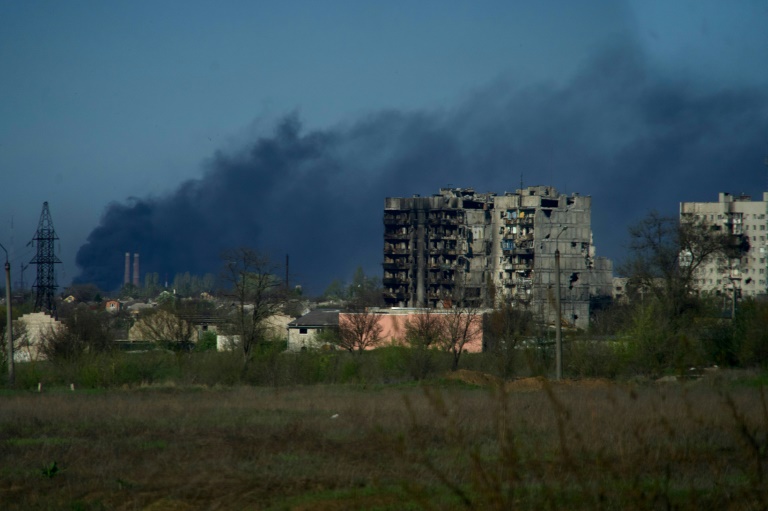
The strategic southern port of Mariupol has become an emblem of the suffering of the war, with an untold number of dead and basic supplies cut off as Moscow carried out a scorched-earth campaign to wrest control.

The last Ukrainian soldiers are holding out at the Azovstal steelworks, where Mariupol Mayor Vadym Boichenko said there was heavy fighting Wednesday.

Russia was attacking with heavy artillery, tanks, planes and ships off the coast, he told Ukrainian television.

“There are local residents there, civilians — hundreds of them there,” he added. “There are children waiting for rescue. There are more than 30 kids.”

Russia’s defence ministry announced a daytime ceasefire for three days beginning Thursday to evacuate civilians from the plant.

“The Russian armed forces will open a humanitarian corridor from 08:00 to 18:00 Moscow time (0500 to 1500 GMT) on May 5, 6 and 7 from the site of the Azovstal metallurgical plant to evacuate civilians,” the ministry said.

In Washington, State Department spokesman Ned Price voiced scepticism about the ceasefire, saying Moscow had repeatedly resumed shelling after announcing pauses.

Denys Prokopenko, commander of the nationalist Azov regiment, meanwhile, vowed to never surrender the plant.

“The situation is extremely hard. However, we will continue carrying out the order to keep up our defences no matter what,” he said in a video.

– ‘It takes time’ –

The second stage of Mariupol evacuation operations had brought 344 newly freed people to Ukrainian-controlled Zaporizhzhia, President Volodymyr Zelensky said Wednesday.

Zelensky said in a video address that an Azovstal ceasefire was desperately needed to free trapped civilians.

“It takes time to just lift people out of those basements, out of those underground shelters,” he said. 

“In the current conditions, we cannot use special equipment to clear the debris. Everything is done manually.”

Ukraine’s military intelligence has said Russia was planning to hold a parade in Mariupol on May 9 to celebrate victory over the Nazis in World War II.

But Russian Defence Minister Sergei Shoigu made no mention of a celebratory march in the city in a briefing on the army’s plan for May 9.

– No man’s land –

As the focus of Russia’s invasion has moved to Ukraine’s east, there is a steady build-up of tension, with lower-intensity but explosive strikes in some areas and increased fighting in others.

In a no-man’s-land near the southeastern town of Pokrovska, the two sides are only a few kilometres apart — so close that Ukrainian troops with binoculars can see the Russians digging at their positions.

The deep thump of artillery exchanges comes on top of the odd rocket salvo, yet Ukrainian soldiers told AFP during a visit Wednesday that there was almost no face-to-face fighting.

“As for now, they never come on foot, only artillery,” said soldier Dmytro Sirenko, 40, as he peered in the Russians’ direction across a broad, green expanse of farms, fields and the occasional house.

– Attacks in the west –

Russian attacks are also periodically straying close to Ukraine’s western border with the EU.

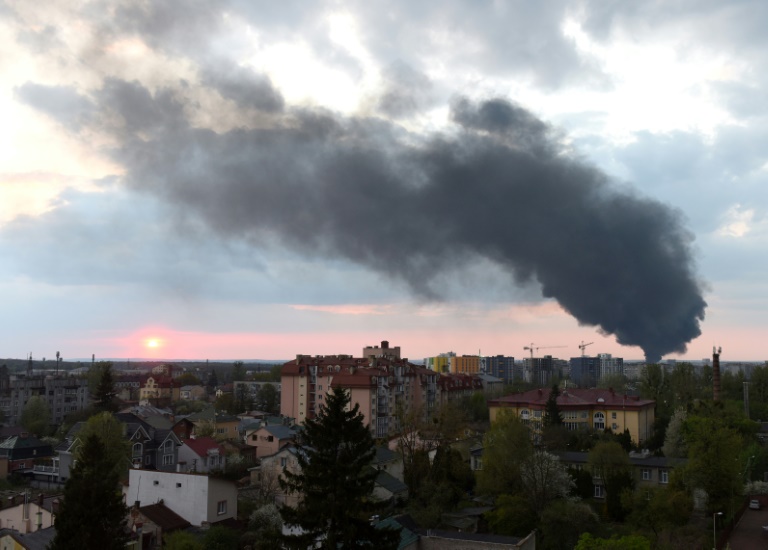
Both sides on Wednesday reported Russian strikes on infrastructure around the western city of Lviv, near Poland, and Transcarpathia, a region bordering Hungary.

Russia’s defence ministry said that its air and sea-based weapons had destroyed six electrical substations near railways including around Lviv, near Odessa to the south and near Dnipropetrovsk to the southeast.

It said Ukrainian troops in the eastern Donbas region had used the railway stations to transport weapons and ammunition from the West.

In Ukraine’s western neighbour Moldova, there are fears the conflict will spill over the border.

Visiting the tiny ex-Soviet republic Wednesday, European Council President Charles Michel offered the EU’s “full solidarity” and support, including logistics, cyber defence and military equipment.

Ukraine has accused Russia of wanting to destabilise Moldova’s separatist region of Transnistria to create a pretext for a military intervention. 

– Nuclear drills –

Moscow on Wednesday said its forces had practised simulated nuclear-capable missile strikes in the Baltic Sea exclave of Kaliningrad, located between EU and NATO member states Poland and Lithuania.

The announcement came on the 70th day of Russia’s invasion of Ukraine, which has displaced more than 13 million people in the worst refugee crisis in Europe since World War II.

Russian President Putin has made thinly veiled threats hinting at a willingness to deploy tactical nuclear weapons since the invasion of Ukraine and warned of a “lightning-fast” retaliation should the West intervene directly.

burs-ar-sct/cwl-yad/spm

Millions in Beijing urged to work from home to fight Covid

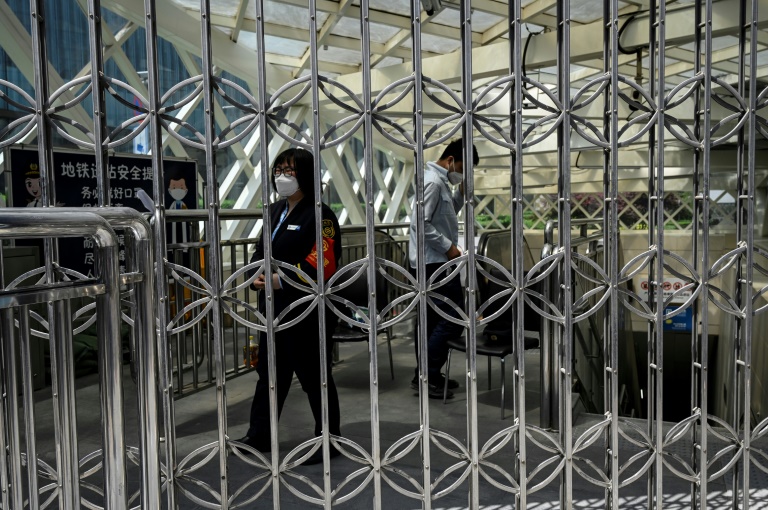
The streets of Beijing’s business district were deserted on Thursday as the government called for people to return to work remotely, with scores of subway stations shut after a national holiday muted by coronavirus curbs.

Chinese authorities have stuck to their zero-Covid policy of lockdowns and mass testing as they battle the biggest outbreak since the early days of the pandemic, with entire neighbourhoods in the capital sealed over handfuls of infections.

Beijing reported 50 local cases on Thursday, a day after it said people in Chaoyang, its most populous district, should work from home.

Those among the district’s 3.5 million residents who needed to visit their offices were encouraged to drive themselves and avoid gatherings.

At least one other Beijing district has also encouraged residents to work from home, while dozens of subway stations across the capital remained closed. Open restaurants offer only takeaway.

But Feng Yinhao, a massage parlour employee in Chaoyang district, said Beijing was “still normal” compared to the country’s largest city, Shanghai.

Authorities have been treading cautiously since an extended lockdown in the southern finance hub led to food shortages and public anger.

“Residents can accept the situation now,” Zhan Jun, a man living in Chaoyang, told AFP.

But “if things are like in Shanghai… if it’s too severe, things will sound different.”

Shanghai — epicentre of the latest outbreak — reported more than 4,600 mostly asymptomatic infections on Thursday and 13 more deaths.

– Quiet holiday –

The call to work from home followed an unusually quiet Labour Day holiday, with the capital stepping up Covid testing requirements for entering public spaces, discouraging travel and shutting down gyms.

Domestic tourism revenue from the five-day break was down by more than 40 percent from a year ago, according to official data.

Dozens of Chinese cities were implementing full or partial lockdowns, or measures restricting mobility as of May 3, analysts from Nomura said.

The economic impact of the stringent measures has started to weigh, with independent data on Thursday showing that activity in China’s services sector slumped in April to its second-lowest level on record.

Meanwhile, the case of a Beijing Covid patient who infected dozens of others via the city’s public toilets sparked amusement on social media — with Weibo users sharing photos of one public restroom that now appeared to be requiring proof of a recent Covid test to enter.

“Don’t go to the toilet unless necessary, apply for a one-day loo permit with your neighbourhood committee with your 24-hour PCR test,” one user on the Twitter-like service joked.

Some curbs were being loosened, however, with Beijing announcing Wednesday that international travellers can be released from quarantine after 10 days in a centralised facility and a week of home isolation, down from a total of 21 days.

Government spokesman Xu Hejian told reporters the move was due to the Omicron variant’s shorter incubation period and usually milder symptoms.

Close contacts of confirmed cases will also have a shorter centralised quarantine, officials said.

Asian, European markets rise as Fed eases fears of huge rate hike

Markets rallied Thursday after the US Federal Reserve played down chances of a huge interest rate hike in the near future, while oil extended gains as the European Union moved to ban imports from Russia.

US central bank officials announced an expected half-point lift in borrowing costs — the biggest since 2000 — as part of its battle to rein in inflation, while unveiling a timetable to offload its vast bond holdings.

However, traders were given some much-needed cheer when Fed boss Jerome Powell said a 75 basis-point rise, which had been flagged by many observers, was not “not something the committee is actively considering”.

While he flagged more 50-point hikes to come, the news fuelled a rally on Wall Street, where all three main indexes piled on around three percent thanks to a surge in tech firms, which are most susceptible to higher rates.

“This was a reflection of relief, as investors came into the meeting fearful that the committee would be overly aggressive in tightening monetary policy,” said Clara Cheong of JP Morgan Asset Management.

She added that if inflation began showing signs of slowing, it could allow the Fed to be less aggressive as it treads a fine line between containing prices and nurturing the post-pandemic economic recovery.

“It remains to be seen if the Fed can pull off this fine balancing act and orchestrate a soft landing, but for now we believe that the US economy is in a strong enough position to weather higher rates,” Cheong said.

“There is still, however, a risk that an overly aggressive approach can run the risk of tipping the economy into a mild recession in 2023.”

The gains in New York filtered through to Asia, where while Hong Kong, Sydney, Taipei, Mumbai, Manila, Bangkok and Wellington rose. Singapore dipped.

Shanghai advanced after returning from a long break with traders seemingly unmoved by data showing activity in China’s services sector fell to the lowest level since the outset of the pandemic.

The news reinforced the view that China’s strict zero-Covid measures were hammering the world’s number two economy.

London, Paris and Frankfurt soared at the open.

– Oil extends gains –

“Removing some of the uncertainty is helpful in getting some of the cash that has been on the sideline back into the markets, whether it’s bonds or equities,” Erin Gibbs, of Main Street Asset Management, told Bloomberg Television.

The Fed hike was the latest in a series of steps by central banks around the world to contain inflation, and came ahead of an expected lift by the Bank of England later Thursday.

News that Turkish inflation soared to 70 percent in April highlighted the battle central bankers face in controlling prices.

Still, analysts warned there was only so much central banks could do to bring inflation under control as the spike was also being fuelled by supply chain problems caused by China’s Covid-related lockdowns and surging energy costs, particularly oil.

Oil extended Wednesday’s big gains after the European Commission proposed a gradual ban on Russian crude over Moscow’s invasion of Ukraine.

That was compounded by data showing stockpiles shrinking and a weaker dollar caused by lower expectations for US rate hikes.

“The oil market will remain tight going forward, and now that a peak in the dollar is in place, crude prices should have extra support here,” said OANDA’s Edward Moya. 

– Key figures at around 0720 GMT –

Hong Kong – Hang Seng Index: UP 0.5 percent at 20,973.33 

Shanghai – Composite: UP 0.7 percent at 3,067.76 (close)

London – FTSE 100: UP 1.6 percent at 7,610.48

Tokyo – Nikkei 225: Closed for a holiday

West Texas Intermediate: UP 0.5 percent at $108.36 per barrel

Brent North Sea crude: UP 0.7 percent at $110.90 per barrel

Euro/dollar: DOWN at $1.0599 from $1.0625 on Wednesday

Pound/dollar: DOWN at $1.2542 from $1.2632

Euro/pound: UP at 84.51 pence from 84.06 pence

Dollar/yen: UP at 129.53 yen from 129.05 yen

New York – Dow: UP 2.8 percent at 34,061.06 (close)

TikTok to launch ad revenue-sharing program for creators

TikTok on Wednesday announced an ad revenue-sharing program with the social media platform’s most prominent creators, moving closer to a model already used by its competitors.

The short-video format app has become wildly popular in recent years with more than a billion active users globally, but has been criticized for not providing a way for creators to effectively monetize content.

Under the new TikTok Pulse program, companies can place their ads next to user content in specific categories, including health, fashion, cooking, gaming and others — and creators will get a cut.

“We will begin exploring our first advertising revenue share program with creators, public figures and media publishers,” the company, a subsidiary of Chinese tech firm ByteDance, said in a statement.

“We’re focused on developing monetization solutions in available markets so that creators feel valued and rewarded on TikTok.” 

Only accounts with at least 100,000 subscribers will be eligible for the first phase of the program, TikTok said.

The firm’s North America General Manager Sandie Hawkins told tech website The Verge that Pulse will roll out in the United States in June, and that approved creators will get a 50 percent cut of ad revenue.

In 2021, TikTok generated an estimated 4.6 billion dollars in revenue, according to industry publication Business of Apps.

That figure is more than double the previous year’s revenue, but remains roughly on par with competitor Snapchat, which has about 300 million daily users, according to Snapchat’s data. 

Other major social networks that focus on video, such as YouTube, Instagram and Snapchat, have already implemented revenue-sharing systems.

Close Bitnami banner
Bitnami