World

Russian ceasefire to begin at besieged Mariupol steel plant

A Russian-announced ceasefire was due to begin Thursday at the besieged steel plant in the devastated Ukrainian city of Mariupol, to allow civilians to flee even as its defenders vowed to fight to the end.

The three-day halt in Russia’s attack on the Azovstal steelworks was announced as EU member states debated a proposed ban on Russian oil, the bloc’s toughest move yet over Moscow’s invasion of its neighbour.

The EU also pledged to “significantly increase” support for Ukrainian neighbour Moldova, where a series of attacks in a Russia-backed separatist region has sparked fears a war that has killed thousands could spread more than two months after it began.

European Commission chief Ursula von der Leyen on Wednesday said the bloc would “phase out Russian supply of crude oil within six months and refined products by the end of the year”, a move that would still not touch its huge gas exports.

But within hours, Hungary — whose populist leader Viktor Orban is one of Russian President Vladimir Putin’s few EU partners — said it could not support the plan “in this form”, as it would “completely destroy” the security of its energy supply.

Ukrainian Foreign Minister Dmytro Kuleba hit back that EU countries blocking an oil embargo would be “complicit” in Russia’s crimes in Ukraine.

Ukraine’s allies have sent money and, increasingly, heavy weapons to Kyiv to help it defend itself in a war US President Joe Biden has framed as a historic battle for democracy.

Biden said Wednesday he was “open” to imposing more sanctions on Russia and would be discussing measures with allies from the Group of Seven democracies in the coming days.

But despite severe blows to its economy and the thwarting of its early war goals, Russia continues to steadily pound away at Ukraine’s embattled eastern defences.

– Azovstal fights on –

After failing to capture Kyiv, Russia’s military campaign is now focused on uniting separatist pro-Russian areas in the east with Crimea, which Moscow seized in 2014.

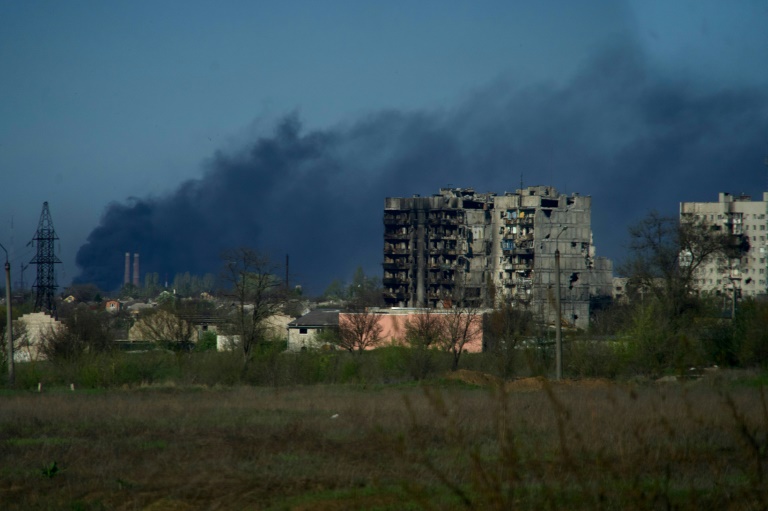
The strategic southern port of Mariupol has become an emblem of the suffering of the war, with an untold number of dead and basic supplies cut off as Moscow carried out a scorched-earth campaign to wrest control.

The last Ukrainian soldiers are holding out at the Azovstal steelworks, where Mariupol Mayor Vadym Boichenko said there was heavy fighting Wednesday.

Russia was attacking with heavy artillery, tanks, planes and ships off the coast, he told Ukrainian television.

“There are local residents there, civilians — hundreds of them there,” he added. “There are children waiting for rescue. There are more than 30 kids.”

Russia’s defence ministry announced a daytime ceasefire for three days beginning Thursday to evacuate civilians from the plant.

“The Russian armed forces will open a humanitarian corridor from 08:00 to 18:00 Moscow time (0500 to 1500 GMT) on May 5, 6 and 7 from the site of the Azovstal metallurgical plant to evacuate civilians,” the ministry said.

In Washington, State Department spokesman Ned Price voiced scepticism about the ceasefire, saying Moscow had repeatedly resumed shelling after announcing pauses.

Denys Prokopenko, commander of the nationalist Azov regiment, meanwhile, vowed to never surrender the plant.

“The situation is extremely hard. However, we will continue carrying out the order to keep up our defences no matter what,” he said in a video.

– ‘It takes time’ –

The second stage of Mariupol evacuation operations had brought 344 newly freed people to Ukrainian-controlled Zaporizhzhia, President Volodymyr Zelensky said Wednesday.

“They will all receive the necessary help, they will all receive the most attentive care from the government,” Zelensky said in a video address, adding the looming Azovstal ceasefire was desperately needed to free trapped civilians.

“It takes time to just lift people out of those basements, out of those underground shelters,” he said. 

“In the current conditions, we cannot use special equipment to clear the debris. Everything is done manually.”

Ukraine’s military intelligence has accused Russia of planning to hold a parade in Mariupol on May 9 to celebrate victory over the Nazis in World War II.

But Russian Defence Minister Sergei Shoigu made no mention of a celebratory march in the city in a briefing on the army’s plan for May 9.

– No man’s land –

As the focus of Russia’s invasion has moved to Ukraine’s east, there is a steady build-up of tension, with lower-intensity but explosive strikes in some areas and increased fighting in others.

In a no-man’s-land near the southeastern town of Pokrovska, the two sides are only a few kilometres apart — so close that Ukrainian troops with binoculars can see the Russians digging at their positions.

The deep thump of artillery exchanges comes on top of the odd rocket salvo, yet Ukrainian soldiers told AFP during a visit Wednesday that there was almost no face-to-face fighting.

“As for now, they never come on foot, only artillery,” said soldier Dmytro Sirenko, 40, as he peered in the Russians’ direction across a broad, green expanse of farms, fields and the occasional house.

“We have time to entrench ourselves, hide and wait for the possible advance of the enemy,” he said, a rifle in one hand as he stood in a recently dug foxhole.

– Attacks in the west –

Russian attacks are also periodically straying close to Ukraine’s western border with the EU.

Both sides on Wednesday reported Russian strikes on infrastructure around the western city of Lviv, near Poland, and Transcarpathia, a region bordering Hungary.

Russia’s defence ministry said that its air and sea-based weapons had destroyed six electrical substations near railways including around Lviv, near Odessa to the south and near Dnipropetrovsk to the southeast.

It said Ukrainian troops in the eastern Donbas region had used the railway stations to transport weapons and ammunition from the West.

In Ukraine’s western neighbour Moldova, there are fears the conflict will spill over the border.

Visiting the tiny ex-Soviet republic Wednesday, European Council President Charles Michel offered the EU’s “full solidarity” and support, including logistics, cyber defence and military equipment.

Ukraine has accused Russia of wanting to destabilise Moldova’s separatist region of Transnistria to create a pretext for a military intervention. 

– Nuclear drills –

Moscow on Wednesday said its forces had practised simulated nuclear-capable missile strikes in the Baltic Sea enclave of Kaliningrad, located between EU and NATO member states Poland and Lithuania.

The announcement came on the 70th day of Russia’s invasion of Ukraine, which has displaced more than 13 million people in the worst refugee crisis in Europe since World War II.

During the Kaliningrad war games, Russia practised simulated “electronic launches” of nuclear-capable Iskander mobile ballistic missile systems, the defence ministry said in a statement.

Russian President Putin has made thinly veiled threats hinting at a willingness to deploy tactical nuclear weapons since the invasion of Ukraine and warned of a “lightning-fast” retaliation should the West intervene directly.

burs-ar-sct/cwl/ser
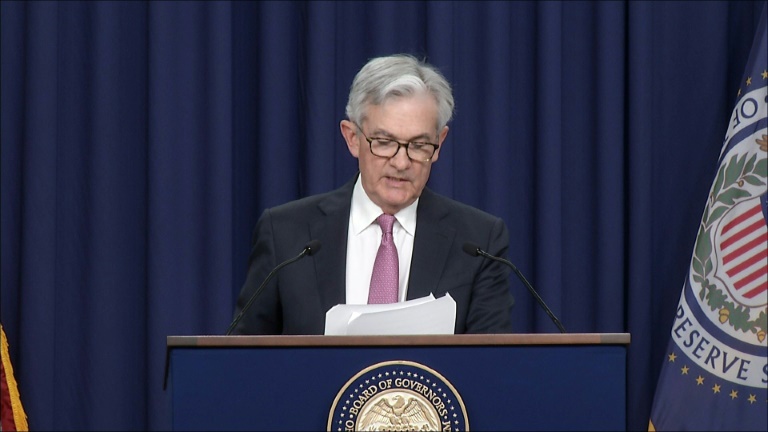
Asian markets rise as Fed eases fears over huge rate hike

Asian markets rallied Thursday following a Wall Street surge after the Federal Reserve played down chances of a huge interest rate hike in the near future, while oil extended gains as the European Union moved to ban imports from Russia.

US central bank officials announced an expected half-point lift in borrowing costs — the biggest since 2000 — as part of its battle to rein in inflation, while unveiling a timetable to offload its vast bond holdings.

However, traders were given some much-needed cheer when boss Jerome Powell said a 75 basis-point rise, which had been flagged by many observers, was not “not something the committee is actively considering”.

While he flagged more 50-point hikes to come, the news fuelled a rally on Wall Street, where all three main indexes piled on around three percent thanks to a surge in tech firms, which are most susceptible to higher rates.

“This was a reflection of relief, as investors came into the meeting fearful that the committee would be overly aggressive in tightening monetary policy,” said Clara Cheong, of JP Morgan Asset Management.

She added that if inflation began showing signs of slowing, it could allow the Fed to be less aggressive as it treads a fine line between containing prices and nurturing the pandemic economic recovery.

“It remains to be seen if the Fed can pull off this fine balancing act and orchestrate a soft landing, but for now we believe that the US economy is in a strong enough position to weather higher rates,” Cheong said.

“There is still, however, a risk that an overly aggressive approach can run the risk of tipping the economy into a mild recession in 2023.”

The gains in New York filtered through to Asia, where Shanghai advanced after returning from a long break while Hong Kong, Sydney, Singapore, Taipei, Manila and Wellington were also up.

“Removing some of the uncertainty is helpful in getting some of the cash that has been on the sideline back into the markets, whether it’s bonds or equities,” Erin Gibbs, of Main Street Asset Management, told Bloomberg Television.

The Fed hike was the latest by a central bank around the world and comes ahead of an expected lift by the Bank of England later Thursday.

Still, analysts warned there was only so much banking officials could do to bring inflation under control as the spike was also being fuelled by supply chain problems caused by China’s Covid-related lockdowns and surging energy costs, particularly oil.

And crude extended Wednesday’s big gains after the European Commission proposed a gradual ban on Russian crude over Moscow’s invasion of Ukraine.

That was compounded by data showing stockpiles shrinking and a weaker dollar caused by lower expectations for US rate hikes.

“The oil market will remain tight going forward, and now that a peak in the dollar is in place, crude prices should have extra support here,” said OANDA’s Edward Moya. 

– Key figures at around 0230 GMT –

Hong Kong – Hang Seng Index: UP 1.1 percent at 21,094.52 

Shanghai – Composite: UP 0.7 percent at 3,067.58

Tokyo – Nikkei 225: Closed for a holiday

Brent North Sea crude: UP 0.1 percent at $110.27 per barrel

West Texas Intermediate: UP 0.1 percent at $107.91 per barrel

Euro/dollar: DOWN at $1.0619 from $1.0625 on Wednesday

Pound/dollar: DOWN at $1.2623 from $1.2632

Euro/pound: UP at 84.13 pence from 84.06 pence

Dollar/yen: UP at 129.23 yen from 129.05 yen

New York – Dow: UP 2.8 percent at 34,061.06 (close)

London – FTSE 100: DOWN 0.9 percent at 7,493.45 (close)

BoE set for fresh rate hike as inflation soars

The Bank of England is on Thursday expected to raise interest rates for a fourth time in a row to contain runaway inflation that is causing a cost-of-living crisis. 

Economists widely forecast that the BoE will hike its main borrowing cost by a quarter point to one percent — which would be the highest level since the global financial crisis in 2009 — at a regular policy meeting.

The decision comes as Britons on Thursday head to the polls in local elections, seen as a mid-term test for embattled Prime Minister Boris Johnson.

It also follows the US Federal Reserve’s decision Wednesday to raise interest rates by half a percentage point to contain inflation on the other side of the pond.

Central banks worldwide are raising rates, with inflation sitting at the highest levels in decades.

Prices are soaring as economies reopen from pandemic lockdowns, and in the wake of the Ukraine war that is fuelling already high energy costs.

“A 25 basis-point rate hike from the Bank of England’s Monetary Policy Committee (MPC) on Thursday looks like a foregone conclusion, and so investors’ focus will be on any hints about further increases in borrowing costs in the upcoming meetings,” noted City Index analyst Fawad Razaqzada.

– Recession risk –

BoE Governor Andrew Bailey insists that the central bank is seeking to tackle high inflation while avoiding Britain falling into recession.

He recently warned that an erosion to workers’ salaries owing to high inflation would cause a slowdown in growth.

Britain’s annual inflation rate stands at the highest level in three decades.

It surged to 7.0 percent in March from 6.2 percent in February, official data showed.

And the Bank of England has predicted that UK annual inflation could reach double figures by the end of the year.

“If there’s an advanced economy that’s more at risk of falling into a recession, it’s the UK,” noted Deutsche Bank economist Sanjay Raja.

“Limited fiscal support to offset record-breaking energy price rises, tax rises, and a sizeable cost-of-living crisis shrinking real disposable incomes at a historic rate, all mean that the MPC will want to carefully calibrate its next moves going forward.”

Britons’ cost-of-living has soared further in recent weeks following a tax hike on UK workers and businesses in addition to a fresh surge in domestic energy bills.

The UK economy is set to grow by 3.7 percent this year, the International Monetary Fund recently forecast.

That was sharply down on an IMF estimate of 4.7 percent given in January, one month before Russia’s invasion of Ukraine.

As the Covid-19 pandemic began in early 2020, the BoE slashed its key interest rate to a record-low 0.1 percent and also pumped massive sums of new cash into the economy.

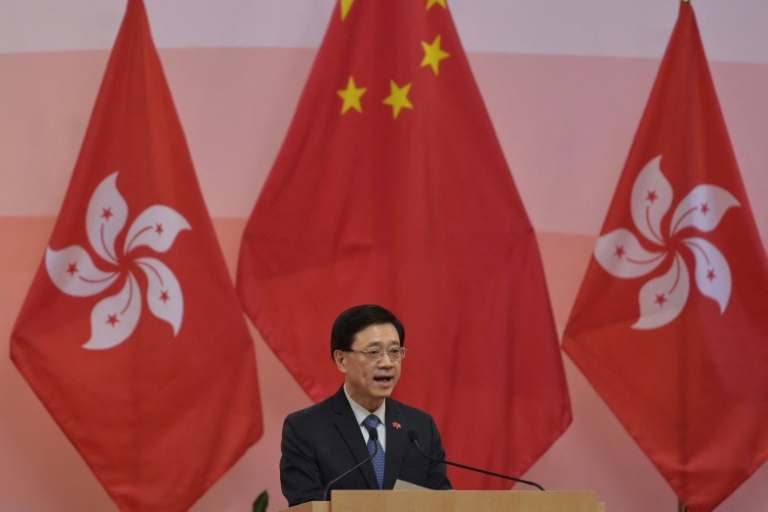
John Lee: the former Hong Kong cop Beijing trusts

As a former beat cop who rose to become Hong Kong’s security chief, John Lee is the one person China’s leaders trust to run the city as their loyal lieutenant, analysts and insiders say.

Lee, 64, is expected to be anointed Hong Kong’s next chief executive by a small committee on Sunday, the culmination of a choreographed, Beijing-blessed race with no other candidates.

His elevation caps a remarkable rise for a man whose police career lifted him from a working-class family to the upper echelons of Hong Kong’s political establishment.

It also places a security official in the city’s top job for the first time, a man who played a key role in the suppression of huge democracy protests and Beijing’s subsequent political crackdown.

Insiders say Lee’s unwavering commitment to that role won China’s confidence at a time when other Hong Kong elite were seen as insufficiently loyal or competent.

“John Lee is the one that the central government knows the best, because he was in constant contact and interaction with the mainland,” pro-establishment lawmaker and prominent business figure Michael Tien told AFP.

Lai Tung-kwok, Hong Kong’s security minister before Lee took the role, put it another way. 

“He is a man who has stood the test,” Lai told AFP. “If he really wants something done, he will try his best to tackle the obstacles.”

– ‘Platinum elevator’ – 

Lee represents a sea-change from the four chief executives who have run Hong Kong since its 1997 return to Chinese rule — all former business figures or administrators from the civil service.

Lee spent 35 years in the police before jumping to the government in 2012, followed by a swift rise to the top via what local media have dubbed “a platinum elevator”.

But law and order remained his portfolio, serving in the Security Bureau and then leading it before becoming the city’s number two official last year.

Chien-yu Shih, an expert on Chinese security issues at Taiwan’s Institute for National Defense and Security Research, said he believed Beijing started paying attention to Lee after the 2019 democracy protests.

Those huge and sometimes violent rallies were a popular expression of anger by Hong Kong residents at their lack of say in how their city was run.

Demonstrations organised by students, teachers, unions, medics and even civil servants were some of the biggest Hong Kong had ever seen.

But the Chinese government portrayed the protests as a foreign-backed plot run by “terrorists”, a stance Lee embraced.

“Beijing has been watching which political figure is willing to follow their narrative,” Shih said, adding China’s leaders still distrust Hong Kong’s civil servants.

– Flares and long hair –

Lee, a Catholic, grew up poor in Sham Shui Po — to this day one of Hong Kong’s most working-class districts — but made his way to an elite boys’ school run by Jesuits.

Peter Lai, a former banker and classmate, described him as a clever and fashionable teenager who grew long hair and wore flared trousers.

Lai said he believed his old friend would be a good leader for the city.

Another contemporary, who asked not to be named, was less complimentary, describing Lee as more of a dilettante who liked “chasing after girls and going to parties”.

Most of his contemporaries went to university, but Lee turned down an offer to study engineering to join the police.

He later told a pro-Beijing newspaper he was motivated by being bullied by neighbourhood hooligans.

Two former classmates gave a more practical reason — the police force offered a stable career for Lee and his pregnant wife Janet.

First son Gilbert was born soon after graduation in 1978 while second son Jacky came six years later.

Lee has not spoken much about his family and has dodged questions about whether they still hold British nationality, something he renounced when he joined the government.

– Business acumen? –

Given his security background, it seems unlikely Lee — already sanctioned by the United States — will reverse Beijing’s campaign against dissent.

Where he will enter less familiar territory is the world of business, an area where Hong Kong is suffering.

Hong Kong, once a vibrant, multicultural business hub, has been cut off internationally during the pandemic as it hews to Beijing’s strict zero-Covid strategy.

Ex-security chief Lai said he believed Lee had the “wisdom and faith” to balance China’s demands that the coronavirus be kept at bay with maintaining the economy.

He recalled how Lee’s nickname in the security bureau was “Yip Man”, the name of a famous Chinese kung fu master but also a homophone in Cantonese for someone who “asks about every page”.

Danny Lau, a small business association leader, said Lee was not an ideal candidate but that he would reserve judgement.

“I hope he can consider Hong Kong’s international competitiveness and does not waste time on making laws unhelpful for the city’s economy,” Lau told AFP.

But others say Lee’s appointment confirms that China now puts Hong Kong’s political security ahead of business and livelihood issues. 

“In the past, China might compromise for some economic benefits,” Charles Mok, a former pro-democracy lawmaker now living overseas, told AFP.

“But now it seems Beijing wants its people to feel that the world is full of threats and it’s only safe to stick closely to the (Communist) Party.”

Colombia extradites drug lord 'Otoniel' to US

One of Colombia’s most notorious drug lords was extradited Wednesday to the United States to face drug trafficking charges, announced President Ivan Duque.

“I want to reveal that Dairo Antonio Usuga, alias ‘Otoniel’ has been extradited,” Duque said on Twitter, calling him “the most dangerous drug trafficker in the world.”

Usuga, 50, was the most wanted person in Colombia until he was arrested last October in the northwest of the country after a massive military operation.

Duque described Usuga as a “murderer of social leaders and police, an abuser of boys, girls and teenagers.”

“Today legality, the rule of law, the security forces and justice triumphed,” he added.

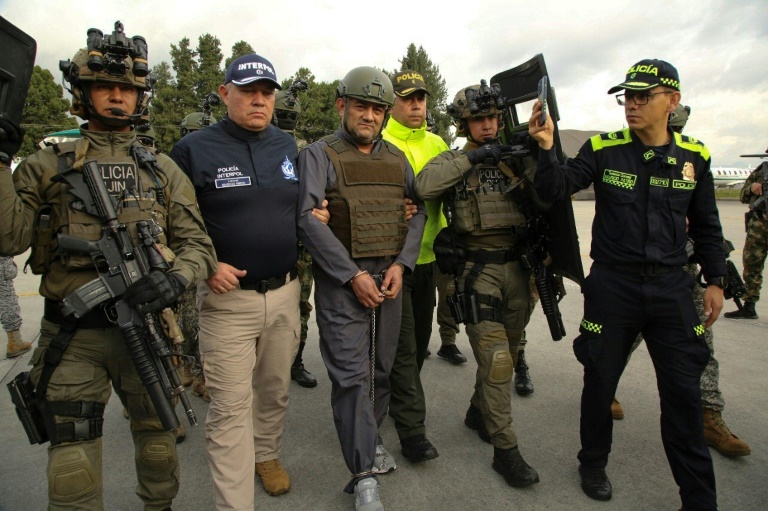
On Wednesday afternoon, a convoy of five bulletproof police vehicles transported Usuga from a prison in the capital Bogota to a military airport, where he was handed over to US Drug Enforcement Administration officials.

Images shared by local media showed a handcuffed Usuga seated in an airplane alongside Colombian police and an Interpol official.

Usuga was the leader of Colombia’s largest narco-trafficking gang, known as the Gulf Clan.

He was captured near the border with Panama following a military operation involving 500 soldiers backed by 22 helicopters, in which one police officer was killed.

His arrest was one of the biggest blows to Colombia’s drug trafficking business since the assassination of Pablo Escobar in 1993.

Usuga was indicted in 2009 in the United States, which had offered a $5 million bounty for information leading to his arrest.

The United States accuses Usuga and the Gulf Clan of illegally bringing at least 73 tons of cocaine into the country between 2003 and 2012.

Following Usuga’s arrest and that of another 90 suspected gang members, Duque declared the “end” of the Gulf Clan.

However, four Colombian soldiers were killed in attacks blamed on the gang just days after Usuga’s arrest.

The Gulf Clan was believed to be responsible for 30 percent of cocaine exports from Colombia, the world’s largest producer and supplier of the drug.

– ‘Who is afraid of Otoniel?’ –

Since his capture, Usuga has been held in a high-security prison in Bogota, and has been at the heart of multiple controversies.

Recordings of testimony “Otoniel” gave to the Truth Commission — an extrajudicial body investigating the decades-long conflict between the government and the Revolutionary Armed Forces of Colombia (FARC) — were stolen, the perpetrators unknown.

Colombian police also halted one of Usuga’s Truth Commission hearings, saying the Gulf Clan had organized an escape attempt.

“Who is afraid of Otoniel?” read a headline on Cambio, an independent online news outlet, which claimed that some people in the Colombian government sought to silence the drug lord.

The site reported Usuga would have said during his hearings that the army continued to work in complicity with right-wing paramilitaries in some parts of the country.

Citing a leaked Truth Commission document, the outlet said “Otoniel” had implicated 63 people as linked to the Gulf Clan, including a former minister, a former national director of intelligence, six former governors and four former members of parliament.

Family members of Usuga’s victims had asked for the courts to suspend his extradition, arguing that he should stand trial in Colombia for “crimes against humanity.”

“They did not respect the feelings of the victims,” said Marina Sanmiguel, whose husband was killed in a 1997 paramilitary raid.

Usuga “could be a key person to clarify what really happened,” she told AFP.  

But the Colombian justice system ultimately gave the green light for his extradition, Usuga’s defense team told AFP.

Duque vowed that Usuga would still face justice in Colombia. 

“This criminal was extradited to serve drug trafficking sentences in the United States,” the president said.

“But I want to be clear that once those are served, he will return to Colombia to pay for the crimes committed against our country.”

OPEC+ eye modest supply boost as demand dented by China Covid rules

OPEC+ members meeting on Thursday are expected to agree a marginal increase in oil production, bolstered by risks to demand amid coronavirus restrictions in China. 

Russia’s invasion of Ukraine has also added to supply concerns, which have increased with Europe’s announced moves on a potential Russian oil embargo.

Prices soared on Wednesday, with Brent North Sea crude closing above $110 a barrel, its highest level in two and a half weeks. 

But analysts said the new surge would not shake the 13 members of the Organization of Petroleum Exporting Countries (OPEC), led by Riyadh, and their 10 partners led by Moscow. 

“It is likely that OPEC will stick with its plan despite ongoing instability relating to the Russia-Ukraine conflict,” XTB analyst Walid Kudmani told AFP, citing “prospects of falling demand due to widespread lockdowns seen in China as a result of rising Covid cases”. 

As in previous months, the cartel is likely to open the taps at 432,000 barrels per day for June, a strategy begun in the spring of 2021 when the economy began recovering after the drastic cuts imposed amid the shock of the pandemic. 

The talks will begin with technical discussions at the ministerial committee meeting at 1100 GMT in Vienna, the headquarters of the cartel. 

– China, grounds for ‘caution’ –

Largely spared for two years, China in recent weeks has been battling its worst coronavirus outbreak since the spring of 2020 which has strained its zero-Covid strategy. 

Beijing on Wednesday closed dozens of metro stations and residents fear their city will be locked down, as is already the case in Shanghai, the country’s largest city with 25 million people. 

“The slowing activity in China is certainly a factor that will justify their decision to stay pat, faced with the mounting international pressure to increase production to address the worsening global energy crisis,” Ipek Ozkardeskaya, an analyst at Swissquote bank, told AFP.

This is “a reason to remain cautious,” said Fawad Razaqzada, analyst at City Index and Forex.com.

As for the new economic sanctions planned against Russia, they are not expected to move the needle for the moment. 

In its sixth package of sanctions, the European Commission calls for a ban on all Russian oil, crude and refined, transported by sea and pipeline by the end of 2022, European Commission President Ursula von der Leyen told the European Parliament.

– ‘Huge impact’ –

That prospect threatens supply in an already tense European market.

While unanimity among the 27 EU member states is required for the sanctions to go forward, Hungary, which is highly dependent on Russian deliveries, rejected the project in its current form.

“If it (the EU) manages to convince its members to ratify the plan… then this will have a huge impact on Russian oil exports,” Razaqzada said.

But once again the OPEC+ alliance, anxious to remain united and avoid upsetting Moscow, will “certainly not save the day,” Ozkardeskaya said.

“The cartel made clear that the Ukraine war — that impacts the Russian exports — is not cause for concern,” she said.

Stephen Innes, an analyst at SPI Asset Management, said OPEC+’s wait-and-see approach was “increasingly untenable” and “contrary to its mission statement”.

“(It’s) why they have fallen under constant criticism for being slow and technically unprepared to react to recent developments in global markets,” he said.

But does OPEC+ really hold the key to price stabilisation? Between a lack of investment in oil infrastructure in some member countries and operational problems, the cartel regularly fails to meet its production quotas.

OPEC+ eye modest supply boost as demand dented by China Covid rules

OPEC+ members meeting on Thursday are expected to agree a marginal increase in oil production, bolstered by risks to demand amid coronavirus restrictions in China. 

Russia’s invasion of Ukraine has also added to supply concerns, which have increased with Europe’s announced moves on a potential Russian oil embargo.

Prices soared on Wednesday, with Brent North Sea crude closing above $110 a barrel, its highest level in two and a half weeks. 

But analysts said the new surge would not shake the 13 members of the Organization of Petroleum Exporting Countries (OPEC), led by Riyadh, and their 10 partners led by Moscow. 

“It is likely that OPEC will stick with its plan despite ongoing instability relating to the Russia-Ukraine conflict,” XTB analyst Walid Kudmani told AFP, citing “prospects of falling demand due to widespread lockdowns seen in China as a result of rising Covid cases”. 

As in previous months, the cartel is likely to open the taps at 432,000 barrels per day for June, a strategy begun in the spring of 2021 when the economy began recovering after the drastic cuts imposed amid the shock of the pandemic. 

The talks will begin with technical discussions at the ministerial committee meeting at 1100 GMT in Vienna, the headquarters of the cartel. 

– China, grounds for ‘caution’ –

Largely spared for two years, China in recent weeks has been battling its worst coronavirus outbreak since the spring of 2020 which has strained its zero-Covid strategy. 

Beijing on Wednesday closed dozens of metro stations and residents fear their city will be locked down, as is already the case in Shanghai, the country’s largest city with 25 million people. 

“The slowing activity in China is certainly a factor that will justify their decision to stay pat, faced with the mounting international pressure to increase production to address the worsening global energy crisis,” Ipek Ozkardeskaya, an analyst at Swissquote bank, told AFP.

This is “a reason to remain cautious,” said Fawad Razaqzada, analyst at City Index and Forex.com.

As for the new economic sanctions planned against Russia, they are not expected to move the needle for the moment. 

In its sixth package of sanctions, the European Commission calls for a ban on all Russian oil, crude and refined, transported by sea and pipeline by the end of 2022, European Commission President Ursula von der Leyen told the European Parliament.

– ‘Huge impact’ –

That prospect threatens supply in an already tense European market.

While unanimity among the 27 EU member states is required for the sanctions to go forward, Hungary, which is highly dependent on Russian deliveries, rejected the project in its current form.

“If it (the EU) manages to convince its members to ratify the plan… then this will have a huge impact on Russian oil exports,” Razaqzada said.

But once again the OPEC+ alliance, anxious to remain united and avoid upsetting Moscow, will “certainly not save the day,” Ozkardeskaya said.

“The cartel made clear that the Ukraine war — that impacts the Russian exports — is not cause for concern,” she said.

Stephen Innes, an analyst at SPI Asset Management, said OPEC+’s wait-and-see approach was “increasingly untenable” and “contrary to its mission statement”.

“(It’s) why they have fallen under constant criticism for being slow and technically unprepared to react to recent developments in global markets,” he said.

But does OPEC+ really hold the key to price stabilisation? Between a lack of investment in oil infrastructure in some member countries and operational problems, the cartel regularly fails to meet its production quotas.

Philippines could revive nuclear plant if Marcos wins presidency

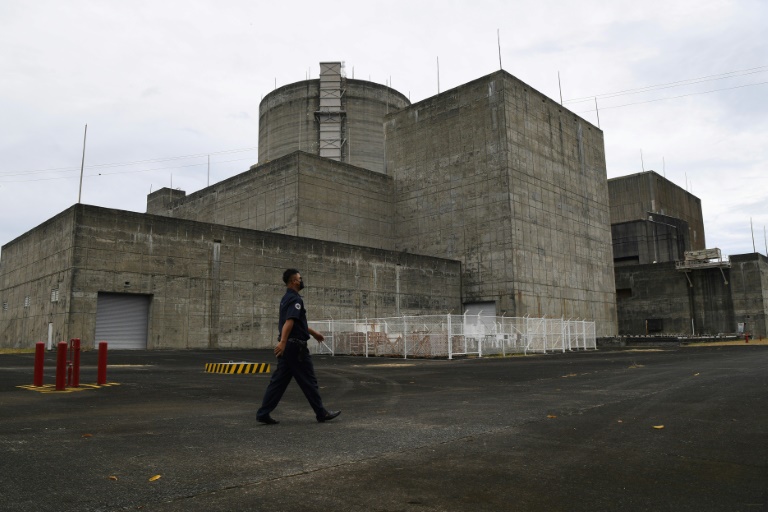
A mothballed nuclear power plant built near a fault line and volcanoes in the Philippines during Ferdinand Marcos’s dictatorship could be revived if his son wins next week’s presidential election.

The $2.2 billion Bataan plant became a monument to the greed and graft of the Marcos era, and was left dormant after the dictator was toppled in 1986.

Even before the Chernobyl nuclear accident that year sealed its fate, there were concerns about Bataan’s design and location.

The plant sits on the coast 18 metres (59 feet) above sea level and near several volcanoes in a part of the Philippines regularly shaken by earthquakes.

Yet Ferdinand Marcos Junior has vowed to speed up the adoption of nuclear power if he is elected and has left open the possibility of resuscitating his father’s failed venture. 

“We really have to look at nuclear power,” Marcos Jr said in March, insisting at least one plant was needed to cut exorbitant electricity prices in the country.

Marcos Jr, also a fan of wind, solar and geothermal technology, said a South Korean proposal to rehabilitate the Bataan plant should be revisited.

“Let’s look at it again,” he said.

Studies by South Korean and Russian experts showed it was possible to get the 620-megawatt plant working again, Energy Secretary Alfonso Cusi told a Senate hearing in 2020.

But upgrading an ageing facility fitted with outdated analogue technology could take at least four years and cost another $1 billion.

– Budget cuts –

Eighty kilometres (50 miles) west of Manila, the concrete plant is surrounded by a security fence on a peninsula overlooking the South China Sea.

The Philippines is a geologically volatile country and the land near the plant is vulnerable to seismic activity.

Mount Pinatubo, a volcano 57 kilometres north of the plant that was thought to be dormant, exploded in 1991, killing 300 people.

Seismologists say the Natib and Mariveles volcanoes nearby are “potentially active”.

Built in response to rising energy demands and the global oil price shocks of the 1970s, the Bataan plant has never produced a single watt of power.

Yet it costs taxpayers between 25 million and 35 million pesos ($478,000 and $670,000) a year to maintain.

Instead of producing electricity, the relic serves as a destination for tourists and students — part of the state-owned National Power Corporation’s efforts to educate the public about nuclear power.

Visitors are taken up flights of metal stairs and through submarine-like passages to peer over the dormant reactor and fuel rods still wrapped in plastic packaging.

In the stuffy control room — cost-cutting means air conditioners in the plant stay off — maintenance worker Rizly Seril, 65, wipes dust off wooden desks.

Seril, who was a fisherman when construction started more than four decades ago, walks around the silent plant pushing buttons, pulling levers and lubricating motor parts.

It was a “huge honour” to work there, he said.

For many, though, the Westinghouse-designed plant is a bitter reminder of the corruption and debt-fuelled infrastructure spending during the Marcos years that later impoverished the country.

The original price tag of around $500 million ballooned to about $2.2 billion. Much of the inflated balance was allegedly stolen by the dictator and his cronies.

The last instalment on the debt — one of the biggest ever on the country’s books — was paid in 2007.

Construction on the problem-plagued plant finished before Marcos was ousted, but he never started it up.

Its fate was sealed after the clan was chased into US exile and global fears over nuclear energy spiked following the Chernobyl disaster.

The new government refused to activate it, and uranium fuel trucked to the plant was sold in 1997 at a $35 million loss.

Since then, the budget to maintain it has been slashed by more than half, said plant manager Dante Caraos.

“We are spending very little,” Caraos told AFP in his office, a stone’s throw from the hulking structure.

“We are focusing on some priority projects like repair of the roofs, the maintenance of the grounds.”

– ‘Museum to corruption’ – 

Outgoing President Rodrigo Duterte issued an executive order earlier this year making nuclear power part of the country’s planned energy mix. 

The Philippines — regularly affected by electricity outages — relies on largely imported carbon-belching coal for more than half of its power generation.

Supporters of nuclear power say the technology offers a cleaner option to help meet demand. 

But critics argue that renewable sources, such as wind and solar, are cheaper and safer to produce in a country hit by earthquakes, typhoons and volcanic eruptions.

“If you add the effects of climate change, it’s going to be a big concern for local communities,” said Roland Simbulan, an anti-nuclear power activist.

Ideas to convert the plant into a coal or natural-gas facility were discarded long ago.

Ronald Mendoza, dean of Manila’s Ateneo School of Government, said it would be cheaper to build a new plant and turn Bataan into the “biggest museum of corruption in Asia” to serve as a reminder of past mistakes.

Joe Manalo, head of preservation and maintenance at the Bataan plant, is sceptical about it ever producing power.

“It depends on the government and the new president,” Manalo said as he guided AFP through a labyrinth of passages and rooms.

“To see is to believe.”

Russia's relentless hunt of Chechens decades after Putin's war

Twenty years after Vladimir Putin flattened their capital Grozny in the same way that his forces are now destroying Mariupol, Chechens refugees in Europe still live in fear of Russia’s long arm.

Tens of thousands fled the small Muslim-majority republic in the North Caucasus in the aftermath of two bloody wars with Moscow, the last launched by Putin in 1999 to bring the breakaway region to heel.

The Russian leader later installed Ramzan Kadyrov as Chechnya’s strongman. He has since ruthlessly suppressed all opposition, and never tires of declaring his ferocious loyalty to Putin.

Austria has one of Europe’s biggest Chechen communities. Many of the 35,000 exiles live in nondescript post-war blocks in a working class district of northeastern Vienna. The men tend to work as security guards while women bring up the children.

But many on these streets dotted with Chechen grocery shops and wedding boutiques live in dread.

Dozens told AFP of the constant menace of being targeted by Kadyrov’s notorious henchmen, the “Kadyrovtsy”, who have been accused of hunting down his opponents abroad. 

Others are afraid of being sent back to be tortured and killed — a fear that is far from unfounded according to human rights groups.

Before the war in Ukraine, extraditions of Chechens from Europe to Russia were being speeded up after the terror attack on the Boston Marathon and the gruesome murder of a French teacher by a young exile. 

Despite the conflict, there are no signs the deportations will stop. 

– ‘Rewriting history’ – 

Moscow’s arm reached Zorbek Nazuev, a grandfather with a long grey beard who has lived in Austria for 18 years, last February.

He had fled there with his children after the second conflict fearing retribution for fighting with the “boeviki”, the Chechen rebels who defeated the Russians during the first war between 1994 and 1996, when Chechnya briefly won its independence.

He had heard nothing from Moscow since he left until a letter from the Austrian prosecutor’s office arrived accusing him of terrorism and murder. 

According to a document seen by AFP, prosecutors claim to have intelligence that he took part in a massacre of Russian civilians in 1995.

Nazuev denies that he “killed innocent people”, insisting that he and other Chechen fighters were only “defending ourselves from the Russian invader”.

“They are rewriting history,” said the thickset man in his 50s, whose name has been changed to protect him.

Nazuev wonders if the charges and possible extradition he is facing could be linked to the fact that one of his relations fought in Syria with the Islamic State group.

The Austrian authorities refused to discuss the case despite numerous attempts by AFP through police and judicial sources.

– Agreement with Russia –

Hundreds of Chechens have been expelled from the European Union since it signed a 2006 agreement with Russia to ease the return of convicted suspects or those subject to an Interpol red notice.

No official statistics on the extraditions exist, but the Council of Europe denounced the abuse of the Interpol system by some countries to “persecute political opponents abroad” in a 2017 report.

Exiles also believe European countries have toughened their line against them because of terror fears after Chechens were involved in a number of jihadist attacks.

“Clearly security services are on alert” to try to prevent future attacks, said Anne le Huerou, an expert on post-Soviet conflicts at Paris Nanterre University.

Indeed, after the killing of French teacher Samuel Paty by a Chechen refugee in October 2020, Austria created a special force to tackle extremism and “parallel societies” within its Chechen community.

A month after Paty’s murder, Vienna suffered its first ever Islamist attack when four people were killed by a man said to be jihadist sympathiser, with authorities lambasted for surveillance failures in the run-up to the attack. 

Just over a year later in December 2021, Austria chartered a flight to deport 10 people to Russia, boasting of its “efficient cooperation” with Moscow.

Questioned by AFP, the Austrian government admitted that currently “four Russian nationals are in custody awaiting deportation.”

Despite commercial flights with Russia being cut by sanctions over the war in Ukraine, the expulsions are still live, according to the Austrian interior ministry.

– Tortured in Grozny –

“I’d rather kill myself here than go back,” said Nazuev, who claimed he was left handicapped after he was tortured with electric shocks before he fled Chechyna.

Moscow has continually assured European governments that Chechen exiles sent back to Russia will be fairly treated.  

However, several have been killed or disappeared, while others have been tortured or convicted on charges that human rights group say were “fabricated”.

Last month the Russian rights group Memorial — which has since been banned by Moscow — criticised France for turning a blind eye to the death of 20-year-old Daud Muradov, who was sent back to Russia in December 2020 after being deemed a security risk. 

At the end of last year he was transferred to Grozny where he was tortured, they said. 

His relatives were told in February that he was dead. They have not been given his body nor the results of a post-mortem, Memorial added. 

– Killed in Vienna –  

But even more than extradition, Chechen exiles fear the assassins that Kadyrov sends to liquidate his opponents in exile.  

The Austrian courts singled out the Chechen leader for being involved in the killing of one of his opponents who was shot in Vienna in 2009 after criticising Kadyrov’s human rights record. 

The victim’s lawyer, Nadia Lorenz, told AFP that the case “still stops me sleeping”, claiming that “correspondence between the Austrian courts and Grozny” allowed the killers to pinpoint where her client lived. 

A few days before he was shot, father-of-four Umar Israylov had been refused police protection despite being followed in the street.

The case threw the spotlight on how Kadyrov’s killers work, with prosecutors convinced he gave the order for Israylov’s assassination. 

According to Israylov’s widow, the Chechen leader called her husband twice before he was shot, demanding he return to Russia immediately. 

But Kadyrov’s role was never fully aired because Moscow ignored Vienna’s calls for help with the investigation.

Chechen activist Rosa Dunaeva insists the “Kadyrovtsy” were responsible for another hit in Vienna in July 2020 as well as similar killings in Lille, France, earlier that year and in Istanbul in 2011.

– Harassment –

“The media give the impression that we are involved in crime and religious extremism, when the vast majority of Chechens are living in fear and don’t want anything to do with politics anymore,” said Dunaeva at one of the regular protests against the deportations.

Indeed many Chechens are well integrated in Austria, like judo champion Shamil Borchashvili, who won a bronze medal at the Tokyo Olympics last year. 

Or Zelimkhan Kazan. The 19-year-old — whose name we have changed for his safety — was born in Austria and has never been to Chechnya. He is studying programming and has already set up two start-ups. 

“I work and have everything I need but I don’t feel 100 percent safe,” said the mixed martial arts (MMA) fan as he worked out by the Danube Canal.

“There is no way I could get away with the things an Austrian teenager might do — for me it would be a death sentence,” he insisted, meaning deportation to Russia.

Kazan, who has no Russian papers, but only leave to stay in Austria, cannot be naturalised in the country he was born in because of Vienna’s strict nationality laws.

Which can make life difficult when Kazan says plainclothes police stop him “three or four times a month” to check his papers.

“Some call me a faggot, hoping that I will react violently,” he added.

All the Chechen refugees AFP talked to said they felt targeted by the police, with the slightest clash leading to a conviction that could see them being deported. 

Last July Austrian police officers were found guilty of beating a Chechen after being caught on security cameras.

– Kadyrov’s ‘brainwashing’ –

Kazan also has to run the gauntlet of the “Kadyrovtsy”, who stand out because of their big cars and their swagger. When he sees them, he pulls down his hood so they don’t ask him any questions.

Activist Dunaeva is as worried about the growing grip Ramzan Kadyrov — who has a vast social media following — has on young Chechens born in Europe. “When he is not killing them, he brainwashes them and tries to turn them against the West,” she said.

Chechens also talk about cocaine dealing that is destroying the lives of young men who see no future and are easy prey for Mafia clans. And women complain of having their freedom curtailed by their “big brothers”.

Angered by the discrimination they face in Austria, some fall into the charismatic Kadyrov’s trap, and are easy fodder for his macho posturing on social media, dividing families who had fled his grip.

“The regime also promises good career prospects for young Chechens educated in Europe who return” to their homeland, French expert Le Huerou said. “The anti-gay propaganda which celebrates masculinity can also be attractive” for some Chechens steeped in the country’s martial mythology.

A contingent of one thousand Chechens were reportedly sent by Kadyrov to fight for Moscow in Ukraine. But other Chechens are also fighting alongside the Ukrainians, several sources told AFP.

And among the millions of refugees fleeing the fighting, a young Chechen woman travelling with her son was arrested in Romania. Courts there have already ordered her extradition, accusing her of “being part of an armed group opposed to the Russian Federation”. Her appeal has now been rejected.

Russia may have started a new war, but its hunt of Chechens continues unabated. 

EU eyes Russian oil import ban amid new bid to evacuate Mariupol

The European Commission on Wednesday proposed a ban within the year on Russian oil imports in its toughest move yet over the invasion of Ukraine, as Moscow said it was offering a new ceasefire to evacuate a steel plant in devastated Mariupol.

The EU also pledged to “significantly increase” its support for Ukraine’s neighbour Moldova, which has seen a series of attacks in a Moscow-backed separatist region, sparking fears the conflict could spread.

European Commission chief Ursula von der Leyen said the bloc would “phase out Russian supply of crude oil within six months, and refined products by the end of the year”.

If approved, the oil ban would be the EU’s strongest move yet against Russia’s strategic energy sector that helps the Kremlin finance its war, but will still not touch its huge gas exports.

But within hours, Hungary — whose populist leader Viktor Orban is one of Putin’s few EU partners — said it could not support the plan “in this form”, as it would “completely destroy” the security of its energy supply.

Ukrainian Foreign Minister Dmytro Kuleba hit back that EU countries blocking an oil embargo would be “complicit” in Russia’s crimes in Ukraine.

The EU is also mulling moves against Russia’s biggest bank, Sberbank, and against Patriarch Kirill, the head of the Russian Orthodox Church and an outspoken promoter of Putin.

Ukraine’s allies have sent money and, increasingly, heavy weapons to Kyiv to help it defend itself in a war US President Joe Biden has framed as a historic battle for democracy.

Biden said Wednesday he was “open” to imposing more sanctions on Russia and would be discussing measures with allies from the Group of Seven democracies in the coming days.

– Fighting in Azovstal –

After failing to sack Kyiv, Russia’s more than two-month military campaign has shifted to seeking to unite separatist pro-Russian areas in the east with Crimea, which Moscow seized in 2014.

The strategic southern port of Mariupol has become an emblem of the suffering of the war, with an untold number of dead and basic supplies cut off as Moscow carried out a scorched-earth campaign to wrest control.

The last Ukrainian soldiers are holding out at the Azovstal steelworks where Mariupol’s mayor, Vadym Boichenko, said there was heavy fighting Wednesday.

Russia was attacking with heavy artillery, tanks, planes and ships off the coast, he told Ukrainian television.

“There are local residents there, civilians — hundreds of them there,” he added. “There are children waiting for rescue. There are more than 30 kids.”

Russia’s defence ministry announced a daytime ceasefire for three days beginning Thursday to evacuate civilians from the plant.

In Washington, State Department spokesman Ned Price voiced scepticism about the ceasefire, saying that Moscow has repeatedly resumed shelling after announcing pauses.

Price called on Russia to show that the latest effort is “motivated by genuine humanitarian concern and not the desire on the part of the Russian Federation to achieve a PR victory”.

Denys Prokopenko, the commander of the nationalist Azov regiment, vowed never to surrender the plant.

“The situation is extremely hard. However, we will continue carrying out the order to keep up our defences no matter what,” he said in a video.

– ‘We thought everyone forgot’ –

Some 344 people have been evacuated in two rounds from Mariupol and surrounding areas and brought to Ukrainian-controlled Zoporizhzhia, President Volodymyr Zelensky said.

“They will all receive the necessary help, they will all receive the most attentive care from the government,” Zelensky said in a video address.

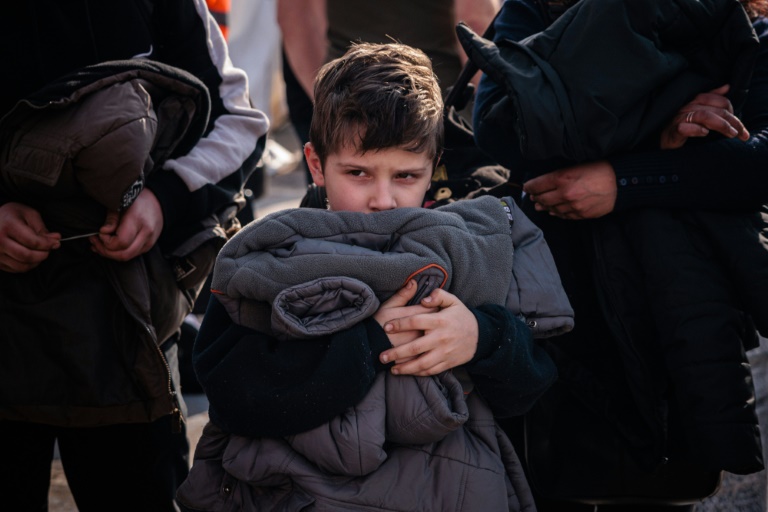
The civilians, some only with the clothes on their backs, arrived in a caravan of white buses organised by the United Nations and Red Cross.

“We are so thankful for everyone who helped us,” evacuee Anna Zaitseva said, holding her six-month-old baby in her arms. “There was a moment we lost hope, we thought everyone forgot about us.”

Apart from the steelworks, Mariupol was now largely calm, AFP journalists observed during a recent press tour organised by Russian forces. Remaining locals were emerging from hiding to a ruined city.

Ukraine’s military intelligence accused Russia of planning to hold a parade in Mariupol on May 9 to celebrate victory over the Nazis in World War II.

In a briefing on the army’s plan for May 9, Russian Defence Minister Sergei Shoigu made no mention of a celebratory march in Mariupol.

In the eastern Lugansk region, meanwhile, governor Sergiy Gaiday said two people had died in the past day and that there was “no safe place”. 

– Attacks in the west –

Russian attacks periodically stray close to Ukraine’s western border with the EU.

Both sides on Wednesday reported Russian strikes on infrastructure sites around the western city of Lviv, near Poland, and Transcarpathia, a region bordering Hungary.

Russia’s defence ministry said Wednesday that its air- and sea-based weapons had destroyed six electrical substations near railways including around Lviv, near Odessa to the south and near Dnipropetrovsk to the southeast.

It said Ukrainian troops in the eastern Donbas region had used the railway stations to transport weapons and ammunition from the West.

In Ukraine’s western neighbour Moldova, there are fears the conflict will spill over the border.

Visiting the tiny ex-Soviet republic Wednesday, European Council President Charles Michel offered the EU’s “full solidarity” and support, including in the areas of logistics and cyber defence.

“This year we plan to significantly increase our support to Moldova by providing its armed forces with additional military equipment,” he told a press conference with President Maia Sandu.

Ukraine has accused Russia of wanting to destabilise Moldova’s separatist region of Transnistria to create a pretext for a military intervention.

The war in Ukraine has killed thousands of people and displaced more than 13 million, creating the worst refugee crisis in Europe since World War II.

burs-ar-sct/sw

Close Bitnami banner
Bitnami