World

US Fed makes biggest rate increase since 2000 to fight inflation

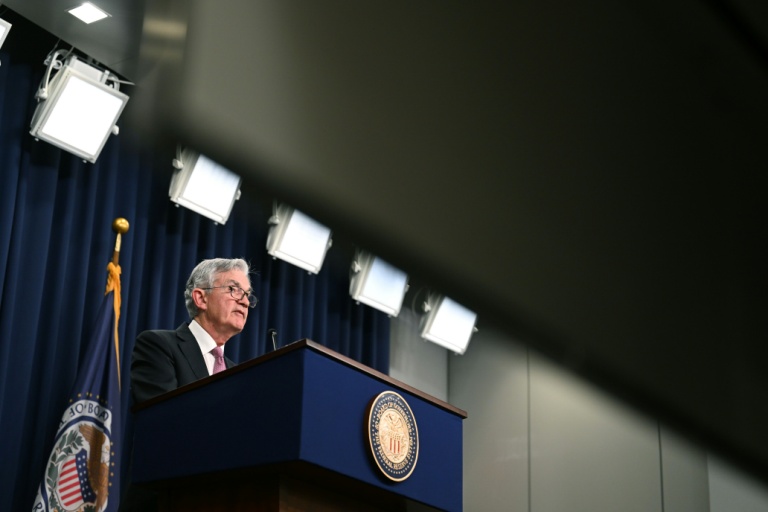
The Federal Reserve on Wednesday made its biggest rate hike since 2000 with a half percentage point increase meant to crush soaring inflation in the United States.

After a quarter-point hike in March, the US central bank’s policy-setting Federal Open Market Committee (FOMC) pushed the rate above 0.75 percent as it works to cool the economy, while noting more increases “will be appropriate.”

That will raise the costs of all types of borrowing, from mortgages to credit cards to car loans, cooling demand and business activity.

Inflation has become an overriding concern after the world’s largest economy saw annual consumer prices jump 8.5 percent over the 12 months to March — the biggest jump since December 1981.

Policymakers continue to believe inflation will gradually return to the Fed’s two-percent target as it raises borrowing costs, but in a statement following the conclusion of its two-day meeting, the FOMC said it will be “highly attentive to inflation risks.”

The Fed’s goal is to engineer a “soft landing” in which it reins in inflation while avoiding a contraction in economic activity.

But with China’s pandemic lockdowns worsening global supply snarls and the war in Ukraine pushing commodity prices higher, analysts fear factors beyond the central bank’s control could undermine that goal, and perhaps plunge the US economy into a recession.

The committee noted the “highly uncertain” impact of Russia’s invasion of Ukraine and Western sanctions on Moscow, which are “creating additional upward pressure on inflation and are likely to weigh on economic activity.” 

In addition, Covid lockdowns in China “are likely to exacerbate supply chain disruptions,” the statement said. 

– Offloading bonds –

Though it contracted in the first quarter, Fed officials have said they view the economy as healthy enough to withstand higher rates, and the FOMC statement noted robust job gains and strong household and business spending.

However, central bankers cannot engineer a solution for the worker shortages that have challenged businesses and raised fears of a wage-price spiral, when employees demand higher salaries and fuel price increases. 

On Wednesday, payroll services firm ADP reported private employers added a weaker-than-expected 247,000 workers in April, a sign that companies are struggling to find available labor, while government data released Tuesday showed there are nearly two openings for every job seeker.

The FOMC also said it would begin reducing its massive bond holdings starting June 1, beginning at the pace of $47.5 billion a month, and then doubling after three months.

The decision was widely expected, and many economists believe the FOMC will again hike rates by a half-point in June, though Ian Shepherdson of Pantheon Economics said, “it’s not a done deal,” and it’s even more difficult to say what might happen later in the year. 

“We think all bets are off, given the likelihood of a steep, sustained drop in inflation, a clear softening in manufacturing, and a meltdown in housing market activity,” he wrote in an analysis of the meeting.

Uber hit with loss in quarter despite rider rebound

Uber shares skidded Wednesday after the company said it was hit with a big loss in the first three months of this year despite a rebound in its ride-share business.

Quarterly revenue at Uber’s rides unit nearly tripled year on year to $2.5 billion, topping the sum taken in from its food-delivery service for the first time since the pandemic prompted a boom in people ordering meals in.

But despite overall revenue more than doubling compared to the same period last year, Uber logged a net loss of $5.9 billion.

The loss was due almost entirely to revaluation of its stakes in Grab and Didi in Asia and autonomous driving technology enterprise Aurora in the United States, the earnings report said.

“After two years of persistent and sometimes unpredictable impact across our business, our (first quarter) results resoundingly affirm that we’re on a strong path emerging out of the pandemic,” Uber chief executive Dara Khosrowshahi said on an earnings call.

Uber rival Lyft reported its earnings a day earlier, saying ridership was soft in January due to the impact of the Omicron Covid-19 variant, but that demand rebounded sharply the following two months.

Lyft said it lost $196.9 million in the first quarter, most of which was due to stock compensation for employees.

Both companies told analysts they expect to have to invest in keeping drivers on the platform in the face of rising fuel prices and continued concerns about the pandemic.

Uber shares were down more than seven percent in midday trading while Lyft shares plunged more than 31 percent due to expectations it will spend more and bring in less in the months ahead.

“Lyft is spending money like a 1980s rock star and this will have a violent negative reaction from investors in an already jittery market,” Wedbush analyst Dan Ives said after the earnings were released.

“This quagmire of spending to get drivers back onto the platform is a necessary evil to propel the Lyft story into its next stage of growth.”

Uber saw revenue climb 44 percent to $2.5 billion at its Eats meal delivery service when compared with the same period a year ago, and said its Freight platform connecting truckers with loads posted its first profitable quarter.

Uber has been pursuing a strategy of becoming a mobile app hub for transportation options and enticing people using it for rides to also order meal deliveries and vice versa.

“We believe that Uber is better positioned than peers to take advantage of the ridesharing recovery,” said CFRA senior equity analyst Angelo Zino, noting partnerships such as an alliance with New York taxi drivers.

“Although uncertainties about the trajectory of the consumer/travel spend temper our outlook, we like Uber’s multi-app platform strategy.”

Burundi says 10 troops killed in attack on AU base in Somalia

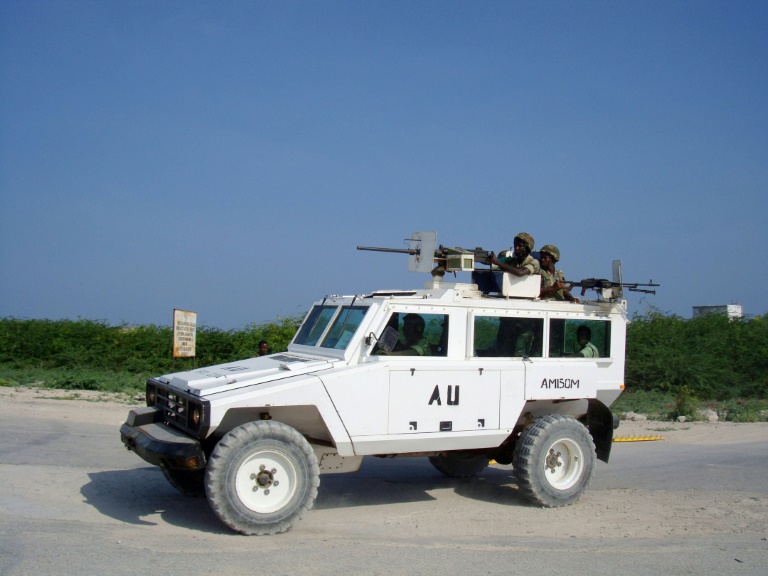
Ten Burundian peacekeepers were killed in a ferocious attack by Al-Shabaab jihadists on an African Union base in Somalia, Burundi’s army said Wednesday, the deadliest targeting AU forces in the country since 2015.

Twenty-five soldiers were also wounded in Tuesday’s assault on the camp in central Somalia and five are still missing while 20 Al-Shabaab militants were killed, it said in a statement on Wednesday.

It was the first such strike on a peacekeeping base since the AU Transition Mission in Somalia (ATMIS) replaced the previous AMISOM force on April 1.

“This attack was carried out using car bombs, suicide bombers and heavily armed men,” the Burundian army said. “Fierce fighting took place, causing losses on both sides.”

AU forces sent in helicopter gunships after the pre-dawn attack on the camp housing Burundian troops near Ceel Baraf, a village some 160 kilometres (100 miles) northeast of the capital Mogadishu, military officials and witnesses said. 

A high-ranking Burundian military officer told AFP that 400 Islamist fighters stormed the base, forcing the soldiers to retreat to a nearby hillside where they continued to fight, supported by drones and helicopters. 

Two Burundian military sources told AFP on condition of anonymity that 45 peacekeepers were reported as dead or missing, with 25 others injured.

Al-Shabaab claimed responsibility for the attack, saying it had taken control of the camp and that 173 soldiers had been killed. Its claims could not be independently verified.

The Al-Qaeda-linked Islamist militants have been waging a deadly insurgency against Somalia’s fragile central government for more than a decade.

– ‘Heinous’ attack –

Somalia’s government condemned the “heinous” attack and appealed to the international community to do more to support Somali forces and ATMIS “in effectively combatting terrorism.” 

AU Commission chief Moussa Faki Mahamat said on Twitter he spoke to Burundi’s President Evariste Ndayishimiye to pay his respects for the “sacrifice” of the peacekeepers who lost their lives.

The United States, Britain and the regional bloc IGAD (Intergovernmental Authority on Development) condemned the attack, with the US embassy in Mogadishu vowing to “stand with ATMIS and Somalia’s security forces as we partner to achieve peace”.

“Our thoughts are with ATMIS, Burundian National Defence Force and all those affected. The UK stands with Somalia and partners in the fight against terrorism,” the British ambassador to Somalia, Kate Foster, said on Twitter.

IGAD executive secretary Workneh Gebeyehu said in a statement: “These attacks will neither deter nor alter the determination of IGAD and international partners to support the people of Somalia in their search for a lasting peace and stability.”

The European Union “strongly condemns the attack” and expresses support for the African Union mission in the country, according to a statement by the bloc’s foreign policy service.

The attack is the deadliest since September 2015, when Western military sources reported that at least 50 AU troops were killed as Al-Shabaab fighters overran a military base southwest of Mogadishu.

The latest bloodshed highlights the security woes in the troubled Horn of Africa country, which is also embroiled in a deep political crisis over delayed elections and faces the threat of famine due to a prolonged drought across the region.

– Election delays –

ATMIS — made up of troops from Burundi, Djibouti, Ethiopia, Kenya and Uganda — is tasked with helping Somali forces take primary responsibility for security in a country that has been mired in conflict since 1991.  

According to a UN resolution approving its creation, ATMIS is projected to gradually reduce staffing levels from nearly 20,000 soldiers, police and civilians to zero by the end of 2024. 

Somalia’s security issues have been exacerbated by an ongoing political crisis which has delayed elections by over a year, with its president and prime minister locked in a bitter power struggle.

On Wednesday, parliament nominated a committee to prepare for the presidential vote, which must be completed by mid-May. A crucial IMF financial assistance package is set to automatically expire if a new administration is not in place by then.

“We have a huge task to undertake as you know and therefore, we have to accelerate the election of the president,” lower house speaker Sheikh Adan Mohamed Nur, better known as Sheikh Adan Madobe, told legislators.

Somalia’s international partners have warned that the delays distracted from the fight against Al-Shabaab, whose fighters controlled Mogadishu until 2011 when they were driven out by AU troops.

But the militants still hold territory in the countryside and frequently attack civilian, military and government targets in Mogadishu and elsewhere. 

North Korea fires ballistic missile in latest show of force

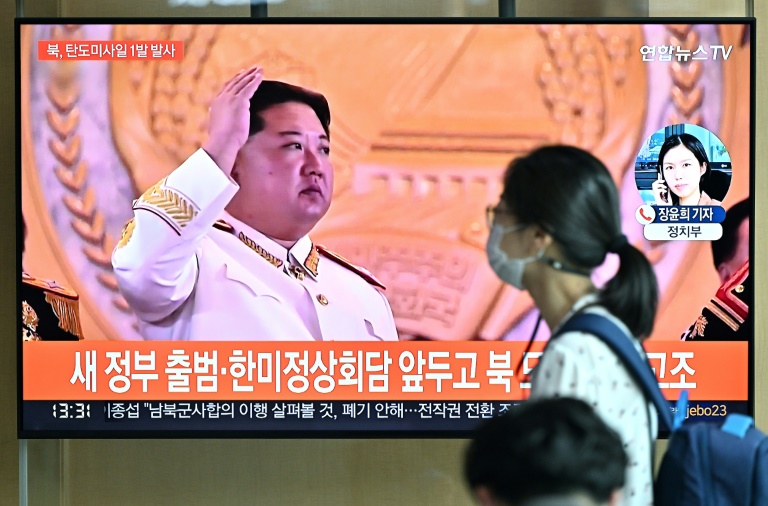
North Korea fired a ballistic missile Wednesday, Seoul said, a week after Kim Jong Un vowed to boost Pyongyang’s nuclear arsenal and just days before the South inaugurates a new, hawkish president.

Pyongyang has conducted 14 weapons tests since January, including firing an intercontinental ballistic missile at full-range for the first time since 2017.

Last week, while overseeing a huge military parade, Kim vowed to rapidly expand and improve his nuclear arsenal and warned of possible “pre-emptive” strikes — as satellite imagery indicates he may soon resume nuclear testing.

The Wednesday test comes days before the May 10 inauguration of South Korea’s President-elect Yoon Suk-yeol, who has vowed to take a hard line with North Korea and ramp up security cooperation with the United States after years of failed diplomacy.

North Korea fired the ballistic missile at 12:03 pm (0303 GMT), Seoul’s Joint Chiefs of Staff said, likely from the Sunan Airfield near Pyongyang, the site of previous recent ICBM tests.

The missile flew 470 kilometers (300 miles) and reached an altitude of 780 kilometers, the JCS said, adding it was a “blatant violation of UN Security Council resolutions”.

Japan’s state minister of defence Makoto Oniki confirmed the launch and the missile’s trajectory, saying it had landed “outside of Japan’s exclusive economic zone”.

North Korea’s “repeated launches of ballistic missiles threaten peace and safety of our nation, the region and the international community,” he added.

Seoul’s national security council said it “strongly” condemned the launch, urging the North to “cease actions that pose a serious threat to the Korean Peninsula” and to return to dialogue.

UN Secretary-General Antonio Guterres, meanwhile, urged North Korea “to fully comply with its international obligations”, and said the launch “only contributes to increasing regional and international tensions”, according to his spokesman Stephane Dujarric.

Since high-level diplomacy with then-US president Donald Trump collapsed, North Korea has doubled down on Kim’s plans for military modernisation, seemingly impervious to threats of more sanctions as it ignores the United States’ offers of talks.

– More nukes? –

Kim Jong Un said at last week’s military parade that he would take measures to develop “the nuclear forces of our state at the fastest possible speed”, according to footage of his speech broadcast on state media.

Repeated negotiations aimed at convincing Kim to give up his nuclear weapons have come to nothing.

“There is a good chance that they test-fired a missile that can be equipped with a nuclear warhead,” Ahn Chan-il, a North Korean studies scholar, told AFP Wednesday.

Kim also warned that he could “pre-emptively” use his nuclear force to counter so-called hostile forces at a meeting with top military brass last week.

Analysts said Kim’s messaging on his nuclear weapons, plus the recent test, could be seen as a signal to President-elect Yoon, who has threatened a pre-emptive strike on Pyongyang.

“It could be a warning message to… Yoon,” said Hong Min of the Korea Institute for National Unification.

Yoon has suggested he is only willing to talk about peace if North Korea confirms it is willing to denuclearise — something Pyongyang will never accept, Hong said.

– Seoul’s hard line –

For five years under President Moon Jae-in, Seoul has pursued a policy of engagement with Pyongyang, brokering high-level summits between Kim and Trump while reducing joint US military drills the North sees as provocative.

But for President-elect Yoon, this “subservient” approach has been a manifest failure. 

He said on the campaign trail he would like more US missile defences — and even tactical nuclear weapons — deployed in South Korea, and has vowed to ramp up joint military exercises, which infuriate Pyongyang. 

US President Joe Biden is due to visit South Korea later this month to meet with Yoon.

Asked about a vote on a US draft resolution to increase international sanctions, US Ambassador to the UN Linda Thomas-Greenfield said her country’s plan was “to move forward with that resolution during this month”.

However, it is “virtually impossible” for the Security Council to sanction North Korea — which has supported Russia’s attack on Ukraine — due to Moscow’s veto power, said Cheong Seong-chang of the Center for North Korea Studies at the Sejong Institute.

“The North therefore will try to test as many missiles as possible that it has not been able to do so far, enabling it to enhance capabilities of its arsenal at a fast pace.”

Myanmar junta court rejects Suu Kyi corruption appeal

A Myanmar junta court on Wednesday rejected an appeal by ousted leader Aung San Suu Kyi against a five-year sentence for corruption handed down last week, a junta spokesman told AFP.

Since a coup ousted her government in February last year, plunging Myanmar into upheaval, Suu Kyi has been in military custody and faces a raft of charges that could jail her for more than 150 years.

Last week the Nobel laureate was convicted of accepting a bribe of $600,000 cash and gold bars — a charge she said was “absurd”, according to her lawyer.

The junta’s “Union Supreme Court rejected the appeal of her sentence,” junta spokesman Zaw Min Tun told AFP. 

Suu Kyi will challenge the latest decision in a higher court, a source with knowledge of the case told AFP after the ruling.

She had “decided to continue till the end of the process to check the situation of the rule of law here,” the source said.

There was no date given for the fresh appeal, which will be heard in the Union Supreme Court in front of two judges. 

Before her corruption conviction, the 76-year-old Suu Kyi had already been sentenced to six years in jail for incitement against the military, breaching Covid-19 rules and breaking a telecommunications law.

Appeals against those convictions are currently pending in the courts, the source said. 

Suu Kyi will remain under house arrest at an unknown location in the military-built capital Naypyidaw while she fights other charges.

She faces a raft of other trials, including for allegedly violating the official secrets act, several counts of corruption and electoral fraud.

Journalists have been barred from attending the court hearings and Suu Kyi’s lawyers have been banned from speaking to the media.

– ‘Sport in a court’ –

The rejection of the appeal marked “another stage in the show trial,” David Mathieson, an independent analyst working on Myanmar, told AFP.

“This is sport in a court, a form of mental cruelty.”

Under a previous junta regime, Suu Kyi spent long spells under house arrest in her family’s colonial-era lakeside mansion in Yangon, Myanmar’s largest city.

Today, she is confined to an undisclosed location in the capital, with her links to the outside world limited to brief pre-trial meetings with her lawyers.

The junta has rebuffed requests by foreign diplomats to meet Suu Kyi while she is on trial. 

The coup last year sparked widespread protests and unrest that the military has sought to crush by force.

Fighting has flared with established ethnic rebel groups in border areas and across the country “People’s Defence Forces” have sprung up to fight junta troops. 

According to a local monitoring group, the crackdown has left more than 1,800 civilians dead while over 13,000 have been arrested.

Suu Kyi has been the face of Myanmar’s democratic hopes for more than 30 years, but her earlier sentences already mean she is likely to miss elections the junta has said it plans to hold by next year.

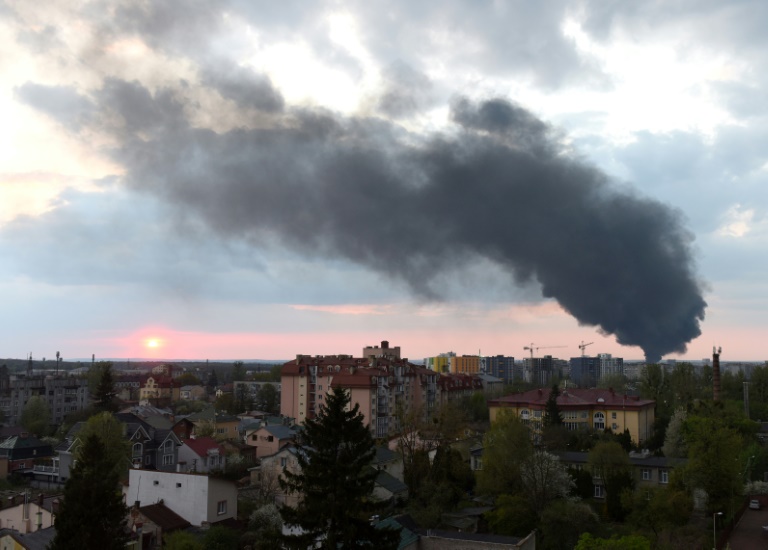
War in Ukraine: Latest developments

Here are the latest developments in the war in Ukraine:

– ‘Heavy fighting’ at Azovstal –

The mayor of the destroyed Ukrainian city of Mariupol says contact has been lost with Ukrainian forces holed up in the Azovstal steel plant amid “heavy fighting” with Russian troops.

City officials have no way of knowing “what’s going on, whether they are safe or not”, Vadym Boichenko tells Ukrainian television.

The Kremlin denied Russia was storming the plant after Ukraine accused Moscow of launching a “powerful” assault on the industrial zone, the last redoubt of Ukrainian forces.

– 20 bodies found in Kyiv region –

The bodies of another 20 civilians were found in the past 24 hours in the Kyiv region, police say, raising the total number found there so far to 1,235. 

Kyiv regional police chief Andriy Nebytov says the latest discoveries were found in Borodianka and the surrounding villages, some 25 kilometres (15 miles) from Bucha, the town near Kyiv now synonymous with allegations of Russian war crimes.

– Biden ‘open’ to more sanctions –

US President Joe Biden says he is “open” to imposing more sanctions on Russia and will discuss measures with allies from the G7 in the next few days.

“We’re always open to additional sanctions,” Biden says shortly after the European Union announced plans for banning Russian oil imports and other new measures punishing Moscow for its bloody invasion of Ukraine.

– EU states opposing embargo ‘complicit’: Kyiv –

Ukraine says EU countries blocking an embargo on imports of Russian oil would be complicit in crimes committed by Russian troops on Ukrainian territory by funding Moscow’s military.

“If there is any country in Europe who will continue to oppose the embargo on Russian oil, there will be good reason to say, this country is complicit in the crimes committed by Russia in the territory of Ukraine,” Ukraine Foreign Minister Dmytro Kuleba says in a briefing on social media.

– Mariupol military parade planned: Kyiv –

Ukraine accuses Russia of planning to hold a military parade in the destroyed city of Mariupol on May 9 to celebrate victory over the Nazis in World War II.

Kyiv says an official from Russia’s presidential administration has arrived in the strategic southern port city, to oversee plans for the Victory Day parade.

– New EU sanctions, oil ban take shape –

EU chief Ursula von der Leyen says the bloc will impose a gradual Russian oil ban, as part of new sanctions to punish Russia for invading Ukraine.

“We will phase out Russian supply of crude oil within six months and refined products by the end of the year,” she tells the European Parliament.

– Eastern assault continues –

Russian forces continue to pound sites to the east of the country, Ukraine’s general staff says, as Moscow seeks to establish “full control” of the regions of Lugansk and Donetsk, and to maintain a land corridor to occupied Crimea.

In Lugansk, governor Sergiy Gaiday says two people have died in the last 24 hours, and “the whole region is under fire completely, there is no safe place”.

– Evacuees reach Zaporizhzhia – 

Further evacuations from Mariupol are expected Wednesday, a day after 156 people arrived in the Ukrainian-held city of Zaporizhzhia.

– Belarus launches manoeuvres –

Belarus, a Moscow ally that shares a border with Ukraine, launches “surprise” military manoeuvres, to test the reactive capacity of its army, its defence ministry says. 

Belarus military units were testing their capacity to “go on the alert, move to predetermined zones and undertake combat training,” it says. 

– EU to support Moldova –

European Council President Charles Michel pledges to increase EU military aid to Moldova, Ukraine’s neighbour that has seen a series of attacks in a pro-Moscow separatist region.

burs/cdw/raz

Brazil's Lula says Zelensky shares blame for Ukraine war

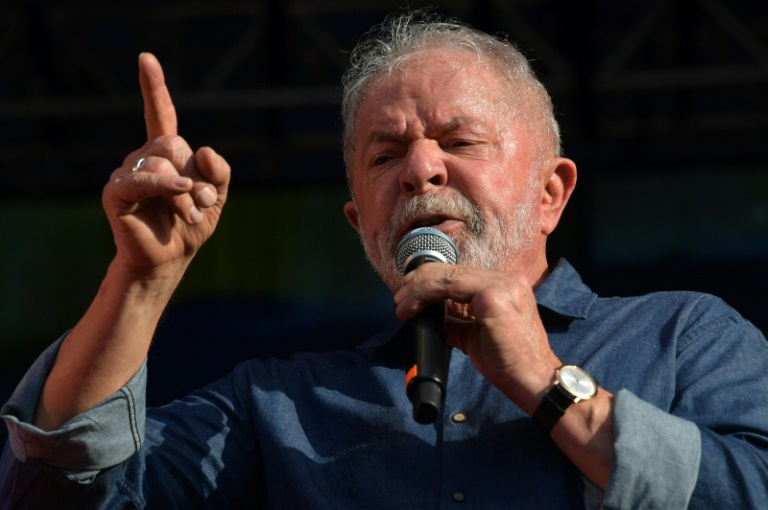
Brazilian presidential front-runner Luiz Inacio Lula da Silva said Ukrainian President Volodymyr Zelensky and his Russian counterpart Vladimir Putin bear equal responsibility for the war in Ukraine, putting the leftist icon at odds with Western powers.

“I see the president of Ukraine, speaking on television, being applauded, getting a standing ovation by all the (European) parliamentarians,” Lula, Brazil’s president from 2003 to 2010, told Time magazine, which published a story Wednesday on his bid to stage a presidential come-back in elections against far-right President Jair Bolsonaro.

“This guy (Zelensky) is as responsible as Putin for the war,” he added.

The remarks will likely raise eyebrows in the US and Europe, which are supplying military support to Ukraine and have hit Russia with punishing sanctions over an invasion widely seen in the West as an act of unprovoked Russian aggression.

Lula, 76, said Zelensky should have yielded to Russian opposition to Ukraine’s moves to join NATO and held negotiations with Putin to avoid a conflict.

Referencing Zelensky’s rise to fame as an actor and comedian, he added: “We should be having a serious conversation. OK, you were a nice comedian. But let us not make war for you to show up on TV.”

He also had criticism for US President Joe Biden.

“Biden could have taken a plane to Moscow to talk to Putin. This is the kind of attitude you expect from a leader,” he said.

Lula, who leads Bolsonaro in the polls for October’s elections, was a key player on the international stage during his two terms as president, building Brazil’s diplomatic clout.

Portraying himself as a bridge-builder, he maintained friendly ties with counterparts as disparate as George W. Bush of the US and Hugo Chavez of Venezuela or Mahmoud Ahmadinejad of Iran.

UK arrests suspected migrant boat 'kingpin'

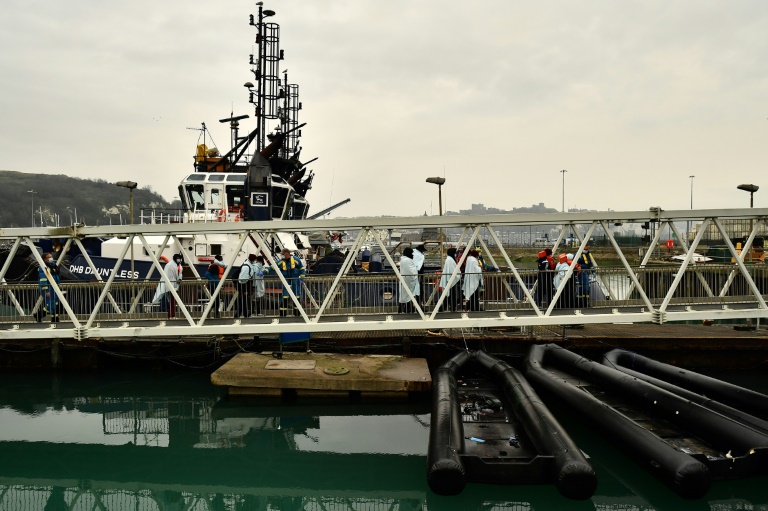
The UK’s National Crime Agency announced Wednesday it had arrested the suspected leader of an international criminal operation supplying small boats to people smugglers taking migrants across the Channel.

The numbers of migrants crossing the busy shipping lane from northern France is at record levels, prompting a UK crackdown, including controversial proposals to send those arriving to Rwanda.

The NCA said it had arrested “alleged small boats kingpin” Hewa Rahimpur, originally from Iran, at his workplace in east London, following a joint operation by UK and Belgian law enforcement agencies.

It said Rahimpur, 29, was wanted in Belgium on suspicion of being the leading figure in a network that prosecutors there say is involved in “supplying significant numbers of small boats to people smugglers”.

It tweeted footage of agents snapping handcuffs on the man as he sat in a black Mercedes car.

“Rahimpur stands accused of being a major player in what we would say is one of the most significant criminal networks involved in supplying boats to people smugglers,” NCA deputy director of investigations Jacque Beer said in a statement.

“Many of the criminal gangs involved in these crossings are based outside of the UK, but where we do find they have a UK footprint we will act swiftly to disrupt and dismantle them.”

Rahimpur is accused of sourcing boats in Turkey and getting them delivered to Germany, Belgium and the Netherlands. 

He then allegedly directed members of his organisation to take them to the Channel coast in northern France for use by migrants.

He will appear in court in London Thursday for the start of extradition proceedings.

His arrest followed close co-operation between the NCA, the Europol Migrant Smuggling Centre and its counterparts in Belgium, said the UK agency.

In West Flanders, Belgium, prosecutor Frank Demeester said: “The Belgian police and judiciary invest a lot of capacity in the fight against human smuggling, and we will continue to do so in co-operation with our partners in the neighbouring countries.”

The NCA has repeatedly appealed to the UK maritime industry to look out for purchases of boats and equipment by organised criminal gangs.

“One of the ways we are seeking to disrupt these people smuggling networks is through targeting their supply of boats,” said Andrea Wilson, the NCA’s deputy director of organised immigration crime.

Mexico enlists private sector to help tame inflation

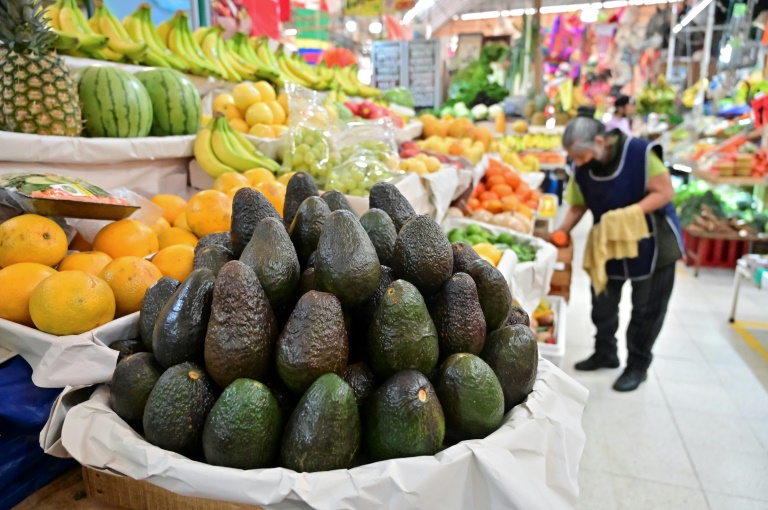
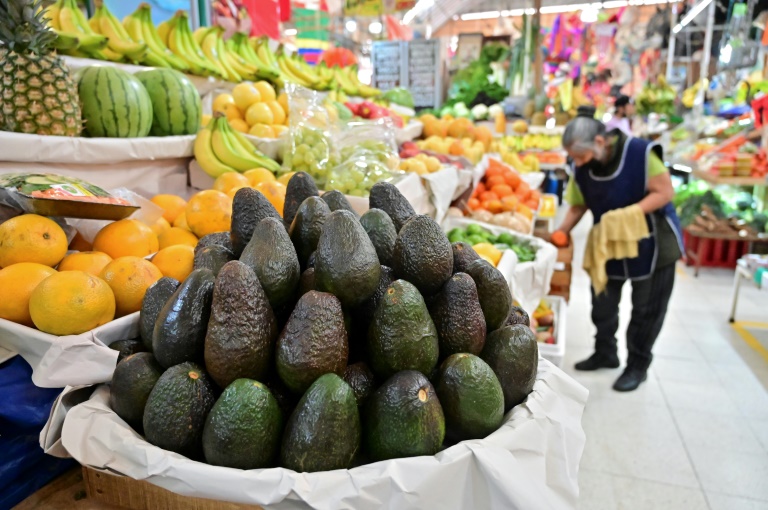
Mexico announced Wednesday an agreement with members of the private sector aimed at maintaining prices of staple foods in the face of the highest inflation in two decades.

“This is not about price controls. It’s an agreement, an alliance to guarantee that the basic food basket is priced fairly,” President Andres Manuel Lopez Obrador told reporters.

The non-binding pact is designed to keep prices of basic foods stable for at least six months, Finance Minister Rogelio Ramirez de la O said.

Baked goods giant Bimbo pledged to maintain the price of white bread.

Telmex, the communications giant owned by tycoon Carlos Slim, promised not to raise telephone and internet prices this year.

Like many countries, Mexico is facing a sharp rise in consumer prices that is pushing up the cost of living.

Mexican inflation hit 7.45 percent in March, well above the central bank’s target of around 3.0 percent.

Mexico already subsidizes fuel, using money generated by its oil and gas industry, without which inflation would be around 10 percent, Ramirez de la O said.

The measures presented by the government also aim to boost production of corn, rice and beans to prevent any shortages.

Two million more tons of fertilizer — a product facing a supply squeeze because of the war in major producer Ukraine — will be distributed to the agricultural sector.

The government said it would boost road security to prevent food theft and pledged not to increase tolls and rail transport fees.

The Mexican central bank has raised its benchmark interest rate at seven consecutive meetings, to 6.5 percent, in an attempt to rein in soaring consumer prices.

With concerns mounting about inflation and weaker US growth, the Bank of Mexico downgraded its economic outlook in March, forecasting growth of 2.4 percent this year.

Mexico enlists private sector to help tame inflation

Mexico announced Wednesday an agreement with members of the private sector aimed at maintaining prices of staple foods in the face of the highest inflation in two decades.

“This is not about price controls. It’s an agreement, an alliance to guarantee that the basic food basket is priced fairly,” President Andres Manuel Lopez Obrador told reporters.

The non-binding pact is designed to keep prices of basic foods stable for at least six months, Finance Minister Rogelio Ramirez de la O said.

Baked goods giant Bimbo pledged to maintain the price of white bread.

Telmex, the communications giant owned by tycoon Carlos Slim, promised not to raise telephone and internet prices this year.

Like many countries, Mexico is facing a sharp rise in consumer prices that is pushing up the cost of living.

Mexican inflation hit 7.45 percent in March, well above the central bank’s target of around 3.0 percent.

Mexico already subsidizes fuel, using money generated by its oil and gas industry, without which inflation would be around 10 percent, Ramirez de la O said.

The measures presented by the government also aim to boost production of corn, rice and beans to prevent any shortages.

Two million more tons of fertilizer — a product facing a supply squeeze because of the war in major producer Ukraine — will be distributed to the agricultural sector.

The government said it would boost road security to prevent food theft and pledged not to increase tolls and rail transport fees.

The Mexican central bank has raised its benchmark interest rate at seven consecutive meetings, to 6.5 percent, in an attempt to rein in soaring consumer prices.

With concerns mounting about inflation and weaker US growth, the Bank of Mexico downgraded its economic outlook in March, forecasting growth of 2.4 percent this year.

Close Bitnami banner
Bitnami