World

Stocks waver as Fed rate looms, oil soars on EU embargo

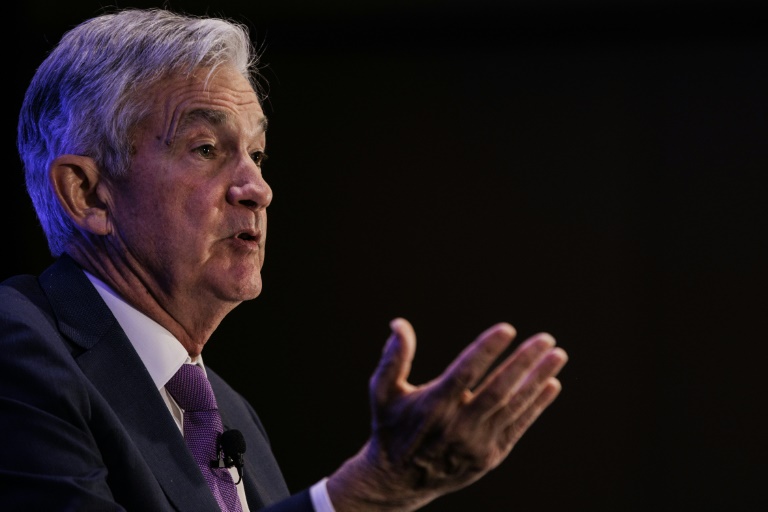
Global stock markets wavered on Wednesday as investors braced for an expected half-point interest rate hike from the inflation-fighting US Federal Reserve.

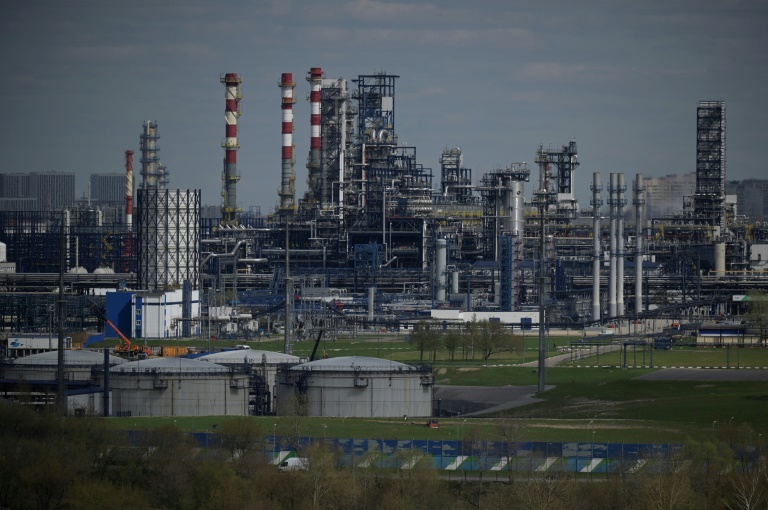
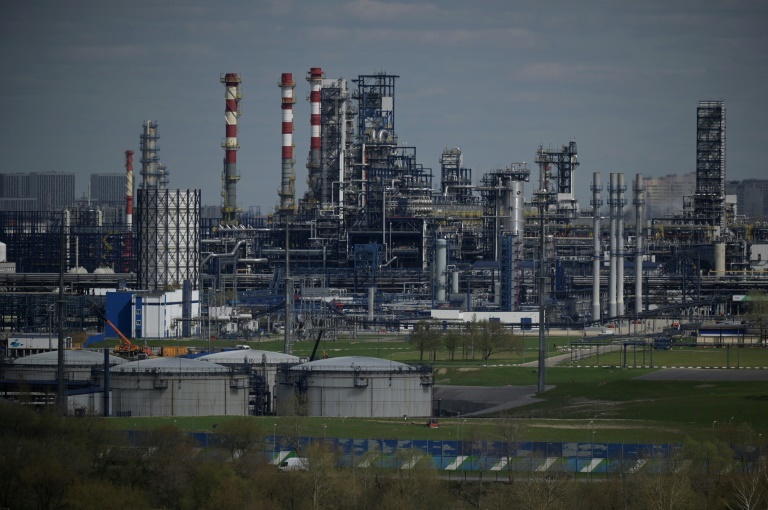
Oil prices rebounded sharply after the European Commission proposed a gradual ban on Russian crude over Moscow’s invasion of Ukraine.

European stocks closed down, after a broadly downbeat session in Asia, although key bourses including Shanghai and Tokyo remained shut.

On Wall Street, stocks were little changed, with all eyes on the central bank’s policy setting Federal Open Market Committee (FOMC), which opened the final session of its two-day meeting on Wednesday.

“The Fed’s rate hike move might be broadly priced in, but markets are clearly nervous that an even more hawkish FOMC might prompt a surge in volatility that could push indices back below last week’s lows,” Chris Beauchamp, chief market analyst at online trading platform  IG, said.

The dollar drifted lower versus the euro and yen.

– Trading ‘cautiously’ –

“Stocks across Europe are trading cautiously ahead of today’s Fed announcement,” City Index analyst Fiona Cincotta told AFP.

“Stock markets often fall in reaction to rising interest rates because the cost of borrowing becomes more expensive and earnings and growth slows.”

The Fed is forecast to unveil a half-percentage-point interest rate hike — its biggest increase since 2000 — as global central banks race to tame galloping inflation in the wake of the Ukraine war.

The announcement is due one day before the Bank of England is also predicted to deliver a hike.

India’s central bank unexpectedly ramped up its key rate by 40 basis points to 4.4 percent on Wednesday.

Policymakers are seeking to tackle runaway prices but risk damaging global economic recovery from the pandemic.

Investor sentiment also remains dogged by fallout from Russia’s ongoing Ukraine invasion, which has fuelled bumper gains for many raw materials including crude.

That has, in turn, sent inflation accelerating to multi-decade highs in nations including Britain and the United States.

Oil was more than three-percent higher after the latest EU crackdown on Russia, which is a major producer of crude.

“We now propose a ban on Russian oil. This will be a complete import ban on all Russian oil, seaborne and pipeline, crude and refined,” European Commission chief Ursula von der Leyen told the European Parliament.

But, she added, “we will make sure that we phase out Russian oil in an orderly fashion”, with crude banned gradually over the next six months and refined fuels by the end of the year.

Hungary, however, warned it could not vote for the ban “in this form”. The country is highly dependent on Russian crude.

The EU executive also proposed excluding Russian bank Sberbank from the SWIFT network among its measures.

– ‘EU tightens screw’ –

“As the EU tightens the sanctions screw on Russia by bringing in a phased ban on its crude oil, worries about global supply have reared up again,” said Susannah Streeter, senior analyst at Hargreaves Lansdown.

“The price of the benchmark Brent scurried up … to above $108 a barrel after the toughened up stance emerged.”

Oil traders were already on tenterhooks before Thursday’s gathering of OPEC and other key producers including Russia, who will discuss whether or not to lift output more than expected.

– Key figures at around 1545 GMT –

London – FTSE 100: DOWN 0.90 percent at 7,493.45 points (close)

Frankfurt – DAX: DOWN 0.49 percent at 13,970.82 points (close) 

Paris – CAC 40: DOWN 1.24 percent at 6,395.68 points (close)  

EURO STOXX 50: DOWN 0.96 percent at 3,724.99  

New York – Dow: DOWN 0.2 percent at 33,059.98 

Brent North Sea crude:  percent at $ per barrel

West Texas Intermediate:  percent at $ per barrel

Hong Kong – Hang Seng Index: DOWN 1.1 percent at 20,869.52 (close)

Tokyo – Nikkei 225: Closed for a holiday

Shanghai – Composite: Closed for a holiday

Euro/dollar: UP at $1.0546 from $1.0521 on Tuesday

Pound/dollar: DOWN at $1.2491 from $1.2499

Euro/pound: UP  at 84.46 pence from 84.18 pence

Dollar/yen: DOWN at 129.99 yen from 130.14 yen
EU eyes Russian oil import ban as Azovstal under fresh fire

The European Commission proposed a gradual ban on Russian oil imports to punish Moscow for its invasion of Ukraine Wednesday, as officials in the destroyed city of Mariupol reported heavy fighting at the Azovstal steel plant.

The EU also pledged to “significantly increase” its support for Ukraine’s neighbour Moldova, which has seen a series of attacks in a Moscow-backed separatist region, sparking fears it could be drawn into the conflict.

European Commission chief Ursula von der Leyen said the bloc would “phase out Russian supply of crude oil within six months, and refined products by the end of the year”.

If approved, the oil ban would be the EU’s toughest move yet against Russia’s strategic energy sector that helps the Kremlin finance its war. But will still not touch its huge gas exports.

Within hours, however, Hungary said it could not support the plan “in this form”, as it would “completely destroy” the security of its energy supply.

Ukraine’s Foreign Minister Dmytro Kuleba said EU countries blocking an oil embargo would be “complicit” in Russia’s crimes in Ukraine.

– Fighting in Azovstal –

The EU is also mulling moves against Russia’s biggest bank, Sberbank, and against Patriarch Kirill, the head of the Russian Orthodox Church.

Ukraine’s allies have sent money and, increasingly, heavy weapons to Kyiv to help it defend itself in a war US President Joe Biden has framed as a historic battle for democracy.

Biden said Wednesday he was “open” to imposing more sanctions on Russia and would be discussing measures with allies from the G7 in the coming days.

Russian forces are currently focused on the east and south of Ukraine, in what Kyiv says is an attempt to consolidate a land bridge between separatist pro-Russian areas in the east and annexed Crimea.

The strategic southern port of Mariupol has been under siege since Russia invaded Ukraine on February 24 and is now largely controlled by Moscow’s forces. The last Ukrainian soldiers are holding out at the Azovstal steelworks.

Mariupol’s mayor, Vadym Boichenko, said there was “heavy fighting” at the plant Wednesday and that city officials had “lost contact” with Ukrainian forces inside.

Russia was attacking with heavy artillery, tanks, and war planes, and war ships off the coast were also involved, he told Ukrainian television.

“There are local residents there, civilians — hundreds of them there,” he added. “There are children waiting for rescue. There are more than 30 kids.”

Kremlin spokesman Dmitry Peskov on Wednesday denied Russian forces were storming the plant.

There were instances of “exacerbation” at the site when Ukrainian “militants take up firing positions”, he said, insisting that these were “suppressed very quickly”.

– Civilians rescued –

Before the fighting resumed, the United Nations and Red Cross had confirmed Tuesday that more than 100 civilians had been evacuated from the plant, another 58 joining the convoy from the city of Mangush, outside Mariupol.

Azovstal evacuees who emerged from a caravan of white buses in Ukraine-held Zaporizhzhia were met at a makeshift reception centre by crying loved ones and dozens of journalists.

“We are so thankful for everyone who helped us,” evacuee Anna Zaitseva said, holding her six-month-old baby in her arms. “There was a moment we lost hope, we thought everyone forgot about us.”

Apart from the steelworks, Mariupol was now largely calm, AFP journalists note during a recent press tour organised by Russian forces. Remaining locals were emerging from hiding to a ruined city.

Ukraine’s military intelligence accused Russia of planning to hold a parade in Mariupol on May 9 to celebrate victory over the Nazis in World War II.

“A large-scale propaganda campaign is under way. Russians will be shown stories about the ‘joy’ of locals on meeting the occupiers,” it said. 

In a briefing on the army’s plan for May 9, Russian Defence Minister Sergei Shoigu made no mention of a celebratory march in Mariupol.

In the eastern Lugansk region meanwhile, governor Sergiy Gaiday said two people had died in the last 24 hours, adding “the whole region is under fire completely, there is no safe place”.

– Attacks in the west –

Russian attacks periodically stray close to Ukraine’s western border with the EU.

Both sides on Wednesday reported Russian strikes on infrastructure sites around the western city of Lviv, near Poland, and Transcarpathia, a region bordering Hungary.

Russia’s defence ministry said Wednesday that its air- and sea-based weapons had destroyed six electrical substations near railways including around Lviv, near Odessa to the south, and near Dnipropetrovsk to the south-east.

It said Ukrainian troops in the eastern Donbas region had used the railway stations to transport weapons and ammunition from the EU and United States.

In Ukraine’s western neighbour Moldova, there are fears the conflict will spill over the border.

Visiting the tiny ex-Soviet republic Wednesday, European Council President Charles Michel offered the EU’s “full solidarity” and support including in the areas of logistics and cyber defence.

“This year we plan to significantly increase our support to Moldova by providing its armed forces with additional military equipment,” he told a press conference with President Maia Sandu.

Ukraine has accused Russia of wanting to destabilise Moldova’s separatist region of Transnistria to create a pretext for a military intervention.

– Japan-Russia tensions –

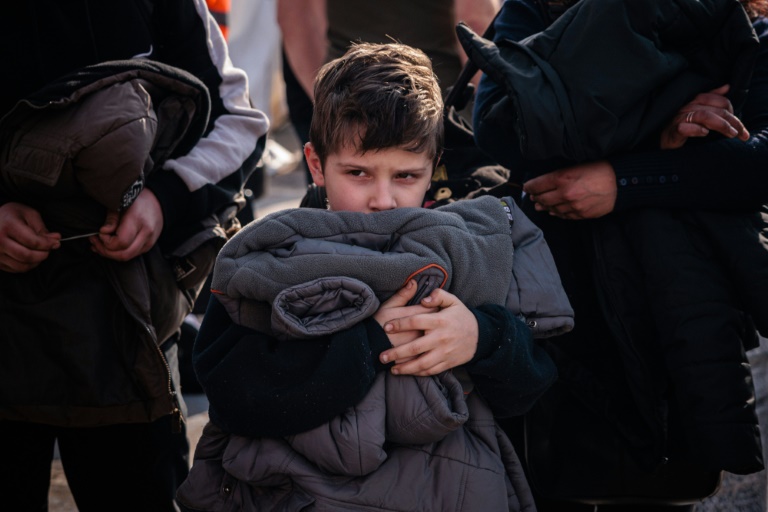
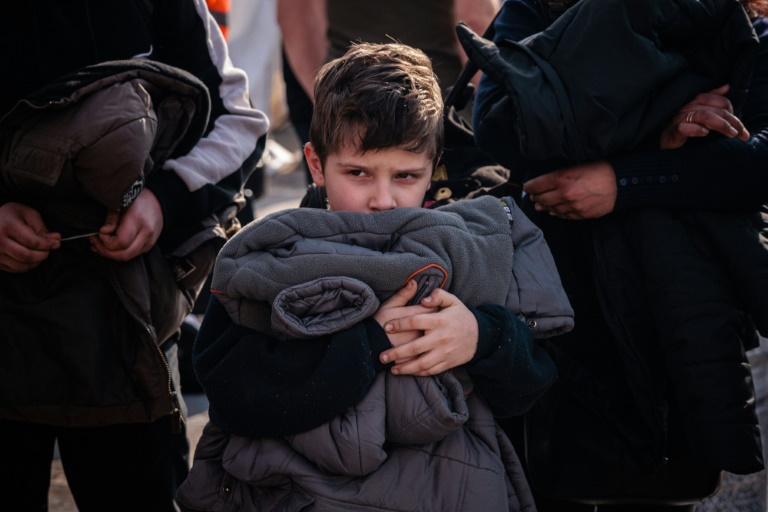
The war in Ukraine has killed thousands of people and displaced more than 13 million, creating the worst refugee crisis in Europe since World War II.

The US and Europe have led the sanctions against Russia, but Japan has also joined — prompting Moscow Wednesday to announce it had banned entry to several dozen Japanese officials.

The foreign ministry accused the administration of Prime Minister Fumio Kishida — among those banned — of an “unprecedented anti-Russian campaign”.

But Kishida, speaking to journalists during a visit to Rome and the Vatican City, said Moscow was to blame for deteriorating ties between the two countries.

Russia’s “killing of innocent civilians is a significant violation of international humanitarian law,” he said. “We cannot forgive this.”

burs-ar/jj

EU eyes Russian oil import ban as Azovstal under fresh fire

The European Commission proposed a gradual ban on Russian oil imports to punish Moscow for its invasion of Ukraine Wednesday, as officials in the destroyed city of Mariupol reported heavy fighting at the Azovstal steel plant.

The EU also pledged to “significantly increase” its support for Ukraine’s neighbour Moldova, which has seen a series of attacks in a Moscow-backed separatist region, sparking fears it could be drawn into the conflict.

European Commission chief Ursula von der Leyen said the bloc would “phase out Russian supply of crude oil within six months, and refined products by the end of the year”.

If approved, the oil ban would be the EU’s toughest move yet against Russia’s strategic energy sector that helps the Kremlin finance its war. But will still not touch its huge gas exports.

Within hours, however, Hungary said it could not support the plan “in this form”, as it would “completely destroy” the security of its energy supply.

Ukraine’s Foreign Minister Dmytro Kuleba said EU countries blocking an oil embargo would be “complicit” in Russia’s crimes in Ukraine.

– Fighting in Azovstal –

The EU is also mulling moves against Russia’s biggest bank, Sberbank, and against Patriarch Kirill, the head of the Russian Orthodox Church.

Ukraine’s allies have sent money and, increasingly, heavy weapons to Kyiv to help it defend itself in a war US President Joe Biden has framed as a historic battle for democracy.

Biden said Wednesday he was “open” to imposing more sanctions on Russia and would be discussing measures with allies from the G7 in the coming days.

Russian forces are currently focused on the east and south of Ukraine, in what Kyiv says is an attempt to consolidate a land bridge between separatist pro-Russian areas in the east and annexed Crimea.

The strategic southern port of Mariupol has been under siege since Russia invaded Ukraine on February 24 and is now largely controlled by Moscow’s forces. The last Ukrainian soldiers are holding out at the Azovstal steelworks.

Mariupol’s mayor, Vadym Boichenko, said there was “heavy fighting” at the plant Wednesday and that city officials had “lost contact” with Ukrainian forces inside.

Russia was attacking with heavy artillery, tanks, and war planes, and war ships off the coast were also involved, he told Ukrainian television.

“There are local residents there, civilians — hundreds of them there,” he added. “There are children waiting for rescue. There are more than 30 kids.”

Kremlin spokesman Dmitry Peskov on Wednesday denied Russian forces were storming the plant.

There were instances of “exacerbation” at the site when Ukrainian “militants take up firing positions”, he said, insisting that these were “suppressed very quickly”.

– Civilians rescued –

Before the fighting resumed, the United Nations and Red Cross had confirmed Tuesday that more than 100 civilians had been evacuated from the plant, another 58 joining the convoy from the city of Mangush, outside Mariupol.

Azovstal evacuees who emerged from a caravan of white buses in Ukraine-held Zaporizhzhia were met at a makeshift reception centre by crying loved ones and dozens of journalists.

“We are so thankful for everyone who helped us,” evacuee Anna Zaitseva said, holding her six-month-old baby in her arms. “There was a moment we lost hope, we thought everyone forgot about us.”

Apart from the steelworks, Mariupol was now largely calm, AFP journalists note during a recent press tour organised by Russian forces. Remaining locals were emerging from hiding to a ruined city.

Ukraine’s military intelligence accused Russia of planning to hold a parade in Mariupol on May 9 to celebrate victory over the Nazis in World War II.

“A large-scale propaganda campaign is under way. Russians will be shown stories about the ‘joy’ of locals on meeting the occupiers,” it said. 

In a briefing on the army’s plan for May 9, Russian Defence Minister Sergei Shoigu made no mention of a celebratory march in Mariupol.

In the eastern Lugansk region meanwhile, governor Sergiy Gaiday said two people had died in the last 24 hours, adding “the whole region is under fire completely, there is no safe place”.

– Attacks in the west –

Russian attacks periodically stray close to Ukraine’s western border with the EU.

Both sides on Wednesday reported Russian strikes on infrastructure sites around the western city of Lviv, near Poland, and Transcarpathia, a region bordering Hungary.

Russia’s defence ministry said Wednesday that its air- and sea-based weapons had destroyed six electrical substations near railways including around Lviv, near Odessa to the south, and near Dnipropetrovsk to the south-east.

It said Ukrainian troops in the eastern Donbas region had used the railway stations to transport weapons and ammunition from the EU and United States.

In Ukraine’s western neighbour Moldova, there are fears the conflict will spill over the border.

Visiting the tiny ex-Soviet republic Wednesday, European Council President Charles Michel offered the EU’s “full solidarity” and support including in the areas of logistics and cyber defence.

“This year we plan to significantly increase our support to Moldova by providing its armed forces with additional military equipment,” he told a press conference with President Maia Sandu.

Ukraine has accused Russia of wanting to destabilise Moldova’s separatist region of Transnistria to create a pretext for a military intervention.

– Japan-Russia tensions –

The war in Ukraine has killed thousands of people and displaced more than 13 million, creating the worst refugee crisis in Europe since World War II.

The US and Europe have led the sanctions against Russia, but Japan has also joined — prompting Moscow Wednesday to announce it had banned entry to several dozen Japanese officials.

The foreign ministry accused the administration of Prime Minister Fumio Kishida — among those banned — of an “unprecedented anti-Russian campaign”.

But Kishida, speaking to journalists during a visit to Rome and the Vatican City, said Moscow was to blame for deteriorating ties between the two countries.

Russia’s “killing of innocent civilians is a significant violation of international humanitarian law,” he said. “We cannot forgive this.”

burs-ar/jj

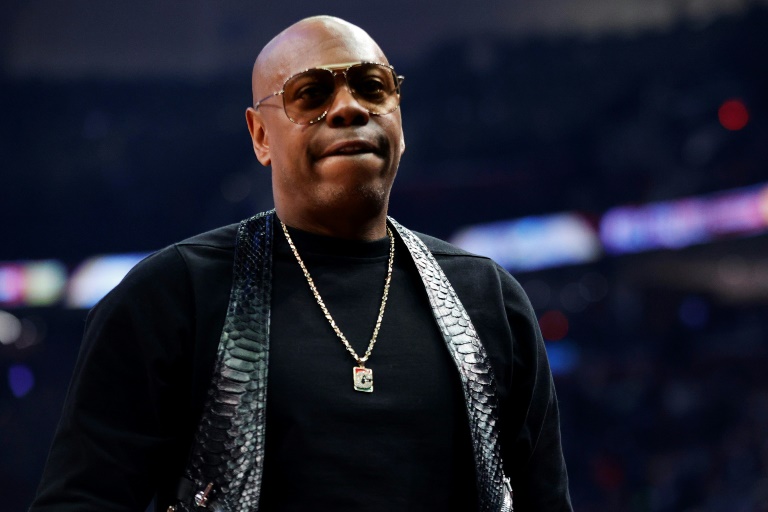
Comedian Dave Chappelle attacked during LA show

A man who attacked controversial comic Dave Chappelle on stage as he performed a live stand-up set in Los Angeles has been arrested and charged with assault, police said Wednesday.

The comedian was finishing a set during the “Netflix Is A Joke” comedy festival at the Hollywood Bowl on Tuesday night when a male audience member climbed on stage and threw him to the ground.

The attacker, who police said was armed with a replica gun that works like a knife, was swiftly detained by security guards, and Chappelle was not injured.

Chappelle, 48, has recently attracted protests for jokes seen to be transphobic, but the motive for this attack was not immediately known.

It comes just weeks after actor Will Smith slapped comedian Chris Rock on stage live during the Oscars, in a widely condemned action that had raised immediate fears of copycat attacks.

“First, he tackled Dave, and Dave put up a bit of resistance. So the dude tried to run off,” said Brandon Brown, a Los Angeles film worker who was in attendance on Tuesday evening.

“There were probably 15 people that were almost immediately all over the stage.

“The venue seemed pretty secure. It seems like a pretty damning indictment of their security detail.”

The Los Angeles police department confirmed the incident to AFP and said the assailant was carrying a replica gun that can discharge a knife blade. It was not clear if the attacker tried to use this weapon.

He has been identified as Isaiah Lee, 23, and charged with felony assault with a deadly weapon, LAPD spokeswoman Lizeth Lomeli said.

Asked what his motive might be, she said this was part of the police investigation.

Video footage shows the attacker being taken away on a stretcher. The man was taken to a hospital for treatment, Lomeli said.

Attendees said security had been more visible than usual at the Hollywood Bowl, and audience members were required to place their cellphones in sealed bags during Chappelle’s show.

Hollywood Bowl officials did not immediately respond to AFP request for comment.

Chappelle, winner of the 2019 Mark Twain Prize for American Humor, has been accused of taking particular aim at the transgender community in his comedy specials, notably in October’s “The Closer,” which drew protests by activists who said it encouraged discrimination.

In March, US comedian Chris Rock was assaulted by Smith on stage at the Oscars for making a joke about Jada Pinkett Smith, the actor’s wife, moments earlier.

After the assault Tuesday night, Rock, who was performing at the same venue, appeared with Chappelle on stage, as both comics attempted to make light of the situation.

Actor Jamie Foxx also appeared on stage immediately following the attack.

Chappelle “was making sure that everyone knew it wasn’t part of the show,” said Brown.

Rock — according to CNBC and other news outlets — quipped: “Was that Will Smith?”

Burundi says 10 troops killed in attack on AU base in Somalia

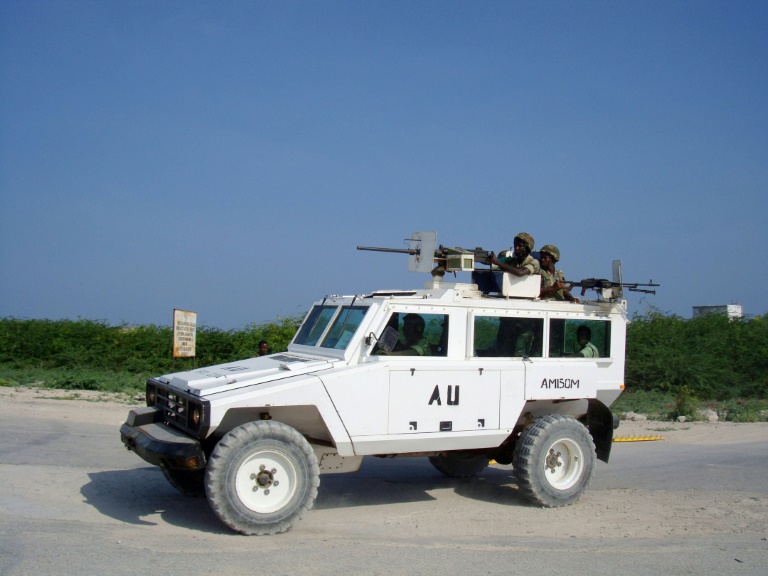
Ten Burundian peacekeepers were killed in a ferocious attack by Al-Shabaab jihadists on an African Union base in Somalia, Burundi’s army said Wednesday, the deadliest targeting AU forces in the country since 2015.

Twenty-five soldiers were also wounded in Tuesday’s assault on the camp in central Somalia and five are still missing while 20 Al-Shabaab militants were killed, it said in a statement on Wednesday.

It was the first such strike on a peacekeeping base since the AU Transition Mission in Somalia (ATMIS) replaced the previous AMISOM force on April 1.

“This attack was carried out using car bombs, suicide bombers and heavily armed men,” the Burundian army said. “Fierce fighting took place, causing losses on both sides.”

AU forces sent in helicopter gunships after the pre-dawn attack on the camp housing Burundian troops near Ceel Baraf, a village some 160 kilometres (100 miles) northeast of the capital Mogadishu, military officials and witnesses said. 

A high-ranking Burundian military officer told AFP that 400 Islamist fighters stormed the base, forcing the soldiers to retreat to a nearby hillside where they continued to fight, supported by drones and helicopters. 

Two Burundian military sources told AFP on condition of anonymity that 45 peacekeepers were reported as dead or missing, with 25 others injured.

Al-Shabaab claimed responsibility for the attack, saying it had taken control of the camp and that 173 soldiers had been killed. Its claims could not be independently verified.

The Al-Qaeda-linked Islamist militants have been waging a deadly insurgency against Somalia’s fragile central government for more than a decade.

– ‘Heinous’ attack –

Somalia’s government condemned the “heinous” attack and appealed to the international community to do more to support Somali forces and ATMIS “in effectively combatting terrorism.” 

AU Commission chief Moussa Faki Mahamat said on Twitter he spoke to Burundi’s President Evariste Ndayishimiye to pay his respects for the “sacrifice” of the peacekeepers who lost their lives.

The United States, Britain and the regional bloc IGAD (Intergovernmental Authority on Development) condemned the attack, with the US embassy in Mogadishu vowing to “stand with ATMIS and Somalia’s security forces as we partner to achieve peace”.

“Our thoughts are with ATMIS, Burundian National Defence Force and all those affected. The UK stands with Somalia and partners in the fight against terrorism,” the British ambassador to Somalia, Kate Foster, said on Twitter.

IGAD executive secretary Workneh Gebeyehu said in a statement: “These attacks will neither deter nor alter the determination of IGAD and international partners to support the people of Somalia in their search for a lasting peace and stability.”

The attack is the deadliest since September 2015, when Western military sources reported that at least 50 AU troops were killed as Al-Shabaab fighters overran a military base southwest of Mogadishu.

The latest bloodshed highlights the security woes in the troubled Horn of Africa country, which is also embroiled in a deep political crisis over delayed elections and faces the threat of famine due to a prolonged drought across the region.

– Election delays –

ATMIS — made up of troops from Burundi, Djibouti, Ethiopia, Kenya and Uganda — is tasked with helping Somali forces take primary responsibility for security in a country that has been mired in conflict since 1991.  

According to a UN resolution approving its creation, ATMIS is projected to gradually reduce staffing levels from nearly 20,000 soldiers, police and civilians to zero by the end of 2024. 

Somalia’s security issues have been exacerbated by an ongoing political crisis which has delayed elections by over a year, with its president and prime minister locked in a bitter power struggle.

On Wednesday, parliament nominated a committee to prepare for the presidential vote, which must be completed by mid-May. A crucial IMF financial assistance package is set to automatically expire if a new administration is not in place by then.

“We have a huge task to undertake as you know and therefore, we have to accelerate the election of the president,” lower house speaker Sheikh Adan Mohamed Nur, better known as Sheikh Adan Madobe, told legislators.

Somalia’s international partners have warned that the delays distracted from the fight against Al-Shabaab, whose fighters controlled Mogadishu until 2011 when they were driven out by AU troops.

But the militants still hold territory in the countryside and frequently attack civilian, military and government targets in Mogadishu and elsewhere. 

French left reaches deal on alliance to hamper Macron

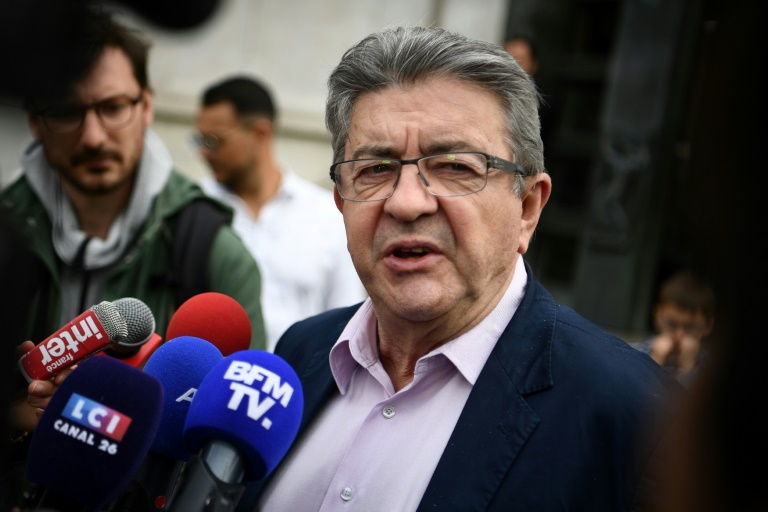
France’s left-of-centre parties on Wednesday reached an alliance deal for June parliamentary polls, aiming for a strong enough showing to hinder President Emmanuel Macron’s controversial reform plans.

After talks dragged through the night past a Tuesday deadline, the Socialist Party (PS) fell in line alongside the Greens and the Communist Party (PCF) behind the hard-left France Unbowed movement (LFI), who emerged as the dominant force on the left in April’s presidential election.

“We want to elect MPs in a majority of constituencies to stop Emmanuel Macron from pursuing his unjust and brutal policies and beat the far-right,” the PS and LFI said in a joint statement. 

The alliance must still be approved by the Socialists’ National Council on Thursday, with people close to the party leadership warning against viewing the vote as a foregone conclusion. 

“No one on the left can win on their own,” PCF leader Fabien Roussel told France Inter radio, saying the new alliance needed to harness “the immense hope among the French public, among workers, among young people who are asking us to unite”.

A strong showing for LFI leader Jean-Luc Melenchon saw him miss out on the April presidential runoff vote by a whisker, while the other left candidates were all but wiped out.

After Macron’s win, Melenchon immediately called on voters to “elect him prime minister” and hand the left a National Assembly majority to block the centrist’s reforms, including an unpopular plan to push the retirement age back from 62 to 65. 

A forced “cohabitation” between Macron and Melenchon would be the first in two decades, but observers say that such a scenario remains unlikely. 

Like the presidential election, the legislative polls in France’s 577 constituencies work in a two-round system — meaning alliances off the bat offer the best chance of making it to the run-off.

A united left ahead of the parliamentary poll is “an unprecedented and important event”, political historian Gilles Candar told AFP — although he added that it remains to be seen whether it can secure power or remain coherent.

– Socialist ‘disappearance’? –

Major policy differences have kept negotiations among the left-wing parties tense throughout, with LFI’s proposal to unilaterally “disobey” the provisions of some European Union treaties a particular sticking point.

But the new allies have agreed on Melenchon’s core policy proposals, including raising the minimum wage, reducing the retirement age to 60 and rolling back labour market reforms introduced under former Socialist president Francois Hollande.

Hollande himself — in power just five years ago, before the storied party’s fall from grace — said Wednesday he would “turn down the deal, on substance and even on constituencies”.

He has previously warned the left-wing tie-up could amount to the “disappearance” of the Socialists.

But LFI lawmaker Manon Aubry said Wednesday that it was exactly their “important steps concerning Hollande’s legacy” that had allowed the Socialists to align with the rest of the left.

Behind the euphoria at overcoming the traditionally fragmented French left’s differences, the junior partners are eyeing how constituencies will be parcelled out between the parties, with each aiming to run on the united ticket in a maximum of “winnable” seats.

The final deal looks set to distribute around 100 constituencies to the Greens, 70 for the Socialist Party and 50 for the Communist Party.

With some Socialists refusing to stand down, former minister under Hollande Stephane Le Foll said he was ready to lead them in a separate campaign.

At least one Communist candidate, in a suburb of eastern city Lyon, has also said she will not make way for an alliance-backed replacement.

burs-ech/tgb/yad

EU targets Russian oil, patriarch in new sanctions

The European Union’s executive unveiled Wednesday plans for a gradual ban on Russian oil imports as part of a raft of new sanctions to punish Moscow for invading Ukraine.

The European Commission also proposed slapping sanctions on Russia’s biggest bank and on Patriarch Kirill, the head of the Russian Orthodox Church.

If approved by member states, the oil ban would be the EU’s toughest move yet against the Russian energy sector, which helps the Kremlin finance its war.

But it will still not touch Russia’s huge gas exports — and several EU member states are demanding an extension while they secure new sources of fuel.

The proposal “cannot be responsibly supported in this form, we cannot responsibly vote for it,” said Hungary’s Foreign Minister Peter Szijjarto in a Facebook video message.

The oil embargo would be part of the bloc’s sixth sanction package and would be phased-in over the rest of the year. It needs to be adopted unanimously by the EU’s 27 countries.

The EU is the biggest consumer of Russian crude. Last year Russia supplied 30 percent of the bloc’s oil and 15 percent of its petroleum products.

– Extra year –

“We now propose a ban on Russian oil. This will be a complete import ban on all Russian oil: seaborne and pipeline, crude and refined,” European Commission chief Ursula von der Leyen told the European Parliament.

But, she added, “we will make sure that we phase out Russian oil in an orderly fashion”. The ban would come in gradually over the next six months, and for refined fuels by the end of the year. 

EU ambassadors met on Wednesday to assess her plan and hoped to overcome their divisions by the end of the week, diplomats said.

Kremlin spokesman Dmitry Peskov — whose wife, son and daughter were also targeted on Wednesday — said the EU would “pay a high price in trying to hurt us.

“The cost of sanctions for the citizens of Europe will grow by the day,” he added.

The proposal asks that Hungary and Slovakia, both dependent on Russian oil, be given an extra year to meet the ban, according to a document seen by AFP. 

Czech Prime Minister Petr Fiala told reporters his country also wanted a postponement, of two to three years.

“We support the toughest sanctions possible against Russia… but from the start we have been saying the sanctions must not harm Czech citizens more than Russia,” he said.

The Czech news agency CTK quoted Slovak Economy Minister Richard Sulik saying his country also wanted a three-year phase-out. 

– ‘Miracle of God’ –

German Economy Minister Robert Habeck said the embargo could lead to supply “disruptions” and price increases, but that Berlin backed it, having overcome earlier reluctance.

Confirming his fears, oil prices soared more than four percent to above $108 a barrel when news of the plan hit the markets.

“As the EU tightens the sanctions screw… worries about global supply have reared up again,” said Susannah Streeter, senior analyst at Hargreaves Lansdown.

Von der Leyen also said her proposal would deny Sberbank, Russia’s biggest bank, access to SWIFT, the global banking communications system.

By hitting Sberbank and two other banks, “we hit banks that are systemically critical to the Russian financial system and Putin’s ability to wage destruction,” she said.

Her proposal also targeted Patriarch Kirill, calling him “a long-time ally of President Vladimir Putin who has become one of the most prominent supporters” of the war.

Kirill once described Putin’s rule as a “miracle of God” and has railed against the “forces of evil” opposed to a historic “unity” between Russia and Ukraine.

Von der Leyen said the new list also includes Russian military personnel deployed to Ukraine “who committed war crimes in Bucha and who are responsible for the inhuman siege of the city of Mariupol”.

“This sends another important signal to all perpetrators of the Kremlin’s war: We know who you are, and you will be held accountable.”

The EU also proposed banning more Russian broadcasters from the airwaves in Europe. 

The bloc has already banned media outlets RT and Sputnik in March and pressured tech giants to remove them from their platforms.

EU targets Russian oil, patriarch in new sanctions

The European Union’s executive unveiled Wednesday plans for a gradual ban on Russian oil imports as part of a raft of new sanctions to punish Moscow for invading Ukraine.

The European Commission also proposed slapping sanctions on Russia’s biggest bank and on Patriarch Kirill, the head of the Russian Orthodox Church.

If approved by member states, the oil ban would be the EU’s toughest move yet against the Russian energy sector, which helps the Kremlin finance its war.

But it will still not touch Russia’s huge gas exports — and several EU member states are demanding an extension while they secure new sources of fuel.

The proposal “cannot be responsibly supported in this form, we cannot responsibly vote for it,” said Hungary’s Foreign Minister Peter Szijjarto in a Facebook video message.

The oil embargo would be part of the bloc’s sixth sanction package and would be phased-in over the rest of the year. It needs to be adopted unanimously by the EU’s 27 countries.

The EU is the biggest consumer of Russian crude. Last year Russia supplied 30 percent of the bloc’s oil and 15 percent of its petroleum products.

– Extra year –

“We now propose a ban on Russian oil. This will be a complete import ban on all Russian oil: seaborne and pipeline, crude and refined,” European Commission chief Ursula von der Leyen told the European Parliament.

But, she added, “we will make sure that we phase out Russian oil in an orderly fashion”. The ban would come in gradually over the next six months, and for refined fuels by the end of the year. 

EU ambassadors met on Wednesday to assess her plan and hoped to overcome their divisions by the end of the week, diplomats said.

Kremlin spokesman Dmitry Peskov — whose wife, son and daughter were also targeted on Wednesday — said the EU would “pay a high price in trying to hurt us.

“The cost of sanctions for the citizens of Europe will grow by the day,” he added.

The proposal asks that Hungary and Slovakia, both dependent on Russian oil, be given an extra year to meet the ban, according to a document seen by AFP. 

Czech Prime Minister Petr Fiala told reporters his country also wanted a postponement, of two to three years.

“We support the toughest sanctions possible against Russia… but from the start we have been saying the sanctions must not harm Czech citizens more than Russia,” he said.

The Czech news agency CTK quoted Slovak Economy Minister Richard Sulik saying his country also wanted a three-year phase-out. 

– ‘Miracle of God’ –

German Economy Minister Robert Habeck said the embargo could lead to supply “disruptions” and price increases, but that Berlin backed it, having overcome earlier reluctance.

Confirming his fears, oil prices soared more than four percent to above $108 a barrel when news of the plan hit the markets.

“As the EU tightens the sanctions screw… worries about global supply have reared up again,” said Susannah Streeter, senior analyst at Hargreaves Lansdown.

Von der Leyen also said her proposal would deny Sberbank, Russia’s biggest bank, access to SWIFT, the global banking communications system.

By hitting Sberbank and two other banks, “we hit banks that are systemically critical to the Russian financial system and Putin’s ability to wage destruction,” she said.

Her proposal also targeted Patriarch Kirill, calling him “a long-time ally of President Vladimir Putin who has become one of the most prominent supporters” of the war.

Kirill once described Putin’s rule as a “miracle of God” and has railed against the “forces of evil” opposed to a historic “unity” between Russia and Ukraine.

Von der Leyen said the new list also includes Russian military personnel deployed to Ukraine “who committed war crimes in Bucha and who are responsible for the inhuman siege of the city of Mariupol”.

“This sends another important signal to all perpetrators of the Kremlin’s war: We know who you are, and you will be held accountable.”

The EU also proposed banning more Russian broadcasters from the airwaves in Europe. 

The bloc has already banned media outlets RT and Sputnik in March and pressured tech giants to remove them from their platforms.

The women scientists forgotten by history

French doctor and researcher Marthe Gautier, who died over the weekend, was one of a long line of women scientists who greatly contributed to scientific discovery only to see the credit go to their male colleagues.

Here are just a few of the women scientists whose work was forgotten by history.

– Marthe Gautier –

Gautier, who died at the age of 96 on Saturday, discovered that people with Down’s syndrome had an extra chromosome in 1958.

But when she was unable to identify the exact chromosome with her lower-power microscope, she “naively” lent her slides to geneticist Jerome Lejeune, she told the Science journal in 2014.

She was then “shocked” to see the discovery of the extra chromosome 21 published in research six month later, with Lejeune’s name first and hers second — and her name misspelled.

It was not until 1994 that the ethics committee of France’s INSERM medical research institute said Lejeune was unlikely to have played the “dominant” role in the discovery.

– Rosalind Franklin –

British chemist Rosalind Franklin’s experimental work led to her famous 1952 X-ray image “Photo 51”, which helped unlock the discovery of the DNA double helix.

But Francis Crick and James Watson were working on a similar theory at the time, and their research was published ahead of Franklin’s in the same journal, leading many to think her study merely supported theirs.

Crick and Watson won the Nobel Prize for Medicine for the discovery in 1962 — Franklin had died four years earlier at the age of just 37.

In a letter from 1961 that emerged in 2013, Crick acknowledged the importance of her work in determining “certain features” of the molecule.

– Jocelyn Bell Burnell – 

British astrophysicist Jocelyn Bell Burnell discovered the first radio pulsars when she was a postgraduate student in 1967.

But it was her thesis supervisor and another male astronomer who won 1974’s Nobel Prize in Physics for the discovery.

– Lise Meitner –

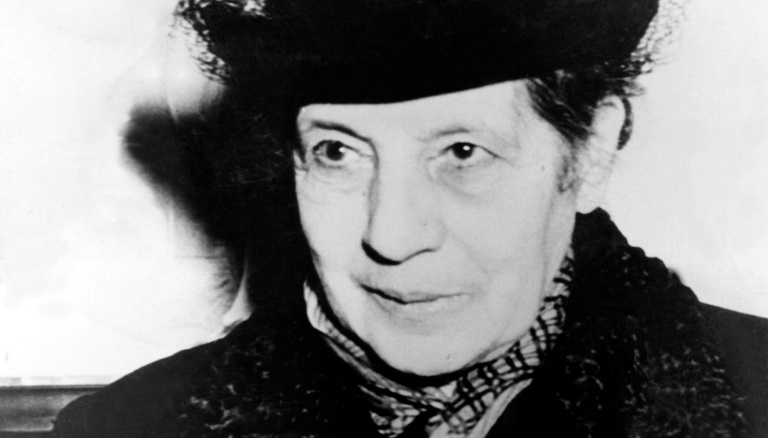
Austrian-Swedish physicist Lise Meitner was one of the key people responsible for discovering nuclear fission, leading to Albert Einstein dubbing her the “German Marie Curie”.

However it was her long-term collaborator Otto Hahn who won the 1944 Nobel Prize in Chemistry for the discovery.

– Chien-Shiung Wu –

Chinese-American physicist Chien-Shiung Wu worked on the Manhattan Project and conducted the “Wu experiment”, which overturned what had been previously considered a fundamental law of nature — the conservation of parity.

But again it was her male colleagues who won the 1975 Nobel Physics prize for the research.

Her work earned her the nickname “Chinese Madame Curie”.

– And so on –

The list could go — and the women scientists named above are merely those whose contributions have been belatedly recognised decades later.

The contributions of male scientists’ wives, mothers and daughters are also believed to have long been overlooked, including that of Einstein’s first wife, mathematician and physicist Mileva Maric.

In 1993 American historian Margaret Rossiter dubbed the systematic suppression of women’s contributions to scientific progress the “Matilda effect”, after US rights activist Matilda Joslyn Gage.

Even today the role played by women in scientific history is under-represented in school textbooks, French historian Natalie Pigeard-Micault told AFP.

“It gives the impression that scientific research is limited to a handful of women,” she said, pointing to how Marie Curie was always an “exceptional” reference point.

Markets on edge as Fed prepares renewed salvo against inflation

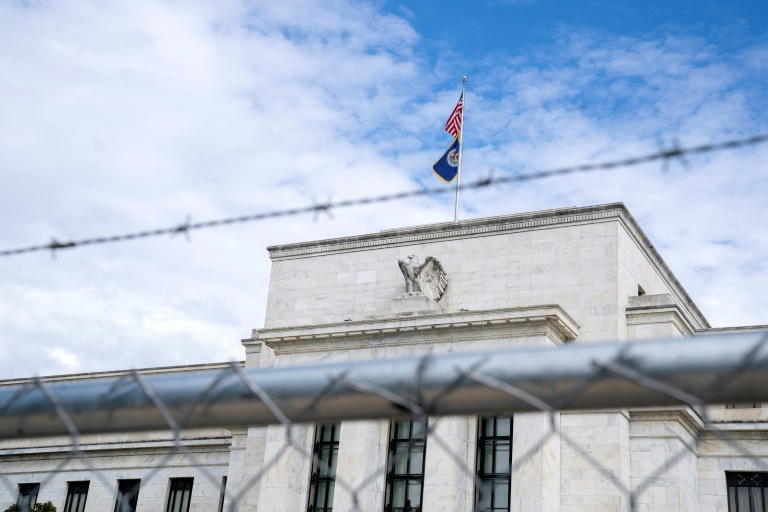
Wall Street has grown nervous as the Federal Reserve is set to make its biggest rate hike in more than two decades to crush inflation that has reached levels not seen since the 1980s.

The central bank’s policy setting Federal Open Market Committee (FOMC) opened the final session of its two-day meeting on Wednesday and is seen as certain to announce a half-percentage point rate hike, which would have repercussions for car loans, mortgages and business credit.

The increase would take the key borrowing rate above 0.75 percent after sitting at zero from the start of the pandemic through 2021, even as inflation picked up speed.

The expected move is part of what the Fed has billed as a tightening cycle likely to continue throughout this year and into 2023, with the goal of taking the steam out an inflation wave that has pushed consumer prices to the highest levels in four decades, far above the Fed’s two percent target.

The US central bank hiked rates by a quarter percentage point in March, the first increase since 2018, but top officials including Fed Chair Jerome Powell have said officials will move quickly and front-load the increases. 

While Wall Street sentiment has showed signs of improving this week, the central bank’s hawkish posture played a role in the equity bloodletting seen in recent weeks.

April was the worst month for the S&P 500 since the pandemic, while the Nasdaq’s tech stocks, which are particularly sensitive to higher interest rates, suffered their biggest loss since October 2008.

Shares were mixed in early trading on Wednesday, with the Nasdaq down but the other indices showing modest gains.

The Fed’s goal is to engineer a “soft landing,” reining in inflation but avoiding a contraction in economic activity.

But with China’s pandemic lockdowns worsening global supply snarls and the war in Ukraine pushing commodity prices higher, analysts fear factors beyond the central bank’s control could undermine that goal, and perhaps plunge the world’s largest economy into a recession.

“The Fed’s goal is to avoid a recession and engineer a soft landing, which will no doubt be a challenge,” Rubeela Farooqi of High Frequency Economics said.

She added that central bankers may become more cautious later in the year, and Powell “has shown a willingness to quickly change course, as needed.”

The Fed chief will speak following the FOMC announcement scheduled for 1800 GMT, and could provide more insight into the committee’s thinking.

– Call for caution –

Interest rate hikes are aimed at dampening demand and taking the steam out of consumer prices that rose 8.5 percent over the 12 months to March, the biggest annual jump since December 1981, caused in part by consumers spending more for scarce goods.

Fed officials have signaled they view the economy as healthy enough to withstand higher rates, since unemployment has retreated almost to where it was before the pandemic, and recent data has shown strong consumer and business spending, even though the economy contracted in the first quarter.

However, in addition to the external factors, central bankers cannot engineer a solution for the worker shortages that have challenged businesses and raised fears of a wage-price spiral, when employees demand higher salaries and fuel price increases. 

On Wednesday, payroll services firm ADP reported private employers added a weaker-than-expected 247,000 workers in April, a sign that companies are struggling to find available labor, while government data released Tuesday showed there are nearly two openings for every job seeker.

“We don’t know if a recession will be realized; it will depend critically upon what the Fed does and how quickly the Ukrainian situation is resolved,” Robert Eisenbeis of Cumberland Advisors said in a note. 

He warned, “Near-term probabilities are not favorable and suggest caution.”

The policy committee is also expected to provide details on the plans for shedding its massive holdings of bonds built up during the pandemic to keep credit flowing through the economy. 

That could also unsettle financial markets and act as a brake on activity.

Close Bitnami banner
Bitnami