World

War in Ukraine: Latest developments

Here are the latest developments in the war in Ukraine:

– ‘Heavy fighting’ at Azovstal –

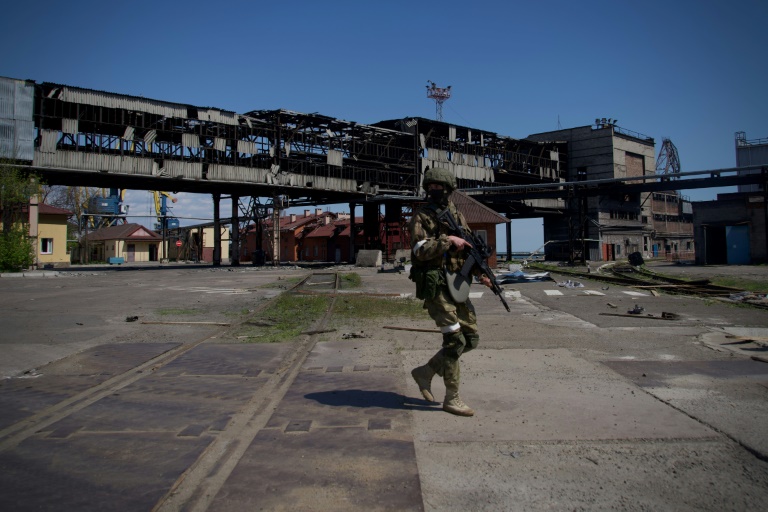
The mayor of the destroyed Ukrainian city of Mariupol says that contact has been lost with Ukrainian forces holed up in the Azovstal steel plant amid “heavy fighting” with Russian troops.

City officials have no way of knowing “what’s going on, whether they are safe or not” Vadym Boichenko tells Ukrainian television.

His comments come after the Kremlin denied Russia was storming the plant, after Ukraine accused Moscow of launching a “powerful” assault on the industrial zone, the last redoubt of Ukrainian forces.

– 20 bodies found in Kyiv region –

The bodies of another 20 civilians were found in the past 24 hours in the Kyiv region, police say, raising the total number found there so far to 1,235. 

Kyiv regional police chief Andriy Nebytov says the latest discoveries were found in Borodianka and the surrounding villages, some 25 kilometres (15 miles) from Bucha, the town near Kyiv now synonymous with allegations of Russian war crimes.

– Mariupol military parade planned: Kyiv –

Ukraine accuses Russia of planning to hold a military parade in the destroyed city of Mariupol on May 9 to celebrate victory over the Nazis in World War II.

Kyiv says an official from Russia’s presidential administration has arrived in the strategic southern port city, to oversee plans for the Victory Day parade.

– New EU sanctions, oil ban take shape –

EU chief Ursula von der Leyen says the bloc will impose a gradual Russian oil ban, as part of new sanctions to punish Russia for invading Ukraine.

“We will phase out Russian supply of crude oil within six months and refined products by the end of the year,” she tells the European Parliament.

In a document seen by AFP, von der Leyen’s proposal asks that Hungary and Slovakia, both hugely dependent on Russian oil, be given more time to meet the ban. 

The EU executive also proposes sanctioning the head of the Russian Orthodox Church, Patriarch Kirill, and excluding Russian bank Sberbank from the SWIFT network.

– Eastern assault continues –

Russian forces continue to pound sites to the east of the country, Ukraine’s general staff says, as Moscow seeks to establish “full control” of the regions of Lugansk and Donetsk, and to maintain a land corridor to occupied Crimea.

In Lugansk, governor Sergiy Gaiday says two people have died in the last 24 hours, and “the whole region is under fire completely, there is no safe place”.

– And elsewhere –

Russia’s defence ministry says that its air- and sea-based weapons have destroyed six electrical substations near railways including around Lviv in the west, near Odessa to the south, and near Dnipropetrovsk to the south-east.

– Evacuees reach Zaporizhzhia – 

Further evacuations from Mariupol are expected Wednesday, a day after 156 people arrived in the Ukrainian-held city of Zaporizhzhia.

– Belarus launches surprise manoeuvres –

Belarus, a Moscow ally that shares a border with Ukraine, launches “surprise” military manoeuvres, to test the reactive capacity of its army, its defence ministry says. 

Belarus military units were testing their capacity to “go on the alert, move to predetermined zones and undertake combat training,” it says. 

– EU to support Moldova –

European Council President Charles Michel pledges to increase EU military aid to Moldova, Ukraine’s neighbour that has seen a series of attacks in a pro-Moscow separatist region.

– Russia to boycott UN meet –

In a rare move, Russia will boycott a UN Security Council meeting Wednesday with the EU’s Political and Security Committee (PSC), diplomats say, a further sign of deteriorating relations between Moscow and its United Nations partners.

burs/jmy/yad
Myanmar junta court rejects Suu Kyi corruption appeal

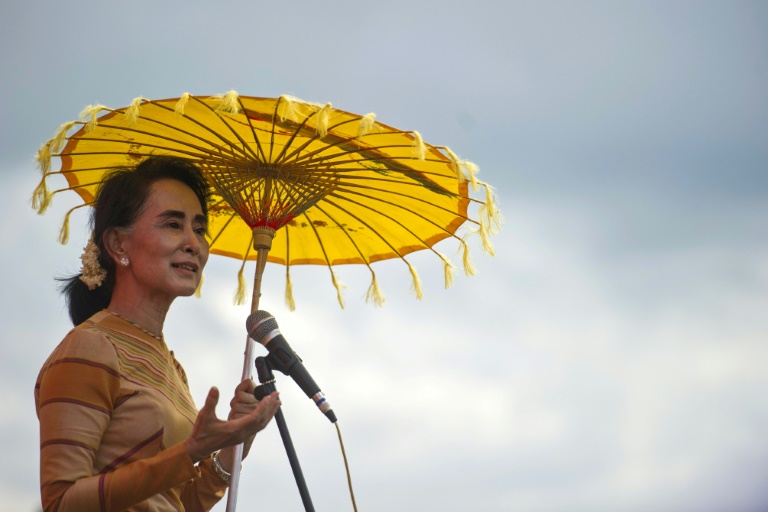
A Myanmar junta court on Wednesday rejected an appeal by ousted leader Aung San Suu Kyi against a five-year sentence for corruption handed down last week, a junta spokesman told AFP.

Since a coup ousted her government in February last year, plunging Myanmar into upheaval, Suu Kyi has been in military custody and faces a raft of charges that could jail her for more than 150 years.

Last week the Nobel laureate was convicted of accepting a bribe of $600,000 cash and gold bars — a charge she said was “absurd”, according to her lawyer.

The junta’s “Union Supreme Court rejected the appeal of her sentence,” junta spokesman Zaw Min Tun told AFP. 

Suu Kyi will challenge the latest decision in a higher court, a source with knowledge of the case told AFP after the ruling.

She had “decided to continue till the end of the process to check the situation of the rule of law here,” the source said.

There was no date given for the fresh appeal, which will be heard in the Union Supreme Court in front of two judges. 

Before her corruption conviction, the 76-year-old Suu Kyi had already been sentenced to six years in jail for incitement against the military, breaching Covid-19 rules and breaking a telecommunications law.

Appeals against those convictions are currently pending in the courts, the source said. 

Suu Kyi will remain under house arrest at an unknown location in the military-built capital Naypyidaw while she fights other charges.

She faces a raft of other trials, including for allegedly violating the official secrets act, several counts of corruption and electoral fraud.

Journalists have been barred from attending the court hearings and Suu Kyi’s lawyers have been banned from speaking to the media.

– ‘Sport in a court’ –

The rejection of the appeal marked “another stage in the show trial,” David Mathieson, an independent analyst working on Myanmar, told AFP.

“This is sport in a court, a form of mental cruelty.”

Under a previous junta regime, Suu Kyi spent long spells under house arrest in her family’s colonial-era lakeside mansion in Yangon, Myanmar’s largest city.

Today, she is confined to an undisclosed location in the capital, with her links to the outside world limited to brief pre-trial meetings with her lawyers.

The junta has rebuffed requests by foreign diplomats to meet Suu Kyi while she is on trial. 

The coup last year sparked widespread protests and unrest that the military has sought to crush by force.

Fighting has flared with established ethnic rebel groups in border areas and across the country “People’s Defence Forces” have sprung up to fight junta troops. 

According to a local monitoring group, the crackdown has left more than 1,800 civilians dead while over 13,000 have been arrested.

Suu Kyi has been the face of Myanmar’s democratic hopes for more than 30 years, but her earlier sentences already mean she is likely to miss elections the junta has said it plans to hold by next year.

Burundi says 10 troops killed in attack on AU base in Somalia

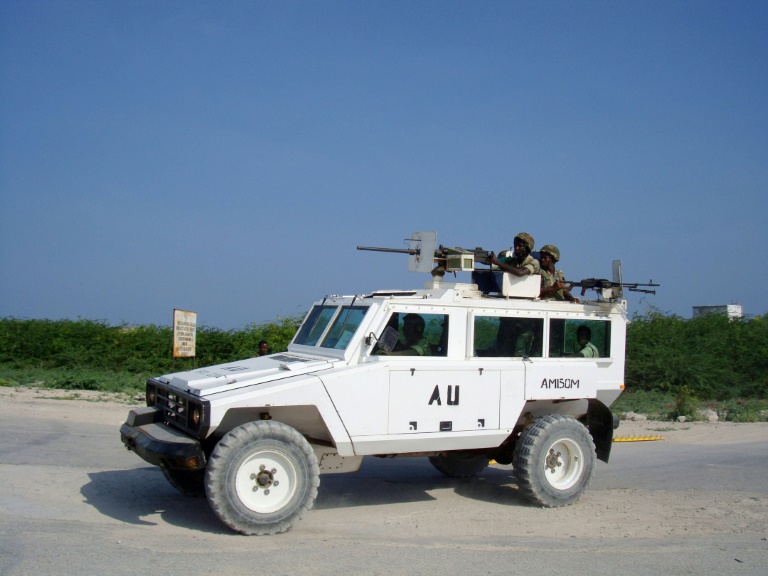
Ten Burundian peacekeepers were killed in Tuesday’s attack by Al-Shabaab jihadists on an African Union (AU) base in Somalia, Burundi’s army said Wednesday.

Twenty-five soldiers were also injured and five are missing while 20 Al-Shabaab militants were killed, it said in a statement.

It was the first attack on a peacekeeping base since the AU Transition Mission in Somalia (ATMIS) replaced the previous AMISOM force on April 1.

AU forces sent in helicopter gunships after the pre-dawn attack on a camp housing Burundian troops near Ceel Baraf, a village some 160 kilometres (100 miles) northeast of the capital Mogadishu, military officials and witnesses said. 

A local military commander, Mohamed Ali, told AFP on Tuesday that the assault began with a car bomb before a furious firefight broke out.

A high-ranking Burundian military officer told AFP that 400 Islamist fighters stormed the base, forcing the Burundian soldiers to retreat to a nearby hillside where they continued to fight, supported by drones and helicopters. 

Two Burundian military sources told AFP that 45 peacekeepers were reported as dead or missing, with 25 others injured.

“The provisional toll is 45 soldiers killed or missing, including a battalion commander colonel,” a Burundian military source told AFP on condition of anonymity, while a second source backed up the figures.

Al-Shabaab claimed responsibility for the attack, saying it had taken control of the camp and that 173 soldiers had been killed.

The Al-Qaeda-linked Islamist militants have been waging a deadly insurgency against Somalia’s fragile central government for more than a decade.

– ‘Heinous’ attack –

Somalia’s government condemned the “heinous” attack and appealed to the international community to do more to support Somali forces and ATMIS “in effectively combatting terrorism.” 

AU Commission chief Moussa Faki Mahamat said on Twitter he spoke to Burundi’s President Evariste Ndayishimiye to pay his respects for the “sacrifice” of the peacekeepers who lost their lives.

The United States, Britain and the regional bloc IGAD (Intergovernmental Authority on Development) condemned the attack, with the US embassy in Mogadishu vowing to “stand with ATMIS and Somalia’s security forces as we partner to achieve peace.”

“Our thoughts are with ATMIS, Burundian National Defence Force and all those affected. The UK stands with Somalia and partners in the fight against terrorism,” the British ambassador to Somalia, Kate Foster, said on Twitter.

The executive secretary of IGAD, Workneh Gebeyehu, said in a statement: “These attacks will neither deter nor alter the determination of IGAD and international partners to support the people of Somalia in their search for a lasting peace and stability.”

The bloodshed highlights the security woes in the troubled Horn of Africa country, which is also embroiled in a deep political crisis over delayed elections and faces the threat of famine due to a prolonged drought across the region.

ATMIS — made up of troops from Burundi, Djibouti, Ethiopia, Kenya and Uganda — is tasked with helping Somali forces take primary responsibility for security in a country that has been mired in conflict since 1991.  

According to a UN resolution approving its creation, ATMIS is projected to gradually reduce staffing levels from nearly 20,000 soldiers, police and civilians to zero by the end of 2024. 

Al-Shabaab fighters controlled Mogadishu until 2011 when they were driven out by AU troops.

But they still hold territory in the countryside and frequently attack civilian, military and government targets in Mogadishu and elsewhere. 

Sri Lanka crisis will last at least two more years: govt

Sri Lanka will have to endure its unprecedented economic hardships for at least two more years, the country’s finance minister said Wednesday while warning of an imminent cash crunch.

Months of blackouts and acute shortages of food, fuel and pharmaceuticals have brought widespread suffering across the South Asian island nation.

Public anger has sparked sustained protests demanding the government resign over its mismanagement of the economic crisis, Sri Lanka’s worst since independence in 1948.

“People should know the truth. I don’t know if people realise the gravity of the situation,” Finance Minister Ali Sabry told parliament.

“We won’t be able to resolve this crisis in two years, but the actions we take today will determine how much longer this problem will drag.”

Sabry said the country now has less than $50 million in usable foreign exchange reserves, needed to finance essential goods to keep Sri Lanka’s import-dependent economy ticking over.

Official data shows $1.7 billion in reserves, but most of that figure includes a Chinese currency swap which cannot be used to pay for imports from other countries.

Sabry said the government had erred by delaying an approach to the International Monetary Fund for a bailout.

Negotiations with the IMF are ongoing but Sri Lanka’s central bank chief has said any assistance from the lender is months away.

The government will unveil a new budget soon and raise taxes to replenish state revenue.

“It was a historic mistake to sharply reduce taxes in 2019,” Sabry said, adding that the previous central bank chief had also blundered by exhausting foreign reserves to defend Sri Lanka’s overvalued currency. 

Sri Lanka’s economic crisis took hold after the coronavirus pandemic hammered income from tourism and remittances.

Unable to pay for fuel imports, utilities have imposed daily blackouts to ration electricity, while long lines of people snake around service stations for petrol and kerosene.

Hospitals are short of vital medicines and the government has appealed to citizens abroad for donations.

Last month Sri Lanka announced it was defaulting on its $51 billion foreign debt.

President Gotabaya Rajapaksa has said he is willing to form a unity government to manage the country through the crisis.

But the opposition has refused to join an administration with the president or any other members of the powerful Rajapaksa family still in power. 

Protesters have been camped outside the president’s seafront office for nearly a month to pressure him into stepping down.

Trade unions, which staged a strike last week, have said they will stop work again on Friday to pressure the entire government to resign.

Qatar faces World Cup questions as 200-day countdown looms

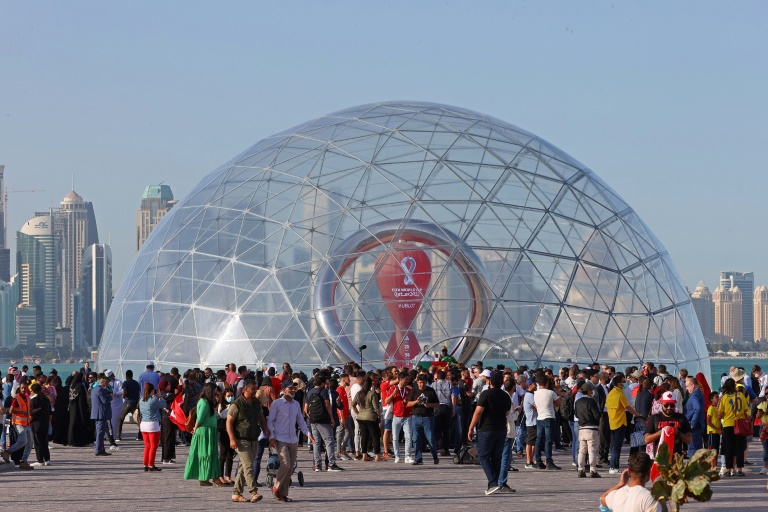
Migrant labourers are working through the night near the World Cup clock that will start counting down 200 days to kick-off on Thursday, with hosts Qatar facing mounting questions over costs and conditions for fans.

Eight shiny, air-conditioned stadiums are ready for the tournament’s start on November 21, but every night the army of South Asian workers who underpin Qatar’s energy-rich economy swarm over unfinished roads and building sites around Doha.

Dozens of gigantic cranes tower over the capital’s skyscrapers while organisers juggle with the dilemma of welcoming an estimated 1.4 million fans wanting entertainment and alcohol in the tiny, conservative Islamic state.

FIFA president Gianni Infantino has promised the “best ever” World Cup and a FIFA spokesperson told AFP that the global body had been “impressed” by Qatar’s infrastructure programme.

But many fans worry about the cost of travel and accommodation for the Qatar World Cup, the first in an Arab country.

Qatar has faced frequent questions about human rights, including for the tens thousands of migrant workers who built infrastructure around the World Cup. Qatar says it has cracked down on abusive practises and introduced reforms, including a minimum wage.

But Ronan Evain, head of Football Supporters Europe, a lobbying group, said transport and beds were fans’ main concerns. 

“This is the most complicated World Cup of the modern era for logistics,” he told AFP. “Fans see prices rising and don’t know when it will stop.”

As prices soar post-Covid, Madrid-Doha return air tickets in November have already reached more than $1,680, almost three times the cost in 2021.

Many fans still do not know if they have match tickets — which are a third more expensive on average than for 2018 — and they cannot book accommodation on the official website without a seat number.

Qatar says there will be 130,000 rooms in hotels, apartments, cruise ships and desert camps. It has promised shared rooms for as little as $85 a night.

– ‘Getting information is a nightmare’ –

Ambassadors from many of the 32 competing nations have told AFP of their concerns over the lack of information about issues ranging from alcohol to the treatment of gays in Qatar, where homosexuality is illegal and alcohol is restricted to mainly foreign non-Muslims.

“There is no problem with the concrete and steel,” said one ambassador, speaking on condition of anonymity. “But they are not telling us enough about how it will all be policed. There are meetings but no detail.”

“Getting information from the organising committee is a nightmare,” said Fabien Bonnel, a spokesperson for Irresistibles Francais, the biggest French supporters association. He predicted fewer French fans than previous tournaments.

Before other World Cups the talk was often about stadiums not being ready but 2022 is different, said Danyel Reiche, a professor at Georgetown University Qatar and author of “Qatar and the 2022 FIFA World Cup. Politics, Controversy, Change”.

“There are many indicators that this will be an excellent World Cup,” said Reiche.

“The challenge here is to meet the needs of Western fans who are used to consuming alcohol whilst watching matches whilst respecting local culture. 

“Pragmatic compromises need to be found to respect both sides.”

FIFA and the Qatar organisers, the Supreme Committee for Delivery and Legacy, have sought to reassure fans about accommodation, rights and drinking.

Alcohol is likely to be sold at fan zones and special areas near stadiums at a subsidised price of about $6.25 a beer, as it was during the 2019 Club World Cup and last year’s Formula One race in Qatar, organising sources said.

“Many countries have restrictions on the public consumption of alcohol. Qatar is no different and simply asks fans to respect the country’s conservative culture,” said a Supreme Committee spokesperson.

Drunkenness will be handled “in a sensible and sensitive manner”.

FIFA said it had stressed its “unequivocal” stand on human and gay rights to Qatar. 

FIFA had insisted that law enforcement around the World Cup be “non-discriminatory, and strictly necessary and proportionate” including allowing lesbian-gay-transgender symbols and colours inside and outside stadiums, said the spokesperson.

“Rainbow and other sexual identity colours on flags are allowed at any FIFA competition and have been displayed at previous FIFA tournaments in Qatar.

“FIFA is confident that all necessary measures will be in place for LGBTIQ+ fans and allies to enjoy the tournament in a welcoming and safe environment, just as everyone else.”

French left reaches deal on alliance to hamper Macron

France’s left-of-centre parties on Wednesday reached an alliance deal for June parliamentary polls, aiming for a strong enough showing to hinder President Emmanuel Macron’s controversial reform plans.

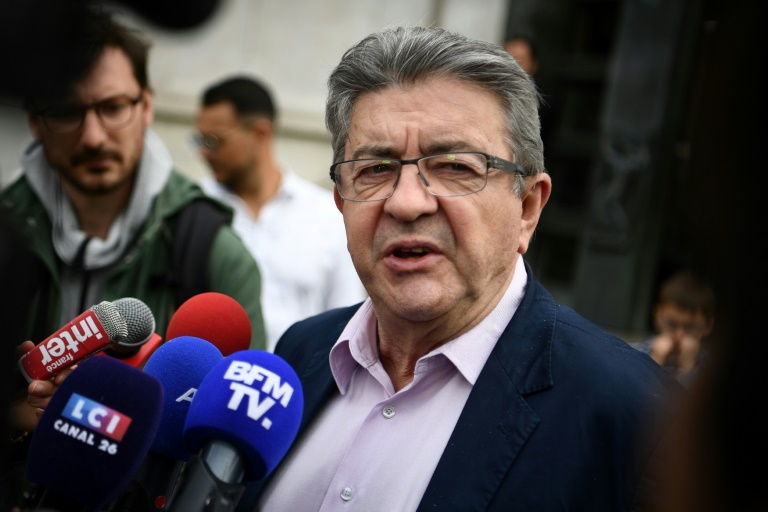
After talks dragged through the night past a Tuesday deadline, the Socialist Party (PS) fell in line alongside the Greens and the Communist Party (PCF) behind the hard-left France Unbowed movement (LFI), who emerged as the dominant force on the left in April’s presidential election.

“We want to elect MPs in a majority of constituencies to stop Emmanuel Macron from pursuing his unjust and brutal policies and beat the far-right,” the PS and LFI said in a joint statement. 

The alliance must still be approved by the Socialists’ National Council on Thursday, with people close to the party leadership warning against viewing the vote as a foregone conclusion. 

“No one on the left can win on their own,” PCF leader Fabien Roussel told France Inter radio, saying the new alliance needed to harness “the immense hope among the French public, among workers, among young people who are asking us to unite”.

A strong showing for LFI leader Jean-Luc Melenchon saw him miss out on the April presidential runoff vote by a whisker, while the other left candidates were all but wiped out.

After Macron’s win, Melenchon immediately called on voters to “elect him prime minister” and hand the left a National Assembly majority to block the centrist’s reforms, including an unpopular plan to push the retirement age back from 62 to 65. 

Like the presidential election, the legislative polls in France’s 577 constituencies work in a two-round system — meaning alliances off the bat offer the best chance of making it to the run-off.

A forced “cohabitation” between Macron and Melenchon would be the first in two decades, but observers say that such a scenario remains unlikely. 

-‘Historic’ negotiations-

Since beginning last week, major policy differences have kept negotiations tense among the left-wing parties, with LFI’s proposal to unilaterally “disobey” the provisions of some European Union treaties a particular sticking point.

But the new allies have agreed on Melenchon’s core policy proposals, including raising the minimum wage, reducing the retirement age to 60 and rolling back labour market reforms introduced under former Socialist president Francois Hollande.

The negotiation was “historic”, LFI European MP Manon Aubry told Europe 1 radio, offering each party autonomy within “a common policy framework”.

PS heavyweights like Hollande, in power just five years ago before the Socialists’ precipitous fall from grace, have made clear their opposition to the deal.

He has warned the left-wing tie-up could amount to the “disappearance” of the Socialists.

But Aubry said Wednesday that it was exactly their “important steps concerning Hollande’s legacy” that had allowed the Socialists to align with the rest of the left.

Behind the euphoria at overcoming the traditionally fragmented French left’s differences, the junior partners are eyeing how constituencies will be parcelled out between the parties, with each aiming to run on the united ticket in a maximum of “winnable” seats.

The final deal looks set to distribute around 100 constituencies to the Greens, 70 for the Socialist Party and 50 for the Communist Party.

With some Socialists refusing to stand down, former minister under Hollande Stephane Le Foll said he was ready to lead them in a separate campaign.

At least one Communist candidate, in a suburb of eastern city Lyon, has also said she will not make way for an alliance-backed replacement.

burs-ech/yad

US trade deficit hits highest on record as imports soar

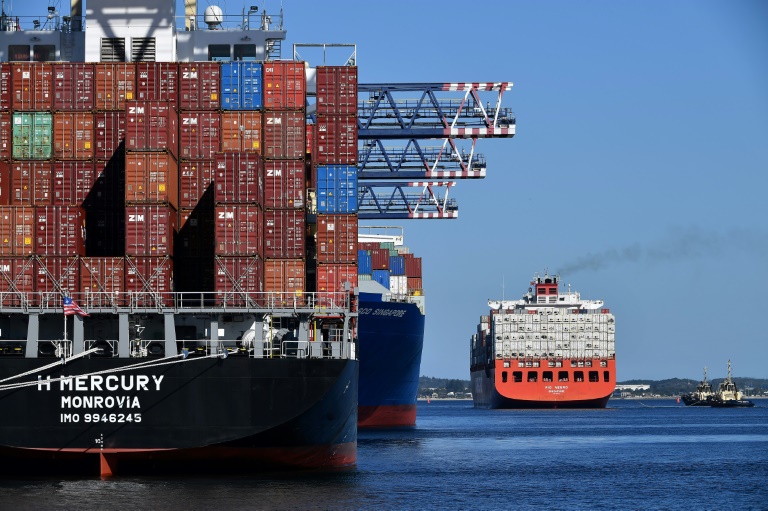
A surge in imports of goods and services in March drove the US trade gap to the highest level ever recorded, with huge increases in purchases of autos, computers, furniture and clothing, the government reported Wednesday.

The trade deficit jumped more than 22 percent to $109.8 billion, as the double-digit increase in imports to an all-time high of $351.5 billion outstripped the more modest gain in exports, the Commerce Department said.

But US exports also hit a record of $241.7 billion, the data showed.

As the world’s largest economy showed a robust recovery from the pandemic disruptions in recent months, businesses have been hampered by global supply chain snarls and shortages that meant relatively modest import gains.

But the data showed a shift in March with a $3.2 billion increase in imports of autos, parts and engines — including a $2.5 jump in passenger cars alone — a $1.5 billion rise in computers, and $1.3 billion gain for computer accessories.

Purchases of furniture and household goods jumped $1.3 billion, while toys, games and sporting goods rose by a similar amount, the report said.

A strong American consumer is likely to support continued demand for imports, while slower recoveries among US trading partners could hold down export growth, economists say.

“The prevailing domestic and overseas economic environment could keep the deficit pinned near record levels and impose a significant headwind to US GDP growth,” said Mahir Rasheed of Oxford Economics. 

The Federal Reserve is raising interest rates as it grapples with accelerating inflation, which could tamp down demand.

In the first three months of the year, the goods and services deficit increased $84.8 billion, or 41.5 percent, from the same period in 2021, the report said.

“However, we expect aggressive policy tightening (and) somewhat softer domestic demand growth to cool import growth and allow the deficit to stabilize,” Rasheed said.

Even with the ongoing Covid-19 lockdowns in China, which raised fears of increasing difficulties sourcing products, the trade gap with the world’s number two economy jumped $7.4 billion to $48.6 billion, the report said.

The deficits with Vietnam and Taiwan were the highest ever, according to the data.

US businesses struggled to hire in April amid low unemployment

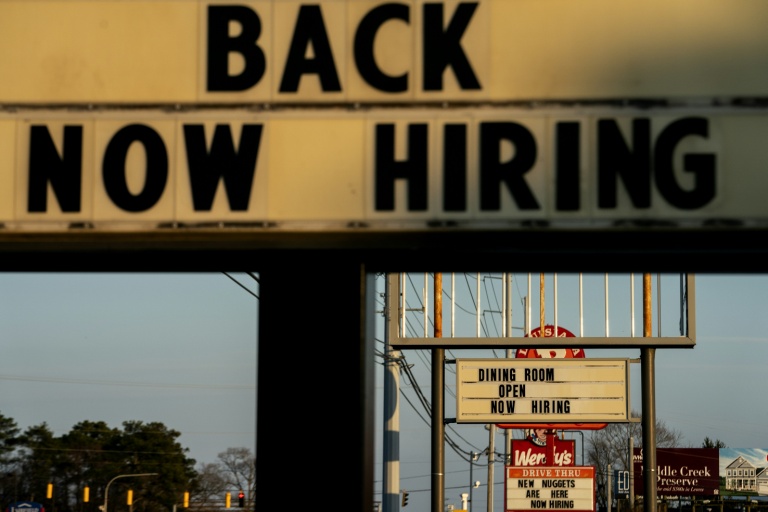
US private businesses saw surprisingly weak hiring in April, a survey showed Wednesday, amid low unemployment that’s made their quest to find workers even more difficult.

Payroll services firm ADP reported private employment rose 247,000 last month, considerably less than expected and down from March’s upwardly revised total.

The survey is considered a preview of the government jobs report due out Friday, and could foreshadow weak hiring overall last month in the US economy, where unemployment has nearly returned to the level it had before Covid-19 caused mass layoffs two years ago.

ADP’s chief economist Nela Richardson said the survey’s undershoot was not a sign that jobs weren’t available, but rather of a shortage of workers.

“While hiring demand remains strong, labor supply shortages caused job gains to soften for both goods producers and services providers,” she said. 

“As the labor market tightens, small companies, with fewer than 50 employees, struggle with competition for wages amid increased costs.”

Small businesses lost 120,000 positions last month, particularly those with between one and 19 employees, which lost 96,000, the data said.

Large businesses however added 321,000 jobs, while medium businesses added 46,000.

Service providers made up the bulk of the job gains, with 202,000 positions added. 

Leisure and hospitality, the sector comprising the bars and restaurants that suffered greatly from Covid-19, added the most positions in that sector with 77,000, while professional and business services firms added 50,000.

Goods producers added 46,000 positions, the data said.

Rubeela Farooqi of High Frequency Economics said despite the miss in the ADP survey, there’s reason to be optimistic about Friday’s jobs report.

“Recent data on the labor market including the downtrend in layoffs and ongoing job growth are signaling positive momentum, even as the supply side remains a constraint,” she said in an analysis.

Amnesty accuses Libya state-backed militia of abuses

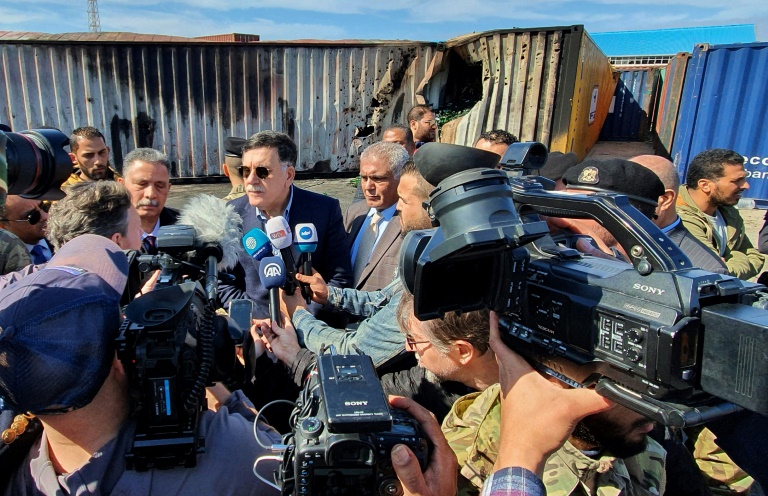
Amnesty International on Wednesday accused a powerful government-backed Libyan armed group of abuses against migrants and Tripoli residents.

In a statement, it accused the Stability Support Authority (SSA) of “unlawful killings, arbitrary detentions, interception and subsequent arbitrary detention of migrants and refugees, torture, forced labour, and other shocking human rights violations”.

Amnesty said the group had been emboldened by a climate of “entrenched impunity”.

The SSA, created under a decree by former prime minister Fayez al-Sarraj in January last year, is led by Abdel Ghani al-Kikli, one of the most powerful men in the North African country’s capital.

Amnesty said al-Kikli, known as “Gheniwa”, had been appointed despite a “well-documented history of crimes under international law and other serious human rights violations committed by militias under his command”.

Libya plunged into violent lawlessness in 2011 with the NATO-backed revolt that toppled longtime dictator Moamer Kadhafi. Armed groups have vied for control of territory as a string of interim governments have come and gone.

Many such groups have been integrated into the state, partly in order to access a share of the country’s vast oil wealth, and rights organisations have often accused them of abuses.

Since March the country has again found itself with two rival governments.

Amnesty said it had written to Libyan authorities last month to demand that al-Kikli and his former deputy Lotfi al-Harari be removed from “positions that would allow them to commit further violations, interfere in investigations or grant them immunity”.

It said it had not received any response.

Harari now heads the Tripoli-based Internal Security Agency, another militia Amnesty accused of “crimes and human rights violations”.

“Legitimizing abusive militia leaders and putting them on state payroll with no questions asked only empowers them to continue trampling on the rights of more people with complete impunity,” said Amnesty’s regional director Diana Eltahawy.

Last month Amnesty said armed groups affiliated with eastern Libya strongman Khalifa Haftar were detaining at least nine “peaceful protesters,” reflecting how rights have been “brutally crushed” in areas under the control of Haftar-affiliated forces.

United Nations investigators said in March that serious rights violations including possible crimes against humanity were continuing with impunity across much of Libya, blocking the country’s transition to peace and democracy.

Volkswagen trains sights on US as profits jump

Volkswagen’s first-quarter net profit almost doubled as the German automaker looked anew to the North American market to drive growth after years of muted presence there over “dieselgate”, company results showed Wednesday.

Over the first three months of the year, Volkswagen raked in a net profit of 6.7 billion euros ($7 billion), up from 3.4 billion euros in the same period last year.

The Wolfsburg-based group has shown “resilience” in the face of supply bottlenecks which have tormented automakers over the past year, CEO Herbert Diess said in a statement. 

Volkswagen was able to “mitigate” the impact of supply bottlenecks for parts, Diess said, with the group recently able to supply factories in the United States and China with unused semiconductors from Europe. 

The reduced availability of the chips, a key component in both conventional and electric vehicles made scarce by the coronavirus pandemic, forced intermittent stoppages at the carmaker last year.

Russia’s invasion of Ukraine has added to supply chain disruptions, limiting the availability of cables produced in the region.

– ‘Strategic potential’ –

“Even in a more polarized world, Volkswagen is firmly committed to expanding its global footprint,” Diess said. 

At the centre of the strategy was North America, where the world’s second-largest automotive group is aiming to more than double its market share to 10 percent by 2030.

Volkswagen recorded its first profit in years in the region in 2021, overcoming the 2015 dieselgate emissions-cheating scandal, after which the group had scaled back its US operation.

The group — whose 12 brands include Audi, Porsche and Skoda — announced in March it was pumping $7.1 billion into its North American production facilities, while Diess has lavished attention on the region, promoting the reimagined ID.Buzz electric camper van.

The US market has the “biggest strategic potential”, Diess told journalists at a press conference.

“We think America will be basically untouched by what’s happening in Europe, so for sure it should be geostrategically a region where we should invest more,” the CEO said. 

Battery-powered vehicles will play a “central” role in Volkswagen’s North American push, the group said. 

But for now, all the electric vehicles the company plans to produce for the US and Europe have already been reserved by waiting customers.

Volkswagen otherwise confirmed preliminary figures, which saw its operating profit rise to 8.5 billion euros in the first quarter, up from 4.8 billion euros last year.

The group’s first-quarter result was supported by a shift towards “higher equipped vehicles” with chunkier margins, chief financial officer Arno Antlitz said.

The changed emphasis enabled the auto giant to boost is figures despite delivering over 20 percent fewer cars, while bottlenecks have limited production.

Close Bitnami banner
Bitnami