World

40 million more faced acute hunger in 2021: UN

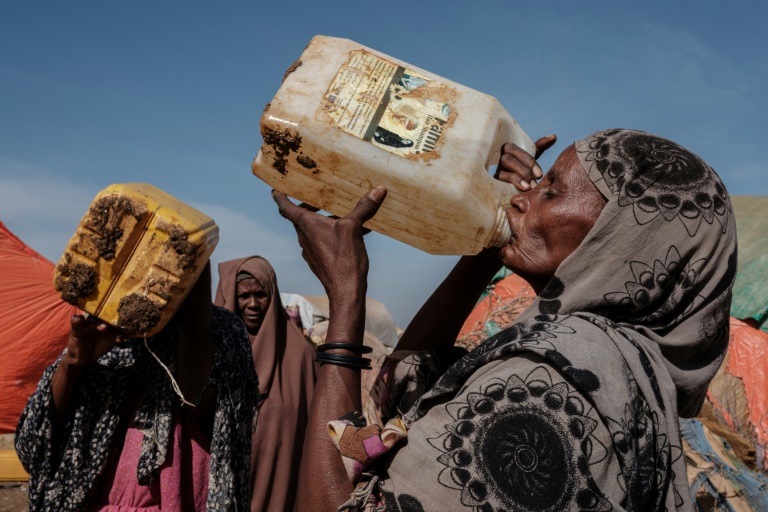
The number of people facing hunger rose to 193 million last year as conflict, climate change and economic crises ravaged people’s livelihoods, the UN’s Food and Agriculture Organization said Wednesday.

While experts have warned that Russia’s war in Ukraine could cause famine, the FAO said in an annual report that nearly 40 million more people were pushed into “acute food insecurity” in 2021.

Among 53 countries facing the problem, the most affected include the Democratic Republic of Congo, Ethiopia, Yemen and Afghanistan where millions face hunger after the country plunged into financial crisis following the Taliban takeover in 2021.

The United Nations defines “acute food insecurity” as when a person’s inability to consume adequate food puts their lives or livelihoods in immediate danger.

“This is hunger that threatens to slide into famine and cause widespread death,” the FAO said.

The number has risen constantly since the first report was published by the FAO, the World Food Programme and the European Union in 2016.

The increase in 2021 has been “driven by a toxic triple combination of conflict, weather extremes and economic shocks”, with people affected in 53 countries, the FAO said.

Although the report does not take into account the conflict in Ukraine, the FAO said the war “stands to have the most devastating impacts on food crisis countries and on those on the brink of famine”.

Russia and Ukraine are major exporters of essential agricultural products, ranging from wheat and sunflower oil to fertiliser, and the FAO has previously said the conflict sent world food prices to an all-time high in March.

“The war has already highlighted the interconnected nature and fragility of global food systems,” the FAO said.

– Outlook ‘not good’ –

The agency noted that several countries battling major food crises obtained almost all of their wheat imports from Russia and Ukraine last year, including Somalia, the Democratic Republic of Congo and Madagascar.

The FAO warned that the “outlook moving forward is not good”.

“Today, if more is not done to support rural communities, the scale of the devastation in terms of hunger and lost livelihoods will be appalling,” the report said.

“Urgent humanitarian action is needed on a massive scale to prevent that from happening,” it said.

In 2021, conflict and insecurity was the main driver of acute hunger in 24 countries, affecting 139 million people.

Economic “shocks”, worsened by the impact of Covid, hit 30.2 million people in 21 countries.

Extreme weather was the main driver of acute food insecurity for 23.5 million people in eight African countries.

The FAO said it needs $1.5 billion to stabilise and increase local food production in at-risk regions where planting season is starting.

“There is no time to waste,” it said as it meets on the issue on Wednesday.

40 million more faced acute hunger in 2021: UN

The number of people facing hunger rose to 193 million last year as conflict, climate change and economic crises ravaged people’s livelihoods, the UN’s Food and Agriculture Organization said Wednesday.

While experts have warned that Russia’s war in Ukraine could cause famine, the FAO said in an annual report that nearly 40 million more people were pushed into “acute food insecurity” in 2021.

Among 53 countries facing the problem, the most affected include the Democratic Republic of Congo, Ethiopia, Yemen and Afghanistan where millions face hunger after the country plunged into financial crisis following the Taliban takeover in 2021.

The United Nations defines “acute food insecurity” as when a person’s inability to consume adequate food puts their lives or livelihoods in immediate danger.

“This is hunger that threatens to slide into famine and cause widespread death,” the FAO said.

The number has risen constantly since the first report was published by the FAO, the World Food Programme and the European Union in 2016.

The increase in 2021 has been “driven by a toxic triple combination of conflict, weather extremes and economic shocks”, with people affected in 53 countries, the FAO said.

Although the report does not take into account the conflict in Ukraine, the FAO said the war “stands to have the most devastating impacts on food crisis countries and on those on the brink of famine”.

Russia and Ukraine are major exporters of essential agricultural products, ranging from wheat and sunflower oil to fertiliser, and the FAO has previously said the conflict sent world food prices to an all-time high in March.

“The war has already highlighted the interconnected nature and fragility of global food systems,” the FAO said.

– Outlook ‘not good’ –

The agency noted that several countries battling major food crises obtained almost all of their wheat imports from Russia and Ukraine last year, including Somalia, the Democratic Republic of Congo and Madagascar.

The FAO warned that the “outlook moving forward is not good”.

“Today, if more is not done to support rural communities, the scale of the devastation in terms of hunger and lost livelihoods will be appalling,” the report said.

“Urgent humanitarian action is needed on a massive scale to prevent that from happening,” it said.

In 2021, conflict and insecurity was the main driver of acute hunger in 24 countries, affecting 139 million people.

Economic “shocks”, worsened by the impact of Covid, hit 30.2 million people in 21 countries.

Extreme weather was the main driver of acute food insecurity for 23.5 million people in eight African countries.

The FAO said it needs $1.5 billion to stabilise and increase local food production in at-risk regions where planting season is starting.

“There is no time to waste,” it said as it meets on the issue on Wednesday.

Costa Rica president-elect says will not ratify environment treaty

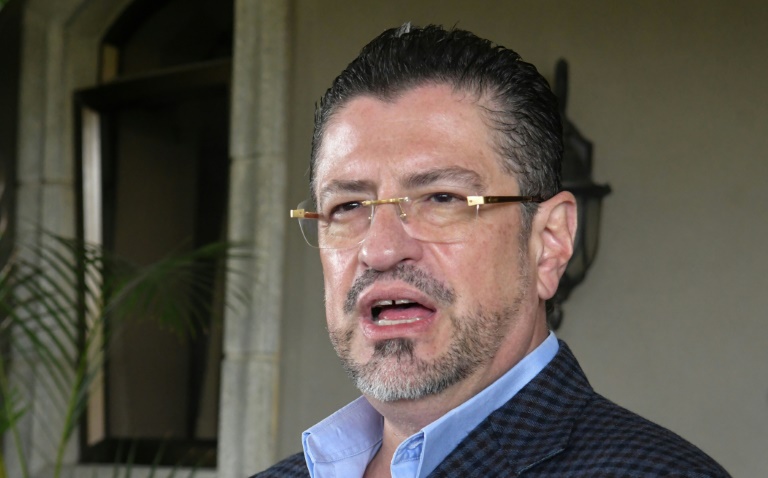
Costa Rican President-elect Rodrigo Chaves said Tuesday that his government would not ratify the Escazu Agreement that establishes protection for environmentalists.

The treaty was the first in the world to contain specific measures to protect the human rights of environmental defenders and Costa Rica had been the driving force behind it.

Outgoing President Carlos Alvarado had asked lawmakers to ratify the agreement, but Chaves said the treaty was unnecessary and could harm the economy.

“The private sector should be reassured that the Escazu Agreement is not on the government’s agenda,” the right-wing economist said at a press conference where he also announced several of his future ministers.

“I don’t think it would be beneficial for the country,” added the former World Bank official, who will take office on May 8.

Costa Rica, a regional leader in environmental protection, hosted the signing of the Escazu Agreement in 2018.

In addition to protections for campaigners, the treaty also guarantees public involvement in the environmental decision-making processes, especially those that may impact health.

But with the economy struggling, Chaves termed it “worrying” that the agreement could “delay (investment projects) in an unjustified and possibly arbitrary way.”

The treaty has been signed by 24 countries and ratified by half of them, which guarantees its validity despite Costa Rica’s now-likely lack of ratification.

Chaves also said the treaty was superfluous.  

“Our legislation already includes everything in the Escazu Agreement,” he said.

Sri Lanka tea exports lowest in 23 years

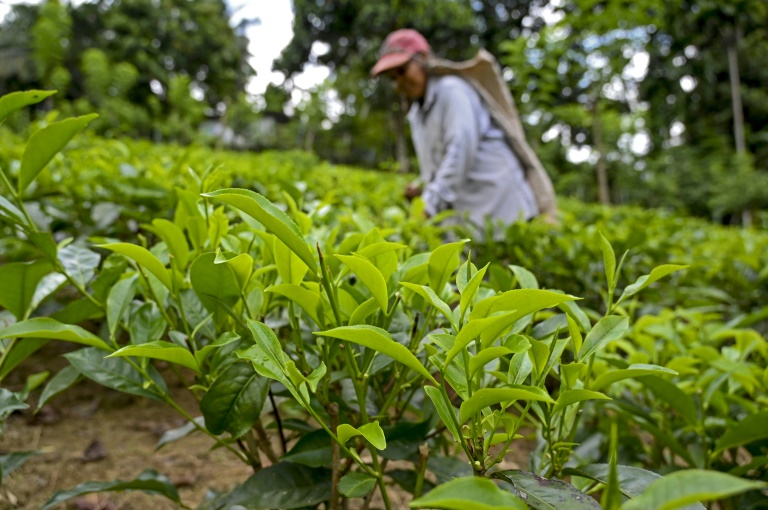
Crisis-struck Sri Lanka’s vital tea exports have dropped to their lowest level in 23 years, official figures showed Wednesday, hit by a fertiliser ban and the war in Ukraine.

Tea is the island nation’s biggest export commodity, bringing in about $1.3 billion annually before the current economic downturn, the worst since independence in 1948.

But a bungled ban on fertiliser imports last year — introduced in a doomed effort to save foreign currency and avoid a debt default — hit growers hard, with production falling 18 per cent on-year for the period from November 2021 to February 2022.

Customs data showed that first-quarter exports in 2022 correspondingly plunged to 63.7 million kilos (140 million pounds), down from 69.8 million kilos in the January-March period last year. 

The tally was the lowest since the first quarter of 1999, when the country shipped out 60.3 million kilos of tea.

Export earnings for the first quarter also declined, to $287 million from $338 million.

Tea brokering firm Asia Siyaka blamed the drop on the agro chemical ban, which was portrayed by the government as a push to turn Sri Lankan farming 100-percent organic.

The ban was lifted by October following backlash from the industry, but farmers were left unable to access imported fertiliser as the country simultaneously ran out of dollars.

Industry officials added that about 10 percent of Sri Lanka’s tea exports had also been affected by Russia’s invasion of Ukraine. Both countries are top buyers of the island’s aromatic black tea.

The country of 22 million lacks enough foreign currency to finance even the most essential imports such as food, fuel and medicines. 

Dire shortages and galloping inflation have led to widespread protests calling for President Gotabaya Rajapaksa to step down. 

Sri Lanka tea exports lowest in 23 years

Crisis-struck Sri Lanka’s vital tea exports have dropped to their lowest level in 23 years, official figures showed Wednesday, hit by a fertiliser ban and the war in Ukraine.

Tea is the island nation’s biggest export commodity, bringing in about $1.3 billion annually before the current economic downturn, the worst since independence in 1948.

But a bungled ban on fertiliser imports last year — introduced in a doomed effort to save foreign currency and avoid a debt default — hit growers hard, with production falling 18 per cent on-year for the period from November 2021 to February 2022.

Customs data showed that first-quarter exports in 2022 correspondingly plunged to 63.7 million kilos (140 million pounds), down from 69.8 million kilos in the January-March period last year. 

The tally was the lowest since the first quarter of 1999, when the country shipped out 60.3 million kilos of tea.

Export earnings for the first quarter also declined, to $287 million from $338 million.

Tea brokering firm Asia Siyaka blamed the drop on the agro chemical ban, which was portrayed by the government as a push to turn Sri Lankan farming 100-percent organic.

The ban was lifted by October following backlash from the industry, but farmers were left unable to access imported fertiliser as the country simultaneously ran out of dollars.

Industry officials added that about 10 percent of Sri Lanka’s tea exports had also been affected by Russia’s invasion of Ukraine. Both countries are top buyers of the island’s aromatic black tea.

The country of 22 million lacks enough foreign currency to finance even the most essential imports such as food, fuel and medicines. 

Dire shortages and galloping inflation have led to widespread protests calling for President Gotabaya Rajapaksa to step down. 

Asian markets drop ahead of key Fed rate decision

Equities fell in Asian trade Wednesday as traders nervously awaited what is expected to be the biggest Federal Reserve interest rate hike in more than two decades.

With inflation showing little sign of easing from its 40-year highs, the US central bank has set itself on a hawkish course of tightening this year, sending shivers through world markets.

The prospect of higher borrowing costs has been compounded by a range of crises including the war in Ukraine, elevated oil prices and China’s Covid lockdowns that have strangled crucial global supply chains.

The Fed now has to walk a fine line between getting control of surging prices and making sure it does not knock the recovery in the world’s top economy off course.

“The Fed remains very focused on bringing inflation down, however, any further hawkish pivots will likely be tempered to some extent by the desire to achieve a soft landing,” said Blerina Uruci at T. Rowe Price.

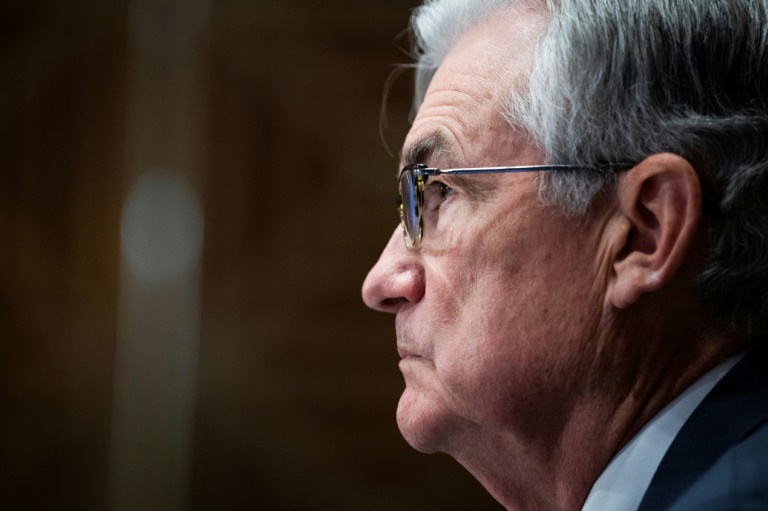
The Fed is expected to announce a 50 percentage point lift Wednesday — its biggest since 2000 — but boss Jerome Powell’s post-meeting news conference will be closely watched for an idea about future hikes.

Speculation was swirling that 75 points could be on the table at some point this year.

“Powell will fall back to ‘we are not on pre-set rate hikes’ or something along those lines — ‘we go in with an open mind each meeting and will talk it over and we’ll see where we go from there’,” said Tony Farren, managing director at Mischler Financial Group.

“The market would take that as hawkish. For his comments to seem dovish, he’d have to shut down the talk of 75 basis points. And while I don’t think he’ll endorse it, I don’t think he’ll shut it down.”

– Russian oil ban –

After a broadly positive lead from Wall Street, Asian markets struggled in holiday-thinned trade.

Hong Kong, Sydney, Seoul, Mumbai and Singapore slipped but Taipei and Manila rose while Wellington was flat.

Tokyo, Shanghai, Jakarta, Kuala Lumpur and Bangkok were closed.

London, Paris and Frankfurt rose in the opening minutes.

Oil prices rose after European Commission president Ursula von der Leyen on Wednesday said the European Union would impose a gradual Russian oil ban in retaliation for the war in Ukraine.

The news offset the expected hit to demand from China’s coronavirus lockdowns, including in the country’s biggest city Shanghai.

A huge release of crude from reserves by dozens of countries including the United States has also helped keep prices tempered.

Investors are waiting for a meeting Thursday of OPEC and other major producers including Russia, where they will discuss whether or not to lift output more than expected.

– Key figures at around 0720 GMT –

Hong Kong – Hang Seng Index: DOWN 1.2 percent at 20,856.96 

London – FTSE 100: UP 0.1 percent at 7,565.78

Tokyo – Nikkei 225: Closed for a holiday

Shanghai – Composite: Closed for a holiday

Euro/dollar: DOWN at $1.0512 from $1.0519 on Tuesday

Pound/dollar: DOWN at $1.2486 from $1.2491

Euro/pound: UP at 84.18 pence from 84.17 pence

Dollar/yen: UP at 130.15 yen from 130.14 yen

West Texas Intermediate: UP 1.4 percent at $103.79 per barrel

Brent North Sea crude: UP 1.2 percent at $106.19 per barrel

New York – Dow: UP 0.2 percent at 33,128.79 (close)

Volkswagen trains sights on US as profits jump

Volkswagen’s first-quarter net profit almost doubled as the German automaker looked anew to the North American market to drive growth after years of muted presence there over “dieselgate”, company results showed Wednesday.

Over the first three months of the year, Volkswagen raked in a net profit of 6.7 billion euros ($7 billion), up from 3.4 billion euros in the same period last year.

The Wolfsburg-based group had shown “resilience” in the face of supply bottlenecks which have tormented automakers over the past year, CEO Herbert Diess said in a statement. 

Volkswagen was able to “mitigate” the impact of supply bottlenecks for parts, such as semiconductors, by redistributing production across its global network of factories, Diess said.

The reduced availability of the chips, a key component in both conventional and electric vehicles made scarce by the coronavirus pandemic, forced intermittent stoppages at the carmaker last year.

Russia’s invasion of Ukraine has added to supply chain disruptions, limiting the availability of cables produced in the region.

“Even in a more polarized world, Volkswagen is firmly committed to expanding its global footprint,” Diess said. 

At the centre of the strategy was North America, where the world’s second-largest automotive group is aiming to more than double its market share to 10 percent by 2030

Volkswagen recorded its first profit in years in the region in 2021, overcoming the 2015 dieselgate emissions-cheating scandal, after which the group had scaled back its US operation.

The group — whose 12 brands include Audi, Porsche and Skoda — announced in March it was pumping $7.1 billion into its North American production facilities, while Diess has lavished attention on the region, promoting the reimagined ID.Buzz camper.

The electric mini-van, with its iconic place in American pop culture, was designed with the market in mind and reflects battery-powered vehicles’ “central” role, according to the group.

Volkswagen otherwise confirmed preliminary figures, which saw its operating profit rise to 8.5 billion euros in the first quarter, up from 4.8 billion euros last year.

The group’s first-quarter result was supported by a shift towards “higher equipped vehicles” with chunkier margins, chief financial officer Arno Antlitz said.

The changed emphasis enabled the auto giant to boost is figures despite delivering over 20 percent fewer cars, while bottlenecks have limited production.

North Korea fires ballistic missile in latest show of force

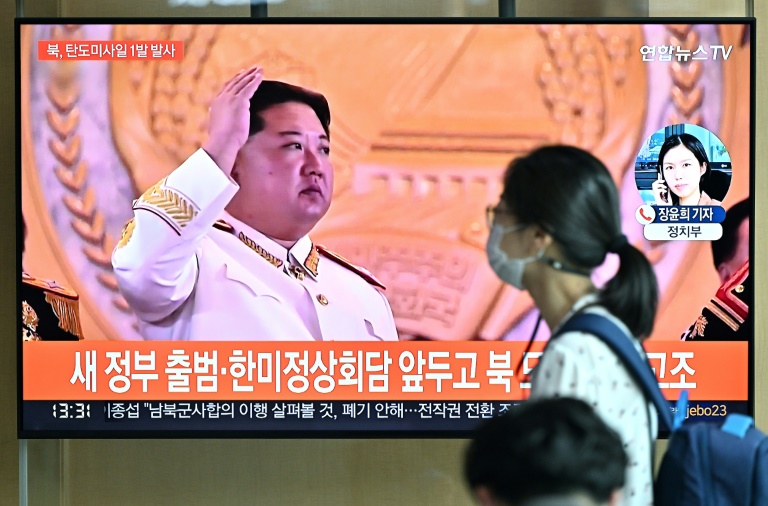
North Korea fired a ballistic missile Wednesday, Seoul said, a week after Kim Jong Un vowed to boost Pyongyang’s nuclear arsenal and just days before the South inaugurates a new, hawkish president.

Pyongyang has conducted 14 weapons tests since January, including firing an intercontinental ballistic missile at full-range for the first time since 2017.

Last week Kim oversaw a huge military parade, vowed to rapidly expand and improve his nuclear arsenal, and warned of possible “pre-emptive” strikes — as satellite imagery indicates he may soon resume nuclear testing.

The Wednesday test comes days before the May 10 inauguration of South Korea’s President-elect Yoon Suk-yeol, who has vowed to take a hard line with North Korea and ramp-up security cooperation with the US after years of failed diplomacy.

North Korea fired the ballistic missile at 12:03 pm (0303 GMT), Seoul’s Joint Chiefs of Staff said, likely from the Sunan Airfield near Pyongyang, the site of previous recent ICBM tests.

The missile flew 470 km (300 miles) and reached an altitude of 780 km, the JCS said, adding it was a “blatant violation of UN Security Council resolutions.”

Japan’s minister of defence Makoto Oniki confirmed the launch and the missile’s trajectory, saying it had landed “outside of Japan’s exclusive economic zone.”

North Korea’s “repeated launches of ballistic missiles threaten peace and safety of our nation, the region, and the international community,” he added.

Seoul’s national security council said it “strongly” condemned the launch, urging the North to “cease actions that pose a serious threat to the Korean Peninsula” and to return to dialogue. 

Since high-level diplomacy with then-US president Donald Trump collapsed, North Korea has doubled-down on Kim’s plans for military modernisation, seemingly impervious to threats of more sanctions as it ignores the United States’ offers of talks.

– More nukes? –

Kim Jong Un said at last week’s military parade that he would take measures to develop “the nuclear forces of our state at the fastest possible speed”, according to footage of his speech broadcast on state media.

Repeated negotiations aimed at convincing Kim to give up his nuclear weapons have come to nothing.

“There is a good chance that they test-fired a missile that can be equipped with a nuclear warhead,” Ahn Chan-il, a North Korean studies scholar, told AFP Wednesday.

Kim also warned that he could “pre-emptively” use his nuclear force to counter so-called hostile forces at a meeting with top military brass last week.

Analysts said Kim’s messaging on his nuclear weapons, plus the recent test, could be seen as a signal to President-elect Yoon, who has threatened a pre-emptive strike on Pyongyang.

“It could be a warning message to… Yoon,” said Hong Min of the Korea Institute for National Unification.

Yoon has suggested he is only willing to talk about peace if North Korea confirms it is willing to denuclearise — something Pyongyang will never accept, Hong said.

“It could also signal Pyongyang’s stance that it has no choice but to further enhance its arsenal if Seoul and Washington decided to deploy strategic military assets to the South,” he added.

– Seoul’s hard line –

For five years under President Moon Jae-in, Seoul has pursued a policy of engagement with Pyongyang, brokering high-level summits between Kim and Trump while reducing joint US military drills the North sees as provocative.

But for President-elect Yoon this “subservient” approach has been a manifest failure. 

He said on the campaign trail he would like more US missile defences — and even tactical nuclear weapons — deployed in South Korea, and has vowed to ramp up joint military exercises, which infuriate Pyongyang. 

US President Joe Biden is due to visit South Korea later this month to meet with Yoon.

Other analysts said that North Korea’s testing blitz could be aimed at taking advantage of gridlock at the United Nations following Russia’s invasion of Ukraine.

It is “virtually impossible” for the Security Council to sanction North Korea — which has supported Russia’s attack on Ukraine — due to Moscow’s veto power, said Cheong Seong-chang of the Center for North Korea Studies at the Sejong Institute.

“The North therefore will try to test as many missiles as possible that it has not been able to do so far, enabling it to enhance capabilities of its arsenal at a fast pace.”

All in the family: Philippine dynasties tighten grip on power

If the son of former Philippine dictator Ferdinand Marcos wins the May 9 presidential election, he will not be the only Marcos currently in power — and will almost certainly not be the last.

Elite families have long ruled the poverty-ravaged nation, holding on to positions of power for generations by dishing out favours, buying votes or resorting to violence.

Analysts say the system has become more pervasive in the decades since a popular uprising deposed Marcos and forced his family into exile.

New dynasties have entrenched themselves in politics, smothering electoral competition, stunting economic development and worsening inequality.

“Power begets power — the more they stay in power, the more they accumulate power, the more powerful they get,” said Julio Teehankee, a professor at De La Salle University in Manila.

The archipelago has produced about 319 dynastic families, dating back to when the country was a US colony in the first half of the 20th century, Teehankee said.

Dozens have withered, but in 2019, members of at least 234 such families won positions in mid-term elections, he said.

They have flourished in a feudal and corrupt democracy where parties are weak, fragmented along clan lines and plagued by defections.

Power, however, is not static. Families can win and lose it — and make a comeback.   

After the fallen dictator died in 1989, the Marcoses returned to their traditional stronghold of Ilocos Norte and began tapping local loyalties to get elected to a succession of higher positions.

Ferdinand Marcos Jr, 64, is now on the verge of clinching the ultimate dynastic victory: the presidency. 

The family also wants to make a clean sweep of the top posts in its northern bastion.

– ‘This is all dynastic’ –

Launching their campaigns in the provincial capital Laoag, Marcos candidates stood together in front of a “Team Marcos” sign as thousands of supporters cheered. 

Marcos Jr’s eldest son is a first-time candidate, seeking one of two congressional seats in the windswept province of corn and tobacco farms. A cousin is defending the other. 

His nephew — the son of his sister Imee, a senator — is vying for re-election as governor, while a cousin’s widow is the incumbent vice-governor.

Marcos Jr told AFP the family was not a dynasty, but his cousin Michael Marcos Keon, seeking a second term as Laoag mayor, disagreed. 

“This is all dynastic,” said Keon, 67, who also served as governor after Marcos Jr hit the three-term limit — a tactic often used to keep positions in the family. 

“I wouldn’t be where I am today if I weren’t a Marcos.”  

– ‘Fat dynasties’ – 

The Marcoses’ stranglehold on power in Ilocos Norte was “typical” of provinces across the country, said Ronald Mendoza, dean of Manila’s Ateneo School of Government. 

And their influence is growing.

Eighty percent of governors belong to “fat dynasties” — clans with two or more members in power at the same time — compared with 57 percent in 2004, Mendoza said.

Political families held 67 percent of seats in the House of Representatives, compared with 48 percent in 2004, and 53 percent of mayoral posts, up from 40 percent.

Among the leading candidates for the 12 Senate seats being contested, at least three already have a relative in the chamber.

Even the party-list system, which seeks to give citizens from marginalised groups representation in Congress, has been largely taken over by a handful of surnames.

As his daughter leads the race for the country’s second-highest office, outgoing President Rodrigo Duterte said recently he had “accomplished” his job. 

“I have a daughter running for vice-president, a son for congressman and one other as mayor. I am fulfilled,” he said.

More than 18,000 posts are being contested in next month’s elections. At least 800 have only one candidate.

Mendoza said the pandemic had made it even more likely that incumbents would win. 

“You have more voters potentially vulnerable to vote-buying, more voters concerned about their continued access to social protection,” he said.

Mendoza said poverty tended to rise as dynasties fattened, especially in provinces beyond the main island of Luzon, where “checks and balances” on governance are weaker.

Handing out money to voters and using violence to intimidate — or eliminate — rivals are longstanding problems in Philippine elections, as some candidates resort to illegal methods to win.

– ‘Family is paramount’ –

While political dynasties exist in other countries, analysts said their prevalence in the Philippines was among the highest in the world.

Preparing the next generation for politics was essential to a clan’s survival, said analyst Mark Thompson, likening dynasties to football clubs.

“If you’re the Barcelona or PSG… of Philippine politics, why not get the next generation trained up as well,” said Thompson, director of the Southeast Asia Research Centre at the City University of Hong Kong.

Efforts to reduce such families’ influence have come to nothing, despite the country’s 1987 constitution mandating that Congress ban them.

“You cannot expect a house full of dynasties to pass an anti-dynasty legislation — it’s like asking Dracula to guard the blood bank,” said Teehankee.

Keon admitted the system was not democratic, and unlikely to change.

“This is how politics is here,” Keon said in his office, surrounded by photos of the Marcos clan, including the patriarch.

“Family is paramount.”

Russian forces press Ukraine offensive as EU weighs oil sanctions

Russian forces have launched a major assault on the holdout Azovstal steel plant in the devastated port city of Mariupol while pounding sites across eastern Ukraine, as the European Union moves to punish Moscow with oil sanctions.

Three months into the war, Moscow has focused its fresh offensive on Ukraine’s east and south, while Western allies continue to provide Kyiv with cash and weapons in a bid to force Russian leader Vladimir Putin to pull back.

In one of a series of assaults Tuesday, 21 civilians were killed and another 28 wounded in Ukraine’s eastern Donetsk region, local authorities said.

Regional governor Pavlo Kyrylenko said 10 of the 21 dead were killed in the shelling of the Avdiivka coke plant, one of Europe’s largest, calling it the highest daily death toll since a Russian strike on a train station in Kramatorsk about a month ago.

Ukrainian President Volodymyr Zelenksky, meanwhile, said more than 150 people had been successfully extracted in Mariupol evacuation operations. 

“Today, 156 people arrived in (the Ukrainian-held city) Zaporizhzhia. Women and children. They have been in shelters for more than two months,” Zelensky said in a daily address.

Further evacuations from the city were to take place Wednesday with the help of the United Nations and the Red Cross, a Mariupol mayoral adviser said.

But Osnat Lubrani, UN humanitarian coordinator for Ukraine, has warned there “may be more civilians who remain trapped” in the immense underground galleries of the Azovstal steelworks.

As Russia’s renewed campaign in eastern Ukraine intensified, EU officials on Tuesday handed a draft plan to member states on a new package of sanctions aimed at Moscow.

But several EU officials and European diplomats in Brussels told AFP there were divisions, with at least one member state jockeying to opt out of an oil embargo.

Ambassadors from the 27 European Union countries will meet Wednesday to give the plan a once-over, and it will need unanimous approval before going into effect.

– Civilians reach safety –

Azovstal evacuees who emerged from a caravan of white buses in Zaporizhzhia were met at a makeshift reception centre by crying loved ones and dozens of journalists.

“Under permanent fire, sleeping on improvised mats, being pounded by the blast waves, running with your son and being knocked to the ground by an explosion — everything was horrible,” evacuee Anna Zaitseva told reporters. 

“We are so thankful for everyone who helped us. There was a moment we lost hope, we thought everyone forgot about us,” Zaitseva said, holding her six-month-old baby in her arms.

Elyna Tsybulchenko, 54, who worked at the site doing quality control before the war trapped her there, described days and nights of endless barrages.

“They bombed like every second… everything was shaking. Dogs barked and children screamed,” she told AFP. “But the hardest moment was when we were told our bunker would not survive a direct hit.”

The Russian army confirmed its forces and pro-Moscow separatists were targeting Azovstal with artillery and planes in the wake of the evacuation, accusing members of Ukraine’s Azov battalion and other troops of using the pause in fighting to take up combat positions.

Mariupol was now largely calm elsewhere, AFP journalists saw on a recent press tour organised by Russian forces, with the remaining locals emerging from hiding to a ruined city.

– Battle for democracy –

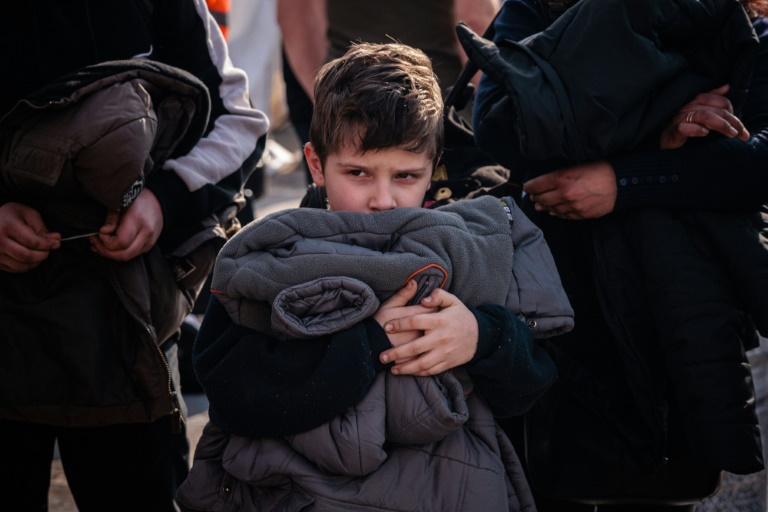
The war in Ukraine has killed thousands of people and displaced more than 13 million, creating the worst refugee crisis in Europe since World War II.

Western countries have responded by backing Ukraine with cash and increasingly heavy weaponry while imposing unprecedented sanctions against Russia.

US President Joe Biden on Tuesday framed the war as a historic battle for democracy in a speech to workers at a factory producing Javelin missiles, which have wreaked havoc on Russian tanks.

“These weapons touched by the hands, your hands, are in the hands of Ukrainian heroes, making a significant difference,” Biden said at the Lockheed Martin facility in Troy, Alabama.

Reprising one of his presidency’s core themes, Biden said the fight by democratic Ukraine against Putin’s Russia was a front in a wider contest between democracies and autocracies worldwide, including China.

Chinese leader Xi Jinping had told him that democracies can no longer “keep up,” Biden said.

Ukraine is the “first” battle to “to determine whether that’s going to happen,” he said.

British Prime Minister Boris Johnson on Tuesday pledged another 300 million pounds ($376 million, 358 million euros) in military aid, as he became the first foreign leader to address Ukraine’s parliament since the conflict began.

Speaking via video link, he evoked Britain’s fight against the Nazis in World War II in hailing Kyiv’s resistance as its “finest hour”, and vowed to help ensure “no one will ever dare to attack you again”.

– Deadly strikes –

Since abandoning early attempts to capture Ukraine’s capital Kyiv, Russian forces have shifted to the east, including largely Russian-speaking areas, and the south.

In the town of Lyman, Ukrainian soldiers told AFP they had rigged with explosives a railway bridge over the Donets river and were awaiting orders to blow it up.

“It’s never easy to destroy one of your own pieces of infrastructure. But between saving a bridge or protecting a city, there’s no question at all,” said one, going by the nom de guerre of “The Engineer”.

Russia’s defence ministry, meanwhile, said its forces had struck a logistics centre at a military airfield in the region around the Black Sea port of Odessa, used for the delivery of foreign-made weapons.

Storage facilities containing Turkey’s Bayraktar drones as well as missiles and ammunition from the United States and Europe had been destroyed, it said.

A rocket strike also knocked out power in part of Lviv, the western city near Poland that has turned into a haven for the displaced due to its comparative calm, Mayor Andriy Sadovy said on Twitter. 

Missiles also struck far to the country’s west in Transcarpathia, a region bordering Hungary that has largely been spared to date, Victor Mykyta, head of the local military administration, said. 

Ukrainian prosecutors say they have pinpointed more than 8,000 war crimes carried out by Russian troops and are investigating 10 Russian soldiers for suspected atrocities in the town of Bucha, near Kyiv.

But in a phone call with French President Emmanuel Macron on Tuesday, Putin accused Ukrainian forces of committing war crimes and claimed the EU was “ignoring” them, according to the Kremlin.

The United States warned Monday that Moscow was preparing imminently to annex the eastern regions of Lugansk and Donetsk, planning to “engineer referenda” to join Russia sometime in mid-May.

Pro-Russian separatists in the two regions declared independence in 2014, but Moscow has so far stopped short of formally incorporating them as it did that year with the Crimean peninsula. 

burs-ar-sct/cwl/qan

Close Bitnami banner
Bitnami