World

Russian forces press Ukraine offensive as EU weighs oil sanctions

Russian forces have launched a major assault on the holdout Azovstal steel plant in the devastated port city of Mariupol while pounding sites across eastern Ukraine, as the European Union moves to punish Moscow with oil sanctions.

Three months into the war, Moscow has focused its fresh offensive on Ukraine’s east and south, while Western allies continue to provide Kyiv with cash and weapons in a bid to force Russian leader Vladimir Putin to pull back.

In one of a series of assaults Tuesday, 21 civilians were killed and another 28 wounded in Ukraine’s eastern Donetsk region, local authorities said.

Regional governor Pavlo Kyrylenko said 10 of the 21 dead were killed in the shelling of the Avdiivka coke plant, one of Europe’s largest, calling it the highest daily death toll since a Russian strike on a train station in Kramatorsk about a month ago.

Ukrainian President Volodymyr Zelenksky, meanwhile, said more than 150 people had been successfully extracted in Mariupol evacuation operations. 

“Today, 156 people arrived in (the Ukrainian-held city) Zaporizhzhia. Women and children. They have been in shelters for more than two months,” Zelensky said in a daily address.

Further evacuations from the city were to take place Wednesday with the help of the United Nations and the Red Cross, a Mariupol mayoral adviser said.

But Osnat Lubrani, UN humanitarian coordinator for Ukraine, has warned there “may be more civilians who remain trapped” in the immense underground galleries of the Azovstal steelworks.

As Russia’s renewed campaign in eastern Ukraine intensified, EU officials on Tuesday handed a draft plan to member states on a new package of sanctions aimed at Moscow.

But several EU officials and European diplomats in Brussels told AFP there were divisions, with at least one member state jockeying to opt out of an oil embargo.

Ambassadors from the 27 European Union countries will meet Wednesday to give the plan a once-over, and it will need unanimous approval before going into effect.

– Civilians reach safety –

Azovstal evacuees who emerged from a caravan of white buses in Zaporizhzhia were met at a makeshift reception centre by crying loved ones and dozens of journalists.

“Under permanent fire, sleeping on improvised mats, being pounded by the blast waves, running with your son and being knocked to the ground by an explosion — everything was horrible,” evacuee Anna Zaitseva told reporters. 

“We are so thankful for everyone who helped us. There was a moment we lost hope, we thought everyone forgot about us,” Zaitseva said, holding her six-month-old baby in her arms.

Elyna Tsybulchenko, 54, who worked at the site doing quality control before the war trapped her there, described days and nights of endless barrages.

“They bombed like every second… everything was shaking. Dogs barked and children screamed,” she told AFP. “But the hardest moment was when we were told our bunker would not survive a direct hit.”

The Russian army confirmed its forces and pro-Moscow separatists were targeting Azovstal with artillery and planes in the wake of the evacuation, accusing members of Ukraine’s Azov battalion and other troops of using the pause in fighting to take up combat positions.

Mariupol was now largely calm elsewhere, AFP journalists saw on a recent press tour organised by Russian forces, with the remaining locals emerging from hiding to a ruined city.

– Battle for democracy –

The war in Ukraine has killed thousands of people and displaced more than 13 million, creating the worst refugee crisis in Europe since World War II.

Western countries have responded by backing Ukraine with cash and increasingly heavy weaponry while imposing unprecedented sanctions against Russia.

US President Joe Biden on Tuesday framed the war as a historic battle for democracy in a speech to workers at a factory producing Javelin missiles, which have wreaked havoc on Russian tanks.

“These weapons touched by the hands, your hands, are in the hands of Ukrainian heroes, making a significant difference,” Biden said at the Lockheed Martin facility in Troy, Alabama.

Reprising one of his presidency’s core themes, Biden said the fight by democratic Ukraine against Putin’s Russia was a front in a wider contest between democracies and autocracies worldwide, including China.

Chinese leader Xi Jinping had told him that democracies can no longer “keep up,” Biden said.

Ukraine is the “first” battle to “to determine whether that’s going to happen,” he said.

British Prime Minister Boris Johnson on Tuesday pledged another 300 million pounds ($376 million, 358 million euros) in military aid, as he became the first foreign leader to address Ukraine’s parliament since the conflict began.

Speaking via video link, he evoked Britain’s fight against the Nazis in World War II in hailing Kyiv’s resistance as its “finest hour”, and vowed to help ensure “no one will ever dare to attack you again”.

– Deadly strikes –

Since abandoning early attempts to capture Ukraine’s capital Kyiv, Russian forces have shifted to the east, including largely Russian-speaking areas, and the south.

In the town of Lyman, Ukrainian soldiers told AFP they had rigged with explosives a railway bridge over the Donets river and were awaiting orders to blow it up.

“It’s never easy to destroy one of your own pieces of infrastructure. But between saving a bridge or protecting a city, there’s no question at all,” said one, going by the nom de guerre of “The Engineer”.

Russia’s defence ministry, meanwhile, said its forces had struck a logistics centre at a military airfield in the region around the Black Sea port of Odessa, used for the delivery of foreign-made weapons.

Storage facilities containing Turkey’s Bayraktar drones as well as missiles and ammunition from the United States and Europe had been destroyed, it said.

A rocket strike also knocked out power in part of Lviv, the western city near Poland that has turned into a haven for the displaced due to its comparative calm, Mayor Andriy Sadovy said on Twitter. 

Missiles also struck far to the country’s west in Transcarpathia, a region bordering Hungary that has largely been spared to date, Victor Mykyta, head of the local military administration, said. 

Ukrainian prosecutors say they have pinpointed more than 8,000 war crimes carried out by Russian troops and are investigating 10 Russian soldiers for suspected atrocities in the town of Bucha, near Kyiv.

But in a phone call with French President Emmanuel Macron on Tuesday, Putin accused Ukrainian forces of committing war crimes and claimed the EU was “ignoring” them, according to the Kremlin.

The United States warned Monday that Moscow was preparing imminently to annex the eastern regions of Lugansk and Donetsk, planning to “engineer referenda” to join Russia sometime in mid-May.

Pro-Russian separatists in the two regions declared independence in 2014, but Moscow has so far stopped short of formally incorporating them as it did that year with the Crimean peninsula. 

burs-ar-sct/cwl/qan
NZ emergency agency cleared over deadly volcano eruption

A New Zealand judge on Wednesday cleared the nation’s emergency management agency of safety breaches related to the 2019 White Island volcano eruption, which claimed 22 lives.

Almost 50 people, mostly Australian tourists, were on the island, also known as Whakaari, when burning ash and steam blasted from a volcanic vent.

The eruption killed 22 people and injured 25 more, some of whom were left with horrific injuries.

The National Emergency Management Agency (NEMA) was among 13 parties charged with breaches of the Health and Safety at Work Act.

Regulator WorkSafe New Zealand said the agency had failed to properly communicate the risks of an eruption to landowners and the public.

But an Auckland District Court judge dismissed charges against the crown agency.

Lawyers for the agency successfully argued the charge was “wholly misconceived”.

Judge Evangelos Thomas agreed the agency could not be held accountable under New Zealand’s work health and safety legislation.

“NEMA did not carry out any work physically on Whakaari, it did not send workers to Whakaari, it never placed any person on Whakaari,” he said.

“Today’s hearing is not about whether NEMA did its job properly – it may have, it may not have. It is only about whether WorkSafe can use this particular law to prosecute NEMA.”

Eleven other parties have pleaded not guilty and will go to trial next year.

Last week, charter flight company Inflite admitted risk assessment failures.

The company was fined NZ$227,500 (US$147,000) and ordered to pay prosecution costs.

All in the family: Philippine dynasties tighten grip on power

If the son of former Philippine dictator Ferdinand Marcos wins the May 9 presidential election, he will not be the only Marcos currently in power — and will almost certainly not be the last.

Elite families have long ruled the poverty-ravaged nation, holding on to positions of power for generations by dishing out favours, buying votes or resorting to violence.

Analysts say the system has become more pervasive in the decades since a popular uprising deposed Marcos and forced his family into exile.

New dynasties have entrenched themselves in politics, smothering electoral competition, stunting economic development and worsening inequality.

“Power begets power — the more they stay in power, the more they accumulate power, the more powerful they get,” said Julio Teehankee, a professor at De La Salle University in Manila.

The archipelago has produced about 319 dynastic families, dating back to when the country was a US colony in the first half of the 20th century, Teehankee said.

Dozens have withered, but in 2019, members of at least 234 such families won positions in mid-term elections, he said.

They have flourished in a feudal and corrupt democracy where parties are weak, fragmented along clan lines and plagued by defections.

Power, however, is not static. Families can win and lose it — and make a comeback.   

After the fallen dictator died in 1989, the Marcoses returned to their traditional stronghold of Ilocos Norte and began tapping local loyalties to get elected to a succession of higher positions.

Ferdinand Marcos Jr, 64, is now on the verge of clinching the ultimate dynastic victory: the presidency. 

The family also wants to make a clean sweep of the top posts in its northern bastion.

– ‘This is all dynastic’ –

Launching their campaigns in the provincial capital Laoag, Marcos candidates stood together in front of a “Team Marcos” sign as thousands of supporters cheered. 

Marcos Jr’s eldest son is a first-time candidate, seeking one of two congressional seats in the windswept province of corn and tobacco farms. A cousin is defending the other. 

His nephew — the son of his sister Imee, a senator — is vying for re-election as governor, while a cousin’s widow is the incumbent vice-governor.

Marcos Jr told AFP the family was not a dynasty, but his cousin Michael Marcos Keon, seeking a second term as Laoag mayor, disagreed. 

“This is all dynastic,” said Keon, 67, who also served as governor after Marcos Jr hit the three-term limit — a tactic often used to keep positions in the family. 

“I wouldn’t be where I am today if I weren’t a Marcos.”  

– ‘Fat dynasties’ – 

The Marcoses’ stranglehold on power in Ilocos Norte was “typical” of provinces across the country, said Ronald Mendoza, dean of Manila’s Ateneo School of Government. 

And their influence is growing.

Eighty percent of governors belong to “fat dynasties” — clans with two or more members in power at the same time — compared with 57 percent in 2004, Mendoza said.

Political families held 67 percent of seats in the House of Representatives, compared with 48 percent in 2004, and 53 percent of mayoral posts, up from 40 percent.

Among the leading candidates for the 12 Senate seats being contested, at least three already have a relative in the chamber.

Even the party-list system, which seeks to give citizens from marginalised groups representation in Congress, has been largely taken over by a handful of surnames.

As his daughter leads the race for the country’s second-highest office, outgoing President Rodrigo Duterte said recently he had “accomplished” his job. 

“I have a daughter running for vice-president, a son for congressman and one other as mayor. I am fulfilled,” he said.

More than 18,000 posts are being contested in next month’s elections. At least 800 have only one candidate.

Mendoza said the pandemic had made it even more likely that incumbents would win. 

“You have more voters potentially vulnerable to vote-buying, more voters concerned about their continued access to social protection,” he said.

Mendoza said poverty tended to rise as dynasties fattened, especially in provinces beyond the main island of Luzon, where “checks and balances” on governance are weaker.

Handing out money to voters and using violence to intimidate — or eliminate — rivals are longstanding problems in Philippine elections, as some candidates resort to illegal methods to win.

– ‘Family is paramount’ –

While political dynasties exist in other countries, analysts said their prevalence in the Philippines was among the highest in the world.

Preparing the next generation for politics was essential to a clan’s survival, said analyst Mark Thompson, likening dynasties to football clubs.

“If you’re the Barcelona or PSG… of Philippine politics, why not get the next generation trained up as well,” said Thompson, director of the Southeast Asia Research Centre at the City University of Hong Kong.

Efforts to reduce such families’ influence have come to nothing, despite the country’s 1987 constitution mandating that Congress ban them.

“You cannot expect a house full of dynasties to pass an anti-dynasty legislation — it’s like asking Dracula to guard the blood bank,” said Teehankee.

Keon admitted the system was not democratic, and unlikely to change.

“This is how politics is here,” Keon said in his office, surrounded by photos of the Marcos clan, including the patriarch.

“Family is paramount.”

North Korea fires ballistic missile, Seoul says

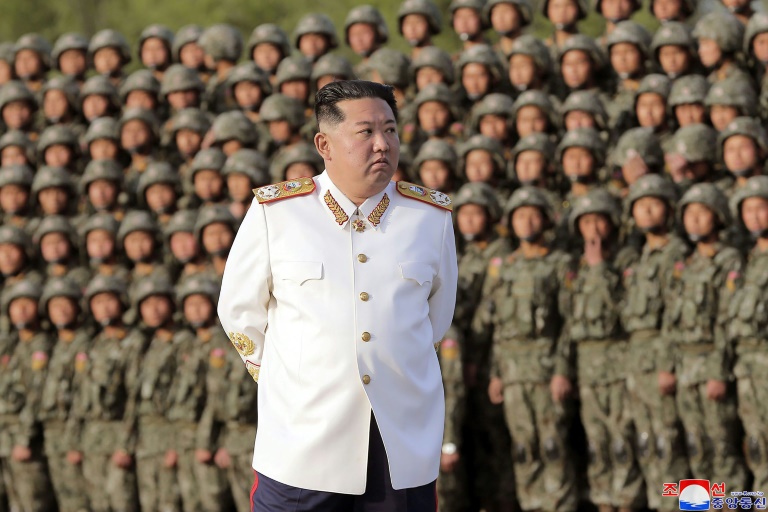
North Korea fired a ballistic missile on Wednesday, South Korea’s military said, just a week after leader Kim Jong Un vowed to boost Pyongyang’s nuclear arsenal at the “fastest possible speed”.

The launch was the latest in a string of sanctions-busting North Korean weapons tests so far this year, and came after US and South Korean officials warned Pyongyang was preparing to resume nuclear testing.

“One ballistic missile fired by North Korea today at 1203 (0303 GMT) from around Sunan towards the East Sea (Sea of Japan) was detected,” South Korea’s Joint Chiefs of Staff said in a statement.

“Currently, our military is maintaining readiness posture by tracking and monitoring related movements in preparation for additional launches.”

Japan’s Coast Guard also said that North Korea had launched “potentially a ballistic missile”.

The nuclear-armed state staged a dramatic return to long-range launches in March, test-firing at full range its most powerful intercontinental ballistic missile — which may be able to reach the continental United States.

Such tests had been paused while Kim met then-US President Donald Trump for a bout of diplomacy that collapsed in 2019.

Talks have stalled since, and despite biting sanctions, North Korea has doubled down on its military modernisation drive.

– More nukes? –

Kim Jong Un said at a military parade last week that he would take measures to develop “the nuclear forces of our state at the fastest possible speed”, according to footage of his speech broadcast on state media.

“The nuclear forces, the symbol of our national strength and the core of our military power, should be strengthened in terms of both quality and scale.”

Repeated negotiations aimed at convincing Kim to give up his nuclear weapons programmes have come to nothing.

“There is a good chance that they test-fired a missile that can be equipped with a nuclear warhead,” Ahn Chan-il, a North Korean studies scholar, told AFP.

Kim also warned that he could “pre-emptively” use his nuclear force to counter hostile forces at a meeting with top military brass last week.

The latest weapons test came just days before South Korea’s incoming president Yoon Suk-yeol, who has vowed a tougher stance on the North, takes office next week.

“It could be a warning message to… Yoon,” said Hong Min of the Korea Institute for National Unification.

Yoon has hinted he is only willing to talk about peace if North Korea confirms it is willing to denuclearise — something Pyongyang will never accept, Hong Min said.

“It could also signal Pyongyang’s stance that it has no choice but to further enhance its arsenal if Seoul and Washington decided to deploy strategic military assets to the South,” he added. 

US President Joe Biden is due to visit South Korea in May.

South Ukraine shows signs Russia has come to stay

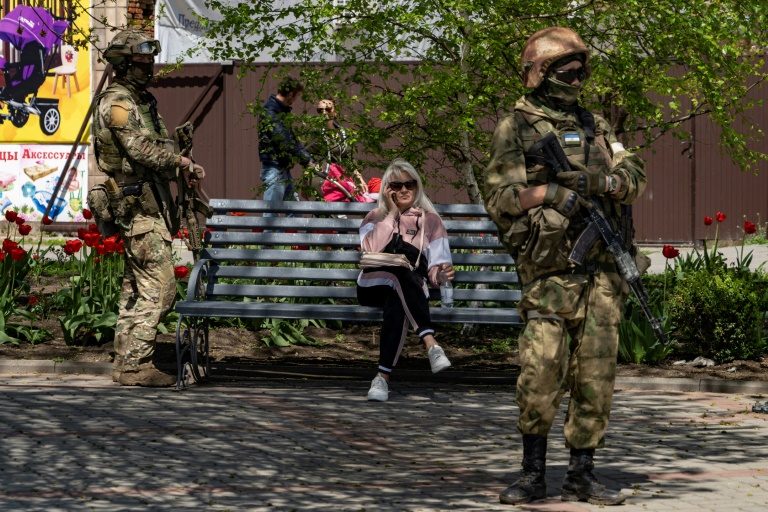
A Russian military plane was flying in the skies over Berdyansk, a city in southern Ukraine, but no one took much notice.

“Nothing to worry about,” said an older woman sitting on a bench in a small square on a sunny weekend afternoon. “It’s one of ours.”

Russian forces took control of this port city on the Sea of Azov in the first days of the military campaign they launched in Ukraine in late February, facing almost no resistance.

In the weeks since, it has been cut off from other parts of the country, as Moscow’s troops and pro-Russian separatists battle to seize swathes of eastern and southern Ukraine.

AFP journalists were able to travel to Berdyansk, as well as the city of Melitopol about 100 kilometres (60 miles) to the west, as part of a press tour organised by the Russian army.

Controlling the two cities is of vital strategic importance to Russia because, along with Mariupol to the east, they would form part of a land corridor linking Russian territory to Crimea, the Black Sea peninsula Moscow annexed from Ukraine in 2014.  

In both cities, Moscow has installed local administrations in charge of bringing back a semblance of normal life and — they openly admit — laying the groundwork for a future with Russia.

“We are in a transition phase, from Ukraine to Russia,” the head of the new administration in Berdyansk, Alexander Saulenko, told journalists in the city.

“We see our future with Russia.”

Some steps are already being taken, with plans in the works to start paying public sector salaries and pensions in Russian rubles instead of Ukrainian hryvnia. 

Short of funds to keep the city running, Saulenko said “we will turn to Russia for help”.

– ‘Divided city’ –

In Melitopol, a Communist banner was flying over the central Victory Square and Soviet-era patriotic songs blared out from the loudspeakers of a military truck.

Elsewhere in the city, it was the Russian tricolour flag on display.

AFP saw no traces of fighting or destruction in the two cities, a sharp contrast to the apocalyptic landscape of Mariupol only 70 kilometres (40 miles) east of Berdyansk.

“All the (Ukrainian) troops left the city” before the arrival of Russian forces, said Svetlana Klimova, a 38-year-old former petrol station worker in Berdyansk. 

“If they had stayed, it would have been like Mariupol.”

Several residents in the city expressed their relief at having escaped Mariupol’s fate, and some were enthusiastic about the Russian presence.

“When I heard (about the Russians’ arrival), I was so happy I had tears in my eyes,” said Valery Berdnik, a 72-year-old ex-dockworker with a big grey moustache.

He said other cities in Ukraine, like the southern regional capital Zaporizhzhia or Kharkiv in the northeast, “should become Russian”.

With Russian soldiers patrolling the streets and sometimes listening in on interviews, it was hard to imagine anyone expressing much opposition to Moscow’s presence. 

But there were signs that not everyone in Berdyansk shares Berdnik’s enthusiasm, with Saulenko admitting that the city’s population has fallen to between 60,000 and 70,000, from more than 100,000 a few months ago.

In Melitopol, “the city is divided”, said Elena, a 38-year-old schoolteacher walking the streets in a pair of big sunglasses, a cross-shaped earring in one ear. 

“There are some who are happy, and some who criticise the situation,” she said.

Melitopol’s mayor Ivan Fedorov was famously detained and held for several days by Russian forces in March, and eventually left the city.

Several demonstrations took place early on against the Russian presence, but they have now stopped, another Melitopol resident said.

– Skating and weddings –

Mariupol looms large in everyone’s minds here. Olga Chernenko, 50, is one of several thousand residents who fled the city for Berdyansk.

Chernenko escaped at the end of March and now lives in a former Communist youth centre, where the television in the common room is tuned to a Russian 24-hour news channel.

She hopes to “go home by the autumn” if Russian forces manage to take total control of Mariupol, and thinks Berdyansk did the right thing by “surrendering without a fight”.

“If we want to preserve lives, we cannot fight in the cities,” she said.

Berdyansk and Melitopol may appear calm, but the queues in front of banks and currency exchange offices were reminders that the situation is far from normal.

“There is no cash, the bank machines don’t work,” said Klimova, who hopes “Russia will help by paying benefits and pensions”.

Authorities in the two cities are keen to bring residents on side by returning as much normal life as possible.

In Melitopol, journalists were brought to the inauguration of a skating rink, where a few people skated briefly, then disappeared when the cameras were turned off.

In Berdyansk, it was the local marriage office, where weddings were again being celebrated, the first in a month. 

Suddenly two loud bangs erupted: fireworks exploded, throwing confetti into the air. No one blinked an eye.

Asian markets drift ahead of key Fed rate decision

Investors shifted cautiously in Asian trade Wednesday as they nervously awaited what is expected to be the biggest Federal Reserve interest rate hike in more than two decades.

With inflation showing little sign of easing from its 40-year highs, the US central bank has set itself on a hawkish course of tightening this year, sending shivers through world markets.

The prospect of higher borrowing costs has been compounded by a range of crises including the war in Ukraine, elevated oil prices and China’s Covid lockdowns that have strangled crucial global supply chains.

The Fed now has to walk a fine line between getting control of surging prices and making sure it does not knock the recovery in the world’s top economy off course.

“The Fed remains very focused on bringing inflation down, however, any further hawkish pivots will likely be tempered to some extent by the desire to achieve a soft landing,” said Blerina Uruci at T. Rowe Price.

The Fed is expected to announce a 50 percentage point lift Wednesday — its biggest since 2000 — but boss Jerome Powell’s post-meeting news conference will be closely watched for an idea about future hikes.

Speculation was swirling that 75 points could be on the table at some point this year.

“Powell will fall back to ‘we are not on pre-set rate hikes’ or something along those lines — ‘we go in with an open mind each meeting and will talk it over and we’ll see where we go from there’,” said Tony Farren, managing director at Mischler Financial Group.

“The market would take that as hawkish. For his comments to seem dovish, he’d have to shut down the talk of 75 basis points. And while I don’t think he’ll endorse it, I don’t think he’ll shut it down.”

After a broadly positive lead from Wall Street, Asian markets were mixed in holiday-thinned trade.

Hong Kong, Singapore and Manila slipped but Sydney, Seoul, Taipei and Wellington dropped.

Tokyo, Shanghai, Jakarta, Kuala Lumpur and Bangkok were closed.

Oil prices enjoyed gains after another drop on Tuesday fuelled by the expected hit to demand from China’s coronavirus lockdowns, including in the country’s biggest city Shanghai.

The measures have offset supply concerns caused by the Ukraine war and bans on imports of Russian fuel, even as the European Union discusses following US and British embargoes.

A huge release of crude from reserves by dozens of countries including the United States has also helped keep prices tempered.

Investors are waiting for a meeting Thursday of OPEC and other major producers including Russia, where they will discuss whether or not to lift output more than expected.

– Key figures at around 0230 GMT –

Hong Kong – Hang Seng Index: DOWN 0.8 percent at 20,943.01 

Tokyo – Nikkei 225: Closed for a holiday

Shanghai – Composite: Closed for a holiday

Euro/dollar: UP at $1.0528 from $1.0519 on Tuesday

Pound/dollar: UP at $1.2494 from $1.2491

Euro/pound: UP at 84.28 pence from 84.17 pence

Dollar/yen: DOWN at 130.09 yen from 130.14 yen

West Texas Intermediate: UP 1.0 percent at $103.43 per barrel

Brent North Sea crude: UP 0.9 percent at $105.93 per barrel

New York – Dow: UP 0.2 percent at 33,128.79 (close)

London – FTSE 100: UP 0.2 percent at 7,561.33 (close)

Adoration turns to anger towards crisis-hit Sri Lanka's ruling clan

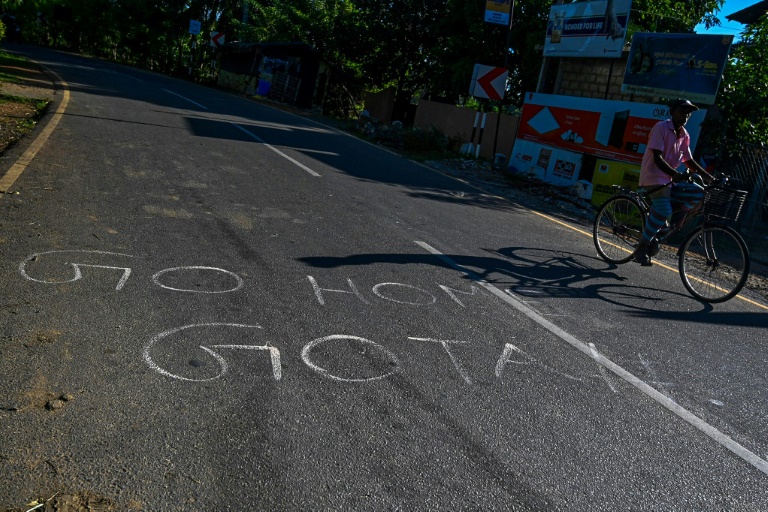
“Gota Go Home” — graffiti calling for President Gotabaya Rajapaksa to quit has appeared on the roads of Hambantota, the traditional stronghold of the family that dominates Sri Lankan politics.

That this could happen in a district where until recently people would jostle for a glimpse of the gilded dynasty is testament to how detested they have become over Sri Lanka’s dire economic crisis.

Sagara lives in Medamulana, a village in Hambantota where Prime Minister Mahinda Rajapaksa — brother of the president — has a house. 

The 32-year-old spends his evenings discussing with neighbours how they are going to survive the next day.

“If I travel to Colombo for work and tell people I am from Medamulana, I will probably get beaten up,” Sagara told AFP.

“(The Rajapaksas) have ruined the country. It’s over.”

Medamulana has a museum about the history of the family with black-and-white photos of the late D.A. Rajapaksa — a cabinet minister — and his wife, parents of nine children.

Charismatic second son Mahinda’s common touch with voters saw him serve as president for a decade from 2005-15, during which time he defeated the Tamil Tigers to end Sri Lanka’s civil war in 2009.

At the same time, he showered his home district with investment and jobs, constructing a new airport, a new deep-sea port, a state-of-the-art cricket stadium and much more.

– Flipside –

But his time in office had a dark side.

According to UN estimates, around 40,000 civilians died in the closing chapter of the war, herded into “no-fire zones” bombed by the Sri Lankan armed forces.

The Rajapaksas denied the toll and refused to allow an international probe.

At the same time, dozens of critics — ethnic Tamils and others — were picked up in unmarked white vans, never to be seen again. 

At least 14 journalists were murdered, according to Reporters Without Borders (RSF).

In charge of the security forces at the time was none other than Mahinda’s younger brother Gotabaya, the man elected president in 2019.

– Chinese debts –

Much of the infrastructure blitz in Hambantota — often named after the Rajapaksas — has now turned sour.

The Mahinda Rajapaksa International Cricket Stadium, miles from the nearest town, has hosted only a handful of matches. 

The Mattala Rajapaksa International Airport is almost devoid of flights. 

The government also borrowed heavily from China for many of the projects, swelling the country’s debts and raising Western and Indian alarm.

In 2017, Sri Lanka handed the port to China on a 99-year-lease saying it was unable to service a $1.4 billion loan from Beijing to build it. 

“We were very hopeful when the projects were announced. And this area did get better. But now it means nothing,” said Dinuka, another local.

“Our children too will continue paying off this debt… What is stopping the Chinese from taking over our farms and our produce?”

– Import ban –

The South Asian nation’s external debt, estimated to be around $51 billion, is the underlying cause of the current crisis.

Several months ago, the government banned many imports to halt outflows of the foreign currency needed to pay it down.

This has led to severe shortages and galloping inflation in the prices of essential goods including food, fuel and medicines, and failed to prevent a default.

Thousands of protestors have been camped outside the president’s office in Colombo for weeks demanding his resignation. 

Disappointment is also evident in Medamulana, where a road into the village has the banner “Welcome to the President’s village” at the entrance.

“Whatever we are going through right now does not affect how they (the Rajapaksas) live,” said Wimalasena, 57.

“But my grandchildren don’t even have milk powder.”

Aryasena, another villager, broke down in tears as he recounted his struggles to get food. But the 60-year-old, like others, still has adulation for Mahinda.

“Mahinda should take charge. He will fix this.”

Worst drought in decades devastates Ethiopia's nomads

There has hardly been a drop of rain in Hargududo in 18 months. Dried-up carcasses of goats, cows and donkeys litter the ground near the modest thatched huts in this small village in the Somali region of southeastern Ethiopia.

The worst drought to hit the Horn of Africa in decades is pushing 20 million people towards starvation, according to the UN, destroying an age-old way of life and leaving many children suffering from severe malnutrition as it rips families apart.

April is meant to be one of the wettest months of the year in this region. But the air in Hargududo is hot and dry and the earth dusty and barren.

Many of the animals belonging to the 200 semi-nomadic herder families in the village have perished. 

Those who had “300 goats before the drought have only 50 to 60 left. For some people… none have survived,” 52-year-old villager Hussein Habil told AFP.

The tragic story is playing out across whole swathes of southern Ethiopia and in neighbouring Kenya and Somalia.

In Ethiopia, the eyes of the world have largely focused on the humanitarian crisis in the north caused by the war between government forces and the Tigray People’s Liberation Front (TPLF) that has left nine million people in need of emergency food aid.

But the UN Office for the Coordination of Humanitarian Affairs (OCHA) estimates that up to 6.5 million people in Ethiopia — more than six percent of the population — are also severely food insecure because of drought.

Lack of rain has killed nearly 1.5 million head of livestock, around two-thirds of them in the Somali region, said OCHA, showing “how alarming the situation has become”. 

Herds provide the nomadic or semi-nomadic populations of this arid and hostile region with food and income as well as their savings.

But the surviving animals have deteriorated so much that their value has plummeted, reducing the buying power of the increasingly vulnerable households, OCHA warned.

– Society ‘disintegrating’ –

“We were pure nomads before this drought, depending on the animals for meat, milk” and money, said 50-year-old Tarik Muhamad, a herder from Hargududo, 50 kilometres (30 miles) from Gode, the main town in the Shabelle administrative zone. 

“But nowadays most of us are settling down in villages… There is no longer a future in pastoralism because there are no animals to be herded.”

An entire society is disintegrating as the loss of livestock threatens the herders’ very way of life: villagers forced to leave their homes to find work in the city, families divided, children neglected as their parents focus on trying to save their animals, essential for their survival.

“Our nomadic life is over,” Muhamad said bitterly.

The alternating dry and rainy seasons — a short one in March-April followed by a longer period between June and August — have always set the rhythm of herders’ lives.

“Before this catastrophic drought, we used to survive difficult times thanks to the grasses from earlier rains,” the herder said.

But none of the last three rainy seasons have come. And the fourth one, expected since March, is likely to fail too.

“We usually have droughts, it’s a cyclical thing… previously it used to be every 10 years but now it’s coming more frequently than before,” said Ali Nur Mohamed, 38, from British charity Save the Children.

– Even camels lose their humps –

In East Africa, the frequency of drought has doubled from once every six years to once every three since 2005, according to the latest UN Intergovernmental Panel on Climate Change (IPCC) report. 

“Several prolonged droughts have occurred predominantly within the arid and semi-arid parts of the region over the past three decades.”

As early as 2012, a study by US development agency USAID found that southern regions of Ethiopia were receiving 15 to 20 percent less rainfall than in the 1970s. And those areas that did get the 500 millimetres of annual rainfall needed for viable agriculture and livestock farming were shrinking. 

Drought will be high on the agenda of the UN Convention to Combat Desertification (UNCCD), which begins in Abidjan on Monday.

Herders trying to recover from a drought are being “hit by a second drought”, said Save the Children’s Mohamed. 

“So it makes it impossible for them to recover quickly from the previous shocks.” The droughts come “so close that these pastoralists are unable to be resilient.”

The herders AFP met in the Somali region say they have lost between 80 and 100 percent of their livestock. The few herds of cows or goats we spotted were emaciated.

Even many dromedaries have lost their humps, the vital stores of fat that enable them to survive for long periods without food. 

– ‘Walked for five days’ – 

Many herders have moved to camps that have sprung up to house the vast numbers of people displaced by what they describe as the worst drought they have ever seen. 

In the morning light in Adlale, not far from Gode, dozens of women in coloured veils emerge from clouds of ochre dust to collect emergency food aid distributed by the UN’s World Food Programme (WFP). 

“We walked for five days to come here,” said Habiba Hassan Khadid, a 47-year-old mother of 10. “All of our livestock perished because of the drought.”

Ahado Jees Hussein, 45, a widowed mother of seven, arrived in Adlale carrying her 15-year-old disabled son on her back. She tells a similar story of losing all her goats and pack donkeys.

“I have never before experienced such a drought,” she said. “I came here with nothing.”

About 2,700 families are living in the camp known as Farburo 2, which was set up three months ago. 

Small huts made of branches and patchworks of fabric provide some shelter from the searing heat, with temperatures close to 40 degrees Celsius (104 Fahrenheit). 

“The living conditions are alarming,” said camp coordinator Ali Mohamed Ali, as most of the families scrape by on what they get from relatives or from local residents.

– ‘Way of life can’t continue’ –

In his tiny hut, Abdi Kabe Adan, a sturdy and proud 50-year-old, weeps uncontrollably and prays to Allah for the rains to come.

“Before, rain fell elsewhere in the region, so we moved with our animals to watered pastures, even if it took several days. 

“But this time the drought is everywhere… Wells have run out of water, no pastures for animals to graze. I don’t think it’s possible for our way of life to continue,” he sobbed. 

“I have seen goats eating their own faeces, camels eating other camels. I have never seen that in my life.”

There are few men in the camp. Some have stayed with the last of the cattle in the hunt for elusive grass, but many have left in search of work in town.

Others have simply fled, unable to face the shame or the questions about the future from their anxious wives.

The drought has also damaged the social structure of these communities. 

“Before, the men had honoured chores like milking the animals, buying food and goods for the family. These roles have disappeared along with our livestock,” said Halima Harbi, a 40-year-old mother of nine. 

Solidarity in the face of diversity has given way to rivalry, she said. “When the water trucks arrive, the old and vulnerable receive nothing because competition is fierce.”

– ‘No time to care for children’ – 

Children are paying the highest price as the disaster worsens.

UNICEF executive director Catherine Russell said 10 million children across Ethiopia, Kenya, Somalia and Djibouti needed urgent life-saving support.

As well as a malnutrition crisis, “children are forced to drink contaminated water, putting them at risk of cholera and other killer diseases,” said Russell, who visited the Somali region last week. 

Another heartbreaking consequence of drought, she said, is an increase in child marriage “as families marry off their daughters in the hope they will be better fed and protected as well as to earn dowries.”

“People don’t even have time to look after their children,” said Ali Nur Mohamed of Save The Children.

“You can understand the magnitude of the problem… (when) a mother forgets to take her (sick) child to the nearest hospital … because she is preoccupied with her other children or trying to save her livestock.”

Save the Children staff do the rounds in the communities, identifying children at risk and taking them for treatment to health centres, such as the hospital in Gode.

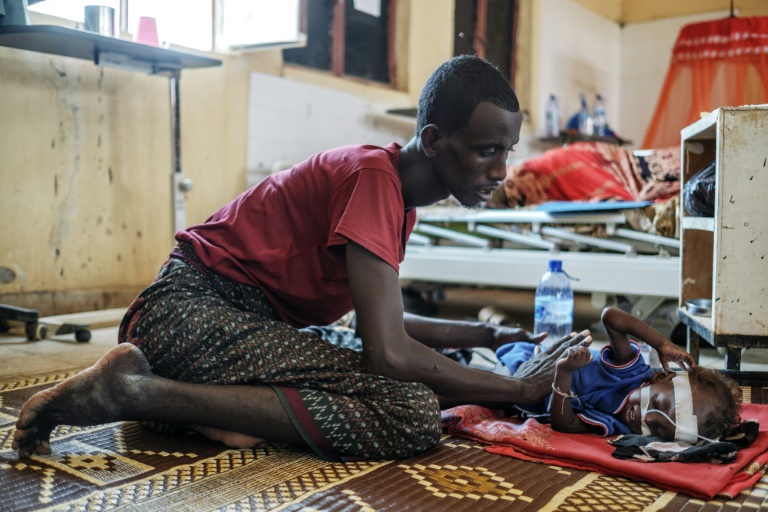
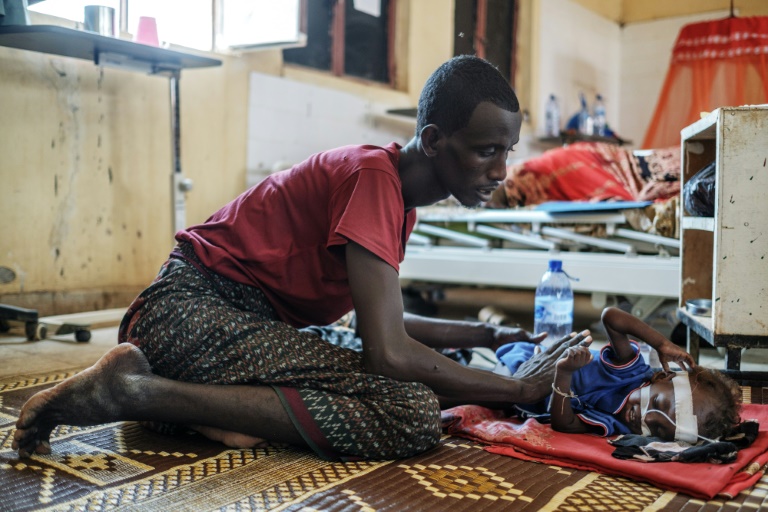
In the stifling air of the hospital’s nutrition unit, mothers sit on iron-framed beds, using their veils to try to keep themselves and their painfully thin children cool and repel the flies.

Hospital director Dr Mahamed Shafi Nur said children in the region are already on the verge of malnutrition, so if they get sick, they cross the danger line.   

Most are treated on an outpatient basis, given ready-to-eat peanut-based nutritional pastes. Those who suffer complications — about 15 percent — are hospitalised. 

Paediatrician Dr Mahamad Abdi Omar says mothers often find themselves alone with their offspring as the father hunts for food for their animals. So by the time they are able to bring a sick child to hospital, there are added complications.

– Heart-wrenching choices – 

Baby Samiya had been suffering from diarrhoea and vomiting for a week before her mother Rokiya Adan Mahad, 39, finally brought her into the clinic. 

Falis Hassen’s son has been suffering from canker sores for two months, preventing him from suckling. 

The 38-year-old said she came to the hospital without telling her husband. “He wouldn’t have let me leave, there is so much to do.”

Abdullahi Gorane’s son, his hair discoloured by malnutrition, had been suffering from diarrhoea and vomiting for weeks. 

“I was taking care of the livestock, I didn’t have time for my child,” said 30-year-old Abdullahi — the only father present — who decided to bring in his son only when the drought took most of his herd. 

Ahmed Nur, a health worker at the Kelafo clinic about 100 kilometres (60 miles) from Gode, said one of the issues is a lack of “exclusive breastfeeding” — mothers give their newborns water or sugar instead so the babies do not get enough milk.

But the situation has been aggravated by the drought.

“Every month, the number of malnourished kids is increasing,” he said.

Parents like Ayan Ibrahim Haroun, 45, are confronted with terrible choices: treating their child can mean risking the loss of their livestock.

She said her two-year-old daughter Sabirin Abdi had been sick for a month — constant coughing and swellings on her little body (a possible symptom of severe malnutrition) — when she finally resolved to bring her to Kelafo. 

“I had 10 goats, but I lost four in the 11 days I was at the hospital,” she said.

Worst drought in decades devastates Ethiopia's nomads

There has hardly been a drop of rain in Hargududo in 18 months. Dried-up carcasses of goats, cows and donkeys litter the ground near the modest thatched huts in this small village in the Somali region of southeastern Ethiopia.

The worst drought to hit the Horn of Africa in decades is pushing 20 million people towards starvation, according to the UN, destroying an age-old way of life and leaving many children suffering from severe malnutrition as it rips families apart.

April is meant to be one of the wettest months of the year in this region. But the air in Hargududo is hot and dry and the earth dusty and barren.

Many of the animals belonging to the 200 semi-nomadic herder families in the village have perished. 

Those who had “300 goats before the drought have only 50 to 60 left. For some people… none have survived,” 52-year-old villager Hussein Habil told AFP.

The tragic story is playing out across whole swathes of southern Ethiopia and in neighbouring Kenya and Somalia.

In Ethiopia, the eyes of the world have largely focused on the humanitarian crisis in the north caused by the war between government forces and the Tigray People’s Liberation Front (TPLF) that has left nine million people in need of emergency food aid.

But the UN Office for the Coordination of Humanitarian Affairs (OCHA) estimates that up to 6.5 million people in Ethiopia — more than six percent of the population — are also severely food insecure because of drought.

Lack of rain has killed nearly 1.5 million head of livestock, around two-thirds of them in the Somali region, said OCHA, showing “how alarming the situation has become”. 

Herds provide the nomadic or semi-nomadic populations of this arid and hostile region with food and income as well as their savings.

But the surviving animals have deteriorated so much that their value has plummeted, reducing the buying power of the increasingly vulnerable households, OCHA warned.

– Society ‘disintegrating’ –

“We were pure nomads before this drought, depending on the animals for meat, milk” and money, said 50-year-old Tarik Muhamad, a herder from Hargududo, 50 kilometres (30 miles) from Gode, the main town in the Shabelle administrative zone. 

“But nowadays most of us are settling down in villages… There is no longer a future in pastoralism because there are no animals to be herded.”

An entire society is disintegrating as the loss of livestock threatens the herders’ very way of life: villagers forced to leave their homes to find work in the city, families divided, children neglected as their parents focus on trying to save their animals, essential for their survival.

“Our nomadic life is over,” Muhamad said bitterly.

The alternating dry and rainy seasons — a short one in March-April followed by a longer period between June and August — have always set the rhythm of herders’ lives.

“Before this catastrophic drought, we used to survive difficult times thanks to the grasses from earlier rains,” the herder said.

But none of the last three rainy seasons have come. And the fourth one, expected since March, is likely to fail too.

“We usually have droughts, it’s a cyclical thing… previously it used to be every 10 years but now it’s coming more frequently than before,” said Ali Nur Mohamed, 38, from British charity Save the Children.

– Even camels lose their humps –

In East Africa, the frequency of drought has doubled from once every six years to once every three since 2005, according to the latest UN Intergovernmental Panel on Climate Change (IPCC) report. 

“Several prolonged droughts have occurred predominantly within the arid and semi-arid parts of the region over the past three decades.”

As early as 2012, a study by US development agency USAID found that southern regions of Ethiopia were receiving 15 to 20 percent less rainfall than in the 1970s. And those areas that did get the 500 millimetres of annual rainfall needed for viable agriculture and livestock farming were shrinking. 

Drought will be high on the agenda of the UN Convention to Combat Desertification (UNCCD), which begins in Abidjan on Monday.

Herders trying to recover from a drought are being “hit by a second drought”, said Save the Children’s Mohamed. 

“So it makes it impossible for them to recover quickly from the previous shocks.” The droughts come “so close that these pastoralists are unable to be resilient.”

The herders AFP met in the Somali region say they have lost between 80 and 100 percent of their livestock. The few herds of cows or goats we spotted were emaciated.

Even many dromedaries have lost their humps, the vital stores of fat that enable them to survive for long periods without food. 

– ‘Walked for five days’ – 

Many herders have moved to camps that have sprung up to house the vast numbers of people displaced by what they describe as the worst drought they have ever seen. 

In the morning light in Adlale, not far from Gode, dozens of women in coloured veils emerge from clouds of ochre dust to collect emergency food aid distributed by the UN’s World Food Programme (WFP). 

“We walked for five days to come here,” said Habiba Hassan Khadid, a 47-year-old mother of 10. “All of our livestock perished because of the drought.”

Ahado Jees Hussein, 45, a widowed mother of seven, arrived in Adlale carrying her 15-year-old disabled son on her back. She tells a similar story of losing all her goats and pack donkeys.

“I have never before experienced such a drought,” she said. “I came here with nothing.”

About 2,700 families are living in the camp known as Farburo 2, which was set up three months ago. 

Small huts made of branches and patchworks of fabric provide some shelter from the searing heat, with temperatures close to 40 degrees Celsius (104 Fahrenheit). 

“The living conditions are alarming,” said camp coordinator Ali Mohamed Ali, as most of the families scrape by on what they get from relatives or from local residents.

– ‘Way of life can’t continue’ –

In his tiny hut, Abdi Kabe Adan, a sturdy and proud 50-year-old, weeps uncontrollably and prays to Allah for the rains to come.

“Before, rain fell elsewhere in the region, so we moved with our animals to watered pastures, even if it took several days. 

“But this time the drought is everywhere… Wells have run out of water, no pastures for animals to graze. I don’t think it’s possible for our way of life to continue,” he sobbed. 

“I have seen goats eating their own faeces, camels eating other camels. I have never seen that in my life.”

There are few men in the camp. Some have stayed with the last of the cattle in the hunt for elusive grass, but many have left in search of work in town.

Others have simply fled, unable to face the shame or the questions about the future from their anxious wives.

The drought has also damaged the social structure of these communities. 

“Before, the men had honoured chores like milking the animals, buying food and goods for the family. These roles have disappeared along with our livestock,” said Halima Harbi, a 40-year-old mother of nine. 

Solidarity in the face of diversity has given way to rivalry, she said. “When the water trucks arrive, the old and vulnerable receive nothing because competition is fierce.”

– ‘No time to care for children’ – 

Children are paying the highest price as the disaster worsens.

UNICEF executive director Catherine Russell said 10 million children across Ethiopia, Kenya, Somalia and Djibouti needed urgent life-saving support.

As well as a malnutrition crisis, “children are forced to drink contaminated water, putting them at risk of cholera and other killer diseases,” said Russell, who visited the Somali region last week. 

Another heartbreaking consequence of drought, she said, is an increase in child marriage “as families marry off their daughters in the hope they will be better fed and protected as well as to earn dowries.”

“People don’t even have time to look after their children,” said Ali Nur Mohamed of Save The Children.

“You can understand the magnitude of the problem… (when) a mother forgets to take her (sick) child to the nearest hospital … because she is preoccupied with her other children or trying to save her livestock.”

Save the Children staff do the rounds in the communities, identifying children at risk and taking them for treatment to health centres, such as the hospital in Gode.

In the stifling air of the hospital’s nutrition unit, mothers sit on iron-framed beds, using their veils to try to keep themselves and their painfully thin children cool and repel the flies.

Hospital director Dr Mahamed Shafi Nur said children in the region are already on the verge of malnutrition, so if they get sick, they cross the danger line.   

Most are treated on an outpatient basis, given ready-to-eat peanut-based nutritional pastes. Those who suffer complications — about 15 percent — are hospitalised. 

Paediatrician Dr Mahamad Abdi Omar says mothers often find themselves alone with their offspring as the father hunts for food for their animals. So by the time they are able to bring a sick child to hospital, there are added complications.

– Heart-wrenching choices – 

Baby Samiya had been suffering from diarrhoea and vomiting for a week before her mother Rokiya Adan Mahad, 39, finally brought her into the clinic. 

Falis Hassen’s son has been suffering from canker sores for two months, preventing him from suckling. 

The 38-year-old said she came to the hospital without telling her husband. “He wouldn’t have let me leave, there is so much to do.”

Abdullahi Gorane’s son, his hair discoloured by malnutrition, had been suffering from diarrhoea and vomiting for weeks. 

“I was taking care of the livestock, I didn’t have time for my child,” said 30-year-old Abdullahi — the only father present — who decided to bring in his son only when the drought took most of his herd. 

Ahmed Nur, a health worker at the Kelafo clinic about 100 kilometres (60 miles) from Gode, said one of the issues is a lack of “exclusive breastfeeding” — mothers give their newborns water or sugar instead so the babies do not get enough milk.

But the situation has been aggravated by the drought.

“Every month, the number of malnourished kids is increasing,” he said.

Parents like Ayan Ibrahim Haroun, 45, are confronted with terrible choices: treating their child can mean risking the loss of their livestock.

She said her two-year-old daughter Sabirin Abdi had been sick for a month — constant coughing and swellings on her little body (a possible symptom of severe malnutrition) — when she finally resolved to bring her to Kelafo. 

“I had 10 goats, but I lost four in the 11 days I was at the hospital,” she said.

Supreme Court leak ignites US abortion firestorm

US President Joe Biden urged voters Tuesday to defend “fundamental” rights after a leaked Supreme Court draft ruling indicated the imminent end to nationwide legal abortion, long viewed as a basic freedom by tens of millions of Americans.

If the draft ruling is confirmed by the court, it would overturn the 1973 Roe v. Wade decision, which enshrined abortion rights across the country. Instantly, abortion laws would be left up to individual state legislatures, with as many as half expected to enact bans or new restrictions.

For many women, the potential loss of abortion rights across swaths of the United States raises the prospect of being forced to travel hundreds of miles for the procedure or giving birth in traumatic circumstances.

Outside the Supreme Court building in the heart of Washington, more than a thousand protesters on both sides of the hotly-debated issue gathered Tuesday.

“It’s an obscene invasion of women’s privacy and their abilities to decide what to do with their own bodies,” Adriane Busby, a 40-year-old political analyst, told AFP.

“I didn’t think that we would have to be here in 2022, debating, protesting this. It’s a regression,” the Washington resident said.

Republicans have pushed hard for years to overturn Roe, and it became only a matter of time after three conservative justices were appointed under former president Donald Trump, shifting the Supreme Court’s political balance sharply to the right.

The leaked ruling’s publication late Monday by the US news site Politico thrust the intensely divisive issue to the center of the November congressional midterms elections, potentially opening a path for beleaguered Democrats to stem expected losses.

Biden, whose Democrats have been forecast to lose their already narrow control of Congress, issued a rallying cry to the left, warning that restricting abortion rights will be only the beginning.

“I believe that a woman’s right to choose is fundamental… and basic fairness and the stability of our law demand that it not be overturned,” Biden said in a written statement.

“It will fall on voters to elect” officials who back abortion rights, he said, vowing to work to pass legislation in Congress that codifies Roe v. Wade — a goal impossible to achieve unless far more Democrats win seats.

Speaking later to reporters, Biden went further, calling the draft ruling “radical” and warning of a “fundamental shift in American jurisprudence” that could put into question the future of gay marriage and “how you raise your child.”

In New York, a liberal bastion, thousands of protesters rallied outside a federal courthouse in Manhattan chanting “Abortion is a human right, fight fight fight.”

“You can only ban safe abortion. You cannot prevent women from taking their own reproductive choices out of their own hands. That’s a fantasy,” said Kaytlin Bailey, 35.

– ‘Roe v. Wade is going to go!’ –

The leak of the draft ruling was unprecedented, knocking another hole in the once hallowed reputation of the top court as the one apolitical branch in the US government.

Chief Justice John Roberts confirmed that the document released by Politico was authentic, although he cautioned that this did not necessarily represent the court’s final decision. Roberts ordered a probe into the leak.

Earlier Tuesday, crowds of protesters from both camps descended on the Supreme Court building, with anti-abortion rights activists chanting “abortion is violence. Abortion is oppression” as well as “Hey Hey Ho Ho Roe v. Wade is going to go!”

But by the evening, it was mostly pro-abortion rights activists.

“Women will die, they already do,” warned Victoria Lord, a 61-year-old historian, grimly.

“People with less economic means will be the most impacted by this decision,” said Michaela Palmer, 29, who held a sign that said “My uterus not yours.”

“People who are privileged will find others means to have an abortion, they will travel to other states,” the energy consultant told AFP.

In Roe v. Wade, the court ruled that access to abortion is a constitutional right. In a subsequent 1992 ruling, Planned Parenthood v. Casey, the court guaranteed a woman’s right to an abortion until the fetus is viable outside the womb, which is typically around 22 to 24 weeks of gestation.

Most developed countries allow abortions on request up to a gestational limit, most often 12 weeks. 

Roe v. Wade makes the United States one of a handful of nations to allow the procedure without restriction beyond 20 weeks of pregnancy — although many others allow it past that point for specific reasons.

The court had been expected to decide this June on challenges to Roe v. Wade.

The Republican National Committee said it was time for abortion decisions to revert to state governments.

“The far left wants unelected judges to impose a radical, one-size fits all abortion policy, leaving Americans without a voice,” it said.

The governor of Oklahoma marked the day by signing a highly restrictive law banning abortions after approximately six weeks of pregnancy — with no exceptions for cases of rape or incest — matching a Texas law enacted last year.

The laws are being challenged in court.

– ‘Wrong from the start’ –

The draft Supreme Court opinion was written by Justice Samuel Alito and, according to Politico, has been circulating since February inside the court — now dominated 6-3 by conservatives.

It calls the Roe v. Wade decision “egregiously wrong from the start.”

“We hold that Roe and Casey must be overruled,” Alito writes in the document, labeled the “Opinion of the Court.”

“It is time to heed the Constitution and return the issue of abortion to the people’s elected representatives.”

The Guttmacher Institute, which backs abortion rights, has said 26 states are “certain or likely” to ban abortion if Roe v. Wade is overturned.

Close Bitnami banner
Bitnami