World

Russia steps up Ukraine fight as more Mariupol evacuations expected

Fighting raged in the critical port city of Odessa and across Ukraine’s east as fresh evacuations of civilians from war-ravaged Mariupol were expected Tuesday.

The United States was warning that Moscow was preparing to formally annex regions in the country’s east, while the European Union told member states to brace for a complete breakdown in Russian gas supplies as it prepared a new package sanctions.

Russia’s Foreign Minister Sergei Lavrov meanwhile sparked outrage by alleging Adolf Hitler may have “had Jewish blood”, invoking a conspiracy theory in a bid to discredit Ukraine’s President Volodymyr Zelensky — who is of Jewish ancestry.

Israel — which has sought to keep a delicate balance between the two sides since Russia’s invasion of Ukraine — condemned the remarks and summoned Moscow’s ambassador. 

Zelensky also slammed Lavrov’s remarks as “anti-Semitic”, and said they showed Russia had “forgotten all the lessons of World War II”.

“It is no coincidence that they are waging a so-called total war to destroy all living things, after which only the burned ruins of entire cities and villages remain,” he added.

– Shift in strategy –

The war has seen Moscow, after failing to take the capital Kyiv, shift its two-month-old invasion to largely Russian-speaking areas and step up pressure on Odessa, a cultural hub that is a crucial port on the Black Sea.

Odessa’s city council said that a Russian strike hit a residential building housing five people.

A 15-year-old boy was killed and a girl was hospitalised, the council said on Telegram.

“What did these children… threaten the Russian state with? And that’s how they fight. That’s all,” Zelensky said in his video address.

Russia’s invasion has killed thousands of people and displaced more than 13 million people in a war the scale of which has not been seen in Europe for generations.

Among the most battered cities is Mariupol, where an untold number have died and survivors have little access to food, water and medicine as Russia battles to connect the southern and eastern strips of land under its control.

Kyiv said more than 100 civilians were evacuated over the weekend from the sprawling Azovstal steel plant, the last holdout of Ukrainian forces in Mariupol, where soldiers and civilians have been sheltering in a maze of underground tunnels.

Sviatoslav Palamar, deputy commander of Ukraine’s Azov unit, said that another 20 people were transferred out on Monday evening, but only after a five-hour delay as “the enemy’s artillery caused new rubble and destruction.”

And Mariupol’s city council said evacuations would restart at 7:00 am local time (0400 GMT) on Tuesday.

Ukraine and Russia have been coordinating civilian evacuations with United Nations agencies and the International Committee of the Red Cross.

Ukrainian forces have recaptured some territory in recent days, including the village of Ruska Lozova, which evacuees said had been occupied for two months.

“It was two months of terrible fear. Nothing else, a terrible and relentless fear,” Natalia, a 28-year-old evacuee from Ruska Lozova, told AFP after reaching Kharkiv, Ukraine’s second biggest city.

But Kyiv has admitted that Russian forces have captured a string of villages in the east and has asked Western powers to deliver more heavy weapons to bolster its defences there.

Ukraine’s defence ministry said Monday that its drones had sunk two Russian patrol boats near the Black Sea’s Snake Island, which became a symbol of Ukrainian resistance after soldiers there rebuffed Russian demands to surrender.

– ‘Sham referenda’ –

The fresh onslaught came as the United States warned that Moscow was preparing imminently to annex both Lugansk and neighbouring Donetsk.

Pro-Russian separatists in the two regions declared independence in 2014, but Moscow has so far stopped short of formally incorporating them as it did that year with the Crimean peninsula.

“Russia plans to engineer referenda upon joining sometime in mid-May,” said Michael Carpenter, the US ambassador to the Organisation for Security and Co-operation in Europe.

He said that Russia was considering a similar plan in a third region, Kherson, where Moscow has recently solidified control and imposed use of its ruble currency.

“We think the reports are highly credible,” Carpenter told reporters in Washington.

As with Crimea, he vowed that the international community would not support Russian-dictated changes to Ukraine’s borders.

“Such sham referenda — fabricated votes — will not be considered legitimate, nor will any attempts to annex additional Ukrainian territory,” Carpenter said.

“But we have to act with a sense of urgency.”

– Bracing for new sanctions –

Western powers have levelled unprecedented sanctions against Russia over the war while delivering money and weapons to Ukraine, including a $33 billion (31 billion euro) arms and support package announced by US President Joe Biden last week.

The European Commission will on Tuesday propose a new package of measures, including an embargo on Russian oil, officials said.

And British Prime Minister Boris Johnson will announce another £300 million ($376 million, 358 million euros) in military aid for Kyiv, his office said.

In a remote address to Ukraine’s parliament — the first by a foreign leader to the Verkhovna Rada since Russia invaded on February 24 — Johnson is set to hail the country’s resistance as its “finest hour”.

After talks on Monday, the European Union warned member states to prepare for a possible complete breakdown in gas supplies from Russia, insisting it would not cede to Moscow’s demand that imports be paid for in rubles.

Germany, Europe’s largest economy, was heavily dependent on Russian gas prior to the war, but European views quickly hardened after the invasion.

EU and French officials said the 27-member bloc was united with Poland and Bulgaria, whose gas supplies were cut last week after they refused to pay in rubles.

Western nations have been trying to show support by reopening embassies in Kyiv that were closed due to the invasion, with Denmark the latest to make the move Monday.

Kristina Kvien, the US charge d’affaires, announced in the western city of Lviv that Washington hopes to have diplomats back in Kyiv by the end of May.

burs-oho/ser

Japan's 'womenomics' pioneer says mindsets must change

Three million women joined Japan’s workforce in the past decade, and it’s at least partly thanks to top executive Kathy Matsui, who coined the “womenomics” catchphrase that inspired government policy.

But with many women holding precarious part-time jobs, often in sectors hit hard by Covid-19, she says the world’s third largest economy must try harder to tap underused talent.

That means chipping away at managers’ sexist attitudes and challenging Japan’s long-hours work culture, as well as encouraging start-ups with “more diverse founders”.

“We have a very low ratio of female entrepreneurs in this country,” Matsui, the former vice-president of US investment bank Goldman Sachs in Japan, told AFP.

“But if you want to be driving your own destiny, becoming an entrepreneur is one of the best ways to do that.”

Matsui, 57, is one of the few women at the top of Japan’s male-dominated business world, as co-director of a firm founded last year that invests in ethically minded young companies.

The Japanese-American was at Goldman Sachs in 1999 when she began publishing studies on the economic benefits of boosting female participation in the Japanese workforce, which she dubbed “womenomics”.

To her surprise, the ideas were adopted by former prime minister Shinzo Abe in 2012 as part of his signature plan to revive the ailing Japanese economy.

Since then, the proportion of women in Japan who work has risen from 60 percent to over 70 percent, equivalent to around three million people, according to OECD figures.

But even now, only 15 percent of managers at Japanese companies are women, compared to around 40 percent in the United States.

– Pandemic problems –

“Trying to change the mindset and behaviour of very established organisations… is not impossible, but it just takes a long time,” unlike start-ups which can be more flexible, Matsui said.

Recent progress has been so slow that Japan’s government was forced to postpone its 30-percent target for women in management positions by a whole decade in 2020.

And like in other countries, the Covid crisis has not helped.

Worldwide, women were more likely than men to report a loss of employment in the pandemic’s first 18 months, according to a University of Washington study published this year in the Lancet that analysed data from 193 countries.

In Japan, many women juggle looking after children or elderly relatives while working part-time, often in the Covid-hit service industries, Matsui said.

She thinks helping women into full-time roles where they are more likely to be promoted is not just the government’s responsibility, but also that of managers.

Evaluations should be “much more focused on output and performance, as opposed to the time factor”, and managers should undergo training to tackle prejudices.

“A lot of times I come across women who are passed over for promotion, because they just got married” and their boss doesn’t want to “risk” them taking maternity leave, she said.

And it’s urgent — as Japan’s rapidly ageing population causes its workforce to shrink, “the fastest thing you can do is try to tap into the talent that is staring you in the face.”

– New perspectives –

Matsui grew up in California as the daughter of Japanese immigrants who ran a flower-growing business, which taught her the “value of work”.

She studied at Harvard, where she majored in social studies. After graduation, she won a scholarship to study in Japan — her first time in her parents’ home country — and stayed to build a career in finance.

Her “womenomics” argument struck a chord with ministers because it offered a new perspective on the benefits of equality, she believes.

As well as targets and requirements for large companies to disclose data on gender balance, Matsui has also seen a shift in how the issue is viewed in Japan, from a niche issue to a “daily topic of conversation”.

But she remains committed to her original principles of crunching data and finding solutions, rather than just talking about the problems faced by women in the workforce.

“You cannot manage what you don’t measure,” she said.

Now, as co-director of the venture capital company MPower Partners, which invests in businesses that prioritise environmental, social and corporate governance (ESG), Matsui wants to grow Japan’s relatively small start-up scene.

“Part of why it’s so small is because there’s not enough diversity, or because (the companies) don’t think globally enough. Those are two angles where we at MPower really want to help change,” she said.

But firms seeking investment should beware of resorting to superficial tactics like so-called greenwashing: “We’re not so interested in companies just trying to tick the box.”

Most Asian markets drop as traders brace for Fed hike

Asia stocks mostly fell Tuesday as markets brace for a sharp US interest rate hike and similar moves by other central banks as they struggle to control inflation, with traders increasingly worried about another possible recession.

Surging prices, moves to tighten monetary policy, China’s Covid lockdowns, the Ukraine war and a stronger dollar have come together in recent weeks to cause a massive headache for investors, sending them running to the hills.

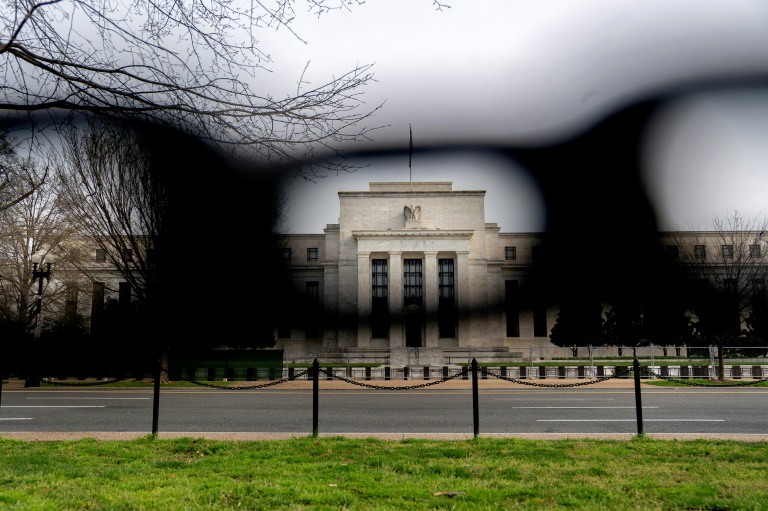
All eyes are on the conclusion Wednesday of the Federal Reserve’s two-day policy meeting, where it is expected to lift borrowing costs 0.5 percentage points for the first time since 2000.

However, while officials see a hawkish move as necessary to control 40-year high inflation while still allowing for economic growth, there is a growing unease that they could knock the fragile pandemic recovery off course and even cause a recession.

Meanwhile, the policy board is also expected to discuss offloading the trillions of dollars worth of bonds bought to help keep prices subdued in the past, a move known as quantitative easing.

“With a 50 basis point hike… all but certain, the (post meeting) press conference will provide important colour around the prospects of a soft landing, the neutral fed funds rate and balance sheet normalisation,” said SPI Asset Management’s Stephen Innes.

“One question on everyone’s mind: Are 75 basis point increments on the table?”

Forecasts for a swift run-up in rates this year have hammered tech firms who are reliant on debt to fund growth, though dup-buying helped them record a much-needed gain Monday in New York.

However, Asian traders were unable to track the positive lead with liquidity thinned out by public holidays around the region.

Hong Kong returned from a long weekend break to lead the retreat, shedding more than two percent at one point before paring those losses, following a more than four percent surge Friday.

Sydney also fell ahead of an expected interest rate hike by the Reserve Bank of Australia later in the day, while Taipei and Wellington were also down. Still, Seoul edged up slightly.

Tokyo, Shanghai, Mumbai, Singapore and Jakarta were closed.

Investors are also reeling from a sharp slowdown in Chinese activity caused by lockdowns in key parts of the country including financial hub Shanghai, and strict containment in Beijing.

The measures, and leaders’ refusal to shift from their zero-Covid policy, have hamstrung the world’s number two economy and figures in other countries including the United States suggest they are now having a global impact.

The strife in China continues to weigh on oil prices owing to fears about the impact on demand from the biggest crude importer.

That has offset bets on a European Union ban on 

Oil prices edged up as European Union chiefs discuss a possible embargo on shipments from Russia linked to its invasion of Ukraine.

A sanctions plan is being put together by the European Commission that could be put to member states Wednesday, sources, adding that the ban would be introduced over six to eight months to give countries time to diversify their supply.

– Key figures at around 0220 GMT –

Hong Kong – Hang Seng Index: DOWN 0.5 percent at 20,980.03

Tokyo – Nikkei 225: Closed for a holiday

Shanghai – Composite: Closed for a holiday

Euro/dollar: UP at $1.0524 from $1.0506 on Monday

Pound/dollar: UP at $1.2521 from $1.2489

Euro/pound: DOWN at 84.05 pence from 84.09 pence

Dollar/yen: DOWN at 130.05 yen from 130.16 yen

West Texas Intermediate: UP 0.3 percent at $105.46 per barrel

Brent North Sea crude: UP 0.3 percent at $107.90 per barrel

New York – Dow: UP 0.3 percent at 33,061.50 (close)

London – FTSE 100: Closed for a holiday

Iranian oil minister meets Venezuela's President Maduro in Caracas

Iran’s oil minister has paid an official visit to ally Venezuela to meet President Nicolas Maduro and discuss ways to “overcome” the effects of US sanctions against both nations, officials said. 

“I received His Excellency Javad Owji, Oil Minister of the sister Islamic Republic of Iran,” Maduro said on Twitter, calling it a “a productive meeting to deepen the ties of brotherhood and cooperation in energy matters.” 

State television showed images of the meeting at the presidential palace in Miraflores.

Earlier Owji met his counterpart Tareck El Aissami to discuss “the construction of routes and mechanisms to overcome the unilateral coercive measures imposed by the United States government and allied countries,” according to a statement from the Venezuelan Oil Ministry.

Javad Owji’s visit to Venezuela, which sits on the world’s largest proven reserves of crude, came just weeks after a visit by United States officials in the midst of rising global oil prices due to the war on Ukraine.

In March, a US delegation held a hushed meeting with Maduro, whose very legitimacy as president Washington disputes.

Iran is a major oil producer and said last month that production capacity was back to levels before the reimposition of US sanctions in 2018.

El Aissami, named a narcotics “kingpin” by the United States which has placed him on a most-wanted fugitives list, posted a video on Instagram Monday of him receiving Owji at his office with a handshake.

Bilateral ties between the two oil producers were strong under the reign of socialist leader Hugo Chavez (1999-2013) and bolstered further under his successor Maduro.

Venezuela, under strict US sanctions that it blames for the collapse of its once-flourishing oil industry, has strong allies in Iran, Russia and China.

In 2020, Venezuela received two shiploads of fuel and derivatives from Iran to help address crippling domestic shortages. Just a few years earlier, it was still the United States’ main supplier.

Also in 2020, on a visit to Caracas, Iranian Foreign Minister Mohammad Javad Zarif said his country would remain on Venezuela’s “side.” 

The March meeting with Maduro caused questions to be raised in Washington, prompting the White House to clarify it was not in “active conversation” with Venezuela on oil imports.

Leaked draft shows US court set to strike down abortion rights: Politico

The Supreme Court may be poised to strike down the right to abortion in the United States, US media reported Monday, citing a leaked draft of a majority opinion that would represent a staggering blow to women’s rights.

The draft, obtained by Politico, was written by Justice Samuel Alito and has been circulated inside the conservative-dominated court, the news outlet reported.

The draft opinion calls the landmark 1973 Roe v Wade decision enshrining the right to abortion “egregiously wrong from the start.”

“We hold that Roe and Casey must be overruled,” Alito writes in the document, labeled as the “Opinion of the Court” and published on Politico’s website. “It is time to heed the Constitution and return the issue of abortion to the people’s elected representatives.”

Reproductive rights have been increasingly under threat in the United States in recent months as states have moved to tighten restrictions.

Right-wing politicians have launched an assault on abortion, with Democrats, led by President Joe Biden, fighting back to protect access to the procedure.

In December, hearing oral arguments about a Mississippi law that would ban most abortions after 15 weeks, the Supreme Court’s conservative majority appeared inclined to not only uphold the law but to toss out Roe v. Wade.

The nine-member court, dominated by conservatives following the nomination of three justices by former president Donald Trump, is expected to issue a decision in the Mississippi case by June.

Politico stressed that the document it obtained is a  draft and opinions could change until then. 

The Guttmacher Institute, a pro-choice research group, has said that 26 states are “certain or likely” to ban abortion if the Roe is overturned.

Israel slams Russian claims on Hitler over Ukraine war

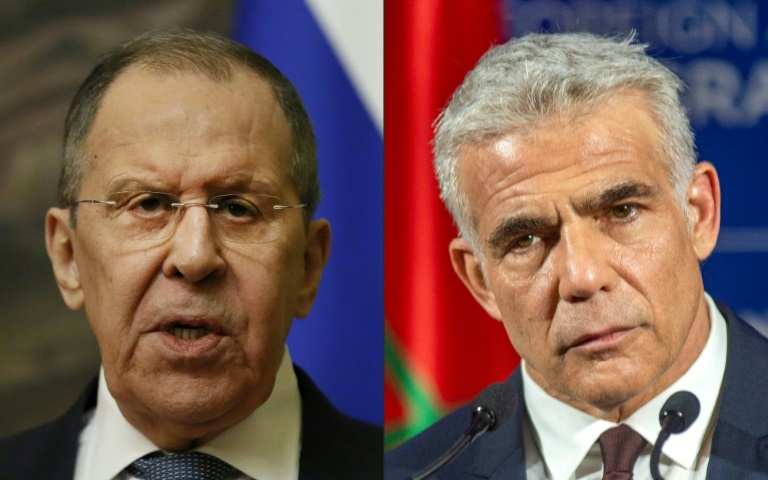
Israeli Foreign Minister Yair Lapid on Monday slammed his Russian counterpart Sergei Lavrov for alleging Adolf Hitler may have “had Jewish blood” and summoned Moscow’s ambassador for “clarifications”.

Since Russia’s invasion of Ukraine on February 24, Israel has sought to keep a delicate balance between the two sides, but remarks by Lavrov to an Italian channel sparked anger in Israel.

Moscow has previously said it wants to “de-militarise” and “de-Nazify” Ukraine.

Lavrov, speaking to Italian outlet Mediaset’s Rete 4 channel in an interview released Sunday, claimed that Ukrainian President Volodymyr Zelensky “puts forward an argument of what kind of Nazism can they have if he himself is Jewish”.

Lavrov, according to a transcript posted on the Russian foreign ministry website, then added: “I could be wrong, but Hitler also had Jewish blood”.

Lapid condemned the remarks as “an unforgivable and outrageous statement as well as a terrible historical error”, in a statement from the foreign ministry. 

“Jews did not murder themselves in the Holocaust,” he said. “The lowest level of racism against Jews is to accuse Jews themselves of antisemitism.”

The Russian Ambassador to Israel has been summoned for a “clarification meeting”, the statement added.

Prime Minister Naftali Bennett also denounced Lavrov’s “lies” that he said effectively “accuse the Jews themselves of the most awful crimes in history”, perpetrated against themselves.

“No war in our time is like the Holocaust or is comparable to the Holocaust,” Bennett said in a statement. “The use of the Holocaust of the Jewish people as a political tool must cease immediately.”

Dani Dayan, director of Yad Vashem, the World Holocaust Remembrance Center in Israel, also criticised Lavrov’s comments as “unfounded, delusional and dangerous remarks which deserve to be condemned”.

– ‘No words’ –

Zelensky, who himself drew criticism from some Israeli officials in March for comparing Russian aggression in Ukraine to the Holocaust, addressed Lavrov’s comments in his nightly address on Tuesday. 

“These words mean that Russia’s top diplomat is blaming the Jewish people for Nazi crimes,” he said. “No words.”

Zelensky has previously called on Israel to “make a choice” by supporting Ukraine against Russia and has asked the Jewish state to provide weapons.

Israel has provided helmets and bulletproof vests to Ukrainian rescue workers, but has not recently supplied the country with weapons, Israeli officials say.

Bennett in particular has walked a careful diplomatic line since the invasion, stressing Israel’s strong ties to both Moscow and Kyiv. 

He has sought to preserve delicate security cooperation with Russia, which has troops in Syria, across Israel’s northern border.

“The question is will the Israeli ambassador stay in Moscow knowing their new position?” said Zelensky in his Tuesday address. 

“Will relations with Russia remain as usual? Because (Lavrov’s remarks are) not accidental.” 

Ukrainian Foreign Minister Dmytro Kuleba said in a tweet that Lavrov’s comments illustrate “deeply rooted antisemitism of the Russian elites”.

“They demonstrate that today’s Russia is full of hatred towards other nations,” he wrote.

– ‘Cruelly deranged’ –

The United States, which has led international support for Ukraine, called Kyiv “a valued partner” against antisemitism.

“To invoke the lie of ‘denazification’ in Ukraine, a country with a Jewish president and a significant Jewish population living in peace among their fellow citizens, is baseless and cruelly deranged,” the office of the State Department envoy on combatting antisemitism wrote on Twitter.

“It is incumbent on the world to speak out against such vile, dangerous rhetoric and support our Ukrainian partners in the face of the Kremlin’s vicious assault,” US Secretary of State Antony Blinken tweeted later. 

In Berlin, German government spokesman Steffen Hebestreit told reporters: “I think the Russian propaganda being spread here by Foreign Minister Lavrov needs no comment -– it’s absurd”.

Italy’s Prime Minister Mario Draghi condemned Lavrov’s remarks as “truly obscene”.

New York Amazon workers deal setback to union drive

Workers at an Amazon facility in New York have roundly voted against unionization — dealing a setback to a burgeoning organized labor movement one month after a landmark win at a nearby warehouse.

Sixty-two percent of workers at the Staten Island facility opposed the union push, with 618 employees voting no and 380 in support, according to results released Monday by US officials.

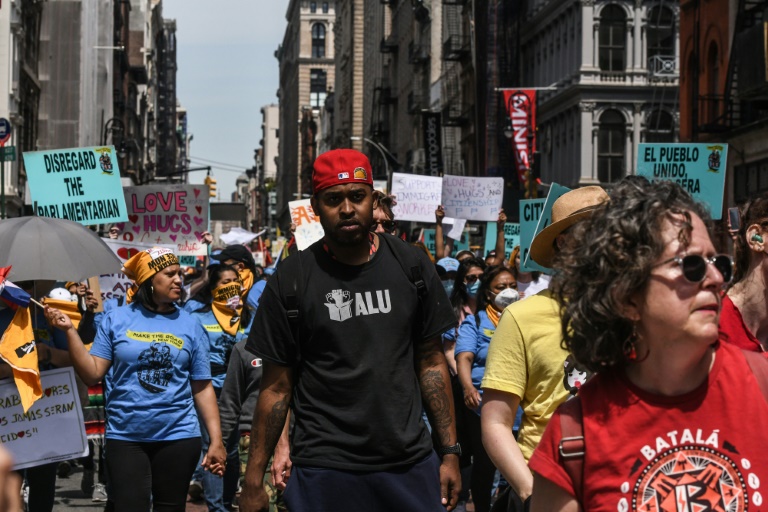
The election at the LDJ5 warehouse followed on the heels of an upset April 1 win by the Amazon Labor Union (ALU) at the much larger JFK8 Staten Island company site — which established the first American union at the retail colossus.

Last month’s win stood as one of the biggest recent victories by US organized labor, winning plaudits from President Joe Biden and other leading unions, some of which visited Staten Island ahead of the second vote.

But the ALU acknowledged its latest setback at Amazon — the second biggest private employer in the United States after Walmart.

“The count has finished. The election has concluded without the union being recognized,” the ALU said on Twitter. “The organizing will continue at this facility and beyond. The fight has just begun.”

Backers of the union drive said Amazon was well prepared for the latest vote, and had aggressively campaigned to quash momentum from the earlier victory.

Further complicating their efforts, union leaders were not as well known as at JFK8, where the ALU’s president Christian Smalls had previously worked. 

Smalls launched the drive after being fired in March 2020 for organizing a protest for personal protective equipment during New York’s first major Covid-19 outbreak.

“At the end of the day, this is a marathon not a sprint,” Smalls told reporters. “We all know there are going to be wins and losses, we’re going to fight another day.”

– More wins needed –

On the other side of the fight, Amazon spokeswoman Kelly Nantel said the company was “glad that our team at LDJ5 were able to have their voices heard.”

“We look forward to continuing to work directly together as we strive to make every day better for our employees.”

Since its launch in the 1990s, Amazon has fiercely fought to remain union-free, seeking to maintain its direct line to workers and boosting pay and benefits during the pandemic when “essential workers” in logistics kept the economy going.

Eric Milner, an attorney representing the ALU, called Monday’s result “disappointing” but said it reflected the effects of “illegal conduct” on Amazon’s part in patterns of disciplining workers and otherwise working to “chill” union activity.

Analyzing the result, Patricia Campos-Medina, co-director of the Worker Institute at Cornell University, said Smalls’ experience as an employee gave him “credibility” with workers — but that he had lacked time to build credibility at the second facility.

She said it will be pivotal for the union to “keep winning” to put pressure on Amazon to negotiate, drawing on backing from the Teamsters and other established unions.

“They already expressed willingness to support ALU, logistically and legally,” Campos-Medina said. 

“What now needs to happen is actually all these unions who were planning to organize Amazon, they actually now need to do it. It has to be a multifaceted organizing effort of the corporation, it cannot just be one by one.”

For now, Amazon is challenging the ALU’s April victory, saying representatives of the labor group intimidated workers and that US officials with the National Labor Relations Board were biased against the company.

A hearing on the Amazon complaints is set for May 23 in Phoenix.

The ALU has rejected the Amazon complaints as groundless, arguing the company is using stalling tactics to avoid negotiations on a contract.

US stocks gain ahead of Fed meeting but Asia, Europe struggle

European and Asian indices fell on Monday but Wall Street closed higher as markets worldwide brace for this week’s Federal Reserve meeting, where the US central bank is set to hike rates amid worries it could spark a recession.

The positive sentiment in New York was a reversal from Friday, when major US indices finished a tough April by closing sharply lower as fears of higher interest rates, supply chain snarls and persistent inflation gripped markets.

The tech-heavy Nasdaq, having lost more than 13 percent in April for its worst monthly showing in 14 years, won the most in Monday’s session with a 1.6 percent gain, while the Dow and S&P 500 increased more modestly.

Eurozone markets ended the session down, with Paris losing 1.6 percent and Frankfurt tumbling 1.2 percent. London was closed for a bank holiday.

Tokyo, Seoul, Mumbai, Manila, Sydney and Wellington all finished lower. Hong Kong and mainland Chinese markets were closed along with several other Asian markets.

“The markets remain skittish regarding an expected aggressive Fed monetary policy tightening cycle as the central bank is set to hike rates this week,” analysts at Charles Schwab investment bank said.

“Moreover, global sentiment continues to be hampered by the ongoing war in Ukraine, the recent spike in interest rates, the rallying US dollar and slowing economic activity in China,” they said.

Data released over the weekend showed Chinese manufacturing activity shrank last month at its fastest pace since the start of the pandemic as the government applies Covid-19 lockdowns in the biggest cities of the world’s second-biggest economy.

The shockwaves were being felt in the United States, where an industry survey said factory activity slowed last month, with some firms blaming the restrictions in China.

While economic hub Shanghai remains locked down, Beijing has tightened virus controls in the capital, requiring clear Covid tests to visit public spaces.

This followed gloomy economic data in Europe on Friday showing that Russia’s invasion of Ukraine was weighing on growth.

The struggles in China, the world’s biggest crude importer, led to an early drop in prices of the commodity on demand concerns, offsetting worries about tighter supply as the EU eyes a ban on Russian oil over its invasion of Ukraine, though prices recovered later in the day.

The European Commission is preparing a sanctions text that could be put to the 27 member states as early as Wednesday, sources said.

The ban would be introduced over six to eight months to give countries time to diversify their supply, they added.

– Rate hike looms large –

Investors are looking ahead to the Fed’s two-day meeting beginning Tuesday, in which the central bank is widely expected to hike rates by half a percentage point for the first time since 2000 to combat soaring prices.

With some commentators warning the Fed could eventually take rates up to three percent, there are also worries it could be too heavy handed and tip the US economy into recession.

“The Fed must make up for lost time and act quick and strongly as it faces inflation which keeps surprising as it rises,” said Franck Dixmier, head of fixed income at Allianz Global Investors.

“The challenge in executing the normalization of its monetary policy is to ensure a soft landing of the US economy… while maintaining a dynamic labour market and above all avoiding triggering a recession.”

– Key figures at around 2045 GMT –

New York – Dow: UP 0.3 percent at 33,061.50 (close)

New York – S&P 500: UP 0.6 percent at 4,155.38 (close)

New York – Nasdaq: UP 1.6 percent at 12,536.02 (close)

Frankfurt – DAX: DOWN 1.2 percent at 13,939.07 (close)

Paris – CAC 40: DOWN 1.6 percent at 6,425.61 (close)

EURO STOXX 50: DOWN 1.9 percent at 3,732.44 (close)

London – FTSE 100: Closed for a holiday

Tokyo – Nikkei 225: DOWN 0.1 percent at 26,818.53 (close)

Hong Kong – Hang Seng Index: Closed for a holiday

Shanghai – Composite: Closed for a holiday

Euro/dollar: DOWN at $1.0506 from $1.0550 on Friday

Pound/dollar: DOWN at $1.2489 from $1.2578

Euro/pound: UP at 84.09 pence from 83.86 pence

Dollar/yen: UP at 130.16 yen from 129.89 yen

West Texas Intermediate: UP 0.5 percent at $105.20 per barrel

Brent North Sea crude: UP 0.5 percent at $107.67 per barrel

Bid to create union at second Amazon site fails in New York

Workers at an Amazon facility in New York rejected a unionization campaign, according to a vote count Monday, one month after the group’s upset triumph at a neighboring warehouse.

Sixty-two percent of workers at the Staten Island facility voted against the union push, with 618 employees voting no and 380 in support, according to results released by US officials.

The election at LDJ5 followed on the heels of the upset win by the Amazon Labor Union on April 1 at the larger JFK8 Staten Island company site, which established the first Amazon union in the United States.

The April win stood as one of the biggest recent victories by organized labor, winning plaudits from President Joe Biden and other leading unions, some of which visited Staten Island ahead of the second vote.

But the union acknowledged a setback in the latest campaign.

“The count has finished. The election has concluded without the union being recognized,” Amazon Labor Union said on Twitter. “The organizing will continue at this facility and beyond. The fight has just begun.”

Amazon is also challenging the April victory by the union, saying representatives of the labor group intimidated workers and that US officials with the National Labor Relations Board were biased against the company.

An NLRB official set a hearing on the Amazon complaints for May 23 in Phoenix.

Amazon Labor has rejected the Amazon complaints as groundless, arguing the company is using stalling tactics to avoid negotiations on a contract.

Armenia opposition demands PM resign over Karabakh

Opposition parties in Armenia on Monday staged protests to demand Prime Minister Nikol Pashinyan resign, accusing him of compromising under international pressure on the long-contested region of Nagorno-Karabakh.

Arch-foe Caucasus neighbours Armenia and Azerbaijan have been locked in a dispute since the 1990s over the mountainous enclave in Azerbaijan predominantly populated by ethnic Armenians.

Karabakh was at the centre of a six-week war in 2020 that claimed more than 6,500 lives before it ended with a Russian-brokered ceasefire agreement.

Opposition parties accuse Pashinyan of plans to give away all of Karabakh to Azerbaijan after he told lawmakers last month that the “international community calls on Armenia to scale down demands on Karabakh”.

Waving Armenian and Karabakh flags and shouting demands for Pashinyan to step down, some 5,000 protesters marched on Monday evening in central Yerevan.

“We are launching a popular protest movement to force Pashinyan to resign,” parliament vice speaker and opposition leader Ishkhan Saghatelyan told AFP ahead of the rally.

“He is a traitor, he has lied to the people,” he said, accusing the 46-year-old leader of wanting to hand over the contested region to Azerbaijan. “He has no popular mandate to do so.”

Saghatelyan said “protests will not stop until Pashinyan goes.”

– ‘Depressed mood’ –

One of the demonstrators, 53-year-old dentist Hripsime Mkrtchyan, said: “Nikol must resign. His poor policy has led to territorial and human losses.”

“Our people have never been in such a depressed mood. We don’t see a light at the end of the tunnel.”

Earlier in the morning, public transport was disrupted in Yerevan as small groups of protesters attempted to block traffic in the city centre.

Police intervened, briefly detaining dozens of protesters.

The Union of Journalists, a media advocacy group, criticised police tactics as heavy-handed, saying there were several instances of officers punching journalists covering the protests.

On Sunday, several thousand protesters rallied in central Yerevan to demand Pashinyan’s resignation.

Under the Moscow-brokered deal, Armenia ceded swathes of territory it had controlled for decades and Russia deployed some 2,000 peacekeepers to oversee the truce.

The pact was seen in Armenia as a national humiliation and sparked weeks of anti-government protests, leading Pashinyan to call snap parliamentary polls which his party, Civil Contract, won last September.

– Peace talks –

US Secretary of State Antony Blinken, welcoming Armenian Foreign Minister Ararat Mirzoyan to Washington, praised Pashinyan for his leadership as he signed an accord on civil nuclear cooperation.

Blinken said he wanted to “express real appreciation for the vision and the courage and the flexibility that the prime minister and Armenia have been showing in this process working toward what we all want, which is a lasting peace”.

In April, Pashinyan and Azerbaijani President Ilham Aliyev met for rare EU-mediated talks in Brussels after which they tasked their foreign ministers to “begin preparatory work for peace talks.”

The meeting came after a flare-up in Karabakh on March 25 that saw Azerbaijan capture a strategic village in the area under the Russian peacekeepers’ responsibility, killing three separatist troops.

Baku put forward in mid-March its set of framework proposals for the peace agreement that includes both sides’ mutual recognition of territorial integrity, meaning Yerevan should agree on Karabakh being part of Azerbaijan.

Mirzoyan sparked controversy at home when he said — commenting on the Azerbaijani proposal — that for Yerevan “the Nagorno-Karabakh conflict is not a territorial issue, but a matter of rights” of the local ethnic Armenian population.

Ethnic Armenian separatists in Nagorno-Karabakh broke away from Azerbaijan when the Soviet Union collapsed in 1991. The ensuing conflicts claimed around 30,000 lives.

Close Bitnami banner
Bitnami