World

EU readies for end of Russia gas, warns won't pay in rubles

The European Union warned member states Monday to prepare for a possible complete breakdown in gas supplies from Russia, insisting it would not cede to Moscow’s demand that imports be paid for in rubles.

The European Commission will on Tuesday propose to member states a new package of sanctions to punish President Vladimir Putin’s Kremlin for its invasion of Ukraine, including an embargo on Russian oil, officials said.

But energy and environment ministers meeting in Brussels on Monday addressed the larger and potentially more complicated issue of Russia’s natural gas, upon which several countries — including EU top economy Germany — depend for much of their power generation.

Moscow has demanded clients from “unfriendly countries” — including EU member states — pay for gas in rubles, a way to sidestep Western financial sanctions against its central bank. It has cut off Bulgaria and Poland after their firms refused to comply.

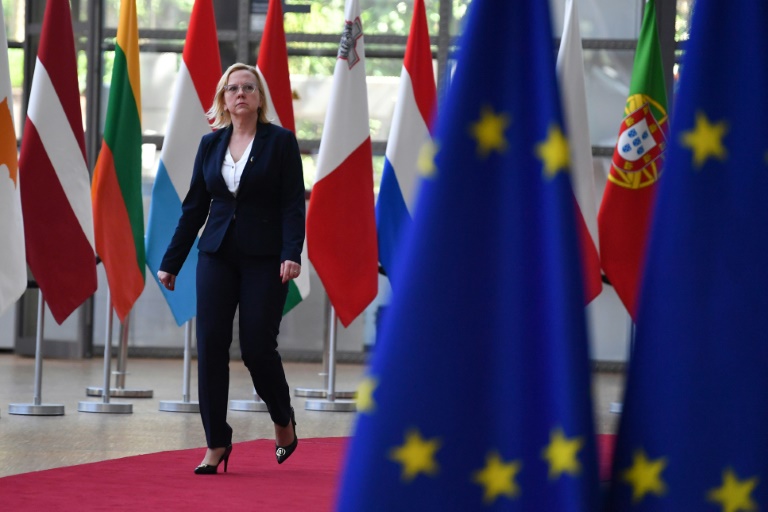
After the talks, the French chair of the meeting, ecological transition minister Barbara Pompili, and the European commissioner for energy, Kadri Simson, said the 27 member states were united with Poland and Bulgaria and would stockpile gas to be prepare for a breakdown.

Simson said that “following the full procedure as set out by Russia constitutes a breach of sanctions” imposed by the European Union.

She said that, to her knowledge, no European company was preparing to follow Putin’s decree and change its payment methods.

– ‘Tricky’ problem –

But several countries are to renew supply contracts at the end of May, and reports suggest some could seek to work around the sanctions by following the method put forward by Moscow.

This would entail a firm opening two accounts in Russian state energy giant Gazprom’s bank. Payments would be deposited in one account in euros or dollars, then be passed through the sanctioned Russian central bank, before arriving in the second account in rubles.

Kadri and some ministers seemed to say that this would still constitute a sanctions breach. But other member states demanded further clarification from the European Commission’s experts.

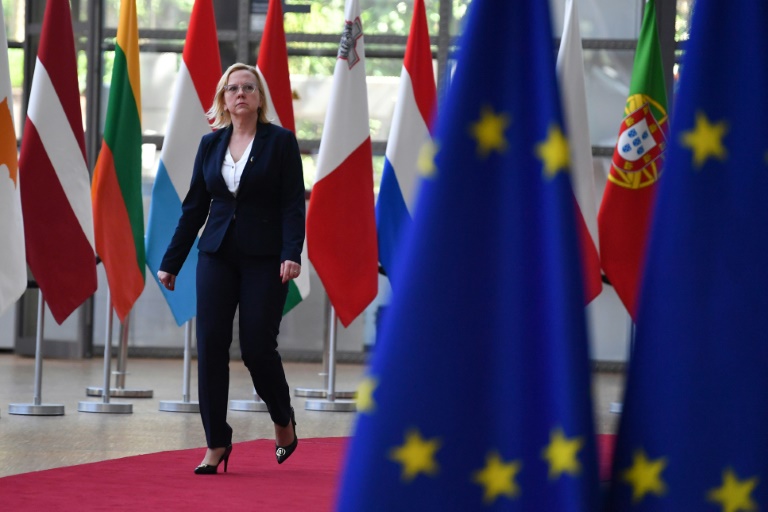
“What has happened today is that the European Commission and the presidency have confirmed that paying in rubles is unacceptable, that it is a breach of sanctions and a breach of European solidarity,” Poland’s environment minister Anna Moskwa said.

“Many countries, including the Baltic states, Denmark, the Netherlands and Finland, have today reaffirmed solidarity and that they will certainly not pay in rubles,” she said.

But Sweden’s Khashayar Farmanbar, minister for energy and digital development, said: “I think the clarification is still ongoing … it is a complex process.” 

“I mean, paying with one currency is one thing, but if that involves another country’s central bank, then it becomes part of a different part of the package, and that is going to be a bit tricky.”

The Czech minister of industry and trade, Jozef Sikela, said he had asked for a “clear explanation of how to proceed”.

During the meeting, European officials were forced to deal with media reports that Italy wants to continue to pay in rubles until there is a legal alternative.

Kadri said she had spoken to Italian minister Roberto Cingolani, who did not attend the meeting, and that the report was “misleading” — but she promised to provide him and all EU capitals with clearer guidance on resisting Putin’s ultimatum.

She added that Russia’s actions showed “they are not reliable suppliers and that means that all the member states have to have plans in place for full disruption”.

– Phased-out oil –

Germany’s minister for economic affairs and climate Robert Habeck said Berlin would follow EU policy but also suggested the dual Gazprombank accounts plan could be “a face-saving solution for Putin”. 

On Tuesday, the EU will propose a phased-out ban on imports of Russian oil — but not gas. 

The commission will propose a tapered ban over six to eight months, to give time to diversify supply. One senior official said there could be opt-outs for the most dependent countries, like Hungary. 

The sixth package of anti-Russian measures will also target the country’s largest bank, Sberbank, which will be excluded from the international SWIFT messaging system, diplomats said. 
EU readies for end of Russia gas, warns won't pay in rubles

The European Union warned member states Monday to prepare for a possible complete breakdown in gas supplies from Russia, insisting it would not cede to Moscow’s demand that imports be paid for in rubles.

The European Commission will on Tuesday propose to member states a new package of sanctions to punish President Vladimir Putin’s Kremlin for its invasion of Ukraine, including an embargo on Russian oil, officials said.

But energy and environment ministers meeting in Brussels on Monday addressed the larger and potentially more complicated issue of Russia’s natural gas, upon which several countries — including EU top economy Germany — depend for much of their power generation.

Moscow has demanded clients from “unfriendly countries” — including EU member states — pay for gas in rubles, a way to sidestep Western financial sanctions against its central bank. It has cut off Bulgaria and Poland after their firms refused to comply.

After the talks, the French chair of the meeting, ecological transition minister Barbara Pompili, and the European commissioner for energy, Kadri Simson, said the 27 member states were united with Poland and Bulgaria and would stockpile gas to be prepare for a breakdown.

Simson said that “following the full procedure as set out by Russia constitutes a breach of sanctions” imposed by the European Union.

She said that, to her knowledge, no European company was preparing to follow Putin’s decree and change its payment methods.

– ‘Tricky’ problem –

But several countries are to renew supply contracts at the end of May, and reports suggest some could seek to work around the sanctions by following the method put forward by Moscow.

This would entail a firm opening two accounts in Russian state energy giant Gazprom’s bank. Payments would be deposited in one account in euros or dollars, then be passed through the sanctioned Russian central bank, before arriving in the second account in rubles.

Kadri and some ministers seemed to say that this would still constitute a sanctions breach. But other member states demanded further clarification from the European Commission’s experts.

“What has happened today is that the European Commission and the presidency have confirmed that paying in rubles is unacceptable, that it is a breach of sanctions and a breach of European solidarity,” Poland’s environment minister Anna Moskwa said.

“Many countries, including the Baltic states, Denmark, the Netherlands and Finland, have today reaffirmed solidarity and that they will certainly not pay in rubles,” she said.

But Sweden’s Khashayar Farmanbar, minister for energy and digital development, said: “I think the clarification is still ongoing … it is a complex process.” 

“I mean, paying with one currency is one thing, but if that involves another country’s central bank, then it becomes part of a different part of the package, and that is going to be a bit tricky.”

The Czech minister of industry and trade, Jozef Sikela, said he had asked for a “clear explanation of how to proceed”.

During the meeting, European officials were forced to deal with media reports that Italy wants to continue to pay in rubles until there is a legal alternative.

Kadri said she had spoken to Italian minister Roberto Cingolani, who did not attend the meeting, and that the report was “misleading” — but she promised to provide him and all EU capitals with clearer guidance on resisting Putin’s ultimatum.

She added that Russia’s actions showed “they are not reliable suppliers and that means that all the member states have to have plans in place for full disruption”.

– Phased-out oil –

Germany’s minister for economic affairs and climate Robert Habeck said Berlin would follow EU policy but also suggested the dual Gazprombank accounts plan could be “a face-saving solution for Putin”. 

On Tuesday, the EU will propose a phased-out ban on imports of Russian oil — but not gas. 

The commission will propose a tapered ban over six to eight months, to give time to diversify supply. One senior official said there could be opt-outs for the most dependent countries, like Hungary. 

The sixth package of anti-Russian measures will also target the country’s largest bank, Sberbank, which will be excluded from the international SWIFT messaging system, diplomats said. 
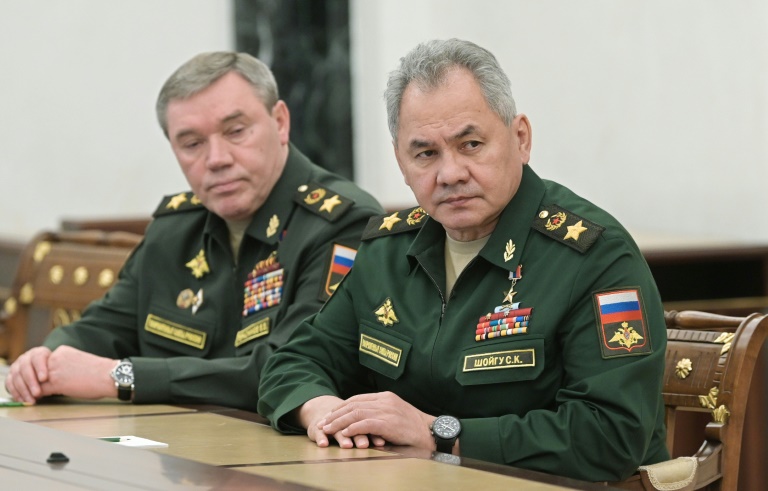
Russia's top general visited Ukraine front: Pentagon

Russia’s top general, Valery Gerasimov, visited the Donbas front in the Ukraine war last week, a Pentagon official said Monday, but reports that he was injured in a Ukrainian attack could not be confirmed.

“What we can confirm is that we know that for several days last week he was in the Donbas,” a senior US defense official told journalists.

“We don’t believe that he’s still there — that he has left and he’s back in Russia,” the official said.

“We cannot confirm reports that he was injured.”

According to reports citing Ukraine officials, on Saturday Ukraine forces shelled a command center in Izium, where Gerasimov, chief of general staff of the Russian armed forces, visited to meet with top field commanders.

But he had apparently left the site before the shelling took place.

Gerasimov was believed to be touring the front to better understand field conditions and rally his troops as Russian forces, after failing to capture Kyiv in the north, attempt to take control of the Donetsk and Luhansk regions of the east.

In a daily briefing on the war, the Pentagon official said Monday that Russian forces were making minimal progress in a tough fight against Ukraine troops in the region and called their efforts “anemic.”

“We continue to see minimal at best progress by the Russians in the Donbas. They’ve had some minor gains east of Izium and Popasna in the Luhansk Oblast.” 

The officials described the Russians as winning control of villages, then ceding them back to Ukraine fighters, and characterized Russian forces as demoralized and suffering from poor leadership and organization.

The Russian effort on the ground is “very tepid, very uneven… and in some cases, quite frankly, the best word to describe it would be anemic,” the official said.

The official did not provide any similar assessment of Ukraine forces.

Arms deliveries from the Untied States and Western allies to Ukraine, including heavy artillery, radar systems, and attack drones, continue at a high pace, the official said.

Over the last 24 hours, two dozen flights carrying US arms landed near Ukraine, and another 11 were planned over the coming 24 hours, officials said.

In addition to that, 23 transport flights carrying arms and battlefield supplies from five other countries also landed in key delivery locations.

Israel slams Russian claims on Hitler over Ukraine war

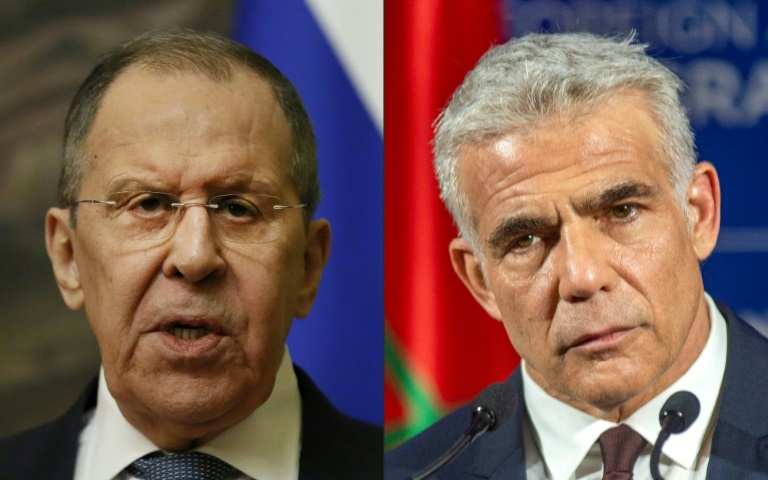
Israeli Foreign Minister Yair Lapid on Monday slammed his Russian counterpart Sergei Lavrov for alleging Adolf Hitler may have “had Jewish blood” and summoned Moscow’s ambassador for “clarifications”.

Since Russia’s invasion of Ukraine on February 24, Israel has sought to keep a delicate balance between the two sides, but remarks by Lavrov to an Italian channel sparked anger in Israel.

Moscow has previously said it wants to “de-militarise” and “de-Nazify” Ukraine.

Lavrov, speaking to Italian outlet Mediaset’s Rete 4 channel in an interview released Sunday, claimed that Ukrainian President Volodymyr Zelensky “puts forward an argument of what kind of Nazism can they have if he himself is Jewish”.

Lavrov, according to a transcript posted on the Russian foreign ministry website, then added: “I could be wrong, but Hitler also had Jewish blood”.

Lapid in a statement from the foreign ministry on the “grave remarks” condemned them as “an unforgivable and outrageous statement as well as a terrible historical error”.

“Jews did not murder themselves in the Holocaust,” Lapid said. “The lowest level of racism against Jews is to accuse Jews themselves of antisemitism.”

Israel’s foreign ministry “has summoned the Russian Ambassador to Israel for a clarification meeting”, the statement added.

Prime Minister Naftali Bennett then denounced Lavrov’s “lies” that he said effectively “accuse the Jews themselves of the most awful crimes in history,” perpetrated against them.

– ‘Delusional and dangerous’ –

“No war in our time is like the Holocaust or is comparable to the Holocaust,” the Israeli premier said in a statement. “The use of the Holocaust of the Jewish people as a political tool must cease immediately.”

Dani Dayan, director of Yad Vashem, the World Holocaust Remembrance Center in Israel, also criticised Lavrov’s comments as “unfounded, delusional and dangerous remarks which deserve to be condemned”.

In Berlin, German government spokesman Steffen Hebestreit told reporters: “I think the Russian propaganda being spread here by Foreign Minister Lavrov needs no comment -– it’s absurd”.

Ukrainian Foreign Minister Dmytro Kuleba said in a tweet that Lavrov’s comments illustrate “deeply rooted antisemitism of the Russian elites”.

“His heinous remarks are offensive to President Volodymyr Zelensky, Ukraine, Israel, and the Jewish people,” he added.

“More broadly, they demonstrate that today’s Russia is full of hatred towards other nations.”

In a March speech to the Israeli parliament, Zelensky called on Israel to “make a choice” by supporting Ukraine against Russia, and asked the Jewish state to provide it with weapons.

Israel has provided helmets and bulletproof vests to Ukrainian rescue workers, but has not recently supplied the country with weapons, Israeli officials say.

The United States, which has led international support for Ukraine, called Kyiv “a valued partner” against antisemitism and said Russia’s offensive was putting Jews, as well as others, in harm’s way.

“To invoke the lie of ‘denazification’ in Ukraine, a country with a Jewish president and a significant Jewish population living in peace among their fellow citizens, is baseless and cruelly deranged,” the office of the State Department envoy on combatting antisemitism wrote on Twitter.

Armenia opposition demands PM resign over Karabakh

Opposition parties in Armenia on Monday staged protests to demand Prime Minister Nikol Pashinyan’s resign over his policy on the long-contested region of Nagorno-Karabakh.

Arch-foe Caucasus neighbours Armenia and Azerbaijan have been locked in a dispute since the 1990s over the mountainous enclave in Azerbaijan predominantly populated by ethnic Armenians.

Karabakh was at the centre of a six-week war in 2020 that claimed more than 6,500 lives before it ended with a Russian-brokered ceasefire agreement.

Opposition parties now accuse Pashinyan of plans to give away all of Karabakh to Azerbaijan after he told lawmakers last month that the “international community calls on Armenia to scale down demands on Karabakh”.

Waving Armenian and Karabakh flags and shouting demands for Pashinyan to step down, some 5,000 protesters marched on Monday evening in central Yerevan.

“We are launching a popular protest movement to force Pashinyan to resign,” parliament vice speaker and opposition leader Ishkhan Saghatelyan told AFP ahead of the rally.

“He is a traitor, he has lied to the people,” he said, accusing the 46-year-old leader of wanting to hand over the contested region to Azerbaijan. “He has no popular mandate to do so.”

Saghatelyan said “protests will not stop until Pashinyan goes.”

– ‘Depressed mood’ –

One of the demonstrators, 53-year-old dentist Hripsime Mkrtchyan, said: “Nikol must resign. His poor policy has led to territorial and human losses.”

“Our people have never been in such a depressed mood. We don’t see a light at the end of the tunnel.”

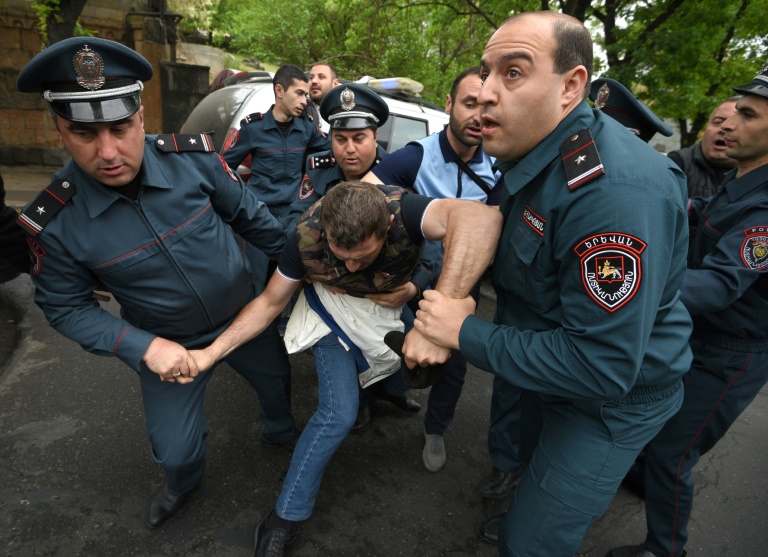
Earlier in the morning, public transport was disrupted in Yerevan as small groups of protesters attempted to block traffic in the city centre.

Police intervened, briefly detaining dozens of protesters.

The Union of Journalists, a media advocacy group, criticised police tactics as heavy-handed, saying there were several instances of officers punching journalists covering the protests.

On Sunday, several thousand protesters rallied in central Yerevan to demand Pashinyan’s resignation.

Under the Moscow-brokered deal, Armenia ceded swathes of territory it had controlled for decades and Russia deployed some 2,000 peacekeepers to oversee the truce.

The pact was seen in Armenia as a national humiliation and sparked weeks of anti-government protests, leading Pashinyan to call snap parliamentary polls which his party, Civil Contract, won last September.

– Peace talks –

In April, Pashinyan and Azerbaijani President Ilham Aliyev met for rare EU-mediated talks in Brussels after which they tasked their foreign ministers to “begin preparatory work for peace talks.”

The meeting came after a flare-up in Karabakh on March 25 that saw Azerbaijan capture a strategic village in the area under the Russian peacekeepers’ responsibility, killing three separatist troops.

Baku tabled in mid-March its set of framework proposals for the peace agreement that includes both sides’ mutual recognition of territorial integrity, meaning Yerevan should agree on Karabakh being part of Azerbaijan.

Armenian Foreign Minister Ararat Mirzoyan sparked controversy at home when he said — commenting on the Azerbaijani proposal — that for Yerevan “the Nagorno-Karabakh conflict is not a territorial issue, but a matter of rights” of the local ethnic-Armenian population.

Ethnic Armenian separatists in Nagorno-Karabakh broke away from Azerbaijan when the Soviet Union collapsed in 1991. The ensuing conflicts claimed around 30,000 lives.

Israel slams Russian claims on Hitler over Ukraine war

Israeli Foreign Minister Yair Lapid on Monday slammed his Russian counterpart Sergei Lavrov for alleging Adolf Hitler may have “had Jewish blood” and summoned Moscow’s ambassador for “clarifications”.

Since Russia’s invasion of Ukraine on February 24, Israel has sought to keep a delicate balance between the two sides, but remarks by Lavrov to an Italian channel sparked anger in Israel.

Moscow has previously said it wants to “de-militarise” and “de-Nazify” Ukraine.

Lavrov, speaking to Italian outlet Mediaset’s Rete 4 channel in an interview released Sunday, claimed that Ukrainian President Volodymyr Zelensky “puts forward an argument of what kind of Nazism can they have if he himself is Jewish”.

Lavrov, according to a transcript posted on the Russian foreign ministry website, then added: “I could be wrong, but Hitler also had Jewish blood”.

Lapid in a statement from the foreign ministry on the “grave remarks” condemned them as “an unforgivable and outrageous statement as well as a terrible historical error”.

“Jews did not murder themselves in the Holocaust,” Lapid said. “The lowest level of racism against Jews is to accuse Jews themselves of antisemitism.”

Israel’s foreign ministry “has summoned the Russian Ambassador to Israel for a clarification meeting”, the statement added.

Prime Minister Naftali Bennett then denounced Lavrov’s “lies” that he said effectively “accuse the Jews themselves of the most awful crimes in history,” perpetrated against them.

– ‘Delusional and dangerous’ –

“No war in our time is like the Holocaust or is comparable to the Holocaust,” the Israeli premier said in a statement. “The use of the Holocaust of the Jewish people as a political tool must cease immediately.”

Dani Dayan, director of Yad Vashem, the World Holocaust Remembrance Center in Israel, also criticised Lavrov’s comments as “unfounded, delusional and dangerous remarks which deserve to be condemned”.

In Berlin, German government spokesman Steffen Hebestreit told reporters: “I think the Russian propaganda being spread here by Foreign Minister Lavrov needs no comment -– it’s absurd”.

Ukrainian Foreign Minister Dmytro Kuleba said in a tweet that Lavrov’s comments illustrate “deeply-rooted antisemitism of the Russian elites”. 

“His heinous remarks are offensive to President Volodymyr Zelensky, Ukraine, Israel, and the Jewish people,” he added.

“More broadly, they demonstrate that today’s Russia is full of hatred towards other nations.”

In a speech at the end of March to the Israeli parliament, Zelensky called on Israel to “make a choice” by supporting Ukraine against Russia, and asked the Jewish state to provide it with weapons.

Israel has provided helmets and bulletproof vests to Ukrainian rescue workers, but has not recently supplied the country with weapons, Israeli officials say.

'Heavy fighting' in east as Kyiv tries fresh Mariupol evacuation

Ukrainian authorities were hoping Monday to evacuate more civilians from the besieged southern port city of Mariupol, as Russia’s offensive in the east of Ukraine continued with “active and heavy” fighting.

Kyiv said more than 100 civilians were evacuated over the weekend from the sprawling Azovstal plant, the last holdout of Ukrainian forces in Mariupol, which has been surrounded by Russian forces since they invaded Ukraine on February 24.

The civilians were awaited Monday in Ukraine-controlled Zaporizhzhia, where vehicles from UNICEF and other international NGOs were on standby.

In coordinated efforts between Ukraine, Russia and the International Committee of the Red Cross (ICRC), another evacuation had been scheduled to start first thing on Monday.

Ukrainian Foreign Minister Dmytro Kuleba said later Monday the evacuation was “underway” but declined to give more details until it was complete.

“Everything is very fragile, things can fall apart at any given moment so it’s better to wait until the evacuation is over,” he told a press conference with his Danish counterpart in Kyiv.

Several hundred Ukrainian soldiers and civilians have been sheltering in the maze of Soviet-era underground tunnels underneath the Azovstal steelworks, many of whom require medical attention.

Over the weekend, “for the first time, there were two days of real ceasefire on this territory,” Ukrainian President Volodymyr Zelensky said late Sunday.

“More than 100 civilians have already been evacuated — women and children first of all,” he said in a video address.

Russia’s armed forces said 46 civilians had left Azovstal on Saturday, and had “voluntarily” decided to stay in the separatist region of Donetsk.

Another 80 got out on Sunday — of whom 69 left for Kyiv-controlled territory, it said. They were “handed over to UN and ICRC representatives”, the Russian ministry said earlier.

Mariupol is an important strategic hub connecting the Russian-held southern and eastern parts of Ukraine and has seen some of the worst of the fighting.

With the Russian siege leaving residents in dire conditions, with little access to food, water and medicine, the city has become emblematic of a war that has uprooted more than 13 million people from their homes and killed thousands.

– ‘Active and heavy fighting’ –

After failing to take the capital Kyiv in the first few weeks of the war, Moscow’s army has refocused on the east of Ukraine, notably the Donbas region, which includes the pro-Russian separatist areas of Donetsk and Lugansk. 

Fighting is particularly intense around Izyum, Lyman and Rubizhne, as the Russians prepare their attack on Severodonetsk, the last easterly city still held by Kyiv, Ukraine’s general staff said.

“The situation in the Lugansk region can be described in a few words — active and heavy fighting continues,” the defence ministry added.

In Lyman, relentless shelling has reduced hamlets around the city to rubble, according to AFP reporters.

“Half of the city is destroyed,” said one local in passing, lifting luggage onto the roof of his beat-up Soviet-designed red Lada passenger car. 

“I don’t have a house anymore,” he said.

The governor of Lugansk has said he expected more intense battles ahead of May 9, the day Russia celebrates the 1945 surrender of Nazi Germany to allied forces, including the then Soviet Union.

However, Russian Foreign Minister Sergei Lavrov told Italian television late Sunday that Moscow’s forces “will not artificially adjust their actions to any date, including Victory Day”.

– ‘Relentless fear’ –

Russia has moved to solidify its grip on areas it controls and from Sunday introduced the Russian ruble in the region of Kherson, initially to be used alongside the Ukrainian hryvnia.

On the frontline in the east, Russian troops — helped by massive use of artillery — have advanced slowly but steadily.

But Ukrainian forces have also recaptured some territory in recent days, including the village of Ruska Lozova, which evacuees said had been occupied for two months.

“It was two months of terrible fear. Nothing else, a terrible and relentless fear,” Natalia, a 28-year-old evacuee from Ruska Lozova, told AFP after reaching Kharkiv.

Kyiv has admitted that Russian forces have captured a string of villages in the Donbas region and has asked Western powers to deliver more heavy weapons to bolster its defences there.

Ukraine’s defence ministry said Monday that its drones had sunk two Russian patrol boats near the Black Sea’s Snake Island, which became a symbol of Ukrainian resistance after soldiers there rebuffed Russian demands to surrender.

“The Bayraktars are working,” said Valeriy Zaluzhnyi, the commander in chief of the Ukrainian Armed Forces, referring to Turkish-made military drones.

– Russian energy threats –

Western powers have levelled unprecedented sanctions against Russia over the war while delivering money and weapons to Ukraine, including a $33-billion (31-billion-euro) arms and support package announced by US President Joe Biden last week.

But many European Union countries remain dependent on Russian gas and oil, which critics say undermines their attempts to isolate Moscow.

EU ministers met Monday to respond to Russia’s decision last week to cut gas supplies to Poland and Bulgaria, which had refused Moscow’s demand to pay in rubles.

The bloc is also working on a phased ban on Russian oil imports, although several member states are wary of the economic damage, and no decision is expected Monday.

In a symbolic show of support, many Western nations are also reopening their embassies in Kyiv that were closed due to the invasion, with Denmark the latest to make the move Monday.

Kristina Kvien, the US charge d’affaires, announced that Washington hopes to have its diplomats back in Kyiv “by the end of the month”.

burs-ar/kjm

Endless petrol queues become point of pride in Ukraine

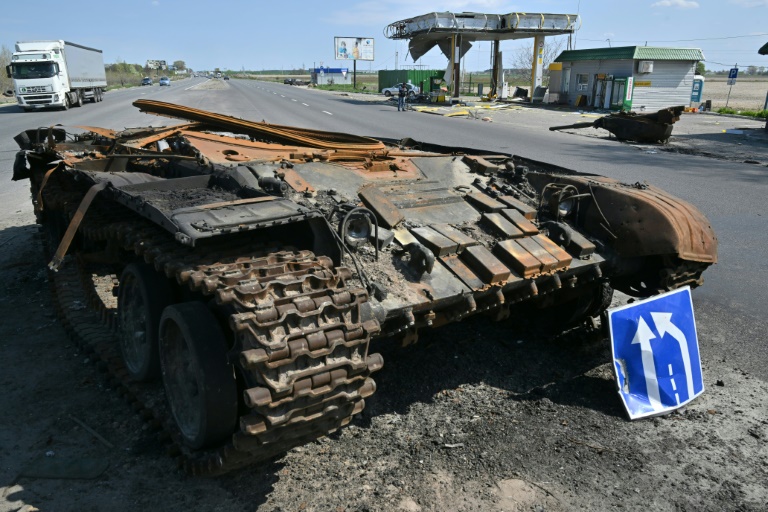
The turret from a rusted tank marking Russia’s closest advance towards northeastern Kyiv lies next to a destroyed petrol station that reveals the pain of Ukraine’s mounting fuel problems.    

The once-mighty tank was one of dozens in a column ambushed by the outgunned Ukrainian forces at the peak of the March battle for Kyiv.  

The fuel pumps’ mangled remains hint at the sweeping social and economic problems haunting Ukraine in the third month of the grinding Russian invasion. 

Local painter Viktor Karpenko knows which ruin has more value.

“The most important thing is that the Russian army is not here,” the 53-year-old said after examining the tanks’ mangled hulk splitting the main road running through the  village of Skybyn outside Kyiv. 

“The wait for fuel can now last an hour. But I am ready to wait two hours to make sure nothing like this happens again.”

The force of the blast that blew up the Russian tank — almost certainly killing everyone inside instantly — propelled the turret and its big gun across one side of the four-lane highway.

“I think they lost their last strength here,” Karpenko said of the Russians. “They lost their attacking punch.”

– Inflicting pain –

The Russian army has regrouped and is pressing on with its campaign along Ukraine’s eastern and southern flanks.

The human suffering in the war zone is growing by the hour.

But snaking queues of cars that returned to many Ukrainian roads last week showcase the success of Russia’s seeming effort to inflict as much pain on its western neighbour as possible.

The same queues appeared in the first panicked days after Russia’s February 24 invasion.

They subsided as Ukrainians began to cope with life in wartime.

Many patiently waiting for fuel across the revitalised street of central Kyiv now struggle to understand why the fuel problems are returning.

“Some say there won’t be any more fuel coming to Ukraine at all,” taxi driver Sergiy Kavun said after pulling up to the end of a queue stretching down the curb of a central highway.

“I tried four petrol stations before finding this one. At least a quarter of my day’s income is already gone. I might have to switch professions,” said the 30-year-old.

– Web of theories –

Limited official information has spun a long thread of theories about why Ukraine’s pumps are running dry.

Some point to Russia’s ability to destroy many of Ukraine’s fuel storage facilities with long-range missiles.

This means huge cisterns that once ferried fuel before pouring it into storage silos have been replaced with much smaller trucks that offload it directly at the petrol station.

The amount of available fuel at any one time has thus shrunk exponentially.

Others believe that much of the diesel is being redirected to the war effort and farmers during the crucial spring planting and growing season.

The problems in Kyiv itself appear unique.

The city’s population of three million — abandoned by at least half the residents in the first weeks of war — is swelling again with returnees and those fleeing the second wave of the Russian offensive.

Demand is growing while supply is shrinking because fuel deliveries by road from Russia and Belarus have long stopped.

“They say they might be soon delivering some from Lithuania and Poland,” said the taxi driver. “They say this is only temporary. We all hope so.”

– ‘We can suffer’ –

The idea that much of the missing fuel is going to help the army is striking a patriotic nerve.

“We can walk, that’s not a problem at all. Everything must go to the army — fuel, everything,” pensioner Oleksandr Voznyakovskiy said after nudging his little car a few metres closer to the petrol stations.

“We can suffer a bit. We’ll manage. I can drive less. Anything, as long as we win.”

But 19-year-old army recruit Kozachyok — a nom de guerre that translates roughly as “the little Cossack” — had mixed feelings while inspecting what was left of the Russian tank destroyed in the March battle.

“We use the same kind of tanks. Just one spark and that’s it – everyone inside is finished,” he said darkly.

“I could have been sitting in that tank. I can visualise how it all happened.”

Stock markets, oil slip on weak Chinese data, looming US rate hike

Stock markets slipped and oil prices also fell Monday as traders tracked weak Chinese economic data and a looming US interest rate hike that could tame inflation but also thwart growth.

Equities kicked off the month of May on the wrong foot after Wall Street finished a tough April by closing sharply down on Friday following disappointing results from tech giant Amazon.

“The markets remain skittish regarding an expected aggressive Fed monetary policy tightening cycle as the Central Bank is set to hike rates this week,” said analysts at Charles Schwab investment firm.

“Moreover, global sentiment continues to be hampered by the ongoing war in Ukraine, the recent spike in interest rates, the rallying US dollar, and slowing economic activity in China,” they said.

Wall Street see-sawed in early deals. The tech-heavy Nasdaq, having lost more than 13 percent in April for its worst monthly showing in 14 years, was just in the green — but the Dow Jones index was off around 0.4 percent some two hours into trading.

Eurozone markets ended the session down, Paris losing 1.6 percent and Frankfurt tumbling 1.2 percent.

London was closed for a bank holiday.

Tokyo, Seoul, Mumbai, Manila, Sydney and Wellington all finished lower. Hong Kong and mainland Chinese markets were closed along with several other Asian markets.

Data at the weekend showed Chinese manufacturing activity shrank last month at its fastest pace since the start of the pandemic as the government applies Covid-19 lockdowns in the biggest cities of the world’s second biggest economy.

While economic hub Shanghai remains locked down, Beijing has tightened virus controls in the capital, requiring clear Covid tests to visit public spaces.

This followed gloomy economic data in Europe on Friday showing that Russia’s invasion of Ukraine was weighing on growth.

The struggles in China, the world’s biggest crude importer, led to a drop in prices of the commodity on demand concerns, offsetting worries about tighter supply as the EU eyes a ban on Russian oil over its invasion of Ukraine.

Oil prices meanwhile slipped back, though limiting initial losses of more than three percent, with Brent North Sea crude, the benchmark international contract, falling to $103.71 before bouncing back above $106.

The European Commission is preparing a sanctions text that could be put to the 27 member states as early as Wednesday, sources said.

The ban would be introduced over six to eight months to give countries time to diversify their supply, they added.

– Rate hike looms large –

Investors are also looking ahead at the US Federal Reserve’s two-day policy meeting, which starts Tuesday. It is expected to see the central bank hike borrowing costs by half a point — the most since 2000 — to tame soaring consumer prices.

Some analysts are predicting the Fed could even announce a three-quarter-point increase at some point as it battles more than 40-year-high inflation.

With some commentators warning rates could go as high as three percent, there are also worries the Fed could be too heavy handed and tip the US economy into recession.

“The Fed must make up for lost time and act quick and strongly as it faces inflation which keeps surprising as it rises,” said Franck Dixmier, head of fixed income at Allianz Global Investors.

“The challenge in executing the normalisation of its monetary policy is to ensure a soft landing of the US economy… while maintaining a dynamic labour market and above all avoiding triggering a recession,” he said.

– Key figures at around 1600 GMT –

New York – Dow: DOWN 0.4 percent at 32,845.22 points

Frankfurt – DAX: DOWN 1.2 percent at 13,939.07 (close)

Paris – CAC 40: DOWN 1.6 percent at 6,425.61 (close)

EURO STOXX 50: DOWN 2.2 percent at 3,722.97

London – FTSE 100: Closed for a holiday

Tokyo – Nikkei 225: DOWN 0.1 percent at 26,818.53 (close)

Hong Kong – Hang Seng Index: Closed for a holiday

Shanghai – Composite: Closed for a holiday

Euro/dollar: DOWN at $1.0512 from $1.0550 on Friday

Pound/dollar: DOWN at $1.2514 from $1.2578

Euro/pound: UP at 84.00 pence from 83.86 pence

Dollar/yen: UP at 130.03 yen from 129.89 yen

West Texas Intermediate: DOWN 0.3 percent at $104.31 per barrel

Brent North Sea crude: DOWN 0.4 percent at $106.70 per barrel

Spain says PM targeted by Pegasus spyware

Spain said Monday that the mobile phones of Spanish Prime Minister Pedro Sanchez and Defence Minister Margarita Robles were tapped using Pegasus spyware in an “illicit and external” intervention. 

Their phones were infected last year by software owned by the Israeli-based firm NSO, which is the target of numerous investigations worldwide, according to a senior official.

“It is not a supposition, they are facts of enormous gravity,” said the minister of the presidency, Felix Bolanos.

“We are absolutely certain that it was an external attack… because in Spain, in a democracy like ours, all such interventions are carried out by official bodies and with judicial authorisation,” he said.

“In this case, neither of the two circumstances prevailed, which is why we have no doubt that it was an external intervention. We want the judiciary to investigate,” Bolanos said.

He did not say whether the Spanish authorities had any indication yet where the attack originated from or whether another country was behind it. 

Bolanos said that Sanchez’s phone had been tapped in May 2021 and Robles’ in June of the same year. 

“A determined amount of data” was extracted from both phones, he added.

“There is no evidence that there was other tapping after those dates.” 

– Official phones targeted –

The El Pais newspaper said the hackers extracted 2.6 gigabytes of information from Sanchez’s phone and nine megabytes from Robles’s phone, but the government still does not know “the nature of the stolen information and the degree of sensitivity.”

The attack targeted their work phones provided by the state, not their private phones.

Bolanos said experts were checking whether other members of the Spanish government were targets of spying involving Pegasus.

He said the government on Monday filed a complaint with a Spanish high court tasked with significant national and international cases, which have included terrorism in the past, in order to bring the full facts to light.

Pegasus spyware infiltrates mobile phones to extract data or activate a camera or microphone to spy on their owners.

The Israel-based NSO Group, which owns Pegasus, claims the software is only sold to government agencies to target criminals and terrorists, with the green light of Israeli authorities.

The company has been criticised by global rights groups for violating users’ privacy around the world and it faces lawsuits from major tech firms such as Apple and Microsoft.

Amnesty International, the London-based human rights group, said the software has been used to hack up to 50,000 mobile phones worldwide.

Catalan separatists have accused Spain’s intelligence services of using spyware to snoop on their mobile phones, reviving tensions with Sanchez’s minority leftist government, which relies on their support to pass legislation. 

Canada’s Citizen Lab group said last month that at least 65 people linked to the Catalan separatist movement had been targets of Pegasus spyware in the wake of a failed independence bid in 2017.

Elected officials, including current and former Catalan regional leaders, were among those targeted by the controversial spyware.

Close Bitnami banner
Bitnami