World

Russia's Bolshoi scraps performances by critical directors

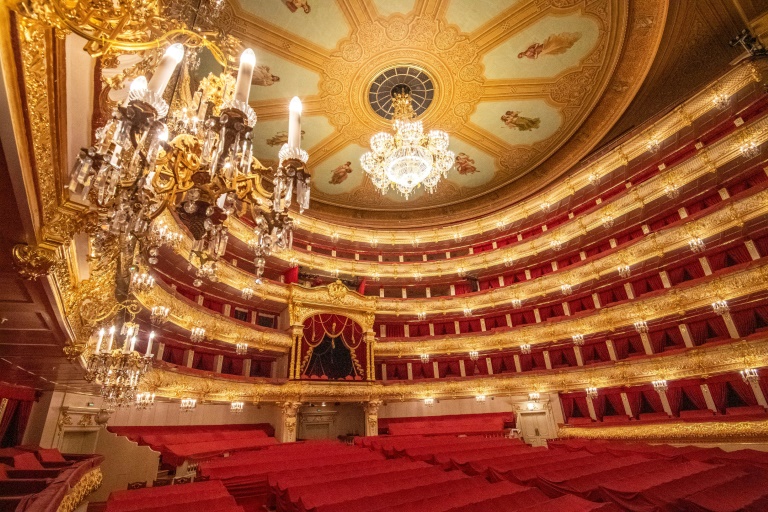
Russia’s Bolshoi Theatre has announced it is cancelling the performances directed by Kirill Serebrennikov and Timofey Kulyabin who have spoken out against Moscow’s military campaign in Ukraine.

Late Sunday, Russia’s top theatre announced that instead of three performances of “Nureev”, a ballet directed by Serebrennikov, audiences this week will see a production of Aram Khachaturian’s ballet, “Spartacus”. 

“Nureev” is based on the life of Russian ballet superstar Rudolf Nureyev, and its use of onstage nudity and profane language has outraged Russian conservatives. 

The prestigious theatre also said that instead of “Don Pasquale”, a comic opera by Gaetano Donizetti directed by Kulyabin, audiences this week will see a production of Gioachino Rossini’s “The Barber of Seville.”

The Bolshoi did not give any reason for the cancellations and spokeswoman Katerina Novikova told AFP on Monday that she had no “official” comment.

The Bolshoi performed “Spartacus” in early April, saying that proceeds would be used to help the families of Russian troops who died in Ukraine.

Serebrennikov, 52, was allowed in March to leave Russia, where he was found guilty in 2020 of embezzling funds at Moscow’s Gogol Centre theatre.

His supporters say the conviction was revenge for his criticism of authoritarianism and homophobia under President Vladimir Putin. 

Serebrennikov said he was not surprised by the Bolshoi’s cancellation.

“This ballet is about man’s yearning for freedom. Freedom to create and freedom to live,” he told AFP in written comments.

“These days ‘Nureev’ is inappropriate and impossible on the Bolshoi stage. They are afraid of unnecessary associations and uncomfortable artists,” Serebrennikov added.

He called the cancellation a throwback to the Soviet era.

“‘Nuriev’ was cancelled at the Bolshoi Theatre. Cancellation of Russian culture in Europe, you say? In Russia, they themselves are cancelling culture.”

Speaking to AFP in Berlin last month, Serebrennikov said he felt “just horror, sadness, shame, pain” about Russia’s military campaign in pro-Western Ukraine.

Kulyabin, 37, who is also now believed to be based in Europe, has spoken out against Putin’s decision to send troops to Ukraine.

Several dancers have in recent weeks quit the Bolshoi including prima ballerina Olga Smirnova.
Indian PM Modi urges 'talks' to stop Ukraine war

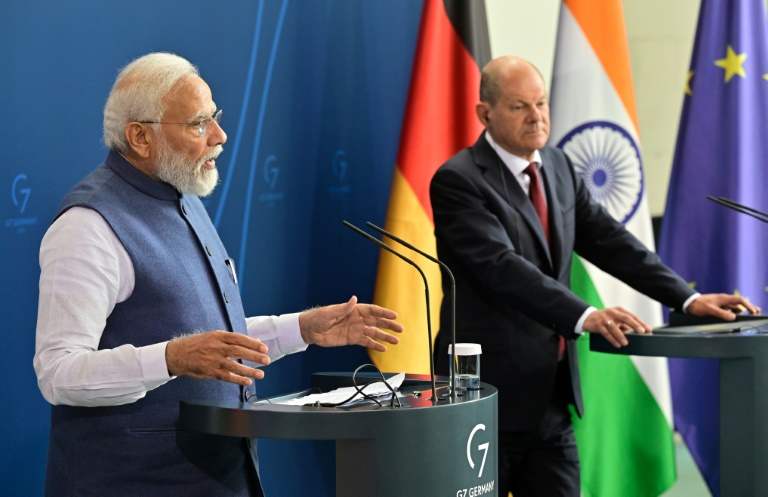
Indian Prime Minister Narendra Modi called for dialogue to end the war in Ukraine at the start of a European tour on Monday but steered clear of condemning Russia over the invasion.

India, which imports much of its military hardware from Russia, has long walked a diplomatic tightrope between the West and Moscow, and has called only for an immediate end to hostilities.

“We have insisted on a ceasefire and called for talks as the only way to resolve dispute since the start of the Ukraine crisis,” Modi told reporters after talks with German Chancellor Olaf Scholz in Berlin.

“We believe that there won’t be any winners in this war and everyone will lose, which is why we are in favour of peace,” he said.

Besides the humanitarian impact on Ukrainians, pressure on oil prices and global food supplies is also “putting a burden on every family in the world,” he said. 

Germany’s Scholz stressed that the war in Ukraine threatened the “rule-based global order”.

“Russia has jeopardised the fundamental principles of international law with its attack on Ukraine,” he said.

“The war and the brutal assault on civilians in Ukraine show the unchecked manner in which Russia is violating the principles of the UN Charter,” Scholz added, repeating his call for President Vladimir Putin to withdraw his troops.

– Rising Indian oil imports –

Scholz said he and Modi agreed that the “inviolability of borders” and “sovereignty of nations” must not be called into question.

“We thoroughly discussed that we want to achieve a better future — not by fighting wars against each other but by making economic development possible together,” he said.

The two governments later signed a joint declaration expressing “strong support” for upcoming talks between the European Union and India on a free trade agreement.

Scholz also confirmed he had invited Modi as a special guest to a Group of Seven (G7) leaders’ summit next month, seen as part of an effort to forge a broader alliance against Russia.

Bloomberg News had reported Sunday citing unnamed sources that Scholz was concerned over Modi’s refusal to condemn Russia and India’s increased fossil fuel imports from there, and was undecided on the invite until weeks ago. 

India has significantly increased imports of Russian oil from March onwards, but has bristled at criticism of the move, saying Europe’s consumption of Russian energy commodities remains far higher.

Modi was holding talks in Berlin before heading to Copenhagen to join the prime ministers of Denmark, Iceland, Finland, Sweden and Norway at a two-day India-Nordic Summit from May 3.

He will then make a brief stopover in France to see President Emmanuel Macron to “share assessments on various regional and global issues and will take stock of ongoing bilateral cooperation”, an Indian government statement said.

– ‘Huge potential’ –

In a media briefing on Sunday, Indian Foreign Secretary Vinay Kwatra said European countries “not only understand but also have deep appreciation” of India’s position on the conflict.

The principal focus of the visits and discussions is to strengthen bilateral partnership across a range of areas including trade, energy and sustainable development, Kwatra said.

With Russia reeling under Western sanctions, some 50 Indian food, ceramics and chemicals exporters will head to Moscow later this month after enquiries from Russian firms, the Times of India newspaper reported on Monday.

“Trade and financial sanctions imposed on Russia… have opened up numerous avenues for Indian businesses across various sectors,” the newspaper quoted Vivek Agarwal from lobby group the Trade Promotion Council of India, which is organising the trip, as saying.

“Indian companies too are excited to tap the huge potential available for Indian products in Russia,” he told the newspaper.

The daily quoted unnamed government officials as suggesting that shipments would only start once the war in Ukraine ends.

EU shores up defence against Russia energy threats

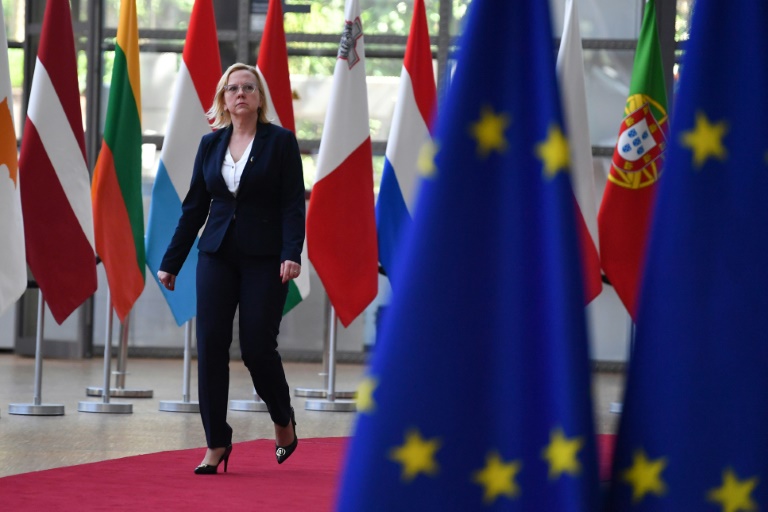
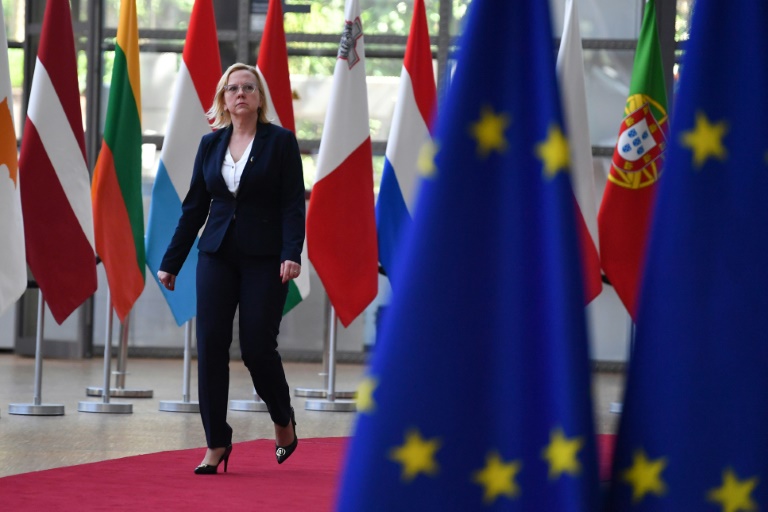
European Union ministers met Monday to respond to Russia cutting gas supplies to Poland and Bulgaria — and discuss plans for a possible oil embargo to punish Moscow for invading Ukraine.

The energy ministers from the 27 member states were coordinating efforts to counter what Brussels has branded the Kremlin’s bid to “blackmail” the West with threatened energy shortages.

The EU is also working on a phased ban on Russian oil imports, hoping to cut off funding for its war effort and assert energy independence from Moscow.

“We will support full sanctions on all Russian fossil fuels. We already have coal — now it’s time for oil,” said Anna Moskwa, Poland’s environment minister.

But Poland is among the more hawkish member states. Others, such as Germany, are wary of the economic hurt a wider ban on Russian energy would bring.

So no decision on an oil embargo was expected Monday. Diplomats and European Commission experts are still working towards a proposal for an eventual sixth sanctions package.

Instead, the ministers discussed technical ways to wean their economies off Russian energy supplies. 

They also looked at how to support countries that have provoked the Kremlin’s wrath, such as Bulgaria and Poland, whose gas deliveries were halted last week.

France’s ecological transition minister Barbara Pompili, whose country holds the EU presidency, said she had called the emergency meeting to “ensure our solidarity with our colleagues from Bulgaria and Poland.”

Russia’s President Vladimir Putin has demanded “unfriendly countries” — which includes all EU states — pay for their gas in rubles, which Warsaw and Sofia refused.

Doing so would involve western clients depositing in euros or dollars in a bank run by Russian state energy giant Gazprom, to be converted into rubles and moved to a second Gazprombank account. 

The European Commission says that could breach EU sanctions on Russia. But Germany and Austria have been cautious about rejecting the Kremlin’s payment terms.

“We appeal to countries not to support Putin’s decree, not to support the initiative to pay in rubles,” Moskwa said.  

– Face saver? –

Germany’s minister for economic affairs and climate Robert Habeck said Berlin would follow EU policy even if it imposed costs on its economy.   

But he also suggested the dual Gazprombank accounts plan could be “a face-saving solution for Putin”. 

France’s Pompili said: “We will continue to pay in euros the contracts which were stipulated in euros, or in dollars those which were stipulated in dollars.”

The European commissioner for energy, Kadri Simson, said Russia’s decision to cut off the two EU members showed that Moscow was not a “reliable supplier”.

She denied Russian reports that some EU countries have agreed to make ruble payments.

On Sunday, sources told AFP the EU will propose, perhaps as early as this week, a phased-out ban on imports of Russian oil — but not gas — in a fresh round of sanctions against Russia.

Several diplomats said the ban on oil was made possible after a U-turn by reluctant Germany.

The commission will propose a tapered ban over six to eight months, to give countries time to diversify their supply, the sources said.

The ban requires unanimous backing and could yet be derailed, with Hungary expected to mount strong opposition as it is dependent on Russian oil and close to the Kremlin.

Other countries are worried that a ban on oil would increase prices at the pump when consumer prices are already sharply on the rise because of the war.

“We must be very attentive to market reactions,” one official told AFP on condition of anonymity. “There are solutions and we will get there in the end, but we must act with great care.”

The sixth package of anti-Russian measures will also target the country’s largest bank, Sberbank, which will be excluded from the international SWIFT messaging system, the diplomats said. 

EU shores up defence against Russia energy threats

European Union ministers met Monday to respond to Russia cutting gas supplies to Poland and Bulgaria — and discuss plans for a possible oil embargo to punish Moscow for invading Ukraine.

The energy ministers from the 27 member states were coordinating efforts to counter what Brussels has branded the Kremlin’s bid to “blackmail” the West with threatened energy shortages.

The EU is also working on a phased ban on Russian oil imports, hoping to cut off funding for its war effort and assert energy independence from Moscow.

“We will support full sanctions on all Russian fossil fuels. We already have coal — now it’s time for oil,” said Anna Moskwa, Poland’s environment minister.

But Poland is among the more hawkish member states. Others, such as Germany, are wary of the economic hurt a wider ban on Russian energy would bring.

So no decision on an oil embargo was expected Monday. Diplomats and European Commission experts are still working towards a proposal for an eventual sixth sanctions package.

Instead, the ministers discussed technical ways to wean their economies off Russian energy supplies. 

They also looked at how to support countries that have provoked the Kremlin’s wrath, such as Bulgaria and Poland, whose gas deliveries were halted last week.

France’s ecological transition minister Barbara Pompili, whose country holds the EU presidency, said she had called the emergency meeting to “ensure our solidarity with our colleagues from Bulgaria and Poland.”

Russia’s President Vladimir Putin has demanded “unfriendly countries” — which includes all EU states — pay for their gas in rubles, which Warsaw and Sofia refused.

Doing so would involve western clients depositing in euros or dollars in a bank run by Russian state energy giant Gazprom, to be converted into rubles and moved to a second Gazprombank account. 

The European Commission says that could breach EU sanctions on Russia. But Germany and Austria have been cautious about rejecting the Kremlin’s payment terms.

“We appeal to countries not to support Putin’s decree, not to support the initiative to pay in rubles,” Moskwa said.  

– Face saver? –

Germany’s minister for economic affairs and climate Robert Habeck said Berlin would follow EU policy even if it imposed costs on its economy.   

But he also suggested the dual Gazprombank accounts plan could be “a face-saving solution for Putin”. 

France’s Pompili said: “We will continue to pay in euros the contracts which were stipulated in euros, or in dollars those which were stipulated in dollars.”

The European commissioner for energy, Kadri Simson, said Russia’s decision to cut off the two EU members showed that Moscow was not a “reliable supplier”.

She denied Russian reports that some EU countries have agreed to make ruble payments.

On Sunday, sources told AFP the EU will propose, perhaps as early as this week, a phased-out ban on imports of Russian oil — but not gas — in a fresh round of sanctions against Russia.

Several diplomats said the ban on oil was made possible after a U-turn by reluctant Germany.

The commission will propose a tapered ban over six to eight months, to give countries time to diversify their supply, the sources said.

The ban requires unanimous backing and could yet be derailed, with Hungary expected to mount strong opposition as it is dependent on Russian oil and close to the Kremlin.

Other countries are worried that a ban on oil would increase prices at the pump when consumer prices are already sharply on the rise because of the war.

“We must be very attentive to market reactions,” one official told AFP on condition of anonymity. “There are solutions and we will get there in the end, but we must act with great care.”

The sixth package of anti-Russian measures will also target the country’s largest bank, Sberbank, which will be excluded from the international SWIFT messaging system, the diplomats said. 

Eighth survivor recovered from China building collapse site as rescue hopes dim

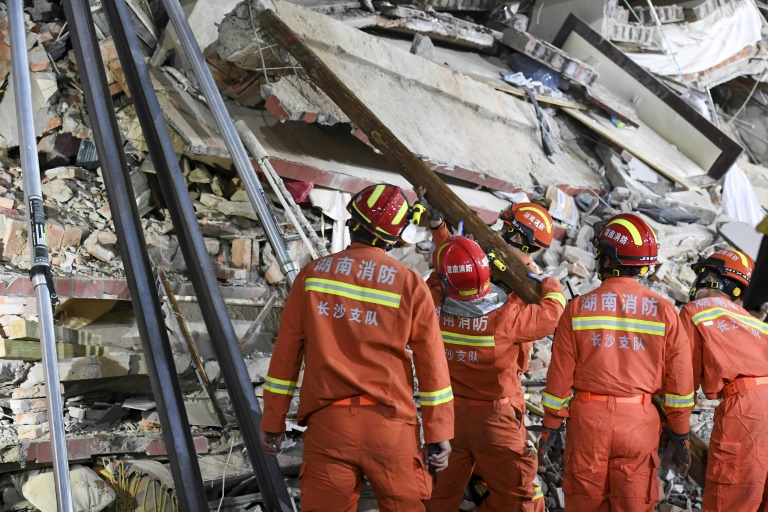
One person was pulled out alive Monday from the rubble of a building that collapsed three days ago in central China, state-run television said, with hopes of finding more survivors fading fast.

The commercial building in Changsha city, Hunan province — which housed apartments, a hotel and a cinema — caved in on Friday, sparking a massive rescue effort with hundreds of emergency responders.

State-run CCTV showed images of a person wrapped in a thick white blanket being carried on a stretcher, with Monday’s recovery taking the total number of people found up to eight in three days. 

Rescue workers in blue uniforms rushed the person to hospital with television channels providing no information on their condition.

According to state-run news agency Xinhua, the eighth survivor — a woman — had her limbs pinned down by debris, which made it difficult for rescue workers to extract her from the rubble. 

“The emergency medical team used infusion tubes measuring about 3 metres long to deliver normal saline solution to her,” it reported.

Emergency workers are still persisting in the search for survivors, eschewing the use of machinery to avoid creating vibrations in the collapsed structure, the report added.

At least 15 people identified by authorities are still trapped in the rubble while no contact has been established with 39 others. 

Changsha mayor Zheng Jianxin had initially said the government would “seize the golden 72 hours for rescue”, a window that closed by Monday afternoon.

The day before, a seventh survivor was found alive after 50 hours of search and rescue operations, according to state broadcaster CCTV. 

A one-metre-thick wall had separated her from rescuers, who located her after detecting signs of life at the spot.

Changsha police said nine people — including the building’s owner and a team of safety inspectors — were detained as of Sunday in connection with the accident.

Authorities alleged that surveyors had falsified a safety audit of the building. 

More than 700 first responders were dispatched to the scene of the disaster, which left a gaping hole in a dense streetscape.

State media on Sunday showed firefighters — backed by a digger — cutting through a morass of metal and sheets of concrete, while rescuers shouted into the tower of debris to communicate with any survivors.

President Xi Jinping had on Saturday called for a search “at all cost” and ordered a thorough investigation into the cause of the collapse, state media reported.

Building collapses are not uncommon in China due to weak safety and construction standards, as well as corruption among officials tasked with enforcement.

In January, an explosion triggered by a suspected gas leak brought down a building in the city of Chongqing, killing at least 16 people.

Spirit Airlines favors Frontier deal, rejects JetBlue bid

Spirt Airlines reiterated Monday its support for a merger with Frontier Airlines, saying it concluded a competing offer from JetBlue Airways involved excessive regulatory risk.

Spirit said the Department of Justice’s challenge of JetBlue’s alliance with American Airlines raised the odds that a takeover of Spirit by JetBlue might get blocked.

“After a thorough review and extensive dialogue with JetBlue, the board determined that the JetBlue proposal involves an unacceptable level of closing risk that would be assumed by Sprit shareholders,” said Mac Gardner, chairman of Spirit.

“We believe that our pending merger with Frontier will start an exciting new chapter for Spirit and will deliver many benefits to Spirit shareholders, team members and guests.”

In early February, budget carriers Spirit and Frontier announced they were combining to create a competitive low-cost carrier that aims to test the dominance of larger rivals.

But in April, JetBlue challenged the deal, bidding to buy Spirit for $3.6 billion and offering a similar argument about challenging larger US carriers.

JetBlue announced Monday an “enhanced” offer for Spirit that included a $200 million reverse break-up fee in case the JetBlue-Spirit deal was blocked on antitrust grounds. 

But Spirit, which had pushed for assurances JetBlue would drop the American Airlines venture if needed, said in a letter the carrier’s concessions were insufficient and “imposes on our stockholders a degree of risk no responsible board would accept.”

Shares of Spirit fell 8.9 percent to $21.52 in pre-market trading, while JetBlue gained 0.6 percent to $11.08. Frontier Group fell 1.9 percent to $10.41.

EU targets Apple Pay in latest Big Tech antitrust case

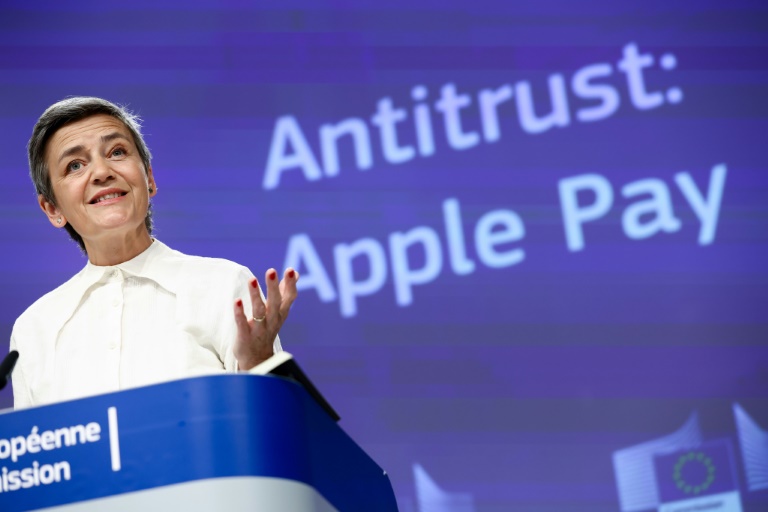
The EU accused Apple on Monday of blocking rivals from its popular “tap-as-you-go” iPhone payment system, opening a fresh battlefront between the US tech giant and Brussels.

“The preliminary conclusion that we reached today relates to mobile payments in shops, by excluding others from the game,” said Margrethe Vestager, the EU’s antitrust chief.

“Apple has unfairly shielded its Apple Pay wallets from competition. If proven this behaviour would amount to abuse of a dominant position, which is illegal under our rules,” Vestager told reporters.

The European Commission, the bloc’s competition watchdog, specifically charged the iPhone maker with preventing competitors trying to enter the contact-less market “from accessing the necessary hardware and software … to the benefit of its own solution, Apple Pay”.

The accusation is the latest salvo against US tech giants by EU regulators, who have also taken aim at Apple’s music streaming and e-book businesses.

The company is also a main target of the Digital Markets Act, a landmark EU law that will prohibit Apple and other US tech giants from privileging their own services in its products and platforms.

The EU’s outline of the case came after the commission launched an investigation in 2020 that was fuelled by complaints from European banks that resist paying a fee to Apple in order to reach their customers via apps.

The battle comes as tech giants eye personal finance as a new moneymaker, with Google, Amazon and Facebook owner Meta also seeking ways to replace credit cards or the need of carrying a wallet.

Launched in 2014, Apple Pay allows iPhone or Apple Watch users to make payments at retailers by touching their devices to the same terminals currently used for credit and debit cards.

– ‘Many options’ –

The technology at the heart of concerns in the Apple Pay case is “near-field communication”, or NFC, which permits devices to communicate within a very short range of each other, usually less than 10 centimetres (four inches).

On iPhones, the use of NFC is blocked for payments except by Apple Pay and any company wanting to use the technology must pass through Apple for a fee.

Vestager said that by restricting the access to the NFC to themselves, “this market is really not developed because it’s not possible for other app developers to get access to the NFC.”

Apple said that its first priority was security and that the Apple Pay system offered a level playing field between all actors using its products.

“Apple Pay is only one of many options available to European consumers for making payments, and has ensured equal access to NFC while setting industry-leading standards for privacy and security,” the company said.

“We will continue to engage with the commission to ensure European consumers have access to the payment option of their choice in a safe and secure environment,” it added.

There is no deadline for the EU’s continued investigation. If found guilty, Apple would have to remedy its practices or face fines that could reach as high as 10 percent of annual sales.

Eighth survivor recovered from China building collapse site as rescue hopes dim

One person was pulled out alive Monday from the rubble of a building that collapsed three days ago in central China, state-run television said, with hopes of finding more survivors fading fast.

The commercial building in Changsha city, Hunan province — which housed apartments, a hotel and a cinema — caved in on Friday, sparking a massive rescue effort with hundreds of emergency responders.

State-run CCTV showed images of a person wrapped in a thick white blanket being carried on a stretcher, with Monday’s recovery taking the total number of people found up to eight in three days. 

Rescue workers in blue uniforms rushed the man to hospital with television channels providing no information on his condition.

At least 15 people identified by authorities are still trapped in the rubble while no contact has been established with 39 others. 

Changsha mayor Zheng Jianxin had initially said the government would “seize the golden 72 hours for rescue”, a window that closed on Monday afternoon.

The day before, a seventh survivor was found alive after 50 hours of search and rescue operations, according to state broadcaster CCTV. 

A one-metre-thick wall had separated her from rescuers, who located her after detecting signs of life at the spot.

Changsha police said nine people — including the building’s owner and a team of safety inspectors — were detained as of Sunday in connection with the accident.

Authorities alleged that surveyors had falsified a safety audit of the building. 

More than 700 first responders were dispatched to the scene of the disaster, which left a gaping hole in a dense streetscape.

State media on Sunday showed firefighters — backed by a digger — cutting through a morass of metal and sheets of concrete, while rescuers shouted into the tower of debris to communicate with any survivors.

President Xi Jinping had on Saturday called for a search “at all cost” and ordered a thorough investigation into the cause of the collapse, state media reported.

Building collapses are not uncommon in China due to weak safety and construction standards, as well as corruption among officials tasked with enforcement.

In January, an explosion triggered by a suspected gas leak brought down a building in the city of Chongqing, killing at least 16 people.

Finnish group scraps nuclear plant deal with Russia's Rosatom

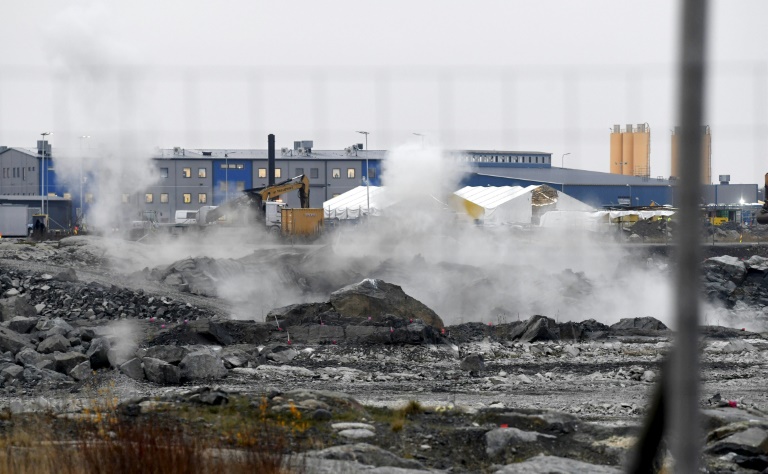
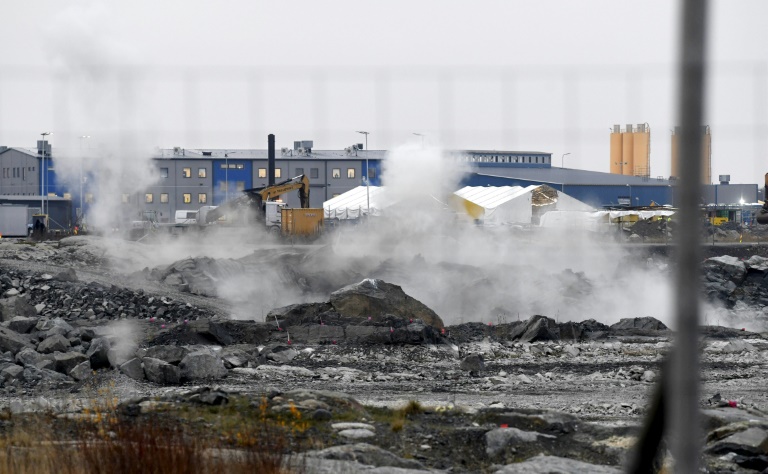
Finnish-led consortium Fennovoima said on Monday it has terminated a contract with Russian group Rosatom to build Finland’s third nuclear power plant, citing risks linked to the Ukraine war.

“The contract has been cancelled due to delays and the inability to deliver, and we have seen that the war has increased these risks,” Fennovoima chairman of the board Esa Harmala told reporters at a press conference.

Rosatom said it was surprised by the announcement.

“The reasons for such a decision are completely incomprehensible,” the group said in a statement, adding that the project had been “progressing” and Fennovoima’s management had not discussed the termination of the contract with shareholders.

Rosatom said it might take the matter to court.

“We reserve the right to defend our interests in accordance with the current contracts and current law”, the firm stated.

The proposed 1,200-megawatt Russian-designed reactor was to be built in Pyhajoki, about 100 kilometres (60 miles) from the port of Oulu in northern Finland.

The Hanhikivi 1 project, in which Rosatom owns a 34-percent stake with the remainder held by a Finnish consortium, had been delayed several times and the construction permit had not yet been granted.

Construction was to have begun in 2023 and electricity production in 2029.

Fennovoima, which had already poured 600-700 million euros into the project, said issues with the delivery had accumulated “years before” and the contract was not terminated solely because of the war.

It was not immediately known whether the Finnish consortium would completely scrap its plans to build a new reactor, or seek out a new partner to replace Rosatom.

“It is too early to speculate on the future of the project”, Harmala told reporters.

“This decision does not have a direct impact on the shareholder agreement between the owners of Fennovoima.”

However, Fennovoima chief executive Joachim Specht added it was “too early” to comment on whether Rosatom would stay on as an owner in Fennovoima.

– ‘Significant complexities’ –

The project, which employed 450 people, had been one of the major industrial projects involving a Russian company in the European Union, though there had been many uncertainties about its future.

Two days before Russia’s invasion of Ukraine, the Finnish government had said it was re-evaluating the security risks for the 7.5-billion-euro deal.

Russian nuclear power groups are currently not subjected to European sanctions over the Ukraine war.

Nevertheless, Fennovoima had said in early April it expected the existing sanctions to have an effect on the project.

Harmala stressed on Monday that “we were not pressured in any way”.

Fennovoima said the decision to cancel the contract was “not made lightly”.

“In a such a large project there are significant complexities and decisions are made only after thorough considerations”, it said in a statement.

Finland currently has five nuclear reactors at two plants, both located on the shores of the Baltic Sea, providing about 30 percent of the country’s electricity.

The fifth reactor, Olkiluoto 3 built by the French-German consortium Areva-Siemens, went online in March and will provide 15 percent of Finland’s electricity when it begins producing at full capacity in September.

Finnish group scraps nuclear plant deal with Russia's Rosatom

Finnish-led consortium Fennovoima said on Monday it has terminated a contract with Russian group Rosatom to build Finland’s third nuclear power plant, citing risks linked to the Ukraine war.

“The contract has been cancelled due to delays and the inability to deliver, and we have seen that the war has increased these risks,” Fennovoima chairman of the board Esa Harmala told reporters at a press conference.

Rosatom said it was surprised by the announcement.

“The reasons for such a decision are completely incomprehensible,” the group said in a statement, adding that the project had been “progressing” and Fennovoima’s management had not discussed the termination of the contract with shareholders.

Rosatom said it might take the matter to court.

“We reserve the right to defend our interests in accordance with the current contracts and current law”, the firm stated.

The proposed 1,200-megawatt Russian-designed reactor was to be built in Pyhajoki, about 100 kilometres (60 miles) from the port of Oulu in northern Finland.

The Hanhikivi 1 project, in which Rosatom owns a 34-percent stake with the remainder held by a Finnish consortium, had been delayed several times and the construction permit had not yet been granted.

Construction was to have begun in 2023 and electricity production in 2029.

Fennovoima, which had already poured 600-700 million euros into the project, said issues with the delivery had accumulated “years before” and the contract was not terminated solely because of the war.

It was not immediately known whether the Finnish consortium would completely scrap its plans to build a new reactor, or seek out a new partner to replace Rosatom.

“It is too early to speculate on the future of the project”, Harmala told reporters.

“This decision does not have a direct impact on the shareholder agreement between the owners of Fennovoima.”

However, Fennovoima chief executive Joachim Specht added it was “too early” to comment on whether Rosatom would stay on as an owner in Fennovoima.

– ‘Significant complexities’ –

The project, which employed 450 people, had been one of the major industrial projects involving a Russian company in the European Union, though there had been many uncertainties about its future.

Two days before Russia’s invasion of Ukraine, the Finnish government had said it was re-evaluating the security risks for the 7.5-billion-euro deal.

Russian nuclear power groups are currently not subjected to European sanctions over the Ukraine war.

Nevertheless, Fennovoima had said in early April it expected the existing sanctions to have an effect on the project.

Harmala stressed on Monday that “we were not pressured in any way”.

Fennovoima said the decision to cancel the contract was “not made lightly”.

“In a such a large project there are significant complexities and decisions are made only after thorough considerations”, it said in a statement.

Finland currently has five nuclear reactors at two plants, both located on the shores of the Baltic Sea, providing about 30 percent of the country’s electricity.

The fifth reactor, Olkiluoto 3 built by the French-German consortium Areva-Siemens, went online in March and will provide 15 percent of Finland’s electricity when it begins producing at full capacity in September.

Close Bitnami banner
Bitnami