World

Hopes dim for finding China building collapse survivors

Hopes of finding more survivors from the rubble of a collapsed commercial building in central China faded Monday, at the end of a 72-hour “golden” rescue period identified by authorities.

The building in Changsha city, Hunan province — which housed apartments, a hotel and a cinema — caved in on Friday, sparking a massive rescue effort with hundreds of emergency responders.

There has been no official confirmation of any rescues since a seventh survivor was pulled from the rubble on Sunday afternoon, leaving at least 16 people authorities have identified as trapped. No contact has been established with 39 others.

Changsha mayor Zheng Jianxin had said the government would “seize the golden 72 hours for rescue”, a window that closed Monday afternoon.

The seventh person was rescued more than 50 hours into the search effort, according to state broadcaster CCTV.

A one-metre-thick wall had separated the survivor from rescuers, who located her after detecting signs of life at the spot on Sunday.

Changsha police said nine people — including the building’s owner and a team of safety inspectors — were detained Sunday in connection with the accident.

Authorities alleged that surveyors had falsified a safety audit of the building. 

More than 700 first responders were dispatched to the scene of the disaster, which left a gaping hole in a dense streetscape.

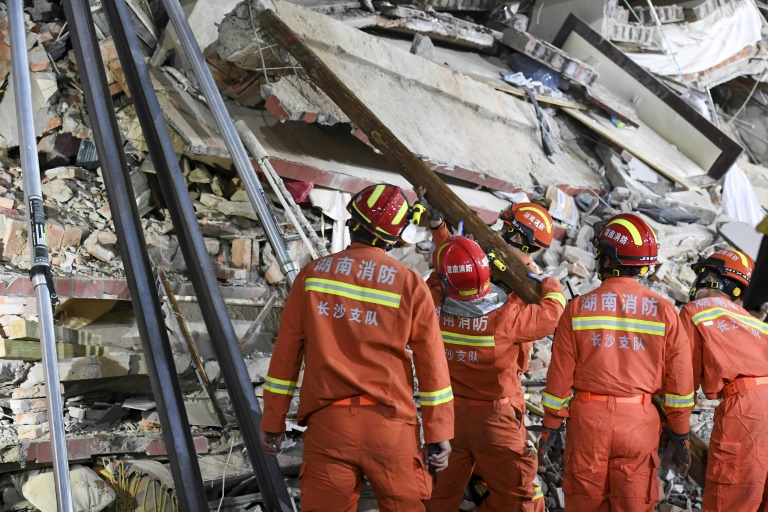
State media on Sunday showed firefighters — backed by a digger — cutting through a morass of metal and sheets of concrete, while rescuers shouted into the tower of debris to communicate with any survivors.

President Xi Jinping had on Saturday called for a search “at all cost” and ordered a thorough investigation into the cause of the collapse, state media reported.

Building collapses are not uncommon in China due to weak safety and construction standards, as well as corruption among officials tasked with enforcement.

In January, an explosion triggered by a suspected gas leak brought down a building in the city of Chongqing, killing at least 16 people.

Qantas to launch longest non-stop passenger flight

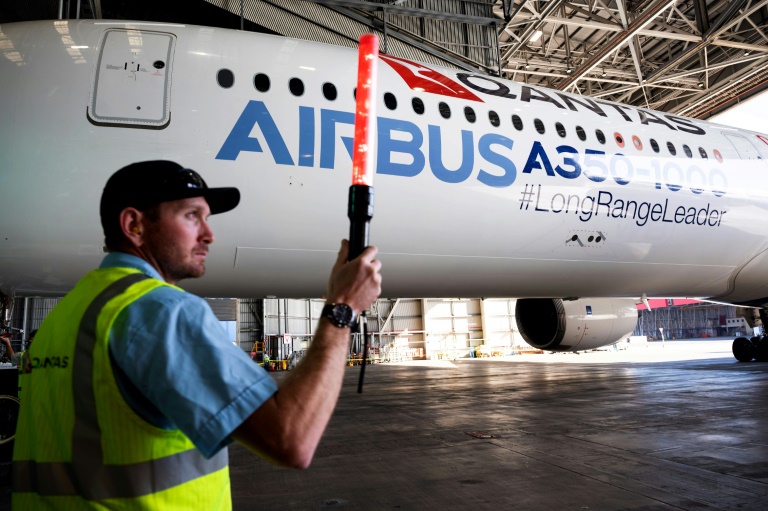
Qantas announced on Monday it will launch the world’s longest non-stop commercial flight, with passengers set to spend 19 hours in the air travelling from Sydney to London by the end of 2025.

After five years of planning, the airline said it was ordering 12 Airbus A350-1000 aircraft to operate the “Project Sunrise” flights to cities including London and New York.

Non-stop flights will start from Sydney by the end of 2025, it said, with long-haul trips later planned to include Melbourne.

“New types of aircraft make new things possible,” said Qantas chairman Alan Joyce, according to a statement.

“The A350 and Project Sunrise will make any city just one flight away from Australia,” he said.

“It’s the final frontier and the final fix for the tyranny of distance.”

Qantas operated research flights for the long-haul route in 2019, including a trial London-Sydney trek of 17,800 kilometres (11,030 miles), which took 19 hours and 19 minutes.

A trial New York-Sydney flight in the same year covered 16,200 kilometres (10,200 miles) and took a little over 19 hours.

Singapore Airlines currently operates the world’s longest non-stop commercial flight from Singapore to New York, covering 16,700 kilometres (10,400 miles) in a little under 19 hours.

Qantas already operates a 14,498-kilometre Perth-London trip that takes 17 hours.

– ‘Maximum comfort’ –

“As you’d expect, the cabin is being specially designed for maximum comfort for long-haul flying,” Joyce said.

Qantas said the new A350 aircraft would be configured for 238 passengers with first-class suites offering a separate bed, recliner chair and wardrobe.

It promised spacier economy sections and a “wellbeing zone” designed for “movement, stretching and hydration”.

Airbus listed the price of the A350-1000 at US$366.5 million (348 million euros) on its 2018 catalogue, the last one it published.

Qantas said it was also ordering 40 A321 XLR and A220 aircraft from Airbus.

In addition, it bought options for another 94 of these planes until the end of 2034.

The A220 models were listed at between US$81 million and US$91.5 million in 2018. The A321 was unveiled after Airbus stopped publishing catalogue prices.

Qantas said the total cost of the deal was a matter of commercial confidence, though it indicated it had obtained a significant discount on the standard price of the aircraft.

“The A320s and A220s will become the backbone of our domestic fleet for the next 20 years, helping to keep this country moving,” Joyce said.

The newer aircraft would reduce emissions by at least 15 percent if running on fossil fuels, and more if using sustainable aviation fuel, he said.

“We have come through the other side of the pandemic a structurally different company,” the airline boss said.

“Our domestic market share is higher and the demand for direct international flights is even stronger than it was before Covid.”

The A350-1000 planes will be powered by Rolls-Royce Trent XWB-97 turbofan engines, designed to be 25 percent more fuel efficient than the previous generation of aircraft, Qantas said.

'Lungs of the Mediterranean' at risk

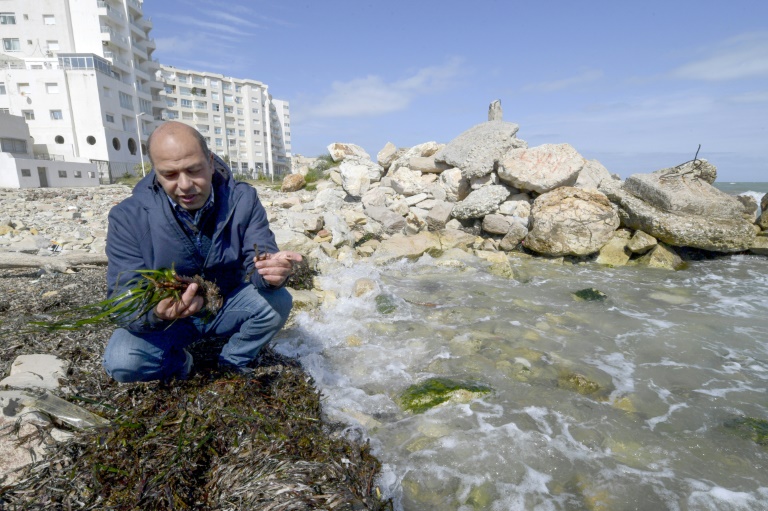
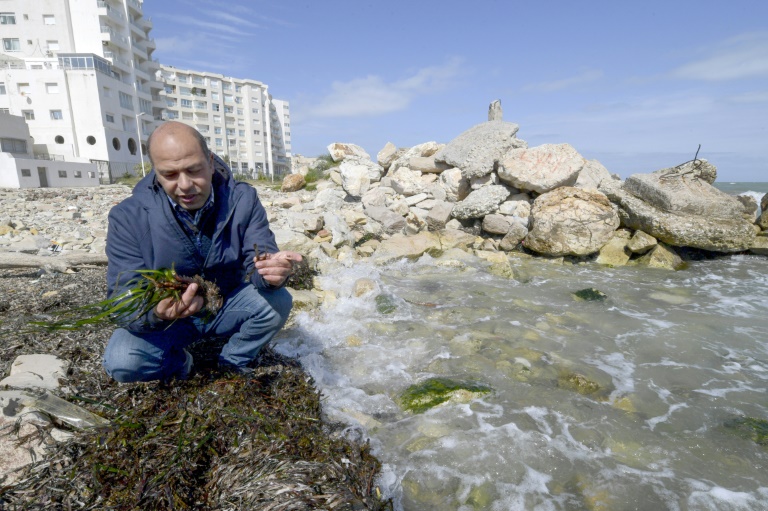
Under the Mediterranean waters off Tunisia, gently waving green seagrass meadows provide vital marine habitats for the fishing fleets and an erosion buffer for the beaches the tourism industry depends on.

Even more importantly, seagrass is such a key store of carbon and producer of oxygen — critical to slowing the devastating impacts of climate change — that the Mediterranean Wetlands Initiative (MedWet) calls it “the lungs” of the sea.

But, just as human actions elsewhere are devastating forests of trees on land, scientists warn that human activity is driving the grass under the sea to destruction at speed — with dire environmental and economic impacts.

Named Posidonia oceanica after the Greek god of the sea Poseidon, seagrass spans the Mediterranean seabed from Cyprus to Spain, sucking in carbon and curbing water acidity.

“Posidonia oceanica… is one of the most important sources of oxygen provided to coastal waters,” MedWet, a 27-member regional intergovernmental network, says.

Tunisia, on the North African coastline, “has the largest meadows” of all — spreading over 10,000 square kilometres (3,900 square miles), marine ecologist Rym Zakhama-Sraieb said, pointing to its key carbon-capture role.

The underwater flowering plants absorb three times more blue carbon — the term used to describe the removal of carbon dioxide from the atmosphere by the ocean and coastal ecosystems — than a forest, and they can store it for thousands of years, she said.

“We need Posidonia to capture a maximum of carbon,” Zakhama-Sraieb said.

But a dangerous cocktail of rampant pollution, illegal fishing using bottom trawling nets that rip up the seagrass, and a failure by people to appreciate its life-giving importance is spelling its demise.

– ‘Sea has been destroyed’ –

Growing at a depth of up to 50 metres (165 feet), seagrass provides shelter for fish and slows the erosion of coastlines by breaking wave swells that would otherwise damage the sandy beaches that tourists like.

Tunisian marine biologist Yassine Ramzi Sghaier said the grass is crucial for a country already gripped by a grinding economic crisis.

“All of Tunisia’s economic activity depends on Posidonia,” Sghaier said.

“It is the largest provider of jobs,” he claimed, noting that at least 150,000 people are directly employed in fishing and tens of thousands in the tourism industry.

Destruction has been swift, and replacement slow. The aquatic plant, also known as Neptune grass, grows less than five centimetres a year.

Areas of seagrass meadows have been slashed by more than half in the Gulf of Gabes, a vast area on Tunisia’s eastern coast, Sghaier said, with a 2010 study blaming excessive fishing and pollution.

Once Posidonia and a wealth of marine species thrived there, but since the 1970s, phosphate factories have poured chemicals into the sea, causing more damage to the ecosystem.

Seagrass serves as a vital shelter for fish to breed, feed and shelter.

Fishing makes up 13 percent of Tunisia’s GDP, and nearly 40 percent of it is done around seagrass meadows — and fisherman describe plummeting stocks.

“The sea has been destroyed,” said Mazen Magdiche, who casts his nets from the port of Monastir. “Chemicals are dumped everywhere.”

Magdiche calculates his catch is three times less than what it was 25 years ago, but said he had little alternative income.

“There are fewer and fewer fish,” he said. 

“You are not looking out for the interests of the sea, but to feed your children,” he added.

– ‘Catastrophe’ –

Nearly 70 percent of the Tunisian population lives on 1,400 kilometres (nearly 900 miles) of coastline, and for many Posidonia is considered mere rubbish.

When seagrass is washed up onshore, it mixes with sand to form large banks, that protect the coastline from swells and waves, experts say.

But sometimes bulldozers are used to “clean” the beaches, contributing to the acceleration of coastal erosion, with some 44 percent of beaches already at risk of being washed away.

“We are helping to make beaches disappear by removing the (seagrass) banks,” said Ahmed Ben Hmida, of Tunisia’s Coastal Protection and Development Agency.

Beaches are a key asset for tourism, which provided Tunisia with a record 14 percent of GDP in 2019, and a living for up to two million people — a sixth of the population. 

The aquatic plant also improves the quality of water, making the beaches more attractive for tourists, said Zakhama-Sraieb.

Ben Hmida said the creation of four protected marine zones could help Posidonia, but that action was needed on a far wider scale.

“If nothing is done to protect the whole Tunisian Posidonia, it will be a catastrophe,” he said.

'Lungs of the Mediterranean' at risk

Under the Mediterranean waters off Tunisia, gently waving green seagrass meadows provide vital marine habitats for the fishing fleets and an erosion buffer for the beaches the tourism industry depends on.

Even more importantly, seagrass is such a key store of carbon and producer of oxygen — critical to slowing the devastating impacts of climate change — that the Mediterranean Wetlands Initiative (MedWet) calls it “the lungs” of the sea.

But, just as human actions elsewhere are devastating forests of trees on land, scientists warn that human activity is driving the grass under the sea to destruction at speed — with dire environmental and economic impacts.

Named Posidonia oceanica after the Greek god of the sea Poseidon, seagrass spans the Mediterranean seabed from Cyprus to Spain, sucking in carbon and curbing water acidity.

“Posidonia oceanica… is one of the most important sources of oxygen provided to coastal waters,” MedWet, a 27-member regional intergovernmental network, says.

Tunisia, on the North African coastline, “has the largest meadows” of all — spreading over 10,000 square kilometres (3,900 square miles), marine ecologist Rym Zakhama-Sraieb said, pointing to its key carbon-capture role.

The underwater flowering plants absorb three times more blue carbon — the term used to describe the removal of carbon dioxide from the atmosphere by the ocean and coastal ecosystems — than a forest, and they can store it for thousands of years, she said.

“We need Posidonia to capture a maximum of carbon,” Zakhama-Sraieb said.

But a dangerous cocktail of rampant pollution, illegal fishing using bottom trawling nets that rip up the seagrass, and a failure by people to appreciate its life-giving importance is spelling its demise.

– ‘Sea has been destroyed’ –

Growing at a depth of up to 50 metres (165 feet), seagrass provides shelter for fish and slows the erosion of coastlines by breaking wave swells that would otherwise damage the sandy beaches that tourists like.

Tunisian marine biologist Yassine Ramzi Sghaier said the grass is crucial for a country already gripped by a grinding economic crisis.

“All of Tunisia’s economic activity depends on Posidonia,” Sghaier said.

“It is the largest provider of jobs,” he claimed, noting that at least 150,000 people are directly employed in fishing and tens of thousands in the tourism industry.

Destruction has been swift, and replacement slow. The aquatic plant, also known as Neptune grass, grows less than five centimetres a year.

Areas of seagrass meadows have been slashed by more than half in the Gulf of Gabes, a vast area on Tunisia’s eastern coast, Sghaier said, with a 2010 study blaming excessive fishing and pollution.

Once Posidonia and a wealth of marine species thrived there, but since the 1970s, phosphate factories have poured chemicals into the sea, causing more damage to the ecosystem.

Seagrass serves as a vital shelter for fish to breed, feed and shelter.

Fishing makes up 13 percent of Tunisia’s GDP, and nearly 40 percent of it is done around seagrass meadows — and fisherman describe plummeting stocks.

“The sea has been destroyed,” said Mazen Magdiche, who casts his nets from the port of Monastir. “Chemicals are dumped everywhere.”

Magdiche calculates his catch is three times less than what it was 25 years ago, but said he had little alternative income.

“There are fewer and fewer fish,” he said. 

“You are not looking out for the interests of the sea, but to feed your children,” he added.

– ‘Catastrophe’ –

Nearly 70 percent of the Tunisian population lives on 1,400 kilometres (nearly 900 miles) of coastline, and for many Posidonia is considered mere rubbish.

When seagrass is washed up onshore, it mixes with sand to form large banks, that protect the coastline from swells and waves, experts say.

But sometimes bulldozers are used to “clean” the beaches, contributing to the acceleration of coastal erosion, with some 44 percent of beaches already at risk of being washed away.

“We are helping to make beaches disappear by removing the (seagrass) banks,” said Ahmed Ben Hmida, of Tunisia’s Coastal Protection and Development Agency.

Beaches are a key asset for tourism, which provided Tunisia with a record 14 percent of GDP in 2019, and a living for up to two million people — a sixth of the population. 

The aquatic plant also improves the quality of water, making the beaches more attractive for tourists, said Zakhama-Sraieb.

Ben Hmida said the creation of four protected marine zones could help Posidonia, but that action was needed on a far wider scale.

“If nothing is done to protect the whole Tunisian Posidonia, it will be a catastrophe,” he said.
Ukraine armoury turns to making bullet-proof vests for troops

Ukrainian armour-maker Vadim Mirnichenko used to specialise in swords and breastplates for medieval jousting competitions — but after Russia invaded his homeland, he turned his passion for historical weaponry to the modern day.

The small, dark workshop of the medieval combat enthusiast and self-taught blacksmith is full of swords and blades at various stages of manufacture, and designs for different pieces of armour. 

A mannequin sporting metal shoulder plates stands forgotten in the corner as the craftsmen switch their attention to bullet-proof plates that can be fitted into fighters’ vests.  

Mirnichenko, an imposing figure with a shaven head, has 20 years of medieval combat tournament experience, with several broken ribs to show for it. 

“It’s a brutal sport,” the 39-year-old tells AFP, but “like every man, I want to hold a sword in my hand, and to fight like a knight”.

Medieval combat is a discipline that ranks as sport in Ukraine, which hosted the 2019 world championships just 100 kilometres (60 miles) or so from Kyiv. 

More than a thousand competitors from across Europe, and even as far away as Australia, arrived to prove themselves in jousts on horseback and on foot. 

And Mirnichenko earned enough to make a living out of his hobby. 

– International clientele –

Before the coronavirus pandemic shut down tournaments, he employed up to 16 people in his workshop in the southern city of Zaporizhzhia.

He even counted international customers among his clientele — when AFP visited the workshop, a shipment of metal plates was being readied to be expedited to China.

Nowadays, though, the workers’ focus is much closer to home. 

“I am very proud that we are doing our part to help our country,” says his friend and fellow craftsman, Andriy Paliy.

Mirnichenko says that, despite his tactical training, he was turned down by the Ukrainian army, so he decided to use his expertise in metalwork to help the war effort.

“One day, a friend and I decided to test our work — our swords and our scythes,” he says. 

“So we went to a shooting range and it turned out that our armour could stop the ammunition.”

To make the protective gear, Mirnichenko and his team rivet steel plates together over different layers of foam, before covering them with a thick band of grey tape.

The first dozen, financed by donations from overseas clients, were given to friends in the army, police and defence forces. Around 30 others were sold at cost for $150 (140 euros) each.

They have been tested in the field, too, says Paliy, a similarly striking figure with his handlebar moustache and a long ponytail on one side of his head. 

An acquaintance was wearing one of the plates when he found himself under Russian fire, and thanks to that “he is alive”, except for a possible broken rib, Paliy says. 

Mirnichenko says his business — which still does not have a name — should be able to produce around 30 more vests, before a lack of metal and cost constraints force them to turn to making knives and machetes. 

– Improving the design –

But that has not stopped him trying to improve his design. 

On Sunday, Mirnichenko and Paliy were at the shooting range again to test two new prototypes comprising three finer plates rather than just two — but this time some of the bullets pierced through.  

“We know now that that wasn’t a good idea,” says Mirnichenko, unfazed.

Over the last week, the first houses were bombed in Zaporizhzhia, now less than an hour from the front line of the fighting.

Bombing can now be heard in certain areas in the city. 

Even though the Russian forces have apparently turned their attention to Ukraine’s south, Mirnichenko has not yet evacuated his family.  

Pinned up in the grimy workshop next to the armour designs are a child’s drawings — a blue dinosaur, multi-coloured flowers and butterflies. 

Mirnichenko said he is determined to keep his family safe. 

“No matter what happens to me,” he says.

Markets drop as US rout, China worries hit sentiment

Asian and European markets fell in holiday-thinned trade Monday following another tech-led rout on Wall Street, with focus on the Federal Reserve’s expected interest rate hike this week.

Adding to the dour mood was data showing Chinese manufacturing activity shrank last month at its fastest pace since the start of the pandemic owing to Covid-19 lockdowns in the country’s biggest cities.

The government’s refusal to shift from its zero-Covid policy and strict containment measures is fanning fears about the world’s number two economy and key driver of global growth.

Trading floors around the world have been buffeted for months by a perfect storm of crises including China’s lockdowns, surging inflation, Fed plans to hike rates, elevated oil prices and the war in Ukraine.

All eyes are on the US central bank’s policy meeting this week, which is expected to see it hike borrowing costs by half a point — the most since 2000 — and follow it with several more increases before the end of the year.

And now some analysts are predicting it could even announce a three-quarter-point increase at some point as it battles more than 40-year-high inflation.

However, with some commentators warning rates could go as high as three percent, there are also worries the Fed could be too heavy-handed and tip the US economy into recession.

Fed boss Jerome Powell “could cement the view that 50 (basis points) is the new 25, but more worrying for stock pickers, there are lots of QE to unwind”, said SPI Asset Management’s Stephen Innes, referring to the quantitative easing bond-buying programme used by the Fed to keep rates low.

“So, the question is, how much of the impact of the balance sheet runoff” has been priced in.

The prospect of higher borrowing costs has been compounded by a sharp slowdown in China, with lockdowns in the biggest cities including Shanghai slamming output and snarling supply chains.

Data at the weekend showed the country’s manufacturing activity shrank the most it has since February 2020, and the near future does not look promising as officials shut down cinemas and gyms over the May Day holiday.

Beijing on Friday further flagged plans to provide support to the economy and signalled an easing of a painful tech crackdown. But the announcement follows several other recent pledges and traders are yet to see any concrete measures, with most wanting to see a softer approach to controlling the virus.

“We remain deeply concerned about growth,” Nomura Holdings economists said in a note.

“Despite the raft of policy measures announced by the Politburo meeting (Friday), we still believe markets should remain focused on the development of the pandemic and the corresponding zero-Covid strategy. All other policies are of secondary importance.” 

On equity markets, Tokyo, Seoul, Mumbai, Manila and Wellington all fell.

Sydney also retreated, though Qantas rose more than two percent after saying it would launch the world’s longest non-stop commercial flight between Sydney and London by the end of 2025.

Paris and Frankfurt sank at the open, though US futures were in positive territory.

London, Hong Kong and mainland Chinese markets were closed along with those in Taipei, Singapore, Bangkok and Jakarta.

The struggles in China, the world’s biggest crude importer, led to a drop in prices of the commodity on demand concerns, offsetting worries about supplies from Russia caused by the Ukraine war.

European Union talks to scale back imports of oil from Russia, following embargoes by the United States and Britain, continue to provide support.

“But further gains will be limited to weaker oil demand prospects from China due to the continued expansion of lockdowns and mass testing across the region,” added SPI’s Innes.

– Key figures at around 0720 GMT –

Tokyo – Nikkei 225: DOWN 0.1 percent at 26,818.53 (close)

Hong Kong – Hang Seng Index: Closed for a holiday

Shanghai – Composite: Closed for a holiday

London – FTSE 100: Closed for a holiday

Dollar/yen: UP at 130.30 yen from 129.89 yen on Friday

Euro/dollar: DOWN at $1.0534 from $1.0550

Pound/dollar: DOWN at $1.2557 from $1.2578

Euro/pound: UP at 83.88 pence from 83.86 pence

West Texas Intermediate: DOWN 0.7 percent at $103.95 per barrel

Brent North Sea crude: DOWN 0.7 percent at $106.44 per barrel

New York – Dow: DOWN 2.8 percent at 32,977.21 (close)

'No choice': Shanghai residents sent out of city during Covid crackdown

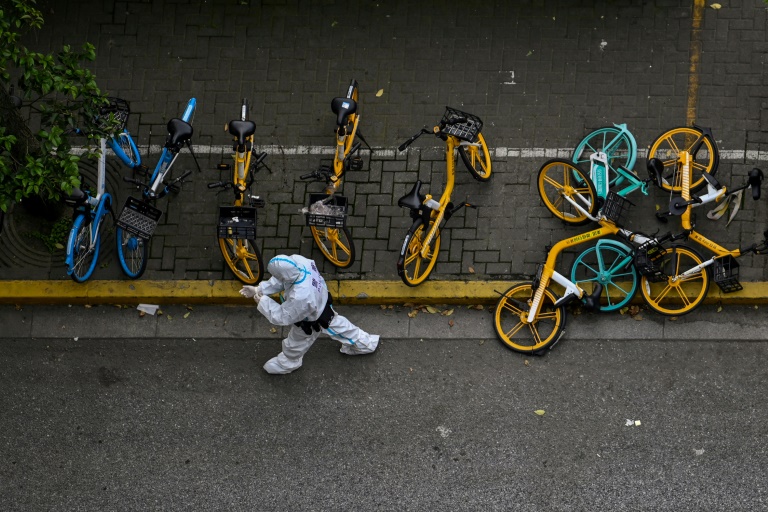
In the middle of the night, Shanghai resident Lucy said she and her neighbours were forced into buses and taken hundreds of kilometres away from the locked-down Chinese metropolis to a makeshift quarantine centre.

Most of Shanghai’s 25 million residents have been confined to their homes for weeks as the city battles a major Covid outbreak. Hundreds of thousands of virus-positive people have been taken to makeshift facilities as China does not allow them to quarantine at home.

But some residents who tested negative told AFP that they were also forced out of their homes and taken to camps outside the city, some hundreds of kilometres away.

“The police told us that there were too many positive cases in our compound and if we carried on living here, we’d all become infected,” Lucy told AFP, using only her first name for privacy reasons.

“We had no choice.”

She said the virus-negative group were sent to a quarantine site containing hundreds of single-room prefab cabins in neighbouring Anhui province, 400 kilometres away, and that it was not initially clear where they going.

Lucy added that she does not know when she can go home.

AFP spoke with other Shanghai residents who said healthy, virus-negative people in some housing compounds were sent to other provinces for quarantine.

One said his neighbours had protested and refused to join.

Another from the city’s Jing’an district told AFP she was taken, along with dozens of people from her residential compound, to a single-room quarantine centre in Anhui late one night. 

“We all received calls from the neighbourhood committee saying that since there are too many positives in our compound, the negatives need to be transferred to hotels for isolation,” that resident told AFP, preferring to stay anonymous. 

She said they “felt terrified” on seeing the temporary accommodation, and had “lost trust in the Shanghai government.”

– Extreme measures –

Shanghai on Monday was under a patchwork of different restrictions as new virus cases dropped to around 7,000, with 32 dead.

City authorities have imposed a three-tiered system of “freedoms”, although stringent local enforcement appeared to still restrict the majority of residents to within compounds or neighbourhoods.

China’s relentless pursuit of a zero-Covid policy has left many Shanghai residents chafing under the tight curbs.

The Shanghai government did not immediately respond to a request for comment.

Officials in the economic hub are likely under more pressure than elsewhere to achieve “zero-Covid at the community level” — meaning no transmission outside quarantine centres — according to Yanzhong Huang, senior fellow at the New York-based Council on Foreign Relations. 

“When they face strong pressure from above to achieve zero-Covid targets, these heavy-handed, excessive measures become more likely.”

“Moving negative people could be considered a pre-emptive strategy, with the expectation that more positive cases may be found if they stay there,” Huang added.

Chinese officials are routinely sacked after virus outbreaks for perceived failures in Covid control.

Tens of thousands of close contacts of virus cases have been quarantined in neighbouring provinces, according to official news agency Xinhua. 

But there has been no mention in official media of the relocation of negative cases.

Shanghai authorities have faced wide criticism after they initially announced phased four-day lockdowns in different parts of the city that were not then lifted.

Tall metal barriers were erected around some locked-down compounds in recent days, as part of measures described as a “hard lockdown”.

Ukraine on agenda as Indian PM Modi heads to Europe

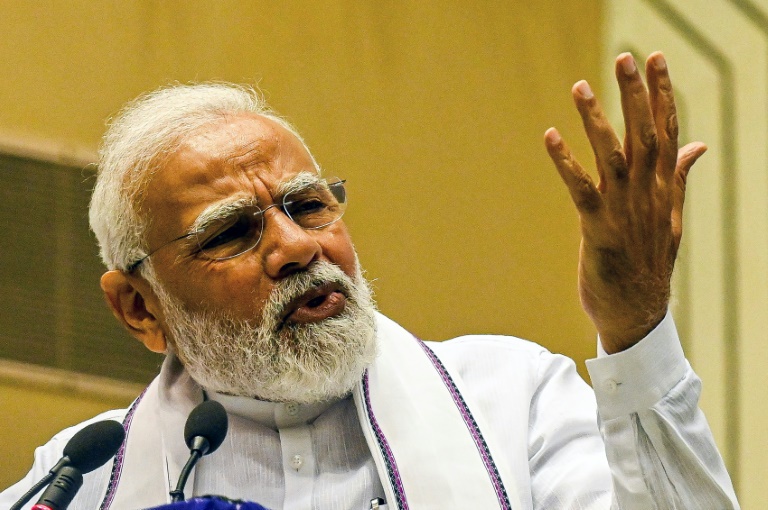
Indian Prime Minister Narendra Modi headed to Europe on Monday with New Delhi’s refusal to condemn Russia’s invasion of Ukraine set to be a key talking point in meetings with regional leaders.

India, which imports much of its military hardware from Russia, has long walked a diplomatic tightrope between the West and Moscow, and has called only for an immediate end to hostilities.

“My visit to Europe comes at a time when the region faces many challenges and choices,” Modi said in a statement released before his departure for Germany, Denmark and France.

The premier intended to “strengthen the spirit of cooperation” with European partners “who are important companions in India’s quest for peace and prosperity”, the statement added.

Modi was due to hold talks with German Chancellor Olaf Scholz in Berlin on Monday before heading to Copenhagen to join the prime ministers of Denmark, Iceland, Finland, Sweden and Norway at a two-day India-Nordic Summit from May 3.

He will then make a brief stopover in France to see President Emmanuel Macron to “share assessments on various regional and global issues and will take stock of ongoing bilateral cooperation”, the Indian statement said.

Germany’s Scholz was quoted by the Indian Express daily on Monday as saying the “attack on Ukraine by Russia is on the top of the agenda” in the discussions with Modi.

“The brutality of the Russian attack is shocking and appalling. Those responsible must be held accountable. I am confident that there is broad agreement between our countries on this,” the newspaper quoted Scholz as saying in an interview.

Scholz plans to invite Modi as a special guest to a Group of Seven (G7) leaders’ summit next month as part of an effort to forge a broader alliance against Russia, Bloomberg News reported Sunday.

Quoting unnamed sources, the report said Scholz was concerned over Modi’s refusal to condemn Russia and India’s increased fossil fuel imports from there, and was undecided on the invite until weeks ago. 

India has significantly increased imports of Russian oil from March onwards, but has bristled at criticism of the move, saying Europe’s consumption of Russian energy commodities remains far higher.

– Rising Indian oil imports –

In a media briefing on Sunday, Indian Foreign Secretary Vinay Kwatra said European countries “not only understand but also have deep appreciation” of India’s position on the conflict.

The principal focus of the visits and discussions is to strengthen bilateral partnership across a range of areas including trade, energy and sustainable development, Kwatra said.

With Russia reeling under Western sanctions, some 50 Indian food, ceramics and chemicals exporters will head to Moscow later this month after enquiries from Russian firms, the Times of India newspaper reported on Monday.

“Trade and financial sanctions imposed on Russia… have opened up numerous avenues for Indian businesses across various sectors,” the newspaper quoted Vivek Agarwal from lobby group the Trade Promotion Council of India, which is organising the trip, as saying.

“Indian companies too are excited to tap the huge potential available for Indian products in Russia,” he told the newspaper.

The daily quoted unnamed government officials as suggesting that shipments would only start once the war in Ukraine ends.

Jill Biden to meet Ukrainian refugees on Slovakia, Romania trip

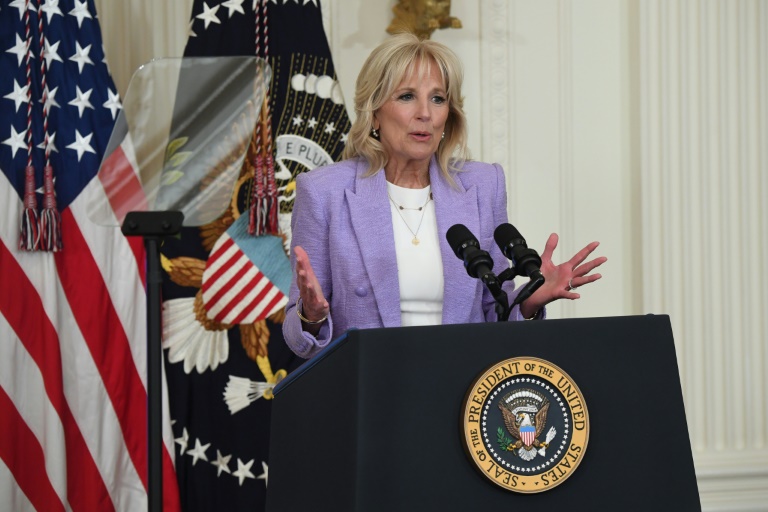
US First Lady Jill Biden will visit Romania and Slovakia this week to meet with displaced Ukrainian parents and children, aid workers, US service members and embassy personnel, her office said Monday.

Romania and Slovakia have taken in hundreds of thousands of Ukrainian refugees fleeing the Russian invasion of their country.

In Slovakia on Sunday, celebrated as Mother’s Day in the United States, Biden will travel to the city of Kosice and village of Vysne Nemecke to meet with refugees, aid workers and the Slovakians who are supporting them.

“On Mother’s Day, she will meet with Ukrainian mothers and children who have been forced to flee their home country because of Putin’s war,” Biden’s office said.

The first lady’s visit is the latest show of US support for Ukraine and the countries assisting it.

Her trip follows a trip to Kyiv by US House Speaker Nancy Pelosi, who met with President Volodymyr Zelensky on Saturday.

During her May 5-9 travels, Biden will visit US service members in Romania on Friday before heading to Bucharest.

In the Romanian capital on Saturday, she will meet with members of the government, US embassy staff and teachers working with displaced Ukrainian children, the statement from her office said.

Her trip also includes a visit to the Slovak capital Bratislava to meet with US embassy staff and government officials.

Nearly 5.5 million refugees have fled Ukraine since Russian President Vladimir Putin launched his invasion on February 24, according to the UN refugee agency UNHCR.

Just over three million fled to Poland, while Romania has taken in 817,000 and Slovakia nearly 372,000, as of April 29.

US President Joe Biden has proposed a huge $33 billion package for arming and supporting Ukraine.

Three shot in Chile May Day clashes

Three people were wounded by gunfire and two arrested in clashes at May Day demonstrations in Chile, police said.

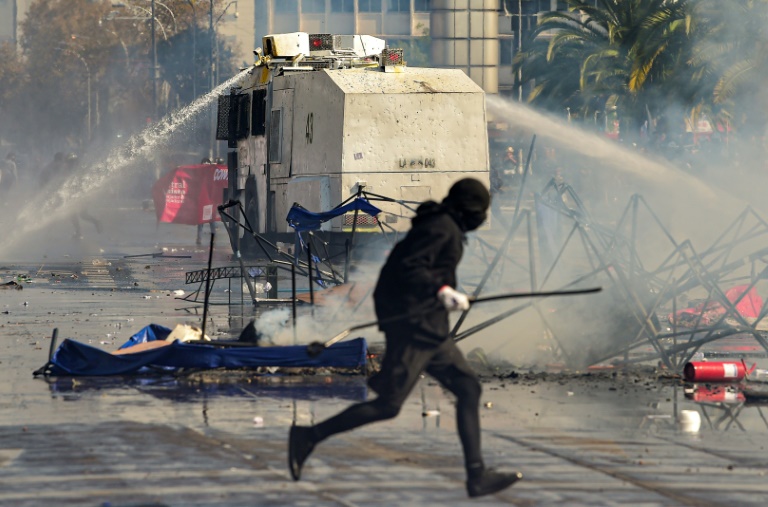
The shooting occurred during a Sunday march called by a union in the capital Santiago as some protesters erected barricades and entered commercial premises, clashing with merchants.

“There were clashes between street vendors who unfortunately used firearms and injured three people, two of them women and a third man was also injured by a ballistic impact,” said Enrique Monras, chief of police for the metropolitan area.

Police confirmed two foreigners were arrested on suspicion of firing the shots.

The force used water cannon and tear gas to disperse the demonstrators.

President Gabriel Boric decried the violence, telling a news channel: “We are normalizing violence, we cannot allow criminal gangs to take over the streets of our country.”

Separately, the main traditional May Day march, organized by the Central Unitaria de Trabajadores (CUT) union, passed without incident as thousands of people with flags and banners gathered in the Plaza Italia.

“We are happy, it is a special and particular day after two years of confinement (due to Covid) … to recognize the work of many colleagues such as health, commerce and transport workers, who were fundamental in this pandemic,” said CUT president David Acuna.

They were joined by Labor Minister Jeannette Jara, the first member of the Communist Party to hold the position since the return of democracy in Chile in 1990.

She was the architect of an agreement reached by the CUT and business organizations that will raise the minimum wage by 12.5 percent.

The minimum wage is set to reach 400,000 pesos ($470) per month from August. Boric has said his goal is to raise it to 500,000 pesos by 2026.

Close Bitnami banner
Bitnami