World

Ukraine to evacuate more civilians from besieged Mariupol

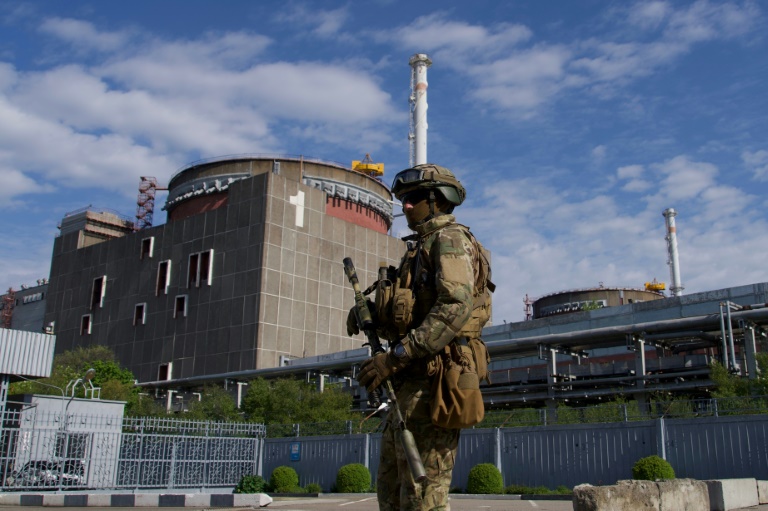
Ukrainian authorities are planning to evacuate more civilians from Mariupol on Monday, after dozens were finally brought to safety following weeks trapped under heavy fire in the strategic port city’s Azovstal steel complex.

The plant has endured a Russian blockade since Moscow’s invasion on February 24, with stories of the harsh conditions in besieged Mariupol horrifying the world as a war which has seen thousands killed and millions displaced entered its third month. 

The UN said Sunday that a “safe passage operation” was taking place at the Azovstal steel plant. According to Kyiv, roughly 100 civilians have been evacuated from the besieged plant, while the International Committee of the Red Cross said it was “currently participating” in the operation.

Russia’s defence ministry gave a lower figure of 80 civilians, adding: “Those who wished to leave for areas controlled by the Kyiv regime were handed over to UN and ICRC (Red Cross) representatives”.

In his regular daily address to the nation, Ukrainian President Volodymyr Zelensky hailed the successful operation and said more evacuations were expected Monday. 

“Today, we finally managed to start the evacuation of people from Azovstal,” Zelensky said in a video address, adding that they were due to arrive in Ukraine-controlled Zaporizhzhia on Monday.

“For the first time, there were two days of real ceasefire on this territory. More than a hundred civilians have already been evacuated — women and children first of all,” he added. 

The head of the Donetsk Regional Military Administration later said the evacuation would begin at 7:00 am local time (0400 GMT).

One Russian news report put the number of civilians still in the plant at more than 500.

Moscow’s defence ministry earlier confirmed that civilians were leaving, releasing a video that showed cars and buses travelling in the dark marked with a “Z”, the letter used by the Russian forces in the conflict.

– ‘Relentless fear’ –

Those forces continued their push into eastern Ukraine on Sunday, killing eight civilians in rocket attacks in Donetsk and Kharkiv, the regions’ governors said.

Moscow’s army has refocused on the east, notably the Donbas region, which includes Donetsk and Lugansk, after failing to take the capital Kyiv in the first few weeks of the war. 

Lyman, a former railway hub known as the “red town” for its redbrick industrial buildings, is expected to be one of the next places to fall after Ukrainian forces withdrew.

Russian forces appeared to have made notable advances around the town, advancing on their positions by several kilometres, an AFP team in the area said Sunday.

Another three people were killed in shelling on residential areas in and around Kharkiv, Ukraine’s second city, the regional governor Oleg Synegubov said on Telegram.

The Ukrainian army has also withdrawn from Kharkiv, with its troops now in outlying positions, according to AFP journalists who recently visited the city. 

Russia has moved to solidify its grip on areas it controls and from Sunday introduced the Russian ruble in the region of Kherson — initially to be used alongside the Ukrainian hryvnia.

“Beginning May 1, we will move to the ruble zone,” Kirill Stremousov, a civilian and military administrator of Kherson, was cited as saying earlier by Russia’s state news agency RIA Novosti.

He said the hryvnia could be used during a four-month period, but then “we will completely switch to settlements in rubles”.

On the frontline in the east, Russian troops — helped by massive use of artillery — have advanced slowly but steadily. 

But Ukrainian forces have also recaptured some territory in recent days.

One of the areas taken back from Russian control was the village of Ruska Lozova, which evacuees said had been occupied for two months.

“It was two months of terrible fear. Nothing else, a terrible and relentless fear,” Natalia, a 28-year-old evacuee from Ruska Lozova, told AFP after reaching Kharkiv.

Kyiv has admitted that Russian forces have captured a string of villages in the Donbas region and has asked Western powers to deliver more heavy weapons to bolster its defences there.

“Everyone understands that we must guard the line here,” Lieutenant Yevgen Samoylov of the 81st Brigade told AFP as his unit rotated away from the front line near the town of Sviatogirsk.

“We cannot let the enemy move closer. We try to hold it with all our force.”

– ‘You cannot back down’ –

Western powers have sought to up the pressure on Russia as its onslaught on Ukraine drags on, with sources telling AFP Sunday that the EU will propose a phased out ban on Russian oil imports as part of its fresh round of sanctions against Moscow.

The European Commission, which draws up sanctions for the EU’s 27 countries, is currently preparing the text, which could be put to the member states as early as Wednesday, diplomats said.

Several diplomats said the ban on oil was made possible after a policy U-turn by Germany, which had resisted the measure, seeing it as too disruptive and potentially harmful to its economy.

And US Speaker of the House Nancy Pelosi met President Zelensky on Saturday, becoming the most senior US government official to visit since the war began.

“Do not be bullied by bullies,” she told reporters at a news conference in Rzeszow in southern Poland on Sunday after returning from Ukraine.

“If they are making threats, you cannot back down.” 

She promised to enact the $33 billion (31 billion euro) arms and support package announced by US President Joe Biden last week.

Russia has been seeking ways to push back against the growing international pressure.

The speaker of the lower house of parliament, Vyacheslav Volodin, suggested Moscow could seize Russia-based assets of countries it deems hostile. “It is fair to take reciprocal measures,” he said.

burs-oho/lb
Japan's ENEOS withdraws from Myanmar gas project

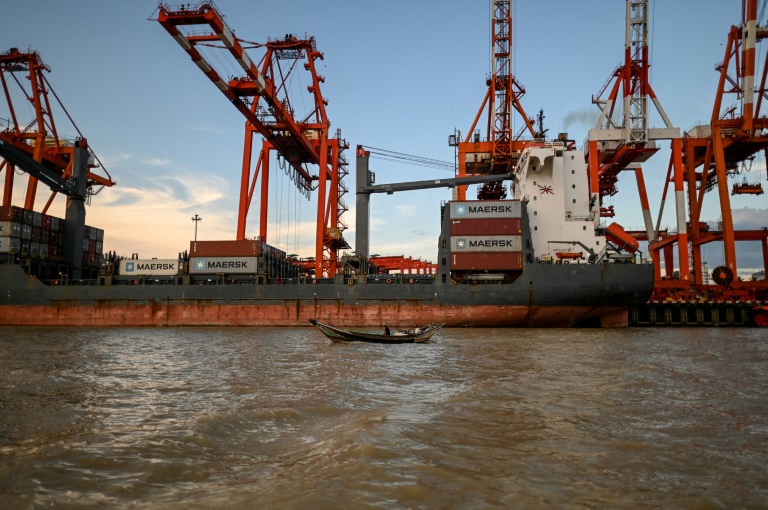
Japanese energy conglomerate ENEOS Holdings said Monday it will withdraw from a gas project in coup-hit Myanmar, days after its Thai and Malaysian partners announced they would pull out.

ENEOS is the latest energy giant to retreat from the Southeast Asian country, whose military has waged a widespread crackdown on dissent since it ousted and detained civilian leader Aung San Suu Kyi last year.

The company is involved in the Yetagun project off southern Myanmar along with the Japanese government and Mitsubishi Corporation.

Together they hold a 19.3 percent stake in the gas field, which has been operational for two decades.

ENEOS said it had “decided to withdraw after discussions taking into consideration the country’s current situation, including the social issues, and project economics based on the technical evaluation of Yetagun gas fields”.

“This withdrawal will be effective after approval from the Myanmar government,” it added in a statement.

An official at Japan’s natural resources and energy agency told AFP that the government “takes the same position” as ENEOS, noting the Yetagun project has experienced a reduction in output over the past decade.

Malaysia’s Petronas and Thailand’s oil and gas conglomerate PTTEP also announced their withdrawal on Friday. Petronas subsidiary Carigali holds a roughly 41 percent stake in the Yetagun project, while PTTEP owns 19.3 percent.

More than 1,800 civilians have died in Myanmar during the military crackdown and more than 13,000 have been arrested, according to a local monitoring group.

With the economy tanking and pressure mounting from rights groups, companies from France’s TotalEnergies to British American Tobacco and Norway’s Telenor have upped sticks.

Tokyo is a major provider of economic assistance to Myanmar, and the government has long-standing relations with the country’s military.

After the coup, Japan announced it would halt all new aid, though it stopped short of imposing individual sanctions on military and police commanders.

Dudley decides: rising prices set to cost UK Tories

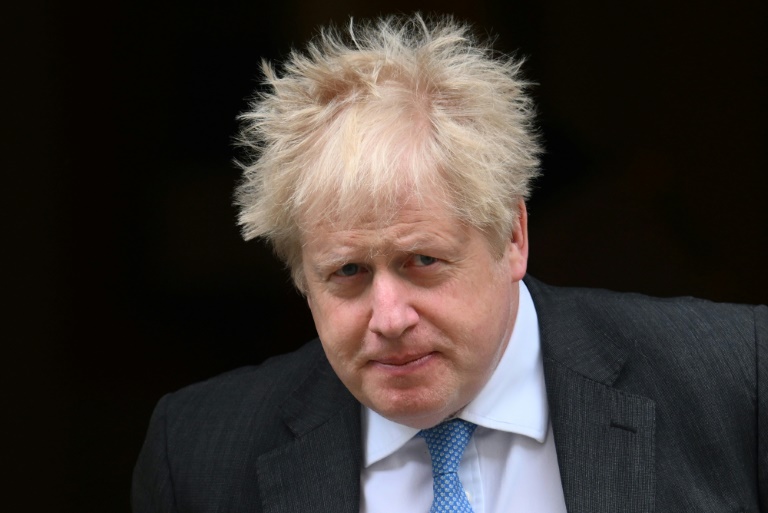
Rampant inflation and lockdown-breaking parties are fuelling anger in the English swing town of Dudley, but disillusionment with politics in general could yet help Prime Minister Boris Johnson.

“It’s lie after lie after lie,” former truck driver Alex, 73, said of Johnson, whose political survival could depend on the result of Thursday’s local polls.

“We get nothing. We live in bloody poverty, we get nothing back from all those years we’ve put into working. We worked like hell.

“You hear about how much money we pay for them to have food and wine in the Houses of Parliament and our pension’s gone up about £2. It’s an insult,” added Alex, who has to use a mobility scooter following an accident that ended his truck-driving career.

Johnson’s Conservative Party won the previously safe Labour seat in the 2019 general election, but the pandemic, the PM’s rule-breaking and the spiralling cost-of-living crisis have seen his popularity wane.

The local elections on May 5 are a test of how much support he has lost, and a wipeout could lead to his MPs trying to unseat him.

While voters in the town expressed anger at the “Partygate” revelations, they say it is rising prices that threaten to hurt the Conservatives the most.

“What’s going to get folks a lot is the cost of living, food is going up sky high, energy is going up,” retired factory worker Bob, 76, told AFP, adding he had already sent in his vote for Labour in “protest” at the government, having sat it out in 2019.

“What he (Johnson) did was bad, with ‘Partygate’, they were more or less laughing at you, but they should focus on cost of living,” he said, sat wearing a Union Jack hat and mask on a park bench in the town.

He and his friends were already having to decide between food and heating the house, with the situation only getting worse, he added.

– ‘Anger’ –

Despite his fury at the government and Johnson’s “party of sleaze”, Bob is not sold on Labour leader Keir Starmer.

“I don’t know who’d replace him (Johnson), either party. I’d maybe vote for Starmer, but he’s got to prove something, rather than just being opposite whatever they say.”

Other former Labour voters in the town were also reluctant to return to the party, and doubted if its leader could do anything to tackle rising prices.

Starmer “hasn’t got a contingency plan that’s going to take the country forward,” said Chris Bradnick, 57, from behind his plant stall in the town market.

“There’s nothing there that I want to vote for,” he added. “Anger is a word that could be broadly applied.”

Tory supporters in the town, near Birmingham in central England, are still expecting a drubbing, with months of damaging headlines set to take their toll.

“Some people are disillusioned, they think Boris should resign. Lockdown and parties have swayed a lot of people. A lot of it’s down to anger,” said retail supervisor Jennifer Elliot, 60, who also voted Tory for the first time in 2019.

– ‘Get him out!’ –

Disgruntled Tory MPs have yet to move on their leader, many citing the elections as a key factor. 

But the party lacks any obvious replacement able to connect with voters in the Brexit-supporting working class communities that gave them victory in 2019.

“He’s a character, he seems like he’s one of us,” said Karl Dudley, 47, manager of the town’s indoor market.

“If Boris goes, I don’t know. I just love Boris.”

While his supporters may be thinner on the ground, turnout could be key to Johnson’s future. Many in the town said they were disillusioned with the whole system.

All politicians were the same, Andy, 53, told AFP outside a mobility scooter shop off the high street.

“Him who’s in power now, in the pandemic when everybody couldn’t go visit people and he was having parties, get him out! And Starmer is all talk,” he said.

“They come canvassing around my house and if my son’s there with his dogs, I leave the front door open so they can go in the garden. I can’t be bothered with it. They do my head in.” 

In US, death threats for those removing Confederate statues

Since his contracting company began removing Confederate statues from Richmond, Virginia — controversial symbols of the South’s slave-holding past — Devon Henry has got himself a gun that never leaves his side.

“Based on all the comments and the vitriol that folks spew over these two years, I just refuse to let my guard down,” the African-American business owner told AFP.

“On one of the removals, we were driving down the road with the Confederate statue on the trailer and someone tried to run us off the road,” said Henry, who is 45. 

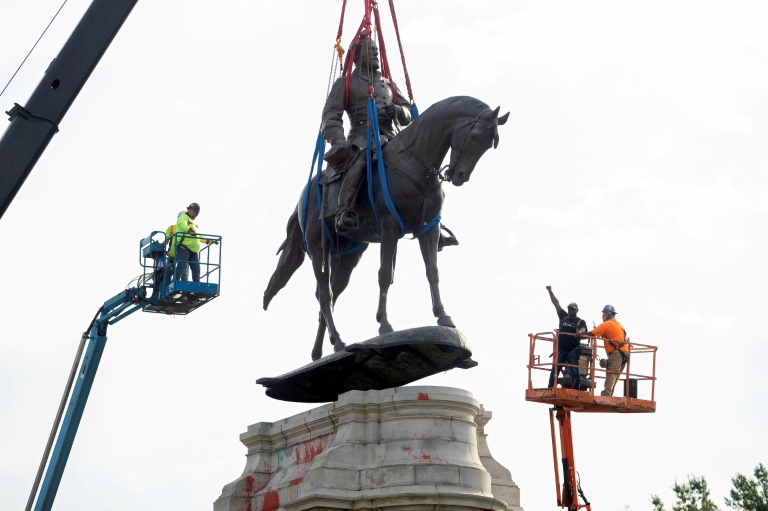
Death threats, racist insults and intimidation have rained down on him since July 1, 2020, when the contractor and his team unbolted their first statue, a monument to General Thomas “Stonewall” Jackson.

Jackson was a leading figure of the pro-slavery Confederate forces during the Civil War of 1861-1865. 

On that day in 2020 in Richmond, the former capital of the Confederacy, Henry wore a bulletproof vest and felt himself oscillating between pride and anxiety.

“You’re trying to figure out how to take this thing down and you’re also looking over your back and making sure that no one’s trying to come and bring harm to you and your crew,” he said.

When the 17-foot tall (five-meter) statue was finally dislodged from its pedestal in the pouring rain, “to see thousands of people still around laughing, smiling and in some cases crying, you feel like you did something pretty special.”

“To me, the removal was akin to the falling of the Berlin Wall,” said Richmond Mayor Levar Stoney.

– Hate and bigotry –

The African-American mayor, a Democrat, used his emergency powers in the summer of 2020 to push for the dismantling of the controversial sculptures at a time when the country was undergoing an unprecedented outcry against racism following the death of George Floyd, a Black man asphyxiated by a white police officer in Minneapolis, Minnesota.

“Those monuments represented division, hate, bigotry,” he said. “They were erected to intimidate and to put Black people who lived in Richmond in their place.”

“This is not the Richmond of 2022,” the mayor said.

The erasure of Confederate symbols has, however, proven a rocky road for Stoney. 

Before Henry agreed to take on the risky job, several other businesses refused to do so. Some were simply opposed to the removal of the monuments, others feared for their safety, and still others even said they feared family members might drop them from their wills if they took on the work. 

Henry himself hesitated to say yes, fearful for his family’s safety after several violent events in recent years. In January 2016, a contractor hired to remove four Confederate statues in New Orleans pulled out of the project after his car was set afire.

“It was really difficult to find others who were interested in taking the work” after that attack, said Flozell Daniels Jr., president of the Foundation for Louisiana, which worked with New Orleans officials to remove the statues. 

“Contractors were being told that if it was found out that they were working with the city on this, they would not get other contracts in the region. It’s an important financial threat,” he said.

The monuments were ultimately removed in the spring of 2017, under police protection and at night, by masked workers equipped with bulletproof vests and wearing no visible logos that might have identified them, said Daniels, whose association also received death threats.

A few months later, in August 2017 in Charlottesville, Virginia, hundreds of ultra-right protesters marched against the removal of a statue of Confederate general Robert E. Lee. At the end of the rally, a neo-Nazi sympathizer drove his car into a crowd of anti-racist activists, killing 32-year-old Heather Heyer.

– Living out a prophecy –

Four years later, Devon Henry proudly removed that same statue, along with three others, in Charlottesville. 

His company has removed a total of 23 Confederate monuments in the southeastern US, including 15 in Richmond, and is set to dismantle several others in different cities. Hundreds remain across the American South. 

Despite the repercussions for Henry’s business, his life and his family, he says he has never regretted his choice.

“It goes back to 1890, when a Black man said that it was Black people that put up the monuments, and when it would be time to come down, it would be a Black man who does that.

“So being able to live out that prophecy is pretty rewarding,” Henry said, referring to the words of civil rights activist John Mitchell Jr., a Richmond native who was born a slave.

Asian markets drop as US rout, China worries hit sentiment

Asian markets fell in holiday-thinned trade Monday following another tech-led rout on Wall Street, with focus on the Federal Reserve’s expected interest rate hike this week.

Adding to the dour mood was data showing Chinese manufacturing activity shrank last month at its fastest pace since the start of the pandemic owing to Covid lockdowns in the country’s biggest cities.

The government’s refusal to shift from its zero-Covid policy and strict containment measures is fanning fears about the world’s number two economy and key driver of global growth.

Trading floors around the world have been buffeted for months by a perfect storm of crises including China’s lockdowns, surging inflation, Fed plans to hike rates, elevated oil prices and the war in Ukraine.

All eyes are on the US central bank’s policy meeting this week, which is expected to see it hike borrowing costs by half a point — the most since 2000 — and follow it with several more increases before the end of the year.

And now some analysts are predicting it could even announce a three-quarter-point increase at some point as it battles more than 40-year-high inflation.

However, with some commentators warning rates could go as high as three percent, there are also worries the Fed could be too heavy-handed and tip the US economy into recession.

Fed boss Jerome Powell “could cement the view that 50 (basis points) is the new 25, but more worrying for stock pickers, there are lots of QE to unwind”, said SPI Asset Management’s Stephen Innes, referring to the quantitative easing bond-buying programme used by the Fed to keep rates low.

“So, the question is, how much of the impact of the balance sheet runoff” has been priced in.

The prospect of higher borrowing costs has been compounded by a sharp slowdown in China, with lockdowns in the biggest cities including Shanghai slamming output and snarling supply chains.

Data at the weekend showed the country’s manufacturing activity shrank the most it has since February 2020, and the near future does not look promising as officials shut down cinemas and gyms over the May Day holiday.

Beijing on Friday further flagged plans to provide support to the economy and signalled an easing of a painful tech crackdown. But the announcement follows several other recent pledges and traders are yet to see any concrete measures, with most wanting to see a softer approach to controlling the virus.

“We remain deeply concerned about growth,” Nomura Holdings economists said in a note.

“Despite the raft of policy measures announced by the Politburo meeting (Friday), we still believe markets should remain focused on the development of the pandemic and the corresponding zero-Covid strategy. All other policies are of secondary importance.” 

On equity markets, Tokyo, Sydney, Seoul and Wellington all fell, though Manila ticked up.

Hong Kong and mainland Chinese markets were closed along with those in Taipei, Singapore, Bangkok and Jakarta.

The struggles in China, the world’s biggest crude importer, led to a drop in prices of the commodity on demand concerns, offsetting worries about supplies from Russia caused by the Ukraine war.

European Union talks to scale back imports of oil from Russia, following embargoes by the United States and Britain, continue to provide support.

“But further gains will be limited to weaker oil demand prospects from China due to the continued expansion of lockdowns and mass testing across the region,” added SPI’s Innes.

– Key figures at around 0230 GMT –

Tokyo – Nikkei 225: DOWN 0.5 percent at 26,704.60 (close)

Hong Kong – Hang Seng Index: Closed for a holiday

Shanghai – Composite: Closed for a holiday

Dollar/yen: UP at 130.14 yen from 129.89 yen on Friday

Euro/dollar: DOWN at $1.0523 from $1.0550

Pound/dollar: DOWN at $1.2560 from $1.2578

Euro/pound: DOWN at 83.77 pence from 83.86 pence

West Texas Intermediate: DOWN 1.0 percent at $103.62 per barrel

Brent North Sea crude: DOWN 1.1 percent at $105.95 per barrel

New York – Dow: DOWN 2.8 percent at 32,977.21 (close)

London – FTSE 100: UP 0.5 percent at 7,544.55 (close)

Nationalists eye power as N.Ireland holds 'seismic' election

A century after its fraught foundation, Northern Ireland looks set for a constitutional earthquake this week with the pro-Irish party Sinn Fein on course to win regional elections.

Apart from periods of direct rule by London, pro-UK unionists have monopolised power ever since Britain carved out a Protestant-majority statelet in 1921, when the rest of Ireland achieved self-rule.

But pollsters expect victory on Thursday for Sinn Fein, which was once the political arm of the paramilitary IRA, in polls for the devolved assembly in Belfast. 

The party took the deputy leadership in a power-sharing deal with unionists when Northern Ireland achieved peace in 1998, after three decades of sectarian bloodshed.

Across the province, high streets and junctions are festooned with election posters. In Newry, near the border with Ireland, a Sinn Fein billboard says that “Irish unity” is “the solution to Brexit”. 

“There has been a seismic change in society, particularly in the aftermath of Brexit, something that we didn’t vote for, but which has been foisted upon us,” said Sinn Fein leader Michelle O’Neill.

But the party is downplaying the prospect of a united Ireland anytime soon, wary of alienating centrist voters and moderate unionists whose focus is on healthcare, education and a UK-wide cost-of-living crisis.

Sinn Fein is averaging a poll lead of six to seven points over the Democratic Unionist Party (DUP), which puts the republican party on track to take the post of first minister in the devolved government.

But the administration cannot function unless the second-ranked party agrees to share power — and it remains to be seen if the DUP will commit to a once-unthinkable step for the Protestant unionist camp.

– Losing our identity –

In DUP leader Jeffrey Donaldson’s Lagan Valley constituency, the unionist’s face beams out from the red, white and blue of the UK flag. 

A red “number one” urges voters to pick Donaldson as their first choice under Northern Ireland’s voting rules, which give voters the chance to rank candidates in order of preference.

The DUP has been agitating for London to scrap a trade protocol with the European Union, afraid that Northern Ireland’s status in the UK is being eroded by the post-Brexit arrangements and by Sinn Fein’s rise.

The party walked out of the assembly this year in protest at the “Northern Ireland Protocol”, and the UK government says it is ready to scrap the pact unless Brussels agrees changes.

The DUP, riven by infighting and watching warily an even more hardline party to its right, has been striking ever-more strident warnings that the protocol poses an existential threat for the union.

“When is the government and my prime minister going to restore our place in the United Kingdom?” DUP lawmaker Jim Shannon asked Boris Johnson in parliament last week.

Brexit — which a majority in Northern Ireland voted against — has frayed the carefully stitched compromises that were integral to the 1998 Good Friday Agreement.

The peace deal saw London and Dublin agree to hold a cross-border referendum on whether all of Ireland should reunite, if there was popular support for one.

But how to define popular support was left deliberately vague — and whether a Sinn Fein victory this week reaches the threshold is unclear. The DUP argues the threat exists, as it tries to rally its base.

– ‘End the pantomime’ –

Sinn Fein is also riding high south of the border and hopes to break the historic grip on power of Ireland’s two biggest parties at the next general election, which is due by 2025 but could come sooner.

While Northern Ireland’s unionist and nationalist camps square off, polls suggest the unaligned centre ground is also set for significant gains on Thursday.

Alliance Party leader Naomi Long said “the days of designations are over”, arguing: “It is time that this pantomime around the first and deputy first minister office was brought to an end.”

Alliance and two other small parties collectively held 11 of the 90 seats in the outgoing assembly.

“If they come back with 16, 17, 18 MLAs (Members of the Legislative Assembly), that could provoke a fundamental renegotiation of the Good Friday Agreement,” David McCann, a commentator for the political website Slugger O’Toole, told AFP.

Jacqueline Hirst, a lifelong unionist voter living in the port town of Larne, said she was voting Alliance for the first time.

The 52-year-old civil servant said she was concerned about the EU protocol’s impact on trade, after noticing “a lot of things in the supermarket disappear already”.

But these concerns were secondary to dysfunction at Stormont sparked by long-running feuds between Sinn Fein and the DUP. 

“We have to talk, and that’s the only way we’re going to get any further,” Hirst said.

Embattled UK PM Johnson faces mid-term test

Voters go to the polls in Britain on Thursday, in a mid-term test for the Conservative government that could determine beleaguered Prime Minister Boris Johnson’s future.

The local election results will be seen as a barometer of support for Johnson’s Conservatives nationally, as well as an indicator of whether the opposition Labour party poses a serious threat.

Johnson, 57, won a landslide general election victory in December 2019 on a promise to break years of political deadlock and deliver Brexit — the country’s divisive departure from the European Union.

But his position has looked increasingly fragile, because of damaging claims about lockdown-breaking parties at Downing Street and an inflationary surge that is squeezing voters’ incomes.

A police investigation last month saw him become the first British prime minister to be fined for breaking the law while in office.

Irate Tory MPs, mindful of public outrage at double standards and denials, had looked set to force a no-confidence vote in his leadership in January.

But Russia’s February invasion of Ukraine, during which Johnson has shown hawkish support for President Volodymyr Zelensky, took the heat out of any mutiny.

– Cost of living –

A drubbing for Johnson’s Tories on Thursday, though, could revive calls for him to go, to bed in a new leader for the next general election, which is due by 2024.

“Partygate”, however, has not proved the key issue for voters.

“What’s going to get folks a lot is the cost of living: food is going up, energy is going up,” said one voter, who gave his name only as Bob, in Dudley, central England.

“What he (Johnson) did was bad, with partygate, they were more or less laughing at you,” the 76-year-old retired factory worker told AFP.

“But they should focus on cost of living.”

Labour — the main opposition nationally — gained ground at the local level in 2018, with the Tories in disarray after the Brexit vote two years earlier.

Keir Starmer, leader since 2020, will be hoping to claw back power on councils in “Red Wall” Labour areas of England that turned Tory blue at the last general election.

Polling indicates Labour will win the most seats in England, while the party wants to gain ground on the pro-independence Scottish National Party (SNP) in Scotland and consolidate its hold on Wales.

– Union issue –

Apart from Johnson, the long-term future of the United Kingdom of Great Britain and Northern Ireland may also be in jeopardy this week.

Elections are also being held for the power-sharing assembly in Belfast, with Sinn Fein widely tipped to become the biggest party.

A LucidTalk poll for the Belfast Telegraph on Friday put the nationalists six points clear of their nearest rivals, the Democratic Unionist Party (DUP).

No pro-Irish nationalist party has ever been the largest party in the British province’s troubled 100-year history.

Deirdre Heenan, professor of social policy at Ulster University, called it “a moment of inflection in Irish politics”.

“It will be a sea change if a nationalist becomes first minister,” she told AFP.

Sinn Fein — the former political wing of the IRA — has a longstanding aim to hold a so-called border poll on continued British sovereignty of Northern Ireland.

It has dialled down its calls for Irish unity during campaigning, instead preferring to focus on anger at the rising cost of living and other local issues.

But DUP leader Jeffrey Donaldson insists holding a border poll was “right at the heart” of his rivals’ manifesto.

– Headache –

The prospect gives Johnson another constitutional headache, as the SNP is promising to push ahead with its plans for another independence referendum.

Scotland voted to remain in the three-centuries old union with England and Wales in 2014, but Scottish opposition to Brexit has revived the issue.

Brexit has weighed heavily on Northern Ireland too, with unionist parties concerned that new trading arrangements with the EU are threatening its place in the union.

The DUP wants new checks on goods from mainland Britain scrapped, arguing it creates an Irish Sea border and casts Northern Ireland adrift from the rest of the UK, making a united Ireland more likely.

'Lungs of the Mediterranean' at risk

Under the Mediterranean waters off Tunisia, gently waving green seagrass meadows provide vital marine habitats for the fishing fleets and an erosion buffer for the beaches the tourism industry depends on.

Even more importantly, seagrass is such a key store of carbon and producer of oxygen — critical to slowing the devastating impacts of climate change — that the Mediterranean Wetlands Initiative (MedWet) calls it “the lungs” of the sea.

But, just as human actions elsewhere are devastating forests of trees on land, scientists warn that human activity is driving the grass under the sea to destruction at speed — with dire environmental and economic impacts.

Named Posidonia oceanica after the Greek god of the sea Poseidon, seagrass spans the Mediterranean seabed from Cyprus to Spain, sucking in carbon and curbing water acidity.

“Posidonia oceanica… is one of the most important sources of oxygen provided to coastal waters,” MedWet, a 27-member regional intergovernmental network, says.

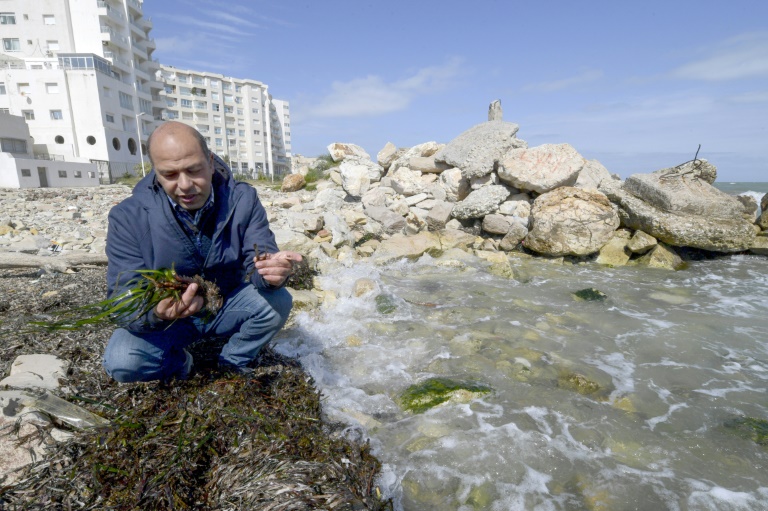
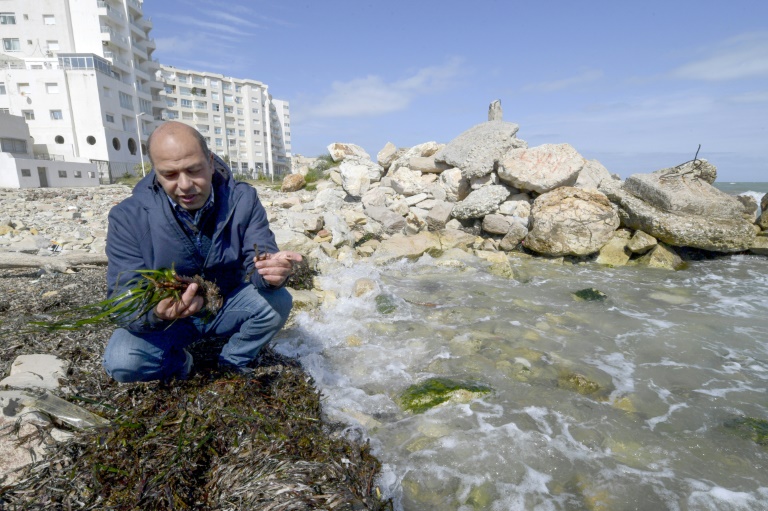
Tunisia, on the North African coastline, “has the largest meadows” of all — spreading over 10,000 square kilometres (3,900 square miles), marine ecologist Rym Zakhama-Sraieb said, pointing to its key carbon-capture role.

The underwater flowering plants absorb three times more blue carbon — the term used to describe the removal of carbon dioxide from the atmosphere by the ocean and coastal ecosystems — than a forest, and they can store it for thousands of years, she said.

“We need Posidonia to capture a maximum of carbon,” Zakhama-Sraieb said.

But a dangerous cocktail of rampant pollution, illegal fishing using bottom trawling nets that rip up the seagrass, and a failure by people to appreciate its life-giving importance is spelling its demise.

– ‘Sea has been destroyed’ –

Growing at a depth of up to 50 metres (165 feet), seagrass provides shelter for fish and slows the erosion of coastlines by breaking wave swells that would otherwise damage the sandy beaches that tourists like.

Tunisian marine biologist Yassine Ramzi Sghaier said the grass is crucial for a country already gripped by a grinding economic crisis.

“All of Tunisia’s economic activity depends on Posidonia,” Sghaier said.

“It is the largest provider of jobs,” he claimed, noting that at least 150,000 people are directly employed in fishing and tens of thousands in the tourism industry.

Destruction has been swift, and replacement slow. The aquatic plant, also known as Neptune grass, grows less than five centimetres a year.

Areas of seagrass meadows have been slashed by more than half in the Gulf of Gabes, a vast area on Tunisia’s eastern coast, Sghaier said, with a 2010 study blaming excessive fishing and pollution.

Once Posidonia and a wealth of marine species thrived there, but since the 1970s, phosphate factories have poured chemicals into the sea, causing more damage to the ecosystem.

Seagrass serves as a vital shelter for fish to breed, feed and shelter.

Fishing makes up 13 percent of Tunisia’s GDP, and nearly 40 percent of it is done around seagrass meadows — and fisherman describe plummeting stocks.

“The sea has been destroyed,” said Mazen Magdiche, who casts his nets from the port of Monastir. “Chemicals are dumped everywhere.”

Magdiche calculates his catch is three times less than what it was 25 years ago, but said he had little alternative income.

“There are fewer and fewer fish,” he said. 

“You are not looking out for the interests of the sea, but to feed your children,” he added.

– ‘Catastrophe’ –

Nearly 70 percent of the Tunisian population lives on 1,400 kilometres (nearly 900 miles) of coastline, and for many Posidonia is considered mere rubbish.

When seagrass is washed up onshore, it mixes with sand to form large banks, that protect the coastline from swells and waves, experts say.

But sometimes bulldozers are used to “clean” the beaches, contributing to the acceleration of coastal erosion, with some 44 percent of beaches already at risk of being washed away.

“We are helping to make beaches disappear by removing the (seagrass) banks,” said Ahmed Ben Hmida, of Tunisia’s Coastal Protection and Development Agency.

Beaches are a key asset for tourism, which provided Tunisia with a record 14 percent of GDP in 2019, and a living for up to two million people — a sixth of the population. 

The aquatic plant also improves the quality of water, making the beaches more attractive for tourists, said Zakhama-Sraieb.

Ben Hmida said the creation of four protected marine zones could help Posidonia, but that action was needed on a far wider scale.

“If nothing is done to protect the whole Tunisian Posidonia, it will be a catastrophe,” he said.

'Lungs of the Mediterranean' at risk

Under the Mediterranean waters off Tunisia, gently waving green seagrass meadows provide vital marine habitats for the fishing fleets and an erosion buffer for the beaches the tourism industry depends on.

Even more importantly, seagrass is such a key store of carbon and producer of oxygen — critical to slowing the devastating impacts of climate change — that the Mediterranean Wetlands Initiative (MedWet) calls it “the lungs” of the sea.

But, just as human actions elsewhere are devastating forests of trees on land, scientists warn that human activity is driving the grass under the sea to destruction at speed — with dire environmental and economic impacts.

Named Posidonia oceanica after the Greek god of the sea Poseidon, seagrass spans the Mediterranean seabed from Cyprus to Spain, sucking in carbon and curbing water acidity.

“Posidonia oceanica… is one of the most important sources of oxygen provided to coastal waters,” MedWet, a 27-member regional intergovernmental network, says.

Tunisia, on the North African coastline, “has the largest meadows” of all — spreading over 10,000 square kilometres (3,900 square miles), marine ecologist Rym Zakhama-Sraieb said, pointing to its key carbon-capture role.

The underwater flowering plants absorb three times more blue carbon — the term used to describe the removal of carbon dioxide from the atmosphere by the ocean and coastal ecosystems — than a forest, and they can store it for thousands of years, she said.

“We need Posidonia to capture a maximum of carbon,” Zakhama-Sraieb said.

But a dangerous cocktail of rampant pollution, illegal fishing using bottom trawling nets that rip up the seagrass, and a failure by people to appreciate its life-giving importance is spelling its demise.

– ‘Sea has been destroyed’ –

Growing at a depth of up to 50 metres (165 feet), seagrass provides shelter for fish and slows the erosion of coastlines by breaking wave swells that would otherwise damage the sandy beaches that tourists like.

Tunisian marine biologist Yassine Ramzi Sghaier said the grass is crucial for a country already gripped by a grinding economic crisis.

“All of Tunisia’s economic activity depends on Posidonia,” Sghaier said.

“It is the largest provider of jobs,” he claimed, noting that at least 150,000 people are directly employed in fishing and tens of thousands in the tourism industry.

Destruction has been swift, and replacement slow. The aquatic plant, also known as Neptune grass, grows less than five centimetres a year.

Areas of seagrass meadows have been slashed by more than half in the Gulf of Gabes, a vast area on Tunisia’s eastern coast, Sghaier said, with a 2010 study blaming excessive fishing and pollution.

Once Posidonia and a wealth of marine species thrived there, but since the 1970s, phosphate factories have poured chemicals into the sea, causing more damage to the ecosystem.

Seagrass serves as a vital shelter for fish to breed, feed and shelter.

Fishing makes up 13 percent of Tunisia’s GDP, and nearly 40 percent of it is done around seagrass meadows — and fisherman describe plummeting stocks.

“The sea has been destroyed,” said Mazen Magdiche, who casts his nets from the port of Monastir. “Chemicals are dumped everywhere.”

Magdiche calculates his catch is three times less than what it was 25 years ago, but said he had little alternative income.

“There are fewer and fewer fish,” he said. 

“You are not looking out for the interests of the sea, but to feed your children,” he added.

– ‘Catastrophe’ –

Nearly 70 percent of the Tunisian population lives on 1,400 kilometres (nearly 900 miles) of coastline, and for many Posidonia is considered mere rubbish.

When seagrass is washed up onshore, it mixes with sand to form large banks, that protect the coastline from swells and waves, experts say.

But sometimes bulldozers are used to “clean” the beaches, contributing to the acceleration of coastal erosion, with some 44 percent of beaches already at risk of being washed away.

“We are helping to make beaches disappear by removing the (seagrass) banks,” said Ahmed Ben Hmida, of Tunisia’s Coastal Protection and Development Agency.

Beaches are a key asset for tourism, which provided Tunisia with a record 14 percent of GDP in 2019, and a living for up to two million people — a sixth of the population. 

The aquatic plant also improves the quality of water, making the beaches more attractive for tourists, said Zakhama-Sraieb.

Ben Hmida said the creation of four protected marine zones could help Posidonia, but that action was needed on a far wider scale.

“If nothing is done to protect the whole Tunisian Posidonia, it will be a catastrophe,” he said.

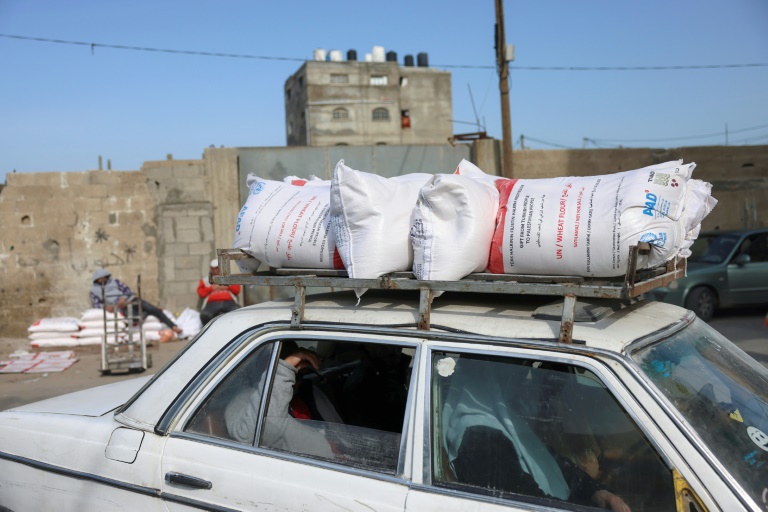
Palestinians warn against plans to weaken their UN agency

A proposal by the UN agency for Palestinian refugees to delegate some services to other United Nations agencies has sparked outrage among Palestinians, who have warned of a plot to “dismantle” the body. 

Established in 1949, a year after Israel was created, UNRWA is the only major UN body dedicated exclusively to one conflict and one people, and holds a symbolic role that experts say matches its importance as provider for Palestinian refugees.

The agency has long been a target of Israeli criticism, with accusations it has fuelled the conflict in part by teaching anti-Zionist messages at its schools.  

UNRWA is “not just about the delivery of services”, said Muhammed Shehada from the Swiss-based Euro-Mediterranean Human Rights Monitor.

“As long as UNRWA is there, it’s a reminder that the international community has a responsibility to solve the issue of Palestinian refugees,” he told AFP.

The agency tasked with assisting Palestinians who were forced from their homes during the war surrounding Israel’s creation — and their descendants — has faced a funding crunch for years, regularly falling tens of millions of dollars short of its stated needs. 

At first glance, the announcement last month by agency chief Philippe Lazzarini that UNRWA could ask other UN bodies to help with service delivery may have looked like a bland, bureaucratic cost-sharing plan.

Counting primarily “on voluntary funding from donors would not be reasonable” going forward, he said in a statement.  

“One option that is currently being explored is to maximise partnerships within the broader UN system.”

Palestinians saw those remarks as a potentially devastating blow to UNRWA’s long-term mission.

Palestinian prime minister Mohammad Shtayyeh said the plan would “violate” the UN resolutions that set up UNRWA, while the Palestine Liberation Organization said refugees would be outraged. 

Mohammad al-Madhoun, a senior official with the Islamist group Hamas, which controls the Gaza Strip, described the proposal as “an attempt to dismantle UNRWA as a prelude to ending its work”.

– Budget gaps –

With more than 30,000 employees and a budget of some $1.6 billion this year, UNRWA is a frontline provider of healthcare, education and other services to some 5.7 million Palestinian refugees spread across the Gaza Strip and the occupied West Bank as well as in Lebanon, Syria and Jordan. 

Former US president Donald Trump publicly sided with Israel in blasting UNRWA and cut off its funding. 

The agency has firmly defended its school curriculum against pro-Israel critics, though Lazzarini told European Union lawmakers last year that problematic issues were being “addressed”.

President Joe Biden’s administration has since restored funding, but Lazzarini warned in November that UNRWA was facing an “existential threat” over budget gaps.

Agency spokeswoman Tamara Alrifai told AFP that this year would see another $100 million shortfall that could worsen given “the increased cost of commodities and food that the ongoing Ukraine crisis has provoked”.  

– ‘Green light’ –

For Samer Sinijlawi, head of the Jerusalem Development Fund, which specialises in Palestinian humanitarian affairs, Lazzarini’s proposal was in part an attempt to test “the Palestinian pulse” ahead of a 2023 UN General Assembly vote on renewing UNRWA’s mandate. 

But it also gave “a green light” to countries that have been trying “to manipulate this mandate and gradually end the work of UNRWA”, Sinijlawi told AFP.

He accused Lazzarini of overstepping his authority, arguing the Swiss national’s job was not to consider scaling back UNRWA’s work but rather to implement UN resolutions on Palestinian refugees, especially on the right of return. 

Former agency spokesman Chris Gunness said that “even if UNRWA is dismantled or its services farmed out, Palestine refugees remain human beings with inalienable rights.”

He stressed that while any blow to UNRWA’s future could be perceived as a win for Israel, it would not mean that “Palestinian refugees and their right of return will magically evaporate”.

But Shehada from Euro-Med Monitor argued that any “de-prioritisation” of the agency would be seen as diminishing “the Palestinian cause in general”. 

Close Bitnami banner
Bitnami