World

Dozens leave Mariupol plant as Pelosi slams Russian 'bullies'

Dozens of civilians have left a besieged steel plant in the Ukrainian city of Mariupol, Russia said on Sunday, as US House Speaker Nancy Pelosi promised to support Ukraine against Russian “bullies” after visiting Kyiv.

Russia’s defence ministry said a total of 46 civilians had left in two groups on Saturday from the area around the Azovstal plant — the last holdout of Ukrainian forces in the city.

The UN confirmed that a “safe passage operation is ongoing” at Azovstal in coordination between the Red Cross and Russian and Ukrainian forces but declined to give details because of safety concerns.

The development has raised hopes of a long-awaited evacuation from the plant, where Ukrainian fighters say they and hundreds of civilians have been sheltering from relentless Russian bombardment.

Their fate has drawn worldwide condemnation.

Pope Francis on Sunday used his weekly Angelus prayer to renew his appeal for humanitarian corridors from Mariupol, saying that the city had been “bombed and destroyed in a barbaric manner”.

Thousands have been killed and millions displaced by Russia’s invasion, which began on February 24.

Western powers have rushed to send military aid to Ukraine and imposed heavy sanctions on Russia.

“Do not be bullied by bullies,” Pelosi told reporters at a press conference in Rzeszow in southern Poland after returning from Ukraine.

“If they are making threats, you cannot back down. That’s my view of it. We are here for the fight and you cannot fold to a bully,” she said.

Pelosi met with Ukrainian President Volodymyr Zelensky in Kyiv on Saturday, becoming the most senior US figure to visit since the war began.

“We are visiting you to say thank you for your fight for freedom… Our commitment is to be there for you until the fight is done,” she told him.

Pelosi also promised to enact the $33-billion (31-billion-euro) arms and support package announced by US President Joe Biden last week.

– ‘Radio silence’ –

The conflict is concentrated in the east and south of Ukraine, although there have been Russian missile strikes across the country, mainly targeting infrastructure and supply lines.

Mariupol is an important strategic hub connecting the Russian-held southern and eastern parts of Ukraine.

“On April 30, following the implementation of a ceasefire and the opening of a humanitarian corridor, two groups of civilians have left the residential buildings adjacent to the site of the Azovstal steel plant,” the Russian defence ministry said on Telegram on Sunday.

One group of 21 people was taken to Bezimenne, a village on the Azov Sea near Mariupol that is controlled by Russian forces, the ministry said, without specifying what happened to the others.

“All of the civilians were given accommodation, food and necessary medical help,” the ministry said.

A ministry video showed a convoy of cars and buses travelling in the dark, marked with a “Z”, the letter used by the Russian forces in the conflict. 

Petro Andryushchenko, an adviser to the mayor of Mariupol, said on Telegram called for “radio silence on the evacuation pending official information”.

On Saturday, the Ukrainian forces guarding the Azovstal site had said that 20 civilians, including children, had left the area and voiced hope that they would be allowed to reach the city of Zaporizhzhia, which is under Ukrainian control.

– Russian ruble introduced –

Russia’s defence ministry also on Sunday said it had used high-precision Onyx missiles to strike a hangar at a military aerodrome housing weapons and ammunition from the United States and European countries and destroyed the runway.

Ukrainian authorities had reported the strike on Saturday but said only that it destroyed the runway.

Near Bucha, the town near Kyiv that has become synonymous with allegations of Russian war crimes, Ukrainian police also on Saturday reported finding three bodies shot in the head with their hands tied.

The victims were found in a pit and had been “brutally killed” by Russian soldiers, the police said in a statement.

“The victims’ hands were tied, cloths were covering their eyes and some were gagged. There are traces of torture on the corpses,” the statement said.

Ukrainian prosecutors say they have pinpointed more than 8,000 war crimes carried out by Moscow’s troops and are investigating 10 Russian soldiers for suspected atrocities in Bucha.

Russia has denied any involvement in civilian deaths in Bucha.

Meanwhile, Russia has moved to solidify its grip on areas it controls and from Sunday introduced the Russian ruble in the region of Kherson — initially to be used alongside the Ukrainian hryvnia.

“Beginning May 1, we will move to the ruble zone,” Kirill Stremousov, a civilian and military administrator of Kherson, was cited as saying earlier by Russia’s state news agency RIA Novosti.

He said there would be a period of four months in which the hryvnia could be used, but then “we will completely switch to settlements in rubles”.

– ‘Guard the line’ –

On the front line in the east, Russian troops have advanced slowly but steadily in some areas — helped by massive use of artillery — but Ukrainian forces have also recaptured some territory in recent days, particularly around the city of Kharkiv.

One of the areas taken back from Russian control was the village of Ruska Lozova, which evacuees said had been occupied for two months.

“It was two months of terrible fear. Nothing else, a terrible and relentless fear,” Natalia, a 28-year-old evacuee from Ruska Lozova, told AFP after reaching Kharkiv.

Kyiv has admitted that Russian forces have captured a string of villages in the Donbas region and has asked Western powers to deliver more heavy weapons to bolster its defences there.

“Everyone understands that we must guard the line here,” lieutenant Yevgen Samoylov of the 81st brigade told AFP as his unit rotated away from the front line near the town of Sviatogirsk.

“We cannot let the enemy move closer, we try to hold it with all our force,” he said.

Sri Lankan leader faces May Day calls to step down

Sri Lanka’s fractious opposition showed rare unity Sunday, joining together to demand embattled President Gotabaya Rajapaksa resign over the country’s worst-ever economic crisis.

Main opposition party the Samagi Jana Balawegaya (SJB) staged a mass rally at Independence Square in the capital Colombo, where speaker after speaker called for the ouster of Rajapaksa and his powerful ruling family.

“For over a month, the president has been barricaded in his official residence,” former legislator Hirunika Premachandra said. “It is time for us to pull him by his ear and kick him out.”

Months of lengthy blackouts, skyrocketing inflation and acute shortages of food, fuel and pharmaceuticals have sparked numerous anti-Rajapaksa protests across the country. 

Premachandra, who kicked off the wave of demonstrations by staging a sit-in outside the president’s private home in mid-March, urged all parties to unite and topple the government.

The JVP, the country’s main leftist party, held its own rally outside a Colombo railway station, insisting the government should step down and allow an early election.

“Gota go home, go home Gota,” chanted tens of thousands of JVP activists waving red flags.

Several minor opposition parties also demonstrated in Colombo and provincial capitals.

But while Gota’s ruling SLPP coalition skipped its customary May Day rally, the president issued a statement asking all political parties to “overcome the challenges we face.”

“Instead of following up on who is responsible for the current problematic situation, what we need to do now is to focus on what action can be taken to provide immediate relief,” Rajapaksa said.

Elsewhere in the capital, thousands of activists laid siege to Rajapaksa’s sea-front office for the 23rd straight day, calling for his resignation.

The president reportedly told dissidents within his coalition government on Friday he was willing to consider forming a unity government, but that neither he nor his brother Mahinda, the country’s prime minister, would step down.

Kenya boosts minimum wage as inflation bites

Kenyan President Uhuru Kenyatta announced Sunday a 12-percent hike in the minimum wage as the country confronts a surge in the cost of living.

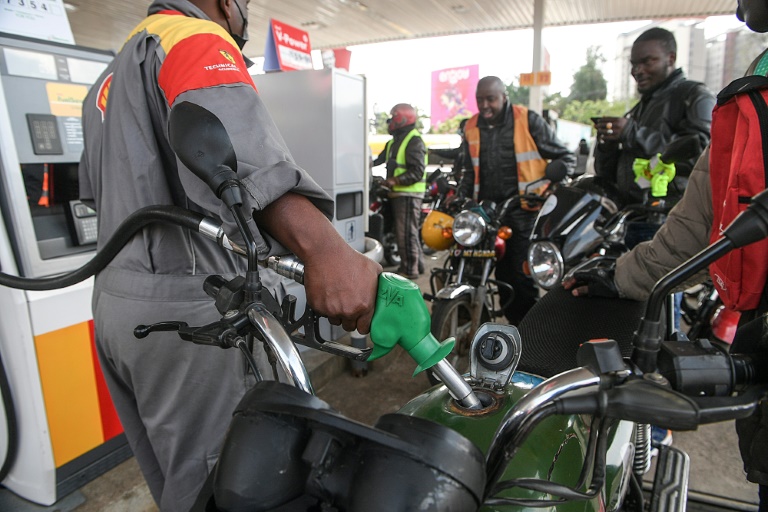
Inflation in the East African economic powerhouse jumped to a seven-month high in April, mainly as a result of skyrocketing fuel and food prices, according to official figures.

“As a caring government, we find there is a compelling case to review the minimum wages so as to cushion our workers against further erosions,” Kenyatta said at a Labour Day rally.

He said the 12 percent increase would come into effect from May 1. It takes the minimum monthly wage from 13,500 Kenyan shillings (about $116.5, 110.5 euros) to 15,120 shillings ($130.5, 124 euros).

However the hike falls far short of the 24 percent that had been sought by the Central Organisation of Trade Unions-Kenya (COTU).

Kenyatta said the high cost of living was due to factors “beyond my control like the coronavirus pandemic and the Russia-Ukraine conflict”.

He castigated rival political leaders — including Deputy President William Ruto — for seeking to blame the government for the economic woes, as the country prepares for crucial elections in August.

Kenyatta cannot run again after serving two terms but has endorsed his former arch-rival Raila Odinga for the top job.

The August 9 presidential election is expected to be a two-horse race between Odinga and Ruto, who was initially anointed by Kenyatta as his successor, but found himself frozen out after a shock 2018 pact between Kenyatta and Odinga.

Kenya’s finance minister last month unveiled a $28 billion budget aimed at helping the economy recover after the Covid-19 pandemic threw hundreds of thousands of people out of work.

Kenyans are struggling to cope with rising costs of basic goods such as food and fuel, a crisis exacerbated by the Ukraine war, while several parts of the country are also suffering from a severe drought.

Inflation reached a seven-month high of 6.47 percent last month from 5.56 percent in March and 5.76 percent in April last year, the statistics bureau announced last week.

Last month the country was also hit by a fuel shortage that triggered long queues at petrol stations and strict rationing.

Two more survivors pulled from China building collapse, dozens still missing

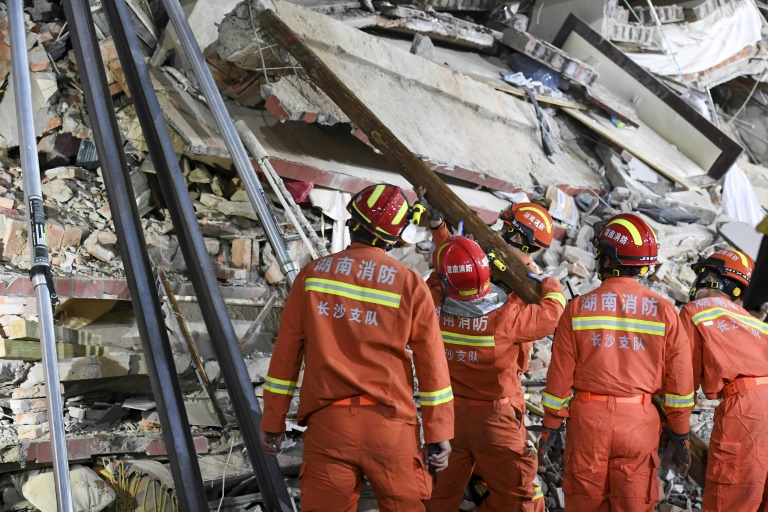
Rescuers pulled a pair of survivors from a collapsed building in central China on Sunday, state media reported, two days into a search-and-rescue operation for dozens feared missing.

The building in Changsha city, Hunan province — which housed a hotel, apartments and a cinema — caved in Friday afternoon, leaving a gaping hole in the dense streetscape. 

City officials on Saturday said five survivors had been pulled out of the structure. There are now 16 people believed to remain trapped, according to authorities, while no contact has been made with nearly 40 others. 

More than 50 hours into the rescue effort, a seventh person was rescued Sunday evening, state broadcaster CCTV reported, after rescuers “detected signs of life” earlier that afternoon.

“When she was discovered, she was in relatively good condition. Her vital signs were quite stable and she could hold a normal conversation with rescuers outside,” a CCTV reporter on the scene said, adding the woman had been separated from rescuers by a wall one metre thick. 

CCTV showed footage of an ambulance driving the survivor to hospital, while rescuers worked with a digger in the background.

Another survivor was pulled from the rubble earlier Sunday, as CCTV broadcast images of firefighters hauling a person covered in dust onto a gurney. 

Changsha police said nine people — including the building’s owner and a team of safety inspectors — were detained Sunday in connection with the accident. They alleged that surveyors had falsified a safety audit of the building. 

No cause for the disaster has yet been given by authorities.

Changsha’s mayor earlier vowed to “spare no effort” in their search for the people still trapped. 

“We will seize the golden 72 hours for rescue and try our best to search for the trapped people,” mayor Zheng Jianxin said in a news briefing Saturday. 

He added that more than 700 first responders had been dispatched to the scene.

State media showed firefighters — backed by a digger — cutting through a morass of metal and sheets of concrete, while rescuers shouted into the tower of debris to communicate with any survivors.

A crowd gathered as chains of rescuers removed pieces of brick by hand, allowing experts a deeper look into the wreckage. 

President Xi Jinping on Saturday called for a search “at all cost” and ordered a thorough investigation into the cause of the collapse, state media reported.

A top Communist Party official was also dispatched to the scene — an indication of the severity of the disaster.

China’s minister of emergency management Huang Ming urged officials to “thoroughly eliminate all kinds of hidden safety risks” in a Saturday meeting.

Building collapses are not uncommon in China, due to weak safety and construction standards as well as corruption among officials tasked with enforcement.

In January, an explosion triggered by a suspected gas leak brought down a building in the city of Chongqing, killing at least 16 people.

Exhausted Ukrainian soldiers return from eastern front

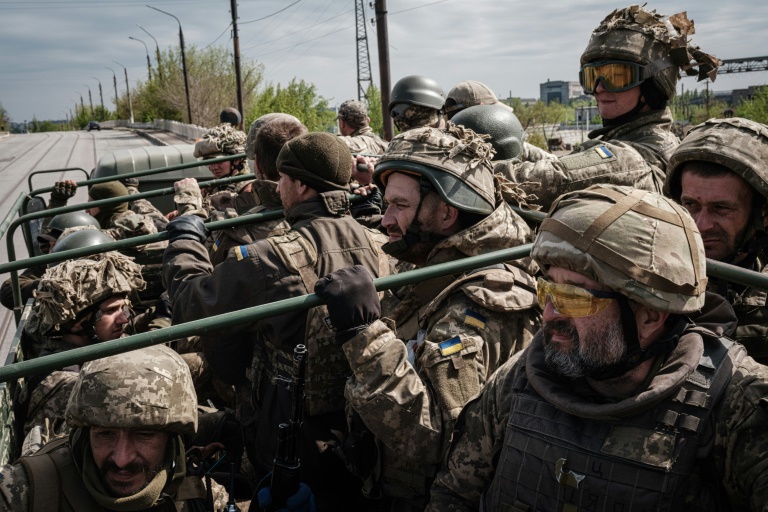
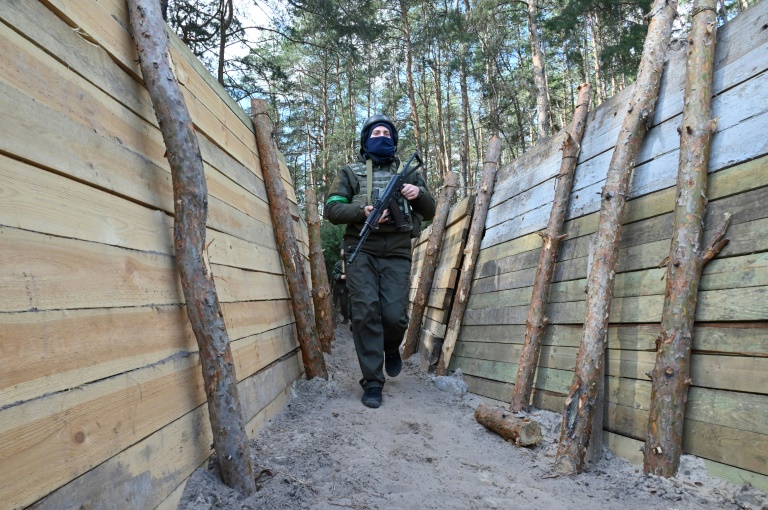
Packed with exhausted Ukrainian soldiers with clenched jaws, the truck drives away at full speed. The troops from the 81st brigade have just received an order to withdraw from the eastern front where Russian forces advance.

The brigade walked 12 kilometres (7.5 miles) Saturday, camouflaged in the woods and under crossfire, until their point of retreat at Sviatoguirsk.

For a month, the 81st — whose motto is “always first” — battled to push back the Russian advance in Ukraine’s eastern Donbas region where Moscow’s troops move forward slowly, taking villages one by one.

“Everyone understands that we must guard the line here, we cannot let the enemy move closer, we try to hold it with all our force,” says lieutenant Yevgen Samoylov, anxious that the unit could be hit by Russian fire at any point.

“As you can hear, the enemy is very, very near,” he says, pointing to the sky. The line of Russian tanks is on the other side of a hill, around seven kilometres (4.3 miles) away.

At 21 years old, Samoylov, an officer from the Odessa military academy, finds himself managing 130 conscripts, often twice his age.

“It’s my first war. I was supposed to graduate in four months, but they sent me here,” says the baby-faced officer with a short black beard.

Samoylov, who goes by the nom de guerre “Samson”, never leaves his red notebook alone. He takes notes of every movement, but also each request and remark by the soldiers whom he always addresses with a soft voice. 

– Deadly silence –

The unit swung into action on February 23, a day before Russia launched the invasion.

At the start of the war, they spent a month defending Izium, which fell on April 1, before joining the fighting around the village of Oleksandrivka.

“Some really difficult battles,” says the quiet Samoylov.

In this brigade, like the others, they don’t say how many people have been killed.

When the subject comes up, Samoylov’s gaze becomes misty. The pain is raw.

A deadly silence takes over the military truck during the drive to the abandoned building where the soldiers will stay during their week of rest.

When the convoy passes a truck loaded with long-range missiles dashing to the front, the soldiers automatically make a “V” sign for victory with their fingers before fixing their gaze once more on their feet or the horizon in silence.

On arrival at the base, the soldiers unload their weapons, remove their kit and immediately go into one of the dilapidated rooms without electricity where they undergo a medical examination after returning from the front.

For the survivors, “there are small injuries on the forehead, those who were buried under the rubble during a bombing have fractures and (injuries) linked to shrapnel,” says Vadym Kyrylov, the brigade’s doctor.

“But we mainly see somatic problems, like hypertension or chronic illnesses that have worsened,” the 25-year-old adds.

– ‘Trench foot’ –

The men also greatly suffer from “trench foot” syndrome caused by prolonged exposure to moisture, unsanitary conditions or the cold.

“For a month they are not able to dry their shoes… so there are many feet-related injuries, mainly fungi and infections,” the doctor says.

After the medical visit, they all have the same reflex: to isolate and use their phone to call a female partner, a child or a parent.

Soldiers cannot use their phones on the front, and any application that requires geolocation is banned.

Four soldiers reassemble the rusty metal bed frames and sweep the floor coated with dust to make a semblance of a room.

“It’s the moment for the guys to relax, to take care of their physical and psychological injuries, to regain their strength before returning to battle,” Samoylov says.

“They’ll sleep warm, eat normal food and try to more or less get back on their feet.”

Afghan leader hails 'security' in rare appearance to mark Eid

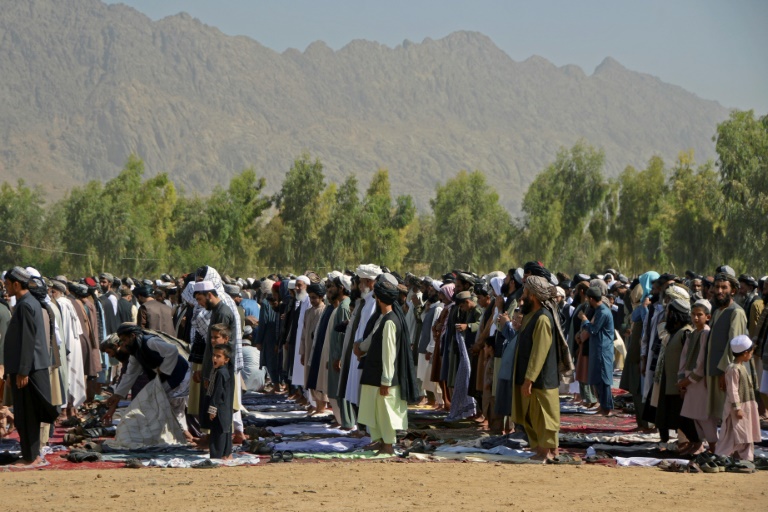
Afghanistan’s supreme leader appeared publicly for only the second time in six years on Sunday, telling worshippers celebrating Eid al-Fitr the Taliban had achieved freedom and security since seizing power last year.

Speaking just two days after a bomb ripped through a mosque in Kabul, an atmosphere of heightened security surrounded the man introduced as Hibatullah Akhundzada, the chief of the Taliban.

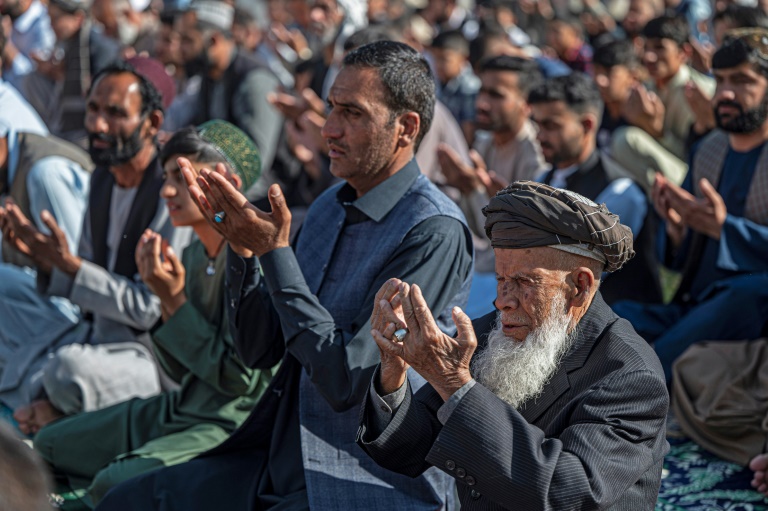
“Congratulations on victory, freedom and success,” he told thousands of worshippers at the Eidgah mosque in the southern city of Kandahar, the hardline Islamist group’s de facto power centre.

“Congratulations on this security and for the Islamic system.”

While the number of bombings across the country has dropped since Kabul fell to the Taliban last August, attacks soared over the final two weeks of the fasting month of Ramadan, which ended Saturday for Afghans.

Dozens of civilians have been killed in the primarily sectarian attacks — some claimed by the Islamic State group — targeting members of the Shiite and Sufi Muslim communities. 

Friday’s bombing of a Sunni mosque in the capital killed at least 10 people. 

Akhundzada delivered his brief address from one of the front rows of worshippers in Kandahar without turning to face the crowd, according to social media posts. 

Taliban officials did not allow journalists to approach him, while two helicopters hovered over the mosque for the whole of the two-hour event.

Dozens of Taliban fighters were deployed where Akhundzada and other Taliban leaders were sitting and they stopped worshippers from taking their pictures on cellphones.

An AFP correspondent who reported from the mosque confirmed that the voice said to be Akhundzada’s came from the front rows of worshippers.

– A reclusive figure –

It was Akhundzada’s second known public appearance since taking control of the Taliban in 2016.

When the man introduced as the Taliban leader began to speak, worshippers chanted “Allahu Akbar! Long live Islamic Emirate and Long Live Akhundzada!”

Worshipper Aziz Ahmad Ahmadi said he was overwhelmed.

“I cried when I heard the voice of Sheikh Saheb (Akhundzada)… to hear him is like achieving my biggest dream,” he said, but added he had failed to spot the leader among the crowd.

Another Kandahar resident Bismillah, who attended the Eid prayers at the Eidgah mosque, said, “I’m so happy that I can’t even describe it”.

“I had a dream to pray alongside my supreme leader, to hear his voice or to see him,” he told AFP. 

Akhundzada’s low profile has fed speculation about his role in the new Taliban government, formed after the group took control of Kabul on August 15 — and even rumours of his death.

His public profile has largely been limited to the release of messages during Islamic holidays from his office in Kandahar.

In October, Akhundzada visited the Darul Uloom Hakimiah mosque in the southern city, according to an audio recording circulated by Taliban social media accounts.

– ‘Sad situation’ –

On Friday, in a message released ahead of Eid al-Fitr, he made no mention of the bloodshed that had rocked Afghanistan over Ramadan, instead praising the Taliban’s building of “a strong Islamic and national army” and “strong intelligence organisation”.

In Kabul, Prime Minister Mohammad Hassan Akhund held Eid prayers at the palace, where he slammed Washington for intervening in Afghanistan’s internal affairs.

“Didn’t they (Washington) withhold the wealth of this country which was in its bank? Isn’t that intervention in this country?” Akhund said in a statement released by the authorities.

Washington seized billions of dollars of Afghanistan’s assets after it withdrew in August, deepening a humanitarian crisis in the country.

Many Afghans in Kabul preferred to stay indoors on Sunday rather than pray at mosques after the recent deadly attacks.

“The situation of our people is very sad, especially after what happened in the mosques,” Kabul resident Ahmad Shah Hashemi told AFP.

“Many young and old people have been martyred. The people of Afghanistan have nothing but sorrow.”

The deadliest attack during Ramadan was in the northern province of Kunduz, where a bomb ripped through a mosque as a group of Sufis performed rituals.

At least 36 people were killed and scores more were wounded. No group has so far claimed that attack.

Beijing tourist sites empty in Covid-stalked public holiday

Major Beijing tourist venues were virtually deserted Sunday and restaurant traffic ground to a standstill, as a typically bustling public holiday was overshadowed by a Covid outbreak that has shunted millions under lockdown nationwide.

China’s staunch zero-Covid policy has kept the virus at bay for more than two years but it is currently facing its worst outbreak since the start of the pandemic thanks to an Omicron-fuelled wave.

Millions across the country — particularly in economic engine Shanghai — have been pushed to stay at home for weeks, as the lockdowns have dampened economic growth and investor sentiment in the world’s second-largest economy. 

Beijing so far has reported over 300 cases under the current wave, and authorities on Saturday banned city-wide dining services starting Sunday to May 4 — an attempt to curb infections during a holiday that is typically an annual peak consumption period. 

“It will have a definite impact on sales,” a restaurant employee surnamed An told AFP, as she scanned for customers around Beijing’s Dongcheng district — home to historic attractions like the Forbidden City.

Eateries nearby were shuttered, with some only allowing customers to order takeout if they have a negative covid test.

This restriction is the latest measure ordered by Beijing authorities, who say all visitors to public spaces must have a negative test result within the past 48 hours.

“Of course we will abide by the country’s rules,” An said. But “we make less profit through delivery and our sales volume is lower”. 

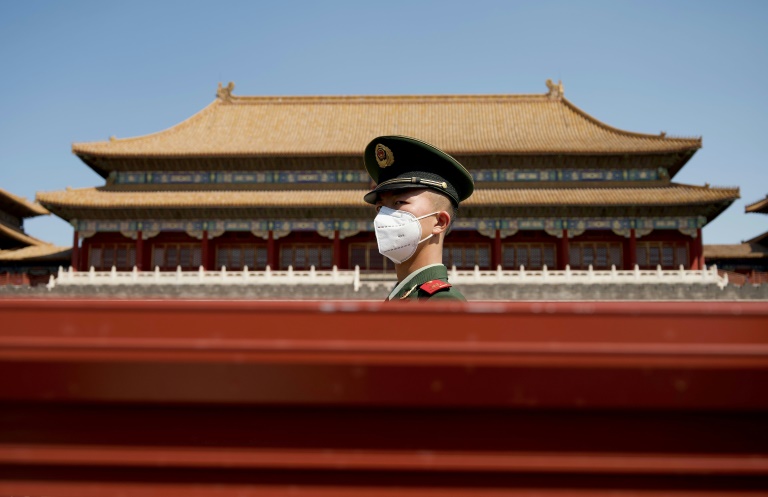
The Temple of Heaven — one of China’s biggest historical attractions — is usually heaving with tens of thousands of visitors a day elbowing each other. But on Sunday, masked families could snap selfies without any interruptions along the imperial complex.

Even the downtown shopping street Wangfujing — a commerce heaven of food stalls and fashionable outlets — was deserted. 

At a restaurant not far from the unusually quiet Forbidden City palace complex, stacks of marinated chicken feet, flatbreads and cold cuts in takeaway containers languished on an outdoor table as staff chatted idly inside. 

“Obviously it’s bad in terms of our own self-interest, but it’s necessary overall for the good of the country,” said a young waiter who did not give his name.

“We would normally sell 10,000 yuan ($1,500) worth of food in a day, but now it’s only 1,000 to 2,000 yuan ($300),” he added.

Instead of entering the Forbidden City, lines of people waited outside the palace complex to get a swab test — a new normal for Beijing residents.

– Universal Studios shuttered –

About 30 kilometres (24 miles) east of the palace on the city’s outskirts, Universal Studios — Beijing’s largest Western theme park boasting a Jurassic World and Harry Potter-themed zones — announced its indefinite closure Sunday. 

It was launched in September and has seen more than two million visitors in five months.

The Labour Day holiday was supposed to be a massive commercial coup for the park — which earlier this week had initially required a negative Covid test within 24 hours of visiting. 

The capital reported 59 new infections Sunday, as officials announced the reopening of a Covid quarantine hospital that has not been mobilised since the pandemic’s first wave in 2020.

All indoor fitness activities — like public gyms and pools — were suspended starting Sunday until May 4, while authorities say about 4,000 makeshift hospital beds had been prepared and larger quarantine centres were being constructed.

“There still exists a small number of hidden infected (patients) found through community screening,” Beijing health official Pang Xinghuo said at a Sunday briefing.

“The epidemic is overall at a high plateau period.”

Meanwhile in Shanghai, officials declared Sunday that “community transmission risk has been effectively curbed” and that daily infections are trending downwards.

The financial hub of 25 million has been locked down for almost a month, with residents complaining of food shortages and lack of timely medical care.

Beijing tourist sites empty in Covid-stalked public holiday

Major Beijing tourist venues were virtually deserted Sunday and restaurant traffic ground to a standstill, as a typically bustling public holiday was overshadowed by a Covid outbreak that has shunted millions under lockdown nationwide.

China’s staunch zero-Covid policy has kept the virus at bay for more than two years but it is currently facing its worst outbreak since the start of the pandemic thanks to an Omicron-fuelled wave.

Millions across the country — particularly in economic engine Shanghai — have been pushed to stay at home for weeks, as the lockdowns have dampened economic growth and investor sentiment in the world’s second-largest economy. 

Beijing so far has reported over 300 cases under the current wave, and authorities on Saturday banned city-wide dining services starting Sunday to May 4 — an attempt to curb infections during a holiday that is typically an annual peak consumption period. 

“It will have a definite impact on sales,” a restaurant employee surnamed An told AFP, as she scanned for customers around Beijing’s Dongcheng district — home to historic attractions like the Forbidden City.

Eateries nearby were shuttered, with some only allowing customers to order takeout if they have a negative covid test.

This restriction is the latest measure ordered by Beijing authorities, who say all visitors to public spaces must have a negative test result within the past 48 hours.

“Of course we will abide by the country’s rules,” An said. But “we make less profit through delivery and our sales volume is lower”. 

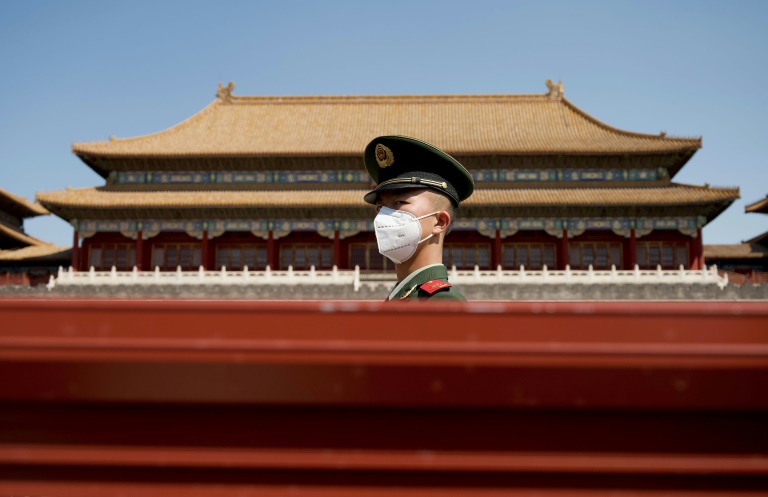
The Temple of Heaven — one of China’s biggest historical attractions — is usually heaving with tens of thousands of visitors a day elbowing each other. But on Sunday, masked families could snap selfies without any interruptions along the imperial complex.

Even the downtown shopping street Wangfujing — a commerce heaven of food stalls and fashionable outlets — was deserted. 

At a restaurant not far from the unusually quiet Forbidden City palace complex, stacks of marinated chicken feet, flatbreads and cold cuts in takeaway containers languished on an outdoor table as staff chatted idly inside. 

“Obviously it’s bad in terms of our own self-interest, but it’s necessary overall for the good of the country,” said a young waiter who did not give his name.

“We would normally sell 10,000 yuan ($1,500) worth of food in a day, but now it’s only 1,000 to 2,000 yuan ($300),” he added.

Instead of entering the Forbidden City, lines of people waited outside the palace complex to get a swab test — a new normal for Beijing residents.

– Universal Studios shuttered –

About 30 kilometres (24 miles) east of the palace on the city’s outskirts, Universal Studios — Beijing’s largest Western theme park boasting a Jurassic World and Harry Potter-themed zones — announced its indefinite closure Sunday. 

It was launched in September and has seen more than two million visitors in five months.

The Labour Day holiday was supposed to be a massive commercial coup for the park — which earlier this week had initially required a negative Covid test within 24 hours of visiting. 

The capital reported 59 new infections Sunday, as officials announced the reopening of a Covid quarantine hospital that has not been mobilised since the pandemic’s first wave in 2020.

All indoor fitness activities — like public gyms and pools — were suspended starting Sunday until May 4, while authorities say about 4,000 makeshift hospital beds had been prepared and larger quarantine centres were being constructed.

“There still exists a small number of hidden infected (patients) found through community screening,” Beijing health official Pang Xinghuo said at a Sunday briefing.

“The epidemic is overall at a high plateau period.”

Meanwhile in Shanghai, officials declared Sunday that “community transmission risk has been effectively curbed” and that daily infections are trending downwards.

The financial hub of 25 million has been locked down for almost a month, with residents complaining of food shortages and lack of timely medical care.

Afghan leader hails 'security' in rare appearance to mark Eid

Afghanistan’s supreme leader appeared publicly for only the second time in six years on Sunday, telling worshippers celebrating Eid al-Fitr the Taliban had achieved freedom and security since seizing power last year.

Speaking just two days after a bomb ripped through a mosque in Kabul, an atmosphere of heightened security surrounded the man introduced as Hibatullah Akhundzada, the chief of the Taliban.

“Congratulations on victory, freedom and success,” he told thousands of worshippers at the Eidgah mosque in the southern city of Kandahar, the hardline Islamist group’s de facto power centre.

“Congratulations on this security and for the Islamic system.”

While the number of bombings across the country has dropped since Kabul fell to the Taliban last August, attacks soared over the final two weeks of the fasting month of Ramadan, which ended Saturday for Afghans.

Dozens of civilians have been killed in the primarily sectarian attacks — some claimed by the Islamic State group — targeting members of the Shiite and Sufi Muslim communities. Friday’s bombing in the capital killed at least 10. 

Akhundzada delivered his brief address from one of the front rows of worshippers in Kandahar without turning to face the crowd, according to social media posts. 

Taliban officials did not allow journalists to approach him, an AFP correspondent reported.

“I’m so happy that I can’t even describe it,” said Kandahar resident Bismillah, who attended the Eid prayers at the Eidgah mosque.

“I had a dream to pray alongside my supreme leader, to hear his voice or to see him.”

Gul Ahmad, another resident of Kandahar who prayed at the mosque, said Afghans would continue to worship despite the recent attacks.

“Our people love their religion… even if blasts happen every day, our people will still visit such places and worship,” he said.

Two helicopters hovered over the mosque for the whole of the two-hour event.

– A reclusive figure –

It was Akhundzada’s second known public appearance since taking control of the Taliban in 2016.

In October, he visited the Darul Uloom Hakimiah mosque in Kandahar, according to an audio recording circulated by Taliban social media accounts.

Akhundzada’s low profile has fed speculation about his role in the new Taliban government, formed after the group took control of Kabul on August 15 — and even rumours of his death.

His public profile has largely been limited to the release of messages during Islamic holidays, and Akhundzada is believed to spend most of his time in Kandahar.

On Friday, in a message released ahead of Eid al-Fitr, he made no mention of the bloodshed that had rocked Afghanistan over Ramadan, instead praising the Taliban’s building of “a strong Islamic and national army” and “strong intelligence organisation”.

In Kabul, Prime Minister Mohammad Hassan Akhund held Eid prayers at the palace where he once again slammed Washington for intervening in Afghanistan’s internal affairs.

“Didn’t they (Washington) withhold the wealth of this country which was in its bank? Isn’t that intervention in this country?” Akhund said in a statement released by the authorities.

Washington seized billions of dollars of Afghanistan’s assets after it withdrew in August, deepening a humanitarian crisis in the country.

Unlike in Kandahar, many Afghans in Kabul preferred to stay indoors on Sunday rather than visit neighbourhood mosques after the recent deadly attacks.

“The situation of our people is very sad, especially after what happened in the mosques,” Kabul resident Ahmad Shah Hashemi told AFP.

“Many young and old people have been martyred. The people of Afghanistan have nothing but sorrow.”

The deadliest attack during Ramadan was in the northern province of Kunduz, where a bomb ripped through a mosque as a group of Sufis performed rituals.

At least 36 people were killed and scores more were wounded. No group has so far claimed that attack.

EU demands 'proper answer' over detained staffer in China

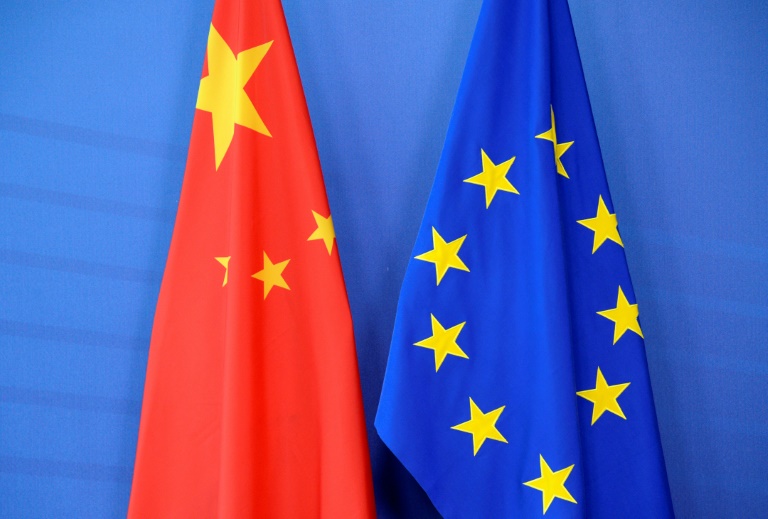
The European Union has demanded a “proper answer” from Chinese authorities over the arrest of a local employee at its Beijing mission who has been held for eight months. 

The EU Delegation in China staffer was detained by police in September 2021, the bloc confirmed in an emailed statement.

“Despite multiple requests on our side to the Chinese authorities, we have so far not been informed neither of the allegation(s) nor of the specific charges,” EU spokeswoman Nabila Massrali said. 

“We will continue enquiring until we get a proper answer.”

Massrali added the EU was “concerned for his well-being”. 

French newspaper Le Monde originally reported an IT department employee identified as An Dong was arrested on suspicion of “picking quarrels and provoking trouble” — a vague charge often used to stifle dissent that carries a maximum of five years’ imprisonment.

The EU had sent three written communiques to Chinese authorities demanding further information about his alleged offences and that he be allowed access to a lawyer of his choice, the report stated. 

The Chinese national is reportedly being held in southwestern Sichuan province — thousands of kilometres from Beijing. 

The case is a rare example of an employee of a Western diplomatic mission being arrested in China. 

Simon Cheng, a former local staffer at the British Consulate in Hong Kong, claimed he was tortured by Chinese police in 2019 after being detained for 15 days during a business trip to the mainland. 

Former Canadian diplomat Michael Kovrig was jailed for almost three years in China on charges of espionage in apparent retaliation for Canada’s arrest of Huawei executive Meng Wanzhou over fraud charges.

Kovrig was freed in September 2021, along with another Canadian arrested at around the same time. 

China-EU ties have deteriorated since the pandemic, with the two powers trading sanctions over a variety of rights issues.

The EU has accused China of economic coercion over an unofficial trade embargo of Lithuania launched shortly after the Baltic country allowed Taiwan to open a representative office. 

More recently, the EU has warned China not to provide military or financial backing to Russia as it wages its bloody invasion of neighbouring Ukraine. 

Close Bitnami banner
Bitnami