World

Twenty civilians evacuated from besieged Mariupol plant: reports

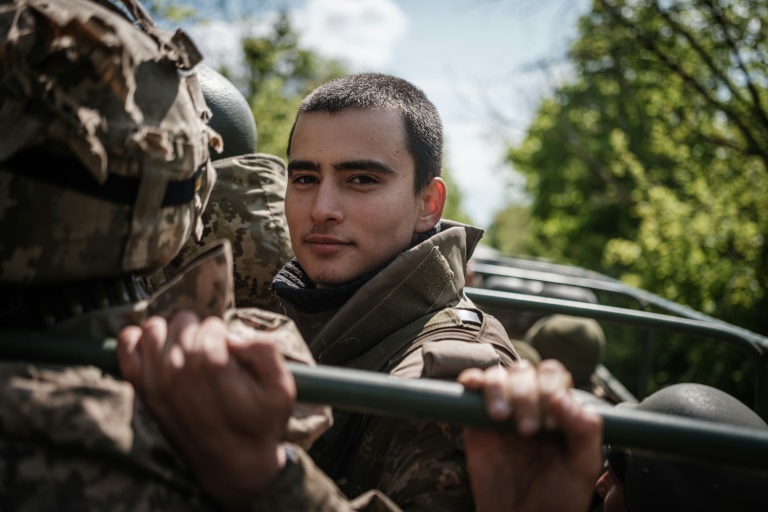
At least 20 civilians including several children were able to leave a badly battered steel plant in the Ukrainian port city of Mariupol on Saturday in what could be the start of a long-awaited, larger evacuation of the last holdout in the Russian-held city.

Earlier efforts at evacuations from the Azovstal steel plant — where local fighters say they and hundreds of civilians are still sheltering in brutal conditions — had been futile.

Ukrainian fighters of the Azov regiment, which has been defending the site, said 20 civilians had left, possibly for the Ukrainian city of Zaporizhzhia, about 225 kilometres (140 miles) to the northwest. 

Russia’s Tass news agency carried a similar report, though putting the number of evacuees at 25.

A United Nations-planned evacuation had been planned, though it was unclear whether Saturday’s evacuation was UN-led and whether further evacuations were imminent. There were no immediate details on the condition of the evacuees.

Ukraine’s President Zelensky said in a video Saturday evening said Kyiv was “doing everything to ensure that the evacuation mission from Mariupol is carried out”.

Fresh satellite imagery by private US firm Maxar taken on Friday showed a devastated Mariupol, with almost all of Azovstal destroyed. 

The apparent ceasefire in Mariupol took place as Russian attacks continued unabated across Ukraine, most heavily in the fiercely disputed eastern regions, but with attacks as far west as Odessa, on the Black Sea coast.

Odessa’s regional governor Maxim Marchenko said a Russian missile strike had destroyed the airport runway, as Moscow continues targeting infrastructure and supply lines deep in the west of the country.

There were no victims from the airport strike near the historic city of one million people.

Near Bucha, the town near Kyiv that has become synonymous with allegations of Russian war crimes, Ukrainian police on Saturday reported finding three bodies shot in the head with their hands tied.

The three bodies found in a pit were “brutally killed” by Russian soldiers — each shot in the head, the police said in a statement.

“The victims’ hands were tied, cloths were covering their eyes and some were gagged. There are traces of torture on the corpses,” it said.

– Clearing debris –

In Mariupol, the Azov regiment said Saturday that it had been clearing the debris of overnight shelling by Russia to rescue trapped civilians. 

From the city’s badly damaged port zone, AFP on Friday heard heavy shelling coming from Azovstal during a media trip organised by the Russian army, with explosions only seconds apart.

“Twenty civilians, women and children… have been transferred to a suitable place and we hope that they will be evacuated to Zaporizhzhia, on territory controlled by Ukraine,” said Sviatoslav Palamar, deputy commander of the Azov regiment.

But Denis Pushilin, leader of the breakaway eastern region of Donetsk, accused Ukrainian forces of “acting like outright terrorists” and holding civilians hostage in the steel plant.

On the front line in the east, Russian troops have advanced slowly but steadily in some areas — helped by massive use of artillery — but Ukrainian forces have also recaptured some territory in recent days, particularly around the city of Kharkiv.

One of the areas taken back from Russian control was the village of Ruska Lozova, which evacuees said had been occupied for two months.

“It was two months of terrible fear. Nothing else, a terrible and relentless fear,” Natalia, a 28-year-old evacuee from Ruska Lozova, told AFP after reaching Kharkiv.

“We were in the basements without food for two months, we were eating what we had,” said Svyatoslav, 40, who did not want to give his full name, his eyes red with fatigue.

– Putin’s ‘depravity’ –

Thousands of people have been killed and more than 13 million have been forced to flee their homes since the Russian invasion of its pro-Western neighbour began on February 24, according to the United Nations.

Pentagon spokesman John Kirby on Friday briefly choked with emotion as he described the destruction in Ukraine and accused Russian President Vladimir Putin of “depravity”.

Ukrainian prosecutors say they have pinpointed more than 8,000 war crimes carried out by Moscow’s troops and are investigating 10 Russian soldiers for suspected atrocities in Bucha.

Russia has denied any involvement in civilian deaths in Bucha.

Moscow officials confirmed on Friday that their forces carried out an air strike on Kyiv a day earlier during a visit by UN chief Antonio Guterres, the first such attack on the capital city in nearly two weeks. A journalist died in the attack.

– ‘Russia will not go unpunished’ –

Ukraine’s Deputy Prime Minister Iryna Vereshchuk meanwhile reported that 14 Ukrainians including a pregnant soldier had been freed in the latest prisoner exchange with Russian forces.

She did not say how many Russians had been returned.

Kyiv has admitted that Russian forces have captured a string of villages in the Donbas region.

“Even if there has been some advance by Russian troops on the ground, it is not very fast,” Russian military expert Alexander Khramchikhin told AFP.

But Russian Foreign Minister Sergei Lavrov said that the “special military operation… is proceeding strictly according to plan”, China’s official Xinhua news agency reported.

Russia has warned Western countries against sending more military aid.

“If the US and NATO are really interested in resolving the Ukraine crisis, then first of all, they should wake up and stop supplying the Kyiv regime with arms and ammunition,” Lavrov said.

But more Western armaments are due to arrive in Ukraine, with US President Joe Biden on Thursday seeking billions of dollars from Congress to boost supplies.

And a top Ukrainian military official Saturday said he had held talks with chairman of the US joint chiefs of staff Mark Milley on the “difficult situation in the east of our country, particularly in the Izium and Sieverodonetsk areas, where the enemy has concentrated its maximum efforts and the most combat-ready groups.”

“Despite the complexity of the situation, we provide defense, keep occupied boundaries and positions,” general Valery Zaluzhny said on Facebook.

French President Emmanuel Macron said on Saturday that his country would also “intensify” military and humanitarian support.

And Ukraine’s President Zelensky said he spoke with Macron and British Prime Minister Boris Johnson “on defense support for Ukraine and other efforts necessary to end the war”.

“I informed Boris about the current situation on the battlefield in the areas of active clashes and in detail about the situation in our east, in Mariupol, in the south of the country,” he said. 

“All the leaders of the free world know what Russia has done to Mariupol. And Russia will not go unpunished for this.”

Zelensky was also reported Saturday to have met with a spokesman for Turkish president Recep Tayyip Erdogan, who is trying to pave the way for an Istanbul summit between Russian President Vladimir Putin and Zelensky.

And with Sweden pondering a bid for NATO membership, defence officials there said Saturday that a Russian reconnaissance plane had briefly violated the northern country’s airspace a day earlier.
As tobacco burns out, Malawi looks to cannabis

Under a scorching sun at a trading post in Malawi, Chikumbutso Chekeni and his wife head to their tobacco sheds to dry their newly harvested leaf.

Nambuma, 35 kilometres (20 miles) northwest of the capital Lilongwe, used to be a thriving farming town, buoyed by vast tobacco farming businesses.

Today, even during harvest season the town is sleepy, leading some farmers to think about switching from tobacco to the newly legalised marijuana.

Malawi is one of the world’s poorest countries but a major tobacco producer, ranking first in the world for burley and seventh for overall production.

No other economy is more dependent on the leaf. Government statistics say over 70 percent of the nation’s export income comes from tobacco.

“The main challenge we face as farmers is the issue of low pricing, which is really killing us,” said Chekeni, who has been farming tobacco for 22 years.

Returns from tobacco, dubbed the ‘Malawi’s Green Gold’, have dwindled over the past decade due to declining global demands driven by anti-smoking campaigns.

Despite the low prices, he sees no other option but to continue farming. This is the only business he knows.

This year has particularly been bad. Low volumes and low prices at the auction floors in Lilongwe forced the Tobacco Commission to cut trade to three days a week.

Even on those three days, sales last only an hour.

“The future of tobacco farming is bleak,” said grower Yona Mkandawire. “By now we should have a lot of tobacco in the warehouses and more trucks at the receiving bay, but there is a lot of empty space here.”

Despite a sharp decline of tobacco earnings over the years, Malawi’s government still calls it a “strategic crop” and defends the country’s continuing investment in its production.

Last year tobacco earned Malawi $173.5 million, down 27 percent from the year before, the Tobacco Commission said.

– ‘Malawi Gold’ –

Tobacco Commission chief executive officer Joseph Chidanti Malunga told AFP that this year’s harvest will be 50 million kilogrammes short of what the buyers are looking for.

But he insisted Malawi needs tobacco because it’s the only crop earning foreign currency.

“We cannot abandon this no matter how,” he said. “All we do now is to make sure that we produce tobacco that is compliant with what the customers want.”

During the first week of sales, prices were down more than 20 percent from last year, according to local media.

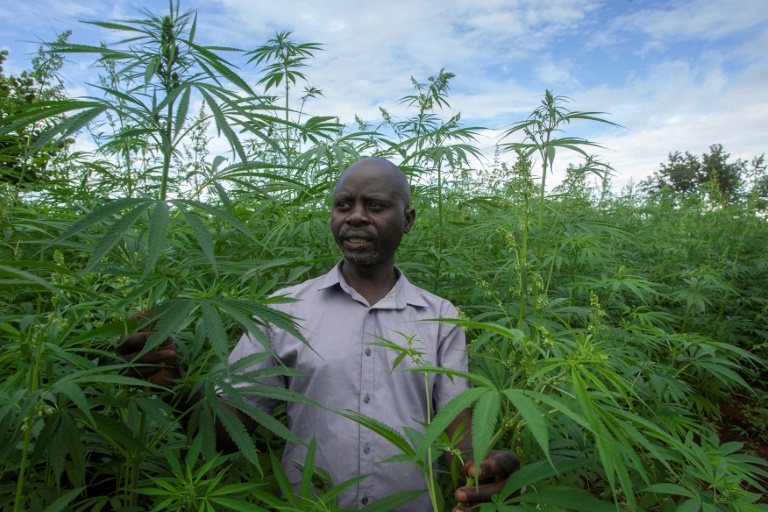
The price drop has seen some farmers try out new crops, including the recently legalised cannabis.

Malawi legalised cannabis farming for medicinal and industrial use in February 2020.  

Falice Nkhoma, who is part of the Tilitonse Cooperative for Cannabis Growers, has dumped tobacco because of falling prices.

“I have been growing burley tobacco from 2014… but with very little benefit because the prices were always low,” said Nkhoma. She has little to show for producing the so-called green gold.

“So this year, when I heard that some people would be growing cannabis, I was really excited. I have bought the seeds, and hopefully cannabis farming will bring me good returns,” she said.

It’s about time Malawi diversified its economy, said Betchani Tchereni, economics professor at the Malawi University of Business and Applied Sciences.

“We just have to restart the economy. If it’s soya, then let’s do soya. If it’s cannabis, then let’s concentrate on cannabis,” he said.

But cultivation licences could be prohibitive for some aspiring farmers.

Growers, who operate in groups of around 30, have on average to cough out $10,000 per collective in farming licence fees alone. 

Easing the process of obtaining cannabis licences would give farmers an immediate boost.

“It takes just about three months to mature, and then boom, we have the forex,” said Tchereni. 

“Licences can’t be this expensive.”

Cannabis growing is not new in Malawi, but has yet to develop to industrial scale.

According to a 2011 World Bank report, Malawi’s hemp, known locally as ‘chamba’ or ‘Malawi Gold’ is among “the best and finest” sativas in the world.

India seizes $725m from China's Xiaomi over 'illegal' remittances

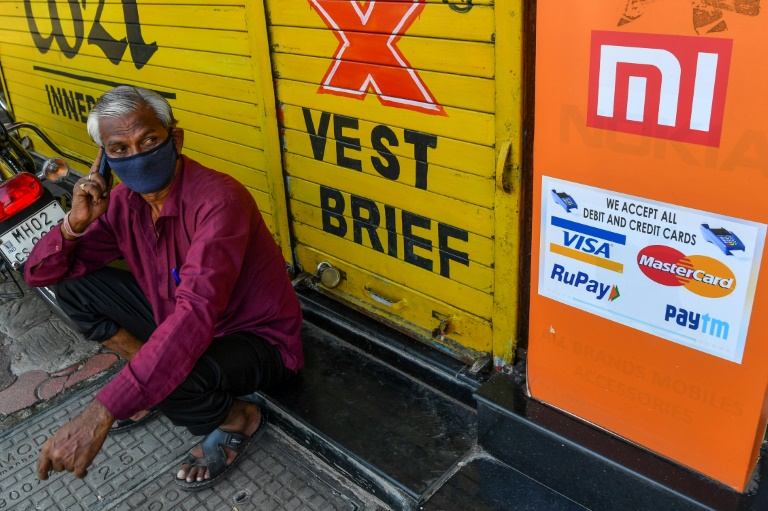
India seized $725 million from the local bank accounts of Xiaomi after a probe found the Chinese smartphone giant unlawfully sent money abroad in the guise of royalty payments, authorities said Saturday.

India’s financial crime investigations agency began investigating the company in February and said it seized the money from the firm’s local arm after discovering it had made remittances to three foreign-based entities.

“Such huge amounts in the name of royalties were remitted on the instructions of their Chinese parent group entities,” the Enforcement Directorate said in a statement.

Xiaomi India has denied the allegations, saying late Saturday that its “operations are firmly compliant with local laws and regulations”.

“We believe our royalty payments and statements to the bank are all legit and truthful,” Xiaomi India tweeted.

“We are committed to working closely with the government authorities to clarify any misunderstandings.”

The firm’s India office was raided in December in a separate investigation over alleged income tax evasion. 

Other Chinese smartphone makers including Huawei also had their Indian offices searched at the time.

Relations between New Delhi and Beijing have been at a low ebb since a deadly Himalayan border clash between soldiers from both countries in 2020. 

In the aftermath, India’s home ministry banned hundreds of mobile applications of Chinese origin, including the popular social media platform Tiktok. 

The government justified the bans on the apps as safeguarding against threats to India’s sovereignty.

Anti-China sentiment has grown in India since the fatal 2020 troop clash, sparking calls for consumer boycotts of Chinese goods.

China continues to be a key economic partner for India, with more than $125 billion in bilateral trade last year according to media reports.

'Right to be forgotten': Israel firm promises to purge digital footprint

Three young Israelis formerly serving in military cyber units have figured out how to locate your digital footprint — and give you the tools to delete it.

The company Mine, co-founded by Gal Ringel, Gal Golan and Kobi Nissan, says it uses artificial intelligence to show users where their information is being stored — like whether an online shoe store kept your data after a sneaker purchase three years ago.

Ringel said Mine’s technology has already been used by one million people worldwide, with over 10 million “right to be forgotten” requests sent to companies using the firm’s platform.

Mine launched after the European Union’s General Data Protection Regulation (GDPR) — now an international reference point — set out key rights for users, including the deletion of personal data that was shared with a site for a limited purpose.

The company’s AI technology scans the subject lines of users’ emails and flags where data is being stored.

Individuals can then decide which information they want deleted and use Mine’s email template to execute their right to be forgotten.

It means they can delete their digital footprint “with a click of a button”, Ringel said.

“We’re not telling people to not use Facebook or Google. We say: go ahead, enjoy, use whatever you want,” he said. 

“But as you enjoy using the internet, we’ll show you who knows what about you, what they know about you… what is the risk” and how to remove it, he added. 

– ‘Challenging’ –

Last year, hackers broke into the database of Atraf, an Israeli LGBTQ dating website, using the personal information there for extortion.

The year before, Shirbit, a major insurance company, was hacked and troves of data stolen.

Despite those and smaller breaches, Naama Matarasso Karpel from advocacy group Privacy Israel said the public was relatively indifferent.

She also criticised Israel’s privacy legislation as inadequate for tackling today’s online challenges.

“Privacy is a bit like health or air — we don’t really feel the need for it until we really see how much we lack it,” she said.

While public awareness on privacy rights has been slow on the uptake, she said many corporations were realising that better privacy practices made for good business.

“Nobody wants to be caught off-guard,” Matarasso Karpel said.

Companies are starting to see privacy “as a value that has to be maintained in order to establish trust with customers”, she added.

Mine’s co-founder Ringel said companies had contacted his firm for help with the “challenging and cumbersome” process of locating and removing information, in line with the right to be forgotten.

“We help companies to automate that process without any human involvement,” he said, reducing their efforts and costs.

But lawyer Omer Tene, co-founder of the Israel Tech Policy Institute, cautioned that deleting specific individual requests was “a complicated technical exercise”.

Some companies and organisations cannot legally delete information like blockchains or records of financial interactions needed for tax purposes.

Even information that can be deleted is often kept in varying degrees of identifiability, Tene said. 

“All of this nuance makes it difficult to deliver on a promise from both the consumer side and the corporate side, to enable deletion by pressing a button,” Tene warned.

Ignoring Putin's threats, US boosts support for Ukraine

In rallying global arms supplies and asking Congress for $33 billion more to support Ukraine, Washington is choosing to ignore Vladimir Putin’s threats to use nuclear arms, and instead is openly testing the Russian leader’s limits.

After the United States brought 40 countries to a US base in Germany last week to discuss aid for Ukraine’s war with Russia, Putin on Wednesday threatened a “lightning fast” response if there is any direct intervention by outsiders on Kyiv’s behalf.

“We have all the tools for this, that no one else can boast of having. We won’t boast about it: we’ll use them, if needed,” Putin said.

It was a thinly veiled reference to Russia’s tactical nuclear weapons, which Russian military doctrine holds can be used to force an adversary to retreat.

Rather than pull back at that threat to unleash Moscow’s nuclear bombs, US President Joe Biden doubled down on US support for Ukraine.

The $33 billion he requested includes $20 billion for arms and munitions, nearly seven times the amount sent to the country since the Russians invaded on February 24.

– No longer hiding support –

Early in the war Washington worried that aggressively equipping Ukraine’s army with anything but “defensive” weaponry risked embroiling the US and NATO in a direct conflict with Russia.

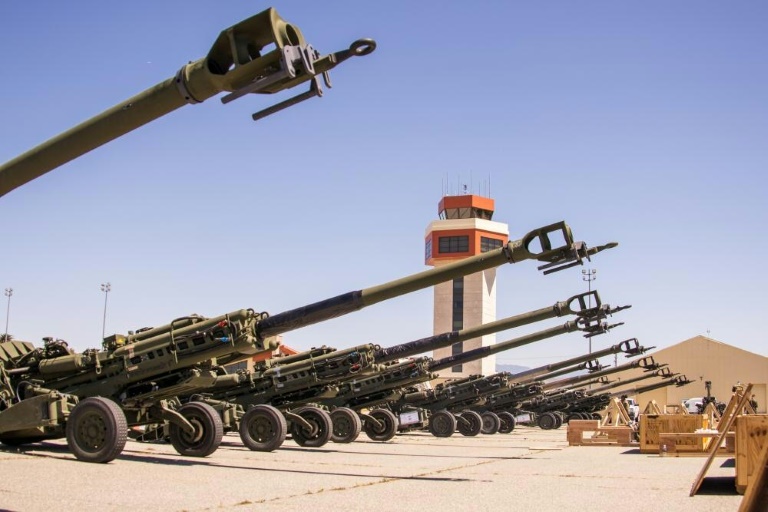
Now, the Pentagon has shed those earlier inhibitions and is shipping offensive weapons like heavy artillery, helicopters and attack drones.

Rather than hiding it, the Pentagon also began openly talking this week about how it is training Ukrainian troops, including inside Germany, to use the weapons they are receiving.

And instead of saying, as it did in February, that it wants only to help Ukraine survive, Washington now says its goal in the war is to debilitate Russia for the long term.

“We want to see Russia weakened to the degree that it can’t do the kinds of things that it has done in invading Ukraine,” US Secretary of Defense Lloyd Austin said after a visit to Kyiv last week.

– Shrugging off Moscow’s threat –

Inside the US government, Putin’s nuclear threat is being shrugged off.

Biden and his top officials have labeled Moscow’s nuclear threats “irresponsible.”

“It shows the desperation that Russia is feeling about their abject failure in being able to do what they set out to do” in Ukraine, Biden said Wednesday.

On Friday, a senior US defense official said that even as the Pentagon constantly monitor’s Russia’s nuclear force, “We do not assess that there is a threat of the use of nuclear weapons and no threat to NATO territory.”

Lawrence Freedman, professor emeritus at King’s College in London, said there are no signs that Russia is preparing to use its nuclear or chemical weapons in the Ukraine conflict.

“Its threats are taken less seriously than before and it has nothing positive to offer. It is already a diminished power,” Freedman wrote on his blog.

That view was echoed by Gideon Rose of the Council on Foreign Relations in New York. 

“Moscow will not use nuclear weapons during the conflict,” said Rose.

Putin “knows that extraordinary retaliation and universal opprobrium would follow, with no remotely comparable strategic upsides to justify them,” he said.

Even if Biden has repeatedly said that US troops will not get directly involved in Ukraine, the surge in support has turned the conflict into a proxy war, Sam Winter-Levy, a warfare specialist at Princeton University, wrote on the website “War on the Rocks.”

“The West needs to be clear-eyed about the situation it confronts. It is currently waging a proxy war with Russia — one that poses very real risks of escalation,” he wrote.

Nevertheless, he said the current path “may still be the best option.”

“Ultimately, the only options worse than a proxy war are a cheap Russian victory in Ukraine — or a direct confrontation between Russia and the United States,” he said.

Floods heap woes on South Africa trading hub

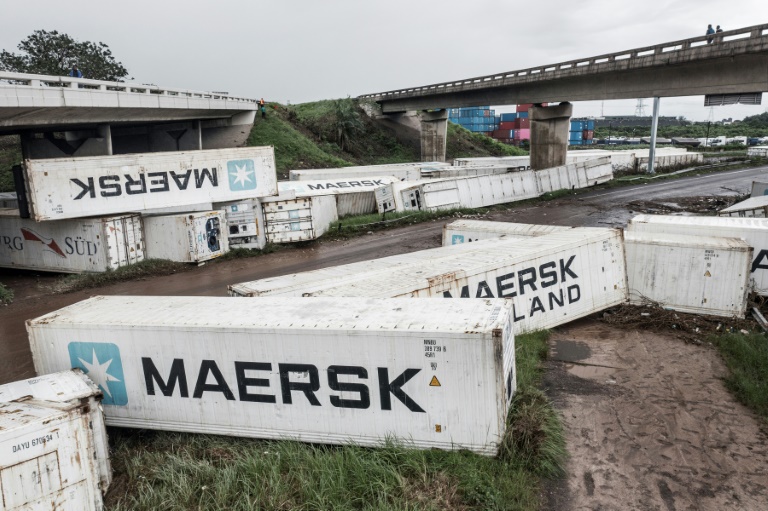
First it was Covid, then riots and now floods: KwaZulu-Natal (NZN) province, South Africa’s gateway to the Indian Ocean, is reeling from a unpredented string of disasters.

Here is factfile on the region:

– Economic giant –

KZN employs 2.4 million out of 14.5 million workers in South Africa’s formal economy and accounts for more than a sixth of national GDP.

It is the second-largest GDP contributor after the economic hub of Gauteng which houses Johannesburg, according to global auditors PwC.

The port of Durban is the country’s biggest trade platform for the agricultural, automotive and mining sectors.

Durban is the largest and busiest harbour in South Africa, handling over 60 percent of its container traffic, says PwC senior economist Christie Viljoen.

– Flood bill – 

Estimates of the cost of the floods that struck KZN this month, fuelled by record-breaking rains, are sketchy.

Many flooded areas remain inaccessible due to road damage.

The mayor of greater Durban, Mxolisi Kaunda says lost production alone will cost 740 million rand ($47.3 million / 44 million euros), according to preliminary estimates.

Most of the region’s 1,150 businesses are located on a flood plain and were badly battered.

But these “operational losses” do not include the cost of fixing roads, railway lines, bridges, power line, water pipes and sewerage, or damage to homes — a bill that will be many billions of rand.

Economists and business leaders say the floods could have a potentially crippling impact on growth in 2022.  

“The city will take about three months to get back to where it was to pre-flood levels and it should reduce the city’s annual GDP by about 1.8 percent,” said Ajiv Maharaj, a senior official in charge of local economic development.

– Pressure on exports – 

Experts say damage to businesses and the port of Durban, adding to the impact on the supply chain from the Ukraine war, will dampen exports.

Durban Chamber of Commerce and Industry CEO Palesa Phili said road freight between Durban and Gauteng was currently at half of normal levels.

“Export shipments and revenues will be under pressure in the short term,” said Viljoen.

“Damaged goods in warehouses and at ports cannot necessarily be replaced and will result in weaker export revenues.”

The Durban region makes food, beverage and tobacco products, textiles and leather goods and petroleum and chemical products.

Its automotive industry is also a big employer. 

Toyota has temporarily suspended operations at its Durban plant, warning of delays in delivering popular models such as the Hilux pickup — or “bakkie,” as these trucks are dubbed here.

– Agriculture hit – 

The province is a key farming region, known chiefly for its sugarcane fields in the Tongaat region. 

Agriculture Minister Thoko Didiza has estimated losses in the agriculture sector to be more than 500 million rand ($32 million).

Around half of those losses will be incurred by cane farmers, although no shortages of sugar are expected.

– Tourism worried – 

Durban is a leading tourism destination, favoured for its warm subtropical climate, idyllic beaches and nearby wildlife sanctuaries.

The region had been hoping for a rebound from the Covid-19 pandemic for the upcoming northern hemisphere summer, but is now bracing for cancellations from both local and international travellers.

A crucial test will come next month when Durban stages an annual trade conference — the Africa Travel Indaba, for which 6,000 people had been expected.

“The show is going ahead as we had planned,” said Themba Khumalo, head of SA Tourism.

“In times of crisis such as this, it is not time to lean back… it’s time for us to show our economic support for Durban,” he said.

Turkey's jailed rights defender makes final appeal before verdict

One of Turkey’s most famous prisoners made his final appeal for freedom on Friday, at the culmination of a years-long trial that has come to define Ankara’s tense ties with Western allies in the wake of a failed 2016 coup.

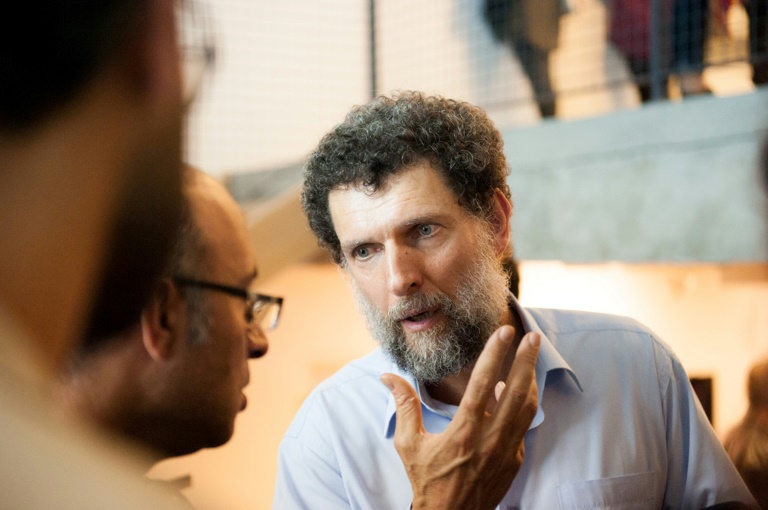
Paris-born activist and philanthropist Osman Kavala was a relative unknown when he was detained on his arrival at Istanbul’s airport from a trip to a cultural centre in the Turkish city of Gaziantep in October 2017.

But his continued imprisonment without a conviction has turned the 64-year-old into a hero for President Recep Tayyip Erdogan’s opponents — and a focus of Western worries about the Turkish leader’s comprehensive crackdown on dissent.

Prosecutors want Kavala found guilty of “attempting to overthrow” Erdogan’s socially conservative government by financing a wave of 2013 protests and then being directly involved in the coup plot.

The verdict and sentence, expected to be issued by a panel of three judges on Monday,  could see Kavala jailed for life without the possibility of parole if found guilty.

The marathon trial has been faithfully attended by Western diplomats, underscoring the continued importance of rights issues in their relations with Turkey, a strategic member of the NATO defence alliance.

“The fact that I have spent 4.5 years of my life in prison is a loss that cannot be compensated,” Kavala told the court a closing statement issued by video link from his high-security prison outside Istanbul.

“The only thing that would console me is the possibility that what I have gone through helps to put an end to grave judicial mistakes.”

– Personal enmity –

Kavala was acquitted of the first count linked to the 2013 protests in February 2020.

But he was detained before he had a chance to return home and then charged with the coup attempt the same night.

Kavala is now facing both charges in a trial that looks back on some of the most turbulent years of Erdogan’s dominant 20-year rule.

The Turkish leader has made no secret of his personal enmity for Kavala.

Erdogan calls Kavala a communist agent of the Hungarian-born US philanthropist George Soros who is allegedly using foreign money to try and topple the state.

“We can never be together with people like Kavala,” Erdogan declared in 2020.

But Kavala’s treatment has prompted the Council of Europe to launch disciplinary proceedings against Turkey that could ultimately see Ankara’s membership suspended in the continent’s main human rights organisation.

– ‘Emblematic case’ –

Kavala is being tried with 16 other defendants implicated in the 2013 protests.

Nine of them currently live abroad while the remaining seven took turns on Friday to make their final statements in court.

Defendant Mucella Yapici — also facing the threat of life in jail without the possibility of parole — told the court the 2013 protests were the “most democratic, most creative and peaceful collective movement in this country’s history”.

Human rights advocates say Kavala’s release would send a signal to Turkey’s Western allies that its justice system is free from Erdogan’s pressure. 

“His unconditional release may mark a turning point in de-politicisation of judicial prosecutions in Turkey,” Amnesty International’s Turkey researcher Guney Yildiz told AFP.

“That’s why the result of the emblematic case is quite serious.”

Emma Sinclair-Webb of Human Rights Watch called the entire hearing a “show trial”.

But Erdogan has seethed at the international publicity and condemnation generated by the case.

The tensions nearly caused an all-out diplomatic war when the United States and nine other Western embassies issued a joint letter of support for Kavala last October.

Media reports said Erdogan’s advisers managed to convince him to walk back on his threat to expel the 10 countries’ ambassadors after being briefed on the harm this might do to Turkey’s investment climate.

UK Covid patient was positive for record 505 days: researchers

British researchers believe they have documented the longest-known Covid-19 infection, in a patient who tested positive for a total of 505 days before their death.

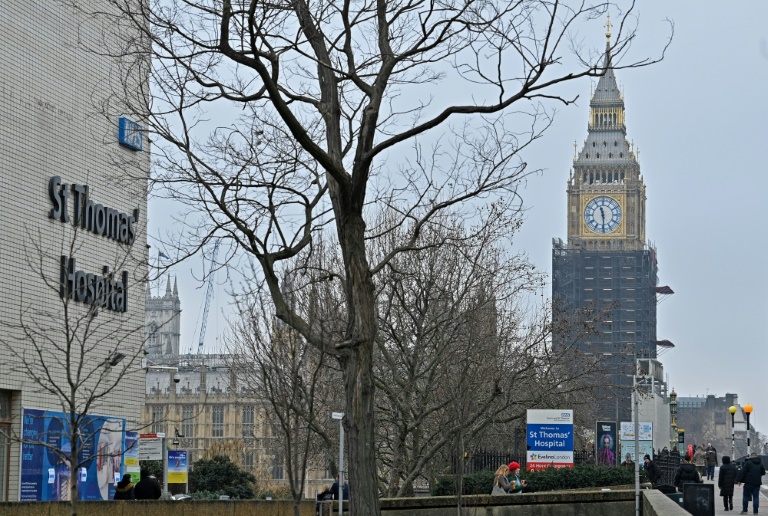
The previous record for persistent infection — rather than repeated bouts of Covid — is thought to be 335 days, the team from King’s College London and Guy’s and St Thomas’ NHS Foundation Trust said.

One of the study’s co-authors, consultant virologist Gaia Nebbia, said the unnamed individual was diagnosed in mid-2020 with respiratory symptoms that later improved.

But they then tested positive about 45 times before attending hospital up to their death.

Nebbia said persistent infection with SARS-CoV-2 — the virus which causes Covid-19 — has been described in patients with weakened immune systems.

She and her team studied how the virus from nine Covid patients in London changed over time, concluding that new variants may occur in immunocompromised patients.

“This is one of the hypotheses for the emergence of variants,” Nebbia told AFP.

“Regular sampling and genetic analysis of the virus showed that five of the nine patients developed at least one mutation seen in variants of concern.  

“Some individuals developed multiple mutations associated with variants of concern, such as the Alpha, Delta and Omicron variants. 

“However, none of the individuals in our work developed new variants that became widespread variants of concern.”

Of the nine immunocompromised patients who tested positive for at least eight weeks, infections persisted on average for 73 days.

But two patients had persistent infections for more than a year.

All the patients had weakened immune systems due to organ transplantation, HIV, cancer or other medical therapies. They were studied between March 2020 and December last year.

Of the nine, five survived. Two of the five recovered without treatment and two others recovered after antibody and antiviral therapy.

The fifth individual was still infected at their last follow-up examination in early 2022, even after treatment, and had Covid for 412 days.

Should they test positive at their next appointment, they will exceed the 505-day record, the researchers said.

Nebbia said the situation demonstrated the urgent need for new treatments to help immunocompromised patients recover.

The findings will be presented at the European Congress of Clinical Microbiology and Infectious Diseases in Lisbon, which begins on Saturday.

Ferrari to recall more than 2,200 cars in China over brake risk

Italian luxury carmaker Ferrari has issued a recall plan with Chinese regulators over potential brake problems in its vehicles, an official notice said Friday.

The recall affects 2,222 vehicles over a brake fluid issue, said a notice by China’s State Administration for Market Regulation (SAMR).

This figure is almost the total number of cars Ferrari sold in mainland China, Hong Kong and Taiwan over the past three years, based on the company’s annual report.

“Vehicles covered by this recall… could see a higher risk of brake fluid leakage, resulting in reduced braking performance or brake failure, posing a safety hazard,” SAMR said.

The recall covers a portion of imported 458 Italia, 458 Speciale, 458 Speciale A, 458 Spider, 488 GTB and 488 Spider series cars that were made between March 2, 2010 and March 12, 2019, the regulator said Friday.

It added that these vehicles should be driven with caution, and should be stopped immediately if a low brake fluid level warning light appears.

Ferrari will replace the problematic car parts free of charge for the cars covered by the recall, the notice said.

The recall starts on May 30.

The state market regulator this month also announced US electric car giant Tesla’s recall of nearly 128,000 vehicles in China over a fault that could raise the risk of vehicle collision.

Revitalised Angkor Wat brings hope for Cambodia tourism recovery

As dawn breaks, foreign tourists gather by the ancient towers of Cambodia’s Angkor Wat, some of the lucky few to see the World Heritage Site with the crowds thin as the country recovers from the coronavirus.

Hopes are high that the temple complex, recently revitalised from repair work, will spearhead a recovery in tourism after the Southeast Asian nation began re-opening to travellers last November.

A handful of overseas visitors are once again roaming the sacred site, with many calling it a unique opportunity.

“I think it’s a once-in-a-lifetime experience to really see it with such few tourists,” Belgian holidaymaker Marjan Colombie told AFP. “It’s so different.”

On previous visits to the 12th-century ruins she had been forced to jostle with others and endure long queues, she said.

Despite the huge economic cost for Cambodia, the pandemic has been a boon for renovations and conservation work at Angkor Wat.

The government agency that manages the UNESCO site says the shutdown allowed extra time and space for repair work, maintenance and gardening.

“Our temples could rest too,” APSARA Authority spokesman Long Kosal said.

Workers fixed crumbling towers and installed a water system to keep the grass green during the dry season.

Local businesses in Siem Reap are now seeing an uptick in bookings after Covid-19 decimated tourism.

Chea Sokhon, general manager of Sarai Resort and Spa — which closed in April 2020 and laid off its 100 employees — is rehiring as foreign tourists return.

“It’s like we are starting from zero,” he said, laying out the challenges he faces.

The businessman, who also sits on the tourism board for Siem Reap, said about 20 percent of hotels in the city have re-opened this year and about 30 percent are preparing.

But he cautioned it would take at least another year for a full recovery.

– ‘Overwhelming’ –

“Our tour guides have hope again,” said local guide Meth Savutha, back on the job after spending the past two years teaching English online to support his family.

Border closures and travel restrictions knocked Cambodia’s income from tourism down to just $184 million last year, a far cry from the nearly $5 billion in 2019.

Foreign tourists nosedived to below 200,000 in 2021 from roughly 6.6 million pre-pandemic.

But a comprehensive vaccine rollout and a retreat of the virus have enabled Phnom Penh to resume issuing visas on arrival.

Numbers are now slowly climbing again but remain a long way from pre-Covid figures.

Officials expect 700,000 international visitors this year, fuelled by new daily flights to Siem Reap from Singapore.

For German tourist Hanna, visiting Cambodia for the first time this month, the renovations to Angkor Wat and lack of crowds made it an “overwhelming” experience.

“It’s absolutely beautiful and stunning,” she told AFP as the sun rose over the historic complex.

“It’s just a very unique experience.”

Close Bitnami banner
Bitnami