World

After life of trauma, Liberian lab chimps settle into retirement

Floating on a river boat near a Liberian island, vet Richard Ssuna watches intently as animal carers wade towards the shore hurling fruits and imitating chimpanzee calls as they go. 

The beach is empty, but the sound of rustling and chimpish grunts begins to fill the green undergrowth. Slowly, an ape knucklewalks out onto the beach to grab some food.    

He’s a high-ranking member of his troop, explains Ssuna, as more chimpanzees follow. The younger ones gambol and hoot in delight as carers throw them bananas, palm nuts and cassava. 

Sixty-five chimps are spread across six uninhabited river islands near the Atlantic Ocean, about 55 kilometres (34 miles) south of the West African country’s capital Monrovia.

But their joy in feeding belies a dark past. 

The chimps are the remainders of a group of about 400 ex-test subjects of a US-funded research project — and have survived decades of invasive experiments. Some of the animals underwent several hundred biopsies.

“They were traumatised,” says Ssuna, who’s also a director of Humane Society International (HSI), a rights group that now cares for the primates. 

Chimp testing in Liberia began 1974, when the New York Blood Center (NYBC) funded biomedical research related to hepatitis B and other diseases at a complex by the Farmington River.

During Liberia’s devastating 1989-2003 civil war, the chimpanzees nearly starved to death as the country imploded around them.

Research staff in the impoverished country had to dig into their own pockets to provide basic sustenance. 

The researchers retired many of the chimps to the river islands in the mid-2000s but their ordeal continued. 

For reasons that remain unclear, NYBC cut funding in 2015 — in a move that provoked global outrage — abandoning the apes on the tiny river islands incapable of supporting them.

Activists picketed NYBC headquarters in New York and Hollywood stars such as Joaquin Phoenix and Ellen Page signed a petition urging the blood bank to reinstate funding. 

Brian Hare, a US-based primatologist who launched the petition, wrote at the time: “Effectively they have left these poor chimpanzees to suffer from dehydration and starvation”.

– ‘Victim of torture’ –

Liberia is one of the world’s poorest countries, where 44 percent of the population lives on less than $1.90 per day, according to the World Bank.

Local staff at the research centre kept showing up to work to help the chimps when NYBC cut funding — at a time when an Ebola epidemic was raging in Liberia. Rights groups and US financial giant Citigroup also provided relief funds during the turbulent period.

Under pressure, NYBC eventually struck an agreement to split the long-term care costs for the chimps with the Humane Society in 2017, pledging $6 million.

NYBC did not respond to questions from AFP about why it withdrew funding. 

Years on, the former lab chimps now enjoy veterinary care and two daily meals. But many still bear the scars of their grim past.  

At another island, during morning feeding, Ssuna points to a grizzled ape who’s missing an arm. The vet says the animal is “essentially victim of torture.”

The chimp, named Bullet, lost the limb as a infant when poachers killed his mother and ripped him from her arms. He then ended up at the research lab.

The carers are trained to form close attachments with the chimpanzees and to be gentle, explains Ssuna, who says certain stimuli can trigger negative memories in chimps, as in humans.  

– Bright future – 

None of the chimpanzees can be released into the wild, and are confined to the islands for life. 

They never learned to fend for themselves and there are also fears they would spread disease if humans came into contact with them. 

Keeping them fed is a serious operation.

Carers prepare about 200 kilogrammes (440 pounds) of food every morning, and 120 kilos (264 pounds) in the afternoon — amounting to about 10 tonnes a month. 

Care will continue until every ape on the islands dies, according to Ssuna.

He estimates that their lifelong care will last some 50 years. Many of the chimps are around 20 years old and have a lifespan of about 60. 

There are also a small number of babies. HSI plans to vasectomise the males to prevent further births. 

“The future is very bright, as much as we would like to leave them back in the wild,” says Ssuna back on the mainland after the feeding, standing near the rusted animal cages of the old research complex. 

“They’re in a better place.” 
Shanghai official Covid death toll rises to 25

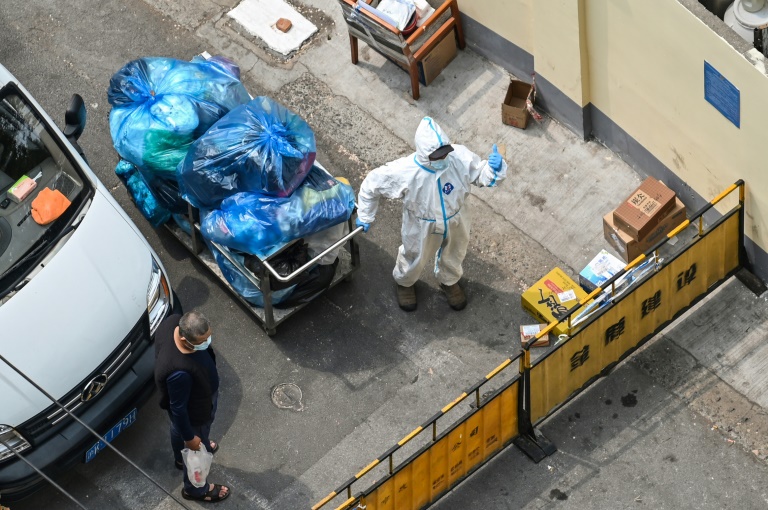
Shanghai logged eight official Covid-19 deaths on Thursday, reporting a mounting death toll even as daily cases appear to be tapering off and some residents are finally free to venture outside under an easing lockdown.

China’s largest city and commercial engine is inching towards reopening after weeks-long restrictions kept most of its 25 million people confined to their homes.

Faced with the country’s worst virus outbreak in two years, Shanghai doubled down on the Communist Party’s unrelenting zero-Covid approach, with a heavy toll inflicted on business and morale. 

The surge, driven by the fast-spreading Omicron variant, is the country’s worst outbreak in two years and has challenged Beijing’s inflexible, sequestering approach to a virus much of the world is learning to live alongside.

As proof that its strategy works, China has touted a low official fatality rate from the virus — even as sceptics question whether those figures reflect the full toll. 

While clocking upwards of 400,000 infections since March, Shanghai has recorded just 25 deaths, with the first from this outbreak reported on Monday.

Authorities have said the deaths have been elderly patients with underlying conditions, who mostly had not received coronavirus vaccines. 

Among the eight reported Thursday, the average age was 77.5, city authorities said, adding that the patients had suffered from preexisting health issues such as malignant tumours and high blood pressure.

The municipal government said the cause of death was “underlying disease”.

Shanghai reported more than 18,000 new and mostly asymptomatic coronavirus cases on Thursday, the second day in a row with infections below the 20,000 mark.

With the outbreak appearing to have crested, the megacity is tentatively allowing life to resume, with Tesla and Volkswagen among 666 companies flagged for restarting production this week.  

A total of about 12 million people previously barred from leaving their homes have in the past few days been permitted outdoors.

However, many were disappointed to find their movements still curtailed despite being released from the strictest form of lockdown, in which residents were barred from leaving their apartments.

Throughout Shanghai’s lockdown, complaints have flooded social media platform Weibo, providing a rare glimpse of discontent usually wiped away by censorship.

While officials announced the lifting of some curbs, some residents grumbled online about discrepancies between policy and enforcement as construction workers came to reinforce barriers around their apartment buildings.

Hidden in bananas and tea, cocaine departs Ecuador port by the ton

Trying to prevent drug traffickers from hiding cocaine in cargo containers at Ecuador’s main port of Guayaquil is becoming an increasingly expensive headache for police and exporters alike.

The ingenuity of criminal gangs means tons of cocaine leave the port hidden in food containers.

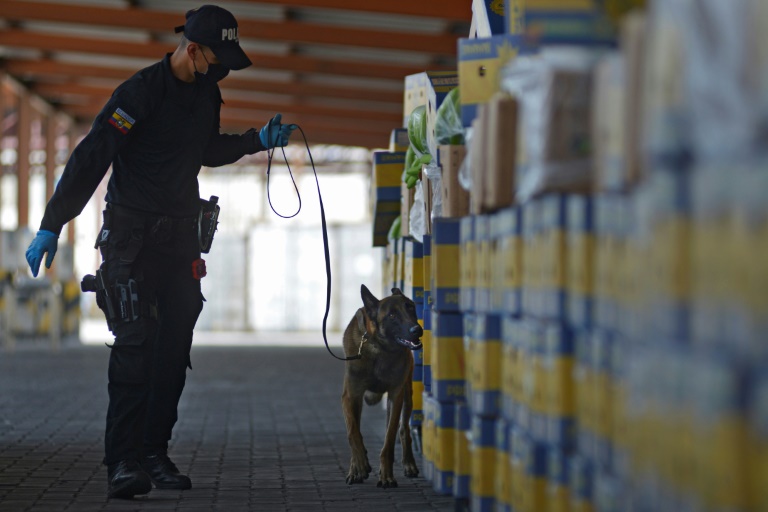
Surrounded by a poor neighborhood, the Guayaquil port is a hive of activity, where trained dogs sniff here and there while police officers cut into bananas, pineapples and even tea drums looking for drugs.

Customs agents in Guayaquil manually check a fifth of the containers to ensure that export companies are not a front for the mafia.

Two German Shepherds, Wolf and Jessi, help the officers but they can only work for 10 minutes at a time to be effective.

“We can’t tire them out too much, otherwise we won’t find any drugs,” Richard Riera, head of the National Police Ports and Airports Information Unit, told AFP.

Thanks to the dogs, liquid drugs hidden by traffickers inside tea drums were recently detected after passing through the scanner without incident.

– ‘Titanic task’ –

Drug traffickers “prefer the port because this is where the majority of exports to Europe and the United States leave,” said Riera.

Situated between Colombia and Peru — the world’s two largest producers of cocaine — Ecuador seized a record 210 tons of the powder in 2021, of which 96 tons were discovered in Guayaquil.

A third of seizures were destined for Europe while another 11 percent were headed for the United States, according to the police.

“Our country ceased being a collection center to become instead a platform for drug distribution on an international scale,” said national anti-narcotics chief Giovanni Ponce.

Drug related violence is increasing in surrounding Guayas state where 78 percent of 404 murders so far this year were linked to drug trafficking, Ponce told the Teleamazonas news channel.

Outside the port, in the city’s streets, organized crime keeps the local population in a state of terror with bodies decapitated or hanging from bridges.

In the first quarter of this year, police seized 15.8 tons of drugs in Guayaquil port alone, four times more than in the same period of 2021.

But checking 2.4 million containers a year “is a titanic task,” said Riera.

The port has 12 privately owned terminals and handles 85 percent of Ecuador’s non-oil exports — around 25 million metric tons of produce a year.

Officials say they need more security guards and more unintrusive scanners that don’t damage bananas and shrimp, the country’s flagship exports, but there is only one of these in the whole of Ecuador.

– Huge cost to exporters –

Exporters have been left frustrated by the number of containers being infiltrated with drugs.

Criminal gangs break the locks, take out the legal cargo and replace it with cocaine bricks.

“Often they go all the way to the point of origin” in the factory, said Javier Lancha de Micheo, owner of the private Contecon terminal.

The company has had to install security cameras in the terminal and introduce security checks on people and vehicles entering the premises.

The worst affected are banana exports.

Those containers are often breached on the roadside as well as in the port itself.

“We’re the main victims because we move 7,000 banana containers a week,” said Richard Salazar, executive director of the Banana Marketing and Export Association.

Companies spend $200 per container on security measures such as satellite surveillance and private contractors.

But whenever drugs are discovered, authorities seize the entire container as evidence, to the detriment of its owners.

“No one takes responsibility for the loss. Each container is worth $12,000,” added Salazar, who says the industry has pleaded for help.

“We have asked for and demanded an integrated security policy in Ecuador… as an additional option to the private efforts that every exporter is already carrying out.”

Twitter, analysts wary of Musk takeover bid

As tempting as access to Elon Musk’s wealth may be, Twitter is not eager to be ruled by a billionaire known for shooting from the hip with little regard for the consequences.

The global one-to-many messaging platform is moving to prevent the Tesla boss from getting his hands on all of Twitter’s outstanding shares, signaling that worries about where he would lead the company outweigh the proffered payoff.

“It’s management, the board, that feels something is wrong,” said Endpoint Technologies analyst Roger Kay.

“Musk is essentially an autocrat; his form of libertarianism has a twinge of far right politics to it.”

Earlier this month Musk, the world’s richest person and a controversial and frequent user of Twitter himself, made an unsolicited bid of $43 million for the social media network, citing better freedom of speech as a motivation. 

The offer, which he said was final, values Twitter at $54.20 per share — above the closing price ahead of his bid, but below a high of $77.06 hit in February of last year.

Twitter’s board opted to swallow a “poison pill,” saying any acquisition of over 15 percent of the firm’s stock without its OK would trigger a plan to flood the market with shares and thus make a buyout much harder. 

Musk already owns more than nine percent of the company, making him its largest stakeholder.

The billionaire went on to tweet “Love me tender,” an Elvis Presley song title that some took to hint he is mulling whether to sidestep the board and take his “tender” directly to shareholders.

“I think he is running with scissors,” said analyst Rob Enderle of Enderle Group.

“Poor impulse control and too much money are not a good combination.”

– Right-wing Twitter? –

Musk has said he’d like to lift the veil on the algorithm that runs on the platform, even allowing people to look through it and suggest changes.

He advocates a hands-off approach to policing content, a thorny matter particularly in high-profile cases such as that of former US president Donald Trump, who was banned after the assault on the Capitol by his supporters as they sought to overturn the US election result last year.

“Musk says he is going to turn Twitter into a social media platform with no moderation; there have been several of those and they don’t work,” said analyst Rob Enderle of Enderle Group.

“The trolls take over, they get too hostile and drive people away from the platform.”

Attempts to make “right-wing Twitters” have failed to gain traction, the analyst told AFP, giving examples such as Parler and Trump’s own social network.

Musk has said that he is averse to banning people from Twitter due to misbehavior, prompting many to believe that if he owned the platform he would allow Trump to return.

Despite his free speech talk, Musk’s actions include mocking a Tesla whistleblower, and calling a rescue worker who pointed out flaws in the Tesla chief’s idea to save children from a flooded cave in Thailand several years ago “a pedo guy.”

“Musk is not exactly a free speech advocate,” Enderle said.

“I think he just doesn’t like to be told ‘no’.”

Business specifics of Musk’s vision for Twitter are lean, noted Creative Strategies analyst Carolina Milanesi.

“I don’t think anybody would argue that everything Elon Musk does he does for himself,” Milanesi said.

“You hear at Tesla of racism, lack of unions, and the way workers are treated and it doesn’t seem to me that his priorities are in the right place.”

– Regulatory ire –

The Twitter board is likely also concerned about how Musk taking over the company might intensify pressure to fight misinformation on social media platforms.

“Twitter might be thinking about what regulators are going to do if Musk takes over,” Milanesi said.

“Twitter has already had enough scrutiny, and they will have more if Musk buys it.”

While the serial entrepreneur’s net worth is estimated at $265 billion by Forbes, much of Musk’s wealth coming from shares of electric car maker Tesla, which he runs.

Moody’s estimated it would cost Musk $39 billion to buy all the outstanding Twitter shares, and that there would be “a strong chance” he would have to repay or refinance the San Francisco-based company’s billions of dollars of existing debt.

Rumors circulating include talk that Musk is looking into teaming up with a deep-pocketed partner.

Not all analysts were pessimistic, with some pointing to Musk’s record as a trailblazer as a positive in his Twitter bid. 

“You cannot deny what Musk’s accomplished,” said RiskSmith investing chief executive Richard Smith.

“I think he could probably transform Twitter.”

Queen Elizabeth II's 70 years on the throne: key dates

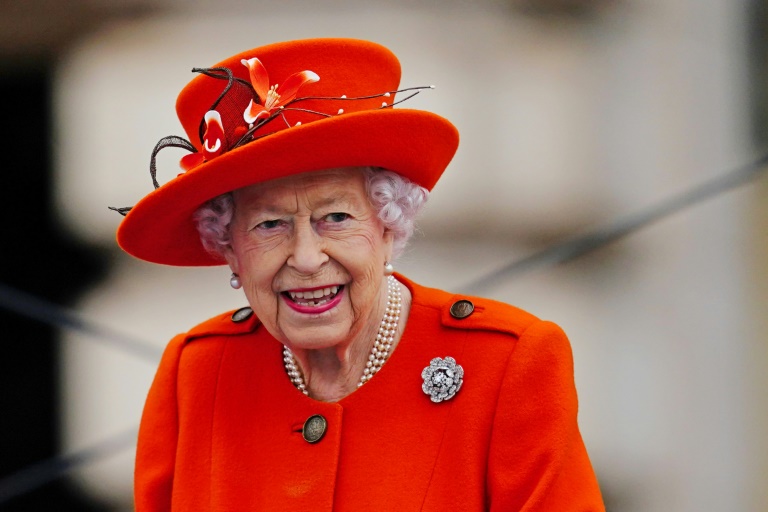
Queen Elizabeth II turned 96 on Thursday. Here are some of the key moments in her life.

– 1926: Royal birth –

Elizabeth Alexandra Mary Windsor is born at 2:40 am on April 21, 1926 in Mayfair, central London. She is the first child of the Duke and Duchess of York, who will become King George VI and Queen Elizabeth.

– 1940: Move to Windsor –

As Nazi Germany bombs the British capital, Elizabeth and her younger sister, Princess Margaret, move to Windsor Castle, west of London, for their safety.

During World War II, she trains as a military auto-mechanic. 

– 1947: Marriage and family –

Princess Elizabeth marries Prince Philip at Westminster Abbey. 

Their first child, Prince Charles, is born in 1948. A daughter, Anne, arrives in 1950, followed by Andrew in 1960 and Edward in 1964.

– 1952: Princess to Queen –

Princess Elizabeth, then aged 25, is visiting Kenya with Philip when her father dies aged 56 on February 6, 1952.

She cuts short the trip and rushes back to Britain.

– 1953: The coronation –

She is crowned at Westminster Abbey on June 2, 1953, in front of 8,500 assembled guests.

The ceremony is watched across the world and leads to a surge in sales for television sets.

– 1977: Silver Jubilee –

The queen reaffirms the vow of lifelong service to Britain and the Commonwealth she had made in a speech aged 21 in 1947.

She tours the country and the Commonwealth. Celebratory street parties brighten the economic gloom of industrial decline and strikes at home.

– 1992: ‘Annus horribilis’ –

Prince Charles separates from Princess Diana, and Andrew splits from his wife, Sarah.

The queen’s only daughter, Princess Anne, divorces her husband, Mark Phillips. Windsor Castle is also seriously damaged by fire.

The queen calls the 12 months her “annus horribilis”.

– 1997: Death of Diana –

Diana’s death in a car crash on August 31, 1997 rocks the royal family to the core, provoking rare criticism of the queen for continuing to stay at her Balmoral estate in Scotland.

She eventually returns to Buckingham Palace, where the Union Jack is lowered to half-mast, and she makes a televised tribute to Diana, helping to calm public anger.

– 2002: Golden Jubilee –

Celebrations for the queen’s 50 years on the throne come in the same year as the deaths of her own mother and younger sister Margaret, and show public support for the monarchy.

Huge crowds gather on The Mall in central London to watch Queen guitarist Brian May play the national anthem from the roof of Buckingham Palace before a star-studded pop concert.

– 2011: Ireland state visit –

The queen’s high-profile visit to Ireland is the first by a British monarch since the Republic of Ireland won independence in 1922.

An address in Irish, plus other symbolic gestures, helps galvanise reconciliation and cement the peace process in Northern Ireland, after years of conflict over British rule.

– 2012: Olympics and Diamond Jubilee –

The queen and other senior royals visit every region of Britain to mark her 60 years on the throne. Beacons are lit across the country, and a river pageant is held in London.

A surprise cameo for the monarch alongside James Bond actor Daniel Craig is a hit at the opening ceremony of the 2012 London Olympics.

– 2021: Covid, Philip, health fears –

The coronavirus pandemic forces the ageing queen into self-isolation at Windsor, from where she makes public appearances over video conference.

Prince Philip dies aged 99 in April 2021, while later that year fears grow for the queen’s own health after she spends a night in hospital and is forced to cut back her duties.

– 2022: Platinum Jubilee –

On February 6, she becomes the first monarch in British history to rule for 70 years. Two weeks later, she tests positive for Covid-19 but with only “mild” symptoms before returning to work in March.

QR codes and cranes: Japan embraces modern cemeteries

Masayo Isurugi settles into a booth on the sixth floor of a sleek Tokyo building, scans an ID card and waits for an automated system to deliver her late husband’s ashes.

More and more people in Japan are breaking with traditions on burial and mourning, swapping hometown graveyards for modern takes on cemeteries.

As the 60-year-old waits in one of ten mourning booths on the floor, cranes behind the walls move almost silently and retrieve the “zushi” box with the urn containing her late husband Go’s ashes.

Chic wooden doors inside the booth quietly part like an elevator at a luxurious hotel and a gleaming, dark-stone altar emerges with Go’s zushi box as its centrepiece, while a photo of him appears on a monitor.

“Initially, I thought maybe these facilities might feel cold and that I might prefer a traditional grave on soil,” Isurugi told AFP.

“Now I feel it’s better to have a place where I can visit whenever I want and offer prayers, rather than having a family grave that I could rarely visit.”

Her family considered a traditional cemetery, but it was a two-hour train ride away. The Kuramae-ryoen facility is only brief bus ride from Isurugi’s house and she can visit after work.

Traditionally in Japan, cremated remains are placed in family tombs used over many generations and tended by the family’s eldest sons.

But Japan’s disproportionately greying population makes for an imbalance between the number of new graves needing tending and the young people willing and able to do it.

Families are increasingly moving to urban areas far from ancestral graveyards, and many elderly don’t have sons who can take on the traditional responsibility.

– ‘A new style’ –

Tomohiro Hirose, resident monk at the temple that supervises the Kuramae-ryoen facility, has a traditional cemetery with some 300 graves.

“But about half of the graves no longer have anyone in the family to look after them,” he told AFP.

To address the problem, a crop of modern, indoor cemetery facilities have emerged, offering to store remains for a set period, often up to three decades.

The ashes are eventually transferred to collective memorials, but individual names or QR codes are engraved on plaques to provide some personalisation, and monks pledge to continue offering prayers for the souls of the departed.

Facing a busy boulevard in the Japanese capital, Kuramae-ryoen features warehouse-style industrial stacking racks that can store 7,000 zushi boxes, each of which can hold two urns or the bagged ashes of up to eight people.

Hirose decided to build the site after the temple’s old building was badly damaged in the 2011 earthquake. 

He felt the new building, which includes a temple, his living quarters, and the cemetery facility, would revitalise a site that dates back to 1608.

“This offers a new style. Many families find it easy to visit their graves,” Hirose said.

The cemetery uses machinery developed by Daifuku, a firm that produces storage, transport and collection systems for factories and warehouses.

“Our company has built systems for around 60 (cemetery) facilities across the country,” said Hidenobu Shinnaka, a senior official at Daifuku.

The first order came in the 1990s, and more recently there has been interest from other Asian markets too, he said.

– ‘A warm-hearted manner’ – 

Modern cemetery sites are not only often more convenient, but cheaper.

An average spot costs around $7,100, roughly half a traditional gravesite, according to Kamakura Shinsho, a company that helps connect customers with cemeteries.

Other modern cemeteries are not big enough to need machinery, but incorporate other novel features.

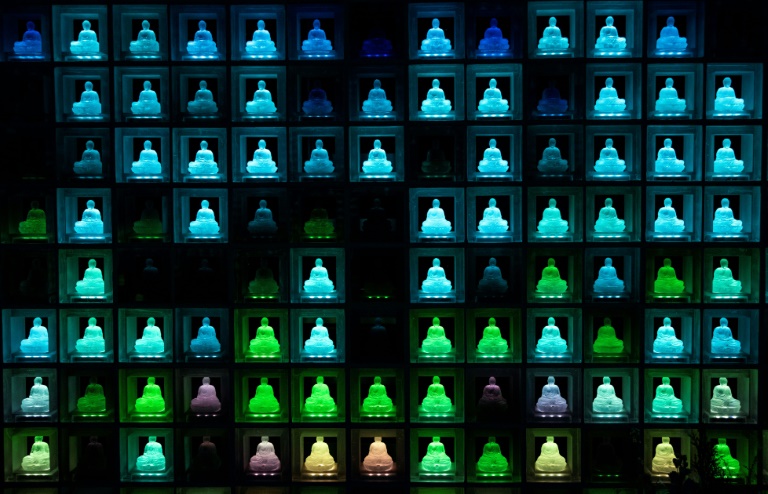
Kokokuji temple, founded in Tokyo in 1630, has created a unique octagon-shaped space with walls of floor-to-ceiling displays of individual glass Buddha statuettes.

Each of the statues — over 2,000 in all — symbolises an individual whose ashes are stored there. When visitors scan an ID or enter a family name, the Buddha assigned to their loved one is illuminated.

The entire display can also be lit, and the system can produce various mosaic patterns with different statues illuminated in a variety of colours to produce a calming ambience in the dim sanctuary.

The display is meant to show that each of us is surrounded by many more, and all will join Buddha in the after-life, said resident monk Taijun Yajima, who built the Ruriden facility with artists and engineers.

He says mourning remains the same even in modern cemeteries.

“Children should look after the graves and the souls of parents… But in some people’s reality, it is simply not possible,” he said.

“I thought about how those people can be laid to rest in a warm-hearted manner, and this is the answer.”

Oil prices up as traders weigh demand and supply issues

Oil began inching upward on Thursday after a day of losses over demand concerns linked to the Covid-19 lockdown in China.

Ongoing restrictions in the country, including in the economic hub of Shanghai where tens of millions are confined to their homes, have hit transport networks but traders are balancing the demand shock alongside threats to supply caused by the war in Ukraine with European Union countries mulling bans on Russian crude. 

The United States has said it will release a substantial portion of its oil reserves to cushion the shortfall. 

“Oil is still trading mixed after Tuesday’s sharp pullback but is opening in Asia near the midpoint of yesterday’s trading range – the US inventory draws lean helpful. Still, there is not much incremental news overnight, with a trajectory from here really hinging on whether other nations join the UK/US in banning Russian oil imports,” Stephen Innes of SPI Asset Management said.

Markets in Asia were largely up, with Japan’s Nikkei 225 gaining over a percent in early trade, with brokers staying optimistic over a falling yen for a third straight day. 

But Hong Kong’s Hang Seng Index continued its downward spiral and Shanghai also opened lower as news from China around Covid-19 restrictions, interest rate cuts, and curbs on tech companies remained a cause of concern. 

Seoul, Jakarta, Taipei, and Sydney were all marginally higher. 

European markets pushed ahead yesterday aided by news of a return to growth in eurozone industrial output in February.

But mixed results on Wall Street, where losses linked to dwindling subscriptions at streaming behemoth Netflix, also weighed on Asian trade with tech stocks down in Hong Kong.

Players will likely remain cautious ahead of Federal Reserve Chair Jerome Powell’s remarks before the US central bank meets next, with concerns high about rate hikes.  

“Fed Chair Powell and ECB President Lagarde speak at an IMF Panel, while BoE Governor Bailey speaks at a separate event later Thursday,” Innes said. 

“These central bankers, notably Powell, are unlikely to push back against market pricing, suggesting that the recent global bond market rally is a respite on the way to higher yields.”

– Key figures around 0300 GMT –

Tokyo – Nikkei 225: UP 1.21 percent at 27,547.24 

Shanghai – Composite: DOWN 0.93 percent at 3,121.67

Hong Kong – Hang Seng Index: DOWN 1.14 percent at 20,705.48 

Euro/dollar: DOWN at $1.0828 from $1.0850 

Dollar/yen: UP at 128.47 yen from 127.84 yen

Pound/dollar: DOWN at $1.3049 from $1.3065

Euro/pound: DOWN at 82.96 pence from 83.03 pence

West Texas Intermediate: UP 1.22 at $103.43 per barrel

Brent North Sea crude: UP 1.28 percent at $108.17 per barrel

New York – Dow: UP 0.7 percent at 35,160.79 (close)

London – FTSE 100: UP 0.4 percent at 7,629.22 (close) 

burs-ssy/je

Queen Elizabeth II turns 96

Gun salutes will ring out Thursday to mark Queen Elizabeth II’s 96th birthday, although the monarch herself was expected to mark the occasion with little fanfare.

It has been a troubled year for Britain’s royal family, with concerns over the queen’s health and questions over the future of the monarchy.

Rounds will be fired from the Tower of London and Hyde Park in the British capital, where a military band will also play “Happy Birthday”.

Royal tradition since the 18th century has also seen the monarch have a second, official birthday, typically celebrated in warmer weather in June.

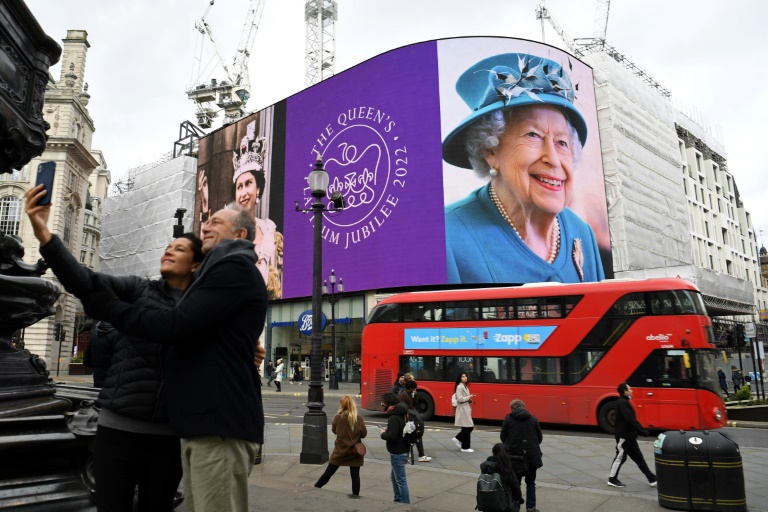
This year’s official birthday coincides with four days of public events from June 2 to 5 to mark the queen’s record-breaking 70th year on the throne.

British media said the queen has flown by helicopter from her Windsor Castle home, west of London, to her Sandringham country estate in eastern England.

There, she is reported to be spending time at the cottage where her late husband Prince Philip lived after he retired from public life in 2017.

The Daily Mirror quoted an unnamed royal source who said the trip was being viewed as a “positive step” given the queen’s recent health problems.

Since an unscheduled overnight stay in hospital last October, she has cut down massively on public appearances on doctor’s orders.

A back complaint and difficulties standing and walking have seen her cancel a number of engagements, including recent church events to mark Easter.

A bout of Covid-19 in February left her “very tired and exhausted”, she told doctors and patients at the Royal London Hospital during a virtual event earlier this month.

But her grandson Prince Harry told US broadcaster NBC in an interview aired on Wednesday that she was “on great form” when he saw her last week.

The queen was last seen in public at Westminster Abbey in central London on March 29 at a memorial service for Prince Philip, who died last year aged 99.

– Health and succession –

The queen’s enforced retreat from public life in her Platinum Jubilee year has increased attention on the succession and the monarchy’s future.

Her eldest son and heir, Prince Charles, has assumed more of his mother’s responsibilities in preparation to take over the throne.

His popularity has increased in recent years, according to an Ipsos poll of more than 2,000 adults in Britain in March.

But his 43 percent approval rating is still well behind his mother (69 percent), his eldest son Prince William (64 percent) and his daughter-in-law Kate Middleton (60 percent).

Some 42 percent of those surveyed also said they believed Charles, 73, should step aside for William, who turns 40 in June.

Aside from questions about the queen’s health and the succession, the royals have rarely been off the newspaper front pages due to a succession of scandals.

Last month there was controversy after the queen’s disgraced second son Prince Andrew supported her at Prince Philip’s memorial service.

In February, he settled a US civil claim for sexual assault that had earlier seen him stripped of his honorary royal military titles and charitable roles.

The palace is said to be bracing for fresh revelations about royal life from Harry, who is due to publish his memoirs later this year.

The former British Army captain quit the royal frontline last year and moved to California with his American wife Meghan Markle.

From there, the couple accused the royal family of racism, while Harry claimed his father Charles and brother William were “trapped” within the system of the British monarchy.

The future of the royal family’s global reach is also far from assured.

The queen is head of state of Britain and 14 other Commonwealth countries around the world.

But Barbados became a republic last year and a number of other Caribbean countries, including Jamaica, have since indicated they want to follow suit.

UK's Johnson faces test as MPs mull 'partygate' probe

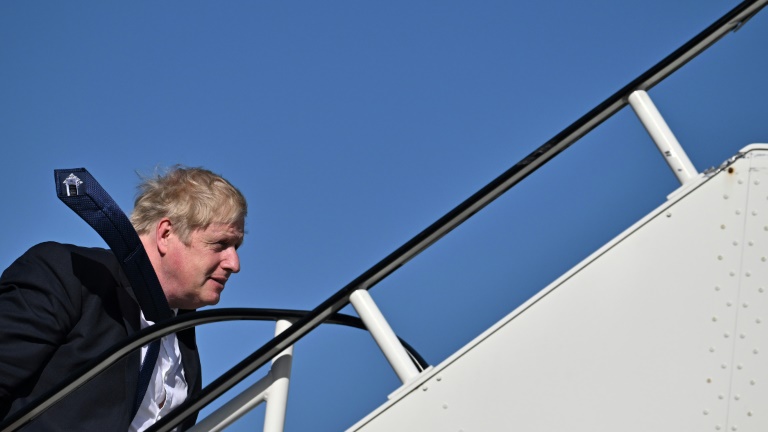
British Prime Minister Boris Johnson faces a test of Conservative party loyalty Thursday when MPs vote on whether he should be investigated for misleading them over the “partygate” scandal.

Johnson repeatedly denied in the House of Commons that he or his Downing Street staff had breached Covid-19 lockdown laws, after allegations of widespread rule-breaking emerged late last year.

But last week he became the first UK leader to be fined for breaking the law, as police confirmed they had issued dozens of penalty notices to his staff as part of an ongoing investigation.

Johnson’s single fine is related to an office gathering for his birthday in June 2020, when Britain was under a pandemic lockdown.

But penalties for other events could follow, and opposition parties are now demanding parliament’s cross-party “privileges committee” investigate Johnson.

It has the power to sanction lawmakers if they are found guilty of offences, including suspending them from the Commons.

However, the committee can only launch an investigation if a majority in the Commons votes for a referral.

The main opposition Labour party has urged Conservatives to back its call for the committee to assess whether Johnson’s denials amounted to “contempt of the House”.

It would need a sizeable rebellion among the 359 lawmakers from Johnson’s ruling Conservatives to pass, which is seen as unlikely.

But with an eye on local elections next month, Labour is pressing ahead with a bid to name and shame Tory MPs supporting Johnson, and hopes at least to force many of them to abstain.

– Not ‘worthy’ –

Labour leader Keir Starmer Tuesday recounted to a hushed Commons the experience of one voter who, out of respect for the rules then in place, was unable to hold his dying wife’s hand in hospital. 

He said the vote was “an important step towards restoring honesty and integrity into our politics”. 

“I am urging all Conservative MPs to do the right thing — to respect the sacrifices their constituents made, and to vote in the national interest.”

Johnson himself will be far away, starting a two-day visit to India.

He has apologised over the scandal but remains adamant he never knowingly misled parliament, and has vowed to press on with issues including the war in Ukraine.

But one junior minister resigned last week following the police fine, while senior Tory backbencher Mark Harper told parliament on Tuesday that Johnson was “no longer… worthy” of being prime minister.

A drubbing for the Conservatives in the local elections on May 5 could significantly add to his woes, if more Tory MPs join the likes of Harper in demanding a leadership vote.

One national survey this week found around two-thirds of the public spoke negatively about Johnson, compared to just 16 percent positively, with the word “liar” the most commonly shared response.

Business minister Paul Scully conceded that the government “didn’t handle it particularly well at that point, communication-wise”, when media reports of the Downing Street parties first emerged.

“Nonetheless, the prime minister has gripped it, he has apologised, he’s accepted the fine, he has accepted the finding of the police and he does want to move on,” Scully told BBC television.

Orphaned Palestinians mourn unarmed mother shot by Israeli soldier

When Ghada Sabatien set out to visit her uncle in a village near Bethlehem, she was not expecting to be caught up in the spike in violence between Israelis and Palestinians.

But the unarmed 45-year-old, who was partially sighted and understood little Hebrew, bled to death in the street after “mistakenly” being shot by an Israeli soldier.

She leaves behind six orphans.

The West Bank village of Husan is usually a quiet backwater, despite being close to a major crossing into Israel.

The shops have signs in both Arabic and Hebrew, and even Israeli settlers regularly stop there to buy groceries, with few tensions.

At the entrance to the village, Israeli soldiers sit guard on a concrete island that serves as a checkpoint.

On April 10, Ghada set out to visit her uncle, wearing a hijab and long gown.

On the way back, the walk took her past the makeshift checkpoint. 

As she approached, a soldier fired warning shots and shouted. 

Ghada has “eye problems”, her family said, adding that she did not speak Hebrew as she had spent years abroad.

In footage caught by a Palestinian TV crew that happened to be filming nearby, she appeared to panic.

But she kept walking. The soldier opened fire at her legs, and she fell to the floor.

It took several minutes for an ambulance to arrive. By the time she reached a hospital in the nearby town of Beit Jala, she had lost catastrophic amounts of blood.

She died in the hospital.

-‘She cannot be replaced’-

Ghada was not wearing an explosive vest or carrying any kind of weapon.

Her family have been in shock and anger ever since she was killed.

“My sister went there and asked a soldier in Hebrew: ‘Did she do anything wrong?’,” Ghada’s mother Houria Sabatien, 69, told AFP.

“He answered: ‘No’. ‘So why did you shoot at her?’ she asked. The soldier said: ‘Sorry’.”

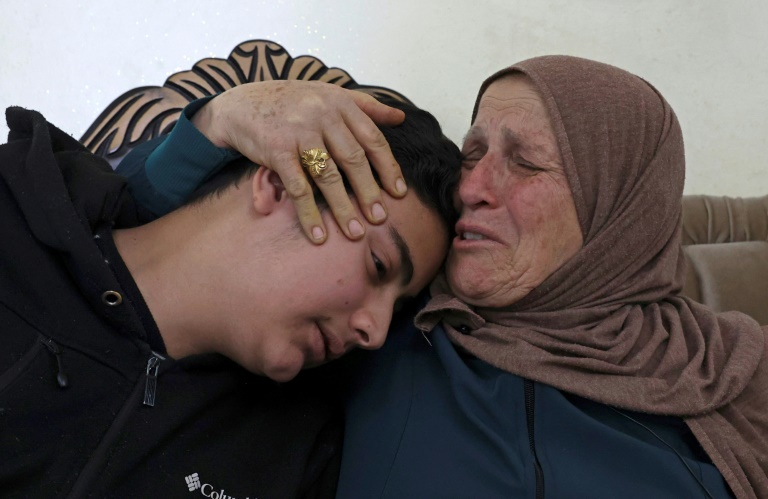
Around her sat her grandchildren, four of Ghada’s orphans: Omar, Jamila, Mohammed and Moustafa, their eyes glued to the floor.

“They’ve become orphans. And me, I’m old, I’m afraid for them when they go out, I’m afraid for them because of the army,” Houria said. 

“I would like to feed them and show them life. But I’m afraid for their future.”

Moustafa, 15, is struggling to comprehend the tragedy.

“When I lost my mother, it was as if life no longer had any meaning. She was the one who woke us up in the morning, she was the one who welcomed us back from school, she was the one who took care of us,” he said.

“She was everything, she cannot be replaced.”

He reminisced about Ghada’s delicious maqloubeh, a Palestinian dish of rice and meat, and how she would help with his mathematics homework.

“She made me understand straight away,” he said.

-‘Mistake’-

Born into a family of scientists, Ghada Sabatien graduated with a degree in mathematics at Bethlehem University and spent 15 years in Jordan, where she was a teacher.  

After her husband died four years ago, Ghada returned to Husan with the children. 

She prepared meals, helped with homework, read the Koran, visited extended family members, and occasionally gave private lessons.

“She was an independent, peaceful, educated woman who was not interested in politics at all,” says Rafat, her brother.

He said he had received an apology from the Israeli army for their “mistake”.

AFP approached the army for comment on Ghada’s killing.

It said she had run “suspiciously” towards the checkpoint and that soldiers had fired at her legs.

“The suspect received initial medical treatment by IDF soldiers at the scene,” it said.

“The circumstances of the case are being reviewed.”

The tragedy sparked anger, both among Palestinians and overseas.

In a rare move, Washington’s envoy to the Palestinians, George Noll, called the family to express his condolences. 

The Husan area saw a spike in night-time protests. One young man, Qusay Hamamra, was killed by Israeli forces after throwing a Molotov cocktail at them.

But Houria said she would teach Ghada’s children a different path.

“If we want to fight against Israel, we must do it through education, culture (…) we cannot stay in hatred,” she said.

“If I love Ghada, I must teach this to her children.”

Close Bitnami banner
Bitnami