World

Blinken seeks 'strong' Latin American pact on migration

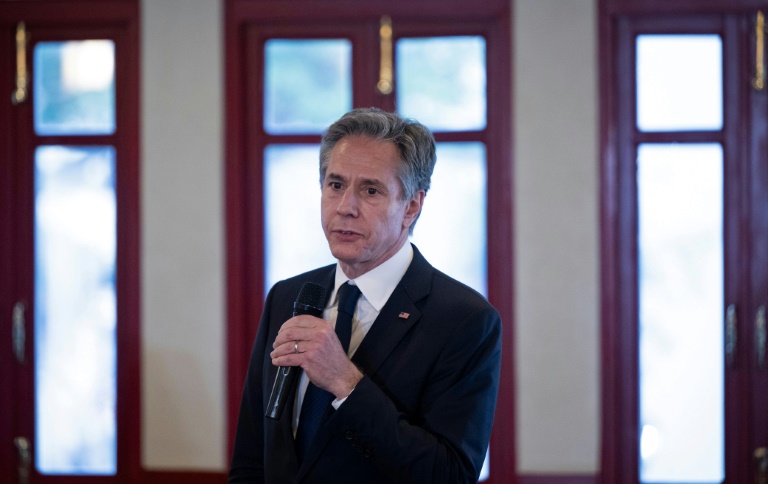
The United States is seeking a strong declaration to coordinate on rising migration when Latin American leaders meet in Los Angeles in June, US Secretary of State Antony Blinken said Wednesday.

Blinken is paying a two-day trip to Panama to meet regional counterparts as record numbers of people are displaced around the world — causing not only a humanitarian crisis but growing political worries for President Joe Biden.

Blinken said the Panama talks aim to “lay the groundwork for a strong declaration by our leaders” at the June 6-10 Summit of the Americas in California.

Blinken called for a “Los Angeles Declaration on migration protection that sets forth our shared principles for a collaborative, coordinated response.”

“We can make a profound difference in the lives of our most vulnerable fellow citizens and for the future of our region,” he said.

Biden called the summit to highlight his agenda of promoting democracy, with autocratic rulers in the region expected to be excluded.

Nearly 100 million people around the world are displaced — the most since World War II, with Ukrainians fleeing at a startlingly fast pace since Russia’s deadly invasion in February.

Migration rates have been increasing for years in the Western Hemisphere, fueled by conflicts, poverty and disasters worsened by climate change.

US authorities in March apprehended more than 221,000 people on the Mexican border, the most for a single month in more than two decades, an issue sure to be highlighted by Biden’s Republican rivals in November congressional elections.

But nations throughout the Americas have been coping with rising migration, largely coming from El Salvador, Guatemala, Haiti, Honduras and Venezuela.

Blinken, accompanied by Homeland Security Secretary Alejandro Mayorkas, renewed calls to focus on root causes of migration, including corruption, political repression and climate change.

But in the near term, he called for coordination to support the nations such as Colombia, Mexico, Panama and Costa Rica that are accommodating migrants.

“We know that no country — no community — can solve a challenge as complicated as irregular migration alone.”

Panama, a close US partner that is home to the dangerous Durian Gap connecting North and South America, on Tuesday signed an agreement to step up coordination with the United States.

Panamanian Foreign Minister Erika Mouynes highlighted efforts taken by her country, including biometric tracking to identify criminals.

But she said the region needed to speak “with a single voice,” including at multilateral institutions to secure shared funding.

“We pass this hard test only if we work on it together,” she said.
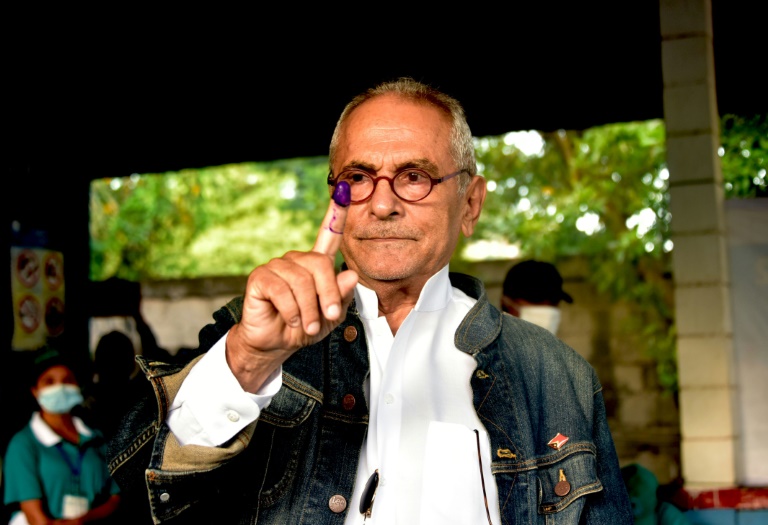
Ramos-Horta wins East Timor presidential election: officials

Nobel laureate Jose Ramos-Horta scored a landslide victory in East Timor’s presidential election, according to preliminary results published Wednesday by the election secretariat.

The 72-year-old secured 397,145 votes, or 62.09 percent, against incumbent Francisco “Lu-Olo” Guterres’ 242,440, or 37.91 percent, the secretariat’s website showed after all ballots were counted.

“The count of the district, national and regional vote has been completed”, said Acilino Manuel Branco, general director of the election secretariat.

The election results still need to be validated by the country’s electoral commission.

The victory gives Ramos-Horta his second term in office. He served as president of Southeast Asia’s youngest country from 2007 to 2012 and was also the country’s first prime minister.

“The elections were competitive, and the campaign was largely peaceful,” EU observer Domenec Ruiz Devesa said Wednesday, adding the counting process had been assessed “positively”.

Ramos-Horta will be inaugurated on May 20 — the 20th anniversary of East Timor’s independence from Indonesia, which occupied the former Portuguese colony for 24 years. 

He had pledged to use his five-year term to break a longstanding deadlock between the two main political parties.

The election could trigger a period of uncertainty, as Ramos-Horta has previously indicated he might dissolve the parliament if he won the election.

Portuguese President Marcelo Rebelo de Sousa called Ramos-Horta on Wednesday to convey “the warmest congratulations on the election as President of the Republic of Timor-Leste”, according to a press release from the presidency.

Nearly 860,000 people in the tiny nation of 1.3 million were eligible to vote, and more than 75 percent of voters turned up to cast their ballots in the second round. 

– Re-match –

This week’s vote was a rematch of the 2007 presidential poll that also saw Ramos-Horta win handily, with 69 percent of the votes. 

Ramos-Horta said he came out of retirement to run once more because he believed the outgoing president had violated the constitution.

Ramos-Horta was dominant in the election’s March 19 first round, winning 46 percent of votes versus Guterres’ 22 percent, but failed to secure the needed majority. 

The Nobel laureate benefited from the backing of Xanana Gusmao, the country’s first president and current leader of the National Congress of the Reconstruction of Timor-Leste (CNRT), often a kingmaker in East Timor.

Ramos-Horta was awarded a Nobel prize for peace in 1996 for his efforts in facilitating conflict resolution in the country. In 2008, he survived an assassination attempt. 

The new president faces the daunting task of lifting the country out of poverty.

East Timor is still reeling from the economic impact of the Covid-19 pandemic, and the World Bank has said that 42 percent of the population lives below the poverty line. 

Higher prices cooled US housing market in March

Sales of existing US homes dropped for the second straight month in March, an industry survey said Wednesday, a sign that higher mortgage rates and rising prices are taking the wind out of the booming sector’s sails.

Sales fell 2.7 percent last month to a seasonally adjusted annualized rate of 5.77 million, which was 4.5 percent lower than in the same month last year, the National Association of Realtors (NAR) reported.

Home prices rose nationwide, and the median price increased to $375,300, a 15 percent jump compared to March 2021, according to the survey.

The drop in sales pushed supply up to two months at the current sales pace, 11.8 percent higher than in February. 

NAR Chief Economist Lawrence Yun pointed to the impact of tighter lending conditions and increasing prices across the economy.

“The housing market is starting to feel the impact of sharply rising mortgage rates and higher inflation taking a hit on purchasing power,” he said. “Still, homes are selling rapidly, and home price gains remain in the double-digits.”

Sales fell in all regions with the exception of the West, where they were flat. The Midwest saw the biggest decline of 4.5 percent, while in the South they dipped three percent, about the same as the drop in the Northeast.

The Federal Reserve is moving to hike interest rates this year to curb record US inflation, which will have effects across the economy.  

Mortgage rates have climbed above five percent and Yun predicted they would rise further, causing existing home purchases to fall 10 percent this year.

Lydia Boussour of Oxford Economics agreed that low supply and high prices would put downward pressure on sales, though she said they would only fall so far.

“Resilient demand and strong income gains should keep a floor under home sales, however, particularly if home price growth moderates,” she said.

Fresh protests rock Sri Lanka after police killing

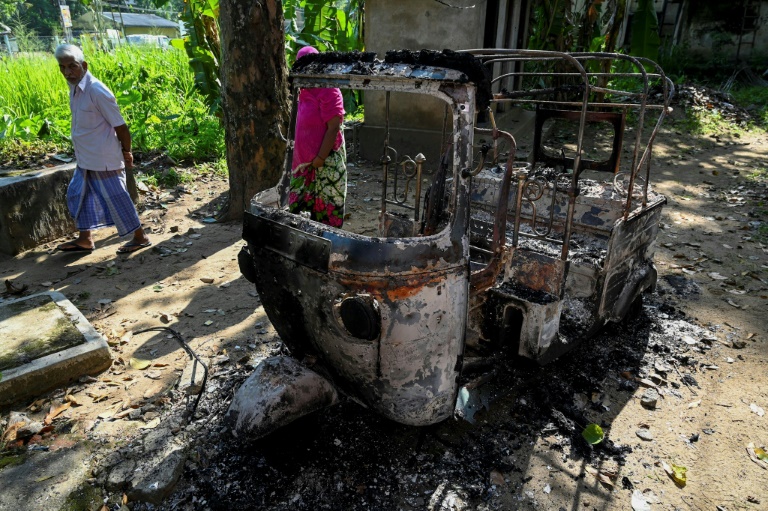
Fresh anti-government protests spread across Sri Lanka Wednesday, a day after police shot dead a demonstrator and triggered international condemnation just as the crisis-hit country appealed for an IMF bailout. 

Regular blackouts, acute shortages of food and fuel and record inflation have sparked increasing public discontent in the island, which is dealing with its worst economic downturn since independence in 1948.

The latest wave of demonstrations are the largest so far in the current unrest and again saw protesters blockading key highways, according to Sri Lanka’s public order ministry.

“Considerable crowds cut off roads… while there were smaller, but more widespread demonstrations elsewhere,” ministry secretary Jagath Alwis said in a statement.

State-run hospitals also saw medical staff stop all work except emergency surgeries to again protest a serious shortage of life-saving medicines.

Wednesday’s protests were the latest in weeks of demonstrations giving shape to public anger over chronic shortages and demanding the government’s resignation. 

A day earlier, a 42-year-old father of two was killed when police dispersed a crowd in the town of Rambukkana with tear gas and live ammunition. Nearly 30 others were wounded in the confrontation.

“I was hit with a baton on my leg and hand,” Vasantha Kumara, a chef from the town, told AFP. “I begged the cops not to beat me, but they didn’t listen.”

“People are angry. We are all poor people fighting for basics.”

People in Rambukkana, 95 kilometres (60 miles) east of the capital Colombo, defied an official curfew to again take to the streets in protest a day after the violence.

President Gotabaya Rajapaksa said he was “deeply saddened” by the police shooting and promised to uphold the public’s right to peacefully protest against his government.

Sri Lanka’s police force “will carry out an impartial and transparent inquiry”, he wrote on Twitter.

Police said they were forced to act when the crowd was about to set alight a fuel tanker — an account rubbished by Sri Lanka’s political opposition.

“These people are not suicidal to burn a tanker and get killed in the process,” lawmaker Rohini Kumari Wijerathna said in parliament.

– International concern –

Tuesday’s incident was the first fatal clash since widespread anti-government protests began this month. 

At least 29 people, including 11 police officers, were wounded in Rambukkana, according to official figures. 

Colombo-based diplomats have expressed concern over the police shooting.

“A full, transparent investigation is essential and the people’s right to peaceful protest must be upheld,” US ambassador Julie Chung said.

British High Commissioner Sarah Hulton condemned the violence and called for “restraint”.

– IMF talks –

Sri Lanka opened talks with the International Monetary Fund in Washington this week after announcing an unprecedented default on the country’s $51 billion foreign debt. 

The IMF said it had asked Sri Lanka to restructure its borrowings before the lender finalises a bailout programme.

Talks with Sri Lanka were still at an “early stage”, the IMF said.

Sri Lanka’s economic collapse began to be felt after the coronavirus pandemic torpedoed vital revenue from tourism and remittances.

The country is short of dollars to finance essentials, including medicines. Runaway inflation has worsened hardships.

The Colombo Stock Exchange has suspended trading to prevent an anticipated market collapse. The  government has urged citizens abroad to donate foreign currency.

A large crowd has been camped outside President Rajapaksa’s seafront office in Colombo since April 9, demanding he steps down. 

Rajapaksa has acknowledged public anger over the ruling family’s mismanagement and appointed a new cabinet to navigate the country out of the crisis, but has refused to resign.

South African flood victims struggle with despair

Wielding shovels, mallets and machetes, they worked for four hours to try to shift the muddy debris, hoping that vehicles could at last get through.

In vain: A pick-up truck, stuck on the wrong side of the gigantic mound, was still unable to pass.

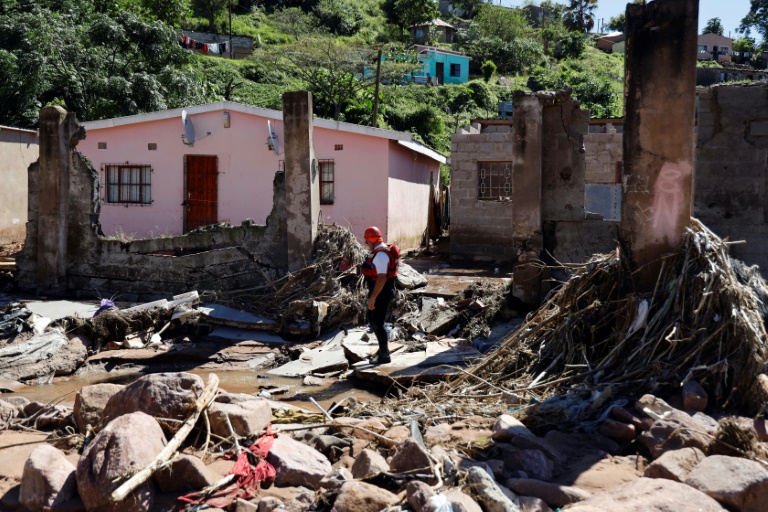
Inhabitants of KwaNdengezi, a township west of Durban, have been almost literally marooned since a record storm pounded South Africa’s east coast, killing nearly 450 people.

Like people stranded on a desert island watching ships sail tantalisingly by, they have stood as water tankers drive by in the distance. 

None of the tankers comes to their aid. 

To the bitter residents, it is a sign of an isolation that has now lasted more than a week — even of abandonment.

“You just feel like you’re thrown away, like they don’t care about us,” said Bryson Khumalo, 24.

He was compiling a list of residents with the greatest needs — those whose homes had been washed away or rendered uninhabitable — to provide to government authorities. 

No-one had yet come to check on the community, he said. 

“We’re doing it on our own. That makes us more angry,” he said. 

The country has declared a national state of disaster after record rains flooded swathes of KwaZulu-Natal and Eastern Cape provinces. 

The defence force announced Monday that it was deploying 10,000 troops to help clear debris, rebuild fallen bridges, provide clean water and reconnect severed power lines. 

But in KwaNdengezi on Wednesday, no help came as more than a half dozen men struggled to clear a mud-covered road.

Many local people said they remained deeply nervous, still scarred by the sight of roads that became rivers and bore away lives, homes and possessions.

– Fear –

The floods are the worst in living memory, and experts say climate change has played a part in their intensity.

“I’m shaking, as you can see. I’m not angry, I’m worried,” said Ntombi Mkhize, 42, a mother of three whose youngest child is just two months old. 

“Even if there is a small rain, because of that memory, we feel it is big,” she said, adding the fear had caused her many sleepless nights. 

On top of that, she is afraid of break-ins and other crimes by people taking advantage of the unlit nights. 

Lacking water or electricity, Mkhize said she had been sending her eldest son to collect water leaking from broken pipes far from their home. 

She had had to collect wood — still damp from the rain — to build a fire and boil the water, hoping to kill any contaminants. 

Many local people said they were consumed by the need to recover bodies of loved-ones, to give them proper funerals and provide closure. 

Ntokozo Magcaba, 40, had her eyes fixed on a river where police divers and a canine unit were searching the waters for her missing 23-year-old son. 

“They say we must keep looking,” she said police had told her when she called for help a week ago. Since then, her husband and neighbours had been searching daily. 

Rescuers followed the river for over an hour to where it intersected with a larger waterway.

There was no sign of Magcaba’s son. 

“I’m broken,” she said. 

Venice readies day-trip booking system to ease crowds

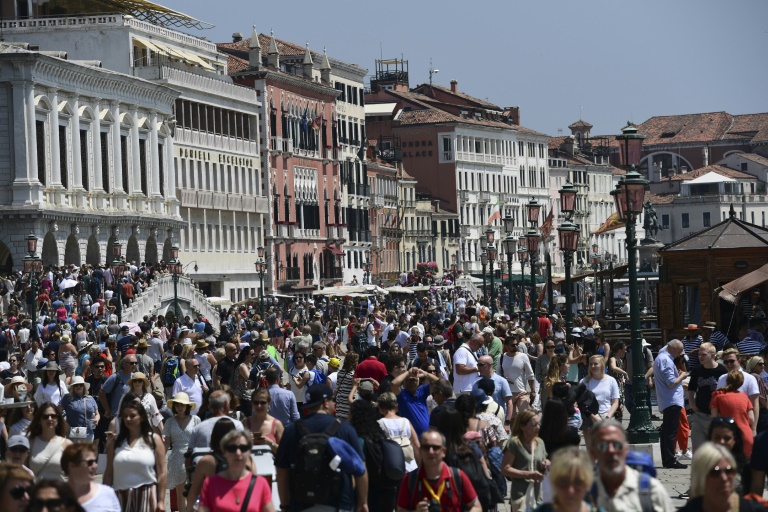
Venice plans to trial a reservation system for day-trippers, an official said Wednesday, in a bid to ease over-tourism as visitors flock back to the Italian city following the pandemic.

The pay-to-visit scheme will not cap tourist numbers but aims entice some people to visit during the low season by charging them less.

“We will start with an experimental phase during which the reservation will not be mandatory, but optional” and will cost nothing, Venice’s deputy tourism councillor Simone Venturini told AFP.

Visitors just popping in for the day will be encouraged to sign up through incentives “such as discounts on museum admissions”, he said. The start date will be announced in the coming weeks.

The system, which has been in the works for years, will become compulsory in 2023 and will see day-trippers pay between three and ten euros (around $3 to $10), depending on the season.

Visitors who sleep in Venice, already subject to the so-called tourist tax, will be exempt.

Life in the hugely popular watery city has slowly been returning to normal after the coronavirus pandemic, when the Grand Canal was emptied of gondolas as tourists disappeared.

Easter weekend drew a vast number of visitors, with 100,000 sleeping over nightly and some 40,000 others coming in for a few hours, to marvel at St. Marks or sigh at the Bridge of Sighs, said Venturini.

The sheer numbers cause long lines at vaporetto ferry stops or in front of museums, and overbooking in hotels. The crowds also make life difficult for the few locals who still live in the historic centre.

Venice’s mayor Luigi Brugnaro, determined to save the city from becoming little more than a resort, said the reservation system was “the right road to take, for a more balanced management of tourism”.

“We will be the first in the world to carry out this difficult experiment,” he said on Twitter.

Once the reservation becomes mandatory, controls will be carried out at the bus and train stations, the two main access points to the city dubbed the “Serenissima”.

Stock markets rise but Netflix sinks

European and US stocks rose Wednesday as investors tracked developments in the Ukraine conflict and corporate earnings, with Netflix shares sinking after the streaming giant reported a drop in subscribers.

Oil rebounded slightly, having slumped the previous day on demand concerns.

“The upbeat market mood which helped Wall Street close firmly higher yesterday has followed through into Europe,” City Index senior market analyst Fiona Cincotta told AFP.

Frankfurt won 1.2 percent and Paris rose 1.4 percent, aided by news of a return to growth in eurozone industrial output in February.

London was barely in the green, however, as drops in industrial metals prices hit mining shares.

Europe equities and oil had dropped Tuesday as Moscow launched its eastern offensive and after the International Monetary Fund slashed its global 2022 economic growth forecasts by 0.8 percentage points, largely over inflationary crises linked to the Ukraine war and the coronavirus pandemic. 

“Whilst the Russian war remains a key driver in the markets, the bad news has been priced in for now,” Cincotta said. 

“Instead, some areas of optimism are arising with banks outperforming after the ECB (European Central Bank) soothed nerves with news that all big banks in the eurozone can withstand Russian write-offs,” she added.

– Netflix ‘shocker’ –

Wall Street opened higher following Tuesday’s rally on promising housing-starts data and solid earnings, with the Dow adding 0.7 percent.

But Netflix shares slumped after the streaming giant reported its first drop in quarterly subscriptions in a decade, blaming the quarter-over-quarter erosion to suspension of its service in Russia due to Moscow’s invasion of Ukraine.

“There is no two ways to look at it, Netflix was a shocker and is likely to take the wind out of the Nasdaq’s recent rally, or at least put it on pause,” Cincotta said.

The Nasdaq Composite rose 0.4 percent as trading got underway, however.

“That said, broadly speaking earnings season has been reasonably solid so far, economic data hasn’t revealed any major cracks either, which is helping to keep risk sentiment buoyant,” she added.

In Asia trading, concerns about China’s economy hit trading in Shanghai and Hong Kong.

Shanghai’s main stocks index was Asia’s biggest faller, losing 1.4 percent as the People’s Bank of China (PBoC) kept key lending rates unchanged amid uncertainty over the impact of ongoing Chinese Covid restrictions.

Hong Kong — which plummeted on Tuesday over concerns about Beijing’s ongoing tech-sector crackdown — also ended down.

“PBoC policymakers realise the futility of cutting rates during a lockdown as policies incentivising lending will have minimal a short-term positive impact on activity so long as mobility restrictions remain in place,” noted independent analyst Stephen Innes.

– Key figures around 1330 GMT –

London – FTSE 100: UP less than 0.1 percent at 7,606.05 points

Frankfurt – DAX: UP 1.2 percent at 14,320.62

Paris – CAC 40: UP 1.4 percent at 6,626.63

EURO STOXX 50: UP 0.6 percent at 3,766.81

New York – Dow: UP 0.7 percent at 35,144.31

Tokyo – Nikkei 225: UP 0.86 percent at 27,217.85 (close)

Shanghai – Composite: DOWN 1.4 percent at 3,151.05 (close) 

Hong Kong – Hang Seng Index: DOWN 0.4 percent at 20,944.67 (close)

Euro/dollar: UP at $1.0840 from $1.0788 late on Tuesday

Dollar/yen: DOWN at 127.81 yen from 128.91 yen

Pound/dollar: UP at $1.3058 from $1.2998

Euro/pound: DOWN at 82.97 pence from 82.99 pence

Brent North Sea crude: UP 0.7 percent at $107.99 per barrel

West Texas Intermediate: UP 0.8 percent at $102.83 per barrel

burs-rl/lth

Finnish MPs open debate on joining NATO

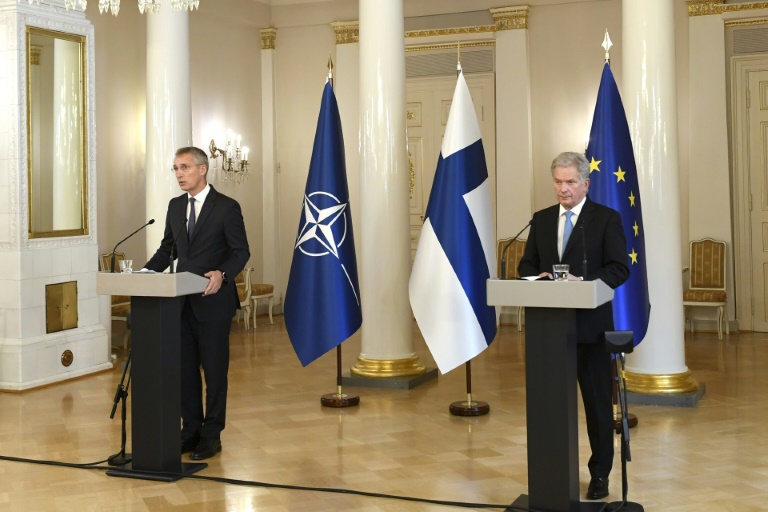
Finland’s parliament on Wednesday opened a debate on whether to seek NATO membership, after Russia’s invasion of Ukraine sparked a surge in political and public support for joining the military alliance. 

Despite Russia warning of a nuclear build-up in the Baltic should Finland and neighbouring Sweden join the military alliance, Finland’s prime minister said that her country now needed to decide quickly on whether to apply for membership.

“The time for solutions is here,” Sanna Marin said, adding: “Unity is the best guarantee of security.”

She had last week said Finland’s decision would happen “within weeks, not within months”.

Sweden is also discussing whether to submit a membership bid following Russia’s February 24 invasion.

The 200 MPs in Finland’s Eduskunta last week received a government-commissioned “white paper” that assessed the implications of NATO membership alongside other security options, such as increased bilateral defence agreements. 

The report did not make recommendations but stressed that without NATO membership, Finland enjoys no security guarantees despite currently being a partner to the alliance. 

It said the “deterrent effect” on Finland’s defence would be “considerably greater” inside the bloc, while noting that membership also carried obligations for Finland to assist other NATO states.

After two decades of public support for NATO membership remaining steady at 20-30 percent, the war sparked a surge among those in favour to over 60 percent, according to opinion polls.

“I used to be against joining NATO but because of this situation I’m now more in favour,” said 24-year-old Sofia Lindblom, walking her dog in central Helsinki on Wednesday. 

“Joining would bring a certain kind of security,” she told AFP.

On nearby Senate Square, Vuokka Mustonen said the invasion of Ukraine had “utterly changed” her opinion in favour of NATO membership.

“I feel pretty safe, but quite worried,” the 69-year-old said.

– ‘Highly likely’ –

Public statements gathered by Finnish media suggest half of Finland’s 200 MPs now support membership, while only around 12 oppose.

“It is clear that Russia’s actions have brought us many steps closer to military alignment,” Antti Lindtman, a senior MP in the ruling Social Democrat party, said in Wednesday’s debate.

Russia “has become ruthless, unpredictable and aggressive.”

But Lindtman stopped short of explicitly announcing a turnaround in his party’s long-held ambivalence toward joining NATO, saying the time for a final decision will be after parliament and its committees have considered the issue in depth.

Meanwhile, Green MP Atte Harjanne said his party now supported NATO membership, a position echoed by the Centre Party as well as the opposition Finns Party and National Coalition.

Within the first hour of debate, only the Left Alliance, a junior partner in the ruling coalition, voiced an opposing view, warning that NATO membership would put Finland on the front line of a potential Russian attack.

“We must have the courage to discuss everything and bring out all the negative aspects of the different options,” Green MP Jussi Saramo said.

On Friday, Finland’s European Affairs Minister Tytti Tuppurainen said she believed a Finnish application was “highly likely”.

Many analysts predict Finland could submit a bid in time for a NATO summit in June. 

Any membership bid must be accepted by all 30 NATO states, a process that could take four months to a year.

Finland has so far received public assurances from Secretary General Jens Stoltenberg that NATO’s door remains open, and support from several members.

President Sauli Niinisto said Russia’s response could include airspace or territorial violations and hybrid attacks, which Finnish NATO proponents believe the country is well prepared to withstand. 

Finland declared independence in 1917 after 108 years of Russian rule. 

During World War II, its vastly outnumbered army fought off a Soviet invasion, before a peace deal saw it cede several border areas to Moscow. 

The Nordic nation remained neutral during the Cold War in exchange for Soviet guarantees not to invade.

After the fall of the Iron Curtain, Finland firmly aligned itself with the West, by joining the European Union and becoming a close partner of NATO. 

Successive Finnish leaders shied away from full membership believing that military non-alignment was the best way to maintain working relations with the Kremlin.

Procter & Gamble profits rise on higher pricing

Quarterly profits edged higher at Procter & Gamble as the consumer goods giant implemented price increases with only a limited hit to demand, the company said Wednesday.

Maker of the Tide, Old Spice and Crest brands, P&G has been buffeted by the economy-wide surge in commodity prices and freight service costs, most recently exacerbated by the Russian invasion of Ukraine.

As the company has lifted prices in recent months to offset these expenses, the consumer reaction so far has been “about 20 to 30 percent more favorable than we would have assumed based on historical data,” Chief Financial Officer Andre Schulten said on a conference call with reporters.

But Schulten noted there is no guarantee this trend will continue, saying “as more pricing flows through to the consumer, we expect that volume will have somewhat of a negative impact.”

P&G reported a seven percent jump in revenues to $19.4 billion, due in part to five percent higher pricing. Profits rose three percent to $3.4 billion.

All five of P&G’s product divisions scored higher net sales, with health leading, in part due to much greater sales of items to treat coughs, colds and the flu.

The company now sees $3.2 billion in additional costs in 2022 due to higher expenses for commodities and freight and unfavorable movements in the foreign exchange markets. That’s $400 million higher than the prior estimate.

P&G lifted its full-year sales outlook, but maintained its profit forecast.

In the most recent quarter, P&G saw some deceleration in price increases in transportation and warehousing costs compared with the prior six months “but still significantly up,” Schulten said.

The company is planning for continued inflation pressures due to supply chain woes and the impact of the Ukraine war on energy costs, Schulten said.

“It’s not irrational to assume that we will see continued increases, but at a slightly slower pace,” he said.

Shares of P&G rose 0.4 percent to $159.97 in pre-market trading.

Russia closes in on Ukraine's besieged Mariupol

After nearly two months under siege, the southern city of Mariupol could fall into Russian hands within “hours”, a Ukrainian official said, as the two sides agreed on Wednesday to a humanitarian corridor to allow civilians to flee the devastated port city. 

As fighting raged in the country’s east and south, the president of the European Council Charles Michel arrived in Kyiv, in the latest sign of strengthening ties between Ukraine and the EU. 

“In Kyiv today. In the heart of a free and democratic Europe,” he wrote on social media. 

Michel’s visit comes as the West continues to pour weapons into Ukraine amid a renewed Russian push into the eastern Donbas region where a new offensive launched this week has led to an uptick in fighting.

Hours ahead of Michel’s arrival, the Pentagon said that Ukraine had recently received fighter planes and spare parts to bolster its air force, following repeated calls from Kyiv for heavier weapons. 

The Pentagon declined to specify the number of aircraft and their origin.

The announcement came as the battle for Mariupol appeared to be nearing a crucial peak, after months of devastating fighting that has seen untold numbers of civilians trapped and killed.

Control of Mariupol and the separatist-controlled Donbas region in the east would allow Moscow to create a southern corridor to the Crimean peninsula that it annexed in 2014, depriving Ukraine of much of its coastline.

In the latest ultimatum issued in its battle to capture Mariupol, Moscow made another call for the city’s defenders to surrender on Wednesday by 2:00 pm Moscow time (1100 GMT) and announced the opening of a humanitarian corridor for any Ukrainian troops who agreed to lay down their arms.

As the deadline approached, a commander in the besieged Azovstal steel plant issued a desperate plea for help, saying his marines were “maybe facing our last days, if not hours”.

“The enemy is outnumbering us 10 to one,” Serhiy Volyna from the 36th Separate Marine Brigade said.

“We appeal and plead to all world leaders to help us. We ask them to use the procedure of extraction and take us to the territory of a third-party state.”

Thousands of troops and civilians remain holed up in the plant.

An adviser to the mayor of Mariupol described a “horrible situation” in the encircled complex and reported that up to 2,000 people — mostly women and children — are without “normal” supplies of drinking water, food and fresh air.

During an interview broadcast on CNN Tuesday, Pavlo Kyrylenko — who oversees the Donetsk region’s military administration — insisted Mariupol remained contested.

“The Ukrainian flag is flying over the city,” he said. 

“There are certain districts where street fighting is continuing. I can’t say the Russians are controlling them.”

Offering some respite, Kyiv said early Wednesday it had agreed with Russian forces to open a safe route for civilians to flee the devastated city.

“We have managed to get a preliminary agreement on a humanitarian corridor for women, children and elderly persons,” Deputy Prime Minister Iryna Vereshchuk wrote on Telegram.

– ‘Violent deaths’ –

Elsewhere on the frontlines, Ukraine’s defence ministry reported its troops had beaten back a Russian attack in the city of Izium, south of the partly blockaded second city of Kharkiv in the east.

Kyiv also claimed enemy losses in a Ukrainian counter-attack near the town of Marinka in Donetsk.

The governor of the eastern Lugansk region, Sergiy Gaiday, said Ukrainian forces were holding their ground in the face of heavy fighting.

Russian forces, meanwhile, on Wednesday said its forces had launched 73 airstrikes across Ukraine, hitting dozens of locations where troops were concentrated.

In eastern Ukraine’s Kramatorsk, a large city in the Donetsk region, residents were already braced for the worst. 

“It’s going to be a mess,” said Alexander, 53. “There’s nothing good to expect.”

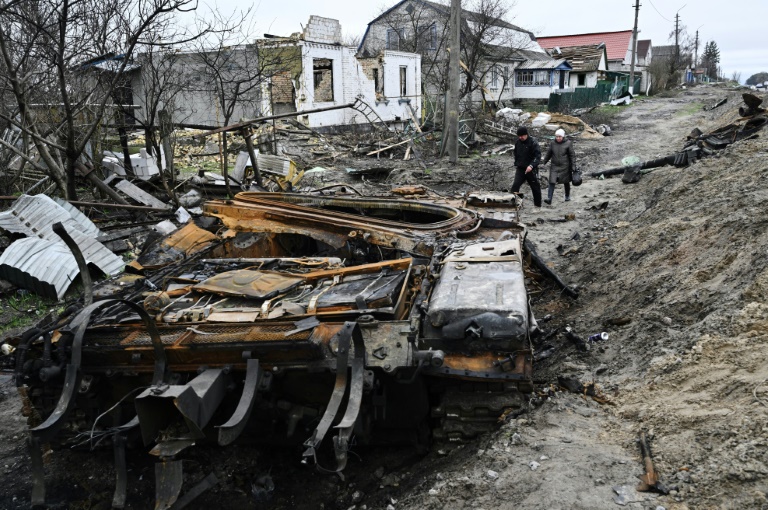
Further from the frontlines, residents were still reeling near the capital Kyiv weeks after Russian forces withdrew from the area. 

At a morgue in Bucha, families carefully searched body bags and examined cadavers looking for missing loved ones.  

In the car park of the small communal morgue, the body bags arrived in carts or were piled up in trailers, vans and non-refrigerated trucks.

Four hundred bodies have been discovered since the Russians withdrew on March 31, local police chief Vitaly Lobas told AFP. Around a quarter of them are still unidentified.

“The majority died violent deaths” and were shot, Lobas said, declining to provide a concrete figure at this stage.

– ‘War crimes’ – 

President Vladimir Putin has said he launched the so-called military operation in Ukraine in February to save Russian speakers in the country from a “genocide” carried out by a “neo-Nazi” regime.

But his forces have faced allegations of war crimes — most recently from the EU’s Michel during his visit to Kyiv on Wednesday where he toured the devastated nearby town of Borodianka. 

“In Borodianka. Like Bucha and too many other towns in Ukraine. History will not forget the war crimes that have been committed here,” Michel wrote on Twitter. 

“There can be no peace without justice,” he added. 

Ukrainian authorities have said that over 1,200 bodies have been found in the Kyiv region so far. 

burs-ds/yad

Close Bitnami banner
Bitnami