World

French presidency race enters final stretch with TV showdown

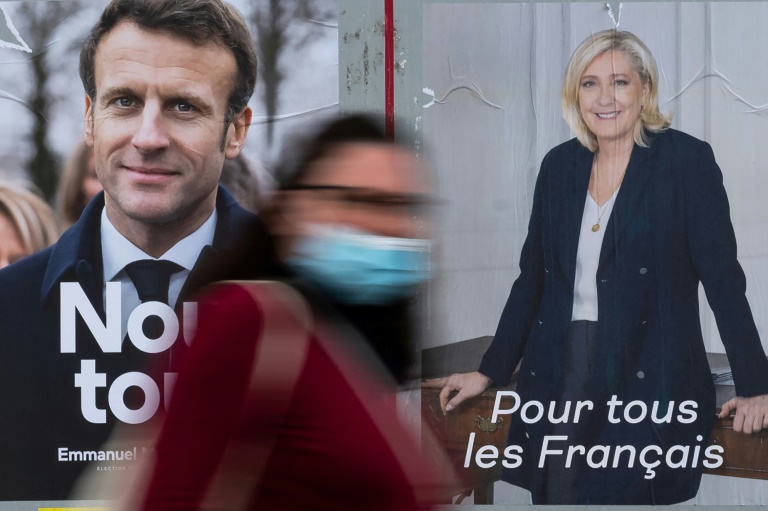
Emmanuel Macron and Marine Le Pen girded for a televised debate Wednesday that is likely to prove the climax of this year’s turbulent French presidential campaign, with millions of votes potentially up for grabs just four days before ballot casting begins.

The centrist incumbent and his far-right rival will trade blows starting at 9:00 pm (1900 GMT), in a rematch of their 2017 face-off that was widely seen as disastrous for Le Pen.

But this time Macron will not be the ambitious outsider making his first run at public office — he will have a five-year record to defend against a candidate who has softened her extremist edges to present a more mainstream image.

Recent polls give Macron the advantage, at 53 to 56 percent against 44 to 47 percent for Le Pen, who is making her third run at the presidency, though analysts say low participation could still sharply sway the final result.

Turnout in the first round of voting was just 74 percent, meaning one in four eligible voters stayed home, a pool that both candidates are eager to motivate.

In addition, the fiery hard-left candidate Jean-Luc Melenchon scored nearly 22 percent in the first round, and he has refused to urge his supporters to vote for Macron in order to keep Le Pen out of the Elysee Palace.

The decisions by those left-leaning voters — many of whom have expressed a visceral rejection of Macron’s pro-business tax cuts and other policies — could prove crucial.

Looking ahead to parliamentary elections in June, often deemed the “third round” in France’s electoral system, Melenchon on Tuesday called for a left-wing alliance that would deny either Macron or Le Pen a majority and potentially set him up as prime minister.

“I will be prime minister, not because Macron or Le Pen want it, but because the French will have elected me,” he told BFM television.

– Approval slips –

Wednesday’s debate, the only one Macron agreed to in this year’s race, is a pre-run-off ritual watched by millions and has often proved pivotal in determining the choices of last-minute voters.

Macron’s allies have warned him against complacency, not least faced with Le Pen’s persistent attacks against the former investment banker as an aloof “president of the rich,” out of touch with workaday concerns at a time of rising inflation and insecurity.

An Odoxa poll released Wednesday found that Macron’s approval rating as a “good president” had slumped to just 40 percent in mid-April, down six points from March.

That could render the result on Sunday extremely close, even though the survey found that a majority of respondents still find Le Pen’s populist, anti-immigration programme racist (56 percent) and divisive for the country (67 percent).

“For the first time, in order to kick out a ‘president of the rich,’ a large number of French seem ready to elect a president they consider less competent, without sufficient stature to be president,” Odoxa’s president Gael Sliman wrote.

“This debate will probably be decisive for giving an advantage to one of these two rivals,” he said.

– Zelensky weighs in –

Macron will likely seek to portray Le Pen as a fringe politician who cannot be trusted on foreign policy — especially after Russia’s invasion of Ukraine, given her past support for President Vladimir Putin.

Ukraine’s President Volodymyr Zelensky entered the French debate Wednesday by urging Le Pen to admit “she made a mistake” in her admiration for Vladimir Putin and her refusal to condemn his 2014 annexation of Crimea.

If she did, “our relationship could change,” Zelensky told BFM in a video interview, but “obviously I have ties with Emmanuel Macron and I would not like to lose them.”

Appealing to French people to vote for Macron, jailed Russian opposition leader Alexei Navalny was blunter.

In Twitter posts, he accused Le Pen of “corruption” and “selling political influence to Putin” over a 2014 loan of nine million euros ($10 million) from a Russian bank he called “Putin’s notorious money-laundering outfit”.

Macron is also likely to target Le Pen’s plans for limiting the economic impact of the Ukraine war for low-income households, and her promise to give “national priority” to French citizens for jobs or welfare benefits.

For her part, the far-right leader will zero in on Macron’s proposal to push back the retirement age from 62 currently — though in recent days he has wavered on whether it should be 65 or 64. 
War in Ukraine: Latest developments

Here are the latest developments in the war in Ukraine:

– Mariupol could fall in ‘hours’ –

A commander of forces holding out at a steelworks in the besieged port city of Mariupol issues a desperate plea for help, saying his marines are “maybe facing our last days, if not hours”.

“The enemy is outnumbering us 10 to one,” says Serhiy Volyna from the 36th Separate Marine Brigade. 

In the latest ultimatum issued in its seven-week battle to capture Mariupol, Moscow had urged the city’s defenders to surrender on Wednesday by 2:00 pm (1100 GMT).

– Evacuation plan –

Ukraine has agreed with Russian forces to open a safe route for civilians to flee Mariupol, according to Deputy Prime Minister Iryna Vereshchuk. 

Writing on Telegram, she says the agreement covers women, children and elderly people and that evacuees will be taken to the Ukrainian-held city of Zaporizhzhia. 

More than 140 civilians and five Ukrainian troops who have surrendered have been evacuated from Mariupol, pro-Russian separatists in the self-proclaimed Donetsk People’s Republic say separately.

– More than five million have fled Ukraine: UN –

More than five million Ukrainians have now fled their country following the Russian invasion, the United Nations says.

UNHCR, the UN refugee agency, says 5,034,439 Ukrainians have left since Russia invaded on February 24.

– EU chief in Kyiv –

EU chief Charles Michel says that there must be justice for war crimes committed by Russian forces as he tours the devastated town of Borodianka on a visit to Ukraine. 

“In Borodianka. Like Bucha and too many other towns in Ukraine. History will not forget the war crimes that have been committed here. There can be no peace without justice,” the European Council head writes on Twitter.

– New planes –

The Pentagon says that Ukraine recently received fighter planes and parts to bolster its air force while declining to specify the number of aircraft and their origin.

Kyiv had asked its Western partners to provide MiG-29s, which its pilots already know how to fly, and a handful of Eastern European countries have.

Meanwhile, Norway has given Ukraine around 100 French-made Mistral anti-air missiles, the government says.

– Donbas offensive –

Ukraine’s defence ministry says its troops have beaten back a Russian attack in the city of Izium, a gateway to the eastern Donbas region which is the target of a major Russian offensive.

Kyiv also claimed enemy losses in a Ukrainian counter-attack near the town of Marinka in the southern part of the Donbas, where pro-Russian separatists have been fighting government forces since 2014.

Russia says its forces have launched 73 airstrikes across Ukraine, hitting dozens of locations where troops were concentrated.

Moscow says the focus of the second phase of its Ukraine offensive is the “liberation” of the entire Donbas, an area about twice the size of Belgium.

– Finnish MPs debate joining NATO –

Finland’s parliament opens a debate on whether to seek NATO membership, after Russia’s invasion of Ukraine sparked a surge in political and public support for joining the military alliance. 

Russia has warned of a nuclear build-up in the Baltic should Finland and neighbouring Sweden join NATO.

– Wimbledon ban –

Wimbledon organisers are to ban Russian and Belarusian players from this year’s Grand Slam tournament due to Russia’s invasion of Ukraine, the Times reports.

The Kremlin says that a ban would be “unacceptable.”

burs-jmy/yad

Solomons signed China security pact 'with our eyes wide open': PM

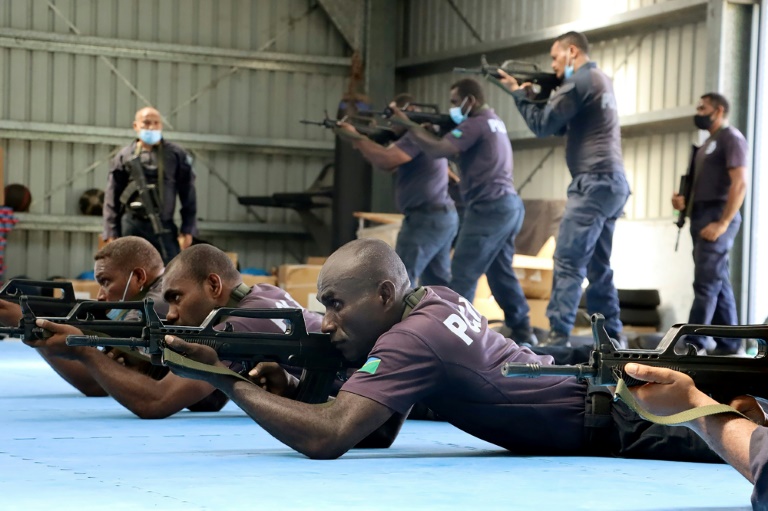
The Solomon Islands signed a security pact with China with its “eyes wide open”, the Pacific nation’s prime minister said Wednesday, despite strong US and Australian opposition to the deal.

Prime Minister Manasseh Sogavare said it was an “honour and privilege” to tell parliament the agreement had been signed by officials in Honiara and Beijing “a few days ago”.

The deal, announced Tuesday by Beijing, has faced sharp criticism from the United States and Australia, which fear the pact could lead to China gaining a military foothold in the South Pacific.

Sogavare said his government had signed the deal “with our eyes wide open” but declined to say when the signed version would be made public.

A draft of the deal sent shockwaves across the region when it was leaked last month, particularly measures that would allow Chinese naval deployments to the Solomon Islands, which lies less than 2,000 kilometres (1,200 miles) from Australia.

The broad wording of the draft prompted a flurry of diplomatic overtures from Washington and Canberra to prevent it from being signed — including a last-ditch visit from Australia’s Pacific minister — but they were ultimately unsuccessful.

The Solomon Islands and China have been moving closer in recent years, with Sogavare’s government severing ties with Taiwan in September 2019, just days before its Pacific neighbour Kiribati followed suit in recognising Beijing.

– ‘Little Cuba’ –

Australia’s Prime Minister Scott Morrison faced a barrage of questions about his handling of the Solomon Islands as news of the deal broke during a closely fought federal election campaign.

Morrison said he would visit the Pacific nation “at the first opportunity” but rejected criticism that he or Foreign Minister Marise Payne should have travelled to the Solomons to personally lobby against the deal.

Morrison added that Australia had to respect decisions made by regional neighbours and said he had “spent countless hours in meetings with Pacific Island leaders”.

But Morrison’s deputy, Barnaby Joyce, struck a different tone, telling reporters the deal would enable China to set up a military base in the Solomon Islands, which has a population of less than 800,000.

“We don’t want a ‘little Cuba’ off our coast,” he said.

Sogavare has previously said there was “no intention whatsoever… to ask China to build a military base in the Solomon Islands”.

The deal was signed just days before senior US National Security Council official Kurt Campbell is due to arrive in the Pacific nation for high-level talks.

The United States has promised to reopen its embassy in the Solomon Islands, which has been closed since 1993.

– ‘Deal rushed through’ –

Mihai Sora from the Sydney-based Lowy Institute think tank said it was “almost certain the deal was rushed through” ahead of Campbell’s visit.

He said there was very little that Australia could have done to stop the deal, given it was “personal for Sogavare”.

But, Sora added: “I think he is honest when he says he doesn’t want a Chinese military base in the Pacific.”

Last November, protests against Sogavare’s rule sparked violent riots in the Solomon Islands’ capital, during which the city’s Chinatown was torched.

While the unrest was partly fuelled by poverty, unemployment and inter-island rivalries, anti-China sentiment also played a role.

'Miracle' survival of Ukrainian mother and daughter shelled by Russia

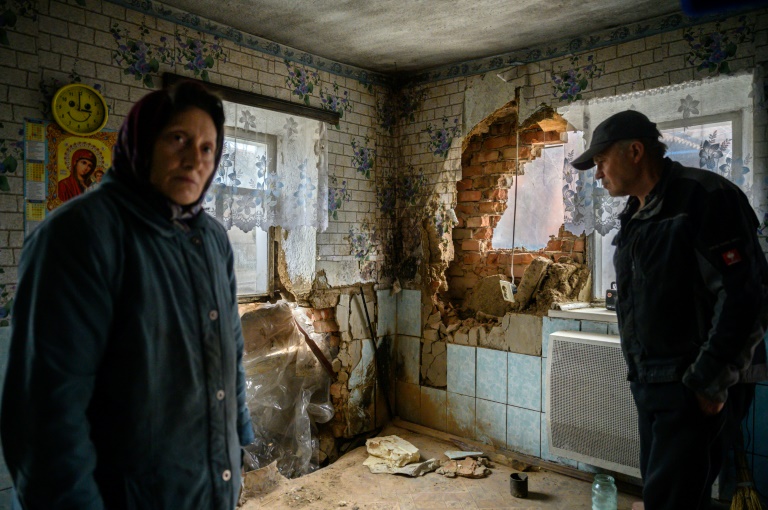
Tanya Los was washing the dishes at home in her southern Ukrainian village Mala Tokmachka on Sunday, her daughter Anastasia by her side, when a Russian rocket crashed into her kitchen. 

By what she called a “miracle”, both women survived unscathed. 

But the Los household was not the only civilian infrastructure hit by Russian forces in Mala Tokmachka in recent weeks, as Moscow intensifies attacks on Ukraine’s south and east. 

Rockets have been raining down on the village, which lies around 60 kilometres (40 miles) southeast of regional hub Zaporizhzhia. 

One of the village schools was hit, as was the building housing its teachers. A rocket blasted a hole in the facade of the local cultural centre. 

A village resident who now leads the local territorial defence group, Yuriy, told AFP that several houses were hit by Russian air strikes on Sunday. 

One of the houses only has its walls left standing, and seems to have been taken over by cats. Half a dozen tomcats reigned in the yard of the abandoned home. 

The Los home was far luckier. 

A corner of the kitchen, which is isolated from the main body of the house, was pierced by a rocket. 

A plastic screen now covers two sections of the wall in the room and the floor has been damaged.  

– Constant shelling –

“If it wasn’t for the fridge, my daughter would have been killed,” Tanya Los said. 

The 59-year-old mother said the pair were “protected” by an Orthodox icon in the room, where a religious calendar still hangs. 

Anastasia, 24, was too shaken to speak to AFP. 

The remnants of the rocket still lay in the family’s kitchen, and it is hard to comprehend how the women survived the strike. 

The almost two-meter silver rocket had broken in two as its tail fins came off during the strike. It should not have left the mother and daughter any chance of surviving.

“It’s a miracle,” Tanya said. 

Based on the serial number on the wreckage and using the Norwegian Defence Research Establishment’s online archive, AFP found that the rocket was likely fired from a Soviet-designed BM-27 Uragan missile launcher. 

The weapon that hit the Los household would have dispersed submunitions in flight before crashing into the small brick house. 

“Now every time we hear the sound of bombardment, we run to the basement,” Tanya said. 

“The problem is that in the last two days it never stops. Day and night.” 

During the hour and a half that AFP was in Mala Tokmachka, the roar of heavy weapons was constant. 

It often came from nearby as the Ukrainian army launched outgoing fire. Russian forces responded from a distance. 

AFP found the same in the town of Orikhiv, a dozen kilometres away. 

“In the last two or three days, the shelling has been more intense,” said Dmytro Malyovanysk, a fire brigade deputy chief, whose men intervened Tuesday after a supermarket and doctor’s office where damaged by Russian rockets. 

– Suitcases ready –

“A week ago, we could hear some sounds of war, but they came from afar,” said Ira Pelechko, the owner of a shop plunged into near darkness most of the day due to power cuts. 

“Now, when it comes from the Russian side, the houses shake and it is much more frequent,” one of her clients, Vitaly Dovbnia, said. 

He said he keeps a packed suitcase in his car, ready to flee at any moment. 

Ukrainian President Volodymyr Zelensky on Monday evening announced that Russia had renewed its offensive in the east of the country.

But on the southern front the increase in attacks appears to have started earlier. 

Artur Kharlamov fled Russian-occupied Melitopol north to Orikhiv on Tuesday.

He claimed to have seen Russian troops digging trenches in three different places during his journey. 

Fresh Ukrainian trenches are also visible on the Ukrainian side. 

Tanya and Anastasia Los remained stuck in the grey zone between the two camps. 

They were almost alone in their village, with Mala Tokmachka emptying  and a little more destroyed with every day. 

Tanya Los said two cows they own are their only wealth. One of them is going to calve soon. 

“I can’t leave her,” she sighed softly, as heavy weapons roared nearby. 

Ramos-Horta wins East Timor presidential election: officials

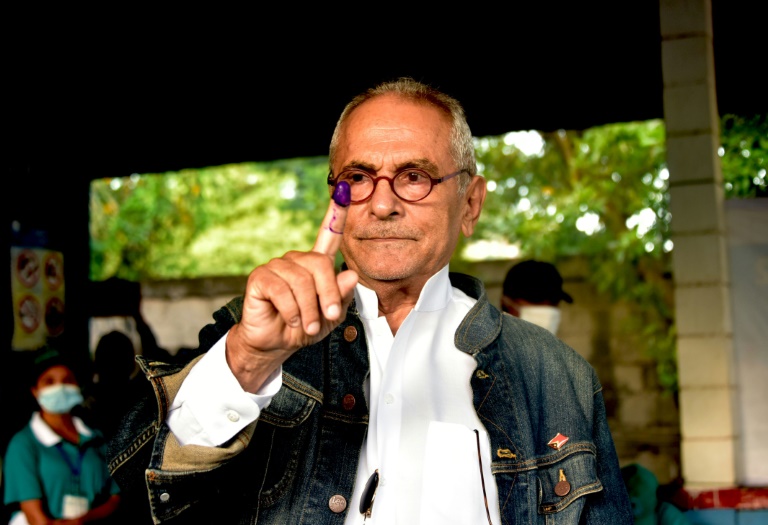
Nobel laureate Jose Ramos-Horta scored a landslide victory in East Timor’s presidential election, according to preliminary results published Wednesday by the election secretariat.

The 72-year-old secured 397,145 votes, or 62.09 percent, against incumbent Francisco “Lu-Olo” Guterres’ 242,440, or 37.91 percent, the secretariat’s website showed after all ballots were counted.

The election results still need to be validated by the country’s electoral commission.

The victory gives Ramos-Horta his second term in office. He served as president of Southeast Asia’s youngest country from 2007 to 2012 and was also the country’s first prime minister.

“The elections were competitive, and the campaign was largely peaceful,” EU observer Domenec Ruiz Devesa said Wednesday, adding the counting process had been assessed “positively”.

Ramos-Horta will be inaugurated on May 20 — the 20th anniversary of East Timor’s independence from Indonesia, which occupied the former Portuguese colony for 24 years. 

He had pledged to use his five-year term to break a longstanding deadlock between the two main political parties.

The election could trigger a period of uncertainty, as Ramos-Horta has previously indicated he might dissolve the parliament if he won the election.

This week’s vote was a rematch of the 2007 presidential poll that also saw Ramos-Horta win handily, with 69 percent of the votes. 

Ramos-Horta said he came out of retirement to run once more because he believed the outgoing president had violated the constitution.

Nearly 860,000 people in the tiny nation of 1.3 million were eligible to vote, and more than 75 percent of voters turned up to cast their ballots in the second round. 

Ramos-Horta was dominant in the election’s March 19 first round, winning 46 percent of votes versus Guterres’ 22 percent, but failed to secure the needed majority. 

The Nobel laureate benefited from the backing of Xanana Gusmao, the country’s first president and current leader of the National Congress of the Reconstruction of Timor-Leste (CNRT), often a kingmaker in East Timor.

Ramos-Horta was awarded a Nobel prize for peace in 1996 for his efforts in facilitating conflict resolution in the country. In 2008, he survived an assassination attempt. 

The new president faces the daunting task of lifting the country out of poverty.

East Timor is still reeling from the economic impact of the Covid-19 pandemic, and the World Bank has said that 42 percent of the population lives below the poverty line. 

Shanghai cautiously eases lockdown as deaths rise

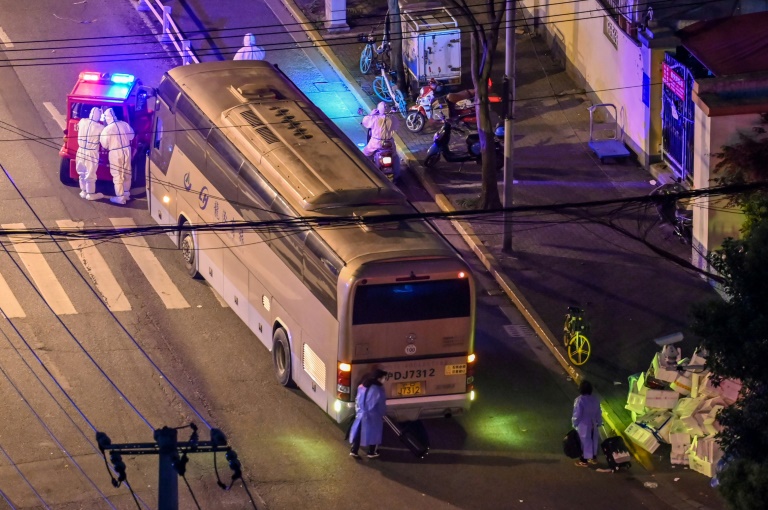
Shanghai further eased its weeks-long Covid-19 lockdown on Wednesday despite mounting deaths and tens of thousands of new cases — but some residents are furious that uneven enforcement is still leaving them trapped at home.

China’s largest city is inching towards reopening as businesses and residents grow increasingly desperate over closures and food shortages.

Faced with the country’s worst virus outbreak in two years, Shanghai has confined most of its 25 million people to their homes since last month, doubling down on the Communist Party’s unrelenting zero-Covid approach.

But the surge, driven by the fast-spreading Omicron variant, has thwarted official efforts to avert a pandemic rebound, with more than 400,000 infections reported since March.

City authorities confirmed seven Covid-19 deaths and more than 18,000 mostly asymptomatic new cases on Wednesday, while also announcing four million more people had been released from the strictest version of lockdown.

Some factories have resumed operations while requiring workers to live on-site, and 12 million people previously barred from leaving their homes have in the past few days been given permission to venture outdoors.

However, many were disappointed at being denied a taste of freedom — despite their housing being classified in the lowest tier of restrictions as of Wednesday. 

Residents of compounds without new cases in the past 14 days can move about freely — in theory. 

But enforcement has been uneven and many in these “precautionary areas” have complained online of being denied permission to leave their housing compounds. 

A resident of Shanghai’s Jing’an district who gave her name as Lilian told AFP that despite living in a “precautionary area”, her compound has barred entry and exit without a 48-hour negative test result.

“In any case, all the surrounding shops, pharmacies and markets are closed so there is no need to go out,” she told AFP.

She added that her neighbourhood committee cancelled a planned mass PCR test of her compound after many residents protested about the risk of cross-infection.

“What I don’t understand is why should a healthy person be forced to prove that they’re healthy?” she said.

Another Shanghai resident wrote on the Twitter-like Weibo platform that she was “secretly delighted” that authorities had declared “zero Covid at the community level” in her district Wednesday morning.

“Shortly after, I heard a loud commotion downstairs — two construction workers were reinforcing barriers in front of my compound gate after 20 days of being locked down.”

One Weibo user wrote of her jealousy at seeing a neighbour walking their dog on the street. 

“She self-righteously said she lives in a precautionary area, then arrogantly walked away,” she wrote. 

“I live in a precautionary area too! Why can’t I go out?”

– Unrelenting approach –

While Shanghai’s outbreak remains small compared with other parts of the world, it has strained China’s virus strategy and prompted rare glimpses of discontent usually wiped away by censorship.

On social media, residents have vented about tight movement restrictions, multiple rounds of mass testing and lack of access to food and non-Covid medical care.

Beijing insists its unrelenting Covid approach has averted fatalities and the public health crises seen in other parts of the world.

Shanghai has confirmed just 17 official deaths in its current outbreak, though some have questioned that tally, pointing to the low vaccination rate among the elderly population.

The seven deaths reported Wednesday were, like all those previously confirmed, patients with underlying conditions such as lung cancer and diabetes. City officials said five of the seven people were over the age of 70.

The shuttering of economic engine Shanghai and lockdowns elsewhere have taken a heavy toll on the world’s second-biggest economy, clogging supply chains and forcing businesses to halt production.

Authorities have called for a “white list” of key industries and companies that can continue production, with more than 600 Shanghai firms identified for early work resumption.

US electric car giant Tesla “officially resumed production” on Tuesday, state media reported, after suspending work at its “gigafactory” in the city for more than 20 days.

Russia closes in on Ukraine's besieged Mariupol

After nearly two months under siege, the southern city of Mariupol could fall into Russian hands within “hours”, a Ukrainian official said, as the two sides agreed on Wednesday to a humanitarian corridor to allow civilians to flee the devastated port city. 

As fighting raged in the country’s east and south, the president of the European Council Charles Michel arrived in Kyiv, in the latest sign of strengthening ties between Ukraine and the EU. 

“In Kyiv today. In the heart of a free and democratic Europe,” he wrote on social media. 

Michel’s visit comes as the West continues to pour weapons into Ukraine amid a renewed Russian push into the eastern Donbas region where a new offensive launched this week has led to an uptick in fighting.

Hours ahead of Michel’s arrival, the Pentagon said that Ukraine had recently received fighter planes and spare parts to bolster its air force, following repeated calls from Kyiv for heavier weapons. 

The Pentagon declined to specify the number of aircraft and their origin.

The announcement came as the battle for Mariupol appeared to be nearing a crucial peak, after months of devastating fighting that has seen untold numbers of civilians trapped.

Control of Mariupol and the separatist-controlled Donbas region in the east would allow Moscow to create a southern corridor to the Crimean peninsula that it annexed in 2014, depriving Ukraine of much of its coastline.

In the latest ultimatum issued in its battle to capture Mariupol, Moscow made another call for the city’s defenders to surrender on Wednesday by 2:00 pm Moscow time (1100 GMT) and announced the opening of a humanitarian corridor for any Ukrainian troops who agreed to lay down their arms.

As the deadline approached, a commander in the besieged Azovstal steel plant issued a desperate plea for help, saying his marines were “maybe facing our last days, if not hours”.

“The enemy is outnumbering us 10 to one,” Serhiy Volyna from the 36th Separate Marine Brigade said.

“We appeal and plead to all world leaders to help us. We ask them to use the procedure of extraction and take us to the territory of a third-party state.”

Thousands of troops and civilians remain holed up in the plant.

An adviser to the mayor of Mariupol described a “horrible situation” in the encircled complex and reported that up to 2,000 people — mostly women and children — are without “normal” supplies of drinking water, food and fresh air.

During an interview broadcast on CNN Tuesday, Pavlo Kyrylenko — who oversees the Donetsk region’s military administration — insisted Mariupol remained contested.

“The Ukrainian flag is flying over the city,” he said. 

“There are certain districts where street fighting is continuing. I can’t say the Russians are controlling them.”

Offering some respite, Kyiv said early Wednesday it had agreed with Russian forces to open a safe route for civilians to flee the devastated city.

“We have managed to get a preliminary agreement on a humanitarian corridor for women, children and elderly persons,” Deputy Prime Minister Iryna Vereshchuk wrote on Telegram.

– ‘We are bombed everywhere’ –

Elsewhere on the frontlines, Ukraine’s defence ministry reported its troops had beaten back a Russian attack in the city of Izium, south of the partly blockaded second city of Kharkiv in the east.

Kyiv also claimed enemy losses in a Ukrainian counter-attack near the town of Marinka in Donetsk.

The governor of the eastern Lugansk region, Sergiy Gaiday, said Ukrainian forces were holding their ground in the face of heavy fighting.

Russian forces, meanwhile, on Wednesday said its forces had launched 73 airstrikes across Ukraine, hitting dozens of locations where troops were concentrated.

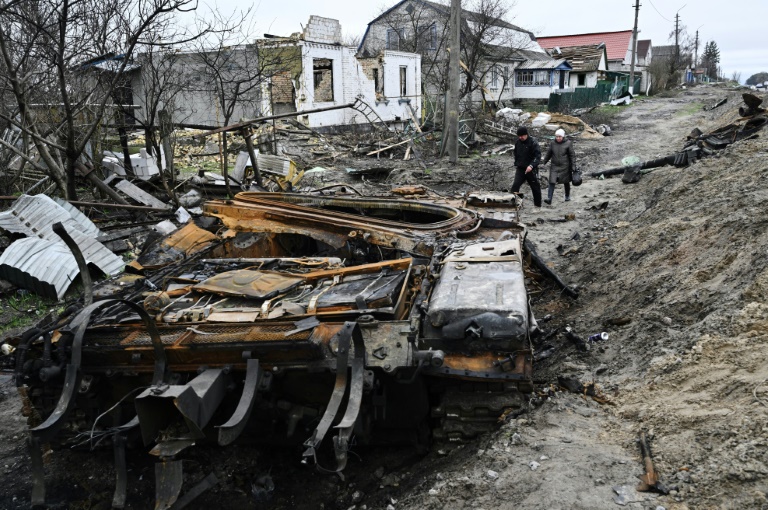
Further from the frontlines, residents were still reeling near the capital Kyiv weeks after Russian forces withdrew from the area. 

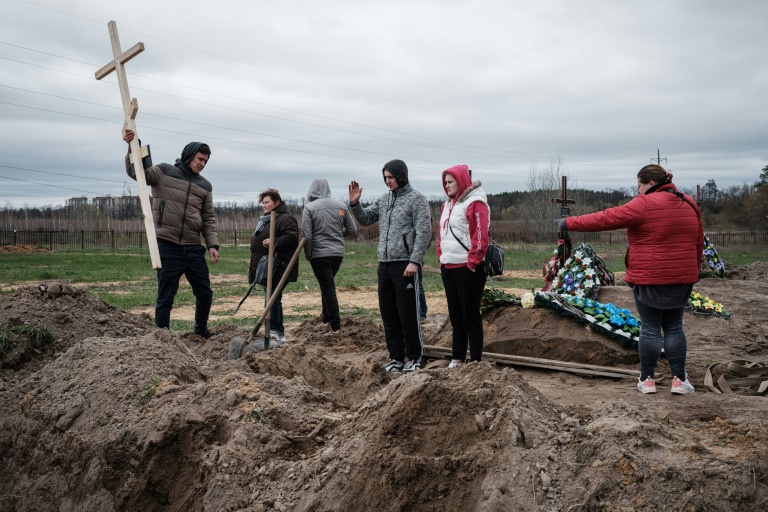
At a morgue in Bucha, families carefully searched body bags and examined cadavers looking for missing loved ones.  

In the car park of the small communal morgue, the body bags arrived in carts or were piled up in trailers, vans and non-refrigerated trucks.

Four hundred bodies have been discovered since the Russians withdrew on March 31, local police chief Vitaly Lobas told AFP. Around a quarter of them are still unidentified.

“The majority died violent deaths” and were shot, Lobas said, declining to provide a concrete figure at this stage.

– ‘War crime’ – 

President Vladimir Putin has said he launched the so-called military operation in Ukraine in February to save Russian speakers in the country from a “genocide” carried out by a “neo-Nazi” regime.

But his forces have faced allegations of war crimes — most recently from the EU’s Michel during his visit to Kyiv on Wednesday where he toured the devastated nearby town of Borodianka. 

“In Borodianka. Like Bucha and too many other towns in Ukraine. History will not forget the war crimes that have been committed here,” Michel wrote on Twitter. 

“There can be no peace without justice,” he added. 

Ukranian authorities have said that over 1,200 bodies have been found in the Kyiv region so far. 

burs-ds/spm

Ramos-Horta wins East Timor presidential election: officials

Nobel laureate Jose Ramos-Horta scored a landslide victory in East Timor’s presidential election, according to preliminary results published Wednesday by the election secretariat.

The 72-year-old secured 397,145 votes, or 62.09 percent, against incumbent Francisco “Lu-Olo” Guterres’ 242,440, or 37.91 percent, the secretariat’s website showed after all ballots were counted.

The election results still need to be validated by the country’s electoral commission.

The victory gives Ramos-Horta his second term in office. He served as president of Southeast Asia’s youngest country from 2007 to 2012 and was also the country’s first prime minister.

“The elections were competitive, and the campaign was largely peaceful,” EU observer Domenec Ruiz Devesa said Wednesday, adding the counting process had been assessed “positively”.

Ramos-Horta will be inaugurated on May 20 — the 20th anniversary of East Timor’s independence from Indonesia, which occupied the former Portuguese colony for 24 years. 

He had pledged to use his five-year term to break a longstanding deadlock between the two main political parties.

The election could trigger a period of uncertainty, as Ramos-Horta has previously indicated he might dissolve the parliament if he won the election.

This week’s vote was a rematch of the 2007 presidential poll that also saw Ramos-Horta win handily, with 69 percent of the votes. 

Ramos-Horta said he came out of retirement to run once more because he believed the outgoing president had violated the constitution.

Nearly 860,000 people in the tiny nation of 1.3 million were eligible to vote, and more than 75 percent of voters turned up to cast their ballots in the second round. 

Ramos-Horta was dominant in the election’s March 19 first round, winning 46 percent of votes versus Guterres’ 22 percent, but failed to secure the needed majority. 

The Nobel laureate benefited from the backing of Xanana Gusmao, the country’s first president and current leader of the National Congress of the Reconstruction of Timor-Leste (CNRT), often a kingmaker in East Timor.

Ramos-Horta was awarded a Nobel prize for peace in 1996 for his efforts in facilitating conflict resolution in the country. In 2008, he survived an assassination attempt. 

The new president faces the daunting task of lifting the country out of poverty.

East Timor is still reeling from the economic impact of the Covid-19 pandemic, and the World Bank has said that 42 percent of the population lives below the poverty line. 

Finnish MPs open debate on joining NATO

Finland’s parliament Wednesday will open a debate on whether to seek NATO membership, after Russia’s invasion of Ukraine sparked a surge in political and public support for joining the military alliance. 

Despite Russia warning of a nuclear build-up in the Baltic should Finland and neighbouring Sweden join the military alliance, Finland’s prime minister said that her country would now decide quickly on whether to apply for membership.

“I think it will happen quite fast. Within weeks, not within months,” Prime Minister Sanna Marin said last week.

Sweden is also discussing whether to submit a membership bid following Russia’s February 24 invasion.

The 200 MPs in Finland’s Eduskunta last week received a government-commissioned “white paper” that assessed the implications of NATO membership alongside other security options, such as increased bilateral defence agreements. 

The report did not make recommendations but stressed that without NATO membership, Finland enjoys no security guarantees despite currently being a partner to the alliance. 

It said the “deterrent effect” on Finland’s defence would be “considerably greater” inside the bloc, while noting that membership also carried obligations for Finland to assist other NATO states.

After two decades of public support for NATO membership remaining steady at 20-30 percent, the war sparked a surge among those in favour to over 60 percent, according to opinion polls.

“I used to be against joining NATO but because of this situation I’m now more in favour,” said 24-year-old Sofia Lindblom, walking her dog in central Helsinki on Wednesday. 

“Joining would bring a certain kind of security,” she told AFP.

On nearby Senate Square, Vuokka Mustonen said the invasion of Ukraine has “utterly changed” her opinion in favour of NATO membership.

“I feel pretty safe, but quite worried,” the 69-year-old said.

– ‘Highly likely’ –

Public statements gathered by Finnish media suggest half of Finland’s 200 MPs now support membership, while only around 12 oppose.

Others say they will announce a position after detailed discussions. 

The Finnish government said it hopes to build a parliamentary consensus over the coming weeks, with MPs due to hear from a number of security experts. 

On Saturday, Finland’s European Affairs Minister Tytti Tuppurainen said she believed a Finnish application was “highly likely.”

“But the decision is not yet made,” she told Britain’s Sky News.

However, the Finns “seem to have already made up their mind and there is a huge majority for the NATO membership.”

Many analysts predict Finland could submit a bid in time for a NATO summit in June. 

Any membership bid must be accepted by all 30 NATO states, a process that could take four months to a year.

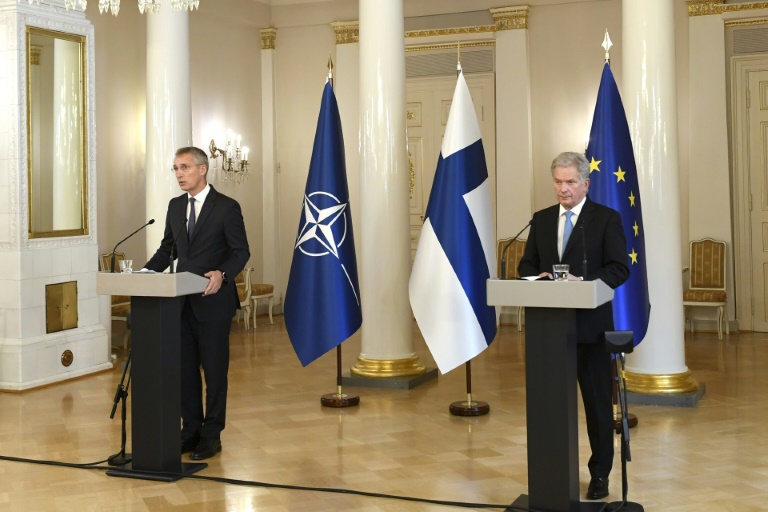
Finland has so far received public assurances from Secretary General Jens Stoltenberg that NATO’s door remains open, and support from several members.

President Sauli Niinisto said Russia’s response could include airspace, territorial violations and hybrid attacks, which Finnish NATO proponents believe the country is well prepared to withstand. 

Finland declared independence in 1917 after 150 years of Russian rule. 

During World War II, its vastly outnumbered army fought off a Soviet invasion, before a peace deal saw it cede several border areas to Moscow. 

The Nordic nation remained neutral during the Cold War in exchange for Soviet guarantees not to invade.

After the fall of the Iron Curtain, Finland firmly aligned itself with the West, by joining the EU and becoming a close partner of NATO. 

Successive Finnish leaders shied away from full membership believing that military non-alignment was the best way to maintain working relations with the Kremlin.

Blind Rwandans take up massage to fight stigma

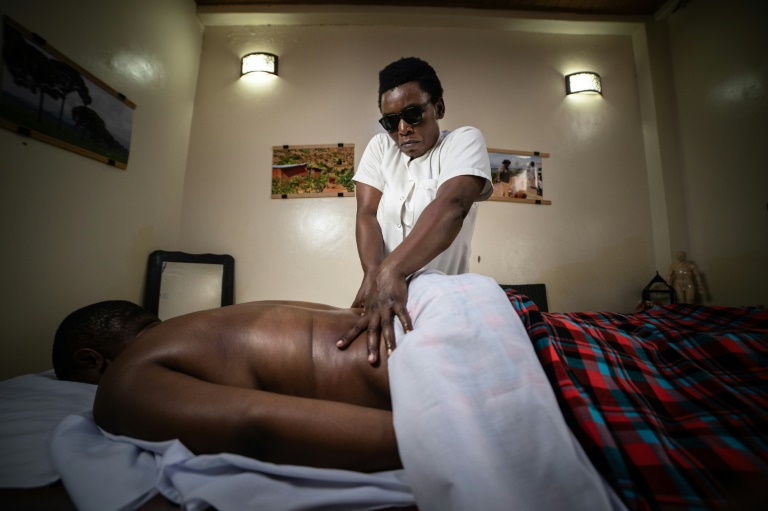
On a chilly morning, Beth Gatonye loaded two vibrating chairs into her van and headed to the US embassy in Kigali with three blind colleagues, ready to offer massage therapy.

Since 2017, the 43-year-old has trained dozens of visually impaired women — and some men — in the art of massage, with a view to creating jobs for a community that faces deep discrimination in Rwanda.

Even today, demand for the massage services offered by her company Seeing Hands is limited to foreigners, she said.

“Rwandans say that they don’t want their bodies to be touched by a blind person, that it can be a sign of bad luck,” she told AFP.

“It is as if Rwandans think that being blind is contagious.”

The stigma is widespread across the East African nation, with visually impaired citizens struggling to access educational or professional opportunities, according to the Rwanda Union of the Blind (RUB).

“They live in isolation and solitude. Some are… hidden from the public by their families because they represent shame,” RUB spokeswoman Rachel Musabyimana told AFP.

Blind Rwandans were unable to attend secondary school until the 1990s, when the curriculum was converted to braille. 

They faced an even longer wait to access university education, which only became available in 2008.

“Rwandans consider us to be useless people,” said Immaculee Karuhura, a visually impaired massage therapist who works with Seeing Hands.

“They think we only survive through begging,” Karuhura told AFP.

– Sense of purpose –

Although the coronavirus pandemic hit their business hard, with massage services banned during Rwanda’s lockdown, these days Gatonye can’t keep up with demand.

“I have 15 blind women so far working as massage therapists… Getting back everyone who worked here before the Covid pandemic is difficult but we are trying,” she said.

Visually-impaired people comprise more than one percent of the country’s 13 million population, according to Rwanda’s 2021 National Blindness Survey.

The major causes of their condition are untreated cataract and glaucoma — up to 80 percent of cases are deemed preventable or reversible.

Businesses like Seeing Hands hold out the promise of financial freedom to blind Rwandans.

On average, the masseurs earn the equivalent of about $100 (92 euros) a month — more than double the salaries of workers such as waitresses or housemaids

“Now I can take care of my life. I can pay rent and also pay for my children’s school fees,” Karuhura said.

But the job means much more than that to her, she added.

“When I am serving a client, I feel happy,” she said, pointing out how the work had given her a sense of purpose and belonging.

“It feels like I am communicating with my clients during a therapy session, and this is something that makes me very emotional.”

Close Bitnami banner
Bitnami