World

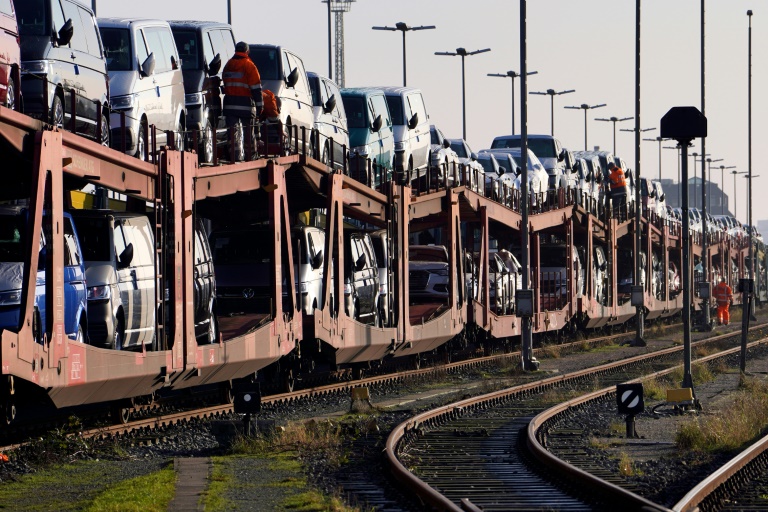
Ukraine war slams brakes on European car sales

European car sales sank in March as Russia’s invasion of Ukraine added more problems to a sector already struggling with shortages of semiconductors, industry data showed Wednesday.

Passenger car registrations fell 20.5 percent compared to the same period last year, with 844,187 units sold, according to the European Automobile Manufacturers’ Association (ACEA).

Excluding 2020 when the coronavirus pandemic paralysed the global economy, it was the worst performance for a month of March since statistics began in 1990. 

Car production has been hampered worldwide since last year by a severe shortage of semiconductors, a key component for modern cars as they power everything from anti-lock braking systems to airbags to parking assistance technology.

The war has led to shortages of other parts, such as the cables used in car wiring harnesses and of which Ukraine is a manufacturer.

Several factories in Europe have had to go idle due to the lack of cables, with Volkswagen temporarily suspending production at a number of German sites.

Europe’s top automaker saw sales fall by nearly a quarter in March, according to ACEA figures.

“The ongoing supply chain disruptions, further exacerbated by Russia’s invasion of Ukraine, negatively affected car production,” the ACEA said.

Most countries in Europe had double-digit drops in car sales in March, the association said, with a fall of 17.5 percent in Germany, the biggest market.

There were even larger falls of around almost 20 percent in France, around 30 percent in Italy and Spain, and nearly 40 percent in Spain.

Outside the European Union, sales fell by 14.3 percent in Britain.

War in Ukraine: Latest developments

Here are the latest developments in the war in Ukraine:

– Mariupol defenders facing ‘last days’ –

A commander of forces holding out at a steelworks in the besieged port city of Mariupol issues a desperate plea for help, saying his marines are “maybe facing our last days, if not hours”.

“The enemy is outnumbering us 10 to one,” says Serhiy Volyna from the 36th Separate Marine Brigade. 

In the latest ultimatum issued in its seven-week battle to capture Mariupol, Moscow urges the city’s defenders to surrender on Wednesday by 2:00 pm (1100 GMT).

– Evacuation plan –

Ukraine has agreed with Russian forces to open a safe route for civilians to flee Mariupol, according to Deputy Prime Minister Iryna Vereshchuk. 

Writing on Telegram, she says the agreement covers women, children and elderly people  and that evacuees will be taken to the Ukrainian-held city of Zaporizhzhia. 

More than 140 civilians and five Ukrainian troops who have surrendered have been evacuated from Mariupol, pro-Russian separatists in the self-proclaimed Donetsk People’s Republic say separately.

– New planes –

The Pentagon says that Ukraine recently received fighter planes and parts to bolster its air force while declining to specify the number of aircraft and their origin.

Kyiv has asked its Western partners to provide MiG-29s, which its pilots already know how to fly, and a handful of Eastern European countries have.

– Donbas offensive –

Ukraine’s defence ministry says its troops have beaten back a Russian attack in the city of Izium, a gateway to the eastern Donbas region which is the target of a major Russian offensive.

Kyiv also claimed enemy losses in a Ukrainian counter-attack near the town of Marinka in the southern part of the Donbas, where pro-Russian separatists have been fighting government forces since 2014.

Moscow says the focus of the second phase of its Ukraine offensive is the “liberation” of the entire Donbas, an area about twice the size of Belgium.

– Biden talks with allies –

The United States and the European Union have reached “broad consensus” on the need to increase pressure on Russia through new sanctions, the Italian government says after a videoconference between US President Joe Biden and allies.

The videoconference brings together the leaders of France, Britain, Germany, Romania, Poland, Italy, Canada and Japan.

German Chancellor Olaf Scholz later accuses Russian President Vladimir Putin of war crimes in Ukraine. 

– Easter truce call –

UN Secretary-General Antonio Guterres denounces Russia’s fresh offensive in eastern Ukraine and calls for a four-day truce to mark Orthodox Holy Week.

“Hundreds of thousands of lives hang in the balance,” the United Nations chief says, adding a truce would allow safe passage for civilians to flee the eastern war zone and for humanitarian aid to be delivered to the hardest-hit areas.

– EU chief in Kyiv –

European Council chief Charles Michel arrives in Kyiv for a visit. 

On Twitter, he describes Ukraine, which applied for EU membership at the start of the war, as “the heart of a free and democratic Europe”. 

– Nearly 5 mn have fled Ukraine: UN –

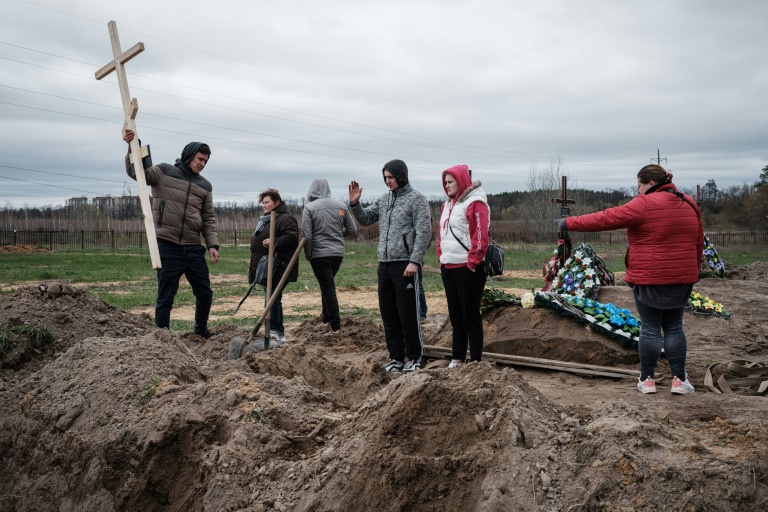
More than 4.9 million Ukrainians have fled their country following the Russian invasion, says the UN’s refugee agency.

The UNHCR says 4,980,589 Ukrainians have left since Russia invaded on February 24 — an increase of 46,174 from the total on Monday. 

burs-jmy/cb/spm

French presidency fight hits final stretch with TV showdown

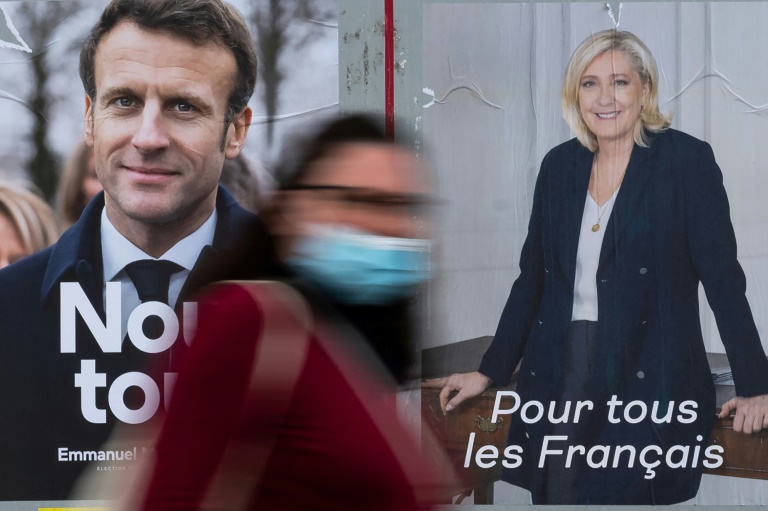
Emmanuel Macron and Marine Le Pen braced for a televised debate Wednesday that is likely to prove the climax of this year’s turbulent French presidential campaign, with millions of votes still up for grabs just four days before polls open.

The centrist incumbent and his far-right rival will trade blows starting at 9:00 pm (1900 GMT), a rematch of their 2017 face-off that was widely seen as disastrous for Le Pen.

But this time Macron will not be the outsider making his first run at public office — he will have a five-year record to defend against a candidate who has softened her extremist edges to present a more mainstream image.

Recent polls give Macron the advantage, at 53 to 56 percent against 44 to 47 percent for Le Pen, who is making her third run at the presidency, though analysts say turnout could still sharply sway the final result.

Participation in the first round of voting was just 74 percent, meaning one in four eligible voters stayed home, a pool that both candidates are eager to motivate.

In addition, the fiery hard-left candidate Jean-Luc Melenchon scored nearly 22 percent in the first round, and he has refused to urge his supporters to vote for Macron in order to keep Le Pen out of the Elysee Palace.

The decisions by those left-leaning voters — many of whom have expressed a visceral rejection of Macron’s policies — could prove crucial.

Looking ahead to parliamentary elections in June, often deemed the “third round” in France’s electoral system, Melenchon on Tuesday called for a left-wing alliance that would deny either Macron or Le Pen a majority and potentially set him up as prime minister.

“I will be prime minister, not because Macron or Le Pen want it, but because the French will have elected me,” he told BFM television.

– Approval slips –

Wednesday’s debate, the only one Macron agreed to in this year’s race, will be watched by millions and has often proved pivotal in determining the choices of last-minute voters.

Macron’s allies have warned him of any complacency, not least amid Le Pen’s persistent attacks against the former investment banker as an aloof “president of the rich”, out of touch with everyday concerns at a time of rising inflation and insecurity concerns.

An Odoxa poll released Wednesday found that Macron’s approval rating as a “good president” had slumped to just 40 percent in mid-April, down six points from March.

That could render the result on Sunday extremely close, even though the survey found that a majority of respondents still find Le Pen’s programme racist (56 percent) and divisive for the country (67 percent).

“For the first time, in order to kick out a ‘president of the rich’, a large number of French seem ready to elect a president they consider less competent, without sufficient stature to be president,” Odoxa’s president Gael Sliman wrote.

“This debate will probably be decisive for giving an advantage to one of these two rivals,” he said.

– Clashing visions –

Macron will likely seek to portray Le Pen as a fringe politician who cannot be trusted on foreign policy — especially after Russia’s invasion of Ukraine, given her past support for President Vladimir Putin.

He is also likely to take aim at her plans for limiting the economic impact of the Ukraine war for low-income households, and her promise to give “national priority” to French citizens for jobs or welfare benefits.

Le Pen has also promised a crackdown on immigration in the wake of the string of jihadist terror attacks that have struck France since 2015, killing scores of people.

For her part, the far-right leader will zero in on Macron’s proposal to push back the retirement age from 62 currently — though in recent days he has wavered on whether it should be 65 or 64. 

She also wants to restore French “sovereignty” by reducing the European Union’s reach in national affairs, while Macron is expected to continue championing further integration of the bloc. 

Sri Lankan town under curfew after police kill protester

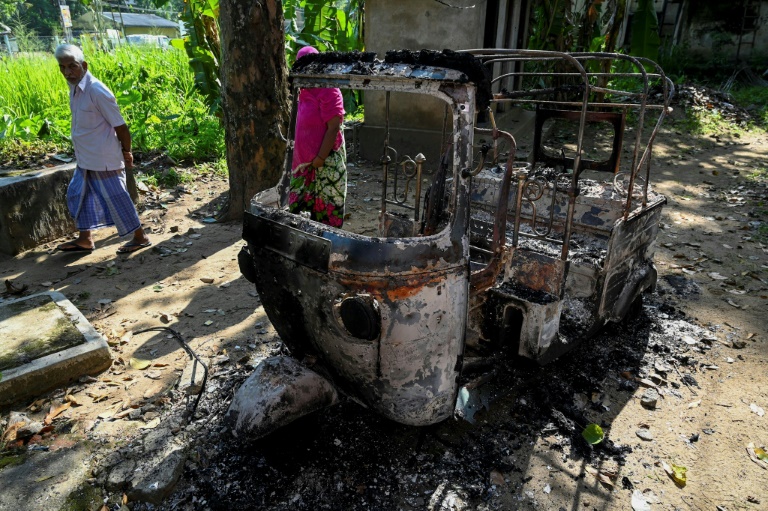
Police enforced a curfew on Wednesday in a Sri Lankan town where an anti-government demonstrator was killed, a death that triggered international condemnation just as the crisis-hit country seeks an IMF bailout. 

Regular blackouts and acute shortages of food and fuel have sparked increasing public discontent in the island nation, which is dealing with its worst economic downturn since independence in 1948.

Huge protests have demanded the government’s resignation, including the Tuesday blockade of a key highway and railway line on the day Sri Lanka’s main petrol retailer announced another sudden price rise.

Police dispersed the crowd in the town of Rambukkana with tear gas and a volley of live rounds that left a 42-year-old father of two dead, with nearly 30 others wounded in the confrontation.

“I was hit with a baton on my leg and hand,” Vasantha Kumara, a local chef, told AFP on Wednesday. “I begged the cops not to beat me, but they didn’t listen.”

“People are angry. We are all poor people fighting for basics.”

Authorities extended the curfew in Rambukkana, around 95 kilometres (60 miles) east of the capital Colombo, into Wednesday with shops closed through the morning. 

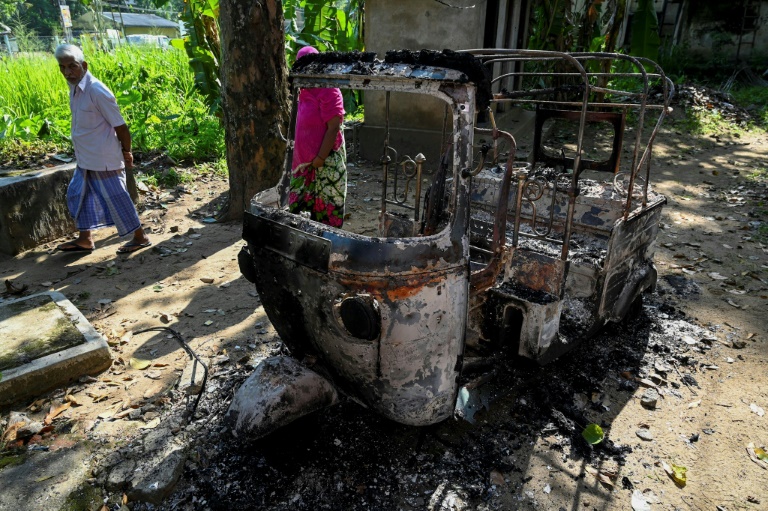
Spent bullet cartridges littered the road hours after the previous evening’s protest, which saw thousands of people blocking rail tracks and the highway to the central city of Kandy. 

President Gotabaya Rajapaksa said he was “deeply saddened” by the police shooting and promised the public’s right to peacefully protest against his government would not be hindered.

Sri Lanka’s police force “will carry out an impartial and transparent inquiry”, he wrote on Twitter.

Police said they were forced to act when the crowd was about to set alight a fuel tanker — a claim dismissed by Sri Lanka’s political opposition.

“These people are not suicidal to burn a tanker and get killed in the process,” lawmaker Rohini Kumari Wijerathna said in parliament.

– International concern –

Tuesday’s incident was the first fatal clash since widespread anti-government protests began this month. 

At least 29 people, including 11 police officers, were wounded in Rambukkana, according to official figures. 

Later that night, police fired tear gas to break up another protest in Sri Lanka’s south, one of the dozens of demonstrations staged simultaneously across the country.

Colombo-based diplomats have expressed concern over the police shooting.

“A full, transparent investigation is essential and the people’s right to peaceful protest must be upheld,” US ambassador Julie Chung said.

British High Commissioner Sarah Hulton condemned the violence and “call[ed] for restraint.”

– IMF talks –

Sri Lanka opened talks with the International Monetary Fund in Washington this week after announcing an unprecedented default on the government’s $51 billion foreign debt. 

The IMF said it had asked Sri Lanka to restructure its borrowings before the lender finalises a bailout programme.

Talks with Sri Lanka were still at an “early stage”, the IMF said, expressing concern over the hardships suffered by the country’s people.

Sri Lanka’s economic meltdown began after the coronavirus pandemic torpedoed vital revenue from tourism and remittances.

The country is short of dollars to finance even the most important essentials, including food, fuel and medicines. Runaway inflation has worsened the population’s hardships.

The Colombo Stock Exchange has suspended trading to prevent an anticipated market collapse and the government has urged citizens abroad to donate money to help pay for desperately needed essentials.

A large crowd has been camped outside President Rajapaksa’s seafront office in Colombo since April 9, demanding the leader step down. 

Rajapaksa has acknowledged public anger over the ruling family’s mismanagement and appointed a new cabinet to navigate the country out of the crisis, but has refused to entertain calls for his resignation.

Sri Lankan town under curfew after police kill protester

Police enforced a curfew on Wednesday in a Sri Lankan town where an anti-government demonstrator was killed, a death that triggered international condemnation just as the crisis-hit country seeks an IMF bailout. 

Regular blackouts and acute shortages of food and fuel have sparked increasing public discontent in the island nation, which is dealing with its worst economic downturn since independence in 1948.

Huge protests have demanded the government’s resignation, including the Tuesday blockade of a key highway and railway line on the day Sri Lanka’s main petrol retailer announced another sudden price rise.

Police dispersed the crowd in the town of Rambukkana with tear gas and a volley of live rounds that left a 42-year-old father of two dead, with nearly 30 others wounded in the confrontation.

“I was hit with a baton on my leg and hand,” Vasantha Kumara, a local chef, told AFP on Wednesday. “I begged the cops not to beat me, but they didn’t listen.”

“People are angry. We are all poor people fighting for basics.”

Authorities extended the curfew in Rambukkana, around 95 kilometres (60 miles) east of the capital Colombo, into Wednesday with shops closed through the morning. 

Spent bullet cartridges littered the road hours after the previous evening’s protest, which saw thousands of people blocking rail tracks and the highway to the central city of Kandy. 

President Gotabaya Rajapaksa said he was “deeply saddened” by the police shooting and promised the public’s right to peacefully protest against his government would not be hindered.

Sri Lanka’s police force “will carry out an impartial and transparent inquiry”, he wrote on Twitter.

Police said they were forced to act when the crowd was about to set alight a fuel tanker — a claim dismissed by Sri Lanka’s political opposition.

“These people are not suicidal to burn a tanker and get killed in the process,” lawmaker Rohini Kumari Wijerathna said in parliament.

– International concern –

Tuesday’s incident was the first fatal clash since widespread anti-government protests began this month. 

At least 29 people, including 11 police officers, were wounded in Rambukkana, according to official figures. 

Later that night, police fired tear gas to break up another protest in Sri Lanka’s south, one of the dozens of demonstrations staged simultaneously across the country.

Colombo-based diplomats have expressed concern over the police shooting.

“A full, transparent investigation is essential and the people’s right to peaceful protest must be upheld,” US ambassador Julie Chung said.

British High Commissioner Sarah Hulton condemned the violence and “call[ed] for restraint.”

– IMF talks –

Sri Lanka opened talks with the International Monetary Fund in Washington this week after announcing an unprecedented default on the government’s $51 billion foreign debt. 

The IMF said it had asked Sri Lanka to restructure its borrowings before the lender finalises a bailout programme.

Talks with Sri Lanka were still at an “early stage”, the IMF said, expressing concern over the hardships suffered by the country’s people.

Sri Lanka’s economic meltdown began after the coronavirus pandemic torpedoed vital revenue from tourism and remittances.

The country is short of dollars to finance even the most important essentials, including food, fuel and medicines. Runaway inflation has worsened the population’s hardships.

The Colombo Stock Exchange has suspended trading to prevent an anticipated market collapse and the government has urged citizens abroad to donate money to help pay for desperately needed essentials.

A large crowd has been camped outside President Rajapaksa’s seafront office in Colombo since April 9, demanding the leader step down. 

Rajapaksa has acknowledged public anger over the ruling family’s mismanagement and appointed a new cabinet to navigate the country out of the crisis, but has refused to entertain calls for his resignation.

Hong Kong pro-democracy DJ gets 40 months in jail for sedition

A pro-democracy Hong Kong radio DJ was jailed for 40 months on Wednesday for “seditious speech” under a British colonial-era law that authorities have embraced as China flattens dissent in the city.

Tam Tak-chi, 49, is among a growing number of activists charged with sedition, a previously little-used law that prosecutors have dusted off in the wake of massive and sometimes violent pro-democracy protests in 2019.

The DJ’s crimes were made more serious by the fact they continued after China imposed a national security law on Hong Kong in 2020, Judge Stanley Chan said Wednesday while announcing the sentence.

“Live long, mother, wait for me,” Tam shouted afterwards as he was taken away from court.

Better known by the name “Fast Beat”, Tam hosted a popular online talk show that backed democracy and was highly critical of the government, often using colourful language.

He was a regular presence at the city’s pro-democracy protests and often set up street booths to deliver political speeches.

Prosecutors accused Tam of inciting hatred against authorities by chanting the popular protest slogan “Liberate Hong Kong, Revolution of Our Times”, cursing the police, and repeatedly shouting “Down with the Communist Party”.

The judge said Tam was “just a 50-year-old coarse man railing recklessly” in pursuit of a well-paid seat in the Hong Kong legislature.

Tam said in a Facebook post that he would appeal.

“My conviction affects Hong Kong people’s freedom of speech,” he wrote.

His 40-month sentence may not be the end of his legal troubles — he has been denied bail in a separate national security case.

Tam’s case was the first since Hong Kong’s 1997 handover in which a sedition defendant pleaded not guilty and fought through a full trial. Two previous sedition cases featured guilty pleas.

His conviction and sentencing will set precedents for a host of upcoming sedition cases as China remoulds Hong Kong in its own authoritarian image.

Sedition, which carries a maximum penalty of two years in jail, is separate from the city’s security law, but the courts now treat it with the same severity as acts that endanger national security.

Also on Wednesday, a man who operated a protest channel on the messaging app Telegram was convicted on multiple counts of “conspiracy to incite”.

Ng Man-ho had allowed the channel to become a platform for inciting crimes including arson, criminal damage and rioting during the 2019 protests, the judge said.

Oil stabilises after big drop on IMF growth cut

Asian markets were marginally higher on Wednesday while oil began recovering after a downgraded IMF global growth forecast for 2022 had sent crude prices plunging.

The International Monetary Fund slashed its outlook by 0.8 percentage points, largely over inflationary crises linked to the Ukraine war and the coronavirus pandemic — prompting a five percent dive in oil prices on Tuesday. 

“The economic effects of the war are spreading far and wide — like seismic waves that emanate from the epicenter of an earthquake,” IMF chief economist Pierre-Olivier Gourinchas said in a report.

Oil prices began to recover Wednesday, however, and Asian stocks also mostly rose following a positive lead from Wall Street, where US stocks rallied on the back of promising housing-starts data and solid corporate earnings.

Both main contracts climbed, but crude has suffered major shocks this year, from the war in Ukraine to the raging coronavirus outbreak in China, where the economy has been battered by anti-Covid restrictions.

Tens of millions are still barred from leaving home in economic centre Shanghai and tech hub Shenzhen, where a Covid-19 outbreak has broken down supply lines and shuttered businesses.

“China continues to stay wedded to deleveraging parts of the economy while attempting to add stimulus in a targeted sector manner,” said Jeffrey Haley, senior market analyst at Oanda. 

“However, the Shanghai lockdown and fears its Covid-zero policy will crimp growth this year continue to weigh on markets that clearly want more of the usual cast-of-thousands stimulus measures from years past.”

– Netflix shares plunge –

The Shanghai Composite Index was the biggest loser among major Asian markets, dropping 1.35 percent at the close.

Hong Kong — which plummeted on Tuesday over concerns about Beijing’s ongoing tech-sector crackdown — also ended down, with Chinese banks keeping lending rates unchanged.

“China disappointed markets that were looking for more comprehensive stimulus measures as it left both its one and five-year Loan prime Rates (LPR) unchanged,” Haley said. 

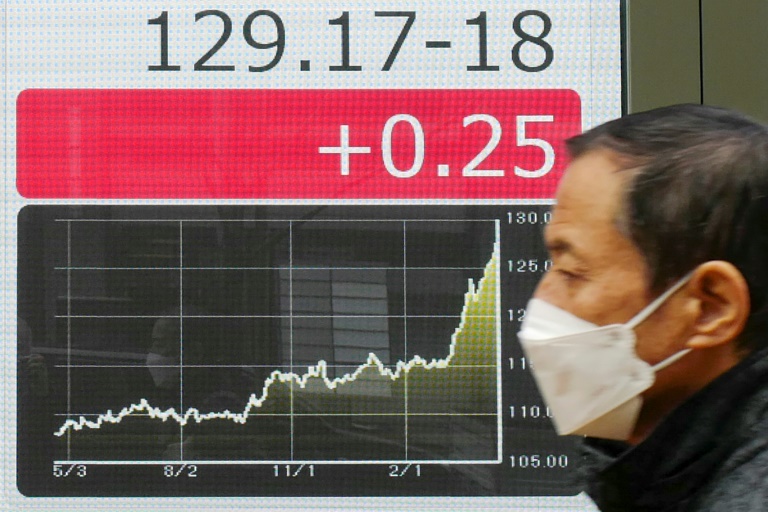
Tokyo gained 0.86 percent, buoyed by a cheaper yen. Jakarta, Sydney and Taipei all inched upward while Seoul was flat.

Despite the rally on Wall Street, there are concerns about the impact of the earnings report from Netflix showing a drop in subscriptions in the first quarter of the year.

This was the first such drop for Netflix in a decade and hammered the streaming giant’s shares, which dropped by a quarter of their value in after-market trading. 

Analysts have said this could dent Tuesday’s gains when US markets open.

After  closing lower on Tuesday over the IMF announcement, Europe’s major markets opened the day in positive territory, with London, Paris and Frankfurt all slightly up. 

– Key figures around 0830 GMT –

Tokyo – Nikkei 225: UP 0.86 percent at 27,217.85 (close)

Shanghai – Composite: DOWN 1.35 percent at 3,151.05 (close) 

Hong Kong – Hang Seng Index: DOWN 0.40 percent at 20,944.67 (close)

Dollar/yen: DOWN at 128.63 yen from 128.89 yen

Euro/dollar: UP at $1.0810 from $1.0796

Pound/dollar: UP at $1.3005 from $1.2998

Euro/pound: UP at 83.10 pence from 82.98 pence

Brent North Sea crude: UP 1.32 percent at $108.67 per barrel

West Texas Intermediate: UP 1.40 percent at $104.00 per barrel

New York – Dow: UP 1.5 percent at 34,911.20 (close)

London – FTSE 100: UP 0.12 percent at 7,610.32 points (close)

burs-ssy/cwl

Oil stabilises after big drop on IMF growth cut

Asian markets were flat on Wednesday as oil began clawing its way back up from a big drop after the International Monetary Fund downgraded its global growth forecast for 2022. 

The IMF lowered its outlook to 3.6 percent — a 0.8 percentage point slash from its previous estimate released in January — prompting a five-percent dive in oil prices on Tuesday. 

The Fund pointed to surging energy prices, rising debt, supply chain woes, and a series of inflationary crises linked to the war in Ukraine and the coronavirus pandemic.

“The economic effects of the war are spreading far and wide — like seismic waves that emanate from the epicenter of an earthquake,” IMF chief economist Pierre-Olivier Gourinchas said in the report.

While oil prices showed their first sign of susceptibility to global economic trends after the announcement, US stocks rallied on the back of promising housing-starts data and solid corporate earnings.

“In the absence of inventory buffers, there are only two things that can send oil lower, recession and or demand destruction. More folks were more willing to check one or both of those boxes overnight on the back of the IMF economic warning shot and China’s protracted lockdown,” said Stephen Innes at SPI Asset Management.

Tens of millions are still barred from leaving home in China’s economic centre Shanghai and tech hub Shenzhen, where a Covid-19 outbreak has broken down supply lines and shuttered businesses.

Alongside the positive corporate earnings and housing data, much of Wall Street’s strength also stemmed from the positioning of the market.

“It’s a nice reflex rally from an oversold position,” said Art Hogan, strategist at National Securities, who said the dynamics reflected a “pretty oversold market”.

In Tokyo, the Nikkei 225 opened slightly higher, buoyed by a cheaper yen, but the Hang Seng Index in Hong Kong was marginally lower after being battered by China growth concerns and Beijing’s crackdown on the tech sector on Tuesday.

Shanghai and Seoul were also down while Sydney, Jakarta, and Taipei were inching upward.

– Key figures around 0230 GMT –

Tokyo – Nikkei 225: UP 0.56 percent at 27,135.27

Shanghai – Composite: DOWN 0.64 percent at 3,173.65 

Hong Kong – Hang Seng Index: DOWN 0.40 percent at 20,943.35 

Dollar/yen: DOWN at 128.65 yen from 128.89 yen

Euro/dollar: UP at $1.0806 from $1.0796

Pound/dollar: UP at $1.3032 from $1.2998

Euro/pound: DOWN at 82.92 pence from 82.98 pence

Brent North Sea crude: UP 0.50 percent at $107.79 per barrel

West Texas Intermediate: UP 0.67 percent at $103.25 per barrel

New York – Dow: UP 1.5 percent at 34,911.20 (close)

London – FTSE 100: DOWN 0.2 percent at 7,601.28 points (close)

burs-ssy/qan

Ukraine gets warplanes as Mariupol officer warns facing 'last days'

Ukraine received fighter jets to help resist the Russian invasion, as Moscow intensified its offensive in the east where a besieged officer in Mariupol warned Wednesday his forces were facing their “last days, if not hours”.

The West has responded to a renewed Russian push into the Donbas region with fresh weapons for Kyiv and a push to increase “Moscow’s international isolation”.

The Pentagon said that Ukraine had recently received fighter planes and parts to bolster its air force, declining to specify the number of aircraft and their origin.

Kyiv has asked its Western partners to provide MiG-29s, which its pilots already know how to fly and a handful of Eastern European countries have.

Control of Donbas and the southern port of Mariupol would allow Moscow to create a southern corridor to the Crimean peninsula that it annexed in 2014, depriving Ukraine of much of its coastline.

In the latest ultimatum issued in its battle to capture Mariupol, Moscow made another call for the city’s defenders to surrender on Wednesday by 2 pm Moscow time (1100 GMT) and announced the opening of a humanitarian corridor for any Ukrainian troops who agreed to lay down their arms.

As the deadline approached, a commander in the besieged Azovstal power plant issued a desperate plea for help, saying his marines were “maybe facing our last days, if not hours”.

“The enemy is outnumbering us 10 to one,” Serhiy Volyna from the 36th Separate Marine Brigade said.

“We appeal and plead to all world leaders to help us. We ask them to use the procedure of extraction and take us to the territory of a third-party state.”

Thousands of troops and civilians remain holed up in the plant.

An advisor to the mayor of Mariupol described a “horrible situation” in the encircled complex and reported that up to 2,000 people — mostly women and children — are without “normal” supplies of drinking water, food, and fresh air.

During an interview broadcast on CNN Tuesday, Pavlo Kyrylenko — who oversees the Donetsk region’s military administration — insisted Mariupol remained contested.

“The Ukrainian flag is flying over the city,” he said. “There are certain districts where street fighting is continuing. I can’t say the Russians are controlling them.”

Offering some respite, Kyiv said early Wednesday it had agreed with Russian forces to open a safe route for civilians to flee the devastated city.

“We have managed to get a preliminary agreement on a humanitarian corridor for women, children and elderly persons,” Deputy Prime Minister Iryna Vereshchuk wrote on Telegram.

– ‘We are bombed everywhere’ –

Elsewhere on the front lines, Ukraine’s defence ministry reported its troops had beaten back a Russian attack in the city of Izium, south of the partly blockaded second city of Kharkiv.

In the town of Novodruzhesk, 65-year-old resident Nadya said: “We are bombed everywhere.”

“It’s a miracle that we’re still alive,” she said, her voice trembling. 

“We were lying on the ground and waiting. Since February 24, we’ve been sleeping in the cellar.”

Kyiv also claimed enemy losses in a Ukrainian counter-attack near the town of Marinka in Donetsk.

The governor of the eastern Lugansk region Sergiy Gaiday said Ukrainian forces were holding their ground in the face of heavy fighting.

“We have positional battles in the cities of Rubizhne and Popasna. The enemy cannot do anything though. They are losing people and equipment there,” Gaiday said.

“Our guys are shooting down drones there. Shooting down planes on the border of the Lugansk and Kharkiv regions, so they are holding on.”

Russian forces, meanwhile, said “high-precision air-based missiles” hit 13 Ukrainian positions in parts of Donbas while other air strikes “hit 60 military assets”, including in towns close to the eastern front line.

– ‘War crime’ – 

President Vladimir Putin has said he launched the so-called military operation in Ukraine in February to save Russian speakers in the country from a “genocide” carried out by a “neo-Nazi” regime.

But his forces have faced allegations of war crimes — most recently from German Chancellor Olaf Scholz, who said Tuesday that Putin was responsible for atrocities in Ukraine.

“The killing of thousands of civilians as we have seen is a war crime for which the Russian president bears responsibility,” Scholz said.

UN Secretary-General Antonio Guterres also denounced Russia’s offensive, and issued calls for a four-day truce to mark the Orthodox Holy Week.

“Instead of a celebration of new life, this Easter coincides with a Russian offensive in eastern Ukraine,” Guterres told reporters.

“The intense concentration of forces and firepower makes this battle inevitably more violent, bloody and destructive.”

Guterres called for a “humanitarian pause” from Holy Thursday until Easter Sunday on April 24.

“Hundreds of thousands of lives hang in the balance.”

burs-oho/qan/axn

Shanghai cautiously eases lockdown as deaths rise

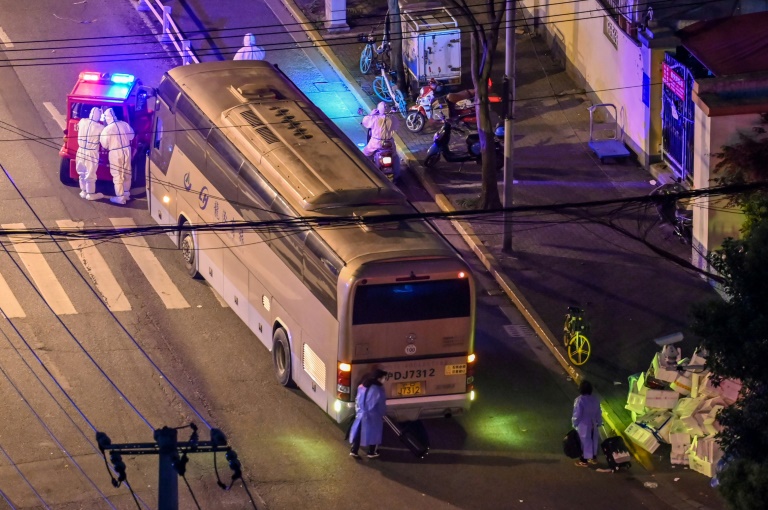
Shanghai further eased its gruelling, weeks-long Covid-19 lockdown on Wednesday despite a mounting official death toll and tens of thousands of daily cases.

China’s largest city is ambling towards reopening as businesses and residents grow increasingly desperate over closures and food shortages.

Faced with the country’s worst virus outbreak in two years, Shanghai has confined most of its 25 million people to their homes since last month, doubling down on the Communist Party’s unrelenting zero-Covid approach.

But the surge, driven by the fast-spreading Omicron variant, has thwarted official efforts to avert a pandemic rebound, with more than 400,000 infections reported since March.

City authorities confirmed seven Covid-19 deaths and more than 18,000 mostly asymptomatic new cases on Wednesday, while also announcing 4 million more people had been released from the strictest version of lockdown.

Some factories have resumed operations and a total of 12 million residents previously barred from leaving their homes have in the past few days been given permission to venture outdoors.

Many are, however, still restricted to their residential compounds under an easing of the rules announced last Monday.

While Shanghai’s outbreak remains small compared with parts of the world getting used to living with the virus, it has rattled China’s inflexible virus response, and prompted rare glimpses of discontent usually wiped away by the “Great Firewall” of censorship.

On social media, Shanghai residents have vented about the tight movement restrictions, multiple rounds of mass testing and lack of access to food and non-Covid medical care.

Beijing insists its unrelenting Covid approach has averted fatalities and the public health crises seen in many other parts of the world.

Shanghai has confirmed just 17 official fatalities in its current outbreak, though some have questioned that tally, pointing to the low vaccination rate among China’s vast elderly population.

The seven deaths reported Wednesday were, like all those previously confirmed, among patients with underlying conditions such as lung cancer and diabetes. City officials said five of the seven people were over the age of 70.

The shuttering of economic engine room Shanghai and lockdowns elsewhere have taken a heavy toll on the world’s second-biggest economy, clogging supply chains and forcing businesses to halt production.

Hoping to rebuild some steam, authorities have called for a “white list” of key industries and companies that can continue production, with more than 600 firms identified for early work resumption in Shanghai.

US electric car giant Tesla “officially resumed production” on Tuesday, state media reported, after suspending work at its “gigafactory” in the city for more than 20 days.

Businesses in other Chinese regions affected by Covid lockdowns in recent weeks have also gradually resumed operations amid production and logistics backlogs, including northeastern Jilin province which announced on Tuesday that its top 500 companies were back at work.

Close Bitnami banner
Bitnami