World

Hong Kong pro-democracy DJ gets 40 months in jail for sedition

A pro-democracy Hong Kong radio DJ was jailed for 40 months on Wednesday for “seditious speech” under a British colonial-era law authorities have embraced as China flattens dissent in the city.

Tam Tak-chi, 49, is among a growing number of activists charged with sedition, a previously little-used law that prosecutors have dusted off in the wake of massive and sometimes violent pro-democracy protests in 2019.

The DJ’s sentencing was aggravated because his seditious speech continued after China imposed a national security law on Hong Kong in 2020, Judge Stanley Chan said Wednesday while announcing the punishment.

“Live long, mother, wait for me,” Tam shouted afterwards as he was taken away from the court.

Better known by his moniker “Fast Beat”, Tam hosted a popular online talk show that backed democracy and was highly critical of the government, often using colourful language.

He was a regular presence at the city’s pro-democracy protests and often set up street booths to deliver political speeches.

Prosecutors accused Tam of inciting hatred against the authorities by chanting the popular protest slogan “Liberate Hong Kong, Revolution of Our Times”, cursing the police force, and repeatedly shouting “Down with the Communist Party”.

Judge Chan said Tam was “just a 50-year-old coarse man railing recklessly” in pursuit of a well-paid seat in the Hong Kong legislature.

Tam said in a Facebook post that he would appeal

“My conviction affects Hong Kong people’s freedom of speech,” he wrote.

His 40-month prison sentence may not be the end of his legal troubles — he has been denied bail in a separate national security case.

Tam’s trial was the first since Hong Kong’s 1997 handover in which a sedition defendant pleaded not guilty and fought through a full trial.

His conviction and sentencing will set precedents for a host of upcoming sedition prosecutions as China remoulds Hong Kong in its own authoritarian image.

Sedition, with a maximum penalty of two years in jail, is separate from the city’s security law, but the courts now treat it with the same severity as acts that endanger national security.

Italy chases African gas to end dependence on Russia

Italian ministers head to central Africa Wednesday in an urgent quest for new energy deals as Italy scrambles to break away from Russian gas over the Ukraine war.

Prime Minister Mario Draghi is looking to add Angola and the Congo Republic to a portfolio of suppliers to substitute Russia, which provides about 45 percent of Italian gas.

“We do not want to depend on Russian gas any longer, because economic dependence must not become political subjection”, he said in an interview with the Corriere della Sera daily published on Sunday.

“Diversification is possible and can be implemented in a relatively short amount of time — quicker than we imagined just a month ago,” he said.

Draghi, who has tested positive for Covid-19, is sending in his stead Foreign Minister Luigi Di Maio and Ecological Transition Minister Roberto Cingolani, who will travel to Luanda on Wednesday and Brazzaville on Thursday.

They will be accompanied by Claudio Descalzi, chief executive of Italian energy giant ENI.

There is also a possible trip to Mozambique on the cards in May.

The foray follows the signing of agreements with Algeria and Egypt in recent weeks.

Algeria is currently Italy’s second-largest supplier, providing around 30 percent of its consumption.

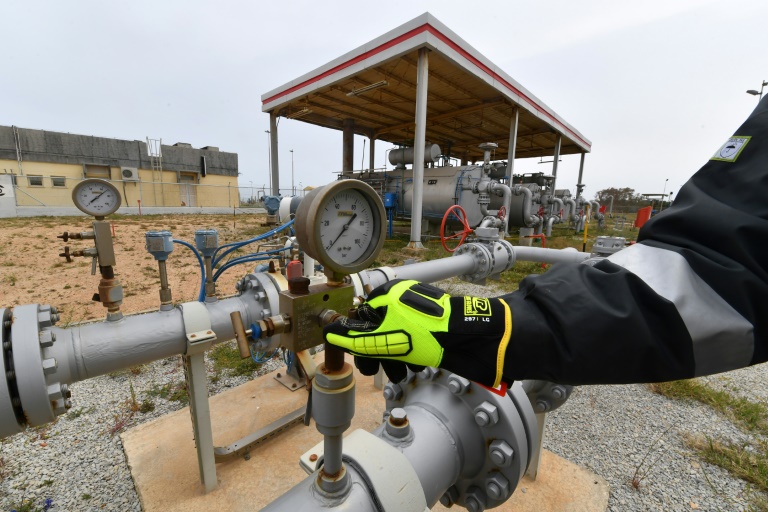
ENI said the deal with Algeria’s Sonatrach would boost deliveries of gas through the Transmed undersea pipeline by “up to nine billion cubic metres per year” by 2023-24.

Transmed only had spare pipeline capacity of 7.8 billion cubic metres per year in 2021 — though it has said it is ready to expand.

– ‘Fanciful’ –

The Egypt accord could result in up to three billion cubic meters of liquefied natural gas (LNG) bound to Europe and Italy in particular this year, ENI said.

Italy is looking into buying or renting two floating storage and regasification units (FSRU) to allow it to import more LNG.

Diversification will not be cheap, warn experts, who foresee extra taxes passed on to businesses and families.

Davide Tabarelli, head of energy think tank Nomisma Energia, said Rome was rightly exploiting the “excellent relationships” that ENI has built up over 69 years in Africa, where it is the sector leader in terms of production and reserves.

But the idea of replacing Russian gas “in the short term” was “fanciful”, he told AFP. “It will take at least two or three years.”

The government said it expects to get the floating regasification units into place within 18 months.

It has also talked of kick-starting stalled projects for two onshore regasification plants, which would take some four years to build.

“This is a race against time to make sure we stock gas and oil for the next winter season,” said Francesco Galietti, head of Rome-based consultancy Policy Sonar.

Rome should be pulling out all the stops, including boosting production of fossil fuels at home, he said, but the Ecological Transition ministry was instead revoking contracts.

Cingolani’s “snobbery towards (domestic) oil and gas is delaying the phasing out of Russian gas”, he warned.

– ‘Operation thermostat’ –

Italy is one of Europe’s biggest guzzlers of gas, which currently represents 42 percent of its energy consumption, and it imports 95 percent of the gas it uses.

The government hopes to reduce that by accelerating the investment in renewables and has vowed to cut red tape on wind and solar farms.

Draghi has called for a collective sacrifice, asking Italians this month: “Do we want to have peace or do we want to have the air conditioning on?”

His rallying cry was met with some grumbling in a country feeling the effects of global heating, which science shows is driven by human burning of fossil fuels.

Undeterred, the government is readying so-called “operation thermostat”, which could see the public sector turn down heating in schools and offices by one degree, and the equivalent for air conditioning in the summer.

The rule would apply to private households and companies too, though it would be difficult to police.

It could save some four billion metric cubes of natural gas a year — or around 14 percent of the total gas imported from Russia, according to La Stampa newspaper.

Brexit bureaucracy leaves British beet rotting

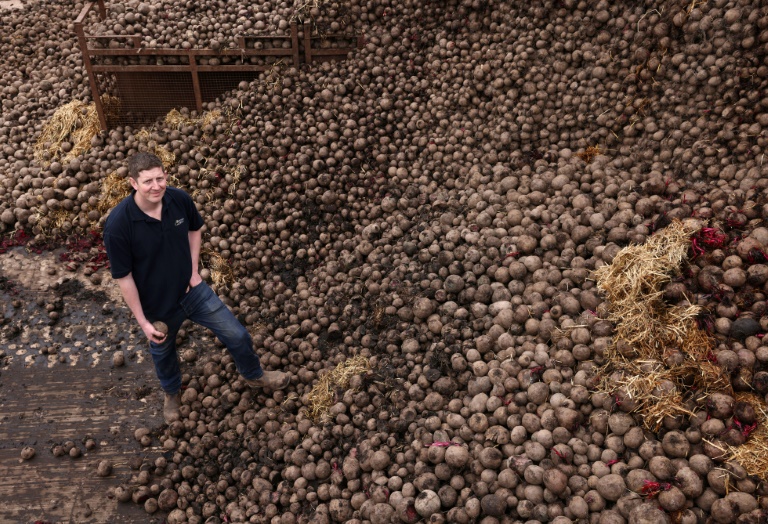
In the heart of the English countryside, Will Woodhall is trying to stay positive, despite standing next to a vast pile of rotting beetroot that would once have been worth tens of thousands of pounds.

“It’s a real shame — a lot of effort has gone into this,” the 35-year-old farm manager told AFP, gesturing to the 15-foot (4.5-metre) high mound of surplus vegetables that has been steadily decomposing on his farm since last October.

“I’ve never… had any crop leftover to this volume. Obviously it’s a large dent to our business. Hopefully we can stomach it, and I’m trying to turn (it) into a positive.”

Woodhall’s beetroot is the latest victim of the UK’s new post-Brexit reality, in which the bureaucracy and complexity of exporting many British goods into the European Union has left them increasingly unwanted.

Woodhall Growers, a 1,900-acre (770-hectare) farm in Staffordshire, central England, has been growing organic beets for nearly a decade, typically sending just under half to EU countries.

Initially, the UK’s formal departure from the now 27-member bloc in early 2020 seemed to have little impact. 

But a year later, following an 11-month transition period, it left the European single market and customs union and traders of all stripes and sizes have struggled to adapt.

– ‘No EU exports’ –

Woodhall soon learned his buyer on the continent would renege on a contract to buy hundreds of tonnes of beets and no longer place future orders. 

“The phrase they used was that they don’t want any more non-EU product,” Woodhall said.

European buyers would typically mix his beets in with others grown on the continent. But now the need to separate them to designate the British crop as non-EU produce was simply too costly and time-consuming.

“It’s a lot of hassle. I can’t blame them,” he added.

The farmer, who usually dispatches his crop over the winter months after harvesting in late autumn, has been left with several hundred tonnes worth around £90,000 ($117,000, 109,000 euros).

“I won’t recoup that, so we’ve taken a massive hit,” he said.

Prime Minister Boris Johnson and other Brexiteers promised that reversing almost five decades of European economic integration would free the country from bureaucracy and open up new trading opportunities for “global Britain”.

But for many like Woodhall involved in trade across the Channel, it has created new red tape and hindered rather than helped exports, leaving them with little choice but to look closer to home.

“It will just solely be for the UK now — no EU exports of our organic beetroot — which is a real shame,” he said.

He is planning to grow more of the other crops — spring onions, cereals, beans, peas — cultivated on the farm for domestic markets, and diversify the business.

“You’ve got to just stride forward and do things,” the farmer added, noting he was exploring everything from hosting glamping to drone racing.

But on the farming front, he conceded British buyers can only replace some of the shortfall from lost EU orders, and short-term growth would undoubtedly be hampered. 

“You can’t beat growing 34 hectares compared to growing 19 hectares,” Woodhall said, explaining his costs would remain similarly high. 

“It is good to grow more and dilute it down really”.

– ‘Heartbreaking’ –

Despite all that, Woodhall, who voted to remain in 2016, is remarkably upbeat about the country’s potential long-term prospects outside the EU — if its promises are properly delivered.

He believes the UK could be capitalising in a decade, but will need that long to adjust and has more questions than answers.

“I firmly believe that in 10 years time we’ll be better off being out, (with) Brexit, being our own market… but it’s just how many people will go bust between now and then? 

“And have we got the support higher up to do that? I don’t know.”

Woodhall argued agriculture is a big industry inside the EU with significant political backing, while British government support “falls short” due to the industry’s smaller size. 

“It’s not worth as much, I suppose, but it is to individuals like myself — it’s a livelihood for thousands of people,” he said.

In the meantime, Woodhall is left ruing the short-term fallout from the UK’s new place outside the EU, left with little choice but to let his unwanted beets rot into compost.

“It is heartbreaking. I come up here every day and look at it and put my head in my hands sometimes. 

“I just have to drive away from it and think about something else.”

War in Ukraine: Latest developments

Here are the latest developments in the war in Ukraine:

– Mariupol officer warns facing ‘last days’ –

A commander in the strategic port city of Mariupol’s besieged Azovstal power plant issues a desperate plea for help, saying his marines are “maybe facing our last days, if not hours”.

“The enemy is outnumbering us 10 to one,” Serhiy Volyna from the 36th Separate Marine Brigade says.

– New planes –

The Pentagon says that Ukraine recently received fighter planes and parts to bolster its air force while declining to specify the number of aircraft and their origin.

Kyiv has asked its Western partners to provide MiG-29s, which its pilots already know how to fly, and a handful of Eastern European countries have.

– Donbas offensive –

Russia says its forces have carried out dozens of air strikes in eastern Ukraine as part of a new offensive in the Donbas region that had been expected for days.

Moscow says the strikes targeted Ukrainian positions in parts of the Donbas as well as in towns close to the eastern frontline. 

“We are gradually implementing our plan to liberate the Donetsk and Lugansk People’s Republics,” Defence Minister Sergei Shoigu says, referring to eastern Ukraine’s two rebel regions, which Moscow has recognised as independent states.

– Fighting in Mariupol –

Fighting between Ukrainian and Russian forces is “ongoing” in Mariupol, Pavlo Kyrylenko, governor of Ukraine’s eastern Donetsk region, says.

Russia earlier on Tuesday called on Ukrainian forces in Mariupol to “immediately” lay down their arms in a new ultimatum.

Russian forces are believed to have gradually pushed their way into the city, pinning Ukrainian troops down to giant factories near the port, which are equipped with vast underground tunnels.

– Biden talks with allies –

US President Joe Biden holds a virtual meeting of allies to discuss the Ukraine conflict.

The videoconference brings together the leaders of France, Britain, Germany, Romania, Poland, Italy, Canada and Japan.

The United States and the European Union have reached a “broad consensus” on the need to increase pressure on Russia through new sanctions, the Italian government says after the talks.

German Chancellor Olaf Scholz says after the meeting that Russian President Vladimir Putin is responsible for war crimes in Ukraine that have already left thousands of civilians dead.

– Easter truce call –

UN Secretary-General Antonio Guterres denounces Russia’s fresh offensive in eastern Ukraine and calls for a four-day truce to mark Orthodox Holy Week.

“Hundreds of thousands of lives hang in the balance,” the United Nations chief says, adding a truce would allow safe passage for civilians to flee the eastern war zone and for humanitarian aid to be delivered to the hardest-hit areas.

– New US arms delivery –

The first shipments of a new US military aid package have arrived at Ukraine’s borders to be handed over, a senior Pentagon official says.

The package includes 18 155mm howitzers for the first time, as well as 40,000 artillery rounds, 200 M113 armoured personnel carriers, 11 Mi-17 helicopters and 100 armoured multi-purpose vehicles.

– Growth hit –

The “seismic” impact of the war in Ukraine is spreading worldwide, causing the IMF to sharply downgrade its 2022 global growth forecast to 3.6 percent, 0.8 points lower than in January.

The latest World Economic Outlook shows Ukraine suffering a 35 percent collapse this year, while Russia sees a drop of 8.5 percent.

– Diplomats expelled –

Russia says it is expelling 36 diplomats from Belgium and the Netherlands in retaliation for similar measures taken against its envoys in the two EU countries.

– Nearly 5 mn have fled Ukraine: UN –

More than 4.9 million Ukrainians have fled their country following the Russian invasion, says the UN’s refugee agency.

The UNHCR says 4,980,589 Ukrainians have left since Russia invaded on February 24 — a figure up 46,174 on Monday’s total.

burs-cdw/cb-jmy/ach/oho/cwl

El Salvador NGOs file suit against gag order on gang statements

El Salvadoran NGOs asked the judiciary on Tuesday to declare unconstitutional a new measure that journalists warn could criminalize certain forms of media reporting on gangs.

The reform to the penal code, passed on April 6, approves prison sentences of up to 15 years for reproducing and transmitting information from gangs “that could generate anxiety and panic among the general population”.

It is part of El Salvador President Nayib Bukele’s crackdown on gangs and violent crime.

“The reforms are imposing an absolute limitation of rights, particularly on journalism. This means that journalists can be prosecuted for reporting,” Ruth Elenora Lopez, a representative for the human rights organization Cristosal, told a press conference.

Cristosal and the Association of Journalists of El Salvador (APES) filed the suit with the Constitutional Chamber of the Supreme Court.

The reform “imposes a gag on the right that a journalist or media has to inform the public, it is an attack on freedom of information,” said APES president Cesar Castro.

Neither organization has much confidence that the lawsuit will go forward, since the Constitutional Chamber is allied with Bukele’s government.

Castro said their suit only served to “exhaust the mechanisms of justice” in El Salvador before they take their case to the international level.

El Salvador declared a state of emergency in late March following a weekend of violence that included at least 87 reported killings, which the government attributed to the Mara Salvatrucha (MS-13) and Barrio 18 gangs.

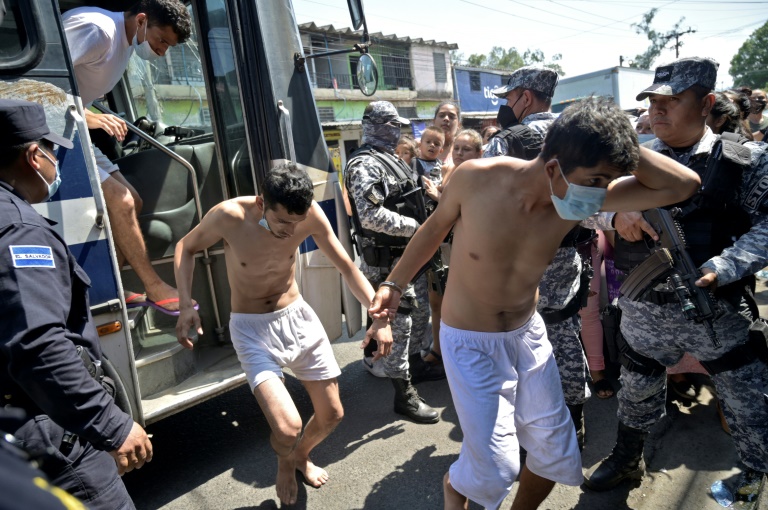
Since then, police and the military have rounded up thousands of suspected gang members using emergency powers that allow them to do so without warrants.

According to the president, who is highly popular, more than 13,500 gang members have been arrested in the past 24 days.

As the NGOs filed their suit, El Salvador’s Congress approved a law Tuesday to speed up construction of new prisons, as incarcerated populations swell with gang-related arrests.

The wave of detentions is unprecedented in a country that has suffered decades of violent crime driven by the MS-13 and Barrio 18 gangs.

These gangs include around 70,000 members, some 26,000 of whom are currently in jail, according to authorities.

IMF asks Sri Lanka to restructure debt before bailout

The International Monetary Fund said on Wednesday that it has asked cash-strapped Sri Lanka to “restructure” its huge foreign debt before a bailout programme could be finalised as anti-government protests escalated across the island.

Sri Lanka opened talks with the IMF in Washington this week after announcing its first ever default on external borrowings.

The South Asia country is in the grip of its worst economic crisis since independence in 1948 and has been rocked by a wave of protests over food and fuel shortages.

“When the IMF determines that a country’s debt is not sustainable, the country needs to take steps to restore debt sustainability prior to IMF lending,” the Fund’s country director Masahiro Nozaki said in a statement.

“Approval of an IMF-supported program for Sri Lanka would require adequate assurances that debt sustainability will be restored.”

The IMF said talks with Sri Lanka were still at an “early stage,” but it was “very concerned” about the economic situation and the hardships suffered by people, especially the poor and vulnerable.

Earlier this year, the IMF warned Sri Lanka’s approximately $51 billion foreign debt was unsustainable.

Colombo’s existing debt also means the country cannot apply for emergency financing, the IMF said.

Sources in the country’s finance ministry have made it clear that debt restructuring will require creditors to accept a “haircut” — a reduction in the value of their assets — or agree to longer repayment periods.

Nearly two weeks ago, the government nearly doubled key interest rates and allowed the currency to depreciate faster, hoping the move would encourage foreign currency inflows.

On Monday, President Gotabaya Rajapaksa conceded that Sri Lanka should have gone to the IMF “much earlier”. 

The country is short of dollars to finance even the important essentials, including food, fuel and medicines. Widespread shortages have sparked nationwide protests that turned violent on Tuesday.

One man was shot dead and 29 others were wounded in clashes in a central town, while tens of thousands continued demonstrations outside the president’s office in Colombo demanding his resignation.

IMF asks Sri Lanka to restructure debt before bailout

The International Monetary Fund said on Wednesday that it has asked cash-strapped Sri Lanka to “restructure” its huge foreign debt before a bailout programme could be finalised as anti-government protests escalated across the island.

Sri Lanka opened talks with the IMF in Washington this week after announcing its first ever default on external borrowings.

The South Asia country is in the grip of its worst economic crisis since independence in 1948 and has been rocked by a wave of protests over food and fuel shortages.

“When the IMF determines that a country’s debt is not sustainable, the country needs to take steps to restore debt sustainability prior to IMF lending,” the Fund’s country director Masahiro Nozaki said in a statement.

“Approval of an IMF-supported program for Sri Lanka would require adequate assurances that debt sustainability will be restored.”

The IMF said talks with Sri Lanka were still at an “early stage,” but it was “very concerned” about the economic situation and the hardships suffered by people, especially the poor and vulnerable.

Earlier this year, the IMF warned Sri Lanka’s approximately $51 billion foreign debt was unsustainable.

Colombo’s existing debt also means the country cannot apply for emergency financing, the IMF said.

Sources in the country’s finance ministry have made it clear that debt restructuring will require creditors to accept a “haircut” — a reduction in the value of their assets — or agree to longer repayment periods.

Nearly two weeks ago, the government nearly doubled key interest rates and allowed the currency to depreciate faster, hoping the move would encourage foreign currency inflows.

On Monday, President Gotabaya Rajapaksa conceded that Sri Lanka should have gone to the IMF “much earlier”. 

The country is short of dollars to finance even the important essentials, including food, fuel and medicines. Widespread shortages have sparked nationwide protests that turned violent on Tuesday.

One man was shot dead and 29 others were wounded in clashes in a central town, while tens of thousands continued demonstrations outside the president’s office in Colombo demanding his resignation.

Dung power: India taps new energy cash cow

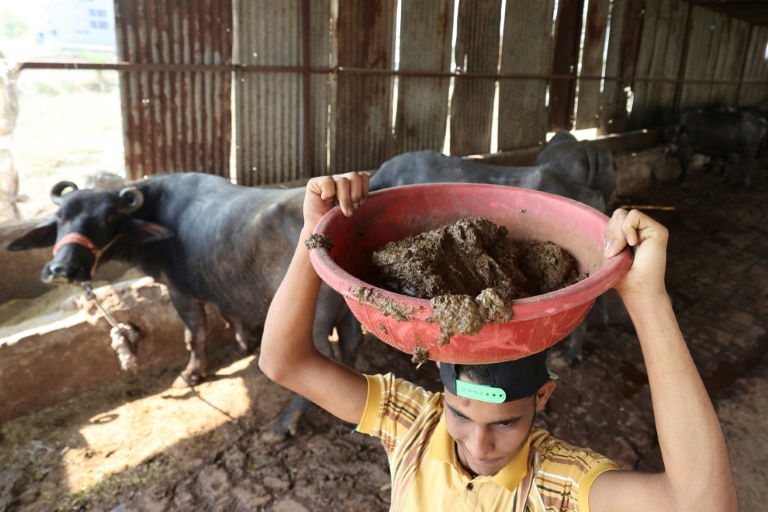
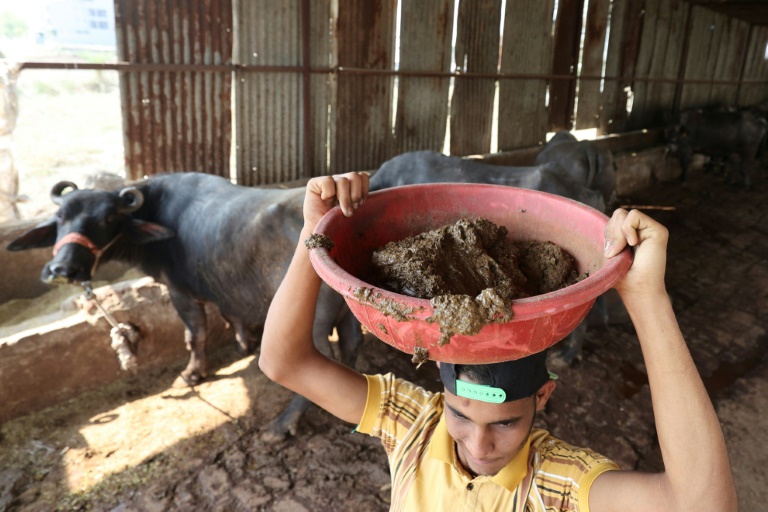
India is tapping a new energy source that promises to help clean up smog-choked cities and is already providing a vital revenue stream for poor Indian farmers: truckloads of bovine manure.

Cows are venerated as sacred creatures by the country’s Hindu majority. They also have pride of place in India’s rural communities, where they are still regularly used as draught animals. 

Rural households have long burned sun-dried cattle droppings to heat stoves, a practice that continues despite government efforts to phase it out with subsidised gas cylinders.

Villages on the outskirts of the central Indian city of Indore are now being handsomely rewarded for handing over their mounds of bovine waste in a pilot project to help meet the city’s power needs.

“We have a very good quality dung, and we keep the dung clean to ensure it fetches the best price,” farmer Suresh Sisodia told AFP.

The 46-year-old has sold nearly a dozen truckloads of fresh manure at the equivalent of $235 per shipment — more than the monthly income of the average Indian farming household. 

Sisodia’s farm has 50 head of cattle and, in the past, occasionally offset costs by selling manure for fertiliser. Now, he is hopeful for a more reliable revenue stream. 

– ‘Dung money’ –

“The farmers pick it up once every six or 12 months and there are seasons when they don’t — but the plant could give us a steady income,” he said, adding that his farm generates enough manure to fill a truck every three weeks. 

His family are one of the many beneficiaries of “Gobardhan” — literally “dung money” in Hindi — since the inauguration of a nearby biomass plant by Prime Minister Narendra Modi in February. 

Sisodia’s cattle droppings are carted to the plant, where they are mixed with household waste to produce flammable methane gas and an organic residue that can be used as fertiliser.

Eventually, the plant is slated to work through 500 tonnes of waste, including at least 25 tonnes of bovine faeces, each day — enough to power the city’s public transit system, with plenty left over.

“One half will run Indore buses and the other half will be sold to industrial clients,” plant boss Nitesh Kumar Tripathi told AFP.

The Gobardhan pilot programme has faced its share of logistical hurdles, with decrepit rural roads making it hard for the plant’s dung-carrying trucks to reach farms. 

Farmers have also been sceptical of what appears to be a get-rich-quick scheme and required careful “assurances of quick and regular” payments before signing on, said Ankit Choudhary, who scouts villages for potential suppliers. 

The Indian government, however, has high hopes for the initiative, with Modi pledging waste-to-gas plants in 75 other locations since the Indore facility began operations. 

Cultivating alternative energy sources is an urgent priority in India, which burns coal to meet nearly three-quarters of the energy needs of its 1.4 billion citizens.

Its cities regularly rank among the most smog-choked urban centres in the world as a result. Air pollution is blamed for more than a million deaths in India annually, according to a study published in The Lancet medical journal. 

– Sacred strays –

The project is also guaranteed to appeal to Hindu nationalist groups — Modi’s most important political constituency and vocal advocates of cow protection. 

Under their watch, “cow vigilantes” have run Muslim-owned abattoirs out of business and lynched people accused of involvement in cattle slaughter.

But bovine-centric religious policies have led to unintended consequences, with stray cows now a common sight in villages and even on busy roads in big cities.

Government acolytes such as Malini Laxmansingh Gaur, a former Indore mayor and member of Modi’s party, hope that scaling up the biogas project will incentivise farmers to keep their cows even when they are too old to give milk or help till fields. 

“This extra income will both clean villages and help tackle the strays,” she told AFP.

Dung power: India taps new energy cash cow

India is tapping a new energy source that promises to help clean up smog-choked cities and is already providing a vital revenue stream for poor Indian farmers: truckloads of bovine manure.

Cows are venerated as sacred creatures by the country’s Hindu majority. They also have pride of place in India’s rural communities, where they are still regularly used as draught animals. 

Rural households have long burned sun-dried cattle droppings to heat stoves, a practice that continues despite government efforts to phase it out with subsidised gas cylinders.

Villages on the outskirts of the central Indian city of Indore are now being handsomely rewarded for handing over their mounds of bovine waste in a pilot project to help meet the city’s power needs.

“We have a very good quality dung, and we keep the dung clean to ensure it fetches the best price,” farmer Suresh Sisodia told AFP.

The 46-year-old has sold nearly a dozen truckloads of fresh manure at the equivalent of $235 per shipment — more than the monthly income of the average Indian farming household. 

Sisodia’s farm has 50 head of cattle and, in the past, occasionally offset costs by selling manure for fertiliser. Now, he is hopeful for a more reliable revenue stream. 

– ‘Dung money’ –

“The farmers pick it up once every six or 12 months and there are seasons when they don’t — but the plant could give us a steady income,” he said, adding that his farm generates enough manure to fill a truck every three weeks. 

His family are one of the many beneficiaries of “Gobardhan” — literally “dung money” in Hindi — since the inauguration of a nearby biomass plant by Prime Minister Narendra Modi in February. 

Sisodia’s cattle droppings are carted to the plant, where they are mixed with household waste to produce flammable methane gas and an organic residue that can be used as fertiliser.

Eventually, the plant is slated to work through 500 tonnes of waste, including at least 25 tonnes of bovine faeces, each day — enough to power the city’s public transit system, with plenty left over.

“One half will run Indore buses and the other half will be sold to industrial clients,” plant boss Nitesh Kumar Tripathi told AFP.

The Gobardhan pilot programme has faced its share of logistical hurdles, with decrepit rural roads making it hard for the plant’s dung-carrying trucks to reach farms. 

Farmers have also been sceptical of what appears to be a get-rich-quick scheme and required careful “assurances of quick and regular” payments before signing on, said Ankit Choudhary, who scouts villages for potential suppliers. 

The Indian government, however, has high hopes for the initiative, with Modi pledging waste-to-gas plants in 75 other locations since the Indore facility began operations. 

Cultivating alternative energy sources is an urgent priority in India, which burns coal to meet nearly three-quarters of the energy needs of its 1.4 billion citizens.

Its cities regularly rank among the most smog-choked urban centres in the world as a result. Air pollution is blamed for more than a million deaths in India annually, according to a study published in The Lancet medical journal. 

– Sacred strays –

The project is also guaranteed to appeal to Hindu nationalist groups — Modi’s most important political constituency and vocal advocates of cow protection. 

Under their watch, “cow vigilantes” have run Muslim-owned abattoirs out of business and lynched people accused of involvement in cattle slaughter.

But bovine-centric religious policies have led to unintended consequences, with stray cows now a common sight in villages and even on busy roads in big cities.

Government acolytes such as Malini Laxmansingh Gaur, a former Indore mayor and member of Modi’s party, hope that scaling up the biogas project will incentivise farmers to keep their cows even when they are too old to give milk or help till fields. 

“This extra income will both clean villages and help tackle the strays,” she told AFP.

Brexit bureaucracy leaves British beet rotting

In the heart of the English countryside, Will Woodhall is trying to stay positive, despite standing next to a vast pile of rotting beetroot that would once have been worth tens of thousands of pounds.

“It’s a real shame — a lot of effort has gone into this,” the 35-year-old farm manager told AFP, gesturing to the 15-foot (4.5-metre) high mound of surplus vegetables that has been steadily decomposing on his farm since last October.

“I’ve never… had any crop leftover to this volume. Obviously it’s a large dent to our business. Hopefully we can stomach it, and I’m trying to turn (it) into a positive.”

Woodhall’s beetroot is the latest victim of the UK’s new post-Brexit reality, in which the bureaucracy and complexity of exporting many British goods into the European Union has left them increasingly unwanted.

Woodhall Growers, a 1,900-acre (770-hectare) farm in Staffordshire, central England, has been growing organic beets for nearly a decade, typically sending just under half to EU countries.

Initially, the UK’s formal departure from the now 27-member bloc in early 2020 seemed to have little impact. 

But a year later, following an 11-month transition period, it left the European single market and customs union and traders of all stripes and sizes have struggled to adapt.

– ‘No EU exports’ –

Woodhall soon learned his buyer on the continent would renege on a contract to buy hundreds of tonnes of beets and no longer place future orders. 

“The phrase they used was that they don’t want any more non-EU product,” Woodhall said.

European buyers would typically mix his beets in with others grown on the continent. But now the need to separate them to designate the British crop as non-EU produce was simply too costly and time-consuming.

“It’s a lot of hassle. I can’t blame them,” he added.

The farmer, who usually dispatches his crop over the winter months after harvesting in late autumn, has been left with several hundred tonnes worth around £90,000 ($117,000, 109,000 euros).

“I won’t recoup that, so we’ve taken a massive hit,” he said.

Prime Minister Boris Johnson and other Brexiteers promised that reversing almost five decades of European economic integration would free the country from bureaucracy and open up new trading opportunities for “global Britain”.

But for many like Woodhall involved in trade across the Channel, it has created new red tape and hindered rather than helped exports, leaving them with little choice but to look closer to home.

“It will just solely be for the UK now — no EU exports of our organic beetroot — which is a real shame,” he said.

He is planning to grow more of the other crops — spring onions, cereals, beans, peas — cultivated on the farm for domestic markets, and diversify the business.

“You’ve got to just stride forward and do things,” the farmer added, noting he was exploring everything from hosting glamping to drone racing.

But on the farming front, he conceded British buyers can only replace some of the shortfall from lost EU orders, and short-term growth would undoubtedly be hampered. 

“You can’t beat growing 34 hectares compared to growing 19 hectares,” Woodhall said, explaining his costs would remain similarly high. 

“It is good to grow more and dilute it down really”.

– ‘Heartbreaking’ –

Despite all that, Woodhall, who voted to remain in 2016, is remarkably upbeat about the country’s potential long-term prospects outside the EU — if its promises are properly delivered.

He believes the UK could be capitalising in a decade, but will need that long to adjust and has more questions than answers.

“I firmly believe that in 10 years time we’ll be better off being out, (with) Brexit, being our own market… but it’s just how many people will go bust between now and then? 

“And have we got the support higher up to do that? I don’t know.”

Woodhall argued agriculture is a big industry inside the EU with significant political backing, while British government support “falls short” due to the industry’s smaller size. 

“It’s not worth as much, I suppose, but it is to individuals like myself — it’s a livelihood for thousands of people,” he said.

In the meantime, Woodhall is left ruing the short-term fallout from the UK’s new place outside the EU, left with little choice but to let his unwanted beets rot into compost.

“It is heartbreaking. I come up here every day and look at it and put my head in my hands sometimes. 

“I just have to drive away from it and think about something else.”

Close Bitnami banner
Bitnami