World

Casualties feared as blasts rock school in Afghan capital

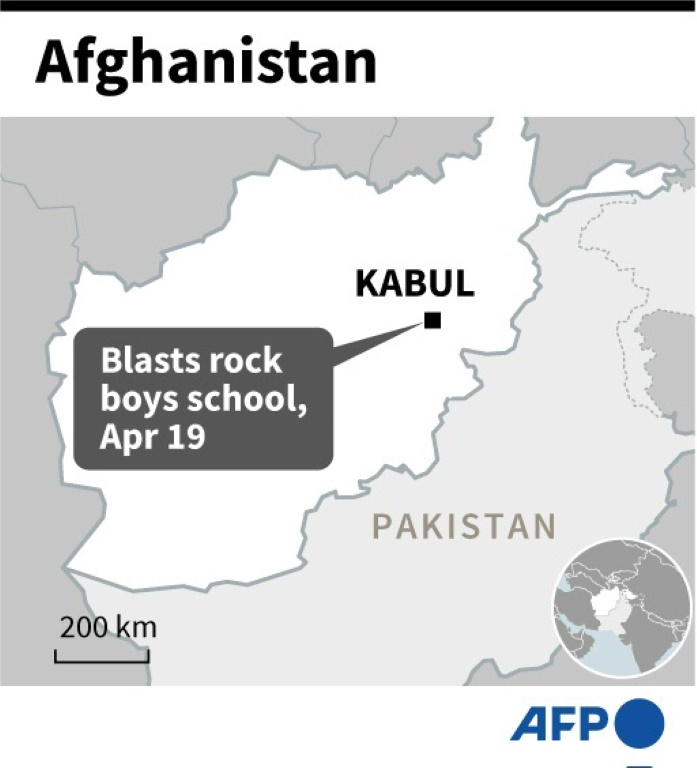
Several casualties were feared after two bombs rocked a boys’ school in a Shiite Hazara neighbourhood of the Afghan capital on Tuesday, police said, with social media showing grisly images of dead and wounded at the scene.

Kabul police spokesman Khalid Zadran told AFP that two improvised explosive devices were placed outside the Abdul Rahim Shahid high school in the capital’s western Dasht-e-Barchi neighbourhood.

He earlier tweeted that three blasts had rocked the school, which is in an area mainly inhabited by the Hazara community and has been previously targeted by the jihadist Islamic State group.

Tuesday’s blasts occurred as students were coming out of their morning classes, a witness told AFP.

Victims were taken to hospital, but Taliban fighters kept journalists from the premises.

Attacks on public targets have largely diminished since the Taliban seized power in August last year, but the jihadist Islamic State group continues to operate across the country.

Taliban officials insist their forces have defeated IS, but analysts say the jihadist group is a key security challenge to the hardline Islamists who now rule Afghanistan.

In May last year at least 85 people — mainly girl students — were killed and about 300 were wounded when three bombs exploded near their school in Dasht-e-Barchi.

No group claimed responsibility, but in October 2020 IS claimed a suicide attack on an educational centre in the same area that killed 24, including students.

In May 2020, the group was blamed for a bloody attack on a maternity ward of a hospital in the neighbourhood that killed 25 people, as well as new mothers.

Asia markets cautious over China growth news

Asian stocks were digesting growth concerns in China and rising interest rates in the United States on Tuesday with Hong Kong dropping sharply while Japan edged higher on the back of a plummeting yen.

Chinese growth numbers for the first quarter of 2022 exceeded expectations on Monday but the government warned of “significant challenges” ahead with key economic hubs in the throes of a Covid-19 lockdown. 

Millions of residents are still cloistered in their homes in economic centre Shanghai with restrictions — which have also hit tech hub Shenzhen and the northeastern grain basket of Jilin — shutting supply lines.

Investors were left weighing whether attempts to lift the economy by Chinese policymakers — who have held off cutting interest rates — would offset Beijing’s zero-Covid policies.

“The focus in Asia is on mainland policy easing to cushion the impact of lockdowns,” Stephen Innes at SPI Asset Management said, adding that while first quarter growth was marginally better than predicted, “there was no positive follow-through in China-sensitive assets”.

“Reopening cities is the only fix to drive credit growth, which could translate into a sustainable economic rebound that supports equity markets and a load of other China proxy assets,” he said.

Japan’s Nikkei 225 made healthy gains, with South Korea, Taiwan, India, and Australia all edging upward.

But Hong Kong plummeted by its largest margin in three weeks after a four-day holiday hiatus, with China’s central bank still reluctant to introduce a comprehensive policy easing program. 

The Hang Seng Index shed over 2.7 percent before recovering slightly to around 2.2 percent down, with the Shanghai Composite Index also slipping.

The impact of monetary policy tightening in the United States to combat inflation was another variable watched closely by investors, particularly with European markets resuming trade after a lengthy holiday break.

Based on inflation concerns, pandemic lockdowns in China, and the war in Ukraine, the World Bank last week downgraded its forecast for global growth this year, and the IMF is expected to do the same when it releases its updated forecasts on Tuesday.

“Its current estimate for 2022 is 4.4 percent which it set in January, with Europe and Central Asia likely to take the brunt, due to the Russian war in Ukraine, and Covid restrictions, respectively,” said Michael Hewson, Chief Market Analyst at CMC Markets UK.  

“With the return of European markets from the long Easter weekend break we look set to get off to a negative start in the wake of yesterday’s lower finish for US markets, amidst concerns that the growth downgrades seen yesterday could well be the first of many.”

Oil prices declined after initial gains on Tuesday, a day after Libya’s National Oil Corporation announced the closure of operations after staff in the key export terminal of Zueitina and the Al-Sharara oil field were blocked from working. 

The move will prevent Libya from exporting almost a quarter of its 1.2 million barrels per day of production.

And the Japanese yen plunged below 128 to the dollar, reaching yet another 20-year low on Tuesday, reflecting the continued accommodation of Japan’s monetary policy, while US policymakers move to hike interest rates.

“Although the effects of the lower JPY are a net positive for the Japanese economy, positive effects from higher export volume and an increase in inbound foreign tourists have waned and effectively gone,” UBS said in a note. 

“More importantly, negative effects are mainly borne by households with negative real income and domestic-oriented industries(mainly small firms) with higher import costs.”

– Key figures around 0700 GMT –

Tokyo – Nikkei 225: UP 0.69 percent at 26,985.09 (close)

Shanghai – Composite: DOWN 0.05 percent at 3,194.03 (close)

Hong Kong – Hang Seng Index: DOWN 2.23 percent at 21,038.95

Euro/dollar: DOWN at $1.0783 from $1.0802

Pound/dollar: DOWN at $1.3006 from $1.3023

Euro/pound: UP at 82.89 pence from 82.87

Dollar/yen: UP at 128.10 yen from 126.54 yen

Brent North Sea crude: DOWN 0.47 percent at $112.63 per barrel

West Texas Intermediate: UP 0.66 percent at $107.50 per barrel

New York – Dow: DOWN 0.1 percent at 34,411.69 (close)

London – FTSE 100: Closed for a holiday

Russia unleashes offensive into east Ukraine: Zelensky

Russia has launched a major offensive into eastern Ukraine, authorities in Kyiv said, opening a new phase of its invasion after being thwarted in efforts to capture the capital.

The United States is due to hold a video meeting with allies Tuesday to discuss the conflict in Ukraine, where Moscow’s military campaign has refocused on the eastern region of Donbas, partly controlled by pro-Kremlin separatists since 2014.

“We can now confirm that Russian troops have begun the battle for the Donbas, which they have been preparing for a long time,” Ukrainian President Volodymyr Zelensky said on Telegram late Monday.

“No matter how many Russian soldiers are brought here, we will fight. We will defend ourselves.”

Ahead of the widely anticipated advance, Ukrainian authorities had urged people in Donbas to flee west to escape.

“The second phase of the war has started,” Kyiv’s presidential chief of staff Andriy Yermak said.

Control of Donbas would allow Moscow to create a southern corridor to the occupied Crimean peninsula.

In the south of the region, Russia continued its push to capture the besieged port city of Mariupol, where the last remaining Ukrainian forces have taken a final stand.

But despite the desperate situation in the city, a senior US Defence Department official said Mariupol “is still contested”.

Russia has also added 11 battalion tactical groups — consisting of, among other things, artillery, helicopters, and logistical support — to its forces in east Ukraine, the official added, bringing the total to 76 in the country.

Monday also saw the first shipments of a new US military aid package arrive at Ukraine’s borders to be handed over in its fight against the Russian invasion.

The United States on April 13 unveiled an $800-million tranche of equipment for Ukraine, including helicopters, howitzers and armoured personnel carriers.

– Strikes across Ukraine –

Moscow’s forces on Monday pounded targets across the country, killing at least seven people in the far western city of Lviv.

Lviv has largely been spared bombardment since Russia invaded on February 24, and the city and its surroundings had become a haven for those seeking safety from the war zone.

But “today we understood clearly that we don’t have any safe places in Ukraine. It’s very dangerous,” a bank employee who gave her name as Natalia told AFP after the strikes.

Russia’s defence ministry said Monday it had hit 16 military targets across Ukraine.

Among the sites struck was a depot near Lviv that Moscow said held weapons recently delivered to Ukraine from the United States and Europe.

Shortly before Zelensky’s address, the regional governor of the Lugansk region Sergiy Gaiday also announced the beginning of Russia’s much-anticipated attack.

“It’s hell. The offensive has begun, the one we’ve been talking about for weeks. There’s constant fighting in Rubizhne and Popasna, fighting in other peaceful cities,” he said on Facebook.

Russian shelling killed at least eight civilians in eastern Ukraine, according to local authorities.

Gaiday said four people died as they tried to flee the city of Kreminna in Lugansk as Russian troops moved in.

“The Russian army has already entered there, with a huge amount of military hardware… Our defenders have retreated to new positions,” Gaiday said in a statement on social media.

But Ukrainian presidential advisor Oleksiy Arestovich said Russian forces had not conquered the city.

Nearby, in the village of Novodruzhesk, weary locals have borne the brunt of the fighting.

“We are bombed everywhere. It’s a miracle that we’re still alive,” said Nadya, 65, her voice trembling.

“We were lying on the ground and waiting. Since February 24 we’ve been sleeping in the cellar.

“There’s no more water, electricity, nothing. We’ve got no more money, no more petrol — we can’t leave.”

Ukrainian officials on Monday halted the evacuation of civilians from frontline towns and cities in the east for a second day, accusing Russian forces of having blocked and shelled escape routes.

Deputy Prime Minister Iryna Vereshchuk said Tuesday there would be no humanitarian corridors to evacuate civilians in the country for a third consecutive day because there has been no agreement from the Russian side.

Vereshchuk previously said that Russia’s “refusal to open these humanitarian corridors will, in the future, be grounds for prosecuting all those involved in war crimes”.

The Mariupol city council has reported there are over 1,000 civilians trapped in shelters under the Azovstal steel plant, where Ukrainian forces are waging a desperate last stand against the Russians. 

“(They are) mostly women with children and the elderly,” they said on Telegram.

– ‘Heavy attacks’ –

President Vladimir Putin has said he launched the military operation on February 24 to save Russian speakers in Ukraine from a “genocide” carried out by a “neo-Nazi” regime.

He recognised the independence of two self-proclaimed separatist republics in Donetsk and Lugansk shortly before the invasion began.

On Monday, Putin lauded the 64th Motor Rifle Brigade — which is accused of committing atrocities near Kyiv — bestowing battle honours on them for “heroism and valour, tenacity and courage”.

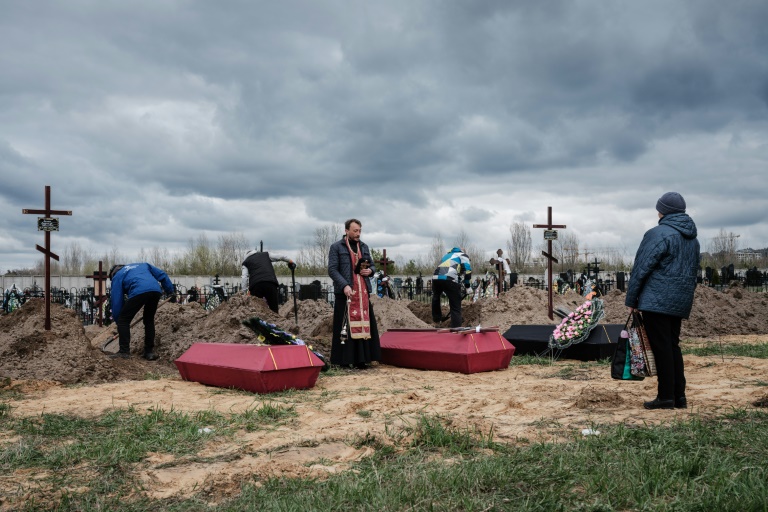
Ukraine has alleged the brigade is guilty of war crimes while occupying the suburb of Bucha on the outskirts of Kyiv, where residents were shot dead, some with their hands bound.

The European Union condemned Russia’s “indiscriminate” bombing of Ukrainian civilians following the strikes on Lviv.

Its foreign policy chief Josep Borrell pointed to “particularly heavy attacks” in eastern and southern Ukraine and an offensive against second city Kharkiv, where officials said Russian shelling killed three people.

“Attacks on Lviv and other cities in western Ukraine show that no part of the country is spared from the Kremlin’s senseless onslaught,” Borrell added.

Seeking to strengthen ties and accelerate admission to the 27-nation bloc, Zelensky said that Ukraine hoped to receive EU candidate country status within weeks.

On Monday, he handed the EU’s envoy to Kyiv a two-volume response to a membership questionnaire brought by European Commission chief Ursula von der Leyen in March.

burs-bgs/oho/dva

'We need help': Sierra Leone faces hardship amid Ukraine war

Iyesatu Turay, who lives in a sprawling slum of corrugated-iron shacks in Sierra Leone’s capital Freetown, says she doesn’t have enough food to feed her family. 

Life is a struggle for many in the Kroo Bay slum, where pigs mingle with stray dogs in the debris-strewn alleys of the shantytown, which straddles an open sewer.

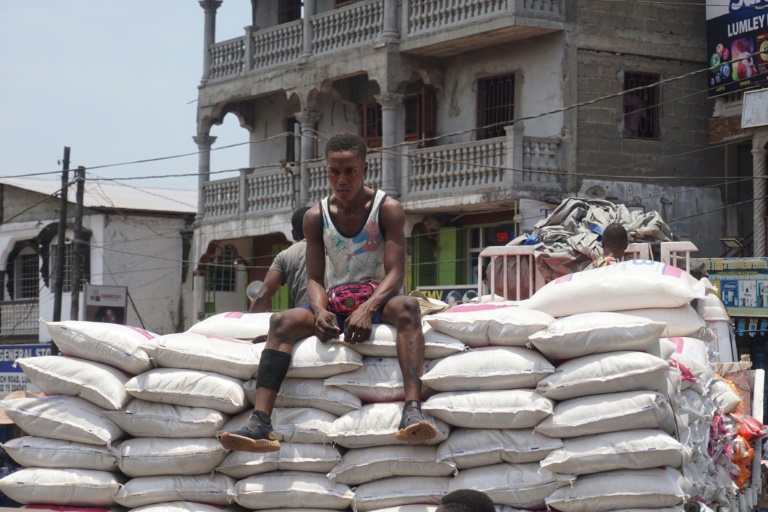
But war in faraway Ukraine has made life harder still. Fuel prices, as well as the prices of basics such as cooking oil and rice, have increased sharply in the West African nation recently.  

“We need help,” said Turay, a 28-year-old mother of three, who explained that price hikes are hitting at the same time as regular power cuts and a patchy water supply. 

“We are barely surviving on a single meal every late evening,” she told AFP. “No food, water and light.” 

Diamond-rich Sierra Leone is one of the poorest countries in the world, still recovering from a brutal 1991-2002 civil war and the 2014-2016 West Africa Ebola epidemic. 

Warnings that the economic blowback of the war in Ukraine could hit poorer countries have already become a reality in the nation of 7.5 million people, where about 43 percent of the population live below $1.90 a day, according to the World Bank.

Russia, a major energy producer, is under stringent Western sanctions. Its invasion of Ukraine in February has sent oil prices soaring worldwide, with consumer inflation also rising rapidly.

Musa Sesay, a grocer in Freetown, told AFP all his suppliers had raised their prices.

“We are not responsible for the increase in prices, it’s a global problem,” he said.

A 50-kilogram bag of rice which recently cost the equivalent of about 27 euros ($29) now costs 32 euros ($35) — an increase of about 20 percent.

– Fuel protests –

Fuel prices have also jumped. In late March, Sierra Leone’s Petroleum Regulatory Agency (PRA) increased the ceiling prices for petrol and diesel by 34 percent and 40 percent respectively, compared to January. 

The PRA cited supply issues related to the deteriorating “geopolitical situation in Europe” as the reason behind the move. 

Sierra Leone’s government says it intervened to cushion the blow to motorists — increased pump prices are lower than the increase in costs for importing fuel. 

Still, commercial drivers went on strike in Freetown after the price hike and blocked several roads in the city. Police had to fire teargas to clear the streets of protesters.

Four years into the first term of President Julius Maada Bio, it is now unclear whether the 57-year-old will be able to deliver on a campaign promise to tackle poverty and hunger.

“We have no business to do with the war in Ukraine, but our people are suffering here,” the president said during a live broadcast with business representatives this month, pledging to make decisions to help “ordinary people”. 

– ‘Salaries aren’t enough’ –

The latest crisis has come with Sierra Leone already struggling to regulate its power supply, deliver drinking water to many under-served citizens, as well as control inflation.

In 2020, the government signed a five-year deal with Karpowership, a Turkish operator of floating power plants, to supply electricity to the country. 

Yet power cuts are still routine. A senior official at Sierra Leone’s energy ministry, who requested anonymity, said maintenance works, payment issues and infrastructure damage caused by “criminals” were all affecting supplies.

In a statement on April 5, Sierra Leone’s central bank also said inflation was running at 17.6 percent in February. 

On Thursday, the United Nations World Food Programme warned in a statement that West Africa was already facing an “unprecedented food and nutrition crisis”, with more people now at risk because of the high prices linked to the Ukraine war. 

Ibrahim Sesay, a teacher in Freetown, told AFP: “We are poor, hungry.

“Salaries aren’t enough to pay for food, clothing and utility bills for the house,” he added.

'Painted over': Russian village artist finds peace art unwelcome

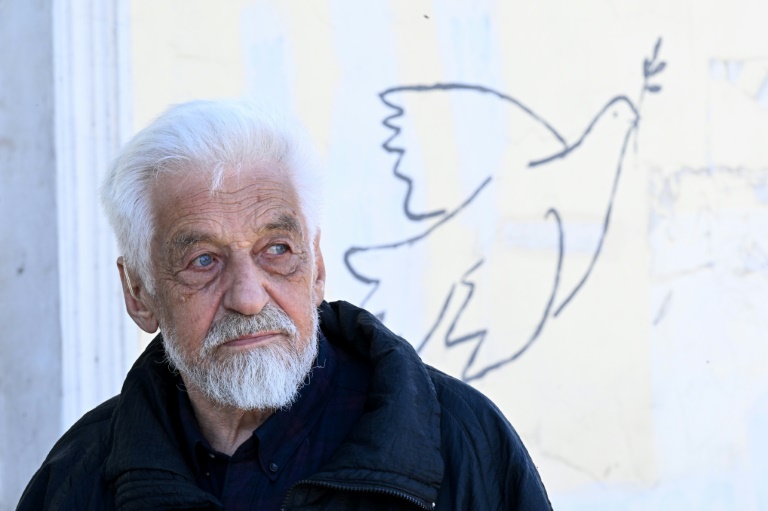
Retired engineer Vladimir Ovchinnikov has spent decades painting murals in his small town south of Moscow but finds some of his art is not welcome after Russia’s conflict with Ukraine.

“They’ve painted over it,” Ovchinnikov, 84, said during a recent stop at an abandoned shop in a village field near Borovsk, his town of about 10,000 people two hours’ drive from the Russian capital.

Ovchinnikov had painted a blue-and-yellow Ukrainian flag on one side of the building, but it had been covered over in white paint.

Moving briskly, he pulled out a black pencil and began to draw a dove over the whitewash, until another local man approached and threatened to call the police.

But Ovchinnikov insisted he had no fears about continuing his efforts.

“At my age, I’m not afraid of anything,” he said in an interview at his home. “If there are any complaints against me, no one will suffer.”

Since Russia sent troops into Ukraine on February 24, authorities have moved against any signs of opposition to what Moscow calls a “special military operation” in the pro-Western country.

Thousands of protesters have been detained, independent media have been shut down and several people have been convicted and fined under a law that makes it a crime to “discredit” the Russian armed forces.

– ‘Friendship destroyed’ –

Ovchinnikov is one of them. 

The silver-haired and bearded pensioner was fined 35,000 rubles (about $430, 400 euros) after he a drew a little girl wearing the colours of the Ukrainian flag with three bombs hanging over her head on a building in Borovsk.

It too was whitewashed and Ovchinnikov painted a dove in its place.

He received more than 150 donations to help pay the fine.

Ovchinnikov is well known for his art in and around Borovsk, and one of his drawings dedicated to the town’s liberation from Nazi troops in 1942 adorns the walls of the town’s conscription office.

One of his recent murals — of two women holding hands with ribbons matching the colours of the Russian and Ukrainian flags in their hair — has so far been left untouched.

“This friendship has been destroyed, we can only be nostalgic,” Ovchinnikov said, adding that the drawing was a copy of a Soviet-era poster.

His art has long had a political edge. In 2003, Ovchinnikov came across a book with the names of victims of Soviet repression in the Kaluga region — where Borovsk is located — listing who were either shot or sent to the Gulag.

“It made my hair stand on end,” he said.

He launched campaigns to have many of the victims rehabilitated — a legal process where they are posthumously acquitted of any crimes — but faced numerous rejections.

– Father sent to camps –

In 2015 and 2016, Ovchinnikov painted the portraits of victims of repression on the walls of Borovsk, each time seeing the drawings removed or vandalised.

Their stories hit close to home — his father Alexander was sentenced in 1937 to 10 years in a labour camp for promoting “monarchist and Trotskyist” views. 

He served time in the notorious Kolyma camps in Russia’s Far East before resettling in Borovsk in 1956.

Ovchinnikov worries that Russian society is being torn apart by a new “schism” and fears the country could head “in a very bad direction”.

He said he would continue his work, believing in the power of art to promote peace. 

“It says it right to your face. Bombs are falling on a child. Everything is clear,” Ovchinnikov said.

“I draw to show how I understand things… and maybe to have an influence on others,” he said. “It’s for those who aren’t interested in politics… who know nothing and just sit in front of the television.”

Washington Mormon Temple to welcome public for first time in half a century

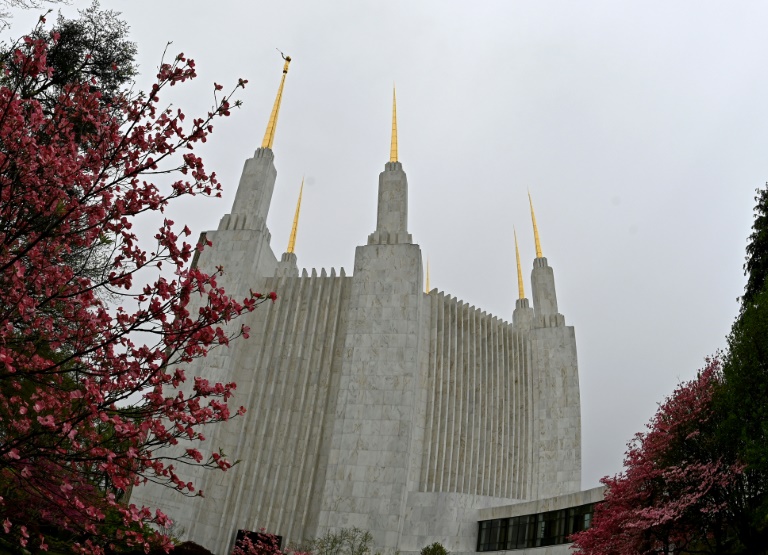
Like something from a science fiction novel, with its six golden spires and pristine white walls rising above the surrounding trees, the Washington Mormon Temple has for decades intrigued those barred from entering.

Their curiosity will soon be satisfied, however, as for the first time in almost half a century, the temple this month will open its doors to the general public.

The building, one of the most mysterious in the US capital, is usually only open to members of the Church of Jesus Christ of Latter-day Saints, for whom family, chastity and mission work are central values. 

“People feel like what we do inside is a secret, but as you saw today, it’s just sacred. It’s very sacred for us,” Kevin Duncan, a senior official in the Church, told AFP.

On Monday, during an open day for the media, the temple welcomed non-members for the first time since 1974, when it was dedicated. 

The visitors had to put on white slippers to view the hushed, luxurious interior with its pristine thick carpets and gilt surfaces. 

The last time the public was allowed to cross the threshold, 750,000 people, according to the Church, had swarmed the site in Kensington, Maryland, a few miles (kilometers) outside the bounds of Washington proper. Among them was the First Lady, Betty Ford. 

The temple closed in 2018 for renovations and was due to re-open in 2020, before the Covid-19 pandemic upended the schedule.

– Baptisms for the dead –

Future visitors must reserve free tickets to enter the site from the end of April to the beginning of June. 

Inside they will be able to discover the rituals of the Church, where as soon as members enter what they consider to be one of the most sacred places on Earth, they abandon their street clothes to dress in white. 

“It’s a reset. A symbol of equality, purity,” said David Bednar, one of the 12 apostles of the Church, who came from Utah for the occasion. 

The curious can also visit the baptistry, where a small pool is mounted on the backs of 12 life-size white marble bulls representing the 12 tribes of Israel. 

In the Mormon faith, baptism by immersion inside the temple is reserved for the dead. 

The Church allows its flock to be baptized on behalf of their ancestors, and it is then up to the souls of the deceased — if they exist, and the Church firmly believes they do — to accept the “gift” or not. 

Ordinary baptisms take place in other buildings. 

Among the other spaces in the sprawling temple is the “sealing room,” where marriages are celebrated (or “sealed”) around a white marble altar upholstered with beige velvet. 

Unions are exclusively between a man and a woman and are deemed to last not just a lifetime but into death, because “family is essential to the Father’s plan,” said Bednar. 

Family ties between parents and children can also be “sealed” for eternity in a ceremony in these same rooms.

The Church says it expects to welcome several hundred thousand visitors during its open house period.

Shanghai reports seven more Covid deaths since start of lockdown

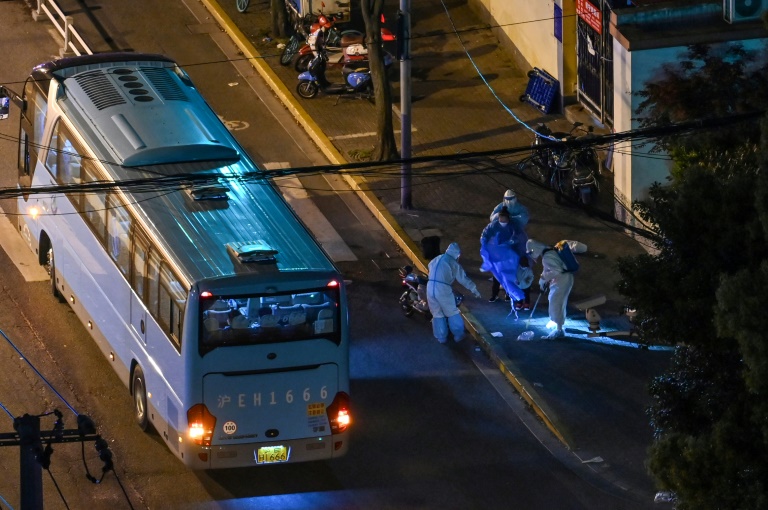
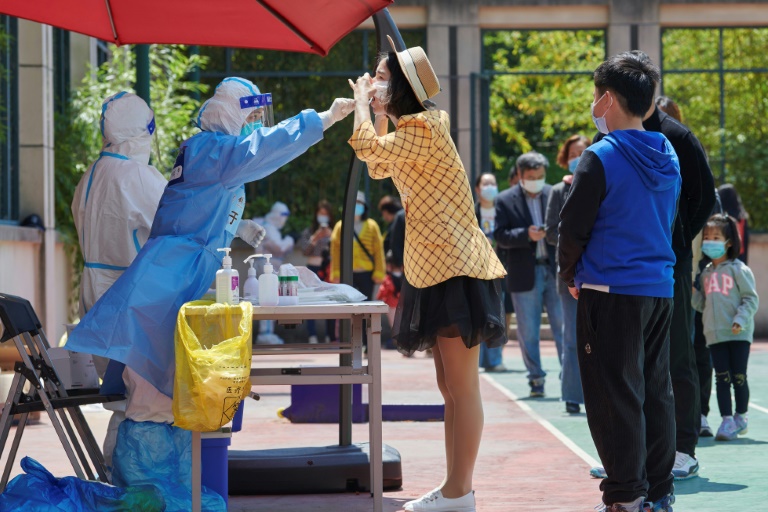
China reported seven more deaths from Covid-19 in Shanghai on Tuesday, after hundreds of thousands of cases in the metropolis during a weeks-long lockdown.

City authorities revealed the first deaths of this outbreak on Monday, with Tuesday’s fatalities bringing the official toll to just 10, even as the virus continues to spread.

Beijing insists its zero-Covid policy of hard lockdowns, mass testing and lengthy quarantines has averted fatalities and the public health crises that have engulfed much of the rest of the world.

But some have cast doubt on official figures in a nation where the vast elderly population has a low vaccination rate. 

By comparison, Hong Kong — which also has a high number of unvaccinated elderly — has tallied nearly 9,000 deaths among 1.18 million Covid-19 cases since the Omicron variant surged there in January.

Unverified social media posts have claimed Shanghai’s deaths are going unreported, but the messages have been quickly scrubbed from the internet.

Shanghai health officials said Sunday that less than two-thirds of residents over 60 had received two Covid jabs and under 40 percent had received a booster.

The seven newly reported deaths were all unvaccinated patients, city health official Wu Qianyu told a press conference on Tuesday.

They were aged between 60 and 101, and suffered from underlying conditions such as heart disease and diabetes, according to the Shanghai Municipal Health Commission.

The patients “became severely ill after admission to hospital, and died after ineffective rescue efforts, with the direct cause of death being underlying diseases”, the commission said.

Shanghai logged more than 20,000 new and mostly asymptomatic Covid cases Tuesday, defying officials’ efforts to stamp out the infection.

Many of the city’s 25 million residents have been confined to their homes since March, with some flooding social media with complaints of food shortages, spartan quarantine conditions and heavy-handed enforcement.

Protest footage has circulated faster than government censors can delete it.

The country’s zero-tolerance approach to Covid had largely slowed new cases to a trickle after the virus first emerged in the central Chinese city of Wuhan in late 2019.

But officials have scrambled in recent weeks to contain an outbreak spanning multiple regions, largely driven by the fast-spreading Omicron variant.

By one estimate on Monday, around 350 million people in at least 44 cities are currently under some form of lockdown in China.

Iran fights to recover stolen antiquities

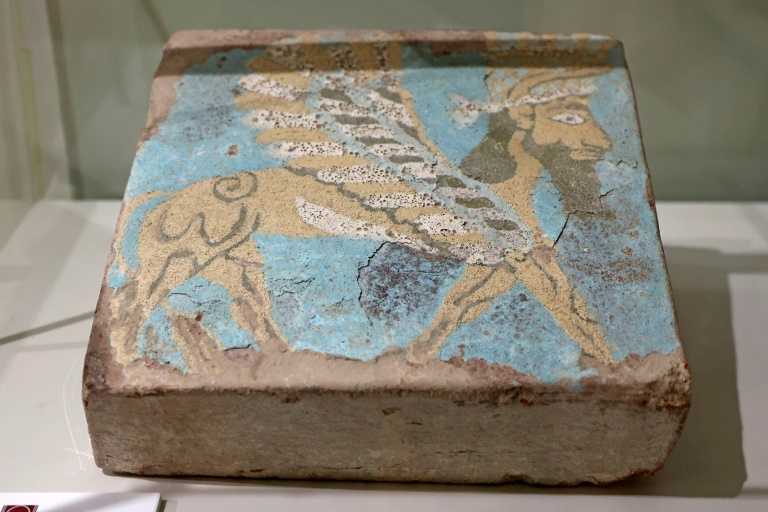
Decorated glazed bricks almost 3,000 years old are on display at Iran’s National Museum after a four-decade search disrupted by war and an international legal battle.

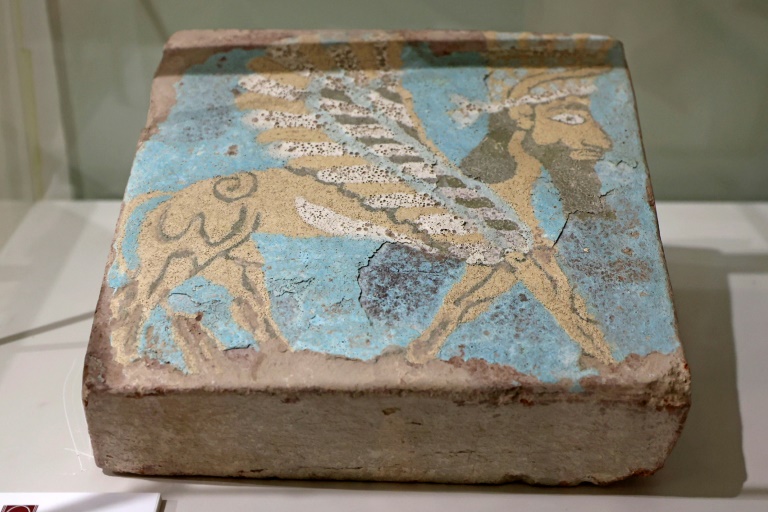
Lions and winged cows with human heads, horses and bulls with a goat’s horn, kneeling men and women and other mythological figures decorate the work, created by the Mannaeans who lived in northwestern Iran in the first millennium BC. 

The 51 square bricks are painted with a glazed coating on a black, brown, light blue, yellow or white background.

Their discovery and repatriation “is a series of incredible adventures,” Youssef Hassanzadeh, an archaeologist with the museum, told AFP.

It is also the latest example of Middle Eastern and African countries recovering stolen antiquities which have ended up in Western countries.

According to Hassanzadeh, the story began after the 1979 Islamic revolution when a farmer, Mirza Ali, discovered painted ceramic bricks while cultivating his field. They had been used to decorate a temple near his village in West Azerbaijan province.

“People were looting and selling glazed bricks, taking advantage of the absence of government control,” said Hassanzadeh, who organised the exhibition at the museum, where visitors peer at the bricks through glass cabinets.

– ‘A unique collection’

A few years later in 1985, during war with Iraq, Iranian authorities sent a group of archaeologists, protected by soldiers, to the village. They started to dig and seized some bricks but it was too late for the others. 

Smugglers had already shipped some of them overseas, where a number entered private collections and museums, the archaeologist said. 

The story took a new turn when the British Museum learned that an Iranian family had offered to sell a set of glazed bricks in Chiasso, on the Italian-Swiss border. In 1991, the museum sent its curator John Curtis to purchase the collection. 

But Curtis realised the bricks came from the West Azerbaijan site “and advised the British Museum and other European museums not to buy it, because it is a unique collection which must not be divided and must be returned to its country of origin,” Hassanzadeh said.

The Iranian owner of the collection had a different view. He was not prepared to return the artifacts from Switzerland.

“In 2008, the Swiss police seized the objects. The case went to court. French archaeologist Remy Boucharlat, who led excavations in Iran, confirmed the collection’s “identity”, the Tehran-based museum said in a statement.

Legal proceedings dragged on for more than a decade, with a lawsuit filed by the National Museum in 2015, and pressure from Iranian diplomats.

“Finally on December 20, 2020, the collection returned to us,” said Jebrael Nokandeh, curator of the National Museum which is exhibiting the bricks until Tuesday.

A separate drawn-out legal saga concluded in October, 2019 when the National Museum opened an exhibition of around 300 cuneiform clay tablets returned from the United States.

Other artifacts have also come back, but with far fewer complications.

Nokandeh, who is also an archaeologist, said a descendant of a Frenchman who lived in Iran during World War II approached Iran’s cultural adviser in Paris last year to say “that he had a collection of Iranian antiquities.”

Those 29 pieces, from the Bronze Age to the Islamic period, are now also on display at the museum, while the quest to recover other stolen and lost artifacts from the country’s rich history continues.

“We are in talks with the United States as well as with Australia to return objects,” Nokandeh said. 

Iran fights to recover stolen antiquities

Decorated glazed bricks almost 3,000 years old are on display at Iran’s National Museum after a four-decade search disrupted by war and an international legal battle.

Lions and winged cows with human heads, horses and bulls with a goat’s horn, kneeling men and women and other mythological figures decorate the work, created by the Mannaeans who lived in northwestern Iran in the first millennium BC. 

The 51 square bricks are painted with a glazed coating on a black, brown, light blue, yellow or white background.

Their discovery and repatriation “is a series of incredible adventures,” Youssef Hassanzadeh, an archaeologist with the museum, told AFP.

It is also the latest example of Middle Eastern and African countries recovering stolen antiquities which have ended up in Western countries.

According to Hassanzadeh, the story began after the 1979 Islamic revolution when a farmer, Mirza Ali, discovered painted ceramic bricks while cultivating his field. They had been used to decorate a temple near his village in West Azerbaijan province.

“People were looting and selling glazed bricks, taking advantage of the absence of government control,” said Hassanzadeh, who organised the exhibition at the museum, where visitors peer at the bricks through glass cabinets.

– ‘A unique collection’

A few years later in 1985, during war with Iraq, Iranian authorities sent a group of archaeologists, protected by soldiers, to the village. They started to dig and seized some bricks but it was too late for the others. 

Smugglers had already shipped some of them overseas, where a number entered private collections and museums, the archaeologist said. 

The story took a new turn when the British Museum learned that an Iranian family had offered to sell a set of glazed bricks in Chiasso, on the Italian-Swiss border. In 1991, the museum sent its curator John Curtis to purchase the collection. 

But Curtis realised the bricks came from the West Azerbaijan site “and advised the British Museum and other European museums not to buy it, because it is a unique collection which must not be divided and must be returned to its country of origin,” Hassanzadeh said.

The Iranian owner of the collection had a different view. He was not prepared to return the artifacts from Switzerland.

“In 2008, the Swiss police seized the objects. The case went to court. French archaeologist Remy Boucharlat, who led excavations in Iran, confirmed the collection’s “identity”, the Tehran-based museum said in a statement.

Legal proceedings dragged on for more than a decade, with a lawsuit filed by the National Museum in 2015, and pressure from Iranian diplomats.

“Finally on December 20, 2020, the collection returned to us,” said Jebrael Nokandeh, curator of the National Museum which is exhibiting the bricks until Tuesday.

A separate drawn-out legal saga concluded in October, 2019 when the National Museum opened an exhibition of around 300 cuneiform clay tablets returned from the United States.

Other artifacts have also come back, but with far fewer complications.

Nokandeh, who is also an archaeologist, said a descendant of a Frenchman who lived in Iran during World War II approached Iran’s cultural adviser in Paris last year to say “that he had a collection of Iranian antiquities.”

Those 29 pieces, from the Bronze Age to the Islamic period, are now also on display at the museum, while the quest to recover other stolen and lost artifacts from the country’s rich history continues.

“We are in talks with the United States as well as with Australia to return objects,” Nokandeh said. 

Russia unleashes offensive into east Ukraine: Zelensky

Russia has launched a major offensive into eastern Ukraine, authorities in Kyiv said, opening a new phase of its invasion after being thwarted in efforts to capture the capital.

The United States is due to hold a video meeting with allies Tuesday to discuss the conflict in Ukraine, where Moscow’s military campaign has refocused on the eastern region of Donbas, partly controlled by pro-Kremlin separatists since 2014.

“We can now confirm that Russian troops have begun the battle for the Donbas, which they have been preparing for a long time,” Ukrainian President Volodymyr Zelensky said on Telegram late Monday.

“No matter how many Russian soldiers are brought here, we will fight. We will defend ourselves.”

Ahead of the widely anticipated advance, Ukrainian authorities had urged people in Donbas to flee west to escape.

“The second phase of the war has started,” Kyiv’s presidential chief of staff Andriy Yermak said.

Control of Donbas would allow Moscow to create a southern corridor to the occupied Crimean peninsula.

In the south of the region, Russia continued its push to capture the besieged port city of Mariupol, where the last remaining Ukrainian forces have taken a final stand.

But despite the desperate situation in the city, a senior US Defence Department official said Mariupol “is still contested”.

Russia has also added 11 battalion tactical groups — consisting of, among other things, artillery, helicopters, and logistical support — to its forces in east Ukraine, the official added, bringing the total to 76 in the country.

Monday also saw the first shipments of a new US military aid package arrive at Ukraine’s borders to be handed over in its fight against the Russian invasion.

The United States on April 13 unveiled an $800-million tranche of equipment for Ukraine, including helicopters, howitzers and armoured personnel carriers.

– Strikes across Ukraine –

Moscow’s forces on Monday pounded targets across the country, killing at least seven people in the far western city of Lviv.

Lviv has largely been spared bombardment since Russia invaded on February 24, and the city and its surroundings had become a haven for those seeking safety from the war zone.

But “today we understood clearly that we don’t have any safe places in Ukraine. It’s very dangerous,” a bank employee who gave her name as Natalia told AFP after the strikes.

Russia’s defence ministry said Monday it had hit 16 military targets across Ukraine.

Among the sites struck was a depot near Lviv that Moscow said held weapons recently delivered to Ukraine from the United States and Europe.

Shortly before Zelensky’s address, the regional governor of the Lugansk region Sergiy Gaiday also announced the beginning of Russia’s much-anticipated attack.

“It’s hell. The offensive has begun, the one we’ve been talking about for weeks. There’s constant fighting in Rubizhne and Popasna, fighting in other peaceful cities,” he said on Facebook.

Russian shelling killed at least eight civilians in eastern Ukraine, according to local authorities.

Gaiday said four people died as they tried to flee the city of Kreminna in Lugansk as Russian troops moved in.

“The Russian army has already entered there, with a huge amount of military hardware… Our defenders have retreated to new positions,” Gaiday said in a statement on social media.

But Ukrainian presidential advisor Oleksiy Arestovich said Russian forces had not conquered the city.

Nearby, in the village of Novodruzhesk, weary locals have borne the brunt of the fighting.

“We are bombed everywhere. It’s a miracle that we’re still alive,” said Nadya, 65, her voice trembling.

“We were lying on the ground and waiting. Since February 24 we’ve been sleeping in the cellar.

“There’s no more water, electricity, nothing. We’ve got no more money, no more petrol — we can’t leave.”

Ukrainian officials on Monday halted the evacuation of civilians from frontline towns and cities in the east for a second day, accusing Russian forces of having blocked and shelled escape routes.

Deputy Prime Minister Iryna Vereshchuk urged Moscow to open humanitarian corridors from Mariupol to Berdyansk and from the Azovstal metallurgical industrial zone — a holdout for Ukrainian fighters.

“Your refusal to open these humanitarian corridors will, in the future, be grounds for prosecuting all those involved in war crimes,” she said on Telegram.

The Mariupol city council said Monday there are over 1,000 civilians trapped in shelters under the Azovstal steel plant, where Ukrainian forces are waging a desperate last stand against the Russians. 

“(They are) mostly women with children and the elderly,” they said on Telegram.

– ‘Heavy attacks’ –

President Vladimir Putin has said he launched the military operation on February 24 to save Russian speakers in Ukraine from a “genocide” carried out by a “neo-Nazi” regime.

He recognised the independence of two self-proclaimed separatist republics in Donetsk and Lugansk shortly before the invasion began.

On Monday, Putin lauded the 64th Motor Rifle Brigade — which is accused of committing atrocities near Kyiv — bestowing battle honours on them for “heroism and valour, tenacity and courage”.

Ukraine has alleged the brigade is guilty of war crimes while occupying the suburb of Bucha on the outskirts of Kyiv, where residents were shot dead, some with their hands bound.

The European Union condemned Russia’s “indiscriminate” bombing of Ukrainian civilians following the strikes on Lviv.

Its foreign policy chief Josep Borrell pointed to “particularly heavy attacks” in eastern and southern Ukraine and an offensive against second city Kharkiv, where officials said Russian shelling killed three people.

“Attacks on Lviv and other cities in western Ukraine show that no part of the country is spared from the Kremlin’s senseless onslaught,” Borrell added.

Seeking to strengthen ties and accelerate admission to the 27-nation bloc, Zelensky said that Ukraine hoped to receive EU candidate country status within weeks.

On Monday, he handed the EU’s envoy to Kyiv a two-volume response to a membership questionnaire brought by European Commission chief Ursula von der Leyen in March.

burs-bgs/oho/je

Close Bitnami banner
Bitnami