World

Asia markets react to China growth news

Asian stocks were digesting news about growth concerns in China and rising interest rates in the United States on Tuesday with Japan edging marginally higher, but Hong Kong falling sharply in early trade.

Chinese growth numbers for the first quarter of 2022 exceeded expectations on Monday but the government warned of “significant challenges” ahead.

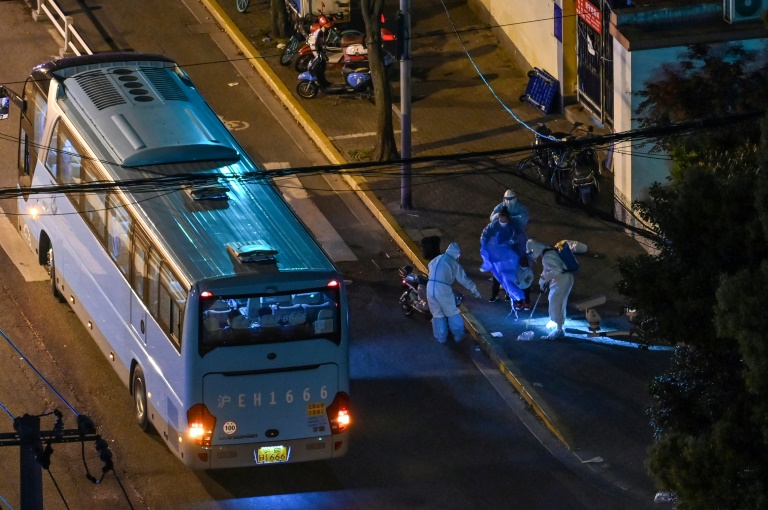
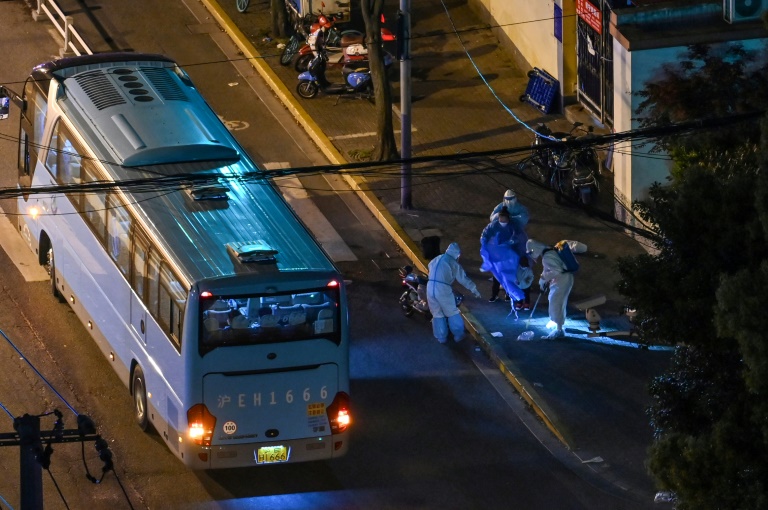
Shanghai, the country’s economic centre, is in the throes of an intense Covid-19 lockdown with restrictions — which have also hit tech hub Shenzhen and the northeastern grain basket of Jilin — shutting supply lines.

Investors were left weighing whether attempts to lift the economy by Chinese policymakers — who have held off cutting interest rates — would offset Beijing’s zero-Covid policies.

“The unwillingness to loosen monetary policy further before Covid is under control means that market sentiment will probably remain bleak in coming weeks,” the Gavekal Dragonomics team told Bloomberg.

“However, equities will rally even harder if lockdowns lift and policymakers start to make up for lost growth with additional easing measures.”

Japan’s Nikkei 225 made healthy gains in early trade with South Korea, mainland China, Taiwan, and Australia all edging upward.

But Hong Kong plummeted more than 2.5 percent in the first hour of trading after a four-day holiday hiatus.

The impact of monetary policy tightening in the United States to combat inflation was another variable watched closely by investors.

Meanwhile, oil prices continued to climb as Libya’s National Oil Corporation announced the closure of operations in major sites after staff in the key export terminal of Zueitina and the Al-Sharara oil field were blocked from working.

Stephen Innes at SPI Asset Management said the rise in prices shows “just how bullishly reactive oil markets have become to supply shocks.”

And the Japanese yen continued its drop against the dollar after crossing a new 20-year low Monday, reflecting the continued accommodation of Japanese monetary policy, while US policymakers move to hike interest rates.

– Key figures around 0230 GMT –

Tokyo – Nikkei 225: UP 0.20 percent at 26,854.87

Shanghai – Composite: UP 0.10 percent at 3,198.84

Hong Kong – Hang Seng Index: DOWN 2.72 percent at 20,933.13

Euro/dollar: DOWN at $1.0767 from $1.0802

Pound/dollar: DOWN at $1.2993 from $1.3023

Euro/pound: FLAT at 82.87 pence

Dollar/yen: UP at 127.77 yen from 126.54 yen

Brent North Sea crude: UP 0.36 percent at $113.55 per barrel

West Texas Intermediate: UP 0.14 percent at $108.36 per barrel

New York – Dow: DOWN 0.1 percent at 34,411.69 (close)

London – FTSE 100: Closed for a holiday
Asia markets react to China growth news

Asian stocks were digesting news about growth concerns in China and rising interest rates in the United States on Tuesday with Japan edging marginally higher, but Hong Kong falling sharply in early trade.

Chinese growth numbers for the first quarter of 2022 exceeded expectations on Monday but the government warned of “significant challenges” ahead.

Shanghai, the country’s economic centre, is in the throes of an intense Covid-19 lockdown with restrictions — which have also hit tech hub Shenzhen and the northeastern grain basket of Jilin — shutting supply lines.

Investors were left weighing whether attempts to lift the economy by Chinese policymakers — who have held off cutting interest rates — would offset Beijing’s zero-Covid policies.

“The unwillingness to loosen monetary policy further before Covid is under control means that market sentiment will probably remain bleak in coming weeks,” the Gavekal Dragonomics team told Bloomberg.

“However, equities will rally even harder if lockdowns lift and policymakers start to make up for lost growth with additional easing measures.”

Japan’s Nikkei 225 made healthy gains in early trade with South Korea, mainland China, Taiwan, and Australia all edging upward.

But Hong Kong plummeted more than 2.5 percent in the first hour of trading after a four-day holiday hiatus.

The impact of monetary policy tightening in the United States to combat inflation was another variable watched closely by investors.

Meanwhile, oil prices continued to climb as Libya’s National Oil Corporation announced the closure of operations in major sites after staff in the key export terminal of Zueitina and the Al-Sharara oil field were blocked from working.

Stephen Innes at SPI Asset Management said the rise in prices shows “just how bullishly reactive oil markets have become to supply shocks.”

And the Japanese yen continued its drop against the dollar after crossing a new 20-year low Monday, reflecting the continued accommodation of Japanese monetary policy, while US policymakers move to hike interest rates.

– Key figures around 0230 GMT –

Tokyo – Nikkei 225: UP 0.20 percent at 26,854.87

Shanghai – Composite: UP 0.10 percent at 3,198.84

Hong Kong – Hang Seng Index: DOWN 2.72 percent at 20,933.13

Euro/dollar: DOWN at $1.0767 from $1.0802

Pound/dollar: DOWN at $1.2993 from $1.3023

Euro/pound: FLAT at 82.87 pence

Dollar/yen: UP at 127.77 yen from 126.54 yen

Brent North Sea crude: UP 0.36 percent at $113.55 per barrel

West Texas Intermediate: UP 0.14 percent at $108.36 per barrel

New York – Dow: DOWN 0.1 percent at 34,411.69 (close)

London – FTSE 100: Closed for a holiday
Greek women confront macho culture fuelling femicides

As a group of senior Greek coastguard officers sat down for a routine video call last June, the meeting opened with femicide jokes.

“I told my wife, you better behave or I’m getting a pilot’s licence. She froze!” sniggered one officer in a video leaked this month by a local news portal after a Greek helicopter pilot murdered his wife last May.

“That’s the way to teach them, my friend,” replied another participant.

“Didn’t all little girls want to marry pilots when they were young?” laughed a third officer.

The men were mocking the murder of 20-year-old Briton Caroline Crouch by her Greek husband, Babis Anagnostopoulos, as she slept.

For over a month, he tried to present it as a botched burglary before confessing to the crime that sparked outrage in Greece.

Crouch’s killing was one of dozens of similar cases in Greece in recent years, including the gruesome rape and killing of American scientist Suzanne Eaton on the island of Crete in 2019.

On average, Greece records 11 femicides per year, deputy minister for gender equality, Maria Syrengela, told parliament in January.

She added that a special hotline for abuse complaints had received nearly 7,000 calls last year.

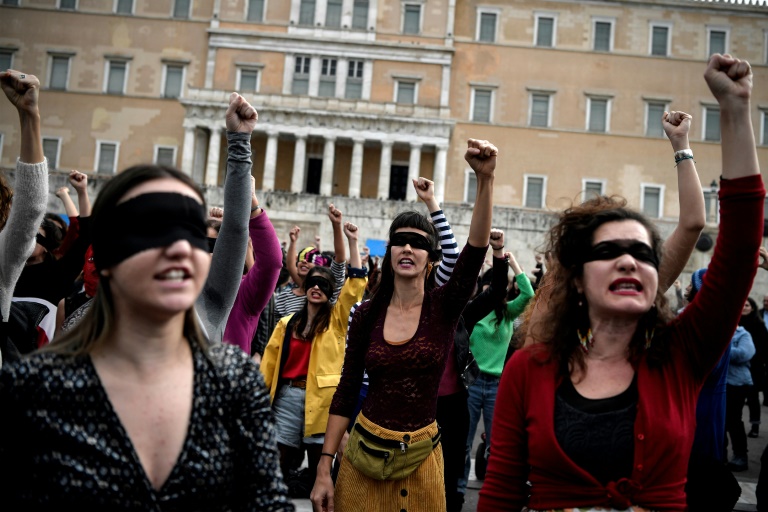
A belated #MeToo awakening in Greece has shed more light on abuse of women in the country.

But Greek activists say the conservative country has yet to fully dismantle traditional, patriarchal attitudes that lead to violence against women, while many have called for a separate crime charge for femicide.

– Women ‘should not talk much’ –

Macho culture has deep roots in Greece, say Eleftheria Koumandou and Eleonora Orfanidou, co-hosts of an award-winning daily show on Athens 9,84 city radio that regularly addresses social issues including misogyny and homophobia.

“A young girl (growing up) in Greece has centuries of tradition to deal with,” Orfanidou told AFP.

“Greek education, the church and justice are conservative institutions built on the patriarchal model,” she adds.

Koumandou says her mother, who gave up studying dentistry to avoid “offending” her marble mason husband, would say women “should not talk much”.

“We were taught not to display too much intelligence,” notes Orfanidou.

Greece first gave women the vote in 1952, and in 2020 elected its first woman head of state, former judge Katerina Sakellaropoulou.

But conservative Prime Minister Kyriakos Mitsotakis — whose sister was Greece’s first female Athens mayor and foreign minister — has just two women ministers in his cabinet of 21.

Beatings of women were common in film a few decades ago — frequently for comic relief — while so-called honour killings over jealousy and adultery featured in popular song lyrics.

“In my school dance group, a folk song about a man who butchers his wife and then mourns her was among our favourites,” recalls Orfanidou.

Many Greek films from the 1950s to the 1970s, considered the golden era of domestic cinema and routinely replayed on television, promote the bourgeois family model with the man at the head of the household, says Fotini Tsibiridou, a social anthropologist at the University of Macedonia.

– ‘Caressed and slapped’ –

In a 1966 hit comedy that sold over 420,000 tickets, the protagonist lines up his six sisters and slaps them for bickering.

“I want to be caressed and slapped by the man I love,” says a song from the same era.

Contemporary Greek TV soaps and advertisements are still rife with “sexist references and stereotypes,” Tsibiridou adds.

“For instance, you won’t see a man buying or using house cleaning products in a Greek TV ad,” she says.

In 2016, Greece’s leading toy chain Jumbo sparked controversy with an advertisement featuring the line “hit like a man”.

In another tongue-in-cheek advertisement from a cell phone chain in 2011, a man, unhappy with his wife’s cooking, daydreams about returning her to her mother. 

Critics also note Greek law penalises victims of domestic violence by giving lighter sentences to perpetrators who can prove they were in a state of agitation during the crime.

Proof of being in what the penal code calls “a fit of rage” can mean the difference between a life sentence and a reduced term.

This is the line of defence used by Crouch’s husband Anagnostopoulos, whose lawyer this month told reporters that his client “was in a state of psychological arousal” when he committed the crime “in the heat of passion”.

A few days after the coastguard video mocking Crouch’s death leaked, the merchant marine ministry condemned the comments through an anonymous source. No official statement was issued.

Iraq 'green belt' neglected in faltering climate fight

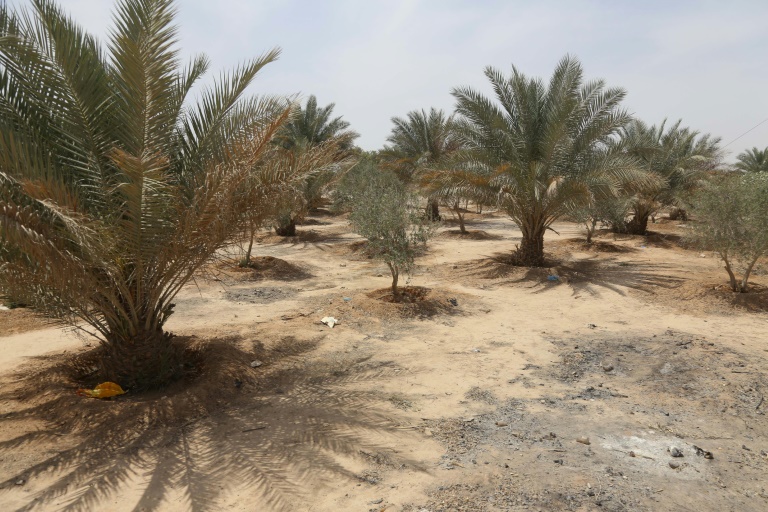
Envisioned as a lush fortress against worsening desertification and sand storms, the “green belt” of Iraq’s Karbala stands as a wilted failure.

Sixteen years after its inception, only a fraction of the 76-kilometre (47-mile) crescent-shaped strip of greenery has materialised, though the years proved a deep need for protection against mounting environmental challenges.

Eucalyptus, olive groves and date palms first took root in 2006 as part of a plan for tens of thousands of the trees to form a green protective shield around the city in central Iraq.

“We were very happy because the green belt would be an effective bulwark against dust,” said Hatif Sabhan al-Khazali, a native of Karbala — one of Iraq’s Shiite holy cities that attracts millions of pilgrims every year.

Iraq’s host of environmental problems, including drought and desertification, threaten access to water and livelihoods across the country.

But nowadays, the southern axis of Karbala’s green belt is only about 26 kilometres long while the northern axis of the 100-metre (328 feet) wide strip is even shorter, at 22 kilometres.

Irrigation is sparse. No one pulls out the weeds anymore. Branches of the stunted olive trees sway between date palms — symbolic of Iraq — that struggle to grow.

“The construction was stopped,” said Nasser al-Khazali, a former member of the Karbala provincial council.

He blamed “lack of interest from the central government and local authorities,” saying: “The funding didn’t follow.”

According to him, only nine billion dinars ($6 million) was spent on the northern axis, out of the originally planned 16 billion dinars.

– It does little –

“Negligence” is how Hatif Sabhan al-Khazali explains the fate of the green belt project.

It’s a frequent refrain — along with “financial mismanagement” — on the lips of many Iraqis and was a driving factor behind near-nationwide protests against graft, crumbling public services and unemployment that shook the country in 2019.

Iraq has consistently been a low scorer on Transparency International’s Corruption Perceptions Index, ranking 157th out of 180 countries for perceived corruption levels in state institutions last year.

What was meant to be a buffer against frequent dust storms that envelop the country does little to lessen their impact.

Earlier in April, two such storms blanketed Iraq in less than one week, grounding flights and leaving dozens hospitalised due to respiratory problems.

According to the director of Iraq’s meteorological office, Amer al-Jabri, sand and dust storms are expected to become even more frequent.

He attributed this increase to “drought, desertification and declining rainfall”, as well as the absence of green spaces.

Iraq is particularly vulnerable to climate change, having already witnessed record low rainfall and high temperatures in recent years.

In November, the World Bank warned that Iraq could suffer a 20 percent drop in water resources by 2050 due to climate change.

Water shortages have been exacerbated by the building of upstream dams in neighbouring Turkey and Iran.

– ‘Criminal gangs’ –

These water shortages and the attendant soil degradation have led to a drastic decline in arable land.

Iraq “loses around 100,000 dunams (about 250 square kilometres or 97 square miles) of agricultural land every year”, said Nadhir al-Ansari, a specialist in water resources at Sweden’s Lulea University of Technology.

“This land is then transformed into desert areas,” he said, warning that Iraq should “expect more dust storms” — which would have dire consequences on agriculture and public health.

Ansari blamed this on the Iraqi government and the “absence of water planning”.

During the country’s last dust storm, the agriculture ministry assured that it was working on “restoring vegetation cover” in Iraq.

Last year an official with the Ministry of Water Resources referred to “several initiatives” to plant green belts but he said that “unfortunately these belts were not maintained,” the state INA news agency reported. 

As an example the official cited Karbala, where Hatif Sabhan al-Khazali despairs at seeing the city’s green belt left to “criminal gangs and stray dogs”.

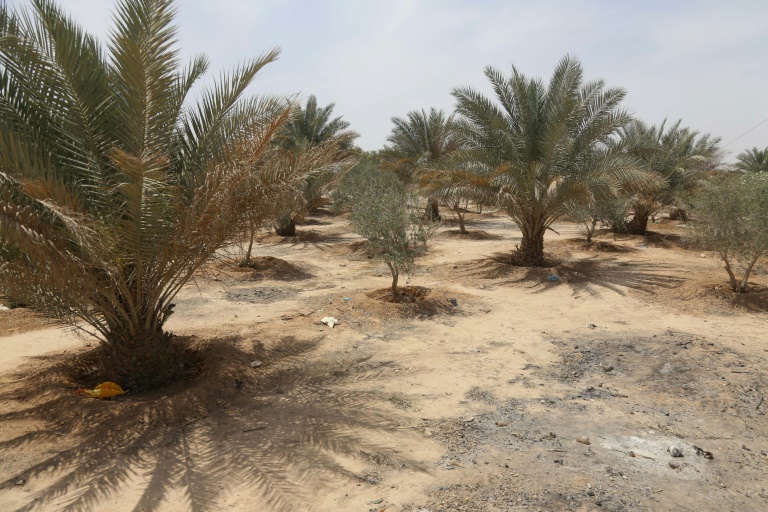
Iraq 'green belt' neglected in faltering climate fight

Envisioned as a lush fortress against worsening desertification and sand storms, the “green belt” of Iraq’s Karbala stands as a wilted failure.

Sixteen years after its inception, only a fraction of the 76-kilometre (47-mile) crescent-shaped strip of greenery has materialised, though the years proved a deep need for protection against mounting environmental challenges.

Eucalyptus, olive groves and date palms first took root in 2006 as part of a plan for tens of thousands of the trees to form a green protective shield around the city in central Iraq.

“We were very happy because the green belt would be an effective bulwark against dust,” said Hatif Sabhan al-Khazali, a native of Karbala — one of Iraq’s Shiite holy cities that attracts millions of pilgrims every year.

Iraq’s host of environmental problems, including drought and desertification, threaten access to water and livelihoods across the country.

But nowadays, the southern axis of Karbala’s green belt is only about 26 kilometres long while the northern axis of the 100-metre (328 feet) wide strip is even shorter, at 22 kilometres.

Irrigation is sparse. No one pulls out the weeds anymore. Branches of the stunted olive trees sway between date palms — symbolic of Iraq — that struggle to grow.

“The construction was stopped,” said Nasser al-Khazali, a former member of the Karbala provincial council.

He blamed “lack of interest from the central government and local authorities,” saying: “The funding didn’t follow.”

According to him, only nine billion dinars ($6 million) was spent on the northern axis, out of the originally planned 16 billion dinars.

– It does little –

“Negligence” is how Hatif Sabhan al-Khazali explains the fate of the green belt project.

It’s a frequent refrain — along with “financial mismanagement” — on the lips of many Iraqis and was a driving factor behind near-nationwide protests against graft, crumbling public services and unemployment that shook the country in 2019.

Iraq has consistently been a low scorer on Transparency International’s Corruption Perceptions Index, ranking 157th out of 180 countries for perceived corruption levels in state institutions last year.

What was meant to be a buffer against frequent dust storms that envelop the country does little to lessen their impact.

Earlier in April, two such storms blanketed Iraq in less than one week, grounding flights and leaving dozens hospitalised due to respiratory problems.

According to the director of Iraq’s meteorological office, Amer al-Jabri, sand and dust storms are expected to become even more frequent.

He attributed this increase to “drought, desertification and declining rainfall”, as well as the absence of green spaces.

Iraq is particularly vulnerable to climate change, having already witnessed record low rainfall and high temperatures in recent years.

In November, the World Bank warned that Iraq could suffer a 20 percent drop in water resources by 2050 due to climate change.

Water shortages have been exacerbated by the building of upstream dams in neighbouring Turkey and Iran.

– ‘Criminal gangs’ –

These water shortages and the attendant soil degradation have led to a drastic decline in arable land.

Iraq “loses around 100,000 dunams (about 250 square kilometres or 97 square miles) of agricultural land every year”, said Nadhir al-Ansari, a specialist in water resources at Sweden’s Lulea University of Technology.

“This land is then transformed into desert areas,” he said, warning that Iraq should “expect more dust storms” — which would have dire consequences on agriculture and public health.

Ansari blamed this on the Iraqi government and the “absence of water planning”.

During the country’s last dust storm, the agriculture ministry assured that it was working on “restoring vegetation cover” in Iraq.

Last year an official with the Ministry of Water Resources referred to “several initiatives” to plant green belts but he said that “unfortunately these belts were not maintained,” the state INA news agency reported. 

As an example the official cited Karbala, where Hatif Sabhan al-Khazali despairs at seeing the city’s green belt left to “criminal gangs and stray dogs”.

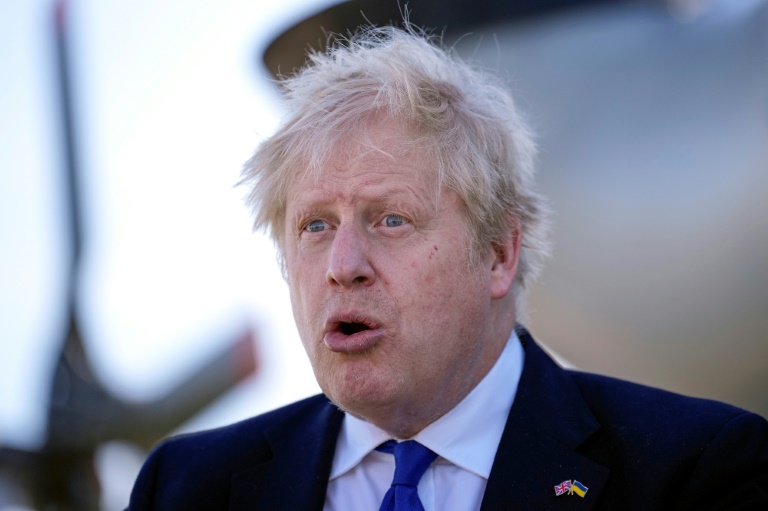
Boris Johnson to face MPs' fury over 'partygate'

British Prime Minister Boris Johnson will face angry lawmakers Tuesday for the first time since being fined for breaking the law, as the “partygate” scandal continues to plague him.

The embattled UK leader has weathered the initial storm after being penalised last week for breaching Covid lockdown laws on one occasion in 2020, doggedly defying calls to resign.

But Johnson can expect a bruising few days as the House of Commons returns from its Easter break, with MPs demanding to know why he repeatedly insisted to them that no rules had been broken.

Knowingly misleading parliament is a breach of government ministers’ code of conduct, which states they should resign as a result, and opposition lawmakers are adamant he should go.

However, despite becoming the first modern British leader to be fined for law-breaking and facing further possible penalties as police investigate numerous rules-breaching events in Downing Street, he is digging in.

The 57-year-old will reportedly try to sideline the controversy with a “business as usual” mantra this week, which includes a two-day visit to India starting Thursday.

“The prime minister will have his say… and will outline his version of events and face questions from MPs,” government minister Greg Hands told Sky News Monday.

“(He) is getting on with the job, he’s delivered, and the government has delivered in anything from the vaccination programme through (to) the strong support for Ukraine.”

– Attention diverted –

London’s Metropolitan Police Service is investigating dozens of alleged lockdown breaches by Johnson and his staff in the Downing Street complex where he lives and works during the pandemic.

It said last week officers have so far issued more than 50 fines.

The scandal, the latest in a stream of controversies to hit Johnson since last summer, left his position hanging by a thread earlier this year and Conservative MPs in a dangerously rebellious mood.

But he has boosted his survival chances with what is seen as a firm response to the war in Ukraine, which diverted attention away from the furore when he was most vulnerable.

Several Conservative lawmakers who had publicly withdrawn their support for his leadership have reversed course and argued now is not the time for a change of Tory leader.

A growing cost-of-living crisis is also credited with distracting people from the scandal, while Johnson has made several big policy announcements aimed at his pro-Brexit political base.

They include controversial plans to send migrants and asylum seekers who cross the Channel thousands of miles away to Rwanda.

However, commentators doubt he can maintain his party’s support if repeatedly fined, his Tories fare poorly in local elections next month and further lurid details of parties emerge.

In an ominous sign last Wednesday, Simon Wolfson, a justice minister, resigned from the government, citing “the scale, context and nature” of the rule breaches.

– ‘Liar’ –

Several Tories have also renewed calls for him to step down.

Johnson will bid to shore up his standing with them when he addresses a meeting of the Conservative parliamentary party Tuesday evening, according to reports.

However, he could face the further embarrassment of lawmakers voting to refer him to a rarely convened parliament committee which would decide whether he had misled them over “partygate”.

Commons Speaker Lindsay Hoyle is said to be considering whether to allow such a vote, amid pressure from opposition parties.

“Boris Johnson defied his own law and then lied and lied and lied,” Angela Rayner, Labour’s deputy leader, tweeted last Tuesday.

“While the British public were making huge sacrifices, he was rule-breaking.”

Johnson is undoubtedly hoping voters’ anger over “partygate” has dissipated, but recent polling found they remain furious.

One national survey showed nearly two-thirds of people spoke negatively about the Tory leader, compared to just 16 percent positively, with the word “liar” the most commonly shared response.

“Overall, ‘partygate’ dominates views of Boris (Johnson) over Ukraine,” said James Johnson, a Conservative pollster who conducted the sample. 

“Fury has not receded. Many negative comments are by people who liked him previously but have now changed their minds.”

Russia's Donbas offensive advances with fall of Kreminna

The capture of the city of Kreminna may have heralded the start of a widely anticipated major Russian offensive in Ukraine’s eastern Donbas region as fierce fighting raged in neighbouring Rubizhne.

Moscow has decided to refocus its efforts on eastern Ukraine after withdrawing troops from the region around the capital Kyiv, creating a new epicentre in the conflict.

The Donets river skirts Kreminna and snakes through nearby Rubizhne, Severodonetsk and Lysychansk, which have withstood heavy shelling from both sides for several days on the frontline.

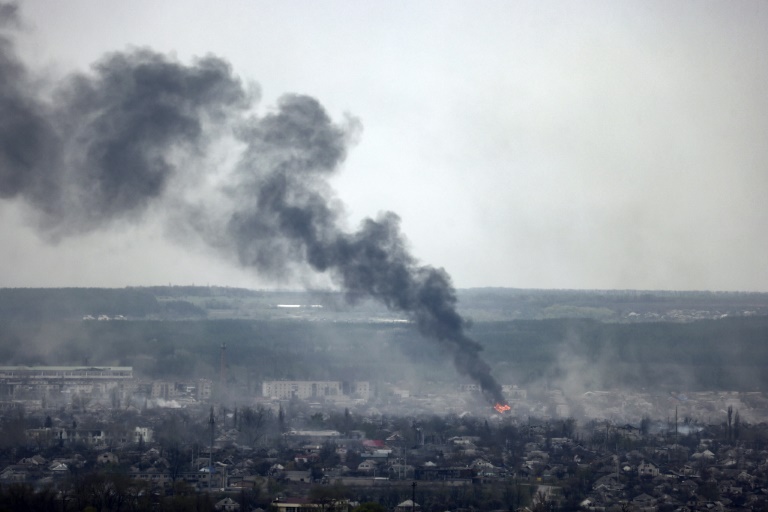
Rubizhne, which had more than 60,000 residents before the war began, came under intense Ukrainian artillery and mortar fire on Monday, AFP journalists saw.

Ukrainian positions bombarded the settlement, particularly from the nearby village of Novodruzhesk.

Powerful explosions giving off plumes of white and black smoke could be seen and heard hitting Rubizhne from a slag heap near the former mining city.

Sporadic heavy machine-gun fire was also audible.

“We can now confirm that Russian troops have begun the battle for the Donbas, which they have been preparing for a long time,” Ukrainian President Volodymyr Zelensky later said on Monday evening.

– Battle for Kreminna –

A small city with 18,000 inhabitants before the war, Kreminna was taken by Russian forces overnight from Sunday to Monday after three days of fighting.

Russia has now moved one step closer towards Kramatorsk, the capital of Ukrainian-controlled Donbas and a key target for Moscow.

Kreminna lies around 50 kilometres (30 miles) northeast of Kramatorsk in the Donbas, a region partly controlled by pro-Russia separatists since 2014.

“The fighting lasted three days and Russia used a large number of armoured vehicles to attack the city,” the head of Kreminna’s military administration, Oleksandr Dunets, told Radio Donbas. 

“Fighting continues on the outskirts,” he added.

“Our defenders fell back on new positions,” Lugansk regional governor Sergiy Gaiday said on his Facebook page.

Four civilians were killed when Russian strikes hit their car as they tried to escape Kreminna, the Ukrainian army said.

– ‘Miracle we’re still alive’ –

In Novodruzhesk, former miner Victor Pasipko was perched on an electric pylon to repair a cut cable and pointed to two fresh craters.

“Look at these two craters, I think this cable was damaged by shrapnel,” the 68-year-old told AFP.

A cavernous crater had also disfigured the front garden of Nadya, 65, and her 70-year-old husband Sergiy.

A bomb struck their blue Lada on April 13. The stricken car now lies on its back on top of a pile of rubble and the shattered remains of a corrugated-iron roof.

“We are bombed everywhere. It’s a miracle that we’re still alive,” said Nadya, her voice trembling.

“We were lying on the ground and waiting. Since February 24 we’ve been sleeping in the cellar.

“There’s no more water, electricity, nothing. We’ve got no more money, no more petrol — we can’t leave.”

A little further on, a woman shows a completely destroyed cottage. A Ukrainian tank had occupied the garden to be less visible. Shortly after it had left, Russian forces struck, she said.

At the same time, a Ukrainian mortar bomb smashed into a nearby wood. A plume of white smoke appeared in Rubizhne a few seconds later, followed by the sound of an explosion.

– ‘No one knows what to expect’ –

Around 15 kilometres to the east of Rubizhne, Russians throughout the night struck Ukrainian positions in the woods bordering the small city of Yampil.

In the morning, dozens of residents were evacuated by bus or left in their cars.

“I only slept for 15 minutes last night,” Mikhailo told AFP as he crossed the city on foot with two friends.

“There were shots from the forest. In front, behind, to the left, to the right: no one knows what to expect,” said the 27-year-old, who had his wife evacuated in the morning.

Ukrainian forces have reinforced their defences in recent days ahead of the expected Russian onslaught.

In Yampil and the neighbouring city of Lyman, AFP journalists saw several infantry fighting vehicles, troop transports and towed artillery.

Checkpoints were fortified on the roads leading towards Kramatorsk, with concrete blocks and piles of fresh earth making chicanes harder to navigate.

After failed tests, NASA's Moon rocket heads back to workshop

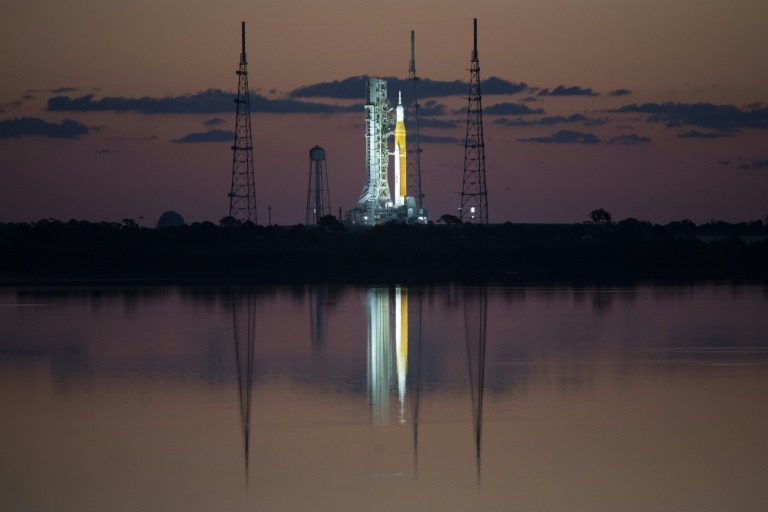
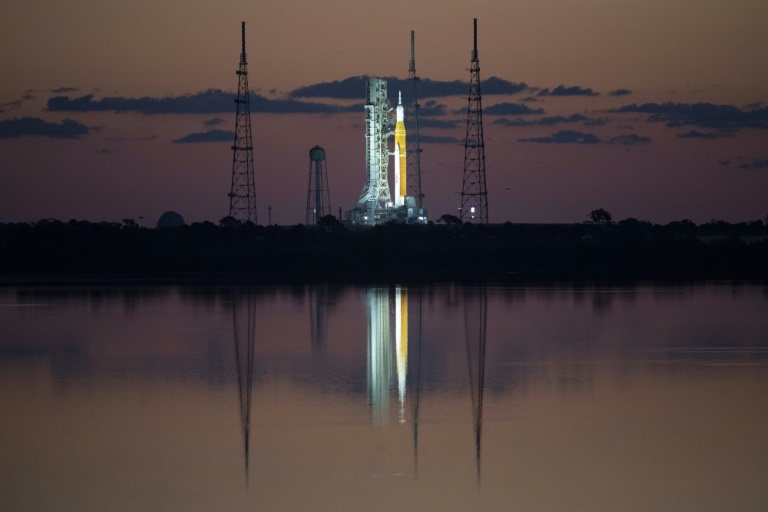
NASA’s Space Launch System rocket is heading back to its assembly building for repairs next week, pushing the earliest possible launch date for its uncrewed test flight to the Moon to later this summer, officials said Monday.

Since April 1 the space agency has been unsuccessfully attempting a key “wet dress rehearsal” test, so dubbed because it involves loading liquid propellant.

The procedure is meant as a run-through of launch operations, including a final countdown to within ten seconds before blast off, but without actually firing the engines.

But NASA teams have encountered several technical hitches.

These included a leak involving flammable liquid hydrogen, a faulty valve that prevented fueling of the upper stage and running low on supply of nitrogen that is used to purge oxygen from the rocket prior to tanking operations, for safety reasons.

The rocket, which is 322 feet (98 meters) tall with the Orion crew capsule fixed on top, will begin its slow journey back from Kennedy Space Center’s Launch Complex 39B to the vehicle assembly building on April 26, where it will be repaired.

Asked what this might mean for the earliest opportunity to launch the Artemis-1 test flight to the Moon and back, senior official Tom Whitmeyer said: “I think the early June window would be challenging.”

NASA had previously envisaged a test flight as early as May.

There are subsequent launch windows in July and in August. These depend on factors like the relative positions of the Earth and Moon, as well as how long the rocket will have to fly in an eclipse, since it requires the Sun to keep it powered and thermally regulated.

A delay in Artemis-1 will have a cascading effect on subsequent missions — Artemis-2, the first uncrewed test flight around the Moon, and Artemis-3, which will see the first woman and first person of color touch down on the lunar south pole.

NASA wants to build a permanent presence on the Moon and use it as a proving ground for technologies necessary for a Mars mission envisioned for sometime in the 2030s.

After failed tests, NASA's Moon rocket heads back to workshop

NASA’s Space Launch System rocket is heading back to its assembly building for repairs next week, pushing the earliest possible launch date for its uncrewed test flight to the Moon to later this summer, officials said Monday.

Since April 1 the space agency has been unsuccessfully attempting a key “wet dress rehearsal” test, so dubbed because it involves loading liquid propellant.

The procedure is meant as a run-through of launch operations, including a final countdown to within ten seconds before blast off, but without actually firing the engines.

But NASA teams have encountered several technical hitches.

These included a leak involving flammable liquid hydrogen, a faulty valve that prevented fueling of the upper stage and running low on supply of nitrogen that is used to purge oxygen from the rocket prior to tanking operations, for safety reasons.

The rocket, which is 322 feet (98 meters) tall with the Orion crew capsule fixed on top, will begin its slow journey back from Kennedy Space Center’s Launch Complex 39B to the vehicle assembly building on April 26, where it will be repaired.

Asked what this might mean for the earliest opportunity to launch the Artemis-1 test flight to the Moon and back, senior official Tom Whitmeyer said: “I think the early June window would be challenging.”

NASA had previously envisaged a test flight as early as May.

There are subsequent launch windows in July and in August. These depend on factors like the relative positions of the Earth and Moon, as well as how long the rocket will have to fly in an eclipse, since it requires the Sun to keep it powered and thermally regulated.

A delay in Artemis-1 will have a cascading effect on subsequent missions — Artemis-2, the first uncrewed test flight around the Moon, and Artemis-3, which will see the first woman and first person of color touch down on the lunar south pole.

NASA wants to build a permanent presence on the Moon and use it as a proving ground for technologies necessary for a Mars mission envisioned for sometime in the 2030s.

South Africa floods declared national disaster

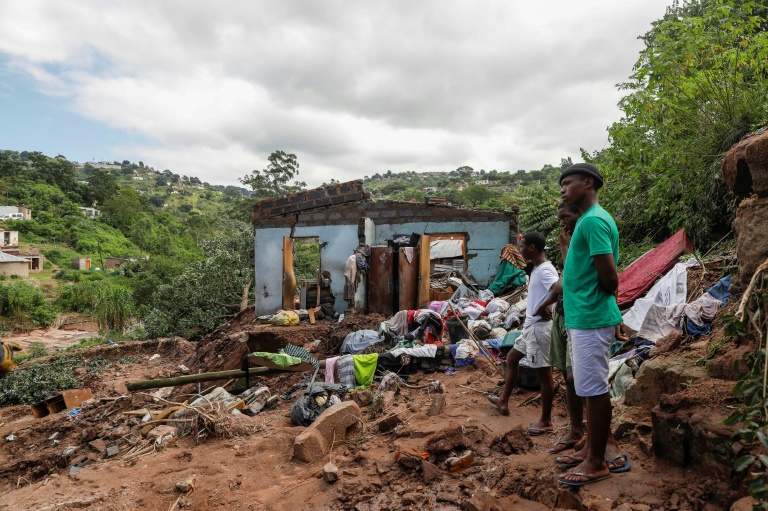
South African President Cyril Ramaphosa on Monday declared a national state of disaster over the deadly floods on the east coast, warning that rebuilding even basic services will take time.

“This is a humanitarian disaster that calls for a massive and urgent relief effort,” he said in a televised address. “The lives, health and well-being of thousands of people are still at risk.” 

“The Port of Durban — which is one of the largest and busiest shipping terminals on the continent and which is vital to our country’s economy — has been severely affected,” he said.

At least 443 people have died, with 48 still missing, around the east coast city of Durban, the president said.

Some badly damaged areas remain inaccessible, he added, including 16 schools that are completely cut off.

The state of disaster, similar to measures imposed to fight the Covid pandemic, unlocks additional resources to help rebuild.

To ease concerns around corruption which plagued Covid efforts, Ramaphosa said the government would create a special oversight body that will include the auditor-general, business and religious groups, as well as professional associations of engineers and accountants.

Earlier Monday, the military said 10,000 troops were deployed to help restore power and water and search for the missing.

But hopes for finding the missing were fading.

Clyde Naicker said his brother Ronald had been missing for a week, since he disappeared while trying to get to his job as a hospital radiographer.

“Apparently from what we heard, his vehicle got flooded and then he tried to go to safety,” Naicker said. The family has been searching every day, but police only joined their effort on Monday.

For the hundreds of bodies that have been found, damaged roads and waterlogged cemeteries made burials difficult.

“There are so many deceased, and the mortuaries can’t keep up because they have been so inundated,” said Pieter van der Westhuizen, general manager for funeral services at the Avbob insurance company.

“So it is taking a little longer to get the deceased out for burial.”

KZN Funeral Directors Association representative Nasan Chetty said the continuous rain had made it “very difficult to do burials”.

“If we dig the graves and then come back to do the burial a few hours later it is water-logged,” he told AFP. 

– Water problem –

Swathes of eThekwini, the municipality that includes Durban, remain without electricity or water. Local government estimated that 80 percent of the city’s waterworks were down.

Water tankers were being deployed across the region, but the authorities were struggling to fill them.

Some of the troops include plumbers and electricians, joining the mammoth task of trying to get life back to normal.

Many streets remain slathered with mud. In areas where repair crews have yet to reach, the homeless cleared roads to make way for water tankers to pass, an AFP correspondent observed.

Residents complained the water tankers came unannounced, with little discipline as families raced to fill receptacles.

“There is also a lot of pushing there. People are desperate — they don’t care about the next person,” said Philakahle Khumalo, a 30-year-old mother of two.

The deadliest storm on record dumped apocalyptic levels of rain on Durban and the surrounding area.

Some 40,000 people were left homeless and more than 600 schools and 66 health care facilities have been damaged, Ramaphosa said.

Many children are due to return to class on Tuesday after the Easter break, but authorities warned that 271,000 students may not be able to attend due to damaged schools.

The government has announced an immediate one billion rand ($68 million) in emergency relief.

Nearly three dozen search teams were deployed across the region Monday, said coordinator Dave Steyn.

“The rescue operations have stopped. It’s now more of a search and recovery,” he told AFP.

– Shock –

The normally azure waters at Durban’s famed beaches have been turned a muddy brown by the mountains of earth and debris washed to the shore.

The intensity of the floods took South Africa, the most advanced African economy, by surprise.

The country is still struggling to recover from the Covid pandemic and deadly riots last year that killed more than 350 people, mostly in the now flood-struck southeastern region.

Close Bitnami banner
Bitnami