World

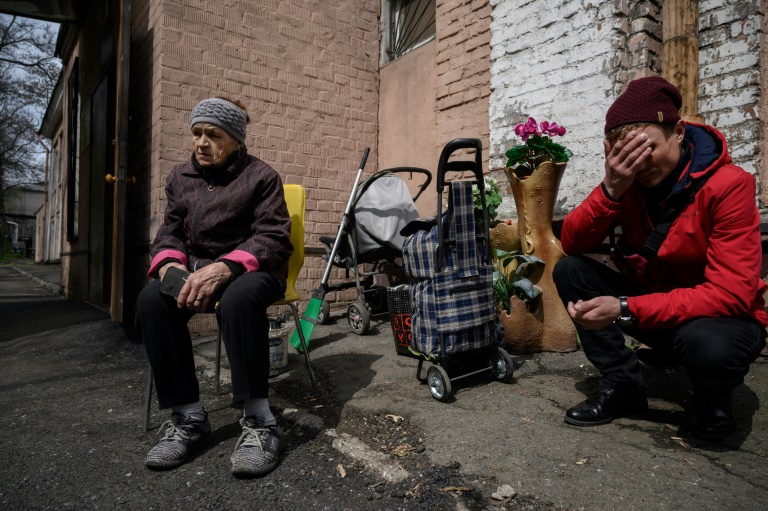
'This is my third war': Ukraine's elderly are conflict's forgotten victims

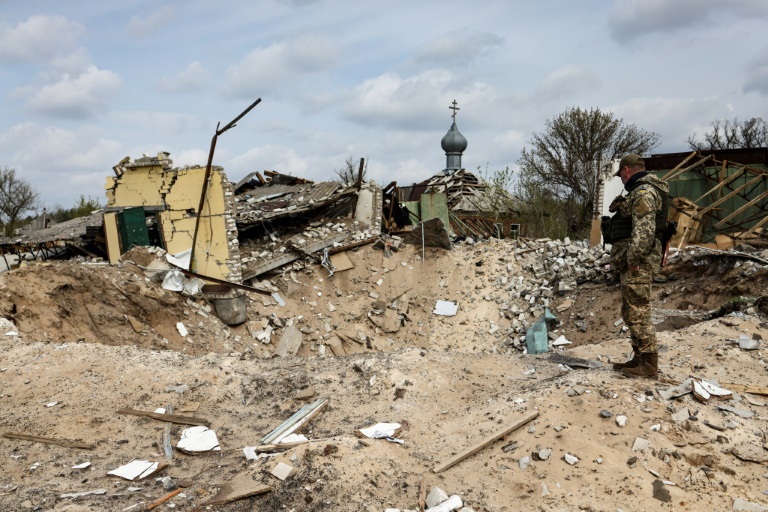
Shuffling down the corridor of a refugee centre in Ukraine with his grey tracksuit sleeve rolled to his shoulder, 71-year-old Vladimir Lignov reveals the remains of a severed limb he says he can still feel.

“It was on the 21st of March, I went out to smoke. Then a shell hit. I lost my arm,” he says, recalling the strike on his home in Avdiivka, an industrial hub in east Ukraine and a military priority for invading Russian forces.

Now in relative safety in the central Ukraine city of Dnipro the former train conductor is among what aid workers say is a particularly vulnerable segment of the population — the elderly.

In the Dnipro maternity hospital, hastily opened up to accommodate people fleeing Moscow’s forces, Lignov is struggling to come to terms with what happened and why — not to mention what might come next.

Medical staff at the Myrnorad hospital near ongoing fighting and where Lignov was treated after the strike say he should return for treatment in a week.

Staff in Dnipro, he says, told him he should return in three days.

“I don’t understand what’s going on. Maybe it’s better if I just go to the graveyard. I don’t want to go on living,” he says, as another elderly man hobbles past him in the corridor. 

A van arrives from the east ferrying three elderly people groaning in pain as volunteers lower them gingerly into wheelchairs.

– ‘I cried constantly’ –

Other passengers are erratic. One man, dazed, reaches for his cigarettes as soon as he gets out of the van and grabs his belongings as if he is rushing to saftey.

“The hardest are the people who spent long stretches in cellars,” says Olga Volkova, the volunteer director of the centre, that houses 84 residents, most of whom are elderly.

“A lot of people were left on their own. We helped them before the war, but then they were left to fend for themselves.”

The elderly are “often forgotten, very vulnerable” in times of war says Federico Dessi, the Ukraine director of the NGO Handicap International, a group that provides equipment and will financially help the Dnipro home.

“Cut off from their families” and “sometimes unable to use telephones or communicate” they are particularly vulnerable in conflicts, Dessi said.

Leaving aside physical health, the elderly often they require “additional help, which is often not available”.

Aleksandra Vasiltchenko, an 80-year-old ethnic Russian from Ukraine is luckier than most of the other new arrivals.

For one, she is sure on her feet, despite other ailments, and her grandson comes to pick her up as soon as she arrives at the Dnipro home.

She was relieved to have escaped after spending weeks alone in her three-room apartment in the eastern Ukraine city of Kramatorsk, where Russian strikes recently killed nearly 60 people trying to flee by rail.

“I was hiding all the time in the bathroom. I was constantly crying. I was imprisoned in my own flat,” she tells AFP, saying she wished death on Russian President Vladimir Putin and his children.  

Perched on a bedside, her hands gripping a walking aid, Zoya Taran considers herself among the lucky ones — that’s despite having only one working kidney, precarious balance, diabetes and poor eyesight.

That because her rock musician son quit a career in “show business” two decades ago to care for her.

“I am that elderly babushka,” she says smiling. “My son is my eyes, my hands and my legs. I have nothing on my own.”

– ‘What do they want from us?’ –

So as Russian strikes edged closer to Sloviansk, Taran, who had initially hesitated to leave, finally decided it was time in order to “save my son”. 

“Why do we need this war? What do they want from us?” she says, sobbing.

Citing Ukrainian government figures, Handicap International estimates that 13,000 elderly Ukrainians or people with disabilities have arrived in the wider Dnipro region since Russia launched its invasion in late February.

Another hub, mainly for evacuees from the besieged and destroyed port city of Mariupol, and their children, has also offered shelter to elderly residents from the east. 

“Even if you open 10 places like this, they will all be full, says Konstantin Gorshkov, who runs the centre with his wife Natalia.

Among the 30 new arrivals joining the roughtly 100 existing residents is 83-year-old Yulia Panfiorova from Lysychansk the eastern in the Lugansk region under attack by Russian forces.

The former economics professor — now hard of hearing — was “very scared” by the sound of shooting in her town and the three shells that stuck close enough to her home to blow out her windows. 

“This is my third war,” she said, referring first to World War II, then the outbreak of fighting in 2014 between the Ukrainian army and pro-Kremlin separatists.

“Lysychansk was freed from the Nazis in 1943. I remember how we returned home. Of course I have some memories about it.

“They were Nazis. Then our country was invaded, and now our country has been invaded by a foreign state. “Then the freedom of our state was at threat. Now it is the same.

“We should fight… But the war is so scary.”
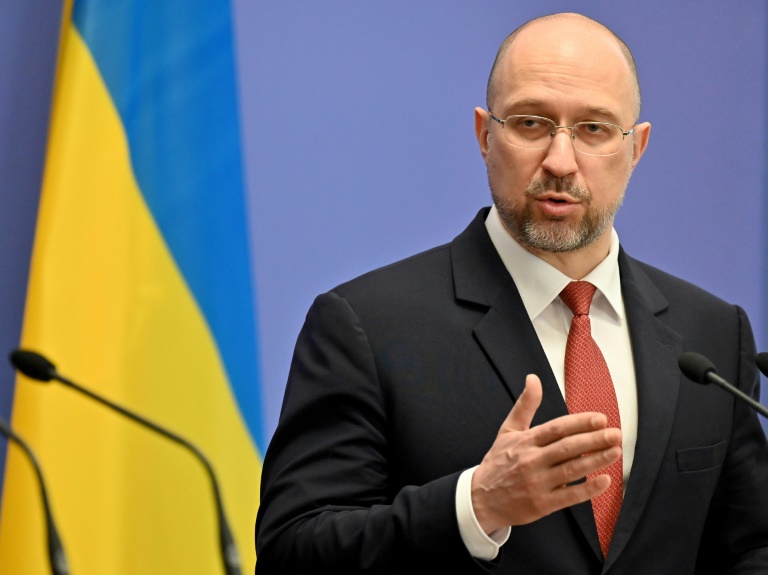
Ukrainian forces will 'fight to the end' in Mariupol: PM

Ukrainian Prime Minister Denys Shmyhal said Sunday that the strategic port city of Mariupol “has not fallen” and that the encircled forces defending the city from Russian attack will “fight to the end.”

But with the fate of those embattled fighters looking increasingly grim, Foreign Minister Dmytro Kuleba warned that Russian troops appeared to have decided to level the city.

The Ukrainian officials were speaking hours after a Russian ultimatum for the surrender of the encircled fighters, holed up in a fortress-like steelworks in Mariupol, had expired.

“The city still has not fallen,” Shmyhal said on ABC’s “This Week.” “There’s still our military forces, our soldiers. So they will fight to the end.”

Kuleba, who appeared on CBS’s “Face the Nation,” said that not only Ukrainian soldiers but also “a large group of civilians” were essentially surrounded.

“They continue their struggle, but it seems from the way Russian army behaves in Mariupol, they decided to raze the city to the ground at any cost.”

In a sign of the desperate situation facing Kyiv’s forces in Mariupol, Ukrainian President Volodymyr Zelensky said Saturday that if they were killed, peace talks with Moscow would be scrapped.

Russian President Vladimir Putin had already said the talks were at a “dead end.”

Shmyhal told ABC that “if the Russians wouldn’t like negotiations, we’ll fight to the end, absolutely. We will not surrender.

“We won’t leave our country, our families, our land. We will fight to the end.”

Asked about reports that Putin believes Russia is winning the war, Shmyhal pushed back.

While several cities are under siege, he said, not one — with the exception of Kherson in the south — had fallen. He said more than 900 towns and cities had been liberated.

The capture of Mariupol, however, would represent a severe blow to Ukraine, both strategically and symbolically, as it would help Moscow open a land route to the Russian-occupied Crimean peninsula.

Shmyhal again implored Western countries to send more ammunition and weapons to bolster outmanned Ukrainian forces, while also pleading for more financial help.

The country, he said, is seeing a “huge humanitarian catastrophe,” and needs further help “to save our economy for future recovery.”

“Now, only half of our economy is working” and Ukraine faces a huge monthly budget deficit of $5 billion, Shmyhal said.

He said Ukrainian officials would be in Washington in the coming week to press the country’s needs at the spring meeting of the World Bank and International Monetary Fund.

Divers find 'no leaks' from fuel-laden ship sunk off Tunisia

Divers who inspected the hull of a tanker loaded with 750 tonnes of fuel that sank off southeast Tunisia detected no leaks on Sunday, officials said.

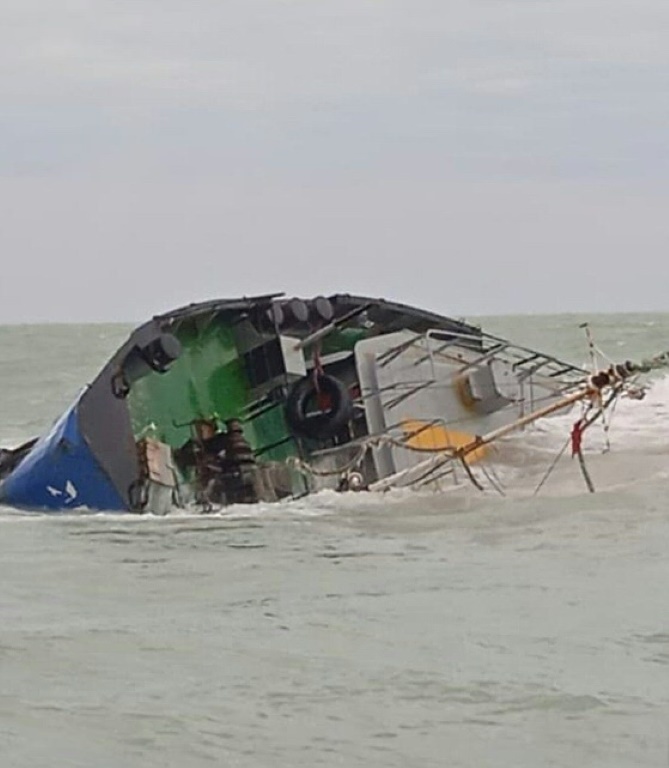
The Equatorial Guinea-flagged Xelo, which sank Saturday in the Gulf of Gabes, has settled on its side at a depth of almost 20 metres (65 feet), the environment ministry said.

“No leak has been detected,” it said in a statement.

The inspection was carried out by divers accompanied by the ship’s captain and engineer, said Mohamed Karray, spokesman for a court in Gabes city that is investigating the sinking.

The Xelo was travelling from Egypt to Malta when it went down.

With the scene sealed off by Tunisia’s military, the defence ministry released pictures showing the vessel submerged on its side.

The crew of the Xelo had issued a distress call on Friday evening and sought shelter in Tunisian waters from bad weather before going down.

Tunisian authorities rescued the seven-member crew, who received first aid and were moved to a hotel.

Transport Minister Rabie Majidi said Sunday that rescue workers had checked during the operation that the valves were closed, and the team of divers ensured they were sealed and intact.

“The situation is not dangerous, the outlook is positive, the ship is stable because luckily it ran aground on sand,” he told reporters.

The minister said the priority was to pump the diesel fuel and prevent any spillage or pollution.

As a precaution, protective booms have been placed around the wreck.

Environment Minister Leila Chikhaoui has also been at the scene in the port of Gabes to follow up on the incident.

Tunisian officials are investigating the itinerary of the tanker, which reportedly has Turkish and Libyan owners.

The Tunisia branch of the World Wildlife Fund has expressed concern about another “environmental catastrophe” in the region, an important fishing zone.

The tanker is 58 metres (63 yards) long and nine metres wide, according to ship monitoring website vesseltracker.com.

It began taking on water around seven kilometres (four miles) offshore in the Gulf of Gabes and the engine room was engulfed, according to the environment ministry.

Divers find 'no leaks' from fuel-laden ship sunk off Tunisia

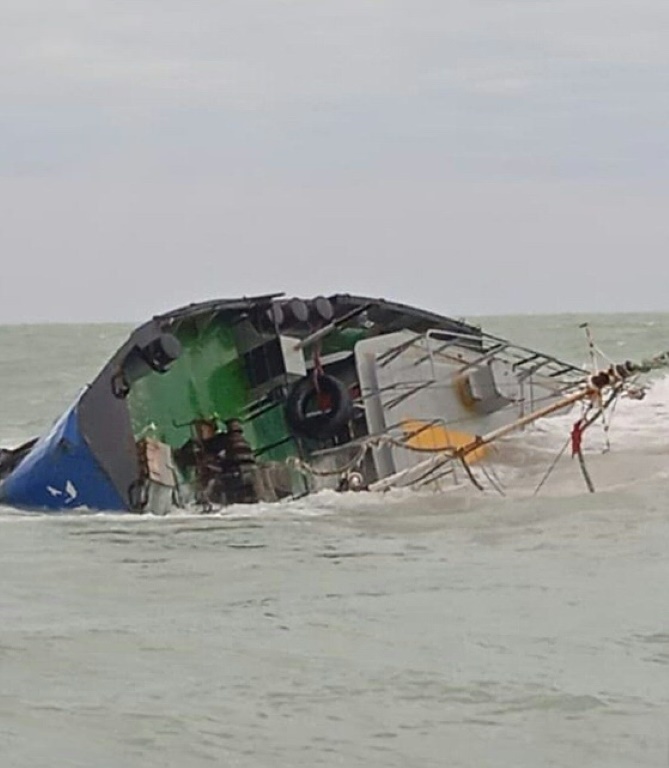
Divers who inspected the hull of a tanker loaded with 750 tonnes of fuel that sank off southeast Tunisia detected no leaks on Sunday, officials said.

The Equatorial Guinea-flagged Xelo, which sank Saturday in the Gulf of Gabes, has settled on its side at a depth of almost 20 metres (65 feet), the environment ministry said.

“No leak has been detected,” it said in a statement.

The inspection was carried out by divers accompanied by the ship’s captain and engineer, said Mohamed Karray, spokesman for a court in Gabes city that is investigating the sinking.

The Xelo was travelling from Egypt to Malta when it went down.

With the scene sealed off by Tunisia’s military, the defence ministry released pictures showing the vessel submerged on its side.

The crew of the Xelo had issued a distress call on Friday evening and sought shelter in Tunisian waters from bad weather before going down.

Tunisian authorities rescued the seven-member crew, who received first aid and were moved to a hotel.

Transport Minister Rabie Majidi said Sunday that rescue workers had checked during the operation that the valves were closed, and the team of divers ensured they were sealed and intact.

“The situation is not dangerous, the outlook is positive, the ship is stable because luckily it ran aground on sand,” he told reporters.

The minister said the priority was to pump the diesel fuel and prevent any spillage or pollution.

As a precaution, protective booms have been placed around the wreck.

Environment Minister Leila Chikhaoui has also been at the scene in the port of Gabes to follow up on the incident.

Tunisian officials are investigating the itinerary of the tanker, which reportedly has Turkish and Libyan owners.

The Tunisia branch of the World Wildlife Fund has expressed concern about another “environmental catastrophe” in the region, an important fishing zone.

The tanker is 58 metres (63 yards) long and nine metres wide, according to ship monitoring website vesseltracker.com.

It began taking on water around seven kilometres (four miles) offshore in the Gulf of Gabes and the engine room was engulfed, according to the environment ministry.

Shock on the streets as Kharkiv wracked by fresh blasts

Swaying stunned in the street, Svitlana Pelelygina surveys the wreck of her apartment building smouldering from the latest salvo of blasts to rain down on Ukraine’s second city of Kharkiv.

“The whole home rumbled and trembled,” the 71-year-old told AFP on Sunday. “Everything here began to burn.”

“I called the firefighters. They said, ‘We are on our way but we were also being shelled.'”

Officials said five people were killed and 13 wounded in the latest volley to hit Kharkiv — just 21 kilometres (13 miles) from the border with Russia.

Since President Vladimir Putin called off his northern offensive to capture Kyiv, he has refocused the push onto Ukraine’s eastern flank.

Kharkiv is one of the strategic footholds now under near-constant bombardment by troops dug in outside the city gates.

“You know how when a dog hears a bang it starts to tremble all over even if the noise is far away? I’m like that now,” said 69 year-old Zinaida Nestrizhenko, huddled on the roadside with her pet cat rescued from her home.

“Everything, every part of me is trembling,” she said.

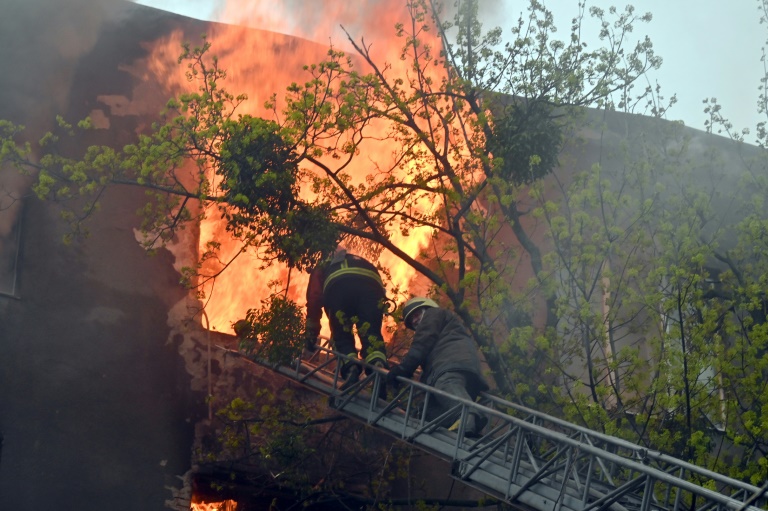
On Sunday afternoon AFP reporters heard two incoming bursts of bombardment, then saw five different fires raging in apartment blocks above shops in the previously handsome downtown district.

All around government buildings are already demolished from previous Russian airstrikes to hammer the beleaguered city, home to 1.4 million before the war.

On Sunday an official said a fleet of 33 rescue vehicles was despatched with 150 firefighters to more than 15 addresses citywide after the emergency callout came around 2pm.

Lumbering cherry-red fire engines tore in every direction in the moments after the blasts hit, as pedestrians and cars scattered in panic.

The roads were lined with shattered glass and corrugated roof panellings, peeled off from the force of the detonations.

Around every corner it seemed as though there was a new site being tended by crews, frantically unravelling hoses and hooking up water pumps.

Rescue workers clambered up a towering stairwell with an angle grinder to cut open a door and access a rooftop blast.

Through the hole in that roof firefighters could be seen working feverishly on yet another gutted home down the street.

Nearby, a camel brown coat lay discarded on the pavement.

It was stained red by a puddle of fresh blood pooled in the street, mingling with rainwater drenching the city during an intense downpour.

Afghanistan death toll in 'Pakistan strikes' rises to at least 47: officials

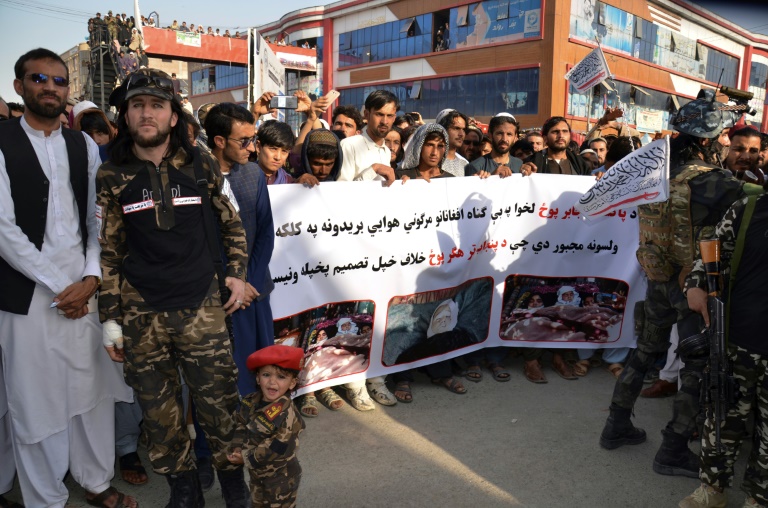
The death toll from Pakistani military air strikes in the eastern Afghanistan provinces of Khost and Kunar has jumped to at least 47, officials said Sunday, as Islamabad urged Kabul to act against militants launching attacks from Afghan soil.

Border tensions between Pakistan and Afghanistan have risen since the Taliban seized power last year, with Islamabad claiming militant groups are carrying out regular attacks from the neighbouring country.

The Taliban deny harbouring Pakistani militants, but are also infuriated by a fence Islamabad is erecting along their 2,700-kilometre (1,600-mile) border.

Tensions between the two neighbours deepened after Saturday’s pre-dawn air assault which Afghan officials now claim was carried out by Pakistani military helicopters. 

The air strikes hit residential houses in Khost and Kunar along the border, Afghan officials said. Earlier officials had said Pakistani forces had fired rockets.

“Forty-one civilians, mainly women and children, were killed and 22 others were wounded in air strikes by Pakistani forces near the Durand line in Khost province,” Shabir Ahmad Osmani, director of information and culture in Khost told AFP.

Najibullah, an official with the Ministry for Promotion of Virtue and Prevention of Vice in Khost said the death toll in the province was 48.

“Twenty-four people were killed from one family itself,” he said.

Jamshid, a tribal leader from Khost, also confirmed that more than 40 people had died.

“I went yesterday with several people to donate blood for treating the wounded in Khost strike,” Jamshid said.

Another government official in Khost on condition of anonymity said he saw “42 graves” of people killed, adding that a few people were missing.

“Faces and bodies of some were charred and beyond recognition,” Abdul Wahab, a religious scholar from Khost who helped bury some victims said.

TOLO News, Afghanistan’s leading private TV channel, continued to show gruesome footage of scattered blood and debris of damaged houses in the assault in Khost.

On Saturday, officials had said five children and a woman had been killed in similar strikes in Kunar.

– ‘Stern actions’ –

The Pakistani military has so far not offered any comment on the strikes, but on Sunday the foreign ministry in Islamabad urged the Taliban authorities in Kabul to rein in the militants.

“Pakistan requests the sovereign Government of Afghanistan to secure Pak-Afghan Border region and take stern actions against the individuals involved in terrorist activities in Pakistan,” Pakistan’s foreign ministry said.

It said seven Pakistan soldiers were killed in North Waziristan district on Thursday by “terrorists operating from Afghanistan”.

Areas along the border have long been a stronghold for militant groups such as the Tehreek-e-Taliban Pakistan (TTP), which operates across the porous frontier with Afghanistan. 

“Unfortunately, elements of banned terrorist groups in the border region, including TTP, have continued to attack Pakistan’s border security posts, resulting in the martyrdom of several Pakistani troops,” the foreign ministry said. 

The Afghan Taliban and the TTP are separate groups in both countries, but share a common ideology and draw from people who live on either side of the border. 

Thousands of people usually cross the border daily, including traders, Afghans seeking medical treatment in Pakistan, and people visiting relatives.

Last month the TTP announced it would launch an offensive against Pakistani security forces from the first day of the Muslim holy month of Ramadan.

The TTP are pressuring the Pakistani authorities to allow militants to return to their hometowns with impunity after foreign fighters were told by the Afghan Taliban to leave Afghanistan. 

Afghanistan’s Taliban government issued a warning to Pakistan after Saturday’s assault. 

“This is a cruelty and it is paving the way for enmity between Afghanistan and Pakistan,” Taliban government spokesman Zabihullah Mujahid said late on Saturday. 

“The Pakistani side should know that if a war starts it will not be in the interest of any side.” 

The air strikes triggered protests in Khost and some other provinces over the weekend.

South Africa flood toll rises to 443 as deluge eases

The death toll from floods that have battered South Africa’s east coast has risen to 443, including a rescuer, a regional official said on Sunday, as dozens more are still missing.

“The death toll now stands at 443,” Sihle Zikalala, the premier of the KwaZulu-Natal province told a media briefing, adding 63 other people are still unaccounted for.

A member of the rescue and recovery team “experienced difficult breathing and was airlifted to… hospital. Unfortunately he passed away”. 

Rains were starting to let up in the flood-ravaged east, allowing for search and relief aid operations to continue after one of the deadliest storms in living memory.

Zikalala said the “inclement weather has slowed our assessment and rescue operation on the ground, but we are once again back in the full swing”.

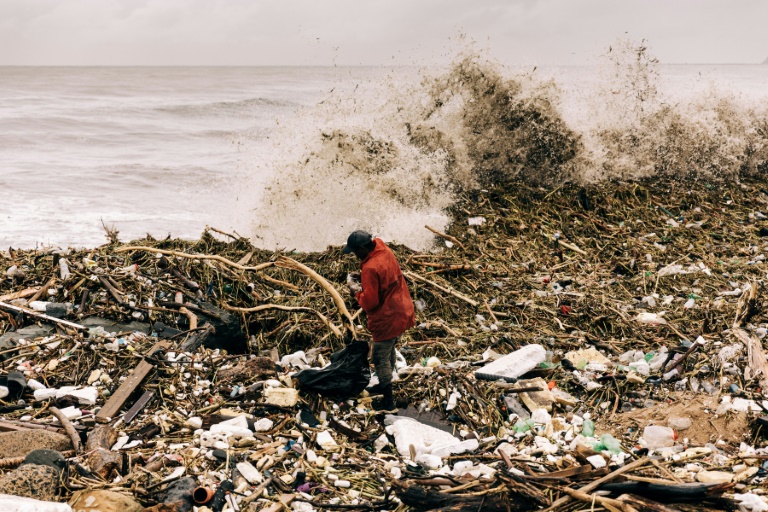
Floodwaters engulfed parts of the southeastern coastal city of Durban and surrounding areas early last week ripping apart roads, destroying hospitals and sweeping away homes and those trapped inside.

– ‘Rains clearing’ –

The city of 3.5 million was overcast but the South African Weather Service’s Puseletso Mofokeng said “rainfall is actually clearing”.

“The rainfall is going to clear (away) completely as we move to Wednesday,” he told AFP.

But recovery operations and humanitarian relief continued in the economic hub and tourist magnet city whose beaches and warm Indian Ocean waters would normally have been teeming with Easter holidaymakers.

The number of flood-related emergency calls had decreased compared to early last week.

“Emergency services are still currently on high alert on Sunday morning,” Robert McKenzie of the provincial KwaZulu-Natal emergency services told AFP.

It rained on Saturday and overnight, “however now, it has stopped,” said McKenzie. 

Even so, emergency services were busy attending to a scene in the district of Pinetown where a house collapsed overnight.

“Fortunately now the flood waters have receded and (some) roads cleared. It’s a lot easier to access the community,” he said.

Christians congregated at churches across the city and further afield to offer prayers for those affected by the floods as they celebrated Easter Sunday.

“It’s a tragedy of overwhelming proportions,” said Thabo Makgoba, the Archbishop of Cape Town in his Easter message, a day after his visited Durban.

“The community is suffering severe emotional stress and pain,” said Makgoba, successor to Desmond Tutu.

Government, churches and charities were marshalling relief aid for the more than 40,000 people left homeless by the raging floodwaters.

The government has announced an immediate one billion rand ($68 million) in emergency relief funding. 

– Hospitals and schools destroyed –

Deputy Social Development Minister Hendrietta Bogopane-Zulu, said some 340 social workers had been deployed to offer support to traumatised survivors with many still missing children and other relatives.

Most casualties were in Durban, a port city and a major economic hub.

Parts of the city have been without water and electricity since Monday after floods ripped away infrastructure.

Scores of hospitals and hundreds of schools have been destroyed.

The intensity of the floods took South Africa, the most economically advanced African country, by surprise.

While the southeastern region has suffered some flooding before, the devastation has never been so severe. South Africans have previously watched similar tragedies hit neighbouring countries such as cyclone-prone Mozambique.

These floods have forced President Cyril Ramaphosa to postpone a working visit to Saudi Arabia that was scheduled to begin Tuesday.

The loss of hundreds of lives “and thousands of homes, as well as the economic impact and the destruction of infrastructure, calls for all hands on deck,” said Ramaphosa.

The country is still struggling to recover from the Covid pandemic and deadly riots last year that killed more than 350 people, mostly in the now flood-struck southeastern region.

War in Ukraine: Latest developments

Here are the latest developments in the war in Ukraine:

– Civilian evacuation paused –

Ukraine says it is pausing the evacuation of civilians from the war-scarred east of the country for a day because of a failure to agree terms with Russian forces.

“As of this morning, April 17, we have not been able to agree with the occupiers on a ceasefire on the evacuation routes. That is why, unfortunately, we are not opening humanitarian corridors today,” Ukrainian Deputy Prime Minister Iryna Vereshchuk stated.

– Military plant hit: Russia –

Russia’s defence ministry says it has struck a military plant outside Kyiv, as Moscow intensifies its attacks on the Ukrainian capital.

“During the night, high-precision, air-launched missiles destroyed an ammunitions factory near the settlement of Brovary, Kyiv region,” the ministry said in a statement on Telegram.

– ‘Inhuman’ situation in Mariupol – 

Ukrainian President Volodymyr Zelensky says the situation in the eastern city of Mariupol is “inhuman”, warning the “elimination” of the last Ukrainian troops defending would end peace talks with Russia.

“Russia is deliberately trying to destroy everyone who is there,” he says in a video address.

– Russian ultimatum –

Russia’s defence ministry says it has cleared the whole of Mariupol’s “urban area” of Ukrainian forces.

They say the only remaining Ukrainian soldiers are in the Azovstal metalworks — and that their only chance to live is to “lay down their arms and surrender”.

– Pope urges peace during ‘Easter of war’ –

Pope Francis on Sunday calls for peace in Ukraine during this “Easter of war” as he delivers the traditional Easter Sunday Urbi et Orbi address on St. Peter’s Square at the Vatican.

“May there be peace for war-torn Ukraine, so sorely tried by the violence and destruction of the cruel and senseless war into which it was dragged,” the pontiff says.

– ‘Useless’ talking to Putin: Draghi –

Italian Prime Minister Mario Draghi has complained in a newspaper interview that Western diplomatic efforts to persuade Vladimir Putin to halt the war in Ukraine had so far led nowhere. 

“I am beginning to think that those people are right when they say ‘It is useless to talk to him, it’s just a waste of time’,” Draghi told the daily Il Corriere della Sera, adding Putin’s goal appeared not peace but “to annihilate the Ukrainian resistance, occupy the country and entrust it to a friendly government.”

– Sanctions and reprisals –

Amid escalating tit-for-tat sanctions, Russia bans entry to British Prime Minister Boris Johnson and several of his senior ministers.

The Kremlin also steps up a crackdown on dissent at home, adding nine prominent Kremlin critics and journalists to its growing list of “foreign agents”.

A Russian court orders the pre-trial jailing of a Siberian news editor for alleging that 11 riot police refused to join the military campaign in Ukraine.

– Three killed in de-mining operation –

Three sappers have been killed and four wounded while trying to clear mines near the eastern city of Kharkiv, Ukraine’s interior minister Denys Monastyrsky says.

– Russia says shot down arms shipment –

Russia’s defence ministry claims to have shot down a Ukrainian transport plane carrying weapons supplied by western countries in the Odessa region.

– No homes to return to: UN –

Many of the nearly five million people who have fled Ukraine will not have homes to return to, the United Nations warns.

UNHCR, the UN refugee agency, says 4,836,445 million Ukrainians have left the country since the Russian invasion on February 24 — up 40,200 on Friday’s total.

Over 20 wounded in new Jerusalem violence

More than 20 Israelis and Palestinians were wounded on Sunday in several incidents in and around Jerusalem’s flashpoint Al-Aqsa Mosque compound, two days after major violence at the site.

The latest clashes take the number of wounded since Friday to more than 170, at a tense time when the Jewish Passover festival coincides with Ramadan. They also follow deadly violence in Israel and the occupied West Bank in late March and early this month that has killed 36 people. 

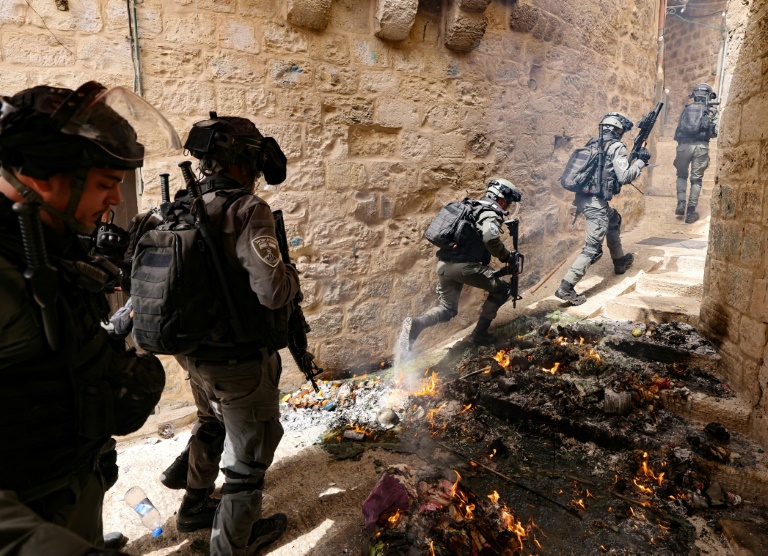
Early on Sunday morning, “hundreds” of Palestinian demonstrators inside the mosque compound started gathering piles of stones, shortly before the arrival of Jewish visitors, police said.

Jews are allowed to visit but not to pray at the site, also known as Temple Mount, the holiest place in Judaism and third-holiest in Islam.

The police said its forces had entered the compound in order to “remove” the demonstrators and “re-establish order”.

The Palestinian Red Crescent said 19 Palestinians were wounded, including at least five who were hospitalised. It said some had been wounded with rubber-coated steel bullets.

An AFP team near the entrance to the compound early Sunday morning saw barefoot Jewish worshippers leaving the site, protected by heavily armed police.

Outside the Old City, in Israeli-annexed East Jerusalem, Palestinian youths threw rocks at passing buses, resulting in seven people being treated for light wounds at Shaare Zedek hospital, the medical facility said.

Video released by the police showed two Israeli buses, their windscreens and side windows smashed in, driving down a road near the Old City as young men showered them with rocks. The police said they had arrested 18 Palestinians.

– Pope urges free access –

Senior Palestinian official Hussein Al Sheikh said Sunday that “Israel’s dangerous escalation in the Al-Aqsa compound … is a blatant attack on our holy places”, and called on the international community to intervene. 

The chief of the Hamas Islamist movement which controls the Palestinian enclave of Gaza meanwhile warned Israel that “Al-Aqsa is ours and ours alone”.

“Our people have the right to access it and pray in it, and we will not bow down to (Israeli) repression and terror,” Ismail Haniyeh said in a statement.

Later Sunday morning, mosques in Palestinian neighbourhoods of annexed east Jerusalem broadcast calls for people to head towards the Al-Aqsa compound.

Weeks of mounting tensions saw two deadly attacks by Palestinians in or near the Israeli coastal city of Tel Aviv in late March and early April, alongside mass arrests by Israeli forces in the occupied West Bank. 

A total of 14 people have been killed in attacks against Israel since March 22, including a shooting spree in Bnei Brak, an Orthodox Jewish city in greater Tel Aviv.

Twenty-two Palestinians have been killed over the same period, including assailants who targeted Israelis, according to an AFP tally.

On Friday morning, police clashed with Palestinians in the Al-Aqsa compound, including inside the Al-Aqsa mosque, drawing strong condemnation from Muslim countries. Those clashes wounded some 150 people.

The United Nations has called for calm, a year after clashes in and around the mosque compound escalated into an 11-day war between Israel and Palestinian militants in Gaza.

Pope Francis called Sunday for free access to the holy sites in Jerusalem and prayed for peace in the city. 

“May Israelis, Palestinians and all who dwell in the Holy City, together with the pilgrims, experience the beauty of peace, dwell in fraternity and enjoy free access to the Holy Places in mutual respect for the rights of each,” he said in his Easter address.

Despite the tensions, a few streets away from the Al-Aqsa compound hundreds of Christians staged a noisy parade through the alleys of Jerusalem’s Old City to mark Easter at the Church of the Holy Sepulchre where they believe Jesus was crucified. 

Marching bands led the processions with drumming and bagpipes, before worshippers gathered in the cavernous church for mass.

S.Africa deluge easing but flood emergency lingers

Rains were expected to let up in South Africa’s flood-ravaged east Sunday after one of the deadliest storms in living memory killed nearly 400 and left tens of thousands homeless

Floodwaters engulfed parts of the southeastern coastal city of Durban and surrounding areas this week ripping apart roads, destroying hospitals and sweeping away homes and those trapped inside.

The city of 3.5 million was overcast but national forecaster with the South African Weather Service, Puseletso Mofokeng, said “rainfall is actually clearing”.

“The rainfall is going to clear all completely as we move to Wednesday,” he told AFP.

But recovery operations and humanitarian relief continued in the coastal city of 3.5 million whose beaches and warm Indian Ocean waters would normally have been teeming with Easter holidaymakers.

The number of flood-related emergency calls had decreased compared to early last week.

“Emergency services are still currently on high alert on Sunday morning,” Robert McKenzie of the provincial KwaZulu-Natal emergency services told AFP.

It rained on Saturday and overnight, “however now, it has stopped,” said McKenzie. 

Even so, emergency services were busy attending to a scene in the district of Pinetown where a house collapsed overnight.

“Fortunately now the flood waters have receded and (some) roads cleared. It’s a lot easier to access the community,” he said.

Christians congregated at churches across the city to pray for those affected by the floods as they celebrated Easter Sunday.

Government and charities were marshalling relief aid for the more than 40,000 people left homeless by the raging floodwaters.

The government has announced an immediate one billion rand ($68 million) in emergency relief funding. 

– Hospitals and schools destroyed –

Deputy Social Development minister Hendrietta Bogopane-Zulu, said some 340 social workers had been deployed to offer support to traumatised survivors with many still missing children and other relatives.

The death toll rose Saturday to 398 while 27 people were reported still missing, the government said in a Saturday statement. 

Most casualties were in Durban, a port city and a major economic hub.

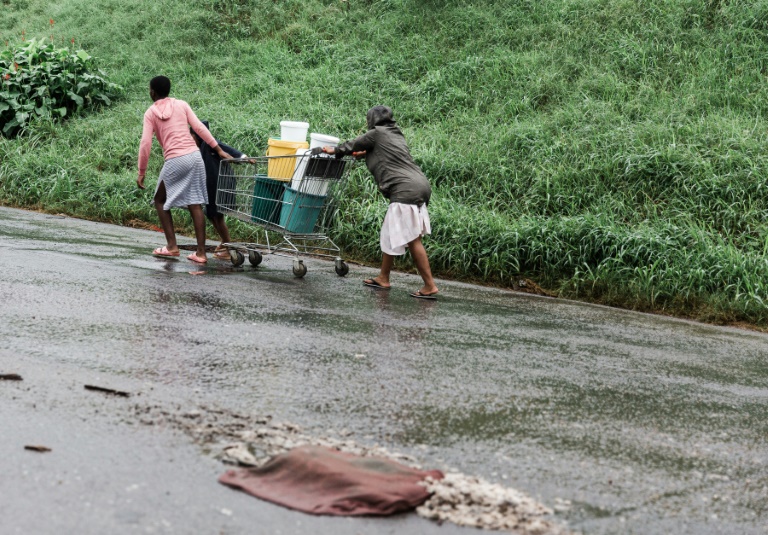
Parts of the city have been without water and electricity since Monday after floods ripped away infrastructure. Desperate residents have been seen carrying buckets of water using shopping trolleys.

Scores of hospitals and hundreds of schools have been destroyed.

The intensity of the floods took South Africa, the most economically advanced African country, by surprise.

It has previously watched similar tragedies hit neighbouring countries such as cyclone-prone Mozambique.

President Cyril Ramaphosa has postponed a working visit to Saudi Arabia that was scheduled to begin Tuesday.

“The loss of nearly 400 lives and thousands of homes, as well as the economic impact and the destruction of infrastructure, calls for all hands on deck,” said Ramaphosa.

The country is still struggling to recover from the Covid pandemic and deadly riots last year that killed more than 350 people, mostly in the now flood-struck southeastern region.

Close Bitnami banner
Bitnami