World

S.Africa deluge easing but flood emergency lingers

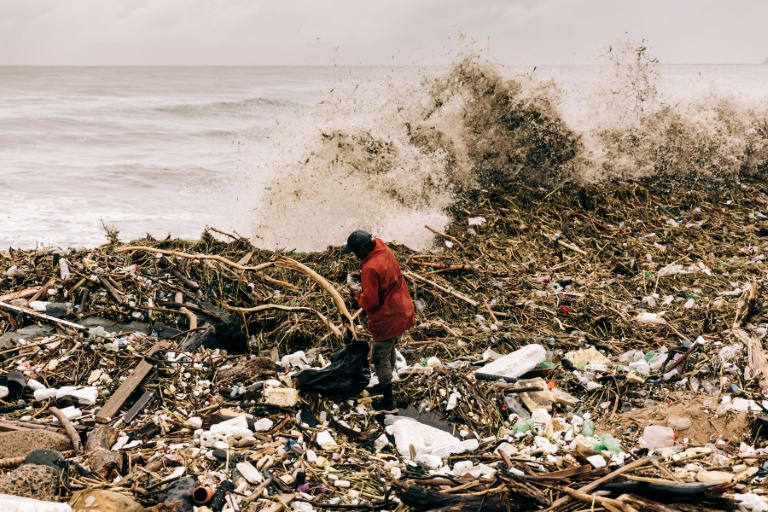
Rains were expected to let up in South Africa’s flood-ravaged east Sunday after one of the deadliest storms in living memory killed nearly 400 and left tens of thousands homeless

Floodwaters engulfed parts of the southeastern coastal city of Durban and surrounding areas this week ripping apart roads, destroying hospitals and sweeping away homes and those trapped inside.

The city of 3.5 million was overcast but national forecaster with the South African Weather Service, Puseletso Mofokeng, said “rainfall is actually clearing”.

“The rainfall is going to clear all completely as we move to Wednesday,” he told AFP.

But recovery operations and humanitarian relief continued in the coastal city of 3.5 million whose beaches and warm Indian Ocean waters would normally have been teeming with Easter holidaymakers.

The number of flood-related emergency calls had decreased compared to early last week.

“Emergency services are still currently on high alert on Sunday morning,” Robert McKenzie of the provincial KwaZulu-Natal emergency services told AFP.

It rained on Saturday and overnight, “however now, it has stopped,” said McKenzie. 

Even so, emergency services were busy attending to a scene in the district of Pinetown where a house collapsed overnight.

“Fortunately now the flood waters have receded and (some) roads cleared. It’s a lot easier to access the community,” he said.

Christians congregated at churches across the city to pray for those affected by the floods as they celebrated Easter Sunday.

Government and charities were marshalling relief aid for the more than 40,000 people left homeless by the raging floodwaters.

The government has announced an immediate one billion rand ($68 million) in emergency relief funding. 

– Hospitals and schools destroyed –

Deputy Social Development minister Hendrietta Bogopane-Zulu, said some 340 social workers had been deployed to offer support to traumatised survivors with many still missing children and other relatives.

The death toll rose Saturday to 398 while 27 people were reported still missing, the government said in a Saturday statement. 

Most casualties were in Durban, a port city and a major economic hub.

Parts of the city have been without water and electricity since Monday after floods ripped away infrastructure. Desperate residents have been seen carrying buckets of water using shopping trolleys.

Scores of hospitals and hundreds of schools have been destroyed.

The intensity of the floods took South Africa, the most economically advanced African country, by surprise.

It has previously watched similar tragedies hit neighbouring countries such as cyclone-prone Mozambique.

President Cyril Ramaphosa has postponed a working visit to Saudi Arabia that was scheduled to begin Tuesday.

“The loss of nearly 400 lives and thousands of homes, as well as the economic impact and the destruction of infrastructure, calls for all hands on deck,” said Ramaphosa.

The country is still struggling to recover from the Covid pandemic and deadly riots last year that killed more than 350 people, mostly in the now flood-struck southeastern region.
Divers inspect fuel-laden ship sunk off Tunisia

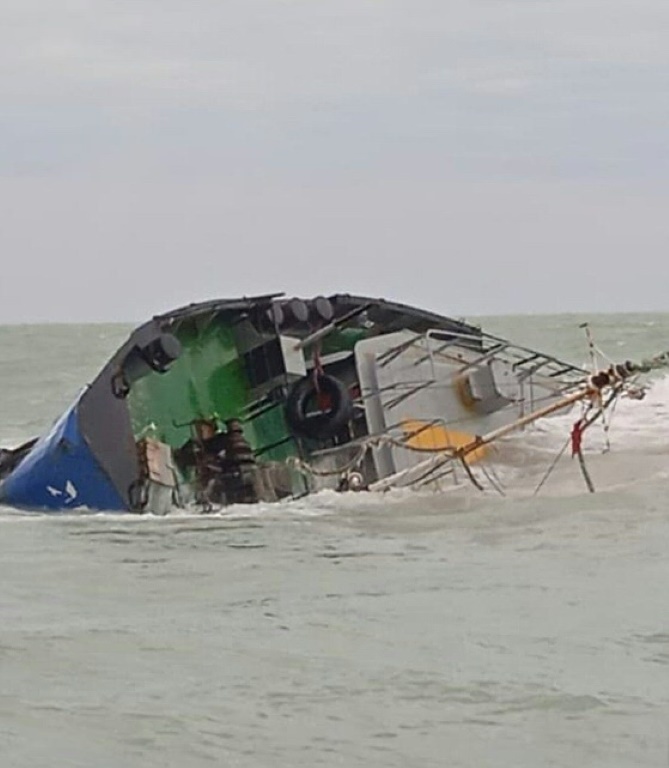
Divers on Sunday inspected the hull of a tanker loaded with 750 tonnes of fuel that sank off southeastern Tunisia, with no leak detected so far, officials said.

“With the improvement in weather conditions, a team of divers accompanied by the ship’s captain and engineer who know its layout are on site to examine the hull,” Mohamed Karray, spokesman for the court in Gabes city, which is investigating Saturday’s sinking, told AFP.

The Equatorial Guinea-flagged Xelo was travelling from Egypt to Malta when it went down.

Images released by the environment and defence ministries showed divers heading for the site in the Gulf of Gabes, and then getting into the water at the scene that has been sealed off by Tunisia’s military.

Defence ministry photos showed the vessel largely submerged.

The crew of the Xelo had issued a distress call on Friday evening and sought shelter in Tunisian waters from bad weather before going down, authorities said.

Environment Minister Leila Chikhaoui, who travelled to the port of Gabes on Saturday to help oversee the response, said the situation was “under control”.

“We think the hull is still watertight and there is no leakage for the moment,” she told AFP.

As a precaution, protective booms to contain any oil slick have been placed around the wreck.

The Tunisia branch of the World Wildlife Fund expressed concern about another “environmental catastrophe” in the region, an important fishing zone which has already suffered from pollution.

The tanker is 58 metres (63 yards) long and nine metres wide, according to ship monitoring website vesseltracker.com.

It began taking on water around seven kilometres (four miles) offshore in the Gulf of Gabes and the engine room was engulfed, according to the environment ministry.

It said Tunisian authorities rescued the seven-member crew, who received first aid and were being accommodated in a hotel.

Divers inspect fuel-laden ship sunk off Tunisia

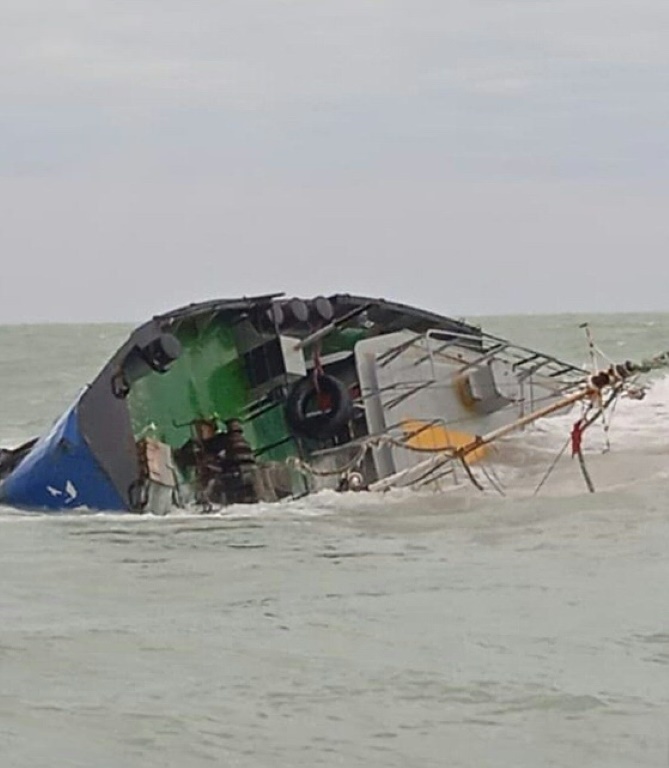
Divers on Sunday inspected the hull of a tanker loaded with 750 tonnes of fuel that sank off southeastern Tunisia, with no leak detected so far, officials said.

“With the improvement in weather conditions, a team of divers accompanied by the ship’s captain and engineer who know its layout are on site to examine the hull,” Mohamed Karray, spokesman for the court in Gabes city, which is investigating Saturday’s sinking, told AFP.

The Equatorial Guinea-flagged Xelo was travelling from Egypt to Malta when it went down.

Images released by the environment and defence ministries showed divers heading for the site in the Gulf of Gabes, and then getting into the water at the scene that has been sealed off by Tunisia’s military.

Defence ministry photos showed the vessel largely submerged.

The crew of the Xelo had issued a distress call on Friday evening and sought shelter in Tunisian waters from bad weather before going down, authorities said.

Environment Minister Leila Chikhaoui, who travelled to the port of Gabes on Saturday to help oversee the response, said the situation was “under control”.

“We think the hull is still watertight and there is no leakage for the moment,” she told AFP.

As a precaution, protective booms to contain any oil slick have been placed around the wreck.

The Tunisia branch of the World Wildlife Fund expressed concern about another “environmental catastrophe” in the region, an important fishing zone which has already suffered from pollution.

The tanker is 58 metres (63 yards) long and nine metres wide, according to ship monitoring website vesseltracker.com.

It began taking on water around seven kilometres (four miles) offshore in the Gulf of Gabes and the engine room was engulfed, according to the environment ministry.

It said Tunisian authorities rescued the seven-member crew, who received first aid and were being accommodated in a hotel.

Presidential candidates refuse to back rival Robredo in Philippine race

Three rivals of Philippine presidential candidate Leni Robredo refused to back her campaign Sunday, dousing speculation they would withdraw from the race to improve her chances of defeating the son of former dictator Ferdinand Marcos.

Voter surveys show Robredo is a distant second behind Marcos Jr, but a recent bump in the polls and huge crowds at her rallies have raised hopes among her fervent fans that the campaign is gaining traction.

There has been speculation that worse performing candidates were considering pulling out and endorsing Robredo — the incumbent vice president and only woman in the race — to ensure Marcos Jr was defeated in the May 9 elections.  

The latest Pulse Asia Research survey showed Robredo on 24 percent with Marcos Jr on 56 percent.

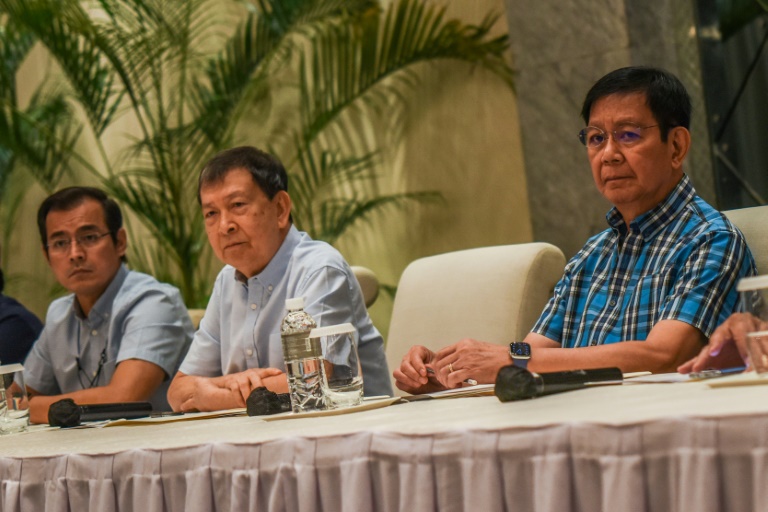
But in a vitriolic press conference on Sunday, Francisco Domagoso, Panfilo Lacson and Norberto Gonzales — who are on single digits or less — accused Robredo of trying to get them to withdraw and strip them of support.

“Each of us will continue with our respective presidential campaigns,” Domagoso, a celebrity mayor, told reporters at a luxury hotel in Manila. 

“I’m calling for Leni to withdraw because whatever you’re doing is not effective against Marcos.”

Analysts said it was not clear how many votes Robredo would gain from their exit in the raucous democracy where voter decisions were driven by personality rather than ideology. 

But their backing would have energised her campaign, said Cleve Arguelles, an assistant lecturer in political science at De La Salle University in Manila.

“It would send a really strong signal to the other campaign that she has gained a new momentum,” he told AFP. 

– ‘Bluster and falsehood’ –

There are no runoffs in Philippine presidential elections, with the victor only required to win more votes than everyone else.

Lacson accused Robredo of “lying”, claiming she had previously told him that she would not run for president. He also alleged she had exaggerated the crowd size at a recent rally. 

“You deceive once, you deceive twice, you will deceive all the time,” he said.

Domagoso, the top second preference for president in the Pulse Asia survey, said the polls were “polluted” and questioned their accuracy. 

The candidates said rival Manny Pacquiao, who was not at the gathering, was also on board with their decision. 

A member of Pacquiao’s team tweeted the boxing legend would “never” quit the presidential contest.  

Robredo’s spokesman Barry Gutierrez accused the three candidates of “theatrics” and asserting their positions through “bluster and falsehood”. 

He did not respond to AFP’s question about whether Robredo’s team had asked the candidates to pull out.

Political analyst Tony La Vina said their decision to stay the course could actually help Robredo.

“They take more votes away from Marcos than they do from Robredo,” he told AFP.

More than 18,000 posts are up for grabs in the national elections, from president all the way down to town councillor. 

Robredo, who narrowly defeated Marcos Jr in the 2016 vice-presidential race, reluctantly entered the contest following pressure from supporters and opposition groups. 

Marcos Jr has been boosted by a formidable alliance with first daughter and vice-presidential candidate Sara Duterte and a massive misinformation effort on social media.

Yemen's new leaders say focused on peace path

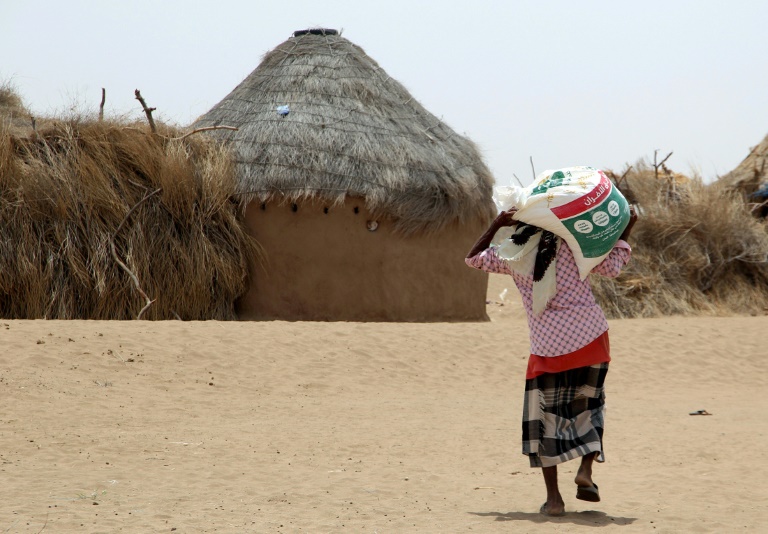
Yemen’s new leaders are “ready for war” should the latest push for peace with Huthi rebels fail, but a senior official told AFP they genuinely want the years-long conflict to end soon.

“Our first option is peace, but we are ready for war,” Abdullah al-Alimi said late Saturday in his first interview since being named to an eight-member leadership council tasked with running the country after President Abedrabbo Mansour Hadi stepped down earlier this month.

“We believe the council is in a position, with the coalition support, to score a decisive military victory,” Alimi told AFP in the Saudi capital. 

Hadi’s internationally recognised government had been locked in conflict for seven years against the Iran-backed Huthis, who control the capital Sanaa and most of the north despite a Saudi-led coalition’s military intervention launched in 2015. 

The war has killed hundreds of thousands directly or indirectly, and triggered what the United Nations calls the world’s worst humanitarian crisis, with millions on the brink of famine.

Hadi’s April 7 announcement handing power to the council came at the end of talks in the Saudi capital Riyadh that brought together anti-Huthi factions but were boycotted by the Huthis themselves. 

The developments followed the start of a renewable two-month truce that has brought a rare respite from violence and spurred cautious hopes the war could finally end. 

Hadi said the council would be tasked with “negotiating with the Huthis for a permanent ceasefire”.

“We hope the dire situation in Yemen will make people have a desire to leave personal and partisan interests behind in pursuit of peace,” said Alimi, formerly Hadi’s chief of staff. 

He said council leaders are due to meet in the coming days with UN special envoy to Yemen Hans Grundberg, who last week visited Sanaa for the first time during his mandate and held talks with Huthi leaders.

After meeting Grundberg, the council will travel to Yemen to be sworn in, though Alimi refused to specify exactly where.

The new council has not yet decided how long it will give the Huthis to join talks, Alimi said. 

– Rebel resistance –

The Huthis refused to participate in the negotiations in Riyadh, which they consider enemy territory, but Alimi said future talks could take place in a more neutral location such as Oman. 

So far, however, the Huthis have been dismissive, denouncing the new council as “a desperate attempt to rearrange the ranks of the mercenaries” fighting in Yemen. 

Analysts note the Huthis have said peace will only come once foreign forces leave and some believe they are only really interested in talks with the Saudis. 

“The Huthis don’t see themselves in a conflict with Yemenis. The Huthis see themselves in a conflict with Saudi Arabia,” said Fatima Abo Alasrar of the Middle East Institute in Washington. 

If the push for peace goes nowhere, the newly-aligned anti-Huthi forces are positioned to pursue “a concerted multifront campaign” against the rebels, provided the council’s diverse membership can hold together, said Peter Salisbury, senior Yemen analyst for the International Crisis Group.

“They (the leadership council) have the potential to more aggressively pursue peace and more aggressively pursue war, and the most likely outcome is they do a little bit of one and a little bit of the other,” he said. 

War in Ukraine: Latest developments

Here are the latest developments in the war in Ukraine:

– Civilian evacuation paused –

Ukraine says it is pausing the evacuation of civilians from the war-scarred east of the country for a day because of a failure to agree terms with Russian forces.

“As of this morning, April 17, we have not been able to agree with the occupiers on a ceasefire on the evacuation routes. That is why, unfortunately, we are not opening humanitarian corridors today,” Ukrainian Deputy Prime Minister Iryna Vereshchuk stated.

– Military plant hit: Russia –

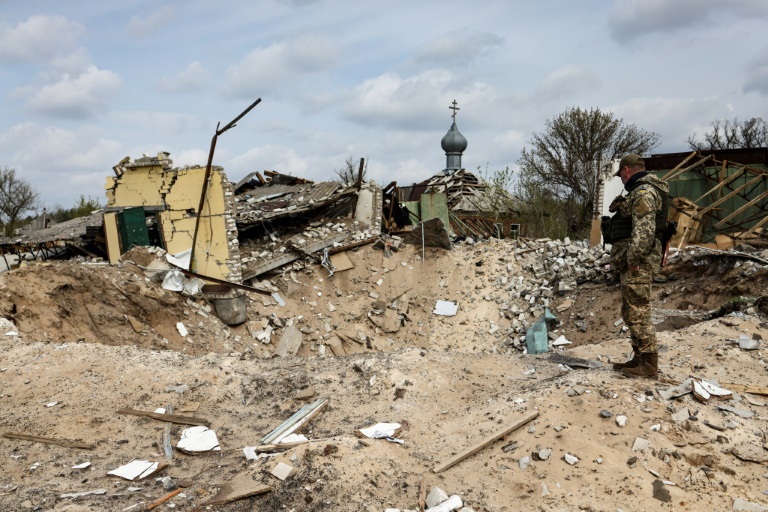
Russia’s defence ministry says it has struck a military plant outside Kyiv, as Moscow intensifies its attacks on the Ukrainian capital.

“During the night, high-precision, air-launched missiles destroyed an ammunitions factory near the settlement of Brovary, Kyiv region,” the ministry said in a statement on Telegram.

– ‘Inhuman’ situation in Mariupol – 

Ukrainian President Volodymyr Zelensky says the situation in the eastern city of Mariupol is “inhuman”, warning the “elimination” of the last Ukrainian troops defending would end peace talks with Russia.

“Russia is deliberately trying to destroy everyone who is there,” he says in a video address.

– Russian ultimatum –

Russia’s defence ministry says it has cleared the whole of Mariupol’s “urban area” of Ukrainian forces.

They say the only remaining Ukrainian soldiers are in the Azovstal metalworks — and that their only chance to live is to “lay down their arms and surrender”.

– ‘Useless’ talking to Putin: Draghi –

Italian Prime Minister Mario Draghi has complained in a newspaper interview that Western diplomatic efforts to persuade Vladimir Putin to halt the war in Ukraine had so far led nowhere. 

“I am beginning to think that those people are right when they say ‘It is useless to talk to him, it’s just a waste of time’,” Draghi told the daily Il Corriere della Sera, adding Putin’s goal appeared not peace but “to annihilate the Ukrainian resistance, occupy the country and entrust it to a friendly government.”

– Sanctions and reprisals –

Amid escalating tit-for-tat sanctions, Russia bans entry to British Prime Minister Boris Johnson and several of his senior ministers.

The Kremlin also steps up a crackdown on dissent at home, adding nine prominent Kremlin critics and journalists to its growing list of “foreign agents”.

A Russian court orders the pre-trial jailing of a Siberian news editor for alleging that 11 riot police refused to join the military campaign in Ukraine.

– Three killed in de-mining operation –

Three sappers have been killed and four wounded while trying to clear mines near the eastern city of Kharkiv, Ukraine’s interior minister Denys Monastyrsky says.

– Russia says shot down arms shipment –

Russia’s defence ministry claims to have shot down a Ukrainian transport plane carrying weapons supplied by western countries in the Odessa region.

– No homes to return to: UN –

Many of the nearly five million people who have fled Ukraine will not have homes to return to, the United Nations warns.

UNHCR, the UN refugee agency, says 4,836,445 million Ukrainians have left the country since the Russian invasion on February 24 — up 40,200 on Friday’s total.

Myanmar political prisoners not among 1,600 freed in new year amnesty

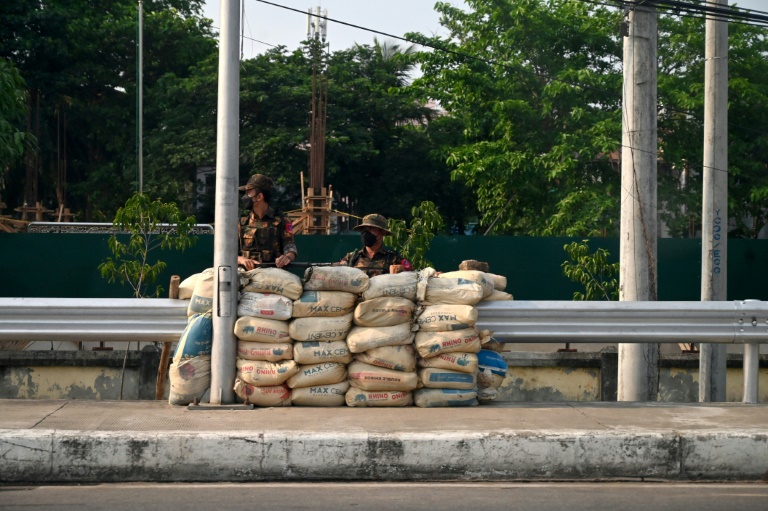
Families of detained Myanmar protesters had their hopes dashed Sunday after political prisoners were not included in some 1,600 people released by the junta to mark the Buddhist new year.

The Southeast Asian country has been in turmoil since Aung San Suu Kyi’s civilian government was ousted last year in a military coup, which sparked huge protests and a deadly crackdown.

State television announced that 1,619 prisoners, including 42 foreigners, had been “pardoned” and will be released to mark the new year — an annual tradition that last year saw 23,000 prisoners freed.

A prisoner released from Yangon’s Insein prison told AFP that “political cases and protesters were not among those released”, with authorities only freeing criminals.

Crowds in front of the prison slowly left on Sunday afternoon. More than 100 people had gathered hoping to be reunited with loved ones, AFP correspondents said.

Among them was a woman waiting for her 19-year-old nephew, sentenced to three years imprisonment for incitement against the military.

“He was young, and he may have some feeling to fight,” she said, declining to give her name. 

“I wish all young children will be released including my nephew. They all were innocent.”

Aye Myint, whose 19-year-old daughter was serving three years on a political charge, had hoped she would be released.

“Now, she has been more than one year in prison,” Aye Myint said.

– Subdued holiday –

At around midday, a prison officer confirmed that “about 160 prisoners including six women prisoners” had been released from Insein, without giving more details.

There was no mention of the Australian economist Sean Turnell, a former Suu Kyi advisor who was arrested shortly after the coup.

He is currently on trial for allegedly breaching the official secrets act, which carries a maximum 14-year jail sentence.

The exact details of his alleged offence have not been made public, though state television has said he had access to “secret state financial information” and had tried to flee Myanmar.

The country typically grants an annual amnesty to thousands of prisoners to mark the Buddhist New Year, usually a joyous holiday celebrated in many parts with water fights.

But this year, with the bloody military crackdown on dissent, the streets in many major cities have been silent as people protest junta rule.

War in Ukraine: Latest developments

Here are the latest developments in the war in Ukraine:

– ‘Inhuman’ situation in Mariupol – 

Ukrainian President Volodymyr Zelensky says the situation in the eastern city of Mariupol is “inhuman”, warning the “elimination” of the last Ukrainian troops defending would end peace talks with Russia.

“Russia is deliberately trying to destroy everyone who is there,” he says in a video address.

– Russian ultimatum –

Russia’s defence ministry says it has cleared the whole of Mariupol’s “urban area” of Ukrainian forces.

They say the only remaining Ukrainian soldiers are in the Azovstal metalworks — and that their only chance to live is to “lay down their arms and surrender”.

– Russia renews attacks on Kyiv –

Russia steps up air strikes on military facilities in Kyiv, a day after warning it will renew its assault on the capital in response to what it says are Ukrainian attacks on Russian soil.

Moscow says it used sea-based, long-range missiles to hit a tank factory.

Kyiv mayor Vitali Klitschko says at least one person was killed and several wounded.

– Zelensky repeats warning over nuclear weapons – 

The world should prepare for the possible use by Russia of nuclear weapons, Ukrainian President Zelensky tells journalists Saturday, repeating an earlier warning.

– Sanctions and reprisals –

Amid escalating tit-for-tat sanctions, Russia bans entry to British Prime Minister Boris Johnson and several of his senior ministers.

The Kremlin also steps up a crackdown on dissent at home, adding nine prominent Kremlin critics and journalists to its growing list of “foreign agents”.

A Russian court orders the pre-trial jailing of a Siberian news editor for alleging that 11 riot police refused to join the military campaign in Ukraine.

– Three killed in demining operation –

Three sappers have been killed and four wounded while trying to clear mines near the eastern city of Kharkiv, Ukraine’s interior minister Denys Monastyrsky says.

– Russia says shot down arms shipment –

Russia’s defence ministry claims to have shot down a Ukrainian transport plane carrying weapons supplied by western countries in the Odessa region.

– Many have no homes to return to: UN –

Many of the nearly five million people who have fled Ukraine will not have homes to return to, the United Nations warns.

UNHCR, the UN refugee agency, says 4,836,445 million Ukrainians have left the country since the Russian invasion on February 24 — up 40,200 on Friday’s total.

Australia says China pact would not end its Solomons security treaty

Australia’s foreign minister said Sunday that a controversial security deal between the Solomon Islands and China would not spell the end of her country’s defence cooperation with the Pacific nation.

Marise Payne told national broadcaster ABC that an existing bilateral security treaty between Australia and the Solomon Islands would continue even if the nation ignored entreaties from Canberra and signed a security pact with China.

She noted it was under this treaty “that the assistance force made up of Pacific family countries — Australia, New Zealand, Fiji and Papua New Guinea — went to the Solomon Islands at the end of last year to support them in dealing with the unrest” sparked by protests against Prime Minister Manasseh Sogavare.

A leaked draft of the Solomon Islands-China deal prompted fears last month in Canberra that it would open the door to a greater Chinese military presence in the Pacific.

Particularly controversial were provisions that would allow Chinese security and naval deployments to the Solomon Islands and others that required both nations to keep the existence of security missions secret.

Sogavare has been adamant since the deal became public that he has “no intention whatsoever… to ask China to build a military base in the Solomon Islands”.

Payne said Sunday these were “very important assurances” but noted concern “that there has been a lack of transparency in relation to this agreement”.

Last week, in a sign of Australia’s mounting anxiety about the deal, Pacific Minister Zed Seselja was dispatched to the Solomons capital Honiara for an unusual mid-election campaign meeting with Sogavare.

He asked the Solomon Islands’ leader “to consider not signing the agreement” but the prime minister was not persuaded.

Instead, Sogavare said after the meeting that he will send his foreign minister to other countries in the region to “expound” on the security deal “with a view that a strong and stable Solomon Islands is healthy for the security of the region”.

Coachella's return brings big business to California desert

“We’ve waited years for this!” exclaims Jesus Medina as he dishes out burritos to the hungry masses at Coachella, the music festival that’s back on in the California desert after three years.

After a Covid-induced hiatus, Coachella Valley businesses are flourishing with the return of one of music’s most-touted events, a boon for the region that counts festivals as key to its economic engine.

With just a little over 90,000 residents, Indio’s motto is “The City of Festivals,” events that make it at least $3 million in direct revenue alone, according to municipal figures, which includes ticket-sharing dollars and transient occupancy taxes from campers.

The benefit to businesses from liquor stores to hotels to gas stations took that figure soaring even higher — until the pandemic stymied live performance and put Coachella on indefinite hiatus.

“We had everything ready in 2020, but the pandemic canceled everything,” Medina told AFP in Spanish. His business “Cena Vegana” sold more than a thousand burritos on Friday, during Coachella’s opening day.

“It doesn’t stop, the lines are endless — this is a great opportunity for us.”

Coachella draws in more than 125,000 people daily over the course of two three-day weekends. 

Thousands of people occupy hotels in neighboring areas including Palm Springs, the resort area bordered by the San Jacinto mountains and known for its palm trees, golf courses and spas.

Business has been “quiet for years, a couple years, but we’re full and it’s busy,” said Char Pershind, manager of the Zoso Hotel.

Nearly all of the 162 rooms at Zoso are booked by people attending and working at the festival, and virtually everything is sold out for the event’s second weekend.

In 2019, the last time Coachella attendees descended on the valley, Pershind worked at a different hotel, and says this year many more people are in town for the shows.

“People have been cooped up for so long… they want to get out and enjoy the air,” she said.

“I know they come for the music — but they come for a lot more.”

– ‘Reminder I was here’ –

For Mitchell Car, who works at a bustling vintage clothing and accessories shop, Coachella is a golden opportunity to expand sales.

“Lots of times people come and they don’t have their outfits,” Car told AFP.

This year, the festival’s giving 1970s vibes with bell-bottom silhouettes of yore, along with bursts of neon and glitter adding sheen to the Empire Polo Club grounds where the stages spring up each year.

“They’re always searching: what’s hip? What’s unique?” said Car, whose primary clientele come from New York, San Francisco and Los Angeles. “I had the photographer for Harry Styles in the store the other day.”

Food choices abound on the festival grounds, where Santiago Restrepo is dishing up traditional Venezuelan arepas to hungry concert-goers.

“At first it was a bit difficult for us, because it’s the first time we’ve used this sales model,” he told AFP. “But when people started arriving in the middle of the afternoon we were ready.”

“After 4:00 pm, we didn’t stop for a second until 1:00 am.”

A few feet away, Coachella partiers are lined up to snag souvenirs celebrating the festival’s return.

In the official store, it took people an hour-and-a-half to reach the front of the line where some 20 people doled out merch, the most expensive item ringing up at $150 for a 2022 sweatshirt.

“Some people spent thousands of dollars,” said one vendor who wished to remain anonymous. 

Charlie Dawson, who flew in from New York, told AFP he just wants “something, whatever — a reminder I was here.”

It’s his seventh Coachella: “I was looking forward to coming back.”

Close Bitnami banner
Bitnami