World

Russian warship hit by two Ukrainian missiles before sinking: Pentagon

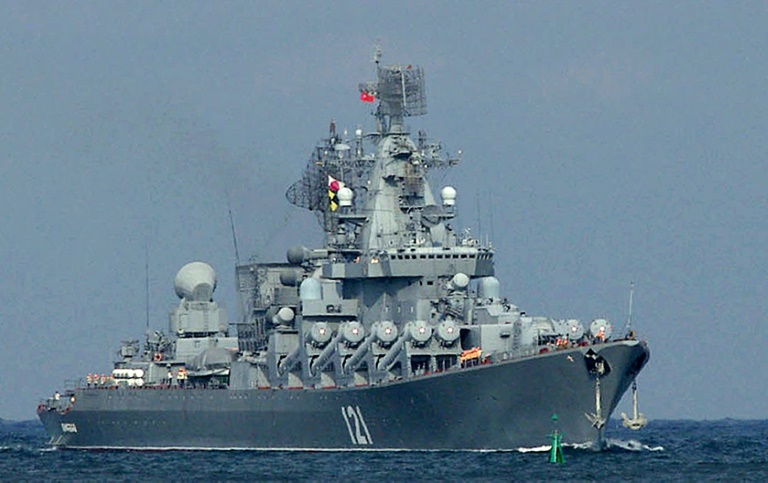
Russia’s Moskva warship was hit by two Ukrainian missiles before it sank in the Black Sea, a senior Pentagon official said Friday, calling it a “big blow” for Moscow.

Briefing reporters on condition of anonymity, the official confirmed Kyiv’s account of the incident — which Russia said was caused by exploding ammunition on board.

“We assess that they hit it with two Neptunes,” the official said, referring to Ukrainian anti-ship cruise missiles. 

He said the strikes were believed to have caused casualties, but that it was “difficult to assess how many,” adding that the United States had observed survivors being recovered by other Russian vessels in the area.

Russia has said the Moskva’s crew was evacuated to nearby ships.

The missile cruiser had been leading Russia’s naval effort in the seven-week conflict in Ukraine, playing a central role in the siege of the port city of Mariupol.

It sank Thursday after an explosion and fire that Ukraine claimed was caused by a missile strike — while Russia said damage caused by exploding ammunition had caused the ship to “lose its balance” as it was being towed to port.

“It’s a big blow symbolically,” the Pentagon official said. “There is a pride aspect.” 

A knock-on effect of the sinking, he predicted, could be a form of “risk aversion” in the Russian navy.

But even more, he said, losing the Moskva — one of just three Slava-class cruisers in Moscow’s fleet — creates a “capability gap” for the Russian navy in southern Ukraine.

Under the Montreux convention, he explained, Turkey keeps the Bosphorus and Dardanelles straits closed to warships in times of conflict, meaning Moscow cannot dispatch a replacement for the Moskva to the Black Sea.

Russia hits Kyiv missile factory after Moskva flagship sinks

Russian strikes pounded a military factory near Kyiv that makes the missiles Ukraine claims it used to sink the Moskva naval flagship, with Moscow on Friday vowing renewed attacks on the capital.

A workshop and an administrative building at the Vizar plant, which lies near Kyiv’s international Zhuliany airport, were seriously damaged in the overnight strikes, an AFP journalist saw. 

Russia had earlier announced it had used Kalibr sea-based long-range missiles to hit the factory, which Ukraine’s state weapons manufacturer Ukroboronprom says produced Neptune missiles.

“There were five hits. My employee was in the office and got thrown off his feet by the blast,” Andrei Sizov, a 47-year-old owner of a nearby wood workshop, told AFP.

“They are making us pay for destroying the Moskva,” he said. It was the first major Russian strike around the Ukrainian capital in over two weeks.

The Kyiv regional governor said there were at least two other Russian strikes on Friday, without providing details on damage or casualties.

Oleksandr Pavliuk said civilians thinking about returning to the capital should “wait for quieter times.”

The governor of Ukraine’s southern Odessa region, Maxim Marchenko, said the 186-metre-long Russian missile cruiser was hit by Ukrainian Neptune missiles on Wednesday. 

The Moskva had been leading Russia’s naval effort in the seven-week conflict, and the circumstances around its sinking and the fate of its crew of over 500 remain murky.

Russia’s defence ministry said a blast on the vessel was the result of exploding ammunition and that the resulting damage had caused it to “lose its balance” as it was being towed to port on Thursday.

Natalia Gumeniuk, a spokeswoman for Ukraine’s southern military forces, said that Russia would seek revenge for the sinking and that bad weather had meant the Moskva’s crew could not be evacuated.

“We saw that other ships tried to assist it, but even the forces of nature were on Ukraine’s side because the storm made both the rescue operation and crew evacuations impossible,” Gumeniuk said in a briefing.

– ‘NATO frontline’ –

The fleet has been blockading the besieged southern port city of Mariupol, where Russian officials say they are in full control although Ukrainian fighters are still holed up in the city’s fortress-like steelworks.

Moscow, which invaded Ukraine partly because of deepening ties between Kyiv and NATO, on Friday warned of unspecified “consequences” should Finland and Sweden join the US-led defence alliance.

The two countries are considering joining NATO after Russia’s devastating invasion of neighbouring Ukraine.

“They will automatically find themselves on the NATO frontline,” Russian foreign ministry spokeswoman Maria Zakharova said.

Shortly afterwards, Finland’s European Affairs Minister Tytti Tuppurainen said it was “highly likely” that her country would apply for NATO membership.

“The people of Finland, they seem to have already made up their mind and there is a huge majority for the NATO membership,” she told Britain’s Sky News.

Unlike Sweden, Finland neighbours Russia, from which it declared independence in 1917 after 150 years of Russian rule.

Russia on Friday said it was expelling 18 members of the European Union mission after the bloc kicked out some of Moscow’s representatives for spying.

The EU condemned the “unjustified” move, saying in a statement that “Russia’s chosen course of action will further deepen its international isolation”.

Russian forces last month started withdrawing from around the Ukrainian capital as they were redeployed to focus on territory in the east of the country, but the city remains vulnerable to missile strikes.

– Evacuations –

“The number and scale of missile strikes against targets in Kyiv will increase in response to any terrorist attacks or sabotage committed by the Kyiv nationalist regime on Russian territory,” Russia’s defence ministry said. 

“As a result of the strike on the Zhulyansky machine-building plant ‘Vizar’, the workshops for the production and repair of long-range and medium-range anti-aircraft missile systems, as well as anti-ship missiles, were destroyed,” the ministry said. 

Seizing the eastern Donbas region, where Russian-backed separatists control the Donetsk and Lugansk areas, would allow Moscow to create a southern corridor to the occupied Crimean peninsula.

Ukraine said that Russian strikes had killed five people in the area, after President Volodymyr Zelensky said Moscow’s forces were aiming to “destroy” the region.

A Russian attack on buses ferrying civilians from the war-torn east killed seven people and wounded more than two dozen, Ukraine said on Friday.

Ukrainian authorities have been urging people in the south and the Donbas area in the east to quickly move west in advance of a large-scale Russian offensive.

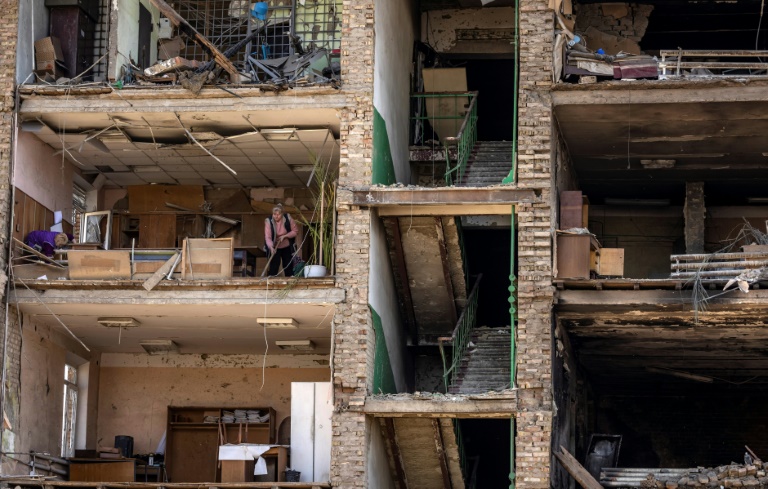
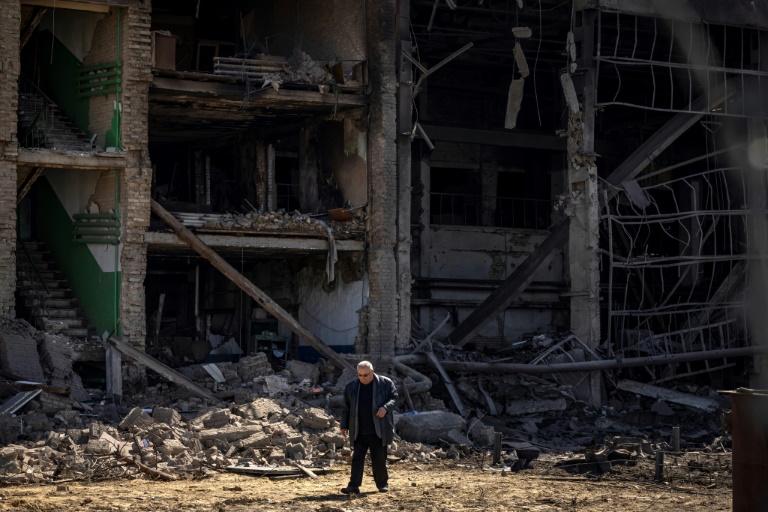
Mariupol is in ruins 50 days into Russia’s so-called “special military operation” in Ukraine.

Thousands of civilians are believed to have died in the strategic city, many of their bodies still trapped in apartment buildings.

– ‘Starved to death’ –

Mariupol’s residents have started coming outside in search of food, water and an escape route.

The UN’s World Food Programme appealed for access to Ukrainians trapped in war zones including Mariupol, saying those besieged were starving to death. 

“It’s one thing when people are suffering from the devastation of war. It’s another thing when they’re being starved to death,” WFP Executive Director David Beasley said in a statement.

In Geneva, the UN refugee agency said that more than five million people have now fled Ukraine since the Russian invasion, in Europe’s worst refugee crisis since World War II.

Moscow on Thursday accused Ukraine of sending helicopters to bomb a village in Russia’s Bryansk region — not far from the border with Ukraine — injuring eight people. 

Kyiv has denied the helicopter attack, instead accusing Russia of staging the incidents to stir up “anti-Ukrainian hysteria” in the country.

Separately, the Russian defence ministry said Friday its strategic rocket forces “eliminated up to 30 Polish mercenaries” in a strike on the village of Izyumskoe, not far from the city of Kharkiv in northeastern Ukraine. 

In Kharkiv itself, Russian strikes killed at least seven, including a child, the region’s governor said Friday, as Moscow’s forces stepped up attacks.

burs-cjo/har

Climate activists block four of London's busiest bridges

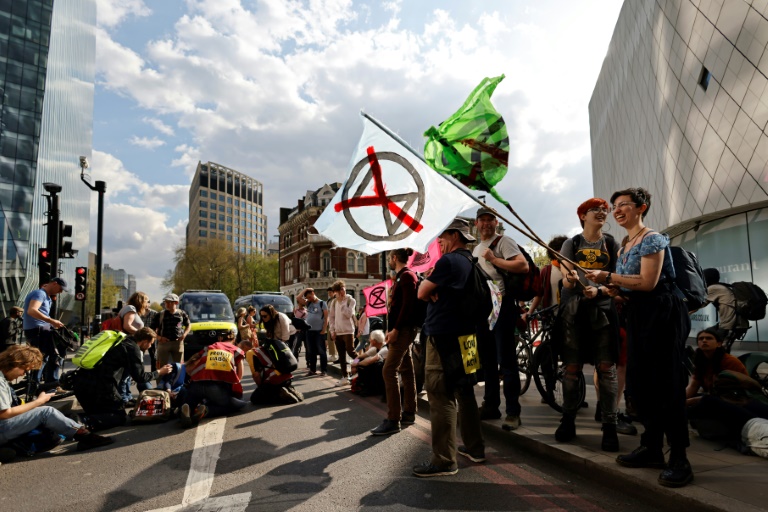
UK climate activist group Extinction Rebellion on Friday shut down four of London’s busiest bridges, snarling traffic on the first day of the Easter bank holiday.

The activists blocked Blackfriars, Waterloo, Westminster and Lambeth bridges, which cross over the River Thames, Extinction Rebellion tweeted.

“As long as our government fails to act now on the climate crisis disregarding expert advice, licensing more drilling for oil and gas, locking up scientists, we have no choice but to disrupt,” it said.

“We’re on track for a catastrophic 3°C warming” above pre-industrial levels, the group warned.

Such a figure would be much higher than the 2015 Paris climate agreement goal to limit temperature rises to between 1.5 and 2 degrees Celsius.

Nine scientists were arrested after a protest targeting the energy ministry Wednesday and one of the individuals started a hunger strike the next day after she was not released from custody, the group said.

The Metropolitan Police said on Twitter it was aware of “pockets” of protests that were “causing delays and disruption across central London”, adding that officers were “working to manage the impact”.

The group has carried out a series of protests in the past week, including shutting down the iconic Tower Bridge last Friday.

Members of the group also targeted the headquarters of British energy giant Shell Wednesday, and some glued their hands to the building as they called on employees to quit their jobs.

The British government last week presented a new energy security strategy after the war in Ukraine and soaring inflation, with a greater focus on nuclear power and renewable energy, but also oil from the North Sea.

Main Paris attacks suspect apologises to 'all victims'

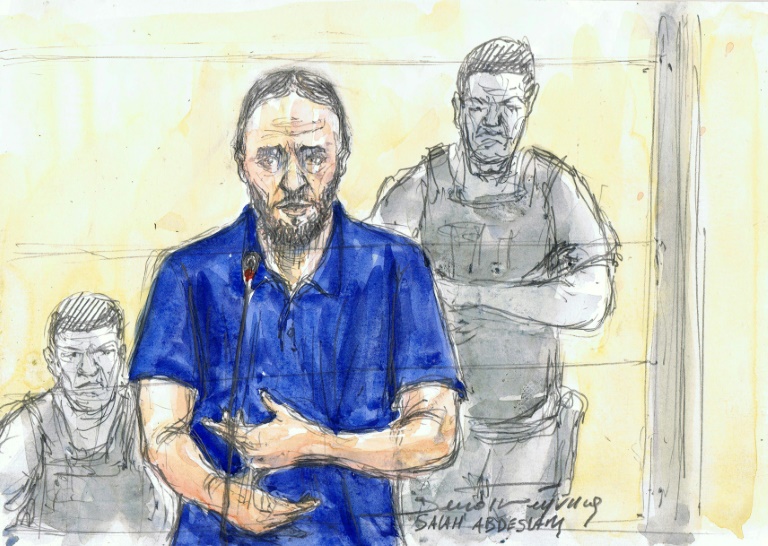
The sole surviving member of the jihadist team that carried out the November 2015 Paris attacks apologised on Friday to the victims at the end of his trial testimony.

The comments marked a dramatic end to three days of testimony by Salah Abdeslam, who in the initial stages of the trial had maintained a rigid silence apart from occasional outbursts against the court.

The attackers killed 130 people in suicide bombings and shootings at the Stade de France stadium, the Bataclan concert hall and on street terraces of bars and restaurants on November 13, 2015, in France’s worst peacetime atrocity.

“I wish to express my condolences and offer an apology to all the victims,” Abdeslam told the court in a sometimes tearful statement.

“I know that hatred remains… I ask you today that you hate me with moderation,” he said, adding: “I ask you to forgive me.”

Abdeslam, the main trial suspect after the other jihadists were all killed during or in the wake of the attacks, has said he had planned to blow himself up in a crowded bar but stopped after seeing the people whom he was about to kill.

If convicted, he faces life in prison.

– ‘Won’t heal’ –

One of his defence lawyers, Olivia Ronen,  asked him during cross-examination if he regretted not carrying out his plan until the end.

“I don’t regret it. I didn’t kill these people and I didn’t die,” he replied.

“I would like to say today that this story of November 13 was written with the blood of the victims. It is their story, and I was part of it,” he added. 

“They are linked to me and I am linked to them,” he said in a quivering voice, before issuing his apology.

Addressing the wounded and those who lost loved ones: “I know this (the apology) is not going to heal you.

“But if it can do you any good, if I could do any good for one of the victims, then for me it’s a victory.”

– ‘Exercise in style’ –

Victims and the loved ones of those who died  cautiously welcomed his statement, emphasising they were surprised and saying it needed further reflection.

“It’s a surprise,” said a visibly shaken Georges Salines, whose daughter was killed at the Bataclan. “It’s important that he asks (for forgiveness). We will go and reflect.”

Cedric, who survived the attacks and did not give his last name, said he thought Abdeslam was “sincere” while adding he found his character “paradoxical”.

But Gerard Chemla, a lawyer representing some 100 victims, denounced what he said was a carefully-constructed statement where Abdeslam “cried for himself and his friends but not the victims”.

“Everyone has their own interpretation of this testimony and their analysis of these tears. But neither my clients nor I were moved by this exercise in style,” he said.

Earlier in the day, a lawyer for the civil parties asked Abdeslam how he wanted to be remembered. 

– ‘I want to be forgotten’ –

“I don’t want people to remember me,” Abdeslam replied. “I want to be forgotten forever, I didn’t choose to be who I am today.”

The trial is the biggest in modern French history, with hundreds of plaintiffs.

After surviving the attack, Abdeslam fled to the Molenbeek district of Brussels where he grew up but was captured in March 2016.

Alongside Abdeslam, co-defendants are answering charges ranging from providing logistical support to planning the attacks, as well as supplying weapons.

Abdeslam also addressed three other accused who are charged with helping him flee the scene. 

He asked them for “forgiveness” and added: “I did not want to drag them into this.”

The trial, which is expected to last until early summer, sees 20 defendants, including Abdeslam, facing sentences of up to life in prison. Six of the suspects are being tried in absentia.

Global warming: even cacti can't take the heat

Sixty percent of cactus species will wind up in less hospitable climates over the coming decades as global warming sets in, according to new research challenging the long-held assumption the iconic desert plants will thrive with more heat.

By 2070, up to 90 percent could be threatened with extinction due to climate change, habitat loss and other stressors, triple the current percentage, scientists reported in Nature Plants.

Some 1,500 species of cacti spread across the Americas live in varying climes, ranging from sea-level deserts to the high Andes mountains, from bone-dry ecosystems to humid tropical forests.

Biodiversity hotspots rich in species and numbers include central Mexico and the Brazilian Atlantic Forest. 

To test the notion that cacti will benefit from a warmer and more drought-prone world, researchers led by Michiel Pillet from the University of Arizona examined data on more than 400 species and ran models projecting how they would fare at mid-century and beyond under different greenhouse gas emissions scenarios.  

The findings “paint a more pessimistic future,” according to the study, published Thursday.

Currently, the main threat to cacti is expanding agriculture, along with land degradation, biodiversity loss and harvesting for various uses.

Even without climate change, cacti “is one of the most endangered groups of organisms on the planet,” with more than 30 percent classified as at risk of extinction, the authors note.

Under a moderate emissions scenario in line with current policies, global warming will soon be a significant threat as well.

“Our results suggest that climate change will become a primary driver of cactus extinction risk, with 60 to 90 percent of species assessed negatively impacted” by global warming, the researchers reported.

Within four or five decades, some 25 percent of cacti species could experience unfamiliar climates over a quarter of their current range. 

Earlier studies have shown impaired photosynthesis — the process by which plants use sunlight to make foods from CO2 and water — with only two degrees Celsius of global warming.

Earth’s average surface temperature, including oceans, is already 1.1C warmer than preindustrial times, and about 1.7C warmer over land only.

Macron clashes with Le Pen over Islamic headscarf ban

President Emmanuel Macron has clashed with his rival Marine Le Pen over her plan to ban women from wearing the Islamic headscarf in public, with an eye on the votes of Muslims in the second round of elections.

Le Pen on April 24 will seek to cause the greatest upset in the history of modern French politics by defeating Macron in a run-off in presidential elections.

While polls indicate Macron is ahead they also point to a far tighter race between the centrist and the far-right leader than in their 2017 run-off.

Analysts say one reason for her advance is Le Pen’s success in cultivating a more moderate image and portraying herself as the candidate best equipped to deal with problems like rising prices.

But one signature hardline policy the anti-immigration Le Pen has not dropped is her opposition to the Islamic headscarf, saying women who wear the hijab in public in France will be fined if she wins power.

Macron meanwhile has sought to seize on her insistence to argue that Le Pen’s policies are no different from those of the hardline National Front (FN) founded by her father Jean-Marie.

– ‘You want to be the first?’ –

Visiting the eastern city of Strasbourg on Tuesday, Macron during a walkabout to meet voters asked a veiled women if she was wearing the headscarf by choice or obligation.

“It’s by choice. Totally by choice!” said the woman, who proudly declared she was a feminist.

Macron replied, in clear reference to Le Pen’s plan: “This is the best response to the rubbish that I have been hearing.”

He went even further on Thursday during a visit to the northern port city of Le Havre: “There is not a single country in the world that bans the headscarf in public. Do you want to be the first?”

Macron is clearly aware of the importance of the votes of France’s roughly five million Muslims, who are estimated to make up almost nine percent of the population. 

According to a survey by the Ifop pollster, 69 percent of Muslim voters in the first round of the election opted for third-placed candidate Jean-Luc Melenchon.

Wooing the Melenchon vote is seen as crucial for Macron to be assured of victory in round two.

Macron has in the past himself run into controversy from Muslims and leaders of Islamic countries over his tough stance over what the government calls radical Islamism.

After a spate of attacks in late 2020 blamed on radical Islamists, the president railed against what he called “Islamist separatism” in France and forced through a series of measures to limit its spread.

– ‘It’s not true’ –

Le Pen has said that wearing the Islamic headscarf in public in France should be an offence punishable by a fine issued by the police, like a traffic infraction. 

The debate also goes to the heart of candidates portraying themselves as champions of the French principle of secularism, where religion and state are separate.

“The headscarf has been imposed by Islamists,” Le Pen told BFM TV in an interview on Friday describing it as a “uniform”.

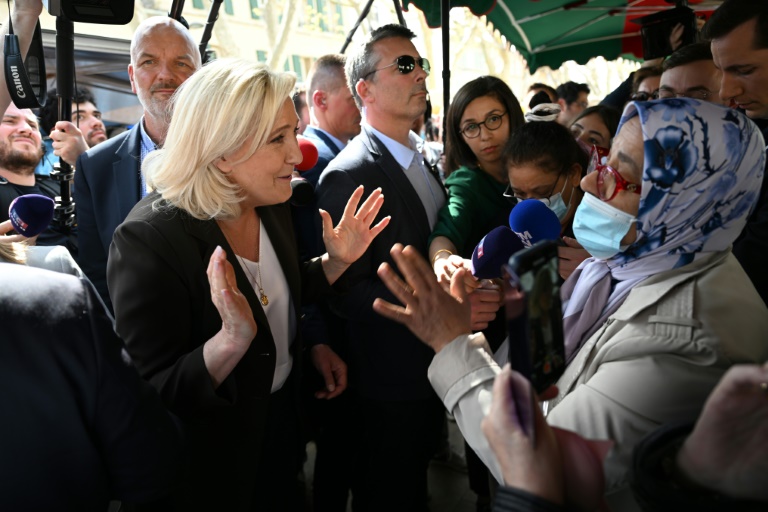
In an uncomfortable exchange, Le Pen on Friday found herself cornered by a Muslim woman wearing a headscarf during a visit to the town of Pertuis in the south of France.

Le Pen claimed that in “some areas” in France, women who do not wear the headscarf are “isolated and judged”.

“It’s not true. It’s not true,” said the woman, laughing incredulously and saying her father had fought for France in the army for 15 years.

After further argument, Le Pen then waved cheerily and breezily ended the exchange.

Even within her own camp, the hardline stance has caused controversy.

“It’s an error,” said Robert Menard, mayor of the town of Beziers and a supporter of Le Pen in the second round. “It’s not possible to put in place.”

War in Ukraine: Latest developments

Here are the latest developments in the war in Ukraine:

– Russia threatens Kyiv –

A Ukrainian military factory outside Kyiv is partially destroyed by overnight Russian strikes, AFP reports, as Moscow warns it will intensify attacks on the capital in response to Ukrainian strikes on Russian soil.

Russian officials accuse Ukraine of sending two helicopters across the border to bomb a town in Russia’s southern Bryansk region, wounding eight people. Ukraine has denied the accusations.

The military factory outside Kyiv produced missiles allegedly used to hit Russia’s Moskva warship.

“The number and scale of missile strikes against targets in Kyiv will increase in response to any terrorist attacks or sabotage committed by the Kyiv nationalist regime on Russian territory,” the defence ministry in Moscow says.

– Five million flee Ukraine –

More than five million people have now fled Ukraine since the Russian invasion on February 24, the United Nations says.

The UN’s refugee agency lists 4,796,245 million Ukrainians who have crossed the borders, while its International Organization for Migration says nearly 215,000 third-country nationals have also left.

– Russian flagship sinks –

Russia’s guided-missile cruiser Moskva sinks in the Black Sea after being damaged, Russia’s defence ministry says.

Ukraine says Russia will seek revenge after the sinking of its flagship, which Kyiv claims to have hit with Neptune missiles. 

“The Moskva cruiser strike hit not only the ship itself: it hit the enemy’s imperial ambitions. We are all aware that we will not be forgiven for this,” Natalia Gumeniuk, a spokeswoman for Ukraine’s southern military forces says.

– Finland NATO bid ‘highly likely’ –

Finland’s European Affairs Minister Tytti Tuppurainen says it is “highly likely” that Finland will apply for NATO membership, just hours after Russia warns of unspecified “consequences” should it and Sweden join the military alliance.

Moscow’s military actions in Ukraine have sparked a dramatic U-turn in public and political opinion in non-aligned Finland and Sweden, which is also discussing joining the alliance.

– ‘Polish mercenaries’ killed –

Russia’s defence ministry says it has killed up to 30 Polish mercenaries fighting for Ukraine in the northeastern region of Kharkiv.

It says strategic rocket forces “eliminated up to 30 Polish mercenaries” in a strike on the village of Izyumskoe, near the city of Kharkiv.

– Kharkiv offensive –

Russian strikes on the eastern Ukrainian city of Kharkiv killed seven people and left another 34 injured, the region’s governor says, as Moscow’s forces stepped up attacks.

“The occupiers fired on a residential area in Kharkiv. Unfortunately, 34 people were injured, including three children. Seven people died; one among the dead was a child,” Oleg Synegubov says on social media.

– EU gas, oil embargo will take ‘months’ –

The EU is working on broadening sanctions on Russia to include oil and gas embargoes but such measures will take “several months”,  European officials tell AFP.

Russian energy exports are Moscow’s main hard currency earner, and its oil and gas sales to the EU account for between a quarter of a billion to a billion euros per day, per different estimates.

– Russia kicks out EU diplomats –

Moscow says 18 members of the EU mission in Russia have been declared “persona non grata” and must leave the country.

– French radio RFI site blocked –

Russia’s media watchdog Roskomnadzor blocks access to the website of French radio station RFI for violating a law banning the dissemination of false or extremist information.

It does not specify how the radio station has fallen foul of the law.

More than 150 hurt in Jerusalem clashes as religious festivals overlap

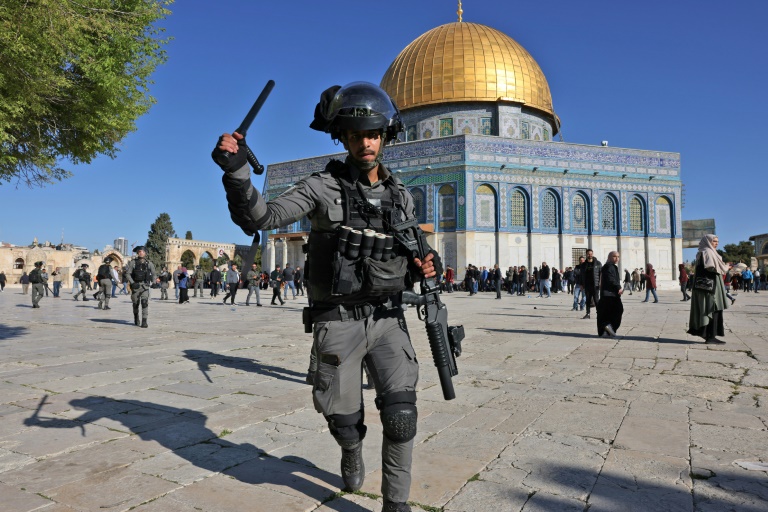
More than 150 people were wounded Friday in clashes between Palestinian demonstrators and Israeli police in Jerusalem’s Al-Aqsa mosque compound, the first face-off at the flashpoint holy site since the start of Ramadan.

Israeli police said “dozens of masked men” marched into Al-Aqsa setting off fireworks before crowds hurled stones towards the Western Wall — considered the holiest site where Jews can pray.

Witnesses said Palestinians threw stones at Israeli forces, who fired rubber-coated bullets and sound grenades.

The Palestinian Red Crescent said 153 people were hospitalised and “dozens” of others were treated at the scene. Israeli police said at least three officers were hurt.

Around 400 people were arrested, the Palestinian Prisoner’s Club said.

The clashes come after three weeks of deadly violence in Israel and the occupied West Bank, and as the Jewish festival of Passover and Christian Easter overlap with the Muslim holy month of Ramadan.

Al-Aqsa is Islam’s third-holiest site. Jews refer to it as the Temple Mount, referencing two temples said to have stood there in antiquity.

Last year during the Muslim fasting month, clashes that flared in Jerusalem, including between Israeli forces and Palestinians visiting Al-Aqsa, led to 11 days of devastating conflict between Israel and Hamas, the Islamist group that rules the Palestinian enclave of Gaza.

Israeli Foreign Minister Yair Lapid said Friday’s “riots” were “unacceptable”.

“The convergence of Passover, Ramadan and Easter is symbolic of what we have in common. We must not let anyone turn these holy days into a platform for hate, incitement and violence,” he said.    

UN Middle East peace envoy Tor Wennesland urged “the authorities on both sides to immediately de-escalate the situation and prevent any further provocations by radical actors”, a position echoed by the US Palestinian Affairs Unit and the EU’s diplomatic service.

– ‘Red line’ –

Police said crowds had hurled rocks “in the direction of the Western Wall… and as the violence surged, police were forced to enter the grounds surrounding the mosque,” adding officers “did not enter the mosque.”

But Al-Aqsa mosque director Omar al-Kiswani told AFP that an “assault was made inside the Al-Aqsa mosque”.

“More than 80 young people inside the holy mosque were displaced,” he said, adding: “Al-Aqsa mosque is a red line”.

Before Ramadan, Israel and Jordan stepped up talks in an effort to avoid a repeat of last year’s violence.

Jordan serves as custodian of the mosque compound, while Israel controls access.

Hamas leader Ismail Haniyeh said there was “no place for the invaders and occupiers in our holy Jerusalem”.

Analysts say Hamas wants to keep the conflict alive in the West Bank and in Jerusalem but avoid escalation in the Gaza Strip after last year’s war, and with thousands of Gazans’ Israeli work permits at risk.

“Hamas does not want a new confrontation,” said Mukhaimer Abu Saada, professor of political science at Gaza’s Al-Azhar University.

An Israeli security source said the Islamic Jihad militant group — which controls neither the West Bank nor Gaza — would be more inclined towards an escalation with Israel.

The group warned “the confrontation will be closer and harder” for Israeli forces if “they do not stop the aggression against our people”.

Along with Hamas, Islamic Jihad mobilised thousands of people in Gaza on Friday in solidarity with Palestinians at Al-Aqsa, AFP correspondents reported.

– Spiralling violence –

Israel has poured additional forces into the West Bank and is reinforcing its wall and fence barrier after four deadly attacks in the Jewish state in the past three weeks.

A total of 14 people have been killed in the attacks since March 22, including a shooting spree in Bnei Brak, an Orthodox Jewish city in greater Tel Aviv.

Twenty-two Palestinians have been killed over the same period, including assailants who targeted Israelis, according to an AFP tally.

On Thursday, Israel announced it would block crossings from the West Bank and Gaza into Israel from Friday afternoon through Saturday, the first two nights of Passover week, and potentially keep the crossings closed for the rest of the holiday.

Prime Minister Naftali Bennett, who lost his parliamentary majority last week, has given Israeli forces a free hand to “defeat terror” in the West Bank, which Israel has occupied since the Six-Day War of 1967.

Some of the attacks in Israel were carried out by Arab citizens of Israel linked to or inspired by the Islamic State group, others by Palestinians, cheered by Hamas and Islamic Jihad.

Three Palestinians died Thursday as Israeli forces launched fresh raids into the West Bank district of Jenin, a week after a deadly gun attack against a Tel Aviv nightlife district. A fourth died of his wounds on Friday.

gl/ag/dwo/kir

Tech battles to show its worth in Ukraine war crimes probes

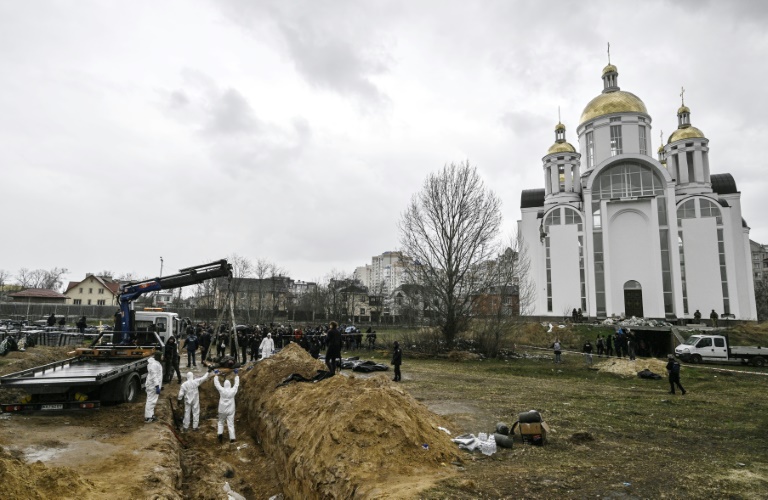
Russia’s war in Ukraine is still being counted in days, but images of atrocities already number in the hundreds of thousands.

The conflict is the first to throw up such rich evidence in real time, but the sheer volume of material poses a huge challenge for those trying to use it as evidence of war crimes.

“The amount of material that we see, we really haven’t seen before,” said Hadi al Khatib, whose organisation Mnemonic has gathered around 400,000 pieces of material since February.

Wendy Betts, whose eyeWitness to Atrocities group has a bespoke app to allow NGOs to gather evidence, is equally deluged.

“The last time I looked, we had roughly as much in the last six weeks as we normally would get globally in six months,” she told AFP.

International experts are part of a plan unveiled by Ukraine’s President Volodymyr Zelensky for a “special mechanism” to probe thousands of allegations of war crimes.

Betts has already handed some footage to Ukrainian prosecutors and Khatib has had to partner with other groups to process his material.

But for all the benefits of technology, this kind of footage has so far been prominent in only a handful of court cases.

Ukraine could well be the coming-of-age for technology-led evidence gathering.

– Training AI –

Khatib cut his teeth on the Syria war, where his team is still sifting an archive of four million records — he reckons only about five percent has been verified.

They are training artificial intelligence (AI) software to recognise items like Russian cluster bombs to allow that footage to be prioritised.

But it is slow progress and ultimately each record needs to be verified by a human.

“With technology, we are really not there yet, but we are trying,” he told AFP.

Khatib initially set out to use the material for advocacy and as a memorial, which requires only that the footage is what it purports to be.

But using footage to build a legal case is different.

It must be proved that nothing could have happened to the footage all along the evidence chain.

The eyeWitness app was designed especially for this, storing all the metadata securely inside the app.

“We can’t verify anything that’s already been taken on social media,” said Betts, “the footage has to be taken using the camera app”.

Her main challenge is to build trust among the NGOs and activists who might use the app.

In Ukraine, eyeWitness has already been working with people in the eastern conflict areas for five years, so they have a head start.

And both Betts and Khatib stress how the tech-savvy nature of Ukraine is helping their efforts hugely.

– ‘Two-edged sword’ –

Activists and investigators have learnt a lot since the civil war in Syria where smartphones were used for the first time en masse to document atrocities.

“The concept of a citizen investigator or citizen engagement in the investigative process… that really emerged in Syria in 2011,” said Bill Wiley, a Canadian who has been investigating war crimes for 25 years.

He has since worked on the so-called Islamic State’s brutal campaign in Syria and Iraq, when social media was widely used by the militants. 

His foundation, the Commission for International Justice and Accountability (CIJA), is still scouring thousands of smartphones and computer hard drives for usable information from the IS conflict. 

“Modern technology and its ubiquitous use in conflict zones is, from a narrow criminal investigative perspective, very much a two-edged sword, and mostly cutting the wrong way,” he said.

Both he and Khatib contrast the volume of material with the ability of software to provide accurate analysis.

Wiley suggested investigators needed to be picky in what footage they use, flagging the example of an attack on a theatre in Mariupol on March 16 where hundreds of civilians are thought to have been killed.

“You don’t need a photograph of the aircraft circling the target before the bomb was dropped,” he said.

Instead, he will be looking to safeguard any information that could link such attacks to whoever ordered them, whether that is phone call intercepts, email chains or old-fashioned paper trails.

But the investigators all agree that they are part of a team with similar goals.

“All of these pieces of information are going to be required to put this gigantic evidentiary puzzle together,” said Betts.

And they all believe that ultimately there will be accountability.

“It may take some time, but we will see arrest warrants issued against various Russian leaders,” said Wiley.

Tech battles to show its worth in Ukraine war crimes probes

Russia’s war in Ukraine is still being counted in days, but images of atrocities already number in the hundreds of thousands.

The conflict is the first to throw up such rich evidence in real time, but the sheer volume of material poses a huge challenge for those trying to use it as evidence of war crimes.

“The amount of material that we see, we really haven’t seen before,” said Hadi al Khatib, whose organisation Mnemonic has gathered around 400,000 pieces of material since February.

Wendy Betts, whose eyeWitness to Atrocities group has a bespoke app to allow NGOs to gather evidence, is equally deluged.

“The last time I looked, we had roughly as much in the last six weeks as we normally would get globally in six months,” she told AFP.

International experts are part of a plan unveiled by Ukraine’s President Volodymyr Zelensky for a “special mechanism” to probe thousands of allegations of war crimes.

Betts has already handed some footage to Ukrainian prosecutors and Khatib has had to partner with other groups to process his material.

But for all the benefits of technology, this kind of footage has so far been prominent in only a handful of court cases.

Ukraine could well be the coming-of-age for technology-led evidence gathering.

– Training AI –

Khatib cut his teeth on the Syria war, where his team is still sifting an archive of four million records — he reckons only about five percent has been verified.

They are training artificial intelligence (AI) software to recognise items like Russian cluster bombs to allow that footage to be prioritised.

But it is slow progress and ultimately each record needs to be verified by a human.

“With technology, we are really not there yet, but we are trying,” he told AFP.

Khatib initially set out to use the material for advocacy and as a memorial, which requires only that the footage is what it purports to be.

But using footage to build a legal case is different.

It must be proved that nothing could have happened to the footage all along the evidence chain.

The eyeWitness app was designed especially for this, storing all the metadata securely inside the app.

“We can’t verify anything that’s already been taken on social media,” said Betts, “the footage has to be taken using the camera app”.

Her main challenge is to build trust among the NGOs and activists who might use the app.

In Ukraine, eyeWitness has already been working with people in the eastern conflict areas for five years, so they have a head start.

And both Betts and Khatib stress how the tech-savvy nature of Ukraine is helping their efforts hugely.

– ‘Two-edged sword’ –

Activists and investigators have learnt a lot since the civil war in Syria where smartphones were used for the first time en masse to document atrocities.

“The concept of a citizen investigator or citizen engagement in the investigative process… that really emerged in Syria in 2011,” said Bill Wiley, a Canadian who has been investigating war crimes for 25 years.

He has since worked on the so-called Islamic State’s brutal campaign in Syria and Iraq, when social media was widely used by the militants. 

His foundation, the Commission for International Justice and Accountability (CIJA), is still scouring thousands of smartphones and computer hard drives for usable information from the IS conflict. 

“Modern technology and its ubiquitous use in conflict zones is, from a narrow criminal investigative perspective, very much a two-edged sword, and mostly cutting the wrong way,” he said.

Both he and Khatib contrast the volume of material with the ability of software to provide accurate analysis.

Wiley suggested investigators needed to be picky in what footage they use, flagging the example of an attack on a theatre in Mariupol on March 16 where hundreds of civilians are thought to have been killed.

“You don’t need a photograph of the aircraft circling the target before the bomb was dropped,” he said.

Instead, he will be looking to safeguard any information that could link such attacks to whoever ordered them, whether that is phone call intercepts, email chains or old-fashioned paper trails.

But the investigators all agree that they are part of a team with similar goals.

“All of these pieces of information are going to be required to put this gigantic evidentiary puzzle together,” said Betts.

And they all believe that ultimately there will be accountability.

“It may take some time, but we will see arrest warrants issued against various Russian leaders,” said Wiley.

Close Bitnami banner
Bitnami